
Archived decisions
Hampshire Fire and Rescue Authority Item
26 September 2001
Operational Activity 2000/2001: Annual Statistics
Report of the Chief Fire Officer
Contact: Alan House, Deputy Chief Fire Officer (Operations & Training) 023 8064 4000 x 205
Introduction
This report summarises the operational activity for 2000/2001 and, using simple graphs, highlights the significant trends since 1990/91. The level of operational activity has a direct impact on resources: both in terms of the deployment of personnel and in the use of vehicles and equipment.
The Authority's budget assumes an `average year' in terms of operational activity. This assumption is particularly significant in determining the specific budget allocation for retained fiefighters' pay - because their pay is largely determined by the actual number of incidents attended. So, when operational activity exceeds the average by 5% the contingency arrangements (explained in previous reports to the Authority) are triggered to ensure that any shortfall is covered. Therefore, the trends shown in these statistics will need to be taken into account in the Service's development plan and the budget process.
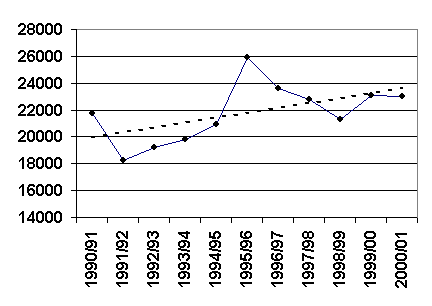 Total Incidents
The total number of incidents attended was 22,987. An decrease of 63 on the previous year. The underlying trend shows an increase of 5.8% since 1990/91.
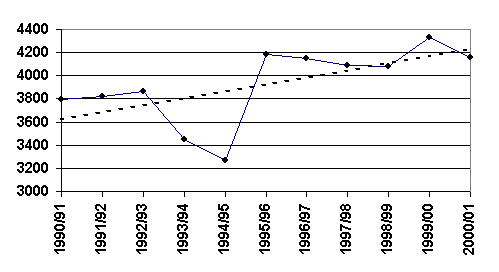 Primary (Property) Fires
There were 4,157 "primary fires" last year which are those involving property. This was a decrease of 80 on the previous year. Since 1990/91 the underlying trend in these calls shows a 9.5% rise.
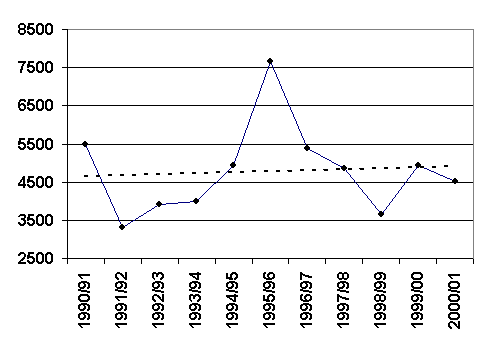 Secondary Fires
"Secondary fires" include minor heath/grassland fires and refuse containers, etc. This category typically reflects extremes of the weather; 2000/01, as in the previous three years, did not experience the excessively dry/hot summer of the peak year of 1995/96.
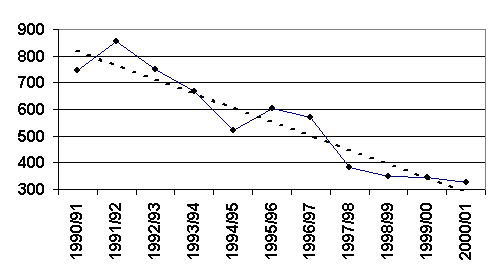 Chimney Fires
It is pleasing to note the continued underlying downward trend in the number of chimney fires in Hampshire (327 in 2000/01). This mirrors the national trend. Publicity aimed at encouraging householders to take preventative measures through regular chimney sweeping may well have played a part in the continuing downward trend.
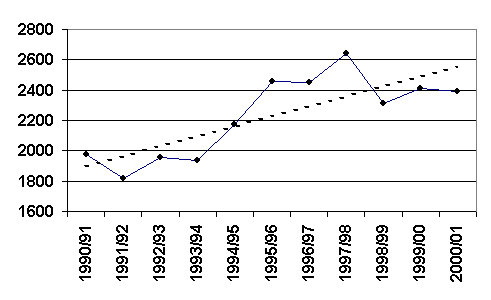 False Alarms - Good Intent
While there are year to year fluctuations in the number of false alarms of good intent, the underlying trend is an upward one. These calls totalled 2,392, a slight decrease on the previous year. These calls are not considered a problem as the public are encouraged to call the fire service if they are ever in any doubt about the possibility of a fire or other incident.
False Alarms from Automatic Fire Detection Equipment
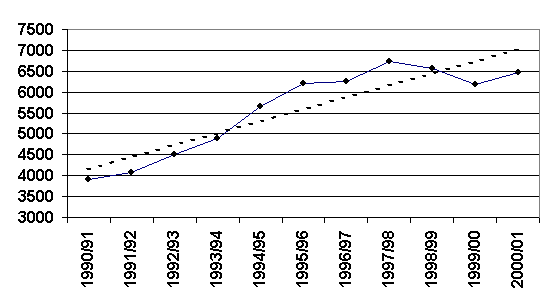
Despite the continued efforts to reduce the upward trend in the number of calls to automatic fire alarms, last year showed a slight increase in the total figure for the first time since 1997/98.
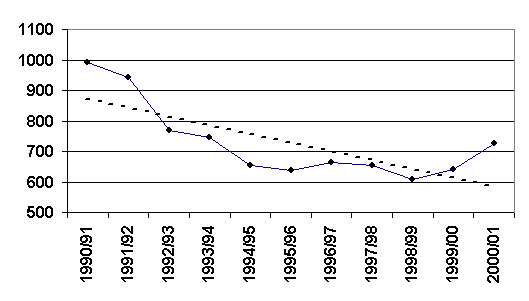 Malicious False Alarms
Last year was the second sucessive increase in the number of malicious (hoax) fire calls received by the Service (725). This could be partly the result of re-categorising malicious calls from automatic fire alarms as hoax calls. Although comparisons with other brigades showed that Hampshire's malicious calls for the calendar year 2000 increased by 27% over the previous year, the overall total remains one of the lowest in the country.
A new initiative is due to be launched in Hampshire which will involve messages being sent to mobile phones used to make malicious calls stating the use of the phone will be cancelled by the service provider.
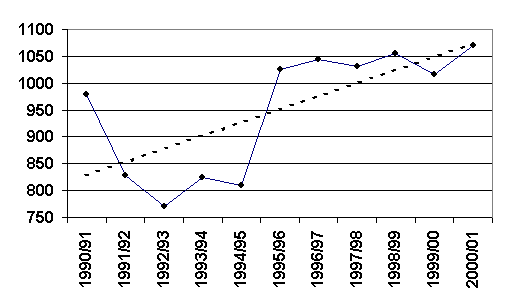 Road Traffic Accidents
Last year showed an unwelcome increase in these calls. It now seems that the reduction in 1999/2000 was merely a `blip' in the underlying downward trend. Work is about to commence to try and identify particular accident `black spots' in the county.
 Special Service Calls
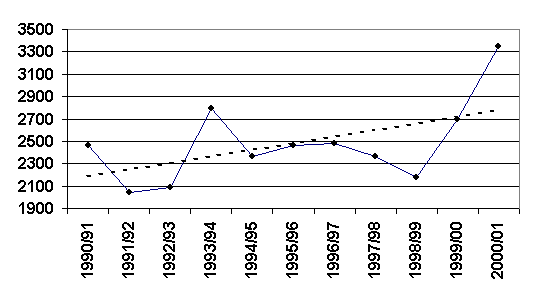
There was another sharp increase in the number of special service calls to the Service, (3,344 from 2,698). These calls include: lift rescues, animal rescues, chemical incidents and assisting other emergency services in potentially hazardous situations. The figures exclude Road Traffic Accidents. The year on year fluctuations are generally influenced by extremes of weather, and this past two years included some serious of flooding incidents. The figures over the years reflect the wider range of rescue work and attendance at incidents involving hazardous materials / environmental pollution prevention undertaken by the Service.
Over the Border Incidents
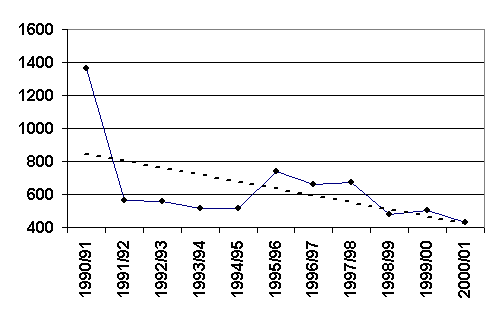
As a result of continuing changes in fire cover arrangements with neighbouring fire authorities, there has been a general decrease in the number of incidents that Hampshire has had to deal with over the County border since 1991.
The peaks experienced in 1989/90 and 1990/91 were attributable to the exceptional number of heath and grass fires attended in neighbouring authorities. Under the Fire Services Act 1947, charges can be levied, between neighbouring authorities. However, recent reviews of fire cover around the County boundary have resulted in fewer calls being made `over the border' and income has reduced accordingly.
RECOMMENDATION
That the report be noted.
Dir-fin: HFRA 26 Sept 01 Annual Stats 2000 01