Archived decisions
Hampshire County Council North East Hampshire Area Transportation Strategy Panel 13 February 2002 Fleet Town Centre Improvements Report of the County Surveyor |
Item 4 |
Contact: Peter Murnaghan, ext 6920
1. Summary
1.1 This report reviews the development of traffic and environmental improvement proposals for Fleet town centre which the Panel had asked officers to progress and submit to public consultation. This followed many years of dialogue and investigation into transport solutions for Fleet and the latest consultation has now been carried out and analysed. The purpose of this report is to inform Members of the level of support for the proposals, following this extensive scrutiny by the public. The consultation has provided a useful opportunity to ensure that the proposals are understood by the community and that any new issues were raised before the decision is taken to proceed with detailed design.
2. Introduction
2.1
Members will be aware that the Panel has discussed transport improvements for Fleet town centre over many years and a number of investigations have been carried out, involving proposals for an Inner Relief Road (IRR), one-way systems and other solutions to deal with traffic within the context of the Area Transport Strategy. On 21 March 2001 the Panel considered the following three options:
Option A |
Traffic and environmental improvements to Fleet Road, including changes to on-street parking, traffic calming, pedestrian improvements, etc. | |
Option B |
Completion of the Inner Relief Road between Harlington Way and Church Road. | |
Option C |
Some form of one-way traffic on Fleet Road and Albert Street (and possibly Clarence Road); also partial completion of the Inner Relief Road between Harlington Way and Victoria Road. |
2.2 The Panel resolved that the option of traffic and environmental improvements to Fleet Road (Option A) be progressed and this resolution was ratified in an amended form by Hampshire County Council's former Planning and Transportation Committee on 2 April 2001 as follows:
"That a modified transport Option A for Fleet be progressed in detail as the preferred option but that as part of the consultation exercise, the public be also given the opportunity to see Options B and C in outline."
2.3
On 26 September 2001 the Panel noted that Option A sought to develop a package of complementary transport measures for Fleet town centre to improve the environment for residents and visitors, while improving safety and access, particularly for pedestrians, cyclists and public transport users. The County Council's partner consultants were requested to:
(i) develop the preferred Option A in detail, and the other two options in outline;
(ii) present the results for public consultation; and
(iii) report the outcome of the consultations to the Panel in early 2002, with a recommendation for a preferred option.
2.4
The study focussed on the town centre, primarily Fleet Road between Reading Road and the railway station. It was agreed that the wider context of new developments and other transport projects in the Fleet area would be considered, insofar as they affect traffic on Fleet Road and the viability of the alternative options.
2.5 With regard to other parts of Fleet, it was agreed that further corridors would be investigated later, in the context of the Transport Strategy and to complement the first stage in Fleet Road.
3. Fleet - Traffic Forecasts and Alternative Transport Options
3.1 Background information on traffic forecasts and alternative transport options for Fleet town centre are shown in the attached appendix. To summarise:
(i) Fleet has one of the highest levels of car ownership in the country; it also has lower than average levels of walking, cycling and bus use.
(ii) Major traffic growth is forecast for North East Hampshire during the next twenty years. In Fleet this will be exacerbated by substantial local developments, including Elvetham Heath, Queen Elizabeth Barracks and several business parks.
(iii) However, traffic on Fleet Road has hardly increased during the past seven years, as the road is close to capacity at peak periods.
(iv) It is predicted that traffic on Fleet Road will not increase much in the coming years, due to capacity restraints. However, significant traffic growth has taken place on other roads around Fleet town centre, eg Albert Street, Elvetham Road and, to a lesser extent, Clarence Road and Connaught Road - and this trend is expected to continue.
(v) Fleet town centre is one of the worst sites in Hampshire for accidents involving vulnerable road users. The impact of traffic on the town centre suggests a high priority for remedial measures.
(vi) Previous traffic modelling by consultants for the County Council showed that the alternative option of a one-way system around Fleet town centre would perform less well than the existing network, in terms of increased journey times and distances. There are also negative environmental and economic impacts associated with one-way systems, eg:
(a) longer journeys around Fleet town centre, reducing accessibility;
(b) increased pollution due to longer journeys and travel time;
(c) increased severance, with higher vehicle speeds and flow in one direction;
(d) increased accident severity associated with higher vehicle speeds;
(e) 50% or more increase in vehicles on Albert Street (though a 25% reduction on Fleet Road); and
(f) increased rat-running on Clarence Road and Connaught Road.
(vii) Regarding the IRR, previous traffic modelling has shown that, with a 14% increase in traffic over 1996 levels, the junctions at Fleet Road/Kings Road and Albert Street/Reading Road South will both reach 100% of capacity, both with and without the IRR. In other words, construction of the IRR would not increase the network's capacity, merely shifting traffic from one part of Fleet Road to the new road, and possibly generate some extra local traffic, resulting in increased local congestion.
(viii) The other disadvantages of the IRR proposal included:
(a) high cost;
(b) severance of North Fleet from the town centre;
(c) pedestrianisation might result in a lack of people on the high street in the evenings and on Sundays, with adverse social and economic impacts; and
(d) increased traffic on Albert Street, Clarence Road and Connaught Road, as some southbound traffic seeks a shorter route avoiding the IRR.
3.2 These reasons justified the development of the preferred Option A of traffic and environmental improvements on Fleet Road as the best option for Fleet town centre.
4. Traffic and Environmental Improvements on Fleet Road - Summary of the Main Proposals
4.1 The proposal was designed with the following objectives:
(i) reduced conflict on Fleet Road between motor traffic, pedestrians and cyclists, leading to a better environment and increased road safety;
(ii) improved access to the town centre and rail station, particularly for pedestrians and cyclists;
(iii) discouraging rat-running and speeding on roads parallel to Fleet Road (ie Albert Street, Clarence Road and Connaught Road);
(iv) promoting travel demand management measures to help reduce car dependency and promote travel alternatives; and
(v) boosting the town centre's vitality and economic role, by improving its appearance, convenience and ease of access for users.
Summary of the Main Proposals
4.2 The proposals are illustrated on plans which will be displayed at the meeting. The main elements are summarised below.
Traffic Management and Control
4.3 To reduce obstructions to traffic flow on Fleet Road the plans propose to:
(i) provide dedicated off-road unloading areas for lorries and encourage rear access delivery where possible;
(ii) substantially reduce on-street parking on the high street and, as an alternative, create rapid turnover parking spaces in Victoria Road and Church Road car parks; and
(iii) extend Harlington Way to make a new access to Victoria Road car park and close the Victoria Road entrance.
Additional measures are proposed to improve traffic flow around the town centre and make better use of existing road capacity through improvements to traffic signal control and direction signing.
Speed Reduction Measures and Traffic Calming
4.4 To improve safety on Fleet Road and make it more pedestrian-friendly, and to increase safety on adjacent roads it is proposed to:
(i) introduce a 20 mph speed limit through the town centre (Oatsheaf junction to west of Birch Avenue), with `gateway' features at the entrances to the 20 mph zone;
(ii) reduce the width of Fleet Road slightly (by about 0.5 metre) to encourage slower, more appropriate speeds;
(iii) visually narrow the road with `overrun' strips at either side of the road and a different colour surface for the vehicle carriageway;
(iv) introduce `raised tables' at road junctions within the 20 mph zone to slow traffic and increase safety for pedestrians and turning vehicles;
(v) introduce traffic calming measures on Albert Street, Clarence Road and Connaught Road;
(vi) improve three existing pedestrian crossings on Fleet Road by widening and relocating them at the busiest crossing points;
(vii) create new pedestrian crossings at three locations: Oatsheaf Junction; Kings Road/Fleet Road Junction; and Fleet Road east of Church Road; and
(viii) improve the pedestrian links between car parks and Fleet Road with better signing, lighting and improved surfaces.
Public Transport Improvements
4.5 To improve facilities for bus passengers and encourage public transport use, it is proposed to relocate bus stops on Fleet Road to key focal points and provide state-of-the-art bus shelters.
Cycle Network Improvements
4.6 The proposals for cycling are derived from the Hart District Cycle Strategy (1996) and will support its implementation:
(i) widen existing cycle lanes on Fleet Road to improve safety for cyclists, and create a new pedestrian refuge and off-street parking at shops near Avondale Road to ensure continuity of the cycle lane;
(ii) develop a new east-west cycle route (on-road) via Connaught Road, Church Road, Albert Street and Kings Road, with signing and advance stop lines;
(iii) develop a new on-road cycle route linking the town centre with Calthorpe Park, via Harlington Way; and
(iv) provide additional cycle parking in Fleet town centre and at Fleet railway station.
Environmental Improvements on Fleet Road
4.7 Implementation of the above proposals will involve major restructuring of Fleet Road's footways and kerbs. This provides an opportunity to improve the town centre's overall appearance and boost its economic role. The following streetscape improvements are therefore proposed:
(i) replace and upgrade footway paving throughout the high street; and
(ii) reorganise street furniture, planting, lighting, etc, to make the public spaces more functional, attractive and enjoyable.
Monitoring
4.8 A financial allocation is made for monitoring the project, to ensure that the objectives are being met and local needs and wishes are properly reflected.
Project Costs
4.9 The cost of the above proposals has been estimated at £2.45 million, of which about 70% represents traffic, transport and safety improvements.
Supporting Measures by Hart District Council
4.10 Successful implementation of the project will require a number of supporting initiatives by Hart District Council. These include:
(i) update the parking strategy for Fleet town centre;
(ii) encourage high street traders to adopt rear access goods delivery where possible;
(iii) negotiate with private landowners to:
(a) secure agreements for improving privately owned footways and access roads;
(b) encourage private sector streetscape improvements along Fleet Road and other roads; and
(iv) promote the development of travel plans in Fleet, including Hart District Council's own travel plan.
5. The Public Consultation
5.1 The consultation process has cost some £15,500 to date, excluding officer time. This section summarises the public consultations that were carried out and the results. A more detailed analysis is given in the appendix.
During Project Preparation
5.2 In addition to previous dialogue, participation and involvement, the latest extensive, the following consultations were carried out:
(i) three formal meetings/presentations to Hart District Council officers, and Members from wards within the project area;
(ii) interviews with major retailers in Fleet (Iceland, Somerfield, Waitrose, Boots, Woolworth's, Hart Shopping Centre);
(iii) interviews with all traders along Fleet Road regarding their goods access and delivery;
(iv) numerous informal officer meetings with County Council and Hart District Council staff.
Public Exhibition in Fleet
5.3 (i) Proposals on display in Fleet for four weeks (15 November to 11 December 2001);
(ii) 2,500 people visited the staffed exhibition during first three days;
(iii) 1,312 questionnaires distributed to the public;
(iv) 426 questionnaires returned (a 33% response rate); and
(v) approximately 40 letters received from local organisations and individuals.
Other Consultations (During and After the Exhibition)
5.4 (i) three formal presentations to Hart District Council Members (all Members invited) on 15, 17 and 22 November;
(ii) 45 detailed information packs distributed to Hart District Council Members, and organisations and individuals who requested further information;
(iii) formal letters and information packs sent to the emergency services and bus operators;
(iv) follow-up meetings with three major retailers in Fleet; and
(v) follow-up meeting with representatives of youth organisations in Fleet.
Pre-Exhibition Publicity
5.5 The public exhibition was the main component of the consultation exercise and the event was well publicised. The following measures were taken to inform people about the exhibition:
(i) 12,500 leaflets distributed to households in Fleet and Church Crookham with the free newspaper;
(ii) advertisements placed in the Fleet News on two consecutive weeks (9 and 13 November 2001);
(iii) 200 letters sent to local businesses, organisations and Hart District Council Members;
(iv) 30 posters displayed around Fleet town centre the weekend before the exhibition;
(v) press release sent to the Fleet News on 1 November 2001;
(vi) Hart District Council e-mailed all its staff to inform them of the exhibition;
(vii) 500 publicity leaflets distributed at the exhibition; and
(viii) front page press coverage in the Fleet News on the first day of the exhibition.
Responses to the Consultation
5.6 A total of 426 people returned questionnaires, representing a 33% response rate on questionnaires distributed. This represents a good rate of response, but should be viewed as a sample of public opinion, rather than a referendum.
Views on the Overall Proposals
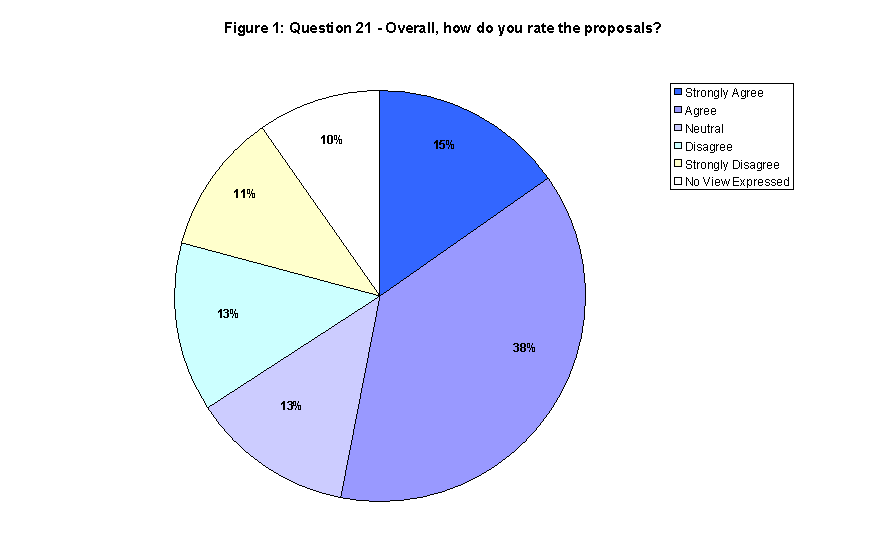
5.7 Of the respondents, 53% supported the overall proposals (ie agreed or strongly agreed), a further 13% were neutral, 24% disagreed with the proposals and the remaining 10% did not express any view (see appendix - Figure 1).
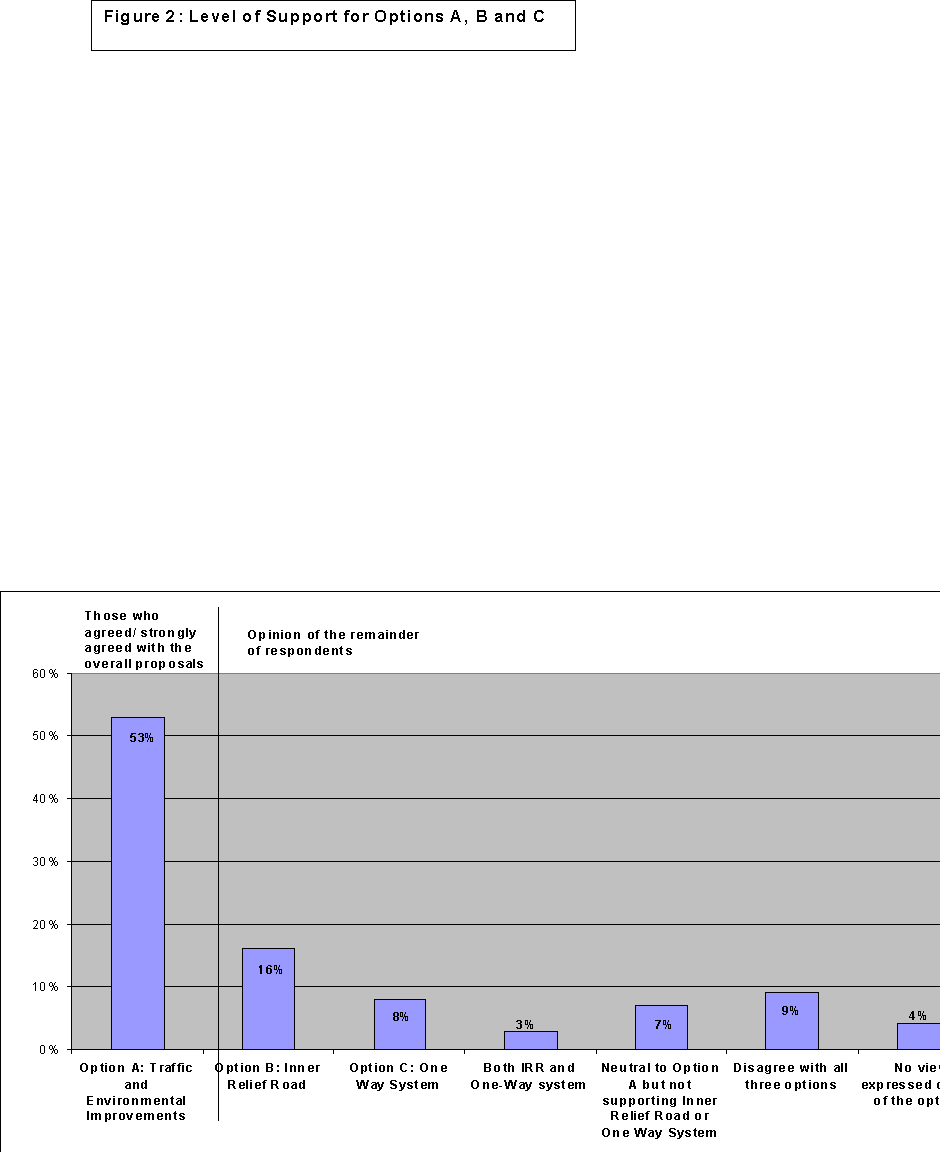
5.8 The questionnaire asked: "If you do not support the range of proposals, please comment on the alternative options." Of those not agreeing with the proposals, 69 respondents supported the IRR, 35 a one-way traffic system and 12 were equally in favour of both alternative options. In percentage terms, they represented 16%, 8% and 3% respectively of total respondents (see appendix - Figure 2).
5.9 The questionnaire indicated substantial majority support for the preferred option of traffic and environmental improvements, although a significant minority favoured the alternative options. However, support for the latter was divided between the two options, and many of those who preferred a one-way system did not support the IRR. It should be noted that the local Member, Councillor Stocks, supports the preferred scheme.
Views on Specific Proposals
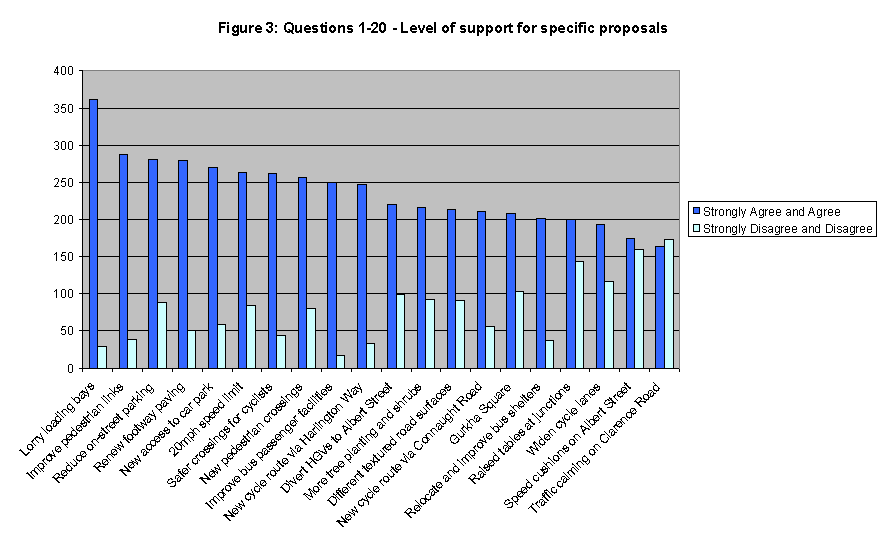
5.10 A total of 19 out of 20 specific proposals listed in the questionnaire received majority support. The exception was traffic calming on Clarence Road - respondents were divided almost equally for and against (see appendix - Figure 3).
5.11 The six most popular proposals, in terms of numbers agreeing/strongly agreeing, were (in order of priority):
(i) lorry loading bays and rear access where possible;
(ii) improved pedestrian links from car parks;
(iii) reducing on-street parking on Fleet Road;
(iv) renewing the footway paving and reorganising street furniture;
(v) new access to Victoria Road car park via Harlington Way; and
(vi) 20 mph speed limit on Fleet Road.
Letters and Comments in the Questionnaires
5.12 The questionnaire invited people to give comments, and about 300 respondents did so. In addition, about 40 separate letters and e-mails were received from individuals and local organisations.
5.13 A full analysis of the comments and letters will be contained in the Report of Consultations which will be available for inspection. The main points are summarised below. About two-thirds of the letters and e-mails were from individuals. Of those from businesses and local organisations:
(i) three were from high street traders;
(ii) one from the Fleet Town Centre Management Group;
(iii) two from Elvetham Heath Developments;
(iv) four from local organisations (Civic Society, Council for the Protection of Rural England, Fleet and District Community Associations); and
(v) three from District Councillors.
5.14 None of the traders or local organisations supported the IRR. Their view, summarised by the Town Centre Management Group, was that to remove traffic from Fleet Road "has a high risk of destroying trade as shown in some other towns and is definitely not advocated". Where they favoured a one-way system they differed on what form this might take.
5.15 Elvetham Heath Developments, on the other hand, were concerned that the developer funding they had provided under Section 106 contributions should be properly spent in the event that the IRR is not pursued. They registered an "objection to the current proposals for the Fleet Town Centre Improvements until such time as our detailed response can be submitted".
5.16 The various comments and letters reflected a wide range of views and covered a wide range of topics, including overall strategy and detailed local issues. Some commonly expressed concerns are listed below:
(i) The proposals were `cosmetic' and did not address wider strategic issues or long-term traffic growth.
(ii) Lack of worked-up detail on the alternative options.
(iii) Various issues about parking, eg:
(a) loss of on-street parking on Fleet Road;
(b) insufficient supply of parking in Fleet generally;
(c) more provision of disabled parking needed;
(d) dissatisfaction with increased short-term parking charges in Hart Centre;
(e) increased commuter parking on residential roads (eg Albany Road, Connaught Road, Birch Avenue);
(iv) Traffic calming:
(a) mixed views about proposals for Albert Street and Clarence Road;
(b) need for traffic calming on Connaught Road as well;
(c) speeding and safety problems on other residential roads around Fleet (eg Church Road, Velmead Road, Avondale Road, Aldershot Road, Reading Road);
(d) doubts whether road narrowing was suitable for Fleet Road.
(v) Other traffic management issues:
(a) traffic signals and turning movements at Oatsheaf junction considered neither safe nor efficient;
(b) Aldershot Road suggested as a higher priority for improvement;
(c) concerns about diverting HGVs via Albert Street;
(d) suggestions for removing the road closure at Church Road/Albert Street;
(e) suggestions for limiting right turns on Fleet Road;
(f) doubts about widening the cycle lanes on Fleet Road.
Further details of the comments and letters will be available in the Report of Consultations.
Petition Organised by Mr Gotel
5.17 A petition was organised by a resident of Fleet, Mr Denis Gotel, a retired civil servant, in favour of the IRR. It was signed by 660 residents of Fleet and stated:
"Without wishing to distract from the good aspects inherent in the proposal, described in the detail of the preferred scheme put forward for Public Exhibition, we the residents of Fleet Town make the following declaration and ask the Hampshire County Council and its executives to act in accordance with our desires.
We hold the view that the earliest construction of a relief road to the North of Fleet Road to be the foremost priority for the improvement of our Town Centre. We ask that nothing be done to divert funds promised by the Developers of Elvetham Heath to other projects and that such monies available be spent now to ensure the completion of a relief road."
5.18 Campaigning by Mr Gotel in the weeks following the public exhibition was given front-page support by the Surrey-Hants Star (under the headline `Fleet Folly', 6/12/01), and the Fleet Mail (`Public Call for a Relief Road', 7/12/01). This was countered the following week by the Fleet Civic Society, who achieved front-page coverage in the Fleet Mail arguing for a one-way system (`Inner Relief Road not the answer', 11/12/01).
5.19 The signatures collected by Mr Gotel contrast with the results of the consultation questionnaire, where consideration resulted from the fuller detail being made available and explained at the exhibition. The Civic Society has written to express concern at the manner in which signatures were collected and poor quality of information provided by the local campaigner.
5.20 Mr Gotel submitted an outline drawing of his proposals for an IRR, which included an overpass, three pedestrian underpasses, a new access road, measures on Fleet Road, and various new traffic signals. An initial estimate would suggest that his proposals might cost in excess of £10 million.
Hart District Council's View
5.21 Hart District Council considered the project proposals at its full council meeting on 11 December 2001. District officers recommended that Option A be broadly supported as the best solution for Fleet town centre, with certain detailed amendments.
5.22 However, the meeting passed an amendment, by 22 votes to 6, that:
"The Council requests most strongly that Hampshire County Council undertakes a proper consultation with the public and business community on the full range of options identified for the Fleet Town Centre Traffic and Environmental Improvements."
5.23 In view of the extensive consultation that has already been carried out, and given that this exercise was not a referendum, it is considered inappropriate to carry out a further consultation exercise on options that the Panel has previously dismissed for any further investigation. The latest consultation has provided a sufficient level of support to justify taking Option A forward to detailed design, together with some useful modifications. It is proposed to continue discussions with the business community and other stakeholders in the town to ensure that their concerns are addressed within the eventual scheme design.
5.24 As a way of keeping the public informed about the development of the proposals, it is also proposed to produce a copy of the report of the proposals, including a technical annex, together with a summary of the public consultation for inspection at the public library and on the website. A summary leaflet can also be produced for circulation to local representatives, business and other consultees, as well as the general public on request.
Emergency Services and Bus Operators
5.25 Information packs were sent to the emergency services and bus operators, with a request for a formal response to the proposals. Hampshire Constabulary welcomed proposals to improve safety, and noted that on-street parking and loading was a major cause of congestion on Fleet Road. They supported Hart District Council's bid to take on Controlled Parking Enforcement.
5.26 Responses from the other consultees are awaited.
6. Post Consultation Changes
6.1 The consultations showed broad majority support for the preferred option of traffic and environmental improvements on Fleet Road. There was encouragement to move to a position where it will be possible to address the problems of traffic congestion on the other corridors around Fleet. In response to the view expressed that the proposals are `cosmetic', it is proposed that the project's traffic management component be strengthened by bringing forward transport proposals that were identified during the project development stage for later implementation. Specifically, these relate to:
(i) Traffic signal control at three junctions on Fleet Road/Kings Road - (i) Fleet Road/Reading Road (Oatsheaf); (ii) Fleet Road/Kings Road/Albert Street (two junctions with a single control). The introduction of SCOOT remote traffic control will be investigated to optimise existing junction capacity.
(ii) Introduce Variable Message Signing for Fleet's three main car parks (Victoria Road, Church Road and the Hart Centre), to reduce unnecessary traffic movement and optimise existing parking capacity. (Note: This component will depend on Hart District Council updating the overall parking strategy for Fleet and making sufficient short-term parking available in Victoria Road car park).
(iii) Review of the strategic road signing in view of the new DERA link via Kennel's Lane (the `eastern bypass').
(iv) Local road signing improvements (including diversion of north-eastbound heavy goods vehicles via Albert Street instead of Fleet Road).
(v) Travel Plan Coordinator for Fleet - the possible employment, locally, of a part-time Travel Plan Coordinator to assist employers and others in Fleet to develop travel plans, and slow the overall growth in single occupancy car travel.
(vi) Extend the traffic calming to Connaught Road. Speed surveys confirm that speeding is a problem in Connaught Road (85%ile speed was measured at 38 mph).
(vii) Consider limiting the traffic calming measures in Clarence Road to the junctions. Further local consultations at the detailed design stage will help to confirm whether public opinion supports the proposals.
(viii) The proposal to limit on-street parking on Fleet Road was well supported in the questionnaire results. To address concerns about disabled access to the high street, it is recommended that the majority of any parking spaces retained on Fleet Road be reserved for disabled parking only.
6.2 The construction of the Fleet IRR is identified as a scheme within the Hampshire County Structure Plan 1996-2011(Review) and the Hart District Replacement Local Plan 1996-2006. The retention of this scheme could impose an unnecessary blight upon properties, if there is little prospect of its construction. Members are invited to consider reviewing the road scheme's retention in these Plans.
7. Conclusions
7.1The issue of the Fleet IRR and other transport solutions for the town have been the subject of debate over many years. At a previous meeting of this Panel, Members determined that the available options should be narrowed down to the scheme that offered the best transport solution and that further technical work be carried out on the preferred option. This has been carried out in response to the due political process. An extensive consultation was arranged with the public, together with briefings and meetings with Members and business interests. The level of attendance and response to the consultation were of a sufficiently high order to justify support for the proposed traffic and environmental improvements. Nevertheless it is noted that, despite the extensive opportunities provided, some people are seeking a further forum in which to comment. It must be said that the consultation has ensured that the proposals are sufficiently well understood by the public, as are the concerns of importance to the public. It is considered inappropriate to continue to consult on the scheme in the hope of revealing new aspects that have yet to be evaluated. There will be opportunities for continuing dialogue on matters of fine detail, but the fundamental nature of the proposal should no longer be subject to debate. It is proposed that officers proceed with detailed design of the scheme, taking on board the modifications that have arisen during the public consultation.
7.2 The consultation has provided a clear mandate to proceed with the traffic and environmental improvements in Fleet Road and it is no longer appropriate to continue to plan to construct the Fleet IRR. The review of the Hampshire County Structure Plan provides an opportunity to abandon the IRR and the associated safeguarding of land within the Hart District Local Plan.
Recommendations
1. That the Panel notes the outcome of the public consultation on the Fleet town centre proposals.
2. That reports of the public consultation in Fleet and the project proposals (including technical information relating to the alternative options) be made available to interested parties and members of the public by means of copies placed in the public library and information on the internet, together with a summary leaflet available on demand.
3. That the petition submitted by Mr Gotel be noted.
4. That Hart District Council be invited to investigate the supporting initiatives identified in this report.
5. That the Executive Member for Environment be advised of the Panel's views and that the County Surveyor, subject to consultation with the Executive Member, progresses the preferred scheme to detailed design, incorporating the additional traffic management measures identified in this report.
6. That the Executive Member for Environment, with the support of officers, enter into discussions with the local business community and local District Councillors on the development of the preferred scheme.
7. That the Executive Member for Environment make the necessary arrangements for the County Council to abandon the Fleet Inner Relief Road as a named scheme within the Hampshire County Structure Plan 1996-2011 (Review).
8. That Hart District Council be advised to delete the safeguarding for the Fleet Inner Relief Road from the Hart District Replacement Local Plan 1996-2006.
Section 100 D - Local Government Act 1972 - background papers | |
The following documents disclose facts or matters on which this report, or an important part of it, is based and has been relied upon to a material extent in the preparation of this report. | |
NB the list excludes: | |
1. |
Published works. |
2. |
Documents which disclose exempt or confidential information as defined in the Act. |
TITLE |
LOCATION |
Fleet Town Centre - File 13/3/64 |
County Surveyor's Department |
6942/PJM
APPENDIX
Background Information on Traffic and Strategic Options for Fleet
A. Fleet - The Strategic Context
A.1 Population, Economy and Travel Patterns
In 1991 Fleet and Church Crookham's population was around 27,000, with approximately 11,000 households.
About one-third of Fleet's working population are employed in the town; the remaining two-thirds commute to London, Farnborough, Aldershot and other towns in the sub-region. A high proportion commutes by rail (particularly Farnborough and London), and in the morning there is a strong tidal flow in an easterly direction, which is reversed in the evening peak period.
In addition, Fleet attracts a significant amount of in-commuting. Nearly half of the 10,000 jobs in Fleet (1991 Census) involve people commuting in from nearby towns and villages.
Hart District has one of the highest levels of car ownership in the country, and this is reflected in Fleet's travel patterns. Levels of walking and cycling are relatively low (8.3% and 2.4% of all trips), which is only half the level of some towns of similar size. Bus use is also relatively low - only 2.7% of all trips.
Overall, about 83% of all trips by Fleet residents are made by car, and car use has increased between 1995 and 2001, according to Hampshire's Transpol surveys.
A.2 New Developments and Changes to the Road Network
Fleet is part of a larger conurbation that includes Farnborough, Aldershot, Farnham, Camberley, Sandhurst and Yateley, with an overall population of around 300,000. The whole area is growing rapidly, and several major developments are taking place around Fleet, including Elevetham Heath (1,700 homes), Queen Elizabeth Barracks (possibly 1,150 homes), and several business parks (eg Martin Lines, additional 13,500 square metres; Waterfront, additional 16,000 square metres; DERA Pystock site, additional 500 jobs).
Associated with these developments are several new roads and junction improvements. The most significant of these are:
(i) DERA site: a new link road between Kennels Lane and Norris Hill (A323), sometimes referred to as the `eastern by-pass'.
(ii) Elvetham Heath: a new internal access road linking the A327 Reading Road and B3013 Minley Road.
(iii) Queen Elizabeth Barracks and Wakefords Copse: improvements to junctions surrounding the site.
(iv) Waterfront Business Park: improvement of roundabout outside Fleet rail station, and new exit to business park, with traffic signals.
A.3 Traffic Growth
Traffic in Hampshire has grown considerably during the past decade. In the ten years to 1997, the overall growth (in vehicle-kilometres) was 30%, equivalent to an annual increase of 3%, and close to the `high growth' scenario predicted by the National Road Traffic Forecasts.
Traffic in North East Hampshire has grown even faster - 5% per annum on all roads between 1994 and 1999. However, much of this growth took place on the new Blackwater Valley Road and, if this road is excluded, the annual growth rate on local roads was only 1% (admittedly, this was partly due to some traffic diverting to the Blackwater Valley Road).
On Fleet Road itself, the traffic flow has hardly increased during the past seven years, suggesting that the road is operating close to capacity at peak periods.
Table 1 - Traffic Levels at Continuous Monitoring Site on A3013 Fleet
Year |
1991 |
1992 |
1993 |
1994 |
1995 |
1996 |
1997 |
1998 |
1999 |
2000 |
2001 |
`000 vehs |
21.47 |
23.08 |
23.94 |
24.42 |
24.42 |
24.12 |
23.73 |
24.07 |
24.34 |
23.42 |
24.87 |
[Source - Automatic Traffic Counter, A3013 north of Fleet rail station bridge]
It is likely that much of the increase in traffic in Fleet has diverted onto other local roads such as Albert Street, Elvetham Road and Clarence Road. Between 1989 and 2001, for example, the evening peak hour flow on Albert Street increased nearly two-and-a-half-fold. Today, Albert Street carries almost half as much traffic as Fleet Road (high street), and Elvetham Road carries slightly more than Albert Street.1
Traffic on Clarence Road is only one-third the level of Albert Street, but there is significant `rat-running' on this road at peak periods.
A.4 Traffic Forecasts
If current trends were allowed to continue, it is forecast that traffic growth on all roads in North East Hampshire may exceed the high growth forecast (ie more than 59% between 1996 and 2020), while traffic growth on local roads may be closer to the low growth forecast - ie 23% between 1996 and 2020 (HCC, 1999, `Transport Targets and Monitoring,' page 138).
The trend in Fleet is likely to continue as before - ie very little growth on Fleet Road itself, as the road is operating close to capacity, but continued growth on alternative roads such as Albert Street and Elvetham Road.
The completion of the new DERA link at Kennels Lane (sometimes referred to as `the eastern bypass') may reduce through-traffic on Fleet Road by some 10-15%. However, this reduction is likely to be more than offset by both the general increase in traffic and traffic generated by large developments such as Elvetham Heath, Waterfront Business Park and Queen Elizabeth II Barracks.
Taking into account Traffic Impact Assessments for some of the major developments, the following growth is predicted in the Fleet area:
(i) On Albert Street and Elvetham Road, traffic may increase by around 18% during the next 10 years (2001-2011), equivalent to the `high growth' TEMPRO forecast for Hart District.
(ii) On Fleet Road, traffic may increase by less than 10% during the next 10 years (ie less than the `low growth' TEMPRO forecast for Hart District), due to a small increase in off-peak periods, but little or no growth at peak periods due to capacity restrictions.
A.5 Environmental Issues
Air Quality
The National Air Quality Strategy has set national targets for six types of air pollution, to be achieved by 2005. Of these, nitrogen dioxide (NO2) poses the greatest risk of national targets being exceeded within Hart District.
NO2 pollution is caused primarily by motor traffic, and the highest concentrations in Hart District occur where traffic volumes are highest - ie adjacent to the M3. Levels on Fleet Road are significantly lower. However, monitoring by Hart District Council predicts that the 2005 target for NO2 is unlikely to be exceeded anywhere in the District.
Improvements in vehicle technology are resulting in lower emissions, and Hart District has predicted that on Fleet Road the annual mean emissions of NO2 will fall from 30 ug/m3 in 1999 to 20 ug/m3 in 2005, which is well within the national objective level of 40 ug/m3.
Hence despite the district-wide growth in traffic, air quality on Fleet Road is likely to improve significantly, due to much lower traffic growth and improving vehicle technology.
Road Accidents
Fleet is one of the worst sites in Hampshire for accidents involving vulnerable road users. In the three years mid-1998 to mid-2001 there were 36 road accidents recorded in Fleet involving personal injuries. Nearly half of these involved pedestrians and cyclists.
The number of accidents during the past three years is the same as the number recorded in the mid-1980s, when Fleet's road accident frequency was 50% above the national average. Hence, there has been no overall reduction in the number of accidents during the past fifteen years.
Hampshire's Local Transport Plan (LTP) has set a target of reducing the number of persons killed and seriously injured in road accidents by one-third within the next ten years. Significant improvements in road safety are needed in Fleet, if this target is to be achieved locally.
The location of road accidents in Fleet is closely related to traffic volumes. The majority of accidents occur where traffic volumes are highest - particularly Fleet Road and Reading Road. Fatal accidents have also occurred on Kings Road and Elvetham Road during the past three years, and there is a high incidence of minor accidents on Aldershot Road, Albert Street and Clarence Road, particularly at junctions.
B. Strategic Options for Fleet
B.1 Strategic Transport Policies
Strategic transport policies for Fleet are set out in the North East Hampshire Transport Strategy (NEHTS) (1999), and the Hampshire Local Transport Plan (2001). Both emphasise the need to:
(i) reduce dependency on car travel, and slow the growth in car use;
(ii) promote sustainable alternatives to car travel, especially walking, cycling, and public transport use;
(iii) improve road safety, especially for vulnerable road users;
(iv) improve the environment (eg air quality, noise, and vehicular intrusion); and
(v) strengthen the local economy, by maintaining good access and movement.
To achieve these objectives, the NEHTS set some specific targets, to be achieved by 2011. These include:
(i) reducing the overall traffic growth by one-third;
(ii) increasing the use of public transport by 25%;
(iii) a four-fold increase in the number of cycle trips (a national target);
(iv) reducing long-stay public parking provision. (Note: the LTP sets a North East Hampshire target of reducing the number of town centre long-stay parking spaces by 20% by 2005, with a corresponding increase in short-stay spaces, but no overall increase in total spaces); and
(v) reducing the number of road casualties. (Note: the LTP specifies a one-third reduction in killed and seriously injured by 2010).
Thus any transport options for Fleet need to be considered as to the extent to which they support these NEHTS objectives.
B.2 Assessment of Transport Options for Fleet Town Centre
B.2.1 A Range of Options
There is a wide range of options for traffic in Fleet town centre. For example, there are potentially more than 30 options involving one-way systems, depending on which roads are used. Similarly, numerous arrangements of the Inner Relief Road (IRR) are possible, with different alignments, traffic signals, road closures, pedestrianisation, access arrangements, turning restrictions, speed limits, and so on.
B.2.2 Assessment of One-Way Systems
In 1998 five alternative one-way systems in Fleet were modelled by Mott MacDonald for the County Council, to test their impact on traffic. The options included a clockwise gyratory around the Hart Centre (Fleet Road-Church Road-Albert Street-Upper Street), and a larger gyratory using the whole length of Fleet Road and Albert Street between Reading Road and Kings Road.
The traffic modelling showed that all five options resulted in increased daily travel time (ie they performed less well than the existing road network).
Only one option was comparable with the existing road network - that involving the whole of Fleet Road and Albert Street. Yet even this option performed less well than the existing network. Travel time savings of 6% were achieved during the evening peak hour, but these were cancelled out by increased travel time of 6% during the morning peak hour. In off-peak periods, it is likely that the longer journey distance would also result in increased travel time. Hence overall, this one-way option performed less well than the existing network.
The other options tested (eg a one-way gyratory around Church Road/Upper Street) were simply not viable, as major traffic delays would occur at new signalised junctions at Fleet Road/Upper Street and Fleet Road/Church Street.
The one-way option shown at the public consultation exhibition in Fleet in November 2001 was that evaluated by Mott MacDonald in the Fleet Movement and Access Study, 2000. However, it is also likely to perform less well than the existing road network (with increased peak hour delays at junctions at either end of Albert Street).
In addition, the following negative environmental and economic impacts are likely to be associated with all one-way options:
(i) longer journeys around Fleet town centre;
(ii) increased pollution due to increased travel time and distance;
(iii) increased severance, with higher vehicle speeds and flow in one direction;
(iv) increased accident severity associated with higher vehicle speeds;
(v) 50% or more increase in vehicles on Albert Street (though a 25% reduction on Fleet Road); and
(vi) increased rat-running on Clarence Road and Connaught Road.
B.2.3 Assessment of Inner Relief Road Option
In 1996 consultants Mott MacDonald modelled six variations of the IRR for the County Council, to test different alignments and traffic management options. The modelling found that with a 14% increase in traffic, the junctions at Fleet Road/Kings Road and Albert Street/Reading Road South reached 100% of capacity, both with and without the IRR.
In other words, construction of the IRR would not reduce traffic congestion problems around Fleet town centre. The limiting points on the network remain at other junctions around Fleet.
Hence construction of the IRR would not increase the network's overall capacity. It would simply shift traffic from one part of Fleet Road to a new road, and may also generate some local traffic, resulting in increased local congestion.
Other disadvantages of the IRR include:
(i) High cost, due to land acquisition, property demolition, road construction costs, loss of car parking space at two car parks (and the cost of building multi-storey car parks to replace the lost spaces), and various road junction treatments. The cost of constructing the IRR could be in the region of £5-6 million, excluding improvements to Fleet Road itself.
(ii) Severance of North Fleet from the town centre.
(iii) Inappropriate pedestrianisation of Fleet Road, resulting in a rather deserted town centre in the evenings and on Sundays, with associated law and order implications. (Note: local traders are strongly opposed to pedestrianising the high street, for these reasons).
(iv) Increased traffic on Albert Street and Clarence Road, as some southbound through-traffic may seek a shorter route than the IRR.
C. Results of the Public Consultation Questionnaire Survey
Refer to Figures 1-3 attached.
Overall, how do you rate the proposals? | |
Count | |
Strongly Agree |
65 |
Agree |
161 |
Neutral |
55 |
Disagree |
56 |
Strongly Disagree |
47 |
No View Expressed |
42 |
Total |
426 |