Archived decisions
Hampshire Fire and Rescue Authority |
Item |
22 May 2002 |
|
Occupational Health, Safety and Welfare Progress Report |
|
Report of the Chief Fire Officer |
Recommendations | ||
1. |
That the report and Appendix A - Health and Safety Performance report for the year ending 31/3/02 be noted. | |
2. |
That the 5 key strategic objectives for this year (1/4/02 to 31/3/03) as detailed in Appendix B be approved, namely: | |
- |
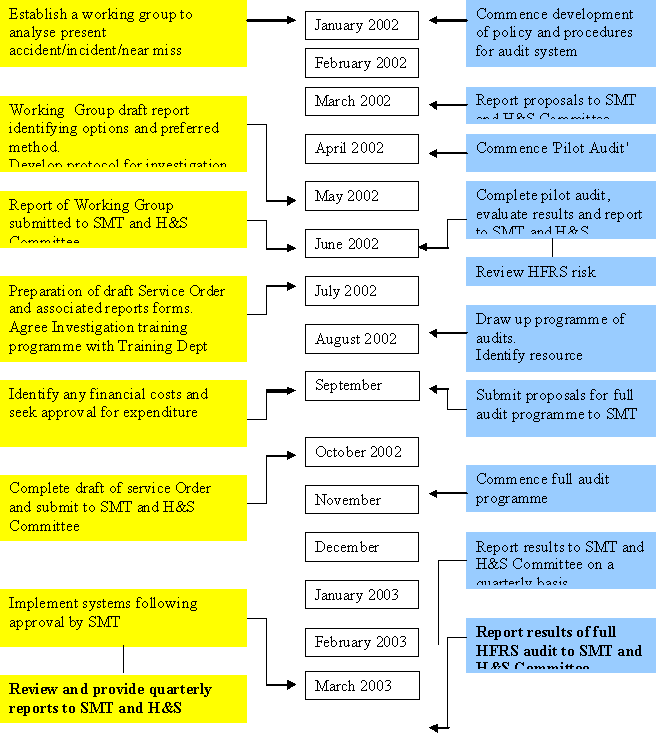
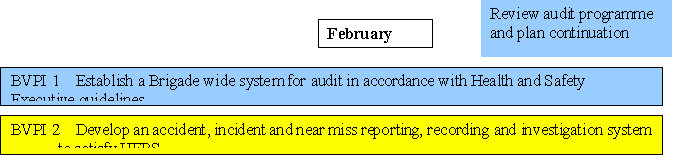
Establish a brigade wide system for audit in accordance with HSE guidelines. | |
- |
Develop an accident, incident and near miss reporting, recording and investigation system to satisfy HFRS, HSE and HMI requirements. | |
- |
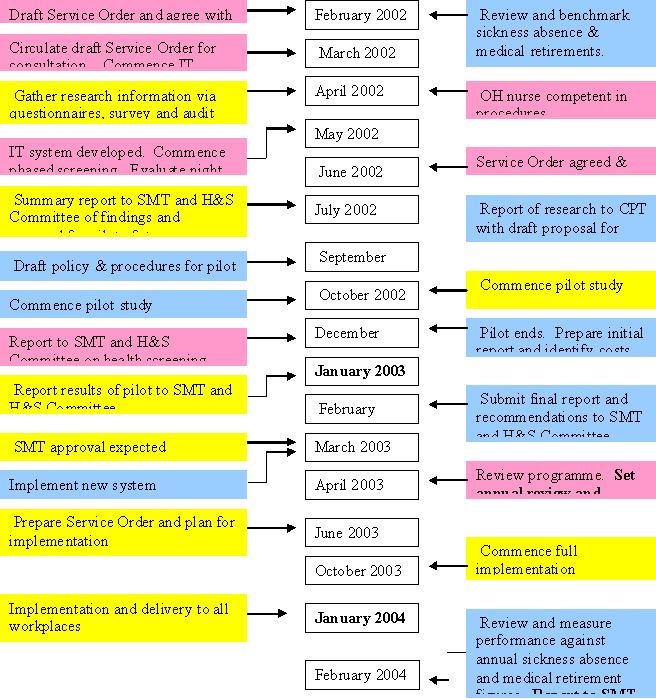
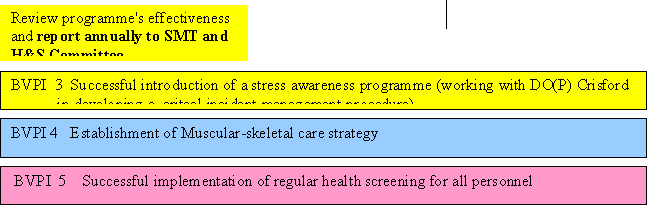
Successful introduction of a stress awareness programme. | |
- |
Establishment of a muscular-skeletal care programme. | |
- |
Successful implementation of regular health screening for all personnel. | |
Section 100D - Local Government Act 1972 - background papers | ||
The following documents disclose the facts or matters on which this report, or an important part of it, is based and has been relied upon to a material extent in the preparation of the report. | ||
Health and Safety Executive (HSE) Report HFRS Action Plan HFRS Occupational Health and Safety Strategic Plan (01 to 02) | ||
NB The list excludes: | ||
1 Published works | ||
2 Documents that disclose exempt or confidential information as defined in the Act | ||
File name - HFRA Committee 22 May 02 - Occupational Health Progress Report | ||
APPENDIX A
HEALTH, SAFETY AND WELFARE - PERFORMANCE REPORT
1 |
Progress re Strategic Plan 1/4/01 to 31/3/02 | |
1.1 |
The following is a summary of the progress made towards meeting the strategic objectives set out on the HFRS website. The numbers relate to that document. | |
2.1.1 |
Review the Occupational Health Policy - action complete. New policy on circulation. | |
2.1.2 |
Review the policy and procedures for new and expectant mothers, develop a generic risk assessment - action complete. | |
2.1.3 |
Review the policy in relation to the provision of prescription safety glasses - action complete. | |
2.1.4 |
Produce a policy and procedure for use in connection with private medical treatment applications - action complete. | |
2.1.5 |
Consider the need for a drug and alcohol testing policy. This is still current as the completion date is 31/3/03, it is being looked at by DO (P) in consultation with Occupational Health. | |
2.1.6 |
Develop procedures for medical and fitness monitoring and testing. Good progress made with this item. Service Physical Fitness Adviser being appointed to co-ordinate arrangements. | |
2.1.7 |
Develop procedures for restricted (light) duties - action complete. | |
2.1.8 |
Develop policy and procedures for critical incident defusing - action on target for completion by September 2002. | |
2.1.9 |
Review the policy and procedure for reporting and recording of Hazmat incidents - action complete. | |
2.1.10 |
Increase occupational health screening for uniformed personnel - action on target for completion, new nurse in post and policy drafted. | |
2.1.11 |
Develop welfare procedures and policy - action complete, new service order issued. | |
2.1.12 |
More flexibility for retained recruits medicals - action complete, now running evening clinics. | |
2.2.1 |
Review the system for workplace audit - review taken place, action carried into strategic plan for 2002/03. | |
2.2.2 |
Continually review the effectiveness of risk assessments - action ongoing. | |
2.2.3 |
Carry out workplace health and safety inspections - action ongoing. | |
2.2.4 |
Carry out workplace audits - action ongoing. | |
2.2.5 |
Produce an annual H+S performance report - this is it! | |
2.3.1 |
Promote health, safety and welfare at work - action ongoing. | |
2.4.1 |
Review defect recording procedures for operational equipment - action complete. | |
2.4.2 |
Monitor system for repair and replacement of PPE - action complete. | |
2.4.3 |
Ensure PPE is fit for purpose - action complete. | |
2.5.1 |
Improve integration of risk assessments for operational activities - action complete, major project undertaken vastly improving generic risk assessments, policies and fire facts information for use at operational incidents. | |
2.5.2 |
Training centre risk assessments to be made widely available - action complete. | |
2.5.3 |
Review risk assessments for the Real Fire Training Unit - action complete. | |
2.5.4 |
Carry out manual handling risk assessments for operational activities - action complete. | |
2.5.5 |
Evaluate manual handling training to ensure it is appropriate and effective - action complete. | |
2.5.6 |
Review the policy and procedure for lone workers - action complete. | |
2.5.7 |
Review policy and procedures re noise at work - action complete. | |
2.5.8 |
Develop working at height risk assessments for workshops - action complete. Fall arrest equipment purchased. | |
2.5.9 |
Review the arrangements for food safety - action ongoing with assistance from EHO consultant. | |
2.5.10 |
Review policy and procedures for controlling contractors on HFRS premises - action complete. | |
2.6.1 to 2.6.4 |
Review the procedures for accident and injury reporting, recording and investigation. Achieve reductions in days lost through injuries at work - action carried over into 2002/03 strategic plan, working party set up and details of the past year's injury statistics attached to the rear of this paper. | |
2.7.1 |
Develop an environmental management system - action. ongoing. | |
2 |
Occupational Health Service | |
2.1 |
Occupational Health Attendance | |
Employees may access occupational health either by telephone or by attending the unit and may be seen by the Occupational Health Adviser/Nurse or by the Occupational Health Physician. | ||
Annual attendance Seen by the Occupational Health Physician = 403 Seen by the Occupational Health Adviser/nurse = 609 | ||
Reasons 40+/Assorted Health Screening = 255 WT/Retained Recruit medical screening = 152 Repeat step tests = 52 LGV Medical assessments = 115 Audiometry tests = 248 Fire Behaviour Training Instructors annual screening = 18 Food Handler's annual screening (Station Cooks) = 7 Health Surveillance (Workshops) = 10 | ||
2.2 |
Ill Health Retirements | |
Ill health retirements increased slightly to 21 as opposed to 17 the previous year. (One employee was whole time and retained, therefore counted as 2 contracts) | ||
Reasons Musculo skeletal = 10 (Neck - 1 Back - 2 Knee - 5 Lower limb - 2) Mental Health = 5 (Anxiety/Depression - 4 Chronic Fatigue Syndrome - 1) Cardiovascular = 1 Vision = 2 Cancer = 1 Respiratory = 2 N.B Seven cases undecided at the end of the financial year. | ||
2.3 |
Sickness Absence | |
Monthly sickness absence meetings are attended by the Occupational Health Adviser, Welfare Adviser, DO (P/T)'s and a personnel representative. | ||
The PSD team, Occupational Health Adviser & Physician and the Personnel Manager attend monthly case conferences. Relevant notes are taken and information fed back to DO (P/T)'s. | ||
Following the interrogation of the sickness absence figures over 3 financial quarters projects have been identified for 2002/2003 which hopefully will impact favourably on future targets. | ||
2.4 |
Health Promotional Activities | |
This is an area that is still being developed with the aid of other members of the OHS&W team. | ||
Occupational Health Bulletins issued over the last 12 months include: | ||
* * * * * |
Alcohol Awareness (Merry Christmas) - December 2001 Exercise (Fit for Life) - October 2001 Coronary Heart Disease (It could never happen to you) - July 2001 Bowel Cancer (Don't sit on your symptoms) - May 2001 Smoking Awareness (Kiss it Goodbye) - March 2001 | |
3 |
Welfare Service. |
3.1 |
The Welfare Adviser, Geraldine Malley, took up the new post 1/10/01. She has quickly established herself as a valuable resource for managers and individuals. She links in closely with Occupational Health, the Fire Service National Benevolent Fund and a wide range of external agencies. |
3.2 |
Employees may access the Welfare Adviser by personal contact during normal office hours or by leaving a confidential telephone message out of hours. |
3.3 |
The Welfare Adviser attends monthly sickness absence meetings and contacts all employees by letter (and or telephone) when they have been sick for 28 days |
3.4 |
The below summarises the numbers of cases that the Welfare Adviser has dealt with in the six months ending 31 March 2002. These statistics are provided without names and by broadly summarising the issues dealt with; this is to protect individuals as the credibility of the service relies upon strict confidentiality. In some cases i.e. where a breach of HFRS policy re fairness and dignity comes to light, the matter is necessarily reported to an appropriate senior manager although this is always within the boundaries of the Confidentiality Charter. |
Work Related Issues |
Personal Related Issues |
||||||
Stress and Depression |
27 |
Debt Management |
3 | ||||
Peer Related Difficulties |
12 |
Family Issues |
1 | ||||
Anxiety Management |
6 |
Alcohol Dependency |
1 | ||||
Critical Incident |
1 |
Bereavement |
5 | ||||
Managerial Support |
7 |
Death of a Pet |
2 | ||||
Physical Injury Whilst On Duty |
1 |
Separation and Divorce |
3 | ||||
Pay Review |
6 |
Physical Health issues |
3 | ||||
Management Support |
3 |
Assault Whilst Off Duty |
1 | ||||
Suspension from Duty |
1 |
Broken Limb/Bones |
3 | ||||
Long Term Absence from Work |
7 |
||||||
Managerial Support |
3 |
||||||
Critical Incident |
6 |
||||||
Fairness and Dignity |
5 |
||||||
Transfer to Another Brigade/Station |
4 |
||||||
Referrals to other Professions/Agencies |
17 |
||||||
Referrals to the Fire Services National Benevolent Fund |
17 | ||||||
National Family Mediation |
2 | ||||||
Alcoholics Anonymous |
1 | ||||||
National Debt Companies |
4 | ||||||
Referrals to Occupational Health |
18 | ||||||
Mental Health Teams (NHS) |
4 | ||||||
General Practitioners |
11 | ||||||
Referrals to the Chaplain Service and Other Faiths/Denominations |
7 | ||||||
Referrals to Senior Management |
13 | ||||||
Liaison with FBU, RFU and Unison |
5 | ||||||
Miscellaneous |
||
Unspecified |
11 | |
Did not attend session |
8 |
Totals | |
135 employees have referred themselves to the Welfare Adviser for support. Of these 64 have received one to one sessions (which have averaged at 2.25 sessions per person). A further 35 have made telephone contact and received support over the telephone. | |
N.B Some employees presented with more than one issue and this has been reflected in the data where they may be included in more than one category. |
4 |
OCCUPATIONAL HEALTH, SAFETY and WELFARE BULLETIN |
SUMMARY OF ACCIDENT AND INJURY STATISTICS FOR THE YEAR 1 APRIL 2001 TO 31 MARCH 2002 | |
Accurate and timely reporting and recording of accidents, near misses and incidents is essential for HFRS to demonstrate its continued improvement in health, safety and welfare, and to identify areas where further improvements are necessary or achievable. HFRS adopted the targets set out in the Health and Safety Commission and Government document 'Revitalising Health and Safety' which has set an overall target to reduce the number of working days lost from work related injury and ill health by 30% by 2010, and to achieve half this improvement by 2004. HFRS has set up a small working group to review reporting, recording and investigating accidents, incidents and near misses. | |
The following summary shows figures from the previous year (2000-2001) for comparison: |
Classification |
2000-2001 |
2001-2002 | ||||||
No injury/near miss |
7 |
9 | ||||||
Work time lost injuries |
60 |
73 | ||||||
Days lost due through injuries |
*1417 |
851 | ||||||
No work time lost injuries |
152 |
165 | ||||||
Occupational illness |
2 |
1 | ||||||
Total no accident/incidents |
221 |
248 | ||||||
(* corrected figure from last year includes three injury accidents that resulted in medical retirement) | ||||||||
Breakdown by staff groups (% of total accidents/incidents) | ||||||||
Year |
WT |
RT |
Non Uniform |
Non Employee |
||||
2000-2001 |
63.3 |
33.9 |
2.3 |
.05 | ||||
2001-2002 |
74.6 |
21.8 |
3.6 |
|||||
The activities which contributed the greatest to accident | |||||
Year |
Training/drills |
Operational at Fires |
Operational Non-Fires |
Workplace | |
2000-2001 |
79 |
47 |
33 |
37 | |
2001-2002 |
115 |
37 |
13 |
52 | |
The most significant increase is shown for 'training/drills' where the main injuries were musculo skeletal i.e., pain, sprains and strains. Everyone should contribute to reducing these figures; examples of ways to reduce these injuries include improved fitness, proper warm up and following correct procedures. | |
The parts of the body most affected were similar to the previous year (back, hands, leg and ankle) and the type of accidents were also similar ('slips, trips, falls' and 'lifting/carrying'). | |
On a very positive note the reduction in days lost through injuries was from 1417 to 851 days, a reduction of 40% over the previous year. The aim now is to continue to achieve similar reductions in future years, and to reduce the number of accidents which give rise to lost working time. Near miss reporting helps to identify potential injury accidents enabling preventive measures to be put in place. Near miss reporting is a valuable means for reducing accidents and their undesirable consequences. |
APPENDIX B
Occupational Health, Safety and Welfare within Hampshire Fire and Rescue Service
HFRS Occupational Health, Safety and Welfare Strategy seeks to provide a high standard of health, safety and welfare throughout the Service by a process of continual improvement and effective working. In progressing this strategy, health and safety performance will be improved by the introduction of an audit system, and improvements in accident, incident and near miss recording and investigation procedures to satisfy HFRS, HSE and HMI requirements.
APPENDIX B
Occupational Health, Safety and Welfare within Hampshire Fire and Rescue Service
HFRS Occupational Health, Safety and Welfare Strategy seeks to provide a high standard of health, safety and welfare throughout the Service by a process of continual improvement and effective working. Occupational health and Welfare services will support the overall strategy by introducing regular health screening, development of a muscular-skeletal care strategy, and a stress awareness programme which includes procedures for critical incident management.