
Archived decisions
Hampshire County Council
Executive Member for Policy and Resources Item
6 November 2002
Review of Energy and Water Performance
Report by the Director of Property, Business and Regulatory Services
|
Contact: Keith Woodward Ext: 7938 Neil Jones Ext: 6180
Contact: Keith Woodward Ext: 7938 Neil Jones Ext. 6180
1 |
Summary | |||||
1.1 |
This report summarises the targets set to measure the use of energy and water within the County Council and describes the progress made to date in achieving them. During the Cabinet discussion on the Corporate Asset Management Plan the Leader requested further information on overall progress on energy performance. | |||||
1.2 |
The report also sets out the background information relating to the supply of electrical energy to the County Council and describes the progress being made in the purchasing of low emission/sustainable electricity in the context of the County Council's overall environmental strategy. | |||||
2 |
Energy Consumption | |||||
2.1 |
Background | |||||
The Corporate Sustainable Development Strategy (CSDS) launched in February 2001 set a target of a 10% reduction in overall energy use by the end of the 2002/03 financial year using 1999/00 as a base. The overall energy use is made up of three components - electricity, gas and oil. | ||||||
2.2 |
2001/02 Performance | |||||
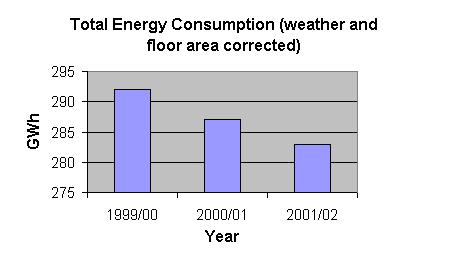
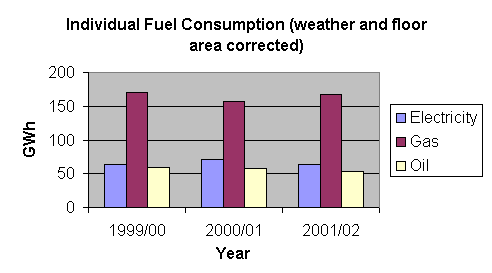
The overall energy consumed during 2001/02 may be summarised as follows: | ||||||
Fuel Consumption* (GWh) Percentage change with respect to 1999/2000 (%) Electricity 63 0 Gas 168 -1 Oil 53 -11 Total 284 -3 Combined gas and oil 221 -4 |
||||||
*rounded to the nearest GWh and corrected for weather and change in floor area of the Built Estate |
||||||
The above figures continue the downward trend in consumption for the past three years as shown below: |
||||||
|
||||||
|
||||||
2.3 |
Energy Expenditure | |||||
The annual expenditure for energy for the year was £6.3 million made up as follows: | ||||||
£'m | ||||||
Gas 1.9 Oil 0.8 Electricity 3.6 ___ 6.3 === | ||||||
2.4 |
Commentary |
2.4.1 |
From 2.2 above it can be seen that the position as at the end of the year 2001/02 was that a saving of 3% had been achieved in overall energy consumption against a target of 10% by the end of 2002/03. However it should be noted that there is a +2.5% tolerance in all the above figures and so the range of savings could be from 0.5% to 5.5%. It is therefore recommended that the targets are not changed at this stage but the strategy continues to be implemented and reviewed once the figures for 2002/03 are published which will be during the summer of 2003. |
2.4.2 |
The situation with respect to electrical consumption is very encouraging. Although it actually remained at the same level as the base year it could reasonably have been expected to increase as a result of the following factors: |
· Inexorable increase in the use of IT. · Increase in the use of electrical office appliances · Increase in the use of security lighting and CCTV · Small increase in the use of air conditioning · Changes in hours of office use | |
To maintain this trend will be very important as electricity is not only the most expensive fuel but is also responsible for the largest carbon dioxide emissions per kilowatt hour of any fuel. | |
2.4.3 |
During the last year the savings in energy consumption have been made by a combination of the following initiatives: |
· Raising awareness of the issue - it is generally accepted that good awareness by building occupants of the advantages of saving energy can result in a saving of approximately 10%. The launch of the Corporate Sustainability Strategy and its associated publicity has undoubtedly helped to achieve the 3% reduction. In particular the subject of energy and water conservation is on the agenda for the regular Management Partnership meetings which PBRS hold with every school and is also included in the governor training scheme. | |
· "Good housekeeping measures" - continuous efforts are made to ensure that all energy consuming plant is not only operated in the most efficient way but that it is also used for the shortest possible time consistent with comfort conditions. Under the new Term Engineering Maintenance contracts all plant has been checked and this could have resulted in a saving of up to 5%. | |
· "Ballard" replacement programme - this is now almost complete and has resulted in old very inefficient plant being replaced by modern plant which is some 25% more efficient. | |
2.4.4 |
The stage has probably been reached whereby any further reduction would require specific investment on energy reduction measures and the following areas are suggested: |
|||||||||||
· Electricity - as illustrated above, this is a major area of concern and needs to be addressed. The growth of IT and other electrical equipment probably has to be accepted, but lighting generally accounts for approximately 70% of a building's electricity use and therefore there is considerable scope for reduction. As an example a typical SCOLA primary school would cost £15,000 to relight and would result in annual cost saving of approximately £800 and an annual carbon dioxide reduction of 5.7 tonnes. However it can be seen from these figures that the "payback" from such an investment would be approximately 18 years on purely economic grounds. In normal circumstances using conventional financial criteria such a payback period would not be considered in the light of other priorities which the County Council has committed itself to. However in light of the increasing public awareness of sustainability issues this position may need to be reviewed in the future. | ||||||||||||
· Heating controls - the installation of more modern controls should save about 10% of a building's energy and has a "payback" period of approximately four years. For a school, a typical cost to undertake this work is £1,500. It is therefore recommended that a rolling programme is introduced with an agreed budget of £30,000, allocated from Capital Repairs commencing 2003/04. | ||||||||||||
· Fuel changes - currently there is typically a 25% difference between the price of oil and gas with a similar reduction in carbon dioxide emission. It is therefore recommended that an annual budget of £50,000 is allocated for converting from oil to gas-fired plant which would be budgeted for in the 2003/04 Capital Repairs allocation. | ||||||||||||
3 |
Carbon Dioxide | |||||||||||
3.1 |
Background | |||||||||||
The Corporate Sustainable Development Strategy set a target of a 10% reduction in carbon dioxide emissions by the end of the financial year 2001/02 using the base year of 1999/00. CO2 reduction is important in connection with global warming as it reduces the "greenhouse effect". | ||||||||||||
3.2 |
2001/02 Performance | |||||||||||
The carbon dioxide emitted from the County Council's buildings during this period may be summarised as follows: | ||||||||||||
CO2 emissions (tonnes) Fuel 1999/00 2000/01* 2001/02* Electricity 28,000 31,000 28,000 Gas 32,000 30,000 32,000 Oil 15,000 15,000 13,000 Total 75,000 76,000 73,000 |
||||||||||||
*rounded to the nearest thousand and corrected for weather and floor area |
||||||||||||
3.3 |
Commentary |
|||||||||||
From 3.2 it can be seen that whilst the corrected figure for carbon dioxide emission has reduced by 2,000 tonnes (ie approximately 3%). However the actual figure has increased by 5,124 tonnes (ie 6.8%) due to the effects of the weather and the increase in floor area of the Built Estate. It is therefore recommended that all future targets refer to "corrected" figures. The measures proposed in 2.3.4 above will help to maintain this downward trend. However, it should be noted that about 1,000 tonnes of CO2 has been saved in the financial year 2001/02 due to the purchase of Climate Change Levy (CCL) exempt electricity. For further details and an explanation of CCL, see 5.8 below. |
||||||||||||
4 |
Water | |||||||||||
4.1 |
Background | |||||||||||
The Corporate Sustainable Development Strategy set a target of a 5% reduction in the use of water by the end of the financial year 2001/02 over the base year of 1998/99. Furthermore this target was reduced by a further 5% for the year 2002/03. | ||||||||||||
4.2 |
2001/02 Performance | |||||||||||
The water consumed by the County Council during this period was: | ||||||||||||
Year Volume* (cubic metres) 1999/00 949,013 2000/01 986,499 2001/02 948,585 | ||||||||||||
*not corrected for occupancy level | ||||||||||||
4.3 |
Commentary | |||||||||||
4.3.1 |
Water consumption increased for the year 2000/01 probably due to increased loss of water as a result of leakages caused by flooding and associated water table level rises. |
|||||||||||
4.3.2 |
The consumption for the year 2001/02 is now approximately the same as the year 1999/00 but a further correction needs to be made for occupancy levels as these significantly affect the amount of water consumed. The required information (ie the equivalent full time numbers of staff and pupils) is not yet available but once it is, the appropriate correction will be made and subsequently reported. |
|||||||||||
4.3.3 |
In order to reduce water consumption further it is recommended that the following investments are made: | |||||||||||
· An annual sum of £50,000 to replace "leaking" mains water supplies. | ||||||||||||
· An annual sum of £25,000 to install new taps, urinal controls | ||||||||||||
However, because the financial benefit of water reduction measures is in most cases with "the user" of the building there may be a case for discussion in future years about joint funding such works. In particular schools will have increasing sums of capital money delegated direct to them which could be partly allocated to this issue and result in a "payback" for them. | ||||||||||||
4.3.4 |
The emergence of a competitive supply market has been limited to customers with large, single site requirements and there are no immediate prospects for the County Council to invite tenders for its requirements. However, the department will continue to develop the records that will enable any future exercise to be successful. | |||||||||||
5 |
Renewable Energy | |||||||||||
5.1 |
Background | |||||||||||
The background to the purchase of green electricity and meeting County Council targets is complex. The government published target for the use of green electricity (Note 1) is 10% by 2010. The County Council took its lead from this initiative and has published its own green targets within the Corporate Sustainable Development Strategy. The Council set two targets for the use of energy from a sustainable source, these being 5% of total energy consumption by 2002/03 and 10% by 2010. This target has been generally interpreted as the purchase of "green" electricity but it is recommended that other renewable energy sources are investigated (eg wind, solar, wood). | ||||||||||||
Note 1 `Green' electricity is electricity is generated from a specific renewable resource. `Brown' electricity meets none of the Government's environmental criteria, but is usually the most competitively priced. | ||||||||||||
5.2 |
The current total annual energy usage (uncorrected) by the Council is approximately: Electricity 69 GWh (excludes street lighting) Gas 185 GWh (excludes LPG) Oil _58 GWh Total 312 GWh | |||||||||||
Both gas and oil are primary sources of energy and are inherently non-renewable. This means that in order to meet the target in relation to the Council's total use of energy, the targets for gas and oil must be converted into a value for electricity, which is the only secondary energy source. Therefore, 5% of the total energy consumption of 312 GWh is 15.6 GWh, and 10% is clearly 31.2 GWh. | ||||||||||||
5.3 |
Corporate energy consumption (that is, excluding schools) is estimated to be approximately 78 GWh. | |||||||||||
5.4 |
The County Council only has direct control over budgets not delegated to schools. An indication of annual consumption figures for electricity at non-educational sites is shown below: | |||||||||||
HQ buildings 6.4 GWh Social Services sites 6.5 GWh Other sites 6.9 GWh Total 19.8 GWh | ||||||||||||
5.5 |
Against our total energy usage (312 GWh), it will be difficult to meet the 5% target and impossible to meet the 10% target without the involvement of schools. The impact on budgets for these sites is difficult to predict accurately, but converting from brown to green electricity is likely to increase costs by between 5 - 10%. There is little evidence that schools are aware of this issue and there has been no concerted effort to sign them up to the additional costs of green energy. The results of such an effort are currently uncertain. | |||||||||||
5.6 |
The recent tender exercise for electricity for small, monthly invoiced sites (reported to the Executive Member for Policy and Resources on 12 September 2002) indicated that the premium for supplies from renewable sources would be around 6%. Taking this figure as a guide, it can be estimated that the additional cost of green electricity to achieve the 5% target would be in the area of £50,000 per annum (assuming that it would be practically possible to secure around 16 GWh of electricity produced from renewables). This additional cost is modest in relation to total expenditure on energy, but these costs could fall on a relatively small number of individual budget holders. It may, therefore, be appropriate to establish a specific corporate provision to meet these costs and this matter will need to be considered during the preparation of budgets for 2003/04. | |||||||||||
5.7 |
The availability of green electricity is very limited. Currently only around 3% of electricity consumed in the UK is generated from a renewable source. This suggests that the Government will struggle to meet its own target of 10% by 2010. Green electricity is sold by the generators to the regional suppliers by auction at a premium price. These regional suppliers sell to consumers, usually on a first come first served basis and even at a premium price, the available green capacity is quickly taken up. Real, meaningful benefit will only be achieved from an increase in renewable capacity over time. | |||||||||||
5.8 |
Procurement of electricity | |||||||||||
The County Council purchases its electricity through the following formal contract arrangements: | ||||||||||||
Contract Supplier(s) Comments (a) Small sites (monthly invoice) approximately 85HCC sites Scottish and Southern New contract wef 01.10.02 with 16% price reduction. New value £531,000 pa (b) Small sites (quarterly) approximately 1250 sites British Gas Trading Approximate value £1.5 million. Renewal due 01.04.03 (c) Large sites (over 100 kWh) approximately 60 sites Scottish and Southern London Electricity N Power (was Yorkshire Electricity) Approximate value £1.3 million. Renewal due 01.11.03 | ||||||||||||
The total value of electricity purchased on behalf of the County Council is approximately £3.6 million per annum. The County Council also purchases electricity on behalf of several external organisations and the participation of these increases the annual value of the contracts by around £900,000. All contracts are subject to EU Directives and Council Standing Orders. | ||||||||||||
5.9 |
The smallest of these contracts was recently tendered and has been awarded to Scottish and Southern Electricity for the supply of electricity exempt from the Climate Change Levy (CCL). See Note 2 The larger contracts pre-date the policy commitment to green electricity and the County Council is not currently purchasing any energy from renewable sources. However, the overwhelming majority of the Council's electricity contracts will be tendered over the next 9 months and subject to the appropriate approvals, it should be possible to implement significant change by the end of next year. Note 2 The climate change levy was introduced by the Government in April 2001 as a charge on the use of energy. The rate of the levy is dependent on the type of fuel and for electricity the CCL was established at 0.43p/kWh. Exemptions form the CCL are granted for electricity produced by means of more environmentally friendly processes and this can offset most or even all of the additional cost of these supplies. The electricity purchased by the County Council that is exempt from the CCL does not count towards the target for energy detained from renewable sources. | |||||||||||
5.10 |
It can be anticipated that prices for the small sites will move down when tenders are received in December this year, but the outcome for the large sites contract next year is more difficult to predict at this stage. The County Council's requirements for gas supplies (some 200 GWh) will also be tendered in 2003. The Council will again have the opportunity to purchase its gas as part of a larger contract through the Central Buying Consortium. At a broad level, the plan for the electricity contracts will be to maximise the involvement of corporate sites rather than educational premises, but it must be remembered that to meet the Council's current 5% target would require well over three-quarters of the electricity used at non-educational sites to come from green sources. There is a growing perception that this represents a very ambitious proposal. | |||||||||||
5.11 |
Steps have already been taken to improve the Council's environmental performance by converting the electricity purchased through the two Scottish and Southern contracts from `brown' to Climate Change Levy exempt. Through these contracts, the County Council is buying some 18 GWh of electricity that is generated from a highly efficient, gas powered, combined heat and power (CHP) generator. This is equivalent to around 5% of total energy consumption. The direct benefit is a significant reduction in the level of pollution from CO2 emissions of around 25%, which at current consumption levels should generate a reduction of 2,000 tonnes per annum. | |||||||||||
5.12 |
The whole CSDS is to be reviewed within the next 6 months and it follows that the County Council may amend or retain the current targets for energy from renewable sources. At present, the 5% target equates to some 16 GWh of electricity. As a result of the review, the Council could choose to reduce its commitment, it could extend the timetable to achieve the 5% target or it could even relate the initial target to corporate energy consumption only by excluding schools (which would reduce the required volume to some 4.6 GWh). It is expected that the outcome of the review will be reported to the Corporate Management Team and Members for approval in 2003. | |||||||||||
5.13 |
Energy prices can vary considerably over time and the detailed budgets of both schools and departments will reflect these changes. However, the total sums available to the County Council are fixed at a global level and changes in energy costs are unlikely to drive changes in the overall allocations. Therefore, in practical terms budget holders will face additional financial pressure when prices rise faster than the general allowance for inflation and will benefit when prices fall. The Council will need to take a view as to whether the costs of implementing the corporate strategy should be regarded as a normal budget pressure for those sites that are affected or whether a central provision should be established for 2003/04, which could then be used to support implementation of this policy. The impact of a strategic decision to purchase 5% of energy from renewable sources in the form of green electricity is likely to be between £40-80,000 on an annual basis. |
|||||||||||
6 |
Ecotricity - an introduction |
6.1 |
The department is investigating the use of other forms of renewable energy (wood fired plant, solar energy and wind energy), but early indications are that they will all require significant extra funding in order to make them viable. The results of these investigations will be the subject of a further report. Some early discussions have also taken place regarding the purchase of electricity generated from wind power with a supplier called Ecotricity. Projects of this nature are clearly for the long term and have implications beyond a traditional supply agreement. |
6.2 |
Ecotricity was established in the UK in 1995, and claims to be the first company in the world dedicated to providing electricity that does not damage the environment. Their policy is to build wind turbines with no financial risk to customers and to deliver green electricity at the same price as brown. In order to deliver this aim, customers are required to enter into a 12 year purchase agreement . |
6.3 |
Ecotricity will either build on-site turbines or supply electricity from off-site turbines. They will build, own and operate the turbines, managing the whole process from planning to construction. For on-site turbines, a feasibility study is required to determine the potential of the site. This study will include the following criteria: |
· a good wind resource · adequate road access · electricity grid connections nearby · no residential properties within a 500m radius. | |
Where the electricity is not supplied to a specific site, Ecotricity require a site with a minimum lease period of 30 years to be available. Existing customers include Sainsburys, The Body Shop, B&Q, The Co-Operative Bank and EMI. | |
6.4 |
In order to pursue an arrangement with Ecotricity, the County Council will need to be prepared to commit to a long-term agreement, clarify the impact of EU Directives on Procurement and consider the political and practical implications of building wind turbines in Hampshire. As previously indicated, any arrangement of this nature is likely to require wide consultation and is likely to take several years to implement. |
7 |
Conclusions |
It is concluded that with the exception of the renewable energy target, good progress has been made in meeting the targets set by the Corporate Sustainable Development Strategy. The County Council will have opportunities to make contracts for green electricity in 2003 as part of its normal contracting programme, but these purchasing decisions will need to be driven by the review of the Corporate Sustainable Development Strategy and specific approval for the additional costs involved. | |
Recommendation(s) | |
That: |
|
1 |
That the progress made in achieving a reduction in overall energy consumption is noted. |
2 |
The following annual allocations are made from the Capital Repairs Budget with effect from 2003/04. · £30,000 for installation of modern heating to controls · £50,000 for converting oil to gas fired plant · £50,000 to replace `leaking' mains water supplies · £25,000 to install new taps and urinal |
3 |
The purchase of "green" electricity is pursued in the separate tender exercises to be undertaken in 2003, subject to the corporate targets, cost and availability. |
4 |
Further research into the cost effectiveness of other renewable energy sources (eg solar, wind, tide, geothermal and bio-energy) is undertaken. |
Section 100 D - Local Government Act 1972 - background papers
The following documents disclose facts or matters on which this report, or an important part of it, is based and has been relied upon to a material extent in the preparation of this report.
NB the list excludes:
1 Published works
2 Documents which disclose exempt or confidential information as defined in the Act
........................
........................
EMP&R1102B