Hampshire Fire and Rescue Authority Personnel Committee Item 3 2 April 2003 Establishment Report Report of the Chief Fire Officer |
Contact: Jennifer McNeill, Personnel Manager - 023 8064 4000 ext 5241 |
1 |
Summary |
|
|
1.1 |
The Service's establishment has been subjected to a series of alterations in the last 12 months. This report therefore brings the Committee up to date on the establishment, as of 23 February 2003. |
|
|
1.2 |
The paper also reports on other key factors that influence the establishment; absence levels and medical retirements, detailing actions taken during the last 12 months to reduce these levels. |
|
|
2 |
Current Establishment |
|
|
2.1 |
People, as a resource within the organisation, are always under the constant review of changing service delivery requirements, new legislation and central government initiatives. |
|
|
2.2 |
The establishment level is influenced by the retirement profile, age and health of the workforce. Establishment reports are now produced on a monthly basis for all employee groups, wholetime and retained, control staff and non uniformed support and specialist employees. This aids human resource forecasting and identifies particular staffing needs. It is the key to good planning and helps to achieve our corporate aim of using resources most effectively. |
|
|
2.3 |
Establishment change is governed by a formal approval mechanism in which additions and reductions are only made in line with authorised growth bids. Within the last 12 months `Bridging the Gap' constituted a substantial growth bid for the service. This bid details identified requirements and amendments to establishment in line with central government initiatives, legislation and identified shortfalls, it also listed establishment reductions across all employee groups. This gave the Service an opportunity to review the establishment as a whole and not just the posts subject to change. |
|
|
2.4 |
The tables below reflects the current establishment figures as at 23 February 2003. |
Wholetime Establishment
Rank |
Establishment |
Actual |
CFO |
1 |
1 |
DCFO |
2 |
2 |
SDO |
4 |
4 |
DO |
19 |
10 |
ADO |
20 |
17 |
StnO |
48 |
51 |
SubO |
100 |
91 |
LFf |
100 |
108* |
Ff |
492 |
521* |
Total |
805 |
805 |
* Over establishment due to temporary promotions at senior ranks pending Group Commander Assessment and Development Centre results and substantive postings, also includes trainees in training
Retained Establishment - 24 Hour Cover Units
Rank |
Establishment |
Actual |
SubO |
46 |
45.5 |
LFf |
110 |
91.3 |
Ff |
465 |
429.5 |
Total |
621 |
566.25 |
Control Establishment
Establishment (FTE) |
Actual (FTE) |
40 |
40 |
Non Uniformed Establishment
Establishment (FTE) |
Actual (FTE) |
278 |
255 |
2.6 |
Establishment management is now a key deliverable with a focus on human resources strategy, planning, recruitment and retention, induction, probation, performance management, personal development plans, Integral Personal Development System, career development and accelerated promotion for wholetime personnel. |
|
|
2.7 |
Safety and Risk Management Report |
|
|
|
Considerable focus in this year's key tasks has been directed towards positive health and safety projects aimed at reducing work related sickness and injury, specifically musclo-skeletal injuries and stress related absences. Examples of this have been enlistment of a private physiotherapy clinic to deliver early remedial treatment to individuals as well as a pilot stress reduction programme in Fire Control. This is an employee group identified, both locally and nationally, as a high risk group. |
|
|
2.8 |
In the forthcoming year the work of the Health and Safety Team, which includes the Occupational Health Unit, will be to complement the wider commitment to reduce absence by preventing avoidable work related injuries and illness. In association with this, the work of the Service Fitness Adviser is to continue the programme of improving the physical fitness of all staff through health awareness, training and assessment. |
|
|
3 |
Managing Sickness Absence - Policy Development |
|
|
3.1 |
The Service is working hard to improve its attendance management as a whole and an integral element of this is enhanced sickness absence management. One of the key tasks of the Service is to reduce sickness absence and the Corporate Plan states that, by 2003, the Service will reduce the number of working days lost through work-related injuries and ill health by 20%. In view of this the Service agreed with Local District Audit a review of our absence management process, the report of which will be published in March 2003 this will provide a useful independent review of our strategy to date and guidance for future development. |
|
|
3.2 |
As part of this same process, Service Order 1/2/8 `Sickness Absence Management' is currently under review. The emphasis of the overhaul is to provide a more structured, and therefore consistent, approach to the management of sickness absence. Some key elements of the current procedure will be enhanced, eg, return to work discussions, whilst some additional, new areas will be incorporated into the Service Order to encourage best practice. |
|
|
3.3 |
Furthermore, a series of supplementary guidance notes has been produced to be used in conjunction with the Service Order, to promote greater consistency by giving clear guidelines to managers as to how best to manage absence. |
|
|
3.4 |
Finally, a series of Sickness Absence Management Workshops are to be arranged for all employees with supervisory responsibilities. A pilot workshop was held in January 2003 and it is intended that future workshops will be held on a regular basis, commencing in April 2003. |
|
|
4 |
Absence Levels Due to Sickness |
|
|
4.1 |
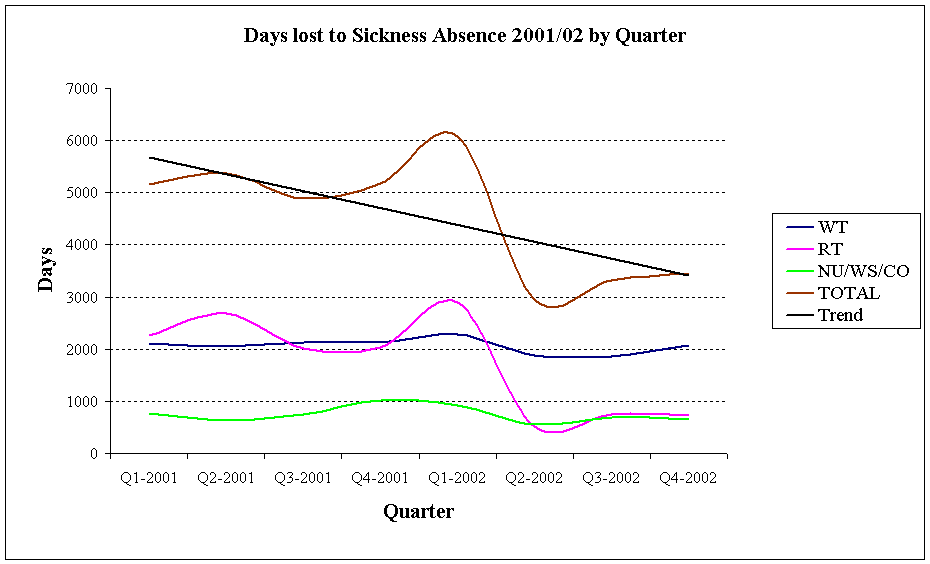
The Service is committed to improving its attendance levels and a key factor in achieving this is through the reduction of sickness absence. Progress has already been made in this area, as illustrated in the graph at Appendix A. |
|
|
4.2 |
Days lost due to sickness absence are recorded under 2 separate categories. The figures shown in the tables overleaf reflect sickness absence data for the period from 1 April 2002 to 31 December 2002 (annual figures will be available in April 2003): |
|
|
|
|
|
|
|
|
|
| |
|
|
|
|
|
|
|
|
| |
|
BVPI 12(a) |
Working days/shifts lost to Sickness Absence- Wholetime Staff |
| |
|
|
|
|
|
|
|
|
| |
|
|
|
|
|
|
|
|
| |
|
|
Out Turn |
Target |
Variance |
|
|
|
| |
|
2002/03 |
10.0 |
8.5 |
-1.5 |
* |
|
|
| |
|
2001/02 |
11.3 |
8.5 |
-2.8 |
|
|
|
| |
|
2000/01 |
n/a |
n/a |
n/a |
|
|
|
| |
|
* based on actual results April-02 to Dec-02, extrapolated for final qtr. |
| |
|
|
|
|
|
|
|
|
| |
|
|
|
|
|
|
|
|
| |
|
BVPI 12(b) |
Working days/shifts lost to Sickness Absence All Staff |
| |
|
|
|
|
|
|
|
|
| |
|
|
|
|
|
|
|
|
| |
|
|
Out Turn |
Target |
Variance |
|
|
|
| |
|
2002/03 |
8.3 |
8.0 |
-0.3 |
* |
|
|
| |
|
2001/02 |
14.0 |
8.0 |
-6.0 |
|
|
|
| |
|
2000/01 |
n/a |
n/a |
n/a |
|
|
|
| |
|
* based on actual results april-02 to Dec-02, extrapolated for final qtr. |
5 |
Ill Health Retirements |
|
|
|
The tables below illustrate the level of ill health retirement: |
% Employees Retiring Through Ill Health - Firefighters Pension Scheme
BVPI 15(a)
Financial |
|
|
|
|
|
Hampshire |
|
Year |
1st. Qtr |
2nd. Qtr |
3rd.Qtr |
4th. Qtr |
Forecast/ |
Target |
Variance |
|
(Apr-Jun) |
(Jul-Sep) |
(Oct-Dec) |
(Jan-Mar) |
Out-Turn |
|
|
2003/04 |
|
|
|
|
|
|
|
2002/03 |
0.40% |
0.26% |
0.13% |
|
1.05% (6) |
1.70% |
0.65% |
2001/02 |
na |
na |
na |
na |
2.40% |
1.70% |
-0.70% |
2000/01 |
na |
na |
na |
na |
1.60% |
not set |
|
1999/00 |
na |
na |
na |
na |
2.90% |
not set |
|
- 5 -
% Employees Retiring Through Ill Health - Local Government Pension Scheme
BVPI 15(b)
Financial |
|
|
|
|
Hampshire |
|
|
Year |
1st. Qtr |
2nd. Qtr |
3rd.Qtr |
4th. Qtr |
Forecast/ |
Hampshire |
Variance |
|
(Apr-Jun) |
(Jul-Sep) |
(Oct-Dec) |
(Jan-Mar) |
Out-Turn |
Target |
|
2003/04 |
|
|
|
|
|
|
|
2002/03 |
0.43% |
0.00% |
0.43% |
|
1.15%(2) |
0.45% |
-0.70% |
2001/02 |
na |
na |
na |
na |
0.00% |
0.45% |
0.45% |
2000/01 |
na |
na |
na |
na |
0.00% |
not set |
- |
1999/00 |
na |
na |
na |
na |
0.80% |
not set |
- |
5.1 |
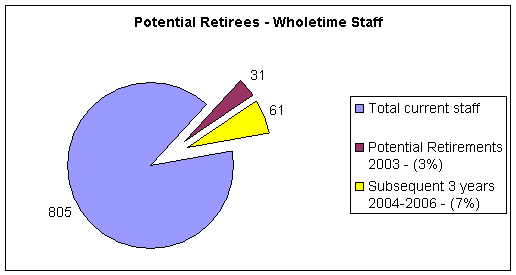
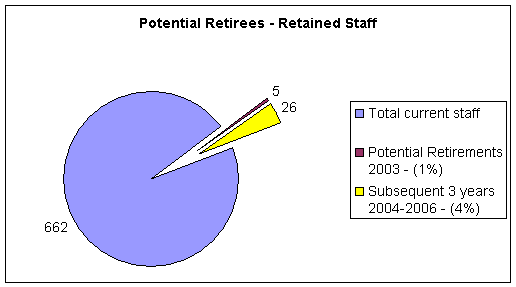
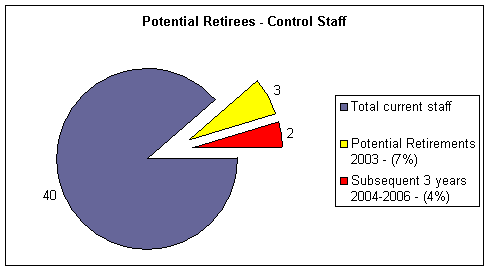
The pie charts given at Appendix B show potential retirements over the next 4 years. |
|
|
5.2 |
Termination of employment on grounds of ill health can either be due to premature retirement on grounds of permanent ill health, or termination on medical capability grounds where the condition is not permanent but recovery, or return to work, is not expected within a reasonable timeframe. |
|
|
6 |
Conclusion |
|
|
|
2002/03 has been a year of installing new systems for planning and forecasting more accurately the establishment needs of the service. At the same time considerable efforts have been made to reduce absences both by clinical and preventative interventions as well as managerial control. I am pleased to report that whilst more needs to be done the performance indicators above illustrate this work is beginning to pay dividends. |
|
|
7 |
European Convention on Human Rights and the Human Rights Act 1998 |
|
|
7.1 |
The proposals within this report are compatible with the provisions of the European Convention on Human Rights and the Human Rights Act 1998 and considered in the light of the Race Relations (Amendment) Act 2000. |
|
|
8 |
European Convention on Human Rights and the Human Rights Act 1998 |
|
|
8.1 |
The proposals within this report are compatible with the provisions of the European Convention on Human Rights and the Human Rights Act 1998 and considered in the light of the Race Relations (Amendment) Act 2000. |
|
|
Recommendations |
|
|
1 |
That the report be noted. |
- 6 -
Section 100D - Local Government Act 1972 - Background Papers The following documents disclose the facts or matters on which this report, or an important part of it, is based and has been relied upon to a material extent in the preparation of the report. None. Note: The list excludes: (1) Published works (2) Documents that disclose exempt or confidential information as defined in the Act (3) Supporting Reports: Personnel Committee Report March 2002 `Title' |
cehC/H/EstabilshmentReport
14 March 2003
APPENDIX B
|
Notes: Based on either reaching 30 years Service or age 55 figures adjacent to slices indicate number of staff percentages given in Key. |
|
Notes: Based on reaching age 55 figures adjacent to slices indicate number of staff percentages given in Key. |
APPENDIX B (Continued)
|
Notes: based on reaching age 60 figures adjacent to slices indicate number of staff percentages given in Key.
|
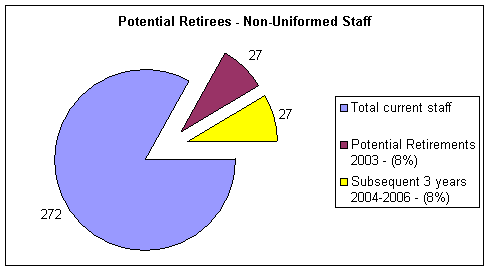
|
Notes: based on reaching age 60 figures adjacent to slices indicate number of staff percentages given in Key. |
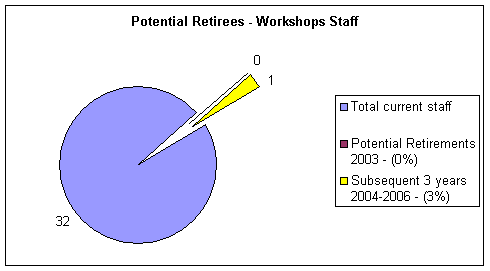
|
Notes: based on reaching age 60 figures adjacent to slices indicate number of staff percentages given in Key. |
cehC/H/EstabilshmentReport
14 March 2003