
Archived decisions
Commissioning Plan
Physical Disability and Sensory Services
2003 Onwards
TABLE OF CONTENTS
1. INTRODUCTION 3
2. VISION 3
3. PHILOSOPHY 3
4. AIMS OF THE SERVICE 4
5. SERVICES 4
6. CONTEXT 5
7. THE NATIONAL AGENDA 5
8. THE LOCAL CONTEXT 6
8.1 Demographic and Epidemiological Information 6
8.2 Hampshire Social Services 8
9. PHYSICAL DISABILITY AND SENSORY SERVICES 8
10. FINANCE 9
11. HUMAN RESOURCES 11
12. TRENDS 12
13. PERFORMANCE ASSESSMENT FRAMEWORK 13
14. KEY MESSAGES FROM OUR USERS AND CARERS 16
15. LOCALITY CONSIDERATIONS 17
16. SUMMARY OF ACHIEVEMENTS AGAINST
PREVIOUS PLAN 18
17. KEY PRIORITIES/OBJECTIVES 19
17.1 Access to Services 19
17.2 Participation 19
17.3 A Confident and Competent Workforce 19
17.4 Management Information 20
17.5 Promote Independence 20
17.6 Valuing Users and Carers 21
17.7 Best Value Services 21
18. ACTION PLAN 22
1. Introduction
1.1 This document outlines the strategic direction of Physical Disability and Sensory Services within Hampshire Social Services. It places this within the context of Hampshire's Corporate Strategy and Hampshire Social Services' Departmental Strategy, outlining our current position and performance along with objectives and our action plan for future achievement.
1.2 This plan has been developed in conjunction with operational team managers for consultation as we are keen to ensure the inclusion of the views of staff, users and carers.
2. Vision
2.1 By working in partnership we will ensure consistent quality services, promoting independence, choice, empowerment, skills, rights and participation.
2.2 The year 2003 has been designated the European year of Disabled People the theme of which `Promoting Rights and Participation` fits well with this vision.
3. Philosophy
3.1 Hampshire Social Services supports the Social Model of Disability which defines disability as the disadvantage or restriction of activity caused by society which takes little or no account of people who have impairments and this excludes them from mainstream activity.
3.2 Independent living is the concept of empowering disabled people to control their own lives and to have the freedom to participate fully in the community and as such it is not the name of a particular service or provision but should be the objective of all services and provision.
3.3 This emphasis does not overlook the extent to which services are responsive to severely deteriorating disabilities, including those moving into palliative care and support to carers etc.
3.4 We are committed to establishing effective partnerships with users, carers, voluntary and statutory organisations in order to successfully meet independent living goals.
3.5 Disabled people remind us that choice, access to the environment, work and leisure together with access to a range of goods and services is as critical to community living as are the basic requirements of care and support.
3.6 Within this context, staff involved in physical disability and sensory services need to offer a consistent, high quality and accountable service managing the care pathways across agency boundaries.
4. Aims of the Service
4.1 The aims of Physical Disability and Sensory Services match the aims of Social Services as a whole which are -
¬ Promoting independence and personal development
¬ Protecting vulnerable adults and children
¬ Arranging services which are accessible, convenient and user centred
¬ Striving for best value and greater consistency across Hampshire
¬ Ensuring that our workforce is competent and confident
¬ Developing our partnerships with other agencies
5. Services
5.1 Physical Disability and Sensory services encompass both assessment and provider services which are focussed on disabled people and those with sensory impairment - appendix 2 details the services.
5.2 Care Management , Day Services, Domiciliary and Residential Services focus largely on people of working age paying attention to transition from younger persons and to older peoples services.
5.3 Occupational therapy, Direct Payments, Equipment, Technician and Sensory Services work with people of all ages. For these services, the vast majority of service users are older people (80%) with a significant proportion of children (4%).
5.4 Services operates within the mixed economy of care and there are a number of key voluntary sector players with whom we have relationships and have negotiated partnership approaches to delivering services jointly to provide advice, information and equipment.
6. Context
6.1 Detailed analysis of the external environment in which we are operating has been undertaken. The main drivers are the legislation, guidance and performance indicators from central government; the ageing population with the subsequent increase in people with disability balanced against the reduction of the numbers of people of working age; a national shortage of key professionals and available resources.
7.1 There are specific key government documents targeted directly at physical disability and sensory services for example the Disability Discrimination Act and Integration of Community Equipment Services as well as those targeted at other care groups for which our services are included such as the NSF for Older People .
7.2 New documents, reports and guidance are issued regularly to which we must respond.
7.3 All of the these documents are publicly available through the official websites of Department of Health (www.doh.gov.uk) and the Office of the Deputy Prime Minister (www.opdm.gov.uk )
7.4 An external reference group is currently being established for the forthcoming NSF for Long Term Conditions
8.1 Demographic and Epidemiological Information
8.1.1 Hampshire is a geographically large and generally affluent county with pockets of deprivation across the county. 40% of the population live in rural areas where accessing services can be challenging.
8.1.2 House prices remain high and attracting a health and social care workforce into the area can prove equally challenging.
8.1.3 The population statistics following the 2001 Census show that the population of Hampshire (excluding the two cities) stood at 1,240,000, an increase of 56,400 or 4.8 per cent since 1991.
8.1.4 Within Hampshire, the largest population increases since 1991 have occurred in Eastleigh (9,184 or 8.6 per cent), Winchester (8,582 or 8.7 per cent), and Fareham (8,137 or 8.2 per cent). At the other extreme, the population of Havant declined by almost 3,500 or 2.9 per cent. There were also smaller population losses in Gosport and Portsmouth. The loss of population in the south east of the County has been in complete contrast to the population growth which has occurred throughout the rest of the County. There is insufficient information available at present to identify causes, but it may be that a decline in the armed forces component of the population in Gosport and Portsmouth is at least a contributory cause.
8.1.5 There has been a marked change in the age distribution of the population, both nationally and within Hampshire. Between 1991 and 2001, the population aged under 45 years declined by 20,500 in Hampshire, and by almost 600,000 in England. By contrast, in Hampshire, the population over 65 years of age increased by over 25,000, including an increase of 7,200, or 39.6 per cent, in those aged 85 years and over. Eastleigh, Fareham, and Test Valley all experienced increases of over 50 per cent in their populations aged 85 years and over. This ageing of the population, with increasing proportions in the oldest age groups, is likely to be a continuing feature of population change for the next 40 years, unless there is a dramatic upturn in fertility rates.
8.1.6 Black and minority Ethnic communities comprise 1.9% of the population (22,800). However this figure can only be used as an approximate as the actual population distribution is not known. This population within Hampshire is disparate and hard to identify. We are working with others in community work developments in order to reach these people, as it is thought that their access to services is limited by their knowledge of their existence.
The estimated disability population, based upon Health statistics is 11% of the population, for Hampshire this is 136 400 people.
47 896 people will have a serious disability as defined by the OPCS study of disability (1985) an increase of 4% since 2001
One in Seven people (RNID statistics) have a hearing loss which means that there are 177 143 people in Hampshire who are Deaf or Hard of Hearing. At the age of 65 one on three people will have an acquired hearing loss and increased difficulties with communication.
1.8% of the total population (RNIB statistics) have a significant visual impairment - 22 320 people in Hampshire could be eligible for registration as blind or partially sighted. Visual impairment becomes more common as people get older and 1:5 people over the age of 75 have a substantial visual impairment.
8.1.7 Whilst national statistics, using medical definitions, can be used to indicate prevalence within the population they do not give information on how the disability will impact upon the individual's life- emotionally and physically. Nor do they give a complete picture of the actual numbers within Hampshire, however they do allow the identification of likely numbers and patterns of disability.
8.1.8 The number of disabled people increases with age. Under the age of 45 only approximately 6.25% of the population has a disability, but this figure rises to 70 - 75% in people over the age of 85 years. Of this latter figure 25% of men and 41% of women will have a significant disability
8.1.9 There are a number of conditions which have a low prevalence amongst the general population, but which are more likely to result in serious disability e.g. Multiple Sclerosis, Parkinson's disease, Strokes, Bronchitis and Emphysema. Other conditions which are more common, such as osteo-arthritis are less likely to result in serious disability.
8.1.10 For people with a serious disability, mobility and personal care are the most common problems. However in older people there is also an increasing prevalence of deafness and sight loss.
8.1.11 Appendix 1 contains a detailed breakdown of the population per social services area; information on disability and age; and national prevalence of neurological conditions per million population.
8.2 Hampshire Social Services
8.2.1 Since the previous commissioning plan Hampshire Social services has undergone reconfiguration so that its services are now care group based and delivered across the county to achieve greater consistency and continuity.
8.2.2 We continue to work with 11 District Councils but changes within our partner organisations in health mean that we are now working with 1 Strategic Health Authority and 7 Health Primary Care Trusts.
9. Physical Disability and Sensory Services
9.1 The Physical Disability and Sensory Services care group provides both assessment and services which are focussed on disabled people and those with sensory impairment.
9.2 The challenging task is to balance demand for services against available resources, bearing in mind current and predicted demographic changes
9.3 The application of Fair Access to Care relating to community care need and services acts as a mechanism that aims to achieve consistency and equity of access to resources across the County.
9.4 It will be important to concentrate our efforts in managing demand for services by for example signposting those who are in less need directly to equipment services and home improvement agencies.
9.5 The best value review of sensory services is looking at our partnerships, processes, and workforce to ensure people to receive a service in the most effective manner.
9.6 The number of people who were referred for assessment services during the past year is set out in the table below. The information excludes referrals to the county deaf services team and referrals made directly to equipment and technician services from nhs assessments.
Care management |
2774 |
Occupational Therapy |
10085 |
Sensory services |
1696 |
Total |
14555 |
10. Finance
10.1 The financial resources/budget is divided into pay (staffing) and non pay. To achieve consistency across the county we are working with a management consultancy1 to look at how the resources are allocated and managed across the sector.
10.2 The budget to purchase services is spent mainly on purchasing domiciliary care; day services and residential care. The remainder is spent on equipment; adaptations; and contracts for specialist services with voluntary sector providers.
10.3 The tables below show the budget for 2002/03
10.4 The pie charts below show the actual net expenditure on Services by service type for 9 months of 02/03. The chart for net expenditure for the whole of 2001/02 has been included for comparison purposes.
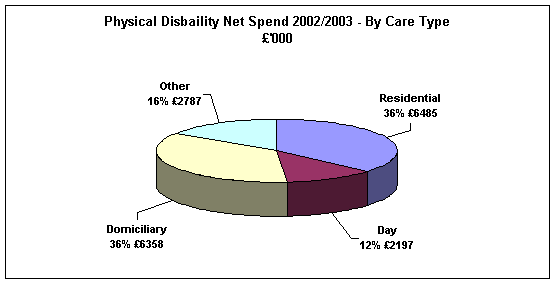
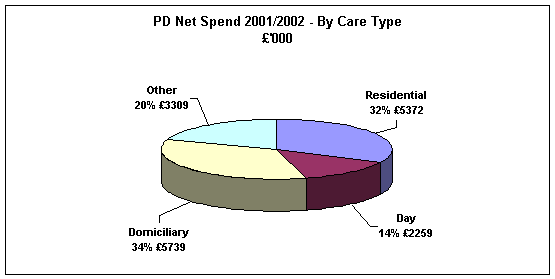
10.5 All budgets are monitored regularly and expenditure is agreed through regularly held panel meetings to ensure consistency.
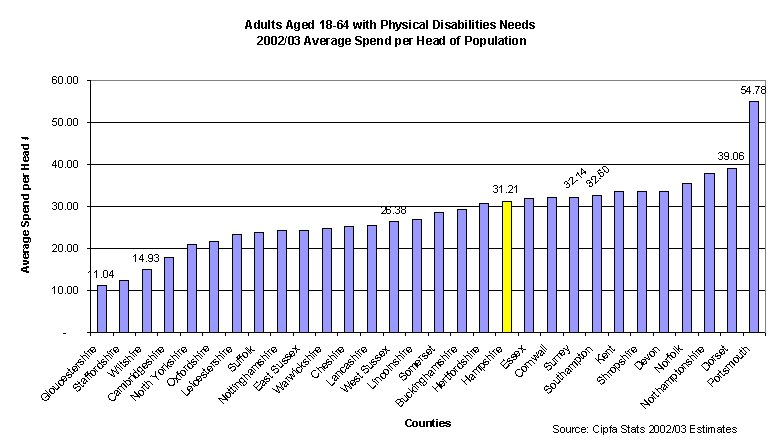
10.6 The average spend per head of population for adults aged 18-64 with physical disabilities needs is collated nationally. The range for 2002/03 £11.04 per head in Gloucestershire to £54.78 per head in Portsmouth. Hampshire spent £31.21 per head marginally less than Essex and Kent, the detail is in appendix 1.
10.7 The table below outlines the position with neighbouring authorities in the south east
Authority |
Average Spend per head |
Hampshire |
£31.21 |
Southampton |
£32.50 |
West Sussex |
£26.38 |
Surrey |
£32.14 |
Portsmouth |
£54.78 |
Essex |
£31.90 |
10.8 We will support the developments needed within our services through
¬ Energetically bidding for new funds. We have been successful in receiving additional funds to support a project officer for the Integration of Community Equipment Services, and are hoping to achieve government funding via an Invest to Save Bid led by a local voluntary organisation for a web based equipment service.
¬ Changing the way that we deliver services in order to achieve best value
11. Human Resources
11.1 We are committed to having a competent and well managed workforce to carry out the functions of the service. Critical to successful service delivery is the skill level of the workforce, the way they undertake the work interacting with others to ensure good outcomes.
11.2 In order to have a competent and confident workforce it is important to have the right team structure. Currently there is a split of models between specialist teams in some areas and multi-functional teams with a lack of clarity as to which team structure was most effective
11.3 In the interests of developing equitable and consistent practices across the county the business analysis tools of STEP (Social; Technological; Environmental; Political analysis of the external environment) and SWOT (Strengths; Weaknesses; Opportunities and Threats) were used.
11.4 It was identified that the structure most likely to be successful is specialist team management2. This will improve the focus of the services we deliver, strengthen the knowledge base of the teams and ensure a confident competent workforce. Working in this way it will be easier to develop partnerships in the NHS and District Councils.
12. Trends
12.1 Most disabled people acquire their disability during their adult life, predicting levels of demand can prove challenging.
12.2 With improved data collection it will be possible to predict year on year demand for services based on previous years activities, population figures, transitions from children's services and to older peoples services.
12.3 It will not be possible to anticipate from previous years activity the impact on the service of sudden onset of disability as a consequence of trauma(injury); acquired head injury; neurological condition either new or sudden deterioration. For example in Havant during 2002/2003 there were 3 new people who had a severe Spinal Injury.
12.4 A trend that is emerging is a reduction in residential care purchasing and an increase in nursing home purchasing. This is a consequence of our supporting people at home. We are anticipating this trend to continue.
Oct 02 |
Change |
2003/04 | ||
Care home |
98 |
-4% |
(4) |
94 |
Nursing |
90 |
3% |
3 |
93 |
OLA |
4 |
-50% |
(2) |
2 |
HCC |
20 |
0% |
0 |
20 |
12.5 There is an increase in complex moving and handling assessments being undertaken in the individuals home and subsequent increase in issuing complex equipment.
12.6 There is an increase in number of people with long term conditions who we are supporting as a consequence of increased life expectancy.
12.7 These emerging trends are consistent with the latest national information on populations, disability and sensory loss -
( www.official-documents.co.uk )
12.8 Our systems currently do not produce the detailed information we need to carry out this very detailed analyses and we intend to develop a mechanism to collect this information from our area teams to assist with future planning.
13. Performance Assessment Framework
13.1 Our performance is measured against nationally set standards and used as a comparator with other authorities. Management information from our systems to inform the performance indicators has been challenging to access and has meant that we have had to conduct sample surveys to obtain much of the information - we look forward to the development of the new computer system to overcome this.
13.2 The following is taken from the National Social Services Monitoring Report - October 2002, specific comments relating to Hampshire's performance have been added
Many social services report intentions to review or implement new organisational arrangements which indicated a sharper focus on disability services. Hampshire recognised this in its recent reconfiguration and within this physical disability and sensory services are developing specialist teams
The majority of councils report improvements in the timeliness of and the number of people receiving equipment along with progress against national targets for equipment services .... Organisational changes in health have generated delays nationally - concerted action is needed to accelerate the process. A commissioning officer has been appointed with the specific remit of monitoring existing contracts and implementing the ICES agenda in Hampshire.
Many councils report plans to expand Direct Payments but often the targets are unambitious. Hampshire continue to be the national leader in the uptake of Direct Payments having 600 users across all care groups
All councils have developed Welfare to Work Joint Investment Plans and some are addressing this agenda at a corporate level. Councils are prioritising further links with employers and a range of partners. A strategic steering group has been formed led by social services including economic development, local employer and jobcentre plus. The group recently supported an awareness raising business conference.
The proportion of younger physically disabled people helped to live at home has shown slight growth from 3.9 per 1000 in 2000/01 to 4.1 in 2001/02. The Hampshire figure shows an increase from 1.6 to 5.2 in 2002 which reflects the attention paid to gathering the information to inform this indicator
Implementation of guidance on Deaf/Blind Services has produced a mixed picture nationally with 40% reporting some and 33% reporting good progress. To meet this target Hampshire has contracted with a voluntary organisation (Deaf Blind UK) - this will be reviewed as part of the Best Value Review of Sensory Services.
13.3 The key national Performance Assessment Framework (PAF) Indicators tabulated below and which apply to this care group are -
· C29 Adults with Physical Disabilities helped to live at home - this indicator covers people receiving any amount of care, so is being used to show how much low level care is provided. Such care can prevent or postpone a person needing more intensive care packages or residential care. The figure represents the number of adults with physical disabilities helped to live at home per 1 000 population aged 18 - 64 years.
There was a 231% increase in this indicator in Hampshire for 2001/02 as a consequence of the detailed attention paid during this year to collecting and collating all relevant information.
· D38 Percentage of equipment costing less than £1 000 delivered within three weeks - this includes all equipment and minor adaptations that do not require structural work. The timeliness of delivery and installation of these items can make a tremendous difference to the quality of life and independence of service users.
There was a 6% decrease in this indicator in Hampshire as we included minor adaptations for the first time as directed by the SSI - had these been excluded as in previous years then the indicator would have been 91%
13.4 Physical Disability and Sensory Services are linked to a range of other indicators as part of the adults and older peoples performance assessment - tabulated in italics on the table below
· B11 Intensive home care as a proportion of intensive home and residential care - this is the number of households receiving intensive home care as a percentage of all adults and older people in residential and nursing care and households receiving intensive home care
· D40 Clients receiving a review - The number of adult and older clients receiving a review as a percentage of those receiving a service
· D42 Carer assessments - The number of informal carers receiving an assessment as a percentage of the total number of clients and carers receiving assessments
· E46 Users who said that matters relating to race, culture, or religion were noted -The percentage of survey respondents asked answering `yes' to the survey question ` Did social services staff take note of any important matters relating to your race, culture or religion.'
14. Key Messages from our Users and Carers
14.1 Throughout the year we meet with users of service and their carers in a variety of settings for example as part of developmental groups; direct contact with individuals and organisations; through email consultation; and we carry out surveys from time to time.
14.2 The following themes are emerging - people want to have informed choice; accessible and timely services; control of their lives and empowerment.
14.3 The success of the Direct Payment Scheme and the voucher scheme for carers in the South East and New Forest are examples of existing services where users and carers are empowered.
14.4 We are working closely with Hampshire Coalition of Disabled People to support an Invest to Save Bid for on line access to equipment and advice.
14.5 Our action plans support the departmental strategy `Completing the Circle' in the involvement of, and consultation with users and carers.
14.6 Below are some examples of some of the comments we have received about our services
Having the carer voucher really gave me the freedom to control my life
The small grab rail has stopped me from falling so many times
I would like to have all the information so that I can choose for myself
Direct payments gave me back my life
I would like them (deaf services) to provide equipment more quickly
You need to reduce waiting times but once you get seen the service is very satisfactory.
A quick grasp and understanding of my dilemma was much appreciated (Care Management).
The grab rails are proving very helpful, we very much appreciate the way the request was carried out so quickly from start to finish. Thank you (Technician Services).
I would say without their help I could have gone seriously under par (Sensory Services).
I would like to express my appreciation for all your help and the equipment provided to assist me in my independence. Your assistance has made my life a lot easier. (OT & Equipment Services).
15. Locality Considerations
15.1 A recent review of services has highlighted variations in practice and process across the county which will be addressed during 2003 through for example the Occupational Therapy Direct project; Best Value Review of Sensory Services; Integration of Community Equipment Services (ICES).
15.2 Where good practice is identified it will be shared across the county.
15.3 The service we manage links with different organisations locally particularly in Health and Housing, the challenge is to ensure the objectives we have are consistently achieved across the whole county.
15.4 Within each of the local areas there are services which will be developed as resources for the whole county for example we are developing a specialist deaf residential unit with a housing association in the New Forest.
16. Summary of Achievements Against Previous Plan
1. We have been increasingly successful in accessing other funding streams such as ILF and Continuing Care to support service users.
2. People attending day services have individual care plans and are progressing through to mainstream further education and work placements.
3. Mount Industries has been successfully transferred to Enham Industries and continues to expand offering workstep employment to disabled people. We will continue to support this until April 2004 by which time the Company will be self sufficient.
4. The move to care group management has achieved a focus for Physical Disability and Sensory Services.
5. Sensory Services held a very successful stakeholder event in May 2002 for internal and external stakeholders to initiate the Best Value Review process.
6. There has been an increase in the number of severely disabled people living at home as opposed to in residential or nursing homes.
7. A strategic steering group has been established for the `Welfare to Work' Joint Investment Plan which supported an awareness raising business conference led by Southampton Centre for Independent Living `Barriers to Business'.
8. Protocols have been agreed with other care groups in the adult sector to ensure people with multiple and complex needs are met.
9. A Project Manager has been appointed for the Integration of Community Equipment Services and a County Wide Strategic Reference Group has been established.
17. Key Priorities/Objectives
17.1 Access to services
17.1.1 Hampshire OT Direct
To develop Social Services Direct as the first point of contact for Occupational Therapy referrals. This will ensure a consistency of service, standardise practice, reduce duplication and divert a proportion of referrals directly to equipment services; home improvement agencies and technicians services.
Timescale -December 2003
Lead Responsibility - County Manager; Service Manager
17.1.2 Direct Payments
Expand the scheme so that it is available to people who are eligible to receive services on discharge from hospital.
Timescale - April 2004
Lead responsibility - Service Manager; Lead commissioning Officer working with focus group
17.2 Participation
17.2.1 Equipment Direct
This is an Invest to Save bid led by Hampshire Coalition of Disabled People to provide a web based solution for accessing information and equipment to enable independence
Timescale - Result of second stage of application expected February 2003. 3 Year project
Lead Responsibility - Hampshire Coalition of Disabled People; County Manager; Service Manager.
17.2.2 Day Services
Develop a strategy for Day Service to reflect the needs of service users, future users and their participation in society.
Timescale - November 2003
Lead Responsibility - County Manager; Service Manager; Day Services Managers.`
17.3 A Confident and Competent Workforce
17.3.1 Reconfiguration of Care Management; Occupational Therapy and Sensory Services into specialist teams as recommended in the recent service review
Timescale - July 2003
Lead responsibility - County Managers; Service Managers
17.4 Management Information
17.4.1 Local Management Information
Spreadsheet to be developed and implemented to support the needs of team managers and strategic reporting a recommendation of recent service review
Timescale - March - July 2003
Lead responsibility - County Manager,; Service Manager; Team Manager
17.4.2 SWIFT
Ensure management information needs are included in the implementation of the corporate IT system (SWIFT)
Timescale -2004
Lead responsibility - County Manager,; Service Manager; Team Manager
17.5 Promote Independence
17.5.1 Assessment
The service will carry out user focussed comprehensive assessments which incorporate use of leisure and work. We will continue to promote the use of Direct Payments and will ensure effective use of all available funding streams with specific targets for improvement on a local basis.
Timescale - Ongoing
Lead Responsibility - all
17.5.2 Review Of Purchasing Arrangements
We will review purchasing and provision of domiciliary care; residential and nursing home care options for service users including the in house provision at John Darling Mall
Timescale - May 2003 - March 2004
Lead Responsibility - County Manager; Service Manager; Team managers.
17.6 Partnership
17.6.1 Integrating Community Equipment Services
Completion of the option appraisal to agree the way ahead for Hampshire, the Unitaries, the PCT and the Voluntary Sector. Implement of national ICES agenda to meet the Department of Health directives
Timescale -Option Appraisal completed April 2003. Pooled Budget and Integrated Service April 2004
Lead Responsibility - County Manager; Service Manager; Lead Commissioning officer
17.6.2 Occupational Therapy
Develop Care Pathways with colleagues in Health to prevent duplication, ensure individuals are seen by the most appropriate Therapist at that time and maximise the available resource.
Timescale - April 2004
Lead Responsibility - County Manager; Service Manager; Lead Commissioning Officer; O.T. Team Managers and OTs.
17.7 Valuing Users and Carers
17.7.1 Implementation of the User/Carer Strategy `Completing the Circle'
17.7.2 Ensure all services are accessible and sensitive to the needs of all communities ensuring equal opportunities
17.7.3 Promotion of Direct Payments to Black and minority ethnic populations
Timescale - ongoing
Lead responsibility - all
17.8 Best Value Services
17.8.1 Best Value Review - Sensory Services
Completion of Best Value Review of Sensory Services - followed by implementation of findings
Timescales Options Report to PRC February 2003
Outcome Report April 2003 Implementation Plan will follow
Lead Responsibility County Manager
Project Manager
17.8.2 Best Value Review Care Management
Implement the remaining recommendations of the Best Value Review of Care Management and ensure effective use of available funding streams - ILF; Continuing Care
Timescale - September 2003
Lead Responsibility - Operational Service Managers
Team Managers
17.9 Protecting Vulnerable Adults and Children
17.9.1 Implementation of "Adult Protection Policy: policy and procedures to ensure the protection of vulnerable adults from abuse" In particular to ensure that staff at all levels receive adequate training in line with the policy with at least one senior practitioner from each care management team to be trained in investigation skills.
17.9.2 Ensure that adult protection issues are addressed within: recruitment practices; Direct Payments arrangements; commissioning of services and contractual arrangements with service users being given information as to what constitutes abuse so that they can be empowered.
17.9.3 Ensure the care group is represented on the Departmental adult protection steering group and on local adult protection action groups.
Timescale - ongoing
Lead responsibility - All
18. Action Plan
18.1 The values embodied in our Corporate and Departmental Strategies fit well with those described in our philosophy and visioning statement above.
18.2 We have outlined the services we deliver and our key objectives
18.3 The way in which we plan to develop these services in order that all the resources at our disposal can be used to promote independent living for all disabled people and those with sensory impairment are set out in our detailed action plans which can be found in Appendix 3.
Appendix 1
Table of Contents
Population breakdown from 2001 census 2
Average spend per head of population Adults with
physical disabilities aged 18-64 3
National Prevalence of neurological conditions per
Million population 4
2001 CENSUS RESULTE FOR HAMPSHIRE AND POPULATION CHANGE 1991 TO 2001 |
||||||||||||||||||||
2001 |
1991** |
Change 1991 to 2001 |
1991 MYE |
2001 CENSUS |
PERCENTAGE CHANGE BY AGE 1991 TO 2001 | |||||||||||||||
CENSUS |
|
No. |
% |
00-15 |
16-44 |
45-64 |
65-84 |
85+ |
00-15 |
16-44 |
45-64 |
65-84 |
85+ |
00-15 |
16-44 |
45-64 |
65-84 |
85+ | ||
Basingstoke and Deane |
152,583 |
146,020 |
6,563 |
4.5 |
31,095 |
67,010 |
31,080 |
15,332 |
1,503 |
32171 |
63688 |
37738 |
16857 |
2129 |
3.5 |
-5.0 |
21.4 |
9.9 |
41.7 | |
East Hampshire |
109,276 |
104,047* |
5,229 |
5.0 |
21,891 |
43,450 |
23,354 |
13,625 |
1,727 |
22267 |
40751 |
28933 |
14965 |
2360 |
1.7 |
-6.2 |
23.9 |
9.8 |
36.6 | |
Eastleigh |
116,117 |
106,933 |
9,184 |
8.6 |
22,769 |
46,770 |
22,971 |
13,086 |
1,337 |
24395 |
45852 |
28747 |
15135 |
2048 |
7.1 |
-2.0 |
25.1 |
15.7 |
53.2 | |
|
|
|||||||||||||||||||
Fareham |
107,969 |
99,832 |
8,137 |
8.2 |
19,532 |
40,978 |
23,936 |
13,945 |
1,441 |
21090 |
39965 |
28114 |
16548 |
2252 |
8.0 |
-2.5 |
17.5 |
18.7 |
56.3 | |
Gosport |
76,414 |
76,612 |
-198 |
-0.3 |
16,047 |
34,884 |
14,527 |
10,005 |
1,149 |
15762 |
31436 |
16834 |
10817 |
1565 |
-1.8 |
-9.9 |
15.9 |
8.1 |
36.2 | |
Hart |
83,502 |
80,881 |
2,621 |
3.2 |
17,364 |
36,267 |
18,497 |
7,804 |
949 |
17015 |
33648 |
22204 |
9343 |
1292 |
-2.0 |
-7.2 |
20.0 |
19.7 |
36.1 | |
|
|
|||||||||||||||||||
Havant |
116,857 |
120,342 |
-3,485 |
-2.9 |
25,654 |
47,756 |
27,936 |
17,137 |
1,859 |
23212 |
41637 |
29896 |
19642 |
2470 |
-9.5 |
-12.8 |
7.0 |
14.6 |
32.9 | |
New Forest |
169,329 |
161,514* |
7,815 |
4.8 |
29,922 |
59,596 |
36,886 |
31,181 |
3,928 |
30724 |
55137 |
45181 |
33118 |
5169 |
2.7 |
-7.5 |
22.5 |
6.2 |
31.6 | |
Rushmoor |
90,952 |
86,760 |
4,192 |
4.8 |
17,651 |
44,563 |
15,150 |
8,437 |
959 |
19587 |
42066 |
18755 |
9250 |
1294 |
11.0 |
-5.6 |
23.8 |
9.6 |
34.9 | |
|
|
|||||||||||||||||||
Test Valley |
109,760 |
102,062* |
7,698 |
7.5 |
20,874 |
44,243 |
22,957 |
12,625 |
1,363 |
22943 |
41803 |
28531 |
14368 |
2115 |
9.9 |
-5.5 |
24.3 |
13.8 |
55.2 | |
Winchester |
107,213 |
98,631 |
8,582 |
8.7 |
18,635 |
39,967 |
23,390 |
14,699 |
1,940 |
20132 |
41110 |
27569 |
15750 |
2652 |
8.0 |
2.9 |
17.9 |
7.2 |
36.7 | |
|
|
|||||||||||||||||||
Hampshire |
1,240,032 |
1,183,634* |
56,398 |
4.8 |
241,434 |
505,484 |
260,684 |
157,876 |
18,155 |
249299 |
477092 |
312502 |
175793 |
25346 |
3.3 |
-5.6 |
19.9 |
11.3 |
39.6 | |
|
|
|||||||||||||||||||
England |
49,138,831 |
48,208,100 |
930,731 |
1.9 |
9,710,900 |
######## |
######## |
6,867,700 |
763,100 |
9,911,235 |
######## |
######## |
6,853,585 |
954,016 |
|
2.1 |
-3.9 |
13.1 |
-0.2 |
25.0 |
* = for boundaries as at 2001 |
||||||||||||||||||||
** = 1991 figures are mid year estimates, which use same population definition as 2001 Census. |
||||||||||||||||||||
Neurological Conditions, Incidence
- patients per million population per year, England
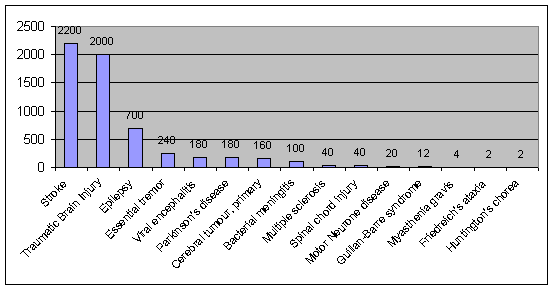
NB - source; invalidated information from Department of Health
Appendix 2
Table of Contents
OUTLINE OF SERVICES 2
Registration 2
Disabled Persons Parking Permits 2
Care Management 2
Continuing Care 2
Direct Payments 3
Domiciliary Care 4
Day Care 4
Residential and Nursing Home Care 5
Occupational Therapy 5
Equipment Services 7
Technician Service 8
Sensory Services 8
Deaf Services Team 9
Services for Deafened/Hard of Hearing People 9
Services for Visually Impaired People 9
Services for People who are Deaf/Blind or have a Dual Sensory Loss 9
Social Services Direct 9
Outline of Services
We are committed to working with users, carers voluntary and statutory organisations and below is an outline of our main services
Registration
The local authority has a legal requirement under the 1948 National Assistance Act to maintain a register of people with a disability. Registration is voluntary and refusal to register does not disbar anyone from being assessed for or receiving a service.
Disabled Persons Parking Permits
Now known as Blue Badges - following the Best value Review this function has been centralised and is now undertaken by the County Treasurers Department.
Care Management
This is the process through which peoples needs are assessed and services tailored to meet those needs.
The current context is one where suitable, cost effective and timely domiciliary and residential care can be difficult to procure. The development of care broker initiatives should help this process.
Services vary around the County to meet local need
Negotiations around funding for care can be complicated. It will be important to ensure the funding streams of Direct Payments, Carers Grant, ILF and Health (Continuing Care) funding are all being accessed across the County.
Continuing Care
This is the process of agreeing with health how peoples long term care needs are met. They may be funded fully by health where someone meets the criteria for in patient care or jointly between health and social services.
Eligibility criteria have been agreed with the Strategic Health Authority and a toolkit has been developed to clarify the funding responsibilities between health and social services.
Direct Payments
Direct payments enable people to have choice and control over how their community care needs are met. Rather than receiving services directly arranged or provided by the department, a cash payment is made to enable people to purchase their own support, either by employing their own personal assistants or contracting with a care agency. Direct payments give the user choice, control and flexibility over their care arrangements. For example, they can choose how their needs will be met, who will provide the service and what time the service will be provided.
Direct payments are available to most adults aged 16 and over who have been assessed as needing community care services. They are also available to carers of disabled adults to meet their own needs as carers, and to parents of disabled children to meet the needs of their disabled child.
· Hampshire remain the national leader in making direct payments - we now have nearly 600 people in Hants, across the care groups
· The number of direct payment users (with a physical disability) in January 2001 was 375. In January 2002, this number had increased to 416, an increase of more than 10% on the previous year.
· The Scheme is available to all care groups.
The new legislation for Direct Payments - requiring consideration of Direct Payments for every instance where care is to be funded - will come into effect during 2003/04.
The government are also legislating to extend the Direct Payment scheme to facilitate hospital discharge.
Domiciliary Care
Domiciliary care is arranged to support individuals who require personal care to continue to live in their homes. The majority is purchased from independent sector agencies, most of which focus on a local area.
Factors affecting this service include an increasing number of people being supported in their own homes. Individuals with greater and more complex support needs are also being enabled to continue living in their own homes.
Specialist care may be provided through care attendant schemes.
We need to ensure contracts take into account the complexity and nature of support required by disabled people.
Day Care
Day Services in Hampshire are provided through Resource Centres; smaller, locally provided services, locally purchased services and user-led groups. They offer opportunities to develop skills and networks to disabled people (work, leisure or lifeskill related) and support service-users and carers by offering respite and a means of developing support networks.
They provide advice & information or programs to develop knowledge and skills, including rehabilitation in partnership with other agencies. Individual care plans are delivered through links with other organisations (eg: further education colleges, training organisations, employment service and housing agencies.)
Individuals or their care managers may arrange or facilitate college or other work and learning activities.
Reviews and plans can include time limited programmes involving integration into the person's local community
Residential and Nursing Home Care
A trend which is emerging is a reduction in residential care purchasing - a consequence of our supporting more people at home. There is also an increase in nursing home purchasing - with improvements in care and treatment, people are living longer and surviving longer in a more frail condition. We anticipate both trends to continue.
There is already a challenge in seeking residential placements for adults (18-64) . This has been increasingly the case with the new National Care Standards Council inspection and registering providers against new national standards.
Respite placements at John Darling Mall for some people can be a key part of maintaining someone longer-term in their home setting.
The objective to review expensive out-of-county placements in the context of Continuing Care is challenging as we need to engage with different health trusts.
The objective to review plans for John Darling Mall was postponed in light of Best Value reviews of residential care and respite services taking place during the last year. This year plans will be developed.
Occupational Therapy
The main aim of Occupational Therapy is to maintain, restore, or create a balance, beneficial to the individual, between the abilities of the person, the demands of her/his occupations in the areas of self care, productivity and leisure, and the demands of the environment.3
An occupational therapist works with people who have physical, mental and/or social problems, either from birth or as the result of accident, illness or ageing. Their aim is to enable people to live as independently as possible.
An occupational therapist will work with a person to design a program of treatment based the individuals unique lifestyle, environment and preferences. They will need to consider the importance how a persons physical, mental and social needs will impact on their recovery process and help them to achieve the goals that are most important to them.
Within the department, Occupational Therapists work with people of all ages who have a physical disability and or learning disability or mental health problem, which affects their ability to manage around their homes.
The service was best value reviewed in 2000 and recently we reported back on the recommendations as follows:
Incorporating care management into their assessments had a marked effect on waiting times for traditional Occupational Therapy services. By not carrying out care management responsibilities, OTs have been able to target their skills to improve efficiency and effectiveness.
· Waiting times have improved, and have been shown to be dependent on staffing availability.
· Partnership working with Health continues to develop. There are various local initiatives happening across the County. Notably in the South-East and New Forest.
· Self-assessment forms are available in all areas and on the Internet. In some areas it has not been as successful as others, and will be reviewed as part of the information & advice proposed developments under Social Services Direct.
Nationally there is a shortage of qualified Occupational Therapists and a widening gap in pay and conditions between health & social services.
We employ 70 staff in the service, of which 42 qualified Occupational Therapists based in 11 work-bases around the County. We have We Have three Service Managers, one Commissioning officer OT and 4 team managers OT trained in the PD sector. In addition one of the new Partnership Managers is a registered Occupational Therapist with the Health Professions Council (HPC).
There are a Number of potential service development areas being explored to improve performance and reduce waiting list times. Currently looking at opportunities to centralise the access to OT services this will enable fast tracking of simple items i.e. grab rails and strengthen contractual relationship with Home Improvement Agencies, whilst freeing up specialist OT time.
There is also scope for further integration of care pathways with health OT services during the coming year.
Equipment Services
Hampshire is currently served by three Joint equipment Services (JES). These have been set up in partnership with our partners in health and the two Unitary Authorities Southampton and Portsmouth. They each presently operate within boundaries co-terminus with ourselves and those of the old Health Authorities.
The SW Hampshire JES is run by Southampton City Council Social Services in partnership with Southampton City PCT; The SE Hampshire JES is run by Portsmouth City PCT; The North and mid Hampshire JES is run by Hampshire social services - the operating costs of all three services are shared between each of the organisations
There is an agreed range of standard equipment available to professionals of both agencies from a shared catalogue.
Excluding the unitary authorities during 2000/01- 67757 items of equipment were delivered or collected this rose to 77972 during 2001/02 and for the first 6 months of 02/03 -38804 items have been handled. Recycling rates are high at all stores.
Paediatric equipment attracted quality protects money from Children & Families.
The main driver for the development of the equipment service over the next two years is the National ICES agenda information can be found on the website www.icesdoh.org.uk .
We have appointed a project officer to take this forward the Current position is a working group is looking at cost benefit analysis of establishing countywide service with or without unitaries. HCC is supporting an ISB bid for user focussed web based direct access.
Development potential is dependent on Health / Social Care economies finding the available funding to be identified shortly by govt (This might be linked to pooled budgets). The target set by the government is to increase by 50% the number of pieces of equipment delivered by 2004.
Technician Service
The Technician Service is run by Hampshire Social Services from leased premises on the Segensworth Industrial Estate at Fareham, with a small additional workshop facility within the JES at Basingstoke.
It provides Technician support countywide to all Hampshire Social Services OT Teams (fitting equipment, rails and ramps) and is under contract to Southampton and Portsmouth. In addition, some hospital discharge work is undertaken.
The installation and repair of Deaf and Hard of Hearing Equipment is provided by the Technician service.
Operates on a budget of £349,500 for all standard equipment and adaptations and service running cost.
The Staffing level:- Full time manager and deputy, one full time clerical post, one full time workshop technician and eight full time technicians working within the areas.
On average the service completes approximately 8600 referrals for minor adaptations per year ranging from grab rails / chair raise to ramping issues, outside rails and various types of door access systems.
Sensory Services
Sensory Services provide a range of high quality services to people with a visual impairment and/or D/deafness, of all ages, to ensure that the individual is able to maintain and maximise their independence and safety. The service can provide information, advice, specialist assessment, registration, rehabilitation training and environmental equipment for use in the individual's own home. Information and support is also provided for Carers.
The service is structured so that there are Area based sensory teams working with visually impaired and/or deaf people and a County wide Deaf Services team for Deaf Sign Language users.
Deaf Services Team
The Deaf Services Team work specifically with Deaf Sign Language users across the whole of Hampshire providing a Care management and equipment services. All members of this team have to be able to communicate in British Sign Language.
Services for Deafened/ Hard of Hearing people
Specialist Area based Care Managers work with deafened and hard of hearing people to assess their needs and provide support and assistance in obtaining relevant information, services and equipment.
Communication Rehabilitation Officers work closely with Audiology to provide a fast track information and support service to individuals and carers/ partners following diagnosis of hearing loss.
Services for Visually Impaired people
Area based Rehabilitation Officers, Eye Clinic Liaison Officers, Insight Co-ordinators and Care Managers provide a range of specialist services for visually impaired people including information, assessment, group work and rehabilitation training in mobility, orientation and daily living skills.
Services for People Who are Deaf/Blind or have a dual sensory loss
Services are provided through our Area Sensory teams or through the DeafBlind development worker who is employed under contract by DeafBlind UK.
Social Services Direct
SSDIRECT is a new approach to delivering services, and combines modern technology with a skilled workforce to enable service users to be responded to as quickly and efficiently as possible. It is currently available from 8am to 10pm in some areas, and from 5pm to 10pm and over week ends and bank holidays for all users across Hampshire.
It is hoped that the service will expand to include all service users in Hampshire by 2004. SSDirect can offer information and advice on a whole range of social service provision, and through its unique service centre aims to deal with the caller at the point they need a service. service centre officers, care managers, social workers and managers all work very much together to provide this new type of integrated service.
The staff at SSDirect are experienced at dealing direct with the public and do not pass calls if they can deal with them at the service centre, and only do so if the caller requires a level of service beyond the remit of the SCO.
SSDirect is based on a 3 tier system
The Service Desk where SCOs handle all incoming calls - all calls that cannot be dealt with at this level are passed to the second tier
The Help Desk which is staffed by social care professionals who will where possible resolve the call if a community home visit is needed then the call is passed on to the third tier
The Response team who will carry out the assessment
In practise the help desk and the response team are often the same people but this is not necessarily the case
In response to the need for single points of access, the need to standardise practice and the evidence from projects in Leeds and Gloucester we intend to extend the role of SSDirect to access OT services combined with some direct access to minor adaptations and equipment.
Appendix 3
Detailed Action Plans
PHYSICAL DISABILITY AND SENSORY SERVICES ACTION PLANS 2003/4
DIRECT PAYMENTS / INDEPENDENT LIVING - ACTION PLAN 2003/4......................................................42
ICES PROJECT - ACTION PLAN..........................................................................................................44
SENSORY SERVICES - ACTION PLAN.................................................................................................46
DOMICILIARY CARE AND CARE ATTENDANTS - ACTION PLAN 2003/4....................................................48
DAY SERVICES - ACTION PLAN 2003/4................................................................................................49
CARE MANAGEMENT - ACTION PLAN 2003/4........................................................................................51
CONTINUING CARE - A CTION PLAN 2003/4..........................................................................................53
OCCUPATIONAL THERAPY SERVICE - ACTION PLAN 2003/4..................................................................54
RESIDENTIAL CARE - ACTION PLAN 2003/4.........................................................................................56
USERS AND CARERS - ACTION PLAN 2003/4.......................................................................................58
TECHNICIAN SERVICE - ACTION PLAN 2003/4......................................................................................59
DIRECT PAYMENTS / INDEPENDENT LIVING - ACTION PLAN 2003/4
OBJECTIVE |
GOVERNMENT AND OTHER RELEVANT GUIDANCE |
KEY ACTIONS REQUIRED/BY WHOM |
TARGET DATES |
MEASURES/INDICATORS |
1.To offer direct payments to all clients who are potentially eligible to receive them |
Community Care, Carers and Children's Services (Direct Payments) Regulations 2002.Community Care (Direct Payments) Policy and Practice Guidance (currently in draft) |
County managers to implement through service and team managers across all sectorsImplement team manager & care manager training programme |
OngoingDec 03 |
Numbers of Direct Payment users by care group obtained from monthly DP report |
2. To increase the number of Direct Payment Users by 10% ( in each sector) |
Consider in all cases and monitor / Service Managers, Team managers, Commissioning Officer - Independent Living |
Mar 04 |
Number of Direct Payment Users from monthly DP report | |
3. To increase the number of black and minority ethnic Direct Payment Users |
Creation of 3 new Community Development Worker posts - Mohammed Mossedaq |
Dec 03 |
Number of black and minority ethnic Direct Payment Users | |
4. To ensure health funding is maximised for all clients with health and social care needs and that health jointly fund direct payments packages, as appropriate |
Health and Social Care Act 2001Health Act 1999Community Care (Direct Payments) Policy and Practice Guidance (currently in draft) |
Use Continuing Care toolkit and establish pattern of Health paying DPs via SSD. Care Managers, Team Managers, Operational Service ManagersCommissioning Officer - Independent Living |
Ongoing |
Number of care packages which include jointly funded direct payments |
5. To develop access to `short term' direct payments packages to reduce delayed hospital discharges |
Community Care (Direct Payments) Policy and Practice Guidance (currently in draft)Government Response to Health Select Committee Third Report of 2001-2 on Delayed Discharges |
Set up focus group to develop initiative in one hospital (acute ward) Strategic Service ManagerCommissioning Officer - Independent LivingPartnership Managers |
Dec 03 |
|
6. Negotiate new Direct Payments Support Worker Contract including providing assistance and training to develop the Direct Payments Support Worker Service |
Community Care (Direct Payments) Policy and Practice Guidance (currently in draft) |
Identify contract requirements including training requirements. Commissioning Officer - Independent LivingObtain HCC approval of contracts County Manager, Strategic Service Manager |
Apr 03 |
Consistency of service across care groups and across the county |
7. To ensure team and care managers have current knowledge of ILF and apply to ILF for all eligible clients |
ILF Training sessions to be held for all team and care management staff (to be provided by ILF) |
Mar/ Apr 03 |
Number of clients in receipt of ILF | |
8. To ensure that training is provided to cover new Direct Payments Regulations and Guidance |
Community Care, Carers and Children's Services (Direct Payments) Regulations 2002Community Care (Direct Payments) Policy and Practice Guidance (currently in draft) |
Ensure ILF & Direct Payments in Care Management TrainingRevise Direct Payments Training course to include new regulations / guidanceTraining Commissioning Officer and Commissioning Officer - Independent Living |
Apr 03Apr 03 |
Number of staff accessing training coursesNumber of staff accessing training courses |
ICES PROJECT - ACTION PLAN 2002/3
SENSORY SERVICES - ACTION PLAN 2003/4
OBJECTIVE |
GOVERNMENT AND OTHER RELEVANT GUIDANCE |
KEY ACTIONS REQUIRED/BY WHOM |
TARGET DATES |
MEASURES/INDICATORS |
1. Collaboration with health.Patient/user pathways include criteria for access to servicesHealth and Social Services criteria include the rehabilitation and preventative agenda |
NHS planAction on ENT & OphthalmologyModernising Social ServicesNSF Older People - Single AssessmentFully Equipped - Audit Commissionrecommendations.NSF - DiabetesNSF - Long Term ConditionFair Access to Care (FAC) |
Establish framework of Sensory Committees / Access Steering groups across the County to inform strategic planning and delivery.Involvement in FAC working group to ensure rehabilitation is jointly acknowledged by Health and Social Services and included in planning[Commissioning Officer and local sensory managers to support local Committees and to network with Partnership Managers.FAC Project Manager] |
Ongoing |
Clarity over individual / organisational roles and responsibilities.Care pathways are established.More effective use of resources by avoiding duplication.Formal recognition of Low Vision Committee and Sensory Committees within policy and planning structures. |
2. Implementation of the Best Value recommendations arising from the Best Value review of Sensory Services. |
Audit Commission: Best Value |
Development of an implementation plan for Sensory services including partnership with voluntary sector.[Best Value Review team/ Strategic and Operational Managers responsible for sensory services] |
Sep 03 |
Sensory Service development programme in place identifying priorities, targets, outcomes and resource implications.Specialist Sensory operational teams are developed in all areas. |
3. Equipment services are responsive to user need and meet national performance targets |
ICESFully Equipped - Audit CommissionPAF Indicators |
Co-ordination of equipment services to ensure consistency and effective monitoring throughout the County.Action by;PDMT, Commissioning and Area Managers45lkjj |
On-going |
PAF targets met.Waiting times for assessment reduced. |
4. Waiting times for sensory assessments are reduced and then maintained in line with OT/CM targets |
Departmental standards |
PDMT to review waiting times on a monthly basis. Initial target to reduce waiting times across the County to 8 weeks. Areas where waiting times are not within the guidelines will be targeted by strategic management to develop measures to assist waiting time reduction.Action by: PDMT, Commissioning, Areas |
Sep 03 for initial target and Mar 04 to be consistent with OT/CM services. |
Monthly paper statistic forms will be modified. SWIFT system development to incorporate management information enabling paper forms to be phased out by full SWIFT implementation |
5. Development of DeafBlind services |
Section 7 Guidance |
Identified Area sensory staff trained to provide Dual Sensory/DeafBlind assessments.Dual sensory/DeafBlind data base incorporated into HCC systemsAction by; PDMT, Commissioning, Areas, IT |
Sep 03 |
Appropriately qualified staff located in each sensory team.DeafBlind data incorporated into HCC systems. |
DOMICILIARY CARE AND CARE ATTENDANTS - ACTION PLAN 2003/4
OBJECTIVE |
GOVERNMENT AND OTHER RELEVANT GUIDANCE |
KEY ACTIONS REQUIRED/BY WHOM |
TARGET DATES |
MEASURES/INDICATORS |
1. Clarified long-term future plans for CA schemes, given current situation.Best Value sought for organisation and users, including cost, quality and environmental issues. |
NHS plan and subsequent guidanceModernising Social ServicesHealth Act 1999 |
Complete internal review of Internally-Managed Care Attendant Schemes [Service and Operational Managers]Relevant managers at all levels to liaise and maintain clarity of organisational goals to support collaborative strategic planning. [County, Partnership, Strategic and Operational Managers]Joint meetings and plans to confirm future developments. [County, Partnership, Strategic and Operational Managers] |
Mar 03Jun 03Autumn 03 |
Review documentationConsistent understanding in County PD managers group.Meeting notes. |
2. Cost / contract effectiveness |
Best Value legislation |
Develop block contracts as appropriate, liaising with other sectors where contracts already exist or economies of scale make this more effective. [Service & Team Managers] |
From Apr 03 as contracts are renewed. |
ContractsExpenditure |
3. Better management information |
Corporate and departmental objectives |
SWIFT / local info via consistent systems / Health info [SWIFT team, Service Managers, Commissioning Officer] |
Summer 03 and as SWIFT is established |
Info / reports available for understanding and planning |
DAY SERVICES - ACTION PLAN 2003/4
OBJECTIVE |
GOVERNMENT AND OTHER RELEVANT GUIDANCE |
KEY ACTIONS REQUIRED/BY WHOM |
TARGET DATES |
MEASURES/INDICATORS |
1. Implement remaining recommendations from Best Value Review |
Best Value legislationModernising Social ServicesWelfare to Work JIP |
Set up brokerage pilots within in-house day services [Unit Managers]Clarify unit costs to enable comparison & analysis.Relate the development of day service staff roles to job evaluation process [Personnel, Service Managers?] |
Sep 03 |
Departmental records |
2. Ensure clear agreed goals with all service users. |
Corporate & Departmental Objectives |
Ensure care management assessments, referrals, reviews and plans are current and relevant [Care Managers and Day Service keyworkers]Ensure through assessment process what respite & support is required for carers and provide alternatives to day care where appropriate, targeting Carers Grant funding [Care Managers] |
Mar 04 |
Departmental records |
3. Ensure service accessible and resourced for range of needs/conditions including sensory impairments, head injury. |
Disability Discrimination Act |
Identify issues with respect to individual referrals [Care Managers, Day Service key workers]Review services and implement improvements [Unit Managers, specialist workers / organisations] |
Jul 03(DDA effective re services July 2004) |
Record of reviews and liaison with line management and premises workers re items identified. |
4. Ensure that strategy for day services development is decided in response to assessed needs of service users and potential users. |
Modern Local Government in Touch with the PeopleBest Value legislation |
Ensure information about service users' met and unmet needs are flagged up to managers and strategic workers [Care Managers and Day Service keyworkers]Consult stakeholders and decide a strategy for developing day serviceIdentify Performance Indicators for day services [Service Managers] |
June 03Sep 03Sep 03 |
Strategy documents |
5. Develop integrated partnership working with Social Services / Health /Education/Employment professionals - to provide clear & consistent advice |
Health Act 1999Welfare to Work JIP |
Liaise with other sectors within HCC and with Health to agree joint priorities [Service Managers, Unit Managers, Partnership Managers]Develop specialist initiatives (eg: Signposts) and local networks to extend partnership working [Unit Managers] |
March 04March 04 |
Evidence of liaison re both individuals and organisational plans. |
6. Ensure consistent county wide approach re turning 65 and provision of social respite/rehab via local / residential services |
Corporate & Departmental ObjectivesHealth Act 1999 |
Develop management information re variations [Service Managers]Incorporate equality of provision into resource decisions related to day service strategy [Service Managers] |
March 04March 04 |
Management information to evidence addressing inequality of provision. |
7. Devise and deliver a training and development strategy for day service staff(and for care managers in relation to day services). |
Corporate & Departmental Objectives |
Identify specific team training needs - incorporating equalities & independent living approaches [Unit & Service Managers]Arrange strategy and resources to address these needs [Unit, Service and Training Managers] |
Sep 03March 04 |
PDRs and record of related liaison / meetings. |
Care Management - ACTION PLAN 2003/4
OBJECTIVE |
GOVERNMENT AND OTHER RELEVANT GUIDANCE |
KEY ACTIONS REQUIRED/BY WHOM |
TARGET DATES |
MEASURES/INDICATORS |
1. Implement remaining recommendations from Best Value Review |
Best Value legislationModernising Social ServicesWelfare to Work JIP |
Monitor outcomes and act where possible on a sector basis, else raise issues as appropriate, identifying obstacles for anything not achieved. [Strategic, Service & Team Managers] |
Summer 03 and BV target dates thereafter |
Monitoring results and related correspondence |
2. Quality Assurance |
Corporate and Departmental Objectives |
Monitor number of workers achieving competencies & working to CM standards [Team Managers] |
With SAP HRM module |
SAP information |
3. Holistic Assessments |
Welfare to Work JIP,NHS & Community Care ActLocal Government Act 2000Community Care (Direct Payments) Policy and Practice Guidance (currently in draft) |
Assessments to include needs for living, which will cover physical and mental well-being and relate to activities undertaken - likely to address work & leisure. Direct Payments always to be explicitly considered. [Team & Care Managers]If needs are identified which are not met, signposting to other organisations and enabling self-help where possible.[Team & Care Managers]Build liaison with other sectors within HCC and with Health re joint priorities. [Strategic, Service and Team Managers]Goals to be agreed with clients. [Team & Care Managers]Single assessment process to be explored. [Strategic, Service and Team Managers] |
Introduced by March 04 |
Assessments |
4. On-going professional development |
Social Care RegistrationDepartmental and Corporate Aims |
Establishing systems for sharing/learning from local experience and wider good practice developments. [Strategic, Service & Team Managers]Specialist Training. This may include professional discussions, shadowing, varying workbase. [Team & Service Managers]A group to be established to plan how this is best supported. [Commissioning Officer PD]Recognising qualified and unqualified worker roles and needs. [Training, Service & Team Managers] |
Some by Sep 03 developed by Mar 04 |
Records of system / events |
5. Effective use of available funding streams |
Best Value legislation,DoH guidance |
Up to date information and training on criteria and availability [Service, Team & Care Managers] |
Dec 03 |
Team meeting minutes |
6. Specialist worker developments |
Best Value legislation Departmental and Corporate Aims |
Identify where developing expertise in a specialism will be time/cost effective for service delivery.ILF / Cont Care / Snr Prac / Reviews/ other.Create & appoint to such posts. [PDMT in conjunction with Team Managers] |
Sep 03Jan 04 |
ReportPersonnel records |
CONTINUING CARE - ACTION PLAN 2003/4
OBJECTIVE |
GOVERNMENT AND OTHER RELEVANT GUIDANCE |
KEY ACTIONS REQUIRED/BY WHOM |
TARGET DATES |
MEASURES/INDICATORS |
||||
Reduction in delays before individuals receive appropriate service. |
Best Value legislationHealth Act 1999Continuing Care Guidance & Policies |
Liaison with partners to help common understanding and consistent responsesConsistent use of toolkit across agencies. [Partnership, Service & Team Managers]Training for understanding and confidence for Team & Care Managers [Training, Service and Team Managers] |
Jul 03Sep 03Sep 03 |
Meeting notesClient RecordsTraining Records | ||||
OCCUPATIONAL THERAPY SERVICE - ACTION PLAN 2003/4
RESIDENTIAL CARE - ACTION PLAN 2003/4
OBJECTIVE |
GOVERNMENT AND OTHER RELEVANT GUIDANCE |
KEY ACTIONS REQUIRED/BY WHOM |
TARGET DATES |
MEASURES/INDICATORS |
1. Review current provision in context of demand, quality, costs and environment. |
Modern Local Government in touch with the People |
Identify PD provision in wider market place |
Aug 03 |
Report produced |
2. Develop and maintain suitable future provision and options. |
Health Act 1999Modernising Social ServicesCorporate and Departmental Objectives |
Develop partnership / rapport with providers. [Service, Team & Care Managers]Identify what would be involved in securing respite provision.Explore options for specialist provisionIdentify opportunities and risks to adult placement provision |
Mar 04Sep 03Mar 04 |
Meeting notes / feedbackReport producedReport produced |
3. Identify & implement outstanding Best Value review recommendations including JDM as appropriate |
Best Value legislation |
Tailoring the recommendations of the residential and respite reviews to PD and JDM [Unit Manager, Service Manager, Commissioning Officer] |
May 2003 |
SSD records |
4. Review current JDM provision in context of demand, quality, costs and environment, to plan future developments. |
Health Act 1999Modernising Social ServicesCorporate and Departmental Objectives |
Review team to be identified. [County Manager]Review Plan to be developed, including Health links, consumer links and market research. [Review Team]Options / recommendations to be proposed [Review Team] |
April 2003June 2003Jan 2004 |
Documents identifying agreed membershipPlan documentationPaper ready for major stakeholders to respond to. |
USERS AND CARERS - ACTION PLAN 2003/4
OBJECTIVE |
GOVERNMENT AND OTHER RELEVANT GUIDANCE |
KEY ACTIONS REQUIRED/BY WHOM |
TARGET DATES |
MEASURES/INDICATORS |
1. To develop and set standards appropriate to care group |
Explore and agree common standards across SSD and PCT - All |
Standards in place | ||
2. To map and record existing mechanisms for user/carer consultation |
Establish what existing information is available and where - Audit CO lead in conjunction with team managers and service managers |
|||
3. Develop a framework to feed user / carer input into service delivery and strategic planning which ensures feedback to users |
Lead CO with team managersCounty IT collation of information |
Users/ carers feedback that they are consulted and informed of outcomes and they experience improved services as a consequence | ||
4. To expand carer voucher scheme to whole of county |
Operational SMs and TMs with support from CO in Partnership with other care groups locally |
Voucher scheme in place |
TECHNICIAN SERVICE - ACTION PLAN 2003/4
OBJECTIVE |
GOVERNMENT AND OTHER RELEVANT GUIDANCE |
KEY ACTIONS REQUIRED/BY WHOM |
TARGET DATES |
MEASURES/INDICATORS |
1.Establish clear collaboration between Health and Hampshire County Council Technician Services. |
ICES InitiativeNSFs - Older People & Long Term ConditionsIntermediate CareQuality and Choice for Older People's Housing - a Strategic FrameworkFair Access to Care Services |
Further joint working withHealth at strategic and operational level to ensure consistency.Joint Health and Social Services Technician Team Meetings |
Ongoing |
Consistent service delivery by Health & SS Technicians, using shared processes and eligibility criteria. |
2. To increase contractual opportunities with Local Authorities and Housing Associations for the installation of OT and sensory equipment |
ICES InitiativeNSF for Older PeopleNSF for Long Term ConditionsSupporting PeopleQuality and Choice for Older People's Housing - a Strategic FrameworkFair Access to Care Services |
Promotion of Technician Service with Local Authorities and Housing Associations to increase awareness. |
Ongoing |
Increase in volume of contractual work undertaken. Consistency of adaptation and equipment provision across all tenures, reduction in risk of assessed need not being met. |
3. To establish and develop single point of contact for specified range of Technician work. |
ICES InitiativeNSF for Older People |
Collaboration and joint working with Home Improvement Agencies to identify and agree level of service provision, processes and quality standards |
Aug 03 |
Incorporation of rapid response service (for some minor works) into HOT Direct (single point of contact for OT referrals) |
4. To provide a technician service for all sensory services |
Three month lighting pilot scheme underway, (privately owned properties only) Providing support to visually impaired service users. Outcomes and cost implications to be evaluatedIdentification of funding. |
Ongoing |
Introduction of countywide lighting Technician service for visually impaired, with arrangements for contracted provision in non-owner/occupied properties. | |
5. To maintain response times within government guidelines |
ICES initiative |
Quarterly monitoring meetings re waiting times. Areas where response times are outside the guidelines will be targeted.Identification of funding to meet government guidelines. |
Ongoing |
Response times within Government guidelines (PAF 38). Introduce prioritisation tool for all referrals to ensure consistent approach across all areas. |
6. To pilot scheme for dedicated Technician for adaptation and equipment provision for children. |
Quality Protects Programme- services for disabled children and their families. |
Establish pilot scheme.Evaluate outcomes, identify any additional funding requirements. |
ongoing |
Improved efficiency within Technician Service by using dedicated worker. Service users benefiting from Technician with specialised skills. |
7. To evaluate role of the OTA/Technician. |
Evaluation of eighteen month pilot held in Alton area, highlighting effects on response times, staff time, numbers of visits etc. |
Jul 03 |
Introduction of OTA/Technician across County, in particular as part of HOT Direct - see point 3 |