
Archived decisions
Hampshire Fire and Rescue Authority Item:
10th December 2003
Operational Activity 2002/2003
Report of the Chief Fire Officer
Contact: Alan House, Deputy Chief Fire Officer (Operations & Training) 023 8064 4000 x 205
Introduction
This report summarises the operational activity for 2002/2003. Using simple graphs it highlights the significant trends since 1990/91. The level of operational activity has a direct impact on resources: both in terms of the deployment of personnel and in the use of vehicles and equipment.
The information provided - together with other performance indicators is used to develop the Authority's Integrated Risk Management Plan.
The Authority's budget is based on an average year in terms of operational activity. The budget for retained firefighters pay is based on a rolling five-year average number of incidents. When operational activity exceeds 5% of this average contingency arrangements (explained in previous reports to the Authority) are triggered to ensure that any shortfall is covered.
The solid line indicates actual financial year figures. The dotted trend line is a three-year moving average line.
These graphs now appear on our website and will be regularly updated.
Total Incidents
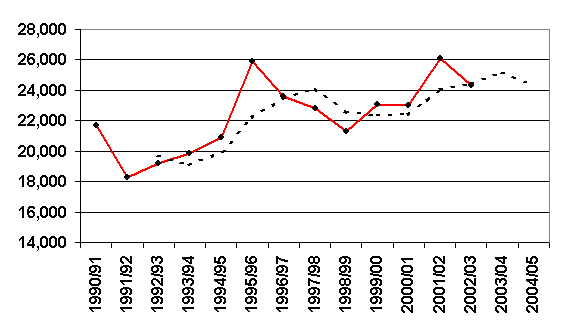
The total number of incidents attended in 2002/03 was 24,301a decrease of 7% on 2001/02 which was the largest year on record.
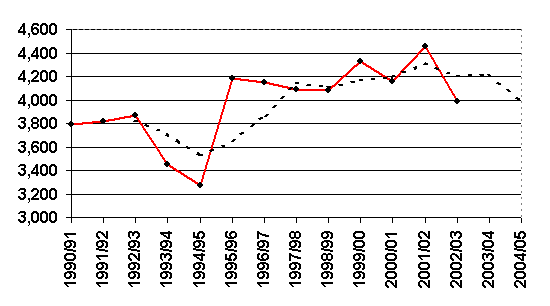 Primary (Property) Fires
Property fires showed a 10% decrease in 2002/03. A welcome downward trend and possible evidence of the success of continued community fire safety initiatives across the county.
Secondary Fires
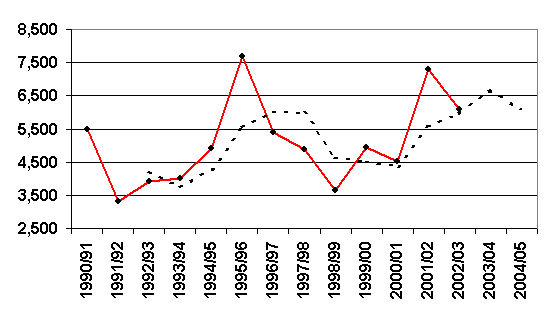
Secondary fires include minor heath/grassland fires and refuse containers, etc. This category typically reflects the extremes of the weather. With the relatively poor summer in 2002/03 this resulted in a decrease of 17% on 2000/01. Nevertheless, 2002/03 represents our third busiest year for secondary fires since 1990/91.
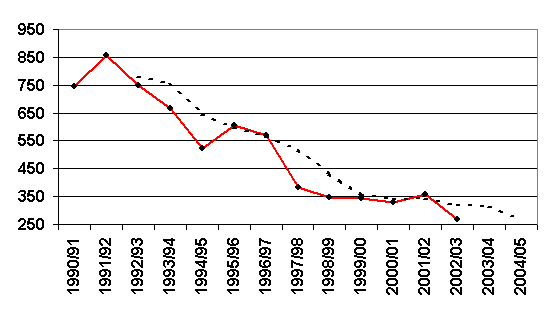 Chimney Fires
After the blip in 2001/02, last year saw a 25% decrease resuming the underlying downward trend of 65% since 1990/91. This figure is especially pleasing to note in light of the recent increase in popularity in open fires. Publicity aimed at encouraging householders to take preventative measures through regular sweeping may well have played a part in the underlying downward trend.
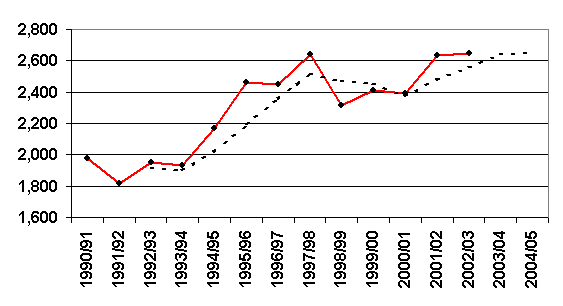 False Alarms - Good Intent
While there are year-to-year fluctuations in the number of false alarms of good intent, the underlying trend is an upward one. 2002/03 saw an increase of just 16 on the previous year. These calls are not considered a problem as we encourage people to call the fire service if they are ever in any doubt about the possibility of a fire or other incident.
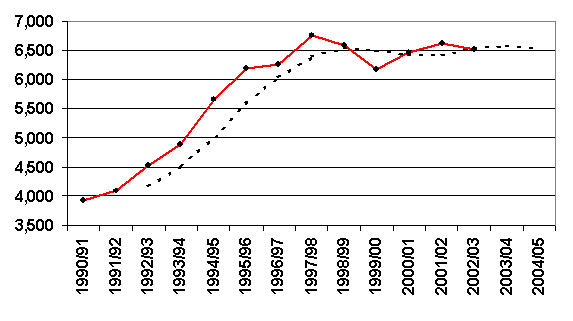 False Alarms from Automatic Fire Detection Equipment
False calls from automatic fire alarms showed a slight decrease (2%) in 2002/03. From April 2002, the top 20 worst "offenders" will be visited by Fire Safety Officers on a regular basis to identify ways to reduce the number of false calls.
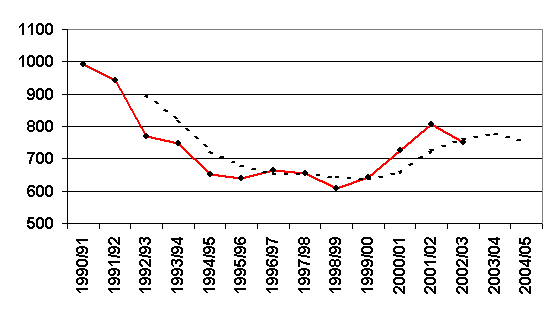 Malicious False Alarms
After increases for three successive the number of malicious (hoax) calls has reduced (7%).
In conjunction with mobile phone service providers a new initiative has been launched in Hampshire which involves messages being sent to mobile phones used to make malicious calls stating further use of the phone will be cancelled immediately.
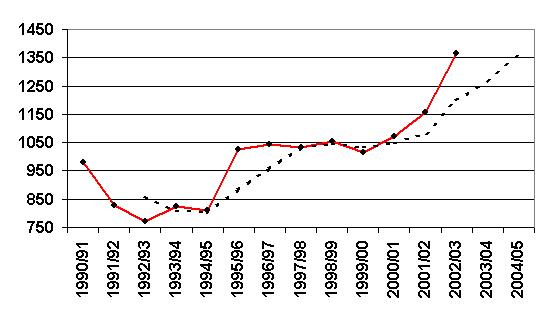 Road Traffic Accidents (RTAs)
The number of call to RTAs continues to rise. The year on year increase for 2002/03 was 15%. Since 1990/91, overall totals have risen by 28%.
In partnership with other agencies, geographical information systems will be used to identify accident `black spots' within the county.
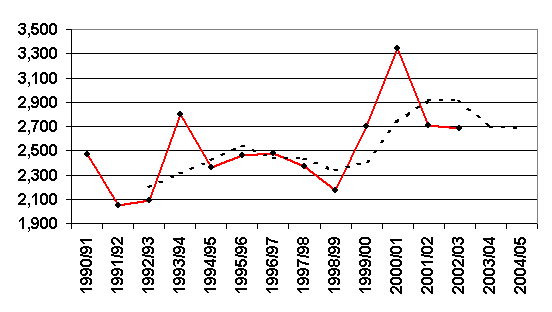 Special Service Calls
Special Service calls remained on a fairly constant level from the previous year due mainly to the absence of any significant extremes of weather (which typically result in peaks of activity)
Recommendations
That the report be noted.
Groups/Secretarial/Word Processing/Corporate/HFRA HFRA 10 12 03 Operational Activity 19/11/2003