
Archived decisions
Hampshire County CouncilHealth Review Committee Item 9 29 March 2004 Proposals to Develop or Vary NHS Services Report of the Chief Executive |
Contact: Denise Holden ex 7338
e-mail: [email protected]
1. Summary and Purpose
1.1. The purpose of this report is to alert Members to proposals from the NHS to vary or develop health services in the area of the Committee.
1.2. Proposals that are considered to be substantial in nature will be subject to formal consultation and the response of the Committee will take account of the criteria adopted by the Committee on 29 July 2003 with particular emphasis on the duties placed on the NHS by Section 11 of the Health and Social Care Act 2001.
1.3. The report and recommendations support the delivery of Aim 5 (Improving Services) of the Corporate Strategy.
2. Consultation by Eastleigh and Test Valley South and Mid-Hants PCTs: reprovision of in-patient services for older people with mental health problems in Eastleigh and Winchester
2.1. The PCTs have responded to the comments from the Committee and confirmed that
_ Willow Ward will be transferred to the Tom Rudd Unit
_ Plans for Linden Ward have been revised to include improved toilet and washing facilities
2.2. The Chairman of the Working Group has asked to see the revised planes for Linden Ward. The full response sent by the Trust is attached at Appendix One.
3. Eastleigh and Test Valley South Primary Care Trust Consultation: The Mount Hospital
3.1. Further to initial work with patients carers and key stakeholders the PCT has launched the next phase of the consultation process. This is intended to get feedback from local people about the way in which services should be configured to provide the most effective care to people requiring rehabilitation in the area. This feedback will be used to design a working model for services in the north Eastleigh/Bishopstoke area. Once developed this model will be subject to further consultation with local people.
3.2. Early feedback form the public meetings held by the PCTs indicate that the model developed should include the following elements to promote rehabilitation and independence
_ Home care and community services, including night support/sitting services
_ Integrated day hospital facilities with input from therapists, primary care, social services and the voluntary sector
_ 24 hour inpatient provision
_ ease of transfer to and from acute care
_ improved access
3.3. The working group has written to the lead PCT to indicate that these are the range of services that would be expected in any reprovision of services currently provided at the Mount. This letter is attached at Appendix Two
3.4. The Working Group visited the Mount Hospital on 17 March and will report back to the Committee on their findings.
4. `HealthFit' Implementation
4.1. The Strategic Health Authority launched a discussion on the Healthfit framework on 23 January. Members of the Committee and Hampshire and Isle of Wight joint committee attended a presentation on the framework in the week prior to this.
4.2. The formal response from the Committee to the Health Authority is attached at Appendix Three. This sets out
_ The concerns of the Committee about the level and consistency of community, public and patient engagement the took place at stages 3 and 4 of the HealthFit development process
_ The need for each of the localities to be engaging with local people in developing proposals
_ The need for the Committee to be apprised of any service change that may be substantial at the earliest opportunity.
5. Mental Health Services in North East Hampshire
5.1. The Chairman of the Committee met with Surrey Health Overview and Scrutiny Committee on 18 December to discuss the outcome of the consultation process published by the lead PCT.
5.2. Concern was expressed that the proposal to form a single mental health and learning disability Trust had not been included as an option in the consultation document and therefore a number of key stakeholders had not been able to contribute to the consultation process.
5.3. A joint Hampshire /Surrey Committee was therefore convened to consider the case for a single Trust from the NHS and to secure feedback from staff, voluntary organisations, carers and service users that would be affected by this decision. This meeting was held on 18 February. The Committee's interests were represented by Cllr R Ellis, Cllr F Williams and Cllr C Leversha.
5.4. Having considered the evidence presented by all parties the joint committee concluded that
_ The decision by the NHS to pursue an option that had not been subject to appropriate consultation was flawed
_ That the very different needs of people with learning disabilities and a mental health condition had not been recognised.
_ That carers and service users had not been appropriately involved in the planning and development of the services models
5.5. The Committee made a series of recommendations for action by the NHS and reserved its option to refer the consultation process to the Secretary of State should the NHS not modify the current proposal. The report produced by the Committee is attached at Appendix Three
5.6. The response from the NHS should be received by 26 March.
6. Blackwater Valley and Hart Primary Care Trust: Changes to Service Provision at Fleet Hospital
6.1. The Committee previously received information about these proposals.
6.2. In response to a number of issues raised through the local district council, the PCT has extended the consultation period.
6.3. The PCT has been keen to respond to the emphasis placed by the Committee on `Strengthening Accountability' and the involvement of patients, the public and key stakeholders in planning services. Details of the breadth and scope of the consultation process will be reported to the Committee once the consultation process is complete.
7. Maternity Services in South East Hampshire
7.1. The Committee is still waiting for confirmation of the timing of the formal consultation process.
7.2. Arrangements for establishing a joint committee are in place. Representation from Hampshire will includes Cllr Ellis, Cllr Bayford, Cllr MacNair Scott and Cllr Dickens.
7.3. The joint committee will consider any proposal from the perspective of the entire population affected and provide a regular up-date to the Health Review Committee.
8. Foundation Hospitals: Southampton University Hospitals Trust; Winchester and Eastleigh Health Care; North Hampshire Hospital
8.1. The formal consultation on the constitution of the proposed Foundation Trusts was launched on the 23 February. Members were invited to a briefing session on the proposals on 4 February.
8.2. Three Hospitals in Hampshire are seeking Foundation status with effect from 1 October; Southampton University Hospitals Trust, Winchester and Eastleigh Health Trust, North Hampshire Hospitals Trust. In addition two hospitals over the county boundary are also consulting on Foundation status; Royal Bournemouth and Christchurch Hospitals Trust and Frimley Park Hospital Trust.
8.3. The consultation documents do not include any proposals to substantially develop or change services therefore joint committee arrangements to respond to the consultation process will not be necessary.
8.4. The Committee will respond to the consultation reaffirming its expectations with respect to section 11 of the Health and Social Care Act and early involvement in considering proposals to substantially vary or develop NHS services
8.5. A short briefing note on the scope of the consultation exercise and the Hospitals concerned is attached at Appendix Four
9. Reforming the NHS Complaints Procedure: National Consultation
9.1. The Department of Health launched a national consultation on the proposed reform of the NHS complaints procedure in January. This will finish on the 31 March.
9.2. A briefing note on the proposed changes and a suggested response to the document is attached at Appendix Five.
9.3. Full details of the document can be found at http://www.dh.gov.uk/Consultations/LiveConsultations
10. `Choosing Health': National Consultation on Public Health
10.1. The Department of Health launched a major consultation exercise on 3 March. This with run to 28 May.
10.2. The consultation invites consultation views on the role that individuals, the government - both central and local - the NHS, the public sector more broadly, the voluntary sector and industry, the media and others can play in improving people's health. It links with the recent report by Derek Wanless on health inequalities and how they might be addressed .
10.3. A White Paper on public health will be published in the summer, which should be informed by responses to the consultation document. The full document can be accessed at the following web address www.dh.gov.uk/Consultations/LiveConsultations.
Recommendations
1. Eastleigh and Test Valley South PCT: Consultation on the future of The Mount Hospital
_ That the Committee notes the consultation process and plans for involving local people, patients and key stakeholders in determining the options for the future of services currently provided at the Mount Hospital
_ That the working group responds to the consultation in accordance with the key issues identified by local people and the interests of the health service in the area
_ That the working group continues to keep the Committee briefed on any actions taken
_ Members are sent details of the formal consultation document when it is published
2. `HealthFit' Implementation
_ That the Committee is informed of the response of the Health Authority to the comments made on the HealthFit framework.
_ The Committee continues to press for information on the engagement of local people across localities
3. Mental Health Services in North East Hampshire
_ The Committee is advised of the response of the lead PCT and any subsequent action taken by the joint Surrey/Hampshire Committee
4. Blackwater Valley and Hart PCT: Changes to Fleet Hospital
_ Members are advised of any changes resulting from the extended consultation period
_ Feedback from the PCT on the response to consultation is reported to the Committee
5. Maternity Services in South East Hampshire.
_ Members are informed of any action taken by the joint committee
_ The criteria for responding to consultation previously agreed by the Committee are drawn to the attention of the joint committee.
6. Foundation Hospitals
_ The Committee notes that there are no substantial variations in service arising out of the consultation on the constitution of each of the proposed Foundation Hospitals
_ The Committee reaffirms its expectation that any proposals to substantially vary or develop NHS services are brought to the Committee at the earliest opportunity
_ The Committee restates its expectation that local people will be fully involved in planning services in accordance with section 11.
_ The Committee highlights the responsibilities of the NHS to advise all overview and scrutiny committees of any changes that may affect their populations
7. Reforming the NHS Complaints Procedure
_ The Committee endorses the response proposed
8. `Choosing Health': National Consultation
_ The Committee responds to the consultation highlighting the need for joint working across health and social care service providers
_ The development of evidence based practice is endorsed
_ The Committee invites feedback from districts and boroughs on the key issues relating to improving public health
_ These comments are included in the response of the Committee
Section 100 D - Local Government Act 1972 - background papers
The following documents disclose facts or matters on which this report, or an important part of it, is based and has been relied upon to a material extent in the preparation of this report.
NB the list excludes:
1. Published works
2. Documents which disclose exempt or confidential information as defined in the Act.
File Location
Mrs P Holden-Brown Mr R Ellis
Chairman Chairman
Consultation Working Group Consultation Review Committee
9 Boynton Close
Chandlers Ford
Hampshire
SO53 1TQ
Dear Mrs Holden-Brown and Mr Ellis
Re: Reconfiguration of In-Patient services for older people with mental health problems
For your ease of reference, the comments below are structured in line with your correspondence dated November 27th, 2003:
Case for Change
1. How has the level of investment in community services been determined and what improvements are anticipated?
Pages 19 and 20 of the consultation document set out the intention to invest £79,248 in community resources in the Mid Hampshire PCT area and £40,894 to the Eastleigh Test Valley South PCT area, giving a total investment of £145,142. (Excluding the effect of the £25k re-alignment of consultant sessions between the two PCTs). The exact levels of additional community services were determined by the money released. However the original project team felt that increasing doctor and nursing time, (both qualified and unqualified) were essential to improving services provided to older people with mental illness. Pages 13 - 15 detail the service improvements that will result from this new investment in community services. These include:
In Winchester In Eastleigh
1 new CPN at St Waleric 2 new nursing support workers
1 new nursing support worker
Upgraded OT post in Winchester
The result of this new investment, as well as the impact of having dedicated consultant staff in Winchester, Eastleigh and Andover will be to:
· Allow the development of memory clinics
· Reduce case loads of existing CPNs at St Waleric allowing more time for quality assessments and interventions
· Increase support for people in their own homes (via the new nursing support workers)
Clearly the addition of 4 posts in itself will not transform the delivery of community services; it is however an important step in the development of the community teams, and one which we would not be able to achieve in the current financial planning round without the funding released from the in patient services.
The addition of dedicated medical time and that of a full time community mental health nursing post together with support worker posts is a significant contribution to the development of the community workforce. This will allow the team more time to undertake quality assessments and will also increase their accessibility for advice and support to patients and their carers, other members of the team and also to other agencies such as nursing and residential care homes
The ongoing development work looking at the future model of care for older people with mental health problems will help to determine the level and type of services needed by local people. It is quite possible that this piece of work will identify the need for further investment for this client group.
NHS Trusts and PCTs have a statutory duty to break even in year as well as over the period of their three year planning cycles. If over the next two years the financial recovery plans of the PCTs implemented as currently planned, they will be in recurrent surplus by the end of 2005/6, allowing room within the new cycle for growth in core services, including older people's mental health services.
2. Have other stakeholders been able to inform options for investment in the community setting?
The focus of the current consultation has been upon the need to reconfigure the In Patient services to make better use of resources, both physical and financial. The need to invest in community services is widely acknowledged, and is supported both by the initial working group and the reference group that informed the current proposals; these included a range of stakeholders from statutory and voluntary organisations (principally Alzheimer's Disease Society and Princes Royal Trust for Carers). Given that the funds available for community service as a result of the proposed service changes are relatively modest, the focus has been upon finding the appropriate balance of qualified and unqualified staff, hence the different mix in the Mid Hampshire and Eastleigh Test Valley South areas. The proposals do have the support of existing community based staff.
3. What feedback has been received from other service providers, the voluntary sector, carers, patients and the public in response to this consultation?
Please find enclosed:
· A summary of the correspondence received as a result of the consultation (enc 1)
· A summary of the points raised at the public meetings held by the PCTs (enc 2)
· A summary of the mechanisms used to determine the views of people using the service currently (enc 3)
The main concerns raised throughout the consultation have been:
· The ability of the service to work effectively with fewer beds on the Winchester site. The PCTs and WHT are satisfied following the further work that has been undertaken that the proposals do offer sufficient capacity in the new Barnes ward, in addition to the enhancements to the community teams and the move to single rooms to be able to provide high quality in patient care for those who need it. The Alzheimer's Disease Society have also indicated that having considered the additional information they are also satisfied that this is the case.
· Concern that Barnes Ward is to provide for both patients with dementia and those with functional illness. Changes have been made to the physical lay out of the ward, and to the proposed staffing structure to ameliorate these concerns. The two separate parts of the ward will be staffed with separate teams, although there will be a single manager overseeing the delivery of care to both client groups.
· Current lack of respite facilities, both in patient and day care. These proposals make no impact on the availability of respite care, however accepting that this is an issue which does require further attention, active work is now underway to review the availability and type of respite care that is needed now and in the future. This will form part of the Carers strategies that both MHPCT and ETVSPCT have agreed to develop as a result of this consultation.
· Concern at the proposed physical provision. The consultation document sets out a considerable number of changes that have been made to proposals as a result of public and patient involvement in the development of the plans. Even during the consultation it has been possible to further alter the plans for both Barnes and Moorgreen in response to feedback. We believe that the plans now represent high quality provision on both sites.
· Concern at the travel arrangements to Moorgreen. WHT and ETVSPCT have worked together to ensure that appropriate arrangements will be in place to address these issues. The local council of community service and the Borough Council both provide significant transport for the voluntary sector to use and have said that they are willing to assist in the development of travel arrangements as required for Moorgreen.
4. What evidence is there that the current levels of respite care are appropriate? Is this supported by carers?
The current consultation looks specifically at re-providing current levels of inpatient care. On page 11 of the consultation document there is an undertaking to maintain "the current minimal amount of respite care that is provided on Shawford". We acknowledge that the current respite arrangements are not satisfactory, however, all those patients currently receiving in patient respite care will continue to do so, and further work will be undertaken to review the best way of providing respite in the future. This will be covered within the discussions regarding new models of care, however, as a direct result of feedback on the Shawford proposals, Mid Hampshire PCT has agreed with immediate effect to initiate a piece of work with Social Services and the Princes Royal Trust to develop a carers strategy for Mid Hampshire; the intention is to develop proposals for a more flexible and responsive range of respite solutions, of which in patient provision is likely to remain a part, but no longer the only option. This piece of work will cover all carers, not just those caring for older people with mental health problems.
Strategic Direction
5. What is the timeframe for developing the strategy for older people with a mental health problem?
WHT have been working with a range of Stakeholders to consider the most appropriate model of care for the future. This work links in with the strategic aspirations of WHT elderly mental health services, but will also bring together primary care, social services and voluntary organisations in order to design the most appropriate and comprehensive care pathway. Discussions have centred on the concept of a "one stop shop", however we will need to examine and test out a range of options and to draw on the evidence and experience of other areas.
Some of the priorities for older people with mental illnesses will be around agreeing a model for providing integrated community mental health services, and improving access to day hospitals and day services.
One of the positive outcomes of the current consultation phase has been the agreement reached with WHT that by September 2004, following the continued work on One-Stop shops and the work of day services and CMHTs that there will be a range of proposed community models which can be tested widely with all stakeholders.
The Older Persons strategy for ETVSPCT supports the strategic direction of this reprovision and looks to support additional investment within community based services.
6. What is the role of the Local Implementation Team and does this link with the Local Strategic Partnership?
Each PCT has their own Local Implementation Team (LIT) for Older People's Services and one for Adult Mental Health services. These interagency groups consider national guidance and locally identified priorities and make recommendations to the PCTs (via their respective Professional Executive Committees and Boards) on the way in which services should develop, both the development of the care pathway, but also the level of investment that the PCT would need to make in order to secure the proposed service. These groups are also responsible for coordinating the work to ensure the implementation of the national service framework for Older People and Mental Health respectively.
There are four Local Strategic Partnerships (LSP) that link to the LITs (Test Valley, Winchester City, Eastleigh and Hampshire). The early work of the LSPs has tended to focus on the preventative agenda for older people. For older people this has led to a focus on falls prevention, work to tackle the stigma of mental health and a range of self-help activities, as well as joint work at a policy level to tackle the underlying determinants of ill health. The future pieces of work on the range and type of respite services and the development of a multi-agency carer strategy lend themselves well to joint work through the LSPs, although this has not been a feature of the discussion on the configuration of in patient services. The LSPs are keen to see the development of community based services for older people.
7. The Committee should receive a copy of the work commissioned to examine the scope for further integration of health and social services.
A copy of the draft action plan developed by the Change Agent Team is enclosed (enc 4). If this is not the report to which you refer, please let Janet know and she will endeavour to meet your requirements.
Developing the Workforce
8. What plans are in place for developing the workforce and are these supported by additional resources?
There are extensive training plans for WHT staff specifically working with older people with mental health problems. Part of this also involves working with the Workforce Development Confederation and the University of Southampton to develop a wide variety of training programmes for staff.
We are also working with primary care to develop clear guideline and protocols to ensure early detection, diagnosis and treatment of people with dementia and depression.
West Hampshire Trust also monitors the views of primary care staff to ensure that specialist advice and support is easily accessible to GP's. The survey undertaken in 2003 demonstrated that GP's from Mid Hampshire and ETVS PCTs valued the EMH service extremely highly in the indicators that were measured. These included accessibility, waiting times, quality of communication and ability of the service to deal with patients in a crisis. WHT is working with primary care to ensure that these standards are maintained and continually improved.
The Environment in which care is provided
9. When will the relocation of Willow Ward to Allbrook Ward be confirmed?
Southampton City PCT have now confirmed their agreement to the release of Allbrook ward for development as an acute assessment ward for people with Dementia and work is scheduled to commence on the building in April 2004 with an anticipated completion date of August 2004.
10. What is the scope for relocating Linden Ward to the Tom Rudd Unit?
At the current time all other clinical areas within the Tom Rudd unit remain in use by the PCT but the EMH Service does recognise the potential that the Tom Rudd offers for further developing EMH Services within the unit should space become available and it will continue to review the possibility of this with SCPCT, who manage the site, and ETVSPCT.
11. If the relocation of Linden Ward is not possible can the redevelopment plans for the area be revised?
Since the site visit to Moorgreen by the OSC the design plans for Linden ward have been further reviewed and some significant improvements have now been included in respect of both toilet and bathroom facilities.
12. What are the options for deferring transfer of patients from Melbury Lodge until the refurbishment has been completed?
As indicated on page 28 of the consultation document, the development and extension work planned for Barnes Ward is being funded with £850k of capital funds that are only available until March 2004. Without this funding the building programme is unaffordable. For this reason the work at Barnes will commence on January 5th. All patients (both MHPCT and ETVSPCT) requiring in patient care on Barnes will be transferred to Shawford Ward on a temporary basis until the work is completed; completion is currently scheduled for March 31st 2004.
Arrangements have been put in place in Shawford to ensure that it is ready to receive patients from Barnes and all members of the medical and nursing team from Barnes will also transfer and will continue to care for their patients in order to minimise the impact of the move. All 24 of the beds on Shawford Ward will be open and staffed during this period and the EMH consultants and clinical teams will work closely together to ensure that beds remain available for any patient who requires admission. On completion of the work on Barnes Ward the newly refurbished ward will reopen with 15 functional mental health beds. Refurbishment and development plans for EMH Services at Moorgreen should be completed by August 2004 (when Allbrook ward is completed). It is not expected that the patients from Eastleigh who currently receive an inpatient service within Shawford ward and Melbury Lodge in Winchester would transfer across to Moorgreen as part of the in patient reprovision until after the Moorgreen development work has been fully completed (ie at the earliest August 2004).
WHT have written to all patients and their main carers advising them of the arrangements for the temporary transfer of Barnes ward to Shawford Ward, and the clinical teams have been working closely with patients and carers to ensure that any questions or concerns are being addressed. WHT have also advised the OSC and Alzheimer's Society of these plans.
13. The committee should receive a copy of the PCTs response to the issues raised by Winchester and Central Hampshire CHC
As indicated previously a separate response has not been made to the Winchester and Central Hampshire CHC. They requested that any such response be directed to the OSC. Given that many of the issues raised are similar to those in your own correspondence, these responses are not duplicated below however any additional queries that are not addressed in the earlier parts of this response are identified.
A separate response has been sent to Southampton CHC addressing the issues for ETVSPCT. Southampton CHC were broadly in support of the proposals.
13.1 Reduction in investment in EMH Services
The CHC have expressed their concern that the savings identified from the re-provision of in patient services should be wholly reinvested in the EMH services.
Mid Hampshire PCT and Eastleigh Test Valley South PCT are both attempting to resolve multi-million pound deficits while at the same time trying to improve and develop local services. We believe that the proposals offer a pragmatic balance between our need to achieve financial balance across the health community and our desire to see services improve. The Government requires all organisations to generate efficiency savings in order to manage the increasing cost of providing existing services. The proposals for EMH services are one of the mechanisms by which WHT would meet these requirements. The PCTs do not have the additional funding that would be required for existing services if the proposed savings are not generated.
13.2 Moorgreen
The suggestion that the Patient and Public Involvement Forum for West Hampshire Trust and PALS be informed of the detail of transport arrangements for patients travelling to Moorgreen is welcomed, and will be acted upon.
It is not intended that the nurse led unit at Moorgreen should receive patients from the inpatient services at Winchester or Andover who are ready for discharge. This provision is predominately designed for patients from ETVSPCT area and MHPCT would support the CHC's view that routinely moving our patients to this facility before discharge back to a nursing home in Mid Hampshire would be disruptive and distressing for patients and family.
13.3 Bed Numbers at Winchester
The CHC have expressed concern regarding the ability of WHT to manage patients appropriately in the new ward when there will be less beds on site, and therefore less flexibility. They echo the concerns raised by the Alzheimer's Society that the plans have been based on average rather than actual usage.
In view of the consistent level of concern voiced by carers and by the CHC during this consultation period, WHT have undertaken further analysis of bed usage. Their subsequent analysis has already been sent to you, but is attached (enc 5) for your ease of reference. The CHC are of course correct that reducing the number of beds on the Winchester site will reduce flexibility of in patient provision for Mid Hampshire residents, however, having considered the additional information, WHT and the PCT still remain convinced that the proposed bed numbers are adequate. Conversely, flexibility of accommodation for ETVSPCT residents is greatly enhanced by the move of these beds onto the Moorgreen site with its pre-existing larger number of EMH beds.
13.4 Transfer of costs to carers
The CHC have expressed concern that patients and their carers have to make substantial contributions for non NHS respite and other community services, and they are worried that this will increase as a result of more people being cared for at home.
Promoting independence and care at home form key components of national policy for many care groups. The issue of inadvertent cost shifting to carers was raised by a carer at one of the public meetings. As a result of this query a meeting was held between representatives from MHPCT, Princes Royal Trust for Carers, CAB and Social Services to consider the issues in more detail. The key to the issue emerged as the need to ensure that patients and carers recognise themselves as such and claim the appropriate benefits to support their care. This means ensuring that their needs as a carer are being appropriately assessed and met. The experience of the CAB and the Princes Royal Trust is that some people do not recognise the help they could receive, or are reluctant to claim it.
As a result of this meeting a number of very practical actions were identified that would provide real support to carers. Issues identified included the need for information and training for carers prior to discharge; the need to ensure that the prescriptions for carers are being actively promoted by local GPS since this provides a link to the resources of the Princes Royal Trust; and a wider review of carer needs. The issues raised are pertinent to all carers, not just those looking after older people with mental health problems, as a result it was agreed that MHPCT would develop with partners a strategy for all carers, building on the Hampshire strategy, but translating this into local action, and if necessary making the need for additional investment. The intention is to build a network of support, including but not solely access to in patient respite.
13.5 Client group mix at Barnes Ward
The CHC have expressed concern that staff will be required to work with a client group with which they are not familiar, particularly at night and in times of crisis. They indicate the need for good communication and training for staff to address these issues
It is helpful that the CHC acknowledge the sense of having some flexibility within the proposed new ward arrangements; the importance of ensuring that that the needs of both client groups are met is recognised both by the PCTs and by WHT who will both be ensuring that their staff are appropriately supported and trained. There are separate teams of staff for each of the client group, although there will be one management structure for the whole ward.
The issue of patients becoming distressed and disturbed on the wards is one that staff are familiar with and is a core part of the management and nursing of older people with mental health problems. Distress can be caused to other patients with similar conditions as well as those with quite different needs. The ability to manage such situations with care and compassion for all patients and their carers is one of the fundamental skills for staff working in this environment. There is no suggestion that medication would in any circumstance be used to manage patients other than where it is clinically indicated. Monitoring the prescription rates for this client group can be used to provide evidence that medication levels remain appropriate in the new ward situation. The Trust are happy to provide this information to the PCTs as part of routine monitoring in order to allay such fears.
The services provided at Andover are currently being reviewed and it is hoped that the Allan Gardiner Unit will be able to take patients under section in the future. The unit has been able to create separation of patients with functional illness from those with dementia and other organic illness.
13.6 Medium & Long Term
As indicated above, it is intended that work along the line of that outlined by the CHC will generate options for further consideration by September 2004.
We hope that the information within this letter, and that attached helps you form a view on the appropriateness of the content and process of consultation about the proposed reconfiguration of in patients services for older people with mental health problems. The PCT Boards will be considering the outcome of the consultation process at their January public meetings and will be reaching their decision on whether or not to accept and support the proposed service changes. We will of course send you a copy of the papers that will inform their decisions in advance of these meetings.
Clearly this is the first time that the Boards have taken a decision that is being scrutinised by the OSC rather than the CHC, and we are unsure how you would like to proceed. If you would like to make written or verbal representation direct to the Board as part of their public consideration of all the issues, we would be happy to arrange that. You are of course welcome to attend the respective Board meetings at which the decision will be considered whether or not you wish to speak.
Please do let me know if we can be of any further help,
Yours sincerely
Janet Rowse Pauline Owen
Director of Strategy & Planning Director of Partnerships & Social Care
Mid Hampshire PCT Eastleigh & Test Valley South PCT
Enc 1
Summary of correspondence received in response to the consultation
Number of Respondents |
Summary of Issues Raised |
9 members of clinical staff (inc 1 GP) |
· Comments on design of new building and impact on patients including the need to involve adult mental health services in the plans and future design phase · Staff seeking reassurance regarding practical arrangements during the transitional phase, particularly safety of patients and staff · Some concerns expressed regarding size of the new Barnes Ward · Concern at extra workloads for community staff resulting from having fewer beds · Concern that provision in Winchester will be better than that available for patients in Andover · Concern re reduced beds and impact upon GPs resulting from more patients being cared for in community |
5 individual carers |
· Concern at the reduction in bed numbers, and the implications for their relatives, including access to respite. · A number of people commented on the need to focus upon staff not buildings when planning changes · Concern at the expense of the new build · Concern and disappointment that not all the funding released is being re-invested in additional community services. · Support for the quality of the current nursing and other clinical staff |
Service User / Carer Groups |
· Adult mental health User & Carer Group wrote indicating their concern at the impact on adult mental health users at Melbury, and their interest in developing closer links with the project |
Alzheimer's Society |
· Appreciation of the opportunities to be involved in the development process and the improvements that have been made as a result · Request for garden to be extended and improved - WHT agreed to action · Consider dining and wandering space to be too limited · Requesting further consideration be given to actual rather than average bed usage in view of their concerns about reducing flexibility due to smaller bed numbers and about high levels of occupancy that may result- WHT undertook further work, which has been shared with Alan Fowler& subsequent correspondence on this issue confirms their satisfaction that 15 beds at Barnes will be sufficient. · Concern that there will be insufficient respite beds available · Concern that the 2 flexible beds at Barnes may routinely be full with functionally ill patients, restricting to 6 the beds available for patients with dementia · Find the proposals for managing patients at night unacceptable - concern that patients will wander between the two wards & requesting access to the proposed staffing levels - WHT to provide · Concern that sectioned patients from Andover will block beds - Allan Gardiner Unit in Andover is now able to take patients under section · Disappointment at missed opportunity to develop the one stop shop model as part of the service changes · Concern that savings being made when additional investment is needed · Concern at lack of day care facilities |
2 CHCs |
· Detailed comments from Winchester & Central Hampshire CHC sent in full to the OSC · Support from Southampton and South West Hampshire CHC but requesting greater clarity on interim arrangements re Moorgreen; needs assessments and protocols in place prior to patients being moved; development pf plans re transport to Moorgreen; ongoing development of services for functionally ill patients. (Addressed by WHT and ETVSPCT) |
3 Councillors |
· 1 request for attendance at meeting · Concern at reduced bed numbers in Winchester, lack of community care, cost of day care and need for patient liaison officers · Assurance sought that no patient will transfer to Moorgreen before the renovation is complete |
WEHT |
· Support for proposals, seeking assurance re rationale for bed numbers; appropriate consideration due to privacy & dignity; concern re lack of physical space in Barnes; emphasis on involvement of users, carers and staff in managing the move |
Enc 2
Summary of issues raised at public meetings
Three public meetings were held: one in Winchester, one in Eastleigh and one in Andover.
No members of the public attended the Andover meeting, although an extensive discussion was held with a representative from the Alzheimer's Society, covering issues indicated in their written correspondence.
The Winchester and Eastleigh public meeting was well attended, 22 members of the public, carers and members of staff were present
Key issues raised include:
· Concern at the client mix, particularly the mix of older and younger people with mental health problems - reassurance given that Melbury already cares for elderly as well as younger people, and that older people will be in separate wards
· Need to look at actual not average occupancy figures - further work (enc) has been undertaken as a result of this query
· Concern that the continuity of care for existing patients be addressed - reassurance given
· Concern at reducing bed numbers and impact on availability of respite
· Emphasis on the need to recruit high quality staff into the community teams
· Concern at facilities proposed and lack of circulation space in Barnes
· Support for need to proceed and find a pragmatic solution
· Concern that costs are being passed onto carers by the statutory agencies policies - a meeting has been held with SSD, CAB & MHPCT to address these issues, and a strategy for carers will be produced as a result, including respite provision
· Concern that medication will be used to control behaviour
· Concern that this does not go far enough to improve services
· Disappointment that savings need to be made and requests for clarification on why this is the case
· Emphasis on the need for health and social services to work more closely together
Enc 3
Summary of feedback from attendance at various routine or pre-existing meetings in order to gather views of service users and carers
Forums contacted (in addition to those listed within the consultation document) include:
Newtown House carers group
Carer group contacts via : Pauline Massey; Wendy Walshe & Ken Dufton
Meeting Point (via WACA)
Southern Parishes Older People's Forum
Carer, User & Service Provider Group (Mid Hampshire Adult mental health group)
Mid Hampshire Carer Reference Group
CHC & OSC visits to Barnes and Moor Green
Eastleigh Borough Council
Bishopstoke Parish Council
Service user Luncheon Club
Issues raised include:
· Concern at the lack of respite currently and that this is not addressed in the plans
· Concern at the impact of the proposed changes on the existing services at both Melbury Lodge and Moorgreen
· Concern at the physical environment at Moorgreen and the fact that this would not be fully addressed by the proposals
· Concern that the environment at Barnes although of high quality is limited in space both inside and outside
· Concern at the difficulty of accessing Moorgreen generally, and concern that it will be difficult for patients and carer to get to the top of the hill next to Melbury Lodge
· Emphasis on the need for health and social services to work better together in delivering joined up services
· Concern that the proposals do not address perceived lack of day care and respite in Winchester
Enc 5
ACTIVITY DATA TO SUPPORT REPROVISION OF IN-PATIENT SERVICES FOR OLDER PEOPLE WITH MENTAL HEALTH PROBLEMS IN EASTLEIGH AND WINCHESTER
INTRODUCTION
During the consultation period some concerns were raised over whether the proposed number of beds, would be sufficient to meet the needs of older people with mental health problems in Eastleigh and Winchester.
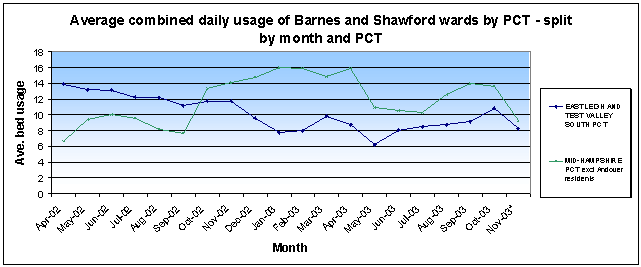
This briefing sheet demonstrates that the number of proposed beds within the new `Barnes' ward and Moorgreen will be sufficient to meet the current needs, and shows the fluctuations in demand for beds over a 19 month period, (April 2002 - November 2003).
BACKGROUND
The number of beds proposed in the new development is as follows;
¬ Winchester patients will have access to 15 beds.
- 6 dementia beds
- 2 flexible beds
- 7 functional beds
¬ Eastleigh and Chandlers Ford patients will have access to 12 beds
- 6 dementia beds
- 6 functional beds
ACTIVITY
The tables below show the bed usage over the last 19 months within Shawford and Barnes wards.
Table 1
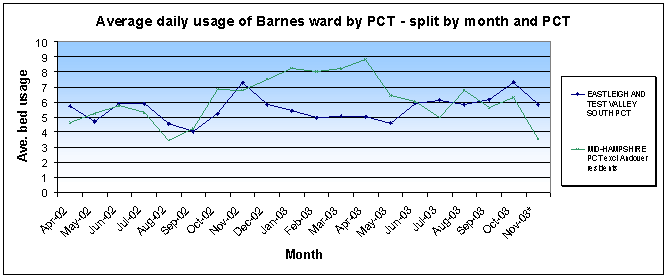
Table 2
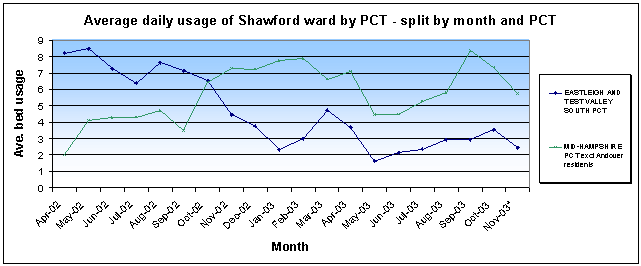
Table 3
WINCHESTER ACTIVITY
The Winchester activity is illustrated on the graphs by a green line. The activity shows that for the majority of the 19 month period the number of beds used across both Shawford and Barnes wards for Winchester patients has been significantly less than 15 beds.
However between January and April 2003 there were periods of time when the usage of beds rose to a maximum of 16 beds. The reasons for this increased inpatient activity were due to:
¬ During this period the day hospital service provided from St Waleric was severely reduced due to staff shortages. This led to increased activity on inpatient beds. Since April the day hospital has been running at its usual capacity, which has reduced the pressure on inpatient beds.
¬ Delayed discharges across the whole of the Trust, including the Winchester areas was extremely high. This resulted in a significant proportion of beds being `blocked.' Over the last few months staff within West Hampshire Trust have been working extremely hard with Social Services to reduce the number of delayed discharges, and the delayed discharge figures have reduced by approximately 40%, within this area.
Under the proposed development 15 beds will be sufficient for the Winchester population for the following reasons:
1. Additional community staff will enable the Community Team and Day Hospital to cross cover more efficiently in the event of any absences. The West Hampshire NHS Trust is also looking at reviewing and improving day services to ensure staffing levels are adequate to meet patient needs.
2. It is anticipated that the way health and social services staff are now working will ensure that delayed discharge levels will continue to be as low as possible.
3. Additional nursing home beds will reduce the pressure on inpatient beds, and therefore fewer inpatient beds will be required
4. Additional community staff at the St Waleric community mental health team (a dedicated Winchester Consultant, an additional qualified nurse, an additional unqualified nurse, upgrade of Occupational Therapist), will enable more patients to remain within their own homes, rather than being admitted to inpatient beds. This is the model that is used currently within the Newtown House community team which is illustrated in the bed usage by the Eastleigh area.
5. The proposed bed configuration within the proposal allows for flexibility of use of beds, dependent on client group.
EASTLEIGH AND CHANDLERS FORD ACTIVITY
The Eastleigh and Chandlers Ford activity is illustrated on the graphs by a blue line. Table 3 shows that for the last 14 months, (September 2002 - November 2003) the number of beds used across both Shawford and Barnes wards for Eastleigh and Chandlers Ford patients has been less than the 12 beds being proposed. In addition, for significant periods over the last 11 months, (December 2002 - November 2003), the activity has been significantly less than the 12 beds.
The reasons for this are that:
¬ The community mental health team based at Newtown House, has a well established model of service who aim to keep patients within their own homes wherever possible.
¬ There is a well established day hospital service which supports patients and their carers
The proposed reconfiguration of beds will also further enhance the community team by increasing the number of staffing by 2 unqualified members of staff. These staff will further support patients and their carers remaining within their own homes. There will also be an increase in the number of nursing home beds available, which will ensure that any patient who is awaiting a nursing home or residential home placement is found a place as soon as possible.
CONCLUSION
The activity data presented in this paper supports the proposal for the reprovision of inpatient services for older people with mental health problems in Eastleigh and Winchester. The data demonstrates that the number of beds proposed along with the developments to support people in their own homes will enable patients to access local inpatient beds when they need to do so.
The PCT's have also asked that West Hampshire NHS Trust regularly reviews the numbers of beds provided to ensure there are appropriate levels and that services are available locally to patients and their carers
Hampshire County Council Appendix Two
Health Review Committee
Initial Response to the consultation on the Mount Hospital
This first response is intended to inform the model of care that the PCTs are developing with input from local people. The interest of the Health Review Committee in responding to this proposal exists at two levels:
1. has there been adequate involvement of local people in shaping the document and responding to consultation
2. is the proposed way forward in the interests of the local health service
The Working Group is aware of the work that the PCTs initiated last November to obtain the views of patients and carers about service provision at the Mount Hospital. This has been followed by a period of more intense community engagement to identify the services required for this patient population and will result in a final proposal for formal consultation. This is an innovative approach to securing the involvement of the local community that the Working Group welcomes.
It is clear from the documentation and the feedback from the public meetings held in early March that, although staff provide high quality care, there is an overall agreement that the current facilities at the Mount Hospital are not in line with the environment in which modern health services should be delivered. Additionally staffing pressures have reached the point where 12 beds have already had to be closed. This situation could deteriorate if staff are not retained and may lead to the closure of further services on the grounds of safety. This scenario could result in the loss of important services for older people needing rehabilitation and is not in the interests of the local health service, service users or carers.
Given that the two PCTs have slightly different communities and needs the comments set out below have been framed generically to reflect the mix of services that the Working Group considers should be in the care models that are put forward for consultation. It would be helpful if the models developed were supported by the demographic assumptions that have underpinned the assessment of need for these services, particularly with respect to people over 75. Given the concerns expressed regarding the funding available for these services it would also be useful to have this defined for each PCT in terms of capital and revenue expenditure.
Home care and community services: if the purpose of rehabilitation is to help people maintain independence for as long as possible then there must be adequate support to those living in their own homes. This may be an on-going need, or a period of more intensive support. The care model adopted must be able to indicate how this will be achieved taking account of:
· the range of agencies and professionals that may provide care. Co-ordination across these agencies needs to be managed to ensure that the resources available are used as effectively as possible and support the delivery of the single assessment process. Is there scope for greater integrated working through joint management arrangements across the agencies concerned, if not how can this co-ordination be achieved?
· care that is available according to need: this should include services around the clock where this is necessary. Comments made at the public meeting suggest that there are problems with services at night. The current review of services provides an important opportunity to establish care pathways and protocols for people requiring different levels of rehabilitation and support to enable them to retain their independence for as long as possible.
· staff recruitment and retention: Often staff providing home care can be difficult to recruit and retain. There needs to be clarity about who will be responsible for ensuring that the care needed is provided by different agencies. How confident is the PCT that there is sufficient capacity in the community to provide the required levels of service in people's homes.
· carers need to be supported and have input into the care planning process. This includes planned access to respite where this is required. In this respect it must be remembered that the needs of people living with dementia are very different from those with other chronic problems and should be provided for appropriately.
· how the `preventing dependency teams' will be developed and range of specialist care that can be provided in people's homes. Active rehabilitation requires a mix of skills and professions and it would be helpful to see further information on the multi-specialty teams that will be developed to provide this level of service.
Day Hospital provision: There is scope for the day hospital to be managed in such a way that it brings together health and social care and the voluntary sector to provide a flexible resource not only for people requiring rehabilitation but also respite, assessment and other support. This could include for example foot care, pharmacy services, audiology and some diagnostic services as well as a range of out-patient clinics. The Working Group would wish to see a commitment of all service providers to the delivery of the single assessment process and integrated approach to care provision that links into services such as housing and home equipment. The location of this facility in each community needs to be identified in any proposals put forward.
24 hour in-patient care: careful thought needs to be given to the way in which this is provided in the two communities affected. Locations should be specified with due regard for access and public transport. There needs to be established referral pathways to acute care and day/community services. The scope for there to be some provision for GP beds, emergency respite and some terminal care should be explored.
These comments represent the Working Group's initial thoughts on the models of care that both PCTs will be developing in the next few weeks. We very much look forward to receiving the details of the models of care that will be subject to formal consultation.
Hampshire County Council Appendix Three
Health Review Committee
Response to HealthFit Discussion Document
Although the direction of travel and key drivers for change are clearly set out in the document the Committee remains unclear about the way in which these will be translated into action across the localities identified.
A number of factors are coming together which, when linked with the vision set out in `HealthFit', could have substantial implications for the way in which NHS services are provided to local people. It is essential that patients, the public and other key stakeholders are fully engaged in considering and planning these changes within the localities identified.
Previous `Healthfit' documentation has placed specific emphasis on the need for local engagement, particularly in relation to phases three and four of the `HealthFit' process. The intention to develop options for change through the involvement of local patients, communities, staff, clinicians and other partner organisation is strongly supported by the Committee. This engagement provides confidence that any proposals subsequently put forward for formal consultation would demonstrate genuine contribution and input from the communities affected.
You will be aware that we have asked previously for copies of these locality plans and information on the way in which local people were able to feed into this process. `HealthFit' rightly acknowledges that difficult decisions may need to be made if NHS care is to sustainable for the future. Major service reconfiguration is implied in a number of the proposals discussed. It is essential that the public, patients and other key stakeholders are able to contribute to the further development and refinement of these strategies in line with the requirements set out in Section 11 of the Health and Social Care Act. Throughout the discussion document there are references to the role of the voluntary sector, other service providers and the responsibilities of local people. It is not clear how this engagement will be taken forward across the localities affected. The section relating to cancer services (see page 46) was the only one to include additional information on the way in which users would be involved.
We are concerned that the locality plans we have received are very variable in form and content, particularly with respect to the way in which patients and the public have been engaged. This matter needs to be addressed as a matter of urgency to ensure that there is clarity and responsibility within localities for ensuring that Section 11 requirements have been appropriately discharged. At the present time the Committee is not confident that this is the case across all localities. The section on patient and public involvement at page 54 simply describes the new system, not how it will inform the HealthFit process.
The document notes the challenges of taking this agenda forward but does not include any assessment of the risks. The difficult financial position (pages 50) makes it clear that there is an expectation that the solutions put forward will cost less than now and make a contribution to cash releasing savings (see page 56). It would be helpful to understand where responsibility for achieving these targets rests within the localities.
It would also be helpful to have confirmation that the PCTs consider the balance between acute provision and community/primary care is correct. Building capacity in primary and intermediate services is a key area for delivery and the current document has a strong focus on acute care with little detail of how changes here may impact on the communities affected.
In this respect it would be useful to know if consideration has been given to the scope for integrated working across health and social care service providers.
Other general points include:
· Have the planning assumptions underpinning the discussion document taken account of the anticipated demographic changes within the population (e.g. new communities in south east Hampshire).
· What are the links with the changes in primary care and the new contract arrangements for GPs, including out-of-hours care.
· What impact will Foundation Hospitals have on the locality proposals.
· Is there scope for applying the notion of a single system approach to some of the management support services across Trusts within a locality (e.g. personnel, financial services).
· Are the levels of investment in acute care currently planned affordable and sustainable given the current financial deficit in the health economy.
· How will work be taken forward where services cross more than one locality area.
Specific Points relating to the document include:
1. Para1.4 includes reference to cancer services. Our understanding was that was to be taken forward separately. It was not the focus of any local consultation we were aware of. How will these proposals now move forward, taking account of section 11 requirements .
2. Para 1.6 Is the SHA satisfied that there is a clear process for engaging with the public and patients across the communities affected. The action plans developed must be underpinned by robust involvement.
3. Para 2.1 refers to community engagement. We have written previously to reaffirm our expectation that we would be involved in the approach to formal consultation and it is helpful to have this reinforced. We are keen to engage in the discussions about whether a proposal is substantial or not.
4. Page 20.E Is it correct that it is envisaged that we will move from 5 to 2 neonatal intensive care units. It is not clear what is meant by the statement on page 58 that there is `an urgent need to address the capacity of neonatal intensive care in Southampton'. Are there implications for accessing these services in the north of the County? What factors will inform the need for there to be high dependency and special care provision outside the centres identified.
5. Page 22 (sustaining maternity services). Is this inferring that there may be a reduction in midwifery-led units across the county? How will this process be managed across localities
6. Page 26 & 27 J, K L M& N. This is an area where there needs to be strong partnership working. Each of the services seem to have a strong medical focus. Other partners in the statutory and voluntary section also have a key role to play in the delivery of these services.
7. Page 26 K What work is in hand to deal secure the views of children and young people. Access to these services for looked after children is an issue we will be highlighting. L refers to children in special circumstances. Findings from our review of Children Looked after indicate that issues such as registration with a GP and transfer of information to be addressed. This must happen on a multi-disciplinary basis.
8. Page29- Mid and SW Hants Is the locality able to deliver the emerging standards from the NSF. We also note that page 58 makes reference to the long term sustainability of maternity and paediatric services in this locality. This is an issue that is likely to be of intense interest to local people.
9. Page 29- What is a virtual hospital
10. Page 29 Are there particular implications for the provision of acute paediatric support in the north east of Hampshire
11. Page 33 Inter-organisational collaboration It would be helpful to have further information about the work in hand to secure seamless care for emergency care provision. When will the work programme be available.
12. Page 34 Single point of access& triage How will the two other localities be engaged in providing a single point of access. This seems to cut across the intention to provide a consistent response across the county and IoW. Also we have picked up a number of concerns about the out of hours services in some areas. Will this be addressed in the new arrangements
13. Page 34 Hospital at night What evidence and consultation process is underpinning this proposal and when will the implementation process begin
14. Page 34 Out-of- Hours OOH is a key priority. How will the SHA assess the effectiveness of arrangements put in place by PCTs
15. Page 34 Alternatives to admission What role is envisaged of the voluntary sector in providing an alternative to acute admission. How will consistency be in response across the area be secured.
16. Page 34 Emergency Transport What are the responsibilities of patients in relation to emergency journeys. Will this be accompanied by a clear and consistent investment in public information/awareness.
17. Page 35 Changes to provision at SUHT and WEHT Is this an option that is supported by local people.
18. Page 35 There needs to be clear definitions about the interpretation of terms such as minor injuries, surgical emergencies and associated terms, including the way that the public understands the term A&E.
19. Page 36 Ports & SE Hants The SHA is aware of the concerns that the Committee has raised regarding the provision of health services in south east Hampshire. Will local people be regularly apprised of progress with this work. Will the views of local people be fully taken into account when deciding the way forward
20. Page 36 What is the risk that the QA redevelopment will not completed within this timeframe
21. Page 40 The need for investment in community and primary care provision is particularly important if the strategic vision for older people is to be realised
22. Page 41 Mid & SW Hants We welcome the acknowledgement of our role
I do hope that these points are helpful in informing the way in which the next stage of the `HealthFit ` process rolls forward. This is a complex and significant programme that will affect a significant proportion of the population across Hampshire and the Isle of Wight. Although there are a number of key factors driving this process it is essential that changes made are able to deliver modern, effective and accessible health care to local people.
The Hampshire and Isle of Wight joint committee will be meeting latter this month and will consider the responses from the individual overview and scrutiny committees. If there are further comments that we would wish to make collectively I will write to you again.
Hampshire County Council Appendix Four
Health review Committee
Surrey/Hampshire Joint Committee
Response to proposals to establish a single mental health and learning disability Trust in Surrey and north east Hampshire
Surrey & Hampshire Joint Health Overview & Scrutiny Committee 2004 |
S
|

PROPOSALS TO CREATE A SINGLE MENTAL HEALTH AND LEARNING DISABILITIES TRUST FOR SURREY AND NORTH EAST HAMPSHIRE
Background to the Joint Health Select Committee
1. The Health and Social Care Act 2001 makes statutory provision for local authorities with social services responsibilities to extend their overview and scrutiny functions to cover Health. An Overview & Scrutiny Committee may review and scrutinise any matter relating to planning, provision and operation of health services in the area of its local authority. It places a duty on the NHS to involve and consult patients and the public in developing and considering proposals for change. NHS organisations are also required to consult the Overview and Scrutiny Committee (OSC) or committees of the relevant local authorities on any proposal for a substantial development or variation to health services.
2. In July 2003 the Secretary of State issued a general direction to local authorities with Social Care responsibilities requiring them to appoint joint overview and scrutiny committees for the purposes of responding to consultations by local NHS bodies involving a substantial development of the health service or a substantial variation in the provision of such service where it spanned more than one overview and scrutiny area.
3. The Health Select Committee of Surrey County Council together with members of the Hampshire County Council Health Review Committee have a responsibility `to review and scrutinise matters relating to the health service in the authority's area, and make reports and recommendations on such matters.' This Joint Committee was formed to scrutinise the proposal to create a single Mental health & Learning Disability Trust for Surrey and north east Hampshire.
It has a core membership of seventeen councillors.
Membership: Surrey County Council (14 Members) : Mr John G Ades, Mrs Diana Bowes,(Chairman) Dr Joe Bullock, Mrs Moira James, Mrs Mary Laker, Mr Jim Maxwell, Dr Andrew Povey, Mrs Denise Saliagopoulos, Mrs Jean Smith, Mr Colin Taylor, Mrs Elise S Whiteley, Mrs Diana Landon, Mr Hugh Meares, Mr Chris Pitt. Ex Officio : Mr Daniel Kee, Mrs Sheila Gruselle. Hampshire County Council (3 Members): Dr Ray Ellis (Vice Chairman), Mrs Carol Leversha, Mr Francis Williams. |
TERMS OF REFERENCE
4. To understand the implications of a single Mental Health (MH) & Learning Disability (LD) Trust in terms of the pattern of service and how it will be applied in Surrey & North East Hampshire.
· To ensure equality of service provision and standards across the county;
· To ensure that the new service arrangements comply with Standards set out in the Mental Health National Service Framework, and the NHS plan;
· To reach an informed view on the choice of a single MH & LD Trust across Surrey and North East Hampshire from NHS management, professional staff, users' and carers' and voluntary organisations' perspectives.
Scope
5. All aspects of Mental Health Services for adults of working age including home and community-based care and hospital care but excluding secure facilities such as prisons;
· Implication of changes in service organisation in respect to LD Services and others.
· Funding for Mental Health services.
Methodology (Timescale & Process)
6. In December 2003 the Committee was made aware of the DRAFT NHS document concerning `Outcome of Discussion and Consultation on Mental Health Services in Surrey and North east Hampshire' which recommended the establishment of a Surrey and north east Hampshire Mental Health & Learning Disability Trust.
7. Arrangements were immediately made for a meeting between the respective Chairmen and Vice Chairmen of Surrey & Hampshire County Council Select Committees to meet together with Officers on 22 December 2003 in order to consider the `Outcome'.
8. On 24 December 2003 a letter was sent to the Chief Executive and Joint Chair of the Mental Health Strategy Steering Board expressing concerns relating to the proposed establishment of a single trust for the whole of Surrey and north east Hampshire. It raised the question as to whether it was in the interests of all those affected and, if so, whether the document adequately demonstrated that in a way which could be clearly understood.
9. It was felt to be clearly in the public interest that the two County Councils were seen to be actively involved in consultations over these service changes, working together through a joint Health Select Committee. Surrey and Hampshire did not feel able to do justice to their health scrutiny roles without meeting representatives of the local health bodies, and hearing from some of those affected by the changes, both in the east of Surrey and in north east Hampshire.
10. An additional period of consultation was therefore required to run until 29 February 2004 so that local people have a proper opportunity to consider and respond to this issue.
11. A formal hearing took place at Guildford Borough Council on the 18 February 2004, at which the Joint Select Committee heard from chief executives and executive officers representing:
· Surrey & Sussex Strategic Health Authority
· Guildford & Waverley Primary Care Trust
· Surrey & Hampshire Borders NHS Trust
· North West Surrey Mental Health Partnership Trust
· East Surrey Primary Care Trust
· Surrey Oaklands NHS Trust
· Blackwater Valley & Hart Primary Care Trust
· Surrey County Council
· Senior NHS Management from Secondary and Primary Care Trusts
· National Institute of Mental Health South East
· Staff Representation
· Service Users & Service User Group Representatives (Mental Health)
· Carers and Carer Representatives (Mental Health & Learning Disability)
· Voluntary Organisation (Mental Health MACA & Learning Disability Services MENCAP)
12. Witnesses were all given evaluation forms to enable them to feedback to the Joint Health Select Committee on their experience in attending the meeting and speaking to the Committee.
Summary of Evidence Received
13. The Joint Committee is most grateful to have had the benefit of the following written submissions;
· `Discussion and Consultation Document on Mental Health Services in Surrey and North East Hampshire'.
· Draft & Final `Outcome of Discussion and Consultation on Mental Health Services in Surrey & North East Hampshire'
· Letter from Mr & Mrs Galbraith
· Hampshire County Council Social Services.
· Letter from Mr & Mrs Austen
· Communication from Mr D Hagger
· Communication Mr & Mrs R Syme
· Letter from St Ebba's Parents and Relatives Group
· Letter Mr M Stannard
· Letter from Ms S Beavis
· Letter from Mrs V Halstead
· Communication Mr M Stanley
· Written Submission for Heads of Professions at Surrey oaklands NHS Trust
· Written submission from the Royal Mencap Society
· Letter from Mrs H Homan, Mrs J Forker, Mr D Capon
· Written Submission on behalf of members of UNISON
· Written Submission on behalf of members of GMB
· Letter from Advocacy Partners Mrs M Ronksley
· Written submission from London Borough of Croydon
· North West Surrey Mental Health Partnership NHS Trust `Developing our Vision.'
· North West Surrey Mental Health Partnership NHS Trust Service Plan 2003-2004.
· North West Surrey Mental Health Partnership NHS Trust Annual Report & Financial Statement 2002-2003.
· The Integrated Mental Health Service - A report focusing on the integration of health and social care in East Surrey (2003).
· Mental Health Services for Adults of Working Age, Surrey County Council (2003).
· A Strategy for User Involvement, Mary Francis Trust (2003).
· Priority Processes, an external analysis of the process of user-focused monitoring of Priority Enterprises.
· User Focused Monitoring User Views on Priority Enterprises.
· Review of Mental Health Services in north west Surrey (North West Surrey Mental Health Partnership Trust.
· Written submission on behalf of the Learning Disability Partnership Board in Surrey on issues relating to learning disability
· Patient & Public Involvement Forums.
· Letter from Mrs Muriel Brook
· Letter from Mr & Mrs Coxhill
Findings of the Joint Committee
14. The members of the Joint Health Select Committee would like to express their sincere appreciation and thank all those who have made such a valuable contribution to the overview and scrutiny process.
15. The Committee is aware that "Keeping the NHS Local" is the Department of Health guidance about the process for configuring health services and the NHS has to apply its principles when developing future service models. There is a tension between providing choice for patients and the constraints of the NHS Plan, the performance management framework and the National Service Frameworks. It highlights the need for stronger partnerships to find high quality, sustainable solutions for local health services. The "closer to home" model of care recommended by the National Beds Inquiry in 2000 highlighted the potential to deliver care in smaller settings than previously thought possible. The guidance challenges the "big is best" philosophy, acknowledging that with new resources available and new models of care being developed, "small can work". It sets out three principles to be followed:
· Developing options for change with people not for them - another publication called "Strengthening Accountability" provides guidance to the NHS about how to achieve this.
· Focusing on redesign not relocation - meeting local needs and expectations.
· Taking a "whole system" view of care - exploiting the contributions of hospitals, primary, intermediate and social care.
16. The guidance recognises that in the past the process of change has often been confrontational, without real community engagement and without putting forward any real alternatives to the solutions preferred by the NHS. Change in the future must be patient-focused and in tune with community needs.
17. Organisational Service Model It is noted that the case put forward for a single Trust has some merits. The desire to set up a more sustainable long term organisational model that can ensure that mental health and learning disability services are well represented in setting the agenda of the overall health economy was accepted.
18. The implications for people using the services to be provided for this Trust however were not clear. This was a cause of considerable concern to the committee as well as service users and carers.
19. Consultation A key question for the committee was the adequacy of the consultation process. The committee considered that the case made for implementing an option for service delivery that had not been subject to proper consultation was seriously flawed.
20. The original scope of the consultation focused on adult mental health services, discussed a service model and consulted on changes in the east of Surrey. Additionally the appraisal process explicitly discounted the option being proposed . NHS management comments confirmed that those using the learning disability service had not had an opportunity to comment on this option, similarly those that responded to the discussion/consultation document could not have given a view on the service configuration that is now being suggested. This point was strongly endorsed by service users, carers and voluntary sector representatives in the afternoon session and is reflected in the letters sent to the SHSC following to publication of the decision to pursue a single Trust model.
21. The committee is most concerned that NHS management has lost a great deal of credibility in terms of its ability and willingness to undertake genuine consultation with users carers and other stakeholders.
22. Although the committee welcomes the work currently in hand to explain the case for change to the people affected, there is a perception that this process is just a rhetorical exercise.
23. The committee has therefore carefully weighed the benefits of formally asking for further formal consultation, or referring the matter to the Secretary of State under section 4, paragraph 5 (a) of the overview and scrutiny regulations. There were however a number of points raised during the day that suggest that this may not be in the interest of local people or the NHS..
24. Staff Recruitment Development & Retention There appears to be a considerable degree of pressure and uncertainty for front line staff regarding the future organisational arrangements of these services. Recruitment and retention has been adversely affected as a result with an increase in demand from support from the voluntary sector.
25. NHS management highlighted economies of scale achieved through merger would bring about major improvements in this area. However issues concerning staff morale and development opportunities need to be addressed. This includes the perception of frontline staff that they will have less choice and less influence within a larger Trust.
26. There appears to be a widespread staff perception that a single trust will mean that senior management and the board will be too remote from the front line to have a proper understanding of the numerous services which are provided over the many sites and diverse population. Therefore there will need to be another layer of management. This could erode intended economies of scale.
27. Staff were also said to have serious concerns that some services were already being diluted to point whereby they were not able to provide a safe and effective services for either clients or themselves.
28. The Joint Committee remains unclear about the perception of clinical staff at primary care level. For example what is the requirement in terms of recruitment and retention, education and training of clinical staff at a primary care level, and plans for making the best possible use of existing staff, recruiting new staff, raising morale.
29. Finance The difficulty of the financial situation within the Health economy is appreciated but it was not made clear to the committee how the establishment of a single trust would be implemented in a climate of 4% efficiency savings for 2003/4.
30. The committee were not informed of any specific safeguards which would be put in place to ensure that the health community of Surrey and north east Hampshire will not have money diverted from mental health and learning disability services to relieve cost pressures.
31. It was not explained how services would be commissioned across the six Primary Care Trusts or on what basis. i.e. block contract, individual billing for different services, lead PCT Investment, or individual PCT independent provision.
32. Nor was it clearly explained how the integrated service between Health and Social Care concerning Mental Health funding translated for Learning Disability services across Surrey, north East Hampshire and the London Borough of Croydon. It was not clear whether there would be a requirement to pool budgets.
33. In terms of Surrey Oaklands there is a reduction in overall budget for 2003/2004. It was not clear if this will impact on the creation of a new single mental health and learning disability service.
34. `The Patient Experience' Service Improvement & Equality User and carers involved with mental health services have expressed serious reservations regarding the level of service that they will have from the establishment of a single trust. The fear that services will deteriorate rather than improve should not be ignored. This matter was previously addressed by the Surrey Health Select Committee report in October 2003.
35. Concern has also been expressed that there will only be a requirement for single Patient and Public Involvement Forum for an area serving the Mental Health and Learning Disability needs of a population of 1.5 million people.
36. The emphasis on locality working across the communities served needed to be safeguarded together with clarity about the range and scope of service to be provided.
37. Voluntary Organisations have expressed an interest and capacity to provide more services if consistent funding could be made available.
38. Learning Disability Services The committee is well aware that the Valuing People agenda has set a challenging programme of change for learning disability services. It was not clear from NHS management how the setting up of a single Mental Health and Learning Disability Service would facilitate the accomplishment of this agenda.
39. The Committee heard concerns expressed by carers of those using learning disability services that they feared further dilution of both management and clinical capacity and capability since they felt they would have even less influence over priorities set by a single mental health and learning disability trust which covered such an wide area.
40. The fact that the Surrey Oaklands NHS Trust was the largest provider of learning disability services in the country and would not fit easily with the other two Mental health trusts was also an issue for many carers. Concerns regarding how staff uncertainty and poor morale might affect standards of care for service users were also raised.
41. Concerns were raised about the lack of progress that was being made by Surrey Oaklands NHS Trust in implementing its `Social Care Change Programme' and it was feared that more senior management changes might simply exacerbate the problem.
42. Voluntary Sector Service Provision There is considerable good will across the voluntary sector that can be harnessed to secure the provision of high quality services and the Committee heard that some providers might find it easier to work with a single Trust.
43. Local Authority The Committee heard that there is a commitment to partnership working across the localities that is sensitive to the different needs of the communities served. However concern was expressed that, given the NHS Agenda for change, there might not be enough capacity and capability if senior staff attention was being diverted to the establishment of a single Trust. This might have a consequence of adversely affecting the social care agenda.
Conclusions and Recommendations
The Committee accept the case for a single Mental Health and Learning Disability Trust subject to the following recommendations.
1. Consultation That efforts are made to ensure that future proposed changes, their alternatives and their benefits are communicated to stakeholders more effectively. The Committee expects to receive early referral on all matters relating to Section 11 of the Health and Social Care Act 2001. Therefore proposals to develop or vary services will need to be discussed with the relevant Overview and Scrutiny Committee (or Joint Committee) at the earliest opportunity.
2. User and Carer Involvement That protocols be agreed for involving and engaging service users and carers across the localities affected. This will fully reflect the requirements and spirit of Section 11 of the Health and Social Care Act.
3. That arrangements be made to ensure that during the merger process there is an appropriate input from service users and carers across the services affected (with appropriate support and training).
4. A Steering Group is set up to oversee the merger process: this shall include input from services users and carers across the services affected with appropriate support and training. That consideration be given to the membership of the new Trust Board in order to provide reassurance to users and carers both for mental health and learning disability and professional clinicians regarding representation of their interests.
5. Transport That the Steering Board address the concerns of users and carers regarding access to services, especially for those in receipt of state benefits. The Committee would like to see evidence of the Steering Boards' progress in addressing this matter.
6. Service Delivery Outcomes That an area-wide evaluation process be agreed, with clearly defined outcome measures which are user and carer focused and user-led and which allow the effects of any changes to be evaluated on a `before and after' basis.
7. Learning Disability Services That options for the organisation of services for people with learning disabilities be assessed and discussed with users and carers.
8. That an appropriate range of robust mental health services enabling improved quality of life outcomes be available to a person with learning disability, as they would be for any other person.
9. That the NHS bodies acknowledge that the needs of people with learning disabilities and those with a mental health problem may be different. The Committee would like to see evidence of explicit arrangements put in place throughout all levels of the service to allow these different groups to influence service provision. This should include evidence in terms of a `care pathway' and an early statement of what can be expected from these services and the point of contact for users and carers should this not be delivered, This should also cover the learning disabilities services purchased by the Croydon PCT.
10. Front-line Clinical and Social Care Staff That the NHS bodies acknowledge the importance of ensuring that the service model proposed is supported by GPs and clinicians, particularly with respect to the provision of community support as set out in tiers one and two of the model described in the original document.
11. That it is suggested that an area-wide health and social care staff survey be carried out to monitor the high level of staff vacancies in key staff groups and concerns regarding poor staff morale, and sickness (short and long term). This should also enable an evaluation of the effects of change on staff on a `before and after' basis.
12. Strategic Outline Case That the business case supporting the establishment of the single Trust be published, together with the anticipated savings and targets for recruitment and retention. This should include details of where specialist services will be based, an assessment of accessibility for the population served and details of the care pathways that will be set up within the services to be provided by the Trust.
13. That the local NHS bodies confirm that the organisational arrangements put in place would be stable and enduring. This should be communicated to all staff and users and carers and the voluntary organisations.
14. That the Committee be kept informed of all Primary Care Trust commissioning arrangements for the purchase and provision of mental health and learning disability services.
15. That the Committee to be made aware of the NHS and local authority resource allocation concerning mental health and learning disability services across the six Primary Care Trusts.
The Committee would like a response to its recommendations by (28 days from sending). It can then consider any further action it wishes to take, and any additional monitoring that will be required to ensure that the actions taken have been followed through.
Diana Bowes Dr Ray Ellis
Chairman Vice Chairman
Joint Health Select Committee 27 February 2004
Hampshire County Council Appendix Five
Health Review Committee
Briefing Note: Foundation Hospitals
Summary
This note provides a brief overview of NHS Foundation Trusts. It includes feedback from a presentation given by Southampton University Hospitals Trust and Winchester and Eastleigh Healthcare Trust on 11 February and some of the discussion points that have be raised nationally and locally relating to the establishment of Foundation Hospitals.
Three acute hospitals in Hampshire and two in neighbouring counties are applying to be NHS Foundation Trusts (NHSFTs) with effect from October 2004. As part of the application process each Trust has to undertake a 10 week consultation period, commencing on the 23 February 2004.
Whilst the consultation process focuses on the intended governance arrangements, the Trusts need to include an outline service development strategy that describes how services will be provided in the future.
Local authority interest in these arrangements may include
· The way in which local authority representation on the Board of Governors is secured and arrangements for engaging a representative membership. This is likely to be complex where specialist services are provided across a wide population.
· Ensuring that any proposals for significant variation or development in service provision is subject to appropriate consultation and scrutiny. Although it is unlikely that the consultation on the governance arrangements will include proposals to substantially change services the service development strategy may include developments that will need to be subject to scrutiny and formal consultation.
· Consideration of any impact that the proposals may have on services provided by local authorities and the voluntary sector
The anticipated scope of the consultation process is attached at Annexe One.
Feedback from the presentation on service development strategies made by Southampton General Hospitals Trust and Winchester and Eastleigh Trust on 11 February is attached at Annexe Two.
Further information can be found on http://www.dh.gov.uk/PolicyAndGuidance/OrganisationPolicy/SecondaryCare/NHSFoundationTrust
Background
Wave 1a of applicants for Foundations status includes the following acute hospitals in Hampshire
· Southampton University Hospitals Trust (SUHT)
· Winchester and Eastleigh Healthcare Trust (WEHT)
· North Hampshire Trust
In addition the following neighbouring Trusts are also likely seek Foundation status
· Royal Bournemouth and Christchurch Hospitals Trust
· Frimely Park Hospital Trust
If approved these Trusts will be launched as Foundation Hospitals in October 2004. Each will be undertaking a 10 week consultation period about their governance arrangements, commencing 23 February
It is intended that NHSFTs will be:
· part of the NHS family, providing healthcare to NHS patients within a framework of national standards but not line managed by the Department of Health;
· held to account locally by the communities they serve and through `cash for performance' contracts - based on regulated price tariffs;
· inspected by CHAI to a set of national standards along with all NHS and independent healthcare providers;
· provided with new governance structures to reflect the different relationships with patients, staff, the local community and other key stakeholders in order to enhance accountability within the local community;
· given additional freedoms (although these are yet to be defined);
· established as free-standing legal entities
There are three key ways in which NHSFTs will be accountable:
· Governance arrangements that ensure Trusts will be accountable to local communities and front line NHS staff through their Board of Governors and Board of Directors. Local people and staff will directly elect representatives to serve on the Board of Governors. The Board of Governors will appoint the chair and non-executive directors of the Board of Directors. It will work with the Board of Directors - responsible for day-to-day running of the Trust e.g. setting budgets, staff pay and other operational matters - to ensure that the NHS Foundation Trust acts in a way that is consistent with its terms of authorisation. The Governors, in appointing the chair and non-executive directors, will be in a strong position to influence the direction of the NHS Foundation Trust.
· Performance agreements with Primary care trusts (PCTs) through legally binding agreements to provide agreed levels of service which accurately reflect local needs and which reward results.
· Independent regulation providing a `licence' to operate - to each NHS FT. This authorisation will set out the conditions under which each NHS FT will operate (the terms of authorisation). The Independent Regulator will have powers to step in if there is evidence that an NHS FT has significantly breached the terms of its authorisation, or has failed to comply with appropriate legislation.
Annexe One
Scope of consultation
The key issues to be addressed in the consultation document are
· the case for NHSFT status: a description of the pros and cons arising from NHS Foundation Trust status.
· governance arrangements: proposals for new governance arrangements; proposed membership community, composition of Board of Governors and Board of Directors, election processes, proposals for communicating with and recruiting members and for ensuring a representative membership; proposed roles and responsibilities of Governors, Directors and members; proposed transition arrangements for present executive team and chair.
· service development vision: a description of what the NHSFT expects to achieve in broad terms over the next five years, focussing on patient benefits rather than organisational gain. The vision for the first two years should be consistent with (and will largely reflect) developments agreed as part of the LDP process, which have been subject to consultation and agreement with local stakeholders. The vision for 2006/7 onwards can be presented in very high-level terms. It does not need to be agreed in detail with PCTs although it should as far as possible chime with the SHA view of what is required within the local health economy and reflect the financial environment of principal commissioners.
The consultation does not have to be on the basis of finalised proposals. Many applicants have already started discussing aspects of their proposals for NHSFT status with stakeholders: the consultation process should mesh in with this rather than running in parallel. It is entirely acceptable (and indeed desirable) for the consultation document to set out the range of options that are being considered at this stage. So for example on governance, the document might outline the basic shape of the governance arrangements and present alternatives for the size and composition of the Board of Governors
The governance arrangements proposed by the Trusts will be a central feature of the consultation document. As such it should include:
· Who (in terms of geographic area) can become a member in the public constituency;
· If appropriate, provision for patients and their carers from outside the area to be members in the public constituency;
· Eligibility for membership in the staff constituency;
· Processes for recruiting, retaining and communicating with members;
· Process for the election of the Board of Governors; and
· Process for the appointment of the Board of Director
The Board of Governors
Arrangements for the Board of Governors must include:
· _public governors. It may also have patient and carer governors. More than
half of the board of governors must be public, patient or carer governors
· _at least three governors elected by members of the staff constituency
· _at least one governor appointed by a primary care trust for which the NHS
Foundation Trust provides goods and services
· _at least one governor appointed by a local authority whose area includes all or
part of the NHS Foundation Trust's public constituency
· _at least one governor appointed by a university, if the NHS Foundation Trust's hospitals include a university medical or dental school
· _the option of appointing one or more governors from a partnership organisation
Governors, through their involvement in appointing the Chairman and non-executive directors will be in a strong position to influence the direction of the NHS Foundation Trust.
The Board of Governors will be responsible for:
· Representing the interests of NHS Foundation Trust members and partner organisations in the local health economy in the governance of the NHS Foundation Trust;
· Regularly feeding back information about the Trust, its vision and its performance to the `constituency' they represent;
· If necessary, chairing or attending relevant sub-committees;
· Appointing the non-executive directors, including the chair, of the Trust;
· Appointing the Trust's auditor;
· Working with the Board of Directors to produce plans for the future development of the Trust;
· Receiving, at a public meeting, copies of the Trust's annual accounts, auditor's reports and annual reports; and
· If concerns about the performance of the management board cannot be resolved at a local level, informing the Independent Regulator for NHS Foundation Trusts.
Local authority representation on the Board of Governors must be at least
one governor from a local authority that falls wholly or partly within a public
constituency of the NHS Foundation Trust. There may be more, if the Trust so
chooses. Again, an NHS Foundation Trust should agree with the relevant local
authorities how many local authority governors there should be on the board of
governors and the method of selection (for example rotation, one to represent all
local authorities). They must leave the selection process to the local authorities
themselves.
The local authority governor does not need to be elected to the
board of governors nor do they need to be an elected member of the local
authority - for instance they could be a relevant officer such as the Director of
Social Services. Local authority governors should not be appointed to represent
the interests of their specific local authority. Their role is to provide the
perspective of the wider community and be a knowledgeable source for governors
to develop better understanding of the environment in which the NHS Foundation
Trust operates.
Annexe Two
SUHT and WEHT presentations: Key Points
· Foundation Status will provide both NHS Trusts with
o Legally binding income for work done
o An ability to borrow against this income
o Freedom to form joint ventures with other (including commercial sector) to spread risks
· Consultation will only be on the constitution of the Foundation Trusts, not whether to go ahead or the service development strategy (SDS)
· Both Trusts indicated that their costs were well below the national tariff but no further detail was available. Reference was made to the need to look at alternatives to service provision where costs exceeded to national tariff.
· Both Trusts were basing their proposals on the delivery of `HealthFit' and the notion of `single service delivery' in the health system
· SUHT was proceeding on the basis of the following assumptions
o Emergency care will increase (including night time provision)
o Elective workloads will be increasingly complex, reflecting higher levels of acuity and clinical input
o This work will be moved to SUHT from other areas of the health network
· In responding to these assumptions SUHT will seek to consolidate rather than grow in terms of service provision. This will need
o Shifting less complex care to other Trusts and PCTs
o Extended A&E capacity
o Extended critical care and high dependency capacity within Soton General
o Totally reconfiguring the Royal South Hants site to provide all out patient clinics, the Department of Psychiatry, residences and `commercial capacity'
· WEHT were proceeding on the basis of
o Clinical governance dictating what could or could be done in a particular care setting
o WEHT would be the provider of choice for local people requiring acute care
o Capacity will need to be released to provide this (e.g. the reconfiguration of Andover Hospital)
o Greater integration with community services, including social care will also be required
Questions and Comments
These came from the PCTs but reflect a number of areas that may need further exploration. They are not in any particular order.
· There is a tension between the commercial drivers and the aspirations to provide better health care
· Better joint working is required
· Coherent commissioning by PCTs is assumed
· Are the proposals affordable and sustainable
· Funding shifts to primary care must happen- otherwise the PCTs will effectively be paying twice for a service. The implications for reproviding services for people with a chronic illness in the community indicates disinvestment from the acute sector by PCTs
· How will systems working and clinical networks be managed to ensure transparency
· There is a danger of these services ceasing to be needs led
· What is the population to be served by these arrangements
· How will private work be managed in this arrangement
· What is the role of community hospitals
· Can services be withdrawn if they become financially unviable or fall outside the national tariff rate.
· How is capacity in community and social care going to be built to managed these service reconfigurations
· What about the public health agenda
· How can chronic conditions be managed to promote independence
· It is not clear exactly what this would mean for the provision of routine elective care currently provided at SUHT.
· Surgical provision would need to be redesigned and agreement reached on the way in which patient activity could be allocated
· What would the impact be of a `single service delivery system' and how would equity in access be ensured across the area.
· The focus of both presentations was on acute and emergency care. Community and other support required in such a system also needs consideration.
· The provision of specialist services and how these would be managed needed to be addressed (these are often low volume, high cost and purchased across a wide population)
Hampshire County Council Appendix Six
Hampshire County Council
Health Review Committee
Response to Consultation: Reforming the NHS Complaints Procedure
Summary
This note summarises and comments on the draft regulations relating to the reform of the NHS complaints procedure. These regulations are subject to a consultation period running to the end of March 2004 and should be implemented in June 2004.
The Health Review Committee was not alerted to this consultation.
Background
A national study of the NHS complaints procedure, commissioned in 1999 by the Department of Health identified a number of problems with the NHS complaints procedure as it was then set out. These included
· Concerns of bias at the independent review stage
· Lack of clarity about the process significant delays in exhausting the procedure
· Lack of support to complainants
· Lack of redress
· Poor systems for ensuring that the feedback from complaints informed service improvements.
The current consultation sets out how the legislative base of the complaints procedure will be amended to address these concerns. It is also intended that the new regulations will link complaints that cross health and social care. The draft regulations relating to social care complaints have not yet been released.
Areas covered by the draft regulations
· the nature and scope of the arrangements including the requirement for NHS bodies to deal with complaints, the definition of complaints which may be made to NHS bodies, management of complex complaints and complaints that are outside the remit of the NHS complaints procedure and the requirements placed on private, independent and voluntary sector providers of NHS services
· consideration of complaints: in particular, who may make a complaint, handling complaints that involve more than one organisation or more than one type of investigation, referral onward to the Commission for Healthcare Audit and Inspection (CHAI) or Health Service Commissioner, as well as requirements on time limits and obtaining and disclosing information.
· the role and responsibilities of CHAI and the joint handling of complaints between CHAI and the Commission of Social Care Inspection (CSCI).
· support activities including publicity for complaints procedures, training for staff dealing with complaints, monitoring and annual reports.
Key Changes Proposed
The regulations are intended to make the NHS more responsive to complaints, make the process easier for a complainant to follow and ensure independence. They also seek to link the way in which service improvements can be secured through complaints.
Full NHS coverage (Regs 3,7) - the draft Regulations apply to all services, whether provided by NHS trusts (including Foundation Trusts), PCTs, primary care practitioners, SHAs, and most Special Health Authorities. The private, voluntary and independent providers of NHS care will be required, within their contracts with NHS commissioners, to operate a "comparable" complaints procedure.
Independent review (Regs 22-27) - CHAI will be responsible for investigating complaints once local processes have been exhausted. This work may be done by CHAI staff or lay people
Complaints about primary care services (Regs 5,15, 16, 21,30, 31) - the procedure will be changed so that, in respect of time limits and reporting arrangements, primary care services are brought into line with other parts of the NHS
Making a complaint (Regs 5, 12,13, 14) - complaints can be raised with any member of staff and resolved "on the spot". Unless the complainant wishes, there is no need to be more formal. A complaint may be about any matter connected to NHS services - including lack of access to services.
Time limits (Regs 15, 16,21) - it is proposed to extend the current time limit for making a complaint from six months to one year. All complaints should be acknowledged within two working days and responded to in 25 working days unless a complaint is complex. In such cases, subject to the agreement of the complainant, more than 25 days may be taken. If a complaint is not resolved within six months, it can be referred to CHAI.
Complex complaints (Regs 6,17,27) - the draft Regulations define complex complaints as those that relate to more than one NHS body, or one or more NHS bodies and a local authority service (which may or may not be provided under a partnership agreement), an NHS body and a primary care provider, or events that are subject to more than one type of investigation.
Duty to co-operate (Regs 9, 17, 27) - NHS bodies and primary care practitioners now all have a duty to co-operate in investigating complaints, in providing information and wherever possible in providing a single and comprehensive response. CHAI and the CSCI also have a similar duty to co-operate.
Referral to CHAI or the Health Service Commissioner (Reg 19) - there is provision for NHS bodies and primary care providers to refer a complaint direct to CHAI or the Health Service Commissioner.
Accountability and service improvement (Regs 10, 21, 29, 31) - all NHS bodies and primary care practitioners are required to designate a Board member or equivalent to lead on complaints. Guidance will recommend an explicit link between complaints and the senior person responsible for clinical governance and service quality. All NHS bodies will be required to prepare regular reports about the numbers and nature of complaints, and the action taken as a result.
Specific Questions
The particular questions raised by the Department of Health, and the response of the Health Review Committee are set out below.
1. The Regulations will require complaints to acknowledged and responded to within given time limits at various points throughout the process. If complaints are to be to be dealt with positively, these time limits need to be challenging. NHS organisations and practitioners need to be convinced they are realistic, whilst the complainant will need to be
satisfied they encourage swift resolution at each stage. Have we got the
time limits right?
Arrangements relating to response times are important but need to be flexible enough to ensure that complainants receive a through as well as a timely response. Complex cases are likely to take longer especially where a lead needs to co-ordinate views across a number of different organisations.
2. Throughout the regulations, we envisage close working between NHS
organisations (primary, secondary, ambulance services) and between
the NHS and local authorities, so that complainants need contact only
one organisation and will get, unless there is good reason, a single
response on behalf of them all. The regulations place a general duty to
co-operate on each of these bodies. Will the language used be
understood to have the same meaning across the different
organisations?
It is disappointing to note that the `sister' regulations envisaged have not been issued for consultation. There is a need to ensure that complainants expectations of a consistent approach across health and social care can be met. This has not happened at local level. Similarly there needs to be accord between CHAI and CSSI regarding arrangements for managing these complaints. It is not clear if this work has taken place. It would also be useful for there to be a common approach to referring a complaint to a single ombudsman- or for joint arrangements to enable this to take place agreed.
3. To be effective, it is important that all independent providers are covered
as if the regulations apply to them. We envisage this will fall to the
contracting authority, whether it be an NHS trust or a Primary Care
Trust. Will this prove sufficiently robust?
We do not believe that this is sufficient. It would be helpful to have both the regulations strengthened to ensure that complaints process is consistently delivered by all providers and commissioners of NHS care, regardless of whether the organisation is a public body or independent. It may be possible to amend section three to reflect this point more clearly.
Many new arrangements are in hand to commission and provide service and it is not clear how accountable these will be to patients.
4. Regulation 4 is to do with complaints made about primary care services.
Does it adequately cover all services offered by primary care providers?
The focus of the regulation is on independent practitioners rather than primary care services which can be provided through a variety of different routes. Out of Hours cover and call handling would be one particular area where there needs to be absolute clarity
5. Regulation 5 describes matters about which someone may complain.
Does it cover all the necessary issues?
Again it would be useful to recognise that the complaints procedure applies to the commissioning and provision of NHS services- whether or not they are provided by an NHS body
6. Regulation 8 lists the types of complaint that are excluded from the
scope of the regulations. Is the list sufficiently comprehensive?
Complaints that are racially or otherwise discriminatory might be excluded. Complaints where the complainant has not agreed to referral to CHAI or the Ombudsman.
7. .From a patient perspective, are there any situations in which regulation
12 would unreasonably prevent a complaint being made either by a
patient, a former patient or their representative?
It may be useful to clarify whether
· a complaint on behalf of someone who has died can be made without the support of the next of kin.
· A competent child ( as in the definition used for giving consent) can make a decision regarding a complaint
8. Our aim was to make it as simple as possible for someone to make a complaint.
Have we achieved that aim in regulation 13?
Regulation 13 is helpful. It would be strengthened if regulation 14 reflected that it is the decision of the complainant as to whether a complaint becomes formal or not. Even if action has been taken to resolve an immediate concern some complainants chose to pursue the complaint in order to secure service improvements for others.
9. From an administrative perspective, do you foresee any difficulties under
the regulation 17 in identifying a `lead' in complex cases?
It would be helpful if supporting guidance could identify the criteria against which the `lead' should be identified. Where there is multiple involvement across a number of agencies this may have an impact on the reasonableness of the time scales envisaged. There is a balance between thoroughness and timeliness that needs to be achieved in these cases. Where anticipated timescales are exceeded then the `lead' should be able to demonstrate regular up-dates on progress the complainant.
10. Does regulation 20 get the balance right between protecting a patient's
confidentiality and enabling the complaint to be properly investigated?
Patients need to be advised at the earliest opportunity that confidential information may need to be accessed by the complaints manager in order to investigate a particular matter.
11. It is important that everyone who might have an interest in these
procedures is easily able to find out what they cover and, where
appropriate, how to make a complaint. Do we need to add anything else
to regulation 28 to ensure adequate publicity is given to the new
arrangements?
The new system for patient and public involvement is complex and still variable across England. The publicity should include information about the roles of PALs, ICAS and the patients forums in helping to resolve complaints.
Equally it is essential that NHS staff understand the system and how a patient may access support and help. This should not however detract from the fact that NHS staff have a key role to play in complaints resolution at the time they are approached by a potential complainant. This information to those working within and alongside the NHS is equally important to that publicised to local people.
12. Will the transitional provisions in regulation 32 properly allow for a
seamless shift into the new arrangements?
It is important that CHAI is geared up to deal with referrals from the date of transfer. Some areas are experiencing significant delays in getting and independent review panel established. In these circumstances it may in the interest of both parties to refer the matter under the new system.
Additional issues
· The new arrangements for patient and public involvement are complex. It is important that people are clear who to approach if they have a complaint about services and the level of service that can be provided. Regulation 16 refers to the right to expect support from ICAS. This has not however been defined and the consistency with which this service is available across England is not clear. Similarly the role of the Patients Forum's needs to be understood. Early indications are that some Forum members see themselves as having a role as a patients advocate. The appropriateness of this understanding needs to be carefully considered.
· 16.2 should include capacity for verbal or electronic confirmation of the accuracy of the written record.
· No mention is made through out the document about access to clinical advice at a local level or on referral to CHAI. Certainly a panel may need access to this support. This is a frequent source of delay and frustration in the current system.
· Training and support to panel members and their recruitment is an area that should be covered in supporting guidance.
· It is disappointing that no provision has been made for financial redress where this is considered to be appropriate. This was a major cause for dissatisfaction with the previous system, as evidenced in the evaluation exercise.
· An effective complaints system is fair to both staff and complainant. In a tiny proportion of cases complainants expectations are not reasonable or resolvable. Where complaints are persistent or vexatious there needs to be a mechanism for managing this.
Hamphsire County Council Annexe 7
Health Review Committee
`Choosing Health' DHN Briefing Note
Published on 3 March 2004, the consultation document seeks views on the role that individuals, the government - both central and local - the NHS, the public sector more broadly, the voluntary sector and industry, the media and others can play in improving people's health. The consultation document is published against the background of the recent report by Derek Wanless on health inequalities and how they might be addressed (see DHN PB 009 04). The government anticipates publishing a White Paper on public health in the summer, which it states will be informed by responses to the consultation document. Responses are sought by 28 May 2004. All the documents relating to the consultation, useful background material to assist at consultation meetings and a template for responses may be downloaded in portable document format from the Department of Health website at www.dh.gov.uk/Consultations/LiveConsultations.
The consultation document
In his foreword to the consultation document, the Secretary of State for Health claims that there is a growing recognition that the health and well being of communities and society as a whole is not just a matter for central government: the NHS and other public services, individuals, organisations and communities all play a part and looking at how to make things better. But "just as it is wrong to see action on health as solely a matter for the Government, so it is wrong to say that Government has no role. We have to strike the right balance between the contributions that the Government and others will make".
The questions in the consultation document are, therefore, framed in terms of how all groups and individuals can agree on how best to make a real difference; how all those involved can work together more effectively to promote the health of all; how children can be given the best possible start; how to ensure that people can have a healthy retirement; and how to ensure that people have the local environments, services, facilities and information they need to choose healthy lifestyles.
The document points out that there have been some significant improvements in particular health areas in recent years: for example, premature deaths from coronary heart disease have been reduced by 23% and cancer by 10% since 1997. However, some of the worst health areas in the country still have life expectancy similar to the average for the whole country in the 1950s; and there are worrying trends in public health, such as the increase in obesity, particularly among the least well off.
As appendices to the consultation document there are a series of useful factsheets on areas in which the government believes action is necessary to improve public health and reduce inequalities. These are:
· Accidents
· Alcohol misuse
· Diet
· Drugs
· Excerise
· Inequalities
· Mental health
· Obesity
· Sexual health
· Smoking
Comment
These factsheets are intended to provided background support for consultation meetings that may be organised to gather responses to the document. They would also be extremely useful as briefing material for local authority health scrutiny committees. They contain a wealth of useful basic statistics about the issue in question, national and local initiatives to address the issue, and references to sources of further helpful information.
Questions for response
Questions to which the government is seeking a response from all sectors, organisations and individuals are posed throughout the document on a variety of issues. The questions range widely over the roles of various institutions, such as the media and advertising, to specific concerns, such as how to improve access to health information to those whose first language is not English, how to provide environments in which people have real choices about their diet and exercise and how to encourage more people to respond to screening invitations.