
Archived decisions
The South East Plan:
Advice on Policies for Central Hampshire and the New Forest
D R A F T
Prepared by the Strategic Planning Technical Advisory Panel (TAP)
7 September 2004
Contents Pages
1. Introduction 3
2. A Strategy for Hampshire 5
3. The Economy 6
4. Infrastructure 10
5. Housing 11
6. Transport 13
7. Development Strategy 14
- Settlement Strategy 14
- Regional, Sub-Regional and Principal Settlements 15
- Market Towns 16
- Villages 17
- The Rural Urban Fringe 18
- Regional and Local Gaps 18
- South West Hampshire Green Belt 19
- Flood Plains and Groud Water Flooding 20
8. Water Resources 20
9. National Parks 21
- The New Forest National Park 21
- The Proposed South Downs National Park 22
10. Hampshire's Coast 23
ANNEX - Objectives of the South East Plan 24
All references to `Hampshire' in this document mean `Hampshire including Portsmouth and Southampton'. `Rest of Hampshire' means that part outside the two sub-regional areas.
1. Introduction
The Planning and Compulsory Purchase Act 2004 requires county and unitary councils to provide advice to their Regional Assembly on what should be included in the Regional Spatial Strategy. This document provides that advice in respect of the South East Plan.
Considerable discussion and work is underway towards the preparation of sub-regional strategies for the Western Corridor and Blackwater Valley and for South Hampshire which will form an important part of the South East Plan. However, many of the South East Plan's policies will relate to the whole region. This document, 'Planning for Hampshire's Future', aims to influence the shape of those region-wide policies. It focuses on the Rest of Hampshire (central Hampshire and the New Forest) which is not covered by either of the sub-regional strategies.
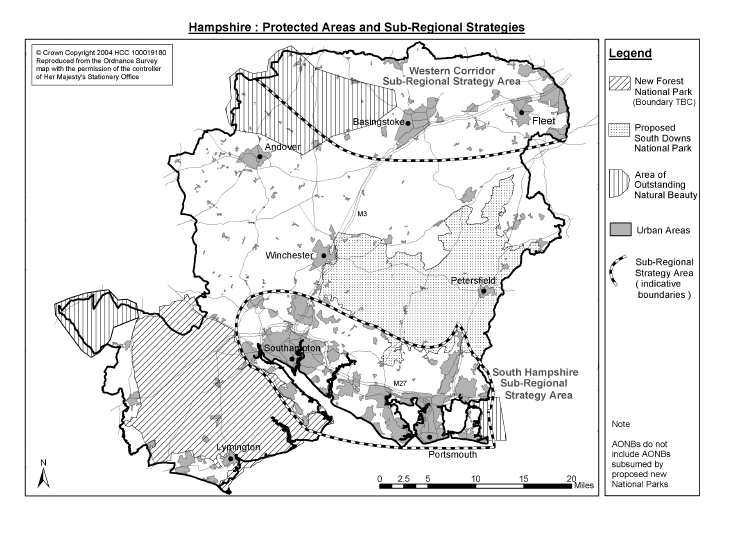
The map below shows the two sub-regional strategy areas and the Rest of Hampshire together with the Areas of Outstanding Natural Beauty and the two proposed National Parks.
Quality of Life
Quality of life means different things to different people. Someone with a good job and well housed is likely to regard the environment as the most important. A job seeker may rank economic growth as top priority, while for a youngster without a home of their own, it may be more housing. 'Quality of life' must therefore embrace all three and be measured in terms of economic and social progress as well as environmental protection.
The Integrated Regional Framework for the South East (2004) articulates a better quality of life in terms of 25 objectives, ranging from the community's everyday concerns such as fear of crime to global matters like climate change. The Regional Assembly is preparing the South East Plan within the framework of these 25 objectives which are set out in the Annex. Similarly, the objectives have informed the preparation of the Policy Approaches in this document.
It is important, too, that the advice, and indeed the whole South East Plan, is in tune with public opinion. Recent research undertaken independently by the Joseph Rowntree Foundation and by SEERA reveals that the public is not as hostile to development as often thought. The Regional Assembly's public opinion survey conducted by MORI found that half of South East residents think there is a need for more housing in the Region and 43% would support more housebuilding on greenfield sites.
A total of 42% of people in Hampshire and the Isle of Wight feel that more housing is needed in their local areas and 51% believe that more homes need to be built quickly to tackle housing shortages. The view was expressed strongly that new housing is not being matched by new facilities/infrastructure and that more affordable housing is needed. These messages are reflected in the proposals in the document attached.
Scope of this Advice
The Advice does not attempt to cover every topic which will be addressed by the South East Plan. Rather, it concentrates on matters where there is something distinctive to say about Hampshire and where the South East Plan will contain a different approach in respect of Hampshire compared to the rest of the Region. One obvious example of this is the New Forest National Park which does not affect any other part of the South East Region.
The paper does not repeat Government advice contained in Planning Policy Statements/Guidance or legislation, apart from a few instances where it is felt necessary to draw attention to particular points. Instead, the paper seeks to 'add value' by identifying specific policy areas which it is considered the Plan should address. The Advice takes the form of a brief analysis of each topic, followed by a `Policy Approach' which sets out the nature of the desired policy(ies).
No attempt has been made to draft the actual policies; rather the Policy Approaches set out what should be their overall thrust. Many of them suggest that the South East Plan should require Local Development Documents (LDDs) to contain particular policies.
The Policy Approaches are not confined just to land use matters; some cover related matters such as a call for increased investment. This reflects the broader spatial nature of the South East Plan which can include non-land use measures/actions. It is crucial that the Plan is closely linked to the Community Strategies and is the spatial expression of them. This advice reflects the approach and priorities contained in the Hampshire Community Strategy, published by the Hampshire Strategic Partnership, which sets a strategic framework for action by partners in the county.
Advice is not included on minerals and waste, energy, or tourism and recreation. These matters have already been addressed at the regional level through regional strategies which, although currently at different stages in their preparation, are to be integrated into Regional Planning Guidance for the South East (RPG9) and subsequently into the South East Plan.
2. A Strategy for Hampshire
Hampshire has exceptional natural advantages and a bright future. It contains some of the most beautiful, diverse and biologically rich countryside in Britain and a varied coastline. Its cities and towns, many of them with historic cores, fulfil roles as vibrant centres for employment and a range of services, cultural, health and educational facilities. There are excellent transport links by road, rail, air and sea. Hampshire is a county where people want to live, invest and do business and which attracts visitors from all over the world.
However, there is also a legacy of key issues which need to be addressed, in tandem with managing future change and growth. These issues range from under-investment in infrastructure to skills shortages, and from the lack of affordable housing to the challenge of balancing development with the positive protection and enhancement of the county's existing character and qualities.
Development in Hampshire has, in modern times, largely been concentrated in the north and south of the county. Northern Hampshire, with its large urban areas of Basingstoke and the towns of the Blackwater Valley is also under the influence of London and Reading. In southern Hampshire, the cities of Southampton and Portsmouth and adjacent settlements now form the largest urban area in the south of England outside London.
Between these two urban concentrations lies a broad belt of open Downland which is of great county and regional significance and where development has generally (with the exception of Andover) been small scale. This area of "Hampshire's rural heartland" has increased in importance as the urbanisation of north Hampshire and the south coast has continued. The retention of this large-scale physical break between the major urban areas is crucial and is reflected in the overall strategy below.
South West Hampshire is dominated by the New Forest, which is subject to development pressures from the Bournemouth/Poole and South Hampshire conurbations. The conservation of the New Forest is of national and international importance. Maintenance of the South West Hampshire Green Belt will help avoid encroachment of the Bournemouth/Poole conurbation into Hampshire.
Reflecting these themes and to meet the broad regional objectives set out in the Annex, this document puts forward a strategy for Hampshire which contains the following key elements:
· Growth continuing to be focussed on the sub-regional strategy areas of South Hampshire and the Western Corridor/Blackwater Valley.
· 20,000 - 26,000 new homes between 2006 and 2026 in the Rest of Hampshire.
· The delivery of more affordable housing.
· A supply of land for industry and business which is developable and attractive to firms to allow a continuation of the past rate of development - 220,000 square metres of floorspace per annum - across Hampshire as a whole.
· Urban and suburban regeneration of existing towns and cities to provide a better quality of life, reduce the impact on the environment and enhance prosperity.
· Investment and development in the sub-regional towns of Andover and Winchester to enhance and develop their roles as major employment and service centres.
· Improvements and modest growth in the county's market towns to maintain the distinctive character and functions of market towns.
· Limited small-scale housing, business and service development in villages to meet local needs.
· More pro-active planning and land management of the rural/urban fringe to create a multi-functional countryside, serving the needs of both town and country.
· Designation and management of Regional Gaps to separate areas of major urban development, and Local Gaps - to be identified in LDDs - which form breaks in the settlement pattern and which are to be kept under more frequent review.
· Enhancement of the role of Hampshire's countryside as an important natural resource, contributing to economic prosperity and the quality of life, with the flexibility to allow rural communities and enterprises to change and prosper. Keeping the distinctiveness between urban and rural areas, whilst improving the links between them.
· Support for farming and sustainable land management of the countryside.
· Discourage development in coastal areas at risk of flooding. In areas of concentrated population and important commercial assets, defence from the sea will continue to be justified.
· Sustaining and enhancing the beauty and richness of the New Forest National Park and the proposed South Downs National Park as living, working landscapes, with special recognition of the importance of commoning in the case of the New Forest.
· Maintaining the South West Hampshire Green Belt.
These are developed in more detail in the pages which follow.
3. The Economy
NB: This section is based on information currently only available for the whole Districts of New Forest, Test Valley, Winchester and East Hampshire - referred to in this section as `Central Hampshire and New Forest'. A small part of each of these Districts is within the south Hampshire Strategy. Thus the analysis includes some completed development and sites which lie within the South Hampshire Strategy area and thus outside the area defined as `Rest of Hampshire'. The implication of this is a proportion of the sites in Central Hampshire and New Forest will meet the business needs of South Hampshire. Work is in hand to compile data which relates solely to the `Rest of Hampshire' area.
Hampshire has a relatively large economy, which at £23.8 billion, is worth more than for example, the economy of Northern Ireland (£19.1 billion). However, Gross Value Added (GVA) per head, a traditional measure of economic performance, is lower than the national average and also well below the average for the South East Region. Indeed the gap between Hampshire's GVA per head and the regional average is widening. Within Hampshire there is also a disparity between the sub-regions. North Hampshire, with the most modern economy, has the highest GVA per head (although below the South East Region average); South Hampshire, with the two cities and a history of traditional industry, follows; and the Rest of Hampshire, with no major economic centres, has the lowest GVA per head.
Hampshire's relative economic prosperity is not `a given' and will need strong policy support, in order to create the environment that will allow business to realise its full potential in the emerging global economy. Recent research identifies six key characteristics of economically successful regions and sub-regions:
· Economic diversity;
· Skilled workforce and education;
· Enterprise development and entrepreneurship;
· Innovation in firms and organisations;
· Connectivity, internal and external;
· Quality of life (social, cultural and environmental factors).
In addition all competitive economies emphasise the notions of vision, leadership, and partnership in shaping long term economic development. Economically successful areas do not just emerge; vision and strategic decision-making capacity are required to fashion and implement successful competitiveness strategies. Spatial strategy has a key role to play in this.
The provision of an adequate and appropriate land supply for industrial and business development is crucial to economic success. Sites attractive to the market will be required for offices, research and development, general industry and distribution. Sufficient sites of appropriate quality and in appropriate locations will be required to offer existing businesses and potential investors the range and choice that they will need. This is borne out by the Hampshire Business Development Needs Study 2002 which found that 40% of firms will need more space in the next five years and over 90% want to develop in Hampshire. To quote the Hampshire Economic Partnership: "Commercial property is a key enabler in the delivery of sustainable economic performance."
A clear correlation can be established between the past increase in Hampshire's GVA and the development of land. In the last fifteen years in the economic sectors which require industrial and business land and premises (manufacturing, wholesale distribution and office-based services), Hampshire's GVA rose by over 60% with development land activity taking place at an average rate of 220,000 square metres per year. In contrast employment in these `business space' sectors changed little; only 15% of total employment growth over the last fifteen years took place in these sectors.
Preliminary economic forecasts for Hampshire suggest that the rate of GVA growth in the business space sectors will slow down slightly, from a little over 3 per cent per year to a little under, but that the rate of employment growth in these sectors will increase. The business space sectors are expected to account for over 40 per cent of total employment growth up to 2026 with the biggest increase expected in professional services.
The other 60 per cent will mainly be in retailing, education and health which do not take place on industrial and business land. In short, industrial and business land will enable future wealth creation, but most job growth will take place elsewhere.
Thus to ensure the continuation of growth in economic output (GVA) and employment growth, provision must be made for development of land for industrial/business use. On the basis of the preliminary forecasts, provision should be made for an average 200,000 square metres of floorspace per year. Indeed if there is a wish to increase Hampshire's economic performance to nearer the regional average, a higher rate of development may need to be considered.
The preliminary economic forecasts suggest that Central Hampshire and New Forest will provide 25 per cent of Hampshire's business space sector GVA growth between 2003 and 2026. This figure compares with 32 per cent 1988 - 2003. Taking these two proportions as guidelines it is possible to suggest at this stage that the future provision of land for business space development in Central Hampshire and New Forest should lie within a range between 50,000 square metres and 64,000 square metres per year from 2003 to 2026. This represents a total of 1.0 - 1.3 million square metres over the twenty years 2006 - 2026. The amount of land allocated should also allow for a stock of sites in hand at 2026 for development in the ensuing few years.
The existing supply of land with planning permission or allocated in Local Plans for industrial/business development in Central Hampshire and New Forest could provide approximately 1.2 million square metres of floorspace. This is broadly equivalent to the requirement above. However, doubts have been raised over whether some of these existing sites are truly available for development (in relation to accessibility, availability of utility services, etc.) and/or whether they are in locations where businesses wish to trade. Work is well advanced on an assessment of all sites in this regard in conjunction with the Hampshire Economic Partnership. The results will be available later this year enabling the findings to be taken into account in the preparation of the second draft South East Plan during early 2005 and in the preparation of Local Development Documents (LDDs).
The high value of land for housing and the policy incentives for housebuilding on brownfield land has meant considerable pressure to allow housing on land allocated or in use for industry and business. In the five years 1997 - 2002, almost one-third of a million square feet of actual and potential employment space was redeveloped for housing and other uses across Hampshire. In Central Hampshire and New Forest, the industrial and business land lost to other uses was equivalent to 22 per cent of the total land developed for industry and business. This loss rate is lower than the Hampshire average of 31 per cent.
Low levels of unemployment, coupled with relatively high activity rates (the percentage of people in each age group who wish to work), mean that it is difficult for Hampshire firms to recruit staff. To avoid exacerbating these problems in the future, and ideally to resolve them, it is important to broadly match the number of jobs with the workforce in an area. The alternative of encouraging commuting in order to `import' or `export' workers so as to achieve a balance, would be unsustainable and would add to congestion on the transport network.
Preliminary forecasts have been made separately by Hampshire County Council and the Regional Assembly using different economic models. They predict an increase in jobs of 11 - 15 per cent across Hampshire up to 2026.
Forecasts of the size of the workforce are greatly influenced by the number of new homes to be built. Until there is more certainty about that figure, it is difficult to produce workforce projections. This task can be undertaken once the sub-regional strategies have been completed and coupled with the policy figure for Rest of Hampshire put forward in the Policy Approach on housing in this document. The other key influence on workforce projections is economic activity rates. There are good reasons for projecting an increase in these rates, particularly amongst males in the '50 and over' age group with the need to work longer in order to secure a decent pension.
These forecasts will be available later this year and can help the preparation of the second draft South East Plan during 2005.
Policy Approach :
The South East Plan should :
· set a provision for land for development of industrial and business floorspace in Hampshire 2006 - 2026 which comprises the figures in the South Hampshire and Western Corridor and Blackwater Valley Sub-regional Strategies plus 50,000 - 64,000 square metres of industrial/business floorspace per annum in Central Hampshire and New Forest .
· set the provision for employment and housing development so as to achieve a broad balance between forecast jobs and workers in each area.
The South East Plan should encourage LDDs to make provision to :
· review the developability and attractiveness of all industrial/business sites, and re-allocate to other uses, sites which cannot be economically developed or which are not attractive to investors
· safeguard from development for other purposes sites which such reviews confirm are developable and attractive to businesses.
Farming remains the key to managing the countryside. Its important impacts on the countryside include, most crucially, the production of food and other products, the conservation and improvement of the landscape and the promotion of biodiversity through environmentally-friendly land management, and the provision of recreation opportunities.
The farming sector is undergoing radical changes. The reform of the Common Agricultural Policy is expected to make the land-based industry more market-led. The effects of climate change, the potential for water management and for new materials sourced from the countryside (eg for fuel, fibres and pharmaceuticals) will also result in substantial changes in the landscape.
There is a need to support commercial farming which also delivers the environmental and social benefits which the public wants, including attractive countryside, wildlife habitats, public access and safe, affordable food. Much of this will be outside planning control, but the South East Plan should assist through policies that support sustainable land management by commercially viable farming businesses; diversification that adds value to produces (such as local food) and, where necessary, other sectors of economic activity to support the core agricultural operations.
It is crucial, too, that the infrastructure is in place to provide the flexibility in processing, distribution and marketing land-based products . This will allow the sector to adapt to new and changing markets, become more competitive and comply with changing legislation. Infrastructure is key to broadening and `adding value' to a farmers' primary product.
The Plan should endorse a wide range of economic activity in rural areas, in the context of meeting local economic and community needs. PPS7 advises that local planning authorities should "set out in LDDs their criteria for permitting economic development in different locations, including the future expansion of business premises, to facilitate healthy and diverse economic activity in rural areas".
However, policies for on-farm diversification in areas of development pressures such as Hampshire need to carefully tread a fine line between helping to sustain farming (such as on-farm processing or countryside recreation and tourism facilities) and allowing development such as offices, industry or warehousing which is not related to the land. Even at a relatively small scale, the latter type of development may generate significant traffic flows and run contrary to the principles of sustainable development. On the other hand, in some cases such development will also help to support the viability of a farming enterprise as well as much needed local jobs. In all instances the scale of development is the key; it must be matched with local circumstances.
The Plan should therefore require local authorities to frame policies for on-farm diversification which are based on an assessment of local needs, which are likely to vary considerably across the region. Policies should be supportive of diversification schemes which help to underpin land-based enterprises and sustainable land management in their areas, in accordance with other sustainability criteria (such as encouraging home-working, discouraging significant commuting
from urban to rural areas or harming landscape character). Policies should seek to support farming and environmental management, not to replace it. Encouraging farmers to prepare whole farm plans may help in this process.
Policy Approach :
The Plan should set the framework for evidence-based policies in LDDs to :
· support a wide range of rural economic activity to meet local economic and community needs
· support agricultural and other land-based industries and sustainable land management which delivers benefits such as landscape, biodiversity, water management and public access
· enhance the countryside as a key environmental, recreational and tourism resource
· support in LDDs for Whole Farm Plans as a local decision-making tool/mechanism.
4. Infrastructure
In recent decades investment in infrastructure has been less than that required to address the full impact of new development. Under-investment in transport is the most obvious manifestation of this, but it is by no means alone, water supply and sewerage systems are also areas of infrastructure deficit.
The need to support new development with appropriate levels of infrastructure has been recognised in the sub-regional studies for South Hampshire and the Western Corridor presented to the Assembly in May 2004. The studies also highlighted a need to address the under-investment of past years. These broad messages are also applicable to those parts of Hampshire which fall outside the areas for which sub-regional strategies are to be prepared.
Development can place considerable pressures on existing infrastructure, such as transport networks, water, sewerage and drainage, local schools and doctors' surgeries. The ability to secure an appropriate level of new infrastructure alongside the development is a big concern. The pressure for intensification through incremental infill development is considerable in some urban and suburban areas. There is a tendency for incremental developments to receive less attention for provision of infrastructure compared to major development areas, but their cumulative impact can be just as significant (eg over-loading of existing sewerage systems).
Creating sustainable communities in the county will require investment in a wide range of services including housing, utilities, health and education, as well as transport. Securing a better quality of life may also require investment in `green' infrastructure, such as country parks, new or enhanced habitats, play and recreation areas. Such investment should be made in tandem with new development and not be left to be addressed at a later date, as has often been the case in the past.
The Hampshire authorities are prepared to contribute to putting the necessary infrastructure in place but require considerable contributions from the private sector, central government and other funding sources to ensure that delivery occurs in an integrated way. The support of the Assembly will be essential if sustainable managed development is to take place in Hampshire.
Policy Approach:
The South East Plan should :
· establish the principle that development will be accompanied by adequate investment in infrastructure and set out mechanisms to achieve that.
5. Housing
More homes are needed because people are living longer and household size is decreasing, due to people marrying and having children later in life, increasing divorce rates and more people remaining single for longer. Current Regional Planning Guidance (RPG9) provides for 6,030 new homes to be built each year in Hampshire including Portsmouth and Southampton. Almost 80% of the homes to be built in Hampshire up to 2011 will be to meet the needs of existing residents. Consequently, the population will not grow as much as might be expected given the additional housing.
The importance of housing for Hampshire's continued economic prosperity has been underlined by the Hampshire Economic Partnership. In a submission to the Regional Assembly, the Partnership stressed that economic growth will require significant changes to current housing availability. They stated: "We therefore need enough houses for key workers, both government and private sector, as well as sufficient social rented housing for those who are unable to buy. All the demographic projections (including apparently the reports that have recently been completed for SEERA) show that there is a need for more housing than provided at the RPG9 level, plus additional numbers to catch up on the short fall to date. We therefore need to plan for that housing".
The Regional Assembly has decided that the draft South East Plan should be based on providing land for 32,000 - 36,000 new homes per year across the region up to 2026. This is a 6-22 percent increase on the currently planned rate of housebuilding (30,000 per annum1)
The additional housebuilding will not necessarily be spread evenly across the Region. The principle of focusing growth in particular locations is already established through the designation of four 'Growth Areas'. The Assembly has asked other sub-regions to also consider being designated as growth areas. In addition there may be other opportunities for, or constraints on, development in particular counties or more local areas which will mean that new building is not evenly spread across the region.
The sub-regional strategies now being prepared for South Hampshire and for the Western Corridor and Blackwater Valley are testing options for significantly higher rates of housebuilding than currently planned; as much as an extra 40 per cent. The conclusions of that testing and any preferences for the scale of development will be submitted to the Assembly as part of those sub-regional strategies at the end of October. This advice therefore concentrates on the housing provision to be made in the `Rest of Hampshire', where issues of `affordable housing' supply are a significant concern. The currently planned rate of housebuilding in this area is 1,230 homes per annum; if this was to continue, it would mean 24,600 homes over the 20 years 2006-2026.
To inform the preparation of this document, County Council officers in consultation with City and District Council colleagues formulated and tested a variety of illustrative scenarios for the amount of housing in Hampshire. These were based on the Assembly's proposed 6-22 per cent increase on current rates region-wide in tandem with the options being tested in the two sub-regional strategies. The analysis assumed that the Regional Assembly would not countenance a reduction in Hampshire's share of the total regional housing provision, and thus that a 6 per cent increase would be the minimum acceptable for the county as a whole. Some of the scenarios included an uneven distribution of that increase across the county, recognising that there are considerable constraints on development opportunities in Rest of Hampshire which will be heightened by the creation of two new National Parks, which cover around half of that area.
The analysis concluded that the following parameters are plausible for Rest of Hampshire:-
o 20,000 new homes 2006-2026 - this represents a 20 per cent reduction in currently planned rates of housebuilding in Rest of Hampshire which will imply a corresponding increase in the Hampshire sub-regions;
o 26,000 new homes 2006-2026 - this represents a 6 per cent increase on currently planned rates of housebuilding in Rest of Hampshire.
These two parameters would see the population of rest of Hampshire rise by between 18,000 and 23,000. These represent a very small increase (5 - 7 %) in the population of the area (342,700 in 2001).
It is estimated that in 2006, there will be an extant supply of land for housing which could accommodate around 14,000 dwellings (sites with planning permission, allocations in Local Plans and urban capacity). The two parameters above would require additional land to be identified in Rest of Hampshire for around 6,000 - 12,000 dwellings.
One way of accommodating the lower figure would be to develop the Structure Plan's reserve housing sites in Rest of Hampshire (3,500 dwellings) and further development at Andover (2,500 dwellings) where the draft Local Plan envisages continued town expansion beyond 2011. Other options may emerge during more detailed technical analysis.
The additional housing required by the higher figure might be met by development at Whitehill / Bordon where options for between 3,000 and 8,000 new homes are being evaluated by the County and District Councils in conjunction with the Ministry of Defence which may release a large area of brownfield military land for redevelopment.
Whilst there is local support for town expansion because of its potential to generate expanded employment, retail and leisure opportunities in the town, a decision on whether the necessary land will be released by Ministry of Defence will not be known until 2005. Further studies are also needed into the extent to which transport and ecological factors will constrain development and into the likelihood of population growth attracting new employment, retailing and leisure development. For the moment therefore there is no guarantee that substantial development at Whitehill/Bordon is achievable. Nevertheless, it does remain a possibility which should be considered further in preparing the next draft of the South East Plan during 2005, alongside other options.
Irrespective of the number eventually planned for in the South East Plan, a significant proportion should be affordable properties. The shortage of affordable housing is causing recruitment and retention difficulties for Hampshire firms, contributing to unsustainable commuting from less expensive areas as well as impacting on the character and social cohesion of rural communities. In 2001/02, nearly 17 per cent of all properties built were affordable; the percentage varies year to year depending on the number of affordable properties built and on the total number of homes constructed. It is understood that research underway by the Regional Assembly is likely to indicate a higher figure, based on more recent data including from the Census of Population 2001. Clearly, a substantial proportion of new homes will need to be affordable, including shared ownership which will be attractive to those, including key workers, who do not wish to rent but cannot afford to buy a property outright. There are particular local issues which LDDs will need to address in respect of provision of affordable housing to serve communities in environmentally sensitive areas, such as the New Forest National Park, and in respect of similar rural settlements.
The first draft of the South East Plan will only contain housing policy figures for sub-regional strategy areas and for counties. District level figures will not appear until the second draft in Summer 2005. There is a strong argument for the Regional Assembly delegating to the local authorities, the task of disaggregating the county figures amongst the constituent districts. This would enable greater use of local knowledge and facilitate closer local political involvement than if the task were undertaken by the Assembly's officers.
Policy Approach:
The South East Plan should:
· set a provision for new housing in Hampshire 2006 - 2026 which comprises the figures in the South Hampshire and Western Corridor and Blackwater Valley Sub-regional Strategies plus 20,000 - 26,000 dwellings in the rest of Hampshire. A definitive figure should be adopted for the latter during 2005 depending on whether major development is possible and desirable at Whitehill/Bordon.
· define the proportion of all new properties which should be affordable, and invite LDDs to develop a comprehensive local policy framework and approach to secure the expanded provisional retention of affordable housing.
The Regional Assembly should:
· seek advice in early 2005 from the Hampshire strategic planning authorities, in consultation with the local planning authorities, on a disaggregation of this figure amongst the District Council areas.
6. Transport
Effective transport is vital to the success of this area. A key requirement is for transport networks that provide good levels of accessibility to jobs and services. In a largely rural area, car is the dominant mode and requires corresponding levels of infrastructure. However, public transport is also important, particularly for those who do not have access to a car.
The geography of the region can make it difficult for public transport operators to maintain commercially successful services. Therefore, subsidies will often be required. More innovative solutions to rural transport needs should be explored, including demand responsive services and more flexible use of community taxis.
Accessibility should also be tackled by reducing the need to travel, for example by the provision of more local services, mobile services and services provided in peoples' homes. The extension of broadband will help to reduce the isolation caused by transport difficulties.
The provision of the good transport systems also needs to be balanced against the protection of the built and natural environment and the policy objective to reduce congestion and improve air quality.
The needs of individual towns must be considered separately. Whilst Andover is relatively self-contained, the city of Winchester and Petersfield provide homes to large numbers of people who commute by rail and road to employment elsewhere, predominantly on the London corridors. National Park status for the New Forest also accentuates the need for sensitive planning of future transport provision.
The Regional Transport Strategy recognises that rural communities are particularly sensitive to increasing traffic volumes and speed. It recommends that innovative and adaptable approaches to public transport are accompanied by appropriate traffic management policies and suitable provision for walkers and cyclists. The impact of parking availability upon travel choice is recognised and restraint-based maximum parking standards should be used in conjunction with improvements to public transport and accessibility, as appropriate to the local circumstances.
Policy Approach:
The South East Plan should:
· Recognise the need to improve accessibility to services whilst reducing the impact of congestion;
· Develop innovative public transport solutions in rural areas
· Encourage measures which reduce the need to travel, such as more local services and services provided at home.
· Encourage greater self containment of settlements and less reliance upon travel for employment and access to health, education and leisure facilities;
7. Development Strategy
Settlement Strategy
There are some advantages in the South East Plan drawing up a broad settlement strategy which utilises the scale of settlements as the basis for a common approach across the region.
The importance of a hierarchy of scale is that it would become the way of managing growth and expectations particularly in regard of the spatial aspects of the strategy (health, education etc). In that regard it might also be helpful in dealing with affordable/key worker housing policies to support services. The aim of the strategy should be to allow networks of urban centres to complement each other whilst being as self-sufficient as possible in employment retail, leisure and culture. This should also assist in the planning and management of public transport networks.
The existing settlement pattern in the region is very complex with a dense pattern of settlements and interdependency between them. Given this complexity and the lack of any real detailed analysis and understanding of these patterns, the South East Plan should concentrate on a settlement strategy which avoids being too prescriptive. It should define the scale of settlement that, in an ideal world, the Plan would like to see established but not specify which settlements fall into which category, except for those of regional and sub-regional significance. The task for LDDs is to establish the categorisation of settlements, reflecting and responding to the nature of existing settlements.
The South East Plan should therefore propose a set of criteria on which the settlement strategy could be based and allow LDDs to interpret the criteria in terms of specific proposals for existing settlements. These criteria will need to reflect not only some general principles about a scale of settlement but also existing circumstances and possible future changes (eg a regional growth area in a sub-region is bound to influence the provision of services in the sub-region and create new pressures for development and change; the proposed National Parks, AONBs and Green Belt will also have an influence on settlement strategy.)
From a Hampshire perspective, the scale of settlements should be based on the following elements:
· Regional cities and towns
· Sub-regional cities and towns
· Principal towns and urban areas
· Market towns
· Villages
Sections below consider each level in the hierarchy in more detail.
Policy Approach:
The South East Plan should:
· propose a set of criteria on which the hierarchy of settlements could be based.
The South East plan should encourage LDDs to:
· identify settlements at other levels in the hierarchy in accordance with the criteria and to develop effective policies in accordance with their particular functions and potential.
Regional, Sub-Regional and Principal Settlements
The sub-regional strategies will consider the role and opportunities for development of the settlements within them. They include the full range of settlements, from regional cities and towns to small towns and villages.
In the Rest of Hampshire, Andover and Winchester will provide opportunities for further investment and development to enhance and extend their roles as major employment and service centres and, in the case of Winchester, a historic town which is a major tourist destination.
The approach in the South East Plan to urban and suburban regeneration and development should support the Government's agenda for sustainable communities and a continuation of the urban renaissance. This means continued support for:
- concentration of development in existing urban areas and on previously developed land
- the promotion of well designed higher density developments
- the encouragement of city centre living
- promotion of mixed uses
- promotion of master-planning, urban design principles, working with community and other partners
- development consistent with the overall urban renaissance strategy and the development of sustainable communities where greenfield development is required
- better use of green and open spaces in the public realm.
The main objective of the policies should be to ensure that our urban and suburban areas are fit for the 21st Century - that they can develop and adapt to change without losing the qualities which make them attractive i.e. their "sense of place". All such areas have the ability to improve their performance, to provide a better quality of life for their inhabitants and to reduce their impact on the environment.
Market Towns
The county's market towns are vital elements in the scale of rural settlements and play a key part in the economic and social fabric of Hampshire's rural economy. Whilst the term `market town' has an historic association, the importance of the other larger rural settlements should not be underestimated or ignored. Market towns are defined by their capacity to act as a focal point for trade and services for a rural hinterland. The term as used here covers small rural towns with a variety of backgrounds, not just those which have a traditional agricultural market or have a strong historic character.
The inherited role for the market towns as service bases for the rural communities needs to be re-appraised and developed in response to the changing economic and demographic structure in rural areas. The underlying strategy for Hampshire's larger rural settlements should, therefore, be one of carefully managed development and growth through strategic planning policies and through public and private investment, taking account of the diversity of such towns. Support for the role of the larger settlements in providing a diverse employment base and services should be a prime objective. Key issues in this process will be the reuse of urban (`brownfield') sites and redundant buildings in the market towns and the retention and modest extension of modern industrial estates.
Strategic frameworks for market towns need to be developed which aim to improve economic competitiveness by building on inherent strengths - developing niche roles and the service and retail base and tourism - whilst dealing with weaknesses such as difficulties in receiving broad band outside the larger urban areas. The reinforcement of local identity and character, particularly historic character, should be reflected in local planning policies and investment programmes. Individuality is the key to the success of market towns, which will depend on their appeal as a commercial business and retail centre, an attractive residential location and visitor destination.
Community engagement and capacity building, and the management and resourcing of community initiatives (such as Market Towns Programmes) can help address disadvantage and social isolation, linked with Local Development Documents, Local Transport Strategies and Community Strategies. Strategic public investment policies need to review the distribution of welfare services with greater emphasis on the role of rural communities. Consideration should also be given to extending the role of market towns as centres for education and training, and to a more innovative approach to the use of existing infrastructure, such as schools, libraries and public transport, to develop this role.
Many Hampshire towns have the potential for accommodating some of the necessary new housebuilding, and the conversion of historic, public and industrial buildings and other brownfield sites should be a priority for residential development. New housing should reflect and reinforce the character of the town whilst, at the same time, meeting the needs of the surrounding rural areas. Lack of affordable housing and key worker housing are as much vital issue in the rural communities as in the larger urban centres.
Effective local transport strategies tailored specifically to the needs of market towns are essential to maintain and improve their economic health. These needs include effective transport policies to link the towns to their rural hinterland.
Policy Approach:
The South East Plan should:
· ensure that provision is made for a broad economic base to be maintained in market towns which can also help to support the wider rural economy.
· support and reinforce the role of market towns as hubs for employment, retailing and community facilities and services for the town and the wider rural area.
· allow for modest housing development in market towns (through new and brownfield sites and renewal) where this would reinforce and develop the distinctive character and role of the town.
· protect and enhance the local character and appearance of market towns as distinctive places to live and work in and to visit.
· develop transport strategies which meet the needs of both the market towns and their surrounding rural area.
Villages
Hampshire's villages are under great pressure to survive as viable communities. Services in many villages have been cut back or withdrawn completely. People are almost totally dependant on private transport to reach work, services, training or leisure facilities. Affordable housing is difficult to find for key workers and low or middle income families. On the other hand, the county's attractive villages and countryside have never been so highly prized as places to live or visit.
The South East Plan should provide sufficient flexibility to allow for limited small-scale development to meet the specific local housing, business and service needs of individual rural settlements, preferably through community-led mechanisms such as Parish Plans. Development must be controlled by strong design requirements which respect the character of the settlement and be carefully assessed by sustainability criteria, for example through Village Design Statements. Community and service needs may be partially met through better use of under-used facilities, mobile and joint services, co-location and information technology. In some cases, development may serve a group of villages.
Policy Approach:
The South East Plan should:
· allow for limited small-scale housing, business and service development in villages to meet defined local needs (eg affordable housing) in accordance with strict design and sustainability criteria.
The Rural Urban Fringe
The countryside around Hampshire's towns and cities is a complex, fragmented area of mixed land use, rapid change and many competing pressures for land. There is a range of difficult issues in these areas and often a confusion of responsibilities, brought about by the transition from wholly urban to truly rural areas. Conversely, this `rural urban fringe' is a valuable resource which has considerable potential to improve the quality of lives for the people who live there and in adjacent towns and cities. Many such areas are already highly valued locally for their landscape, biodiversity and accessible recreational opportunities, and there may be opportunities to provide other benefits such as flood control, renewable energy or locally produced food.
The policy approach should be to develop a more pro-active approach to planning and land management on the fringe of new and existing urban areas, addressing the needs and improving the quality of life of rural and urban communities and businesses. Policies and initiatives are needed to protect, manage, utilise where appropriate and enhance areas of open land adjacent to urban areas or extending into them, working with local communities and businesses, farmers, landowners, developers and others to create a multi-functional countryside. Local projects and initiatives can tackle some of the issues within a strategic framework, building on examples of good practice in Hampshire and elsewhere. Priority may be given to areas where opportunities are provided through major new development, and to the management of Regional and Local Gaps (see below).
Policy Approach:
The South East Plan should:
· promote integrated planning and implementation for areas of rural urban fringe (including green wedges or corridors from the town to the countryside) where action, joint working and improved rural/urban linkages are required to improve the quality of life for urban and rural communities by creating an attractive, accessible and multi-functional countryside.
Regional and Local Gaps
Strategic and local gaps have long been seen as a useful tool to help shape the pattern of urban development in Hampshire, to prevent the coalescence of settlements by retaining open and undeveloped areas between them.
The South East is distinctive in that it has often dense and complex settlement patterns as well as urban agglomerations and growth areas. The region is under pressure from the desire for continuing economic prosperity alongside additional substantial growth. The pressures need to
be balanced with effective policies to help retain the region's quality of life and environmental character. Gap policies to prevent the coalescence of new, expanding and existing settlements can assist in this.
The opportunity should be taken through the South East Plan to review all existing gaps in development plans. A fresh look at existing designations is required to ensure that contemporary thinking on sustainable development patterns is not compromised by decisions made in the past.
To ensure a consistent approach across the region, the South East Plan should set out the criteria for defining two levels of gaps between settlements, together with clear statements as to their purpose, size, timescale for review and policies for development control. This hierarchy of gaps would be:
· Regional Gaps of strategic importance, designated regionally to prevent the coalescence of major urban agglomerations or conurbations. Such gaps would be long term, subject to review by the Regional Spatial Strategy, and with boundaries and detailed development control policies to be determined in LDDs.
· Local Gaps, designated by LDDs according to criteria in the South East Plan, which form breaks in the settlement pattern which are important at the more local scale. These would last only until the Plan is next reviewed. Local planning authorities would then need to make a judgement about the Gaps' future role, looking at the balance of sustainability if the Gap were to be developed (e.g. as part of a major transport corridor or for urban extensions).
Other gaps in Hampshire may be important at the local scale but are less significant in regional terms.
Policy Approach:
The South East Plan should:
· designate a small number of key Regional Gaps to separate areas of major urban development which are in danger of coalescence, where it is considered essential to retain separate identities;
· provide a consistent framework for LDDs to designate Local Gaps, including criteria for their definition, their purpose, size (the minimum necessary), timescale for review and policies for control.
South West Hampshire Green Belt
The South West Hampshire Green Belt covers land south of Ringwood, between the county boundary, coast and the former New Forest Heritage Area, and complements the adjoining Green Belt in South East Dorset around the Bournemouth / Poole conurbation. The aim is to keep land permanently open, and so inappropriate development is not generally allowed.
The South West Hampshire Green Belt should continue to be maintained in the South East Plan to check the sprawl of the conurbation, stop towns merging and help safeguard the countryside from encroachment.
Following the designation of the New Forest National Park, minor adjustments will need to be made in the Local Development Framework to the Green Belt boundary to take account of the boundary of the National Park. However, there should be no change in the planning strategies to warrant any diminution in the level of protection from development pressures given to this part of Hampshire.
Policy Approach:
The South East Plan should :
· maintain the broad extent of the South West Hampshire Green Belt
Flood Plains and Ground Water Flooding
The Central Hampshire and New Forest area, in common with other parts of the county and the region, contains areas vulnerable to flooding from water courses and groundwater. There are also floodplains within the area, which have a significant role beyond the immediate area. It is important that proper protection is given to flood plains and areas at risk from groundwater flooding. The South East Plan should ensure that the planning policy framework makes provision to safeguard flood plains and to prevent development in areas which would place people and property at risk from groundwater flooding.
8. Water Resources
Until very recently, conventional thought was that Hampshire is a county with few water resource or water quality issues. However, this viewpoint is gradually unravelling as European legislation (particularly the Water Framework Directive and Habitats Directive) takes hold, and pressures increase on the county's rivers, wetlands and aquifers (such as climate change, development, diffuse pollution and increasing domestic consumption).
The South East is one of the UK's driest regions yet is facing some of the greatest development pressures, so water issues are particularly acute here. The Environment Agency's preliminary modelling predicts that the environment will come under great pressure and many people will face water restrictions without new sources of water or significant changes in consumption.
Water consumption in Hampshire is 160 litres per person per day. In new properties the usage is 150 which indicates the effectiveness of metering and water efficient appliances such as toilet cisterns in ensuring economical use of water.
Water supply is not expected to be a major constraint on development in most of Hampshire provided that the necessary long lead-in times for infrastructure planning and provision are allowed for. In the south west corner of the county - the New Forest and the Avon valley - the Environment Agency and English Nature have expressed concerns over the availability of water resources and sewage treatment capacity to accommodate new development without adversely affecting the water environment. This underscores the limited housing proposed in this area under the Policy Approach to housing elsewhere in this paper.
Major infrastructure takes a long time to plan and construct. The Havant Thicket Reservoir, for example, has been proposed for many years but will not be completed until 2020. Climate change and increasing restrictions on the amount of water which can be abstracted from some Hampshire rivers for environmental reasons, may make desalination of sea water a necessary alternative for some of the county's future water supply. In addition the possibilities for better use of `grey' water (eg captured rainwater) in household systems in the future should be further explored. The South East Plan needs to include proposals for the necessary infrastructure if that infrastructure is to produce water during the time period of the Plan.
Policy Approach:
The South East Plan should:
· specify the scale and location of major new infrastructure projects, such as desalination plants or reservoirs;
· seek changes to building regulations to require water efficient appliances to be fitted as standard in new developments;
· avoid locating development in areas either at risk from over-abstraction and/or unable to deal with wastewater discharges. Such decisions need to be reached following close liaison between local authorities, the Environment Agency and water companies.
9. The National Parks
The New Forest National Park
The Government decided in June 2004 to designate the New Forest as a National Park. The New Forest is located between the conurbations of Southampton to the east, and Bournemouth and Poole to the west, the latter being located within the South-West region. Most of the National Park lies within Hampshire, with a small area in Wiltshire. It is expected that the designation will be confirmed by late 2004/early 2005, with a shadow National Park Authority established by 2005 and fully operational by 1st April 2006.
The Strategy for the New Forest 2003, prepared by the New Forest Committee, has been modelled on a National Park plan with significant stakeholder input. The overall aim is to sustain and enhance the beauty and richness of the New Forest as a living, working landscape, with special recognition of the importance of commoning. It acknowledges that there are issues to be addressed that arise from the proximity of urban development to its boundaries, and its accessibility to visitors. As far as possible the area should therefore become a model for sustainability.
The designated area of the New Forest National Park excludes some land which forms part of the New Forest landscape and commoning system. There are strong functional, visual and cultural relationships between the New Forest National Park and its hinterland. Special consideration needs to be given by local planning authorities to the future role and identity of this hinterland and its relationship with the National Park to ensure that National Park purposes are properly delivered.
The New Forest will be subject to the two National Park purposes set out in the Environment Act 1995. Nevertheless, the Government recognises that each National Park is different, so although the overarching policy framework needs to uphold generic National Park standards and objectives, these need to be informed by more locally specific issues. There are special circumstances in the New Forest that warrant a tailor-made policy approach, due to the fact that it has the highest proportion of area in international nature conservation designations of any National Park; it is the smallest National Park and is under intense pressure. There is also a need to protect areas outside the National Park for 'back-up' commoning land to sustain grazing in the
open Forest. Further work needs to be undertaken (perhaps by the interim New Forest National Park Authority) to provide advice to local planning authorities with regard to protecting the setting of the Park and safeguarding land with a functional relationship to it.
Policy Approach:
The South East Plan should:
· provide the framework whereby imaginative and supportive sustainable land management policies can be adopted locally, both inside the National Park and within the zone of `New Forest commoning activity', including protection of grazing land outside the National Park which is needed to support National Park purposes.
The Proposed South Downs National Park
In December, 2002 the Secretary of State for the Environment, Food and Rural Affairs (Defra) approved the designation order for the South Downs National Park, extending from Winchester to Eastbourne. The boundary of the Park and its future administration is currently being examined at a public enquiry which ends in November, 2004. The Secretary of State's decision on whether there should be a National Park in the South Downs and its precise boundary is unlikely to be made known before mid-2005 at the very earliest and it is unlikely that the National Park will come into being before April 2007. The Regional Assembly will need to take this designation into account when preparing the South East Plan.
If confirmed, the South Downs National Park will be one of the largest English national parks in terms of area. It will be by far the largest in terms of population and with strong development pressures. Unlike other National Parks, it will not be a remote, sparsely populated area of moor/heath, but a largely farmed, downland landscape containing sizeable towns and villages.
Planning policies for the South Downs National Park will need to take account of its special characteristics. They will need to support its role as an area for conservation and quiet, informal recreation by, for example, sustaining and influencing farming and forestry, and managing recreation demand. Development within the Park should follow the principles of sustainable development, enabling business and communities to continue to flourish but without harming the character and purpose of the National Park. The provision of more affordable housing will be a particular issue. The interim South Downs Management Plan (2004) should help inform the preparation of policies for the National Park.
Policy Approach:
The South East Plan should :
· take an integrated approach towards policy formulation to ensure that the principles of sustainability, reflecting environmental, economic and community needs, are embodied in policies for the South Downs National Park
10. Hampshire's Coast
Nearly one million people live in or close to Hampshire's coast, and it is a popular destination for day visitors and tourists. The coastal zone is important for many reasons; most notably the international nature conservation sites, commercial ports, naval bases, and recreation opportunities.
Planning Policy Guidance note 20 "Coastal Planning" sets the overall policy approach that development that requires a coastal location should normally be located within areas of developed coast, especially where it will assist urban regeneration, and that development that does not require a coastal location is steered away from the coast
Many sections of Hampshire's coastline are at risk from flooding or erosion. In areas of concentrated population and important commercial assets, defence from the sea will continue to be justified. Elsewhere, development that increases the amount of people and property at risk should be resisted. The need for coastal defences will be considered in the second round of Shoreline Management Plans, expected to commence early in 2005.
Where coastal defences would adversely affect areas of international importance for wildlife, but can be justified in the overriding public interest, compensation habitat must be provided. The feasibility of potentially suitable compensation habitat sites is to be assessed through the Solent Dynamic Coastal Project, which is very likely to show that the need for compensation habitat sites will greatly exceed their availability on the Hampshire coast.
The above deals essentially only with the location of new urban development and the implications thereof. There is a range of other coastal issues however for which regional policies are needed : for example, improving public access to the coast, coastal tourism, marinas and boat building/repair. These are outside the scope of the Assembly's current work on the South East Plan, while staff resources in both the Assembly and local authorities are currently fully stretched. This points to these wider regional coastal policies being separately developed in the near future as a regional coastal strategy. This would be akin to the separate regional strategies for other topics like transport and minerals, and would be eventually incorporated into the South East Plan.
Policy Approach:
The South East Plan should require LDDs to :
· only allow development in areas at risk from tidal flooding or coastal erosion if it cannot be located elsewhere;
· designate areas to be used as compensation habitat and safeguard them from development.
The Regional Assembly should:
· prepare a separate regional coastal strategy in due course, for incorporation into the South East Plan.
ANNEX
Objectives of the SEP |
1. To ensure that everyone has the opportunity to live in a decent, sustainably constructed and affordable home |
2. To reduce the risk of flooding and the resulting detriment to public well-being, the economy and the environment |
3. To improve the health and well-being of the population and reduce inequalities in health |
4. To reduce poverty and social exclusion, and close the gap between the most deprived areas in the South East and the rest of the region |
5. To raise educational achievement levels across the region and develop the opportunities for everyone to acquire the skills needed to find and remain in work |
6. To reduce crime and the fear of crime |
7. To create and sustain vibrant communities |
8. To improve accessibility to all services and facilities |
9. To encourage increased engagement in cultural activity across all sections of the community in the South East |
10. To improve efficiency in land use through the re-use of previously developed land and existing materials from buildings, and encourage urban renaissance |
11. To reduce air pollution and ensure air quality continues to improve |
12. To address the causes of climate change through reducing emissions of greenhouse gases and ensure that the South East is prepared for its impacts |
13. To conserve and enhance the region's biodiversity |
14. To protect, enhance and make accessible for enjoyment the region's countryside and historic environment |
15. To reduce road congestion and pollution levels by improving travel choice, and reducing the need for travel by car/lorry |
16. To reduce the global, social and environmental impact of consumption of resources by using sustainably produced and local products |
17. To reduce waste generation and disposal, and achieve the sustainable management of waste |
18. To maintain and improve the water quality of the region's rivers and coasts, and to achieve sustainable water resources management |
19. To increase energy efficiency and the proportion of energy generated from renewable sources in the region |
20. To ensure high and stable levels of employment so everyone can benefit from the economic growth of the region |
21. To sustain economic growth and competitiveness across the region |
22. To stimulate economic revival in priority areas |
23. To develop a dynamic, diverse and knowledge-based economy that excels in innovation, with higher value, lower impact activities |
24. To encourage the development of a buoyant, sustainable tourism sector |
25. To develop and maintain a skilled workforce to support long-term competitiveness of the region |