
Archived decisions
Hampshire County Council Policy and Resources Scrutiny and Select Committee 14 February 2004 INTERIM REPORT OF INQUIRY PANEL 1: Prevention & Management of Risk to Children & Young People Report of the Inquiry Panel Chairman |
Item 9 |
Contact: Name, title and telephone number of author
1) Purpose of this Report:
The Select Committee Inquiry Panel has decided to study the Prevention and Management of Risk to Children and Young People. They have now completed the initial phases of the Inquiry, and have used the written evidence submitted to identify the key area to which they will now give attention. The next stage of the Inquiry will focus on taking oral evidence.
1.1. The purpose of this interim report is to:
1.1.1. Update the P&R SSC on the subject chosen for the next stage of the Inquiry and the background to this choice.
1.1.2. To give an initial summary of the written evidence already submitted as part of this Inquiry, in particular:
· Applauding and celebrating good practice that has been identified
· Highlighting areas in which work is already being done by Council groups or officers
· Identifying topics which may be considered as part of a future work programme for scrutiny
1.1.3. To identify general themes that have already been identified and which the Panel wish to highlight.
2) Background:
As part of it's approach to this Inquiry the Panel prepared itself by reading and sharing a number of research papers on the broad subject of risk management and prevention with children and young people. From this the Panel identified some key factors for understanding in this area:
2.1. The Panel found it important to agree the language they would use to describe the different elements in the process of preventing and managing risk. These were:
· Risk Factors = things that may cause harm, (eg. features of a child's environment that raise the chances of harm)
· Protective Factors = things that tend to reduce the impact of risk factors (eg. features of the environment that reduce the chances of harm. Protective factors may overcome risk factors so that there is little chance of harm)
· Predictors = things that affect the chances of harm in a measurable way (eg. events or variables which, research has shown, are good predictors of harm)
· Detrimental Outcomes = actual real life damage occurring as a result (eg. physical harm / mental health problems / underachievement / offending etc)
2.2. Two types of risk were identified although it was recognised that both may be present. These are:
· Cumulative risk = risks which build up over time (eg. the effect of poor nutrition)
· Imminent Risk = risk being caused by an event or context in which the chances of harm are raised suddenly. (This type of risk warrants Child Protection processes / actions.)
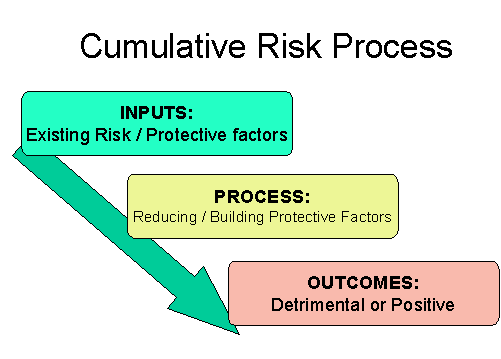
2.3. Focusing on cumulative risk the Panel wanted to understand how intervention might turn what would otherwise be a downward spiral to detrimental outcomes into an upward trend to positive outcomes. (See Appendix 1 for diagrams)
2.4. The Panel then identified a number of risk factors and predictors that will be outlined in the final report of the Inquiry as they will form part of the remaining investigation.
3) The Subject for the next stage of the Inquiry:
The Panel have chosen the following subject for focus in the remaining stage of the inquiry: `How can we respond effectively to early indicators that a child is at risk of detrimental outcomes (educationally, socially, emotionally and/or mentally) and, through early intervention, reduce the likelihood of them having difficulties later on?'
4) Responding to Written Evidence Received:
The Panel were very impressed with the number of organisations, individuals and officers who were willing to submit evidence to this Inquiry. We have some useful lessons to learn about improving the timescale and process of requesting written information and we hope that this can be better next time.
4.1. The process became more protracted this time because Christmas and New Year fell in the middle of the written evidence stage. It also become clear that we need to introduce County Council departments to the nature of the Select Committee process and clarify what is needed from them at different stages. We need to defuse suspicion and even alarm. These are all useful lessons.
4.2. Please see Appendix 2 for the outcomes of the Written Evidence stage which the Inquiry Panel would like to recommend are taken into account in any future scrutiny review and work programme
5) General Themes for the Attention of the Executive:
During the written evidence stage it became very noticeable that the evidence which was most useful contained sound quantitative evidence about both:
· The rationale for preventative projects (i.e. what was the intended impact of the project in terms of reducing the chances of a particular negative outcome or increasing the chances of a positive one)
· The measurement of that impact so that the project could be evaluated properly (eg. percentage decrease or increase in a predicted outcome, compared with the outcome with no intervention). Outcomes might include how many offences the person committed before and after intervention or numbers of young people in a target group who, on average, end up having a mental health diagnosis.
5.1. The Panel observed that this information was present in many external projects but it was less common for such evidence to be presented or collected as a matter of course on internal projects. This makes it much more difficult to evaluate the impact and therefore benefit of interventions.
5.2. Whilst the Panel recognise that there are times when getting information of this nature can be difficult, and may require working across organisations or sectors, the panel felt that it is important to encourage proper evaluation so that we have a sound evidence base for our actions.
6) Recommendations:
6.1. With regard to the written evidence received the Panel recommends that the P&R SSC endorses:
6.1.1. Those organisations, individuals and officers who contributed to the Inquiry be thanked and sent a copy of Appendix 2 to demonstrate the Committee's commitment to acting on the issues raised and valuing good practice
6.2. That the Committee endorses the future direction of the Inquiry Panel
6.3. With regard to the issue of evidence based practice, the Panel asks the Committee to pass on to the Cabinet their request that:
6.3.1. The need to collect, collate and share statistical information be included in planning for the future, especially as part of the partnership approach in implementing in the Children Act.
6.3.2. Officers should be encouraged as a matter of good practice to identify, collect and present statistical evidence to assess projects, both at the planning, monitoring and evaluation stages where at all possible.
Section 100D - Local Government Act 1972 - Background Papers
The following documents disclose facts or matters on which this report, or an important part of it, is based and has been relied upon to a material extent in the preparation of this report.
NB The list excludes:
1 Published works
2 Documents which disclose exempt or confidential information as defined in the Act.
The Process of Cumulative Risk:
The Process of Intervention in Cumulative Risk:
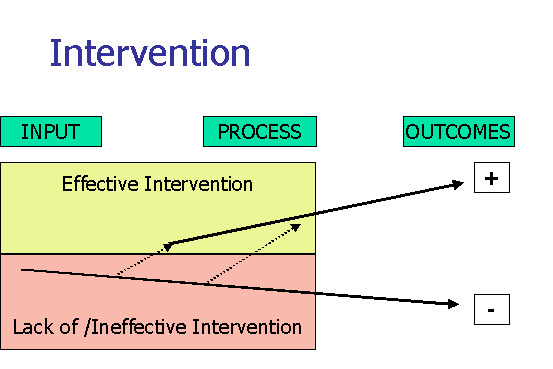
Intervention to reduce risks or increase the likelihood / presence of protective factors developing could valuably happen in either the `Input' stage or the `Process' stage
FROM THE WRITTEN EVIDENCE RECEIVED THE INQUIRY PANEL WISHES TO HIGHLIGHT:
GOOD WORK / PRACTICE THE PANEL WOULD LIKE TO APPLAUD AND CONGRATULATE | ||||
Sure Start |
Some excellent work being carried out in Leigh Park & Rowner using a multi-team approach on several projects aimed at breaking the cycle of child poverty | |||
Home Start, Havant |
For the work it is doing to support families under stress | |||
YOT |
For their projects working to prevent and reduce youth offending across Hampshire | |||
Youth Service |
For the work currently being done with young people who are at risk through having unclear plans for their future at the time of leaving school in the `South Central Activities Project' | |||
Children Fund |
For the 130 projects across Hampshire which are beginning to show wonderful results in providing support and preventing risk to children and young people | |||
Winchester Young Carers |
Some excellent projects in schools | |||
Westgate School |
For work being done to support young people and enable them to develop their emotional resilience - this being crucial as a factor in reducing risk. | |||
Your Life Project | ||||
MENCAP |
For their work to support young people with learning disabilities in the transition from childhood to adulthood | |||
Fareham & Gosport PCT |
For telling us about many different projects and services they work on which benefit children and young people across their area - and for providing us with helpful feedback and issues that will be picked up in the Inquiry | |||
East Hants PCT |
For highlighting areas where we could usefully learn lessons and take things forward - many of which are being worked on in initiatives outlined below and some of which are informing our current Inquiry | |||
ISSUES TO BE FED INTO AND PICKED UP UNDER THE CHILDREN ACT IMPLEMENTATION | ||||
Improving information Sharing |
See below | |||
Moving from Management to Prevention of Risk |
See below re need for joined up approach | |||
Multi-Agency Working |
Members agreed that there is some very good work Multi-Agency work going both internally and externally which we need to be learning from when implementing this approach as part of the Children Act | |||
Ensuring good communications between adult services and children services |
It was raised as an issue to be aware of that frequently work with adults provides a prompt to ensure support is provided effectively to prevent risk to children - it will be important that this link is strengthened rather than weakened in the outworking of the Children Act | |||
AREAS ALREADY UNDERGOING IMPROVEMENT WORK BY HAMPSHIRE COUNTY COUNCIL: For Review As To Impact At a Later Date | ||||
Area |
What is Already Happening |
Contact Person |
Timing for Review | |
Effectiveness of Information sharing with other agencies |
Under the Children Act implementation a group has been formed to look at how this may be taken forward |
Graham Wright |
Update 2006 Output 2008 | |
Ensuring the emotional needs of disabled children are not overlooked |
A project has been set up in Education to look at this area |
Chris Toner (Lead) & Eric Smith (SEN/PD) |
To be confirmed | |
Looking at how we can shift our focus from reactive management of risk to proactive prevention in the area of risk to children and young people. Sub Theme: how will we deal with the numerous externally funded preventative initiatives which are doing good work but will loose funding over the next few years |
Social Services currently have in draft and out for consultation a strategy specifically confronting the need to move to preventative work. It is unclear but hoped at this stage that this will be a joined up initiative across the County rather than a Social Services specific strategy (see Children Act Implementation) |
Graham Wright |
To be confirmed | |
Possible wider use of Family Group Conferences |
Discussions between Education and Social Services are taking place with a view to joining up the currently separate departmental responsibility for Family Group Conferences |
Graham Wright and Janet Feat |
To be confirmed | |
Recruitment and Retention problems in Social Services putting pressure on supporting children on the Child Protection Register |
Concern that if this is not resolved there may come a time when these services are negatively impacted. Vulnerable areas include: · Home visiting for children on the Child Protection Register · Post Abuse therapy · Social worker assignment to Child Protection cases There are various projects in play to turn around the recruitment issues |
Steve Love / Kevin Allen |
Annual update appropriate | |
Improving Support to Foster Care Workers in recognition of the growing challenges inherent in the role |
A report was provided to the Executive Member for Social Care in December 2004 making recommendations as to areas and actions for improvement |
Graham Wright and Sue Kocaman |
Review outcomes in 2006 | |
AREAS IDENTIFIED FOR POSSIBLE FUTURE EXPLORATION | ||||
Joining up of work being done with parents to reduce risk to children & young people |
The Members feel this may be an issue that will come up in the Inquiry that they are now undertaking but that there is potential room for looking at how joining up a number of separate projects across the County (and with external agencies) could benefit the outcomes. |
Consider as part of Scrutiny Work Programme for next year | ||
Removal of Family Support Centres |
This was raised as an issue of loss which may warrant a small amount of exploration as to what they provided and how it is currently being delivered |
Kate Hart | ||
YIP Schemes in Hampshire |
These have apparently been very effective in Portsmouth and could be considered as an addition to the range of approaches currently being used in Hampshire - no information as to whether they have already been considered and not prioritised |
Question to YOT | ||
Supporting young adults with learning disabilities when leaving school and in the transition to adulthood and possible parenthood |
Good work being done by MENCAP in this area - could be useful to look at any improvements in Hampshire Services in this area to support this work. Will check perspective of MENCAP |
Graham Wright | ||