
Archived decisions
CONSERVING NATURE
FOR THE COMMUNITY:
Corporate Biodiversity Action Plan 2005 - 2008
FINAL DRAFT
JANUARY 2005
CONTENTS
EXECUTIVE SUMMARY
Biodiversity is vital to our well-being and key to quality of life in Hampshire. A healthy and stable environment is central to economic prosperity and the county's desirability as a place to visit, live and work.
The state of biodiversity is a fundamental indicator of whether we are achieving a sustainable future for Hampshire. The County Council is committed to embedding sustainable development into all services, and conserving biodiversity is a core element. Conserving Nature for the Community will greatly assist delivery of this commitment.
Hampshire is exceptionally rich in wildlife. The county embraces a remarkably varied landscape, a diversity of habitats unparalleled in the South East and the greatest diversity of species of any county in England. In recent decades loss of Hampshire's biodiversity has been dramatic and it is essential that remaining areas are protected, that land in poor condition is enhanced, and that wildlife areas previously lost are restored wherever possible.
Nature is central to environmental education and lifelong learning about the world around us, fundamental to our heritage, culture and sense of place, and provides relaxation and inspiration. Providing access to nature is important for delivering first-class services to the community.
Hampshire County Council has a national reputation for its work in conserving biodiversity. The Council operates a wide range of environmental programmes and is known as a responsible, caring authority concerned about the natural environment. The authority's reputation in this sphere is well deserved and we should celebrate our success. Nevertheless there are areas where activity could be strengthened.
Conserving Nature for the Community has three main aims:
o To improve the County Council's performance in conserving and enhancing Hampshire's biodiversity;
o To broaden the use of biodiversity in delivering services such as education and social welfare;
o To raise public and staff awareness of biodiversity.
Part 1 of the Plan outlines the relationship between biodiversity and achieving quality of life, the Council's statutory obligations, the rapidly developing role of local authorities in conserving biodiversity, and the corporate context.
Part 2 documents for the first time the extensive range of Council programmes that support biodiversity conservation. This `snapshot in time' provides an essential reference point and vividly illustrates the cross-departmental nature of this work.
Part 3 provides a comprehensive set of key actions and targets for 2005 to 2008. Many of these build on current work, and most can be delivered through improved efficiency or changes in approach, and by working in partnership across departments. The range of action and associated targets is ambitious and wide ranging. A set of headline indicators has also been developed for the key areas of activity. The indicators and action targets will be monitored annually to track progress.
VISION A rich and diverse natural environment, where wildlife is conserved and the benefits of nature are available to everyone. |
1 A CORPORATE PLAN FOR BIODIVERSITY
Hampshire County Council has an enviable reputation in conserving biodiversity. The Council operates a number of leading environmental programmes and is known as a responsible, caring authority concerned about the natural environment.
Programmes for conserving biodiversity need to be fully integrated into the Council's many responsibilities from highway management to planning for development. Biodiversity and access to nature also have a valuable part to play in providing first-class social care programmes and delivering high quality education.
Conserving Nature for the Community aims to broaden understanding throughout the authority and promote cross-departmental working. There are many excellent initiatives already underway that provide a solid basis for consolidating and expanding the Council's action for biodiversity.
The state of biodiversity is a fundamental measure of sustainable development. The County Council is committed to embedding sustainable development into all services, and conserving biodiversity is a key ingredient. Conserving Nature for the Community will assist delivery of the corporate aim "Stewardship of the Environment" and implementation of the Corporate Sustainable Development Strategy.
AIMS AND OBJECTIVES
The Plan has three main aims:
_ To improve the County Council's performance in conserving and enhancing Hampshire's biodiversity
_ To broaden the use of biodiversity in delivering services such as education and social welfare
_ To raise public and staff awareness of biodiversity
The Plan provides a framework for strengthening existing Council activity for biodiversity. It documents for the first time the entire range of Council programmes that support biodiversity conservation, encourages partnership working between departments, and promotes positive planning for biodiversity.
The Action Plan focuses on strategic activity rather than detailed actions for each department. It will require annual review to assess success and re-evaluate priorities. A cross-departmental group will be established to monitor progress.
The objectives support the three main aims:
_ Protect and conserve priority habitats and species in Hampshire
_ Manage habitats in rural and urban areas to maximise their value for biodiversity
_ Enhance and restore habitats to increase biodiversity assets
_ Enrich public understanding of the natural environment
_ Engender awareness amongst children and young people
_ Increase access to biodiversity
_ Relate nature to fundamental issues such as health and well-being and to cultural, social and economic welfare
_ Encourage lifestyle changes that help to protect the natural environment
_ Set an example to the rest of the community
_ Demonstrate the Council's commitment to biodiversity
_ Stimulate a greater understanding of biodiversity amongst staff
Added Value of the Corporate Biodiversity Action Plan
Public confidence - The biodiversity of Hampshire is greatly valued by residents and visitors to the county. Publishing a plan of action for biodiversity presents a positive image of the County Council and maintains the Council's reputation as a provider of high quality natural environments.
Improved service delivery - Looking after Hampshire's biodiversity is an essential part of the County Council's environmental programme and is directly related to many of the Council's services to the community. A central thrust of the Conserving Nature for the Community is to broaden access to nature to a much wider section of society.
Corporate working - Activity for biodiversity cuts across departmental responsibilities and will inspire partnership working.
Staff - As one of the largest employers in Hampshire, promoting the conservation of biodiversity directly to County Council staff helps spread environmental awareness to a wide range of Hampshire residents.
The Plan consists of three parts:
Part 1
_ Sets out the broad range of benefits of conserving biodiversity
_ Relates the Plan to agreed Council programmes, strategies and initiatives
_ Explains the Council's statutory obligations and the rapidly developing role of local authorities in biodiversity conservation
Part 2
_ Summarises the Council's activity in support of biodiversity conservation and indicates areas for strengthening and building on current work
Part 3
_ Sets out a list of key indicators for monitoring the County Council's performance
_ Identifies key initiatives and targets across departments in a plan of action for 2005 to 2008
_ Explains how the Plan will be monitored and reviewed
AN INTRODUCTION TO BIODIVERSITY
Biodiversity is the great variety of life. Biodiversity includes all plants and animals, their habitats, and the complex ecosystems that sustain them. The conservation of biodiversity is one of the most fundamental and crucial issues of our time.
Biodiversity is a global life support system, and underpins many essential commodities that we take for granted such as fresh water, fertile soil and clean air. It also provides the raw materials for our food, our fuel, and many other necessities.
The value of biodiversity is undisputed. In Britain we have a long history of initiatives to protect nature and natural areas, but we are only beginning to fully understand the real value of nature to the economy, to the environment and to our quality of life. This has shifted nature conservation from a narrowly focused discipline to an area of relevance to educationalists, health professionals, social care teams, politicians and policymakers.
Biodiversity is a finite resource that needs to be conserved. Great numbers of species and their habitats have been lost or destroyed in recent decades as a result of development and changes in land-use practices. This loss has slowed, but it remains vitally important to ensure that future development is sustainable, that land is managed to maintain biological diversity, and that access to nature and the benefits of biodiversity are readily available to everyone.
Biodiversity is key to quality of life in Hampshire. The natural world is the fabric of Hampshire's landscapes, the places we like to visit in the countryside, and surrounds us in our daily lives at home and elsewhere. A healthy and stable environment is central to the economic prosperity of the county and its desirability as a place to visit, live and work.
Public Support for Biodiversity
Public opinion polls consistently reveal strong support for biodiversity. For example in the Survey of Public Attitudes to Quality-of-life and to the Environment 20011, 50% of respondents were very worried about the loss of plants and animals in the UK, a greater number then those concerned about ozone layer depletion, climate change, traffic congestion and household waste disposal. The same survey found that more than half of respondents encourage wildlife in their garden, and a third acknowledge that plants and wildlife make the countryside a place where they want to spend time.
The Mori poll of Hampshire residents carried out in 2002/032 indicated that the environment is perceived as a positive aspect of Hampshire. People are generally very satisfied with the County Council's countryside sites and country parks, and the most frequently cited `good thing' about Hampshire is its peacefulness and access to the countryside and coast. Hampshire residents' positive attitude about the environment is a recurring theme throughout the report.
Achieving Quality of Life - the benefits of biodiversity
Maintaining the Environment
_ Biodiversity plays a fundamental role in global processes
_ Plants assist with land drainage and flood control and help filter pollutants from air, water and soil
A Vibrant Economy
_ Biodiversity provides many essential commodities - food, fuel and construction materials
_ An attractive natural environment is fundamental to tourism and inward investment
_ Many jobs depend on maintaining biodiversity - rural industries such as agriculture and forestry; services connected with tourism; jobs in the environmental sector
_ Biotechnology is a global industry developing new medicines from natural sources
Social, Cultural and Educational
_ The natural environment is a major source of inspiration for people of all ages
_ Biodiversity is fundamental to our heritage, culture and sense of place
_ Biodiversity is central to environmental education and lifelong learning about the world around us
Health and Well-being
_ Natural areas encourage outdoor recreation and healthy exercise
_ Nature gives inspiration, enjoyment and `no cost' entertainment
_ The natural environment provides relaxation and respite from stressful lives
Stewardship
_ Nature has intrinsic value and should be conserved for its own sake
_ We have a responsibility to protect and conserve nature for future generations - biodiversity is essentially irreplaceable
_ Biodiversity provides the building blocks for historical analysis and scientific discovery
HAMPSHIRE'S BIODIVERSITY AND ITS CONSERVATION
Hampshire is exceptionally rich in wildlife. The county embraces a remarkably varied landscape and a diversity of habitats unparalleled in the South East - from ancient woodlands and wildflower meadows, lowland heathlands and chalk streams, to river valleys and coastal habitats. Hampshire also encompasses the New Forest, the largest area of semi-wilderness left in lowland England. Together these habitats support an impressive array of wild plants and animals. Hampshire has the greatest diversity of species of any county in England.
Over 23% of Hampshire is designated for its nature conservation importance. Britain's most valuable wildlife habitats - Sites of Special Scientific Interest (SSSIs) - are legally protected and cover 14.5% of the county, twice the national average. Many of these areas are also important internationally and have additional protection through European law. But this is only part of the picture. A further 8.7% of Hampshire is covered by county Sites of Importance for Nature Conservation (SINCs) - valuable wildlife sites that do not have statutory protection. Even outside all of these specially recognised areas much of Hampshire's rural landscape and many urban areas are rich in biodiversity.
Nature Conservation Sites in Hampshire* | ||||
Number of Sites in Hampshire |
Area (ha) |
% of Hampshire |
Sites Owned by HCC | |
Sites of Special Scientific Interest (SSSIs) (78% of SSSIs in Hampshire are also designated for their international importance - candidate Special Areas of Conservation (cSACs), Special Protection Areas (SPAs) and a Ramsar Sites) |
112 |
55,878 |
14.5% |
25 (2015 ha) - includes 5 National Nature Reserves |
Sites of Importance for Nature Conservation (SINCs) (Nationally important habitats such as ancient woodland, chalk downland and heathland) |
3549 |
33,541 |
8.7% |
201 (c800 ha) |
TOTAL |
89,419 |
23.2% |
||
* compiled by the Hampshire Biodiversity Information Centre 2004 | ||||
Habitats
· Hampshire supports almost 30% of the UK's lowland heathland and 13% of the total European resource;
· 98% of the calcareous grassland in the UK has been lost in the last 150 years and Hampshire has 5% of the remaining area;
· Hampshire is one of the most wooded counties in England with 20% cover. However there has been a 14% loss of ancient semi-natural woodland since 1920, a third of which has been cleared and replanted for commercial forestry. A programme of management is now reverting many of these sites back to native broadleaved trees.
Species
· Hampshire has the greatest diversity of species of any county in England.
· Over 40% of the priority species identified in the UK Biodiversity Action Plan are present in Hampshire.
· The Biodiversity Action Plan for Hampshire3 has identified 493 species of particular concern, including plants, birds, amphibians and reptiles, insects and mammals.
For a full account of Hampshire's biodiversity see the Biodiversity Action Plan for Hampshire - www.hampshirebiodiversity.org.uk.
Priority Habitats in Hampshire* |
Area (ha) |
% Hampshire |
% of UK Habitat |
Ancient Semi-natural Woodland |
16,687 |
4.3 |
5.1 |
Pasture Woodland/Parkland |
6,000 |
1.6 |
25.0 |
Hedgerows |
14,995 |
u |
u |
Arable Field Margins |
u |
u |
u |
Neutral Grassland |
2,327 |
0.6 |
c20.0 |
Lowland Calcareous Grassland |
2,049 |
0.5 |
c5.0 |
Lowland Wet Grassland |
2,000 |
0.5 |
u |
Heathland, Acid Grassland and Bog |
13,971 |
3.6 |
c28.0 |
Fen, Carr, Marsh, Swamp, Reedbeds |
618 |
0.2 |
u |
Standing Open Water (under-estimate of area - not all ponds have been mapped) |
1,300 |
0.3 |
u |
Chalk Streams |
187km |
u |
u |
Canals |
28km |
u |
0.5 |
Coastal (maritime cliffs, shingle, saltmarsh, coastal grazing marsh, sand dunes, mudflats/eelgrass beds, saline lagoons) |
8,071 |
2.1 |
u |
Road Verges |
20km |
u |
u |
* figures based on best available data from Hampshire Biodiversity Information Centre 2004 and Biodiversity Action Plan for Hampshire: Volume One 1998 u = unavailable |
Conserving Biodiversity
In recent decades the loss of biodiversity has been significant and serious. Huge areas of habitat have been destroyed on a global scale and many species have become extinct. In the UK large areas of habitat and great numbers of species have been lost - for example 448,000 km of hedgerows, over two million skylarks and 95% of high brown fritillary butterflies have been lost in less than a lifetime4.
Loss of Hampshire's biodiversity has also been dramatic, particularly as a result of development and agricultural intensification. Outright loss of habitats and species is now much reduced, but important habitats and species continued to decline. Remaining habitats are often highly fragmented and isolated, and many are in poor condition. Actions that affect biodiversity are wide-ranging and complex, including pressure from development, lack of habitat management, pollution, changes to water regimes and climate change.
It is essential that the county's biodiversity is protected from further loss or damage, that habitats in poor condition are enhanced, and that wildlife areas previously lost are restored wherever possible. Reversing threats to wildlife habitats requires strategic planning, detailed monitoring and long-term commitment to appropriate management and enhancement.
Achieving long-term sustainable management of habitats in Hampshire is a particular challenge. All habitats such as woodland, heathland and grassland require specific management to maintain their value to wildlife. Traditionally this was achieved as an integral part of the rural economy, and involved mixed farming, commoning and managing woodland for the supply of local products. Modern agriculture and forestry methods and the recent downturn in farming have dictated the need for specific programmes, initiatives and agri-environment support schemes to maintain habitats in the countryside. Hampshire County Council plays a significant role in providing this support.
Management of the environment, particularly in rural areas, is undergoing considerable review and change. This includes changes to the planning system, increased environmental legislation, changes to agri-environment support, promotion of an accessible countryside, and Government's new delivery arrangements set out in the Rural Strategy5. The County Council is adapting to these changes and strengthening its role in conserving Hampshire's natural environment.
INTERNATIONAL AND NATIONAL CONTEXT
A comprehensive range of international and national imperatives drive the biodiversity process in Hampshire. Key measures are given below.
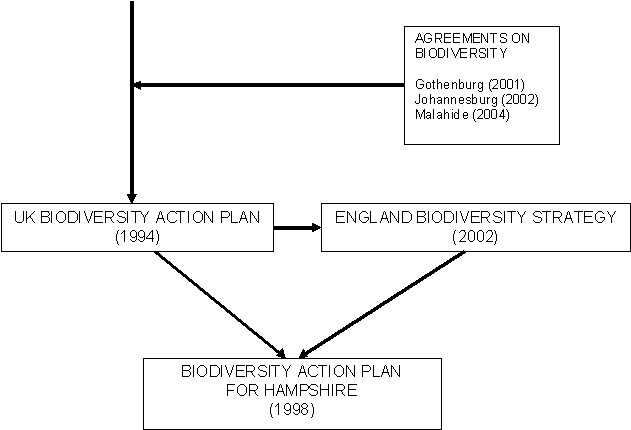
· The Convention on Biological Diversity (CBD) was signed by 150 nations at the Earth Summit in 1992. Each signatory pledged to take action to conserve biodiversity. The UK was one of the first nations to respond with a national Biodiversity Action Plan in 1994.
· At the World Summit on Sustainable Development in Johannesburg in 2002 world leaders agreed to achieve a significant reduction in the rate of biodiversity loss globally by 2010. Biodiversity action plans and strategies were endorsed as central to this process.
· The European Union has set itself the ambitious goal of halting the loss of biodiversity by 2010 at the EC meeting in Gothenburg in 2001. A subsequent EC meeting at Malahide in 2004 agreed priorities, targets and implementation arrangements to meet the Gothenburg goal. Agreements at Gothenburg and Malahide are driving the UK biodiversity programme.
· Hampshire County Council have signed the Aalborg Charter and Commitments for sustainable development. This commits the Council to undertake a process of target setting, implementation and monitoring of progress in achieving sustainable development. Promoting and increasing biodiversity is key to the Aalborg Commitment to "protect and preserve the natural common goods".
· Since the publication of Biodiversity: the UK Action Plan6 in 1994 the UK has developed a detailed and sophisticated biodiversity action planning process that includes specific plans for 45 habitats and almost 400 species. Significant progress has been made in engaging communities and raising the profile of biodiversity conservation in society as a whole.
· Government expects local authorities to contribute to the UK Biodiversity Action Plan by taking a lead in the establishment of local biodiversity partnerships and the development and implementation of local biodiversity action plans (see `Biodiversity Action Plan for Hampshire' page xx).
· The England Biodiversity Strategy7 sets specific targets, milestones and indicators for key sectors such as forestry, business, agriculture, education and local government (see `Role of Local Authorities' page xx).
· The Countryside and Rights of Way (CROW) Act 2000 places a duty on all government departments to have regard to the purpose of conserving biological diversity in exercising their functions.
· Government promotes biodiversity as a core indicator of sustainable development and quality of life. In the national sustainable development strategy Quality of Life Counts8, `how people value wildlife' is a headline indicator.
· The Government's Sustainable Development Action Plan for Education and Skills9 advocates the need to deepen concern for the environment throughout society, most critically amongst children.
Relationship between International, National and Local
Biodiversity Programmes
CONVENTION ON BIOLOGICAL DIVERSITY
(Earth Summit 1992)
THE ROLE OF LOCAL AUTHORITIES
Government programmes for biodiversity and sustainable development increasingly emphasize the role of local authorities. Concurrently, there are also changes taking place in the structure and functions of local government which present new challenges and opportunities to take account of biodiversity.
Action taken by local authorities is central to the UK biodiversity process. Local government has intimate knowledge of the natural environment within its boundaries, direct contact with the community, a particularly wide portfolio of services involving biodiversity, and discretion to take initiative on environmental matters including the coordination of local biodiversity partnerships.
· The Local Government Association's Position Statement on Biodiversity10 advises local authorities to integrate biodiversity across all of their functions, including land use planning, development control, education and social and economic development.
· The Improvement and Development Agency (IDeA) has produced a set of voluntary indicators11 for measuring local authority performance on biodiversity.
· The Association of Local Government Ecologists (ALGE) has produced guidance on local authority best practice for biodiversity. Increasing the Momentum12 is a vision statement for biodiversity in local government 2004 to 2010 that clearly sets out the hallmarks of a well performing authority.
· The England Biodiversity Strategy includes a set of specific indicators to measure local authority performance on biodiversity. Key indicators include:
o Delivery of local biodiversity targets in England
o Degree of integration of biodiversity objectives into regional programmes and strategies
o Community strategies with biodiversity policies, objectives and targets for action
o Condition of SSSIs in local authority ownership
· The Department for Environment, Food and Rural Affairs (DEFRA) is currently developing recommendations for incorporating biodiversity measures into local government Comprehensive Performance Assessment (CPA)13.
Biodiversity Action Plan for Hampshire
Hampshire County Council co-ordinates the Hampshire Biodiversity Partnership -
32 statutory and non-statutory agencies that work together to conserve Hampshire's natural environment. The Partnership has developed a 10 year plan of action for conserving the county's biodiversity.
The Biodiversity Action Plan for Hampshire identifies priority issues and sets a comprehensive agenda for all partners. Individual plans have been prepared for many of Hampshire's priority habitats and species, and topics such as Water and Biodiversity, Urban Areas and Education Awareness Involvement.
The biodiversity process in Hampshire is now focused on implementation. Each biodiversity partner is assessing and prioritising their activity in response to the range of actions prescribed in individual action plans.
The work of the County Council is fundamental to the delivery of a wide range of biodiversity objectives and targets. The Council has a commitment to other partners and the public to undertake a broad range of activity and lead by example. Conserving Nature of for the Community sets out the Council's current activity and future priorities for delivering biodiversity objectives.
England Biodiversity Strategy Indicator - Delivery of local biodiversity targets in England
Legislation and Policy Guidance
· There is abundant legislation that places considerable duties on local authorities to ensure the protection and management of biodiversity.
· Local authorities have a duty to enhance the condition of SSSIs under the Countryside and Rights of Way (CROW) Act 2000 and are responsible for rigorous biodiversity assessments under European legislation such as the Habitats Directive and regulations dealing with Environmental Impact.
· Planning Policy Guidance 9: Nature Conservation (PPG9) seeks to secure the effective conservation of wildlife and natural features. Nature conservation objectives should be taken into account in all planning activities that affect rural and coastal land use and urban areas where there is wildlife of local importance. The Guidance also aims to ensure that nature conservation is a significant material consideration in determining planning applications.
The Government's draft Planning Policy Statement on Nature Conservation (PPS9) will replace PPG9. PPS9 deals much more comprehensively with biodiversity, including an obligation on local authorities to support and promote local biodiversity action plans.
· Government is placing more emphasis on the statutory role of local government in biodiversity conservation. This is illustrated by the proposals to transfer responsibility for protected species from DEFRA to local authorities, and reforms for rural delivery proposed under the Haskins Review.
Planning and Development
· Local government is adapting to changes in the planning system and the increasing emphasis on the regions. This presents a challenge and new opportunities to ensure that biodiversity is comprehensively addressed in the portfolio of development plans, including Regional Plans, Sub-regional Strategies and Local Development Frameworks.
· Regional Planning Guidance for the South East14 and South East Sustainable Development Framework15 have specific targets for biodiversity conservation.
· The South East England Biodiversity Forum have produced a Guide for the Planning and Development Sectors in Southeast England16 and is working closely with the South East Economic Development Agency and the Regional Assembly.
England Biodiversity Strategy Indicator - Degree of integration of biodiversity objectives into regional programmes and strategies
Community Strategies
Quality of life, sustainable development and involvement of the community have become the hallmarks of local government practice, exemplified by the introduction and importance of community strategies.
All local authorities must produce a community strategy under the Local Government Act 2000. The purpose is to "enhance the quality of life of local communities and contribute to the achievement of sustainable development in the UK through action to improve the economic, social and environmental well-being of the area and its inhabitants". Government makes it clear that biodiversity action plans should form an important part of formulating and delivering community strategies in Preparing Community Strategies: Government guidance to local authorities, DETR 200017, and section 48 of circular 04/01 (CROW Act 2000).
DEFRA are promoting biodiversity as a cross-cutting theme relevant to all key aspects of community strategies including social well-being, lifelong learning, business and economy, and the environment in Life-Support - Incorporating Biodiversity into Community Strategies18. Ensuring a link between community strategies and local biodiversity partnerships is also being advocated. The England Biodiversity Strategy includes a performance indicator to measure the success of integrating biodiversity into community strategies.
Informing the community of the importance and benefits of biodiversity is an important role for local authorities during the community strategy process. Hampshire's community strategy Shaping Our Future Together19 clearly states that a natural environment rich in wildlife is important for relaxation, enjoyment, health and well-being and central to ensuring quality of life. The strategy also makes the link between a healthy natural environment, tourism and the rural economy.
England Biodiversity Strategy Indicator - Community Strategies with biodiversity policies, objectives and targets for action
Land Management
· Under the national PSA target for SSSIs, local authorities are expected to achieve favourable condition of 90% of SSSIs in their ownership by 2010. Hampshire County Council own over 2000 hectares of SSSI.
· Local authorities have an increasing role in rural land management. Hampshire County Council has a wide range of projects supporting sustainable management of habitats in the wider countryside.
England Biodiversity Strategy Indicator - Condition of SSSIs in local authority ownership.
Education
· The study and understanding of biodiversity is fundamental to achieving education for sustainable development (ESD). The Government has stressed the importance of ESD through the revised National Curriculum.
· Studies have shown that improving the biodiversity of school grounds can have a remarkable effect on pupils' behaviour and achievement. Young children spend up to 50% of their school day outdoors and practical firsthand experience of the natural world can leave a lasting impression.
Data
· Data on biodiversity underpins the planning, land management and biodiversity planning functions of local authorities. National planning guidance expects local authorities to have comprehensive information on the natural environment. A key principle of Draft Planning Policy Statement 9 (PPS9) is that planning decisions should be based on up-to-date information on biodiversity resources.
· Development of local biological record centres is an aim of the UK Biodiversity Programme and local authorities are expected to take a key role. Hampshire County Council established the Hampshire Biodiversity Information Centre in April 2002 and manages the Centre on behalf of a consortium of partners.
THE CORPORATE CONTEXT
Hampshire County Council has a pivotal role to play in the conservation of the natural environment, the pursuit of economic prosperity and the securing of equal chances for everyone in all aspects of life. `Developing quality of life for everyone' is the overarching aim of the County Council's Corporate Strategy. The conservation of Hampshire's biodiversity and the use of biodiversity in the delivery of County Council services such as education and social care are central to achieving this corporate goal.
Biodiversity is key to stewardship of the environment and corporate aim 2: "Protecting our environment by promoting the principles of environmental sustainability and ensuring that Hampshire continues to be a place where people of all backgrounds want to live, work and visit". The Corporate Strategy states that priority areas of work include improving areas of nature conservation interest, maintaining biodiversity and protecting habitats and species. Indicators have been developed to measure the extent of protection of biodiversity through the planning process and the amount of land in Hampshire under appropriate management for biodiversity.
Corporate Context for the Biodiversity Action Plan
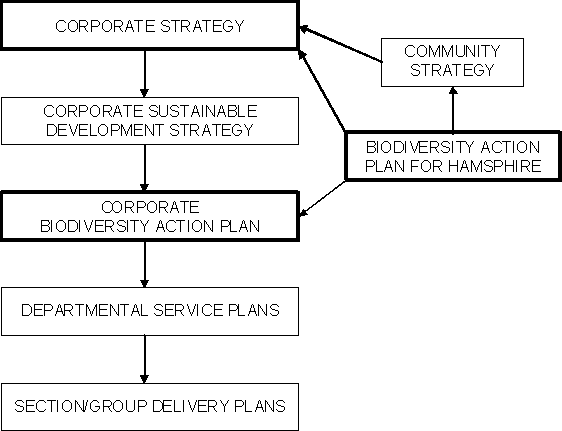
The County Council published the Corporate Sustainable Development Strategy in 2001. Biodiversity is one of 12 themes that each department must consider in striving to integrate sustainable development into all operations and activities. Conserving Nature for the Community will assist each department in formulating the biodiversity elements of their sustainable development agendas.
The Corporate Sustainable Development Group is responsible for steering the incorporation of sustainable practices throughout the Council's work. A cross-departmental Biodiversity Group will be established to promote integration of biodiversity. This will report to the Corporate Sustainable Development Group and be responsible for monitoring progress of this Action Plan.
Building on a Strong Foundation
Hampshire County Council has an excellent track record in conservation of the natural environment. The Council scores highly in an audit of county authorities undertaken by the South East England Biodiversity Forum - Systems and Resources to Sustain Biodiversity20 - and also scores well in the national report Best Value for Biodiversity21. The County Council can build on this strong foundation. The Council can strengthen and extend existing good practice through the Council's:
_ statutory functions of development control, forward planning and as a highway authority
_ landholdings and property, and influence of others who own and manage land
_ influence on strategic land management
_ role as co-ordinator of the Hampshire Biodiversity Partnership
_ influence at regional and national level
_ role as a community leader, advocate and catalyst and through setting examples of good practice
_ wide range of service areas related to the environment, including waste management and recycling, energy conservation, use of water, and travel and transportation
_ role as education authority
_ role in providing social services to the community
_ position as one of the largest employers in Hampshire
Part 2 summarises the Council's current activity in supporting Hampshire's biodiversity and Part 3 sets out a plan of action and targets for 2005 - 2008.
2 CURRENT ACTION FOR BIODIVERSITY
The following documents for the first time the extensive range of Council programmes that support biodiversity conservation. This `snapshot in time' provides an essential reference point and clearly shows the cross-departmental nature of the Council's work that supports biodiversity.
Current activity is set out under the following themes:
_ Legislation, Policy and Programmes
_ Forward Planning
_ Development
_ Transportation and Highway Management
_ Land Management
_ Coast
_ County Council Landholdings
_ County Council Buildings and Grounds
_ Data and Information
_ Associated Environmental Initiatives
_ Education
_ Social Care
_ Economic Development
_ Awareness, Involvement and Quality of Life
Legislation, Policy and Programmes
The County Council has considerable obligations to conserve and enhance biodiversity in Hampshire. It is essential that the County Council meets its legal requirements and has robust policies and strategies for maximising opportunities for nature conservation.
Biodiversity Programme
The Ecology Group in the Environment Department co-ordinates the Hampshire Biodiversity Partnership and the programme of action to conserve biodiversity in the county. The Group is also involved in the development of biodiversity programmes at other levels, for example the South East Regional Biodiversity Forum and several initiatives at national level - including the England Biodiversity Group and its Local and Regional Implementation Group and the National Biodiversity Network.
The England Biodiversity Group oversees the national biodiversity process. The Local and Regional Strategy Implementation Group is responsible for developing and supporting local and regional issues and has a particular emphasis on the role of local authorities.
Hampshire Biodiversity Programme
The Hampshire biodiversity programme is set within the context of the national biodiversity planning process. The UK Biodiversity Action Plan 1994 emphasized the need to plan for biodiversity at local level and the key role of local authorities. In Hampshire, the County Council set up the Hampshire Biodiversity Partnership in 1996 to formulate a detailed programme of action to help conserve biodiversity at county and national level.
The Ecology Group co-ordinates the Biodiversity Partnership. On behalf of the Partnership, the Group has produced a 10 year strategic plan, Biodiversity Action Plan for Hampshire: Volume One and compiled or overseen many detailed action plans - for topics such as Water and Biodiversity, Urban Areas and Education Awareness Involvement, and a wide range of priority habitats such as Ancient Semi-natural Woodland, Hedgerows and Lowland Calcareous Grassland.
On behalf of the Partnership the County Council has also developed and maintains a database of hundreds of individual actions for biodiversity, formulated a strategy for implementing the Biodiversity Action Plan, and developed a comprehensive website for the Hampshire Biodiversity Partnership www.hampshirebiodiversity.org.uk .
Community Strategy
The community strategy for Hampshire Shaping Our Future Together acknowledges the important role of biodiversity and the natural environment in providing relaxation, enjoyment, health and well-being, and in supporting tourism, inward investment and the rural economy.
The County Council is advising on the integration of biodiversity into community strategies at national level through the England Biodiversity Programme and has also played an advisory role to several district councils in the formulation of the biodiversity elements of their community strategies.
Corporate Sustainable Development Strategy
Biodiversity is one of 12 main themes in the County Council's Corporate Sustainable Development Strategy. Each department formulates an annual sustainability action plan by reviewing activity in the 12 themes. The approach to incorporating biodiversity into work programmes varies greatly between departments, and this Plan will assist by setting out specific action and targets.
Legislation and Policy
The Council exerts influence on legal requirements associated with biodiversity through commenting on draft legislation. The Ecology Group interprets the requirements of relevant new and emerging legislation for the County Council, for example legislation on the protection of European habitats and species. The Group establishes procedures and programmes to ensure that the County Council fulfils its requirements and duties under legislation such as The Habitats Regulations 1994 or Countryside and Rights of Way (CROW) Act 2000.
Further work is required to raise awareness within the Environment and other departments of the obligations under new and emerging legislation and to put in place appropriate procedures. For example, the Environment Department is establishing procedures and protocols for undertaking Strategic Environmental Assessment of Plans as required by recent legislation.
The County Council also assists the development of national and regional policies and programmes influencing biodiversity through representation on various fora and through consultation. Examples include the review of agri-environment schemes, regional forestry policy, provisions for common land and national biological recording.
Forward Planning
The planning system is key to preventing further losses of biodiversity and to deliver positive gains. Regional and local plans and strategies must take account of biodiversity and incorporate opportunities for enhancement.
Local Plans and Local Development Frameworks
The Council gives advice to districts on incorporating biodiversity into local plans. This includes the preparation of schedules for Sites of Importance for Nature Conservation, ensuring that appropriate policies are included in plans, and assessing allocations for development.
The development plan framework will be radically altered in future: regional planning guidance, structure plans and local plans will be replaced by regional spatial strategies, sub-regional strategies and local development frameworks. The County Council is reviewing its role in providing strategic guidance to districts preparing local development frameworks. It will be essential to maintain the support and advice of the Ecology Group and Hampshire Biodiversity Information Centre to districts to enable them to adequately take account of biodiversity in their development framework.
New legislation relating to Strategic Environmental Assessment means that all policies and proposals within these and other relevant plans and programmes will be assessed to ensure that they minimise damage to biodiversity. Opportunities for enhancing biodiversity should also form part of these plans.
Sites of Importance for Nature Conservation
The Hampshire Biodiversity Information Centre (based within the Ecology Group) has identified more than 3,500 Sites of Importance for Nature Conservation (SINCs) in Hampshire, covering about 8.7% of the county. These sites are not legally protected, but have great value for wildlife. The County Council, English Nature, Hampshire Wildlife Trust and district councils have agreed the definition and criteria for identifying SINCs. Most district local plans include a schedule of these sites and policies for their protection. The schedules are updated by the Hampshire Biodiversity Information Centre during each local plan review.
Identifying SINCs also provides a focus for land management initiatives. These initiatives help to maintain the wildlife interest of important nature conservation areas.
Minerals and Waste Development Framework
The Hampshire Minerals and Waste Development Framework is currently being prepared to plan for future provision of minerals and waste facilities and will form part of the county Material Resource Strategy (page 41). The Development Framework will be subject to Strategic Environmental Assessment. The Ecology Group is giving advice on provision for biodiversity in the Framework and also producing a Biodiversity Action Plan for the Minerals Industry. This will provide further guidance on how biodiversity can be taken into account in the extraction of minerals and disposal of waste.
Regional Planning
The County Council is providing assistance with the preparation of the South East Plan and sub-regional strategies. The Council is also assisting with the biodiversity elements of the South East Plan through the South East England Biodiversity Forum.
Sub-regional Strategies are currently being prepared for two areas of Hampshire. Biodiversity is not yet fully considered. These plans and strategies provide an ideal opportunity to ensure priority habitats are fully protected and that biodiversity across the region is enhanced.
Local Transport Plan
The second Local Transport Plan (LTP) is being prepared and will set out both a new long-term transport strategy for Hampshire and an implementation plan covering five years from 2006 to 20011. The LTP will focus on four key priority areas: safer roads, congestion, accessibility and air quality, as well as other quality of life issues with transport implications. The Ecology Group will continue to advise on biodiversity issues and the transport Policy team will produce a Strategic Environmental Assessment of the Plan.
A number of cycleway strategies exist across the county. These will be reviewed and assessed in association with the LTP.
Development
The development control system is key to protecting sites valuable for their nature conservation importance. The County Council has specific responsibility for ensuring that minerals and waste developments take full account of biodiversity and for guiding decisions on other development proposals throughout the county.
Planning Applications
The Ecology Group assesses the ecological implications of planning applications likely to affect biodiversity, paying particular attention to those determined by the County Council e.g. mineral extraction and waste disposal and the County Council's own development such as road improvements, schools and waste facilities.
The County Council also provides ecological advice to district councils, particularly on applications of a sensitive or strategic nature, and input to the planning of Major Development Areas.
Between 400 and 500 applications are dealt with each year. This work involves screening and scoping for environmental impact assessments and undertaking comprehensive environmental assessments where appropriate. Emphasis is on avoiding impacts to designated sites such as European Sites, SSSIs and SINCs, and priority habitats and species identified in the Biodiversity Action Plan for Hampshire. Where developments that may have an adverse effect are permitted, mitigation and appropriate management agreements are secured.
Mineral Development and Waste Sites
Hampshire contains extensive deposits of economically valuable minerals. The County Council is responsible for minerals planning and also for the restoration of waste sites.
Mineral working and subsequent restoration is undertaken for the benefit of the wider community. Some examples have produced considerable gains for biodiversity. There are about 35 active minerals sites in the county (sand and gravel, clay and chalk pits) in various stages of operation. Under The Environment Act, local authorities are expected to review all minerals permissions to ensure that work is in accordance with current legislation and best practice. In addition, under The Habitats Regulations, any development approved prior to the introduction of the Regulations in 1994 that may adversely affect a site of European importance must also be reviewed. These reviews are in progress.
Active and closed waste sites are located throughout the county. Most closed sites have been restored to agriculture, but some have an afteruse that directly benefits biodiversity (see below). Past policy has left a legacy of domestic waste sites on the shoreline, at places such as West Hayling Island, Bedhampton and Pennington, and some of these sites pose a pollution risk to coastal habitats such as saltmarsh and mudflats. Unfortunately, their existence and the prohibitive costs of removal limits the potential for managed realignment of the shoreline in those locations.
Closed Landfill Sites and Biodiversity
Waste Services in the Environment Department manage a number of closed landfill sites that have been used for the disposal of waste. Six sites, totalling 60 ha, are under the direct management of Waste Services and a further five sites, 90 ha, are under indirect management. Several have an afteruse that will directly benefit nature conservation.
The Countryside Service manages some of these sites, the largest being an area of meadow and scrub at Westwood, Netley, on the edge of Southampton. Westwood now provides an important recreational and educational resource for people and a habitat for wild plants, insects and birds.
Other sites that lie within rural areas of the county, such as Bramshill and Somerley, are earmarked for informal recreation and nature conservation and being actively restored and managed with the advice of the County Council's Heathland Project. Somerley Closed Landfill, in Ringwood Forest, is being restored to heathland and conservation grazing has been introduced. At Bramshill Closed Landfill in north east Hampshire an important link is being made between two areas of heathland by the re-creation of heathland. Once complete, the areas will make an important contribution to the county's heathland resource.
Biodiversity is a primary consideration in the aftercare of several other sites too: Efford Closed Landfill is near to areas of salt marsh; Buriton Closed Landfill is used as layback land for conservation grazing at Queen Elizabeth Country Park; and Sleaford Closed Landfill is adjacent to a heathland SSSI.
Guidance and Monitoring
The County Council and several district and unitary authorities have established a Local Authority Biodiversity Forum to take forward actions for local authorities set out in the Biodiversity Action Plan for Hampshire. The Forum is discussing measures to improve and standardise approaches to biodiversity within the planning process.
Currently there is no way of assessing the overall impact of development on biodiversity in Hampshire, the success of policies in development plans, or the performance of the development control system. The Ecology Group has established the first phase of a project to investigate methods for collecting the relevant information across Hampshire's local authorities.
Transportation and Highway Management
The County Council has a statutory responsibility for all roads in Hampshire (excluding the motorway and trunk road network) including the management of open areas within the highway boundary. The Council is protecting and enhancing biodiversity within this very large programme of work.
Transport Infrastructure Improvements
The proposed 5 year investment programme for transport infrastructure improvements, identified in the Local Transport Plan, is expected to be funded from a range of sources including private finance, developer contributions, local government revenue, `quality partnerships' and central government funding. The programme includes road improvements, traffic management schemes, light rapid transport systems and pedestrian and cycle schemes. The County Council also has a large programme of bridge maintenance.
All new schemes are screened to ensure that potential impacts on biodiversity are assessed and minimised. With such a large and on-going portfolio of transport work, ecological advice is essential. Clear guidance on policies and procedures for biodiversity could be usefully produced and made available to all project managers.
Highway Management
In partnership with Mott McDonald, the County Council acts as agent for the Highways Agency to maintain the motorway and trunk road network of Hampshire. Maintenance of all other roads (except in Portsmouth and Southampton) is the direct responsibility of the County Council. The Highways Agency has produced a biodiversity action plan for the region, and this includes an on-going programme of enhancement works.
The County Council manages 10,000 km of roads and 5,500 km of pavements through 11 local highway offices. About 1,500 refurbishment and maintenance projects are carried out each year. The Ecology Group provides advice on specific schemes that may potentially affect biodiversity.
Highway Management also manage grass, trees and shrubs within the highway boundary. County Council policies and procedures for these maintenance works are guided by the Highway Maintenance Management Plan (HMMP), which includes a policy to protect and enhance biodiversity.
The management of the highway network should continue to support biodiversity and ensure that improvements do not adversely affect designated sites such as Sites of Special Scientific Interest (SSSIs) and SINCs. All works likely to affect a SSSI require assent from English Nature. Special arrangements with English Nature are in place for working within the New Forest, and similar arrangements for works within other SSSIs need to be considered. The HMMP is currently being reviewed and will include guidance on biodiversity.
Road Verge Management Project
The Ecology Group gives advice to Highway Management on the maintenance of ecologically important road verges, particularly on the adjustment of cutting régimes to allow wild plants to flower and set seed. In Hampshire 217 road verges of ecological importance have been identified, and of these 77 are under special management.
Road Verge Biodiversity Action Plan
The Highways Agency has produced and is implementing a national biodiversity action plan for the strategic highway network. The Hampshire Biodiversity Partnership has identified road verges as a priority habitat requiring a specific action plan in Hampshire. This would take into account the actions of all authorities responsible for road verges including the County Council, Highways Agency, and district and unitary authorities. The plan would provide an excellent opportunity to develop good practice for road verges in the county.
Land Management
The County Council works with a wide range of partners to promote and secure the sustainable land management of areas of the countryside. For example, projects have been established to ensure appropriate management of woodland and heathland, the grazing of important grassland, and the management of Sites of Importance for Nature Conservation that cover a variety of habitats. These projects are significant contributions to the direct conservation of biodiversity in Hampshire.
Policy and Coordination
The County Council's land management projects are set within the context of the Council's considerable influence on the development of rural policy at national, regional and local levels. The aim is to provide a more robust framework for improving the sustainable use and management of land in the countryside.
The Council is a key player in many fora and partnership initiatives that focus on rural land management. For example, the Council has influenced the Government's stakeholder working group on the agricultural use and management of common land, and currently advises Government on reforms to agri-environment schemes to benefit biodiversity. The Council helps to direct the work of many partnerships and initiatives, including the Hampshire/Surrey Farming and Wildlife Advisory Group, the Committee for Rural Hampshire and the Hampshire Woodland Forum.
The County Council published the Hampshire Landscape: a Strategy for the Future in 2000 to influence and guide land management. The Strategy sets out long-term objectives for the countryside to achieve sustainable management of the landscape. One of the three main aims is to "support and complement the aims of the Biodiversity Action Plan for Hampshire in order to maximize biological diversity".
The County Council has established a Hampshire Land Management Advisors Forum to help co-ordinate projects and advisory schemes and deliver action outlined in the Biodiversity Action Plan for Hampshire.
Hampshire Heathland Project
The Hampshire Heathland Project is a restoration programme assisted by the Heritage Lottery Fund. The Project covers 80 key sites (2350 hectares) in Hampshire outside the New Forest and is coordinated and managed by the Ecology Group.
Over a 5 year period the Project will restore 75% of heathland in poor condition in north-east Hampshire and recreate at least 200 hectares. The Project aims to ensure the long-term sustainable management of large areas of heathland and is part of the Tomorrow's Heathland Heritage Programme led by English Nature.
The Heathland Project team works in partnership with an extensive number of national and local organisations. The team has many links within the County Council, for example with the Countryside Service to restore heathland areas within Countryside Sites, with Waste Management Services for the restoration of landfill sites, and with Highways Management to ensure appropriate management of areas adjacent to nationally important heathland sites.
The Heathland Project aims to increase public understanding of heathland and has a large programme of events and publicity materials including an annual Heath Week.
Grazing Project
The Grazing Project, based within the Environment Department, gives advice and support to landowners to ensure that important areas of grassland are grazed appropriately to maintain biodiversity value. The Project is developing initiatives to improve the viability and sustainability of conservation grazing throughout Hampshire.
The Project provides a central contact point for conservation grazing and runs the Hampshire Grazing Forum, organises training events and seminars, and finds appropriate stock for site managers and grazing for graziers. The Project also raises awareness of the benefits of grazing among the public, local authorities, conservationists and farmers, and is supported by English Nature and the Environment Agency.
Woodland Project
The Environment Department gives advice and support for the management of woodland in Hampshire through its Woodland Project. Working in partnership with the Forestry Commission and other organisations, the Project aims to ensure that woodlands are managed sustainably in line with Seeing the Wood for the Trees: a forestry and woodlands framework for South East England22. The Project co-ordinates many key partnerships - such as the Hampshire Woodland Forum and Hampshire Coppice Craftsman's Group - that aim to support all aspects of sustainable woodland management.
The Woodland Project administers a fund to support coppice restoration and has developed a coppice workers database. Supporting the coppice industry is key to ensuring the biodiversity value of many Hampshire woodlands.
The Woodland Project has strong links with many service areas of the County Council, particularly the Countryside Service and Estates Practice. The Project is working with the Countryside Service to gain internationally recognised certification through UKWAS for the way the Council manages its woodlands. Work is also progressing to ensure that the Council adopts purchasing policies that encourage procurement of sustainably produced timber and wood products. This will also encourage the sourcing of local and regional wood products.
Habitat Management Advisory Project
The Habitat Management Advisory Project is a joint initiative between the Ecology Group and Hampshire Wildlife Trust that provides support to landowners for the management of Sites of Importance for Nature Conservation (SINCs - page 22). These sites comprise important habitats such as ancient woodland and chalk grassland that are recognised as priority for conservation in Britain.
The Project team is currently notifying the owners of the 3549 SINCs in Hampshire. Landowners and managers include individuals and large estates, voluntary and statutory organisations such as the National Trust, Woodland Trust and Forestry Commission, district councils and several groups within the County Council such as the Countryside Service and Estates Practice.
Landowners are encouraged to contact the Project team for advice and support to manage their sites to maintain nature conservation value. In addition to free management advice, the Project assists with applications for grant aid and funds small-scale management works. The Project promotes SINCs as a target for agri-environment funding and ensures coordination of land management advice.
In future it is hoped to develop a reporting system to record nature conservation management undertaken on SINCs. This would provide a central habitat management resource for Hampshire.
New Forest Life 3
The Environment Strategy Group coordinates the EU Life-Nature funded project `Sustainable Wetland Restoration in the New Forest'. This is a partnership initiative between the County Council, Forestry Commission, English Nature, Environment Agency, National Trust and RSPB. The main aims are to restore over 600 hectares of bog woodland and riverine woodland in an internationally designated area of the New Forest, establish the long-term sustainability of these habitats, and create suitable conditions for the regeneration of a further area of priority habitat.
The New Forest has a complex mosaic of wildlife habitats and is one of the most important biodiversity sites in Europe. The Project will develop 10 year implementation plans for six water basins - Lymington River, Avon Water, Hampshire Avon, Beaulieu River, Ober Water, and Bartley Water - by 2006.
Land Management Plans and Area Based Initiatives
A number of initiatives are in place or emerging to support the rural economy and promote sustainable multi-purpose countryside. Biodiversity conservation is a key objective.
The Landscape Planning and Heritage Group is closely involved in the production and implementation of strategic management plans for four Areas of Outstanding Natural Beauty (AONBs) in Hampshire. There is an aspiration to extend the management plan concept to the rest of Hampshire outside AONBs. Land management plans would set out a vision for substantial areas of Hampshire and guide initiatives, many of which would assist the conservation of nature. A comprehensive management plan for the New Forest candidate Special Area of Conservation (cSAC) was prepared under the LIFE 2 project in 2001.
Two National Parks are being designated in Hampshire to cover the New Forest and South Downs. The habitat management projects for woodland, grazing and SINCs will continue to operate in these areas, as will the County Council's relevant forward planning and development control functions. The new National Parks will provide an opportunity for renewed focus on biodiversity in these areas.
The Test and Itchen Landcare Project encourages sustainable land management practice throughout the Test and Itchen catchments - together covering approximately half of Hampshire. A key aim of the Project is to improve the protection and management of the natural environment.
The Forest of Bere and Forest of Eversley projects promote sustainable multi-purpose use of large areas of countryside near two of Hampshire's main centres of population. Both areas have considerable wildlife value and potential for enhancement, and new management strategies are being developed. There is scope to consider biodiversity further and target biodiversity schemes and projects to specific sites. Countryside Access Plans are currently being developed for both areas (see below).
An informal inter-departmental group has been established in the County Council to audit issues associated with the rural urban fringe and to develop initiatives. The urban fringe presents a specific set of issues for the management of land. There are many valuable opportunities to increase access to nature from adjacent urban areas and to ensure that habitats are protected and enhanced.
Rights of Way and Countryside Access
The County Council has statutory responsibility for the recording, protection and maintenance of over 7,000 public rights of way. These routes provide 4,585 km of footpaths, bridleways and byways throughout Hampshire. Rights of way often support habitats associated with ancient trackways such as farm headlands, road verges, hedgerows and hedge banks.
Under the Countryside and Rights of Way Act 2000 the County Council has a duty to produce a Rights of Way Improvement Plan by 2007. The County Council's response to this new duty is to prepare seven Countryside Access Plans to cover the county. These Plans take a broad approach to countryside access and include a review of the whole access network including permissive paths, minor roads, countryside sites and public rights of way. Countryside Access Plans for the Forest of Bere and Forest of Eversley are currently being developed and these will inform the process for the rest of the county. The importance of protecting and enhancing the countryside for people and wildlife is an objective of the developing improvement plan process.
Coast
Hampshire contains important coastal habitats. These include mudflats and sandflats that support huge numbers of birds, a great concentration of saline lagoons, large areas of grazing marsh, saltmarshes, coastal cliffs, shingle sites and sand dunes. A large number of these areas are nationally or internationally important for nature conservation - about 80% of the intertidal areas of the Solent are designated as Sites of Special Scientific Interest. The County Council has strong coastal conservation policies and has acquired many important wildlife sites to ensure their sensitive management.
Coastal Biodiversity
The County Council owns and manages 22 sites on the coast, covering more than 1,800 hectares. Many are designated for nature conservation and managed as nature reserves. Several have statutory designation as National or Local Nature Reserves, and all include excellent examples of coastal habitats. The Council is carrying out a range of projects and schemes to conserve and enhance the coastal environment. Two of these are:
Solent Dynamic Coastline - A major threat to coastal habitats in Hampshire is `coastal squeeze'. This occurs when coastal habitats are prevented from natural migration landwards in response to a rise in sea levels, due to fixed coastal defences or development. The `Solent Dynamic Coastline Project' aims to identify the amount of coastal squeeze that will affect the Solent Special Protection Areas (SPAs) and Special Areas of Conservation (SACs) in the next 50 to 100 years and identify suitable alternative sites.
Vegetated Shingle Project - This joint English Nature and County Council project aims to provide information to the public about vegetative shingle on sensitive coastal sites such as Browndown and Sinah Common.
Solent European Marine Sites
The international importance of Hampshire's coast for wildlife is highlighted by the Solent European Marine Sites (SEMS). SEMS covers the harbours, estuaries, areas of open coast and inshore water around the Solent, and includes the Solent Maritime candidate Special Area of Conservation (cSAC) and three Special Protection Areas (SPAs) - all protected by European law. All authorities with responsibility for ensuring the conservation of these `European Sites' have formed a management group, and the County Council has helped fund the preparation of a management scheme that was submitted to DEFRA during 2004.
The SEMS Management Scheme promotes the sustainable use of a living, working coast. This is to ensure that the valuable natural resources of the area are there for the enjoyment and prosperity of present and future generations. European Marine Sites have been selected with many activities already taking place and the aim is to ensure that these are undertaken in ways that do not threaten nature conservation interest.
The Management Scheme has been written to ensure that Relevant Authorities comply with the requirements of the Habitats Regulations, and that the conservation objectives of SEMS are met.
Solent Forum
The Solent Forum was established in 1992 to facilitate an integrated approach to planning and management of the Solent. The County Council is one of 12 authorities and agencies that core-fund the Forum, and the Spatial Strategy Group is host to two Solent Forum officers. The Forum hosts the secretariat for the SEMS Management Group.
The Solent Forum has recently reviewed the nature conservation elements of Strategic Guidance for the Solent, and has established a Nature Conservation Group to progress relevant initiatives. The Group will co-ordinate a programme of action for nature conservation throughout the Solent that will help to deliver actions proposed in the Hampshire Coastal Biodiversity Action Plan (see below).
Biodiversity Action Plan for the Coast
The County Council has prepared an action plan for the coast on behalf of the Hampshire Biodiversity Partnership. This provides strategic guidance for conservation of the coast and individual coastal habitats including mudflats and eelgrass beds, saltmarsh, lagoons, coastal wet grassland, maritime cliffs, and shingle and sand dunes. Many individual actions have been identified and the County Council is co-ordinating implementation.
In 2003 Hampshire County Council and the Solent Forum held a workshop to agree an implementation and monitoring programme for the Coastal BAP. Several major action programmes emerged:
· the development of an integrated information and reporting system;
· a `dynamic coastline' project to set up demonstration sites to show managed realignment of the coast as a response to sea level rise;
· the development of a communications strategy to raise awareness of the biodiversity value of the coast;
· the implementation of practical habitat management projects.
The Solent Forum's Nature Conservation Group will oversee the implementation of action for coastal biodiversity.
Sea Level Rise
Climate change will produce rising sea levels, more frequent storms and increased rainfall, and will result in erosion and flooding of the coast. The County Council has carried out a review of the effects of climate change on the Council's extensive coastal landholdings, which comprise 22 sites (1,800 hectares) including three country parks and nine nature reserves. Six `key area working groups' have been set up to examine the implications of current or emerging coastal defence polices on the County Council's services and facilities. This will include reviewing effects on biodiversity and nature conservation.
County Council Landholdings
The Council's landholdings embrace almost every landscape type and habitat found in Hampshire. Many are managed as Countryside Sites and include a diverse range of habitats and species. The Council also owns the County Farms Estate, Sir Harold Hillier Gardens and a large portfolio of other areas of open land, all with considerable potential for nature conservation.
Countryside Sites
The Countryside Service in the Recreation and Heritage Department has two main aims: protecting and conserving Hampshire's countryside through acquisition of sites and careful management; and providing facilities and access for people to enjoy Hampshire's countryside through the management of countryside sites and the rights-of-way network.
The Countryside Service is responsible for managing and maintaining 82 countryside sites, covering over 4,400 hectares and including 43 sites designated for their national or international nature conservation importance. Many are also designated as county Sites of Importance for Nature Conservation. The management programme for countryside sites encompasses 24 nature reserves, 5 of which are National Nature Reserves: Titchfield Haven NNR - an area of wetland particularly important for wildfowl, waders and a wide range of breeding birds; Butser Hill NNR - an area rich in wildflowers and rare grassland butterflies; Ashford Hangers NNR - woodlands of beech, ash and yew on steep chalk hillsides; Castle Bottom NNR - heathland and woodland with important areas of valley mire; and Martin Down NNR - chalk grassland and scrub with a wealth of downland wildlife.
The Council's landholdings include 19 key habitats listed in the national and Hampshire biodiversity action plans: for example, the Council owns and manages a number of ancient woodlands to conserve biodiversity and secure the sustainable use of woodland products; several areas of heathland are being restored and managed to conserve these important habitats in northeast Hampshire; some of the best examples of chalk grassland left in Hampshire have been purchased by the County Council; and many coastal sites have been acquired and are managed to conserve biodiversity and reconcile the conflicting demands for coast protection, access and recreation.
Many countryside sites owned and managed by the County Council include rare and threatened species. Special measures are taken to protect and conserve these species through sensitive habitat management. For example the Countryside Service actively manages Ashford Hangers NNR to help conserve the narrow-leaved helleborine orchid, Butser Hill NNR to maintain appropriate conditions for the silver-spotted skipper butterfly, Lymington-Keyhaven Nature Reserve to support foxtail stonewort and starlet sea anemone, and the Greywell Tunnel on the Basingstoke Canal to help ensure the survival of natterer's bats. Nature conservation is a major priority for the Countryside Service.
Queen Elizabeth Country Park
Queen Elizabeth Country Park comprises extensive woodland and dramatic downland scenery and includes Butser Hill - the highest point on the South Downs and Hampshire's largest National Nature Reserve.
The Park is managed by the County Council in partnership with the Forestry Commission and sustainable development is the overall goal for all operations. The Council's 12 sustainable development themes drive a range of exciting initiatives from recycling paper to raise money for cancer research, to a reedbed that processes waste from a new toilet block.
The downland of Butser Hill is entered into DEFRA's South Downs Environmentally Sensitive Area scheme and registered as an organic holding. Lamb produced at the Park is sold through the visitor centre shop. To the east of the A3 is the Queen Elizabeth Forest where the woodlands are certified by the Forest Stewardship Council for their environmental, social and economic benefits.
Approximately 300,000 visitors, including almost 10,000 schoolchildren, come each year to learn and enjoy this unique area that is successfully managed for public access, recreation and nature conservation.
County Farms
The County Council owns over 2,000 hectares of farmland split into more than 60 holdings. The 2002 Review of the County Farms Estate assessed the conservation, landscape, and access and amenity value of 29 County Farms. The Review noted those farms that include designated wildlife sites such as Sites of Importance for Nature Conservation (SINCs), Sites of Special Scientific Interest (SSSIs), Special Protection Areas (SPAs) or candidate Special Areas for Conservation (cSACs), Solent European Marine Sites (SEMS) and Areas of Outstanding Natural Beauty (AONBs).
Several schemes and initiatives assist the conservation of biodiversity on County Farms. For example, Itchen Farm attracts funding from the Countryside Stewardship Scheme, and Ravenscot Farm has been accepted under the new Entry Level Scheme of Countryside Stewardship. The County Council's tree and hedgerow planting scheme for County Farms has produced a significant amount of planting using native, locally sourced species.
Whole farm plans are a common tool for assessing the biodiversity value of farms and prescribing appropriate management. The County Council has approved the use of whole farm plans for County Farms, however these can only be put in place on an ad hoc basis as farms become vacant.
Sites of Importance for Nature Conservation
The County Council owns over 200 sites recorded as Sites of Importance for Nature Conservation (page 9). These include a wide range of Countryside Sites, land managed under the County Farms Estate, highway land, and land associated with schools and other properties. Many of these sites are managed for nature conservation, but there is a need for a full audit of their condition to ensure that all are being appropriately managed and that any potential for enhancing biodiversity is identified.
Sir Harold Hillier Gardens
Biodiversity and the Sir Harold Hillier Gardens
Hillier Gardens have a number of interconnected aims: conservation, biodiversity, education and recreation. The 180 acre garden has been managed by the County Council since 1977 and the diversity of plants is remarkable, with an impressive 42,000 plants growing in a mixture of formal and informal landscapes. Hillier Gardens are regarded as having the most diverse collection of hardy trees and shrubs in the world. About 110,000 people visit the collection each year.
Around 260 threatened plant species are being cared for in Hillier's plant collections, and work at the Gardens contributes to several local, national and international biodiversity projects. There are many areas of native wildflower meadows, and nesting boxes for birds and bats have been erected. Much of the garden is regularly surveyed for a variety of plants and animals including birds, butterflies, moths and water voles. Recent special projects include a survey and assessment of solitary bee populations and a species recovery project for the rare barberry carpet moth.
Education is at the heart of the Gardens philosophy and a dedicated Education Programme delivers a range of structured learning programmes for about 12,000 students each year. The Programme takes a hands-on approach and uses the collection as an outdoor classroom. Part of the environmental message is to demonstrate the value of plants for energy, shelter, power and protection and a series of hands-on workshops for children explore plants, wildlife and nature. A new education garden is being developed to help expand the conservation and education themes.
The Visitor and Education Pavilion opened in 2003 and has been designed using the principles of sustainability. Materials have been sourced to minimise environmental damage and energy consumption is reduced through insulation and efficient heating methods.
Garden staff organise regular tours, often with a nature theme. Recent events include a special tour celebrating the oak family, and using plants and the landscape as inspiration for writing, photography or painting. Suitable tours are also provided for those with special educational needs. There is considerable potential for furthering public awareness of nature and the County Council's biodiversity work through Hillier Gardens.
Land for Development
Estates Practice in the Property Business and Regulatory Department undertakes an estate management service for the County Council. This includes the sale of County Council land for development.
The Hampshire County Structure Plan 1996 - 2011 sets out proposals for several Major Development Areas to meet some of Hampshire's long-term development requirements. These areas have partly been chosen to minimise loss or damage to areas of countryside and conservation value and where possible to secure enhancement to biodiversity. One of the MDAs is at Basingstoke, and much of the area proposed for development is owned by the County Council.
It is important that the County Council ensures that land released for development safeguards any significant nature conservation and landscape interests. The policy in the County Structure Plan for the Basingstoke MDA gives particular attention to retaining and enhancing the woodland environment.
Pesticide Policy and Vermin Control
County Council policy is to refrain from the use of pesticides and use suitable alternative methods wherever practical. An audit of pesticide use indicates that quantities are kept to a minimum and there has been a major shift to using the more `environmentally friendly' glyphosate pesticide. There is an intention to reinstate the Council's Pesticide Working Group to improve future collection of data on pesticide use.
The Council recognises there is sometimes a need to control vermin in order to conserve Hampshire's countryside and recreational land. Appropriate action is taken as necessary to reduce the population density of vermin species to an acceptable level, in accordance with Council policy.
County Council Buildings and Grounds
The County Council has an extensive built estate. It is important to maintain and where possible enhance associated biodiversity. The conservation and enhancement of biodiversity is an important consideration in the design, development, refurbishment and landscaping of Council property and in the maintenance of all related grounds.
Property Management
The Property Management Service is responsible for overseeing maintenance contracts for more than 800 hectares of land associated with the Council's 4,800 buildings. Large areas of land can be associated with schools and historic buildings, whereas the grounds of care units, office accommodation, museums, libraries and information centres are generally more limited.
The Grounds Section of the Property Management Service is responsible for the maintenance of grounds associated with all County Council property. Grounds maintenance officers oversee contractors who carry out day-to-day management tasks such as grass cutting, border maintenance, hedge trimming and any necessary chemical applications. The Grounds Section is also responsible for surveying the health and viability of trees associated with Council property.
School grounds require the majority of the maintenance effort. Although some school grounds management is taken out of maintenance contracts, most will be incorporated into large contracts that cover many schools. Pressures on budgets normally dictate that minimal contract time is spent on maintenance of school grounds (see also `Schools' below).
New Build Development and Refurbishment
Many `new build' projects designed by County Architecture & Design Services incorporate sustainable development considerations, including the protection of local biodiversity when considering appropriate location for development. For example, an ecological appraisal has been carried out as part of a feasibility study to identify suitable sites for the provision of additional nursing care accommodation in Hampshire. The Nursing Care Investment Strategy included investigations for existing and potential wildlife habitats and this formed part of the decision matrix to identify sites.
A number of recent pilot projects are particularly noteworthy for the attention given to biodiversity: Alton Day Services includes a greywater system to minimise use of high quality water; Lankhills (now Osborne) School incorporates provision for roosting bats; and Whiteley Primary School has been designed to retain surrounding woodland, now managed by the school. The use of materials from sustainable sources and specifications to minimise energy and water consumption also assists protection of biodiversity in the planning of new developments.
The Design Unit Landscape Group in PBRS design and implement landscape schemes, mainly in conjunction with new building works. Environmental considerations are taken into account in developing these landscapes.
Protected species must also be catered for. The Ecology Group works with County Architects and others across the Council to provide advice and guidance on protected species such as bats. This is to prevent disturbance of populations already present, and provide guidance on measures to attract additional wildlife.
Redevelopment of Bar End Depot, Winchester
The former highways depot at Bar End is being redeveloped to provide a new household waste recycling centre (HWRC). The project integrates sustainable building design with provision for biodiversity. Specific elements of the development include:
_ the creation of a cave, crevices and smaller chambers for bats in the waste recycling centre;
_ bat boxes fitted in surrounding trees;
_ a wildlife pond to provide mud for nesting house martins and suitable habitat for a range of other birds and amphibians.
An acre of land between the HWRC and wildlife pond is being retained for possible future use as an Eco-Centre. This would include several additional features to enhance biodiversity.
Schools
There are more than 550 schools in Hampshire with a total of approximately 765 hectares of grounds maintained under County Council group maintenance contracts. Council grounds maintenance officers carry out school grounds surveys 2 to 3 times each year and a programme of tree surveying every 18 months. They oversee contracts that cover basic maintenance such as grass mowing, hedge cutting and sports marking. Specialist management of vegetation - such as management for wildlife - is generally taken out of regular maintenance contracts. Many schools have large environmental areas that are not regularly maintained. There is continuing scope for enhancing the biodiversity value of school grounds to benefit wildlife and provide on-site access to nature for schoolchildren.
The County Council has several initiatives run by the Landscape Planning and Heritage Group that help to increase and sustain the wildlife value of school grounds: the School Grounds Advisors Forum; the Schools Landscape Programme; and the Schools Environmental Improvements Project. In 2003 the County Council mounted the first School Grounds Fair to share the considerable expertise available to schools in Hampshire for improving their grounds.
The County Council hosts the School Grounds Advisors Forum to enable information exchange on the development, use and management of school grounds. The Forum maintains a comprehensive website with links to publications, funding and organisations, and acts as an essential link for all those with an interest in school grounds.
The Hampshire Schools Landscape Programme works in partnership with schools to improve their grounds. The Programme takes a whole school approach and develops a plan to improve all aspects of the grounds, and this often includes new planting schemes to attract wildlife. In partnership with the British Trust for Conservation Volunteers (BTCV), the Schools Landscape Programme assists with the development of new habitats such as ponds, woodlands and hedgerows.
The Programme works with approximately 15 schools each year. Great care is taken to ensure that the design proposal reflects the aspirations of the whole school community, to encourage commitment and enthusiasm to long-term maintenance.
During the 1980's there was a large programme of tree planting on Hampshire school grounds. About 200 schools were involved in the tree planting programme and many of these woodland areas now provide an excellent biodiversity resource. Nevertheless some woodland areas have become overgrown and are now inaccessible and therefore not used to full advantage. The Schools Environment Improvement Project undertakes a programme of work with about 10 schools each year to assist with maintenance of school woodlands and to raise awareness of these valuable areas. The County Council works in partnership with BTCV and the Forestry Commission to provide the skills and finance required.
Initiatives in School Grounds
Heathlands at Velmead Junior School - The Hampshire Heathland Project (page 27) works with Velmead Junior School in Fleet to improve the grounds for wildlife. The small heathland and woodland area provides an excellent resource for nature and conservation studies as well as activities such as orienteering. The Heathland Project organises groups to undertake works on the site such as tree felling and the installation of footbridges. Fencing has been installed to allow the heathland to be grazed by suitable livestock, providing an excellent method of long-term management and additional interest for pupils.
Riverside Special School, Waterlooville - Native trees and shrubs were planted as part of the Land Management Programme in 1986/7, but there has been little intervention since. In 2000 the Schools Environmental Improvements scheme, working in partnership with BTCV and the Forestry Commission, were engaged to open up the woodland areas for school use. A management plan was developed for the woodlands and to diversify the range of habitats found elsewhere on the school site. A trail was created together with an outdoor classroom area to encourage greater use by students of all abilities. The Forestry Commission and County Council provided grant-aid to employ contractors and the BTCV provided guidance throughout the process including supervision of parent/community working parties.
Social Services Care Units
The Social Services Department operates 122 care units throughout Hampshire. These include learning disability units, elderly people's homes, children's homes and day centres. Each property has associated grounds, and together these total approximately 3 hectares.
Most grounds include lawn, ornamental shrub beds and trees, and are very simply maintained. Grounds maintenance is carried out by landscape management contractors to achieve health and safety objectives and cost effective results. There may be scope to enhance the biodiversity value of many of the grounds, to attract wildlife and offer some access to nature for service users.
The design of new facilities and improvements to existing units also offers scope for incorporating biodiversity to both the fabric of the building and associated grounds. This would assist the wellbeing of people accommodated in social service properties. The redevelopment of Orchard Close, a learning disability unit on Hayling Island, provides an excellent example of bringing nature into the lives of service users (page 46).
Data and Information
An effective system for collecting and managing data is fundamental to conserving biodiversity. Key areas of importance must be identified in order to protect them, and an information system is also vital to monitor changes in biodiversity. Many of the projects and initiatives outlined in this Plan are underpinned by the provision of data.
Hampshire Biodiversity Information Centre (HBIC)
The County Council hosts the partnership funded Hampshire Biodiversity Information Centre (HBIC). The Centre provides a comprehensive survey and information service to the County Council, district councils, statutory agencies, developers, consultants, wildlife groups and the public. There are more than 7000 detailed site records, 400,000 species records and 20,000 mapped habitat parcels on the HBIC database.
The survey and information service provided by the Centre underpins many aspects of the County Council's planning and land management functions and supports many of the County Council's environmental initiatives. Proposals are currently being developed by HBIC to expand the involvement of a wide network of recording groups and develop the Centre's role in providing information to new audiences such as schools.
The Hampshire Biodiversity Information Centre (HBIC) provides a comprehensive data and information service. Key functions include:
_ collation and management of data relating to Hampshire's wildlife;
_ identification and review of the countywide network of Sites of Importance for Nature Conservation;
_ site survey programme;
_ assessment of hedgerows under the Hedgerow Regulations;
_ provision of a data inquiry service, supplying information on Hampshire's wildlife to all who need it;
_ servicing the information needs of the Biodiversity Action Plan for Hampshire.
Monitoring Biodiversity
A key topic requiring development is the monitoring of biodiversity. This falls into several categories, including monitoring changes to Hampshire's biodiversity, monitoring specific influences on biodiversity (such as development), and monitoring progress against biodiversity action plans.
The Ecology Group has assisted English Nature with the development of a national biodiversity action reporting system (BARS). The system will link local and national reporting on achieving biodiversity action targets. The monitoring of the Biodiversity Action Plan for Hampshire is one of the current priorities of the Hampshire Biodiversity Partnership that will be co-ordinated by the County Council.
Surveys for Protected Species and Biodiversity Action Plan Species
The Council has a number of Service Level Agreements with specialist wildlife groups who provide information on important species in Hampshire. Organisations such as Butterfly Conservation and Hampshire Ornithological Society carry out regular surveys to ensure that information on species is available as needed to support the development planning process and guide land management initiatives.
LaMIS
The Land Management Information Service (LaMIS) is being developed to provide a map-based resource for farmers and land managers, to assist with planning and decision-making. LaMIS provides information on natural resources, environmental designations, open access and rights-of-way, sources of funding, biological records and biodiversity action plans. It enables easy access to information that has a direct impact on farm planning and encourages opportunities to share good farm planning practice.
LaMIS has been piloted in three areas, including Hampshire through an online website, and the Service is being rolled out nationally and made available off-line via CD-ROM.
Museum Service
Hampshire County Council Museum Service's preserved biological specimens provide evidence for the occurrence of a species at a particular place and time. HCCMS is a member of the Hampshire Biodiversity Information Centre (HBIC) and manages preserved specimens to aid identification on behalf of many partners.
Hampshire County Council Museum Service maintains a collection of 120,000 preserved plants and animals to fulfil three specific aims:
_ to inform people about biodiversity and biological and ecological processes;
_ to provide evidence for the current and historical biodiversity of Hampshire;
_ to provide reference material to help assess the biodiversity of Hampshire.
The collections held by the Museums and Archives Service of HCCMS illustrate the enormous biodiversity of Hampshire. Plant and animal specimens are used to interpret the complex geological, biological and environmental processes that have produced some of the finest wildlife habitats in Britain, and to demonstrate how attitudes to wildlife and conservation have changed during the past century. The biological collections provide an important reference resource
Record Office
The Record Office is a rich resource of information on many different aspects of Hampshire and aims to make the past relevant to today. Information is held in many different forms, including maps, original manuscripts, film and sound archives. The Record Office holds archive material that gives an insight into Hampshire's natural environment in former times. There is also much material from family and estate records, including well-known Hampshire naturalist Gilbert White and other writers who gained inspiration from the countryside.
Associated Environmental Initiatives
In addition to direct action for protecting and managing biodiversity, many Council programmes have strong links with the conservation of the natural environment.
Climate Change
The climate change programme for the County Council covers three main areas of work - mitigation, adaptation and raising awareness - and is coordinated by the Environment Strategy Group.
Current work is wide ranging and forms part of the regular reporting cycle to the Corporate Sustainable Development Steering Group.
The County Council was one of 16 authorities involved in the pilot of The Carbon Management Programme, which involves the County Council cross-departmentally in trying to reduce greenhouse gas emissions.
The County council is also a partner in the BRANCH project. This project - "Biodiversity Requires Adaptation in North West Europe under a CHanging climate", focuses specifically on the effects of climate change on biodiversity.
Climate change will have a significant effect on the biodiversity of southern England, that will present threats for some species and opportunities for others. The twin influences of climate change and rising sea levels will clearly affect Hampshire's coastal habitats, but many other habitats will also be affected.
Other areas of work include: the ESPACE (European Spatial Planning Adapting to Climate Events) an Interreg IIIB project, in which the County Council is the lead partner and also a partner in its own right.
Water
Water plays a vital role in the health of the natural environment and has a fundamental effect on biodiversity. A Corporate Water Action Plan was produced by the Environment Strategy Group in 2001 and updated in 2002. The Plan was followed by a multi-agency Hampshire Water Strategy in 2003, which includes a suite of biodiversity actions and the establishment of the annual Hampshire Water Festival.
Key action for the next five years will include the implementation of the Hampshire Water Strategy and the evaluation and review of the Corporate Water Action Plan. The Biodiversity Action Plan for Water prepared by the Hampshire Biodiversity Partnership has been adopted as a detailed set of action to compliment the aims of the Water Strategy.
Materials Resource Strategy
Consumption of material resources and the subsequent production of waste material has an effect on biodiversity. The exploitation of natural resources creates a need for facilities and land associated with disposing of waste.
The Material Resource Strategy is being developed to minimise consumption of natural resources, particularly by using waste as a resource. The Strategy includes a plan to encourage the Hampshire community to change their approach to use of materials and creation of waste. The Strategy involves the three strategic local authorities for Hampshire, and embraces the Project Integra partnership, the Hampshire Natural Resource Initiative and the Hampshire Minerals and Waste Development Framework (see page 22).
Project Integra
Hampshire is a leader in managing waste sustainably. Project Integra encourages the reduction of waste, and aims to maximise recycling and optimise recovery of waste materials. The Project was instigated by the County Council and is a partnership between all councils in Hampshire and Hampshire Waste Services. The four main aims are: to encourage waste minimization; recycle and compost up to 40% of waste by 2005/06; use energy recovery projects for residual waste through incineration and new technologies; and minimise the amount of waste going to landfill.
The Natural Resources Initiative
The Natural Resources Initiative aims to change the way that material resources are used and managed in Hampshire. The key aims of the initiative are to: maximise the role of commerce and industry in the cost-effective use of natural resources; promote the concept of consumer responsibility; reduce the impact of natural resource consumption on Hampshire's environment and on climate change; establish the public sector as an example of best practice; and influence change at EU and UK government levels.
Sustainable Energy
Sustainable energy initiatives are part of the wider climate change programme. Hampshire County Council influences sustainable energy policy on the European, national, regional and local levels.
The Environment Strategy Group promotes:
· Rational use of energy aimed at reducing the amount of energy used through sustainable design of developments.
· Energy efficiency aimed at moving away from our dependence on fossil fuels and using available resources efficiently. This is being achieved through the Carbon Management Programme.
· Renewable energy aimed at reducing carbon dioxide emissions, increasing the security of energy supply and diversification of rural economies. Current activities include undertaking resource assessments, facilitating renewable energy installations and working in partnership with local authorities from Hampshire and West Sussex to establish sustainable energy projects through the Natural Light Partnership.
Air Quality
The County Council is developing a Hampshire Air Quality Strategy in association with key stakeholders. The aim of the Strategy will be to provide a framework for managing, maintaining, and improving ambient air quality in Hampshire. The Strategy is being developed as part of the Local Transport Plan.
Air quality is an important factor in maintaining biodiversity. While natural vegetation is a useful filter of air pollution, biodiversity can also be damaged. For example eutrophication of soils by car emissions can lead to the dominance of invasive plants at the expense of a diverse flora.
Soils
The Environment Strategy Group are developing a Hampshire Soils Initiative with key partners. This aims to audit issues relating to the function and management of soil and develop a strategy to ensure that the capacity of soil is not degraded.
Most of Hampshire's important habitats are dependant on undisturbed natural soils. Other soils should be protected from further degradation to retain the capacity to expand and re-create habitats that have suffered extensive losses in the past.
Flooding
Recent years have produced several major flooding events. In Hampshire, groundwater flooding has greater impact then fluvial and coastal flooding. The County Council aims to safeguard the quality of groundwater and surface water and reduce the risk to people, buildings and the environment from flooding and coastal erosion.
Flood alleviation schemes have to be carefully considered so that engineering does not affect important habitats. They also provide the opportunity to consider how natural habitats could be enhanced or created through the control and diversion of floodwater.
Green Purchasing
The Council's environmental purchasing principles were agreed in 1996 and contribute to corporate objectives for sustainability. The Hampshire County Council Green Guide was produced to inform staff of the effect of their purchasing decisions, including the manufacture, use and disposal of goods.
County Supplies has a policy of researching and sourcing products that demonstrate environmental and economic efficiency. Purchasing objectives focus on products with low environmental impact. The emphasis on recycled materials and minimal packaging benefits the environment in a number of ways including the conservation of biodiversity.
Archaeology and Historic Buildings
Many archaeological sites in the countryside are associated with important wildlife habitats. The Ecology Group works closely with the Archaeology Team to ensure that land management practices conserve biodiversity while protecting archaeological sites and their public visibility. The County Council's Water Meadow Project, focussing on restoration of the traditional water meadow management system, demonstrates a joined-up approach to the conservation of biodiversity and archaeology.
The County Council provides advice and assistance for the restoration and maintenance of historic buildings. It is important that protected species such as bats continue to be carefully considered in all relevant schemes.
Genetically Modified Organisms
The growing of genetically modified crops has the potential for devastating effects on biodiversity. Genetic modification could result in genetic change within natural communities and unfavourable changes to land management practices from, for example, use of herbicides. There is no scientific certainty that genetic modification will not have long-term environmental consequences and the County Council has therefore adopted a precautionary approach.
The County Council has had a policy of using GM free foods in schools since 1999. This policy was updated and extended in 2004 to take account of both food standards and environmental issues.
The growing of genetically modified crops is not permitted on County Council land and consultations with central government will be sought on any future proposed trials or commercial growing of GM crops in order to protect the county's rich biodiversity.
Education
As Education Authority, the County Council is responsible for children's formal learning. Understanding and respect for nature and the environment should be introduced to Hampshire children from an early age and fostered throughout their education career.
Since 2000, Education for Sustainable Development (ESD) has been a requirement of the National Curriculum. Active and passive biodiversity work is central to delivering ESD.
National Curriculum
The County Council has a duty to ensure that schools follow statutory requirements in line with the National Curriculum in Key Stages 1, 2 and 3. This includes the study of the natural environment at all key stages of primary and secondary school. The environment is also a key component of the Foundation Stage Curriculum. Although not included by name, biodiversity is key to the study of species and their habitats in the science and geography curricula. These prescribe that work is undertaken, for example, to recognise how the environment may be improved and sustained (5 to 7 year olds); and recognise how people can improve the environment or damage it, and how decisions about places and environments affect the future quality of peoples lives (7 to 11 year olds). Key Stage 3 pupils (11 to 14 year olds) must study ecosystems and environmental issues.
Hampshire Inspection and Advisory Service (HIAS)
HIAS is an agency of the County Council and a main focus for environmental education. Staff of HIAS give advice on curriculum planning that includes topics such as integrating ESD, and they also provide training via INSET days or other professional development courses. HIAS are developing a new geography website that will explore examples of ESD practice, including good practice for biodiversity. The County Inspector for Geography has responsibility for Environmental Education in Hampshire.
School Grounds
School grounds provide a readily accessible opportunity for learning about biodiversity and the local environment. Many Hampshire schools have diverse grounds and offer children `everyday' contact with the natural world.
The County Council has several initiatives aimed at ensuring that Hampshire school grounds provide a rich outdoor classroom: Schools Landscape Programme, School Environmental Improvements, and School Grounds Advisors Forum. These initiatives are explained in `County Council Buildings and Grounds' (page 36). Other initiatives such as Trailblazer and the Healthy Schools Award scheme also support and encourage the use of school grounds.
The Outdoor Service
The Hampshire Outdoor Service is a joint Education and Recreation and Heritage Department service. The Service aims to bring together all elements of outdoor learning, within and beyond the school grounds. The aims and activities of the Service are exemplified in the Hampshire Environmental Education and Outdoor Activity Centres, developments in Countryside Sites and the Trailblazer scheme.
The Centres
There are many venues beyond school grounds where groups can experience biodiversity at first-hand. The County Council runs five environmental education study centres: Bramley Frith Environmental Education Centre; Calshot Activities Centre field studies department; Minstead Field Study Centre; Sparsholt Schools' Centre for Environmental Education; and Stubbington Study Centre. The Council also supports Gilbert White Study Centre in Selborne; the Countryside Education Trust in Beaulieu; Marwell Education Centre near Winchester; and Privett Centre in Basingstoke. The study of biodiversity and sustainable development is pivotal to the work of these Centres.
Hampshire has four long-established and highly regarded outdoor centres: Calshot Activities Centre located on a natural spit that stretches into the Solent; the Tile Barn Outdoor and Camping Centre in the heart of the New Forest; the Beaulieu Development Centre also in the New Forest; and the Hampshire Mountain Centre situated in the Brecon Beacons National Park in Wales. The Mountain Centre has applied for Eco-centre status to enable visitors to learn more about sustainability and other environmental issues.
Each outdoor centre offers a program of environmental field studies suited to their location. Children are given the opportunity of direct contact with nature through expeditions and fieldwork projects.
Countryside Sites
Countryside sites managed by the Countryside Service offer a range of facilities for schools and young people. An education officer is employed by the Countryside Service to support this programme.
More than 25,000 schoolchildren visit the County Council's country parks each year and special facilities for educational groups are provided at 10 sites. Many offer a varied programme of educational events and activities for individuals and groups. Some sites have rooms available for use by schools and staff are available to help teachers plan and prepare a visit. Queen Elizabeth Country Park has an officer based at the Park.
Trailblazer
Hampshire Trailblazers is an awards scheme promoting outdoor learning and environmental education for young people of all ages. Trailblazers is available for all Hampshire schools and to other groups of young people through the Youth Service, and encourages them to appreciate the environment and develop awareness of the principles of sustainable development. Trailblazer activities include fieldwork, environmental education in school grounds, school visits, activities at outdoor centres, and projects to improve the local environment.
The Museums Service
The Museums Service runs SEARCH - a hands-on education centre for history and natural history in Gosport. Natural history courses at SEARCH are directly linked to the National Curriculum and available to all Hampshire Schools.
Hillier Gardens
The Sir Harold Hillier Gardens has a dedicated education service. The collections are used as an outdoor classroom for a wide range of curriculum based and environmental subjects. About 12,000 students visit each year. An education garden is being developed alongside the Visitor and Education Pavilion to provide an additional resource for school groups. The Gardens provide a network of paths suitable for all abilities and specialist tours for groups with special educational needs,
Sustainable Schools
The Natural Resources Initiative (NRI) aims to influence change in behaviour and practice towards more sustainable natural resource use and consumption in schools, tertiary and higher education. NRI promotes improvement in all areas of environmental performance, currently through networks of school admin officers and teachers, and is building links with other Council service areas and external organisations working on sustainable development issues in schools.
Hampshire schools are encouraged to audit their environmental performance and prompted to monitor their use of energy and water, waste and recycling arrangements, purchasing and procurement, methods of transport, and development and management of school grounds for biodiversity. Many suggestions are given for improving environmental performance.
Working in partnership with PBRS and Education Departments, contracts for separate waste and recycling collections have been agreed and will be made available to all Hampshire schools.
Sustainable Schools Forum
This is a cross-departmental forum of HCC officers, working on aspects of sustainable development in schools, meeting 4 times a year to share information and ideas and to coordinate their approach. Information for schools is provided through a joint web site. The work of the group covers education for sustainable development in the curriculum, environmental performance of the school buildings and grounds, community partnerships and links between these areas.
Social Care
Contact with nature is very important for people's wellbeing. Nature is a great source of inspiration for people of all ages and the natural environment can provide enjoyment, relaxation and relief from stress.
The Social Services Department provides a wide variety of services including care management for older people, home care, residential and day care, facilities for those with physical or learning disabilities, services for children and families, and youth support. There is great potential and many opportunities to use contact with nature in delivering this range of services.
Biodiversity and the Redevelopment of Orchard Close
Orchard Close is a Learning Disability Unit on Hayling Island that offers respite care for up to 15 adults at any one time. The care home has recently been refurbished and works are now focused on the surrounding landscape. Orchard Close is located near a Site of Special Scientific Interest and the grounds offer a haven for both guests and wildlife.
The objectives of the landscape project are:
_ to provide a practical demonstration of sustainable landscape development;
_ to enhance the quality of life for guests and the local community; and
_ to enhance biodiversity.
The biodiversity elements of the proposal include: an ecological survey to determine the present value of the grounds; the provision of a water feature to attract wildlife; the planting of native species to complement the biodiversity of the nearby SSSI; and the development of a low maintenance régime for wildlife areas. A crucial part of the project is to involve all interested parties in the redevelopment and management of the grounds. The garden will be developed with an overall theme of all-season sensory interest to meet the needs of guests at Orchard Close.
The Orchard Close Project provides a model initiative for the integration of biodiversity and sustainable development into the County Council's development schemes
Economic Development
Business and industry have an enormous influence on land-use and resource consumption and therefore a considerable role in the welfare of biodiversity. Government is increasingly advocating sustainable development and careful use of resources as the way forward for the business sector.
A sustainable rural economy is essential for the conservation of biodiversity. Many important habitats in the countryside are dependant on the economics of farming and forestry. It is a period of substantial change in farming with the decoupling of subsidy from production rates and the introduction of the new Environment Stewardship Scheme in 2005. The County Council plays a significant role in supporting land management for the benefit of biodiversity and the rural economy.
Business and Industry
The Portsmouth and South East Chamber of Commerce and Industry has taken a lead in environmental matters by forming the Hampshire and Isle of Wight Business Environment Forum. The County Council plays an active part and has encouraged the Forum to promote action for business and industry set out in the Biodiversity Action Plan for Hampshire. A biodiversity sub-group of the Forum could be set up to promote schemes such as the Wildlife Trusts' `Biodiversity Benchmark' - a tool to help business measure biodiversity change and understand the links between biodiversity and management systems.
The County Council's Natural Resource Initiative has a fundamental role in influencing the long-term management of the county's resources and is working closely with business and industry on sustainable practices (page 42)
Rural Economy
The County Council is actively supporting the rural economy. Key initiatives developed and supported by the County Council are Hampshire Fare and the Hampshire Farmers Markets. These promote the supply of local products, including those produced from land management systems that support the conservation of biodiversity (such as conservation grazing). Hampshire Fare also runs a number of initiatives linking the countryside to schools, healthy eating, education, tourism, public procurement of local produce and access.
For many years the County Council has supported Hampshire's coppice industry. The industry provides rural employment and sustainable products - both fundamental to the conservation of woodland biodiversity and the landscape. The County Council's strategy for revitalising the coppice industry is based on the interlinked requirements of woodland resource, workforce and markets.
The County Council has undertaken an extensive programme of grant-aid for the restoration of derelict coppice, now operated in conjunction with the Forestry Commission's Woodland Grant Scheme. Many initiatives have been undertaken to assist the training and development of the coppice workforce, and there has been an extensive woodland products marketing campaign led by the Wessex Coppice Group in partnership with the County Council. The Ecology Group now supports a Hampshire Coppice Craftsmen Group and has developed a website to assist links between woodland owners and coppice workers and to facilitate sourcing and supply of products and services.
The Hampshire Grazing Project is encouraging sales of products from the grazing of conservation sites and has supported the development of local produce sales through the visitor centre at the County Council's Queen Elizabeth Country Park (page 27).
The Hampshire Heathland Project provides employment for rural-based local contractors and the by-products of heathland management are sold for biofuel and local timber products.
Awareness, Involvement and Quality of Life
It is essential to raise awareness of biodiversity issues and to encourage involvement across a wide range of sectors including local government, business and industry, farmers and landowners, education and the wider public.
The Ecology Group has assisted the Hampshire Biodiversity Partnership by preparing an action plan for Education, Awareness and Involvement covering all of these sectors.
Lead groups have been established to raise awareness of:
_ Landowners - Land Management Advisors Forum
_ Local Government - Local Authority Biodiversity Forum
_ Business and Industry - Hampshire and Isle of Wight Business Environment Forum
The County Council is key to promoting a deeper understanding of biodiversity in all sectors and is particularly well-placed to raise awareness and encourage lifestyle change amongst the wider Hampshire community. As education authority, the County Council has specific responsibility for increasing understanding of biodiversity throughout the education sector.
One of the overall aims of Conserving Nature for the Community is to increase public understanding and involvement in the conservation of biodiversity. County Council venues with a direct public interface and those that provide hands-on experience of biodiversity play a crucial role.
Sir Harold Hillier Gardens
About 110,000 people visit Hillier gardens each year. Biodiversity is one of the central aims of the Gardens and this is promoted through regular walks, workshops, and design of some of the gardens themselves (page 34).
The new visitor and education pavilion provides an excellent venue for increasing public understanding of the role of the Gardens in biodiversity conservation. The pavilion has substantial exhibition space, is visited by many who already have an interest in plants and nature, and could be a cornerstone in a strategy to raise public understanding of biodiversity.
Museums Service
The Museums Service (HCCMS) provides access to biological specimens, information and expertise in a variety of ways:
_ Permanent displays interpreting local biodiversity, geology and landscape at 10 of its network of local museums
_ Temporary displays, special exhibitions, events and activities, sometimes in partnership with local wildlife groups, societies and artists, and often as part of national or local initiatives, such as Hampshire Woodland Week
_ More than 250 research visits annually to the biology collection and library facilities at Chilcomb House, Winchester
_ Regular `Bugs, Bones & Boffins' store tours as part of National Science Week
_ Annual programme of wildlife identification and care of collections workshops
_ Key Stage 1 and 2 demonstrator led sessions for Hampshire schools at SEARCH
_ Contributing to University degree programmes and assisting student projects
_ Extensive web pages analysing the scope of the collections and providing individual species data
_ Loans of specimens to support learning and display programmes of other organisations
_ Enquiry and wildlife identification service which may be accessed at any of the 18 museums and sites managed by HCCMS and visited by 330,000 people during the financial year 2003/4.
Record Office
The Record Office is a public venue and holds exhibitions, lectures and many special events. For example during Woodland Week in 2003, the Record Office held a special exhibition and hosted a talk by a Hampshire coppice worker.
Information Centres
There are five information centres, based in Winchester, Basingstoke, Waterlooville, Farnborough and New Milton. In addition, local information points have been set up in partnership with libraries, social services offices, local councils, education and health facilities. Staff at information centres and information points have access to an extensive range of community information, including details of country parks, and information on local environmental clubs and societies. Information centres can provide a valuable source of information on Hampshire's biodiversity to the public. Information is offered face-to-face, via a freephone helpline or textphone number and through e-mail or written response. Information Centre staff will be given awareness training to develop their knowledge of the Council's biodiversity programmes.
Library Service
The County Council's library service maintains 54 libraries and 19 mobile libraries in Hampshire. The service has a direct interface with the public and each library provides exhibition space, notice boards and leaflet distribution points. Community activities and events on themes such as nature and biodiversity could be pursued through the library service infrastructure.
Discovery Centres
Discovery Centres will link museums and libraries in new `one-stop-shop' learning centres. The first Discovery Centre will be in Gosport, followed by centres in Basingstoke, Havant and Winchester. Each centre will have exhibition galleries, café facilities and online access in addition to a range of library functions.
Countryside Service
The Countryside Service promotes and encourages awareness and understanding of Hampshire's countryside. The Service manages seven major country parks that attract more than one million visitors each year. The Council's key countryside sites also have informal access for countryside recreation.
A year round programme of events is run on countryside sites. These include many activities that help people discover more about Hampshire's countryside and biodiversity. For example, walks and talks often have special wildlife themes featuring birds, bats, moths, butterflies and wildflowers.
The Countryside Service also oversee Hampshire's public paths network. Each year the Service organises an annual programme of more than 650 guided walks, cycle rides and related events using public rights of way. The Service also promotes and maintains 10 long-distance recreational routes, including the South Downs Way, and Wayfarers Walk. The rights of way network provides easy access for everyone to enjoy Hampshire's countryside.
Ecology Group
Many of the initiatives of the Ecology Group involve raising public understanding and awareness of Hampshire's biodiversity:
_ Biodiversity webpages www.hants.gov.uk/biodiversity - explain biodiversity and the Council's work in protecting and enhancing the natural environment;
_ Hampshire Biodiversity Partnership website www.hampshirebiodiversity.org.uk - information on biodiversity with tips and many links for many sectors to take action for biodiversity; online access to the Biodiversity Action Plan for Hampshire;
_ Hampshire Biodiversity Information Centre - data and information service on Hampshire's biodiversity;
_ Hampshire Heathland Week - a full programme of events to promote the enjoyment of heathlands and understanding of their biodiversity value;
_ Biodiversity publications - leaflets for distribution at public information points.
There is scope to further develop the outreach of the County Council's biodiversity work through publications, exhibitions and events.
3 ACTION PLAN 2005 - 2008
Key actions and targets for biodiversity are set out in the Action Plan table below. The actions vary widely in scale and nature, from those that result in a clearly identifiable product, to those that result in a review of opportunity or approach that will help determine future action.
`Ongoing' actions are current activity. Some are long-term and continuous whereas others have an endpoint such as the production of a plan. They are programmed activity with resources currently allocated.
`New' actions are either significant developments of existing activity or entirely new work. Each new action has a specified year for completion of the task. In some cases, although the initial task will be complete, an ongoing task may then be established in future.
Monitoring Progress
A cross-departmental biodiversity group will be established to promote implementation and monitor progress. This group will report to the Corporate Sustainable Development Group and be responsible for annual review of the Action Plan.
Individual actions will be monitored using a `traffic light' system of Green (successful implementation), Amber (significant progress), or Red (little/no action), together with explanatory information. The assessment will take into account quality and extent of delivery, and for those with an endpoint, timing of delivery.
HEADLINE TARGETS AND INDICATORS
In addition to the individual actions set out in the Action Plan table, the following 14 headline targets and indicators will be used to monitor the County Council's overall performance on biodiversity.
Planning
1. No net loss of biodiversity (overall) through County Council planning decisions, within County Council development or service activity
2. Policies for the conservation and enhancement of biodiversity included in the Minerals and Waste Local Development Framework
Highways
3. Favourable management of all road verges designated for their nature conservation interest (Sites of Special Scientific Interest, Sites of Importance for Nature Conservation, Road Verges of Ecological Importance)
4. Conservation and enhancement of biodiversity within road improvement and maintenance schemes
County Council Estate
5. Favourable condition of all SSSIs in HCC ownership
6. Appropriate management of all SINCs in HCC ownership
7. Significant examples of new development incorporating enhancement of biodiversity
Land Management
8. Number of SINCs in Hampshire under active management
9. Extent of BAP priority habitat in Hampshire under active management
Awareness
10. Sustain and improve the use of Country Parks for raising awareness of biodiversity
11. Hillier Gardens used as a key venue for promoting biodiversity
12. Major public awareness campaign 2006
Education
13. Number of schools participating in biodiversity surveys within school grounds
Social care
14. Number of social care properties promoting access to nature
ACTION PLAN 2005 - 2008
o Key biodiversity initiatives are divided into 14 themes that cut across departmental responsibilities. Under each theme, strategic areas of action are linked to specific targets. Targets will be monitored and updated annually using a `traffic light' system of Green (successful implementation), Amber (significant progress) or Red (little/no action).
o Programmes and initiatives to achieve targets are given as new or ongoing. Significantly new initiatives within existing ongoing programmes are given as new.
o Complete by indicates end dates for new or ongoing programmes and initiatives. Continuing work is shown as ►
o Resources required for new initiatives (or significantly new initiatives within an ongoing programme) are indicated as:
Staff # = part of existing work ## = capacity to be identified
Financial Nil = no financial implications £ = within existing operational budgets ££ = funding to be determined
o A key to acronyms used in the column HCC Department is given at the end of the table.
ACTION |
HCC DEPT |
TARGET |
NEW / ONGOING |
COMPLETE BY |
RESOURCES | |||
STAFF |
FINAN CIAL | |||||||
1 Legislation, Policy and Programmes | ||||||||
1.1 Local, Regional, National Biodiversity Programmes Promote implementation of the Biodiversity Action Plan for Hampshire and facilitate the Hampshire Biodiversity Partnership (HBP) |
Envt/EG |
Co-ordination and support provided for lead groups such as the HBP Steering Committee, Local Authority Biodiversity Forum, Land Management Advisors Forum, Monitoring Group and Woodland Forum |
Ongoing |
► |
||||
Establishment of monitoring and reporting strategy for the Hampshire BAP and links with national Biodiversity Action Reporting System (BARS) |
New |
05/06 |
# |
Nil | ||||
Reporting established on HBP website |
New |
05/06 |
# |
Nil | ||||
Review of HBP achievements and priorities for action published |
New |
05/06 |
# |
£ | ||||
Assist the South East Regional Biodiversity Forum to ensure biodiversity is fully taken into account in regional strategies and programmes for development, land-use and land management |
Envt/EG |
Input provided to the Forum's guidance on the SE Regional Plan and other regional strategies |
Ongoing |
► |
||||
Hampshire data provided to assist monitoring the state of biodiversity within the region |
Ongoing |
► |
||||||
Assist national initiatives developing the biodiversity work of local authorities |
Envt/EG |
Representation on national groups including the England Biodiversity Group and its Local & Regional Implementation Group, the Association of Local Government Ecologists and the National Biodiversity Network |
Ongoing |
► |
||||
1.2 Community Strategies Ensure that the Community Strategy for Hampshire takes full account of biodiversity |
Envt/SR ChEx/PU Envt/EG |
Biodiversity appropriately considered within the Community Strategy process |
Ongoing |
► |
||||
1.3 Corporate Strategy Ensure that biodiversity continues to be addressed in the County Council's Corporate Strategy |
ChEx/PU Envt/EG |
Biodiversity targets in the Corporate Strategy reviewed and updated as necessary |
Ongoing |
► |
||||
1.4 Corporate Sustainable Development Strategy Assist departmental sustainability groups in their consideration of biodiversity and the implementation of this Corporate BAP |
Envt/EG All Depts |
Corporate Biodiversity Steering Group established |
New |
05/06 |
# |
Nil | ||
1.5 Performance Measure the County Council's performance on biodiversity |
Envt/EG |
Action and headline indicators (in this Plan) monitored on an annual basis |
Ongoing |
► |
||||
1.6 Legislation Raise awareness across departments of statutory duties and responsibilities for biodiversity |
Envt/EG Envt/ESG |
Guidance note on legislation produced |
New |
05/06 |
# |
Nil | ||
Procedures established for Strategic Environmental Assessment |
Ongoing |
05/06 |
||||||
1.7 Policy development Assist the development of Government and statutory agency policy on biodiversity |
Envt/EG Envt/ESG Envt/LPH PBR/SS |
Pro-active liaison and appropriate responses to consultations |
Ongoing |
► |
||||
ACTION |
HCC DEPT |
TARGET |
NEW / ONGOING |
COMPLETE BY |
RESOURCES | |||
STAFF |
FINAN CIAL | |||||||
2 Forward Planning | ||||||||
2.1 Regional Plan Ensure that biodiversity is taken into account in the County Council's recommendations on the Regional Plan |
Envt/SS Envt/EG |
Advice on biodiversity included at all relevant consultation stages |
Ongoing |
06/07 |
||||
2.2 Sub-Regional Strategies Ensure that biodiversity is fully taken into account within Sub-regional Strategies |
Envt/SS Envt/EG |
Biodiversity fully considered in the Strategies |
Ongoing |
06/07 |
||||
2.3 Hampshire Minerals and Waste Development Framework Ensure that the HMWDF takes full account of constraints and opportunities for biodiversity |
Envt/MWPP |
Biodiversity fully considered in the LDF and associated Strategic Environmental Assessment |
Ongoing |
06/07 |
||||
2.4 Biodiversity Action Plan for the Minerals Industry Support the preparation and implementation of the HMWDF |
Envt/EG Envt/MWP |
BAP for the Minerals Industry published |
New |
05/06 |
# |
£ | ||
2.5 Local Development Frameworks Ensure that LDFs take full account of biodiversity |
Envt/EG Envt/SS Envt/EG (HBIC) |
Advice provided during preparation of LDFs (as currently done for Local Plans) |
Ongoing |
► |
||||
2.6 Sites of Importance for Nature Conservation (SINCs) Review and update schedules of SINCs for LDFs and sub-regional plans |
Envt/EG (HBIC) |
Schedules produced in accordance with LDF timetables (as currently done for Local Plans) |
Ongoing |
► |
||||
2.7 Guidance on Biodiversity and Development Increase awareness and accessibility of information on biodiversity and development, to assist the preparation and implementation of LDFs |
Envt/EG |
Guidance on biodiversity and development produced in association with the Local Authority Biodiversity Forum |
New |
05/06 |
# |
£ | ||
2.8 Developer Contributions Ensure that the County Council's work on protection and enhancement of biodiversity is taken into account within the SPG on Developer Contributions |
Envt/SS |
Biodiversity fully taken into account in guidance on developer contributions |
Ongoing |
05/06 |
||||
2.9 Local Transport Plan Ensure full consideration of biodiversity in 2nd Local Transport Plan |
Envt/TP |
Biodiversity fully taken into account in 2nd Transport Plan and associated Strategic Environmental Assessment |
Ongoing |
05/06 |
||||
2.10 Cycle Strategies Ensure full consideration of biodiversity in revised Cycle Strategies |
Envt/TP |
Biodiversity fully taken into account in revised Cycle Strategies |
New |
05/06 |
# |
Nil | ||
2.11 Rights of Way Ensure full consideration of biodiversity in Rights of Way Improvement Plans |
R&H/CS |
Biodiversity fully taken into account in Rights of Way Improvement Plans |
New |
07/08 |
# |
£ | ||
ACTION |
HCC DEPT |
TARGET |
NEW / ONGOING |
COMPLETE BY |
RESOURCES | |||
STAFF |
FINAN CIAL | |||||||
3 Development | ||||||||
3.1 Planning Applications and Development Proposals Ensure protection, management and opportunities for enhancement of biodiversity are taken into account within the development control process |
Envt/EG Envt/MWP Envt/WS |
Full assessment of the implications of minerals and waste and other development proposals likely to affect European and nationally designated sites, SINCs and other priority BAP habitats and species |
Ongoing |
► |
||||
3.2 County Council Development Ensure all County Council development takes account of conserving and enhancing biodiversity |
PBR/AD Envt/MWP |
Early consultation with Ecology Group on all relevant developments |
Ongoing |
► |
||||
3.3 Environmental Assessments Ensure that potential impacts of major developments and major transport schemes on biodiversity are fully audited |
Envt/EG |
Screening of proposals and scoping of Environmental Assessments |
Ongoing |
► |
||||
Appropriate Assessments completed in accordance with the Habitat Regulations |
Ongoing |
► |
||||||
Complete the review of mineral permissions under the Environment Act and Habitat Regulations |
Ongoing |
07/08 |
||||||
3.4 Major Development Areas / Urban Development Ensure opportunities and constraints for biodiversity are fully taken into account within MDAs and other urban developments |
PBR/EP Envt/SS |
Biodiversity taken into account in development briefs and plans |
Ongoing |
► |
||||
3.5 Closed Landfill Sites Secure opportunities to enhance biodiversity through the management of closed landfill sites |
Envt/WS Envt/EG R&H/CS |
Implement management for biodiversity on sites in accordance with planning conditions and current proposals |
Ongoing |
► |
||||
Envt/WS Envt/EG |
Review potential opportunity and feasibility of management for biodiversity on other closed landfill sites |
New |
05/06 |
# |
Nil | |||
3.6 Protected Species Ensure County Council compliance with Government proposals on protected species |
Envt/MWP Envt/EG |
Guidance note on protected species produced |
New |
05/06 |
# |
Nil | ||
3.7 Monitoring Develop strategies and initiatives to monitor changes in Hampshire's biodiversity resulting from development |
Envt/MWP Envt/EG |
Monitoring strategy established for minerals and waste development to ensure compliance with conditions and agreements |
New |
05/06 |
# |
Nil | ||
Review the effectiveness of section 106 Agreements on mineral sites |
New |
06/07 |
# |
£ | ||||
Envt/EG Envt/MWP Envt/SS |
Develop a project to monitor changes in biodiversity resulting from planning decisions by the County Council and throughout Hampshire - complete 2nd phase of project |
New |
05/06 |
# |
£ | |||
ACTION |
HCC DEPT |
TARGET |
NEW / ONGOING |
COMPLETE BY |
RESOURCES | |
STAFF |
FINAN CIAL | |||||
4 Transportation and Highway Management (for Rights of Way see Land Management below) | ||||||
4.1 Transport Infrastructure Improvements Ensure that all transport schemes take full account of biodiversity, including statutory designated sites, SINCs and other priority BAP habitats and species |
Envt/TI Envt/EG Envt/EC |
Guidance on legislation, policies and procedures for scheme managers produced |
New |
05/06 |
# |
Nil |
Appropriate ecological assessment of highway-related development proposals |
Ongoing |
► |
||||
4.2 Maintenance Schemes Ensure that road maintenance schemes take full account of biodiversity |
Envt/HM Envt/HUs Envt/EG |
Appropriate ecological assessments of all maintenance schemes likely to affect designated sites, including SINCs and Road Verges of Ecological Importance, through early consultation with Ecology Group |
New |
05/06 |
# |
Nil |
4.4 Ragwort Policy Ensure compliance with Government guidance on ragwort control whilst minimising impacts on biodiversity |
Envt/HM Envt/EG PBR/EP |
Publish policy and practice note |
New |
05/06 |
# |
Nil |
4.5 Road Verge Management Project Seek to ensure appropriate management of road verges identified for their particular biological importance |
Envt/HUs Envt/EG |
Appropriate mowing regimes and other management works on Road Verges of Ecological Importance |
Ongoing |
► |
||
4.6 Biodiversity Action Plan for Road Verges Develop and implement good practice for biodiversity across the entire road network in Hampshire |
Envt/EG Envt/HM |
Biodiversity Action Plan for Road Verges published |
New |
06/07 |
# |
££ |
ACTION |
HCC DEPT |
TARGET |
NEW / ONGOING |
COMPLETE BY |
RESOURCES | |
STAFF |
FINAN CIAL | |||||
5 Land Management |
||||||
5.1 Policy Development Assist in the development of agri-environment and other land management policy |
Envt/EG Envt/SS Envt/LPH PBR/EP |
Support and/or co-ordination of strategic fora and organisations such as FWAG, Committee for Rural Hampshire and Woodland Forum |
Ongoing |
► |
||
5.2 Rural Delivery Ensure integrated working on rural issues taking into account new delivery arrangements set out in the Government's Rural Strategy |
Envt/PI Envt/SS Envt/EG Envt/LPH R&H PBR/EP |
Complete a Rural Pathfinder pilot for the SE to establish a model for meeting Government objectives through local delivery |
New |
07/08 |
## |
££ |
5.3 Land Management Advisors Forum Ensure co-ordination and effectiveness of advisory provision in Hampshire |
Envt/EG Envt/LPH PBR/EP |
Establishment of a system for collating data on advisory provision; improved co-ordination of advisory provision; assessment of contribution of advice to Hampshire BAP delivery; and identification of gaps in advisory provision |
New |
05/06 |
# |
£ |
Directory of land management advisors produced and distributed to advisors through a GIS layer and /or booklet |
New |
05/06 |
# |
£ | ||
LMAF developed as a mechanism for improving communication and co-operation between advisors |
New |
05/06 |
# |
Nil | ||
5.4 Land Management Plans Ensure biodiversity is fully taken into account in land management plans |
Envt/LPH |
Assistance to the preparation, review and implementation of management plans for AONBs |
Ongoing |
► |
||
Integrated land management plans produced for other areas of the county |
Ongoing |
► |
||||
Pilot a methodology for assessing sensitivity of landscapes to change (Landscape Sensitivity Study) |
Ongoing |
05/06 |
||||
5.5 Hampshire Heathland Project Ensure the restoration, recreation and long term management of heathland in Hampshire |
Envt/EG |
Achieve yearly targets set out in the 5 year Heritage Lottery funded Implementation Plan |
Ongoing |
06/07 |
||
Engagement of volunteers and Parish Councils |
Ongoing |
► |
||||
Organise and promote annual Heathland Week |
Ongoing |
► |
||||
Strategy produced to secure the ongoing sustainable management of heathland beyond the HLF programme |
New |
05/06 |
# |
Nil | ||
Biodiversity Action Plan for Heathland published |
New |
05/06 |
# |
Nil | ||
5.6 Grazing Project Ensure the conservation of key habitats through securing appropriate grazing |
Envt/EG R&H/CS PBR/EP |
Grazing secured on key sites throughout Hampshire |
Ongoing |
► |
||
Appropriate grazing secured on relevant County Council owned land |
Ongoing |
► |
||||
5.7 Woodland Project Ensure the management of ancient semi-natural woodland and provide support to the associated woodland industry
|
Envt/EG |
Advice and grant aid provided for the restoration and management of coppice woodland; uptake of the FC Woodland Grant Scheme promoted |
Ongoing |
► |
||
Support to the coppice industry provided through promotion of the coppice workers/products database, development of the Hampshire Coppice Craftsmen Group, and raising the profile of regional coppice products through education and marketing opportunities |
Ongoing |
► |
||||
Implementation of the Biodiversity Action Plans for Ancient Woodland and Wood Pasture |
Ongoing |
► |
||||
5.8 Habitat Management Advisory Project Support the management of Sites of Importance for nature Conservation (SINCs); assist the coordination and promotion of agri-environment schemes and projects that provide advice and support to landowners |
Envt/EG |
Advice and assistance provided to landowners of SINCs |
Ongoing |
► |
||
Complete the programme of notifying landowners of the SINC designation |
Ongoing |
05/06 |
||||
Set up a reporting system and database to monitor the extent and outcomes of management support for SINCs by agri-environment schemes and other projects - complete 1st phase of project |
New |
06/07 |
# |
££ | ||
5.9 New Forest Life 3 Secure riverine and wetland restoration in the New Forest. |
Envt/ESG |
Strategic management of the New Forest Life 3 project on behalf of the Life 3 Partnership to achieve targets in Implementation Plan |
Ongoing |
06/07 |
||
5.10 Test and Itchen Landcare Secure sustainable land management throughout the Test and Itchen catchments |
Envt/LPH PBR/EP |
Whole farm plans produced to reduce diffuse pollution, enhance landscape and improve farm economics. |
Ongoing |
► |
||
5.11 National Parks Ensure a co-ordinated approach to biodiversity within the new National Parks |
Envt/PI Envt/EG Envt/LPH R&H/CS PBR/EP |
Opportunities explored for enhancing the role of the County Council within the National Parks |
Ongoing |
► |
||
5.12 Areas of Outstanding Natural Beauty Enhance the landscape and biodiversity value of AONBs in Hampshire |
Envt/LPH |
Delivery of landscape and nature conservation management in Hampshire AONBs |
Ongoing |
► |
||
5.13 Forests of Bere and Eversley Secure the management of biodiversity and improve access to the natural environment within the Forest of Bere and Forest of Eversley integrated land use projects |
Envt/LPH R&H/CS |
Management for biodiversity incorporated into the Forest of Bere and Forest of Eversley projects |
Ongoing |
► |
||
5.14 Rural Urban Fringe Enhance the biodiversity value of areas of urban fringe and improve access to the natural environment |
Envt/SS R&H/CS Envt/LPH PBR/EP |
Biodiversity appropriately considered in development of initiatives for the urban fringe |
Ongoing |
► |
||
5.15 Rights of Way and Open Access Take account of biodiversity in the management of the RoW and open access network |
R&H/CS PBR/EP |
Management of the RoW and open access network audited to review capacity to enhance biodiversity |
New |
07/08 |
# |
£ |
ACTION |
HCC DEPT |
TARGET |
NEW / ONGOING |
COMPLETE BY |
RESOURCES | |
STAFF |
FINAN CIAL | |||||
6 Coast | ||||||
6.1 Solent European Marine Sites (SEMS) Secure the protection and sustainable management of coastal European Sites |
Envt/SS PBR/EP R&H/CS |
Implementation of the SEMs management scheme |
Ongoing |
► |
||
Annual review of impact of activities and management practices on SEMS |
Ongoing |
► |
||||
6.2 Coastal BAP Prioritise and implement key actions for the coast as set out in the Coastal BAP |
Envt/SS |
Implementation of habitat management projects on County Council land |
Ongoing |
► |
||
Integrated information and reporting system established in partnership with other organisations |
New |
06/07 |
# |
££ | ||
Communications strategy to raise awareness of coastal biodiversity produced in association with other organisations |
New |
06/07 |
# |
££ | ||
6.3 Sea Level Rise and Shoreline Management Develop strategies for the management of coastal habitats taking into account sea level rise |
Envt/SS |
Complete Solent Dynamic Coast Project |
New |
06/07 |
# |
Nil |
Review the need for additional studies to assess the effect of predicted sea level rise on coastal habitats |
New |
06/07 |
# |
££ | ||
Review effects of shoreline management policies on HCC landholdings, through six Key Area Working Groups (KAWGs) |
Envt/SS PBR/EP R&H/CS |
Complete work of KAWGs and feed into second round of Shoreline Management Plan |
New |
06/07 |
# |
£ |
ACTION |
HCC DEPT |
TARGET |
NEW / ONGOING |
COMPLETE BY |
RESOURCES | |
STAFF |
FINAN CIAL | |||||
7 County Council Landholdings | ||||||
7.1 County Farms Ensure the conservation of biodiversity on the County Farms Estate |
PBR/EP Envt/EG |
The 2002 Review of the County Farm Estate followed-up with a detailed assessment of biodiversity and potential for nature conservation -survey of key sites 05/06 |
New |
05/06 |
# |
£ |
PBR/EP Envt/EG Envt/LPH |
Whole farm plans prepared for new lettings of vacant farms and good standards for biodiversity included in new tenancy agreements. |
Ongoing |
► |
|||
7.2 Countryside Sites Secure the appropriate management of Countryside Sites for biodiversity |
R&H/CS Envt/EG PBR/EP |
Appropriate management of Countryside Sites for biodiversity, including links with the heathland, grazing and woodland projects (see Land Management targets above) |
Ongoing |
► |
||
Favourable condition of SSSIs in line with national standards by 2010 |
Ongoing |
► |
||||
Up-to-date and comprehensive management plans for key sites |
Ongoing |
► |
||||
Specific opportunities identified for the conservation of BAP Priority Species found on Countryside Sites |
Ongoing |
► |
||||
Assistance with national species recovery programmes |
Ongoing |
► |
||||
7.3 Land for Development Ensure that the release of County Council land for development considers safeguards for retaining biodiversity |
PBR/ EP |
Early consultation with Ecology Group on all schemes and full ecological assessments |
Ongoing |
► |
||
7.4 Woodland Certification Ensure sustainable management of County Council owned woodland |
R&H/CS Envt/EG PBR/EP |
Certification of all significant woodland on the County Council's estate - 1st phase completed |
New |
05/06 |
# |
£ |
7.5 Sites of Importance for Nature Conservation Secure the appropriate management of all SINCs owned by the County Council |
Envt/EG PBR/EP R&H/CS |
Complete a review of the condition and management of SINCs owned by the County Council - complete 1st phase survey |
New |
05/06 |
# |
£ |
7.6 Pesticide Policy Ensure that the County Council's use of pesticides minimises adverse effects on biodiversity |
PBR/SS |
Review of County Council policy and guidance on pesticide use; consistent standards of use promoted |
New |
05/06 |
# |
Nil |
ACTION |
HCC DEPT |
TARGET |
NEW / ONGOING |
COMPLETE BY |
RESOURCES | |
STAFF |
FINAN CIAL | |||||
8 County Council Buildings and Grounds |
||||||
8.1 Sir Harold Hillier Gardens (see also Awareness and Involvement) Ensure appropriate management of habitats and species in Hillier Gardens and use to promote public awareness of biodiversity |
PBR/HG Envt/EG |
Update of management plan for the gardens following ecological survey |
New |
05/06 |
# |
Nil |
8.2 School Grounds (see also Education) Promote and secure the improvement and management of school grounds to provide natural areas for enjoyment and education |
Envt/LPH |
Implementation of Schools Landscape Programme |
Ongoing |
► |
||
Co-ordination of work on the enhancement of school grounds (through School Grounds Advisors Forum and maintenance of website) |
Ongoing |
► |
||||
Implementation of programme of woodland maintenance within school grounds |
Ongoing |
► |
||||
PBR/PM Envt/LPH |
Review of the potential to improve nature within school grounds by adjustments to routine maintenance |
New |
05/06 |
# |
Nil | |
ED/TP |
Trailblazer Project further developed to include improvements to nature areas in school grounds |
Ongoing |
► |
|||
8.3 Other Grounds (see also Social Care) Ensure management for biodiversity within the grounds of other County Council property eg. offices, care homes |
PBR/EP SS/RSS Envt/EG |
Audit of biodiversity interest and potential of property held by the County Council - complete 1st phase |
New |
05/06 |
# |
£ |
8.4 Buildings and Development Take full account of biodiversity in the design and layout of new buildings and their environs, and the refurbishment and replacement of existing buildings and upgrade of associated external environments |
PBR/AD Envt/EG |
Guidance note on incorporating biodiversity into the design and layout of new buildings and grounds produced |
New |
05/06 |
# |
Nil |
PBR/AD
|
Early consultation with Ecology Group to assess potential impacts on biodiversity of proposals for refurbishment and replacement of buildings |
New |
05/06 |
# |
Nil | |
ACTION |
HCC DEPT |
TARGET |
NEW / ONGOING |
COMPLETE BY |
RESOURCES | |
STAFF |
FINAN CIAL | |||||
9 Data and Information |
||||||
9.1 Hampshire Biodiversity Information Centre Continue to develop HBIC as the central resource for biodiversity information in the county, and provide an information service to the County Council, partners, consultants and the public |
Envt/EG (HBIC) |
Continued management and provision of data |
Ongoing |
► |
||
Development of the services provided by HBIC to ensure that information on biodiversity reaches new audiences including schools and the public - complete IT and audience development plans for HLF bid |
New |
07/08 |
## |
££ | ||
Annual programmes of biological survey to provide data to support the planning, land management and other work of the County Council and to meet the information needs of partner organisations |
Ongoing |
► |
||||
Expansion of data held by HBIC through direct acquisition of records and data exchange agreements with recording organisations |
New |
05/06 |
# |
Nil | ||
Co-ordination and support for the biodiversity recording work of other agencies and groups to ensure effective network of information linked to HBIC |
Ongoing |
► |
||||
Establishment of the process for the auditing and monitoring of the state of biodiversity within Hampshire - produce interim State of Biodiversity Report |
New |
05/06 |
# |
£ | ||
Data links developed between HBIC and the National Biodiversity Network |
New |
05/06 |
# |
Nil | ||
9.2 Countryside Service Continue to monitor and survey the biodiversity value of Countryside Sites |
R&H/CS |
Continued collection of data on key habitats and species |
Ongoing |
► |
||
9.3 Museums Service Continue to manage the natural science collections and promote links between the collections and the Hampshire Biodiversity Information Centre |
R&H/MS Envt/EG (HBIC) |
Long-term care of and improved access to the natural science collections and their associated data |
Ongoing |
► |
||
Closer working developed between HBIC and the natural history collections of the Museums Service |
New |
05/06 |
# |
£ | ||
9.4 Record Office Promote links between the archives of the Record Office and the Hampshire Biodiversity Information Centre |
R&H/RO Envt/EG (HBIC) |
Establishment of links between HBIC and the Record Office |
New |
05/06 |
# |
Nil |
9.5 Land Management Information Service Provide enhanced biodiversity information to landowners and land managers |
Envt/EG (HBIC) |
Work with LaMIS to provide information on biodiversity to landowners to assist land management |
Ongoing |
► |
||
PBR/EP |
LaMIS promoted as a tool to deliver whole-farm planning on the County Farms Estate |
New |
05/06 |
# |
££ | |
ACTION |
HCC DEPT |
TARGET |
NEW / ONGOING |
COMPLETE BY |
RESOURCES | |
STAFF |
FINAN CIAL | |||||
10 Associated Environmental Initiatives |
||||||
Ensure that biodiversity is fully taken into account in all relevant environmental initiatives, spatial strategies and projects including: |
||||||
10.1 Climate Change |
Envt/ESG Envt/SS Envt/EG R&H/CS |
Participation in the European Interreg IIIB project (BRANCH) to develop, trial and promote policies and tools to help biodiversity adapt to climate change |
Ongoing |
07/08 |
# |
Nil |
10.2 Flooding |
Envt/ESG |
Constraints and opportunities for biodiversity taken into account within all flood management schemes |
New |
05/06 |
# |
Nil |
10.3 Water |
Envt/EG Envt/ESG |
Promotion of the implementation of the Biodiversity Action Plan for Water and the suite of biodiversity actions within the Hampshire Water Strategy |
Ongoing |
► |
||
10.4 Sustainable Energy |
Envt/ESG Envt/EG |
Links developed between bio-fuel initiatives and HCC habitat management initiatives such as the Woodland and Heathland Projects |
New |
05/06 |
# |
Nil |
10.5 Soil |
Envt/ESG PBR/EP |
Biodiversity issues fully addressed in the emerging Hampshire Soil Initiative |
Ongoing |
► |
# |
£ |
10.6 Archaeology and Historic Buildings |
Envt/LPH Envt/EG R&H/CS |
Retention and management of biodiversity features associated with archaeological sites and historic buildings, and management for biodiversity in accordance with maintaining archaeological / historic features. |
Ongoing |
► |
||
10.7 Watermeadows Project |
Envt/LPH |
Biodiversity taken into account in the restoration of traditional water meadow management systems |
Ongoing |
► |
||
10.8 Materials Resource Strategy |
Envt/NRI Envt/MWP Envt/EG |
MRS developed to take account of biodiversity |
Ongoing |
► |
||
10.9 Natural Resources Initiative |
Envt/NRI Envt/EG |
Explore opportunities for biodiversity within the work of NRI |
Ongoing |
► |
||
10.10 Procurement Investigate opportunities to obtain products from sustainable sources and where possible from local suppliers |
PBR/BS Envt/EG |
Adopt robust purchasing policies for buying sustainably produced timber and wood products and consider sourcing such products locally/regionally |
New |
06/07 |
# |
Nil |
ChEx/EDO |
Work with County Supplies and HC3S to encourage uptake of local food produce in schools and other HCC establishments |
Ongoing |
► |
|||
10.11 Genetically Modified Organisms Seek to avoid the potential impacts of GMOs on biodiversity |
PBR/SS |
National research and policy on GMOs reviewed and County Council's policy updated as necessary
|
Ongoing |
► |
||
ACTION |
HCC DEPT |
TARGET |
NEW / ONGOING |
COMPLETE BY |
RESOURCES | |
STAFF |
FINAN CIAL | |||||
11 Education (see also County Council Buildings and Grounds - School Grounds) |
||||||
11.1 National Curriculum / Wider Curriculum Ensure that biodiversity is a key topic in the County Council's delivery of Education for Sustainable Development (ESD) |
ED/HIAS |
Guidance note for teachers to illustrate the central role of biodiversity in ESD produced |
New |
06/07 |
# |
£ |
Review of the need for teacher training in various aspects of biodiversity education |
New |
06/07 |
# |
Nil | ||
PBR/EP ED Envt/EG |
Distribution of relevant information on biodiversity to all schools through `Property Matters', monthly mailings and the termly sustainable development timetable |
New |
06/07 |
# |
Nil | |
11.2 Environmental Education Policy Ensure that biodiversity is fully considered in the County's Environmental Education Policy |
ED/HIAS |
Biodiversity incorporated into the review of the Environmental Education Policy |
New |
05/06 |
# |
Nil |
11.3 Sustainable Schools Take account of biodiversity in sustainable development programmes for schools |
Envt/NRI ED |
Biodiversity incorporated into advice to schools on sustainable development and work of Sustainable Schools Forum |
New |
05/06 |
# |
Nil |
11.4 School Wildlife Surveys Raise children's awareness of biodiversity through observing nature in school grounds |
Envt/EG Envt/LPH |
Establishment of a pilot project where schoolchildren undertake wildlife surveys in their school grounds e.g. birds, butterflies etc. |
New |
05/06 |
# |
££ |
11.5 Trailblazer Promote understanding of biodiversity through the Trailblazer project |
ED/TP Envt/EG |
Production of an insert on biodiversity and nature for the Trailblazer information pack |
New |
06/07 |
# |
££ |
11.6 Hampshire Outdoor Service Ensure that biodiversity is included as an integral component of programmes at outdoor centres and education study centres |
R&H/OC ED/EC ED/TP |
Review the biodiversity component of programmes at outdoor centres and education centres |
New |
06/07 |
# |
Nil |
Information on biodiversity included in the Outdoor Service magazine `Out There' |
New |
05/06 |
# |
Nil | ||
11.7 Countryside Sites Continue to raise awareness of biodiversity through the education programmes at countryside sites |
R&H/CS ED/TP |
Development of the biodiversity component of the education programmes at countryside sites |
New |
07/08 |
# |
Nil |
ACTION |
HCC DEPT |
TARGET |
NEW / ONGOING |
COMPLETE BY |
RESOURCES | |
STAFF |
FINAN CIAL | |||||
12 Social care |
||||||
12.1 Property and Grounds Increase the biodiversity value of property and grounds surrounding care homes |
SS/RSS Envt/EG Envt/LPH PBR/PM |
Audit of the biodiversity interest and potential of the grounds of key properties to provide a resource for the benefit of service users - complete first phase of survey 05/06. |
New |
05/06 |
# |
£ |
Complete an investigation of the feasibility of introducing low cost measures such as birdfeeders, nest boxes and images of nature into the grounds and premises of social services properties, particularly at the 26 older people's care homes |
New |
05/06 |
# |
££ | ||
SS/RSS Envt/EG |
Senior managers from each care group consulted and a `good practice guide' produced on the potential for attracting and using nature for the benefit of services users |
New |
05/06 |
## |
££ | |
12.2 Visits and Activities Increase access to nature for adults and children |
SS/RSS R&H/CS |
Investigation of the potential for increasing the use of Countryside Sites by care services |
New |
05/06 |
# |
£ |
SS/RSS |
Investigation of the potential for care services to use venues such as Hillier Gardens, Marwell Zoo Study Centre |
New |
05/06 |
# |
£ | |
SS/RSS |
Opportunities developed for activities such as countryside visits, gardening, involvement in local conservation projects and a programme of in-house talks/demonstrations |
New |
07/08 |
## |
££ | |
12.3 Other Initiatives Explore the potential for using nature in a variety of ways to benefit services users |
SS/RSS ED |
Investigation of opportunities for environmental vocational training |
New |
05/06 |
## |
£ |
SS/RSS |
Investigation of the opportunity for using biodiversity to improve people's health and wellbeing e.g. sensory gardens |
New |
05/06 |
## |
££ | |
ACTION |
HCC DEPT |
TARGET |
NEW / ONGOING |
COMPLETE BY |
RESOURCES | |
STAFF |
FINAN CIAL | |||||
13 Economic Development |
||||||
Promote the role of business and industry in supporting biodiversity |
Envt/EG Envt/NRI |
Good practice in business and industry promoted through the Business Environment Forum and the South East England Biodiversity Forum |
Ongoing |
► |
||
Support the regeneration of the rural economy, including benefit for biodiversity |
ChEx/EDO Envt/EG |
Development of markets and outlets for products from sustainably managed land (such as land managed by conservation grazing, coppice management and heathland management) |
Ongoing |
► |
||
Support provided for farmers and rural producers through Hampshire Fare and Farmers Markets |
Ongoing |
► |
||||
Promote links between farming, countryside and food through the Hampshire Food Festival |
Ongoing |
► |
||||
ACTION |
HCC DEPT |
TARGET |
NEW / ONGOING |
COMPLETE BY |
RESOURCES | |
STAFF |
FINAN CIAL | |||||
14 Awareness and Involvement |
||||||
14.1 Wild About Hampshire - Nature Awareness Month Mount a major awareness raising campaign of nature in Hampshire and its vital role in quality of life |
Envt/EG R&H |
A varied and comprehensive programme of events, activities, promotional materials and media cover established to achieve widespread awareness of nature in Hampshire during June 2006 |
New |
06/07 |
# |
££ |
14.2 Biodiversity Exhibitions Use exhibition material to promote awareness and involvement in biodiversity and to promote the work of the County Council |
Envt/EG R&H/MS ChEx/IC R&H/CS |
Programme developed for mounting an exhibition on Hampshire's biodiversity at County Council public venues such as local museums, libraries, record office, information centres, discovery centres and country parks |
New |
06/07 |
# |
£ |
Continue to display information about biodiversity at a variety of shows and events such as the New Forest Show and Hampshire Wood Fair |
Ongoing |
► |
||||
14.3 Biodiversity Information Ensure that information on Hampshire's biodiversity is readily available from public information centres and other venues such as country parks |
Envt/EG R&H/CS ChEx/IC |
Leaflets and other printed material on biodiversity made available at Information Centres, and up-to-date information on biodiversity included in the contacts database used by Centres |
Ongoing |
05/06 |
||
14.4 Sir Harold Hillier Gardens Develop the potential of Hillier Gardens as a premier venue for increasing public awareness and interest in biodiversity |
PBR/HG Envt/EG |
Biodiversity trail and accompanying leaflet produced |
New |
06/07 |
# |
££ |
Exhibition on biodiversity in the visitor pavilion |
New |
06/07 |
# |
£ | ||
Development of the gardens to further demonstrate wildlife features |
New |
07/08 |
## |
££ | ||
14.5 Countryside Sites / Rights of Way Ensure that public understanding and awareness of biodiversity is promoted through Countryside Sites and the Rights of Way network |
R&H/CS |
Development of the role of Countryside Sites and the Rights of Way network in promoting appreciation of biodiversity |
Ongoing |
► |
||
14. 6 Biodiversity Website Ensure that information on Hampshire's biodiversity is available online |
Envt/EG |
Hampshire Biodiversity Partnership website regularly updated |
Ongoing |
► |
||
Envt/EG |
Webpages on the biodiversity initiatives of the County Council regularly updated |
Ongoing |
► |
|||
Envt/EG (HBIC) |
Data on Hampshire's biodiversity made available online |
New |
07/08 |
## |
££ | |
Chief Executives
ChEx/EDO Economic Development Office
ChEx/IC Information Centres
ChEx/PU Policy Unit
Education
ED Education Department
ED/EC Education Study Centres
ED/HIAS Hampshire Inspection & Advisory Service
ED/TP Trailblazer Project
Environment
Envt/A3C Area 3 Commission
Envt/EC Engineering Consultancy
Envt/EG Ecology Group
Envt/EG(HBIC) Ecology Group (Hampshire Biodiversity Information Centre)
Envt/ESG Environment Strategy Group
Envt/HM Highway Management
Envt/HUs Highway Units
Envt/LPH Landscape Planning & Heritage
Envt/MWP Minerals & Waste Planning
Envt/NRI Natural Resource Initiative
Envt/PI Performance and Innovation
Envt/RP Raynesway Partnership
Envt/SR Strategy & Resources
Envt/SS Spatial Strategy Group
Envt/TI Transport Implementation
Envt/TP Transport Policy
Envt/WS Waste Services
Property Business and Regulatory
PBR/AD Architecture & Design Services
PBR/EP Estates Practice
PBR/PM Property Management
PBR/HG Hillier Gardens
PBR/SS Scientific Services
Recreation & Heritage
R&H/CS Countryside Service
R&H/MS Museum Service
R&H/OS Outdoor Service
R&H/RO Record Office
Social Services
SS/RSS Resources & Support Services
SOURCES OF INFORMATION
1. Survey of Public Attitudes to Quality-of-life and to the Environment - 2001, DEFRA 2002
2. Residents' Survey 2002 for Hampshire County Council, MORI 2003
3. Biodiversity Action Plan for Hampshire: Volume One, HCC 1998, Volume Two, HCC 2000 - 2004
4. Statistics of loss ....
5. Rural Strategy ....
6. Biodiversity: the UK Action Plan, UK Biodiversity Steering Group, HMSO 1994
7. Working with the Grain of Nature: A biodiversity strategy for England, DEFRA 2002
8. Quality of Life Counts, DETR 1999
9. Sustainable Development Action Plan for Education and Skills, DFES 2004
10. LGA Position Statement on Biodiversity, Produced on behalf of the LGA by the Association of Local Government Ecologists 2001
11. Sustaining Biodiversity: Suggested local performance indicators for inclusion in the library of Local PIs, Audit Commission and IDeA 2002
12. Increasing the Momentum: A vision statement for biodiversity in local government 2004 - 2010, Association of Local Government Ecologists 2004
13. Local Authority Performance Indicators for Biodiversity - Draft, Produced on behalf of DEFRA by Entec UK Ltd 2004
14. Regional Planning Guidance for the South East
15. South East Sustainable Development Framework
16. Guide for the Planning and Development Sectors in Southeast England,
17. Preparing Community Strategies: Government guidance to local authorities, DETR 2000
18. Life-Support - Incorporating Biodiversity into Community Strategies, DEFRA 2004
19. Shaping Our a Future Together: A community strategy for Hampshire 2004 - 2007, Hampshire Strategic Partnership 2004
20. Systems and Resources to Sustain Biodiversity, South East England Biodiversity Forum 2001
21. Best Value for Biodiversity: Helping to achieve continuous improvement for biodiversity conservation within Local Government, Association of Local Government Ecologists 2001