
Archived decisions

Hampshire County Youth Service Plan 05/06
Managing, supporting and promoting effective youth work
Draft
January 2005
 Appendix 1Contents
3 | |
4 | |
5 | |
5 | |
7 | |
10 | |
12 | |
16 | |
17 | |
23 | |
24 | |
Hampshire County Youth Service Plan 2005/06
Managing, supporting and promoting effective youth work
Youth work engages young people by using a variety of informal learning opportunities through which they can grow and develop as empowered individuals. For youth work to be effective, high quality opportunities need to be developed and well planned.
The youth work plan enables everyone in youth work to build on existing provision and develop quality learning opportunities for young people in Hampshire
What is the context in which we operate?
Young people's issues are one of the key issues for the County Council and one of the cabinet priorities. The Government have initiated a Transforming Youth Work programme to improve services. The service is part of the Children and Families Branch of the Education Department.
What are we trying to achieve?
_ The personal and social development of young people
_ Promoting learning and achievement through educational group work
_ Engaging young people by using a variety of informal learning opportunities through which they can grow as empowered individuals
Where are we now?
The youth service is a universal service responding positively to the needs of young people and stakeholders, within available resources. The service allocates resources effectively on the basis of need and has a strong tradition of working partnership with a range of agencies and organisations to maximise opportunities. The service contributes towards the Government targets and performs well given the current resource base.
What are the gaps that we must bridge?
1. Meeting national targets
2. Working towards national targets of reach, participation enabling young people to gain recorded and accredited outcomes
3. Improving information and data collection
4. Increasing the level of experienced staff
5. Developing and improving strategic partnerships
How will we go about it?
The youth service will maintain its proactive role as a preventative service and will continue to manage, promote and support effective youth work. Resources will be targeted at work with young people to raise their ability to make informed decision, remove barriers and increase their aspirations. It will seek to engage those at risk of exclusion from school, not engaging in learning or on the fringe of criminal activity.
What is our capacity to deliver?
The youth service works flexibly with the resources it has available. To maximise the impact and effectiveness of youth work in relation to identified needs and stakeholder expectations the Service has set priorities and targets so resources are tightly yet imaginatively managed.
Section 1 - Service Overview View Planning Outline
Core purpose
The core purpose of youth work is:
_ The personal and social development of young people
_ Promoting learning and achievement through educational group work
_ Engaging young people by using a variety of informal learning opportunities through which they can grow as empowered individuals
Aims
1. to promote and deliver opportunities which are challenging, supportive, exciting and fun for young people, enabling them to learn, develop and respond to change
2. to develop and deliver effective services for young people in partnership with other organisations
Values
For young people, youth work:
_ is based on their choice
_ begins at their starting point
_ is based on the principles of equity and fairness
_ encourages learning
_ is exciting challenging and fun
_ encourages them to make the most of their lives
As an organisation the youth service is committed to:
_ developing an efficient and effective high quality organisation based on the principles of equity and fairness:
_ high quality work with young people
_ being a learning organisation and committed to staff development
_ promoting the voice of young people
_ innovation and change
_ working in partnership with other youth work providers, organisations and agencies
_ efficient and effective targeting of resources
Services provided
The youth service provides youth work through:
_ Building based provision in communities and on school sites
_ Outreach, detached and mobile provision in communities
_ Advice, information and counselling projects
_ Supporting voluntary and community groups and other agencies to deliver youth work
_ Short term and focused projects in response to identified needs
_ Supporting and developing networks to promote the voice of young people
Resources
The current youth service budget (05/06) is:
_ Hampshire County Council County Budget: £Xm (to be confirmed after the County Council meeting on 23 Feb 05)
_ External funding 05/06:£920,000 outlined below
Disability Discrimination Act * * |
£ |
134,900 |
Transforming youth work development fund * * |
£ |
174,600 |
Government Office |
£ |
48,600 |
Health Authority |
£ |
7,100 |
Police Authority |
£ |
38,300 |
Other Local authorities |
£ |
130,600 |
Schools |
£ |
33,900 |
External organisations |
£ |
97,800 |
Sales of publications - Duke of Edinburgh's Award |
£ |
17,300 |
Community Safety Fund |
£ |
12,600 |
New opportunities fund |
£ |
20,000 |
Lifelong learning |
£ |
15,400 |
Learning Skills Council |
£ |
10,500 |
Youth offending team project |
£ |
35,500 |
Fees & Charges |
£ |
19,100 |
Drugs action team |
£ |
20,400 |
Project Income |
£ |
20,300 |
Young Carers - Social Services |
£ |
54,000 |
Lettings |
£ |
23,100 |
Policy & Resources - County Youth Council |
£ |
6,000 |
Total |
£ |
920,000 |
Workforce planning View Workforce Plan
Staffing: the current workforce is made up of:
_ 7 Youth service management team
_ 2 Youth Officers
_ 9 Development youth workers
_ 72 Full-time youth workers - 66% nationally qualified
_ 2.73 Youth offending team
_ 82.18 Full-time equivalent part-time youth workers - 30% qualified
_ 28.6 Administration
_ 1.63 Caretakers and cleaners
_ 0.4 Storekeepers
_ 97 Volunteers
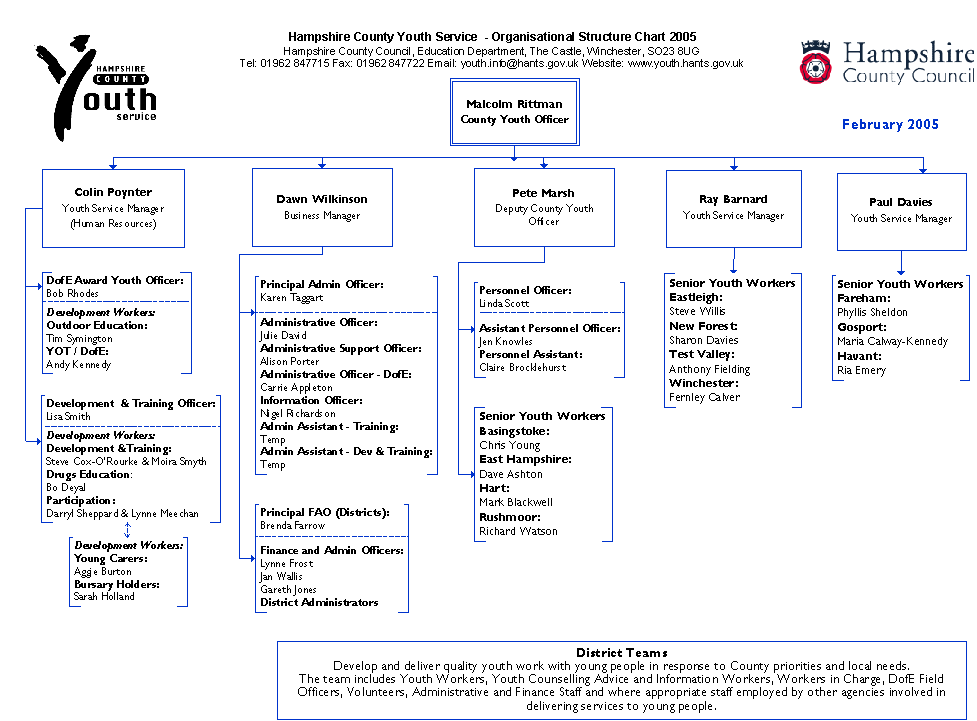
Structure View Structure Chart
A central management team supports:
_ a development and training team
_ 11 district youth work delivery teams coterminous with district councils
_ a resource team.
Changes will be made in line with the demands made on the Service in line with the Education Department's response to Every Child Matters. The youth service is continually seeking external funding and opportunities to work in partnership with other agencies. Responding to these opportunities results in changes in staffing requirements which cannot be predicted accurately.
Staff roles and responsibilities: these have been reviewed by the pay and benefits process and the outcomes will be implemented. All youth work staff roles will be assessed using a similar process to implement the changes agreed by the Joint Negotiating Committee (JNC).
Staff training:
The service supports a professional development programme to ensure:
_ Each member of staff understands what his or her job involves
_ Each person is trained to perform their current job to the required standards
_ Staff are prepared and equipped for opportunities created by changes in the Youth service and/or Hampshire County Council
_ Each individual is enabled to develop his or her potential, both personally and professionally
_ Resources are made available for staff development activities
_ Staff engage in selected development activities which support the implementation of the youth service strategic plan, the County Council's Corporate Strategy and Government legislation.
Section 2 - What is the context in which we operate?
Context: the Government has recognised the value of youth work through initiating the Transforming Youth Work Programme to raise standards, set targets and improve funding levels of youth services. The profile of the youth service has increased considerably and its work is valued by a range of stakeholders and providers. As a result of a number of significant changes the service is a quality provider of effective learning and developmental opportunities for young people.
Opportunities: there are a number of exciting external factors, which the Youth service is well place to respond effectively, these include:
_ Green paper proposals autumn 2004 `The Youth Offer'. The three main themes currently under consideration places to go, universal information and advice and targeted support for those with additional need are clearly linked to current work
_ The changes in the delivery of the Connexions Service
_ Proposals being developed to implement Every Child Matters and the opportunity for greater integration with other services
_ Changes in the approach to behaviour support
_ Supporting other targets for young people eg Public Service Agreement targets
_ External funding opportunities
Threats include:
_ Limited resources and therefore the lack of flexibility to respond quickly and effectively to new situations
_ Unrealistic expectations, competing demands
_ Loss of key experienced staff
_ Lack of continuity due to short-term funded work
Strategic analysis
Financial opportunities and restrictions:
_ the youth service receives 8.7% of the LEA budget. Along with Hampshire's low national position for Education funding through FSS, the Youth Service is in the lower quartile of funding when compared to other authorities. This places Hampshire 108 out of 123 local authorities for the most recently available data (2002/2003) which will shortly be updated.
_ the service has been successful in raising funding from external sources. Currently raising £1.1m from 21 different sources, which equates to 25% of the delegated youth service budget. Much external funding is short term and sometimes deflects from service priorities, however its loss would have a significant impact on delivery
_ the service has over 90 projects working in partnership with a range of agencies and organisations, which enables youth work to be extended through the joint use of resources
Relevant legislation
The 1944 Education Act set the foundation of Local Education Authority's responsibility for youth service provision and reinforced in the 1996 Education Act section 508 which states LEAs have a duty to secure the provision of youth service facilities.
Local and national initiatives
_ The government has embarked on improving youth services through the transforming youth work agenda to improve and set standards for quality youth work
_ Forthcoming Green Paper on youth support
_ Hampshire compact with the voluntary sector and developing their capacity
_ Focusing the impact of youth work through targeted youth work
_ Improving the opportunities for the voice of young people to be heard and the implementation of Hear by Right standards
_ Responding to the changes required by the County Council in response to Every Child Matters, Children's Trusts, behaviour support and extended schools
_ Improving performance through quality assurance programme
Demographic trends:
_ The 2001 census identified: 107,264 young people in the 13-19 age group; 50,072 in the 10-12 age group; 75,269 in the 20-25 age group. By 2011 the target age group is expected to increase by 3% to 110,477
_ Ethnic origin: 97.8% white; other ethnic origin 2.2%. The proportion of ethnic minority groups is uniformly low across the county, with only Rushmoor having more than 4% from all other backgrounds
District demography is taken into account in the way the youth service budget is deployed through a fair funding formula, which bases the allocation on 70% youth population and 30% social factors, including exclusions from school, youth crime and population density.
Particular note needs to be taken of the 20 most deprived wards in Hampshire listed below:
Ward |
District |
Ward |
District | ||
1 |
Warren Park |
Havant |
11 |
Popley |
Basingstoke & D |
2 |
Barncroft |
Havant |
12 |
Stakes |
Havant |
3 |
Bondfields |
Havant |
13 |
Mayfield |
Rushmoor |
4 |
Battins |
Havant |
14 |
Hardway & Forton |
Gosport |
5 |
Heron Wood |
Rushmoor |
15 |
Buckskin |
Basingstoke & D |
6 |
Alamein |
Test Valley |
16 |
Brockhurst |
Gosport |
7 |
Hart Plain |
Havant |
17 |
Eastleigh South |
Eastleigh |
8 |
Town |
Gosport |
18 |
Bedhamption |
Havant |
9 |
Netley Marsh |
New Forest |
19 |
Bridgemary |
Gosport |
10 |
Norden |
Basingstoke & D |
20 |
Alverstoke |
Gosport |
The only rural ward to appear in the above list is Netley Marsh. This is due to the number of residents in Tatchbury Mount Hospital receiving severe disability allowance. Rural deprivation is hidden in smaller pockets of dispersed rural communities. Issues for young people in rural communities include isolation, access to transport and appropriate services.
Staffing profiles
The following areas need to be addressed:
_ the number and level of qualified youth workers needs to be increased with 60% of staff qualified for their roles
_ the recruitment, retention and training of part-time workers needs to be improved as the turnover of part-time staff is high and considerable investment is required for staff to reach qualified status.
_ training in management and strategic development
_ the current part-time vacancy level is 25% an agreed optimum level needs to be determined for both financial and service planning
Stakeholder views
Internal stakeholders include: Elected Members; Education Department branches; schools; other County Council Departments; young people
External stakeholders include: Voluntary and community groups; South Central Connexions; District and Parish Councils; Parents and Carers; Youth Offending Team; Primary Care Trusts; Government Office of the South East; Colleges; Police
The service works well with a range of stakeholders, but will increasingly need to balance the demands made by the education department to respond to the improving schools agenda and Every Child Matters with Members and District Councils views for more community based provision, whilst ensuring the views young people are at the centre of developments.
The service cannot be all things to all young people and stakeholders. Work will be prioritised with the following stakeholders:
_ Connexions
_ District Councils:
o LSPs
o Community safety partnerships
_ County Council Members
_ Schools
Challenges
The challenges facing the service are:
_ balancing the competing demands of stakeholders with those of young people and the need to focus work
_ maintaining a broad based service within a limited resource base
_ moving existing provision from one community to another may be unpopular with some stakeholders
_ reviewing how resources are allocated including the use of buildings based on a rigorous needs analysis
_ working in new and creative ways with a range of stakeholders
_ building an experienced and qualified workforce
_ rigorous and robust statistical data.
Section 3 - What are we trying to achieve?
Ensure all youth provision is of high quality and responds to the needs of young people
Improve provision through the development of strategic partnerships
Improve recruitment of part-time staff
Building up a qualified and experienced workforce
Maximise work with young people
Establish area teams to respond to Children Bill decisions
Strategic outcomes
Priorities
1. Increase opportunities for young people to gain recorded and accredited outcomes
2. Developing and improving strategic partnerships with the voluntary sector, Connexions, schools and inclusion
3. Review the allocation of resources to districts
4. Establish a consistent needs analysis, robust data collection and rigorous quality assurance processes
5. Target work to respond to the needs of typically socially excluded and under represented groups:
a. Maintain and develop the Award project with the Youth Offending team
b. Increasing the number of outreach and detached youth work projects
6. Implement the revised JNC agreement, reduce staff turnover and increase the level of qualified staff
7. Contribute to crosscutting targets of Connexions, health and ensure provision contributes to Children Act 2004 outcomes.
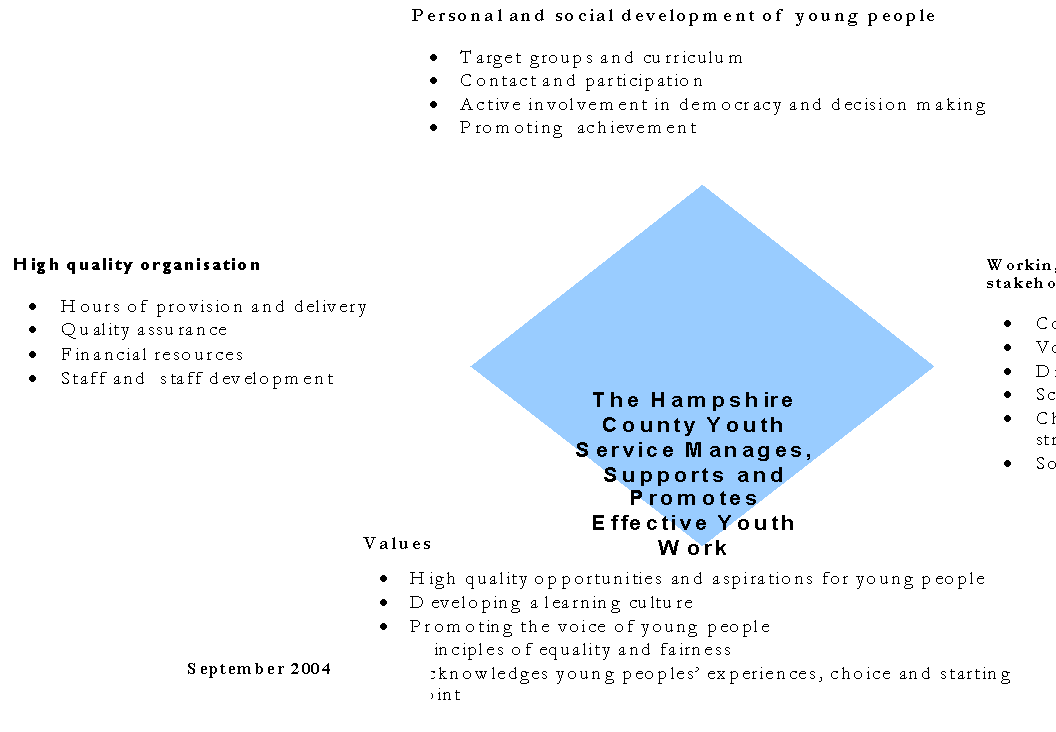
Hampshire Youth Service Objectives and Performance Targets
Personal and social development of young people
1 Target groups and curriculum
1.1 All youth work managed, supported and promoted by the Hampshire County Youth Service will be planned to meet the Service's Youth Work Curriculum with the priority age group 13-19s and reflecting the diversity of Hampshire to:
1. enable young people to develop personal and social skills with high aspirations
2. involve young people in democracy and decision making
3. promote the social inclusion of young people
4. engage young people in new opportunities and challenging experiences
5. encourage young people to lead healthy lifestyles.
1.2 Provision including children looked after will be developed in response to the identified needs of typically socially excluded and under-represented groups, where youth work can make a significant difference and add value with positive outcomes and experiences for young people.
1.3 Youth work with 10-13s and 19-25s will be developed to support under-represented and typically socially excluded young people, out of school clubs and transition projects and be up to 20% of the core youth service budget unless supported by external funding.
Performance target
1. At least 80% of the core youth service budget spent on work with 13-19s
2. Each district will maintain at least one project supporting young people aged 10-13
3. The service will reach at least 15% of the 13-19 age group, of which at least 10% participate regularly
2 Active involvement in democracy and decision making
2.1 Hear By Right Standards will be promoted and young people will be involved in the planning, development and evaluation of youth projects. Opportunities will be promoted for the voice of young people to be heard through involvement in a range of groups and fora.
Performance target
1. Young people are active and participating in the development of their projects and district groups
2. Young people involved and supported in the County Youth Panel, County Youth Council, UK Youth Parliament, Connexions young people's groups and the Children's and Young Peoples Strategic Partnership
3 Promoting achievement
3.1 Opportunities for learning and development will underpin youth work practice
achievements of young people will be celebrated in projects and at district and countywide events
Performance target
1. 6% of total population of young people of Hampshire aged 13-19, will achieve a recorded outcome
2. 3% of total population of young people in Hampshire aged 13-19, will achieve an accredited outcome
High quality organisation
4 Hours of provision and delivery
4.1 All youth work, will be accessible, young people friendly, well equipped and safe, where quality experiences and information will be available to young people.
Performance target
1. At least 900 hours of youth work per week will be delivered and promoted throughout the County in a range of situations offering a variety of opportunities for young people
2. Connexions information will be provided in all youth service projects
3. Information will be available electronically in 50% of authority owned building based projects
5 Quality assurance
5.1 The youth service's quality assurance policy will be implemented and monitored. A robust statistical data collection process, internal inspection, annual survey of participants and equalities principles will underpin the work.
Performance target
1. An annual survey of participants reporting 85% satisfaction with provision offered
2. 90% of youth projects are rated satisfactory or above, based on the Ofsted criteria
3. An eighteen month internal inspection cycle established and in progress
4. Staff and young people trained in quality assurance
6 Financial resources
6.1 The youth service budget will be allocated to districts using a fair funding formula ensuring the allocation of the budget responds to the identified needs of young people and service priorities. Additional funding will be actively sought from appropriate external sources. 4% of the youth service budget will be maintained to support the voluntary sector to develop and improve youth work.
Performance target
1. At least £1m of funding raised from external sources
7 Staffing and staff development
7.1 Supported by well qualified and experienced finance, administrative and ancillary staff, a full time equivalent establishment of 140 youth work staff will be maintained where:
_ 67% will be either nationally or locally qualified
_ 33% will have completed the stage 1 programme or in training
_ staff turnover will be less than 10%
_ 250 volunteers are involved in youth work training programmes
Performance target
1. 4% of the Youth Service budget spent on staff development
2. Staff equipped effectively to deliver quality youth work
Working with community groups and stakeholders
8. The youth service will support the achievement of cross-cutting targets through core and partnership work developed with other agencies and organisations particularly the following priority agencies
8.1 Connexions
A partnership agreement with the South Central Connexions Partnership will be developed to:
_ Promote the voice of young people and their involvement in the development of services
_ Provide support for young people
_ Improve access to information for young people
_ Support the delivery of the positive activities for young people programme
_ Enable youth workers to be case holders where appropriate
8.2 Voluntary and community groups
The range and quality of voluntary and community youth work will be improved by:
_ The provision of a revised process of annual revenue and project grants
_ Co-operatively working with Hampshire Council for Voluntary Youth Services to develop the capacity and quality of voluntary youth work
_ Supporting and enabling new initiatives through working together, professional guidance and financial support in local communities
_ The provision and support of training and development
_ Supporting and facilitating local networks of groups and providers
8.3 District Councils
Local provision will be enhanced through the development of joint work with district councils by:
_ Local needs analysis
_ Jointly funded or commissioned work
_ Engaging young people in Local Strategic Partnerships
_ Supporting community safety partnerships
8.4 Schools
Working with schools, behaviour support teams, Connexions personal advisers and organisations, a range of youth work will be developed with identified young people to:
_ Provide mentoring and behaviour support
_ Prevent young people from being excluded
_ Provide enrichment activities and opportunities to improve motivation and self esteem
_ Support the transition from year 11
8.5 Children and young people's strategic partnership (CYPSP)
The youth service will be actively involved in the CYPSP and the Children's Trust and proactively support the participation strategy and information sharing protocol
8.6 Other agencies and organisations
_ Youth Offending Team: the Award project in partnership with the Youth Offending Team will be developed and maintained subject to available funding
_ Social services: support for young carers will be maintained though the ongoing partnership agreement
Performance target
1. At least 90 partnership projects involving other agencies and organisations
2. New work developed and agreement in place with the Connexions Service
3. Hampshire Council of Voluntary Youth Service supported to increase membership and entering into partnership delivery arrangements
Categories of typically socially excluded and under-represented groups.
These categories include young people who are identified as experiencing prejudice and racism and under-represented in decision making processes including those from minority ethnic backgrounds:
1 Education, training and employment - young people who are:
_ underachieving at school
_ special educational needs
_ truanting
_ excluded from school
_ not participating in education, training or work - post 16
2 Housing and the transition to independent living - young people who are:
_ homeless or running away from home
_ young carers
_ young people looked after and leaving care
_ teenage parents
3 Health
_ teenage conceptions
_ mental health
_ disability
_ drug use
_ alcohol use
_ smoking
4 Victimisation and crime - young people who are:
_ victims of crime
_ offending
_ in custody
Adapted from:
National Strategy for Neighbourhood Renewal
Report of the Policy Action Team 12: Young People 2000
Section 4 - Service Review
In order to ensure youth work is effective, of high quality and responds to the changing needs and issues of young people and expectations of stakeholders the service is in a continual process of change, growth and development.
The significant elements of service review are:
¬ The planning process: this ensures future service developments respond to Government, County Council and local agenda. Progress is built on the evaluation of previous work
¬ Reporting structure: a robust reporting and recording structure linked to performance development and review ensures necessary changes are identified early and the service is effective in delivery and uses resources efficiently
¬ Quality assurance: the policy links qualitative and quantitative data through ongoing monitoring and an eighteen month cycle of inspection to ensure high quality learning outcomes for young people
¬ Annual return to NYA: the data return provides the basis of benchmarking and performance against other authorities
¬ Best value performance indicator 33: this currently identifies the County Council's expenditure on the youth service and the amount of money allocated within the budget line Section 52. It is expected to change and measure the performance of youth services against targets set for reach, contact, recorded and accredited outcomes for young people.
The County Youth Officer and the youth service management team take responsibility for service review, responding to issues and problems as they arise and scrutinising performance.
Hampshire County Youth Service Improvement Plan - Part 1
Service: Hampshire County Youth Service |
Lead Responsibility County Youth Officer Malcolm Rittman | |||
Outcome: The personal and social development of young people |
Corporate Strategy Aim Maximising life opportunities Stewardship of the environment Achieving economic prosperity Building strong and safe communities | |||
Performance Measure |
Current Performance |
Target Performance |
Half Year Results |
Full Year Results |
District budget profiles to identify 80% of the Youth Service budget used to support work with 13-19s Spending monitored at quarterly budget meetings |
Base line budget data needs to be established |
At least 80% of the core youth service budget spent on work with 13-19s |
||
Districts to set targets Monthly reports on reach and participation rates and work typically socially excluded and under-represented groups |
Reach 13% Participation rate 10% |
The service will reach at least 15% of the 13-19 age group, with at least 10% participating regularly |
| |
Evidence of young people's involvement in the development of projects All districts promoting the voice of young people through district events and fora |
Staff working with young people to sustain District fora and other opportunities to promote the voice of young people Baseline needs to be set for engaging young people in the development of projects |
Young people active and participating in the development of their projects and district groups and evidence provided |
||
Opportunities developed to enable young people to achieve recorded outcomes to meet national target |
Base line data not available |
6% of young people aged 13-19, will achieve a recorded outcome |
||
Young people attending the Youth Panel Data identifying numbers and groups involved in the County Youth Council UKMYPs supported to develop their role and participating in national events. Elections held and new MYPs elected Connexions Bursary Holders supported to fulfil their duties New bursary holders appointed Young people engaging actively with the CYPSP |
Young people attend the Youth Panel County youth council involves young people from every district in Hampshire 6 UKYPS elected 11 Bursary holders supported CYPSP Participation strategy agreed |
Young people involved and supported in: The County Youth Panel County Youth Council UK Youth Parliament Connexions young people's groups The Children's and young peoples strategic partnership |
||
Opportunities for accredited outcomes increased to meet national target |
2166 Awards gained equating to 2% of young people aged 13-19 against a national target of 4.5% |
3% of young people aged 13-19 will achieve an accredited outcome |
||
All districts plans to include one 10-13s project in their plans any additional work is supported by external funding |
11 projects established supporting 10-13s |
Each district will maintain at least one project supporting young people aged 10-13 |
||
Service: Hampshire County Youth Service |
Lead Responsibility County Youth Officer Malcolm Rittman | |||
Outcome: High quality organisation |
Corporate Strategy Aim Improving services Developing Councillors and staff | |||
Performance Measure |
Current Performance |
Target Performance |
Half Year Results |
Full Year Results |
Base line data on range of situations and type of work quantified in each district |
03/04 900 hours of youth work delivered |
At least 900 hours of youth work per week will be delivered and promoted throughout the County in a range situations offering a variety of opportunities for young people |
||
All projects actively providing Connexions information |
Some youth projects have Connexions information |
Connexions information will be provided in all youth service projects |
||
Identify those projects without electronic information and increase projects having access to electronic information |
Some youth projects have electronic information |
Information will be available electronically in 50% of building based projects |
||
Robust data collection system in place |
Data system in place but needs refinement to identify current performance measures |
Data collection providing accurate information |
||
All financial sources reviewed and new bids made for additional funding to achieve external funding of £1m |
£920,000 expected for 05/06 from 20 sources |
At least £1m of funding from external sources |
||
Budget allocation and profile Spending on staff development priorities reviewed to ensure organisational objectives are achieved |
Current budget £215,000 representing 5% of youth service budget |
4% of the Youth Service budget spent on staff development |
||
Staff development policy in keeping with IIP principles Staff accessing development pathways and opportunities through performance development and review. Staff turnover monitored and reviewed |
A range of development opportunities for youth workers in the statutory and voluntary sector is provided. 59 staff completed the foundation stage, 31 staff the NVQ Level ll/lll certificate programme and a further 14 youth workers completed a national qualification course at diploma level. |
Staff equipped effectively to deliver quality youth work |
||
Service: Hampshire County Youth Service |
Lead Responsibility County Youth Officer Malcolm Rittman | |||
Outcome: Working with priority stakeholders: Connexions Service Voluntary and community groups District Councils Schools Children and young people's strategic partnership Other agencies and organisations |
Corporate Strategy Aim Maximising life opportunities Stewardship of the environment Achieving economic prosperity Building strong and safe communities Developing Councillors and staff | |||
Performance Measure |
Current Performance |
Target Performance |
Half Year Results |
Full Year Results |
Work developed with priority stakeholders |
03/04 90 projects supported with a range of partners, agencies and organisations |
At least 90 projects involving other agencies and organisations will be maintained involving each district |
||
New agreement in place with the Connexions Service Preventative projects developed A reduction of young people who are NEET Systems in place to exchange information |
A range of work developed to support the Connexions strategy including joint projects, information initiatives and SCAYP |
New agreement in place with agreed targets being achieved A reduction in the number of young people who are NEET Improved information exchange |
||
Hampshire Council of Voluntary Youth Service supported to increase membership and entering into partnership delivery arrangements |
Support provided by the Youth Service Management Team and through annual revenue and transforming youth work funds |
HCVYS membership increased Partnership delivery arrangements in place |
||
*
 Back to main document 2