
Archived decisions
Hampshire Minerals and Waste Development Framework
Minerals and Waste `Core' Planning Strategy - `Issues and Preferred Option'
1. Introduction
1.1 Under the Planning and Compulsory Purchase Act 2004 mineral and waste planning authorities like Hampshire County Council, Portsmouth and Southampton City Councils are required to prepare a number of development documents - Development Plan Documents; Supplementary Planning Documents; Development Schemes; Statements of Community Involvement and; Annual Monitoring Reports - that collectively form a Hampshire Minerals and Waste Development Framework. A key development plan document is the Hampshire Minerals and Waste `Core' Planning Strategy, which will be referred to as the Strategy while the Development Framework will be referred to as the Plan.
1.2 Past joint working between the County and City Councils on mineral and waste matters has been successful particularly in delivering strategic waste infrastructure. Accordingly, it has been agreed through the adoption by the Councils of their respective development schemes, to continue with this arrangement for the current Plan.
1.3 The `Issues and Preferred Option' consultation paper puts before the public important `issues' concerning the development of minerals and waste resources for the period to 2020.
1.4 The paper also sets out a `preferred option' that could be expanded into a minerals and waste planning strategy based on:
i) meeting emerging regional planning priorities with due focus on `sustainable development' objectives;
ii) locating infrastructure close to sources of material and markets for products, so new development would be principally in Urban South Hampshire, including the cities of Southampton and Portsmouth;
iii) development that helps create and maintain the market for recycled materials and reduce the need for exploitation of primary resources.
iv) securing the appropriate location of infrastructure including co-location of synergistic activities; and
v) safeguards important mineral and waste resources/infrastructure.
2. The plan making process
2.1 The plan or strategy making process is based on extensive public consultation or community engagement and social, economic and environmental appraisal processes. The purpose of this is to ensure community concerns and various options for addressing the mineral and waste challenges are systematically examined as part of the plan preparation process - not as an after thought - so that conflicts are resolved as early as possible.
2.2 Over the last few years the Councils, with other bodies, have undertaken extensive consultations on minerals and waste issues. The most important of these were a series of stakeholder exercises based on a `resource management' approach to addressing concerns about pressures on resources through linkages to production of goods and materials and behavioural change. This approach was known as the Material Resources Strategy. The stakeholder exercise, involved public interest groups, public service agencies, business and environmental groups, over the period September 2003 to February 2005, and culminated in the publication of `More from Less' which set out a series of resource management aspirations. These have been an important influence in developing this Issues and Preferred Option consultation.
2.3 The Strategic Environmental Assessment Regulations 2005 and the Planning and Compulsory Purchase Act 2004 require a systematic appraisal of the potential impacts of policy options for the strategy. This is an iterative process and further option development and appraisal will be necessary after this consultation.
2.4 The appraisal of Options for the Core Strategy was undertaken independently by Halcrow Group.
2.5 A number of conceptual options and generic spatial options were developed for meeting the need for minerals and waste management in the county, having regard to the emerging Regional Planning Guidance, the Environmental Baseline and the previous work undertaken as part of the Material Resources Strategy.
2.6 The following conceptual options for waste management were developed and appraised:
Option 1 Business as usual
Option 2 Stakeholder preferred (More from Less) with net self-sufficiency
Option 2a Stakeholder preferred (More from Less) with net export
Option 3 Zero waste growth with very high recycling / composting rate
Option 4 Regional Waste Strategy
Option 5 Recycling with landfill
Option 6 High thermal treatment with recycling
Option 7 High mechanical biological treatment with recycling
2.7 Options 3 and 2 perform best in terms of sustainability. Option 3 performs well due primarily to the reduced waste production and the consequent reductions in transport and development, although it is felt that the social and economic consequences of the very high recycling option may be significant. Option 2 performs well through its more pragmatic recycling targets, enabling the local provision of facilities, low noise impacts, less health impacts due to the reduced transportation and landfilling of waste, greater potential for local renewable energy generation, increased employment creation, economic competitiveness as well as adhering to the waste hierarchy. In terms of targets and methodologies, there is very little difference between Option 2 and Option 4, although the option based on the Regional Waste Strategy used different baseline data and consequently indicates a need for greater
development. Given the concern regarding the deliverability and the social and economic cost of Option 3 this option, in particular its zero waste growth element, is seen as a long term goal. Option 2 is the preferred option in the short term.
2.8 The generic spatial options for waste are the key issues that influence the sustainability of spatial planning for waste management. The following generic spatial options for waste management were developed and appraised:
Options A1 and A2 Larger Strategic Sites v Smaller Local (Community-based) Sites
Option B1 and B2 Urban Areas v Rural Areas
Option C1 and C2 Co-location v Dispersal
Option D1 and D2 Bring systems v Collection systems
2.9 In general, in terms of sustainability, the preference is for smaller local sites, urban or brownfield locations, co-location of facilities with a preference for collection systems. It should be noted that these options are not mutually exclusive and the appraisal was theoretical in approach and did not take into account Spatial Areas, facility types or the viability and economics of smaller sites. The outcomes of the appraisal are accepted but some degree of flexibility in terms of delivery and identification of sites will be necessary.
2.10 Various methods of spatially presenting the content of the Core Strategy were developed and appraised:
Option 1 No Spatial Split
Option 2 Spatial Areas reflecting the Sub-Regional Strategy Areas in the South East Plan (including Areas with Special Requirements)
Option 3 Spatial Areas (without Areas with Special Requirements)
Option 4 Areas with Special Requirements Only (Portsmouth, Southampton, New Forest National Park and proposed South Downs National Park)
Option 5 District Council Boundaries
Option 6 Project Integra Management Boundaries
2.11 It is considered that Option 2 had the greatest advantages in terms of spatially representing the content of the Core Strategy as it provides the best balance in terms of scale, ability to represent the urban / rural split and future growth whilst allowing different approaches for Areas with Special Requirements.
2.12 Halcrow were asked to consider various spatial patterns for future land-won sand and gravel supply, this appraisal did not take place because it was felt that the options developed did not fully reflect the Spatial Areas identified or the proposals for growth in the South East Plan, and that appraisal of these, without detailed information on potentially exploitable reserves, may lead to inappropriate recommendations. Further options relating to this issue are suggested in this document and it is acknowledged that further appraisal work will need to be carried out prior to drafting the Core Strategy.
2.13 The generic spatial options for land-won sand and gravel are the key issues that influence the sustainability of spatial planning for minerals. The following generic spatial options for minerals were developed and appraised
Options A1 and A2 Concentration of Sites v Dispersed Sites
Option B Biodiversity Led Approach to Site Selection
Option C Non-hazardous Landfill Led Approach to Site Selection
2.14 The appraisal of the options indicates that geographically dispersed sites generally have more sustainability benefits than concentrating development. The biodiversity led approach to site selection is also favoured in terms of sustainability as the consequences of development are off-set by improvements in biodiversity over the long-term. In some cases selection of sites that offer non-hazardous landfill followed by restoration to enhance biodiversity may be the most appropriate. However, this approach should not preclude restoration to agriculture or undermine recycling targets and a full range of restoration schemes should be considered.
2.15 Halcrow recommended a number of mitigation measures to enhance the sustainability of the preferred options and off-set some of their consequences. Some of the key themes are outlined below:
i) encourage waste minimisation
ii) promote local recycling and markets for recycled materials
iii) support sustainable design, demolition and construction
iv) encourage coordinated logistics and sustainable transportation
v) reduce the use of fossil fuels and support local energy production
vi) reduce the amount of hazardous waste produced
vii) consider initiatives to improve the collection of wastes that are prone to fly-tipping to help reduce incidences.
3. Background
3.1 There are a number of broad issues facing Hampshire, Portsmouth and Southampton, which affect the planning for waste management and mineral extraction. These issues include:
i) Rapid population growth and increased populations projected Hampshire and Portsmouth.
ii) Pressure for housing as the number of households increase and housing is planned for the growth areas of the Urban South Hampshire and the Hampshire Western Corridor.
iii) Economic growth and the importance of the rural economy.
iv) Good road, rail, air and sea transport links, but problems with congestion.
v) High quality natural and built environment (National Parks, Areas of Outstanding Natural Beauty, historic towns and villages).
vi) The consequences of climate change including increased flooding and reduction in water resources.
3.2 The Plan area is divided in to discrete areas to reflect its varied character and the sub regional planning structure that has already been adopted. These areas - illustrated below - are:
i) Urban South Hampshire
ii) Hampshire's part of the Western Corridor
iii) Forest and Downland
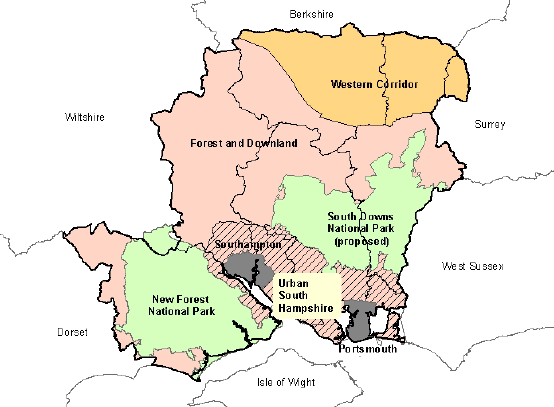
3.3 The distribution also includes special areas of requirement by virtue of their designation and special planning needs requirement and or population including the New Forest National Park, the proposed South Downs National Park and the cities of Portsmouth and Southampton. It is proposed that these spatial areas will have policies relating to expectations for development.
3.4 The most prevalent minerals within Hampshire, Portsmouth and Southampton are sand and gravels including both land-won and marine-dredged supplies. Most of the land-won reserves are located along the south coast, with the marine dredged supplies extracted off the south coast. The sales of land-won aggregates have reduced significantly over the last decade and marine-dredged supplies have only shown an increase in the last couple of years. Other significant minerals supplied in the Plan area include chalk, clay, oil and gas.
3.5 The Plan area faces a number of significant constraints in the search for new sites for both waste management and mineral extraction due to its high quality environment and the need to treat waste as close to its source of production as possible. Economic growth and population increases are resulting in competing pressures for land. The consequences of climate change also constrain development through increased areas of flood risk and the need to protect water resources.
4. Policy Context
4.1 The Strategy will contain policies for the development and use of land within the Plan area and how it will achieve overall mineral, waste resources and other planning objectives. It will also set out the amount and types of development needed, spatial characteristics, needs for the spatial areas and criteria for identifying locations and sites in other Development Documents in the Plan. The Strategy will replace, when adopted, the existing policies within the Hampshire, Portsmouth and Southampton Minerals and Waste Local Plan (Adopted 1998) except those relating to specific sites and safeguarding (Policies 19, 20, 43 and 44). Meanwhile the existing policies have been saved through their inclusion in the Development Scheme, which came into effect on 21st July 2005.
4.2 The policies will need to incorporate European legislation, national and regional guidance as well as take into account work undertaken to understand the needs of the local community. At the national and regional level the most influential of the documents include the emerging Minerals Policy Statements, Planning Policy Statement 10: Planning for Sustainable Waste Management and the Minerals and Waste Management Strategies that form part of the emerging South East Plan (the Regional Spatial Strategy). At the local level, the Community Strategies produced separately by Hampshire, Portsmouth and Southampton and the `More from Less1' document help provide guidance on what the community would like to achieve and how to involve the community in meeting its needs.
5. Spatial vision
5.1 The Plan should be based on an overall vision for the development of mineral and waste resources. `More from Less' includes the following vision
`We will change the way we use material resources to maximise efficiency and minimise wastage.'
5.2 This vision has three key elements relevant to the Plan:
i) Changing behaviour;
ii) Resource efficiency, and
iii) Minimising waste.
5.3 However, there is a need to add a spatial planning dimension in the context of the Plan so the vision relates more directly to the use and development of land in Hampshire. The following two options for the Spatial Vision are proposed:
Option 1
`The Hampshire planning authorities will endeavour to change the use of material resources to maximise efficiency and minimise wastage by:
i) Implementing sustainable design solutions to new development;
ii) Developing an integrated infrastructure for all wastes in keeping with the `proximity principle';
iii) Reducing landfill to a minimum;
iv) Limiting mineral extraction to the minimum necessary to meet Hampshire's needs;
while also working to meet other spatial planning objectives for securing the sustainable development of the area.'
Option 2
`By 2020, the community of Hampshire, Portsmouth and Southampton will be natural resource aware; striving to improve resource efficiency and minimise waste generation and resource usage. Changes to the design and fabrication of consumer goods, buildings and roads will reduce the demand for resources, particularly minerals. The manufacture, to high standards, of recycled and secondary raw materials will be commonplace throughout the county.
Where waste is generated, this will be managed locally and the emphasis will be on recovering value both through technically advanced re-use, recycling and composting processes, or where that is not possible, through the recovery of energy and / or materials from waste. The amount of waste going to landfill will be limited both in quantity and biodegradable content.
Minerals and waste activities will be sized and located sensitively, such that they meet the needs of communities, business and the environment. Where possible such activities and uses, in order to encourage sustainable management of resources, will be co-located together, sometimes with major waste producers, to share to mutual advantage, their infrastructure and by-products.
Where practicable, major new developments will be designed to maximise the use of recycled or recovered products and to ensure self-sufficiency in waste management.
In 2020 we will be able to demonstrate the sustainable management of waste, minerals and other natural resources, over the longer term, having made significant improvements to the natural and urban environment.
In 2026, the way wastes, minerals and other natural resources are managed in Hampshire, Portsmouth and Southampton will be considered to be a leading example in the United Kingdom and Europe.'
Question 1 - Which Spatial Vision option do you prefer? Question 2 - Does your preferred Spatial Vision include sufficient spatial detail? (If not - what further detail is required?) |
6. Spatial Planning Objectives
6.1 `More from Less' states four broad aims:
i) To extract primary resources only where it can be shown that the need cannot be met in a more sustainable way;
ii) To change minds and behaviours to use all resources efficiently and minimise wastage at all stages of production and consumption;
iii) Where waste is produced, to maximise the opportunities for business and the community to reuse, recycle and compost such wastes to produce sustainable products;
iv) To recover value from, and dispose of unavoidable waste (that mixed waste left over after reuse, recycling and composting) using sustainable means, as far as possible avoiding the landfilling of biodegradable or recyclable waste.
6.2 These aims are endorsed. These aims need to be developed into specific spatial planning objectives for the Plan that reflect important elements of national and regional policy, such as the waste hierarchy, net self-sufficiency, targets/and apportionments - e.g. waste management capacity and mineral production, together with objectives identified in the earlier `minerals' review consultation. Finally, the objectives should reflect the outcomes of the emerging Integrated Sustainability Appraisal process.
6.3 The following spatial planning objectives are therefore proposed:
i) To ensure that infrastructure for the management of waste, resources and extraction of minerals is delivered in a sustainable or environmentally acceptable way and that where possible development maximises the opportunities for biodiversity, whilst, where applicable, achieving the highest standards of restoration;
ii) To foster behavioural change to use all resources efficiently and minimise waste at all stages of production and consumption; with the intention to de-couple waste growth from economic growth and meet or exceed the regional target to limit waste growth to 1% per annum by 2010 and 0.5% per annum thereafter;
iii) To ensure that the delivery of waste resource management in Hampshire, Portsmouth and Southampton reflects and supports the waste hierarchy;
iv) Where waste is produced, to increase opportunities for business and the community to re-use, recycle and recover value from such wastes;
v) To dispose of unavoidable waste sustainably, as far as possible, avoiding the landfilling of biodegradable or recyclable waste;
vi) To deliver a step-change in recycling, such that the average recycling rate for all wastes in Hampshire, Portsmouth and Southampton increases to 60% by 2020;
vii) To become net self-sufficient in terms of facilities for the management of all of Hampshire, Portsmouth and Southampton's waste by 2016, accepting that there is a need to work with adjacent authorities, to plan for specialist facilities serving large areas, extending beyond administrative boundaries;
viii) To meet the need for minerals and ensure that, as far as possible, minerals and waste facilities are located close to the communities and market places they serve and:
a) that the adverse impacts of transportation are minimised, and
b) that impacts on land subject to environmental protections are minimised;
ix) To encourage and safeguard the use of rail and sea transport for the movement of resources, including ensuring that sufficient wharves are provided to allow movement of wastes and maintain or increase current levels of dredged sand and gravel importation;
x) To ensure that new infrastructure, and associated transport, for mineral, resource and waste management are designed to reduce pollution, maximise energy efficiency, promote renewable energy, encourage recycling and reduce primary aggregate consumption by encouraging the:
a) co-location of waste management facilities;
b) sustainable design, construction and demolition;
c) co-location of businesses that produce waste with those that use it as a raw material;
xi) To safeguard existing and potential future capacity for the management and movement of waste resources and to prevent the sterilisation of mineral deposits;
Question 3 - Do the proposed Spatial Planning Objectives adequately reflect National and Regional policy on Minerals and Waste matters? (if not what is missing?) Question 4 - Do the proposed Spatial Planning Objectives adequately reflect the views of local communities and business? |
7. Summary of Preferred Option
7.1 The Preferred Option delivers and supports the outcomes identified in More from Less, these are:
i) behaviour change achieved to maximise reuse, recycling and recovery;
ii) overall year on year waste growth reduced to 1% by 2010 and 0.5% by 2020;
iii) an overall recycling rate of 60% by 2020;
iv) cost of recycling to public and private sectors is optimised;
v) net self-sufficiency in dealing with all waste arisings by 2016;
vi) materials and energy recovery maximised from unavoidable waste;
vii) use of landfill for all waste materials reduced to a minimum practicable level by 2020;
viii) demand for new minerals reduced to minimum practicable levels, with extraction of land-won sand and gravel reduced as far as practicable;
ix) new sites and facilities provided to meet needs in a sustainable efficient way;
x) a supportive policy framework and all sectors of the community involved in delivering solutions and change.
8. Issues and Preferred Option
Growth
`In simple terms, the delivery programme must achieve a year on year reduction in waste growth each year until 2020.' More from Less (March 2005) Page 19 Paragraph 7.35 `The overall amount of waste produced has grown at over 3% per annum over the past 15 years. A general assessment of future conditions suggests it is likely that future legislative and economic pressures (particularly in the business sector) could reduce the growth figure to about 2% per annum.' More from Less (March 2005) Page 18 Paragraph 7.33 |
8.1 The Emerging Regional Planning Guidance sets a target to reduce overall waste growth to 1% by 2010 and 0.5% by 2020. Stakeholders indicated support for this target.
8.2 It is clear from sustainability appraisal work undertaken to date that efforts to reduce or reverse waste growth rate have considerable environmental, social and economic benefits.
8.3 Furthermore, it is also clear that waste reduction efforts can be focussed on certain waste streams where the sustainability benefits can be maximised. It is believed that efforts to reduce local waste growth should be focussed on specific wastes where the environmental and social consequences of disposal are greatest, such wastes include hazardous, clinical and non-recyclable construction, demolition and excavation wastes.
8.4 It is proposed, at this stage, that as a minimum the Core Strategy should seek to achieve the proposed regional target of reducing waste growth to 1% by 2010 and 0.5% by 2020. However, it may be considered that a longer-term aspirational target of 0% waste growth is desirable and achievable by 2025, despite the increased housing and infrastructure proposed in the South East Plan.
8.5 Although there is an aspiration within this plan to reduce the growth in production of waste, it is important to remain pragmatic in terms of future planning. In reality, efforts to reduce waste growth are going to take some time to be delivered. There is also considerable uncertainty about the level of success of these initiatives, the waste streams that will be affected, future legislation and also the future economic climate and how this may effect consumption and waste production.
8.6 Being over optimistic in terms of the reduction in waste growth will lead to under provision of planned capacity and an increased need to develop sites beyond those identified in the Development Plan. Under estimation will lead to over provision of facilities and consequently increased waste importation and unacceptable impacts on local communities. Although it is important to get the rate of waste growth right, it is better to be optimistic when considering the success of waste reduction strategies overall, as this would result in less impact on local communities and would encourage a climate with less investment risk to business. However, over provision of facilities for the handling of municipal waste would enable their use for handling similar types of commercial and industrial wastes, which may be beneficial by compensating for a potential lack of provision in the commercial and industrial sector.
8.7 Data on waste growth is scarce, however, Waste Strategy 2000 estimates waste growth at about 3% per annum over recent years. Locally, municipal waste growth has varied between -2 to +3% in the last four years, with 3 of the last 4 years showing an increase. Given this, it is proposed to initially plan to provide future waste management capacity at an initial rate of 3%, reducing to 1% by 2010, 0.5% by 2020 and reducing to a long-term aspirational target of 0% in 2025.
8.8 The emerging Regional Planning Guidance requires that Hampshire, Portsmouth and Southampton plan to maintain a landbank of at least 7 years of permissions for land-won sand and gravel at a sub-regional apportionment of 2.63 million tonnes per annum, throughout the regional plan period to 2016.
8.9 Proposed Policy M1 of the emerging Regional Planning Guidance provides a long-term aspiration that `annual consumption of primary aggregates will not grow from the 2016 level in subsequent years.'
8.10 The Core Strategy will cover the period to 2020. Given this, it is proposed to plan for aggregates supply at the apportionment rate of 2.63 million tonnes per annum, until 2020.
Question 5 - Is zero waste growth a realistic long-term aspiration and is 2025 an achievable date? Question 6 - Is the emerging regional target for limiting waste growth realistic? Question 7 - Is the suggested approach to planning for minerals and waste growth reasonable, if not what approach should be taken? |
8.11 It is anticipated that the Core Strategy will be reviewed within 5 years of adoption and it is important that this review, as well as the periodic Annual Monitoring Reports, consider trends in waste growth and minerals supply in order to adjust the future approach.
Sustainability
`The need is to reduce the impact of material use at every stage in its lifecycle, for example by using renewable resources. The first aim is to try and avoid the use of materials through better design of products and more efficient manufacturing processes.' More from Less (March 2005) Page 8 Paragraph 4.9 `A sustainably designed product takes into account the environmental, social and economic impacts throughout its entire lifecycle - from concept through to disposal, or ideally as raw material for new products.' More from Less (March 2005) Page 15 Paragraph 7.4 `The local authorities should encourage sustainable design, construction and demolition in order to minimise the demand for aggregates, increase recycling and reduce the disposal of construction and demolition wastes.' More from Less (March 2005) Page 36 Paragraph 10.23 |
8.12 A lot has been written about sustainable design, construction and demolition, much of which goes beyond the remit of this plan, into areas such as energy and water usage in building. However, the promotion of sustainable design, construction and demolition is vital in order develop markets for recycled and secondary materials and generally to encourage resource efficiency leading ultimately to reduced exploitation of primary natural resources.
8.13 Policies M1 and W2 of the emerging Regional Planning Guidance on Minerals and Waste issues actively promotes Sustainable Design, Construction and Demolition, although their emphasis is limited to built development.
8.14 The principles of Sustainable Design go beyond traditional built development and include radical changes to the way manufacturers develop their products so that they are made from renewable or readily recyclable materials, that they designed to be upgradable and that waste production during the manufacturing process is reduced.
8.15 As a minimum, the following sustainable design elements should be reflected in City, District and Borough councils' Local Development Frameworks:
i) the inclusion of facilities in new industrial and business development, that allow and encourage businesses to recycle;
ii) ensuring that new housing development includes facilities that allow segregation and storage of segregated recyclable as well as residual waste;
iii) maximise the use of recycled or secondary materials in built development, especially associated road building and hard surfacing;
iv) ensure that major development areas are considered for their ability to accommodate waste management facilities, which are well located to the strategic transport network where they serve a wider than local need;
v) policies that support the co-location of biological and thermal treatment facilities with housing or business development, in order to facilitate local heating schemes.
8.16 It is important that new permanent minerals and waste development demonstrates:
i) energy efficient design, where possible maximising the on-site generation and use of renewable energy sources;
ii) the use of recycled and secondary materials in the construction of the facility and associated transport infrastructure;
iii) design that, at the end of the facility's life, minimises the disposal of waste and maximises the recovery and recycling of waste;
iv) design that maximises the recycling and reuse of water and heat throughout the process, and where excess heat is produced, this is used in local heating schemes;
v) where demolition needs to take place prior to construction, as far as possible, the demolition waste is recovered or recycled, preferably on-site.
Question 8 - Is it appropriate to include policies on Sustainable, design, construction and demolition within the Core Strategy? Question 9 - Will requirements for the sustainable design, construction and demolition of new permanent minerals and waste development be an obstacle to delivery of new development? |
`A focus on options such as resource efficiency and recycling could over time reduce the local impacts of operations like mineral extraction and landfill.' More from Less (March 2005) Page 8 Paragraph 4.10 |
8.17 It is acknowledged that the current rate of consumption of natural resources, is unsustainable in the long term. It is important therefore to be efficient in the way natural resources are used so that adverse impacts upon the quality of life of future generations are avoided. It is considered that minerals and waste are natural resources, although the constituents of waste may well be in a substantially different form than when they were first exploited; nonetheless they should still be used efficiently.
8.18 Examples of resource efficiency, to be included in the Core Strategy, include:
i) optimising the efficiency of resource extraction, construction and manufacturing processes to minimise needless wastage;
ii) reducing the needless disposal of resources through increased reuse and recycling of waste, preferably at the site of production;
iii) reducing the need for primary resources through increased use of recycled and secondary materials;
iv) recovering value, and reducing the use of fossil fuels, by recovering energy from waste, and wherever possible maximising the energy efficiency of the treatment process used.
8.19 Although sustainability increases with increases in reuse, recycling and energy recovery a sensible balance needs to be struck based on overall waste composition, since some waste streams are more suited to one option than another. Furthermore, with regard to recycling the `law of diminishing returns' is likely to apply whereby increasing recycling levels beyond a certain `tipping point' starts to affect the sustainability of recycling, particularly in terms of increased transport impacts, public participation and cost.
`It is important to increase the volume of material recycled.' More from Less (March 2005) Page 21 Paragraph 8.13 `Overall `stretching best practice' should achieve an aggregated recycling and composting rate for all material streams of 60% by 2020.' More from Less (March 2005) Page 24 Paragraph 8.25 |
8.20 Policy W6 of emerging Regional Planning Guidance requires that the following recycling and composting targets should be achieved in the region:
Year |
Municipal Solid Waste |
Commercial & Industrial |
Construction & Demolition |
All Waste |
2005 |
30% |
40% |
45% |
40% |
2010 |
40% |
50% |
50% |
50% |
2015 |
50% |
55% |
50% |
55% |
2020 |
55% |
60% |
60% |
60% |
8.21 In 2004, Hampshire, Portsmouth and Southampton recycled and composted approximately 28% of Municipal Solid Waste. Figures for other waste streams are less precise although it is estimated by SEERA that 36% of Commercial and Industrial Waste was subject to recycling and composting in 2002/3. Similarly the Viridis report into the Construction, Demolition and Excavation waste stream estimates a recycling / composting rate of 33% in 2004.
8.22 The South East region has the highest regional recycling rates in the UK and this fact was used to justify the application of regional targets that are higher than those in the Waste Strategy 2000. Similarly, Hampshire, Portsmouth and Southampton, through the Project Integra waste partnership had, at least until recently, some of the highest municipal waste recycling and composting rates in the region and it is suggested that this justifies exceeding the proposed regional targets.
8.23 There are difficulties in delivering high recycling rates, beyond about 60%, in terms of social and economic consequences and therefore it is proposed to achieve the regional targets for municipal waste recycling and composting five years ahead of schedule.
8.24 It is therefore proposed to achieve the following recycling and composting targets (which go beyond the targets currently proposed by the Project Integra authorities):
Year |
Municipal (%) |
Commercial & Industrial (%) |
Construction, Demolition & Excavation (%) |
All Waste (%) |
2010 |
50 |
50 |
50 |
50 |
2015 |
55 |
55 |
55 |
55 |
2020 |
60 |
60 |
60 |
60 |
Question 10 - Should Hampshire seek to achieve the regional municipal waste composting and recycling targets ahead of schedule? |
9. Waste Management Capacity
9.1 More from Less estimated that Hampshire, Portsmouth and Southampton produced approximately 5.7 million tonnes of waste in 2004 although this figure included approximately 1 million tonnes of Construction, Demolition and Excavation waste which it is believed is used on site.
9.2 This compares favourably to data provided by the Environment Agency and Project Integra relating to the 2002/3 financial year:
Waste Type |
Quantity |
Municipal Waste |
898,261 tonnes |
Commercial and Industrial Waste |
1,468,375 tonnes |
Construction, Demolition and Excavation Waste |
2,148,057 tonnes |
Hazardous Waste |
157,970 tonnes |
Total |
4,672,663 tonnes |
9.3 The quality of data on waste arisings varies considerably depending on the waste stream. The accuracy of the municipal waste and hazardous waste data is very good, whereas the data on Commercial and Industrial and Construction, Demolition and Excavation wastes are less reliable. It is believed that the estimates of Construction, Demolition and Excavation wastes are generally accurate because they are reasonably consistent with surveys carried out by third parties, however, discussions with the waste management industry indicate that the arisings of commercial and industrial waste may be too high and are probably in the region of 1 - 1.25 million tonnes.
9.4 The Environment Agency has recently undertaken a national survey of waste arisings and is producing an updated Strategic Waste Management Assessment for the South East region. It is anticipated that these documents will be published during Summer 2005 and the Core Strategy will take account of this revised data.
9.5 Taking into account the proposals relating to waste growth, this means that the following amounts of waste will be produced in Hampshire, Portsmouth and Southampton in the benchmark years of 2010, 2015 and 2020:
Year |
Municipal Waste |
Commercial and Industrial Waste |
Construction, Demolition and Excavation Waste |
Total |
2010 |
1,054,000 |
1,825,000 |
2,544,000 |
5,423,000 |
2015 |
1,099,000 |
1,904,000 |
2,654,000 |
5,657,000 |
2020 |
1,132,000 |
1,962,000 |
2,734,000 |
5,828,000 |
`We should aim for net self-sufficiency for unavoidable waste treatment and disposal by 2016.' More from Less (March 2005) Page 28 Paragraph 9.10 |
9.6 The consultation draft of Planning Policy Statement 10, which is intended to replace existing guidance on planning for waste management, has a key planning objective that states waste planning authorities should:
i) `- enable sufficient and timely provision of waste management facilities to meet the needs of their communities;'
9.7 The emerging Regional Planning Guidance details in Policy W4 the following approach to sub-regional self-sufficiency:
i) `Waste planning authorities should plan for net self-sufficiency through provision for management capacity equivalent to the amount of waste arising and requiring management within their boundaries. A degree of flexibility should be used in applying the sub-regional self-sufficiency concept. Where appropriate and consistent with Policy W3, capacity should also be provided for:
ii) waste from London; and
iii) waste from adjoining sub-regions (waste planning authority area within or adjoining the Region).'
9.8 The Integrated Sustainability Appraisal work carried out to date indicates that sustainability increases as the level of self-sufficiency increases, similarly the same applies if waste is dealt with in proximity to its place of production. The sustainability benefits are principally due to reduced transport. It is therefore suggested that Hampshire, Portsmouth and Southampton should seek to be net self-sufficient in terms of provision of waste management capacity.
9.9 There is limited data on the import and export of waste but data provided by the Environment Agency indicates that in 2002/3 approximately 18% of wastes arising in Hampshire, Portsmouth and Southampton was exported, whilst 13% of waste disposed of in Hampshire was imported from elsewhere, however, it should be noted that these figures are not equivalent. Work carried out with stakeholders indicates that the amount of waste exported is likely to have increased substantially over recent years due to the closure of a number of significant landfill sites in Hampshire, this trend towards export is considered likely to be greatest in the Commercial and Industrial waste sector.
9.10 It will take time to reverse this trend and therefore a target by which net self-sufficiency should be achieved is considered appropriate. The 2016 date suggested by stakeholders is considered to allow sufficient time to be achievable. It is intended that the amount of waste exported from the sub-region will progressively decrease, year on year until 2016. However, in terms of planning for new development, given the lack of reliable data on cross-boundary movements and the `lead in time' necessary to deliver new facilities, it is prudent to plan for net self-sufficiency from the beginning.
9.11 Waste production in three Spatial Areas can be deduced from population. The following table identifies the waste expected to be produced in each of the three Spatial Areas:
Year |
Urban South Hampshire |
Forest and Downland |
Hampshire's part of the Western Corridor |
2010 |
3,247,000 |
1,133,000 |
1,041,000 |
2015 |
3,388,000 |
1,182,000 |
1,086,000 |
2020 |
3,491,000 |
1,218,000 |
1,119,000 |
9.12 It is apparent from the Integrated Sustainability Appraisal work undertaken to date that the management of wastes close to their production has sustainability benefits. It is therefore proposed that, in headline terms, these three Spatial Areas should aspire to be net self-sufficient in terms of provision for waste management. This would mean that, given the majority of waste is produced in the South Hampshire , the majority of new waste management facilities should be located in that same Spatial Area.
Question 11 - Is it appropriate to include a target date by which to achieve net sufficiency and is 2016 a realistically achievable date for the achievement of net self-sufficiency? Question 12 - Should the three geographic areas suggested, aspire to be net self-sufficient in terms of the provision of waste management capacity? |
9.13 Policy W4 of the emerging Regional Planning Guidance, requires provision of capacity to manage an element of waste from London. It is anticipated that an apportionment of an amount of London's waste, to be managed in Hampshire, Portsmouth and Southampton will be made in due course. It is clear from the wording in the Panel Inspector's report that this apportionment will in part be calculated on the ability of sub-regions to provide landfill capacity for the acceptance of London's waste and the presumption is that landfill will be the principle method of managing London's waste.
9.14 The provision of landfill for the disposal of London's waste is contrary to the approach, proposed in this document, of limiting landfill disposal, both in terms of capacity and restricting landfilling to the residues of sorting and pre-treatment. If this disparity in approach persists into policy it could place local companies at a commercial disadvantage, compared to their London competitors, with regard to their waste management costs.
9.15 It is likely that this apportionment will be made prior to the submission of the Core Strategy to the Secretary of State and the Core Strategy will therefore need to be drafted to take this into account.
9.16 It is also important, in terms of sustainability benefits, to manage wastes as locally as possible. Given this, it is proposed that any future provision for London's waste should be provided as close as possible to London.
Question 13 - Is it reasonable given Hampshire's geology, the shortage of Landfill void and the heavy forward investment made in waste treatment facilities (at a cost to the Hampshire ratepayer), that Hampshire should take an element of London's waste? Question 14 - If the Government decides an element of London's waste is to be managed in Hampshire, should special provision be made in Hampshire's part of the Western Corridor, for landfilling of London's waste without pre-treatment or sorting? |
`...ensure that synergies between household and commercial recycling collections are maximised.' More from Less (March 2005) Page 23 Paragraph 8.21 `Household waste collections should be standardised and optimised.' More from Less (March 2005) Page 25 Paragraph 8.29 |
9.17 The Integrated Sustainability Appraisal process indicates a preference for optimising waste collection systems, as follows:
i) collection of waste is favoured over `bring' systems;
ii) optimised collection systems, such as alternate weekly and joint collection of household and trade wastes, are favoured.
9.18 However, not all waste can be collected and there will always be a need to provide a network of convenient `bring' sites, such as Household Waste Recycling Centres.
9.19 It is clear from looking at the recycling performance of Project Integra partners that those which provide alternate weekly collections of dry recyclable waste and residual household waste perform best.
9.20 In order to achieve the challenging recycling and composting targets detailed above there will need to be considerable changes to the way we manage wastes. For example, the Waste Planning Authorities will need to work with Waste Collection and Disposal Authorities, where there are planning implications, to:
i) improve the existing network of Household Waste Recycling Centres to fill service gaps and provide additional capacity;
ii) provide a new generation of strategic Household Waste Recycling Centres, located near to major s, that allow the reception of both domestic and commercial recyclable wastes;
iii) implement optimal arrangements for the collection of recyclable and residual wastes across the whole of Hampshire and the cities of Portsmouth and Southampton;
iv) standardise municipal waste collections both in terms of collection system, contracts and the number and type of mixed dry recyclables collected;
v) progressively increase the range and type of material collected;
vi) provide storage space for the emergency storage of mixed dry recyclables and green waste, in order to provide a contingency in the event of processing down-time, site availability and peaks in waste flow;
vii) ensure that where commercial wastes are collected alongside household wastes, the proportion of source segregated dry recyclables is maximised;
viii) offer a standardised kerb-side green waste collection service, coupled with banning green waste from residual waste bins and the encouragement of home and community composting initiatives;
ix) undertake and participate in behavioural change initiatives to ensure that household waste recycling becomes normal practice and, at a national and local level, to ensure that the amount of non-recyclable waste is reduced.
Question 15 - Are the sort of changes outlined above, for municipal wastes, necessary? |
`There will be a need to provide for a range of new storage and processing facilities to underpin recycling.' More from Less (March 2005) Page 25 Paragraph 8.28 `Many of the smaller less strategic facilities can be left to market forces to deliver...' More from Less (March 2005) Page 39 Paragraph 11.18 |
9.21 As a general rule, Integrated Sustainability Appraisal tends to favour, in sustainability terms, a wide distribution of small facilities as opposed to a small number of large or strategic facilities. However, such an appraisal does not consider a number of other factors, such as:
i) some wastes are produced in such small volumes or are so hazardous that management is appropriate at a regional, national or potentially even international scale;
ii) all waste management options benefit, to a lesser or greater degree, from economies of scale sometimes making smaller facilities more expensive or even not viable;
iii) where the waste management operation produces a recycled or secondary product, or a residual waste, the proximity of markets or disposal outlets is also of importance;
iv) the location of landfill is largely dependant on finding suitable sites of prior aggregate extraction and the potential size of site is related to the size of extraction;
v) population and industrial density, and hence waste production, are not evenly distributed across the county;
vii) the suitability of the various areas of the county differs dependant on waste facility type;
viii) the blend, mix and location of existing waste management capacity.
9.22 It is proposed that a mix of facilities, in terms of size and types, will be needed to deliver the indicative capacity requirements outlined below:
Recycling Capacity
Milestone Date / Sub-Area |
Indicative Capacity Required (Tonnes Per Annum) | ||
Municipal Waste Recycling and Composting |
Commercial & Industrial Waste Recycling and Composting |
Construction, Demolition and Excavation Waste Recycling and Composting | |
2010 |
|||
South Hampshire |
316,000 |
548,000 |
763,000 |
Forest & Downland |
111,000 |
192,000 |
268,000 |
Western Corridor |
101,000 |
174,000 |
242,000 |
2015 |
|||
South Hampshire |
363,000 |
629,000 |
876,000 |
Forest & Downland |
127,000 |
220,000 |
307,000 |
Western Corridor |
115,000 |
199,000 |
278,000 |
2020 |
|||
South Hampshire |
408,000 |
706,000 |
985,000 |
Forest & Downland |
143,000 |
248,000 |
345,000 |
Western Corridor |
130,000 |
224,000 |
312,000 |
Reuse, Recovery and Landfill Capacity
Milestone Date / Sub-Area |
Indicative Capacity Required (Tonnes Per Annum) | |||
Inert Recovery and Reuse |
Non-Hazardous Recovery and Reuse |
Inert Landfill |
Non-Hazardous Landfill | |
2010 |
||||
South Hampshire |
36,000 |
648,000 |
- |
- |
Forest & Downland |
13,000 |
227,000 |
- |
- |
Western Corridor |
12,000 |
206,000 |
- |
- |
Non-Specific |
- |
- |
1,213,000 |
360,000 |
2015 |
||||
South Hampshire |
207,000 |
608,000 |
- |
- |
Forest & Downland |
73,000 |
213,000 |
- |
- |
Western Corridor |
66,000 |
193,000 |
- |
- |
Non-Specific |
- |
- |
850,000 |
338,000 |
2020 |
||||
South Hampshire |
283,000 |
557,000 |
- |
- |
Forest & Downland |
99,000 |
195,000 |
- |
- |
Western Corridor |
90,000 |
177,000 |
- |
- |
Non-Specific |
- |
- |
623,000 |
310,000 |
9.23 It is proposed that the two regional growth areas of the South Hampshire and the Western Corridor should generally meet their needs for waste management infrastructure through the provision of large strategic sites. Whereas it is expected that provision in the Forest and Downland area, with the exception of composting, landfill and construction waste processing provision, will be met by smaller community based facilities. Development of large strategic facilities in the Forest and Downland area will only be permitted on `windfall' brownfield land with immediate access to the strategic transport network identified on the Key Diagram.
9.24 It is proposed that this capacity requirement will be delivered through:
i) allocation of land in the Hampshire Waste Management Sites Plan; and
ii) identification of `generic' land, suitable for various waste management activities, in the Hampshire Waste Management Sites Plan; and
iii) identification of a set of criteria, to be included in the Core Strategy, by which small scale development can be considered.
9.25 In terms of land to be allocated in the Hampshire Waste Management Sites Plan, it is proposed to identify the following types of sites and capacities (including Resource stream and Strategic Facilities identified in following chapters) in the Hampshire Waste Management Facilities Sites Plan:
i) 5.7 million tonnes of additional Non-Hazardous Landfill;
ii) 18.7 million tonnes of additional Inert Landfill;
iii) 110,000 tonnes of additional Green Waste Composting;
iv) 385,000 tonnes of Biowaste (food) Treatment;
v) 750,000 tonnes of Strategic Construction, Demolition and Excavation Waste Recycling;
vi) 35,000 tonnes of Contaminated Soil Treatment (Soil Hospital)
vii) 90,000 tonnes of Incinerator Bottom Ash Recycling;
viii) 40,000 tonnes of Air Pollution Control Residue Treatment / Recycling;
ix) 50,000 tonnes of Wood Recycling;
x) 100,000 tonnes of Plastic Reprocessing (Polymer Cracking);
xi) xxx tonnes of additional Household Waste Recycling Capacity, to fill identified gaps in service provision and replace sites suffering from congestion;
xii) 250,000 tonnes of additional Municipal / Commercial and Industrial Waste Treatment.
9.26 (these are illustrative figures and will need to be firmed up over coming weeks, in particular, need to build in combined HWRC / trade waste Recycling Centres (as per the Wigan model))
9.27 It is also intended to identify Generic sites suitable for the location of facilities including:
i) contingency storage for Dry Recyclables;
ii) de-manufacturing of Waste Electrical and Electronic Equipment.
Question 16 - Is the proposal to have a greater proportion of large strategic facilities in the growth areas of South Hampshire and the Western Corridor appropriate? Question 17 - Is it reasonable to only identify, in the Hampshire Waste Management Sites Plan, some of the waste management infrastructure required to meet the targets in the plan? |
9.28 It is proposed to develop, jointly between Hampshire County Council, Portsmouth and Southampton City Councils, Hampshire Waste Management Sites Plan for adoption by September 2008.
9.29 Submission of the site allocation documents to the Secretary of State is timed to fall after the receipt of the Inspector's binding report following the public examination of the Core Strategy. This is necessary so that the Hampshire Waste Management Sites Plan can reflect the Inspector's findings on the Core Strategy. However, this does mean that much of the pre-work on sites will take place before receipt of the inspector's report and that there is a risk of delay in the event of the inspector suggesting significant changes in approach.
9.30 Guidance on the identification of waste sites will be included in Planning Policy Statement 10, which is currently in consultation draft form. The final version of which is due to be released in summer 2005.
9.31 It is proposed to undertake a 3 stage process to identify Preferred Areas and Generic Sites for inclusion in the Hampshire Waste Management Sites Plan, the stages are:
Stage 1 Invite industry, landowners and local authorities to submit proposals or identify potential sites. In-house identification of potential generic or specific sites. Work with stakeholders to identify their general preferences in terms of site location and criteria for evaluation of sites (including sustainability criteria to fulfil the requirements of Sustainability Appraisal and Strategic Environmental Appraisal);
Stage 2 Carry out a 3 step appraisal process to identify, in preference order, potential sites:
Step 1 - desktop study to eliminate sites impacted by primary constraints;
Step 2 - desktop study to appraise potential sites using the criteria agreed in stage 1.
Step 3 - site inspections will be carried out to confirm findings of the desktop studies and consolidation of results to meet the requirements of stakeholders, National Guidance and the Core Strategy (including, if insufficient suitable sites are identified the review of unsuitable sites eliminated at step 1).
Stage 3 Stakeholder workshops and public consultation to feedback findings and finalise proposals.
Question 18 - Is the suggested methodology appropriate and consistent with national and regional guidance? Question 19 - Does the suggested methodology allow sufficient representation from local communities and business? |
10. Residual Waste Management and Landfill
`In order to foster a climate in which business can invest in such technologies, it is important to limit the opportunity for landfill by only meeting essential unavoidable waste disposal needs.' More from Less (March 2005) Page 32 Paragraph 9.39 `Given the environmental benefits, the main reason the UK is not already approaching optimal levels of recycling achievement is that landfill has been a cheaper and easier option.' More from Less (March 2005) Page 21 Paragraph 8.15 |
10.1 Landfill is less acceptable in terms of environmental and social acceptability than it once was. This message is reinforced by recent legislation and policy encouraging resource efficiency and requiring the protection of groundwater.
10.2 It is proving very difficult for industry to develop new or even existing landfill capacity, for example, the Environment Agency has refused more than a quarter of Pollution Prevention and Control (PPC) applications submitted to it under the re-permitting regime required by the Landfill (England and Wales) Regulations 2004 (Ends Report 364 - May 2005). The majority of these applications were refused due to a perceived unacceptable risk to groundwater.
10.3 The Environment Agency's policies on landfill design and location are quite onerous and in the case of non-hazardous landfill effectively prohibit landfill on major aquifers unless there is a substantial thickness of naturally occurring low-permeability geological barrier (e.g. clay) overlying the aquifer. Approximately 54% of Hampshire is classified as a major aquifer. Furthermore, the landfilling of biodegradable wastes generates landfill gases. It is estimated that 2% of the UK's annual emissions of global warming gasses come from landfill sites. In 2001, 25% of the UK's methane emissions came from landfill sites. Development of inert landfill sites is somewhat easier due to less stringent locational and engineering requirements.
10.4 Landfill has a number of other issues that make future development unattractive to the waste management industry, including:
i) long-term liability issues;
ii) engineering costs and standards;
iii) uncertainty with regard to regulatory approach especially concerning the waste acceptance criteria and pre-treatment requirements.
10.5 The emerging Regional Planning Guidance has targets for diversion of waste from landfill as follows:
Year |
All Waste (%) |
2010 |
71 |
2015 |
79 |
2020 |
84 |
10.6 It should be noted that these targets include reuse, recovery, recycling and composting.
10.7 It can be seen from these figures that overall, at a regional level, there is a diminishing role for landfill. However, this is not the complete picture, because:
i) the balance between landfill and recovery options will vary according to waste type and its suitability for recovery. For example, inert wastes are generally unsuitable for recovery and if not recycled will need to be disposed of by landfill or other form of beneficial use;
ii) policy W3 of the emerging Regional Planning Guidance requires some additional provision for London's waste, with an emphasis on landfill provision, although it is not clear at this stage how much waste will need to be planned for;
iii) inert landfill is not the only option for inert wastes, there are other opportunities such as landscaping, land reclamation, landfill engineering and restoration, soil blending and coastal defence works which can accommodate such wastes.
10.8 It is likely that future landfill development will be limited, however, as long as we produce waste which cannot be recycled, landfill will have a role in managing that waste. Our preferred approach is to:
i) husband existing and future non-hazardous landfill void by encouraging alternative daily cover and capping techniques;
ii) provide future non-hazardous landfill capacity only for the residues of treatment and sorting (estimated to be 25% of residual non-hazardous waste arisings) in order to minimise the biodegradable and recyclable content of waste going to landfill and encourage investment in more sustainable recycling and recovery facilities ;
iii) cease the landfilling of untreated municipal waste by 2015;
iv) only allow inert waste landfilling for mineral site restoration.
10.9 Ceasing the landfilling of untreated municipal waste in 2015 will mean that all municipal waste will either be recycled or treated. This will mean additional treatment capacity for municipal waste will be required by 2015.
10.10 It is therefore intended to provide landfill capacity as follows:
Year |
Non-Hazardous Landfill |
Inert Landfill |
All Waste (%) | ||
Tonnes per annum |
% |
Tonnes per annum |
% |
||
2010 |
360,000 |
6.6% |
1,213,000 |
22.4% |
29% |
2015 |
338,000 |
6% |
850,000 |
15% |
21% |
2020 |
310,000 |
5.3% |
623,000 |
10.7% |
16% |
10.11 Overall, throughout the period 2005 - 2020 it is proposed to identify landfill capacity sufficient to manage:
i) 5.7 million tonnes of non-hazardous (municipal, industrial and commercial) waste;
ii) 18.7 million tonnes of inert (construction, demolition and excavation) waste.
10.12 Preferred Areas for non-Hazardous and inert landfill development will be identified in the Hampshire Waste Management Sites Plan in accordance with the policies in the Core Strategy.
10.13 It is believed that at current landfill rates existing permitted non-hazardous landfill void will, with the exception of one or two sites, run out in about 3 years time. The forecast is less dire for inert sites with approximately 10 years of fill remaining, but given large amounts of inert waste are currently disposed of at non-hazardous sites this estimate could reduce.
10.14 Given the long lead times for waste recycling and particularly recovery facilities, in order to meet the target for net self-sufficiency by 2016, provision of non-hazardous landfill early in the plan period as a stop-gap will probably be necessary. It is appropriate therefore to identify a Landfill Potential Areas for Non-Hazardous Landfill, in order to provide an interim arrangement pending identification of Preferred Areas for Non-Hazardous Landfill.
10.15 It is proposed that the Landfill Potential Area for Non-Hazardous Landfill will consist of all areas of Hampshire, Portsmouth and Southampton, excluding:
i) Urban Areas plus a 250m buffer zone;
ii) New Forest National Park;
iii) Proposed South Downs National Park;
iv) Areas of Outstanding Natural Beauty;
v) Sites of Special Scientific Interest;
vi) Special Areas of Conservation, candidate Special Areas of Conservation plus a 250m buffer zone;
vii) Special Protection Areas, candidate Special Protection Areas plus a 250m buffer zone;
viii) all Major Aquifers;
ix) Source Protection Zones I and II.
10.16 This Landfill Potential Area for Non-Hazardous Landfill is shown on the Key Diagram. It is not considered necessary to identify a Landfill Potential Area for Inert Landfill.
10.17 Hampshire communities have historically been opposed to `landraise' and where landfilling of waste is necessary, have to wished to see beneficial use of mineral voids. Limited numbers of applications for non-hazardous landfilling have been received in recent years. It is believed that the minerals industry favour low level restoration with inert materials, rather than non-hazardous landfill restoration, because the mineral application is less likely to be refused and the risks and liabilities associated with non-hazardous landfill are too great.
10.18 Given this, landraising may need to be considered, if insufficient suitable non-hazardous landfill sites are identified through the site allocation process. Landraising has considerable disbenefits when compared to landfilling, not least its impact on the landscape as well as its greater use of engineering materials and soils and hence increased cost. Another option may be to `preferentially favour' one potential mineral site over another based on its potential for non-hazardous landfill, however, this option was not favoured by stakeholders taking part in the Material Resources Strategy as it was felt this may lead to `landfill-led gravel extraction'.
Question 20 - Is there a need for an interim Area of Search for Non-Hazardous Landfill? Question 21 - Should Landraise be considered as an option in meeting our need for Non-Hazardous Landfill? Question 22 - Is it appropriate to `preferentially favour' a mineral site offering restoration through Non-Hazardous Landfill over one that doesn't? |
10.19 Landfill is comparatively cheap and if too readily available may undermine efforts to recycle or recover value from wastes, this risk is greatest in the construction and demolition waste sector. There is a risk that an inconsistent approach to landfill by adjacent authorities could do likewise. Therefore the Waste Planning Authorities will object to site allocations or proposals, in adjoining authorities, for landfill operations where this is considered likely to undermine local recycling, composting and recovery operations in Hampshire.
10.20 The core strategy needs to strike the right balance between landfill and other forms of waste recovery which may include thermal treatment technologies such as Incineration, Pyrolysis and Gasification. An increased reliance on these Recovery technologies will reduce the need for landfill, and vice versa. This is a key issue on which consultees' views are wanted in order to shape future policy.
10.21 Following the removal of wastes through reuse, recycling and composting there is still a need to address disposal of the remaining residual waste. Historically the majority of such waste has been landfilled, although there has been an increasing trend for the recovery of value from the waste, through incineration and the use of landfill gas engines to generate electricity.
10.22 It is not a case of landfill or recovery, rather it is a case of what is the right balance between landfill and recovery, what recovery technologies are appropriate and how much flexibility should be allowed.
10.23 Integrated Sustainability Appraisal indicates that landfill is not favoured in sustainability terms. This mirrors both the waste hierarchy and the feelings of stakeholders involved in the Material Resources Strategy.
Question 23 - Do the proposals for landfill diversion strike a reasonable balance between the need to provide final disposal for the residues of waste treatment whilst limiting the availability of landfill in order to drive investment in waste management activities higher up the waste hierarchy? |
`All unavoidable wastes should be assessed, and where practicable pre-sorted or pre-treated to recover materials and resources and/or allow further treatment to minimise the need for landfill.' More from Less (March 2005) Page 28 Paragraph 9.11 |
10.24 Stakeholders indicated a desire to see all waste subjected to sorting or pre-treatment prior to recovery or disposal. The intention of such sorting would be to maximise the removal of economically recyclable materials prior to recovery or landfill disposal, in the case of wastes destined for landfill there could also be an additional desire, sympathetic to the requirements of the landfill directive, to reduce biodegradable waste inputs.
10.25 Integrated Sustainability Appraisal indicates that this approach has many environmental benefits particularly where such sorting or pre-treatment is undertaken either where the waste arises or at co-located facilities associated with the recovery or disposal operation.
10.26 Article 6a of the Landfill Directive requires the treatment of wastes prior to landfill. The Environment Agency's guidance on this was subject to a consultation process that finished in January 2002 and the final document is expected imminently. Although it is unclear what the final guidance will say, it is likely that suitable treatment will need to meet the following `three point test':
1. it must be a physical, thermal, chemical or biological process including sorting;
2. it must change the characteristics of the waste; and
3. it must do so in order to:
a. reduce its mass, or
b. reduce its hazardous nature, or
c. facilitate its handling, or
d. enhance its recovery.
10.27 The draft Environment Agency guidance is limited in terms of quantifying the amount of treatment required and the aims of that treatment. The guidance seemed to be focussed almost entirely on reducing the environmental risks and hazards associated with landfill rather than promoting any wider sustainability or resource efficiency aims.
10.28 No such Environment Agency policy or guidance exists for other types of waste treatment or recovery operation, although for facilities accepting municipal waste, it is expected that local authorities are working towards achievement of national and regional targets and therefore, by default, some sorting of waste will take place. Such an assumption becomes more tenuous when we consider plant for managing commercial and industrial waste.
10.29 Although reducing the risks and hazards associated with landfill is a worthwhile aim, it is also appropriate, in order to meet the challenging landfill diversion and recycling and composting targets above, to widen the scope of pre-treatment requirements in terms of both type of facility and the objectives of pre-treatment.
10.30 It is therefore proposed to ensure that all new facilities for the treatment or disposal of waste either provide front-end pre-treatment of wastes or are restricted to the acceptance of wastes which have been pre-treated. It is suggested that as a minimum such pre-treatment, in the case of waste treatment facilities and inert landfill should remove the majority of recyclable wastes, and in the case of non-hazardous landfill should also remove or reduce the biodegradable element of the waste.
Question 24 - Is the pre-treatment of residual waste necessary in order to meet the targets for landfill diversion and recycling and composting? Question 25 - Given that many treatment processes allow the recovery and recycling of residues, during or after processing, is the front-end pre-treatment of incoming wastes still justified? Question 26 - Should the extent of pre-treatment or sorting required be quantified through use of targets or minimum standards to be achieved? |
`To recover value from and dispose of unavoidable waste using sustainable means, as far as possible avoiding the landfilling of biodegradable / recyclable waste.' More from Less (March 2005) Page 14 Paragraph 6.3 `Maximising the energy recovery potential of waste, and thus its potential to replace fossil fuels, is likely to have an increasingly important role in future as fossil fuel supplies come under pressure.' More from Less (March 2005) Page 29 Paragraph 9.21 `There is a need to change our approach for all types of unavoidable waste management. This means moving it up the waste hierarchy and recovering materials and energy rather than relying on landfill.' More from Less (March 2005) Page 28 Paragraph 9.10 `Rather than be prescriptive about processing / treatment technologies for this sector, it is more appropriate to leave the choice of technology to market forces, subject of course to any proposals meeting the required environmental and public health standards.' More from Less (March 2005) Page 32 Paragraph 9.38 |
10.31 In the future more sophisticated technologies are going to be required to manage wastes. Such technologies will be needed to:
i) separate resources and recyclables from residual wastes;
ii) recover latent energy, in terms of electricity and heat, from residual wastes prior to disposal.
10.32 There are also likely to be technologies required to pre-treat wastes prior to landfill and manufacture recycled and secondary resources to the high standards required by business. Over time these technologies will need to be applied to an ever increasing range of materials and wastes, to become more and more efficient both in terms of degree of segregation and energy efficiency and meet ever more stringent environmental standards.
10.33 There are many technologies starting to be trialled in the United Kingdom, that have been used successfully in Europe and elsewhere for many years. This situation is fluid and new developments in technology are continuously evolving.
10.34 In Hampshire, the biggest challenge in terms of new technologies, is likely to be the need for new types of waste management infrastructure to handle commercial and industrial waste instead of landfill. The waste planning authorities have limited control or influence over this sector since decisions are largely commercial and related to consideration of the marketplace and profit versus risk.
10.35 It is important that technologies employed to handle minerals and waste activities do not damage health or the environment and that they meet high standards of environmental control. For waste management activities it is the responsibility of the Environment Agency through their various permitting regimes to ensure that waste activities do not cause harm to human health or the environment.
10.36 There are many factors influencing development decisions in the commercial and industrial sector, these include:
i) availability and cost of alternative or competing waste management options;
ii) contracts and security of supply;
iii) land availability and price;
iv) confidence in the planning system;
v) markets and outlets for recyclate.
10.37 Many of these factors fall outside of the scope of the Minerals and Waste Development Framework, however, it is considered appropriate to provide a climate that encourages industry to develop more sustainable waste management treatment methods for the commercial and industrial sector. To do this it is proposed to limit the availability of new non-hazardous landfill both in terms of capacity and requirements for pre-treatment.
10.38 It is believed that investment and delivery of waste treatment infrastructure, other than landfill, in the commercial and industrial sector is less likely if technological options are restricted. Therefore it is proposed not to specify or favour one particular technology over another. However, new development of such technologies should meet the following minimum standards:
i) there should be front-end pre-treatment or sorting to remove the majority of recyclable or biodegradable waste;
ii) the facility should be designed to be energy efficient, including where applicable both the generation and use of electricity and heat;
iii) emissions should meet relevant environmental standards.
Question 27 - Does the suggested approach strike a reasonable balance between the need for landfill and other residual waste treatment options? Question 28 - Does the suggested approach have the right level of flexibility in terms of potential technologies? Question 29 - Is the suggested approach to landfill likely to provide a climate that encourages investment in waste treatment options higher up the waste hierarchy? |
11. Strategic Facilities
`The recycling of Incinerator Bottom Ash should be maximised and a site for processing it into aggregate identified.' More from Less (March 2005) Page 31 Paragraph 9.26 `The provision of a `soil hospital' to decontaminate soils would help to address hazardous waste capacity issues.' More from Less (March 2005) Page 31 Paragraph 9.33 `To meet the need for additional resource recovery capacity, new technologies such as gasification, pyrolysis and anaerobic digestion should be considered.' More from Less (March 2005) Page 30 Paragraph 9.24 |
11.1 In order to meet the landfill diversion and recycling and composting targets a holistic, resource stream based approach is necessary. Increased capacity needs to be provided across the full range of recyclable waste types in order to meet the handling needs for the increased quantities that will be collected. Furthermore, in order to meet these targets, some wastes which haven't been segregated and separately collected, such as food waste, will need to be collected and recycled.
11.2 As part of the material resources strategy, stakeholders along with industry experts looked at fourteen separate waste streams with a view to identifying `stretching best practice' in recycling and consequently what additional management infrastructure would be required. The conclusions from this work are detailed in Figure 10 on page 24 of More from Less.
11.3 It is proposed, in order to help divert waste from landfill and meet the need for recycling and composting targets the following additional resource stream specific facilities will need to be identified in the Hampshire Waste Sites Plan:
11.4 Composting Sites - sufficient to compost an additional 110,000 tonnes per annum of `green' waste, produced by householders and landscape gardening businesses;
11.5 Biological Treatment Sites - sufficient to handle 60% of the food waste arising in Hampshire, Portsmouth and Southampton (predicted to be approximately 385,000 tonnes per annum in 2020);
11.6 Construction Waste Recycling - several large strategic facilities for the manufacture of aggregate, to the standards required by the construction industry, from construction, demolition and excavation wastes, sufficient to handle a minimum of 750,000 tonnes per annum;
11.7 Soil Hospitals - sufficient to treat a minimum 35,000 tonnes per annum of contaminated soils;
11.8 Incinerator Bottom Ash Processing - sufficient to process 90,000 tonnes per annum and manufacture, to the standards required by the construction sector, secondary aggregate;
11.9 Wood Processing - several facilities to recycle or recover value from wood waste, sufficient to handle an additional 50,000 tonnes per annum;
11.10 In addition, a number of other smaller scale facilities, such as farm and skip waste transfer and recycling stations will be required. It is proposed, because of their size and nature, that such sites are not identified in the Hampshire Waste Sites Plan but rather that applications will be dealt with on their merits, using locational criteria to be detailed in the Core Strategy.
Question 30 - Are the proposals for resource stream specific facilities sufficient to make an adequate contribution to achieving the proposed landfill diversion and recycling targets? Question 31 - Are there any additional resource stream specific facilities that should be provided? |
`There is a need for a specialist recovery / disposal facility for air pollution control residues (fly ash) to be provided on a national or regional basis.' More from Less (March 2005) Page 31 Paragraph 9.34 |
11.11 It is proposed to provide a number of resource stream specific or strategic waste management facilities, providing a service to a catchment equivalent to or greater than Hampshire, Portsmouth and Southampton. These facilities are:
i) air pollution control residue treatment plant;
ii) bottom ash recycling plant;
iii) soil hospital;
iv) waste electrical equipment de-manufacturing plant;
v) polymer cracking plastic treatment plant.
11.12 With the exception of the polymer cracking plastic treatment plant which has a specific need to be co-located with existing oil refinery processes, the other types of strategic facility should be located near to their waste arisings. Similarly, as wastes may be transported long distances for processing at these facilities, they should also be located adjacent to the strategic transport network identified on the Key Diagram. In the case of the bottom ash recycling plant this should ideally be located within 0.5 km of the road network, identified on the Key Diagram, linking the three energy from waste plants at Chineham, Marchwood and Portsmouth. Preference should be given to sites offering connection to sustainable transport options that are near to Marchwood and Portsmouth since these plants produce more residues.
11.13 Similar arguments exist for the location of treatment plants for air pollution control residues, although other considerations will need to be applied depending on considerations of the likely technological solutions available, these include:
i) availability of suitable landfill or markets for treated residues;
ii) opportunity to treat other waste types and location of arisings of these other waste types.
11.14 Soil Hospitals treat contaminated soils to facilitate reuse, such sites are expected to be temporary in nature and associated with landfill development, although this in itself may create problems due to hydrogeological suitability and risk of nuisance to neighbours. Contaminated soils typically result from redevelopment of brownfield land in urban centres, in particular, the cities of Portsmouth and Southampton have been major producers of this waste. Production of the waste is typically short-lived and movement is generally by lorry. It is proposed that an Area of Search approach is suitable for controlling development of this type of site.
11.15 Given the expectation that such sites will be co-located with landfill development it is proposed that the Non-Hazardous Landfill Proposed Landfill Area criteria are appropriate to control development and that applications should also meet the following criteria:
i) the application site should not be nearer than 250m from housing or other sensitive receptors;
ii) the time period for the development should not exceed the deadline for the completion of landfill restoration.
11.16 The majority of wastes produced in Hampshire, Portsmouth and Southampton are produced in the South Hampshire area. Therefore it is proposed that a permanent facility for the de-manufacturing of small waste electrical and electronic items will be located in this area. Given the nature of this type of facility, which is analogous to an electronic manufacturing plant in reverse, it is proposed that location via identification of `generic' suitable employment land, at the site allocation stage, is appropriate.
Question 32 - Is the overall approach to the location of strategic facilities supported? Question 33 - Is the suggested approach of using the same criteria for identifying suitable sites for a Soil Hospital as a Non-Hazardous Landfill supported? |
11.17 The emerging Regional Planning Guidance identifies in Policy W10 certain types of regional, pan-regional and sub-regional recovery and processing facilities, mainly related to resource streams.
11.18 Hampshire, Portsmouth and Southampton already provide a number of facilities that provide a wider service, even in some cases providing a national or international service. Such facilities include:
i) the high temperature incineration of hazardous wastes operated by Shanks at Fawley;
ii) the glass processing and handling facility operated by Midland Glass at Southampton docks.
11.19 It is proposed that existing regional services should be maintained into the future. In order to do this whilst meeting the targets for landfill diversion and recycling, it is likely that these facilities will need to expand their capacity or new facilities will be necessary. It is preferable in sustainability terms that existing facilities expand rather than new facilities be developed either within the county or elsewhere.
11.20 Due to the county's existing incineration capacity there is a need to process the resulting air pollution control residues. This is a type of waste that is likely to require treatment at a regional scale, probably requiring in the longer term one or two facilities in the region located near to waste arisings. It is suggested that a treatment plant should be provided to treat and preferably recycle air pollution control residues and that given the likely need for such facilities on a regional scale it is proposed that the plant should be designed to allow the future expansion to treat an element of wastes from outside the county.
11.21 A demonstration plant for the recycling of small items of electronic equipment is currently operational in Portsmouth. It is proposed, subject to the success of this trial, to facilitate permanent facilities for the de-manufacturing of waste electrical equipment, through the identification of generic sites. It is likely such sites will serve niche markets in this sector but that they may serve an area greater than Hampshire.
11.22 Policy W10 of the emerging Regional Planning Guidance identifies a need for a regional or pan-regional scale facility to recover and process plastics. Such a facility would need to be co-located with an oil refinery in order to be viable, preferably such a site would also have good opportunities for the importation of plastics by rail and water-borne routes. There are a limited number of oil refineries in the region. Furthermore, the Fawley refinery is served by a dedicated freight line and has direct access to Southampton water. It is therefore proposed to identify a location of a regional polymer cracking plant for the processing of waste plastics within or adjacent to Fawley Refinery. It is anticipated that such a site would need to be capable of handling in excess of 100,000 tonnes per annum, in order to be viable.
Question 34 - Do the proposals for regionally significant facilities make sufficient contribution to the overall need in the region for such facilities? |
12. Supply of minerals
`Overall there are a number of arguments that could be used to justify reducing Hampshire's land-won sand and gravel apportionment.' More from Less (March 2005) Page 34 Paragraph 10.11 `There is an urgent need to identify new preferred areas for sand and gravel extraction in order to achieve the minimum landbank requirement of seven years at the current apportionment.' More from Less (March 2005) Page 37 Paragraph 11.3 |
12.1 It is clear that stakeholders wish to see, over the longer term, a decrease in supply of aggregates from land-won sources as a result of policies, as well as changed practices, relating to sustainable design, construction and demolition; increased recycling of construction, demolition and excavation waste; procurement and resource efficiency.
12.2 This aspiration is supported, however, it is likely that the proposed increase in recycling of construction, demolition and excavation wastes is likely to substitute, in large part, for crushed rock rather than land-won sand and gravel. Crushed rock is imported into the County so any reduction in supply is likely to be felt elsewhere and only locally in terms of reduced transport.
12.3 The requirements for the planning for minerals are set out in the Regional Planning Guidance, principally in Policies M5 and M6. Policy M5 states:
12.4 `The supply of construction aggregates in the South East should be met from a significant increase in supplies of secondary and recycled materials, a reduced contribution from primary land-won resources and an increase in imports of marine-dredged aggregates. Mineral planning authorities should plan to maintain a landbank of at least seven years of planning permissions for land-won sand and gravel...'
12.5 It then goes on to provide a sub-regional apportionment of 2.63 mtpa for Hampshire, Portsmouth and Southampton. There is no sub-regional apportionment for crushed rock or other minerals.
12.6 Policy M6, which deals with other minerals, requires that the Minerals Planning Authorities should plan for:
12.7 `A permitted reserve of clay for brick and tile product manufacture sufficient to last for at least 25 years at current production rates should be maintained to supply individual works throughout the plan period, and new manufacturing capacity developed if this would replace older plants or reduce net imports to the Region; for small-scale manufacture, a long-term landbank of a lesser period than 25 years may be appropriate.'
12.8 There are no other mineral apportionments or targets relevant to the supply of minerals in Hampshire, Portsmouth and Southampton. However, it should be noted that oil, gas and chalk are also extracted locally and the region will be looking in due course, as recommended in the Panel Inspector's report, to provide an apportionment of the amount of aggregate to be supplied from recycled and secondary sources.
12.9 At the Examination in Public into the Proposed Alterations a number of arguments, particularly those detailed in paragraph 10.11 of More from Less for a lower land-won sand and gravel apportionment were tested without success. It is therefore proposed that the requirements of Policies M5 and M6 will be met through the Hampshire Minerals and Waste Development Framework.
12.10 It is our intention that the principles of resource efficiency will be applied to the mineral supply sector through:
i) increasing the amount of recycled and secondary aggregates used in highways and construction works;
ii) encouraging the development of a network of financially competitive permanent facilities for the manufacture of recycled and secondary aggregates to the high standards required by the construction industry;
iii) setting challenging targets for the diversion of construction, demolition and excavation wastes from landfill;
iv) setting challenging targets for the reuse and recycling of construction, demolition and excavation wastes;
v) working with the minerals industry to encourage efficiency in their extraction processes and to develop new markets for mineral waste.
12.11 The supply of land-won aggregate has shown a generally decreasing trend over the last decade despite increased economic growth. Although there has been a small increase from marine sources the general trend in aggregate supply has been static.
12.12 Historically the land-won sand and gravel apportionment has been calculated on the basis of historic trends in supply. In the event that land-won aggregate supply maintains this trend, as a result of the policies within the Core Strategy, it is anticipated that this will be reflected in future apportionments, thus meeting stakeholders' long term aspirations.
Question 35 - Does the suggested approach to land-won sand and gravel supply strike a reasonable balance between resource efficiency and the needs of the construction industry? |
`There should be a change of about 5% in supply for land-won aggregates from South West Hampshire to North East Hampshire.' More from Less (March 2005) Page 34 Paragraph 10.4 |
12.13 Locations for the supply of aggregate are ultimately limited by geology. Hampshire has significant deposits of sand and gravel but no real opportunity to provide rock. The majority of readily exploitable sand and gravel reserves are in the Avon Valley, which is to the West of the New Forest National Park. Over the last decade just over 40% of land-won sand and gravel has been supplied from this area, with the relative contribution increasing in recent years as production in the Solent, particularly to the East of Southampton, has tailed off. These quarries have historically also supplied the conurbations of Bournemouth and Poole in South Dorset as well as areas of Southern Wiltshire surrounding Salisbury.
12.14 Minerals issues, particularly relating to the level and location of supplies, were the subject of much discussion throughout the stakeholder consultation process. Generally stakeholders felt that:
i) increased recycling of construction, demolition and excavation waste, supported and encouraged through procurement and sustainable construction initiatives, should reduce the need to extract sand and gravel from land-won sources;
ii) sand and gravel extraction should take place nearer to construction activity, particularly new housing development and growth areas.
12.15 There was also some discussion concerning the location of the New Forest National Park boundary in relation to adjacent deposits of sand and gravel, and what implication development adjacent to the National Park may have on the reasons for its designation. Similar concerns would doubtless apply to the proposed South Downs National Park.
12.16 Stakeholders felt that in view of proposals for new housing near Basingstoke, Andover and Aldershot as well as the localised impacts of extraction in the South West of Hampshire, a move to provide a greater aggregate supply for these areas would be sensible. However, at the time of stakeholder discussion the proposals in the South East Plan had not been released and in retrospect the greatest concentration of new housing and associated development is likely to be in the South Hampshire and consequently, need is likely to be greatest in the South Hampshire . However, this is also the Spatial Area with the greatest pressure on land, not least the need for waste management facilities to locally handle the waste arisings.
12.17 In terms of the three Spatial Areas within Hampshire, these contributed the following amounts of land-won sand and gravel during the period 1994 - 2003, (excluding the highest and lowest returns and taking the average of the remainder, an approach consistent with the development of the regional apportionment):
Spatial Area |
Average Rate of Annual Extraction 94-03 |
Percentage of Total |
Contribution to proposed Sub-Regional Apportionment |
Western Corridor |
477,021 |
19.76% |
0.52 mtpa |
Forest & Downland |
1,513,100 |
62.68% |
1.65 mtpa |
South Hampshire |
423,754 |
17.55% |
0.46 mtpa |
12.18 If these supply rates are projected forwards into the future, taking into account remaining permitted reserves and un-developed Preferred Areas (Preferred Areas 3-6 in the Hampshire, Portsmouth and Southampton Minerals and Waste Local Plan), the Spatial Areas would need to identify Preferred Areas to provide supplies as follows:
Spatial Area |
Supply from Preferred Areas (2005-2015) |
Western Corridor |
6.76 million tonnes |
Forest & Downland |
7.30 million tonnes |
South Hampshire |
6.76 million tonnes |
Total |
19.13 million tonnes |
12.19 Comments made during the Integrated Sustainability Appraisal indicated that it would be very difficult to appraise a balance of mineral supply without getting into site specific detail regarding the relative merits of potential sites, to do this may result in the `forced' use of unsuitable sites in one area to meet an arbitrary supply profile. It is therefore proposed, during this consultation stage, to canvass views on the balance of supply and whether the historical distribution remains appropriate for the future. It will then be necessary to consider and appraise various options as to how land-won sand and gravel could be delivered.
12.20 It is proposed that the following three options for a spatial distribution of land-won aggregates supply should be considered during this consultation:
Indicative total land-won sand and gravel supply | |||
Spatial Area |
Option 1 Business as usual - Historic Trend |
Option 2 Increased supply from South Hampshire |
Option 3 Increased supply from Western Corridor |
Western Corridor |
5.07 million tonnes |
5.07 million tonnes |
6.31 million tonnes |
Forest & Downland |
7.30 million tonnes |
- |
6.06 million tonnes |
South Hampshire |
6.76 million tonnes |
14.11 million tonnes |
6.76 million tonnes |
12.21 On balance, the Mineral Planning Authorities favour Option 2 because it increases proximal supply in the areas of greatest demand thus reducing vehicle movements.
(this table needs to be updated to adjust for the relative proportions of sand and gravel in the three areas and also to apply an approximate +20% contingency to allow for sites not coming forward and errors in prediction of capacity surveys - we need to make allowance for some future provision from the Avon Valley)
Question 36 - Is the historic balance of supply of land-won sand and gravel appropriate for the future, especially considering the proposed level of development in the Western Corridor and South Hampshire ? Question 37 - Of the three options for the future pattern of land-won sand and gravel supply, which do you prefer? Question 38 - Does the current level of land-won sand and gravel extraction in the Avon Valley adversely effect the New Forest National Park and is this a reason to reduce this areas' supply profile? |
12.22 The emerging Regional Planning Guidance does not seek to apportion the clay or chalk, although it does require a 25 year landbank for clay for brick making (or less for smaller brick making operations).
12.23 With regard to chalk, there are currently 11 permitted chalk quarries supplying between them some 20,000 tonnes per annum of chalk mainly for use in agriculture. The majority of these sites are dormant. Consultation with the agricultural industry indicates that demand for chalk is unlikely to change over the near future. Although Hampshire has considerable chalk deposits, for economic reasons there are few suppliers of agricultural chalk in Hampshire.
12.24 It is therefore proposed that no additional chalk quarries will be identified during the plan period.
12.25 With regard to clay there are 3 sites permitted to extract clay, 2 of which are linked to craft brickworks at Michelmersh in Test Valley and Selborne in East Hampshire. The Hampshire, Portsmouth and Southampton Minerals and Waste Local Plan 1998 identified preferred areas for extensions for both of these sites.
12.26 Selborne Brickworks have recently obtained permission for an extension which provides an additional 35 years supply of brick making clay. An application for an extension of the reserve at Michelmersh Brickworks is expected within the next few months. This is expected to secure another 8 years supply of brick making clay.
12.27 In terms of the emerging Regional Planning Guidance, both of these sites are considered as `small-scale manufacture' and it is considered that their existing permitted reserves along with planned extensions are sufficient to provide continuity of supply throughout the plan period. On this basis, it is not proposed to identify any additional clay extraction sites in support of either of these two brickworks during the plan period.
12.28 Concern was expressed by stakeholders about the export of clay from these brickworks sites for other uses, in particular landfill engineering. Clay is used in landfill engineering as a low permeability barrier to both line and cap landfill sites. However, there are alternative materials available for both these purposes (e.g. welded HDPE and VLDPE membranes can be used to cap landfill sites) and use of these materials will help to safeguard non-hazardous landfill voids.
12.29 It is possible (as was the case with the Selborne permission) to conditionally protect the permitted clay reserve through preventing its removal from the site for other uses. This approach will also be used in the future, should this be considered necessary.
12.30 Since the identification of additional new sites for clay extraction for the brickworks in the site allocation document is not anticipated, it is therefore considered that there would be limited benefit to be gained in drafting a suitably worded policy for inclusion in the core strategy. A specific policy to prevent the export of clay from brickworks for use other than for making bricks will therefore not be included.
Question 39 - Do you agree with the decision not to include a specific policy preventing the extraction of clay from brickworks reserves for other uses? |
12.31 There are three productive oil and gas fields in Hampshire at Humbly Grove, near Alton; Horndean in East Hampshire, and Stockbridge. They comprise three production centres; 11 satellite well sites; and a rail export terminal at Alton from which oil is transported to Fawley Refinery.
12.32 Oil is also exported direct by road to Hamble Oil Terminal which receives oil by pipeline from the Wytch Farm Oilfield in Dorset. Further oil exploration has been undertaken in other parts of the County. Although the Hampshire, Portsmouth and Southampton Minerals and Waste Local Plan 1998 encourages oil exploration and working over most of the County, it does not permit exploration or working inside the boundary of the New Forest Heritage Area.
12.33 It is proposed to relax these restrictions as they would apply to the New Forest National Park and to the proposed South Downs National Park, given the strategic importance of oil and gas and provided that any effects of oil and gas related operations were appropriately mitigated against.
12.34 Proposals for exploration or appraisal of oil and gas are usually small-scale and short term with little lasting impact, and will be permitted providing certain safeguards are in place. Oil and gas production is potentially more intrusive and would only be acceptable where any adverse impacts resulting from the operations could be mitigated to the degree appropriate to their location in a National Park. This could potentially involve screening the apparatus or locating it underground.
12.35 Proposals for oil and gas processing would however be refused, since it is classed as a major development and can far more readily take place outside the boundaries of the national park.
Question 40 - Do you agree with the decision to allow strictly controlled oil and gas exploration and production in the national parks? |
12.36 It is proposed to develop, jointly between Hampshire County Council, Portsmouth and Southampton City Councils, the Hampshire Mineral Sites Plan with an adoption date of September 2008.
12.37 Submission of the site allocation documents to the Secretary of State is timed to fall after the receipt of the Inspector's binding report following the public examination of the Core Strategy. This is necessary so that the Hampshire Minerals Sites Plan can reflect the Inspector's findings on the Core Strategy. However, this does mean that much of the pre-work on sites will take place before receipt of the inspector's report and that there is a risk of delay in the event of the inspector suggesting significant changes in approach.
12.38 Guidance on the identification of mineral sites will be included in Mineral Policy Statement 1, which is currently in consultation draft form. The final version of which is due to be released in summer 2005. Our current proposal with regard to identification of minerals and waste sites is as follows:
i) To identify for the period until 2020, sufficient Preferred Areas to provide a continuation supply of sand and gravel at a rate of 2.63 mtpa and not to identify any sites for the extraction of chalk or clay.
12.39 It is proposed to undertake a 3 stage process to identify Preferred Areas for inclusion in the Hampshire Minerals Sites Plan, the stages are:
Stage 1 Invite industry, landowners and local authorities to submit proposals or identify potential sites. In-house identification of potential sites. Work with stakeholders to identify their general preferences in terms of site location and criteria for evaluation of sites (including sustainability criteria to fulfil the requirements of Sustainability Appraisal and Strategic Environmental Appraisal);
Stage 2 Carry out a 3 step appraisal process to identify, in preference order, potential sites:
Step 1 - desktop study to eliminate sites impacted by primary constraints;
Step 2 - desktop study to appraise potential sites using the criteria agreed in stage 1.
Step 3 - site inspections will be carried out to confirm findings of the desktop studies and consolidation of results to meet the requirements of stakeholders, National Guidance and the Core Strategy (including, if insufficient suitable sites are identified the review of unsuitable sites eliminated at step 1).
Stage 3 Stakeholder workshops and public consultation to feedback findings and finalise proposals.
Question 41 - Is the suggested methodology appropriate and consistent with national and regional guidance? Question 42 - Does the suggested methodology allow sufficient representation from local communities and business? |
13. Locational Issues
`Reduce transport as far as practicable by locating facilities close to the communities and market places they serve to reduce traffic congestion and emissions.' More from Less (March 2005) Page 14 Paragraph 6.4 |
13.1 It is clear that some of the biggest impacts of the management of minerals and waste are due to its transport. It is equally apparent that, in general terms, the transport implications of mineral and waste developments are a major concern of Hampshire's communities. Stakeholders involved in the Material Resources Strategy consistently highlighted transport as an issue, even going so far as to make it one of their guiding principles. However, with the exception of their expressed views on the location of facilities and the need to encourage more sustainable transport, there was limited discussion on how best to minimize transport impacts.
13.2 With the exception of national or regional scale strategic facilities, it will be necessary to manage wastes close to where they are produced. Where the treatment of waste results in the production of residual wastes or the manufacture of secondary raw materials consideration will also need to be given to the location of outlets, markets and the methods of transport for these products.
13.3 National and Regional scale strategic facilities, and some local facilities, will need to be supported by a logistical network for transfer and bulking up of wastes.
13.4 Policy W16 of the emerging Regional Planning Guidance states:
i) `...Policies should aim to reduce the transport and associated impacts of waste movement. Use of rail and water borne transport with appropriate depot and wharf provision should be encouraged wherever possible, particularly for large facilities.'
13.5 Furthermore, Policy W17 adds that we should: `...give priority to safeguarding and expanding suitable sites with an existing waste management use and good transport connections.' It goes on to say that: `...potential new sites should have the following characteristics: good accessibility from existing urban areas or major new or planned development; and good transport connections including, where possible, rail or water...'
13.6 The transport impacts of the Core Strategy will be minimised by:
i) locating sites near to transport connections and near to sources of waste and / or markets for primary, recycled and secondary products, in particular, sites should be located near to the strategic transport network indicated on the Key Diagram;
ii) optimising the logistics of minerals and waste handling both in terms of the provision of bulking up facilities and increasing the number of return loads;
iii) considering the relocation of Household Waste Recycling Centres that deficient or have unacceptable transport impacts;
iv) seeking to identify railway depots and other sites that are suitable for the bulk movement of recyclables to national scale treatment facilities by rail;
v) identification and safeguarding of wharves to allow for the movement of minerals and wastes both locally, such as the barging of municipal waste from the east of Southampton, and to national scale treatment facilities.
Question 43 - Is there sufficient emphasis on the reduction of minerals and waste transport? Question 44 - Are there any additional transport mitigation measures that should be included in the Core Strategy? |
`Due to constraints within the National Park boundary there are unlikely to be any significant minerals and waste developments within the National Park boundary. In order to reduce the impact of development on the New Forest National Park, the extraction of sand and gravel directly to the East of the River Avon should be avoided.' More from Less (March 2005) Page 35 Paragraph 10.15 |
13.7 Within the geographic areas mentioned previously, there are a number of areas which by virtue of designation or scale of development, are likely to make less of a contribution in terms of provision of infrastructure for waste and minerals. These Areas with Special Requirements require specific policy approaches, they are:
i) New Forest National Park;
ii) Portsmouth;
iii) Southampton;
iv) Proposed South Downs National Park.
13.8 A significant proportion of the County's mineral supply has historically been produced from the Avon Valley, north of Ringwood and adjacent to the National Park. It was unsuccessfully argued at the Examination in Public into the Proposed Alterations to Regional Planning Guidance, South East - Regional Minerals Strategy, that sand and gravel extraction in the Avon Valley could adversely affects the National Park and that the land-won sand and gravel apportionment for Hampshire, Portsmouth and Southampton should be reduced accordingly.
13.9 Sand and gravel can only be extracted where geological formations allow and there are considerable readily extractable deposits in the Avon Valley. Furthermore, these are served by good road connections. The Mineral Planning Authorities do not believe that the strategy for extraction in the Avon Valley should be changed in principle as result of the new National Park although such a change may result as a consequence of increased extraction in the South Hampshire, subject to the outcome of this consultation. It is proposed that minerals and waste development in the New Forest National Park and proposed South Downs National Park should be restricted in order to:
i) prevent land-won sand and gravel extraction, other than `windfall' extraction resulting as a consequence of other development;
ii) limit landfilling to small scale predominantly inert landfills sites servicing a demonstrable local need and resulting in reduced transport;
iii) limit other waste management activities to small scale activities servicing a demonstrable local need and resulting in reduced transport.
13.10 The cities of Portsmouth and Southampton have Special Requirements by virtue of their:
i) status as Waste Collection and Disposal Authorities;
ii) dense urban development and consequent large volumes of aggregate demand and waste produced;
iii) importation of sand and gravel through wharves;
iv) inability to accommodate large minerals and waste activities such as quarries, landfill and open air composting and recycling.
13.11 It is proposed that the cities of Portsmouth and Southampton should:
i) aspire to manage as much of their waste within their boundaries as possible, recognising that transfer facilities will need to be provided to handle wastes destined for treatment or disposal elsewhere;
ii) as a minimum maintain their existing capacity for the import of minerals through aggregates wharves;
iii) seek to increase provision for the water-borne transport of waste and recyclable materials.
Question 45 - Is it appropriate to permit small scale development for the local management of wastes in the New Forest National Park and the proposed South Downs National Park? Question 46 - Are the proposals for the cities of Portsmouth and Southampton appropriate? |
`An option that should be progressed is the concept of `resource parks' where recycling, recovery and other appropriate activities and industries are clustered together in several locations on dedicated `industrial estate' type sites.' More from Less (March 2005) Page 38 Paragraph 11.10 |
13.12 Co-location can be defined as the location of minerals and/or waste facilities together and alongside other activities which can utilise residues, recyclables, heat or other by-products instead of primary resources. Such sites would mutually benefit from this `symbiotic' relationship through use of shared infrastructure, reduced transport costs and reduced primary resource costs. Areas where such co-location is facilitated are known as Resource Parks, and there are a small number of examples throughout the UK.
13.13 Examples of co-location include:
i) co-locating an energy from waste incinerator alongside a bottom ash recycling operation and an industrial unit heated by waste heat from the incinerator's boiler;
ii) co-locating a construction, demolition and excavation waste recycling facility adjacent to an aggregates quarry and a concrete batching plant in order to provide a wider choice of materials for sale and to reduce transport implications through back-loading;
iii) co-locating an anaerobic digestion facility alongside a sewage works in order to process sewage sludge alongside commercial waste through the plant and deal with the digestion liquors through the sewage works;
13.14 Resource Parks may be similar to business parks but in order to be successful they require local planning authorities and the minerals and waste planning authorities, as well as local business and development agencies, to work together to actively plan new development. Such sites need to be designed around one or two large key facilities with land designated for appropriate complementary facilities nearby. The land allocation for non County matters would need to be reflected in the relevant district, borough or city council's Local Development Framework. It is likely each resource park will be different although the three broad groups identified above are considered most likely to occur.
13.15 It is apparent that clusters of minerals and waste facilities exist in various locations in Hampshire, Portsmouth and Southampton, for example Quartermaine Road, Portsmouth; Harts Farm Way, Havant and Marchwood Business Park. Generally this clustering has not evolved because of any `symbiotic' or mutually beneficial arrangement, rather it is a consequence of transport links and suitability of land-use for these types of development. Such areas could be considered to be `embryonic' Resource Parks that could develop over time, through greater use of shared resources and sympathetic additional or replacement development, into fully fledged Resource Parks.
13.16 Integrated Sustainability Appraisal indicates that the co-location of facilities, where this results in benefits such as use of heat, resources and by products and reduced transport, has benefits and should be encouraged.
13.17 Policy W7 of the Proposed Alterations to Regional Planning Guidance, South East - Regional Waste Strategy states:
13.18 `In areas of major new development WDFs should consider and if appropriate identify sites for integrated resource recovery facilities and new resource parks accommodating a mix of activities where they meet environmental, technical and operational objectives.'
13.19 It is proposed that the co-location of suitable minerals and waste facilities, in parallel with appropriate manufacturing and employment development, should be encouraged through site allocations in the Hampshire Minerals Sites Plan and the Hampshire Waste Sites Plan and in Local Authorities' Local Development Frameworks. Local Development Frameworks should include Policies that support the Resource Park concept , the evolution of existing 'embryonic' Resource parks and the co-location of `synergistic' development alongside Minerals and Waste activities.
13.20 It is proposed that, during preparation for the Hampshire Waste Sites Plan, that the potential for including integrated resource recovery parks within major new development areas will be considered. It is anticipated that this will contribute to the aspiration that such areas should, in the future, be self-sufficient in terms of their share of waste management.
Question 47 - Is the Co-location / Resource Park concept likely to be welcomed and supported by business? Question 48 - Do you support a policy framework that favours the co-location and clustering of facilities in order to exploit synergies and reduce the overall impact of development? |
14. Safeguarding
14.1 Policies W16 and W17 of the emerging Regional Planning Guidance state:
i) `WDFs should identify and LDFs should seek to safeguard infrastructure facilities, including sites for waste transfer and bulking facilities, essential for the sustainable transport of waste materials.'
ii) `WDFs should, in identifying locations for waste management facilities, give priority to safeguarding and expanding suitable sites with an existing waste management use and good transport connections.'
14.2 There seems to be a slight conflict between these two policies in that Policy W16 places the onus on safeguarding via Local Development Frameworks whereas Policy W17 encourages safeguarding through Waste Development Frameworks, but only for existing sites with good transport connections. Furthermore, there is no consideration of the implications of safeguarding sites with time limited planning consents.
14.3 Given the conflicting demands for land and the increased premium in terms of price of housing land, it is important to safeguard minerals and waste sites in order to preserve capacity for the future.
14.4 It is proposed to provisionally safeguard all existing permitted or operational waste facilities and all non-developed Preferred Areas (identified for waste uses) as per Policy 44 of the existing Hampshire, Portsmouth and Southampton Minerals and Waste Local Plan, pending a review, in the Hampshire Waste Management Sites Plan, to:
i) appraise all existing permitted or operational waste facilities for suitability for safeguarding based on the quality of their transport connections;
ii) appraise non-developed Preferred Areas, identified in the existing Local Plan, for their suitability for new waste management development.
14.5 Policy M7 of the emerging Regional Planning Guidance outlines the approach to be taken with regard to safeguarding wharves, rail depots and mineral reserves. It states:
`MPAs should assess the need for wharf and rail facilities for the handling and distribution of imported minerals and processed materials, and identify strategic sites for safeguarding in their minerals development frameworks. These strategic facilities should be safeguarded against other inappropriate development in LDFs.
Existing mineral sites, and proposed sites and `areas of search' should be identified in MDFs for the extraction and processing of aggregates, clay, chalk, silica sand and gypsum and should be safeguarded in LDFs.'
14.6 Given the pressures on land it is considered necessary to challenge the existing approach of issuing time-limited planning permissions for recycling operations associated with landfill restoration. Permanent facilities are required to allow sufficient investment to manufacture aggregates from waste materials in order to meet the high standards required for use in construction. It is proposed that a review should be carried out as part of the Hampshire Minerals Sites Plan to establish whether any of the existing time-limited recycling operations, presently carried out in association with restoration works, are suitably located to warrant permanent operation and safeguarding.
14.7 Although it is intended to detail Preferred Areas within the Hampshire Minerals Sites Plan and that these will be safeguarded in due course, it is felt that an interim safeguarding position needs to be stated in the Core Strategy in order to protect existing minerals deposits from sterilisation. It is proposed that no permanent development should be permitted, unless otherwise agreed in consultation with the relevant Minerals Planning Authority, if it is likely to sterilise mineral deposits identified in McEvoy, F M, and 7 others. 2003. Mineral Resource Information in Support of National, Regional and Local Planning: Hampshire (comprising Hampshire, City of Portsmouth and City of Southampton). British Geological Survey Commissioned Report CR/02/129N. Until adoption of the Hampshire Minerals Sites Plan Policy 19 of the existing Hampshire, Portsmouth and Southampton Minerals and Waste Local Plan will apply.
Question 49 - Is the suggested approach to safeguarding of minerals and waste sites and capacity reasonable? Question 50 - Is a review of existing time-limited permissions for recycling, associated with mineral sites restoration needed and should this approach be broadened to include all time-limited recycling operations? |
`It is also necessary to consider opportunities to maximise transport efficiency (i.e. by rail and/or sea) when identifying sites for major new facilities.' More from Less (March 2005) Page 38 Paragraph 11.14 |
14.8 There is room for review of the safeguarded status of a number of wharves, for example, 9 of the 10 wharves with planning permission are protected from other development, however, the remaining un-safeguarded wharf is Supermarine wharf which is the only operational wharf on the eastern bank of the River Itchen. There are two non-operational safeguarded wharves at Bakers wharf on the western bank of the River Itchen and Willments Shipyard on the eastern bank of the River Itchen. A review could consider the need to protect these inoperative wharves. Of the wharves in Portsmouth, the Tipner wharf is very small with poor transport access and in an area subject to redevelopment proposals, whilst Kendalls wharf has better transport connections and is proposing to expand their dockside frontage in order to increase capacity and allow increases in the landing of recycled and
secondary materials from elsewhere in the UK. The review of wharf capacity could consider offsetting increased capacity at Kendalls against losing capacity at Tipner through withdrawal of its safeguarded status.
14.9 With regard to rail depots, the safeguarded depot at Micheldever is not operational, despite being safeguarded in the last two mineral and waste local plans, it is understood that there is limited spare rail-freight capacity on this line. The future safeguarding of this site should be reviewed. It would be prudent to consider expanding the potential uses of the Micheldever Depot to include waste activities, to allow rail-freight movements of waste materials should additional freight capacity become available in the future. The Material Recycling Facility at Alton also has potential for development of a rail siding to allow loading and transport of dry recyclables, the potential for this should also be included in the review.
14.10 Consultees have indicated that there are sufficient reserves at dredging sites off the Hampshire coast to last beyond 2020, they have also indicated that the larger ships considered necessary to land dredged material from proposed new dredging sites in the Eastern English Channel are unlikely to land aggregate in Hampshire's wharves. Southampton docks have indicated that there is no certainty that crushed rock imports will continue in the longer-term.
14.11 The Waste Disposal Authorities would like to identify water fronted facilities to move waste by water from eastern Southampton to the Energy from Waste plant at Marchwood and ideally also to move dry recyclable materials to national and overseas markets. The Midland Glass facility at Southampton Docks currently receives, processes and ships glass cullet to national reprocessors. There is a perceived need to expand this type of facility into other resource streams. There is also a large metal recycling facility at Northam on the River Itchen in Southampton which receives, processes and ships scrap metal to oversees reprocessors. There are limited numbers of these facilities in the region and as such it should be considered to be of strategic significance. It is understood that this facility does not fit comfortably with proposed adjacent regeneration projects and there is some pressure to relocate the facility.
14.12 It is proposed to provisionally safeguard existing permitted and operational wharf and depot capacity in order to maintain the current levels of supply through rail and water-borne routes. It is also proposed to widen the safeguarded status of wharves to also include the landing or loading of waste and recyclables. For the avoidance of doubt, this proposal includes facilities located within Southampton Docks.
14.13 It is proposed to carry out a review as part of the Hampshire Minerals Sites Plan, to consider the following changes to safeguarding:
i) remove the safeguarded status from Willments and Bakers wharves;
ii) remove the safeguarded status from Tipner wharf subject to successful expansion of Kendalls wharf;
iii) provide safeguarded status to Supermarine wharf;
iv) safeguard Micheldever rail depot for both minerals and waste use;
14.14 It is also proposed, in the Hampshire Waste Management Sites Plan, to:
i) identify a site to allow the water-borne transport of wastes from Eastern Southampton to Marchwood Energy from Waste plant;
ii) identify a suitable wharf fronted facility, in or about the Southampton area, to allow the reception, processing and export of scrap metal to act as a replacement for the existing site at Northam;
iii) identify a potential site to expand the water-borne transport of dry recyclables to national or international markets or identify a rail-linked facility that would allow the loading with recyclables and onward rail transport of shipping containers.
Question 51 - Is a review of the safeguarding status of the wharves and depots necessary? Question 52 - Are the proposed new water-based facilities for the transport of wastes supported? |
15. Development control criteria
15.1 (to be added later)
16. Local development orders
16.1 (to be added later - likely to ease the process for approving a number of minor activities on minerals and waste sites)
17. Policies
17.1 (illustrative policies based on proposals in text to be added later)
18. Proposal for the structure of the Core Strategy
18.1 Checklist 8e of Planning Policy Statement 12 provides guidance on the content of the core strategy to be submitted to the Secretary of State. The proposed structure and scope of the Core Strategy is set out below:
Introduction
Executive Summary
Spatial Vision
Plan Objectives
Background (Policy Context)
- Requirements of the Regional Spatial Strategy
- Relationship to other development plan documents and saved policies
- Impacts of other regional / local initiatives and strategies1
- The scale of the problem
Scope2
Spatial Strategy (including policies)
- Growth
- Sustainability
- Capacity requirements and self-sufficiency
- Managing waste from London
- Supply of minerals
- Landfill diversion
- Recycling and composting
- Systems and infrastructure
- Strategic facilities
- Residual waste management
- Other minerals
- Safeguarding
- Areas with special requirements
- Co-location and resource parks
- Provision of waste management capacity
- Provision of strategic waste management capacity
- Landfill
- Minerals
- New wharves and depots
- Development control criteria
- Local development orders
Forward Look to December 2026
Key Diagram
Proposals Map
Monitoring & Review
Action Plan
Notes:
1 Including the Hampshire, Portsmouth and Southampton Community Strategies, the ongoing work of the Hampshire Natural Resources Initiative and the Project Integra Strategy,
2 Detailing the temporal and spatial extend of the strategy.
19. Proposal for the Scope of the Core Strategy
19.1 It is proposed that the Hampshire Minerals and Waste Development Framework - Core Strategy will cover the administrative areas of Hampshire County Council, Portsmouth City Council and Southampton City Council. It is proposed that it will cover the plan period January 2005 - December 2020 but that it will also take a longer-term forward look to December 2026.
20. Specific Consultation Arrangements
20.1 Under Reg. 26 of the Town and Country Planning (Local Development) (England) Regulations 2004, the Core Strategy: Issues and Preferred Options document is required to be made available for public consultation for six weeks. This is the first statutory consultation, and is known as the Pre-Submission Consultation.
20.2 Copies of the Core Strategy: Issues and Preferred Options are available for inspection free of charge at Hampshire County Council's Environment Department offices at The Castle, Winchester during normal office hours Monday - Thursday 8:30 a.m. to 5:00 p.m. and Friday 8:30 a.m. to 4:30 p.m.
20.3 Copies have also been deposited at County Council Information Centres, Local Information Points and public libraries throughout the County, and at Hampshire District Council offices.
20.4 The document is available to view on the County Council web site www.hants.gov.uk/mineralsandwaste.
20.5 The Consultation period lasts for six weeks, from .......... to 5:00 p.m. on ........ .
21. Information on How to Respond
21.1 Representations in respect of the Core Strategy: Issues and Preferred Options are now invited. Responses and comments should specify the issues and matters to which they relate. To assist in making representations, there is a response form included at Appendix ?? of the consultation document. Representations may be accompanied by a request to be notified at a specified address when the final version Core Strategy is submitted to the Secretary of State.
21.2 All representations should be made in writing and sent either by post to the Minerals and Waste Planning Group, Environment Department, Hampshire County Council, The Castle, Winchester SO23 8UD, or by e-mail to [email protected]
21.3 Only those representations that are made in writing and arrive at the postal or e-mail addresses specified above within the period of six weeks starting on _________ 2005 and ending at 5:00 pm on ___________ 2005 will have a right to be considered.