
Archived decisions
APPENDIX
Page
1 Progress on Targets and Objectives
1.1 Overview of Progress 1
1.2 Overall Position 2
1.2.1 Summary of progress against targets 2
1.3 Road Safety 4
1.3.1 Casualty reduction programme 4
1.4 Congestion Reduction and Promotion of non-car modes of Transport 8
1.4.1 Traffic Growth 8
1.4.2 Bus Patronage 9
1.4.3 Public Transport Patronage 11
1.4.4 Bus Service Punctuality 12
1.4.5 Cycling 13
1.4.6 Walking 15
1.4.7 Workplace Travel Plans 16
1.4.8 School Travel Plans 17
1.5 Environmental Impacts 19
1.5.1 Air Quality 19
1.6 Accessibility 22
1.6.1 Rural Public transport Accessibility 22
1.7 Road Maintenance 23
Proforma A - Progress Against Core Indicators 25
Proforma B - Progress Against Local Indicators 27
2 Scheme Delivery and Spending
2.1 Overview of Progress 28
2.2 Divergences from the 2004 APR Delivery Forecasts 29
2.2.1 Divergences in Delivery - Increases 29
2.2.2 Divergences in Delivery - Decreases 29
2.3 Divergences from the 2004 APR Spend Forecasts 30
2.3.1 Divergences in Spend - Decreases 30
2.4 Commentary on Progress in Delivering Major Schemes 31
2.4.1 The Integrated A3 Bus Priority Corridor 31
Proforma C - Delivery of Schemes and Total Transport Spend 2004/05 33
Proforma D - Maintenance Data Tables 34
Finance Forms F1-F11 35
1. PROGRESS ON TARGETS AND OBJECTIVES
1.1 Overview of Progress
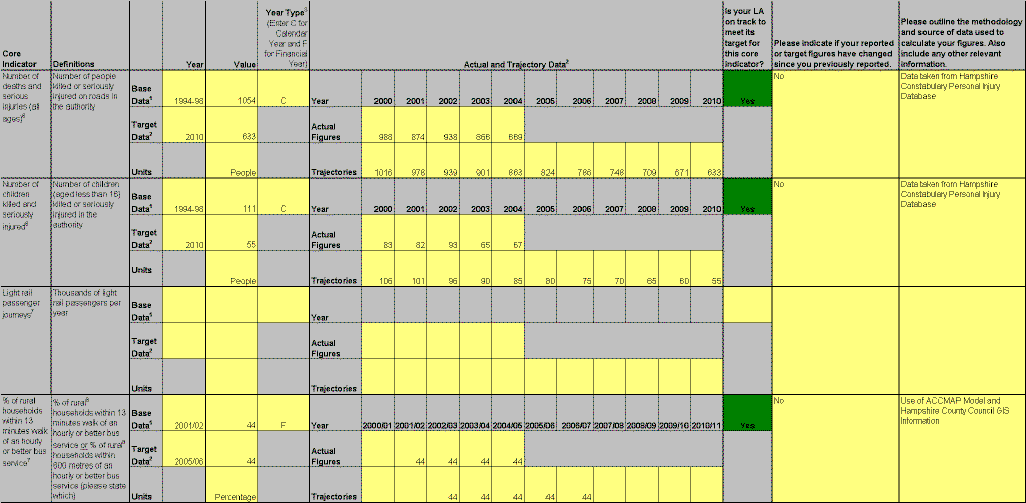
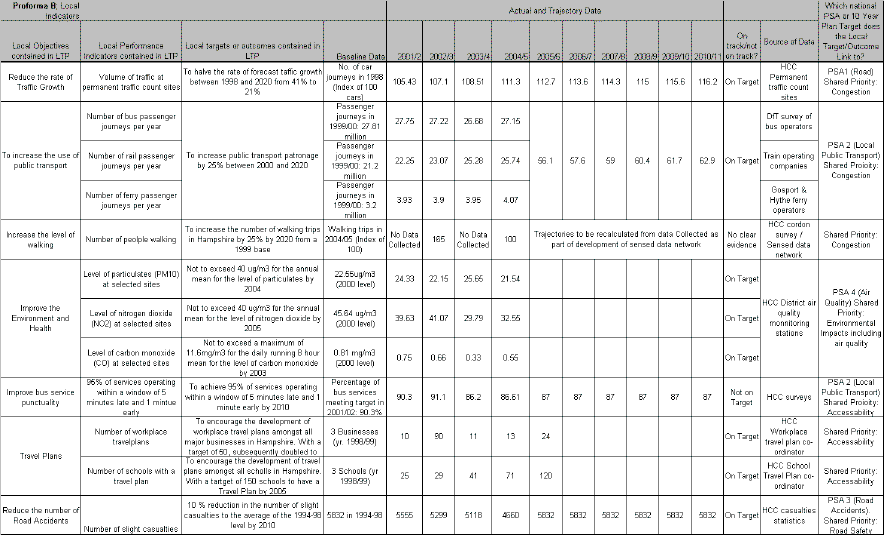
Table T1 summarises Hampshire County Council's performance against 18 key target areas. Details of progress towards core indicators are given in Proforma A and local indicators in Proforma B. Below is an explanation of the assessments made in each of these proformas together with a discussion on each target area covering progress to date and, where necessary, proposed remedial action.
In summary overall progress has been good, particular highlights are:
· There are no targets which the County Council is actively pursuing that are now forecast not to be met.
· Casualty reduction in 2004 has significantly exceeded reasonable previous expectations of performance to that date. The County Council had therefore very nearly met the overall nationally set target six years early.
· Following 3 years of decline bus passenger numbers have increased by 1.75%
· The numbers of level 3 workplace and school travel plans have both increased and the total number of school travel plans in place already exceed the 2005 LTP target.
· All air pollution targets remain on line to be met and in particular average levels of particulates are at their lowest level since first recorded for the LTP in 2000.
· The percentage of rural households in Hampshire with access to either a regular conventional bus service or a Cango, demand responsive service has increased to 55% (52% in 2003/4).
The County Council is on track to meet 14 of its 16 targets (88%). This represents strong performance against a wide variety of challenging targets and performance indicators. There is insufficient information or conflicting data to reach a firm conclusion for the remaining 2 targets, these have been reported as, `no clear evidence.'
Hampshire County Council's approach is to work towards its stated LTP and LPSA targets. It takes a prudent approach to the management of schemes within individual years in order to help meet overall targets. This will mean that progress towards interim annual targets will sometimes vary from originally stated predictions. As demonstrated in the sections of the APR on delivery and spending for 2004/05 a number of programmes show expenditure and/or activity increased and this is reflected in progress towards targets.
1.2 Overall Position
1.2.1 Summary of Progress Against Targets
As explained in Hampshire's LTP, for many of the outcome targets, particularly those involving behavioural change, progress is not solely dependent upon County Council actions. Government policies and interventions affecting the cost of travel by private and public transport can be crucial in this area.
All of the LTP1 targets have been reviewed as part of the preparation of LTP2, to develop a robust set of targets, based on an extensive range of indicators. Therefore it has not been considered appropriate to change any of the LTP1 targets in this year's APR. However understanding of the progress made during LTP1 towards existing national and local targets together with evidence regarding the impact of individual initiatives has provided a comprehensive basis on which to assess progress towards the LTP1 objectives and targets. To ensure that the LTP2 targets are based on robust and representative information the County Council has also undertaken a review of its data collection, which has resulted in the introduction of new data collection methods and sites as appropriate to provide targets based on a sound index.
Performance is discussed below in the following areas, which reflect the Central Government's and Local Government Association shared priorities.
Shared Priority |
Targets |
Road Safety |
Casualty Reduction Programme |
Congestion (inc. promotion of non-car modes) |
Traffic Growth Public Transport (Patronage and satisfaction) Active Travel (Cycling, walking and travel plans) |
Environmental impacts including air quality |
Air Quality |
Accessibility |
Rural Public Transport Accessibility |
Other policy areas |
|
Road Maintenance |
Road Condition |
Full details on Core Performance Indicators (CPI) can be found in Proforma A and Hampshire's headline targets (where they differ from the CPI) in Proforma B. Where the CPI and Hampshire's headline targets are the same, then this has been reported under the CPI heading.
1.3 Road Safety
1.3.1 Casualty Reduction Programme
CPI & Hampshire Targets
40% reduction in the number of people killed or seriously injured to the average 1994-98 level by 2010
50% reduction in the number of children killed or seriously injured to the average 1994-98 level by 2010
Hampshire Target
10% reduction in the number of slight casualties per 100 million vehicle kilometres to the average 1994-98 level by 2010
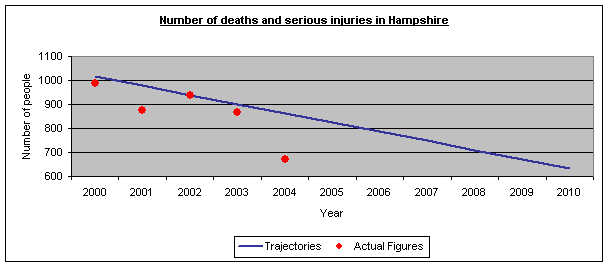
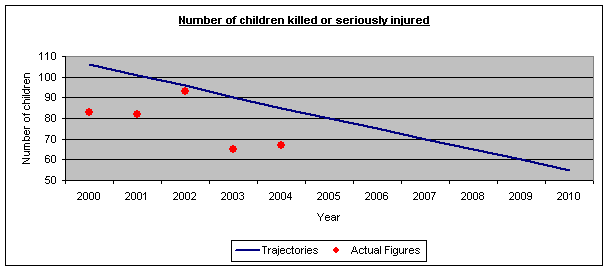
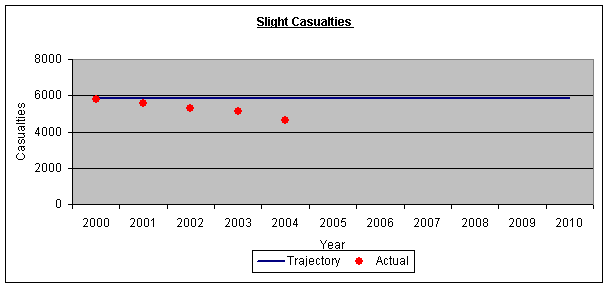
Progress towards road casualty targets has been one of the highlights of 2004 with significant reductions in killed and seriously injured (KSI) and slight casualties. All casualty levels are well below the target level and in relation to All KSIs the 2010 target has almost been reached.
A 37% reduction in killed and serious injuries was achieved by the end of 2004 from the national baseline average of the years 1994-98. The 2004 results have significantly exceeded reasonable previous expectations of performance to that date. The County Council had therefore very nearly met the overall nationally set target six years early. The 2004 results included some 51 fatalities - the lowest fatality toll on local roads to date and representing a reduction of some 27% on the 1994-98 baseline. Although the relative numbers are small, this interim fatality result is also on target to achieve a reduction of 40% by 2010. A nearly 40% reduction in the most serious child casualties over the same period also exceeded expectations to this point in time against a national 50% reduction target by 2010.
The leading accident causation factors in Hampshire in recent years, around 15% of all recorded accidents were primarily speed related. A further 65% in some way included driver error, which will be compounded in turn by inappropriate speeds. Driving behaviour therefore represents the single leading cause of casualties on Hampshire's roads. Hence, the County Council's emphasis over recent years on driver training and awareness and the needs of cyclists, pedestrians and children is justified if further significant reductions in these tolls are to be achieved to contribute to the 2010 casualty reduction targets. This is in line with the conclusions of the DfT's own review of Tomorrow's Roads: Safer for Everyone on the importance of changes to road user behaviour.
Progress in this area has also been a result of the overall success of other of the authority's programmes, in particular valuable contributions to the reductions in 2004 from several key areas.
There has been an increase in delivery of the capitally funded safety scheme programme, continuing the large increase achieved first in the latter part of 2003/04. This has enabled continued work in some of our new programme areas, such as the Casualty Reduction Partnership with the Police and continued emphasis on county wide programmes addressing locations with early evidence of skidding problems.
Targeted action has also taken place in partnership with the Police to tackle powered two wheeler casualties. These measures include education, engineering and enforcement focussed on the three highest risk routes.
There has been a significant contribution from the work of the Hampshire and Isle of Wight Safety Camera Partnership, which is showing very encouraging results in reductions in casualties.
Increases in the programme of school travel plans and Safer Routes to Schools initiatives, have been supported by Hampshire County Council's wide ranging child road safety education and training programmes.
In relation to child safety, the County Council has delivered programmes of work aimed at meeting this challenging goal through a child safety audit of patterns, trends and causes. A key task was to use the casualty data for Hampshire to lay aside myths as to how improvements in child safety could be achieved and thus to get to the root of the problems. By focussing on the true problems, coupled with wider programmes of pedestrian and cycle training and a significantly enhanced emphasis on School Travel Plan development, the most serious child casualties have reduced by nearly 40% by the end of 2004.
Nonetheless, child casualties remain at an unacceptably high level and fears for children's safety on the roads is undoubtedly fuelling the increased reliance on car travel for children. This robs them of valuable road safety experience and, increasing evidence suggests, will leave a legacy of poor health in later years. The safety of children on the roads and their mode of travel is an extremely complex issue for which there is not a single simple solution, but the County Council and its partners, through this LTP and the Hampshire Road Safety Strategy, propose continued and re-shaped programmes of action to tackle the problems.
A total of 192 (43%) of all Hampshire pedestrian casualties in 2004 were under 16 years of age. The County Council continues to promote road safety awareness skills to this group through its programme of visits to clubs, societies and other groups. The County Council's "Streets Ahead" child pedestrian training programme highlights that basic road safety skills can only be taught on the street.
Increased use of pedal cycles by older children is a major underlying factor in higher casualty numbers among teenagers than younger children. 137 children and young people in the 9 to 15 age group were injured in cycle accidents on Hampshire roads during 2004. Annually, around 5,000 to 6,000 children complete cycle training courses under the Hampshire Cycle Training Scheme, representing annually around 36% of the target age group. The County Council's objective is to increase the take-up rate of these courses, which are available to all children. The full programme, currently based upon two distinct stages of training starting from age 7 is promoted directly through the County Council's road safety services website. At the time of writing the County Council is exploring the implications of the new National Cycle Training Standard published in 2005.
1.4 Congestion Reduction and Promotion of Non-Car Modes of Transport
1.4.1 Traffic Growth
Hampshire Target
To halve the rate of forecast traffic growth between 1998 and 2020 from 41% to 21%
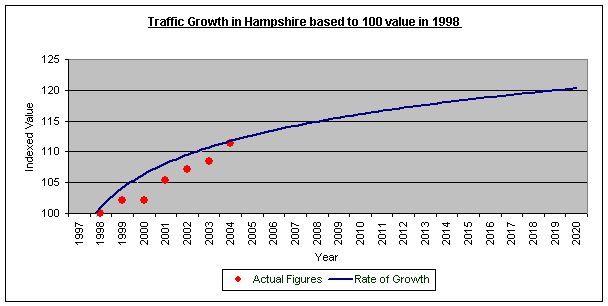
Trends in traffic growth remain similar in Hampshire to those reported in the 2004 APR. The overall level of traffic in Hampshire continues to increase, with a 2.8% growth experienced in 2004. However the rate of growth continues to remain below the projected level to meet the overall target by 2020. Progress continues to remains reasonably encouraging, with the impact of the various projects and initiatives being delivered through the LTP perhaps beginning to have some effect.
The traffic growth target is a long term one and therefore although progress appear to still be on target it remains too early in the process to draw any firm conclusions. However, as part of the work for LTP2, traffic growth has been looked at in more detail as it is considered that urban roads within the County are under represented in the index of monitoring sites used to calculate growth. The index will be recalculated as part of the LTP2 target setting process and therefore it not considered necessary to revise the target at this stage as a more representative measure will be available.
1.4.2 Bus patronage
CPI Target
To increase bus use from 2000 levels by 10% by 2010.
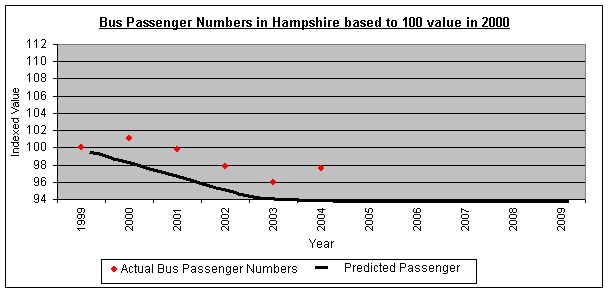
This target equates to the BVPI measure of the number of passengers boarding bus services in Hampshire. In 2004/05 there was an increase in passenger journeys in of 1.75% compared with 2003/04, albeit still with a decline of 2.37% compared with the 1999/2000 base year.
The reported increase in passenger numbers is clearly welcome, however a range of factors outside of the County Council's control mean that this one year's figures must be viewed cautiously.
Nationally bus patronage, outside of London, continues to fall and increased cost pressures and demands for subsidy together with the relatively high cost of travel by car in relation to public transport mean that the County Council will do very well to maintain existing patronage levels. Investment has been concentrated on Quality Bus Partnership routes where patronage levels have been increased, against the national trend.
Concern also remains about the accuracy of bus patronage data because of inconsistencies in the methodology used by some operators to calculate their passenger numbers and changes can significantly affect the County Council's performance. With the introduction of more and more daily and weekly travel tickets they are aware that drivers are increasingly not registering every passenger journey on their electronic ticket machine, therefore all passengers are not being counted. As the operator is still collecting all the revenue, knowing actual numbers is not considered by them to be a priority and this trend towards prepaid tickets, whilst welcome in policy terms, is without doubt artificially reducing passenger numbers.
Progress towards this target is dependent on the market conditions in the bus industry, although the County Council impacts on the result through action it takes to improve services, infrastructure and marketing to supplement the commercially-operated services provided by bus companies. This work has been particularly effective when carried out through Quality Bus Partnerships, where the County Council investment in infrastructure improvements has encouraged operators to invest in increased frequencies and new vehicles.
The Council is active in promoting improvements to the bus network in partnership with operators and work that has been developed through the first Local Transport Plan is now beginning to take effect, in respect of attracting more passengers to the bus network. A direct marketing campaign has been carried out, targeting all households within 400 metres of the County's busiest bus corridors. The campaign is designed to encourage people to make more use of their local bus network and to highlight the recent improvements.
As reported in the supplementary information supporting the 2004 APR, it has proved difficult to provide a trajectory for bus patronage. Overall there has been a slight downwards trend in bus patronage across the County, but for significant increases in patronage in areas where new initiatives are being introduced, particularly on QBP routes as shown in the table below.
Service No. |
Route |
Operator |
District |
Growth |
23 |
Leigh Park - Havant - Portsmouth |
Stagecoach |
Havant |
35% |
21 |
Havant - Portsmouth |
Stagecoach |
Havant |
15% |
5 |
Badger Farm - Winnall |
Stagecoach |
Winchester |
20% |
1 |
Stanmore - Harestock |
Stagecoach |
Winchester |
0% |
1 |
Aldershot - Camberley |
Stagecoach |
Rushmoor |
2.50% |
41 |
Clanfield - Southsea |
First |
Havant |
5.1%* |
2 formerly 48 |
Eastleigh - Southampton |
Solent Blue Line |
Eastleigh |
|
16 |
Southampton - Hamble |
First |
Eastleigh |
4% |
1 |
Basingstoke - Hatch Warren |
Stagecoach |
Basingstoke |
13% |
6 |
Basingstoke - Winklebury |
Stagecoach |
Basingstoke |
22% |
* Jan - Jun 02 = base |
||||
Jan-Jun 03 increase of 5.1% |
||||
Jan-Jun 04 no increase (probably due to roadworks) |
||||
Only Jan-Jun figures used by First due to strike action during Jun-Dec |
||||
The above table shows patronage growth data across Quality Bus Partnership (QBP) routes. This is positive proof that where the County Council is impacting on bus services through QBPs, there is an extremely positive effect. In addition the Cango demand responsive transport (DRT) services are also showing significant percentage increases and although in overall terms these numbers are very small, this demonstrates the importance of positively changing the bus 'product'.
1.4.3 Public Transport Patronage
Hampshire Targets
To increase public transport patronage by 25% between 2000 and 2020
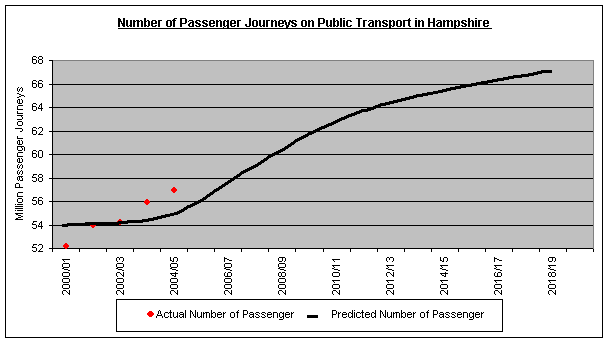
Unlike the CPI, the headline target for public transport covers all modes, rather than just bus services. This reflects the important role that rail and ferry services play in meeting the local transport needs of the County. Overall public transport patronage has increased by 1.9% between 2003/04 and 2004/05. As well as the 1.75% increase in bus patronage indicated above, rail patronage has grown by 1.8% and ferry usage is up by 3%. Public transport patronage is therefore well above the existing target level and is predicted to continue to grow over future years, although the rate of growth, particularly on rail, is anticipated to slowdown, reflecting the increased congestion on the rail network and saturation in peak periods, especially on journeys to London.
1.4.4 Bus Service Punctuality
Hampshire Target
To achieve 95% of bus services operating within a window of 5 minutes late and one minute early by 2010.
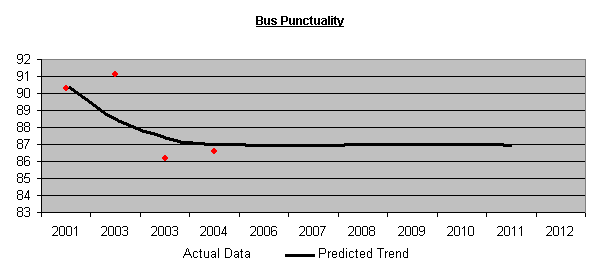
Two different measures were undertaken, both of which show improvements in bus punctuality.
In 2004 surveys of tendered bus services, which have been used as a proxy for overall bus service punctuality, showed a slight improvement to 86.6% over the 2003 figure of 86.2%, following several years of decline. Although this remains someway short of the 95% target for 2010, it does suggest that decline has bottomed out and that the efforts by operators and the County Council to address punctuality, through investing heavily in a wide range of bus priority measures to ease the passage of buses through congested traffic are beginning to have a positive impact.
Although the surveys of bus services show a slight improvement in reliability, it should be borne in mind that the variation from the sample monitoring is not particularly robust statistically, as it only covers a selection of contracted bus services, which in turn only account for 28% of the total bus mileage. 72% of commercial services are not monitored by the County Council and bus operators do not routinely monitor punctuality across the whole of their operations either. Therefore as outlined in LTP2 the County Council has commenced its own far more comprehensive system of monitoring bus service punctuality. This has allowed the development of a single target for bus punctuality accompanied by a robust monitoring regime. The County Council will also continue to discuss with operators how information can be obtained directly from them in the future.
The second measure of punctuality comes from bus passenger satisfaction surveys undertaken for the BVPI. These were last carried out in 2003/04 and showed a marked increase in number of people who consider buses are running on time The BVPI survey of over 1000 Hampshire residents undertaken in 2003/04 showed an increase of over 28% in the past three years of the number of people who were satisfied with buses arriving on time.
Unreliability problems experienced by some major operators continue to have a substantial effect on the county council's performance. It is well documented that there have been quite severe staff shortages with some operators and this has lead to poor reliability which inevitably turns passengers away.
Therefore in view of slight improvement in punctuality levels of tendered services and the overall satisfaction of Hampshire residents, the County Council is hopeful that decline is finally being arrested. However in view of the continuing uncertainties and the conflict that still remains in the two sources of data it still considers that the bus punctuality target should still be reported as `no clear evidence' for 2004. Given the uncertainty over the different measures and the bus priority initiatives currently being delivered it is not considered appropriate to amend the target at this time.
1.4.5 Cycling
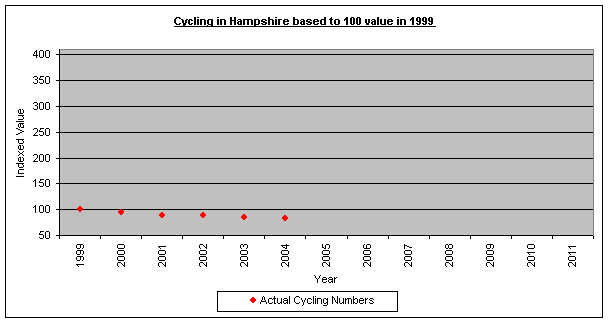
As reported in the supplementary information submitted in support of the 2004 APR, the County Council considered its cycling target to be over-optimistic and would not be achieved. This target was therefore dropped and a more realistic target has been developed for LTP2.
Notwithstanding the County Council is still required to report progress in this area and is pleased to note that the decline in cycling usage has slowed. Cycling usage in 2004, was at 83% of the 1999 baseline level, compared to 86.3% in 2003.
As the County Council currently has no cycling target it is considered that `no clear evidence' is the only option within which current progress can be categorised.
Hampshire currently has an overall level of cycling 23% above the national average, so against this background increasing usage further is a significant challenge. Nevertheless, some new cycling trips have been generated, particularly in connection with new infrastructure projects, but this has been outweighed by the loss of certain types of employment which favoured cycling. In particular, the loss of MOD employment on the Gosport peninsular has caused a large drop in cycling numbers as workers are forced to drive longer distances to find work. In the 1991 census, 14.5% of workers in Gosport cycled to work. In the 2001 census, this had fallen to 10.7%. As 18% of Hampshire residents cycling to work are from Gosport, this continues to have a disproportionate impact on Hampshire's cycling figures.
Despite dropping its cycling target, the County Council is continuing to deliver a strategy that will ensure that the potential to increase levels of cycling is maximised. In the English Regions Cycling Development Team Assessment Progress Review (2004) of delivery of cycling policies, strategies and programmes of activity in Hampshire, the County Council's total score has increased from 19 "bells" in 2003 to 22 "bells" in 2004. The areas where the ERCDT have particularly noted progress in Hampshire since the 2003 assessment are as follows:
· Council Commitment. (Bell rating 2004 of 3, Bell rating 2003 of 2) The ERCDT have particularly welcomed the Council's early work in identifying new ways of focussing cycling investment and resources to areas likely to better deliver against targets and the County Council's commitments to increased staffing associated with cycling infrastructure and School Travel and Workplace Travel Plan programmes.
· Cycle Marketing and Promotion (Bell rating 2004 of 3, Bell rating 2003 of 2) The ERCDT have welcomed a number of cycling promotional initiatives undertaken by the County Council in its own right and in partnership with other organisations, especially as associated with recreational and leisure cycling activity.
· Targets and Monitoring (Bell rating 2004 of 2, Bell Rating 2003 of 1) The ERCDT have particularly noted the County Council's progress over the last year in improved monitoring of cycling activity countywide in support of cycle use target(s) through a large network of automatic cycle counters and their intention to work closely with ERCDT over the development of locally appropriate cycling targets for the second Hampshire Local Transport Plan based in part upon that information.
At the end of September 2004, the County Council hosted the first two day south east regional Benchmarking visit for CTC, ERCDT and south east region highway authorities, as committed to the new regional benchmarking project.
The visit proved very successful and a number of aspects of the County Council's cycling delivery services delivered in partnership with Hampshire District Councils were welcomed during the second day delegate feedback sessions. Very highly rated were some 18 areas of delivery from detailed scheme implementation to wider policy, programme and strategy matters. Delegates particularly favoured the County Council's approaches to the following strategic issues:
· Cycle monitoring priority
· Developing cycling and active travel concepts through emerging Community Strategies
· The County Council's infrastructure prioritisation methodology, ensuring best value from implemented measures
· The County Council's commitments to cycling through School and Workplace Travel Planning
· The County Council's resource support for recreational cycling opportunities
· The County Council's approaches to cycling promotion
· The County Council's early development of engineer "re-skilling" initiatives in cycle facility planning, design and delivery.
The County Council, who hosted the visit in partnership with Basingstoke and Deane Borough Council, are very pleased with the outcome of the visit, which was also used as an opportunity to discuss options for cycling strategies and cycling target setting within LTP2. This feedback over both strategic and detailed matters of delivery has been taken account of as the County Council begins to frame its LTP2 cycling strategies and targets.
In addition as part of the development of the South East Plan the County Council is looking to accommodate both residential and employment growth. By trying to locate this in areas where conditions for cycling are most favourable (e.g. Gosport) the County Council will look to maximise cycle usage in these new developments.
The County Council has also invested substantially in a new monitoring system for cycling. 44 cycle counters were installed in 2004/05 across the County at locations where investment in new or upgraded cycling facilities has been made or is proposed. The establishment of a more robust baseline data allows the measurement of change in cycling usage and an improved database will in turn enable improved measurement of effectiveness as associated with individual cycling programmes.
1.4.6 Walking
Hampshire Target
To increase the number of walking trips in Hampshire by 25% by 2020 from a 1999 base
During 2004/05 data from the pilot project for a sensed data network for Winchester became available for the first time. This follows the County Council entering into a partnership with the Winchester City Centre Partnership to develop comprehensive measure of pedestrian levels and movement in the City of Winchester. This project allows footfall and other movements to be accurately measured in the City using a network of sensors and a direct computer link to correlate the data recorded. As well as providing detailed information on pedestrian movement it is also proving very useful data to assist the measurement of economic activity for the City Centre Partnership.
The first pilot site became active in February 2004 and data is now being regularly collected from 5 locations in Winchester. Data for the first full year will be available shortly and can be used to establish a baseline for the town centre access target that is being developed for LTP2, as part of a robust method of assessing walking.
However as this data is being used to establish a baseline, progress cannot yet be measured and hence this target is being reported as `no clear evidence.'
1.4.7 Workplace Travel Plans
Hampshire Targets
To encourage the development of workplace travel plans among all major businesses in Hampshire, with a target of 100 by 2005.
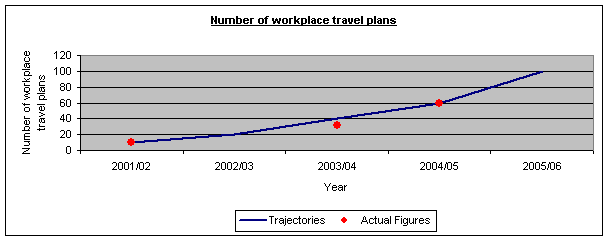
The County Council exceeded its original target of 50 businesses to have travel plans by 2005/06, in 2002. This target was therefore stretched to 100 businesses (including employers, district councils, further and higher education establishments and hospitals) to have a travel plan in place by the end of 2005/06. Travel Plans are graded by the County Council as set out below. To count towards the APR figures, the travel plan must be at a level 2 or 3.
· 0: Has an interest in travel and transport issues but no plan being produced
· 1: Inception meeting held or some measures implemented or a framework travel plan produced (often S106 related).
· 2 Draft travel plan produced and approved by HCC
· 3 Full travel plan submitted to and approved by HCC. Action plan being implemented and reviewed.
At the end of 2004/05 the total number of travel plans at a level 2/3 was 59 in total across the County. This represents over 49,000 staff. In addition a further 60 plus companies are currently working towards Travel Plans or investigating transport issues to their sites.
The total number of travel plans at all levels is 140. As started in the supplementary information submitted in support of the 2004 APR, the original target of 100 travel plans referred to number of travel planning contacts and has therefore been met. However as the LTP has progressed, the target has been taken to mean 100 travel plans at a level 2/3. This means that a further 41 need to be developed to a level 2/3 to meet the LTP target. This has always been an ambitious target and will require a substantial number of new contacts to be made as well as continued support to the organisations who are currently at a level 1. In 2005/06 a more targeted approach to securing travel plans will be delivered in liaison with the County Council's area transport strategy teams. This approach will involve identifying areas of congestion in county and linking to existing capital programme investment.
1.4.8 School Travel Plans
Hampshire Targets
To encourage the development of travel plans amongst all schools in Hampshire, with a target of 150 schools to have a Travel Plan by 2005/06.
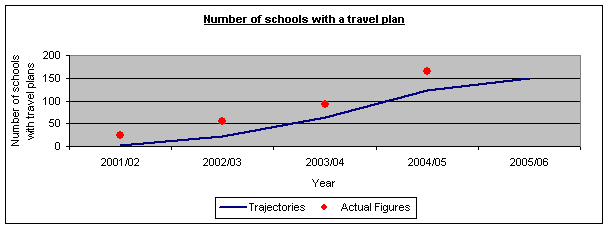
A similar problem of definition, as outlined for workplace travel plans, has affected the reporting of school travel plans. In 2004-05, the County Council's progress on school travel plans was:
Level |
definition |
Number |
Zero |
School interested in developing a travel plan |
70 |
One |
Working towards a school travel plan |
118 |
Two |
Plan produced and submitted to HCC |
15 |
Three |
Plan approved by HCC |
164 |
In 2004/05, Hampshire County Council predicted that 60 school travel plans would be produced. This target was easily met with 71 school travel plans produced at level two or three.
The LTP target is to have an overall total of 150 School Travel Plans completed by 2005/06. This level has been easily exceeded and hence for the 2005/06 a target of 120 Schools with new approved travel plans has been set. This is based on the number of schools the County Council is already working with to develop a plan (which as of March 2005 was 203). It is considered reasonable that of the 203 who are in the process of developing a plan, at least 120 of these will complete and have approved their School Travel Plans by March 2006. The School Travel Planning Team will be offering assistance to those already in the process as a priority over working with new schools and the County Council is therefore confident that the 120 School Travel Plans can be achieved.
The County Council has, through its School Travel Plan Adviser, been working with schools to help develop school travel plans since April 2001 using a bursary grant from the Department for Transport (DfT). Following the continued bursary funding support a School Travel Planning Team (5 staff) has now been established within the County Council's Environment Department.
The new team is now fully staffed and resourced and providing advice and support to schools preparing travel plans, this ensures that the target of 150 schools to have a travel plan by 2005/06 has been exceeded. The County Council is confident that these travel plans are of a very high quality and will be undertaking annual surveys to determine the impact of the school travel plan programme.
1.5 Environmental Impacts
1.5.1 Air Quality
Hampshire Targets
To not exceed 40 µg/m3 for the annual mean for the level of particulates by 2004.
To not exceed 40 µg/m3 for the annual mean for the level of nitrogen dioxide by 2005.
To not exceed a maximum of 10mg/m3 for the daily running 8 hour mean for the level of carbon monoxide by 2003.
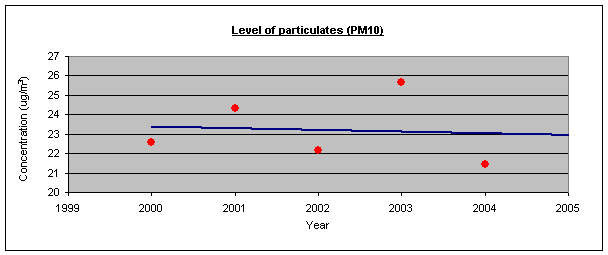
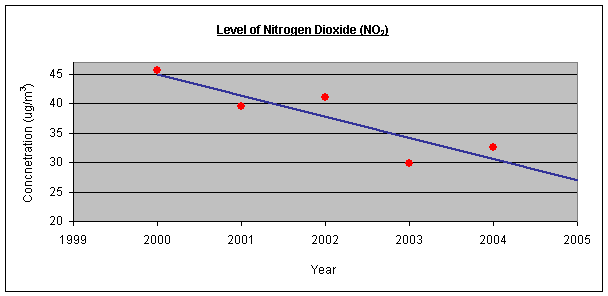
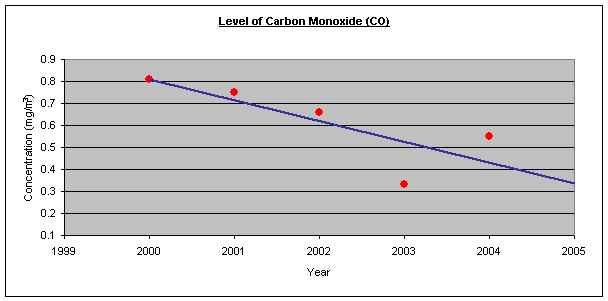
Hampshire County Council's air quality targets are set in line with those contained in the National Air Quality Strategy (National Targets.) Within Hampshire levels of pollutants recorded indicate that for each of these that is regularly monitored the target will be met.
The target date for carbon monoxide was the end of December 2003; this has already been achieved and as yet no new national target has been established. Similarly the target date for particles was 31st December 2004; again this has been met locally and no new national target has been established. For nitrogen dioxide the target date is 31st December 2005 and levels monitored within Hampshire continue to remain below the target level. In view of lack of new National Targets and the intention in LTP2 to focus air quality targets within Air Quality Management Areas, this APR considers progress against the existing targets, even where the target date has passed.
The size and diversity of Hampshire makes it difficult to accurately represent the monitoring data obtained from the district councils (who have overall responsibility for collecting this information) and hence establish a true average for the County. For example reported nitrogen dioxide (NO2) concentrations varied between 18 µg/m3 in New Forest to 53.2 µg/m3 in Eastleigh. However for 2004 data has been obtained from the 10 of the 11 district councils in Hampshire, which has helped to provide a reasonably accurate and comprehensive picture, by evening out the different levels of pollutants experienced and ensuring that a wide range of different types of monitoring locations have been used.
Monitoring data is collected in two ways either through automatic real time monitoring or through diffusion tubes. Real time monitoring provides data on a continuous basis at one location, where as diffusion tubes are sited at various locations and collect data on pollutants typically for period of up to one month.
Because the number of monitoring sites and their location change each year it is considered that by averaging all the data available a reasonable proxy for air pollution across Hampshire as a whole can be reported. As the availability of data increases each year the levels of pollution reported will be increasingly representative but this does make comparison with figures reported in previous years particularly unreliable. Therefore although trajectory and trend information has been produced as requested, it is considered that comparing actual pollution levels to the target levels will provide the most accurate picture of air quality within the County.
Particulate (PM10) levels (based on information from 7 locations) are 21.5 µg/m3, which is only 53.8% of the target level. This is the lowest figure recorded since the baseline was set. Nitrogen Dioxide (NO2) levels (based on information from 11 permanent locations) also remain well blow the target level of 40µg/m3 at 32.6 µg/m3 (81.5%) and Carbon Monoxide (CO) levels are at 0.55mg/m3 only 2.7% of the target. The key conclusion to be drawn is that for each of the three pollutants, the overall trend is well within the levels set by central Government.
For LTP2 air quality targets will be focused upon Air Quality Management Area, and hence it will be possible to collect localised data that will provide a reasonably accurate picture of air pollution within these areas.
1.6 ACCESSIBILITY
1.6.1 Rural Public Transport Accessibility
Maintain the percentage of rural households within 13 minutes walk of an hourly or better bus service at 2002 levels by 2005/06
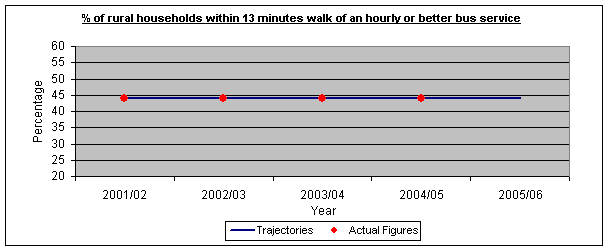
There have been no changes to the level of provision of conventional bus services within rural areas of Hampshire that have resulted in communities gaining or loosing an hourly or better bus service. Therefore the percentage of rural households within 13 minutes walk of an hourly or better bus service remains unchanged at 44%.
As in previous years the accessibility figure has been recalculated to include the Cango, demand responsive bus services that represent the main thrust of the County Council's approach to further developing public transport in rural areas. During 2004 new Cango services were introduced in the Alton and Four Marks area, south of Basingstoke and south of Odiham, whilst the Havant Cango was withdrawn,. These changes to Cango services have resulted in an additional 1500 households now having access to a regular bus service which equates to an additional 3% of rural households. In total 55% or rural households now have access to either a regular conventional bus service or Cango. However, it needs to be noted that central government funding of many Cango services is shortly to finish and there are increasing pressures and demands on smaller revenue budget to subsidise a wide range of public transport services.
A new approach to accessibility planning is being developed through LTP2 with the production of an Accessibility Strategy. This strategy is being informed by the new `Accession' model, which allows for a far more detailed and informed assessment of accessibility to key services to be carried out and hence new, focused targets and indicators are being developed for LTP2 based on this new approach.
1.7 ROAD MAINTENANCE
CPI Targets
Halt the deterioration in the condition of principal roads by 2005
Halt the deterioration in the condition of non-principal roads by 2005
Halt the deterioration in the condition of unclassified roads by 2005
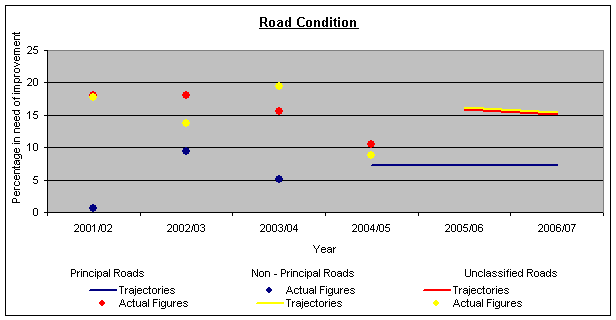
Overall Hampshire County Council's assessments show that the road network is at or near a steady state condition. In recent years survey results from both deflectograph and coarse visual inspections (CVI) on all roads show some consistency and comparability, within acceptable tolerances. The measures are based on the condition surveys to comply with the annual BVPI requirements and any statistical analysis of these figures must be treated with some caution. The rules for measuring and processing the data have changed repeatedly and a number of the surveys are cyclic whereby different areas of the network are surveyed each year. Direct annual comparisons may therefore not be representative until reliable trends have been clearly demonstrated.
The required method for collecting information on principal roads (BVPI 96) changed in 2004/05, from visual surveys to the new electronic, vehicle mounted SCANNER surveys. Nationally the plan was to have three or four machines available for testing all principal roads in the country in 2004/05 but only two companies achieved accreditation, leaving a shortfall in testing capacity. This resulted in a number of Authorities, including Hampshire unable to meet PI 96 testing requirements. Hampshire had ordered a SCANNER survey of our principal roads in good time but the vehicle due to be used did not gain accreditation in time to carry out the work. Unfortunately due to the lack of survey vehicles nationally, there was no opportunity to switch to an alternative supplier. The Audit Commission and the ODPM realised that issues beyond the control of some Authorities had prevented them from meeting the BVPI requirement and have accepted a nil return, provided the Authorities affected can provide evidence that circumstances were beyond their control. SCANNER measurements are prescribed for the 2005/06 reporting round and arrangements are in hand to place orders for this survey.
Surveys of non-principal and unclassified roads for 2004/05 show a significant improvement in condition in 2004/05. Although there are substantial variations between individual surveys there is evidence to suggest that the overall condition of these roads is improving. In a large county such as Hampshire, with urban and rural networks, variable geology, etc., variation of road condition across the network is inevitable and individual survey results reflect this. Nevertheless for BVPI97A the CVI figure was 10.5% against a target of 17% and for BVPI97b the figure was 8.9% against a target of 17. These BVPI targets are adjusted annually to accommodate the latest condition data.
Proforma A - Progress Against Core Indicators
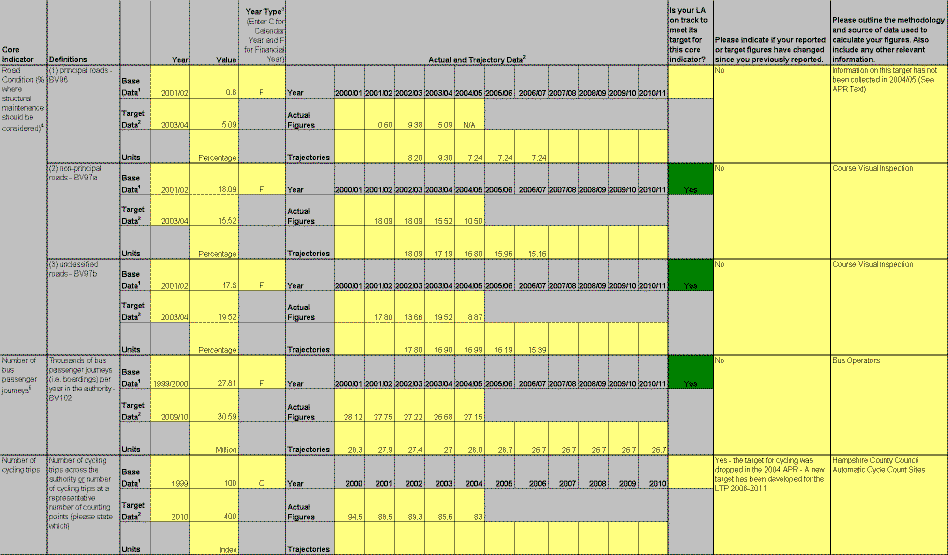
Proforma B - Progress Against Local Indicators
2. SCHEME DELIVERY AND LTP SPENDING
2.1 Overview of progress
Hampshire County Council had an excellent year in terms of delivery of schemes in 2004/05, with significant progress made in the priority areas of public transport and road safety. The total investment in the year was £32.2 million, of which integrated transport was £12.8 million, and £19.4 million for maintenance and bridges which accords with the 2004 APR revised figures agreed with GOSE.
Most schemes were delivered in line with the plans published in the 2004 APR. There were increases in the delivery of schemes in certain areas such as public transport interchanges, travel plans and local safety schemes. However the only delivery in 2004/05 significantly higher than the 25% divergence set by the APR guidance was for length of walking schemes. The reasons for this are discussed in more detail in the section on divergences from the 2004 APR delivery forecasts below.
There are two areas of work that show a significant decrease in delivery in comparison to the levels forecast, the first is bridge strengthening and the other is the length of cycle lanes and cycle tracks. The reasons for this are explored further in this section, together with a description of actions to put this back on track.
In relation to expenditure the total funding allocation for 2004/05 of £32.2 million was fully spent with £12.8 million on integrated transport schemes and £19.4 million on maintenance and bridges, split within the proportions allocated.. In particular extra resources were directed towards public transport and safety in line with national and local priorities and to contribute towards meeting PSA targets. This focusing of resources helped to contribute to a significant reduction in road casualties and an increase in bus patronage.
The use of resource on safety and public transport was one of the main contributory factors to expenditure on traffic management falling below the levels anticipated. A decision to undertake revenue funded traffic surveys rather than purchase additional permanent traffic counting equipment also resulted in an under spend on `other' schemes. Full details of this are given in the section on divergences from 2004 APR forecast expenditure below.
The Table, at the end of this chapter, `Proforma C,' details the outputs for the 2004/05 financial year in terms of both delivery and expenditure. The most significant aspects of projects and programmes to note are:
· Further acceleration of the local safety schemes programme meant that it was possible to implement nearly 280 schemes which contribute to local safety.
· 84 Travel plans were delivered this year compared to 52 in 2003/04. highlighting that the point that was made in last year's APR that staff had devoted more time to publicising school travel plans resulting in a higher number of plans delivered in 2004/05.
· Both LTP integrated transport and maintenance funding was fully spent.
Proforma C contains details of capital expenditure from on maintenance schemes from LTP funding only. This is so the information can be presented on the same basis as the predicated spend. However in accordance with Government Guidance form F3 includes details of both LTP and locally resourced capital funding on maintenance. Therefore these figures are not directly comparable.
2.2 Divergences from the 2004 APR delivery forecasts
Divergences from the 2004 APR forecasts for 2004/05 are set out in Proforma C. The APR guidance requires explanations of divergences greater than 25% between the predicted number of schemes delivered in 2004/05 in the categories identified, compared with the predicted outturn and APR forecast figures for 2004/05.
2.2.1 Divergences in Delivery - Increases
There is only one area in which the County Council has delivered more than the 25% limit which is the length of walking schemes which is discussed below.
Walking Schemes (length (km): +71%
The primary reason for this difference relates to a change in the programme of schemes to be delivered which has resulted in the delivery of fewer schemes but with more length. This is why the number of walking schemes is lower than initially predicted for 2004/05 (but still within the 25% limit).
2.2.2 Divergences in Delivery - Decreases
There are two areas where progress has not met the forecasts in the 2004 APR; the predicted length of cycle ways and cycle paths and the delivery of bridge strengthening maintenance have not met the County Council's predictions for 2004/05.
Cycling Schemes (length (km): 72% under forecast
The actual length of cycle tracks and lanes delivered is significantly below the 9 km that was predicted to be delivered in 2004/05. This is partly due to a typing error in the initial prediction where one scheme was recorded as 3.5 km rather than 0.35 km resulting in a length prediction that is significantly higher than what could actually be achieved.
The other reason for the difference between predicted length and delivered length relates to delays in the programme of schemes forecast for delivery in 2004/05. The Lyndhurst to Ashurst cycleway scheme was been deferred to the 2005/06 programme due to issues with English Nature and the requirement of land to compensate the removal of SSSI land for the cycle track. The A327 Summit Avenue Cycle Route has been delivered, however the scheme was not complete until May 2005 and therefore cannot be counted in this APR. The A337 and Andover Cycles proposed cycle tracks have commenced and will be complete in the 2005/06 financial year.
The total number of cycle schemes delivered are within the 25% divergence as funding was diverted to other cycle infrastructure such as cycle shelters which were not initially predicted to be delivered in 2004/05.
Maintenance- Bridge Strengthening: 39% under forecast
The delivery of bridge strengthening programmes is significantly under forecast for 2004/05, this is due to a number of factors. The main reason is that for 3 out of the 6 schemes that were not delivered, staff had to be diverted to more urgent schemes such as the BACO aluminum parapet replacement and the Daneshill Rail bridges on A339. The BACO parapet replacement project was a safety-led scheme that was a high priority on the corporate risk register. Initially the County Council had allowed for a replacement programme phased over 5 years. However, £1.9m funding was made available to complete all replacements in 2004/05. Similarly, Daneshill Rail bridges on the A339 was a safety-led scheme, following the Selby train crash. The scheme provides protective measures at two bridges over the railway in Basingstoke. The scheme was inherited from the Highways Agency when the A339 was de-trunked. The scheme had to start on site in March 2005 in order to secure the funds from the Highways Agency.
Other reasons for delay include temporarily postponing the schemes as timing of road closures caused problems for local farms as well as land entry problems on the other predicted scheme.
2.3 Divergences from the 2004 APR spend forecasts
Divergences from the 2004 APR forecasts for 2004/05 are set out in Proforma C. The APR guidance requires explanations of divergences greater than 25% or £250,000 between the predicted expenditure in 2004/05 in the categories identified, compared with the actual figures for 2004/05.
2.3.1 Divergences in Spend - Decreases
There is only one area in which the County Council has spent less than the 25% limit and one where the divergence in cost is greater than £250,000. These are related to expenditure on traffic management and other schemes respectively.
Traffic Management and Traffic Calming Schemes: £299,000 under forecast
Expenditure in this area although 90% of the anticipated level was above the £250,000 absolute level which requires an explanation of the divergence. In total £2,618,000 was spent in this area, £299,000 below the predicted level of £2,917,000. There are a number of reasons for this, the principal one being that a greater level of priority was given to public transport and safety, which were both key PSA target areas, where it was considered than a small amount of additional expenditure would lead to significant benefits. This change to the predicted expenditure programme is considered justified particularly in the light of the reduced levels of casualties and increase bus patronage experienced in 2004.
Other reasons for the lower level of spend in this area were, that a requirement to compulsorily purchase land for the Fareham Western Distributor Road (Stage 4) was earlier than anticipated. In addition consultation on some traffic management schemes resulted in the delay and amendment to some elements of the programme and hence a lower level of expenditure.
Other Schemes: 47% under forecast
The other schemes category covers expenditure in three broad areas:
· Air quality initiatives
· Travel Planning initiatives
· Traffic monitoring
Spending in this area was 48% below the anticipated levels, although this only equated to £109,000. Expenditure on air quality and travel planning initiatives were broadly in line with expectations and the main reason for this under spend was a decision to not incur expenditure on permanent traffic monitoring equipment.
At the start of the year capital funding was set aside for traffic monitoring equipment as it was anticipated that target preparation work for LTP2, would require additional data in order to establish appropriate baselines. However as work on LTP2 progressed it became apparent that the data needed would primarily need to be funded from revenue. For example, bus punctuality data was most readily and reliably sourced from undertaking manual surveys rather than using automatic equipment. In addition it was decided to use existing Speed Detection Radar (SDR) to collect traffic flow data in urban areas, rather than site permanent traffic counters as this offered more flexibility both in terms of location and ability to assess a number of potential monitoring locations.
2.4 Commentary on progress in delivering major schemes
2.4.1 The Integrated A3 Bus Priority Corridor
This project was accepted by the Department for Transport for support as a major scheme in October 2003. Until then the work had been funded from within the LTP integrated transport block funding allocation. It has a total cost of £25.2 million.
Good progress has been made on the scheme in 2004/05. Main highway works have been completed in Section 2a Purbrook. Advanced works have been undertaken in Section 3 Waterlooville town centre. The final design has been completed and both the southern approach in Section 3a and northern approach in Section 3d main highway works have been completed.
This has resulted in 2 new bus shelters and 6 new temporary shelters that will be upgraded with new contract specification shelters in 2005/06. An additional bus lane has been constructed and will be opened once accommodation works are complete. Infrastructure for 16 real-time bus shelter passenger displays and 6 CCTV cameras has been constructed for commissioning in 2005/06. 700 metres of advisory cycle route have been created and 8 cycle parking bays provided at local shops and bus stops.
The partnership contributions to the project continue with Portsmouth City Council looking at route improvements in North End as part of an integrated improvement scheme. In December the bus operator First took delivery of 20 brand new high quality buses for the ZIP route and has introduced increased frequency as part of its planned incremental improvements to service improvements.
A number of external factors have meant that the scheme has not progressed as quickly as hoped in the 2004 Annual Progress Report:
· The design of bus routes in Waterlooville town centre have been amended in response to consultation and investigation. Instead of the originally planned interchange in Swiss Road, the design now includes a pedestrian and bus-only zone in the town centre. This has required additional time for design and consultation.
· There has been uncertainty about the amount of time needed to divert BT fibre optic cable in section 2b. Original forecasts provided by BT have proved to be pessimistic, leading to a delay in the programme.
· The scheme has had to be amended following consultation with the drainage authority. This identified that the down stream sewers in Section 2b could not accommodate the extra water flow from road widening. The most feasible and cost effective solution identified was to provide surge tank temporary storage for times of high rain fall, which were a major additional element for construction on such a busy 'A' road.
The County Council is endeavouring to maintain rapid progress on this scheme. However, it became clear that the original timescales could not be adhered to without creating unreasonable problems of cost overruns or loss of effectiveness. Accordingly, the County Council has considered it prudent to adopt a revised programme for completion of the scheme. The scheme remains on budget and to specification.
Outturn expenditure in the year was £4.1 million against the £7.5 million forecast in the 2004 APR. Stage 3 is now under construction and expenditure in 2005/06 is on track for £6.6 million. Total expenditure on the scheme is now expected to continue into 2007/08 rather than completing in 2006/07. Given the uncertainties about this scheme, including the delayed announcement of Government funding in October 2003, this represents reasonable progress against an ambitious original timescale.
Scheme Type |
Original Estimate |
No. Delivered |
Predicted Cost |
Outturn Cost |
Divergence | |
No of schemes [+/-%} |
Cost (+/- Absolute) | |||||
Bus priority schemes (BL, BG) |
10 (no.) 18 (km) |
8 (no) 22 (km) |
111 |
111 |
-20% +22% |
0 |
Public transport interchanges (IN) |
39 (no.) |
48 (no) |
628 |
683 |
+23% |
55 |
Park and ride schemes (PR) |
0 (no.) |
0 (no) |
5 |
1 |
0% |
-4 |
Bus Infrastructure schemes (BI) |
348 (no.) |
337 (no) |
1,065 |
1,240 |
3% |
175 |
Cycling schemes (CY) |
12 (no.) 9(km) |
10 (no) 2.56(km) |
877 |
815 |
-17% -72% |
-62 |
Walking Schemes (WA) |
19 (no.) 1500 (m) |
16 (no) 2563 (m) |
621 |
601 |
-16% +71% |
-20 |
Light Rail Schemes (LR) |
0 (no.) |
0 (no) |
0 |
0 |
0% |
0 |
Travel plans (TP) |
72 (no.) |
84 (no) |
0 |
0 |
+17% |
0 |
Safer routes to school (LS1 and 2) |
44 (no.) |
35 (no) |
1,100 |
1,107 |
-21% |
7 |
Local safety schemes (LS3,4 & 5) |
233 (no.) |
279 (no) |
3,188 |
3,310 |
+20% |
122 |
New or improved road crossings (RC) |
192 (no.) |
192 (no) |
335 |
387 |
0% |
52 |
Traffic management and traffic calming schemes (TM) |
45 (no.) |
35 (no) |
2,917 |
2,618 |
-22% |
-299 |
New Road and Local Road Schemes (RD) |
1 (no.) 2.6 (km) |
1 (no) 2.2 (km) |
1,668 |
1,816 |
0% -15% |
148 |
Maintenance-Bridge strengthening (MM7) |
13 (no.) |
8 (no) |
2,110 |
2,180 |
-39% |
70 |
Structural Maintenance- Bridges (MM8) |
333 (no.) |
401 (no) |
3,187 |
2,993 |
+20% |
-194 |
Maintenance - Carriageway and Footway (MM 1, 3 and 5) |
106 (no.) 91 (km.) |
106 (no) 91 km |
13,156 |
13,215 |
0% 0% |
59 |
Other maintenance schemes (MM9) |
25 (no.) |
25 (no) |
1,000 |
1,000 |
0% |
0 |
Other schemes (OS) |
16 (no.) |
15 (no) |
230 |
121 |
-6% |
-109 |
Proforma C - Delivery of Schemes and Total Transport Spend 2004/05
Proforma D: Maintenance Data Tables
Latest available carriageway and footway condition data from 2004/5 surveys
Indicator |
Best Value Performance Indicator |
Value |
Principal Road Condition |
BV 96 |
Not available |
Non-principal classified road condition |
BV 97a |
10.50 |
Non-principal unclassified road condition |
BV 97b |
8.87 |
Categories 1 & 2 footway condition |
BV 187 |
18.77 |
The BV indicators show the proportion of the network that should be considered for structural treatment.
Latest bridge data
No. of bridges requiring strengthening |
No. of bridges requiring major maintenance (>£50,000) |
Total no. of bridges (>1.5m span) |
31* carriageway deck 29* verge deck * These numbers have increased from 2003/04, because of re-assessments carried out as part of principle inspections. |
5 p.a. |
~ 1500 |
Latest Strengthening and Major Maintenance Data for Bridges and Retaining Walls on the "nationally recognised" Primary Route Network (PRN)
Structure Name |
Primary Route (i.e. road number) |
Indicate Strengthening, or Major Maintenance (>£50,000) |
Cost £ |
Date |
Knights Little bridge |
A339 |
Strengthening/replacement. Following the detailed feasibility study. This scheme has increased from verge strengthening to bridge replacement. |
£370,000 |
Jan 2006 The start date has been delayed because of increase in scheme size. |
Percentage of "Appendix B" lighting inventory completed
Percentage completed |
70% |