
Archived decisions
Item 9 Appendix 2
School Organisation Plan (2005 revision)
For consideration by Children's Services Policy Review Committee on 11 October 2005
Contents
Introduction |
3 | |
A |
Policies guiding decisions on school organisation |
5 |
A1 |
School performance in the context of adding and removing school places |
7 |
A2 |
Diversity of provision |
8 |
A3 |
Provision of post-16 education |
10 |
A4 |
School size |
11 |
A5 |
Location of new schools |
13 |
A6 |
Responding to parental preference |
14 |
A7 |
Schools in the wider community |
15 |
A8 |
Accessibility of schools |
16 |
A9 |
Inclusion of children with special educational needs |
17 |
A10 |
Education other than at school (EOTAS) |
19 |
A11 |
Early Education places |
21 |
B |
Progress since previous plan |
22 |
C |
Conclusions |
23 |
C1 |
Pupil number forecasts and school capacities |
23 |
C2 |
Summary of planning area issues |
34 |
Basingstoke and Deane area |
34 | |
East Hampshire area |
37 | |
Eastleigh area |
39 | |
Fareham area |
42 | |
Gosport area |
44 | |
Hart area |
46 | |
Havant area |
48 | |
New Forest area |
51 | |
Rushmoor area |
53 | |
Test Valley area |
55 | |
Winchester area |
57 | |
C3 |
Inclusion |
59 |
Tables |
||
1 |
Numbers on Roll and School Capacities - January 2005 |
61 |
2 |
Numbers on Roll in Special Schools - January 2005 |
83 |
3 |
Numbers on Roll in Special Units - January 2005 |
84 |
4 |
Post-16 provision in colleges - 2002/03 |
86 |
5 |
Pupils in sixth forms in Hampshire schools - January 2005 |
87 |
6 |
Long term pupil number trends |
88 |
7 |
Numbers on roll in County Council Maintained Nursery Schools and Units - January 2005 |
90 |
8 |
Early Years Education provision - 2004/05 |
91 |
9 |
Pupils attending Education Centres - January 2005 |
92 |
10 |
Secondary schools with specialist status - January 2005 |
93 |
Introduction
It was a requirement of the School Standards and Framework Act 1998 that all local education authorities should produce a School Organisation Plan (SOP). The last full plan, covering the period 2003/04 to 2007/08 was approved by the School Organisation Committee on 16 December 2003 and a non-statutory revision was approved by the Executive Member for Education on 9 December 2004.
The requirement to publish a SOP was repealed with effect from 1 March 2005, in the light of the duty under the Children Act 2004 for the publication of a Children and Young People's Plan (CYPP).
As well as being a position statement on policies guiding the provision of school places, the SOP is a valuable planning tool to respond to new developments and the need to review surplus places. As it is unlikely that the CYPP will contain the level of detail set out in the SOP, it would be prudent to publish a revision of the SOP to take account of the latest data and projections.
This revision of the Plan has been prepared to cover the period 2004/05 to 2009/10.
Any queries about this revision of the Plan should be addressed to:
Ian Lawson
Strategic Planning Officer
Children's Services Department
Hampshire County Council
The Castle
WINCHESTER
Hampshire
SO23 8UG
(e-mail: [email protected])
Section A
Policies guiding decisions on school organisation
Introduction
The process of planning school places aims to achieve a balance between the number of places available and the pupils for whom they are required. In its strategic planning role, the County Council must respond to changes in demand over time by increasing or removing capacity. This can be achieved in a number of ways, including:
· building new schools
· extending existing schools
· reducing places at existing schools, for example by removing temporary buildings or changing the use of spaces
· amalgamating or closing schools.
Many of these changes take time to achieve, bearing in mind the need to consult school governors, staff and parents, to secure approvals, obtain capital resources and to plan, design and carry out building work. A significant time factor has, therefore, to be built into the forward planning process. By way of example, annual capital allocations from the Department for Education and Skills (DfES) look ahead to the demand for places four years after submission.
Details of the County-wide demographic context are given in section C1.
The County Council believes it is very important to monitor surplus places effectively and to review those areas where there are large surpluses, usually taken to be greater than 10%, which is recognised as a reasonable working margin by the Audit Commission. Surplus places are costly to retain and the overall level is taken into account in the DfES's rules for allocating credit approvals for the provision of new school places, with high levels of surplus leading to reductions in the amount of capital funding available.
The County Council's corporate aims are taken fully into account in all aspects of the planning of school places, including reorganisations, which frequently involve the possible amalgamation and/or closure of schools. The corporate aims are:
· maximising life opportunities
· stewardship of the environment
· achieving economic prosperity
· building strong and safe communities
· improving services
· developing councillors and staff
The implementation of all proposals set out in this plan is also evaluated in the light of the five Aims of the Children Act, which are:
· be healthy
· stay safe
· enjoy and achieve through learning
· make a positive contribution to society
· achieve economic well-being
The County Council has consistently addressed the difficult issues associated with the removal of surplus places over a period of years and its performance in terms of monitoring and reducing surplus places has been recognised by District Audit. The policy of keeping the need for school places under constant review was reiterated in Annex 2 of the Education Development Plan (EDP) 2002-2007.
Table 1 shows the capacity and current number on roll for all Hampshire primary and secondary schools. Capacity has been measured using the methodology set out in DfES circulars. In the past this was the method known as the "More Open Enrolment" capacity - abbreviated as "MOE". From 2003 onwards, this has been replaced by a new methodology, known as "Net Capacity". This takes account of all useable spaces in a school, both teaching and non-teaching, and aims to present a fair assessment of the actual space available and ensure that there is sufficient space available for ancillary accommodation such as staff rooms and storage. As net capacity is based on the physical attributes of the available space it is not affected by the number of sixth form students on roll or pupils with statements of special educational needs.
The remainder of this section of the Plan summarises policies which are relevant to school organisation and the planning of school places.
A1 School performance in the context of adding and removing school places
Whilst the County Council must take into account the performance of a particular school when considering the possibility of extending it, or indeed removing accommodation or proposing the school's closure, this must be done in the context of proper strategic planning. Central to the County Council's EDP is the aspiration to improve all schools, whatever their quality.
One of the questions asked of a local authority by OfSTED after it has determined that a school is in need of special measures or has serious weaknesses is whether the authority intends to continue to maintain that school. The County Council will put its effort and resources into working with the school and its governing body to improve the school in order to remove it from special measures or serious weaknesses within the statutory timescale. The County Council will take account of the location of surplus places in the general area, the quality of the school building and the school's performance in deciding whether to consider the school for closure. The decision must be a balanced one taking all the factors into account. There will be occasions when schools will need to be extended in order to respond to demographic trends. If a school serving an area of rising population is not performing adequately for any reason, the County Council will continue to work with the school to improve its performance so that it can meet the needs and demands of a growing area. This action would reflect the County Council's robust commitment to the improvement of all its schools.
When developing resourced provision for children with special educational needs (SEN) in mainstream schools, consideration will be given to the performance of the individual school. Resourced provision will be established in schools which can demonstrate a proven positive track record in SEN, as well as high levels of performance, attainment, leadership and governance.
A2 Diversity of provision
The overall pattern of school provision in Hampshire is as follows:
· 434 primary schools provide education from age four to age 11 (129 are infant, 115 are junior, 190 are all age primary)
· 71 secondary schools provide education from age 11 to age 16, 10 of which also cater for the 16 to 19 age group (see A3 below)
· 28 special schools and 48 units in other schools provide education for children with special needs (see tables 2 and 3 for details)
· most post-16 education is provided in further education colleges
· there are two nursery schools provided by the County Council.
This approach is based on the principles of comprehensive education and produces results in schools which are amongst the very best when compared with the county's statistical neighbours.
Local communities are diverse. Schools serve local communities and are therefore themselves diverse in nature. The notion of local management is well established in Hampshire and this also contributes to diversity in the way schools operate and develop.
Serving the local community effectively, while providing high quality education, is an important element of a school's role. Where the needs of a community are best met by some specialisation in its schools, the County Council would support it. Support would not, however, be given to proposals from schools to select pupils by aptitude.
The County Council has adopted a policy of pro-active support for the government's initiative to establish Specialist Schools. In order for good practice to be developed and shared, the County Council will give strong support to bids for specialist school status from schools seeking to work in clusters or consortia and who wish to develop networks for the exchange of information. The government has identified a number areas in which schools may seek to specialise. These include Sport, Technology, Arts, Languages, Humanities, Science, Business and Enterprise, Mathematics and Computing, Engineering, Music and Performing Arts. In January 2005 Hampshire had 55 schools with specialist status, with others waiting for the results of their bids. If these are successful, almost all the county's secondary schools would have specialist status. A list of specialist schools is given in Table 10.
The rolls of all schools are kept under review as part of the County Council's role in ensuring that there are sufficient school places in appropriate locations. A large number of substantial extensions to schools have been carried out in recent years in response to rising demand for places. The established practice is to support sustainable expansion; this will continue to be the case. Decisions on expansion take account of factors including the availability of resources for new buildings, the infrastructure of the school (halls, specialist facilities and services such as gas and electricity supply capacity), the size of the site and transport implications. The quality of education and its sustainability are key considerations. Other important strategic factors are the availability of places locally and the development plans of each local school, set in the context of the likely pattern of future demand, in the general context of falling rolls, modified where appropriate through plans for known housing developments and migration.
As school rolls in general are now falling, policies of further expansion will need to be very carefully considered, unless the places are provided specifically to serve new communities. Otherwise, there is a clear risk that further surplus places will be created. In a programme of area reviews of provision, the popularity of each school is a factor taken into account in deciding on future plans. It is the County Council's policy to work closely with schools to raise standards continuously in all schools.
With the exception of three special schools for boys with emotional and behavioural difficulties, there are no single sex schools in Hampshire, and no proposals to establish such provision in mainstream schools.
It is the County Council's policy to maintain the existing proportion of places in church schools, in partnership with the dioceses.
In appropriate cases, the County Council will consider proposals from diocesan bodies to establish new voluntary aided schools or to expand existing schools. Consultation will take place with the relevant diocesan bodies in areas where new primary or secondary schools are envisaged, to establish whether provision of church schools might be appropriate.
In some areas of the county, provision for Roman Catholic secondary education is made at schools in neighbouring authorities.
The table below gives a breakdown of the numbers of primary and secondary schools in Hampshire by category as at January 2005.
Category |
No of schools | ||
Primary |
Secondary |
Total | |
Community |
298 |
55 |
353 |
Foundation |
7 |
13 |
20 |
Voluntary aided |
54 |
2 |
56 |
Voluntary controlled |
75 |
1 |
76 |
Total |
434 |
71 |
505 |
A3 Provision of post-16 education
In Hampshire, Post-16 education is provided mainly in colleges of further education funded by the Learning and Skills Council. The County Council is currently responsible for sixth-form provision in 10 of its 71 secondary schools.
Under current policies, the County Council will not be seeking to establish new sixth forms in schools. It will continue to support schools with sixth forms as long as they remain viable and there is a continuing demand for places. In recent years, additional sixth form places have been built at three schools (Bay House, Frogmore and Ringwood), to cater for growth in numbers.
From 1st April 2001 strategic planning for post-16 provision in Hampshire became the responsibility of the Learning and Skills Council for Hampshire and the Isle of Wight (LSC). Hampshire County Council is working with the LSC to ensure adequate Post-16 provision in Hampshire.
The County Council, in partnership with the local LSC, is reviewing the provision of 14-19 opportunities in the county. Local Reviews for Portsmouth and South East Hampshire and Southampton and South West Hampshire have been completed and recommendations submitted to the LSC and Hampshire (as one of the three local authorities covering those areas). A review of the Mid and North Hampshire area is under way. The outcomes of these reviews will inform the County Council's strategic planning. Hampshire will need to increase still further its success in achieving high rates of participation in education and training at 16-19. In particular, the County Council will be supporting Key Stage 4 developments which lead to greater 14-19 coherence.
The numbers of Post-16 students in colleges in 2002/03 are shown at Table 4. This table gives the numbers of full-time and part-time students. Table 5 shows the number of pupils in sixth forms in Hampshire schools in January 2005.
A4 School size
Although the County Council may wish to define optimum sizes for schools, it is inevitable that there will be many schools outside this range which nevertheless achieve excellent results. A number of factors generate judgements about optimum size, such as achieving a pupil population of a size which facilitates cost-effective timetabling and the efficient deployment of resources. Achieving the optimum size of school is also affected by the availability of capital funding, particularly credit approvals from central government. Contributions from developers form an increasingly important source of finance.
Where additional places are required to cater for growth in the school population, it will often be necessary to plan outside the optimum range, particularly in an area where numbers are not large enough for two schools and a large school could meet needs effectively.
When planning the provision of additional accommodation at a school, account will also be taken of the suitability of existing accommodation to deliver curricular needs in the light of the Asset Management Plan for the school. The County Council's policy is not to provide additional spaces in temporary classrooms, except in situations where the need is for a defined period, such as to cater for peaks in individual age groups.
Primary schools
The County Council's policies on optimum school size are as follows:
· primary schools should, wherever possible, fall within the range from 1 Form Entry (1FE - 210 places) to 3FE (630)
· where projected primary numbers are expected to extend beyond 3FE (630) consideration should be given to establishing another school.
· infant schools should, wherever possible, fall within the range 2FE (180) to 5FE (450)
· junior schools should, wherever possible, fall within the range 2FE (240) and 5FE (600)
· primary schools should not normally have fewer than 60 pupils.
Secondary schools
When planning the provision of additional secondary places, the County Council will give first consideration to educational issues, as set out in the County Council's Education Development Plan (EDP). The optimum size for an 11-16 secondary school is considered to be between 900 and 1,200 pupils (between six and eight forms of entry), although there are many successful schools outside this range. On educational grounds, proposals to expand an existing school beyond 1,600 pupils will need to be carefully considered against the potential for the provision of an additional school. It is unlikely to be appropriate to consider solutions which lead to the provision of a new school of fewer than 900 pupils.
Special schools
Special schools should be of sufficient size to provide a wide range of experience and expertise amongst the teaching staff, not only to provide appropriate opportunities to meet the needs of all pupils, but to act as resource and outreach centres for their respective geographic areas. The optimum size will depend on the age range of pupils and the types of special educational needs for which the school caters.
A5 Location of new schools
When considering locations for new schools, the County Council takes many factors into account.
New primary schools should where possible be within walking distance from the homes of all pupils within the area to be served by the school, with safe (preferably segregated) routes for journeys on foot or bicycle and related to public transport. For this purpose, a reasonable walking distance would be a journey of no longer than 20 minutes each way. Wherever possible, schools should be located in proximity to local shops and other community facilities, to provide a focus for new development. Sufficient land should be available within the site to meet the full requirement for playing fields. It is the County Council's policy to provide new primary schools within major new developments, where possible.
Similar principles apply to the location of secondary schools, although a more peripheral site may be acceptable so that the school's playing field forms a buffer between urban and countryside areas.
In sympathy with the principles of "sustainable development", the impact of new development should be addressed by the development itself. This means that where additional schools, or school places, are required as a consequence of development, as far as possible the cost should fall on the landowners and/or developers, by way of contributions falling within the concept of "planning obligations". Any new school sites required should be provided, free of charge, by developers and a financial contribution to be made towards the cost of the additional school accommodation. Such contributions are sought, through the local planning authority's development control process. Following the adoption of a policy paper in March 2003, the County Council expects contributions to be made from all developments of ten or more dwellings where there is a shortfall in capacity (at primary and/or secondary schools) or where there are significant suitability issues which restrict the ability of existing schools to absorb additional pupils.
In order to encourage parents to use modes of transport other than their private car for the journey to school, a Travel Plan will be prepared by all new schools. Existing schools will be encouraged to prepare and implement their own plan to achieve the same objective and identify issues that have an impact on the availability of safer routes to school.
A6 Responding to parental preference
The guiding principles of the County Council's school admission policy for community and voluntary controlled schools are, first, to enable as many children as possible to attend their parents' preferred school; second, to enable each school to serve its local community; third, to assist parents in planning their children's education; fourth, to ensure that all children are allocated a school place.
A range of legislation, including the School Standards and Framework Act 1998, the Education Act 2002 and a revised Code of Practice on Admissions (DfES 2003), sets a clear framework for admission policies which, in the words of the Code, must be `clear, fair and objective'. Admission arrangements are considered annually by the Admission Forum, a statutory body independent of the County Council but with a role to advise the Council on admission issues, and then by the Children's Services Policy Review Committee.
For 2006 - 2007 admissions, where there is oversubscription, places will be allocated in the following order:
· Children whose final statement of special educational need names the school.
· Children who are in the care of a local authority.
· Children who have a serious medical, physical or psychological condition.
· Children living within the school catchment area with a brother or sister already attending the school and who will still be on roll at the time of the sibling's admission.
· Other children living within the catchment area, with distance from the school being used to determine priority.
· Children living outside the catchment area, with siblings being given priority.
For primary admissions, additional priority is also given to children of active members of the Church of England for admission to a Church of England controlled school. At secondary level, some priority is also given to children living outside the school catchment area but who have attended one of the linked primary schools.
The policy also contains provision for the maintaining of waiting lists which are seen to be crucial in ensuring transparency and fairness in admission decisions throughout the year.
A7 Schools in the wider community
Schools provide a focus for activities to serve the local community. This might include the use of accommodation during the school day for pre-school groups, child care and adult learning activities.
The County Council encourages district councils and/or developers to meet the additional capital cost of providing community facilities, and in appropriate cases, to contribute towards ongoing revenue costs. The County Council has also been very successful in attracting capital grants from the National Lottery for such purposes. There may be scope for providing sports facilities for the community when new schools are built. This could include indoor sports courts or outdoor multi-use games areas. Outside school hours, school governing bodies are encouraged to make their facilities available for use by the community and providers of adult education. Where appropriate, opportunities for partnership with the private sector will be explored.
A8 Accessibility of schools
The County Council is committed to increasing the accessibility of schools to wheelchair users and pupils with sensory impairment. A programme of adaptations, funded largely through the DfES's Schools Access Initiative, has been in existence for several years and is continuing. The Learning and Skills Council also provides funding to help make school facilities used by adult learners compliant with disabilities legislation. In response to the Special Educational Needs and Disability Act 2001, the County Council has consulted a wide range of interested parties on its Accessibility Strategy 2003-2006. This was approved by the Executive Member for Education on 22 May 2003 and provides that the County Council will (subject to current levels of Schools Access Initiative (SAI) funding being sustained):
· complete the programme of providing four "resourced and fully accessible" secondary schools across the county for pupils with physical disabilities
· invest further in its resourced schools, as necessary, and increase the number of accessible secondary schools, particularly where they are almost fully accessible
· provide at least one fully accessible primary (or pair of infant and junior) feeder schools, for each resourced/accessible secondary school
· increase the number and improve the geographical spread of accessible primary (including infant and junior) schools across the county
· give priority to infant and junior schools on shared sites, where one is fully accessible but the other is not
· meet individual pupils' needs as they arise through a contingency fund representing approximately 5% of current SAI funding.
The projects proposed each year will take the strategy forward to increase the accessibility, in its broadest sense, of mainstream schools, including facilities to meet both the sensory and physical needs of pupils. The programme for 2004/05 supported adaptations in 63 schools.
A9 Inclusion of children with special educational needs
The following principles, aims and objectives are an extract from the County Council's current statement of policy for children with special educational needs. The objectives listed are those which are relevant to the planning of school places.
Basic principles
Hampshire County Council's SEN Policy aims to ensure that:
· all children are valued equally, regardless of their abilities and behaviours
· all children are entitled to have access to a broad, balanced and relevant curriculum which is differentiated to meet individual needs
· children should receive an appropriate education where possible in mainstream schools
· children should be educated in schools as close to home as possible
· the variety of children's needs should be recognised and met through flexible and varied provision
Aims
The five over-arching aims reflect the government's SEN Programme of Action:
· the quality of provision for pupils with special educational needs is maintained and improved, wherever it is delivered
· to develop further and implement more effective means of inclusion
· effective assessment systems are operated as early as possible, in conjunction with other agencies
· resources are allocated and used efficiently, effectively and equitably
· partnerships with children, parents/carers and other stakeholders work effectively
Objectives
The relevant objectives will be delivered, by:
· elected members being closely involved in the development and review of provision for children with special educational needs
· more children with special educational needs being educated and supported in local mainstream schools
· strategic planning to ensure that maintained schools across the county are able to provide for a wider and greater complexity of special educational needs
· matching levels of support as closely and effectively as possible to the identified needs of children and the development of inclusive provision for them
· special schools and resourced provision in mainstream schools continuing to develop quality education for children with more complex needs and a more flexible role in providing support services to children and staff in other settings
· taking opportunities to provide, improve, extend or rationalise provision for children with special educational needs, wherever a school reorganisation or new school is envisaged or planned
· providing early identification, assessment and intervention for pre-school children with special educational needs, where possible within inclusive settings, and in liaison with other agencies
· the monitoring, development and systematic review of existing maintained provision to achieve the best possible match between needs and resources
· the overall level of resourcing special educational needs being controlled, maintained or improved where necessary and when possible
· arrangements being made to ensure smooth transition when children begin schooling or transfer between schools
· the children's services department working closely with families, colleges and other agencies, including the Connexions/careers service, to plan transition arrangements towards further education and/or employment
· the children's services department working closely with colleges to plan future provision for students in order to maximise continuity of local education
Children with special educational needs - statistical information
The majority of children with special educational needs attend mainstream schools. Table 1 gives details of the numbers in each school, both those with formal statements and those without, but who are identified as requiring "School Action" through an audit of needs.
Tables 2 and 3 give details of numbers on roll in Hampshire special schools and units attached to mainstream schools.
A10 Education other than at school (EOTAS)
The role and purpose of EOTAS Education Centres
The overwhelming majority of pupils are taught in their local school. However, some pupils may be unable to attend school either because they are physically unwell or emotionally vulnerable, or because they have been permanently excluded from school. In these circumstances pupils have an entitlement to EOTAS and receive this through the EOTAS service. Since September 2002 all pupils excluded for more than 15 days at any one time have been entitled to full-time provision. All pupils are entitled to receive a minimum of five hours of home or centre-based tuition although most pupils are taught in centre based groups and will normally receive between 10 and 25 hours of tuition per week. In addition, many Key Stage 4 pupils participate in work experience and/or further education college provision. Existing EOTAS accommodation has been reviewed in order to identify the changes required to meet the need for full-time provision. There will be a continuing need to support and work with schools to prevent permanent exclusions, to provide support to those pupils being re-integrated into mainstream schools and to provide multi-faceted full-time packages of education for those pupils who are out of school. The number of children attending EOTAS Education Centres (which are formally registered as Pupil Referral Units - PRUs), is shown in Table 9.
The aim is to provide, for all pupils in EOTAS:
· a broad, balanced and appropriate curriculum
· a clear education plan for each pupil, with regular reviews and managed progression
· reintegration targets for all pupils, wherever possible, into school, further education or training, or in the workplace
· effective personal development programmes and active help towards full and responsive citizenship
· assistance to maximise potential and fulfil educational and vocational aspirations.
Behaviour and attendance
The EOTAS service meets statutory obligations and seeks to "promote discipline, intellectual challenge and high expectations" in line with DfES Circular 11/94. There is an emphasis on promoting positive behaviour.
Special educational needs policy for children in EOTAS
This reflects Hampshire's policy statement for children with special educational needs and the DfES Code of Practice. It acknowledges the following principles:
· all children are valued, regardless of their abilities and behaviours
· all children are entitled to have access to a broad, balanced and relevant curriculum, which is differentiated to meet individual needs
· it is also acknowledged that most children within EOTAS will be at Stage 3 of the Code of Practice
· all teachers in charge of PRUs will have responsibility for SEN within their unit.
Reintegration
A key principle of EOTAS is that it should, ideally, provide education on a short-term basis. A key aspect of efforts to return children to school is the creativity with which support packages can be put together on a multi-agency basis. There are many examples in Hampshire of arrangements made in conjunction with colleagues in the Health Service to facilitate re-entry to school. There is now a much greater focus on pro-active and preventative work with schools and pupils. However, recent changes in national guidance and the impact of recruitment and retention difficulties have resulted in a rising trend of permanent exclusions since September 2001. This situation is being closely monitored, but makes it difficult to accurately predict needs for provision for this group of children.
Education of sick children
Provision for sick pupils (as defined by DfES Circular 12/94) is made within the EOTAS service, some of which is hospital based and some of which may be via one-to-one home tuition. Hampshire County Council does not have any hospital schools, but pupils on hospital wards for five days or more, and where education is provided, receive planned provision to assist their return to school. Continuity of education provision is particularly important for this group of children.
Education at home
The County Council is responsible for monitoring arrangements for children who are educated at home, under arrangements made by their parents. Notes of guidance are provided to help parents and carers who are considering, or are already, educating their children outside of the school system.
A11 Early education places
Table 7 shows the numbers of places provided by the County Council in nursery schools, early years centres and nursery units attached to infant or primary schools, for children in the Foundation Stage of the National Curriculum. That is, from age 3 until the start of Key Stage 1.
The County Council, with the Early Years Development and Childcare Partnership, produced a Sure Start Strategic Plan for 2004-2006. One of the aims of the Plan is to continue to improve the quality, range and choice of provision for three and four year old children throughout the County. Included in the Plan are proposals to expand early education places, and out of school childcare places, across Hampshire.
The County Council works with the Early Years Development and Childcare Partnership to plan and consult on the provision of early education places. The majority of early education places for three and four year old in Hampshire is within the private, voluntary and independent sectors. Statistics demonstrating the current balance between the supply and demand for places are given in Table 8. Developments are underway for expanding the number of early education and pre-school childcare places in areas of disadvantage. This expansion is through the Neighbourhood Nurseries Initiative, Sure Start Local Programmes and Children's Centres. Early Years Education funding is available for all three and four year olds, from the start of the term which follows their third birthday. The Corporate Unit for Early Education and Childcare Development in cooperation with the Early Years Development and Childcare Partnership provides support to settings, which need to expand the number of places they offer to meet the increased demand for three year old places. Staff also work with existing and potential private, voluntary or independent providers of early education, to identify opportunities for the expansion of provision or the development of new provision, particularly in areas of need. Where possible, these developments would utilise surplus accommodation on existing school sites or sites that might become available.
The Strategic Manager (Early Years Education) and a team of eight Early Years Advisory Teachers advise all early years education settings on the quality of the education they provide in the Foundation Stage of education.
Section B
Progress since previous Plan
Since the School Organisation Plan (2004 Review) was approved, several statutory proposals have been approved. Details are given below, together with progress on other issues referred to in that Plan or subsequent statutory proposals.
1. Proposals approved by the School Organisation Committee
a. Sundridge Special School, Cowplain - enlargement and transfer to new site, with effect from September 2006
2. Proposals approved by the County Council where no objections were received
a. John Hunt of Everest Community School, Basingstoke - transfer to new site, with effect from September 2006.
b. Romsey Infant and Junior Schools - closure, and establishment of new primary school on the site of Romsey Junior School, with effect form September 2006.
c. Establishment of new primary school at Dowds Farm, Hedge End, with effect from September 2007.
3. Proposals where public notices have been published but not yet determined
a. Establishment of resourced provision for visual impairment at Kings Copse Primary School, Hedge End, with effect from September 2007.
4. Proposals rejected by the Adjudicator
None
5. Proposals where consultation has been approved
a. Special schools in Totton and Waterside areas
b. Primary schools to serve the Whiteley area
Section C - Conclusions
C1 Pupil number forecasts and school capacities
Introduction
This section of the Plan is in three parts:
· County-wide trends
· More detailed conclusions relating to individual planning areas
· Special educational needs
These are explained in more detail below.
County-wide trends
The Hampshire County Structure Plan provides the framework for the provision of new housing over a 10 to 15 year period, and its distribution between district council areas and major development areas. The distribution of new housing is particularly important in planning school places given that new housing developments yield significant numbers of children of school age, although there can be wide variations between individual development sites.
The County Structure Plan (Review) was formally adopted in March 2000, and guides development over the period up to 2011. The adopted plan provides for up to 56,000 new dwellings over the period 2001 - 2011, of which 14,000 are a reserve in the event that the monitoring indicates a compelling need. To date none of these sites has been released. 56,000 new houses could generate a demand for over 14,000 primary and 7,000 secondary age pupils over the 10 year period, with further large numbers to follow, subject to the outcome of proposals in the South-east Plan. A significant proportion of these will be in families moving from smaller houses, which may then be occupied by smaller households which may not contain children of school age. In other words, migration within the county does not necessarily increase the net number of children, but may move the demand. However, part of the justification for the target of 56,000 new houses is that Hampshire should take a share of the demand for the South-East Region of England. This implies some migration into the County, which would increase the numbers of children for whom school places will be required.
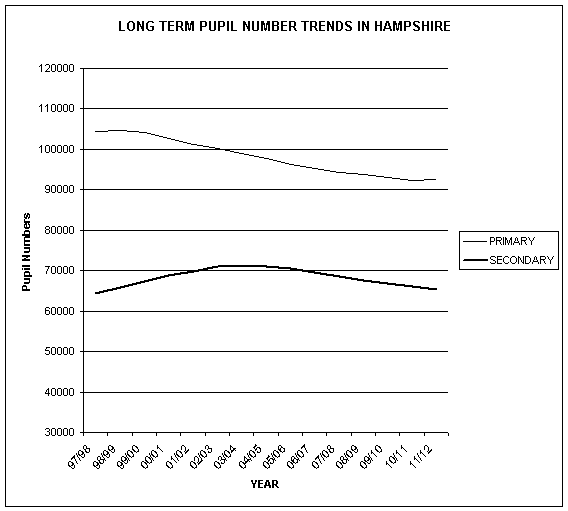
Table 6 shows the county-wide population projections for the period of the School Organisation Plan, and beyond, based on the assumptions underlying the adopted Structure Plan (Review), together with figures for the past five years. These tables indicate that primary school numbers reached a peak of 104,572 in the 1998/99 school year; there has been a small year-on-year decrease thereafter. Current numbers are 97,716, with the forecast of a continuing decrease to 92,343 in 2010/11, a decline of 5.5% from current levels (11.7% below the 1998/99 peak). The forecast number of 4 year olds shows a slight upturn after 2007/08. This is reflected in an increase in total primary numbers in 2011/12. Secondary school numbers reached a peak of 71,034 in 2003/04 with a year on year decline thereafter reflecting the trend in primary numbers. The forecast of 65,280 in 2011/12 is 8% below current levels. These trends are illustrated by the following graph:
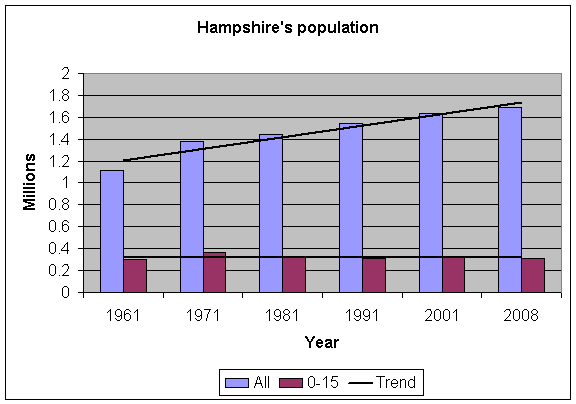
Pupil number trends reflect the underlying reduction in the proportion of children living in Hampshire, despite the past, and projected, increase in the County's population. This is illustrated in the following graph, which shows how the number of children aged 0 - 15 has peaked and is showing a small decline, despite the overall steady increase in the county's population. However, as suggested above, this decline may be arrested in the next decade.
The Structure Plan (Review) makes provision for four Major Development Areas (MDAs) to meet the needs which cannot be met by redevelopment and change within the existing urban areas. The proposed four MDAs (at Andover, Basingstoke, south-east of Eastleigh and west of Waterlooville) would each contain between 2,000 and 4,000 new houses, plus a share of the reserve allocation. There is also a reserve MDA identified at North Winchester. Whilst there may be some scope to cater for the initial stages of development at existing schools, it is anticipated that each MDA will require between one and three new primary schools. Detailed proposals for these will be made once the MDAs are incorporated into district local plans.
Based on the current Structure Plan targets and scope for further growth, it is anticipated that the following new primary schools will be required to cater for MDAs and other large housing developments:
Eastleigh, Dowds Farm |
One primary school |
Andover, Picket Twenty |
One primary school |
Andover, East Anton |
One or two primary schools |
Aldershot Urban Extension |
Two primary schools |
West of Waterlooville MDA |
Two primary schools |
Basingstoke MDA |
One or two primary schools |
Winchester North MDA |
One primary school |
Other large developments will require extensions to existing primary schools.
It will also be necessary to address the need for secondary school places associated with the MDAs and other major developments in the county. None is large enough, in its own right, to justify a new secondary school, but account will need to be taken of the availability (or shortage) of places in schools in the surrounding areas and the scope for the MDAs to grow beyond their present targets after 2011.
Surplus places
In Section A it is explained that 10% is considered to be a reasonable level of surplus capacity. This will allow for fluctuations in age groups and allow a margin to cater for future development. Taking the aggregate of the individual planning areas in the following section, there was overall a surplus at primary schools of 9% in January 2005, rising to 14% in January 2010. At secondary schools the surplus was 5% in January 2005. This is expected to rise to 10% by January 2010.
These overall figures for surplus places, and those for individual planning areas, take account of schools with numbers on roll in excess of net capacity. If those schools were disregarded, the percentages in many cases would be higher.
A breakdown of surplus capacity in January 2005, by category of school, is given on the following table:
Category |
Primary places |
Primary % |
Secondary places |
Secondary % |
Community |
8,151 |
11% |
3,888 |
7% |
Foundation |
292 |
12% |
512 |
3% |
CE Aided |
415 |
5% |
||
RC Aided |
167 |
4% |
21 |
2% |
Controlled |
1,087 |
7% |
0 |
0% |
Individual planning areas
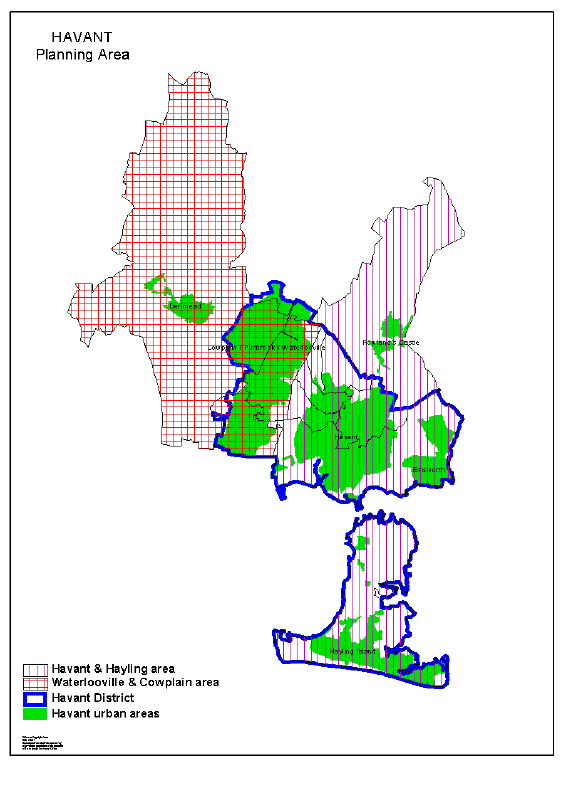
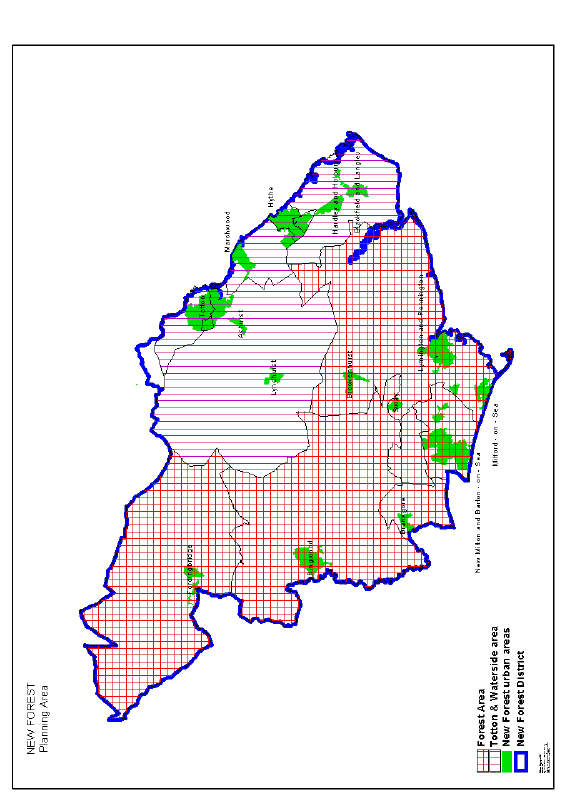
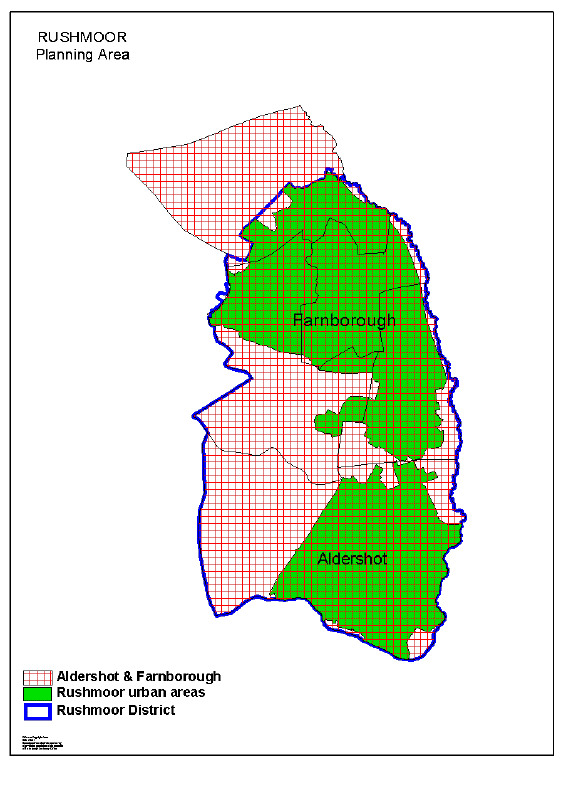
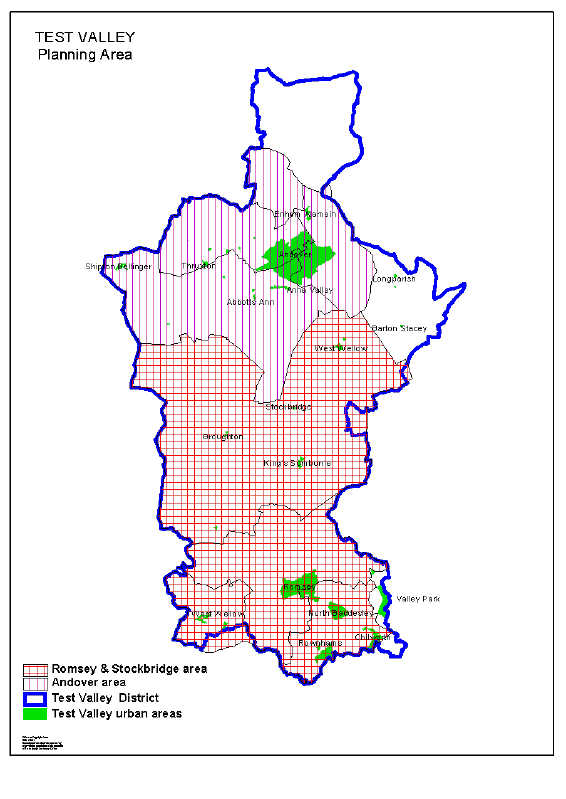
As a significant factor in determining the need for school places is the demand arising from new housing development, these planning areas are based on the areas covered by district council Local Plans, taking the secondary schools located within each district and their feeder primary schools, even though some of these feeder schools are situated in a different district council area. This is illustrated on the maps at the start of each district in the following section, where the bold line shows the district council boundary. Unshaded areas are those where schools are in another district for the purposes of this plan.
To provide a more localised focus where a district covers a wide area, in most cases the planning areas have been divided into smaller geographical groupings. For each of these smaller areas, details are given of the comparison between the numbers of pupils, capacity available and the percentage of surplus places, both in January 2005 and the forecast situation in January 2010. Comments are given where either there may be a need for additional accommodation, or where there is a surplus of more than 10%. The maps on the following pages illustrate the areas of the county where there is a surplus in capacity. It will also be appropriate to consider the situation at individual schools with more than 25% surplus capacity.
As the planning areas used in this plan are based on secondary schools and their feeder schools, within the district council area within which the secondary school is located, there are some primary schools that are listed under a different district council area. Those affected are listed in the following table:
School |
SOP area |
Actual District Council area |
Barton Stacey Primary |
Basingstoke and Deane |
Test Valley |
Curdridge Primary |
Eastleigh |
Winchester |
Denmead Infant / Junior |
Havant |
Winchester |
Durley Primary |
Eastleigh |
Winchester |
Four Mark's Primary |
Winchester |
East Hampshire |
Hambledon Infant |
Havant |
Winchester |
Hawley Primary |
Rushmoor |
Hart |
Knightwood Primary |
Eastleigh |
Test Valley |
Longparish Primary |
Basingstoke and Deane |
Test Valley |
Otterbourne Primary |
Eastleigh |
Winchester |
Padnell Infant / Junior |
East Hampshire |
Havant |
Preston Candover Primary |
Winchester |
Basingstoke and Deane |
Ropley Primary |
Winchester |
East Hampshire |
St Francis Primary |
Eastleigh |
Test Valley |
Upham Primary |
Eastleigh |
Winchester |
West Meon Primary |
East Hampshire |
Winchester |
It has, for several years, been the County Council's practice to seek to reduce surplus capacity, either by way of area reviews or by working with individual schools to redesignate accommodation to reflect its use for purposes other than class teaching (for example the conversion of surplus classrooms as libraries, music/drama rooms, ICT suites or staffrooms). In this way, reductions in nominal capacity can be of direct benefit to the schools, and reduce the need for capital funding towards suitability issues identified in schools' Asset Management Plans. On a similar basis, opportunities can be identified for the use of surplus space to enhance early years provision, possibly in association with a third party provider.
Capital funding to implement area reviews relies on the availability of receipts from the disposal of surplus school sites. The County Council is dependent on local planning authorities giving favourable consideration to planning applications in such situations, where sale proceeds are to be used to improve education facilities, and sometimes enhance community and early years facilities, in the area.
The following planning areas had a surplus of more than 10% at January 2005. More details of these are given in the following sections of this plan.
Primary schools:
Basingstoke and Deane - Tadley area
East Hampshire - Bordon/Liss/Liphook area
Eastleigh - Hamble area
Eastleigh - Eastleigh area
Fareham - West/North/Whiteley area
Gosport
Hart - Yateley/Frogmore area
Havant - Waterlooville/Cowplain area
Havant - Havant/Hayling area
New Forest - Dibden/South Waterside area
Rushmoor - Aldershot area
Rushmoor - Farnborough/Cove area
Winchester - Bishops Waltham area
Secondary schools:
Basingstoke and Deane - Basingstoke Town area
Havant - Havant/Hayling area
Rushmoor - Aldershot / Farnborough area
Test Valley - Andover area
It may also be appropriate for the County Council to review provision in areas where the current surplus is below 10% but forecasts indicate a significantly larger surplus by 2009/10.
Details of the numbers on roll and capacities of individual schools in January 2005 are given in Table 1.
Special educational needs
As the organisation of schools and units catering for pupils with special educational needs often relates to an area wider than a single district, these have been treated as a separate, county-wide, planning area. Details of numbers in special schools and units attached to mainstream schools are given in Tables 2 and 3.
Primary School areas with more than 10% surplus - January 2005
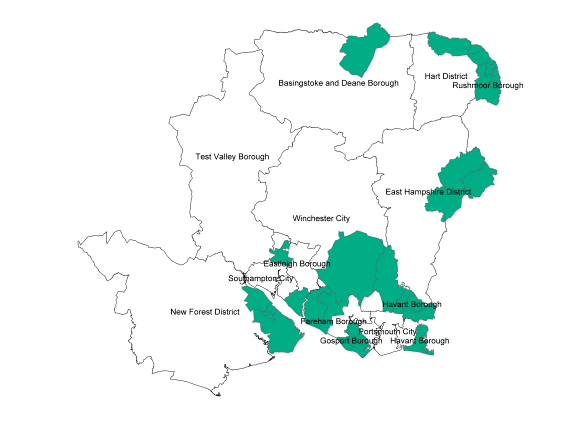
Shaded areas have more than 10% surplus
Primary School areas with more than 10% surplus - January 2010
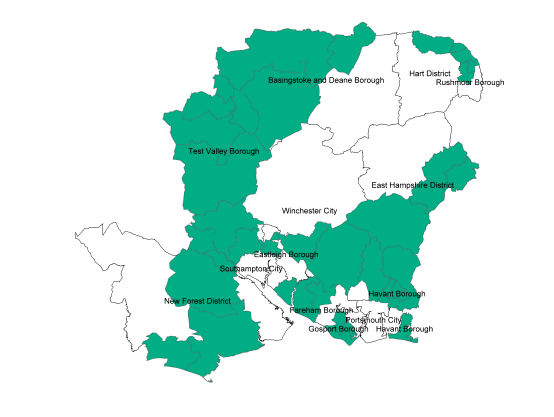
Shaded areas have more than 10% surplus
Secondary School areas with more than 10% surplus - January 2005
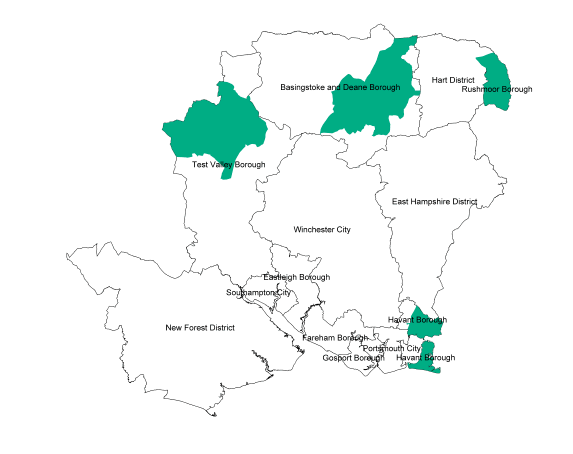
Shaded areas have more than 10% surplus
Secondary School areas with more than 10% surplus - January 2010
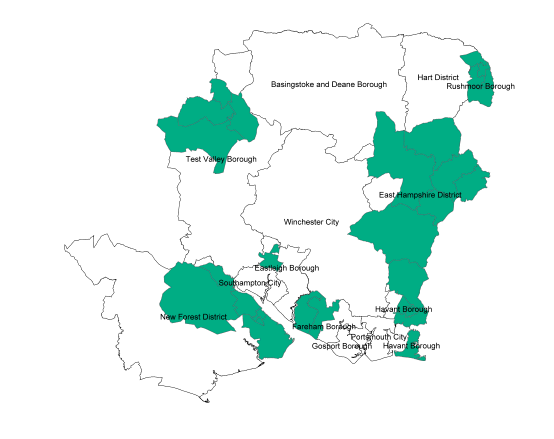
Shaded areas have more than 10% surplus
C2 Summary of planning area issues
Basingstoke and Deane area
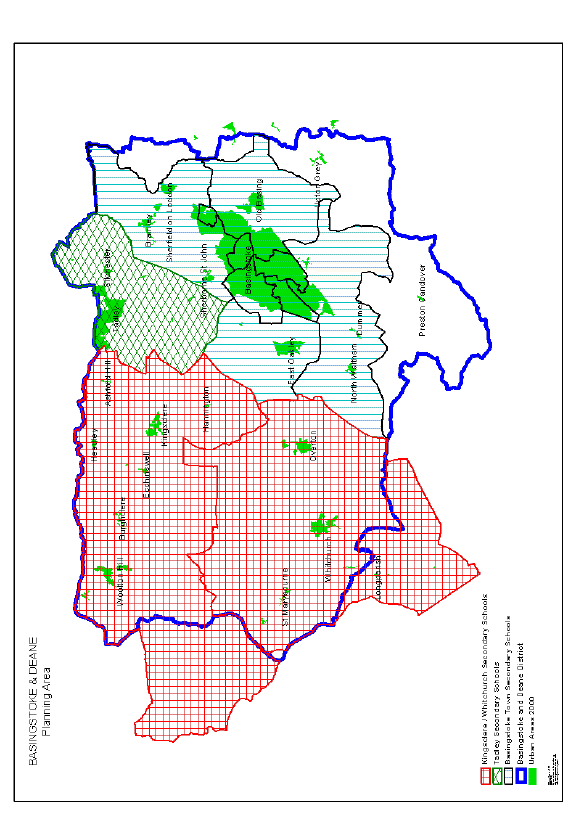
Basingstoke and Deane area
Summary of school details
Primary Schools | ||||||
Area |
Net capacity |
Number on roll |
% surplus places |
Net capacity |
Number on Roll |
% surplus places |
Jan 2005 |
Jan 2005 |
Jan 2005 |
Jan 2010 |
Jan 2010 |
Jan 2010 | |
Basingstoke Town |
11,077 |
10,039 |
9% |
11,053 |
10,279 |
7% |
Tadley |
1,628 |
1,428 |
12% |
1,628 |
1,319 |
19% |
Kingsclere / Burghclere |
1,084 |
1,002 |
8% |
1,084 |
859 |
21% |
Whitchurch |
1,011 |
963 |
5% |
1,077 |
954 |
11% |
Secondary Schools | ||||||
Area |
Net capacity |
Number on Roll |
% surplus places |
Net capacity |
Number on Roll |
% surplus places |
Jan 2005 |
Jan 2005 |
Jan 2005 |
Jan 2010 |
Jan 2010 |
Jan 2010 | |
Basingstoke Town |
7,432 |
6,299 |
15% |
7,422 |
6,664 |
10% |
Tadley |
1,075 |
984 |
8% |
1,075 |
1,032 |
4% |
Kingsclere / Whitchurch |
1,429 |
1,343 |
6% |
1,429 |
1,460 |
-2% |
A Revised Deposit Draft Basingstoke and Deane Borough Local Plan, covering the period 1996 to 2016, was published in November 2003. This makes housing provision to meet the requirements of the Hampshire County Structure Plan (Review) and looks ahead to the location of development up to 2016. Within the Basingstoke Town area, in addition to the completion of existing allocations at North Popley / Popley Fields, Taylors Farm, Old Kempshott Lane and Park Prewett (some of which are considered as reserve allocations), the draft plan proposes allocations at the John Hunt of Everest School site (at least 350 units), West Ham Lane (50), Aldermaston Road (100), Reading Road (35), Trumpet Junction (100), Churchill Way West (300) and South View (300).
Sites for new primary schools are allocated in the development briefs for Taylor's Farm and Park Prewett. The need for these sites is being reassessed as part of the County Council's response to the local plan. Other development (including North Popley / Popley Fields) will be served by existing schools, with additional accommodation where necessary.
It is not expected that there will be a need for additional secondary school accommodation to cater for additional housing development. Approval has been given to a proposal to relocate John Hunt of Everest Secondary School from its current site in Popley to County Council owned development land close to the planned new housing development in North Popley. This is due to be implemented in December 2006.
Land west of Basingstoke Town (known as the Manydown area) is identified for development after 2011. The implications for school provision will be assessed as detailed proposals emerge.
Outside Basingstoke Town, the draft Revised Deposit Local Plan allocates sites at German Road, Bramley (200 units), Foxdown, Overton (75), Mulfords Hill, Tadley (50), Boundary Hall, Tadley (100), Evingar Road and Park View, Whitchurch (30 and 60 units respectively) and Harwood Paddock, Woolton Hill (90). Provision for these developments will be made at existing schools, extended where necessary. An extension to provide 60 places at Whitchurch Primary School is included in the 2005/06 capital programme.
There is more than 10% surplus capacity at primary schools in the Tadley area, which will need to be reviewed during the period covered by this plan. The existing surplus capacity at secondary schools in the Basingstoke Town area will reduce as the effect of new housing works through. The position in other areas, particularly those where surpluses are predicted to increase, will be kept under review.
East Hampshire area
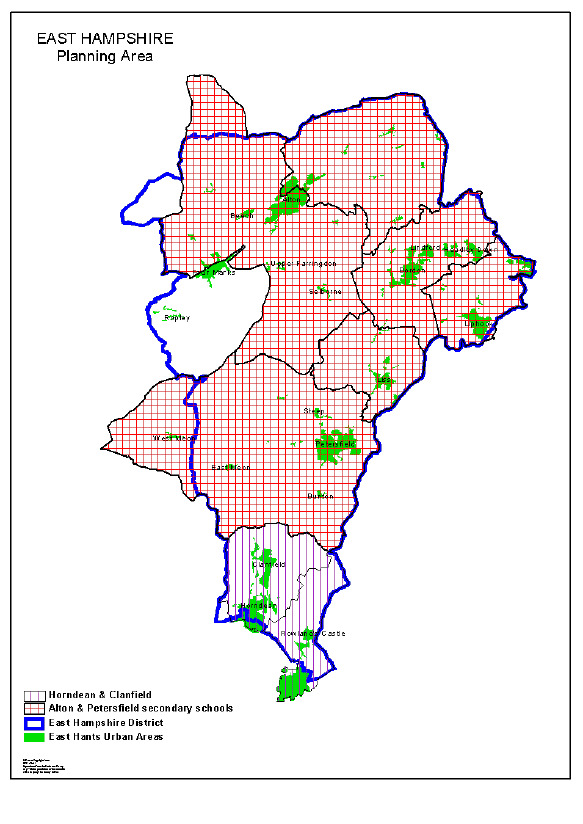
East Hampshire area
Summary of school details
Primary Schools | ||||||
Area |
Net capacity |
Number on roll |
% surplus places |
Net capacity |
Number on Roll |
% surplus places |
Jan 2005 |
Jan 2005 |
Jan 2005 |
Jan 2010 |
Jan 2010 |
Jan 2010 | |
Bordon / Liss / Liphook |
3,339 |
2,823 |
15% |
3,022 |
2,527 |
16% |
Alton |
2,457 |
2,269 |
8% |
2,457 |
2,203 |
10% |
Petersfield |
1,539 |
1,399 |
9% |
1,509 |
1,233 |
18% |
Horndean / Clanfield |
2,287 |
2,179 |
5% |
2,236 |
1,944 |
13% |
Secondary Schools | ||||||
Area |
Net capacity |
Number on Roll |
% surplus places |
Net capacity |
Number on Roll |
% surplus places |
Jan 2005 |
Jan 2005 |
Jan 2005 |
Jan 2010 |
Jan 2010 |
Jan 2010 | |
Alton / Petersfield |
5,244 |
4,928 |
6% |
5,359 |
4,779 |
11% |
Horndean / Clanfield |
1,614 |
1,548 |
4% |
1,614 |
1,270 |
21% |
The District Council published the East Hampshire Local Plan: Second Review (Second Deposit Draft) in January 2002. The plan covers the period up to 2011 and makes provision for 7,000 houses. This includes a reserve of 1,500 dwellings to be released only if there is a compelling necessity to do so. To meet the baseline of 5,500 dwellings, specific sites are identified at Alton (300 houses), East Meon (20), Four Marks (150), Holybourne (15), Horndean (60), Liphook (150), Liss (25), Lower Farringdon (15), Petersfield (12) and Whitehill (40). Twelve sites are also identified, in eight settlements, to meet the reserve allocation of 1,500 dwellings. A Public Inquiry was held during 2003/04. The inspector's report, received in April 2005, recommended that additional sites be added to the baseline, including 150 dwellings at the former King George's Hospital, Liphook, and that changes be made to the priority and allocation of reserve sites. The implications of these changes are being evaluated. It is not likely that any new schools will be required, although additional accommodation may well be needed at some schools as a result of development.
The Education capital programme for 2003/04 included additional places at Eggars Schools, Alton (due for completion in December 2005).
Although the Bordon/Liss/Liphook area has more than 10% surplus capacity at present, some of this may be required to cater for additional development if there should be any significant release of surplus Ministry of Defence land in the future.
Eastleigh area
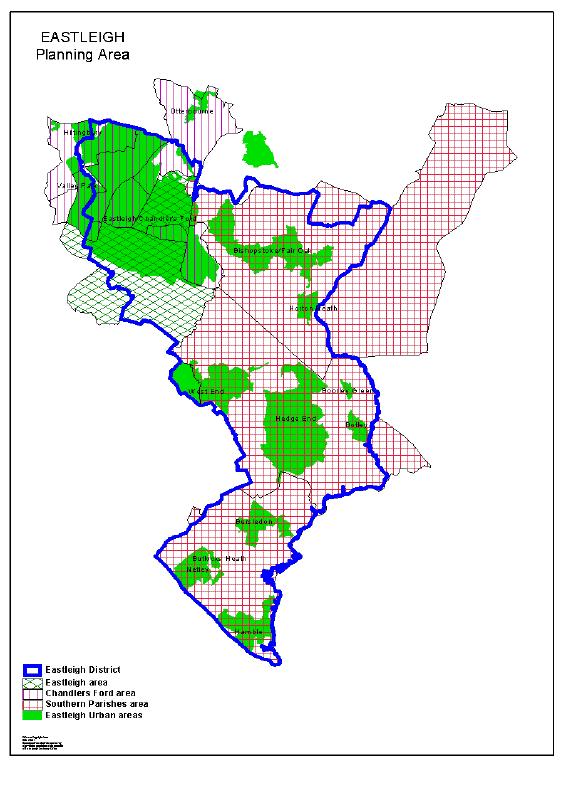
Eastleigh area
Summary of school details
Primary Schools | ||||||
Area |
Net capacity |
Number on roll |
% surplus places |
Net capacity |
Number on Roll |
% surplus places |
Jan 2005 |
Jan 2005 |
Jan 2005 |
Jan 2010 |
Jan 2010 |
Jan 2010 | |
Hamble |
1,538 |
1,286 |
16% |
1,383 |
1,072 |
22% |
Hedge End / West End |
2,763 |
2,711 |
2% |
2,917 |
2,633 |
10% |
Fair Oak |
1,782 |
1,807 |
-1% |
1,782 |
1,566 |
12% |
Chandlers Ford |
3,480 |
3,270 |
6% |
3,329 |
3,030 |
9% |
Eastleigh |
1,627 |
1,333 |
18% |
1,627 |
1,369 |
16% |
Secondary Schools | ||||||
Area |
Net capacity |
Number on Roll |
% surplus places |
Net capacity |
Number on Roll |
% surplus places |
Jan 2005 |
Jan 2005 |
Jan 2005 |
Jan 2010 |
Jan 2010 |
Jan 2010 | |
Southern Parishes |
4,075 |
4,053 |
1% |
4,075 |
4,060 |
0% |
Chandlers Ford |
2,367 |
2,388 |
-1% |
2,367 |
2,389 |
-1% |
Eastleigh |
1,335 |
1,284 |
4% |
1,397 |
1,037 |
26% |
The Borough Council published the Second Deposit version of their Local Plan Review in May 2003. This covers the period up to 2011.Provision is made for 5,148 dwellings in the period 2001 - 2011. Although the Structure Plan (Review) explicitly states that 3,000 dwellings should be provided in a Major Development Area South-east of Eastleigh, the Borough Council has concluded that this is not necessary during the period up to 2011. A Local Plan Inquiry opened in April 2004, with the inspector's report expected in mid-2005.
Specific housing allocations are made at Dowd's Farm, Hedge End (720 dwellings), South of Monks Way/South Street, Eastleigh (432), Whitetree Farm, Fair Oak (45), Woodside Avenue, Eastleigh (100), Toynbee Road, Eastleigh (200), Pirelli site, Eastleigh (708 in phase 1 and a projection of 196 in phase 2 by 2011), Brookwood Avenue, Eastleigh (189), Botleigh Grange, Hedge End (160) and Ensign Way, Hamble-le-Rice (152). It is estimated that brownfield housing sites coming forward by 2011 will deliver approximately a further 317 dwellings in Eastleigh, 180 in Bishopstoke, 280 in Hedge End and 150 in Chandlers Ford, in addition to those sites allocated in the Local Plan.
Following local consultation, approval has been given to the provision of a new primary school (210 places) at Dowds Farm, Hedge End, due for completion in September 2007. The overall proposals also provide for the rebuilding of Kings Copse Primary School as a 210 place primary school, with resourced provision for pupils with visual impairment, and improvements to other schools in the area.
Although there are more than 10% surplus places in primary schools in the Eastleigh planning area some of this capacity will be required to cater for proposed housing on the Pirelli site and others within the central Eastleigh area. The extent of surplus capacity at primary schools in the Hamble area will be kept under review.
A project is in progress at Nightingale Primary School to rationalise the school's accommodation and release space in which an early years centre can be established.
Fareham area
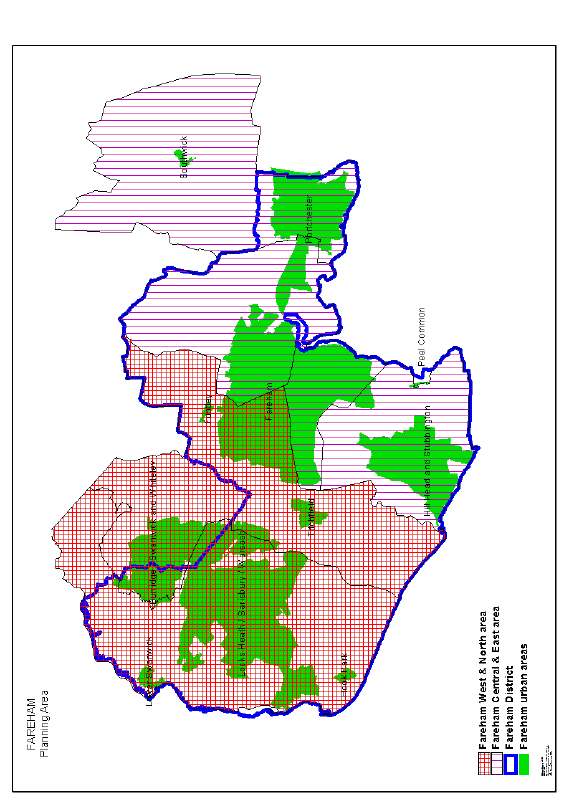
Fareham area
Summary of school details
Primary Schools | ||||||
Area |
Net capacity |
Number on roll |
% surplus places |
Net capacity |
Number on Roll |
% surplus places |
Jan 2005 |
Jan 2005 |
Jan 2005 |
Jan 2010 |
Jan 2010 |
Jan 2010 | |
Fareham Central / East |
4,806 |
4,546 |
5% |
4,691 |
4,220 |
10% |
Fareham West / North / Whiteley |
4,768 |
4,134 |
13% |
4,569 |
3,979 |
13% |
Secondary Schools | ||||||
Area |
Net capacity |
Number on Roll |
% surplus places |
Net capacity |
Number on Roll |
% surplus places |
Jan 2005 |
Jan 2005 |
Jan 2005 |
Jan 2010 |
Jan 2010 |
Jan 2010 | |
Fareham Central / East |
3,947 |
3,746 |
5% |
3,938 |
3,609 |
8% |
Fareham West / North |
2,955 |
2,665 |
10% |
2,955 |
2,446 |
17% |
A Review of the Fareham Borough Local Plan, to cover the period 1996 to 2006 was adopted in March 2000. The adopted plan identified proposals for 3,625 additional houses by 2006. The estimated yields from these sites, and others that may come forward in the period 2001 - 2011, have been revised in the Fareham Borough Urban Housing Capacity Study, published in July 2002. Housing allocations in the local plan include large sites at Warsash (241 units), Titchfield Common (303), Segensworth (160) and north of Whiteley (299). There is also an outstanding commitment for 250 houses at Coldeast Hospital and continuing development at Whiteley (part of which is in Winchester District). No new schools are proposed, although additional accommodation may be required at some existing schools. The Borough Council is embarking on the preparation of a Local Development Framework, to guide development in the longer term.
Local consultations are in progress, including discussion with Fareham Borough and Winchester City councils to secure that sufficient primary school places are available to serve the eventual population of Whiteley. Consideration is being given to available options, which may include the provision of a second primary school.
It is anticipated that there will be 10% surplus capacity in primary schools in the Fareham Central / East area by January 2010. Consideration will be given to ways in which this can be reduced. The extent of surplus capacity in the Fareham West / North / Whiteley area will be considered in the context of the review of need in Whiteley and the adjacent areas.
Gosport area
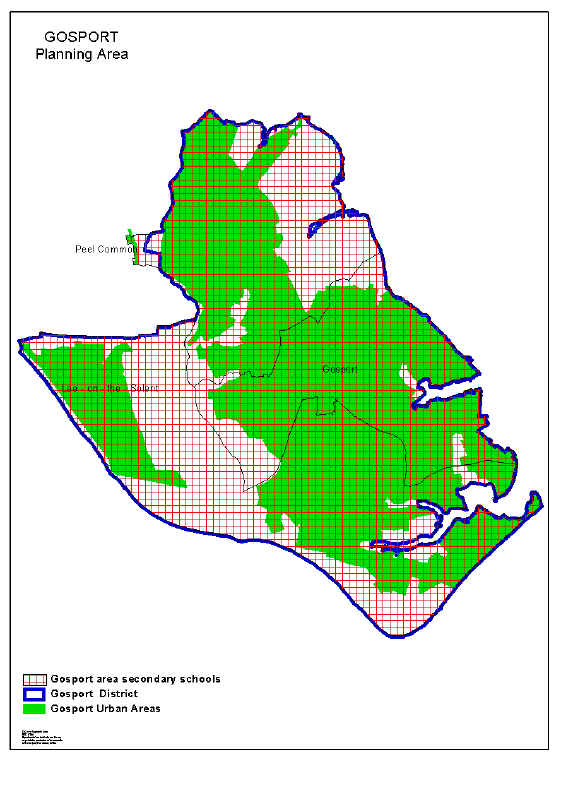
Gosport area
Summary of school details
Primary Schools | ||||||
Area |
Net capacity |
Number on roll |
% surplus places |
Net capacity |
Number on Roll |
% surplus places |
Jan 2005 |
Jan 2005 |
Jan 2005 |
Jan 2010 |
Jan 2010 |
Jan 2010 | |
Gosport |
7,237 |
6,302 |
13% |
6,839 |
6,066 |
11% |
Secondary Schools | ||||||
Area |
Net capacity |
Number on Roll |
% surplus places |
Net capacity |
Number on Roll |
% surplus places |
Jan 2005 |
Jan 2005 |
Jan 2005 |
Jan 2010 |
Jan 2010 |
Jan 2010 | |
Gosport |
5,061 |
4,818 |
5% |
5,043 |
4,422 |
12% |
A Revised Deposit Gosport Borough Local Plan Review was published in June 2004, covering the period up to 2016. The housing requirement can be met by the completion of developments already committed at Cherque Farm (700 units remaining), St George's Barracks North (89) and a number of smaller sites, plus new allocations at Daedalus (500), Royal Clarence Yard (220), St George's Barracks South (181), Coldharbour (159) and Priddy's Hard Heritage Area (200).
The Daedalus allocation includes 300 married quarters for the Ministry of Defence. This is associated with proposals for the reallocation of military facilities in the area and the impact is being closely monitored by the County Council and Borough Council, as there may be a significant influx of families from establishments elsewhere in the country.
No new schools are proposed to serve this area, although additional accommodation may be required at some existing schools. The 2004/05 programme includes additional places at Brune Park Secondary (due for completion in October 2005. An extension of 30 places at Lee-on-the-Solent Junior School was completed during 2004. Further extensions at the Lee-on-the-Solent schools will be considered as development at Cherque Farm and Deadalus proceeds.
The Gosport area has more than 10% surplus capacity at primary schools and consideration is being given to ways in which this can be addressed.
Hart area
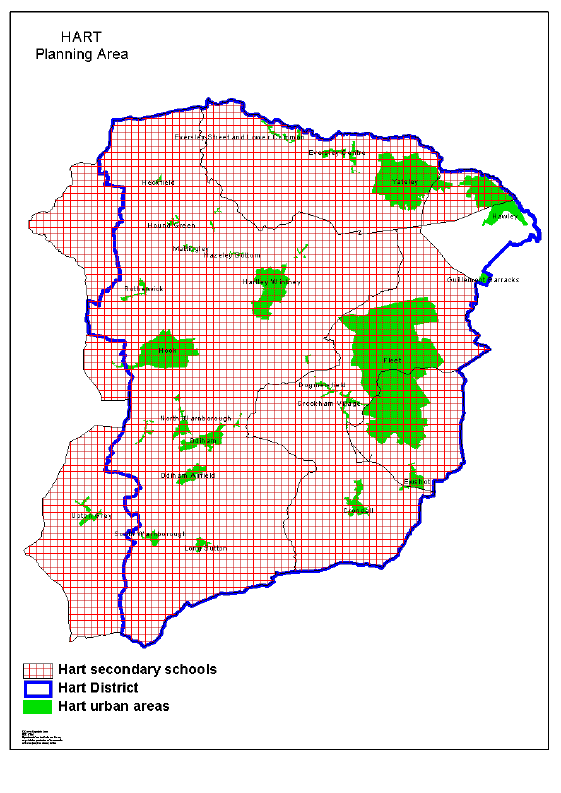
Hart area
Summary of school details
Primary Schools | ||||||
Area |
Net capacity |
Number on roll |
% surplus places |
Net capacity |
Number on Roll |
% surplus places |
Jan 2005 |
Jan 2005 |
Jan 2005 |
Jan 2010 |
Jan 2010 |
Jan 2010 | |
Fleet / Crookham |
3,413 |
3,078 |
10% |
3,425 |
3,179 |
7% |
Yateley / Frogmore |
2,357 |
2,042 |
13% |
2,237 |
1,991 |
11% |
Hook / Odiham |
1,772 |
1,660 |
6% |
1,796 |
1,620 |
10% |
Secondary Schools | ||||||
Area |
Net capacity |
Number on Roll |
% surplus places |
Net capacity |
Number on Roll |
% surplus places |
Jan 2005 |
Jan 2005 |
Jan 2005 |
Jan 2010 |
Jan 2010 |
Jan 2010 | |
Hart |
5,593 |
5,557 |
1% |
5,593 |
5,328 |
5% |
The Hart District Replacement Local Plan, to cover the period 1996 - 2006, was adopted in December 2002. The plan identifies a number of additional housing sites, including Queen Elizabeth Barracks, Church Crookham (up to 1100 houses), Holt Lane, Hook (285), Queens Road, North Warnborough (60) and Dilly Lane, Hartley Wintney (at least 150). The plan also identifies a reserve site at Hitches Lane, Fleet (at least 260) to meet any shortfall identified in the monitoring of the structure plan. Construction is now well under way on major housing development at Elvetham Heath, Fleet, now likely to total 1,869 new houses. The district council is now working towards preparing a Local Development Framework to guide development after 2006.
Much of the demand from this additional housing will be accommodated at existing primary and secondary schools, with increases to accommodation where necessary. A new two form entry primary school at Elvetham Heath was completed in September 2004. During 2002, the District Council published a draft development brief for Queen Elizabeth Barracks development. Following consultation with local schools, the County Council has concluded that this development should be accommodated at existing schools, with additional accommodation as required.
Primary schools in the Yateley/Frogmore area currently have more than 10% surplus capacity. Consideration will be given to ways that accommodation can be rationalised so that this can be reduced.
Havant area
Havant area
Summary of school details
Primary Schools | ||||||
Area |
Net capacity |
Number on roll |
% surplus places |
Net capacity |
Number on Roll |
% surplus places |
Jan 2005 |
Jan 2005 |
Jan 2005 |
Jan 2010 |
Jan 2010 |
Jan 2010 | |
Waterlooville / Cowplain |
4,553 |
4,060 |
11% |
4,625 |
4,048 |
12% |
Havant / Hayling |
5,484 |
4,854 |
11% |
5,177 |
4,442 |
14% |
Secondary Schools | ||||||
Area |
Net capacity |
Number on Roll |
% surplus places |
Net capacity |
Number on Roll |
% surplus places |
Jan 2005 |
Jan 2005 |
Jan 2005 |
Jan 2010 |
Jan 2010 |
Jan 2010 | |
Waterlooville / Cowplain |
4,195 |
4,101 |
2% |
4,195 |
4,010 |
4% |
Havant / Hayling |
3,552 |
3,059 |
14% |
3,552 |
2,640 |
26% |
The Havant Borough Local Plan was adopted in 1994. This covered the period up to 1996. The Borough Council is preparing a Borough District-Wide Local Plan, to cover the period 1996 to 2011, for which a Second Deposit version was published in February 2002. This indicated that development of 1,665 dwellings is required to meet the Structure Plan target. Most of these could be built on previously developed sites or greenfield sites within urban areas, leaving a residual requirement of 255 dwellings on greenfield sites outside urban areas. A number of other sites are identified as "reserve" sites if these have to be released later in the Structure Plan period. The Inspector's Report on the Public Inquiry was received by the Borough Council in May 2004. This recommends some changes to the housing allocations. The Borough Council considered these recommendations towards the end of 2004 and commenced consultations on proposed modifications in March 2005.
Both areas within Havant have more than 10% surplus capacity at present. The opportunity to rationalise accommodation will be considered, along with the surplus in secondary schools in the Havant / Hayling area.
Although the majority is located within the boundary of Winchester City, the proposed West of Waterlooville Major Development area (MDA) will impact on schools in the Havant area. The MDA is intended to provide for 2,000 new dwellings by 2011, and could increase to 3,000 if needed to satisfy the reserve allocation in the Structure Plan. The total number of dwellings which could be built in the MDA will be determined in the agreement of a Masterplan. A detailed assessment of school provision will be undertaken once the location and timing of development are firmer, but initial indications are that one or two new primary schools will be required, with secondary provision at one or more of the existing schools in the adjacent area, extended as necessary.
New Forest area
New Forest area
Summary of school details
Primary Schools | ||||||
Area |
Net capacity |
Number on roll |
% surplus places |
Net capacity |
Number on Roll |
% surplus places |
Jan 2005 |
Jan 2005 |
Jan 2005 |
Jan 2010 |
Jan 2010 |
Jan 2010 | |
Ringwood / Fordingbridge |
2,562 |
2,538 |
1% |
2,555 |
2,295 |
10% |
Lymington / New Milton |
3,894 |
3,570 |
8% |
3,663 |
3,202 |
13% |
Totton |
3,218 |
3,008 |
7% |
3,184 |
2,755 |
13% |
Dibden / South Waterside |
3,732 |
3,228 |
14% |
3,342 |
3,000 |
10% |
Secondary Schools | ||||||
Area |
Net capacity |
Number on Roll |
% surplus places |
Net capacity |
Number on Roll |
% surplus places |
Jan 2005 |
Jan 2005 |
Jan 2005 |
Jan 2010 |
Jan 2010 |
Jan 2010 | |
Forest |
4,967 |
4,933 |
1% |
5,062 |
4,809 |
5% |
Totton / Waterside |
5,493 |
5,122 |
7% |
5,493 |
4,539 |
17% |
A Revised Deposit of the First Alteration to the Local Plan, to cover the period up to 2011, was published in February 2003. This indicates that the baseline requirement can be met by existing commitments and previously developed ("brownfield") sites, with no need to allocate new greenfield sites. In the event that it is necessary to meet the reserve requirement of the structure plan, sites are identified at Hounsdown and Marchwood. Following receipt of the inspector's report into the public inquiry, proposed modifications were published in February 2005. No new schools will be required to cater for the proposed level of development.
There are more than 10% surplus places at primary schools in the Dibden / South Waterside areas, although this will reduce as the amalgamation of the Blackfield, Langdown and Holbury schools is implemented
There is an agreement for children of secondary school age living in the Bransgore and Sopley areas, and along the Brockenhurst to Highcliffe corridor, to attend schools in Christchurch (Dorset). Dorset County Council has initiated a programme of consultations on secondary school places in the Christchurch area, on which the County Council has been invited to respond.
Rushmoor area
Rushmoor area
Summary of school details
Primary Schools | ||||||
Area |
Net capacity |
Number on roll |
% surplus places |
Net capacity |
Number on Roll |
% surplus places |
Jan 2005 |
Jan 2005 |
Jan 2005 |
Jan 2010 |
Jan 2010 |
Jan 2010 | |
Aldershot |
3,116 |
2,683 |
14% |
2,989 |
2,902 |
3% |
Farnborough / Cove |
5,216 |
4,619 |
11% |
5,170 |
4,253 |
18% |
Secondary Schools | ||||||
Area |
Net capacity |
Number on Roll |
% surplus places |
Net capacity |
Number on Roll |
% surplus places |
Jan 2005 |
Jan 2005 |
Jan 2005 |
Jan 2010 |
Jan 2010 |
Jan 2010 | |
Aldershot / Farnborough |
4,563 |
3,782 |
17% |
4,549 |
3,494 |
23% |
The adopted Rushmoor Local Plan Review covers the period 1996 to 2011, making provision for 2,900 new houses.
The plan identifies opportunities for housing development at Station Road, Aldershot (150 - 200), Ordnance Road, Aldershot (170 - 180) and six other sites, each for less than 100 houses. No new schools will be required and pupils from the new development will be absorbed into existing schools.
Proposals to remove surplus capacity at primary schools in the Farnborough / Cove area led to the amalgamation of Mayfield Infant and Junior Schools (Cherrywood Primary School) in September 2001. As the number of children of primary and secondary school age in areas of Rushmoor is predicted to fall, it may be necessary to look at further opportunities to reduce surplus capacity. Following rejection of closure proposals by the Adjudicator, The County Council has agreed to rebuild Pinewood Infant School following the loss of a substantial part of the school as the result of a fire in March 2003
The Ministry of Defence has indicated that it proposes to release a substantial area of land, currently within Aldershot Military Town, for private development. Known as "Aldershot Urban Extension" this could include substantial residential development. Rushmoor Borough Council has adopted Supplementary Planning Guidance to guide the MoD and their potential purchasers. The impact of this development is being monitored as details become available. It is likely that additional school accommodation will be required, which could include one or two new primary schools and extensions to existing secondary schools.
Test Valley area
Test Valley area
Summary of school details
Primary Schools |
|||||||
Area |
Net capacity |
Number on roll |
% surplus places |
Net capacity |
Number on Roll |
% surplus places | |
Jan 2005 |
Jan 2005 |
Jan 2005 |
Jan 2010 |
Jan 2010 |
Jan 2010 | ||
Andover |
4,937 |
4,554 |
8% |
5,401 |
4,504 |
17% | |
Romsey / Stockbridge |
3,810 |
3,521 |
8% |
3,534 |
3,122 |
12% | |
Secondary Schools |
|||||||
Area |
Net capacity |
Number on Roll |
% surplus places |
Net capacity |
Number on Roll |
% surplus places | |
Jan 2005 |
Jan 2005 |
Jan 2005 |
Jan 2010 |
Jan 2010 |
Jan 2010 | ||
Andover |
2,927 |
2,612 |
11% |
2,927 |
2,455 |
16% | |
Romsey / Stockbridge |
3,270 |
3,268 |
0% |
3,270 |
2,969 |
9% | |
The Revised Deposit Draft of the Test Valley Borough Local Plan Review was published in January 2004. Apart from the proposed MDA, the draft plan indicates that most of the requirement for new housing can be met on previously developed land, with the only new allocations at Winchester Road, Andover, the Borden/AEP site, North Baddesley and Romsey Brewery, with a reserve site identified at Abbottswood, Romsey. These developments can be accommodated at existing schools, although there may be a need for some additional accommodation.
The draft plan also makes proposals for the Andover MDA, in two areas - East of Icknield Way and at Picket Twenty. Both sites are likely to require new primary schools, with secondary education in existing schools, which may require some additional accommodation. Test Valley Borough Council has also suggested that the MDA could provide the opportunity to transfer an existing secondary school to a new site.
There are no areas within Test Valley with a surplus of more than 10% in primary schools, although future surpluses greater than this are shown, in both primary school areas. Proposals have been approved for the rationalisation of primary schools in the Romsey area with a view to reducing surplus capacity and it will be necessary to consider the situation at primary schools in parts of Andover. Surplus capacity in Andover secondary schools will be required to cater for the MDA.
Winchester area
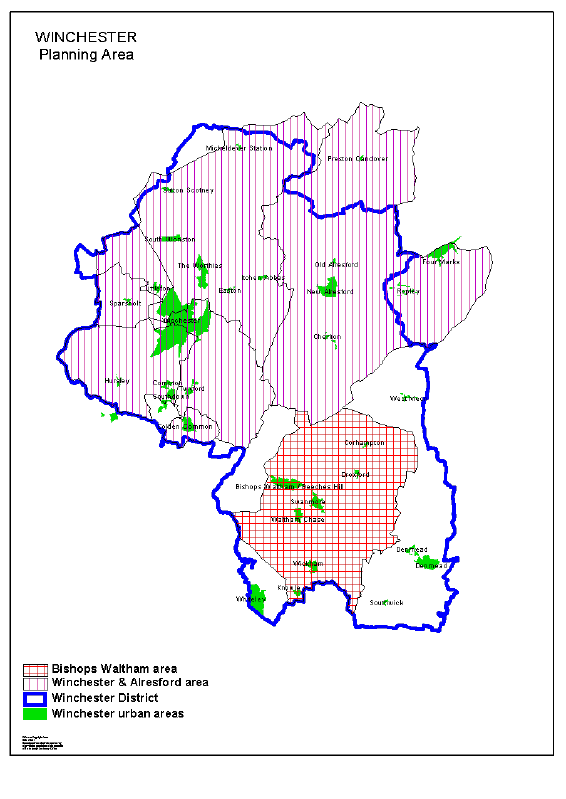
Winchester area
Summary of school details
Primary Schools | ||||||
Area |
Net capacity |
Number on roll |
% surplus places |
Net capacity |
Number on Roll |
% surplus places |
Jan 2005 |
Jan 2005 |
Jan 2005 |
Jan 2010 |
Jan 2010 |
Jan 2010 | |
Winchester |
4,295 |
4,064 |
5% |
4,245 |
3,858 |
9% |
Alresford |
1,158 |
1,154 |
0% |
1,158 |
1,064 |
8% |
Bishops Waltham |
1,847 |
1,641 |
11% |
1,829 |
1,437 |
21% |
Secondary Schools | ||||||
Area |
Net capacity |
Number on Roll |
% surplus places |
Net capacity |
Number on Roll |
% surplus places |
Jan 2005 |
Jan 2005 |
Jan 2005 |
Jan 2010 |
Jan 2010 |
Jan 2010 | |
Winchester / Alresford |
4,755 |
4,864 |
-2% |
4,812 |
4,832 |
0% |
Bishops Waltham |
1,350 |
1,296 |
4% |
1,350 |
1,316 |
3% |
The City Council published the Revised Deposit version of their Local Plan Review in May 2003. This covers the period up to 2011. The plan concludes that no new greenfield housing sites will be required to meet the Structure Plan "baseline" requirement of 5,135 dwellings in the period 2000 - 2011, apart from the West of Waterlooville MDA (see Havant area). This includes development at Knowle (now 575 units), Denmead (100) and Whiteley1 (490). Except for the MDA, these will be accommodated at existing schools. Additional places have already been provided at Wickham Primary to cater for Knowle.
In the event that it is necessary to allocate additional housing land to met the Structure Plan's reserve provision, the plan identifies "areas of search" for 1,000 dwellings West of Waterlooville and 2,000 at Winchester City North. The educational impact of these will be assessed if these sites are brought forward.
The 2004/05 capital programme includes additional places at Perins Community School (89 places) and Droxford Junior School (22 places).
There is more than 10% surplus capacity in primary schools in the Bishops Waltham area. Consideration will be given to ways that this can be reduced.
C3 Inclusion
1 Special Educational Needs
The organisation of provision for children with special educational needs tends to relate to a wider area than the planning areas for mainstream provision. The following issues are likely to give rise to proposals during the period covered by this plan:
a) Creation of schools for children with learning difficulties with complex needs
These cater for children with a range of learning difficulties, rather than the traditional distinction between moderate and severe learning difficulties. Where appropriate, this may also provide the opportunity to establish separate schools covering the primary and secondary age phases. The creation of a school for children with complex learning difficulties has already been implemented in Farnborough and forms the basis of the approved proposals for the reorganisation of special schools in Eastleigh and Winchester, which was implemented in May 2003. Approval has bee given to the amalgamation of The Meadow School, Bordon and Whitedown School, Alton, as a school for children with complex learning difficulties aged 4 - 19, in new buildings on the site of The Meadow School.
Further proposals will be brought forward in other parts of the county when opportunities are identified.
b) Units attached to mainstream schools
In accordance with the policy of inclusion within the mainstream environment, units may be established to cater for particular categories of need. These include units for pupils with emotional and behavioural difficulties, language impairment or learning difficulties (particularly at primary schools) and autism / Aspergers Syndrome (at secondary schools). In addition, proposals may be made to resource schools (primary or secondary) to cater for children with physical disabilities or sensory impairment (particularly hearing or visual impairment).
Units for pupils with Aspergers Syndrome opened in September 2001 at Robert May's and Romsey Secondary Schools and a unit for children with learning difficulties is due to open at Shakespeare Junior School, Eastleigh, in September 2002. In addition, the new primary school at Binfields, Chineham, which opened in September 2001 is a fully accessible and resourced school for pupils with visual impairment. The reorganisation of special schools in Alton and Bordon include the establishment of resourced provision of children with learning difficulties at three mainstream schools in the area. Resourced provision has also been established at St Mark's CE Primary School, Basingstoke, and Cherbourg Primary School, Eastleigh, for pupils with Behaviour, Emotional and Social Difficulties.
Further opportunities to establish resourced provision will be brought forward as opportunities arise.
c) Secondary school for children with emotional and behavioural difficulties
Sundridge Pupil Referral Unit, Cowplain, has been recognised as a special school since January 2002. This is an interim arrangement until suitable accommodation can be provided. Approval has been given to the transfer of the school to a new site in Havant, for implementation as soon as planning permission has been granted.
d) Provision for early years
The Early Years SEN Strategic Plan, adopted by the Education Committee in March 2000, proposes that opportunities should be developed to integrate provision for children of pre-school age with special educational needs with mainstream nursery provision in Early Years Centres. This may lead to proposals to alter the age ranges of some special schools which currently include pre-school provision.
2. Education other than at school
As explained in Section A10 (page 20), in September 2002 the County Council reorganised all EOTAS provision so that there is a single Education Centre in each of the seven education areas. In some cases, these occupy a single site. In others there is a combination of facilities under a single management.
Proposals are currently being developed for the extension of Linden Education Centre (Farnborough) and the consolidation of The Bridge Education Centre (Eastleigh) on the site of the former Tankerville School. A site in Havant has been identified for new buildings for Woodlands Education Centre (Cowplain) to replace those destroyed by fire in 2002. Further opportunities to improve accommodation will be made as opportunities arise.
A review of provision in Basingstoke was implemented in September 2004 with the amalgamation of Hawthorns School and Ashwood Education Centre as a new establishment (registered as a pupil referral unit) known as Basingstoke School Plus. This will operate on an interim basis for the 2004/05 school year, whilst long term arrangements beyond September 2005 are developed.
Table 1
Numbers on Roll and School Capacities - January 2005
DfES no. |
School Name |
Net Capacity |
NOR |
% surplus |
SEN pupils with statements |
SEN pupils without statements2 |
Primary Schools |
||||||
Basingstoke And Deane |
||||||
Basingstoke Town Area |
||||||
3022 |
Bramley C E Primary |
420 |
344 |
18% |
4 |
23 |
2321 |
Castle Hill Infant |
180 |
179 |
1% |
2 |
114 |
2272 |
Castle Hill Junior |
240 |
252 |
-5% |
2 |
56 |
2344 |
Chalk Ridge Primary |
418 |
402 |
4% |
6 |
49 |
3199 |
Chiltern Primary |
390 |
258 |
34% |
2 |
113 |
2780 |
Chineham Park Primary |
180 |
102 |
43% |
4 |
29 |
2041 |
Cliddesden Primary |
90 |
112 |
-24% |
3 |
12 |
2727 |
Fairfields Primary |
420 |
401 |
5% |
5 |
40 |
2749 |
Four Lanes Community Junior |
360 |
345 |
4% |
2 |
61 |
2392 |
Four Lanes Infant |
270 |
260 |
4% |
2 |
35 |
2011 |
Great Binfields Primary |
210 |
169 |
20% |
8 |
28 |
2470 |
Hatch Warren Infant |
270 |
269 |
0% |
0 |
39 |
2761 |
Hatch Warren Junior |
360 |
355 |
1% |
2 |
44 |
2316 |
Kempshott Infant |
270 |
263 |
3% |
3 |
23 |
2286 |
Kempshott Junior |
360 |
376 |
-4% |
4 |
34 |
2725 |
King's Furlong Infant And Nursery |
210 |
200 |
5% |
1 |
25 |
2726 |
Kings Furlong Junior |
240 |
262 |
-9% |
2 |
38 |
2341 |
Manor Field Infant |
231 |
148 |
36% |
0 |
36 |
2285 |
Manor Field Junior |
266 |
213 |
20% |
3 |
87 |
2298 |
Marnel Community Infant |
210 |
186 |
11% |
2 |
62 |
2287 |
Marnel Junior |
240 |
218 |
9% |
1 |
59 |
2271 |
Merton Infant |
180 |
135 |
25% |
2 |
65 |
2268 |
Merton Junior |
240 |
201 |
16% |
4 |
82 |
2148 |
North Waltham Primary |
140 |
149 |
-6% |
1 |
22 |
3120 |
Oakley Church of England Junior |
270 |
255 |
6% |
5 |
39 |
2328 |
Oakley Infant |
234 |
199 |
15% |
2 |
62 |
2012 |
Oakridge Infant |
179 |
153 |
15% |
0 |
46 |
2227 |
Oakridge Junior |
240 |
201 |
16% |
0 |
66 |
2319 |
Old Basing Infant |
270 |
265 |
2% |
3 |
22 |
2731 |
Park View Infant |
270 |
222 |
18% |
4 |
63 |
2732 |
Park View Junior |
300 |
280 |
7% |
7 |
62 |
2320 |
Rucstall Primary |
235 |
229 |
3% |
1 |
49 |
3144 |
Sherborne St John Church of England Primary |
105 |
116 |
-10% |
0 |
8 |
2228 |
South View Infant |
216 |
163 |
25% |
11 |
64 |
2013 |
South View Junior |
248 |
221 |
11% |
16 |
88 |
3414 |
St Anne's Catholic Primary |
238 |
219 |
8% |
5 |
35 |
3415 |
St Bede's Catholic Primary |
241 |
243 |
-1% |
1 |
31 |
3661 |
St John's Church of England Voluntary Aided Primary |
300 |
292 |
3% |
2 |
52 |
3665 |
St Mark's Church of England Primary |
556 |
480 |
14% |
5 |
77 |
3305 |
St Mary's Church of England |
360 |
343 |
5% |
5 |
35 |
2223 |
Winklebury Infant |
180 |
151 |
16% |
2 |
29 |
2008 |
Winklebury Junior |
240 |
208 |
13% |
2 |
57 |
Total |
11,077 |
10,039 |
9% |
|||
Tadley Area |
||||||
2315 |
Bishopswood Infant |
180 |
165 |
8% |
0 |
34 |
2283 |
Bishopswood Junior |
240 |
214 |
11% |
3 |
44 |
2189 |
Burnham Copse Infant |
170 |
108 |
36% |
0 |
38 |
2188 |
Burnham Copse Junior |
240 |
169 |
30% |
3 |
60 |
3389 |
Silchester Church of England Primary |
210 |
218 |
-4% |
5 |
22 |
2190 |
Tadley Community Primary |
420 |
369 |
7% |
2 |
61 |
5201 |
The Priory Primary |
168 |
165 |
2% |
0 |
5 |
Total |
1,628 |
1,428 |
12% |
|||
Kingsclere / Burghclere Area |
||||||
2119 |
Ashford Hill Primary |
140 |
123 |
12% |
3 |
26 |
2026 |
Burghclere Primary |
119 |
111 |
7% |
1 |
12 |
3050 |
Ecchinswell And Sydmonton CE Primary |
147 |
104 |
29% |
0 |
34 |
3088 |
Kingsclere Church of England Primary |
266 |
270 |
-2% |
2 |
50 |
3325 |
St Martin's East Woodhay C E Voluntary Aided Primary |
105 |
86 |
18% |
1 |
7 |
3177 |
St Thomas' Church of England Infant, Woolton Hill |
135 |
140 |
-4% |
0 |
12 |
2384 |
Woolton Hill Junior |
172 |
168 |
2% |
2 |
13 |
Total |
1,084 |
1,002 |
8% |
|||
Whitchurch Area |
||||||
3009 |
Barton Stacey C E Primary |
119 |
96 |
19% |
1 |
33 |
3357 |
Longparish C E Primary |
83 |
88 |
-6% |
1 |
6 |
3119 |
Overton C E Primary |
315 |
296 |
6% |
8 |
30 |
2180 |
St Mary Bourne Primary |
140 |
140 |
0% |
4 |
21 |
3170 |
Whitchurch C E Primary |
354 |
343 |
3% |
1 |
59 |
Total |
1,011 |
963 |
5% |
|||
East Hampshire |
||||||
Bordon / Liss / Liphook Area |
||||||
2022 |
Bordon Infant |
270 |
193 |
29% |
3 |
51 |
2021 |
Bordon Junior |
360 |
237 |
34% |
4 |
58 |
3067 |
Grayshott C E Controlled Primary |
208 |
206 |
1% |
0 |
33 |
2086 |
Greatham Primary |
210 |
208 |
1% |
5 |
27 |
3183 |
Liphook Church of England (Controlled) Junior |
360 |
351 |
3% |
9 |
63 |
2342 |
Liphook Infant |
270 |
229 |
15% |
0 |
43 |
2291 |
Liss Infant |
180 |
177 |
2% |
3 |
37 |
2127 |
Liss Junior |
261 |
243 |
7% |
2 |
36 |
3310 |
St Matthew's Church of England (Aided) Primary, Blackmoor |
210 |
183 |
13% |
4 |
29 |
3215 |
The Holme Church of England (Controlled) Primary |
240 |
144 |
40% |
0 |
50 |
2204 |
Weyford Infant |
240 |
186 |
23% |
3 |
67 |
2288 |
Weyford Junior |
330 |
274 |
17% |
0 |
78 |
2753 |
Woodlea Primary |
200 |
192 |
4% |
2 |
62 |
Total |
3,339 |
2,823 |
15% |
|||
Alton Area |
||||||
2000 |
Alton Infant |
180 |
144 |
20% |
2 |
54 |
3344 |
Andrews' Endowed Church of England Primary |
168 |
190 |
-13% |
1 |
24 |
2001 |
Anstey Junior |
240 |
217 |
10% |
3 |
82 |
3023 |
Bentley Church of England Primary |
210 |
214 |
-2% |
0 |
34 |
3012 |
Binsted Church of England Primary |
84 |
79 |
6% |
2 |
8 |
3029 |
Chawton Church of England Primary |
112 |
132 |
-16% |
2 |
12 |
3101 |
Medstead Church of England Primary |
209 |
191 |
9% |
7 |
34 |
3196 |
Rowledge Church of England (Controlled) Primary |
210 |
205 |
2% |
2 |
22 |
3001 |
Saint Lawrence C E Primary |
182 |
178 |
2% |
2 |
23 |
3660 |
Selborne Church of England Primary |
99 |
82 |
17% |
0 |
12 |
3308 |
St Mary's Bentworth Church of England Primary |
105 |
93 |
11% |
0 |
11 |
2300 |
The Butts Primary |
238 |
223 |
6% |
4 |
40 |
2243 |
Wootey Infant |
180 |
123 |
32% |
2 |
26 |
2317 |
Wootey Junior |
240 |
196 |
18% |
3 |
27 |
Total |
2,457 |
2,269 |
8% |
|||
Petersfield Area |
||||||
2027 |
Buriton Primary |
105 |
84 |
20% |
1 |
9 |
3046 |
East Meon C E (Controlled) Primary |
77 |
65 |
16% |
0 |
16 |
3062 |
Froxfield Church of England Infant |
40 |
28 |
30% |
0 |
4 |
2170 |
Herne Junior |
480 |
425 |
11% |
4 |
90 |
2125 |
Langrish Primary |
210 |
207 |
1% |
0 |
10 |
2162 |
Petersfield Infant |
360 |
316 |
12% |
11 |
63 |
2181 |
Sheet Primary |
112 |
111 |
1% |
1 |
8 |
3150 |
Steep Church of England (Voluntary Controlled) Primary |
85 |
108 |
-27% |
0 |
8 |
3168 |
West Meon Church of England (Voluntary Controlled) Primary |
70 |
55 |
21% |
0 |
11 |
Total |
1,539 |
1,399 |
9% |
|||
Horndean / Clanfield Area |
||||||
3027 |
Catherington Church of England Infant |
88 |
90 |
-2% |
0 |
9 |
2040 |
Clanfield Junior |
417 |
370 |
11% |
1 |
54 |
3081 |
Horndean Church of England (Controlled) Junior |
480 |
484 |
-1% |
5 |
58 |
2239 |
Horndean Infant |
270 |
256 |
5% |
2 |
32 |
2214 |
Padnell Infant |
291 |
244 |
16% |
2 |
72 |
2213 |
Padnell Junior |
360 |
371 |
-3% |
3 |
41 |
2357 |
Petersgate Infant |
171 |
159 |
7% |
1 |
27 |
3136 |
Rowlands Castle St Johns Church of England (Controlled) Primary |
210 |
205 |
2% |
0 |
55 |
Total |
2,287 |
2,179 |
5% |
|||
Eastleigh |
||||||
Hamble Area |
||||||
3020 |
Bursledon Church of England Infant |
269 |
227 |
16% |
2 |
56 |
2304 |
Bursledon Junior |
360 |
287 |
20% |
1 |
64 |
2091 |
Hamble Primary |
280 |
273 |
3% |
2 |
78 |
2373 |
Netley Abbey Infant |
269 |
201 |
25% |
2 |
77 |
2348 |
Netley Abbey Junior |
360 |
298 |
17% |
2 |
84 |
Total |
1,538 |
1,286 |
16% |
|||
Hedge End / West End Area |
||||||
2752 |
Berrywood Primary |
630 |
663 |
-5% |
1 |
46 |
3014 |
Botley Church of England (Controlled) Primary |
300 |
276 |
8% |
4 |
33 |
2047 |
Curdridge Primary |
119 |
113 |
5% |
1 |
10 |
2115 |
Freegrounds Infant |
270 |
250 |
7% |
2 |
17 |
2267 |
Freegrounds Junior |
359 |
358 |
0% |
3 |
42 |
2347 |
Kings Copse Primary |
266 |
182 |
32% |
5 |
38 |
3184 |
Saint James' Church of England Primary, West End |
400 |
443 |
-11% |
8 |
53 |
2224 |
Shamblehurst Primary |
419 |
426 |
-2% |
2 |
42 |
Total |
2,763 |
2,711 |
2% |
|||
Fair Oak Area |
||||||
3040 |
Durley C E (Controlled) Primary |
112 |
110 |
2% |
2 |
4 |
2071 |
Fair Oak Infant |
354 |
360 |
-2% |
4 |
49 |
2263 |
Fair Oak Junior |
598 |
596 |
0% |
3 |
73 |
2018 |
Stoke Park Infant |
269 |
263 |
2% |
5 |
50 |
2030 |
Stoke Park Junior |
360 |
376 |
-4% |
13 |
29 |
3395 |
Upham C E (Aided) Primary |
89 |
102 |
-15% |
2 |
13 |
Total |
1,782 |
1,807 |
-1% |
|||
Chandlers Ford Area |
||||||
2033 |
Chandler's Ford Infant |
208 |
172 |
17% |
0 |
6 |
2217 |
Fryern Infant |
180 |
136 |
24% |
1 |
27 |
2056 |
Fryern Junior |
243 |
218 |
10% |
1 |
48 |
2237 |
Hiltingbury Infant |
267 |
267 |
0% |
6 |
9 |
2274 |
Hiltingbury Junior |
360 |
395 |
-10% |
8 |
60 |
2009 |
Knightwood Primary |
360 |
376 |
-4% |
3 |
34 |
2034 |
Merdon Junior |
360 |
308 |
14% |
3 |
40 |
3118 |
Otterbourne C E Primary |
242 |
253 |
-5% |
4 |
21 |
2322 |
Scantabout Primary |
210 |
219 |
-4% |
1 |
17 |
3663 |
St Francis C E Primary |
420 |
416 |
1% |
2 |
74 |
3419 |
St Swithun Wells Catholic Voluntary Aided Primary, Chandlers Ford |
210 |
138 |
34% |
1 |
8 |
2061 |
The Crescent Primary |
420 |
372 |
11% |
4 |
81 |
Total |
3,480 |
3,270 |
6% |
|||
Eastleigh Area |
||||||
2062 |
Cherbourg Primary |
378 |
324 |
14% |
4 |
67 |
2763 |
Nightingale Primary |
330 |
225 |
32% |
2 |
34 |
2387 |
Norwood Primary |
296 |
190 |
36% |
1 |
32 |
2063 |
Shakespeare Infant |
270 |
245 |
9% |
3 |
89 |
2377 |
Shakespeare Junior |
353 |
349 |
1% |
11 |
55 |
Total |
1,627 |
1,333 |
18% |
|||
Fareham |
||||||
Fareham Central / East Area |
||||||
2395 |
Castle Primary |
420 |
419 |
0% |
4 |
50 |
2216 |
Crofton Anne Dale Infant |
270 |
254 |
6% |
0 |
38 |
2049 |
Crofton Anne Dale Junior |
359 |
380 |
-6% |
0 |
46 |
2276 |
Crofton Hammond Infant |
180 |
180 |
0% |
1 |
12 |
2345 |
Crofton Hammond Junior |
240 |
244 |
-2% |
0 |
18 |
2252 |
Harrison Primary |
541 |
586 |
-8% |
8 |
107 |
2309 |
Northern Infant |
150 |
101 |
33% |
1 |
21 |
2161 |
Northern Junior Community |
240 |
203 |
15% |
1 |
46 |
2306 |
Ranvilles Infant |
180 |
152 |
16% |
1 |
16 |
2289 |
Ranvilles Junior |
281 |
215 |
23% |
3 |
37 |
2388 |
Red Barn Community Primary |
208 |
146 |
30% |
4 |
44 |
2074 |
Redlands Primary |
315 |
301 |
4% |
1 |
77 |
3404 |
St Jude's Catholic Primary, Fareham |
315 |
261 |
17% |
3 |
15 |
2069 |
Uplands Primary |
280 |
299 |
-7% |
2 |
46 |
2076 |
Wallisdean Infant |
174 |
152 |
13% |
3 |
35 |
2067 |
Wallisdean Junior |
240 |
225 |
6% |
8 |
35 |
2168 |
Wicor Primary |
413 |
428 |
-4% |
0 |
40 |
Total |
4,806 |
4,546 |
5% |
|||
Fareham West / North / Whiteley Area |
||||||
3079 |
Hook-With-Warsash Church of England Primary |
403 |
419 |
-4% |
2 |
44 |
2249 |
Locks Heath Infant |
360 |
355 |
1% |
1 |
54 |
2128 |
Locks Heath Junior |
480 |
479 |
0% |
3 |
108 |
3216 |
Oak Meadow Church of England (Controlled) Primary, Fareham |
420 |
259 |
38% |
4 |
68 |
2717 |
Orchard Lea Infant |
269 |
194 |
28% |
1 |
58 |
2718 |
Orchard Lea Junior |
360 |
276 |
23% |
2 |
58 |
2313 |
Park Gate Primary |
420 |
406 |
3% |
2 |
97 |
3142 |
Sarisbury Church of England Junior |
360 |
315 |
13% |
5 |
51 |
2282 |
Sarisbury Infant |
270 |
250 |
7% |
4 |
30 |
3662 |
St Anthony's Catholic Primary, Titchfield Common |
210 |
214 |
-2% |
4 |
6 |
3095 |
St John the Baptist Church of England Primary, Titchfield Common |
417 |
255 |
39% |
3 |
26 |
2193 |
Titchfield Primary |
169 |
169 |
0% |
1 |
16 |
2778 |
Whiteley Primary |
630 |
543 |
14% |
6 |
26 |
Total |
4,768 |
4,134 |
13% |
|||
Gosport |
||||||
3600 |
Alverstoke Church of England (Aided) Junior |
240 |
266 |
-11% |
3 |
51 |
2618 |
Alverstoke Community Infant |
180 |
168 |
7% |
0 |
13 |
2776 |
Bedenham Primary |
315 |
223 |
29% |
4 |
57 |
2627 |
Brockhurst Infant |
270 |
161 |
40% |
3 |
62 |
2602 |
Brockhurst Junior |
294 |
233 |
21% |
7 |
44 |
2607 |
Elson Infant |
270 |
248 |
8% |
0 |
44 |
2606 |
Elson Junior |
360 |
315 |
13% |
0 |
72 |
2625 |
Gomer Infant |
180 |
176 |
2% |
3 |
33 |
2631 |
Gomer Junior |
175 |
239 |
-37% |
2 |
32 |
2620 |
Grange Infant |
270 |
191 |
29% |
0 |
44 |
2619 |
Grange Junior |
330 |
264 |
20% |
0 |
52 |
2612 |
Haselworth Primary |
150 |
109 |
27% |
1 |
18 |
2777 |
Holbrook Primary |
315 |
259 |
18% |
19 |
79 |
2630 |
Lee-On-The-Solent Infant |
213 |
232 |
-9% |
3 |
30 |
2610 |
Lee-On-The-Solent Junior |
332 |
297 |
11% |
8 |
36 |
3191 |
Leesland Church of England (Controlled) Infant |
270 |
256 |
5% |
1 |
665 |
3190 |
Leesland Church of England (Controlled) Junior |
357 |
351 |
2% |
6 |
112 |
3192 |
Newtown Church of England (Voluntary Controlled) Primary |
412 |
411 |
0% |
2 |
86 |
2622 |
Peel Common Infant and Nursery Unit |
180 |
131 |
27% |
0 |
33 |
2624 |
Peel Common Junior |
210 |
184 |
12% |
1 |
16 |
2617 |
Rowner Infant |
189 |
134 |
29% |
3 |
33 |
2616 |
Rowner Junior |
240 |
189 |
21% |
4 |
46 |
2623 |
Siskin Infant And Nursery |
240 |
166 |
31% |
0 |
86 |
2621 |
Siskin Junior |
240 |
175 |
27% |
4 |
73 |
3602 |
St John's, Gosport Church of England (Voluntary Aided) Primary |
420 |
448 |
-7% |
2 |
121 |
3650 |
St Mary's Catholic Voluntary Aided Primary, Gosport |
270 |
239 |
11% |
0 |
50 |
2613 |
Woodcot Primary |
315 |
237 |
25% |
4 |
57 |
Total |
7,237 |
6,302 |
13% |
|||
Hart |
||||||
Fleet / Crookham Area |
||||||
3330 |
All Saints Church of England (Aided) Junior |
424 |
415 |
2% |
2 |
39 |
2229 |
Church Crookham Junior |
352 |
311 |
12% |
2 |
22 |
2046 |
Crondall Primary |
210 |
194 |
8% |
0 |
31 |
3666 |
Crookham C E (Aided) Infant |
180 |
147 |
18% |
1 |
39 |
3321 |
Dogmersfield Church of England (Aided) Primary |
140 |
102 |
27% |
0 |
20 |
2015 |
Elvetham Heath Primary |
420 |
303 |
28% |
3 |
57 |
2270 |
Fleet Infant |
270 |
265 |
2% |
2 |
37 |
2269 |
Heatherside Infant |
300 |
288 |
4% |
1 |
34 |
2278 |
Heatherside Junior |
352 |
373 |
-6% |
1 |
36 |
2324 |
Tavistock Infant |
210 |
173 |
18% |
1 |
40 |
2290 |
Tweseldown Infant |
195 |
169 |
13% |
1 |
20 |
2339 |
Velmead Junior |
360 |
338 |
6% |
3 |
41 |
Total |
3,413 |
3,078 |
10% |
|||
Yateley / Frogmore Area |
||||||
3326 |
Charles Kingsley's Church of England Primary |
175 |
200 |
-14% |
1 |
20 |
2238 |
Frogmore Infant |
189 |
172 |
9% |
1 |
36 |
2279 |
Frogmore Junior |
268 |
230 |
14% |
2 |
52 |
2389 |
Newlands Primary |
210 |
200 |
5% |
3 |
30 |
2346 |
Potley Hill Primary |
315 |
291 |
8% |
1 |
38 |
5212 |
St Peter's Church of England Junior |
270 |
110 |
59% |
6 |
22 |
2257 |
Westfields Infant |
270 |
246 |
9% |
0 |
36 |
2242 |
Westfields Junior |
480 |
452 |
6% |
2 |
46 |
2331 |
Yateley Infant |
180 |
141 |
22% |
0 |
35 |
Total |
2,357 |
2,042 |
13% |
|||
Hook / Odiham Area |
||||||
2155 |
Buryfields Infant |
210 |
181 |
14% |
1 |
18 |
2376 |
Greenfields Junior |
240 |
195 |
19% |
1 |
33 |
2723 |
Hook Infant |
270 |
264 |
2% |
5 |
61 |
2325 |
Hook Junior |
414 |
378 |
9% |
6 |
63 |
3096 |
Long Sutton Church of England Primary |
96 |
125 |
-30% |
1 |
9 |
2383 |
Mayhill Junior |
240 |
240 |
0% |
3 |
47 |
2094 |
Oakwood Infant |
169 |
159 |
6% |
0 |
38 |
3213 |
Whitewater Church of England Primary |
133 |
118 |
11% |
1 |
11 |
Total |
1,772 |
1,680 |
6% |
|||
Havant |
||||||
Waterlooville / Cowplain Area |
||||||
2054 |
Denmead Infant |
240 |
203 |
15% |
2 |
37 |
2323 |
Denmead Junior |
360 |
314 |
13% |
5 |
63 |
2092 |
Hambledon Infant |
87 |
81 |
7% |
1 |
5 |
2215 |
Hart Plain Infant |
270 |
242 |
10% |
6 |
39 |
2740 |
Hart Plain Junior |
360 |
343 |
5% |
1 |
65 |
2361 |
Hulbert Junior |
282 |
233 |
17% |
2 |
63 |
2275 |
Meadowlands Infant |
180 |
130 |
28% |
0 |
62 |
2741 |
Meadowlands Junior |
300 |
195 |
35% |
2 |
73 |
2774 |
Morelands Primary |
315 |
285 |
10% |
19 |
106 |
2167 |
Purbrook Infant |
270 |
264 |
2% |
1 |
54 |
2297 |
Purbrook Junior |
359 |
372 |
-4% |
3 |
61 |
2750 |
Queens Inclosure Primary |
420 |
392 |
7% |
2 |
34 |
5209 |
St Peters Catholic Primary , Waterlooville |
420 |
423 |
-1% |
1 |
17 |
3407 |
St Thomas More's Catholic Voluntary Aided Primary, Havant |
270 |
252 |
7% |
0 |
38 |
2169 |
Stakes Hill Infant |
210 |
148 |
30% |
1 |
32 |
2775 |
Waite End Primary |
210 |
183 |
13% |
0 |
27 |
Total |
4,553 |
4,060 |
11% |
|||
Havant / Hayling Area |
||||||
2097 |
Barncroft Infant |
270 |
156 |
42% |
1 |
79 |
2096 |
Barncroft Junior |
330 |
279 |
15% |
4 |
103 |
2396 |
Bidbury Infant |
180 |
155 |
14% |
1 |
35 |
2336 |
Bidbury Junior |
240 |
221 |
8% |
0 |
53 |
2116 |
Bosmere Junior |
360 |
356 |
1% |
2 |
63 |
2767 |
Emsworth Primary |
315 |
274 |
13% |
1 |
94 |
2095 |
Fairfield Infant |
256 |
251 |
2% |
0 |
62 |
2099 |
Front Lawn Infant |
180 |
156 |
13% |
0 |
92 |
5200 |
Front Lawn Junior |
240 |
224 |
7% |
2 |
67 |
2246 |
Mengham Infant |
180 |
113 |
37% |
1 |
23 |
2335 |
Mengham Junior |
227 |
166 |
27% |
4 |
48 |
5210 |
Mill Rythe Infant |
257 |
235 |
9% |
5 |
56 |
2106 |
Mill Rythe Junior |
337 |
342 |
-1% |
1 |
60 |
2101 |
Riders Infant |
189 |
171 |
10% |
1 |
103 |
2100 |
Riders Junior |
240 |
241 |
0% |
3 |
131 |
2020 |
Sharps Copse Primary and Nursery |
367 |
290 |
21% |
0 |
135 |
3346 |
St Alban's Church of England (Aided) Primary, Havant |
238 |
216 |
9% |
1 |
29 |
3052 |
St James Church of England (Controlled) Primary, Emsworth |
238 |
239 |
0% |
0 |
29 |
2104 |
Trosnant Infant |
180 |
151 |
16% |
1 |
60 |
2103 |
Trosnant Junior |
240 |
217 |
10% |
8 |
78 |
2254 |
Warren Park Primary |
420 |
401 |
5% |
3 |
157 |
Total |
5,484 |
4,854 |
11% |
|||
New Forest |
||||||
Ringwood / Fordingbridge Area |
||||||
3017 |
Bransgore Church of England Primary |
300 |
322 |
-7% |
2 |
30 |
3018 |
Breamore Church of England Primary |
147 |
131 |
11% |
2 |
24 |
2028 |
Burley Primary |
105 |
106 |
-1% |
1 |
12 |
2372 |
Fordingbridge Infant |
179 |
153 |
15% |
4 |
26 |
2367 |
Fordingbridge Junior |
238 |
232 |
3% |
3 |
27 |
2090 |
Hale Primary |
70 |
85 |
-21% |
1 |
5 |
3083 |
Hyde Church of England Primary |
70 |
55 |
21% |
0 |
6 |
2310 |
Poulner Infant |
210 |
209 |
0% |
1 |
25 |
2266 |
Poulner Junior |
340 |
335 |
1% |
1 |
32 |
3132 |
Ringwood Church of England Infant |
270 |
258 |
4% |
5 |
16 |
2175 |
Ringwood Junior |
360 |
391 |
-9% |
7 |
54 |
2183 |
Sopley Primary |
84 |
88 |
-5% |
3 |
20 |
3426 |
Western Downland Church of England Aided Primary |
189 |
173 |
8% |
1 |
22 |
Total |
2,562 |
2,538 |
1% |
|||
Lymington / New Milton Area |
||||||
2005 |
Ashley Infant |
216 |
178 |
18% |
10 |
28 |
5208 |
Ashley Junior |
354 |
266 |
25% |
10 |
65 |
2014 |
Beaulieu Village Primary |
105 |
106 |
-1% |
0 |
7 |
3019 |
Brockenhurst Church of England Primary |
210 |
205 |
2% |
2 |
15 |
5206 |
Hordle Church of England Primary |
315 |
323 |
-3% |
1 |
46 |
3358 |
Lymington Church of England Infant |
225 |
200 |
11% |
5 |
36 |
2332 |
Lymington Junior |
300 |
258 |
14% |
2 |
28 |
3365 |
Milford-On-Sea Church of England Primary |
315 |
312 |
1% |
1 |
35 |
2137 |
New Milton Infant |
360 |
332 |
8% |
1 |
82 |
2140 |
New Milton Junior |
480 |
448 |
7% |
1 |
119 |
3409 |
Our Lady & St Joseph Catholic Primary, Lymington |
105 |
121 |
-15% |
0 |
5 |
3124 |
Pennington Church of England Junior |
208 |
170 |
18% |
2 |
46 |
2241 |
Pennington Infant |
177 |
132 |
25% |
2 |
34 |
3146 |
South Baddesley Church of England Primary |
96 |
103 |
-7% |
2 |
4 |
3149 |
St Luke's Church of England Primary |
204 |
203 |
0% |
1 |
46 |
2111 |
Tiptoe Primary |
119 |
122 |
-3% |
8 |
16 |
3311 |
William Gilpin Church of England Primary |
105 |
91 |
13% |
1 |
1 |
Total |
3,894 |
3,570 |
8% |
|||
Totton Area |
||||||
5202 |
Abbotswood Junior |
707 |
642 |
9% |
8 |
52 |
3197 |
Bartley Church of England Junior |
353 |
323 |
8% |
1 |
66 |
2330 |
Calmore Infant |
180 |
180 |
0% |
0 |
39 |
5203 |
Calmore Junior |
240 |
256 |
-7% |
1 |
78 |
3032 |
Copythorne Church of England Infant |
107 |
83 |
22% |
0 |
22 |
2196 |
Eling Infant |
90 |
63 |
30% |
0 |
12 |
2299 |
Foxhills Infant |
263 |
250 |
5% |
1 |
27 |
2197 |
Foxhills Junior |
456 |
446 |
2% |
2 |
82 |
2739 |
Hazel Wood Infant |
240 |
221 |
8% |
3 |
40 |
2194 |
Lydlynch Infant |
179 |
194 |
-8% |
1 |
24 |
3110 |
Netley Marsh Church of England Infant |
87 |
70 |
20% |
0 |
9 |
2256 |
Oakfield Primary |
209 |
200 |
4% |
1 |
15 |
3360 |
St Michael And All Angels Church of England Infant |
107 |
80 |
25% |
1 |
13 |
Total |
3,218 |
3,008 |
7% |
|||
Dibden / South Waterside Area |
||||||
2078 |
Blackfield Infant 3 |
270 |
153 |
43% |
1 |
50 |
5205 |
Blackfield Junior 4 |
480 |
366 |
24% |
4 |
109 |
2077 |
Fawley Infant |
90 |
75 |
17% |
0 |
27 |
2307 |
Holbury Infant 5 |
180 |
126 |
30% |
0 |
36 |
2247 |
Holbury Junior 6 |
360 |
286 |
21% |
2 |
67 |
2113 |
Hythe Primary |
315 |
306 |
3% |
1 |
51 |
2359 |
Manor Infant |
90 |
82 |
9% |
0 |
23 |
3100 |
Marchwood Church of England Infant |
267 |
199 |
25% |
1 |
31 |
2378 |
Marchwood Junior |
330 |
308 |
7% |
4 |
34 |
2230 |
Orchard Infant |
270 |
270 |
0% |
0 |
39 |
2248 |
Orchard Junior |
390 |
410 |
-5% |
2 |
46 |
2089 |
Waterside Primary |
270 |
199 |
26% |
2 |
41 |
2057 |
Wildground Infant |
180 |
184 |
-2% |
2 |
35 |
2055 |
Wildground Junior |
240 |
264 |
-10% |
5 |
51 |
Total |
3,732 |
3,228 |
14% |
|||
Rushmoor |
||||||
Aldershot Area |
||||||
2532 |
Beaumont Junior |
240 |
135 |
44% |
1 |
19 |
25 |
Belle Vue Infant |
270 |
236 |
13% |
1 |
107 |
2516 |
Marlborough Infant |
169 |
115 |
32% |
2 |
40 |
2730 |
Newport Junior |
279 |
227 |
19% |
2 |
65 |
2728 |
Park Primary |
210 |
175 |
17% |
2 |
86 |
5204 |
St Joseph's Catholic Primary |
508 |
479 |
6% |
3 |
95 |
3185 |
St Michael's Church of England (Controlled) Infant |
270 |
268 |
1% |
0 |
48 |
3186 |
St Michael's Church of England (Controlled) Junior |
360 |
375 |
-4% |
2 |
91 |
2526 |
Talavera Infant |
270 |
245 |
9% |
1 |
61 |
2523 |
Talavera Junior |
360 |
281 |
22% |
4 |
80 |
2508 |
West End Infant |
180 |
147 |
18% |
1 |
23 |
Total |
3,116 |
2,683 |
14% |
|||
Farnborough / Cove Area |
||||||
2016 |
Cherrywood Community Primary |
420 |
257 |
39% |
6 |
60 |
2511 |
Cove Infant |
189 |
175 |
7% |
0 |
4 |
2510 |
Cove Junior |
290 |
284 |
2% |
0 |
41 |
2522 |
Farnborough Grange Nursery/Infant & Early Years Centre |
180 |
142 |
21% |
2 |
76 |
2735 |
Fernhill Primary |
238 |
215 |
10% |
3 |
53 |
2521 |
Grange Community Junior |
240 |
220 |
8% |
4 |
66 |
2533 |
Guillemont Junior |
366 |
365 |
3% |
25 |
75 |
2105 |
Hawley Primary |
315 |
296 |
6% |
3 |
57 |
2524 |
Manor Infant |
270 |
216 |
19% |
4 |
16 |
2520 |
Manor Junior |
360 |
336 |
7% |
7 |
75 |
2519 |
North Farnborough Infant |
180 |
166 |
8% |
2 |
13 |
2530 |
Parsonage Farm Nursery And Infant |
171 |
174 |
-2% |
1 |
2 |
2534 |
Pinewood Infant |
90 |
96 |
-7% |
17 |
22 |
2517 |
South Farnborough Infant |
243 |
210 |
14% |
0 |
16 |
2531 |
South Farnborough Junior |
240 |
247 |
-3% |
21 |
26 |
2742 |
Southwood Infant |
180 |
132 |
27% |
3 |
19 |
3553 |
St Bernadette's Catholic Voluntary Aided Primary |
315 |
307 |
3% |
4 |
41 |
3501 |
St Mark's Church of England (Aided) Primary , Farnborough |
105 |
104 |
1% |
2 |
7 |
3551 |
St Patrick's Catholic Voluntary Aided Primary, Farnborough |
210 |
209 |
0% |
1 |
10 |
3500 |
St Peter's Church of England (Aided) Junior |
272 |
255 |
6% |
0 |
16 |
2512 |
Tower Hill Community |
342 |
221 |
36% |
2 |
36 |
Total |
5,216 |
4,619 |
11% |
|||
Test Valley |
||||||
Andover Area |
||||||
3000 |
Abbott's Ann Church of England Primary |
91 |
101 |
-11% |
0 |
20 |
3300 |
Amport C E Primary |
84 |
82 |
2% |
0 |
12 |
3004 |
Andover C E Primary |
210 |
205 |
2% |
3 |
18 |
2226 |
Anton Infant |
180 |
175 |
3% |
0 |
50 |
2004 |
Anton Junior |
243 |
255 |
-5% |
2 |
58 |
2354 |
Balksbury Infant |
243 |
221 |
9% |
1 |
45 |
2002 |
Balksbury Junior |
393 |
310 |
21% |
2 |
54 |
3396 |
Clatford C E Primary |
189 |
207 |
-10% |
2 |
28 |
2085 |
Grateley Primary |
105 |
100 |
5% |
1 |
6 |
3341 |
Hatherden Church of England Primary |
119 |
119 |
0% |
1 |
15 |
3082 |
Hurstbourne Tarrant C E Primary |
105 |
105 |
0% |
1 |
12 |
3401 |
Kimpton, Thruxton And Fyfield Church of England Primary |
175 |
157 |
10% |
0 |
5 |
2301 |
Knights Enham Infant |
176 |
111 |
37% |
2 |
75 |
2284 |
Knights Enham Junior |
180 |
174 |
3% |
0 |
65 |
2007 |
Portway Infant |
270 |
255 |
6% |
2 |
43 |
2003 |
Portway Junior |
360 |
370 |
-3% |
2 |
60 |
2318 |
Roman Way Primary |
210 |
182 |
13% |
1 |
78 |
2259 |
Shepherds Spring Infant |
150 |
126 |
16% |
1 |
44 |
2258 |
Shepherds Spring Junior |
200 |
114 |
43% |
0 |
62 |
2182 |
Shipton Bellinger Primary |
196 |
190 |
3% |
2 |
23 |
3390 |
Smannell And Enham C E Primary |
87 |
102 |
-17% |
0 |
14 |
3418 |
St John The Baptist Catholic Primary |
210 |
218 |
-4% |
4 |
29 |
3301 |
St Peter's Church of England Primary |
119 |
88 |
26% |
0 |
11 |
3163 |
Vernham Dean Gillum's C E Primary |
105 |
97 |
8% |
1 |
3 |
2220 |
Vigo Infant |
180 |
189 |
-5% |
10 |
87 |
2219 |
Vigo Junior |
357 |
301 |
16% |
5 |
77 |
Total |
4,937 |
4,554 |
8% |
|||
Romsey / Stockbridge Area |
||||||
3003 |
Ampfield C E Primary |
84 |
22 |
74% |
1 |
2 |
2006 |
Awbridge Primary |
161 |
155 |
4% |
0 |
18 |
2023 |
Braishfield Primary |
98 |
94 |
4% |
1 |
13 |
2025 |
Broughton Primary |
84 |
52 |
38% |
1 |
5 |
2329 |
Cupernham Infant |
180 |
157 |
13% |
0 |
28 |
2176 |
Cupernham Junior |
298 |
294 |
1% |
4 |
32 |
2312 |
Halterworth Community Primary |
413 |
420 |
-2% |
5 |
34 |
3089 |
King's Somborne Church of England Primary |
126 |
117 |
7% |
1 |
9 |
3356 |
Lockerley Endowed Church of England Primary |
77 |
72 |
6% |
2 |
15 |
2036 |
North Baddesley Infant |
180 |
186 |
-3% |
1 |
29 |
2265 |
North Baddesley Junior |
243 |
253 |
-4% |
4 |
26 |
3112 |
Nursling Church of England Primary |
206 |
207 |
0% |
3 |
43 |
3382 |
Romsey Abbey C E Primary |
210 |
211 |
0% |
0 |
36 |
2173 |
Romsey Infant 7 |
180 |
72 |
60% |
1 |
18 |
2174 |
Romsey Junior 8 |
248 |
168 |
32% |
1 |
42 |
3137 |
Rownhams St John's Church of England Primary |
280 |
290 |
-4% |
1 |
37 |
2186 |
Stockbridge Primary |
126 |
127 |
-1% |
1 |
18 |
2200 |
Wallop Primary |
210 |
194 |
8% |
2 |
40 |
2202 |
Wellow Primary |
210 |
241 |
-15% |
4 |
36 |
3169 |
West Tytherley Church of England Primary |
70 |
64 |
9% |
1 |
15 |
2203 |
Wherwell Primary |
126 |
125 |
1% |
1 |
10 |
Total |
3,810 |
3,521 |
8% |
|||
Winchester |
||||||
Winchester Area |
||||||
3172 |
All Saints Church of England Primary |
140 |
123 |
12% |
1 |
33 |
2382 |
Colden Common Primary |
270 |
244 |
10% |
3 |
32 |
3318 |
Compton All Saints' Church of England Primary |
115 |
118 |
-3% |
3 |
22 |
2736 |
Harestock Primary |
284 |
239 |
16% |
1 |
81 |
2117 |
Itchen Abbas Primary |
91 |
65 |
29% |
3 |
6 |
3345 |
John Keble Church of England Primary |
105 |
112 |
-7% |
2 |
11 |
2120 |
Kings Worthy Primary |
327 |
307 |
6% |
4 |
40 |
2017 |
Micheldever Church of England Primary |
102 |
82 |
20% |
2 |
19 |
2326 |
Oliver's Battery Primary |
259 |
250 |
3% |
5 |
28 |
2157 |
Owslebury Primary |
70 |
83 |
-19% |
1 |
18 |
2314 |
South Wonston Primary |
415 |
331 |
20% |
4 |
42 |
3147 |
Sparsholt C E Primary |
105 |
97 |
8% |
1 |
10 |
3181 |
St Bede Church of England Primary |
300 |
316 |
-5% |
5 |
52 |
3399 |
St Faith's C E Primary |
126 |
127 |
-1% |
1 |
13 |
3417 |
St Peter's Catholic Voluntary Aided Primary, Winchester |
298 |
330 |
-11% |
2 |
35 |
2206 |
Stanmore Primary |
315 |
326 |
-3% |
1 |
114 |
3156 |
Twyford St Mary C E Primary |
133 |
140 |
-5% |
0 |
26 |
2737 |
Weeke Primary |
280 |
229 |
18% |
0 |
32 |
3176 |
Western Church of England Primary |
420 |
405 |
4% |
3 |
74 |
2211 |
Winnall Primary |
140 |
140 |
0% |
0 |
37 |
Total |
4,295 |
4,064 |
5% |
|||
Alresford Area |
||||||
2035 |
Cheriton Primary |
105 |
105 |
0% |
4 |
10 |
3061 |
Four Marks C E Primary |
294 |
285 |
3% |
4 |
47 |
3126 |
Preston Candover Church of England Primary |
140 |
144 |
-3% |
2 |
29 |
3138 |
Ropley Church of England Primary |
175 |
179 |
-2% |
3 |
35 |
2255 |
Sun Hill Infant |
180 |
177 |
2% |
1 |
21 |
2146 |
Sun Hill Junior |
264 |
264 |
0% |
2 |
20 |
Total |
1,158 |
1,154 |
0% |
|||
Bishops Waltham Area |
||||||
2019 |
Bishops Waltham Infant |
240 |
172 |
28% |
4 |
35 |
2053 |
Droxford Junior |
150 |
171 |
-14% |
0 |
14 |
3102 |
Meonstoke Church of England Infant |
83 |
61 |
27% |
2 |
3 |
2147 |
Newtown Soberton Infant |
67 |
66 |
1% |
2 |
7 |
2273 |
Ridgemede Junior |
300 |
283 |
6% |
3 |
59 |
3143 |
St John The Baptist C E (Controlled) Primary, Waltham Chase |
314 |
319 |
-2% |
3 |
58 |
3392 |
Swanmore C E Primary |
378 |
384 |
-2% |
2 |
57 |
3171 |
Wickham C E Primary |
315 |
185 |
41% |
0 |
35 |
Total |
1,847 |
1,641 |
11% |
|||
Total Primary Schools |
107,787 |
97,765 |
11% |
|||
Secondary Schools |
||||||
Basingstoke And Deane |
||||||
Basingstoke Town Area |
||||||
4156 |
Aldworth Science College |
1,000 |
568 |
43% |
15 |
164 |
4604 |
Bishop Challoner Catholic Secondary School |
620 |
620 |
0% |
6 |
106 |
4182 |
Brighton Hill Community College |
1,189 |
1,275 |
-7% |
14 |
167 |
4002 |
Costello Technology College |
1,120 |
973 |
13% |
4 |
115 |
4164 |
Cranbourne Business and Enterprise College |
1,300 |
1,161 |
11% |
10 |
131 |
4187 |
Fort Hill Community School |
693 |
586 |
15% |
18 |
78 |
4169 |
John Hunt Of Everest Community School |
760 |
400 |
47% |
10 |
130 |
4180 |
The Vyne Community School |
750 |
716 |
5% |
15 |
147 |
Total |
7,432 |
6,299 |
15% |
|||
Tadley Area |
||||||
4144 |
Hurst Community College |
1,075 |
984 |
8% |
14 |
99 |
Total |
1,075 |
984 |
8% |
|||
Kingsclere / Whitchurch Area |
||||||
5410 |
Testbourne Community School |
689 |
710 |
-3% |
7 |
85 |
4162 |
The Clere School and Technology College |
740 |
633 |
14% |
7 |
120 |
Total |
1,429 |
1,343 |
6% |
|||
East Hampshire |
||||||
Alton / Petersfield Area |
||||||
4100 |
Amery Hill School |
1,000 |
988 |
1% |
6 |
153 |
5407 |
Bohunt School |
1,250 |
1,264 |
-1% |
15 |
128 |
4000 |
Eggar's School |
685 |
742 |
-8% |
18 |
41 |
4139 |
Mill Chase Community Technology College |
1,050 |
884 |
16% |
7 |
181 |
5418 |
The Petersfield School - A Performing Arts College |
1,259 |
1,050 |
17% |
13 |
115 |
Total |
5,244 |
4,928 |
6% |
|||
Horndean / Clanfield Area |
||||||
4173 |
Horndean Technology College |
1,614 |
1,548 |
4% |
8 |
194 |
Total |
1,614 |
1,548 |
4% |
|||
Eastleigh |
||||||
Southern Parishes Area |
||||||
4119 |
Hamble Community Sports College |
927 |
983 |
-6% |
6 |
181 |
4161 |
Wyvern Technology College |
1,350 |
1,310 |
3% |
8 |
136 |
4127 |
Wildern School |
1,798 |
1,760 |
2% |
11 |
268 |
Total |
4,075 |
4,053 |
1% |
|||
Chandlers Ford Area |
||||||
4113 |
Toynbee School |
1,020 |
1,048 |
-3% |
27 |
121 |
4175 |
Thornden School |
1,347 |
1,340 |
1% |
11 |
68 |
Total |
2,367 |
2,388 |
-1% |
|||
Eastleigh Area |
||||||
4152 |
Alderman Quilley School |
732 |
667 |
9% |
6 |
152 |
4191 |
Crestwood College for Business and Enterprise |
603 |
617 |
-2% |
15 |
105 |
Total |
1,335 |
1,284 |
4% |
|||
Fareham |
||||||
Fareham Central / East Area |
||||||
5416 |
Cams Hill School |
1,044 |
1,034 |
1% |
11 |
66 |
5405 |
Crofton School |
1,058 |
1,030 |
3% |
7 |
110 |
4308 |
The Neville Lovett Community School and Continuing Education Centre |
985 |
849 |
14% |
25 |
273 |
4133 |
Portchester Community School |
860 |
833 |
3% |
45 |
179 |
Total |
3,947 |
3,746 |
5% |
|||
Fareham West / North Area |
||||||
4136 |
Brookfield Community School and Language College |
1,755 |
1,671 |
5% |
7 |
150 |
4307 |
The Henry Cort Community College |
1,200 |
994 |
17% |
8 |
118 |
Total |
2,955 |
2,665 |
10% |
|||
Gosport |
||||||
5408 |
Bay House School |
2,093 |
2,110 |
-1% |
37 |
261 |
4314 |
Bridgemary Community School |
1,348 |
1,063 |
21% |
14 |
371 |
4315 |
Brune Park Community College |
1,620 |
1,645 |
-2% |
15 |
202 |
Total |
5,061 |
4,818 |
5% |
|||
Hart |
||||||
4171 |
Calthorpe Park School |
1,005 |
971 |
3% |
16 |
154 |
4117 |
Court Moor School |
1,100 |
1,097 |
0% |
7 |
111 |
4183 |
Frogmore Community College |
815 |
828 |
-2% |
17 |
85 |
4511 |
Robert May's School |
1,200 |
1,200 |
0% |
18 |
130 |
4166 |
Yateley School |
1,473 |
1,461 |
1% |
9 |
122 |
Total |
5,593 |
5,557 |
1% |
|||
Havant |
||||||
Waterlooville / Cowplain Area |
||||||
4110 |
Cowplain Community School |
1,134 |
1,075 |
5% |
41 |
117 |
4159 |
Crookhorn College of Technology |
945 |
883 |
7% |
6 |
173 |
5411 |
Oaklands Catholic Voluntary Aided Secondary School |
1,296 |
1,265 |
2% |
7 |
48 |
5414 |
Purbrook Park School |
820 |
878 |
-7% |
7 |
138 |
Total |
4,195 |
4,101 |
2% |
|||
Havant / Hayling Area |
||||||
4316 |
Park Community School |
908 |
871 |
4% |
10 |
405 |
4317 |
Staunton Park Community School |
900 |
613 |
32% |
10 |
190 |
4147 |
The Hayling College |
744 |
703 |
6% |
10 |
103 |
4318 |
Warblington School |
1,000 |
872 |
13% |
6 |
286 |
Total |
3,552 |
3,059 |
14% |
|||
New Forest |
||||||
Forest Area |
||||||
4129 |
Priestlands School |
1,120 |
1,155 |
-3% |
12 |
190 |
5403 |
Ringwood School |
1,421 |
1,515 |
-7% |
10 |
60 |
5402 |
The Arnewood School |
1,520 |
1,325 |
13% |
13 |
142 |
5401 |
The Burgate School and Sixth Form Centre |
906 |
938 |
-4% |
3 |
51 |
Total |
4,967 |
4,933 |
1% |
|||
Totton / Waterside Area |
||||||
5412 |
Applemore College |
865 |
786 |
9% |
15 |
204 |
5400 |
Hardley School and Sixth Form |
1,057 |
985 |
7% |
3 |
228 |
4168 |
Hounsdown School |
1,215 |
1,233 |
-1% |
7 |
148 |
4128 |
Noadswood School |
1,047 |
1,082 |
-3% |
12 |
205 |
5406 |
Testwood School |
1,309 |
1,036 |
21% |
10 |
246 |
Total |
5,493 |
5,122 |
7% |
|||
Rushmoor |
||||||
Aldershot / Farnborough Area |
||||||
4203 |
Cove School |
1,061 |
978 |
8% |
17 |
85 |
4204 |
Fernhill School |
828 |
818 |
1% |
9 |
112 |
4207 |
Oak Farm Community School |
774 |
374 |
52% |
10 |
49 |
4312 |
The Connaught School |
1,050 |
795 |
24% |
13 |
235 |
4206 |
The Wavell School |
850 |
817 |
4% |
4 |
145 |
Total |
4,563 |
3,782 |
17% |
|||
Test Valley |
||||||
Andover Area |
||||||
4163 |
Harrow Way Community School |
892 |
720 |
19% |
8 |
266 |
4001 |
John Hanson Community School |
980 |
970 |
1% |
8 |
143 |
4184 |
Winton School |
1,055 |
922 |
13% |
10 |
244 |
Total |
2,927 |
2,612 |
11% |
|||
Romsey / Stockbridge Area |
||||||
4153 |
Test Valley School |
780 |
754 |
3% |
3 |
99 |
4015 |
The Mountbatten School And Language College |
1,406 |
1,414 |
-1% |
6 |
167 |
4143 |
The Romsey School |
1,084 |
1,100 |
-1% |
14 |
171 |
Total |
3,270 |
3,268 |
0% |
|||
Winchester |
||||||
Winchester / Alresford Area |
||||||
4174 |
Henry Beaufort School |
1,100 |
1,003 |
9% |
15 |
130 |
4310 |
Kings' School |
1,646 |
1,762 |
-7% |
27 |
256 |
4130 |
Perins Community School |
980 |
948 |
3% |
5 |
94 |
4012 |
The Westgate School |
1,029 |
1,151 |
-12% |
11 |
71 |
Total |
4,755 |
4,864 |
-2% |
|||
Bishops Waltham Area |
||||||
4149 |
Swanmore College of Technology |
1,350 |
1,296 |
4% |
9 |
99 |
Total |
1,350 |
1,296 |
4% |
|||
Total Secondary Schools |
79,566 |
75,038 |
6% |
|||
Table 2
Numbers on Roll in Special Schools - January 2005
DfES No. |
School Name |
Age Range |
Designation |
Number on Roll |
7032 |
Baycroft, Stubbington |
11-16 |
MLD |
181 |
7043 |
Dove House, Basingstoke |
11-16 |
MLD / AU |
111 |
7017 |
Forest Edge, Totton |
4-11 |
MLD / AU |
58 |
7072 |
Glenwood, Emsworth |
11-16 |
MLD |
92 |
7018 |
Heathfield, Fareham |
2-11 |
MLD / PD |
109 |
7000 |
Henry Tyndale, Farnborough |
2-19 |
SLD/ LD / AU |
109 |
7020 |
Icknield, Andover |
2-19 |
SLD |
68 |
7014 |
Lakeside, Chandlers Ford |
11-16 ® |
EBD |
63 |
5950 |
Osborne, Winchester |
11-19 ® |
LD |
148 |
7026 |
Limington House, Basingstoke |
2-19 |
SLD |
71 |
7078 |
Lord Wilson, Sarisbury |
11-16 |
EBD |
45 |
7016 |
Maple Ridge, Basingstoke |
4-11 |
MLD / AU |
71 |
7751 |
Medecroft, Winchester 9 |
2-5 |
Nursery |
34 |
7015 |
Norman Gate, Andover |
2-11 |
MLD / AU/ EY |
72 |
7070 |
Oak Lodge, Dibden Purlieu |
11-16 |
MLD / AU |
119 |
7023 |
Rachel Madocks, Cowplain |
2-19 |
SLD |
66 |
7009 |
Riverside, Purbrook |
3-11 |
MLD |
119 |
7024 |
Salterns, Totton |
2-19 |
SLD |
47 |
7073 |
Samuel Cody, Farnborough |
11-16 |
MLD / AU |
82 |
7053 |
Saxon Wood, Basingstoke |
2-11 |
PD |
31 |
7076 |
Shepherds Down, Compton |
3-11 |
LD / LI / AU |
122 |
7033 |
St Francis, Fareham |
2-19 |
SLD / AU |
96 |
7075 |
The Mark Way, Andover |
11-16 |
MLD / AU |
73 |
7034 |
The Meadow, Bordon 10 |
4-16 |
MLD / AU |
110 |
7001 |
The Sundridge, Cowplain |
11-16 |
EBD |
35 |
7051 |
The Waterloo, Waterlooville |
4-11 |
EBD |
39 |
7027 |
Whitedown, Alton 10 |
2-19 |
SLD |
37 |
7067 |
Wolverdene, Andover |
4-11 ® |
EBD |
55 |
Key to designations |
||||
AU |
Autism |
|||
EBD |
Emotional and Behavioural Difficulties |
|||
EY |
Early Years |
|||
LD |
Learning Difficulties with complex needs |
|||
LI |
Language Impairment |
|||
MLD |
Moderate Learning Difficulties |
|||
PD |
Physical Disability |
|||
® |
Includes residential places |
|||
SLD |
Severe Learning Difficulties |
|||
Numbers on Roll include Part Time pupils expressed as Full Time Equivalents |
||||
Table 3
Numbers on roll in Special Units - January 2005
DfES No. |
School |
Age Range |
Designation |
Number on Roll |
4156 |
Aldworth Science College, Basingstoke |
11-16 |
PD / HI |
13 |
5412 |
Applemore College, Dibden Purlieu |
11-16 |
SpLD |
18 |
2005 |
Ashley Infant, New Milton |
3-7 |
SLD |
13 |
5208 |
Ashley Junior, New Milton |
7-11 |
LD |
8 |
2776 |
Bedenham Primary, Gosport |
7-11 |
EBD |
4 |
2062 |
Cherbourg Primary, Eastleigh |
5-11 |
EBD |
3 |
4203 |
Cove Secondary |
11-16 |
HI |
9 |
4110 |
Cowplain Community |
11-16 |
SpLD |
28 |
4191 |
Crestwood Community, Eastleigh |
11-16 |
SpLD |
24 |
4000 |
Eggars, Alton |
11-16 |
SpLD |
17 |
4187 |
Fort Hill Community, Basingstoke |
11-16 |
SpLD |
19 |
2011 |
Great Binfields Primary |
4-11 |
VI |
5 |
2533 |
Guillemont Junior, Farnborough |
7-11 |
LI |
21 |
4174 |
Henry Beaufort, Winchester |
11-16 |
HI |
4 |
2237 |
Hiltingbury Infant, Chandlers Ford |
4-11 |
LI |
11 |
2777 |
Holbrook Primary, Gosport |
4-11 |
LI |
14 |
4310 |
Kings', Winchester |
11-16 |
PD |
17 |
2520 |
Manor Junior, Cove |
4-11 |
HI |
9 |
3101 |
Medstead C E Primary |
4-11 |
TC |
7 |
2774 |
Morelands Primary, Purbrook |
4-11 |
LD / LI |
23 |
4308 |
Neville Lovett Community |
11-16 |
HI |
16 |
2137 |
New Milton Infant |
3-5 |
LI |
15 |
4128 |
Noadswood, Hythe |
11-16 |
PD |
2 |
4207 |
Oak Farm, Cove |
11-16 |
SpLD |
11 |
3216 |
Oak Meadow Primary, Fareham |
4-7 |
MLD |
10 |
2731 |
Park View Infant, Basingstoke |
4-7 |
HI |
5 |
2732 |
Park View Junior, Basingstoke |
7-11 |
HI |
4 |
2534 |
Pinewood Infant, Farnborough |
4-11 |
LI |
13 |
4133 |
Portchester Community |
11-16 |
PD |
27 |
3132 |
Ringwood Infant |
3-5 |
LI |
17 |
4511 |
Robert May's, Odiham |
11-16 |
Asp |
9 |
3665 |
St Mark's CE Primary, Basingstoke |
5-11 |
EBD |
3 |
2377 |
Shakespeare Junior, Eastleigh |
7-11 |
LD |
9 |
2531 |
South Farnborough Junior |
7-11 |
LD |
19 |
2228 |
South View Infant, Basingstoke |
4-7 |
LI |
21 |
2013 |
South View Junior, Basingstoke |
7-11 |
LI |
15 |
2018 |
Stoke Park Infant, Bishopstoke |
4-11 |
LI |
5 |
4143 |
The Romsey Secondary |
11-16 |
Asp |
9 |
4113 |
The Toynbee, Chandlers Ford |
11-16 |
VI |
18 |
4180 |
The Vyne Community, Basingstoke |
11-16 |
LI |
12 |
4012 |
The Westgate, Winchester |
11-16 |
TC |
5 |
2111 |
Tiptoe Primary |
7-11 |
SLD |
8 |
2103 |
Trosnant Junior, Havant |
7-11 |
EBD |
7 |
2220 |
Vigo Infant, Andover |
4-7 |
LI |
7 |
2219 |
Vigo Junior, Andover |
7-11 |
LI |
3 |
2067 |
Wallisdean Junior, Fareham |
4-11 |
HI |
9 |
2057 |
Wildground Infant, Dibden Purlieu |
3-5 |
LI |
20 |
2613 |
Woodcot Primary, Gosport |
4-11 |
TC |
2 |
Numbers on Roll include part time pupils expressed as full time equivalents | ||||
Key to designations | ||||
Asp |
Aspergers Syndrome |
|||
EBD |
Emotional and Behavioural Difficulties |
|||
HI |
Hearing Impairment |
|||
LD |
Learning Difficulties |
|||
LI |
Language Impairment |
|||
PD |
Physical Disabilities |
|||
SLD |
Severe Learning Difficulties |
|||
SpLD |
Specific Learning Difficulties |
|||
TC |
Total Communication |
|||
VII |
Visual Impairment |
|||
Table 4
Post-16 provision in colleges 2002/03
College |
Student Numbers | |||
Full Time |
Part Time | |||
16-18 |
19+ |
16-18 |
19+ | |
Alton College |
1,371 |
55 |
79 |
1,814 |
Barton Peveril College |
1,800 |
13 |
84 |
1,283 |
Basingstoke College Of Technology |
1,411 |
440 |
337 |
8,364 |
Brockenhurst College |
2,160 |
102 |
159 |
8,158 |
Cricklade College |
748 |
77 |
155 |
4,598 |
Eastleigh College |
902 |
127 |
496 |
10,846 |
Fareham College |
1,189 |
133 |
378 |
9,796 |
Farnborough College Of Technology |
1,271 |
811 |
328 |
7,884 |
Farnborough Sixth Form College |
1,150 |
43 |
119 |
1,571 |
Havant College |
1,161 |
18 |
68 |
2,083 |
Peter Symonds' College |
2,346 |
18 |
50 |
3,346 |
Queen Mary's College |
1,747 |
86 |
87 |
1,644 |
South Downs College |
3,025 |
543 |
424 |
11,508 |
Sparsholt College |
760 |
293 |
174 |
5,189 |
St Vincent College |
1,072 |
102 |
76 |
2,317 |
Totton College |
827 |
124 |
150 |
5,186 |
TOTAL |
22,940 |
2,985 |
3,164 |
85,587 |
Source: LSC FO5 (2002/03)
Table 5
Pupils in sixth forms in Hampshire schools
No. on roll - January 2005 |
||||
Arnewood, New Milton |
195 |
|||
Applemore, Dibden Purlieu |
57 |
|||
Bay House, Gosport |
365 |
|||
Burgate, Fordingbridge |
204 |
|||
Frogmore |
116 |
|||
Hardley |
77 |
|||
Horndean 11 |
2 |
|||
Oaklands, Waterlooville |
173 |
|||
Ringwood |
242 |
|||
Yateley |
202 |
|||
Total |
1633 |
Table 6
Long term pupil number trends
School Year | |||||||
1998/99 |
1999/00 |
2000/01 |
2001/02 |
2002/03 |
2003/04 |
2004/05 | |
Age 4 |
14,701 |
14,252 |
13,941 |
14,048 |
13,783 |
13,890 |
13,154 |
Age 5 |
14,755 |
14,790 |
14,237 |
13,969 |
14,139 |
13,877 |
13,966 |
Age 6 |
15,062 |
14,815 |
14,725 |
14,225 |
14,048 |
14,178 |
13,893 |
Age 7 |
15,132 |
15,034 |
14,279 |
14,543 |
14,128 |
14,010 |
14,109 |
Age 8 |
15,203 |
15,117 |
14,972 |
14,568 |
14,549 |
14,117 |
14,011 |
Age 9 |
14,875 |
15,166 |
15,061 |
14,891 |
14,557 |
14,514 |
14,073 |
Age 10 |
14,844 |
14,904 |
15,132 |
14,956 |
14,922 |
14,470 |
14,510 |
Total primary |
104,572 |
104,078 |
102,797 |
101,200 |
100,126 |
99,056 |
97,716 |
Age 11 |
13,961 |
14,289 |
14,333 |
14,496 |
14,434 |
14,258 |
13,991 |
Age 12 |
13,275 |
14,032 |
14,279 |
14,281 |
14,437 |
14,346 |
14,274 |
Age 13 |
13,320 |
13,254 |
14,010 |
14,154 |
14,258 |
14,401 |
14,304 |
Age 14 |
12,540 |
13,238 |
13,269 |
13,941 |
14,099 |
14,176 |
14,399 |
Age 15 |
12,638 |
12,416 |
13,195 |
13,033 |
13,761 |
13,853 |
14,032 |
Total secondary |
65,734 |
67,229 |
69,086 |
69,905 |
70,989 |
71,034 |
71,000 |
These numbers include pupils in special units, but exclude pupils in special schools.
Forecasts for School Year | |||||||
2005/06 |
2006/07 |
2007/08 |
2008/09 |
2009/10 |
2010/11 |
2011/12 | |
Age 4 |
13,060 |
13,162 |
13,130 |
13,144 |
13,178 |
13,191 |
13,269 |
Age 5 |
13,239 |
13,145 |
13,247 |
13,215 |
13,229 |
13,263 |
13,276 |
Age 6 |
14,000 |
13,273 |
13,179 |
13,281 |
13,249 |
13,263 |
13,297 |
Age 7 |
13,830 |
13,937 |
13,210 |
13,116 |
13,218 |
13,186 |
13,200 |
Age 8 |
14,107 |
13,828 |
13,935 |
13,208 |
13,114 |
13,216 |
13,184 |
Age 9 |
13,975 |
14,071 |
13,792 |
13,899 |
13,172 |
13,078 |
13,180 |
Age 10 |
14,047 |
13,949 |
13,781 |
13,766 |
13,873 |
13,146 |
13,052 |
Total Primary |
96,258 |
95,365 |
94,274 |
93,629 |
93,033 |
92,343 |
92,458 |
Age 11 |
13,915 |
13,499 |
13,401 |
13,233 |
13,218 |
13,325 |
12,598 |
Age 12 |
13,960 |
13,884 |
13,468 |
13,370 |
13,202 |
13,187 |
13,294 |
Age 13 |
14,237 |
13,923 |
13,847 |
13,431 |
13,333 |
13,165 |
13,150 |
Age 14 |
14,266 |
14,199 |
13,885 |
13,809 |
13,393 |
13,295 |
13,127 |
Age 15 |
14,215 |
14,082 |
14,015 |
13,701 |
13,625 |
13,209 |
13,111 |
Total Secondary |
70,593 |
69,587 |
68,616 |
67,544 |
66,771 |
66,181 |
65,280 |
Table 7
Numbers on roll in County Council Maintained Nursery Schools and Units
DfES Number |
School |
Number on Roll - January 2005 |
1004 |
Bushy Leaze Early Years Centre, Alton |
30 |
2522 |
Farnborough Grange Nursery/Infant and Early Years Centre |
29 |
1001 |
Haven Early Years Centre, Gosport |
68 |
2725 |
Kings Furlong Infant, Basingstoke |
28 |
2301 |
Knights Enham Infant, Andover |
27 |
2731 |
Park View Infant, Basingstoke |
19 |
2530 |
Parsonage Farm Infant, Cove |
31 |
2622 |
Peel Common Infant, Gosport |
23 |
2173 |
Romsey Infant |
17 |
2102 |
Sharps Copse Infant, Havant |
24 |
2623 |
Siskin Infant, Gosport |
19 |
2228 |
South View Infant, Basingstoke |
15 |
3181 |
St Bede CE Primary, Winchester 12 |
23 |
2204 |
Weyford Infant, Bordon |
23 |
Total |
376 |
Numbers on Roll are expressed as Full Time Equivalents.
Table 8
Early Years Education provision - 2004/05
District Council area |
EYE places available 2004 |
Number of 3 and 4 year old children - November 2004 |
Shortfall / Surplus |
Basingstoke |
3648 |
3894 |
248 |
East Hampshire |
2582 |
2466 |
-116 |
Eastleigh |
2344 |
2563 |
219 |
Fareham |
2335 |
2320 |
-15 |
Gosport |
1827 |
1979 |
152 |
Hart |
2128 |
2106 |
-22 |
Havant |
1983 |
2540 |
557 |
New Forest |
3081 |
3306 |
225 |
Rushmoor |
2087 |
2285 |
198 |
Test Valley |
2387 |
2447 |
60 |
Winchester |
2649 |
2349 |
-300 |
Totals |
27,051 |
28,255 |
1,204 |
EYE places include places in pre-school playgroups, independent and maintained nursery schools and nursery units and with network childminders eligible to deliver nursery education, but exclude special schools and special units.
Table 9
Pupils attending Education Centres - January 2005
DfES No. |
Name |
On Centre register only |
Dually registered |
Also with other providers |
Total on roll |
1119 |
Basingstoke School Plus |
89 |
4 |
0 |
93 |
1103 |
Linden Education Centre, Farnborough |
51 |
16 |
2 |
69 |
1104 |
Andover Education Centre |
28 |
12 |
0 |
40 |
1105 |
The Bridge Education Centre, Eastleigh |
32 |
2 |
0 |
34 |
1108 |
Woodlands Education Centre, Cowplain |
25 |
34 |
13 |
72 |
1115 |
Forest Education Centre, Dibden |
13 |
25 |
11 |
49 |
1118 |
Quayside Education Centre, Gosport |
18 |
14 |
14 |
46 |
Total |
256 |
107 |
40 |
403 |
Table 10
Secondary schools with specialist status - January 2005
Specialism |
School |
Arts |
Park Community School, Havant |
The Petersfield School | |
Portchester Community School | |
Priestlands School, Lymington | |
Thornden School, Chandlers Ford | |
The Vyne School, Basingstoke | |
Wildern School, Hedge End | |
Yateley School | |
Language |
Bohunt School, Liphook |
Brookfield Community School and Language College, Sarisbury Green | |
The Mountbatten School, Romsey | |
Purbrook Park School | |
Ringwood School | |
The Romsey School | |
Mathematics and Computing |
Bay House School, Gosport |
Bishop Challoner Catholic Secondary School, Basingstoke | |
Calthorpe Park School, Fleet | |
The Hayling School | |
Neville Lovett Community School and C.E.C. | |
Science |
Aldworth Science College, Basingstoke |
Cams Hill School, Fareham | |
Court Moor School, Fleet | |
Eggars School, Alton | |
Hounsdown School | |
The Hurst School, Baughurst | |
John Hanson School, Andover | |
Robert May's School, Odiham13 | |
The Westgate School, Winchester | |
Sport |
Brighton Hill Community College, Basingstoke |
Bridgemary Community School, Gosport | |
Hamble Community Sports College | |
Henry Cort School, Fareham | |
Perins Community School, New Alresford | |
Testwood School, Totton | |
Toynbee School, Chandlers Ford | |
Technology |
Applemore Technology College, Dibden Purlieu |
The Arnewood School, New Milton | |
The Clere School, Burghclere | |
Costello Technology College, Basingstoke | |
Crookhorn College of Technology, Purbrook | |
Frogmore Community College | |
Henry Beaufort School, Winchester | |
Horndean Technology College | |
Mill Chase Community School, Bordon | |
Swanmore College of Technology | |
The Wavell School, Farnborough | |
Wyvern Technology College, Fair Oak | |
Engineering |
Alderman Quilley School, Eastleigh |
Music |
Amery Hill School, Alton |
Performing Arts |
Brune Park School, Gosport |
Business and Enterprise |
Cowplain Community School |
Cranbourne Business and Enterprise College, Basingstoke | |
Crestwood School, Eastleigh | |
Kings' School, Winchester | |
Humanities |
Oaklands Catholic Secondary School, Waterlooville |