
Archived decisions
APPENDIX
Central Hampshire Area Contents
3. Problems and Opportunities |
||
Hampshire's Area Transport Strategies |
||
Central Hampshire Transport Strategy Area |
1-7 |
3.217-3.238 |
Summary of Key Problems in the Central Hampshire Transport Strategy Area |
7-8 |
|
4. Long-Term Strategy |
||
Long-Term Area Strategies |
||
Central Hampshire Transport Strategy Area |
9-10 |
4.87-4.89 |
Managing the Need to Travel by Promoting the Self-Containment of Town Centres |
10 |
4.90-4.91 |
Managing Travel Demands in Winchester |
10 |
4.92-4.94 |
Improving Rural Accessibility to Local Facilities and Services, and Reducing the Impact of Traffic in the Rural Areas |
10-11 |
4.95-4.99 |
Ensuring Appropriate Infrastructure is Provided in Association with Development |
11-12 |
4.100-4.104 |
Improving Accessibility in East Hampshire - Petersfield, Alton and Whitehill/Bordon |
12 |
4.105-4.106 |
5. Five Year Strategy |
||
Five Year Area Transport Strategies |
||
Central Hampshire |
||
Alton, Whitehill/Bordon, Petersfield and the Rural Area |
13 |
5.288 |
Andover |
13 |
5.289 |
Winchester City |
13-14 |
5.290 |
Central Hampshire
Chapter 3: Problems and Opportunities
Hampshire's area transport strategies |
Central Hampshire Transport Strategy area
3.217 The Central Hampshire Transport Strategy covers a predominantly rural area, which includes the larger urban areas of Andover and Winchester and the other main settlements of Alton, Petersfield and Whitehill/Bordon. It includes parts of the districts of Test Valley, Winchester, East Hampshire and Basingstoke and Deane. Table 3.217 shows the population distribution across the area. Around 50% of the population live in the smaller settlements and rural area.
Table 3.217: Central Hampshire Transport Strategy area population
Settlement/area |
Population |
Alton |
14,508 |
Petersfield |
13,309 |
Whitehill/Bordon |
13,877 |
Winchester city urban area* |
38,777 |
Andover |
39,266 |
Remaining smaller settlements and rural area |
130,005 |
Total |
249,742 |
*excludes Littleton/Harestock Source: 2001 census |
3.218 The Central Hampshire area contains the East Hampshire Area of Outstanding Natural Beauty (AONB), the Forest of Bere, the North Wessex Downs AONB and the proposed South Downs National Park ( to replace the East Hampshire AONB subject to a decision to confirm the National Park by the Secretary of State).
3.219 The National Primary Road Network in the area comprises the M3, A3(T) and A31(T), A34(T), A303(T). Rail routes through the area provide connections to the Solent area, and destinations towards London, Weymouth, the South West and the Midlands.
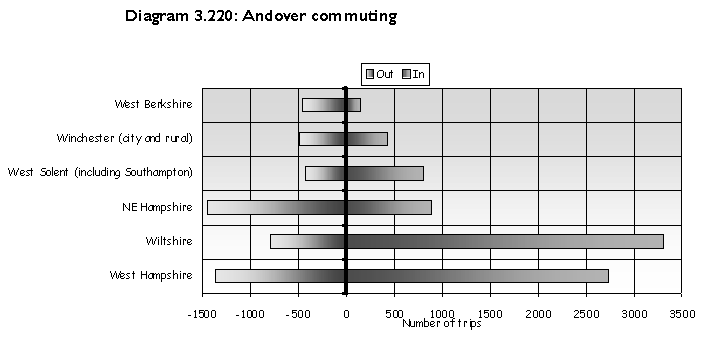
3.220 Andover provides employment, services and facilities for the surrounding rural area. The town has a relatively high degree of self-containment with around 70% of employed residents living and working in the town. It also benefits from a largely modern transport network, including a high capacity ring road and a rail station providing connections to London Waterloo and Exeter/Plymouth. The travel patterns in diagram 3.220 on page 103 show that in-commuting to Andover is significantly higher than the out-commuting. Andover, with its significant employment opportunities attracts trips to work predominantly from the surrounding rural areas of Hampshire and adjacent areas within Wiltshire, around Salisbury.
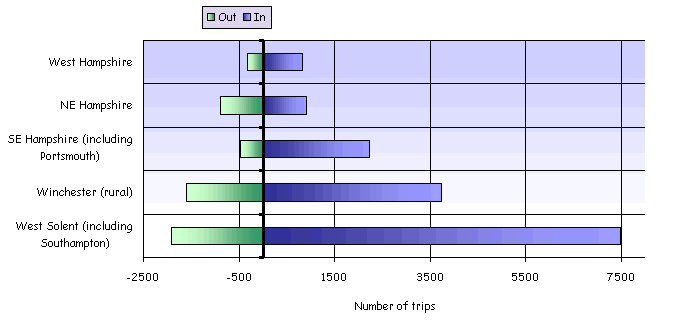
3.221 Winchester is the county town of Hampshire. The historic central area is characterised by narrow ancient streets and the consequential impact of modern day traffic volumes. The proximity to the strategic road network influences travel patterns with connections to the Solent urban area and a rail station providing fast services to London Waterloo and Weymouth and local services to the Solent area. There is a sharp contrast between the levels of in and out-commuting for Winchester as shown in diagram 3.221: The high level of commuting is dominated by the heavy influx from the south Hampshire area (around Southampton - West Solent and South East Hampshire).
Diagram 3.221: Winchester city commuting
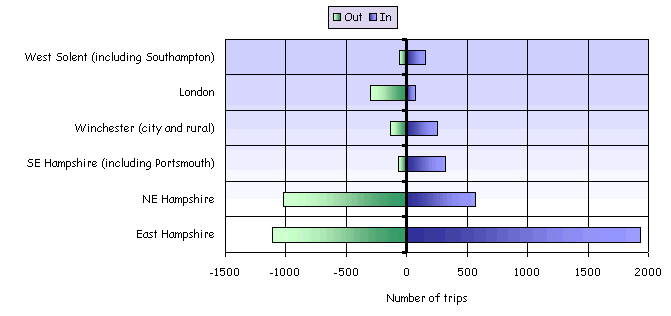
3.222 Alton provides employment facilities and services for its local communities. Diagram 3.222 shows that Alton has similar in and out overall commuting totals. However, the largest movements take place to/from the surrounding East Hampshire area.
Diagram 3.222: Alton commuting
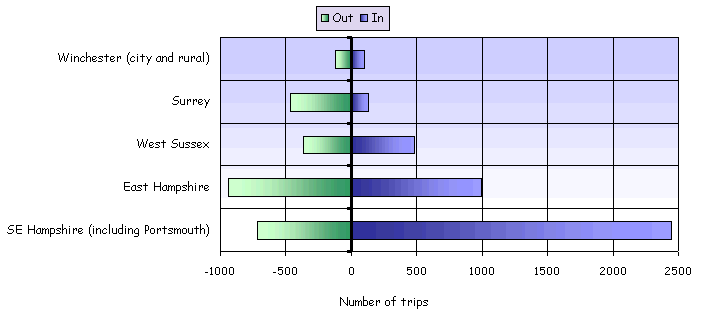
3.223 Petersfield experiences a significant degree of out-commuting with some 55% of Petersfield's working population commuting out-of-town, due in part to good strategic road and rail connections (12% of those out-commuting use the train). Diagram 3.223 shows the largest proportion of in-commuting to Petersfield from South East Hampshire.
Diagram 3.223: Petersfield commuting
3.224 There is a high degree of out-commuting relative to in-commuting in Whitehill/Bordon, as shown in diagram 3.224. The Ministry of Defence is currently examining options to release land at Bordon for non-military use. This could create significant development opportunities in the Whitehill/Bordon area, helping to improve the degree of self-containment.
Diagram 3.224: Whitehill and Bordon commuting
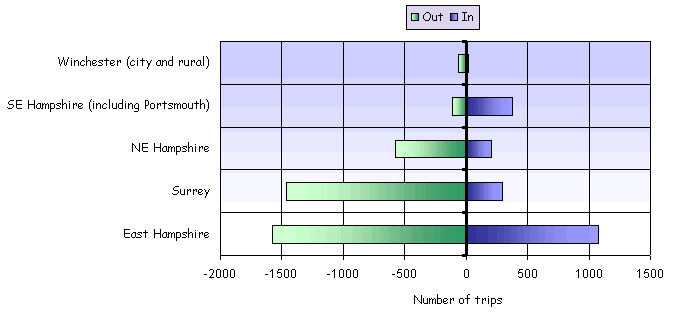
3.225 The problems and issues facing the Central Hampshire area can be broadly divided into those affecting the urban areas and those affecting the remaining rural area.
3.226 Car use in Andover is relatively high (some 65% of residents travel to work in the town by car compared to 5% by bus), considering the high number of people living and working in the town. With the town's road network likely to operate satisfactorily over the life time of this LTP, there are unlikely to be strong incentives in the short-term for a major shift in how people travel. However future proposals are likely to place the existing road network under increasing strain over the longer-term including:
· Construction of a Major Development Area (MDA) during the next five years, currently expected to provide around 2,450 new dwellings and associated facilities.
· Land is safeguarded for significant further housing development beyond 2011 and infill and other development will provide another source.
· Proposed extensions to existing employment areas.
· Likely increasing pressure for further housing in Andover, in line with the emerging South East Plan.
3.227 The bus services in the Andover area are predominantly operated on a commercial basis, but those serving the rural areas largely receive financial support from the County Council. Several CANGO services (demand responsive bus service) operate within and to Andover. The bus station has limited capacity, particularly given that the MDA and other development will increase the need for additional bus bays.
3.228 The rail station is some distance from the town centre but has various buses connecting it to the town centre and good cycle parking facilities. Only around 6% of working residents use the train, reflecting the high level of self-containment.
3.229 Walking makes up a good proportion of trips to work (approximately 20%). The car-orientated nature of the town's transport network and missing links in the walking network work against promoting walking. Cycle use makes up 5% of work trips in the town and is also affected by missing links and the lack of route signing.
3.230 Winchester city experiences the classic problems of an historic city centre: narrow streets and footways, with very limited room for increasing provision for any road users, while trying to cope with the effects of current levels of traffic. Winchester experiences a net in-commuting of work trips of around 10,000 per day, which contributes to local air quality and local congestion problems. In response to the recorded levels of pollution, the city centre is designated as an Air Quality Management Area. Most bus services within the city operate on a commercial basis, with promising increases in patronage in response to measures introduced through Quality Bus Partnerships. Other improvements include the renewed interchange at the rail station and the large extension to the existing park and ride site at St Catherine's, Bar End.
3.231 Infill development continues in the city. A reserve MDA housing site in north Winchester and the possibility of further development proposed through the South East Plan in the longer-term are likely to increase pressure on the transport network.
3.232 The M3 around Winchester experiences heavy traffic flows. Accidents on the motorway can badly affect the surrounding local road network as traffic seeks alternative routes. Junction 9 (roundabout linking the M3 with the A34) creates a serious bottleneck on this part of the strategic road network connecting the Solent area and the ports of Southampton and Portsmouth with the Midlands and beyond.
3.233 Concerns for the other main settlements in the strategy area involve:
· Adequate provision for pedestrians and cyclists.
· Access to facilities by public transport.
· Access to and parking at rail stations.
· How traffic affects communities, particularly relating to the speed of traffic and the routeing and control of heavy goods vehicles.
3.234 Car ownership and usage is high, but there are areas of low accessibility to services and facilities for those who do not or cannot use a car. A loss in local services can increase isolation and create greater travel demands.
3.235 The programmes for the Central Hampshire area will need to take account of the accessibility needs of and traffic management issues for the rural areas, particularly in relation to the East Hampshire AONB and the North Downs AONB. Key issues include:
· Adequate access that does not adversely affect the rural environment (essential in helping to maintain the tourist economy, protect jobs and facilities in these areas).
· Careful balance between reducing sign clutter and safety considerations.
3.236 Andover's transport network is generally operating satisfactorily with minimal congestion problems. This is likely to change over time as the MDA and in the longer-term, the South East Plan, are implemented. This will create opportunities to improve travel choices over the next five years, supported by funding from development to help meet the likely increased demands. Walking makes up a high proportion of trips-to-work. Improved access for walking and cycling can reduce the need to travel by car. Small-scale improvements such as puffin crossings and dropped kerbs are particularly important to people with disabilities. Partnership working can help to encourage use of public transport, eg Quality Bus Partnerships. Better information and use of new technology can also help promote public transport.
3.237 The nature of Winchester city's road network serves to constrain car use (42% of residents travel to work by car - one of the lowest proportions in Hampshire). Traffic flows on the radial routes into the city have remained constant over the last five years. A high proportion of people also walk to work (43%). Advantage should be taken of this propensity to walk to reduce the perceived need to travel by car. High levels of walking helps to contribute towards reducing the fear of crime. A lower proportion of people cycle to work (4%). Increased public transport provision and greater accessibility, particularly by walking, can contribute positively to reducing the impact of traffic and associated air quality problems. Over 50% of all in-commuting is from the Solent area, emphasising the potential to accommodate this concentrated movement through improved public transport, particularly by rail and park and ride. Air quality and localised congestion problems in the city cannot be addressed simply through road building. A reduce, manage and invest approach will be applied to reduce the need to travel, make the best use of the existing infrastructure and promote alternatives to the car.
3.238 Travel demands within rural areas can be eased through the retention or improvement of local facilities and services. The Hampshire Rural Pathfinder programme promotes such initiatives. Improved access to rail stations in smaller settlements and rural locations can help to reduce car travel into towns. Access to the countryside generally will help to promote healthy lifestyles with appropriate attention to the needs and safety of particular rural groups such as horse riders and walkers. Specifically, the Central Hampshire programme will be integrated with the development of the Rights of Way Improvement Plan.
Summary of key problems in the Central Hampshire Transport Strategy area
Problems |
Actions |
High levels of car use within Andover could lead to problems of congestion in the future. |
The County Council, working with Test Valley Borough Council, will maintain the effective operation of the road network in Andover. A programme of measures to promote and enhance travel choices is an integral part of the long term strategy (chapter 4) |
Cycle routes are missing or incomplete pedestrian in many towns. |
The programme of transport master-planning will help to identify gaps in walking and cycling routes. The proposed LTP programme (chapter 6) includes funding for measures to tackle severance within towns. |
Limited access to facilities and services in some rural areas and settlements. |
The accessibility strategy (chapter 5) aims to tackle problems of accessibility, especially in rural areas. Walking and cycling issues within settlements will be addressed, coupled with promoting the retention of local facilities. |
Air quality problems and localised congestion in Winchester. |
Problems in Winchester will be tackled through a transport master-plan and the Air Quality Action Plan. The LTP proposes an additional park and ride facility to the south of Winchester, linked to the potential relocation of parking from the city centre to park and ride sites and the promotion of cleaner vehicles. |
Impact of possible large scale development in Andover and Winchester over the longer-term. |
Transport master-planning and effective development control policies will be used to minimise the impact of development. |
The impact of traffic on rural settlements. |
The LTP will tackle the impact of traffic on rural settlements through measures to manage vehicle speeds, traffic routeing and HGV movements. Where appropriate the County Council will look to improve footways and pedestrian crossings. |
Opportunities |
Actions |
Good road network in Andover. |
The County Council will seek to make the best use of the existing road network. |
Low levels of car use for trips within Winchester and relatively high levels of bus use and walking. |
· The transport master-plan for Winchester is likely to include proposals to promote non-car modes to help reduce the need to travel by car. · Car parking policy within the city is also expected to be linked to future park and ride proposals. |
Transport infrastructure improvements associated with Major Development Areas. |
Through its development control procedures, the County Council will ensure that new developments promote increasing travel choices and good access to local facilities. Where necessary, phased implementation will be encouraged to meet the needs of development and to minimise impact. |
Opportunity to build on the success of ark and ride in Winchester. |
An additional park and ride site is planned for the south of Winchester during the LTP period (chapter 5). |
Chapter 4: Long-Term Strategy
Long-term area strategies
Central Hampshire Transport Strategy area |
4.87 The Central Hampshire Transport Strategy area is largely rural in nature, but also includes a number of market towns and the city of Winchester, which act as service centres for the rural populations.
4.88 The long-term vision for the area is:
To achieve a more sustainable approach to transport provision which reduces the need to travel, provides access to local facilities, promotes social inclusion and improves the quality of life by working in partnership, to find local solutions. These solutions should protect the rural and urban environment, integrate land use and transport planning and improve travel choice and accessibility for residents businesses and visitors.
4.89 The area objectives are:
· To support the local economy and the provision of local facilities.
· To encourage genuine travel choice, promoting alternatives modes of transport to the car, especially for intra-urban journeys.
· To improve town centre accessibility .
· To maintain the rural character and protect the environment in developing transport schemes and solutions.
· To reduce road accidents and improve personal safety.
· To improve public transport services.
· To optimise the road network through the innovative use of ITS and traffic management techniques.
· To develop a further park and ride site for Winchester.
· To promote social inclusion particularly within the rural communities.
· To consider the needs of people with mobility impairments.
· To raise public awareness to encourage changes in travel behaviour.
· To develop town centre master-plans aimed at reducing the need to travel, maintaining the self-contained nature of the towns and managing the future growth in traffic.
· To contribute to improving air quality specifically within Winchester City's Air Quality Management Area.
· To consider the transport implications of the future growth of housing as part of the South East Plan.
· To consider the growing leisure demand for recreational access to the countryside, notably in the context of the proposed South Downs National Park.
· To ensure appropriate infrastructure is provided in association with future development.
The key themes of the long-term strategy are:
Managing the need to travel by promoting the self containment of town centres
4.90 Transport master-plans for the main settlements will identify overall strategies aimed at reducing the need to travel, managing travel needs and investing in measures to meet the future requirements of these communities.
4.91 Crucial to the development of sustainable travel movements within town or city centres and minimising the impact of traffic is the ability to move around effectively on foot and bicycle. Community accessibility audits will be undertaken to identify measures that will improve access by these modes. This approach will contribute to a longer-term vision of reducing traffic growth and the introduction of demand restraint measures.
Managing travel demands in Winchester
4.92 The long-term aims for Winchester are to: reduce the need to travel; reduce the volume of traffic travelling into the central area; reduce the current air quality and localised congestion problems; improve the environment and safety for pedestrians and cyclists; and increase the efficiency and attractiveness of public transport. These measures will have to be consistent with protecting the vitality and commercial viability of the city.
4.93 A key component of this long term aim is the completion of the park and ride strategy for Winchester. This will be closely associated with measures to assist bus movements and a car parking strategy that relocates parking from the centre to park and ride sites.
4.94 An Air Quality Management Area has been declared in the city centre and an Air Quality Action Plan is close to being finalised. Traffic contributes significantly to this problem. The reduction of traffic flows in the centre by a combination of park and ride, bus priority measures, possible traffic circulation changes, improved driver information, t he promotion of cleaner vehicles and reductions in parking provision will be a major element in tackling the priority issue of air quality.
Improving rural accessibility to local facilities and services, and reducing the impact of traffic in the rural areas
4.95 In considering the priorities for the rural areas and smaller settlements it is recognised that the car will remain the dominant mode of transport. However this creates problems in terms of the impact on the environment and the degree of isolation it can create for those without access to a car. A key long term aim will be to manage this demand with the need to protect the environment and to seek to improve accessibility for all.
4.96 The traffic impacts on rural communities that will need to be addressed are generally well known - for example, traffic speeds; the routeing of traffic including goods vehicles; safety issues including the effect on travelling to school; inhibiting walking and cycling; and signing with its impact on the environment.
4.97 Public transport provision will be tailored to suit the particular and generally low demand in rural areas. Overcoming the accessibility issues for the young and old and those without access to a car is a priority. Increasing use could be made of demand responsive services, community schemes and for example shared taxi schemes. Improved access for all modes to rail stations will also help accessibility in rural areas and to a degree, reduce traffic inflow into larger settlements.
4.98 Transport is only part of the picture in meeting the needs of rural communities. Improved accessibility to services will rely on initiatives to preserve and enhance these facilities, such as through the current Rural Pathfinder Project.
4.99 Recreational access to the countryside is an important goal. It is important in terms of health and general well being. Catering for and managing that demand will be a significant issue for the future of the Central Hampshire area, as the proposed South Downs National Park is established.
Ensuring appropriate infrastructure is provided in association with development
4.100 The larger settlements within the central Hampshire area are likely to expand over the longer term, providing more housing and employment, together with other community and commercial developments. These developments will be required to contribute towards transport infrastructure and services that provide travel choices and ameliorate their impacts on the existing communities.
4.101 A key long-term aim for Andover will be to maintain and enhance the transport network and systems so that they are fit to meet the challenges created by future, large scale development in the town. The traffic demands of the existing community will continue to grow and new development will add to that demand. The town is well provided for in terms of highway infrastructure, with only limited and localised congestion at peak periods. However this network will come under greater pressure in the longer-term, with the prospect of more widespread congestion. It will be important to improve travel choices and improve accessibility by all travel modes to services and facilities. Effective travel information will play an increasing role in more effective use of the transport network and providing travel choices.
4.102 The longer-term strategy for Andover should build on the high degree of self containment that it currently enjoys. Housing development must be matched by appropriate provision of employment, shopping, leisure and community land uses. The transport network should positively contribute to the perceived benefits of living and working in the town through easier access by walking, cycling and public transport.
4.103 The relative high quality road network in Andover is a valuable asset that should be safeguarded for the long-term through the utilisation of intelligent transport systems, travel information and traffic management methods.
4.104 Future development in Winchester will need to recognise and take account of the particular character of the city. This makes it difficult, for example, to develop major highway schemes that impact on historic buildings or landscape. Emphasis will need to be placed on promoting and providing for alternative modes and making the best use of the existing transport network. Winchester already has a relatively low level of car use and a high degree of walking, for trips within the city and Quality Bus Partnerships have produced promising results. Progress on the Park and Ride Strategy will add further to a firm base from which to promote sustainable alternatives over the long term.
Improving accessibility in East Hampshire - Petersfield, Alton and Whitehill/Bordon
4.105 A priority for these settlements is to provide improved accessibility to key services and facilities. A sustainable mix of development is needed to help reduce travel demands and journey lengths. Well-maintained and continuous networks for walking and cycling will contribute to these aims.
4.106 Where development occurs, the appropriate infrastructure should promote travel choice and where possible enhance the transport provision for the existing communities. Whitehill/Bordon is an area where significant development may occur. This will bring with it the opportunity for a more sustainable community in the long-term, enabling improved local facilities, a more solid employment base and enhanced transport infrastructure.
Chapter 5: Five Year Strategy
Five year area transport strategies |
Central Hampshire
Alton, Whitehill/Bordon, Petersfield and the rural area
5.288 Within these towns and the rural areas the main themes are improving accessibility, public transport and road safety. The key elements of the strategy are:
· Continuing the programme of accessibility measures in Alton.
· Town centre access plans for Whitehill/Bordon (including the Forest Centre) and Petersfield to identify measures that improve walking and cycle access to local facilities and overcome barriers to movement.
· Managing traffic, including traffic routeing, speed controls and safety improvements. Measures are proposed for small settlements through the Village Transport Programme (Selborne, Hursley and Beeches Hill are current candidate schemes).
· Promoting and enabling public transport tailored to local needs to improve rural accessibility, assisted by infrastructure improvements, access strategies for rail stations and information provision.
· Improving access to the countryside.
· Investigating the potential to reduce signing and street furniture clutter.
Andover
5.289 The strategy for Andover focuses principally on accessibility improvements. Improving access to key facilities and activities is central to this approach. There is a need to improve public transport infrastructure and services to provide more travel choice. The key elements of the strategy are:
· Providing improvements to pedestrian and cycle routes, producing complete routes and overcoming severance and ensuring adequate maintenance of these routes. A town centre access plan will be prepared.
· Completing the pedestrian/cycle link between Monxton Road and John Hanson School and between Winton School campus and the town centre.
· Enlarging the existing bus station.
· Promoting bus use through Quality Bus Partnerships, infrastructure improvements and better travel information, including real-time information at bus stops and other locations.
Winchester City
5.290 The strategy for Winchester focuses on improving accessibility and air quality and reducing localised congestion. The key elements of the strategy are:
· Improving accessibility for pedestrians and cyclists. A town centre access plan will be prepared.
· Contributing to improvements in air quality through reducing the impact of traffic, promoting alternative modes and cleaner vehicles.
· Further developing the existing park and ride strategy, together with associated priority measures for buses, traffic management measures, possible changes to traffic circulation and relocation of long stay parking from the city centre to park and ride sites. The next park and ride site is proposed for the south Winchester area.
· More Quality Bus Partnerships on key bus routes.
· Further improvements to interchange provision between bus and rail services and access for people with disabilities.
· Optimising the use of the road network through intelligent transport systems, including variable message signing, and traffic management measures.
· Support safety and capacity improvements at M3 Junction 9.
· Raising travel awareness and promoting effective marketing campaigns.
· Promoting car sharing and car club initiatives.