
Archived decisions
Hampshire County Council
Executive Member - Adult Social Care Item 2
20 January 2006
Budget monitoring 2005/06 and background to the 2006/07 budget position Report of the County Treasurer and Director of Adult Services
|
Contact: David Ward, Assistant Director, Adult Services Department, ext 7259 email: [email protected] or Paul Carey-Kent, Deputy County Treasurer, ext 7525 email: [email protected]
Approved by: |
.......................... |
Date of decision: |
......................... |
Councillor Patricia Banks |
Contact: David Ward, Assistant Director, Adult Services Department, ext 7259 email: [email protected] or Paul Carey-Kent, Deputy County Treasurer, ext 7525 email: [email protected]
1. The purpose of this report is to provide background information to be used in considering the Adult Services revenue budget for 2006/07 and beyond. As the Revenue Budget 2006/07 and 2007/08 report, elsewhere on the agenda of this meeting, makes clear, the forthcoming financial year is one of unprecedented difficulty for a variety of reasons. This report reviews several of these reasons - the current (2005/06) budget position, demand and demographic trends, resourcing and performance issues - and puts Hampshire in a national context.
2. For information, the Adult Services' revised revenue budget for 2005/06 is broadly composed of the following elements:
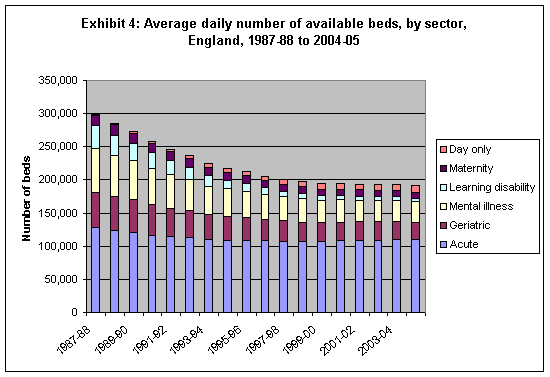
The predominance of social care purchasing from the independent sector is particularly noteworthy, accounting for 60% of the budget, leaving aside Supporting People. This covers the purchasing of residential/nursing, domiciliary and day care. For residential and nursing care, this represents, for the most part, an open-ended commitment to spending for the lifetime care of well over 4,000 vulnerable people. Assessment and care management spending is largely the cost of staff who carry out assessments of the needs of individuals and arrange the provision of service where those people meet the Council's eligibility criteria - a statutory obligation on the Council. Most of the costs of the Council's own provided services are staff costs, with staffing levels being governed by National Minimum Standards and regulated by the Commission for Social Care Inspection.
Demand pressures:
Older people
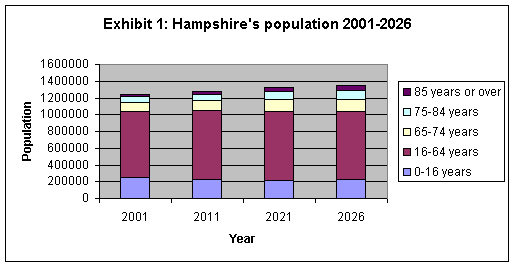
3. Hampshire's population, in common with that of England as a whole, is ageing. Exhibit 1 shows how the population size and composition are expected to change up to 2026.
4. The main features to note are:
_ Although the population overall is expected to grow by 104,000 (8.4%), this growth is accounted for entirely by growth in the population aged 65 or over (+106,000);
_ Within this, the greatest level of growth is exhibited by the population aged 85 years or over which is expected to double by 2026 (an additional 25,000 people);
_ The pensionable age population now is 26% of the working age population. By 2026, this proportion will have risen to 37%.1
5. This implies mounting service pressures as a result of diminution in the caring-age population as well as the straight demographic increase: there will be fewer carers around to provide informal care for an increasingly dependent population of the very old. Families will be more likely than they are today to turn to the state for help. It is also likely to mean growing cost pressures as shrinkage in the working age population is likely to result in labour market shrinkage and higher wage costs.
Demand pressures:
Younger disabled people
6. The adult non-elderly population is expected to remain fairly stable over the period to 2026, rising only 3% in the 25-year period. However, there are several reasons why it is expected that the number of people with disabilities will rise disproportionately.
7. The first concerns falling infant mortality rates. These have fallen steadily in England for many years: at the end of the Second World War the rate stood at 50 per 1,000 live births; it is now 5. During this period, the South-East England rate has been slightly lower than that of the nation as a whole. These trends are shown in Exhibits 2 and 3.2
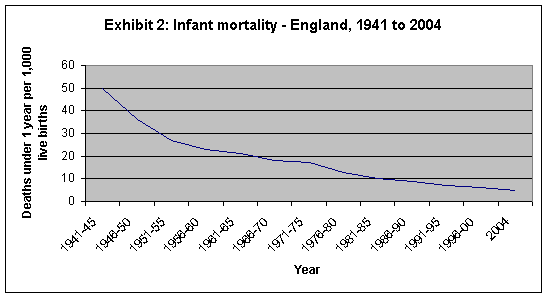
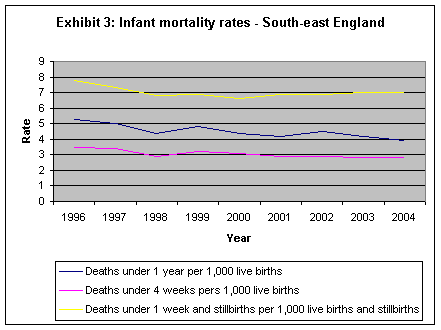
8. The significance of these trends for demands for social care services for adults is that many more children who would otherwise have died are surviving, thanks to continuous improvement in medical technologies. This particularly applies to low and very low birthweight and premature babies who are more likely to suffer from congenital anomalies such as Down syndrome and central nervous system disorders such as Hydrocephalus and Spina bifida. While the infant mortality rate continues to fall, the number of babies notified to the National Congenital Anomaly System rises: 5,750 babies were notified in 1993 (84.9 per 10,000 total births), 6,983 (111.8 per 10,000 total births) in 2003. In Wessex, including Hampshire, there were 228 notifications in 1995 (a rate of 77.7 per 10,000 total births) and 308 (a rate of 114.3 per 10,000 total births) in 2003 - an increase of 35%3. Many of these babies have serious disabilities necessitating special care throughout their lives.
9. The second reason is that more children with severe disabilities, having survived infancy, live to become adults. 120 people have been identified who will move from Children's to Adult Services in 2006 and 2007, with the majority potentially requiring packages of support in excess of £50,000 a year each. The lifetime cost to the Council of providing services to each of these is likely to be some millions of pounds.
10. The third is that significantly more people with a learning disability are living beyond middle age.
11. These trends were commented on by the Learning Disability Taskforce, established by the Department of Health, who reported on the significant financial pressures that local authorities were facing on their Learning Disability budgets. It states: "Our report gives compelling evidence of an increased level of demand from people with learning disabilities. This is caused by a variety of factors including people living longer, children with complex disabilities surviving at birth and increased expectations from people with learning disabilities and their families for an equal quality of life with non-disabled citizens..... Between 2001 and 2021, on a conservative assumption, there will be a 36% increase in the numbers of adults with learning disabilities aged over 60 in England. There will be an 8% increase in the total numbers of adults with learning disabilities between 2001 and 2011 and an 11% increase between 2011 and 2021."
12. 10% of Hampshire's working age population, around 79,000 people, reported themselves as having a `limiting long-term illness' in the 2001 Census.
13. A further impact of the changes in mortality is to the older persons services, as people with learning disabilities are now surviving into older age. Some of this population has been `hidden' and only come to the attention of social services when their parents or carers die, so it has been difficult to predict and plan for the future.
Demand pressures:
Carers
14. At the time of the 2001 Census, 114,000 Hampshire residents reported themselves as unpaid carers - 9.2% of the whole population. Of these, 17.5% provided 50 or more hours of care a week. This amounts to 1.6% of the whole population of the county, nearly 20,000 people. It is important to note that the Council has a responsibility for assessing the needs of carers in their own right and providing them with services that meet their needs, adding to the other demand pressures.
Demand pressures:
Health Service changes
15. Undoubtedly, a major contributory factor to growing demands for social care services can be seen in the many changes that have been taking place in the Health Service. Prominent amongst these are changes in the availability of hospital beds, most notably in the reductions in geriatric and learning disability beds. These have been long-term trends, the national picture covering changes in bed availability between 1987/8 and 2004/5 being shown in Exhibit 4.
16. This national picture shows that the number of available:
_ geriatric beds were halved (26,000 lost in total);
_ 85% of learning disability beds were closed (28,500 in total);
_ 53% of mental illness beds were closed (35,500 in total)4.
17. The local picture - hospitals in and around Hampshire serving the Hampshire population - is shown in Exhibit 5.
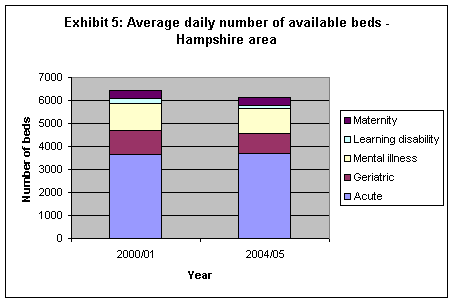
18. This shows that in recent years while the number of acute beds has risen by 84 (2.3%), the number of geriatric beds fell by 227 (21.5%), the number of learning disability beds by 49 (24.1%) and the number of mental illness beds by 76 (6.4%). These bed closures continue, with a particular focus on community hospitals. Some of them are:
_ Beds at Alton Community Hospital were reduced from 48 to 24 in June 2005;
_ Beds at Fleet Hospital were reduced from 18 to 12 in July 2005;
_ Rehabilitation beds were closed at Moorgreen Hospital in July 2005;
_ Winchester and Eastleigh Healthcare NHS Trust announced that there would be 75 fewer beds within 12 months, 34 of them by July 2005, 22 at Andover War Memorial Hospital;
_ New Forest Primary Care Trust have ended provision at Fenwick Hospital (20 beds);
_ East Hampshire Primary Care Trust has closed Emsworth Cottage Hospital, with a loss of 15 beds;
_ Fareham and Gosport Primary Care Trust has closed St Christopher's Community Hospital with a loss of 31 continuing care beds, 17 intermediate care beds and 9 stroke rehabilitation beds.
19. To some extent, these losses are being compensated by purchasing health care outside the NHS but, inevitably, they also result in greater demands for social care. Some of these closures have resulted in patients being transferred into the Council's care provision.
20. Two other factors are important to note in relation to the availability of beds in NHS hospitals:
_ there are clear expectations of the contribution that social care will make to resolving capacity problems in acute hospitals in times of peak demand. Such a situation has recently arisen at the Queen Alexandra Hospital, Portsmouth when the Council and Portsmouth City Councils were asked to expedite hospital discharges in order to free-up beds to provide for an unusually high number of Accident and Emergency Department attendances.
_ Turnover rates are rising and patient stay lengths are diminishing with significant operations such as hip replacements being carried out with much shorter stays in a hospital bed. This is causing increased demand for follow-up care in people's own homes or residential care.
21. Alongside the trend of reduction in bed availability is a national trend of reduction in at least some aspects of patient care in the community. While the number of qualified nurses in total employed in England by the NHS rose by 23% between 1997 and 2004 (246,000 to 302,000 full time equivalents), the number of qualified district nurses fell by 12% (from 11,300 in 1997 to 10,000 in 2004) and the number of nurses working in learning disabilities by 24% (from 9,900 in 1997 to 7,500 in 2004)5.
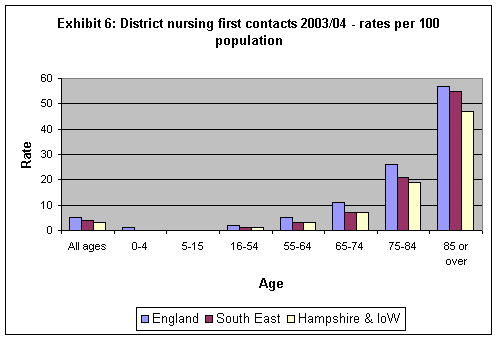
22. It follows that the number of patients cared for in the community by district nurses has also fallen: the number of first contacts (different persons receiving care) fell by 2% between 1988/89 and 2003/04 and the number of new episodes of care by 12.5%. Exhibit 6 expresses the 2003/04 numbers for first contacts as rates per 100 population. It shows that the contact rates increase with patients' age. It also shows that the rate is substantially lower in Hampshire and the Isle of Wight than either England as a whole or the South-East: the rate of 47 contacts per 100 patients aged 85 or over in Hampshire/Isle of Wight is 18% lower than the England rate6.
23. These capacity reductions in both hospital and community health care probably explain the increasing rate of referrals from the Health Service. These accounted for 48% of all referrals in 2000/01 and this proportion had increased to 58% in 2004/05.7 2004/05 data are the latest available from annual returns made to the Department of Health but recent indications suggest that this upward trend is increasing. Some early hospital closures, particularly those of mental illness and learning disability hospitals, were carried out in association with the then Social Services Department and alternative provision for patients/service users was made by Social Services enabled by funding transfers from the Health Service (`section 28a transfers'). This has not automatically been the case with more recent, piecemeal bed closures. Action is being taken to track such changes and secure the transfer of resources wherever possible.
Demand trend
24. Growth in demands can be seen in the `Referrals, Assessments and Packages of Care' returns submitted annually to the Department of Health. In 2000/01, 26,505 contacts were received from new clients. This number grew to 27,287 in 2004/05, a 3% increase. Significantly, of these, the needs of 5,773 (21%) were `attended to solely at or near the point of contact', compared with 55% in 2000/01. This suggests that the proportion with appreciable needs, requiring a deeper assessment, was increasing. In fact, in 2004/05, only 1,608 (7.5%) did not meet the Council's published eligibility criteria.
Cost pressures
25. The cost of purchasing services from the independent sector is rising faster than the normal rate of inflation (which is the level allowed for in the budget). Undoubtedly, the costs to independent sector contractors of providing services is rising faster than inflation and these costs, inevitably, are passed on, either in whole or in part. Historically, the introduction of working time regulations and the national minimum wage significantly increased these costs for an industry characteristically paying low wages and expecting long hours to be worked. More recently, national minimum standards, brought in under the Care Standards Act, 2000, and enforced by the Commission for Social Care Inspection, have also pushed up costs through demanding, for example, higher staffing levels and national vocational qualifications.
26. These conditions apply throughout the industry, irrespective of sector or geography, domiciliary, residential or nursing care. The main aggravating factor for social care employers in South-East England is the local employment market. The employment rate in Hampshire is very high - at 81% of the working age population it is 6.7% above the national rate. The unemployment rate is correspondingly very low - 1% compared with 2.6% nationally and 1.5% in South-East England. Average earnings in Hampshire, as a consequence, are 10% higher than elsewhere in country.8
27. This situation continues to present a challenge for the Council in purchasing social care services. Qualitar Consulting Limited recently carried out a review for the Council of all procurement work and concluded that 'upward pricing pressures are unlikely to change and the Contracts Unit will have done extremely well if they can, as before, keep base price increases to between three to four percentage points below the forecast 7% increase in suppliers' input costs.'9. The inflation allowance built into the budget is 2.5% (£3.3m on a purchasing budget of £131m). A 7% increase in prices would cost the Adult Services' budget in 2006/07 £9.2m. A 5.5% increase in prices would cost the Adult Services' budget in 2006/07 £7.2m - £3.9m more than the inflation allowance but £2m less than the estimate of increase in suppliers' costs.
28. The other major cost pressures facing Adult Services relate to the Health Service: continuing care and s28a transfers. Continuing care cases - those people considered to require on-going medical/nursing care appropriate to the Health Service - have been a source of contention between the Council and the Health Service locally for some years. There have been many examples of failure to reach agreement on whether individuals need social care services or whether their needs are more appropriate to the Health Service, despite the application of jointly agreed criteria and guidance and despite arbitration, and many examples of delays in decision-making and in implementing agreed plans. Pressures on the continuing care budgets of primary care trusts in Hampshire have led them to tighten their eligibility criteria for funding health care needs. Currently there are about 20 cases being disputed where it is believed that the Health Service should be funding care. In many of these cases, the Council has had to accept an interim responsibility for funding health care needs rather than leaving service users with no support.
29. The difficulties around continuing care were examined by the House of Commons Health Select Committee recently. The impact on local authorities was summarised by the leading solicitors specialising in health care, Mackintosh Duncan, in their evidence to the Committee. They stated that `we are particularly concerned at the impact that the failures to fund continuing care has had upon local authorities' social services departments' abilities to continue to fund community care services. Obviously, if excessive (and unlawful) expenditure is taking place by social services in respect of health services, it means that it is more difficult for them to fund basic community care services.'10
30. The s28a pressure has arisen where the Council's costs in securing care for individuals transferred by the Health Service, principally on the closure of long-stay hospitals, have increased substantially more than the uplifts applied to the sums of money initially transferred (£15m) to meet the costs of their care. This has resulted in an annual deficit of around £3.2m. Moreover, that position assumes that Health pay the sums due to the County Council. In fact, payment has been slow in recent years despite the agreement for prompt payment half-yearly in advance so that interest earnings can assist with the costs of care management. At the end of December Health still owed most of the Section 28a payments for 2005/06 and some £23m in total to the Council. The Chief Executive is, therefore, taking recovery action.
31. Ray Jones, Director of Adult and Community Services for Wiltshire County Council, writing in The Guardian on 4 January 2006, has commented on these changes, including the NHS `redefining what is a "continuing healthcare" responsibility' as social care. He stated that `narrowing the definition of what is an NHS responsibility is leading to overspends on local authority social care budgets, because, despite the significant transfer of financial responsibilities from the NHS to local authorities, no additional funding is being provided by the government to local authorities to provide more social care services.'
Government expectations
32. In previous years' forward budget reports, attention has been drawn to practice, performance and policy changes demanded of the Council by central government. Invariably, this has been a long list. Some policy initiatives were accompanied by additional funding, the introduction of fines for delayed discharges from hospital care for social care reasons (`reimbursement') being a good example of this. More often, exhortations to deliver better services to one group of service users or another or to meet more exacting standards were not. The past year has been no exception to this pattern. A sample of government requirements and initiatives brought forward in the last year includes:
_ The publication of the Green Paper `Independence, Well-being and Choice' which calls for local authorities to do more to promote independent living and to pursue a preventative agenda;
_ Expectations about care at home, with specialised support, of people with long-term chronic conditions;
_ The better co-ordination of social and health care for vulnerable older people with the aim of reducing unplanned hospital admissions
_ Reducing health inequalities and promoting healthier communities in partnership with primary care trusts;
_ Improving race equality in mental health care;
_ Improvements to mental health services for deaf people;
_ Implementation of the Mental Capacity Act 2005;
_ A new strategy on `Securing Better Mental Health for Older Adults';
_ Promotion of telecare.
Resourcing
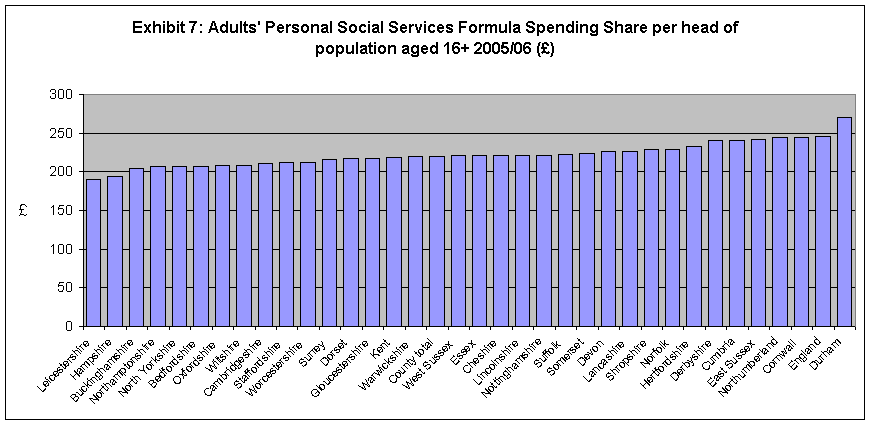
33. The difficulties faced by the County Council resulting from changes in Government funding formulae and mechanisms were set out in the County Treasurer's report to Cabinet on 19 December 200511. Reductions in some areas of financial support, most notably the Supporting People grant, are expected but the more significant reduction in funding is expected two years hence, once temporary (`damping') funding drops out. This will make an already difficult funding position still more problematic. The historic position for Government funding of Social Services is that Hampshire has received the lowest level of financial support for adult services per head of population of all shire counties apart from Leicestershire. This does, of course, reflect the Government's view that Hampshire should be a low-spending authority, but the extent of the differences are questionable and there is no sign in the Government's target-setting that lower levels of activity should be expected. The Formula Spending Share per head of adult population for 2005/06 is set out in Exhibit 7 (Appendix 1) where the Council's figure of £194.27 is also compared with the County Council average of £220.46 (13.5% more) and the England (all types of local authority) average of £246.26 (26.8% more).12 Neighbouring authorities' figures are: West Sussex £220.67, Surrey £222.71, Wiltshire £208.24, Dorset £217.01.
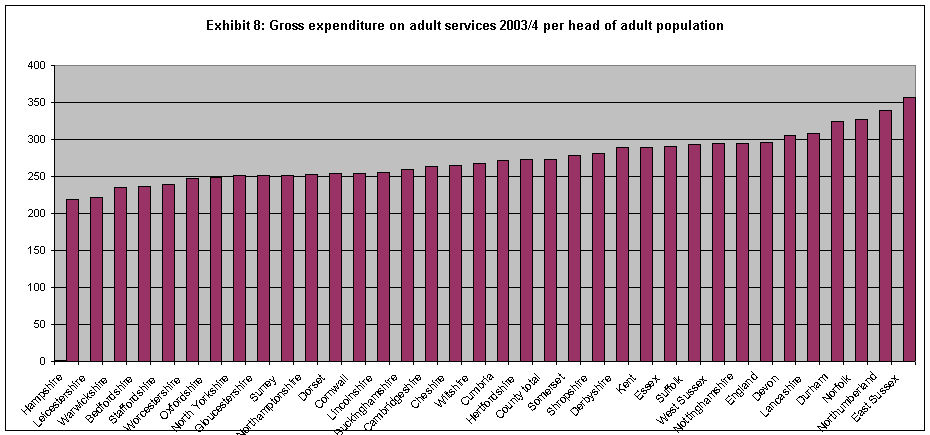
34. The total spend on adult services in 2003/04 (the latest published figures available) per head of population is shown in Exhibit 813 (also in Appendix 1). This shows that the Council's gross spend per head in 2003/04 was less than any other shire county at £218.97.This compared with average of £273.22 (24.8% more) for all shire counties and an England (all types of local authorities) average of £295.55 (35% more). The spend figures of neighbouring counties was: West Sussex £294.31, Surrey £251.77, Wiltshire £268.20 and Dorset £254.18.
35. Given these resourcing - and spending - figures, the comments made by David Behan, Chief Inspector of the Commission for Social Care Inspection, and reported in The Guardian on 1 December 2005 are apposite. He was quoted as saying that `social workers cannot deliver the improvements in services demanded by the government without a significant increase in the £14bn annual budget for social care.' He pointed to lack of support for carers as an example of the inadequacy of services, saying that 5 million people took responsibility for caring for relatives or neighbours who could not look after themselves unaided. About 900,000 provided more than 50 hours' care a week, saving the Treasury a fortune by not relying on public services. Many of these carers became desperate for help or a brief period of respite. But only 65,000 received direct support from social services this year. Mr Behan said local authorities had improved efficiency and the Commission was proposing further measures to improve value for money: `but there is only so much they can do without significant additional funding. The step change in the quality of service required by the government will not happen without extra resources.'
36. These comments were a prelude to the Commission's recently published report to Parliament `The State of Social Care in England 2004-05'. This report points to a number of improvements noted in social services departments, such as the numbers of people receiving support in the home and compliance with national minimum standards in residential care, but it also draws attention to key shortfalls, including:
_ `many people... do not qualify for services because of the high thresholds which give access to them';
_ `councils are concentrating on developing services for those with the highest and most complex needs. Early intervention strategies... need to be improved.'
37. Undoubtedly, service rationing according to assessed needs is happening both in Hampshire and nationally: given limited resources, help has to be provided first to those in the greatest need. Preventive services, inevitably, are squeezed and this trend can only be reversed by the injection of additional resources. David Brindle, writing in The Guardian on 21 December 2005, asked `is anybody in the Department of Health asking what could have been done in social care, to huge preventive effect, with just some of the £22bn extra that has been poured into the NHS over the past three years - so much of it, it now appears, into a black hole of pay and pensions?' He went on to voice fears that `social care will be squeezed out of the reckoning in the forthcoming white paper on out-of-hospital services' because of `NHS deficits, the uncertain direction of acute healthcare reforms and now its own restructuring'.
Performance
38. Despite the relatively low funding position, the Council's delivery against key performance targets has been good. Two stars were retained in the performance rating published on 1 December 2005 with Adult Services judged to be serving most people well with promising capacity for improvement. Key indicators are:
_ For domiciliary care, there have been year-on-year increases in the hours of care delivered. 53,200 hours were provided to people who were supported in their own homes in a sample week in September 2002 and this figure had grown to 76,900 by 2005 - a 44.5% increase. The numbers of service users, however, remained static, with 7,200 households visited in September 2002 and 7,210 in 2005. This is indicative of an increasing service intensity which is needed to sustain increasingly dependent people in their own homes. It is also consistent with the national picture: nationally, between 2000 and 2004, the number of contact hours provided increased by 21% while the number of households receiving services decreased by 11%.14
_ For residential care, the total number of supported residents has been stable for some time - 4,180 in 2002/03, 4,145 November 2005 - but the trend is away from ordinary residential care (where people who in earlier times would have been admitted to residential care are now much more likely to be supported in their own home) to nursing care which is considerably more expensive. In 2002/03, 37.6% of residents supported by the Council in long term care were in nursing homes and so far in 2005/06 this proportion has risen to 41.2%.
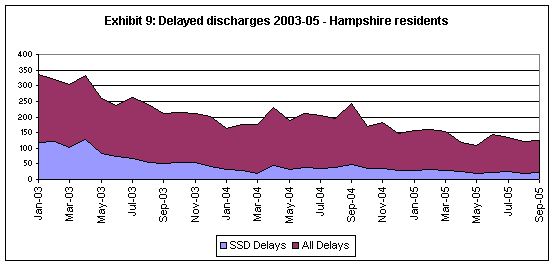
_ For delayed transfers of care from hospital, the numbers reduced very markedly before January 2004 when the reimbursement regime began: it was reported to the Executive Member (Social Care) in January 2004 that a great deal of progress had been made in reducing the number of delayed transfers attributable to social care (from 132 on 6 April 2003 to 32 on 14 December 2003). The numbers have reduced somewhat since reimbursement came in but the Council is having to make enormous efforts to maintain the relatively stable position shown in Exhibit 9 as pressures for early hospital discharges mount. A net reduction of 1 delayed transfer will be the product of expediting 15 or 16 hospital discharges.
39. A fuller report on Adult Services' performance appears elsewhere on the agenda of this meeting.
Summary of pressures
40. The following is a summary of the pressures, of various kinds, on the Adult Services Department:
_ Increasing numbers of vulnerable people;
_ Increases in the complexity of needs;
_ Changes in Health Service capacity, delivery methods and customer base;
_ Funding difficulties for and performance pressures on the Health Service locally leading to disputes over continuing care and under-funding of s28a transfers;
_ Increasing service expectations;
_ Increasing performance requirements;
_ Changes to required models of care which are more expensive - particularly care at home in preference to residential care;
_ New requirement to develop well-being services and early intervention;
_ Funding decreasing relative to the population in need and cost pressures and absolutely in the medium term;
_ Requirements to find efficiency savings;
_ Increasing costs of purchasing care from the independent sector well above the prevailing rate of inflation.
2005/06 budget position
41. In the context of growing demand pressures, both because of demographic trends and changes in the NHS as set out above, there are severe pressures on the current year's budget. The forecast out-turn position reported in July 2005 (based on spending and commitments to the end of May 2005) was £2.8m, which it was planned to manage down to the cash limit. The latest position, reported in more detail in Appendix 2, is of a pressure of £5.7m - with service purchasing in both the older people and adults sectors likely to overspend by £5.1m and £1.9m respectively, offset by a forecast underspend on Management and Resources (-£0.8m) and expected receipt of reward grant from the Local Public Service Agreement (-£0.5m), assuming that this can be taken account of within the overall budget strategy through to 2006/07.
42. While action is being taken on a number of fronts to minimise spending, including restricting care purchasing to only the highest priority cases, maximising the use of in-house services and block service contracts, restricting the filling of staff vacancies and reducing the availability of staff training opportunities, it is not thought likely that the budget can be balanced at the year-end. Accordingly, it has been judged prudent to recommend that provision is made in the 2006/07 budget for the repayment of a £2m overspend but this is optimistic: an overspend of some £4m is judged a likely outcome at this point, though every effort will be made to reduce this.
Recommendation
1. That the Adult Social Care Policy Review Committee be invited to consider this report and make any observations on its content to the Executive Member, Adult Social Care.
2. That the Executive Member, Adult Social Care, be advised to note the budget monitoring information presented in this report showing the pressures on the Adult Services' revenue budget and the rising demand and other pressures facing the Department.
Appendix 1: Charts comparing Hampshire's Personal Social Services Formula Spending Share and Adult Services spending with those of other shire counties
Appendix 2
Adult Services
2005/06 Budget - Position Statement at 31 October 2005
1. Introduction and Summary
1.1. The Executive Member for Adult Social Care received a budget position statement in July 2005 which highlighted significant pressures within Adult Services, estimated at that time as £2.8m.
1.2. There were pressures within the Younger Adults client groups from the full-year effect of placements made in 2004/05, loss of Supporting People funding, the impact of transition of children with disabilities into adult services and reluctance of the Health Service to accept responsibility for funding under continuing care arrangements. There were also significant pressures within the Older People sector from purchased domiciliary care and direct payments
1.3. Despite management action to counteract these pressures, they have since intensified and based on the position at the end of October 2005 an overspend of £4.0m is now forecast. This is shown in detail in Annexe 1 and summarised in the table below:
Table 1 Summary of Variances
Area |
Period 7 |
£m | |
Adult Services: |
|
Adults |
+1.9 |
Older People |
+3.6 |
Sub Total |
+5.5 |
Management and Resources |
-1.0 |
TOTAL |
+4.5 |
LPSA Reward Grant - Older People |
-0.5 |
TOTAL |
+4.0 |
1.4. These variances are explained in the sections below. In general they relate to a continued growth in the number of nursing care placements, direct payment recipients and people in receipt of domiciliary care, with the number of people in receipt of day and residential care remaining relatively static.
1.5. Analysis of the financial figures as at the end of November is ongoing and an update will be reported orally at the meeting. However initial figures and activity data trends suggest that the demand pressures are increasing rather than reducing, despite management action.
1.6. These projections assume (as highlighted in the main report) that full payments will be received from Health.
2. 2005/06 Cash Limit
2.1. The 2005/06 Cash Limit for the Department as at the 31 October 2005 is £257.9m. This includes the budgets for all support staff under the Deputy Director and Assistant Director of Resources and differs from the Original Revised budget for 2005/06 shown in the Revenue Budget 2006/07 and 2007/08 report elsewhere on the agenda, which incorporates the impact of future revised staffing arrangements in the Adults and Children's Services Department.
3. Older People
3.1. The pressures within the Older People client group principally relate to purchased services, with in-house services anticipated to break even overall. The pressure on purchased domiciliary care and direct payments budgets is in the region of £5.3m. However an anticipated switch to community care (non- residential) based services that was to generate savings of up to £3.6m on nursing budgets (which, together with other savings of £1.7m, would allow a balanced budget) has not been achieved.
3.2. Table 2 below shows the overall client numbers at the start of the year, as at October 2005 (the period on which this financial report is based) and at December 2005 (the latest activity date), highlighting the increased pressures.
Table 2: Client numbers - Older People
Service |
Client Numbers | ||||
April 2005 |
October 2005 |
December 2005 | |||
Residential Care |
2,404 |
2,337 |
-2.8% |
2,335 |
-2.9% |
Nursing Care |
1,539 |
1,665 |
+8.2% |
1,668 |
+8.4% |
Domiciliary Care and Direct Payments |
6,320 |
6,842 |
+8.3% |
6,948 |
+9.9% |
Day Care |
1,733 |
1,817 |
+4.8% |
1,836 |
+5.9% |
Total |
11,996 |
12,661 |
+5.5% |
12,787 |
+6.6% |
4. People with Learning Disabilities
4.1. A pressure of £1.9m within People with Learning Disabilities arises from the withdrawal of Supporting People funding, the cost of transition of clients from children's into adult services and the full-year effect of care packages agreed in 2004/05 after this year's budget was agreed. This pressure principally affects residential care but has also affected nursing, day and domiciliary care as well.
4.2. Table 3 below shows client numbers at the start of the year, at October 2005 and at December 2005 (the latest activity data). Despite the management action being taken, client numbers have shown a small increase overall during the year.
Table 3: Client numbers - People with a Learning Disability
Service |
Client Numbers | ||||
April 2005 |
October 2005 |
December 2005 | |||
Residential Care |
923 |
928 |
+0.5% |
925 |
+0.2% |
Nursing Care |
25 |
28 |
+12.0% |
29 |
+16.0% |
Domiciliary Care and Direct Payments |
688 |
747 |
+8.6% |
738 |
+7.3% |
Day Care |
1,250 |
1,245 |
-0.4% |
1,249 |
-0.1% |
Total |
2,886 |
2,948 |
+2.1% |
2,941 |
+1.9% |
5. Other Client groups within Younger Adults
5.1. Whilst anticipating that other client groups will achieve a balanced budget, there are significant pressures that need to be highlighted as there is a risk that this cannot be achieved.
5.2. People with Physical Disabilities are expected to manage the pressures within budget and break even at the year-end. This pressure, principally within the domiciliary care and direct payments budgets, has been estimated to be in the region of £0.85m. It is envisaged that management action will ensure a balanced budget at the year-end. As shown in table 4, client numbers are decreasing although they are still higher than at the start of the year.
5.3. The management action involves approving spend on high risk cases only, holding of vacancies and maximising alternative sources of funding.
Table 4: Client numbers - People with a Physical Disability/Sensory Need
Service |
Client Numbers | ||||
April 2005 |
October 2005 |
December 2005 | |||
Residential Care |
149 |
154 |
+3.4% |
156 |
+4.7% |
Nursing Care |
88 |
98 |
+11.4 |
100 |
+13.6% |
Domiciliary Care and Direct Payments |
1,140 |
1,204 |
+5.6% |
1,195 |
+4.8% |
Day Care |
356 |
349 |
-2.0% |
346 |
-2.8% |
Total |
1,733 |
1,805 |
+4.2% |
1,797 |
+3.7% |
5.4. The People with Mental Health Needs client group continues to report a balanced budget overall through management action being taken. This includes staff vacancies being held wherever possible, reducing the use of residential beds and authorising community care expenditure only where essential.
6. Management and Support
6.1. Expenditure in this area relates to both the Performance Management Unit and the Resources sector. Savings of £0.985m have been identified through vacancy management within the administration, partnership and performance management and other teams as well as reduced recruitment, training and premises costs.
7. Management Action
7.1. The detailed management action plan agreed by the Department's Management Team that is being implemented includes the following actions to attempt to manage the budget:
· Reviewing the needs of service users currently receiving care to determine whether `right sizing' of care, particularly domiciliary care, may be appropriate for some;
· Peer review and senior management scrutiny of Panel decisions to ensure consistency in the application of eligibility criteria and in provision of care;
· Maximising the use of in-house services and pre-purchased `block contract' provision
· Holding of all non front line vacancies and reduced use of agency staff and overtime.
7.2. Action has been taken to tighten the application of eligibility criteria and manage demand down:
· Screening of referrals to divert people not in greatest or urgent need of care. For example, evidence from one locality since the introduction of management action in October 2005, indicates during the nine weeks between 9 November 2005 and 3 January 2006, 399 referrals were made to Adult Services in Havant & Petersfield (all adults), of which:
o 211 were screened out and diverted to other agency services
o 69 were assessed as not meeting the Council's eligibility criteria
o 119 were assessed as having critical or substantial need and therefore eligible for funded social care
· Taking longer to assess need and provide care. In April 2005:
o 84.6% of clients aged 65+ were assessed within 4 weeks. In November 2005 (latest available information) this had fallen to 78.8% of all clients aged 65+ (below our 05/06 year end performance target of 85%)
o 72.8% of new clients aged 65+ received a service within 4 weeks of assessment. In October 2005 (latest available information) this had fallen to 66.3% (and well below our performance target of 88%)
It should be noted however that the Adult Services performance in the timely provision of assessment and services is externally monitored and there is a significant likelihood that the Department will fail to achieve certain performance targets.
7.3. The impact of these measures has been to manage demand for new care packages down as indicated below:
In April 2005:
· 127 adults were placed in nursing care homes
· 378 adults were placed in residential care homes
· 1,121 adults were provided with domiciliary care packages
In November 2005:
· 103 adults were placed in nursing care homes
· 215 adults were placed in residential care homes
· 598 adults were provided with domiciliary care packages
7.4. However, the effect of this management action has been more than offset by the number of service users who continue to receive care in accordance with the Council's policy. For example:
In April 2005, excluding those newly assessed for care:
· 1,667 were in nursing homes
· 3,617 were in residential care
· 7,641 were in receipt of domiciliary packages
In December, excluding those newly eligible for care, this had increased to:
· 1,815 people in nursing care homes
· 3,531 people in residential care
· 8,284 people in receipt of domiciliary packages
7.5. This would indicate that management action to address budget pressures through rigorous application of the Council's eligibility criteria has had some impact but been offset by increased demand. The numbers of service users in receipt of care - more people in receipt of nursing care, fewer in residential care and more people receiving care at home - are consistent with the strategic service plan for older people.
Annexe 1 to Appendix 2
Adult Services - Revenue Budget Monitor 2005/06 | ||||||||
Position as at 31st October 2005 | ||||||||
Period 07 Position |
||||||||
2004/05 Actuals (£000) |
Client Group |
Original Cashlimit 2003/04 |
Cash Limit 2005/06 (£000) |
Total Actuals as at 31/10/05 (£000) |
Projected Spend (to 31/03/06) (£000) |
Variation Over/(Under) Spend |
||
£'000 |
£'000 |
% |
||||||
|
|
|
|
|
|
|
|
|
108,427 |
Older People |
84,929 |
112,654 |
72,264 |
116,254 |
3,600 |
3.2 |
|
22,865 |
Physical Disabilities |
19,559 |
21,919 |
13,870 |
21,919 |
0 |
0.0 |
|
60,298 |
Learning Disabilities |
36,479 |
47,219 |
36,069 |
49,119 |
1,900 |
4.0 |
|
11,951 |
Mental Health Needs |
10,048 |
12,310 |
6,989 |
12,310 |
0 |
0.0 |
|
474 |
Other Client Groups |
1,871 |
496 |
209 |
496 |
0 |
0.0 |
|
38 |
Fieldwork |
3,414 |
311 |
107 |
311 |
0 |
0.0 |
|
24,999 |
Mgt & Support Services |
20,660 |
30,033 |
12,439 |
29,048 |
(985) |
(3.3) |
|
33,899 |
Supporting People |
30,567 |
32,949 |
21,922 |
32,949 |
0 |
0.0 |
|
0 |
LPSA saving -Older People |
0 |
0 |
(500) |
(500) |
|
||
262,951 |
Grand Total |
207,527 |
257,891 |
163,869 |
261,906 |
4,015 |
1.6 |
|