
Archived decisions
Hampshire County Council Health Overview and Scrutiny Committee Item 5 30 May 2006 Proposals to Develop or Vary NHS Services Report of the Chief Executive |
Contact: Denise Holden ex 7338
e-mail: [email protected]
1. Summary and Purpose
1.1. The purpose of this report is to alert Members to proposals from the NHS to vary or develop health services provided to people living in the area of the Committee.
1.2. Proposals that are considered to be substantial in nature will be subject to formal public consultation. The nature and scope of this consultation should be discussed with the Committee at the earliest opportunity.
1.3. The response of the Committee will take account of the Framework for Assessing Substantial Change and Variation in Health Services agreed by the Hampshire, Isle of Wight, Portsmouth and Southampton Joint Committee in March 2005. This places particular emphasis on the duties imposed on the NHS by Section 11 of the Health and Social Care Act 2001.
1.4. This Report is presented to the Committee in 2 parts:
_ Items for information: these alert the Committee to forthcoming proposals from the NHS to vary or change services. This provides the Committee with an opportunity to determine if the proposal would be considered substantial and assess the need to establish formal joint arrangements
_ Items for action: these set out the actions required by the Committee to respond to proposals from the NHS to substantially change or vary NHS services.
1.5. This report and recommendations provide members with an opportunity to influence and improve the delivery of health services in Hampshire and therefore support the delivery of Aim 5 (Improving Services) of the Corporate Strategy.
Items for Information
2. Hampshire PCTs: Hampshire Child Health & Maternity Services: A discussion Paper
2.1. This paper (Appendix One) was received by the Committee on the 27 April and widely distributed for information and comment.
2.2. This is the first pan Hampshire proposals received by the Committee and as such is to be warmly welcomed. The Committee has commented previously on the fragmented approach to service planning that has characterised some of the proposals put before members.
2.3. The views of Children's Services are critical in taking this work forward and their response to the paper is attached at Appendix Two
2.4. A draft response from the Committee, which incorporates the Member feedback received, is attached for consideration at Appendix Three. Key themes included in this are
_ Strong support for the direction of travel set out in the paper and the response from Children's services, particularly with regard to the potential for joint appointments and the sharing of information to support effective commissioning
_ A wish to see this work progressed further as quickly as possible
_ Concern about the lack of information available on the health needs of children living in Hampshire as well the cost and quality of children's health services
_ A request that, taking account of the comments about the fragmented approach to service delivery across the County, and the impact that some attempts to disaggregate services have had on provision, further changes to children's health and maternity services are deferred until such time as a full review has been completed and a consistent model of care agreed.
_ Support for the inclusion of the issues raised in the HOSC Reviews of Children's services and confirmation that the Committee would wish those these addressed as part of the review process
_ A request that particular priority is given to considering the needs of vulnerable children and their families including respite care provision, citing the Committees recent involvement in the services provided to children who are terminally ill or living with life threatening conditions.
Recommendation
2.5. That Members agree the response back to the report's authors and are up dated on progress with this work at their November meeting.
3. South West PCT Alliance/SUHT: Closure of Maternity Beds and Review of Maternity Services in South West Hampshire
3.1. SUHT will be providing a presentation on next steps with this work.
Recommendations
3.2. Members comment on the way forward identified and the issues that need to be addressed, including the need to link into the Child Health and Maternity discussion paper in any work taken forward.
3.3. The views of the Committee are shared with the SHA to inform the continuity of services during the forthcoming organisational reconfiguration.
4. South East PCT Cluster: Maternity Services in South East Hampshire
4.1. The PCTs are continuing to consider the outcome of the options appraisal. It is not anticipated that a revised strategy will be available in the immediate future.
4.2. The Grange will be holding an open day on 6 June. Members of the Joint Committee will be attending.
4.3. PHT has been advised, in the response of the Committee to the Healthcare Commission assessment, that the failure to state when the birth centres will reopen could be referred to the Secretary of State for Health.
Recommendations
4.4. Members are kept up-dated on the progress of the Joint Committee
4.5. PCTs in the south east are advised of the views of the Committee about links with the Child Health and Maternity discuss paper when taking any work forward.
5. SHA: Acute Paediatric Services Review
5.1. The Children, Young People and Maternity Network action plan is attached at Appendix Four.
Recommendation
5.2. Members are advised of the way in which this proposal will now be taken forward, taking account of the Child Health and Maternity Discussion paper.
6. Mid & South West Hants PCTs: Surgical Service Reconfiguration
6.1. An up-date on progress with this work is attached at Appendix Five. No further information has been received about this proposal.
Recommendation
6.2. The Committee receives further information when this is available.
7. The future of Services in Fareham & Gosport/ South East Hampshire Capacity Plan
7.1. The capacity plan for south east Hampshire has been received and the executive summary is attached at Appendix Six. Full copies of the plan and supporting appendices are available from the Health Scrutiny Manager and have been shared with members of the Committee from the area as well as District Councils.
7.2. Adult services have been invited to comment on any aspect of the proposal that may have a consequential impact on services provided by HCC
7.3. A draft response to the SHA for consideration by members is attached at Appendix Seven.
Recommendation
7.4. Members agree the letter to the SHA and are apprised of the response received at their next meeting.
8. East Hampshire PCT: Transfer of Older Persons Medicine Services
8.1. The PCT has advised the Committee that the SHA will be replying to the issues raised in January. These include:
_ There is no clarity about the service specifications or the service model
_ There is no clinical consensus on the transfer
_ The proposal is not in line with the policy direction set out in `Commissioning a Patient Led NHS'.
_ It is not clear what section 11 engagement has taken place
8.2. Portsmouth City HOSC shares these concerns.
8.3. Adult Services has not indicated any concerns about the proposal
Recommendation
8.4. That the Committee continues to press for a full response to the issues raised with the PCT in January.
9. North Hampshire Primary Care Trust: Reprovision of Older Persons Mental Health services provided at Homefield House
9.1. A response has been received from the PCT, including an `update' on developments, a Summary of Proposals, and a Communication and Engagement Plan. The documents and actions of the PCT address the issues raised by the Committee, providing information and commitments with respect to:
· Details of Section 11 engagement
· Plans for respite and day care
· Health responsibilities for patients and their families
9.2. No response has been received from the P&PIF
9.3. No response has been received from Adult Services
Recommendation
9.4. The issue is included within the Committee's Forward Plan for subsequent progress update.
Items Requiring Action
10. Department of Health: Commissioning a Patient Led NHS
10.1. The Department of Health has announced that Hampshire and the Isle of Wight SHA will merge with Thames Valley. The south east of England is the only English region to be split in this way.
10.2. It has also been confirmed that, with effect from 1 October, there will be one PCT for Hampshire. This will be the largest PCT in England.
10.3. Information on the roles of the new PCTs and SHAs, and their configuration is available on the Department of Health website and will be circulated at the meeting.
10.4. The Leader has written to the Secretary of State for Health offering the County Council in retaining an Ambulance Service for Hampshire. The Chairman has written in support of this offer. Other HOSCs have indicated their support of this position, including Kent, Coventry, Birmingham City, Warwickshire and Staffordshire.
Recommendation
10.5. Members are kept up to date with developments relating to the reconfiguration of SHAs, PCTs and Ambulance Services.
11. North Hampshire Hospital Trust: Foundation Trust Consultation
11.1. The North Hampshire Hospital Trust intends to seek Foundation Trust status. The Chief Executive, Mary Edwards is giving a presentation to the Committee at the 30 May 2006 meeting.
11.2. The Chairman has provided the Trust with a response to their consultation document (Appendix Eight).
11.3. Members agree the response to the consultation document and highlight any additional issues of concern to North Hampshire Hospitals Trust.
Section 100 D - Local Government Act 1972 - background papers
The following documents disclose facts or matters on which this report, or an important part of it, is based and has been relied upon to a material extent in the preparation of this report.
NB the list excludes:
1. Published works
2. Documents that disclose exempt or confidential information as defined in the Act.
File Location
None
Hampshire Child Health and Maternity Services
12 April 2006
A Discussion Paper
Introduction
This high level paper has been drafted to stimulate discussion and seek agreement to a strategy and a proposal to bring together planning and delivery arrangements for child health services in Hampshire. It is the intention that this proposal will improve the contribution that health makes to partnership working and implementation of `Every Child Matters' (2004) and the `National Service Framework for Children and Young People and Maternity Services' (2004), underpinned by policy guidance in `Choosing Health' (2005) and `Our health, our care, our say: A new direction for community services.' (2006).
Implementing `Commissioning a Patient Led NHS,' delivering financial balance, and the top national and Strategic Health Authority (SHA) priorities will be the main focus for the PCT/PCT's during 2006/7. None of which will directly contribute to achieving the 5 key outcomes for children. However, it is imperative that the PCT's as they are now, and in the future configuration, are able to support the implementation of the `Change for Children Programme' and deliver the health contribution unimpeded by organisational change in health. This proposal would facilitate and enable this work to progress.
The proposal is part of a stepped approach, the first being the development of a county wide model of child health services which is described in this paper. This would position health services for future work with Hampshire County Council's (HCC) Children's Services to implement a children's trust approach. It also acts as a springboard for testing the `market' and the potential establishment of independent provision. This preparatory work is critical due to the disparate nature and lack of information on cost and quality of current health service provision.
The proposal would offer the following benefits:
i) Strong leadership for children's health and maternity services with direct accountability to PCT Board/ Boards to work alongside the senior management team in HCC's Children's Service.
ii) Bring commissioning (needs assessment, strategic planning, local planning and contracting) together across the HCC area
iii) Development of pathways to deliver consistent models of quality assured health services for maternity, children and young people across Hampshire
iv) Development of common systems and processes for evaluation of services and measurement of health outcomes for children
v) Position health services to work as integrated partners with the Local Authority in implementing the Change for Children Programme led by the Director of Children's Services HCC
vi) Prepare for contestability
The Strategy
A single approach to commissioning of children's health services across Hampshire County Council area which contributes to the delivery of the 5 key outcomes for children through consistent service delivery
Rationale for Change
There are numerous national and local drivers for change to note (Appendix 1) but specifically `Commissioning a Patient led NHS' (2005). Implementation of this key policy will strengthen the commissioning function of PCT's, primary care practitioners and promises to engage patients and the public in both the development and monitoring of services. It requires a separation of the commissioning and providing functions, and in due course, the introduction of contestability into NHS health care. In addition `Our health, our care, our say: A new direction for community services' (2006) provides the framework to facilitate integration of services across health and social care, shifting the balance of care from acute to community and primary care and giving greater control of services provided to young people and their families.
The emerging vision underpinning Hampshire Children & Young Peoples Plan (CYPP) is for an integrated children's service with the local authority and all it's partners. This integration can be achieved through a strong commissioning strategy at a HCC level providing the framework for devolved commissioning to meet local need. In order to achieve integrated delivery, various devices can be employed, these range from: virtual teams i.e. staff from various organisations working together to agreed priorities; co-location of staff employed by different agencies; to joint management/employment arrangements.
The current position
The various organisational arrangements for needs assessment, strategic planning, service development, contracting and provision of child health services across Hampshire has created a significant challenge for partners and child health leads within the PCT's. Four PCT's have nominated leads for children's services at the executive level and arrangements have been put in place to represent colleagues in the absence of an executive lead. Without dedicated time, children's service planning at an executive level has been limited and fragmented. The child health leads with responsibility for commissioning in each PCT cluster have made considerable progress over the last year. They are beginning to co-ordinate planning activity in order to avoid duplication of effort and provide some coherence and consistency to the planning processes with the Local Authority in particular and other partners.
The PCT's directly provide some child health services and commission from a range of organisations from both within and outside the county. (Appendix 2) Few delivery systems align with Local Authority areas. Recent audits789 have identified inequitable staffing levels, different models of service and access criteria across the county. The investment in children's services is not known, as most service level agreements are part of ill defined block contracts in which activity and cost for services for children are not specified. Inconsistency and paucity of data collection makes it difficult to assess the impact of this fragmented provision on outcomes. The national child health mapping exercise, will provide some comparative data about investment and activity levels for the first time in June 2006. However, experience of the CAMHS mapping would suggest caution in use of the first year of data, due to problems with process, definitions and accuracy.
A number of PCT's are reconfiguring child health services in order to achieve congruence with organisational boundaries and partners, however, this change is placing services at risk. For example: the Surrey PCT's are withdrawing from services provided by Blackwater Valley and Hart PCT, the remaining service will not have the critical mass to be viable without merging with other services in Hampshire. Similarly in SW Hants PCTs an exercise to reconfigure some of the children's services provided by Southampton City PCT was undertaken which illustrated similar difficulties regarding the critical mass and thus the viability of specialist services.
A SWOT analysis of the current position can be found in Appendix 3
The Proposal
A single service model for commissioning and delivery of child health and maternity services
1) To separate the resources, commissioning budgets and staff providing services, for children from those for adults and older people.
2) Establish a single directorate for children's health services, with distinct commissioning and provider functions, serving the population in HCC area. Depending on the outcome of consultation on PCT configuration this will be in a single PCT or hosted by one PCT on behalf of the others. The accountability arrangements within health and with HCC Children's Service will need to be determined. Evidence from early pathfinder trusts would suggest joint accountability to PCT and Directors of Children's Services. This arrangement should be considered between the PCT/PCTs and HCC.
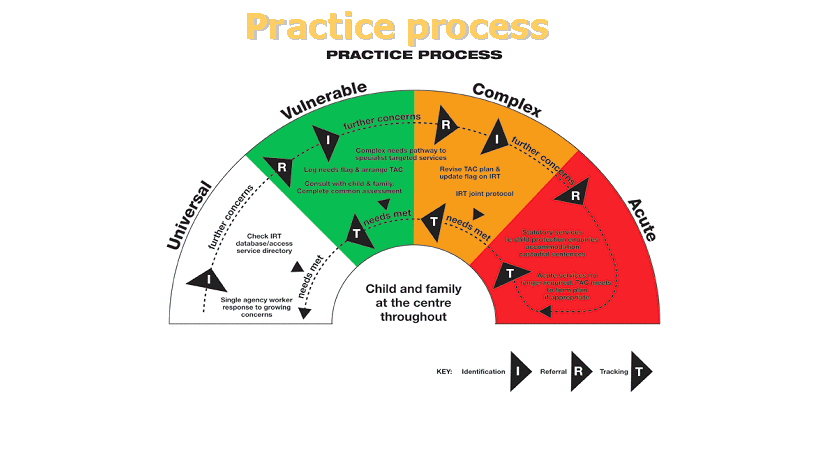
3) To develop a county wide model of provision working to agreed pathways, delivered through multi disciplinary teams serving communities aligning to the emerging school clusters, children centre developments and, if possible, practice based commissioning localities. This may be through directly provided services or through services commissioned to a common specification. The synergy that this will generate with partners including primary care will facilitate more integrated service provision for children and young people, mirroring the care pathways illustrated by the `Windscreen of Needs' developed by HCC Children's Service Appendix 4. The implementation of the model at a local level to meet local needs will necessitate the development of strong professional networks and agreed clinical governance arrangements to monitor and address problems across organisational boundaries. (A description of the proposed service components can be found in Appendix 5)
4) To mandate the PCT Child Health leads to develop a commissioning plan and options for organisational arrangements which will support implementation of the strategy within the new PCT/PCTs arrangements. (A SWOT analysis of the proposed model is at Appendix 6).
Questions for consideration
1. Do you support the strategy for a single approach to commissioning of children's health services across the Hampshire County Council area?
2. Do you support the proposal to separate resources for children from those for adults and older people to mirror the emerging arrangements in Hampshire County Council?
3. What structure and reporting arrangements would best support commissioning and delivery of health services for children in the new PCT arrangements?
4. Do you support the proposed model of provision with service components aligning to emerging structures for delivery in Hampshire County Council?
5. Are there additional strengths/ weaknesses/ opportunities or threats that have not been identified?
6. It is proposed that commissioning and provision are led from a single Directorate, although the two functions will need to be separately structured and resourced. Would this structure be supported in light of the national directive to separate commissioning and providing functions within `Commissioning a Patient Led NHS'?
Appendix 1
Drivers for change
Children Act (2004) - Places a legal `duty' for health services to co-operate with Local Authority Children's Services and strategically facilitates an integrated model of working together with all partner agencies, statutory and voluntary Choosing Health (2004) - Encourages front-line practitioners to focus on prevention and early intervention and addresses health inequality
Youth Matters (2005) - Provides direction for `health' particularly school nurses in terms of enabling young people to make healthy choices and avoid risk taking behaviours
Children & Young People and Maternity Services NSF (2004) - Provides quality standards from universal prevention and early intervention to specialist services for ill children, children with learning disabilities, mental health, maternity and medicines management
Commissioning a Patient Led NHS (2005) - drives a fundamental change in focus through strengthening commissioning and promoting choice, diversity and contestability in service provision and places the patient at the centre
Practice Based Commissioning (2005)- furthers the opportunities for service development in primary and community care developing appropriate alternatives to secondary care providing quality care closer to local communities. Draft Strategic Framework for the Development and Implementation of Practice Based Commissioning in H & IoW SHA suggests in point 7.45 that Children and Maternity Services will not normally be considered within the local scope of PBC during 2005/6 & 2006/7
Our health, our care, our say: A new direction for community services (2006) provides the framework to facilitate integration of services across health and social care, shifting the balance of care from acute to community and primary care and giving greater control to young people and their families.
Hampshire Children and Young Peoples' Plan ((2006) - the opportunity to make a real difference by working differently maximizing efficiency and effectiveness across agencies to agreed priorities
Local Area Agreement (2006) will mirror plans within the CYPP
Overview & Scrutiny Committee Review of Therapy Services (2004) - identified inequitable provision and inconsistent service models across the county
Office of Public Management Acute Paediatric Review (2005) - highlighted variation in models of service delivery, difference in reference costs and vertical integration of acute and community services
A. Appendix 2
B. Current commissioning and provision arrangements
The PCT's are responsible for commissioning services from Health providers through Service Level Agreements (SLA's).
Acute Services
Commissioners | ||||||
East Hants PCT |
Fareham & Gosport PCT |
North Hants PCT |
Blackwater Valley and Hart PCT |
Mid Hants PCT |
Eastleigh and Test Valley South PCT |
New Forest PCT |
Providers* | ||||||
PHT |
PHT |
NHHT |
NHHT |
WEHT |
SUHT |
SUHT |
SUHT |
SUHT |
WEHT |
FPH |
SUHT |
WEHT |
SHCT |
St RH |
CHIC |
RBT |
RSCH |
SHCT |
SHCT |
WEHT |
RSCH |
RSCH |
NHHT |
PHT |
RBCH | ||
WEHT |
WEHT |
PGH | ||||
Services provided within the SLA for acute services include
· General Paediatrics
· In patient, Outpatient
· Maternity
· NICU
· Specialist services such as Ophthalmology, ENT
Community Services
Commissioners | ||||||
East Hants PCT |
Fareham & Gosport PCT |
North Hants PCT |
Blackwater Valley and Hart PCT |
Mid Hants PCT |
Eastleigh and Test Valley South PCT |
New Forest PCT |
Providers* | ||||||
EHants PCT |
F&G PCT |
NHants PCT |
BVH PCT |
MHants PCT |
ETVS PCT |
NFPCT |
PCPCT |
PCPCT |
BVH PCT |
NHHT** |
WEHT** |
WEHT** |
SCPCT |
EHants PCT |
NHHT** |
SCPCT |
SHCT | |||
Services provided within the SLA for community services include
· Health Visiting
· School Nursing
· Child Protection
· Children Looked After
· Community Paediatrics
· Learning Disability
· Physiotherapy
· Occupational Therapy
· Speech and Language Therapy
· Children Community Nursing
· Child and Adolescent Mental Health Services
Tertiary / Specialist Services are commissioned by a Specialist team which commissions on behalf of all PCTs in HIOW and along the central south coast
Tertiary Providers
Hampshire Partnership Trust |
Southampton University Hospital |
Great Ormond Street |
St Georges |
Guys and St Thomas |
Royal Brompton |
Harefield |
Royal Marsden |
Specialist services provided within the SLAs include
· Tier 4 CAMHS
· Burns
· Cleft Palate
· Genetic screening
Complexities of commissioning
· PCTs commission services from a number of different providers following historic patterns of referral. Services have evolved differently in each area resulting in a variation of models of service, capacity, access criteria, quality and measurement of input or outcomes. This variation occurs not only between PCT's but also within the PCT's presenting a challenge to commissioning and the redesign of provision.
· A number of the SLAs are with providers from outside the Local Authority boundary.
· Some areas have community and acute services provided by the same organisation, whilst others have different providers for community and acute services covering the same geographical area - both create different challenges.
· There are a number of intra provider SLAs between some PCT and acute providers for support services which add to the complexity of the SLAs and which impact on the services children receive.
* Key to provider codes
FPH Frimley Park Hospital NHS Trust
NHHT North Hampshire Hospital Trust, Basingstoke
PHT Portsmouth Hospital Trust
RSCH Royal Surrey County Hospital, Guildford
SUHT Southampton University Hospital Trust
WEHT Winchester and Eastleigh Healthcare Trust
SHCT Salisbury Health Care Trust
RBT Royal Berkshire NHS Trust , Reading
RBCH Royal Bournemouth and Christchurch NHS Trust
PGH Poole General Hospital NHS Trust
St RH St Richards NHS Trust, Chichester
PCPCT Portsmouth City PCT
SCPCT Southampton City PCT
** Acute Hospitals providing some community services
Appendix 3
A SWOT analysis of current arrangements for commissioning and service delivery
Strengths |
Weaknesses |
Development and experience gained through CAMHS Pathfinder Trust Areas of good practice eg: · Integrated child & family health teams (SE) · CAMHS workers in YOT teams Committed workforce Knowledge and experience both front line practitioners and managers Good communication with Primary Care Child Health & Maternity Network Information from National Child Health Mapping (June 06) 3 years data and analysis from National CAMHS Mapping Understanding of issues for acute services (Acute Paediatric Review) Child Health Leads appointed and representing all PCT Clusters Examples of effective alignment of budgets and teams ie,. Sure Start Leigh Park Shared understanding and direction of travel between community stakeholders through development of the CYPP |
Lack of strategic coherence/direction of travel across health organisations including workforce planning and redesign Lack of knowledge of resources available to spend on children's services Workforce issues · Ageing workforce · Specialist skills deficit Health organisations focus on adult and older peoples services (top 9 performance targets) Lack of critical mass in each organisation for efficient and effective working, recruitment & retention of specialist staff eg: community paediatricians, Child psychiatrists, community children's nurses Inevitable duplication of work across large numbers of providers and commissioners Different models of provision locked into particular organisations Difficulty for business partners to engage `health' as a whole for both strategic and operational planning and service delivery Low staff morale due to uncertainty and perceived lack of commitment from health to children's services Ability to deliver identified health outcomes for children Connection between children's service planning and Drug and alcohol service development |
Opportunities |
Threats |
To use organisational change to trigger different models of service delivery within health, HCC & partners To strengthen commissioning through Commissioning and Patient Led NHS to secure 5 key outcomes for children Extended Schools and Children Centre development Use Section 31 & Local Area Agreement flexibilities more extensively Financial Recovery Plan for health organisations drives change for greater efficiency and effectiveness To implement Children and Young People Plan Extend alignment of budget and teams to other areas |
Impact of workforce reductions and financial recovery plans leading to disinvestment from children's services to meet deficit and fund top SHA 9 priorities Instability through organisational change and potential loss of organisational memory Knowledge management through loss of experienced staff Practice Based Commissioning with further threat of fragmentation The outcome of PCT and SHA consultation and ensuing change `takes eye off the ball' Power bases individual/ professional/organisational resisting change |
Appendix 4
Windscreen of Needs
Appendix 5
C. Service Components from universal to specialist and acute provision to meet `Windscreen of Needs'
Services contribute at different stages of the pathway building services around the needs of the child and family
Primary Care
· General medical services
· General dental services
· Opticians
· Pharmacies
Prevention and Early Intervention services aligned to communities served by the developing Children's Centres and Extended schools clusters, composing of.
· Health Visiting
· School Nursing
· Primary Mental Health Workers
· SALT
· Midwifery
· Public Health/ Dental Health Promotion
Specialist Multi disciplinary services for children with developmental problems and supporting prevention and early Intervention services comprising of:
· Community paediatrics
· Occupational Therapy
· Physiotherapy
· SALT
· Special Needs Co-ordination
Specialist Learning Disability services for children with severe learning disabilities and supporting prevention and early Intervention services comprising of:
· LD Nursing
· Psychology
· Psychiatry
Specialist CAMHS services for children with complex mental health problems and supporting Prevention and Early Intervention Teams comprising of:
· Psychiatry
· Psychology
· Nursing
· Social Workers
· Therapists
Community and Specialist Nursing supporting care of the child at home and in school
Acute Ambulatory care, Inpatient and highly specialist tertiary services
Special needs dentistry
Screening and diagnostic services eg. Audiology, Orthoptics
Appendix 6
SWOT
Proposal for a single service model for commissioning and delivery of child health and maternity services
Strengths |
Weaknesses |
Clear strategic direction Supports interface with business partners (PCT commissioners, LA and others) Facilitates modernisation across `health' & LA & others through section 31 flexibilities & other available devices Framework for consistent implementation of NSF standards Achieves FRP with less risk to front-line service provision Creates critical mass to support cohesive workforce planning and development: · recruitment and retention · clinical excellence · skill mix · training experience Enables strong leadership and management for children's health services to support cultural change across the county Commissioning of appropriate children and family focussed learning and education for all staff groups/disciplines Supports the recruitment and retention of staff through the process of change and strengthens professional identities Creates structure to support implementation of : o Hants CYPP - NSF, CAF, Preventative Strategy, Parenting Strategy, Children's Centres & Extended Schools Strategy o SHA acute paediatric review o OSC Therapy review Child Health & Maternity Network to support clinical development and quality standards Information from National Child Health and CAMHS Mapping to inform planning and decision making |
Under developed ICT systems to support service development, delivery, evaluation, performance, contracting and commissioning arrangements etc. Workforce, lack of skills and capacity to implement change Recruitment to disciplines with national deficits |
Opportunities |
Threats |
To achieve cultural changes within Health and LA putting children, young people and families at the centre of planning and service provision Raise profile of health To strengthen commissioning to secure 5 key outcomes for children To extend use of Section 31 & other flexibilities To achieve national agenda `Change for Children' To achieve effective use of resources across organisations to contribute to the FRP To act as catalyst for change for greater efficiency and effectiveness To develop multi-agency leadership and management To deliver Hants CYPP To improve morale for staff Repatriation of services Build workforce and develop skills to meet skills deficits |
Demonstrating contestability, diversity and value for money Lack of sign up to model in any part of the health system Resistance to change Fear of loss of autonomy for health, being subsumed by the education and social care priorities Potential to destabilise providers Impact on providers working to different models in PCT's in Unitaries Failure to delivery on strategy and meet the health outcomes for children
|
A RESPONSE TO THE HEALTH AND MATERNITY SERVICES DISCUSSION DOCUMENT
SUBMITTED ON BEHALF OF THE CHILDREN' S SERVICES PARTNERSHIP BOARD
The Children's Services Partnership Board of Hampshire welcomes this discussion document, and , in particular, the emphasis on the Primary Care Trusts (PCTs) supporting the Change for Children Agenda.
It is recognised that it represents a "stepped approach". The benefits outlined in the proposal, include:
· Leadership and the need to work alongside the senior management team in the County Council's Children's Services Department
· Joint commissioning
· The development of care pathways
· Integrated processes, and
· Integrated partnership working.
This reflects, in part, the components of what has been termed the "onion" of the Every Child Matters(ECM) framework. That is:
· Integrated Governance and management
· Integrated strategy
· Integrated processes
· Integrated front line services
· Integrated approach to outcomes for children and young people.
We believe, however, that the proposal could go further to reflect all these elements and tackle some of the other steps at an earlier stage. We believe that an early joint appointment with HCC Children's Services Directorate, at a very senior level, could develop the joint agenda beyond joint commissioning and address a joint and integrated approach to all aspects of the ECM Framework. Clearly, the precise role and the level of the role would be subject to negotiation, but could include management of Health provision as well as commissioning. Alongside commissioning, a joint appointment(s) would allow a single approach to the following:
1. Developing partnerships and capacity in the community. Currently, both PCTs and the County Council are heavily involved in the development of services in Children's Centres and Extended Schools.
2. Developing the Public Health agenda, in assisting children and families to make healthy choices and in providing the public health information to the partnership that is essential to planning and developing services.
3. Supporting commissioning activity, including needs analysis, joint planning and contracting.
4. Integrating provision to ensure that health professionals sit alongside others in multi agency teams.
5. Securing simple pathways for children and families to ensure the most appropriate response to their needs with integrated assessment and service delivery, supported by informing sharing systems.
Such a senior joint appointment could secure an effective children's trust approach: employing and deploying health professionals, whilst maintaining clinical governance and an accountability and governance routes back through the PCTs..
The discussion document sets out the need to separate out resources staff and budgets for children. This is welcomed, as it increases opportunities for more appropriate sharing of resources and the possible pooling of budgets. We would like to ensure that the support services can also be disaggregated; for example, the allocation of training funds, public information budgets and business support.
We also welcome the suggested joint accountability of the PCTs and the County Council's Children `s Services Department, including the Children's Services Management Team. The value of accountability and governance routes through elected members and through the Standing Conference of the Children's and Young People's Strategic Partnership.
We welcome both the multi-agency teams aligned to clusters and the proposed service components.
The benefits and opportunities presented in the document as emanating from the integration of child health services, are, in our view, augmented by integrating with local authority children's services. Examples of this include the benefits, both financial and professional, of aligning or integrating:
· Recruitment and retention
· Training and development
· Support services
· Management information services
· Accommodation.
Within the framework presented here and our view that the proposals could go further, our responses the consultation questions are as follows:
Questions for consideration:
7. Do you support the strategy for a single approach to commissioning of children's health services across the Hampshire County Council area?
Yes
8. Do you support the proposal to separate resources for children from those for adults and older people to mirror the emerging arrangements in Hampshire County Council?
Yes
9. What structure and reporting arrangements would best support commissioning and delivery of health services for children in the new PCT arrangements?
Reporting to:
· The PCT structures
· The Children's and Young People's Strategic Partnership structures, and
· The County Council Governance structures
10. Do you support the proposed model of provision with service components aligning to emerging structures for delivery in Hampshire County Council?
Yes, but it should go further
11. Are there additional strengths/ weaknesses/ opportunities or threats that have not been identified?
Yes.
From our point of view, additional threats include:
· Problems over continuing care
· Separation of resources being adequate to service children's health
· Detail over clinical governance
However, additional opportunities include:
· Increased democratic accountability through the County Council and the community involvement with the HATs
· Increased involvement and participation of children and young people in the democratic process
· Family led decision making, building on the experience of Family Group Conferences
· Improved ability to implement the Children and Young People's Plan.
12. It is proposed that commissioning and provision are led from a single Directorate, although the two functions will need to be separately structured and resourced. Would this structure be supported in light of the national directive to separate commissioning and providing functions within `Commissioning a Patient Led NHS'?
Yes.
Health Overview and Scrutiny Committee: Response to Hampshire Child Health and Maternity Services Discussion Document
Thank you for providing the Committee with an opportunity to comment on this important document. We strongly support the direction of travel that it sets and hope that this is the first of many discussions that now need to take place about the way in which the NHS and Local Authorities work collaboratively to secure the widest possible range of high quality services for people living and working in Hampshire. I am certain that the approach outlined will provide a lead for similar developments in other services where there are real benefits to be gained from partnership working.
Many of our comments build on the views that we expressed in response to the consultation on `Commissioning a Patient Led NHS'. Having read the document carefully there are a number of additional issues that we would wish to raise and these are included following our general commentary. As requested we have also responded to specific questions that are asked.
The emphasis on partnership working to support the planning and delivery of child health services and maternity in Hampshire is warmly welcomed and I am sure will be supported by all agencies. We would also endorse the assertion that the implementation of the `Change for Children Programme' is taken forward, regardless of the inevitable organisational turbulence that will accompany the current reorganisation of the NHS. Our Committee will therefore actively support work to move this agenda forward through a single model for commissioning and providing services. Our members have become increasingly frustrated about what appears to be a fragmented approach to both maternity services and some children's services across Hampshire. An example of this would be the very different approaches to the use on maternity care assistants in the south east and south west of the county. This is unhelpful and gives the wrong messages to women and families.
We have commented previously on the lack of information about the health needs of people living in Hampshire and this concern applies equally to child health and maternity services. It was helpful therefore to note your honest assessment of the position with regard to child health and maternity services. Early work clearly needs to be done to explore the options for improving this situation and ensure that these services are receiving appropriate funding. The emergence of locality commissioning, centred around local authority area, will provide an opportunity for there to be some focused work around the different needs of our diverse communities. Likewise public health has a central role in promoting healthy lifestyles and preventing ill health.
The emphasis you place on the policy framework, including NSFs is equally important. Strong leadership will be a fundamental prerequisite to the delivery of the vision you set out but there are key challenges with regard to the development of capacity and capability in commissioning that must be addressed. Local Authority experience may be useful when considering this latter point and joint appointments would be a helpful first step in this regard with the potential for more integrated working across agencies as relationships evolve and mature. This would also be an effective process for avoiding the tendency in some quarters towards `silo' working.
The development of consistent and evidence based care pathways is a particular benefit needs to come from these proposals. We are deeply concerned that some children's services are fragmented. The recent proposal we received suggesting that the community support to children who are terminally ill or with a life limiting condition could be withdrawn at short notice being a case in point. We will wish to see early action across Hampshire to address this issue, particularly with regard to respite provision.
Additional specific points we would wish to make include:
· This process needs to be moved for to the next stages fairly rapidly given the pace of the reconfiguration programme facing the NHS
· Needs assessment to support a joint approach to planning should happen as early as possible.
· The scope for initiating local action with regard to the key outcome areas needs to be considered in the context of the LAAs and LSPs as well as locality commissioning areas.
· The current proposals for service change relating to children and maternity services by the NHS should be deferred until there is clarity about health needs and consistency in the models of care provided across the county.
· Early wins need to be identified to support the development of a joint approach. We have already commented on issues relating the inequitable access to some therapy services across Hampshire and are aware of other concerns relating to continuing care and learning disability.
Turing finally to the questions that you raise:
1) Yes we do support the strategy for a single approach to commissioning children's health services across Hampshire
2) Yes we do consider that the resources to support these services need to be disaggregated from those for adults and older people
3) There needs to be further debate around the best arrangements to support commissioning and delivery of services. Much will depend on the effectiveness of locality based commissioning and the extent to which these services can be genuinely integrated
4) Yes we would support alignment with the emerging structures at HCC and consider that the points made by the Children's and Young persons Management Board very helpful in moving this discussion forward. We now need to be clear how this is to be progressed.
5) You have identified quite enough of these challenges to begin with
6) Yes we would support commissioning and provision from a single function although this may change as commissioning capability develops and alternative provider options emerge.
Appendix Four
Children, Young People & Maternity Network (CYPM)
Action Plan - Acute Paediatric Services Review
Identified Area of Work |
Lead Professional |
Core Members |
Outcome |
Timescales | ||
Short term |
Medium Term |
Long Term | ||||
To develop a model for possible reconfiguration of services between Winchester and Eastleigh Healthcare Trust and North Hampshire NHS Trust |
TBC Martyn Dell |
Lead Clinician Hampshire Ambulance rep. Divisional Directors - WEHT & NHHT Divisional Manager - WEHT & NHHT Jane Nind - NH & BVH PCT rep. Anne Kelly - SW Alliance CYPM Network Manager Network Obstetric Lead Martyn Dell - Medical workforce, WDD WDD rep - HK/RM Public Health rep Senior Manager/Clinician, division of Women & Children's, SUHT Minutes to be shared with Maternity Network Obstetric lead |
Establish a task group of the core membership. Validate the recommendation for reconfiguration particularly regarding: · Activity · Population growth · Transportation · Impact on Maternity services Clarify & validate the level of WTD compliance and its sustainability with regard to NHHT, WEHT & SUHT for 2009 and beyond Develop an implementation plan for reconfiguration of services |
June/July `06 June/July `06 |
Sept `06 |
Sept. `06 |
Identified Area of Work |
Lead Professional |
Core Members |
Outcome |
Timescales | ||
Short term |
Medium Term |
Long Term | ||||
Community Nursing Development |
TBC |
Community Children's Nursing Team leaders: NHHT, WEHCT,SCPCT,PCPCT,IOWHCT Workforce Development representative Clare Messenger - Hampshire Children's lead representative & Commissioning Commissioning representatives from Unitary Authorities |
Validate data represented in the OPM acute review report Task & Finish group to pose series of questions for community group to provide more detail Map specialist roles which exist within teams and current service specifications Review current service models and sustainability. Review national models and develop a preferred service model and care pathway for teams within Hampshire & Isle of Wight Explore opportunities for a more integrated approach to working across the community & acute sector |
June `06 July/Aug. `06 July `06 |
August `06 Sept. `06 Sept. `06 |
|
Identified Area of Work |
Lead Professional |
Core Members |
Outcome |
Timescales | ||
Short term |
Medium Term |
Long Term | ||||
Development of Recommendations regarding A&E services |
TBC |
Existing A&E sub group of Paediatric Intensive Care forum Hampshire Ambulance rep |
To establish current baseline of how current services are meeting agreed standards To develop common standards & protocols and pathway's of care for interfaces between Ambulance services, A&E and Paediatric services |
July `06 |
Sept. `06 |
Dec `06 |
Commissioning & Finance arrangements |
Dr Andy Mitchell |
Dr Mitchell Sheila Clark Vicky Styles David Schapira Alex Berry SUHT representative TBC |
To review coding and commissioning of children's services To establish proposals for a unified currency across the network to ensure consistency To clarify commissioners responsibilities for county-wide services where there is dispute about how they should be funded In conjunction with SUHT establish a commissioning framework for tertiary services Identify the benefits of PBR pilot for maternity services and to support a pilot if necessary |
May `06 June `06 May `06 |
July `06 August `06 |
|
Identified Area of Work |
Lead Professional |
Core Members |
Outcome |
Timescales | ||
Short term |
Medium Term |
Long Term | ||||
Child and Adolescent Mental Health Services (CAMHS) |
Sue Sylvester, Children's services Lead, SHA |
Children's Leads group CSIP |
To provide an options appraisal for future provision of CAMHS at Tier 3 for Hampshire and Isle of Wight |
August `06 |
||
Participation with Parents |
Angela Anderson, CYPM Network Manager |
To scope existing mechanisms and to develop a strategy for public and patient involvement with parents, children and young people To work with SHA public and patient lead to establish how expert patient roles fit within children's services |
June `06 |
Oct. `06 |
||
This action plan has been developed as a result of the feedback received regarding the recommendations within the OPM acute review report. The key areas identified within the plan will be developed further by the groups and professional leads identified to ensure the overall recommendation outcomes are achieved. Progress against the action plan will be performance managed by the Strategic Health Authority and each group will be required to provide a quarterly progress report to the Children, Young People and Maternity Network advisory committee. Where appropriate the results of this work will be underpinned by public health data.
MAY 17, 2006
SURGERY PROJECT UPDATE FROM SOUTHAMPTON UNIVERSITY HOSPITALS NHS TRUST AND WINCHESTER AND EASTLEIGH HEALTHCARE NHS TRUST
Local authority partners will recall that Winchester and Eastleigh Healthcare NHS Trust (WEHT) and Southampton University Hospitals Trust have been working together to streamline surgery and create centres of excellence.
This project centred on surgical services where there was clinical benefits to be gained from modernisation or there were concerns about the sustainability or duplication of services.
Emergency surgery was included in these discussions due to the need to have an extra consultant (who could perform emergency surgery) on the rota system at the Royal Hampshire County Hospital in Winchester (RHCH).
It was decided at an early stage of this project that access to 24 emergency surgery at RHCH surgery should be maintained, despite this being an extra cost at a time when making savings is so important.
As has often been the case, `polytrauma' cases (emergency patients with multiple serious injuries) will be seen at Southampton General Hospital where there are back up services such as neuro and cardiac surgery, should they be needed. This affects a small number of patients, probably less than five each week.
Since the project began, both trusts have made good progress in reducing the length of patients' hospital stay by treating more and more people as `daycases' instead of inpatients.
This has been achieved through modernised ways of working and new facilities, such as the Winchester NHS Treatment Centre at the RHCH and refurbuished theatres at the Royal South Hants Hospital (RSH) in Southampton.
The continuing success in increasing daycase rates and reducing inpatient stays for many procedures has meant that the data used for the original plans has had to be reviewed to reflect new working practices.
Because the project is focusing mainly on inpatient surgery, the numbers of patients who may need to be travel from Southampton to Winchester or vice versa has subsequently declined from around 2000 to approx 1000.
In addition to new data, the trusts also needed to consider any impact the planned independent treatment centre (in Southampton) would have on this project as well as whether ear, nose and throat (ENT) services should be considered. ENT was not part of the original plan but it might be necessary to review how it is provided between Southampton and Winchester in order to free up capacity to enable other changes to take place. Work on this is at a very early stage.
The drop in numbers of people needing to travel does not mean that the project is less important or can be shelved. It is a firmly held view that it is in the patients' best interest for local hospitals to continue modernising services and ensuring sustainability.
Both SUHT and WEHT believe that it is better for patients to be seen by specialists even if extra travel is required. The NHS does assist with transport where hardship or medical conditions make this necessary. In other cases, it is the responsibility of the patient or their carers to make their own travel arrangements.
The local authorities and the NHS do work together to try to ensure that there is adequate public transport to and from hospitals.
As far as changes to services are concerned, it is hoped that at the beginning of 2007:-
· Vascular surgery will move from RHCH to SGH which will be the location for a specialist service
· Inpatient urology will be centralised in Southampton
· Foot, ankle and upper limb inpatient surgery will be centralised in Winchester
· A regional spinal centre will be established in Southampton with Winchester's spinal consultant and WEHT's inpatient caseload transferring
· Inpatient breast surgery will transfer from Southampton to Winchester, which is recognised as being a national lead in this work
Project teams are being established to implement the changes. They will also produce plans to ensure that local people, staff and stakeholders are involved.
Plans to update and increase critical care facilities at the SGH are being developed to support the specialist services at the hospital. This is a key element of the Greater Southampton Health Plan and is covered in a statement from SUHT to stakeholders (attached with email version).
Appendix Six
EXECUTIVE SUMMARY : A new direction for hospital and community services in Portsmouth and South East Hampshire - a strategy for sustainable services.
1. Introduction
The service strategy in Portsmouth and South East Hants (PSEH) is clearly espoused within the strategies of the individual NHS and social care organisations in PSEH. Collectively it is summarised in the words of the recent white Paper "to make services more responsive, to focus on those with complex needs, to shift care closer to home and to get better value for money."
The 3 Primary Care Trusts (PCTs) in PSEH have worked with Portsmouth Hospitals NHS Trust (PHT) and social care colleagues to agree capacity and infrastructure developments which span the next 10 years based on predicted changes in demography, need and the emerging NHS market place. This so called "Capacity Map" sets out to ensure that sufficient capacity and facilities will exist to deliver the NHS plan requirements and local objectives.
The opportunities within "our health, our care, our say" provide a solid foundation for the Capacity Map. Its main aim is to provide coherent linkages between individual developments, each of which is subject to the usual timely and robust rigour of a business planning process. This umbrella plan is underpinned by consolidating acute hospital services at Queen Alexandra Hospital (QAH) and further developing community resources at Petersfield, Havant, Fareham, Gosport, and in Portsmouth City - the plan also includes essential non acute work for Older Persons Mental Health (OPMH) and Learning Disabilities (LD) services
"Capacity" is based on the most efficient use of resources, including beds, and we have been fortunate in PSEH to be able to use the outcomes of Teamwork Reviews, the aspirations, evaluations and lessons of local service redesign noted in rehabilitation, intermediate care, diagnostics and improved treatment regimes. We have also considered the impact of a diminution of nursing home beds and are optimising our approach to "virtual beds" and care packages.
In line with the new white paper we believe that we should transfer some 30% of outpatient appointments and supporting diagnostics to local settings "closer to home" for many people and we plan to make increasing use of the plurality of care - not just within the growing independent sector but by using the potential released by practice based commissioning.
We envisage a growing use of different and less traditional expertise and facilities providing a range of different kinds of clinics and procedures sometimes referred to as "polyclinics" and ambulatory care centres. Given our track record of seeking out opportunities and delivering change we hope we can continue to find new opportunities to develop in this way.
Changes in financial regimes for the NHS over the past 3 years where we have seen considerable financial growth targeted at service improvements such as access has meant that we have needed to work together to optimise our use of finances.
The introduction of an Independent Sector Treatment Centre (ISTC), changes in Payment by Results, cash limited primary care premises, practice based commissioning and more local financial challenges such as deficits, capital funding problems and Local Authority financial pressures, all provided potential opportunities for individual organisations to shunt costs and put actual financial disincentives into what would otherwise be an improved pathway of care for patients, service users and their carers. By working across the system we have been able to find opportunities to optimise finances and incentivise better care. This bodes well for the future and our collective stance for the Capacity Map is that developments will be largely achieved only by a financial surplus. By sharing the plans and costs and agreeing the phasing of developments, the system in PSEH will be more efficient and can plan efficiency gains of 2.5% in the context of growth reductions which will fund service developments outlined in this Capacity Map.
2. The strategy for hospital facilities
The strategy for the provision of clinical services in Portsmouth and South East Hampshire was first developed in the late 1980s and focused on acute hospital services being delivered from a single hospital site in Cosham (QAH) consolidating acute services on one site, with underpinning community facilities in Petersfield, Gosport, Havant, Fareham and Portsmouth City.
The plans are based on well-defined interdependencies with community facilities. These interdependencies include A&E and Minor Injury Units; and some primary care provision, outpatients and local diagnostics, including endoscopy, day care and some surgery; elderly assessment/ treatment/ rehabilitation, inpatient rehabilitation in elderly medicine, and stroke care.
More latterly the content, scale and models of care proposed to take place in each development have been reviewed, resulting in a change of focus for community developments towards assessment and treatment on an outpatient and day-care basis and therefore there has been a reduction in the original proposed levels of inpatient provision.
3. Capacity requirements
The capacity mapping work has focused on how to provide services that reflect best clinical practice, in modern, accessible facilities. In many service areas this reflects increasing emphasis on day, outpatient assessment and treatment, and social care avoiding any unnecessary provision of hospital beds.
Factors which have influenced the reduction in need for bed capacity include dramatic improvements in medical technology and IT-based communications, shortened lengths of stay for inpatients, increased day-surgery rates, development of the integrated general medical/ elderly assessment unit and analysis of improved patient pathways. A number of studies by external bodies also supported this direction of travel. The provision of more services in primary and community care has underpinned the work and reflects opportunities outlined in the New White Paper.
4. Modernisation and the White Paper: `Our Health, our care, our say'
The White Paper published at the end of January 2006 focused on the delivery of care closer to home. It states "in order for specialist care to be delivered more locally, we will need to ensure that the necessary infrastructure is in place. This will mean developing a new generation of community facilities." The White paper refers to the development of "a new generation of modern NHS community hospitals which will provide diagnostics, day surgery and outpatient facilities closer to where people live and work."
The following elements were included in the vision for modern community hospitals in the White Paper, which described these as facilities where:
· Health specialists work alongside generalists, skilled nursing staff and therapists to provide care and teaching clinics covering less complex conditions
· Patients will have speedy access to key diagnostic tests
· Patients will get a range of elective day-case and outpatient surgery for simpler procedures and are offered intermediate step-up care to avoid unnecessary admissions, and step-down care for recovering closer to home after treatment
· Patients can access the support they need for the management of long-term conditions and Urgent care is provided during the day, and "out of hours" is co-ordinated at night
The Portsmouth and South East Hampshire Capacity map reflects this vision in the services that have been planned in the community. The recently opened Independent Sector Treatment Centre (ISTC) in the City on the site earlier earmarked for the City Community Hospital development was an important first step. This already provides a minor injuries unit and walk-in primary care facility together with day surgery and diagnostic services.
The range of services and facilities planned as part of further developments in Gosport, Havant, Fareham and Portsmouth City are described in the capacity map on an individual basis but with elements of commonality.
5. Major Developments - strategy and costs
The Capacity Map analysis includes provision for the following major developments:
· ISTC
· QAH redevelopment
· Redevelopment of Gosport War Memorial Hospital (GWMH)
· Older Persons Mental Health assessment and treatment facilities in Portsmouth
· Oak Park Community Hospital, Havant
· Fareham Community Resource, on the Coldeast site
· Portsmouth City Community Hospital, on the St. Mary's site
· Replacement provision for learning disabilities in Havant and Portsmouth
The developments proposed in the Capacity Map were compared with a "do minimum" option. The "do minimum" option would not meet the strategic direction; it also illustrated the significant investment required to maintain existing and essential capacity. The preferred option is the only option which provides strategic fit and is affordable with an appropriate phasing of planned schemes:
The key financial assumption set out in the capacity map is that with existing financial commitments and the reduction in future NHS growth, then additional infrastructure costs will have to be funded from efficiency savings.
It has been agreed that the schemes are broken into four distinct phases. Before each additional phase of capacity map progresses the affordability will be reviewed. The health community has agreed a number of milestones that need to be met before the next stage is signed off. The capacity map infrastructure has an ultimate annual revenue cost of £34,562k, and a NHS Capital requirement of £29,059k over the next nine financial years. An outline of the anticipated capital and revenue costs of each scheme across all four phases is detailed below.
NHS capital and Revenue requirements Scheme
Start |
Finish |
Net Capital Costs |
Full Year Revenue | |
Phase 1 |
£k |
£k | ||
Portsmouth Hospitals PFI |
Dec. 05 |
Sept. 09 |
0 |
24,000 |
OPMH reprovision |
Mar. 07 |
Nov. 08 |
8477 |
795 |
Gosport Health Centre reprovision |
April 07 |
Mar 08 |
340 |
647 |
Gosport War Memorial Hospital |
July 07 |
Dec. 08 |
4,750 |
333 |
LBHU (LD) |
1,400 |
0 | ||
Under 65 Rehab from RH Haslar |
Dec 08 |
250 |
65 | |
15,217 |
25,840 | |||
Phase 2 |
||||
Oak Park Community Hospital |
Sept. 07 |
Dec. 09 |
(3,538) |
3,737 |
Fareham Community Hospital Phase 1 |
Sept. 08 |
April 10 |
(2,000) |
1,512 |
(5,538) |
5,249 | |||
Phase 3 |
||||
City Community Hospital Phase 1 |
Oct. 09 |
Jan. 12 |
13,904 |
1,601 |
13,904 |
1,601 | |||
Phase 4 |
||||
Fareham Community Hospital Phase 2 |
Mar 11 |
Aug. 12 |
(561) |
1,123 |
City Community Hospital Phase 2 |
Feb. 12 |
Oct. 13 |
6,037 |
749 |
5,476 |
1,872 | |||
Total Capacity Map |
29,059 |
34,562 |
The additional revenue required is £34.6m of which £24m has been demonstrated as affordable in the PFI Business Case, leaving a £10.6m shortfall for all other schemes. PSEH has recognised that this will be made from generating a collective surplus equivalent to 2% over the next 6 years. Current financial pressures make even this "small" percentage a challenge.
Capital currently shows an overall requirement for £29m over 7 years. The first phase requires £5m for the Gosport GWMH scheme which is earmarked in the SHA capital programme, and £8.5m for OPMH reprovision in Portsmouth. The funding for the OPMH scheme is being considered and may include land sales and the SHA capital programme.
6. Progressing the Capacity Map
Once the Boards of the individual organisations and the Strategic Health Authority have approved the full strategic plan, Business Cases for the developments will be prepared and presented in the normal way. The whole plan will be reviewed by Portsmouth and South East Hampshire Whole Systems Programme Board every 3 months.
A Strategy for Sustainable Services in Portsmouth and South East Hampshire: a new direction for hospital and community services in Portsmouth and South east Hampshire
I am writing by way of follow-up to the above paper, which was shared with us in late April, and supported by the Health Authority at its meeting on 9 May. Given the concerns that we raised previously with regard to the capacity map it is regrettable that our Committee, and our counterparts in Portsmouth, were not given more of an opportunity to comment on the contents of this document, prior to it being agreed by Boards.
I am aware that Tony Horne has discussed this issue in more detail with Denise and has confirmed the view of the SHA that this is a plan primarily to ensure that the developments envisaged are firmly established in the capital planning process. I agree this is important given the anticipated PCT and SHA reconfiguration. Nevertheless there are a number of issues that we need to ensure are taken into account as this process rolls forward. These are set out below and I would be grateful for your confirmation that the points that we raise will be dealt with as the planning process proceeds and business cases are developed.
· Clarity about the affordability of the plans for service delivery. The Committee has received repeated assurances from both the PCTs and the SHA that the PFI, and associated plans for community hospitals and services are affordable. This document makes it clear that this is not the case, in particular we are concerned that the costs of implementing the proposals will need to be made from efficiency savings and the health economy in the south east working in concert. Our experiences suggest that there are a number of risks associated with this approach to funding, which are likely to be exacerbated as PHT moves to Foundation Status and a single PCT for Hampshire is established.
· The needs assessment and demand projections included in the paper are not sufficiently robust to give confidence in the suggested approach to the network of community hospitals and resources. This needs to be addressed as a priority as plans and programmes are developed. We note for example that the discussion about the form of Fareham Community Hospital does not take account of the anticipated increase of 10,000 new homes in the area as set out in the South East Development Plan or indeed the needs of the population of Whiteley, parts of which looks more naturally towards Fareham and Portsmouth rather than Winchester. We remain unconvinced that the case has been made for reducing bed numbers in Fareham and Gosport community hospitals given these developments and the changing demographics of the current population. Is it expected for example that increased investment in public health and preventative programmes will impact on the needs of this population at an early juncture? If so this needs to be detailed.
· Joint partnership working. There is reference to this in the paper but this is not developed to give any indication of where partnership arrangements (e.g. around shared services or facilities ) would be explored. Given the direction of travel set by the recent White Paper this is deeply disappointing
· Interdependencies between QA and community hospitals. There is tantalising reference to this in section 4 of the document but this is not developed anywhere else in the paper. This needs to be addressed to give a clear picture of the pattern of service delivery that is being promulgated. The expectations of the local population about community services have been raised on a number of occasions, only to have commitments either changed or deferred. If the NHS in the south east genuinely wishes to engage with their population then this point needs to be addressed. The references to the needs for community hospital beds in the document illustrates this point well. The FBC for QA, which is quoted in this document is clear about the number of beds that are needed in the community. This plan seems to suggest that this has changed but gives no real substance to either the evidence supporting this assumption or the way in which this will affect the different community developments.
· Impact on service provision. Our greatest concern relates to the potential impact of these proposals on service provision in south east Hampshire, particularly with regard to access across an area where there are significant difficulties in transport networks. We have previously commented on services for older people, including elderly mental health and remain unclear that there is yet a coherent strategy for this vulnerable group. Similarly we noted the references to LBHUs in the document with no information on the way in which these patients will be affected. Early work needs to be done to address this issue. Given the way in which locality commissioning is intended to develop it would also be helpful to have confirmation that the suggested direction of travel outlined in the document has the support of GPs.
In addition to your comments on the above I think it would also be helpful to have your confirmation that, as the planning process develops, the NHS in south east Hampshire will ensure that its duties under section 11 and section 7 of the Health and Social Care Act are fully discharged to ensure that services changes are meeting the needs of local people.
RE/ |
|
21/4/2006 |
|
D. Health Overview and Scrutiny Committee | |
I. Elizabeth 11 Court, The Castle | |
Mary Edwards Chief Executive North Hampshire Hospital North Hampshire Hospital Aldermaston Road Basingstoke RG24 9NA |
II. Winchester, SO23 8UJ |
III. | |
IV. Telephone 01962 847338 | |
Fax 01962 867273 | |
E-mail [email protected] | |
www.hants.gov.uk | |
Dear Mary
NHS Foundation Trust: Consultation Document 2006: Hampshire Health Overview and Scrutiny Committee Response
I am responding on behalf of Hampshire County Council's Health Overview and Scrutiny Committee to the above document.
The Committee, as a result of experience with previous Foundation Trust consultations, has, of necessity, had to take a slightly broader overview of the impact that proposals might have. The views of the Committee therefore include general as well as more specific observations for your information and consideration.
Although we are raising a number of issues of concern, you may wish to note that we are not opposing the proposals from your Trust. There is, however, an expectation on the part of the Committee that our response is seen as the initiation of a dialogue with you and the wider NHS. Your thoughts on how this can be most effectively achieved would be appreciated.
It would be helpful if you could send us the schedule of services and assets of the Trust when these are available, together with the full service development strategy.
General observations
Overall the document was well presented and easy to read. There was however only limited information about the range of services to be provided and patient flows outside the North Hampshire PCT area, particularly if these will be areas from which the Trust will be seeking to attract additional patients in the future. It would be helpful to have confirmation of the range of services to be provided, including specialist services. We were not clear from the document whether specialist services include pseudomyxoma, liver and bowel cancer, and haemophilia, for example.
We noted that the Trust believes that one of the benefits of achieving Foundation status will be a reduction in external monitoring and associated bureaucracy, releasing more staff time for the benefit of patients.
In terms of service developments, the Committee is aware that the full implications of Practice-based Commissioning are very unclear at this stage; in addition it is unclear what the effect will be of new commissioning arrangements that will follow from PCT reconfiguration in Hampshire. Your consultation document does not address these issues and is silent about your expectations. It seems to the Committee that there are a number of key issues that are as yet unresolved and could impact on what the Trust is in a position to deliver. For instance, can services be withdrawn if they become financially unviable or fall outside the national tariff rate?
The Committee is seeing the focus of Primary Care Trusts increasingly moving towards delivery of care in the community and the adoption of admission prevention strategies, particularly for patients with chronic conditions. Your consultation document does not acknowledge these changes in patient care pathways or how you believe these might impact upon activity levels and the services provided by the Trust.
While it is clear that the inclusion of broad intentions for service development in this proposal do not constitute formal consultation, specific changes may have wider implications and will need to be discussed with relevant local authority overview and scrutiny committees to determine if they are substantial.
Governance and Membership arrangements
Whilst understanding the logic behind the definition of the membership community, the Committee notes that there may yet be scope for including specific representation from commissioning localities.
It was helpful to note the definition of the role of the Governors' Council included that of stewardship of the organisation. The Committee is, however, wary about the extent to which these individuals should be seen as `representative' of a particular population or constituency, and is seeking confirmation that there will be clarity regarding the continuing responsibilities of the Trust to adhere to the `Section 11' requirements for engaging and involving patients, the public and key stakeholders.
With regard to the nominated members of the Governors' Council the Committee particularly welcomed the inclusion of the `Patient Champion Governors' for young people, older people and the disabled.
The intention to have a local authority Governor nomination is helpful. This creates an important link back to democratically elected members in the area, however the Committee would again suggest that the link between commissioning areas and democratic representation is a natural one, and could usefully be recognised in the structure of the Council of Governors. However, the Committee is concerned that there appears to be no provision for County council representation, and only one District council areas would be represented within the Trust's catchment area. Thus there would be only be one democratically elected representative to represent the interests of the county as well as the different districts served by the Trust. It is worth noting that the emerging commissioning localities in Hampshire are tending to align with local authority areas. We would be keen to contribute to further discussions about the way in which local authority representation could most effectively ensure that there is an ongoing dialogue between the Trust and the wide community served.
The Committee is aware that reviews of Trusts following achievement of Foundation Trust status consistently identify concerns with the role of governors. For example, there is often uncertainty about the role of the Council of Governors vs the role of boards and how the two should usefully interact. There have also been concerns by governors about how they are meant to engage with members and the wider patient and public community. The Committee would be interested to know how the Trust plans to ensure these concerns are addressed.
I do hope you find these comments helpful. If you require any additional information please do contact me or our lead officer, Denise Holden.
Yours sincerely
1. Cllr Dr Raymond J Ellis C.Chem FRSC
2. Chairman, Health Overview and Scrutiny Committee
cc |