
Archived decisions
Health Overview and Scrutiny Committee: 30 May 20006
Chairman's Briefing
This briefing is different from my normal up-date of issues not covered on our agenda in as much as it includes a number of issues that relate to inquiries or variations that have been raised with the Committee since the publication of the agenda. This reflects the rapid changes that are taking place within the NHS and is likely to be a continuing feature of our work in the coming months. Where appropriate I am including further information on a particular topic for members to consider. We have a lot to get through so I will keep my commentary as brief as possible.
General News
· Can I welcome Cllr David Stephen Butler to our meeting, the newly appointed Chairman of Portsmouth City HOSC. I would also wish to formally thank Cllrs Criss Connor and Allan Mitchell for their contribution to the work of the Committee. Unfortunately were not re elected in the recent elections. I would particularly like to thank Criss for his contribution to the joint maternity committee.
· I can confirm that the Chief Executive and Chairman of the new SHA have now been appointed. They are Mark Britnell, currently Chief Executive of the United Health Care Trust in Birmingham, and Dr Geoffrey Harris, currently Non Executive Director of Oxfordshire and Buckinghamshire Mental Health Trust.
· William Hancock, currently Chief executive of Bedfordshire and Hertfordshire Ambulance Paramedic service has been appointed the Chief Executive of the proposed Hampshire/Thames Valley Ambulance services.
· Our HOSC has been selected by the Centre for Public Scrutiny as one of 8 case studies nationally as an example of how scrutiny can work with the Healthcare Commission and health service Trusts to improve health services.
· In addition the Healthcare Commission is already working closely with the Committee as a partner and arrangements for joint referral have been established. In a letter to the Committee the Chief Executive of the Healthcare Commission has acknowledged the deep commitment of the Committee to improving health services and noted that Hampshire is at the forefront of this work
· I have received a response to my letter on behalf of SE England HOSCs to the Public Accounts committee confirming that the National Audit Office and the Audit Commission will be looking at the issue of historic deficits as part of this year's review of NHS accounts.
· We are intending to run a day looking at child health and maternity services on 19 September. This will provide members with an opportunity to understand and test the changes that are happening across Hampshire.
· Cllr Nigel Clarke attended a day looking at civil partnerships on the 19 April. The disc of the issues discussed is available from the scrutiny office
Additional Inquires received
· Compliance with NICE Guidance: We have received a report from a member that queries whether NICE Guidance is being followed at SUHT with regard to certain cancer drugs. Additional information has been requested from the Trust and the issue has been referred to the Health care Commission
· Section 11 engagement: a local HIV centre has drawn the attention of the Committee to changes to the provision of HIV counselling services without appropriate stakeholder engagement. A copy of the response of the Trust will be made available to the Committee.
· Greater Southampton Health Plan: This has recently been circulated for information and is attached at Annexe One. It is not anticipated that this will impact on services provided to Hampshire residents
Additional Variations to Services
· Blackbrook House changes. Fareham and Gosport PCT are considering a paper (attached at Annexe Two) outlining the cost of reopening this facility and the options that need to be considered. Initial comments from the Chairman on behalf of the Committee recognised the difficult position in which the PCT finds itself and highlighted the following:
· The PCT is taking action to close this facility without consultation and despite the assurances given by the PCT and PHT that the birth centre would reopen. This, coupled with the problems that have emerged with regard to the strategy and option appraisal process could have a detrimental impact on confidence that this is the right way forward
· The financial expediency of the action proposed is clear- however there is no assessment of the impact on local women, nor a description of the services that will be available locally to support women and their families (e.g. extra support for home births, drop in advice/support and other services to be defined in discussion with local women staff and families)
· What is the scope for there to be some birth beds at Cedarwood or elsewhere in Fareham?
· There is no timetable for taking the consultation/review forward. This leaves people in the dark with regard to the timeframes that would apply to making the case for women in Fareham to have a dedicated Birth centre
· The paper makes assumptions about the outcome of this process in terms of taking action to close Blackbrook but does not state categorically that it will ensure that an outcome of consultation that supports a birth centre at Fareham will be honoured. Commitment to plans for a birth centre at Fareham Community Hospital need to be explicit
· There has been very limited section 11 engagement. We believe this makes your decision to close without consultation especially vulnerable to challenge. We would want to see the views of the Blackbrook Support Group, MSLC, midwives Patients Forum and NCT on the action proposed before coming to a view
· We remain concerned about the degree of consensus across the local health economy for taking this work forward. We have already picked up real issues with regard to differing perceptions about the use of maternity care assistants in supporting these services as well as the concerns recently expressed by the MSLC with regard to the options appraisal.
· It would be helpful to have confirmation that the PCT has exhausted all options for securing funding for Blackbrook. It is on the Risk Register for Historic buildings in Hampshire and our understanding is that our conservation staff are able to advise on the potential availability of public subsidies from grant aid from local and other sources. Has this been explored (we have a query out to them on this). If not can you assure the Board that this is the only option for Blackbrook
· Initial feedback from the P&PIFs sis that the Forum and Blackbrook support Group would not support money being spent on this building
A HEALTH PLAN FOR
GREATER SOUTHAMPTON
4th March 2006 (updated 3rd April 2006)
A HEALTH PLAN FOR GREATER SOUTHAMPTON
TABLE OF CONTENTS
Page
EXECUTIVE SUMMARY 3
1. INTRODUCTION 4 - 5
2. HEALTH AND WELL BEING 5 - 6
3. DEVELOPMENT OF PRIMARY CARE 6 - 7
4. SERVICES FOR OLDER PEOPLE 7 - 8
5. MODERNISING MENTAL HEALTH 8 - 9
6. ROLE AND FUNCTION OF SECONDARY CARE SERVICE 9 - 10
7. DEVELOPMENT OF TERTIARY (SPECIALIST) CARE 10 - 12
8 THE ESTATE 12 - 14
9. CHANGE PROGRAMME 14 - 15
APPENDICES
A. MAP OF THE GREATER SOUTHAMPTON AREA
B. SOURCE DOCUMENTS
EXECUTIVE SUMMARY
The Mid and South West Hampshire Local Health Community has reviewed the Health Services delivery profile with a view to:
· provide modern, safe and sustainable services for patients;
· reflect current strategic thinking on NHS reform and opportunities for service rationalisation, improvement and avoidance of duplication;
· make better use of NHS estate to cope with the 24 hour agenda and release under-utilised assets to improve the overall condition of the estate and facilities;
· assist the reconfiguration of health organisations and services and the `Fitness for Purpose' initiative, including NHS Foundation Trust development and future clinical training;
· provide impetus to the Health and Social Care and Wellbeing integration agenda by exploiting opportunities for `bed-less' bridges between acute and long term care.
We recommend the following changes, many of which will be achieved during the next three years:
· Southampton University Hospitals NHS Trust to provide and develop the activities of its Foundation Trust core business on the Southampton General Hospital/Princess Anne Hospital site only and exit the Royal South Hants Hospital;
· Southampton City Primary Care Trust to assume ownership and management of the Royal South Hants Hospital site. The following services will be provided on the site and any surplus land remaining after their provision will be disposed of:
- a treatment centre. (20,000 day case /short stay procedures and related diagnostics)
- a walk in centre. (50,000 attendees per annum)
- a primary care centre. (8 doctors and 3 dental suites)
- a range of interface clinic outpatient services
- a diagnostic capability to support the above and primary and community care in the city
- a new adult mental health unit. (50 acute reduced from 60 previously, and 12 psychiatric intensive care beds);
· Hampshire Partnership NHS Trust to realign their services on the Moorgreen and Western Hospital sites, allowing for a phased disposal of the Moorgreen Hospital site;
· Southampton City Primary Care Trust will develop a primary care centre on the Western Hospital site (LIFT Project with a value of £12 million);
· Southampton City Primary Care Trust and the South West Hampshire Primary Care Trusts will develop, with primary and social care partners, new care pathways that reduce the reliance on hospital beds for scheduled and unscheduled care and long term conditions (reduction of 75 beds hospital beds);
· All organisations will need to jointly review capital and revenue investment plans to support these changes. Financial impact and investment models will be developed and agreed following submission of this Plan for each organisation and for the locality as a whole. These will be linked with Local Delivery Plan and any future Foundation Trust application processes.
1. INTRODUCTION
1.1 This Plan sets out a number of agreements and proposals for
`Greater Southampton' which are:
· designed to enable the transformation and modernisation of clinical services ;
· deliver a balanced and complementary healthcare system;
· provide services which are safe, sustainable and affordable.
1.2 The Plan takes account of:
· the White Paper - `Our health, our care, our say' published in January 2006;
· standards and targets to improve access and reduce waiting times and inequalities;
· the standards and targets included in National Service Frameworks;
· local demography and epidemiology;
1.3 The Plan concentrates on a relatively small number of improvements in the way health services are delivered. It is not intended to be comprehensive and should be seen as one of a set of plans which supports the Integrated Change Programmes (part of the Integrated Service Improvement Programme), including those for Scheduled Care, Unscheduled Care and Long Term Conditions, which are priorities for the Mid and South West Hampshire local health community. It will be linked into the management of these Programmes
1.4 The Plan has been developed following a workshop hosted by the Strategic Health Authority in January 2006 with representatives invited from local NHS Trusts and Primary Care Trusts, Hampshire County Council, Southampton City Council, the Local Medical Committee and the voluntary sector.
1.5 Many of the plans and proposals included in the document have been developed with the involvement of and in consultation with stakeholders. It is recognised that in some areas further stakeholder engagement is needed as options are considered and detailed implementation plans developed.
1.6 The success of the proposals will be very dependent on the ability of local organisations to develop in partnership a strong `health and social care community' building on the current joint working arrangements.
1.7 Implementation of the Plan will be achieved through a variety of mechanisms and in the following context:
· choice, contestability and plurality of provision;
· practice based commissioning;
· specialist services commissioning;
· redesign and reconfiguration of clinical and clinical support services;
· partnerships with Local Authorities and the Independent Sector;
· workforce planning and redesign including a commitment to teaching and training for clinical and non - clinical staff;
· new information systems and technology.
1.8 Patient - centred information systems will be implemented progressively from 2006 to 2009, with the services of `Connecting for Health' as the core. The combination of the Care Records Service and the Picture Archiving and Communications system based on a single `domain' for the whole of Hampshire and the Isle of Wight and used by all clinical practitioners, will support the more flexible delivery of services to patients.
1.9 Resourcing the Plan will be challenging and the pace of change will be influenced by the availability of capital and time - limited revenue resources. A significant proportion of the funds will need to be found from efficiency savings and the rationalisation of services and the estate.
1.10 The local health community will need to do further work to plot the financial impact of the required changes and agree how the necessary finance to support the changes will be generated
2. HEALTH AND WELL BEING
The Population
2.1 A total of 500,000 people live in the city and the surrounding areas and use the services of the `Greater Southampton' health system and adjacent health systems particularly services in Winchester. Southampton draws patients from the whole of the central south coast for tertiary and specialist services, including health communities outside of Hampshire and the Isle of Wight.
2.2 The population profile of Southampton continues to age with the highest increase forecast in the city's over 85 population. In Eastleigh and the New Forest even higher increases in the elderly will occur over the next 20 years. Population reductions are forecast for the youngest age groups in the city. Black and minority ethnic communities comprise some 7.5 per cent of the total city population and 13 per cent of the under- four age group. High population growth is forecast for the city centre, driven by new housing developments, particularly flats.
2.3 Many Southampton residents have a good quality of life and enjoy good health into old age. However, in general terms health tends to be poorer in the city than in the rest of the South East. Some parts of the city continue to be among the most deprived areas in the country. Child poverty and high rates of teenage pregnancy are a particular concern within some areas. Southampton citizens view crime reduction as their highest priority. Deaths from heart disease and cancer are falling, but less quickly than elsewhere. Cancer is more common than in similar cities. Smoking rates are amongst the highest in the South East, obesity levels are growing, suicide rates are high and the incidence of alcohol and drug misuse is on the increase. The surrounding areas have generally better health, but there are communities on low incomes facing similar health challenges to those in deprived urban neighbourhoods.
The Future
2.4 Following extensive local consultation in 2004, a Health and Well-being Strategy has been developed with Southampton City Council. Three main programmes will:
· tackle health and social inequality;
· promote independence and choice;
· enable people to choose better health.
2.5 Local NHS organisations, through other local partnerships at County and District Council levels, will tackle underlying determinants of health, such as poor housing, poverty and poor skills and unemployment.
2.6 2006 will see the updating of (Sustainable) Community Strategies and the development of Local Area Agreements. In line with Government policy, a key challenge for the NHS and local authorities is to shift resources into prevention and the development of healthy living services.
The Changes
2.7 Over the next two years significant additional investment will be needed to move forward the prevention agenda in the city including continued support to reduce smoking, modernise sexual health services and tackle obesity, with specific work in those communities with the highest needs.
3. DEVELOPMENT OF PRIMARY CARE
The Future
3.1 Primary and social care services operating 24 hours a day, 7 days a week will be the cornerstone of the Greater Southampton Health Plan.
3.2 General Practice is central to the provision of primary care services and the pivotal role of the relationship between patients, the practice and their general practitioner will be maintained to support continuity of care.
3.3 General Practitioners will work with multidisciplinary teams with enhanced skills, including nurse practitioners and community matrons. They will also be able to develop skills to provide treatment previously carried out in acute hospitals for example General Practitioners with a Special Interest.
3.4 An enhanced range of services will be provided in community and primary care settings through investment in general practice and through the provision of new Primary Care Development Centres which will support local practice and act as conduits to other services (such as employment rehabilitation, exercise on prescription, etc) reducing dependency on medical models where appropriate. These centres will be the focus of locality development.
3.5 Practice based commissioning will be a vehicle for commissioning agreed care-pathways, especially chronic disease management in the community including intermediate care.
The Changes
3.6 By the end of 2009 a new Primary Care Development Centre on the Western Hospital site will be open (a LIFT Project).
4. SERVICES FOR OLDER PEOPLE
The Future
4.1 An increase in an ageing population will require a range of approaches to support independence, fitness and health:
· services will be as local as possible according to need;
· care and treatment for physical and mental health will be provided through integrated social and health care services;
· long term conditions will be managed in local communities supported by intermediate care and specialist care. This will be delivered primarily in the community and, where necessary, in hospital;
· older people will be encouraged to maintain fitness and activity;
· Primary Care Development Centres and Urgent Care centres will provide rapid access to services, including diagnostics;
· services to support end of life care will be improved.
4.2 Prevention and community services will be developed to reduce reliance on beds in acute hospitals, particularly for people with long term conditions. For example:
· People with long term conditions will be supported through enhanced primary care services and specialist care outside of hospital;
· Medicines management will be integral to supporting older people, with pharmacists equipped to carry out new roles including supplementary prescribing within protocols;
· Joint health and social care multidisciplinary teams will provide care in the home and in the community and will provide enhanced community support to avoid unnecessary admissions and reduce length of stay.
4.3 Over the next 5 years the balance of services will change substantially with a reduction in the number of beds for older people provided in acute hospitals, and the focus shifting to the role of community hospitals, and alternative facilities provided in partnership with local authorities and the independent sector and community based care.
4.4 The balance between beds and community services for older people with mental health problems will also change over the next 5 years, which will see a reduction in the number of beds in NHS hospitals.
4.5 During 2007/8 consideration will be given to testing service benefits and the feasibility of locating all of the NHS beds for older people with mental health problems onto one hospital site, subject to affordability and the availability of capital.
4.6 Rationalisation of bed usage will require investment and a shift of resources into community settings to support different models of care.
4.7 Some beds and services will provide care for people with both mental and physical health problems. These will need to be supported by clinical teams with the necessary range of skills and expertise.
The Changes: Assessment and Rehabilitation
4.8 By the end of 2008, 75 beds for care and assessment of older people at Southampton General Hospital will be transferred to community hospitals or replaced with enhanced community services providing care at home or in nursing and residential homes.
In summary the changes will mean:
Now By 2008
Southampton 75 beds -
General Hospital (identified for
transfer)
Western Hospital 50 68
Lymington - 10
Royal South Hants
Hospital 50 50
Community Services - (47 beds equivalent)
The Changes: Older Person's Mental Health
4.9 By early 2007, on the Moorgreen Hospital site the services currently in Allington House and the main hospital will have moved into refurbished accommodation in the Tom Rudd Unit.
4.10 By March 2008 there will be a reduction in the number of beds for older people with mental health problems at the Western Hospital, from 51 to 33, subject to the development of a range of community services. Those will be supported by 6 respite care beds in the independent sector.
5. MODERNISATION OF ADULT MENTAL HEALTH SERVICES
The Future
5.1 A local consultation document on the future provision of adult mental health services, `Moving Ahead' published in 2005, proposed a number of changes consistent with the National Service Framework (Mental Health) 1999. The proposals are based on a whole system of care including Crisis Resolution and Home Treatment, Assertive Outreach Teams, Early Intervention in Psychosis, Primary Care Mental Health Services and Community Mental Health Teams.
5.2 The proposals will enable a reduction in acute admission beds from 60 to 50 (this is a further reduction from 75 since December 2004), based on local and national evidence on the impact of Crisis Resolution and Home Treatment Teams. 50 beds is the minimum number required for Southampton and this figure has been rigorously tested, including national and local benchmarking and advice from the South East Development Centre.
5.3 Acute admission beds, along with a Psychiatric Intensive Care Unit, are located at the Department of Psychiatry on the Royal South Hants Hospital Site. The provision of a new adult mental health unit to replace the existing facility is a top priority.
5.4 The location of a new adult mental health unit has been subject to extensive consultation with service users and carers, partner organisations and other stakeholders. Southampton City Council and Southampton City Primary Care Trust have agreed that the unit needs to be located within the city boundaries and be easily accessible. Service users and carers wish to have a new hospital as soon as possible that is fit for purpose. No alternative sites were found which meet the accessibility, availability and affordability criteria. Therefore the preferred option overall remains the Royal South Hants Hospital site. The location identified on the site has the benefit of enabling appropriate design with economy of site usage.
The Changes
5.5 By April 2006 an Early Intervention in Psychosis Team will commence operation. This will complement the existing crisis resolution and home treatment services and assertive outreach services, which together will support the reduction in the number of acute beds.
5.6 By the end of 2009 a new adult mental health unit located on the Royal South Hants Hospital site will be open (LIFT Project).
6. ROLE AND FUNCTION OF SECONDARY CARE SERVICES
The Future
6.1 Secondary Care services will be provided by a range of NHS and Independent Sector providers. They will:
· provide additional capacity;
· ensure plurality and contestability;
· enable choice.
6.2 All service providers will, in future, play a full part in teaching and training for clinical and non-clinical staff. NHS trusts will also have an important role in promoting research.
6.3 The capacity for elective services will be increased to ensure that access targets are achieved and choice is available. This will be achieved in a number of ways:
· increased diagnostics capacity through the independent sector diagnostics procurement (from October 2006 an additional 54,000 diagnostic procedures will be available for the population of Mid and South West Hampshire);
· increased day case and short stay surgery capacity through the second wave Independent Sector Treatment Centre programme (by 2009 over 30,000 operations will be performed in dedicated independent sector and NHS treatment centre facilities within Mid and South West Hampshire);
· the transfer of non clinically complex treatments from Southampton General Hospital to primary and community care settings;
· the redesign of surgical services across Southampton and Winchester to develop centres of excellence and avoid unnecessary duplication of services.
6.4 Outpatient services will be redesigned and modernised. Specialist outpatients will be provided at Southampton General Hospital. However for the majority of outpatient and interface services, a dispersed model is envisaged, with services provided in a range of community and primary care facilities. There will be more `one-stop' appointments and fewer unnecessary follow-up appointments both in primary and secondary care by adopting NHS best practice standards.
6.5 Emergency services will continue to be provided at Southampton General Hospital/Princess Anne Hospital and the Lymington New Forest Hospital. These services will be integrated with primary and community care and supported by Walk in Centres and emerging models for Urgent Care Centres.
6.6 NHS Trusts will also work in partnership with the independent sector and primary care to deliver integrated chronic disease management services designed to minimise hospital based care and to ensure a seamless transition between community and acute care.
The Changes
6.7 By early 2007 the Lymington New Forest Community Hospital (diagnostic, elective and unscheduled care treatment centre) will be commissioned.
6.8 By early 2007 an Urgent Care Centre on the Southampton General Hospital site, co-located with the Emergency department will be open.
6.9 By late 2006 the Independent Sector Diagnostics Programme will be fully operational across Mid and South West Hampshire.
6.10 During 2007/08 Independent Sector Treatment Centres will open in central Southampton and Lymington.
7. DEVELOPMENT OF TERTIARY (SPECIALIST) CARE
The Future
7.1. The Tertiary Centre (Southampton General Hospital/Princess Anne Hospital) will be developed as a nationally recognised provider of excellent services. This will encompass clinical services, teaching and research (in addition to the provision of emergency and complex elective services for the local population).
7.2 The following defining services will be developed:
· Neurosciences (stroke, neurosurgery, neurology, neuro rehabilitation and spinal surgery). The current development plan and the development of links with other services such as stroke will further strengthen neurosciences. A specialist spinal centre , incorporating neurosurgery and orthopaedics, is being planned as part of the single surgical services project between Southampton and Winchester;
· Cardiovascular Services (cardiology, cardiac surgery and vascular surgery). The new Cardiac Centre will provide additional capacity to meet the increased level of need forecast by the Central Southern Cardiac Network, and enable more patient choice by 2006/07 - 2007/08;
· Gastro Intestinal Services (upper and lower GI surgery, medical GI, hepatic-bilary, hepatology). This service will be developed working in partnership with the University of Southampton, whose research in this area is nationally recognised;
· Respiratory Services (thoracic surgery, respiratory care). These will be developed to ensure integration with the community, keeping patients out of hospital wherever possible, and with improved links with thoracic surgery;
· Womens and Childrens Services (maternity, obstetrics, foetal medicine, tertiary paediatrics). Plans will be developed, in partnership with local providers including Winchester and Eastleigh Healthcare NHS Trust, to release capacity at Southampton General Hospital/Princess Anne Hospital for tertiary work and to give the potential to develop a wider range of specialist services including In-Vitro Fertilisation and also to develop existing services eg. the Neonatal Intensive Care Service in accordance with the Neonatal Network Strategy;
· Oncology Services. The centre at Southampton General Hospital is being expanded to enable all cancer services to be located on the site and to meet the increase in need forecast by the Central South Coast Cancer Network and the progressive centralisation of services for rare cancers. Plans will be developed to support the expansion programme for completion by 2011/12.
7.3 The renewal of Southampton University Hospitals NHS Trust as a `fit for purpose' tertiary and emergency care centre will require a programme of investment at Southampton General Hospital/Princess Anne Hospital to resolve the backlog maintenance problem, provide the appropriate facilities, including critical care and diagnostic services, and to upgrade the environment to the level expected by patients.
The Changes
7.4 By the end of 2006/7 the Spinal Centre will be operational following the implementation of this element of the Southampton and Winchester single surgical services project.
7.5 By mid 2006 the new Cardiac Centre will be completed and commissioning will have been initiated.
7.6 By August 2006 gastro-intestinal services for upper GI cancer will be centralised at Southampton General Hospital.
7.7 By Autumn 2006 an additional 8 neonatal intensive care cots will be open. The Network Strategy will also be reviewed in 2006/07.
7.8 By the end of 2006 a women's and children's hospital will be created on the Southampton General Hospital/Princess Anne Hospital site by bringing the services together in one location with funding from charitable donations.
7.9 By mid 2006 all oncology treatment (except for outpatients) will be located on the Southampton General Hospital site and by April 2006 plans will be finalised to expand oncology capacity to cope with the growing demand.
7.10 By December 2006 an additional 8 critical care beds will be opened. Plans will be prepared for at least a further 24 beds over the next 5 years, in accordance with the Central Southern Critical Care Network Strategy.
8. THE ESTATE
The Future
8.1 The local health community has a range of clinical facilities which have been built in recent years or which have benefited from major refurbishment including:
· the Treatment Centre facilities at the Royal South Hants Hospital;
· the first phase of the cancer development at Southampton General Hospital;
· the Treatment Centre building at the Royal Hampshire County Hospital, Winchester;
· a range of primary and community care developments including:
- Thornhill Centre for Healthy Living (New deal for Communities initiative).
- Saucepans (child and adolescent mental health service)
- Pickles Coppice (child and family services including a Sure Start base).
8.2 Other facilities are in construction or planning:
· the new cardiac centre at Southampton General Hospital;
· the Lymington New Forest Community Hospital;
· the new adult mental health unit on the Royal South Hants Hospital site;
· a primary care centre on the Western Hospital site.
8.3 It is essential that the optimum use is made of these facilities to enable high quality and affordable services to be provided including:
· tertiary and specialist care to the local and wider population;
· services which support care at home and in the community.
8.4 Facilities which do not meet the standards required for modern care or which cannot be fully utilised will be:
· replaced or refurbished;
· rationalised;
· disposed of if surplus to requirements.
8.5 The implementation of the service proposals in this Plan will enable the NHS estate to be rationalised. In turn, rationalisation of the estate will release revenue and generate capital receipts which are needed to contribute to the financing of the priority service and capital developments and to contribute to financial recovery plans.
8.6 Some `up front' investment will be required to finance the early rationalisation schemes and priority infrastructure, eg. critical care capacity
8.7 The transfer of services from acute to primary care settings will also provide the `headroom' for Southampton University Hospitals NHS Trust to reconfigure and develop its tertiary, specialist and emergency services on the Southampton General Hospital/Princess Anne Hospital site.
8.8 The future role and function of each NHS hospital site will be defined through this Plan and complementary plans, for example the South West Hampshire Primary Care Trust's Strategy for Community Services.
A summary of the future role and function of the main NHS hospital sites is shown below:
Moorgreen Hospital
· older persons mental health services (in the interim whilst longer term options are considered);
· Countess Mountbatten House (end of life care);
· primary care development/Integrated Care Centre (subject to further consideration of needs taking account of the South East house building targets).
Western Hospital
· older persons services;
· Primary Care Development Centre (LIFT).
Royal South Hants Hospital
· Adult Mental Health Unit;
· Treatment Centre;
· Integrated Care Centre;
· teaching and training facilities.
Lymington New Forest Community Hospital
· Independent Sector Treatment Centre (unscheduled and scheduled care and diagnostics)
Southampton General Hospital/Princess Anne Hospital
· tertiary services;
· specialist and emergency services.
Community Hospitals
· roles defined as part of Community Services Strategy.
The Changes
8.9 As a result of the service changes and site rationalisation, 50% of the Moorgreen Hospital site (circa 10 acres) will be surplus to requirements and will be sold (2006/07 - 2007/08). A further tranche of land may be surplus depending on the finalisation of longer term plans for older persons mental health and community services.
8.10 By 2009/10 site rationalisation schemes at the Royal South Hants Hospital site, including the essential enabling works for the new adult mental health unit, will have been planned and implemented. Part of the site may then be surplus subject to confirmation of requirements for an Independent Treatment Centre and the proposed Integrated Care Centre.
9. CHANGE PROGRAMME
CHANGE |
TIMESCALE |
Health and Wellbeing · Develop and implement targeted investments in prevention initiatives. |
Plans considered through the Local Delivery Plan process in 2006/07 and future years |
Development of Primary Care · Primary Care Development Centre on the Western Hospital Site. |
2008/09 |
Services for Older People Assessment and Rehabilitation · Transfer 75 beds from Southampton General Hospital to community settings. |
2008/09 |
CHANGE |
TIMESCALE |
Older Persons Mental Health · Transfer services from Allington House to the Tom Rudd Unit at Moorgreen Hospital; · Transfer services from the Main Hospital at Moorgreen to the Tom Rudd Unit at Moorgreen Hospital. |
2006/07 2007/08 (2006/07 if resources available) |
Modernising Mental Health · Early Intervention in Psychoses Team set up; · Adult Mental Health Unit opens on the Royal South Hants Hospital site. |
2006/07 2008/09 |
Secondary Care Services · Lymington New Forest Community Hospital (Treatment Centre); · Urgent Care Centre on the Southampton General Hospital site; · Independent Sector Diagnostics Programme; · Southampton Independent Treatment Centre. |
2007/08 2007/08 2006/07 2007/08 |
Development of Tertiary (Specialist) Care · Spinal Centre at Southampton General Hospital ; · New Cardiac Centre at Southampton General Hospital; · Centralise gastro - intestinal services for upper GI cancer at Southampton General Hospital 2006/07; · Centralise all oncology services (except outpatients at Southampton General Hospital; |
2006/07 2006/07 2006/07 2006/07 |
· Cancer Centre: Planned completion date; · Expand Neonatal Intensive Care at Princess Anne Hospital; · Womens and Childrens Hospital in the Southampton General Hospital/Princess Anne Hospital site; · Expand Critical Care at Southampton General Hospital. |
2012 8 cots in 2006/07 2006/07 8 beds in 2006/07 plus at least a further 24 beds by 2010 |
Estate · Vacate and dispose of the Allington House site at Moorgreen Hospital (circa 4 acres). |
2006/07 (or 2007/08 if professional advice suggests a single sale of 10 acres) |
· Vacate and dispose of the Main Hospital site at Moorgreen Hospital (circa 6 acres); · Complete the enabling works for the adult mental health unit; · Confirm service brief for Royal South Hants Hospital site. Develop Treatment Centre and Integrated Care facilities, rationalise site/demolish old and functionally unsuitable buildings and dispose of surplus part of site (if not required to meet the service brief). |
2007/08 2007/08 2009/2010 |
Appendix A
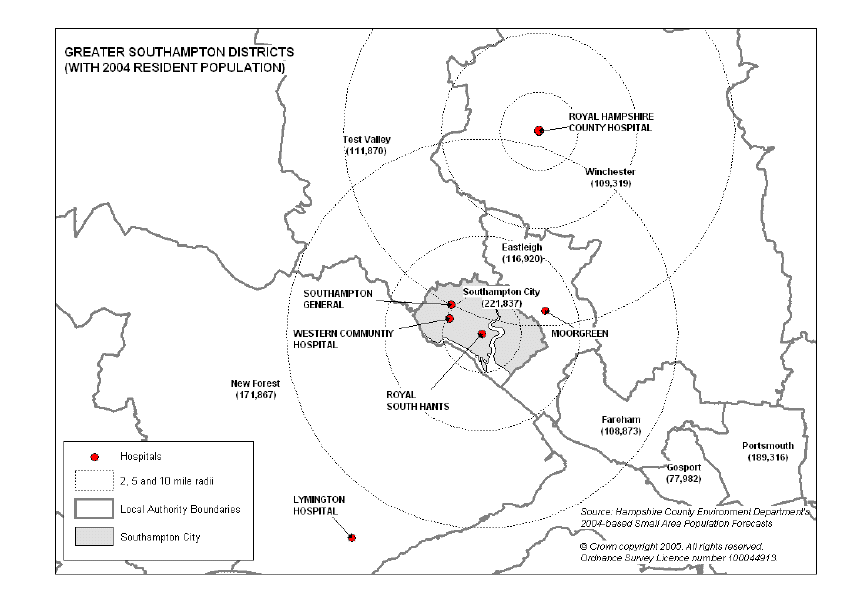
Appendix B
A HEALTH PLAN FOR GREATER SOUTHAMPTON
SOURCE DOCUMENTS
· Integrated Service Improvement Programme: Strategic Context and Benefits Realisation Plans for Scheduled Care, Unscheduled Care and Long Term Conditions (draft February 2006);
· Mid and South West Hampshire: Capital and Estates Strategic Framework (December 2003);
· Mid and South West Hampshire: Informing Future Operational Plans (Consultants Report - September 2005);
· Moving Ahead: Consultation Document on the future provision of adult mental health services (2005);
· Service Brief for the future use of the Royal South Hants Hospital site (Consultants Report - October 2005);
· South West Hampshire LIFT: Strategic Service Development Plan (version 4.1 September 2005);
· The Single Surgical Services Delivery System Project: Framework for Implementation (November 2005).
Blackbrook House (Maternity Facility)
Introduction
Blackbrook House is a facility in central Fareham which accommodates ante-natal clinics and other maternity related support groups such as breast feeding support for the Fareham area, and a midwifery led Birthing Centre. The House is currently in the ownership of the Secretary of State for Health (SOSH) as part of "the retained estate". Services in Blackbrook are all provided by Portsmouth Hospitals NHS Trust (PHT), but for historical reasons it is maintained by Fareham & Gosport Primary Care Trust (PCT).
Background
There are two issues that the PCT has been considering in respect of Blackbrook House. The first is the issue of ownership of the building. The question of transfer of ownership to the local health system was first considered in late 2003 following a review by the Secretary of State of its property holdings.
The ownership was offered to Portsmouth Hospitals NHS Trust who declined, given the Trust's strategic aim to finalise the Private Finance Initiative development of Queen Alexandra, and divest themselves of other properties. A lease was drawn up between SOSH and PHT for five years from 1 April 1994 which although signed and sealed by SOSH was not signed by PHT.
The Fareham and Gosport PCT Board considered Blackbrook House as part of the discussions regarding their Estates Strategy in April 2004. It was agreed that a review be undertaken before the building should be considered for transfer to the PCT.
More recently, the local health organisations, including Fareham & Gosport PCT, have also been reviewing the options for future provision of maternity services including the location of Birth Centres. The "options appraisal" conducted as part of this review identified a number of criteria, including cost, which the health system will need to consider in making decisions about the future location of services. Estate costs, whether capital investment or associated revenue, will form part of that consideration.
This paper takes into account all of the known issues in relation to the condition of Blackbrook House and considers their implications for the utilisation of the building. This includes work which had been undertaken to inform consideration of the ownership of the building in 2004, and also as part of the on-going review of local NHS estate in respect of maintenance, health and safety issues etc. This original work has been further reviewed taking account of current considerations, and Portsmouth Hospitals, as the providers of the service, have also been involved to ensure their confidence in the conclusions reached.
Factors considered
1. Estate Code Review (February 2004)
As part of the consideration as to whether the PCT should take ownership of the building, an initial condition survey report was undertaken in February 2004 to establish the overall condition of the building fabric and Mechanical and Electrical service installations together with associated budget costs to bring the property up to Estates Code condition B.
The report identified costs in the region of £564,000 plus professional and statutory fees and VAT. This work has been reviewed to consider aspects other than the ownership of the property, and to clarify by when particular sections of work would need to be carried out. In order to confirm these costs, a further report has also been commissioned which will be complete by mid June.
2. Fire Risk Assessment
A fire risk assessment was undertaken in January 2005. The Assessment identified a number of issues which required to be addressed and immediate action was taken following discussions with Portsmouth Hospitals to close the unit for two weeks in April 2005 to undertake the urgent improvement works required. This did not address all of the items identified in the Fire Risk Assessment.
Some £20,000 was spent to enable the unit to continue to operate, however, further works are required to bring the building up to new Fire Standards. The cost of meeting Fire Standards have been taken into account in the costs for maintenance/upgrade listed below.
3. Asbestos Survey/Other Contaminants
£10,000 is required to be spent immediately if we wish to keep Blackbrook open until January 2007. This work could not be carried out without a complete temporary closure of Blackbrook. A new roof is required for the Stable Block plus any internal strengthening of the structure. It should be noted that any significant alteration works (eg that identified in bringing the building up to Condition B) would also require care in determining the presence of Aspergillosis.
4. Disability Access Plan
A draft report was produced in October 2004, the summary of accessibility identified the following significant shortcomings:
· Serious problems of accessibility for clients, visitors and staff.
· There are steps throughout, even on the ground floor.
· It would be difficult to improve access with a lift due to frequent changes in levels on all floors, plus constraints of Listed Building Consents.
· The ramps and platform lifts that would be needed on the ground floor are likely to have a substantial impact on the original features of the building, especially the front entrance and lobby.
· The provision of accessible facilities on the ground floor whilst possible would be extremely difficult to achieve satisfactorily due to the physical constraints of the building.
· Significant investment would be required to address the accessibility issues and a major improvement scheme would need to be developed both internally and externally including approaches, parking, egress and lighting.
· Blackbrook House could never meet DDA standards due to uneven floors, steps etc. However, it is possible for services to be tailored to meet the needs of disabled patients, therefore the `service' would be DDA compliant, if not the building.
5. Listed Buildings Review (March 2005)
The Secretary of State as the current owner is liable for any notices issued by Fareham Borough Council in respect of works to the property, outbuildings and grounds required in respect of the Grade II Listing. This responsibility would transfer to the PCT on transfer of ownership. However, it was established in March 2005 that parts of the listings curtilage are on the Hampshire register of Buildings at Risk under Classification "D", i.e. show decay, solution agreed but not implemented.
Our surveyors have been in touch with the local Listings Officer and he is generally supportive of our approach to the maintenance of Blackbrook House.
6. District Valuer and Valuation Office (DV and VO)
An initial DV and VO report (September 2004) was commissioned and because of the requirement under Estate Code for the report to be valid, i.e. no more than 3 months old, a revised report was requested in December 2005. The DV and VO's latest report is dated 13 March 2006. The DV and VO has again highlighted:-
· Within the basement of the main building there was evidence of dampness and timber infestation.
· Adjacent to the main building there were a few outbuildings and an old stable block which were in a fairly dilapidated condition - having been neglected for some time.
· As these buildings are poorly maintained, this will conceivably affect the future saleability.
· The property is in poor condition for its age, type and location
The recommendations of DV report have been taken into account in the costs for the maintenance /upgrade of the building listed below.
7. Energy Performance
In moving towards Government Energy Targets the building if upgraded must meet new Department of Health standards to reflect the Kyoto agreement of less than 50 GJ/100cum. This means that the building must be well insulated. This is taken into account of in the costings for the six year plus option.Costs of alternative scenarios
The original focus of this work was on the total cost which the PCT would incur if it took ownership of the building. In view of other more recent considerations, estimates have been made of the costs of different scenarios. These include;
(a) Work required to retain Blackbrook House to house its current services, including clinics and Birth Centre, over the long term (6+ years). This scenario would assume that ownership would be transferred to a local NHS organisation. £885,000
(b) Work required over the next 1-2 years to enable Blackbrook to be used to house;
i) Clinics only £234,000
ii) Birth Centre and clinics £255,000
(c) Keeping Blackbook operational for clinics and re-open as a Birthing Centre for the duration of the consultation and consideration of the local maternity strategy circa 8 - 9 months.
£83,000
(d) Work required to re-provide the clinics at Blackbrook elsewhere in
Fareham (this scenario would assume that midwifery led Birth Centre services for Fareham women are provided from Blake Birth Centre or the Mary Rose Unit, and that Blackbrook House was closed.)
c£10,000
N.B. It should be noted that Mechanical and Electrical works elements and the continued operation of the boilers cannot be guaranteed within the work identified to deliver either scenarios b or c.
Costs associated with Disability Access requirements are likely to be prohibitive and have been excluded in all options. This is covered in point 4 above.
Scenario d)
One of the possible outcomes of the forthcoming review/consultation on maternity services is that a decision is taken to close the Birth Centre at Blackbrook. If this were the case, in view of the large costs necessary to upgrade Blackbrook in the next 1-2 years regardless of the services it accommodates, alternative accommodation would be found for the clinics currently provided at Blackbrook.
It would cost £83,000 to use Blackbrook even for the period required to carry out the review/consultation. The PCT has always been committed to reopening the Birth Centre once sufficient midwives are available to staff it. However, if the result of the review/consultation is to close the Blackbrook Birth Centre, investment of £83,000 will be seen by some to have been disproportionate, given the other uses to which that money could have been put. Therefore, the possibility of not reopening the Birth Centre, and finding alternative accommodation now for the clinics provided from Blackbrook has been explored.
One option is that the clinics held at Blackbrook could be re-provided in Fareham using Cedarwood, adjacent to St Christopher's Hospital, for the main ante-natal and scan clinics. Expectant mothers visit these clinics once during their pregnancies at present. The midwifery led ante-natal clinic could be re-located to Oak Meadow children's centre in Fareham and discussions are being held about the potential for also co-locating the Bumps and Babies Group which is no longer provided at Blackbrook.
This option would require a change of clinic day for the memory clinic currently held at Cedarwood. This is under discussion with the provider of the service.
The Blake and Mary Rose Midwifery led Birth Centres would continue to provide services to Fareham women, as they have during the temporary closure of the Blackbrook Birth Centre.
Discussion with stakeholders
Scenario d) has been discussed with the local Maternity Services Liaison Committee (MSLC).
One meeting was held in Fareham for the local group, representing service users and their feedback is that they would like Blackbrook to be operational during the period of the maternity services strategy consultation (Likely to be until Jan 2007). A key consideration for the group is that they feel that the case for continuing to provide a Birth Centre in Fareham in the future may be weakened if Blackbrook Birth Centre remains closed.
Another meeting was held with the Portsmouth and South East Hampshire MSLC that represents users and also professionals such as midwives and health visitors from across the former Health District. This group considered three options:
1. Keep Blackbrook for now, spend £83k and re-open the birth centre in the autumn (assuming sufficient midwives are available) in the knowledge that it may well close in the New Year
2. Put pressure on the PCT to spend more money to keep it open for longer
3. Allow Blackbrook to close now, but push for the provision of a Birth Centre in the new Fareham community hospital as part of the review/consultation on the maternity strategy
There was unanimous support for option 3.
Conclusions
Blackbrook is an old building that will require significant investment (likely to be around £800k) to keep it operational for the long term (6+ years), of which £200k would need to be spent in the next 1-2 years, and £83k in the next year. This investment would consume a very large proportion of the overall maintenance budget of Fareham and Gosport PCT over the next several years and therefore other sources of funding would be required.
There is local public support for a birth centre in Fareham. There is also acknowledgement of the costs, including "opportunity costs" of maintaining Blackbrook in the medium-long term. In view of this, and the possible outcomes of the maternity strategy review/consultation there is therefore a question over the investment of £83k in the short-term. The Board is asked to consider whether this investment should be made, or assuming that it proves feasible, that scenario d) be implemented.