
Archived decisions
Youth Support Teams and Workforce Development
Purpose of Targeted Youth Support Pathfinder
· Identify a workable model
· Explore wrap around support
· Deliver effective preventative work with young people
What is targeted youth support?
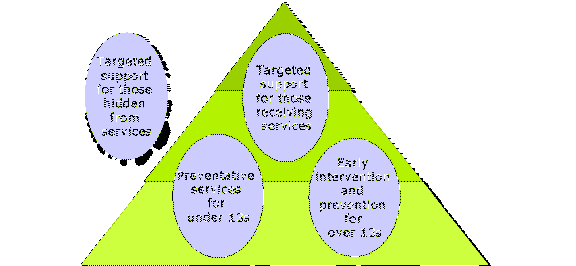
TYS deliver services to young people with tier 2 & 3 needs and supports universal services in early interventions and accesses specialist tier 4 services
Scope of Targeted Youth Support Pathfinder
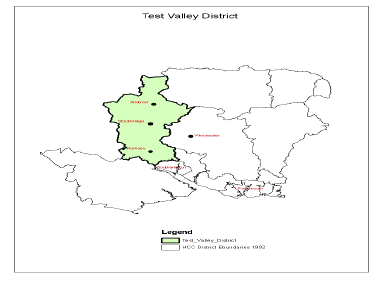
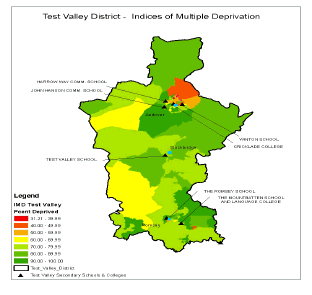
· Geographic target: Test Valley District
· Young People Target: 13-19yrs
· Vulnerable young people
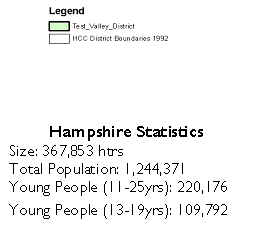
Test Valley District Statistics
Size: 6,2761 htrs
Total Population: 110,624
Young People (11-25yrs): 18,999
Young People (13-19yrs): 9,566
Fundamental review of the existing provision
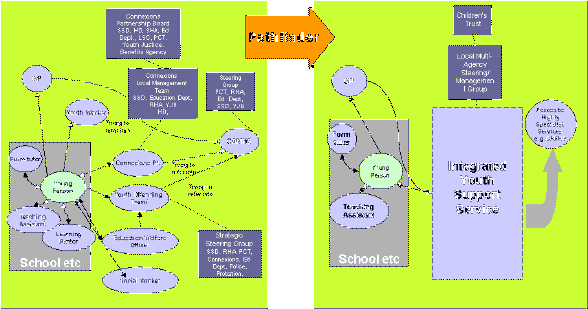

TYS Pathfinder programme overview
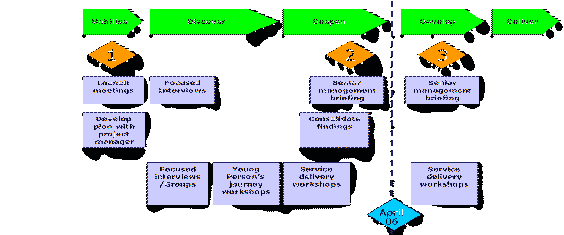
We are utilising a proven change management process to bring about the TYS redesign work
Discover and Deepen Phase
· Map current service provision around the priority needs of young people
· Share and recognise experiences of good practice in the delivery of targeted support for young people
· Understand the gaps in current provision and the barriers to effective working
· Create awareness and understanding of the views and approaches of other services/agencies
· Agree some of the priority issues in delivering integrated services
Structured Interviews - Strategic Managers
·
· Children and Young People's Strategic Partnership
· Elected members
· CDRP
· Police
· Children's Services - (Education)
· Children's Services - (Social Care)
· YOT
· CSD - EOTAS
· Voluntary groups
· Connexions
· CSD - Education Welfare
· LAC
· PCTs
· CSD - Youth Service
Group Interviews and Workshops
·
· Local Strategic Partnership - Test Valley
· CSD - Local Social Care
· Police
· CSD - Education
· CSD - Education Welfare
· Voluntary groups
· CSD - EOTAS
· Connexions
· Schools
· YOT
· LAC
· CSD - Youth Service
· PCTs
Involving Young People
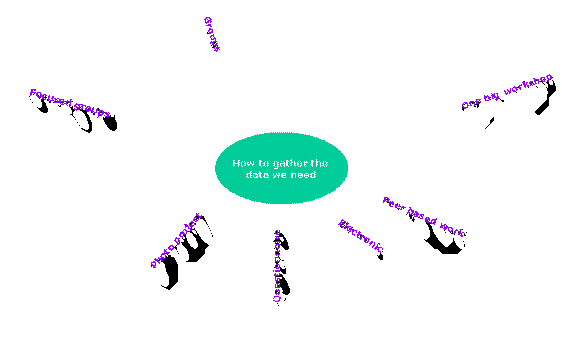
Involving Young People - Principles
·
· Have a range of activities
· Ensure y.p. choose to participate
· Meet young people's expectations
· Make sure there are some quick wins
· Alternative ways of gathering data - e.g. rap, dance etc
· Take to young people
· Ensure local relevance
· Ensure continuity of involvement - in reasonable timescale
· Work with people as they are
· Professionals execute the day
· Make sure the days has value to young people
Involving Young People - Consultation
· What are the big issues for young people in our target group?
· What are their priorities?
· What is their perspective of service provision?
Involving Young People - Learning
1. Good experiences for young people is paramount
2. A variety of styles of approach and recording information
3. Staff who have contact with `hard to reach' are key to inclusive consultation
4. Methods and settings enable flexibility and response to real time issues and behaviour
5. Careful planning and adequate staffing
6. Event should have value in themselves
7. Experiences shouldn't be a `stand alone'.
Needs of Young People
Across all age ranges and geographic areas, drugs and alcohol is the biggest issue for young people

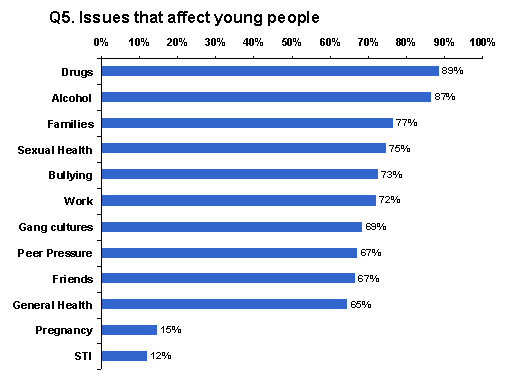
The more challenging young people we consulted at Calshot had strong views on the services they have received
The best services I have received
· Young carers
· School careers
· Connexions
· Mentoring
· Foster parenting
· Youth service
· Anger management
· Frank
The worst services I have received
· School
· Police
· Neighbourhood wardens
· Sex line
· Crisis centre for anger management
· School exclusions
In summary the needs expressed by Young People in Test Valley are compelling and surprisingly consistent
· Drugs and Alcohol are the key issue affecting young people across Test Valley ie Andover, Romsey and the rural areas and across the age range from 13 to 19
· Bullying and family issues also feature highly
· For the very challenged young people, one to one intervention is the "thing that made the difference" to their situation
· The view of agencies of what they believe young people need matches well with the needs expressed by young people
Service Delivery
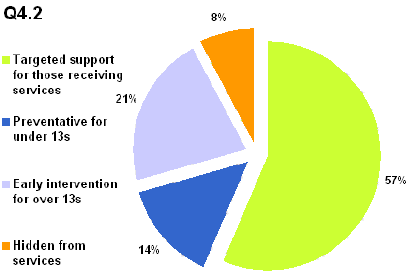
Of the time that the agencies spend on supporting young people around half of this time is spent on targeted support and just 14% on prevention for under 13s
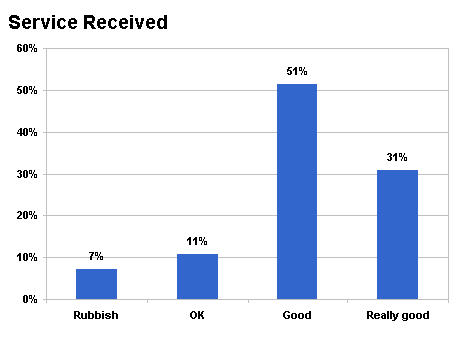
When we asked young people for their view on the services they received most found them to be good or really good
In summary the service providers have provided a comprehensive view of service provision and have recognised significant gaps
· Young people value the services they receive however the agencies are not as confident in their services are received
· There is some disparity around what young people believe is important in service provision and what the agencies believe is important, however the agencies are ambitious with what they want to achieve with their services
· The agencies believe they are good at managing themselves however they recognise that there are some important things that are currently not being done well. This includes interagency working, resourcing where needed, acceptable access to services and ability to engage with the health providers at a strategic level due to boundary issues
· They also recognise there are some significant service gaps such as drugs and alcohol support, mental health support and alternative education for young people excluded from school
· There is a predictable split of time between preventative and targeted work by the agencies
Multi-agency Working
Much cross agency working is working very well
· Social care - multi-disciplinary case conference
· YOT provides targeted support from multi-agency perspective
· Teenage pregnancy partnership
· Midwives, youth service and health visitors support of young mums
· Connexions and Youth service - particularly in Youth in Romsey
· Educational Psychology, Schools, Education welfare on truanting
There are a lot of performance measures that are shared with one or more agencies
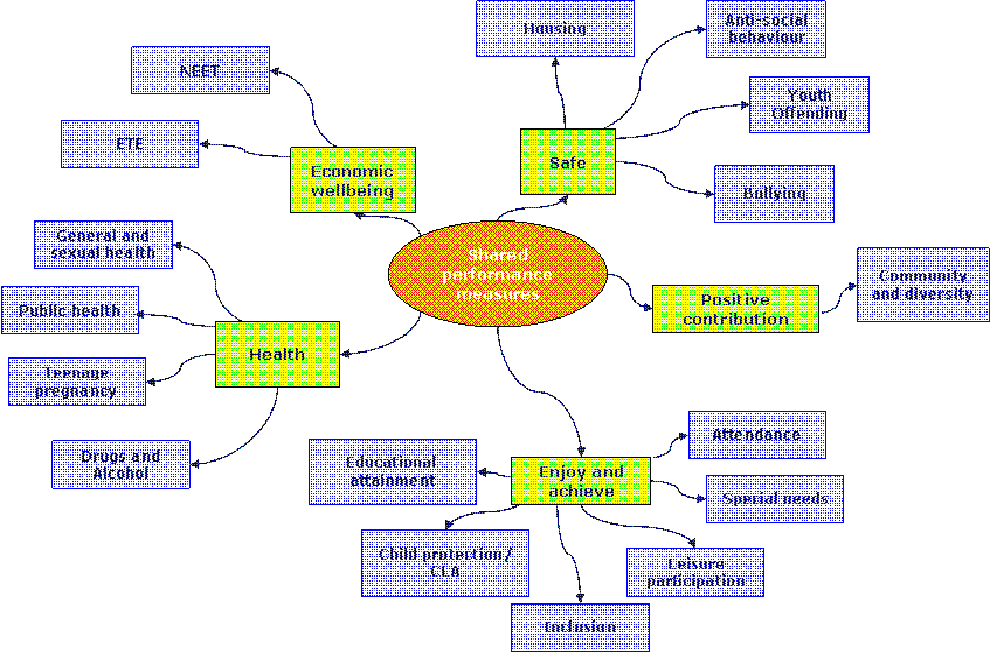
The agencies have said that there are some significant barriers to information sharing
· Interagency issues
- The definition of `confidentiality' varies between organisations
- Lack of trust between professionals
- Ignorance of who other agencies are and why they may want the information I hold
· Processes, systems and protocols
- Lack of clarity at a national level as to what is `sensitive' information/data
- Referral forms are difficult and time consuming to complete
- Resources/time
- Incompatible IT systems and software
· Data protection issues
- Young people may not want their information shared
In summary there are many examples of very good multi agency working although there are some significant issues to work through
· The agencies cited many examples of effective multi-agency working
· The issues raised include
- a comprehensive strategic overview to provide direction for all agencies to avoid duplication and encourage consistency
- effective information sharing
- Budget pooling where this makes sense
- Specific working practice protocols eg around case handling
· Many performance measures are shared across agencies although if we are measuring what it is that young people need, there could be more
· There are some significant issues around information sharing that need to be resolved
The Need to Change
There is broad recognition that in order to make targeted youth support a reality, specific agencies need to change, some more than others
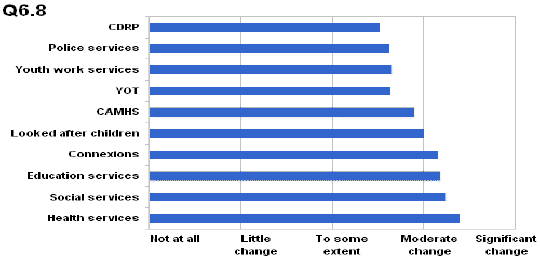
To what extent do each of these agencies need to change in order to make targeted support service a reality

In summary, there is a compelling reason to change without which we will be failing young people on some of the key outcomes
· In order to make targeted support for youth a reality, agencies said that Education Services, Social care, Health and Connexions require moderate to significant change while other services require change to some extent
· Specific barriers to change were identified around remits of agencies, willingness to partake in true partnership working and sharing working practices
· All change must be put into context of change initiatives currently happening in Hampshire
The draft Children and Young Peoples Plan has explicit priorities that identify targeted provision and integrated approaches as essential
Overall priorities
· All children and young people in Hampshire must achieve to their full potential against the 5 main aims of the Children Act.
· All organisations who work with children and young people across Hampshire are working together with the following overall priorities.
· To ensure:
- We engage with and listen to children, young people and their families
- Good and well co-ordinated support and advice for parents and families
- Excellent general education and healthcare provision
- The right provision and support for vulnerable children and young people and their families and those who need specialist support
- Resources are targeted according to need, whether it is geographical or focussed on individual circumstances.
The agencies have expressed consistent views of what the TYS could look like
· Young person is at the centre
· All interaction with young person is holistic
· Strong parenting support
· All services are accessible when needed
· There is a "lead professional" guiding the young person
· Services are well co-ordinated and responsive
In summary we are ....
· We have a clear mandate from the Children and Young People's plan
· We estimate the targeted youth support service will need to provide services to xxx of young people
· Agencies have expressed the need for a responsive services, that is accessible with well qualified professionals that is clearly focused on individual needs of young people
· The interaction with young people should be holistic and be co-ordinated by a lead professional
· Young people have added the need for confidentiality to this list
· Agencies suggest that this will be created by strong leadership at County Council level and a "one stop shop" approach
Next Steps
From the themes emerging from the analysis, there are some significant issues to address
1. How to define the "client group" for targeted youth support and the appropriate service framework to satisfy that group
2. How to address the critical needs of young people, particularly with regards to drugs and alcohol, bullying and family issues
3. How to work preventatively with young people and their families
4. How to ensure that all young people are able to access the service
5. How to create a strategic framework for effective multi agency working
6. How to improve multi agency working practices, particularly with regards to information sharing, duplication of efforts across agencies and implementation of the CAF
7. How to set performance targets which ensure that what is done makes a difference to the outcomes of young people
8. How to deliver some early successes in Test Valley
The objectives of the Develop phase will be to:
· Develop solutions that address the priority critical questions agreed by senior management at Decision Point 2
· Create options for future models of working that embrace these solutions
· Build the business case for the delivery phase including milestones, implementation activities, measurement frameworks, governance model, resource requirements, costing etc
· Prepare a decision making process to assist senior management to reach agreements at Decision Point 3
This next phase needs to deliver detailed modelling of the new ways of working...
· This modelling will include items such as:
- Where will the new service operate from
- Which young people and how many young people are expected to use the service
- The style of personnel staffing the service
- Numbers of staff required and their skill profiles
- How these staff are managed and measured
- How referrals and assessments are carried out
- A physical location or virtual
- How young people and their families are involved in the design and on-going service evaluation
- ...
- ...