Archived decisions
Strategy for developing the role of special schools in Hampshire
Context
Hampshire County Council has a clear vision of a comprehensive and inclusive education system in which every learner, whatever their special educational needs and abilities, is valued and supported. Provision in Hampshire will match the needs of individuals rather than the individual having to fit the provision.
This strategy sets out the ways in which the work of Hampshire special schools will be developed to support the effective implementation of the Inclusion Policy, Special Educational Needs (SEN) Policy and Behaviour Support Policy which complement Hampshire's Children and Young People's Plan in supporting the needs of all children and young people and reflect the corporate objectives of the County Council.
The strategy reflects developing best practice within and outside Hampshire and is in line with the future roles and expectations of special schools identified within 'Removing Barriers to Achievement. The Government's Strategy for SEN'. This strategy is aligned to the aims of the DfES Five Year Strategy for Children and Learners and contributes directly to the desired outcomes for children and young people stated in Every Child Matters:
· Staying healthy
· Keeping safe
· Enjoying and achieving
· Contributing to the community
· Social and economic well being.
Vision
The vision is for Hampshire special schools to be both specialist learning centres and support extended schools. They should be an integral part of the local community of schools and working in partnership with: parents and carers; resourced provision and mainstream schools; children's services; other agencies; district councils; and voluntary and community organisations. This will ensure the availability of appropriate and flexible specialist support and advice for children, young people and their families within a seamless continuum of inclusive provision. (The role of special schools in the continuum of need and provision is illustrated in Appendix 2.)
This strategy sets out a county framework within which special schools will be developed as specialist learning and support centres in the context of their locality. It recognises that one size doesn't fit all and that different solutions will emerge based on an analysis of needs and planning for delivery will focus on achieving high quality on-site provision and an extended partnership role.
Reviewing and developing special schools
Wherever specialist provision is reviewed or developed in Hampshire it is essential that the following are used to ensure and assure the quality and availability of coherent, consistent and equitable provision.
All development proposals and initiatives relating to provision for children with SEN will need to:
· be informed by and relate clearly to the implementation of Hampshire County Council policies for children and young people
· recognise special schools as key partners in the development of integrated children's services and Children's Trusts
· include special schools when identifying, planning and implementing change
· ensure that special schools and specialist services are closely aligned and work in partnership to ensure consistency, coherence, effectiveness and credibility of service delivery
· ensure professional development that equips staff to manage change, develop new consultancy and advisory skills and enjoy opportunities for career progression across the continuum of provision, enabling special schools to plan succession with a flexible, refreshed and innovative work force
· identify and take opportunities to be innovative and ambitious on behalf of children
· be sustainable, resourced and designed to meet current and emerging needs
· operate within the Hampshire County Council corporate culture of continuous improvement related to self-evaluation and review
· use a shared problem solving approach
· ensure that the change process involves all the key stakeholders, building on the best of current practice
· work in a pro-active way to ensure systematic and early intervention
· operate in ways that ensure coherent advice and support to individual children and their families
· ensure that all children:
_ have their needs met in the most inclusive learning environment
_ make good progress in relation to their starting points and to develop in line with children with similar needs
_ have access to a broad range of relevant curriculum opportunities and systems of accreditation to celebrate and maximise achievement and life opportunities
_ learn in safe and accessible settings
_ ensure that all children are valued members of the school community and have opportunities to contribute to the local community.
Framework for partnership working
As the role of special schools develops it is intended that schools will:
· be an integral partner in the development of the extended schools strategy and of integrated services for children and their families by strengthening links with social care, health and other services
· develop a coherent approach to inclusive educational practices within specialist and mainstream settings to enable staff to maximise children's progress
· review their own inclusion policy and inclusive practices and act on the findings to increase the range, diversity and achievement of the children who are admitted and retained
· provide continuing professional development opportunities for staff within special schools and across the local community of schools
· ensure flexible provision is available at varying points along the continuum of need to enable a more rapid response to be made and to ensure effective and coherent provision and services in the local area
· be an integral part of a local community of schools working collaboratively with other schools and service providers, including local cluster teams, in the community to remove barriers to learning and achievement
· work together with mainstream schools and other special schools to build up capacity and provide for a greater diversity of special educational and curricular needs
· work with other support services, to assist them to better meet the needs of children and their families within the local community. This will ensure that children's needs are met as close to home as possible, thereby also reducing the reliance on out-county school placements
· become learning and resource centres, specialising in the adaptation of the curriculum, responding to differing learning styles and personalising learning to promote curriculum access and achievement
· support partnership working through service level agreements identifying intended outcomes and measures of evaluation.
Planning into practice
Special schools' self evaluation and their review and development as specialist learning and support centres working in partnership with their community will take place in the context of this strategy, and must:
· relate to current and emerging patterns of local need
· have the inbuilt flexibility to respond to future changes
· maximise the opportunities for the realisation of key County Council policies and objectives
· give consideration to the potential links and opportunities arising from the government's diversity programme (e.g. Federations, Clusters, Learning Networks, Building Schools for the Future, Specialist Schools, Extended Schools)
· ensure change is led by the principle of quality of provision when also considering organisation, accommodation and structures
· consult with families, special schools, resourced provision, mainstream schools and other interested groups and agencies to identify the strengths, weaknesses, gaps and deficiencies within existing provision
· fully engage and involve those most affected by the change - the children, their families and the staff - and recognise that their commitment is vital to success.
Towards Specialist Learning and Support Centres
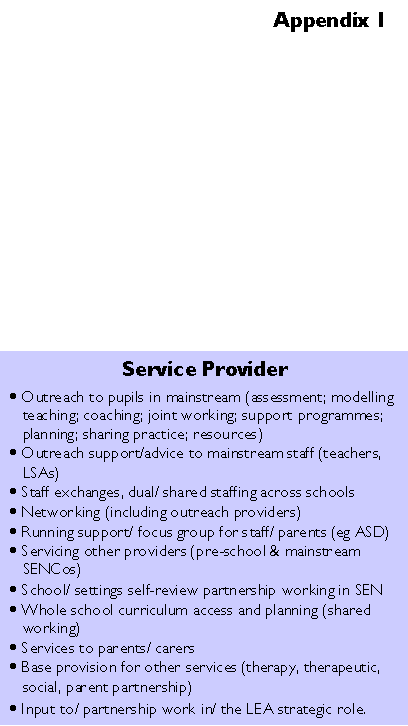
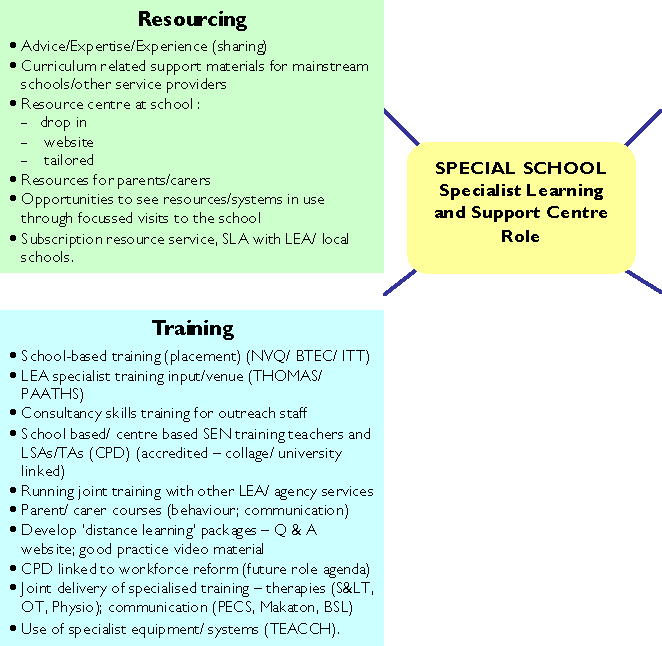
A model showing the potential to develop special schools as specialist learning and support centres is attached as Appendix 1.
This model is in line with the transformational agenda that is introducing radical changes to the way in which all schools and public services operate. The development of Children's Services in Hampshire involving greater integration of services for children, young people and their families is taking place alongside: the emphasis on collaboration and partnership evident in the development of extended schools, Children's Centres and learning networks; personalised learning and curriculum innovation; Common Assessment Framework; and workforce remodelling.
Special schools have a key role to play, and considerable expertise to offer, guiding and leading change. Special schools are already diverse and specialised and are on the journey towards becoming Specialist Learning Support Centres. The pace of development will vary according to the particular context of each school and will build on existing practice and staff skills and expertise.
All developments of special provision will take place in the context of this strategy with clear links to the SEN Policy, Inclusion Policy, Behaviour Support Policy and the Children and Young People's Plan. The application of the strategy will be reviewed through the development group for the Future Role of Special Schools.
Related policies, strategies and plans
The Report of the Special Schools Working Group - DfES 2003
Special Educational Needs Code of Practice - DfES 2001
Removing Barriers to Achievement: The government's strategy for SEN - DfES 2004
Five Year Strategy for Children and Learners - DfES 2004
The Green Paper - Every Child Matters - 2003
Children Act - 2004
Children and Young People's Plan 2006
Hampshire County Council Corporate Aims and Objectives
SEN Policy HCC 2005
Inclusion Policy - HCC 2005
Behaviour Support policy - HCC 2005
LEA Accessibility Strategy - 2003
Partnership Working: a service level agreement model - 2007.
 SEN Provision
· Long term placement (core)
· Short-term intervention (`in-reach')
· Assessment and programme planning placements (time limited)
· Provision for pupils placed elsewhere (through outreach/ training/ resourcing)
· Transition support (time limited)
· `Specialisms' (eg ASD)
· Flexible in making provision + able to change
· Regional/ sub-regional provision.