
Archived decisions
2007 Corporate Assessment - Self-Assessment - Working Draft
Version no: 3.3
Notes on status of this draft.
Our thanks to all of those who reviewed and commented on the previous draft - version 2.9. While preparing this version we have taken into account all those comments, although it has not been possible to implement them all - primarily through lack of space or lack of supporting evidence.
We believe this draft is very close to the final content. However, there are some outstanding requests for information or decisions which will not be fulfilled until next week (primarily because key staff are on holiday during half-term). The document also needs cutting. We are therefore going to prepare a fourth draft which includes the following changes:
· Information on "Children in our care - passport to success" and "partnership with schools forum".
· Better examples of how we make money from selling our services and from external funding. (para 49)
· A revised paragraph on teenage pregnancy - as it has recently gone from Green to Amber. (para 118)
· Add or change some quotes and figures arising from the results of the residents' survey (due next week)
· An improved paragraph on risk management. (para 62)
· Additional information on purchasing collaboration. (para 72)
· A few other minor pieces of information that have been requested or need checking, as indicated by comments in the text.
At the same time we will:
· Examine text to see how it can be made more concise.
· Complete verification of endnotes. Although the majority of the endnotes are now complete, there are some cases where the information is not yet available or where supporting evidence is missing. Completing this will be a high priority for the next draft. We will then examine each endnote to make sure it supports the text which references it and that all links work and lead to the correct information.
We will circulate this fourth draft by the 2nd March to Cabinet and CMT. Any comments will be taken into account and the results presented to CMT on the 8th March.
The final phase will be:
· Proof read
· Work with communications on the presentation and formatting.
For sign-off by the Leader and Chief Executive before submission on the 19th of March.
Change history
Date |
Version no |
Change |
Who by |
15/2/07 |
2.9 |
Released for review by CMT, Cabinet, CPEG and DMT. |
|
16/2/07 |
3.0 |
Minor editing changes, made subtitles consistent, added examples from Richard Ward, completed appendix A, footnotes edited as far as 41 "For example, in 2005 the Health Overview and Scrutiny Committee..." |
Mark Frank |
19/2/07 |
3.0 |
Completed first pass of editing footnotes. Added comments from Helen Wheeler on draft 2. Added material on economy from John Rees-Evans. |
Mark Frank |
20/2/07 |
3.0 |
Comments from Sarah Pook. Comments from Jos Creese (note new para 23). Comments from Communications (via Karen Mann), Additional material from Jane Goodwin. Comments from The Leader. |
Mark Frank |
21/2/7 |
3.1 |
Jenny Heath restructuring of performance section Comments from Chief Exec Comments from Cllr Hindson Comments from Cllr Kirk Comments from Felicity Roe Comments from PBRS via Sara Teers Comments from Mamie Branthwaite Comments from Alison Quant |
Mark Frank |
22/2/7 |
3.2 |
Revise in light of budget speech Add material on capital programme following discussion with Andrew Smith Add section on Supporting People Add replacement sentence for Rowner Update glossary Remove comments no longer needed Delete some content to meet page limits Other small additions |
Mark Frank |
23/2/7 |
3.3 |
Add reference for North Camp from Gary Smith Replace paragraphs on IT based on text from Andy Holdup Chris L-P comments |
Mark Frank |
Table of Contents
2007 Corporate Assessment - Self-Assessment - Working Draft 11
Context
Introduction
1. We are passionate about Hampshire, its people, places and communities and we hope that some of this passion is conveyed by this self-assessment. Our intention has been to give you a narrative - to tell you about the county and the county council and how both have changed since 2002; to set out some of our successes and areas for improvement; and to outline our ambitions for the future. We strive at all times to base our assessments, decisions and plans on evidence. To make this self-assessment easier to read we have avoided filling the main text with statistics and figures, so you will find much of this data clearly signposted in the footnotes and appendices. Throughout this self-assessment we have given limited coverage to the achievements of Children's Services compared to other departments. This is because Children's Services achievements will be covered in detail in the simultaneous Joint Area Review which will also be part of the Corporate Assessment.
2. Hampshire County Council has a reputation for delivering high quality services for its residents; of providing excellent value for money; of innovating and trail-blazing; and of strong leadership which is influential at county, regional, national and international level. This was reflected in our excellent rating at our last corporate assessment in 2002 and in our retaining a 4-star overall rating ever since. However, the world has not stood still and we have responded to dramatic changes in users' needs and expectations, the legislative framework and the resources available over the last five years. Every major department has undergone a fundamental reorganisation, building on our record as an efficient supplier of generic services, to engage with our communities to provide customised support from interdepartmental, multidisciplinary and multi-agency teams. This transformation is well underway. Our challenge is to keep up the pace of internal change, so we are prepared for the demands of the future, while maintaining the highest possible level of service for the demands of the present.
Hampshire and its issues
3. For most of its residents Hampshire is an attractive place to live, full of opportunities1 It is relatively prosperous2 has a wealth of natural and historical assets and the arts thrive. Crime is lower; people are healthier; and educational standards are higher than the UK average.3
4. This can often mask the fact that Hampshire also has its problems - some of these are national, some common to the South East and others are unique to the county.
5. Hampshire's population is growing and ageing4 While better medical services are allowing more people with significant social care needs to live longer, this creates a sharply increasing need for social care services. This is a problem we share with many authorities across the UK, but suffer more severely than most5
6. Like many south eastern counties, Hampshire can suffer from its own success. Rising prosperity and a rising population make increasing demands on the environment, on transport6and on housing7 Business surveys8show that the key difficulties facing Hampshire businesses include the high cost of housing, skills shortages, transport congestion and a shortage of space to grow. At the same time, finding acceptable locations for new housing development and providing the appropriate infrastructure is a major concern for residents and the planning authorities.
7. Hampshire is a large county in terms of both population and area9and this can hide important differences between communities and locations. One Hampshire district (Hart) is classed as the least deprived in England, while there are three wards in the district of Havant containing pockets of deprivation that are amongst the 10% most deprived.10However, district and even ward level analysis is not sufficient to understand the needs of the county. Over 40% of disadvantaged children come small pockets of deprivation in areas which are usually regarded as affluent, such as the New Forest.
8. 2.5% of the population of Hampshire belong to minority ethnic groups and they are relatively widely dispersed throughout the county. However, 5.8% of the 3-16 age group are from ethnic minorities, speaking a total of 93 languages. A recent development is the similar number of migrant workers from the expanded European Union.
9. Although crime is relatively low, surveys show that fear of crime and security in general is a key concern for the residents of Hampshire. 11This includes serious crime such as burglary and robbery and also extends to anti-social behaviour and activities ranging from drunkenness and vandalism through to aggressive doorstep selling. Again it is important to understand the problem in detail. While more deprived areas do tend to suffer more crime, anti-social behaviour is also a problem of affluent areas12
The role of the council
10. We help the residents of the county address these issues by providing the services they need and expect; by developing partnerships in the public, private and voluntary sectors; and by representing Hampshire at the regional, national and international level. We do this according to principles which Cabinet recently confirmed as part of the new Corporate Business Plan13
· Responding to and prioritising the improvements that people say they want
· Planning for and investing in the future
· Encouraging partnership, participation and contribution
· Removing barriers to opportunity and improving choice for all
11. Successful partnerships are key to continuing success. We work with eleven district councils, three adjacent unitary authorities, over 300 parish and town councils and many other organisations in the public, private and voluntary sectors.14Despite this complexity, we have made good progress in developing effective partnerships and delivering co-ordinated services. For example, Hampshire partners signed a Local Area Agreement (LAA)15in March 2006 and the first Children and Young People's Plan (CYPP)16in April 2006. We were pleased that the Minister for Local Government and Communities chose Hampshire as the location for his launch of the White Paper "Strong and Prosperous Communities" and even more so when he told us that it was because Hampshire has a track record of success in developing partnerships which deliver real benefits.17We have been under strong financial pressure, with one the of the lowest government grants relative to other authorities.18Our strong focus on review programmes, an established Value for Money Strategy and delivering annual efficiency savings in excess of the Government's Gershon target of 2.5% per annum19has helped us address these pressures. However, front-line services cannot be completely isolated from the impact of the continuing financial constraints, growing demand for services and cost inflation in excess of accepted national indices20 and where necessary we take decisive action to align aspirations with resources.
How we have developed since 2002
12. In 2006 we announced a revised Corporate Strategy "Looking after Hampshire, looking out for you"21which established three corporate priorities. In response to resident's surveys and partner views it puts safety and security at the heart of our strategy, supported by priorities for people's wellbeing and maintaining our quality of place. It also marks an important stage in our transformation since the last corporate assessment.
13. Our ambitions and priorities have become more focussed. In 2002 we were in danger of trying to take on too much. As resources have become more constrained we have joined with our partners to created targeted solutions which address problems that are specific to individual communities. For example, children that struggle academically often do so because of they lack support in other aspects of their life, such as health, safety and parental support. Through an LAA initiative which works with 12 selected schools and their communities, we have developed a team approach which addresses all these areas together in a coordinated way. An initiative which sought to improve their experience in school without addressing other issues would probably fail and would be a poor use of resources. A holistic approach like this can often prevent a potential problem requiring an expensive cure.
14. To deliver these solutions, every major service area has re-examined its role. Starting with Environment in 2002 and Recreation and Heritage in 2003, this was followed in 2006 by Children's Services (and Education) and Adult Services. We took advantage of the requirement under the Children Act 2004 to create two new departments, and develop multidisciplinary locality teams who can deliver innovative preventative solutions.
15. At the same time we are modernising the political process. Following the Local Government Act of 2000 we opted to replace the committee system with a cabinet of ten executive members. Since then we have worked to engage all members in the new model, so they remain involved in the planning and decision making process and are able to represent local interests effectively. Following two pilot schemes covering area committees and the scrutiny function22we held a democratic review in 2005. This led to a stronger scrutiny role for the policy and review committees and the development of Hampshire Action Teams (HATs)23. These are teams of councillors which represent communities within Hampshire. They listen closely to local needs; provide leadership in coordinating the services of the council and our partners; and provide a strong independent voice within the Council.
16. To better manage these changes we have steadily increased the rigour of our planning and reporting processes. This culminated in the new Corporate Business Plan which was completed this year. It is the final component of a system of service planning which extends from the Corporate Strategy through departmental service plans to individual performance plans (IPPs) and is rooted in performance management.
17. Throughout this period of intense change we have been able to sustain a high level of service and value for money which we can be summarised as top quartile performance and lowest quartile council tax24 The Audit Commission has given us the maximum rating of four for our overall service performance every year. Our capital programme has allowed us to continue to renew our physical assets25 And we have made long-term, investments in areas such as waste management, road maintenance, and road safety26with outstanding results in improving the environment and making Hampshire a better place to live in. We have maintained our tradition of innovation with initiatives such our award winning Occupational Therapy support service OT Direct.27
18. The challenge has been to sustain this rate of change and high service levels in the face of rising demand and increasingly constrained resources. This has required some unpopular decisions such as school closures28 altering bus subsidies29and council tax rises in most years significantly above the rate of inflation. Since 2002, we have, however, managed to retain a council tax in the lower quartile of county council taxes and, despite the exceptional demands on Adult Services in 2005/06 ( shared with many other authorities round the country), we have kept to budget throughout the period.
The future
19. Demand for our services will continue to rise, resources will become even more constrained30 and external forces such as climate change and EU expansion will bring additional challenges. At the same time local government itself is changing and we are actively engaged with our District, Unitary and other partners in a joint consideration of what this should mean for Hampshire. The national agenda set by the white paper "Strong and Prosperous Communities" entails further changes. As leaders of Hampshire communities we are committed to identifying and seizing opportunities within this framework that suit our local needs.
20. We know that some aspects of our culture need to develop to match the organisational change. For example, multidisciplinary and multi-agency working requires new skills of our partners and our front line staff and their managers. We have always prided ourselves on the quality of our staff so we are improving our learning and development processes to speed up this process and we are implementing a new system for evaluating training in 2007. The Hampshire Own Grown31initiative is designed to encourage and develop the new skills and thinking among future leaders which will help to meet these challenges.
21. We need to do even more to involve our communities in service planning and delivery. There are many good examples of consultation and user participation throughout the council. The next step is to move to a coordinated engagement strategy which is based round communities and people rather than projects and we have started to address this. A corporate group oversees this and as a first step has published a consultation strategy, best practice guidance and a database of consultation activities across the council.32
22. Over the next few years technology will play a fundamental part in helping to re-shape what the Council does and how we do it. Our Corporate Information Technology Strategy, Transforming through Technology, supports the overall council strategy by linking business change programmes enabled by IT to service improvements and greater efficiency. It includes a range of change themes such as new ways of working, customer contact, information exploitation, public access systems, and shared services.
23. There is little doubt that the pace of transformation will continue to accelerate in the coming years. Change and uncertainty will continue to a way of life and we believe that the ability to learn and adapt will be the most important attribute we can bring to Hampshire in the future. The last five years have shown we have the vision and political and managerial leadership to do just that.
Summary
Ambition for the community - self-assessed score 4
24. We have always been an ambitious council prepared to make significant investments for long term benefits and use our influence at regional, national and international level on behalf of the people of Hampshire. In recent years we have led the way in aligning our ambitions with those of our partners, increasing the involvement of all our members, and ensuring we reflect the needs and concerns of all our different user communities. Survey results tell us that the majority of our users understand and appreciate this.
Add quote from resident's survey when available
Prioritisation - self-assessed score 4
25. In times of increasing demand and financial constraint we have to base our priorities on a detailed understanding of different users needs. This is the basis for directing our resources, and those of our partners, to where they will be most effective. We have taken a strong leadership role in resolving the resourcing issues that can arise in complex partnerships and turning priorities into action plans with measurable and demanding targets.
`The council's corporate strategy and service business plans are effective and used successfully to set and drive its policy framework. The council makes effective use of improvement and action plans to secure improvement and progress in these is monitored and reported.' - Annual Governance Report, Audit Commission Oct 2006.
Capacity- self-assessed score 3
26. Our capacity is founded on high quality people at all levels, rigorous management disciplines, and industry leading information technology. This has resulted in a track record of innovation and leadership. As we reorganise and move to multidisciplinary and multi-agency teams this makes new demands of our staff and partners. We are making the changes to our organisation and personal development that are needed to support them in their new roles.
Need quote - ideally that reflects on quality of staff
Performance management - self-assessed score 4
27. Our transformation is dependent on a strong performance management culture. It has become embedded throughout the council and we have progressed from using performance management as a measurement tool to using it as an agent for change. We are using our proficiency in performance management to benefit our partners and thus help move our partnerships forward.
The Council's arrangements for the monitoring and scrutiny of performance are effective. The Council takes appropriate action to identify and report variance against its objectives and councillors are engaged in performance management.
Annual Governance Report, Audit Commission Oct 2006.
Achievement - self-assessed score 3
28. We have a track record of achievement which has been recognised through formal assessments and by our users. To sustain this level of achievement in the face of increasing demand we are developing customised solutions which are cross-cutting and based on partnerships across the public and voluntary sector. These have proved to be effective, popular with users and often allow us to move to prevention rather than cure.
"The Council has improved in the majority of its priority areas relative to other councils, including services already assessed as good." 2006 Audit Commission Direction of Travel Assessment
Ambition for the community
29. Since the last corporate assessment, we have worked with our partners to develop a set of strategies which align our own priorities, those of our partners and national priorities. In 2002 our Corporate Strategy was modified as the result of a Ipsos MORI survey and intelligence from Local Strategic Partnerships (LSPs). At the same time key areas for improvement were identified through the first Local Public Service Agreement (LPSA) and the Hampshire Improvement Programme, which addressed the findings of the first CPA corporate assessment. In 2004 the Hampshire Strategic Partnership33(HSP) published the county community strategy Shaping our future together 34and we revised the Corporate Strategy to take account of it. Work also began on LPSA 235and we carried out a further Ipsos MORI residents' survey. In 2005, following the local government elections, work began to review our priorities and the priorities and process for the Local Area Agreement. This culminated in the revised Corporate Strategy, the LAA, and the Children and Young People's Plan in 2006.
What are our ambitions?
30. Our top level ambitions are laid out in our new Corporate Strategy:
· Hampshire safer and more secure for all
· Maximising well being
· Enhancing our quality of place
The council's shared priorities are documented in the LAA, the Children and Young People's Plan, and the Hampshire Community Strategy36 They are encapsulated in the eight priorities of the LAA (see appendix B).
31. These are supported by other strategies and plans such as the Local Transport Plan37 and the Cultural Strategy38 As part of our transformation, these strategies increasingly involve cross-cutting initiatives and partnerships focussed on specific groups of users rather than services. For example, the Older Person's Well-being initiative was set up to help people over 65 to live in their own homes as independently as possible and as long as possible. It brings together services from across the council departments and also involves district councils, health care organisations, voluntary, community and care organisations and older people themselves39
32. We use our national influence to get our ambitions for Hampshire reflected in regional and national plans and strategies. We are an active member of Partnership for Urban South Hampshire (PUSH) and ran the award-winning "Holding Out for Hampshire" campaign which seeks to influence the South East Plan as it applies to Hampshire. We also lead initiatives on behalf of South East County Leaders (SECL), including a resources recovery summit with key suppliers and stakeholders in the South East40and the implementation of collaborative procurement arrangements for construction through our lead role with the South East Centre of Excellence. We have been selected as a pathfinder authority in key national projects (Rural Pathfinder and Cultural Pathfinder). This recognises past achievement and provides an opportunity to be proactive and innovative41
33. Our ambitions are based on long term strategic thinking and sustainable solutions42 In 2004 we signed up to the Aalborg commitments on sustainable development43as part of a process of continuous improvement. We developed a baseline review during 2005/2006 which we verified with the Audit Commission and set a target of reaching 2.1 out of 4 by the end of 2008/09 which features as one of the headline performance indicators in the Corporate Business Plan. The Council recently debated a new long-term sustainability vision (within a decade Hampshire will prosper without risking our environment), so the building blocks are in place to embed sustainability into service planning and therefore help ensure continual improvement in sustainability performance.
How do we manage our ambitions?
34. Our ambitions are founded on research and intelligence about the local community which is gathered at many levels from countywide down through district, ward and super output area to data on individuals. The council regularly gathers market research data for itself and its partners, using sources such as Ipsos MORI Residents' surveys44 work amongst older people, young people, minority groups, communities experiencing deprivation, businesses and annual pupil attitude surveys. We also use national sources such as the Department of Communities and Local Government's index of multiple deprivation and the Audit Commission Quality of Life Indicators. The authority has invested in a demographic data system45which gives key lifestyle characteristics of Hampshire residents down to postcode level. This helps us accurately target communications and service planning and allocate resources according to demand. All this is supplemented by management information derived from our services, such as the number of children receiving free school meals, and the number and characteristics of older people receiving care. We also commission qualitative research with groups or individual users, often in conjunction with partners.46Members are closely involved in the development of ambitions. The Executive Members of the Cabinet have prime responsibility for formulating and maintaining strategy, especially as it relates to their own portfolios, and the full Council debates and approves their proposals. As part of our political modernisation we are developing the role of Policy Review Committees (PRCs). The Hampshire Health Overview and Scrutiny Committee (HOSC) has been cited by the Centre for Public Scrutiny as one of eight examples of good practice with regard to HOSC contributions to the annual health check conducted by the Healthcare Commission. We have learned from this example and are using it as model for scrutiny by other PRCs.
35. We review our ambitions and our progress in many ways. Cabinet and the Corporate Management Team (CMT) hold regular away days where they consider the effect of major initiatives on our strategies. For example, they recently reviewed the consequences of the "Strong and Prosperous Communities" white paper. The Futures Group47of young managers provides a different perspective, which can challenge current policy and has direct access to both Cabinet and the CMT. Cabinet and CMT systematically monitor progress against our corporate priorities every six months, now focussing on the key targets published in the Corporate Business Plan . These are supplemented by partnership exercises including the LAA and CYPP refresh and the Community Strategy review.
How do we work with partners?
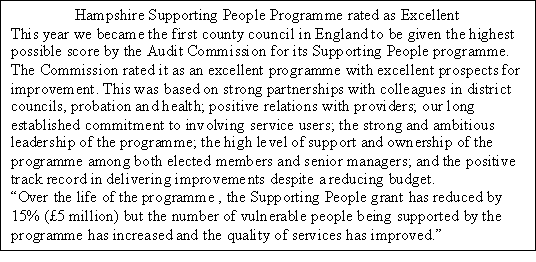
36. For our transformation to succeed we must develop our ambitions in close alignment with our partners and we have worked to forge links at all levels. We led the signing of the Hampshire LAA. Our officers and members have leading roles on the LAA Board and Executive48 the HSP49 and the Children and Young People's Partnership Board and Steering Group50 and many others. We work closely with the voluntary sector through the Hampshire COMPACT and programmes such as Supporting People51 And we work with local businesses through the Hampshire Economic Partnership52and similar organisations53
37. We also play a central role in gathering and sharing information among partners. For example, in addition to publicly available information on Hantsweb, the council hosts the Hampshire and Isle of Wight (HIOW) ePartnership web site54 In 2007 we will implement the Crime And Disorder Data Information Exchange (CADDIE) in Hampshire, a database to share information relating to community safety with 16 partners, including Police. Our vision is for a comprehensive and systematic way of sharing a much wider set of information across partners. The HSP has commissioned a feasibility study into an observatory, a database which could be the foundation of this vision, and we are taking the lead in developing the initiative.
38. We know there is more work to be done in coordinating the aims and priorities of Hampshire's many and varied organisations. For example, the Hampshire Primary Care Trust (PCT) has undertaken to align itself with both Children's Services and Adult Services geographic representation. This will help us better align our strategies, facilitate closer partnership working, and make better use of resources. The Council and the PCT have recently appointed a Joint Director of Public Health working across both organisations. This is an important new role that will lead an integrated and targeted approach to the delivery of improvements in the health of local people across Hampshire.
How do we tell our users about our ambitions?
39. We want our residents to understand and identify with our ambitions. Our Corporate Strategy is a theme running throughout our communications with the public and forms the backbone of the supporting corporate communications strategy. The revised Corporate Strategy was the subject of a multi-media campaign aimed at residents, staff and members, part of which was highlighted as best practice by the IDEA Connecting with Communities project55 Subsequent communications, such as items in our flagship residents' magazine, Hampshire Now56 feature case studies of the strategy in action. Recent survey results show that since the Corporate Strategy launch 69% of residents believe that the county Council is making the area a better place to live and that 40% of residents get their information via Hampshire Now.57
Priorities
40. Over the last five years we have become increasingly rigorous in allocating resources to address priorities that really matter for the users of our services. This means listening to what they say they need, and making sure that we are engaged with all the residents of Hampshire - including those that are less well placed to make their needs known. We have then worked with our partners to turn our users' requirements into concrete targets and allocate resources to meet those targets, underpinned by a strengthening commitment to performance management.
How do we understand our resident's needs?
41. When deciding our priorities, we learn about the needs and desires of the communities of Hampshire through robust data analysis, liaison with partners, surveys, consultation exercises, and other means. To inform our budget setting for 2007/8 we consulted representatives of the business community, HSP, the voluntary sector, Hampshire Residents' Association, the trade unions and also the pressure group "Is It Fair" which campaigns against council tax rises. This included two one day workshops facilitated by Ipsos MORI (one with a group of 11 to 16 year olds) and the Citizen's Panel Survey. With the exception of "Is It Fair", they told us that would prefer to see a council tax rise close to the government capping limit rather a than a cut in services. 58As a result we decided to maintain the level of our services at the highest possible level and set our council tax rise at 4.9%.
42. We have worked incrementally on our approach to include the views of socially excluded people through the work of the Equality and Diversity action group. In 2005 we commissioned an external review of that approach which highlighted the need to move forward from a position of `we don't discriminate' to one of `we take positive steps not to'. A plan is now in place to set up external equality reference groups during 2007. A particular challenge is to gain the active participation of the relatively small and widely dispersed ethnic minority population. We are focussing on building capacity and confidence through activities such as the Inter-faith forum59 This and similar cultural events have been well attended and enthusiastically received by minority communities. As a result we are starting to see increased participation in the decision making processes.
43. We have worked with partners to ensure disabled people are actively involved in the development of the disability equality scheme. They told us that transport is their top concern and as a result we included actions to address transport in the disability scheme action plan.60 Disabled people will continue to be involved in monitoring the scheme. This approach is also reflected in access to council facilities61and in employment practice62
44. A review in 2006 identified that the Council had been less proactive in promoting equal treatment in relation to sexual orientation. The council has responded in a number of ways including a partnership with Hampshire Constabulary to link with an independent Lesbian, Gay, Bisexual and Transgender advisory group for this community. The Council has been proactive in embracing the civil partnership legislation ensuring equality for all register office users. There have been 321 civil partnership formations in Hampshire.
How do we align resources?
45. Increasing financial constraints mean that we have to challenge existing ways of working and develop new arrangements with longer term partners; and sometimes have to sacrifice lower priority items to continue to long-term ambitions. Our members are deeply involved in these difficult decisions. This is done through executive members who have a specialised knowledge of their own portfolios, cabinet decisions, and with our political modernisation, scrutinised by the policy and review committees and full council.
46. We have created a steering group to increase the integration of service, financial and workforce plans and reporting. The group has made substantial progress (which has been recognised by CIPFA63 at three levels:
· At the strategic level to integrate the priorities in the corporate strategy with the budget and workforce plan and to move to longer planning horizons.
· At the operational level with the integration of service plans with departmental budgets and workforce plans. As part of the corporate planning process each department is now required to show how their financial and workforce plans resource their planned activities.
· At the process level with detailed guidance for planning.
The continuing work of the group has recently been endorsed by CMT64and the emphasis will now be on establishing more consistent and robust benchmarks and rationalising sources of information and data.
47. Where possible we work to obtain external funding to support our priorities. The Local Transport Plan was described by the Government Office of the South East as "one of the best we have seen" leading to an additional £1.5 million in external funding.65In this context our regional and national role is influential. We also obtain resources by selling our services outside the Council. Our library service sells spare capacity in its mobile fleet to Portsmouth City Council enabling that authority to provide a service it otherwise could not afford, and allowing us to defray some of our costs. The Hampshire Police Authority (HPA) contract all their services from us.
48. As partnerships have become larger and more complex, aligning resources has become more difficult. This has called for both negotiating skills and the resolve to take a lead when required. For example, under the safe and strong priority, we have already taken the lead in negotiating £55,000 of contributions from all sixteen partners to develop the CADDIE project. The LAA will take partnership working to a new level, moving beyond the initial pooled grant to combining mainstream resources from the partners. It is very early in this process, and we are taking the lead in developing the approach. We have, for example, committed resources to the flagship initiatives and successfully negotiated contributions from partners to fund a full-time performance officer.
How do we translate priorities into action?
49. In a dynamic environment with changing priorities it is vital to have a vigorous process for translating priorities into operational objectives and plans, and for monitoring progress. Performance management is key to this. The Corporate Business Plan assigns a responsible cabinet member and chief officer for every major outcome against our corporate priorities. It also completes a documented chain of targets and actions which links our corporate priorities through departmental service plans right down individual performance plans (IPPs). All sub-strategies and reports requiring decisions must show how they are linked to the Corporate Strategy.
50. We have introduced similar discipline into our partnerships. Many of the most important LAA and CYPP targets are also in our Corporate Business Plan. As partnerships become more complex and more fundamental to our delivery, we need to do more to communicate our common priorities throughout the member organisations. We are addressing this with our partners in a number of ways including workshops, appointment of LAA departmental contacts, and renewed content on Hantsweb.
51. We continually monitor our progress against our priorities. In addition to departmental and project reviews, CMT and Cabinet review progress across the council every six months. We also monitor the users' viewpoint as part of the Council's overall commitment to market research and consultation. This includes monitoring the views of suppliers (surveyed annually) and internal customers such as schools. For example, in 2006 Adult Services undertook a consultation on our eligibility criteria for social care and as a result it was decided that we would not raise the threshold criteria.66
Capacity
52. Over the last five years, despite constrained resources, we have met an increasing demand for services through a combination of partnerships, innovation, and efficiency gains. At the same time, we have made fundamental changes to our organisation, the skills of our people, and the other assets which comprise our capacity to deliver. Our role is changing and we are changing our capacity to match.
Our People
53. We have always believed that the quality of our staff is our biggest asset and this is reflected in our track record of innovation. There are many examples in this self-assessment. Additional examples include the Gosport and Winchester Discovery Centres67- a new approach to libraries, Family Group Conferences - a model for decision-making about children developed from Maori community traditions68 and a Disability Sports Officer - who works with District Councils69and individual sports bodies to provide opportunities for sports for disabled people.
54. However, as we develop we are creating new types of job with new skills. This year we will introduce a new pay and benefits programme70which allows for pay based on performance and more flexibility within pay scales. The "Fresh Start" programme gives officers who have been with us for a long time the opportunity to assess their personal aspirations. This can lead to a change of career within the council, a new career elsewhere or even retirement.
55. Many of our senior executives and members are recognised national and international figures in local government. For example, the Leader is currently Chairman of the County Councils' Network, the Local Government Association Resources Committee, and the Innovation Forum; and also sits on the Local Government Association Executive Committee. Many of our Cabinet Members71and senior officers72have also been appointed to European, national and regional organisations . For example, the Director of Children's Services has been appointed to the Communities and Local Government Lifting Burdens Task Force, was President of the Association of Directors of Social Services and is Joint President of the new Association of Directors of Children's Services.
56. Our new organisation and way of doing business are making new demands of our managers. They must manage multidisciplinary, even multi-agency, teams which may well be based many miles away, possibly on the premises of another organisation. To address this we have introduced new management and leadership competencies. Business and service plans outline the steps needed to achieve the Corporate Priorities; the competencies set out the skills, knowledge and behaviours that will help managers achieve them in the best possible way. The Hampshire Own Grown initiative includes the Future Leaders73programme which is designed to develop the skills of potential senior managers and the graduates programme74which is designed to give our graduates a grounding in similar concepts.
57. The move to cross-cutting teams also places new demands on communications within the council, particularly across departments. An internal communications strategy, tabled in 2006, includes a monthly internal newsletter supporting departmental communications, Hantsnet, "Success through People" management briefings and a system of manager briefing notes from CMT. This is supplemented by cross-departmental working groups and steering groups; and secondments between departments. Every department has an officer designated as key communicator who belongs to a group who meet regularly with the Head of Communications to share information and ensure consistency of approach.
Making Decisions
58. We have a structured process for making decisions which is laid out in our constitution75 Key decisions are documented four months in advance in the Forward Plan76which is published on Hantsweb. This is shortly to be superseded by a decisions database which will provide a flexible internet based tool, available to the public, for inspecting both past and planned decisions and their supporting documentation.
59. Decisions are subject to a demanding scrutiny process. HOSC set a precedent for a successful scrutiny regime77 challenging both the Council and the National Health Service, and raising national as well as county issues. Despite this being a relatively new function, other scrutiny committees have already initiated a major review of library and information services and held many smaller scale workshops and reviews. All scrutiny committees (including HOSC) have clear criteria for focusing on service improvement78and have been able to directly influence decision makers to improve services such as reinstatement of day care in South East Hampshire.
60. There is a robust corporate framework in place for managing risk when making decisions.79All key decisions are made by Executive members based on written reports which describe the associated risks.80Risks are reviewed and used to inform the planning process at departmental and/or corporate level depending on the nature of the risk.81All departments maintain a risk register which feeds into the overall corporate risk register. This includes details of the controls in place to manage risks and those that are proposed if the level of risk is deemed to be unacceptable. We have recently established new arrangements for the corporate groups overseeing risk management and health and safety which will further improve the level of risk monitoring.
Finance and efficiency
61. We have a reputation for sound financial management combining budgetary control with steady performance improvements and efficiency gains82while keeping council tax in the lowest quartile of county councils. The Audit Commission Use of Resources assessment rated us as three (consistently above requirements - performing well) in 2005 and 2006.
62. Key to this is making significant investments which have achieved service improvements or efficiency savings in the long term, and also sharing assets creatively and effectively with partners. Project Integra83is an outstanding example of very significant investment in a partnership which has resulted in Hampshire's recent excellent performance on waste management. Looking forward, our new customer contact centre is a £5 million investment which is expected to produce efficiency gains of £1 million a year while providing easier access for users.
63. We have an outstanding record of recycling capital and working with partners so that we have the assets to underpin our services. The ENHANCE project used £40 million from the health partnerships plus £20 million of our own capital to deliver ten brand new homes with 500 beds and seven refurbished elderly persons' homes. Our partnership with our schools provides the opportunity to match their delegated capital, approximately £25 million a year, with the our resources of approximately £20 million a year. The combined purchasing power has led to significant improvements in the learning and liabilities that we have in our Education Estate
64. As resources become more constrained, we continue to focus on efficiency and value for money. In June of 2006 Cabinet approved a Value for Money Strategy84which is being cascaded throughout the organisation through revised processes and training. All departments are expected to include value for money in their service plans and write a value for money report as part of their six-monthly and annual performance reports. Internal auditors have been trained to routinely identify and report on value for money.
Information Technology
65. Information Technology (IT) has long been used by the council to improve performance and services85 Our website, Hantsweb, is one of the most frequently visited in the UK and we have promoted Internet usage through measures such as the Hantsweb awards86and Silver Surfer events87
66. The corporate IT strategy, "Transforming Through Technology", will involve the whole organisation in making the best use of technology to bring about fundamental improvement. This means taking a long-term view about the nature of business change and the role of technology in stimulating and underpinning it. It will particularly involve improved integration between services and better management of business processes.
67. Over the next 3 years, a number of key themes are emphasised, including efficiency, information management, new ways of working88 partnership and improved IT and business skills.
68. Benchmarking ensures that IT remains efficient. In 2004 the Society of Information Technology Management (SOCITM) estimated the `total cost of ownership' of desktop (Hantsnet) connections to be £461 compared to a local authority average of £713. Our Hantsnet intranet service has been recognised both by industry peers89and by central government.
Procurement
69. Our Corporate Procurement Strategy90is aligned with our corporate priorities and the Hampshire Community Strategy and has become a major driver for efficiency savings and service improvement. This ranges from frameworks and partnerships across construction and maintenance services91to the Corporate Procurement Network, which has delivered multimillion pound recurring savings across departments and schools in recent years.92We also use procurement as a mechanism for supporting corporate social responsibilities. For example, we are setting up mechanisms which will enable us to more actively monitor some of our key suppliers' compliance with equality and diversity legislation and some suppliers provide work experience and apprenticeships for Children in our Care.
70. Collaboration is a key element of our procurement strategy and Hampshire is an enthusiastic partner in the South East Centre of Excellence (SECE) and leads the Building Workstream initiative to provide significant cashable and non-cashable savings93 Through SECE we are contributing to the national agenda for construction activities. We are also actively engaged in a number of well-established collaborative procurement arrangements94and lead "The Hampshire Marketplace"95
Partnerships
71. We work closely with partners to develop capacity through joint procurement arrangements and joint work on human resource issues, such as staffing and leadership. We are an active partner in the Hampshire and Isle of Wight Improvement Board and our HR department works closely with both HIOW and South East Employers. We are leading the development of the Hampshire Recruitment Portal which will share the cost of recruitment among partners. Children's Services have introduced multi-agency training around the Common Assessment Framework. The Council encourages membership and active participation in relevant interest and professional networks.96
72. As we increase our commitment to partnerships we will place increasing emphasis on the roles and processes needed to manage them effectively. With partners, we have appointed an officer as full-time performance coordinator for the LAA and created a partnership portal97 This provides central guidance on setting up a partnership and working with partners, including sharing resources and conflict resolution and handling risk, as well as providing an evaluation tool to test the effectiveness of partnership arrangements..
Access to services
1. Our services are available face to face, by telephone and through the internet. A cross-cutting approach is creating new opportunities. For example, volunteers taking books to housebound residents will also take checklists relating to adult services.
2. The extensive use of Hantsweb makes many services available online at all times. Some key services have 24 hour telephone support - for example Social Services Direct. Many other services are provided through partners who can support extended hours. Our new contact centre will provide comprehensive access to council services for extended hours98and 24 hour access for emergency services.
3. There is a particular stress on improving access for people who tend to be excluded, such as people from minority ethnic communities and disabled people. We have introduced a process to ensure that Race and Equality Impact Assessments are carried out for all service plans, committee reports, new or revised policies, plans and procedures99 Training has been provided to support managers and there is evidence that this is beginning to deliver improved access, an early example was the introduction of a textphone number for information centres. The council's Disability and Discrimination Act (DDA) Access Audits and Improvements Strategy was highlighted nationally as an exemplar of good practice and in 2006 we exceeded our target of giving disabled access to 75% of all public buildings.
Performance Management
73. Performance management is a vital tool for managing change and, since the last Corporate Assessment, it has become deeply embedded in the culture and processes of the council. It has moved out of the domain of specialist performance officers and senior management to become recognised, used and valued by officers, members and our partners. Our performance framework 100provides guidance to support best practice, a route map for locating plans and targets, links to improvement programmes and a window on performance and accountability through all organisational levels.
74. The Corporate Performance and Efficiency Group (CPEG) is a steering group of senior officers which meets monthly to lead performance improvement. Performance management is part of the recently improved management competencies and there is a Performance Support Network,101which helps officers exchange their experience of different aspects of performance. In 2007 we will implement new performance management software102and re-engineer our processes to allow officers to input and retrieve performance data much more quickly and easily.
75. Members have a central role in driving performance. Cabinet has ultimate responsibility for approving corporate performance targets and meeting them; executive members review performance results relevant to their portfolios at least twice a year and draw up action plans to resolve any issues; and policy review committees have started using performance information to support their scrutiny role. One executive member has a performance portfolio. This includes reviewing performance management data as it becomes available; attending CPEG meetings; and, where there are shortcomings, meeting departmental representatives to investigate and ensure appropriate action plans are in place.
76. Our suite of corporate and strategic plans are supported by both statutory and local performance indicators. For example, we have selected 50 performance indicators that measure performance against the Corporate Business Plan outcomes, including those key measures in the LAA that indicate shared goals. These are supported at the departmental and individual level through service and individual performance plans, all having an emphasis on identifying SMART measures.
77. The process of selecting performance indicators and targets is widespread throughout the Council, involving officers who are as close as possible to the services concerned. They are supported by departmental performance staff and the Corporate Performance Team. The selected indicators are then reviewed by the responsible executive member and Cabinet as a whole to ensure (among other things) that the targets are sufficiently stretching.
78. The performance framework and the process for reporting progress against the Corporate Strategy then provide a strong mechanism for sustaining the focus on priorities103and therefore on users' needs. Performance against targets is reviewed at regular intervals at departmental level (at a frequency that depends on the departmental context104, by executive members for their department, and by the CMT and Cabinet at six monthly intervals in the form of the half-yearly and annual Corporate Performance Results. There is a named Executive member and Chief Officer responsible for each area of the business plan. Responsible officers and members pay close attention to the results of these reports. Failure to meet targets is taken seriously - particularly where targets have a large impact on corporate or joint priorities - and leads to remedial action105
79. We are also working to develop a performance management culture in our key partnerships106 particularly the LAA. We have appointed an experienced LAA Performance Coordinator - sponsored by contributions from several partner organisations - to facilitate performance management and reporting among the members of the LAA, while CPEG is monitoring our own contribution to LAA targets.
80. We pay close attention to the presentation of performance information to officers, partners and the public and this is the subject of continuous improvement. We meet our statutory requirement by placing all performance indicators and progress on Hantsweb107 With such a large number of indicators it is essential to provide more selective views tailored to specific audiences. For example we provide a summary performance report in the Spring edition of Hampshire Now, tailored to areas of greatest public interest. Our new performance management system 102 will allow for much more sophisticated and dynamically tailored presentation of targets and progress against targets.
81. In addition to progress against performance indicators, we have a review programme108aimed at improving both efficiency and performance, which embraces external challenge. We also benchmark processes and outcomes against similar organisations and against partners. We are a member of external networks such as the South East Counties Performance Group (SECPIG) and Hampshire and Isle of Wight Policy and Performance Network109(PPRN) which share good practice and performance information. We also support many external accreditations110which have their own performance standards, such as Investors in People and ISO 9001111
82. Learning from performance results takes place at all levels within the council, from departmental, project and peer reviews through to CMT and Cabinet actions arising from the half-yearly performance reports. The organisation also uses formal assessments, such as the previous corporate assessment, as tools for learning and improvement. A fruitful source of learning is our membership of external bodies including professional and regional bodies112
83. Performance indicators are supplemented by our processes for dealing with complaints from the public and staff feedback. Hantsweb includes a well publicised interface for public comments, compliments and complaints113 This is supplemented by a telephone service and face to face contact through information centres. Complaints are tracked and addressed and the complaint status is regularly reported to the governance committee114 Our new contact centre and supporting software will give us the opportunity to use this data in more consistent way, link it into the performance management system and use it to directly drive improvement at a corporate level.
84. We use performance management to improve the way our services incorporate equality and diversity. Following an internal review in 2004 of our approach to equality and diversity we decided we needed a more robust process for tracking progress against The Equality Standard For Local Government (BVPI2a). As a result a Cabinet member has been appointed diversity champion and other members are involved in the equality and diversity action group. In particular they lead a more challenging approach to scrutinising the council's performance on equality and diversity115
Achievement
85. Our internal transformation and work with partners means nothing unless it makes a real difference to the people of Hampshire. Our track record shows that we do make a substantial difference. The Audit Commission has rated our overall service performance as four out of four every year since 2002. In the last three years we have received £9 million in reward grants for achieving a range of targets in the LPSA. The BVPI user satisfaction survey for 2006/7 showed that 54% of residents were satisfied with the service that the Council provides, which places us in the top quartile of county councils.
86. It is important that our achievements benefit all of Hampshire's residents. Our Equality and Diversity Policy is implemented throughout our services and helps to ensure they are available to disadvantaged and hard-to-reach groups. For example, the library service improves access for those with disabilities through mobile libraries and housebound delivery service, books in special formats, visually impaired reading groups, and People's Network computers with assistive technology for the disabled. The traveller education service seeks to integrate the children of travellers in Hampshire into the mainstream education service. And the periodic Hampshire Now magazine for residents is available in Braille, audio tape, and multiple foreign languages on request.
87. In this section we cannot include more than a sample of our achievements or answer all the key lines of enquiry, but we hope this selection gives a picture of how we are serving the diverse and changing communities of Hampshire.
Sustainable Communities and Transport
Economy
88. Although Hampshire's economy has been relatively successful measured in UK terms (Gross Value Added per Head) it lags behind the regional average. This is particularly the case in South Hampshire, where we have worked with PUSH on an integrated strategy to increase growth to 3.3.% p.a. by 2026. This strategy depends on substantial investment in new infrastructure, improved skills and development of advanced business services.
89. The County's sustained growth in educational standards is an important contributor to the supply of skills, supplemented by measures such as our 14-19 strategy and the growing Council apprenticeship scheme which includes our contractors. Our schools achieve above average results in the 5 A-Cs (including English and Maths) at GCSE but disguise a wide range (from 19% to 81%). The Local Area Agreement targets aim to improve poorer schools and their performance will have a more general impact on business investment.
90. The take-up and use of ICT for skills, accessibility, flexible working and business development is being addressed through the eHampshire Partnership (of which the Council is the lead partner), which has ensured that all Hampshire telephone exchanges are now "broadband-enabled", and has boosted "take-up" to 34%. Over 600 businesses have been helped with grants or specialist advice.
91. We are committed to identifying and helping deprived communities and excluded groups. We have set up a comprehensive partnership to reduce "worklessness" as part of our Flagship initiative under the Local Area Agreement and are developing a co-ordinated Employment Strategy with participation by all the key stakeholders. Our corporate Business Plan has set a target of taking the number of Super Output Areas (SOAs) in Hampshire in the worst 20% (nationally) from 24 to 20. We have worked in partnership with the Districts and local community groups on regeneration projects such as North Camp116near Aldershot. This type of programme exemplifies the need for cross-cutting services and strong skills in managing partnerships.
92. We are paying special attention to the needs of the rural economy. Our Chief Executive sits on the South East Rural Partnership Board117which allows us to proactively influence the Rural Development Framework. We support the rural economy through diverse services such as the Hampshire Fare, a non-profit making company jointly sponsored by the Council and SEEDA, which helps local producers sell their goods. We are pleased to have been chosen as the Rural Delivery Pathfinder for the South East. This includes a number of pilot projects which are of potential benefit for rural communities throughout the country. For example, we are testing different ways of reducing the bureaucratic burden on land based businesses and simplifying the consenting process in highly protected areas. We are also conducting a trial of using locally grown oil seed rape oil in heating boilers as an alternative to fossil fuels. 118
Housing
93. We are not a housing authority but we do make important contributions to local and strategic development plans. Our approach reflects our determination to make long term investments which enhance the environment of Hampshire and our preference for integrated solutions. New developments should have a minimal impact on the environment, support the needs of the local community, and must include a suitable transport and services infrastructure. The PUSH partnership (for which we provide officer, technical and specialist support) is doing this at a strategic level by assessing constraints and options and determining the needs and views of the residents of Hampshire on development so that it can influence the South East Plan.
94. We are also a major landowner. Over 3000 new dwellings have been built on our surplus land in the last ten years and we expect up to 3000 more to be built in the next five. These illustrate our integrated approach to development. When we released land for 450 new houses at Binfield near Basingstoke we invested over £3 million on roads and lighting and included a primary school in the plans. A further 1500 houses are being developed on at Merton Rise and Popley (also near Basingstoke) 119 The plans include a new secondary school - which will open this year in time for the first residents - a new park, a sustainable drainage system, a neighbourhood centre, and other community facilities.
95. We are deeply concerned with housing options for those with assessed needs. We have developed a new and more proactive approach which includes Extracare housing for older people as a cost-effective and attractive alternative to sheltered housing and residential care. We have also identified an issue with moving clients with assessed needs into mainstream housing. As a result we appointed seven locality housing officers who work with district councils to ease the process. The LAA has set an ambitious target of 180 units of accommodation for this initiative which the partnership is on track to meet.120Environment
96. Environmental concerns in Hampshire are closely tied to housing and transport needs. Hampshire has many environmental assets and we have done well at preserving them in the face of pressures for change. In particular we have an outstanding record of preserving biodiversity through long-term partnerships. The Biodiversity partnership was established in 1997 and published a ten year plan in 1998. In addition, we participated in the European ten year programme of Countdown 2010. A review against progress was carried out in 2005/6 which assessed achievement against 21 actions. Of these, ten were deemed to have made excellent progress, nine showed some progress, and two demonstrated little or no progress.
97. We have become a national leader in our approach to waste management through long-term investment, a holistic vision, and constructive partnerships121 Project Integra83 is a partnership of all Hampshire local authorities and a private waste contractor working together to provide an integrated solution to Hampshire's waste. Based on extensive consultation with the local community this long-standing partnership has resulted in Hampshire having one of the best waste management infrastructures in the UK. By investing in assets such as energy-recovery incinerators and materials recovery facilities, as well as education and information campaigns, the partnership has increased recycling rates to 27% and reduced the amount of waste sent to landfill to 19%.
98. "More from less"122is a stakeholder process that builds on the success of Project Integra. Developed with the participation of around 200 organisations and a first in the UK, it is a framework for effective management of materials resources in a way that can be sustained by the environment, the economy and the local community. It recognises the need to address the causes of the problem rather than just deal with the symptoms. This will be achieved by making the most efficient use of material supplies over their entire lifecycle by better design, more efficient production processes, considered consumption, and recycling or recovering value from discarded materials.
99. Hampshire's natural and historical assets also provide important recreational opportunities. We work with communities, partners and stakeholders,to conserve and increase access to the countryside sites and sites of historic interest through planned projects, consultation, and our statutory responsibilities, often assisted by applying for external funding123 In 2005, the service began a sustained initiative of improving the condition of the 1,200 hectares of Sites of Special Scientific Interest (SSSIs) in Hampshire with considerable success124 It has also been recognised by the Countryside Agency for taking a lead role nationally in piloting and developing Access Plans125
100. We have reduced our own environmental impact by reducing the consumption of resources through measures such as electronic procurement processes126(which reduce paper consumption) and by using environmentally friendly alternatives such as green electricity and biodiesel127 This extends to influencing suppliers through procurement policies. For example, it is our policy to purchase local food to reduce food miles.
Transport
101. Transport is a significant issue in Hampshire. Relatively high income, low unemployment, a high level of commuting, development, and population growth, all combine to increase travel requirements generally and the requirement for travel by private car in particular. This leads to congestion and environmental degradation. We are tackling this by making it easier for people to use alternatives, and by influencing the planning system to ensure that jobs, services and amenities are easily accessible without a car. We have been remarkably successful given the pressures. There has been a marked increase in use of key public transport routes and in walking and cycling. Congestion in targeted locations is easing and the negative environmental impacts are measurably reducing.128
102. Nevertheless, the South East Plan implies a significant increase in transport requirements in the next five years. Our nationally recognised Local Transport Plan37 identifies that each part of Hampshire has distinctive transport needs and promotes a policy of reducing the need to travel, managing the current infrastructure, and where these are not sufficient, investing in new infrastructure.
103. The council has encouraged public transport with several targeted initiatives. Quality bus partnerships have concentrated resources on key bus services129 while the Solent Travelcard has helped increase passengers in its travelcard zone by 1.5%. The total number of bus journeys in the county overall remained almost constant between 2004/5 and 2005/6 (although this was 2.3% better than the local transport plan target) but there was very significant growth on key urban services. Chandler's Ford railway station has recently been reopened and now caters for 180,000 people a year.130A key component of traffic congestion is the "school run". We are running four small pilots of different alternatives to the private car with a view to obtaining pathfinder funding from the DfES.
Safer and Stronger Communities
104. Crime levels in Hampshire are low compared to the rest of the UK, but this is no reason for complacency and crime levels are higher in some specific areas. Three districts are in the highest quartile in the country for rates of violence against the person. Surveys and consultations make it clear that concerns over antisocial behaviour (ASB) and fear of crime is widespread, especially after dark. In addressing community safety, we have stressed the importance of an integrated approach which includes environmental and economic aspects for example in regeneration projects, and considers prevention, enforcement and rehabilitation in a unified fashion. This is built on strong and productive partnerships, particularly with the police131 Fear of crime is just as important as crime and we have made communication a high priority through leaflets, education packs, and attendance at neighbourhood surgeries and public meetings.
105. ASB is closely linked to crime and fear of crime. Hampshire was the first county to introduce accredited community safety officers (ACSOs)132This role was created in response to ASB, but also addresses crime and fear of crime. The Hampshire ACSOs target the four highest crime areas and deal with over a 1000 incidents a month. Surveys show that while most of the county sees little change in ASB, 70% of residents in these areas feel that their area is safer as a result133 Hampshire Constabulary report that vandalism has dropped significantly in the New Forest over a 6 month period since the introduction of ACSOs. The success of this service has given us the confidence to expand it to other areas and this is reflected in targets in LPSA 2 and the LAA.
106. ACSOs demonstrate an integrated approach to community safety. They have links with the Youth Service and schools to deliver educational talks, hold joint task meetings with the police, work with victim support and are trained to act as witnesses at trials. They also support the environmental strategy - targeting activities such as graffiti and fly tipping.
107. We contribute to the delivery of the National Drug Strategy through membership of the Drug and Alcohol Action Team (which we host). Initiatives include police drugs safety groups, SNAP discos (which we help to fund), and work to control underage sales of alcohol134 A comprehensive Young People's Substance Misuse Plan has been jointly agreed with the Chair of the Strategic DAAT and Director of Children's Services which is developing innovative practice such as a Young People's Outcome Monitoring Tool and substance use/misuse e-learning resources. Performance against both the Youth Justice Board and the National Treatment Agency young people's substance misuse targets have been consistently rated green.
108. We have worked with our partners to increase road safety in the county with outstanding success. The killed and seriously injured (KSI) target was met in full 5 years early and a local target for reduction in slight casualties was also met 5 years early. Measures included a programme of high value safety engineering schemes at named locations; the Casualty Reduction programme - a partnership with Hampshire Constabulary135 the Hampshire and Isle of Wight Safety Camera partnership136 and the very popular Older Driver Assessment which helps older drivers stay independent and safe on the County's roads for longer. We also continue to provide free safety checks of child car seat installations in residents cars.137
109. Our Emergency Planning Unit138draws up, maintains and reviews arrangements for dealing with major incidents. It is a key player in co-ordinating responses across the council, the county's emergency services and 11 district councils to ensure that the right people with the right skills are well briefed and ready to react. The unit demonstrated its competence in 2006 when 20 world war II pipe mines were discovered at Lee-on-Solent at the former RNAS HMS Daedalus139leading to the evacuation of 1,000 homes. We are a full member of the Local Resilience Forum (LRF), represented at Executive level and on the Business Performance Review Group. Building on the Extranet delivered over the Hampshire Public Sector Network and the links to the N3 NHS network the emergency planning team have created a cost effective and accessible Emergency Planning Forum with the LRF.
110. Working with District Councils and providers in the private sector, Hampshire Adult Services Department has a county-wide Telecare service providing remote monitoring of vulnerable people. This enables older people to remain longer in their own homes, supports people with long-term conditions, reassures carers and families, and assists in the discharge of people from hospital and prevents re-admission
111. Hampshire's population is relatively healthy, but there are increasing issues around older people, people with disabilities and others with disadvantages. Budget pressures within the NHS mean that demand for social care in this area is growing fast. However, our strong partnership arrangements, and our ability to prioritise, has allowed us to continue to develop our services. This relies on detailed consultation with user and carer groups across the county. The Adult Services department carries out an annual survey of users and carers of council services and holds quarterly resident & relative meetings in care homes.140The Hampshire Coalition of Disabled People are regularly consulted and carry out quality assurance work on services. A county wide support line for parents of young people who misuse drugs has been set up together with an advice information and support service for people with HIV/AIDs.
112. Other departments have an essential part to play in maintaining healthier communities. Sport Hampshire and IOW partnership141is working to increase levels of active participation in sport and exercise by adults and young people and increase the number of qualified coaches and number of people volunteering in sport. This partnership has successfully completed the Towards an Excellent Service (TAES) self-assessment and is the only one in the country to be rated excellent. We have supported projects to build new accommodation blocks at Tilebarn and Calshot activity centres142expanding capacity and modernising the facilities and thus enable more children and young people to benefit from the outdoor learning experience and enhance their life skills. Calshot has 55 additional beds increasing capacity by 35% and Tilebarn now has capacity for 36 indoor overnight accommodation units to supplement the outdoor camping facilities.143
113. We have an integrated food service plan which was approved in 2005 and reviewed in 2006.144This includes the "Food for Thought" web site145which provides a central point for services and information relating to food and healthy eating. The food team takes more food samples than any other Trading Standards Service in the country, and has launched a campaign, `The Choice is Yours', to help people eat more healthily by educating them in how to read food labels. We are a member of the obesity task force which seeks to reduce obesity in Hampshire through information on diet and was an early adopter of schemes to promote consumption of fruit and vegetables in schools.146
114. We are a member of Smoke Free Hampshire147a partnership of NHS Trusts, Local Authorities and the Armed Forces which seeks to control smoking and underage sales of tobacco in Hampshire. This alliance has developed and implemented policies to establish smoke free premises and is expected to reach 100% during the first half of March 2007.
115. Our test purchasing programme has revealed a high level of under-age alcohol sales. We have promoted the "Think 21" policy and a Responsible Retailer scheme to increase the chances of retailers querying underage buyers. In the first nine months of operation, sales of alcohol to young people have dropped by 14%. Hampshire was the first authority to use the review powers in the new licensing act to successfully apply for the attachment of conditions to a problem off-licence and for the suspension of a license at a convenience store prosecuted for selling to children.
116. Reducing teenage pregnancy is an LAA priority. Local multi-agency efforts within Hampshire to improve education about sex and relationships, access to information, and services on sexual health and contraception for young people, have all contributed towards building the self-esteem of young people and reducing pregnancy rates. There is a promising downward trend since 1998. This places the county as one of the few areas achieving the national mid-point target of a reduction of 15% for 2004. The English national rate has fallen by 10.5% since 1998 compared to Hampshire's reduction in the rate of teenage pregnancies over the same period of 15.8%.
117. A key concern is to make sure our users have access to health services. Adult Mental Health service users are provided with free bus passes to enable them to use public transport to access mainstream facilities across the county. The Adult Services Department as part of its modernisation programme has been reviewing its day service provision, looking at ways it can provide service users with the opportunity to access universal services in the community as well as support younger adult service users access training and job opportunities. Examples include work experience days at Southampton Airport for service users with learning disabilities and access to the arts sessions including silk painting and jewellery making so that people with disabilities will feel more confident to access similar mainstream courses in the community.
118. Serving Hampshire's ageing population is one of our highest priorities. The needs of this group are included in our Corporate Strategy (under "Hampshire safer and more secure for all" and "Maximising wellbeing") and are the subject of LAA flagship initiative number two. Hampshire's demographic profile means that demand for services has grown fast. We have dealt with this tactically through innovation and by focussing our resources on high priority needs. We have also taken a more strategic cross-cutting approach making extensive use of partnerships and setting up an Older Person's Wellbeing Steering Group with representatives across departments. One executive member acts as an "older people's champion" and sits on the steering group.
119. Consultation with older people has been sustained and taken a variety of forms from focus groups in 2001 to older person's well-being workshops and surveys in the Hampshire Now magazine. The results confirm that older people want more control and greater choice in the services available to them, and place a high value on being independent.148These concerns have informed developments, and will become the basis of the Older Person's Wellbeing Strategy which is currently being developed and will be structured round the seven dimensions of independence.
120. Our Home Care service has been re-designed to support service users to regain their independence and self-reliance as soon as possible. Staff are tasked with supporting service users during 6-8 weeks, working with them to identify their goals, enabling them to recover and live independently following a time in hospital or other events which reduced their capacity to cope. This may be cooking and feeding themselves or taking a shower. Since the start of this project, 41% of service users no longer need a service from Adult Services, having either regained their independence or having a significantly reduced package provided by the private sector.
121. An important enabler of independence is security and a feeling of security. Older people are important beneficiaries of ACSOs and other community safety measures. We have supplemented this with measures specifically aimed at the security of older people. The "Protecting Older People" initiative, which has been nominated for the Municipal Journal Award for Public Protection, is dedicated to warning older Hampshire residents of the dangers associated with dealing with uninvited doorstep sellers. The Trading Standards Quick Response team responds to calls from residents who have been approached by a doorstep trader and suspect them of dishonest behaviour (this service has saved older residents over £230,000 since 2004) and No Cold Calling Zones discourage cold callers from areas where mostly elderly people live.
122. We provide extensive support for older people to develop interests and skills, often in partnership with the voluntary sector. Examples include a range of learning programmes delivered through the Adult and Community Learning Unit149and the "Hog the Limelight" programme which delivered 1,700 events in local communities in 2005/6150 We provide a range of opportunities for older people to volunteer and engage in social and physical activities such as helping to maintain footpaths in the countryside or helping to preserve, record and make accessible for future generations museum artefacts or archive documents.151
123. The health of older people is addressed across the council and is often combined with recreation. The ActiveHearts scheme, now in its third year, has delivered over 1000 events a year in residential care homes including music, reminiscence, craft activities and exercise. A series of slipper exchange events will be run in 2007 hosted by Age Concern Hampshire which are associated with a reduction in the number of older people falling.
124. For those that cannot stay in their own homes, or need more care, we offer a full range of options which are described in the Guide to Residential Care152 This is a high priority area and we have invested in more capacity for these options through programmes such as the ENHANCE153project (which provided 500 new care beds) and increased ExtraCare housing. Most of the associated national BVPI indicators are in the second or first quartile among county councils and are improving.
125. We work closely with NHS partners in minimising emergency admissions and delayed transfers of care. We have suffered delays in moving patients on from hospital beds and are currently investigating the reasons for delay. The LAA flagship initiative includes rolling-out the "Innovation Forum Project" across the country. This is a partnership with the NHS which is intended to reduce the demand for emergency hospital beds, home care packages, admissions to residential care and demand on GPs, by better use of local resources. It follows a successful pilot in selected parts of Hampshire.
126. The range of services available to older people is regularly promoted through Hampshire Now specials, publications and Hantsweb under the theme of "There's never been a better time". This is supplemented with face to face contact in many forms and through partners such as Age Concern and the Alzheimer's Society. The Older Persons Wellbeing Team is developing a project with the voluntary sector which will use volunteers to provide socially isolated older people with information on community activities and resources. The Adult Services Department produces annually a 96 page Guide to Care at Home - which is self-funding through advertising - giving residents information about services across the county which can be privately contracted for self-funders or accessed with support from the Adult Services Department. The aim of this guide is to encourage independence and self-reliance, supporting residents to continue to live in their own homes with the help of a support infrastructure.
Glossary of Acronyms
ACSO |
Accredited community safety officer |
AMPS |
Asset Management Condition Plans |
ASB |
Antisocial behaviour |
BVPI |
Bet Value Performance Indicator |
CADDIE |
Crime And Disorder Data Information Exchange |
CIPFA |
Chartered Institute of Public Finance and Accountancy |
CMT |
Corporate Management Team |
CPEG |
Corporate Performance and Efficiency Group |
CYPP |
Children and Young People's Plan |
DAAT |
Drug and Alcohol Action Team |
DDA |
Disability and Discrimination Act |
DfES |
Department for Education and Skills |
GOSE |
Government Office for the South-East |
Hantsnet |
Hampshire County Council Intranet Service |
Hantsweb |
Hampshire County Council Internet Service |
HATs |
Hampshire Action Teams |
HIOW |
Hampshire and Isle of Wight Local Government Association |
HOSC |
Health Overview and Scrutiny Committee |
HPSN |
Hampshire Partnership Secure Network |
HSP |
Hampshire Strategic Partnership |
IPP |
Individual Performance Plan |
KSI |
Killed and Seriously Injured |
LAA |
Local Area Agreement |
LPSA |
Local Public Service Agreement |
LRF |
Local Resilience Forum |
LSP |
Local Strategic Partnership |
OT Direct |
Occupational Therapy Direct |
PBRS |
Property Business and Regulatory Services |
PCT |
Primary Care Trust |
PPRN |
Hampshire and Isle of Wight Policy and Performance Reporting Network |
PRC |
Policy Review Committee |
PUSH |
Partnership for Urban South Hampshire |
RNAS |
Royal Naval Air Station |
SECE |
South-East Centre of Excellence |
SECL |
South East County Leaders |
SECPIG |
South East Counties Performance Group |
SEEDA |
South East England Development Agency |
SOA |
Super Output Area |
SOCITM |
Society of Information Technology Management |
SSSI |
Site of Special Scientific Interest |
TAES |
Towards an Excellent Service |
Appendices
Appendix A: Response to recommendations from previous corporate assessment
127. Our transformation since 2002 was based primarily on the need to serve our customers in a changing environment. However, the 2002 Corporate Assessment made some key recommendations which have helped to guide our progress:
· Have a single integrated statement of corporate aims and objectives
· Give appropriate resources and attention to cross cutting priorities
· Consult all stakeholders early enough to influence outcomes and use established consultation mechanisms
· Develop further output and outcomes measures and report regularly for monitoring against targets
· Use performance indicators more proactively to drive improvement
· Ensure that targets are robust and stretching
· Make more use of political scrutiny to explore alternatives
We hope that this self-assessment shows that we have made good progress against all of these - although they continue to give us pointers for future development.
· Our Corporate Strategy and Corporate Business plan together provide an integrated statement of aims and objectives which in turn can be traced through our planning system right down to IPPs.
· A major reason for the organisational change of the last few years has been to give more attention to cross-cutting priorities such as the Older Persons' Well-Being initiative.
· Consultation has become embedded in our culture and is prevalent throughout the council. We have a strategy in place to make it more systematic and better share methods and best practice.
· The growth of performance management means that we now have a rich set of output and outcome measures and we report achievement against targets frequently at different levels in the council. This will be strengthened even further by implementation of the new performance management system.
· We have moved from using performance indicators as a system of measurement to using them to drive improvement. For example, a decline in BVPI 56 (percentage of items of equipment delivered in 7 working days) led directly to diagnosing problems with equipment stores. A remedial plan was agreed and performance against the indicator is now improving.154Members have become more deeply involved in setting and reviewing targets and part of their responsibility is to ensure targets are sufficiently stretching.
· Strengthening the role of political scrutiny has been a feature of our transformation. The Hampshire HOSC has been recognised as an example of good practice and we using it as a model to introduce stronger political scrutiny in the Policy and Review Committees.
AppendixNote: this may be better as a box in the ambitions section.
B: The Eight Priorities of the Local Area Agreement
The eight priorities are of the Local Area Agreement are based on our knowledge of the specific issues that concern the communities of Hampshire and agreed local strategies for addressing these issues.
1. Improving life chances for children and young people.
The main issue for the majority of children & young people in Hampshire is not academic achievement, with Hampshire being among the top performers at both key stages two and three. Action is focused on improving parenting skills and tackling health issues including sexual health, obesity and mental health and widening participation in sport, recreation and culture.
2. First class support for business, promoting skills and workforce development and addressing barriers to employment:
The key issues here are a low skills base and low unemployment in some parts of the county. Priorities are helping people on benefits back into work, anchoring the job market by improving support to local firms and improving skills in the workforce, and recognising the growth agenda through the Partnership for Urban South Hampshire (PUSH).
3. Improve the co-ordination of transport and access to services:
Two related concerns of residents are access to public transport and high levels of traffic. The Local Area Agreement plans to increase use of public transport by coordinating different types of transport in a local area and improving access and information.
4. Improve access to housing and accommodation:
Hampshire suffers from high property prices and an inadequate stock of affordable housing, which can conflict with real concerns over housing growth. The Local Area Agreement seeks to make better use of existing land and housing stock in a sustainable way and to try to improve access to accommodation for vulnerable adults and young people.
5. Tackle crime and anti social behaviour recognising the harm cased by drug and alcohol misuse:
Residents surveys show that one of the key concerns in Hampshire is the fear of crime, whereas crime statistics demonstrate that actual crime is well below the national average. Actions are therefore targeted at reassurance measures through tackling anti social behaviour, including deliberate fires and alcohol related crime and violence in public places. A flagship LAA project is aimed tackling domestic violence and its impact on families.
6. Promote the health and wellbeing of people in Hampshire:
A high life expectancy rate coupled with low mortality and a growing older population give a clear focus for this area of work. A flagship project is an innovative approach to providing services jointly to older vulnerable people through GP practices to prevent emergency admissions to hospital. Other projects focus on healthy lifestyle issues and a co-ordinated response to accidents and emergencies.
7. Use material resources more efficiently:
Hampshire has always been a leader in its policy on material resources and waste. The Local Area Agreement aims to build on the high levels of performance in recycling by working in the commercial sector and stimulating market responses to recycling and reuse measures.
8. Empower local people to have a greater voice and influence over decision making and delivery of services:
With a good working relationship with voluntary and community organisations and a high level of volunteering, Hampshire has identified that the main issue is around the creation of capacity within communities and organisations to participate. Better use of the community and co-ordination of community development activities will help to build a strong third sector capable of delivering public services.