Archived decisions
Contact: Philippa Smart, ext 7336 e mail:[email protected]
1 Summary and purpose
1.1 To keep members informed about different aspects of national development impacting on the Safe and Healthy People Policy Review Committee agenda of safety and wellbeing, a range of additional overview information is being made available to members via this report, obtained from horizon scanning since the last meeting of the committee in January 2007.
1.2 The range of items are as follows:
a) Mental Incapacity Act 2005 and Code of Practice
b) Offender Management Bill
c) Disability Rights Commission priority areas for action
d) Commissioning Framework for health and well-being
a) Mental Capacity Act 2005 and Code of Practice: the Mental Capacity Act received Royal Assent in 2005 and is coming into force during 2007. The Code of Practice for the Mental Capacity Act was laid before parliament in February 2007; the Code provides guidance and information on how the Act will work on a day to day basis for anyone who cares for or who works with people who lack capacity, including family, friends and unpaid carers.
Subject to the views of Parliament, the Code of Practice will be formally issued in April 2007. Once the Mental Capacity Act comes into force, certain groups of people will be legally required to have regard to the Code when acting or making decisions on behalf of people who lack capacity.
The timetable for the implementation of the Act in 2007 has two phases: April and October.
April:
· the new, independent Mental Capacity Advocate service (IMCAs) will become operational in England only
· the new criminal offence of ill treatment or wilful neglect will come into force in England and Wales
· Sections 1-4 of the Act (the principles assessing capacity and determining best interests) which are essential to how IMCAs run will also come into force, but only in a situation where an IMCA is to be involved, and for the criminal offence. Sections 1-4 will not apply in any other situation until September 2007
· The Code of Practice will be issued for information and guidance. From this time, in England, those staff involved in statutory best interest decisions where IMCAs have been instructed, will be required to have regard to the Code. It will also provide guidance on the criminal offence.
October:
· All other parts of the Act come into force. Those having regard to the Code for all other purposes will need to have regard from this point
The Code of Practice has a number of key provisions including:
- the five statutory principles behind the Act
- a test for assessing whether a person lacks capacity
- an explanation of what acting in a persons' best interests means and entails
- the use of Lasting Powers of Attorney and the role of the new Court of Protection and the role of the Public Guardian
- procedures for advance decisions to refuse medical treatment
- the role of the Independent Mental Capacity Advocate
The Act does not impose a legal duty on anyone to comply with the Code, but if they have not followed its guidance they will be expected to give good reasons why they have departed from it.
b) Offender Management Bill: this Bill is the culmination of three years of debate, proposals and counter proposals about the development of the offender management service. It aims to reduce offending and better protect the public by improving the way in which offenders are managed. It builds on an acknowledgment by the Home Secretary that the Probation Service is not supervising dangerous prisoners adequately.
The Home Secretary wants to see voluntary organisations and the private sector given the chance to bid for £250m of probation service work each year - nearly a third of the total - from April 2008.
The main provisions are:
· to enable the Secretary of State to commission probation services from the best available provider, whether in the public, private or voluntary sector
· to take the duty for probation functions away from local probation boards that are locally based and locally accountable to be exercised by the Secretary of State, who will make arrangements for such services on a regional basis
· to introduce probation `trusts' as provider-only bodies competing for work commissioned regionally
· to strengthen the offences on bringing articles into prison
· make various technical amendments to improve delivery in the youth justice sector
c) Disability Rights Commission: priority areas for action: following detailed discussion and national consultation the Disability Rights Commission (DRC) has identified ten priority areas for action focused on resolving the deepest and most persistent social and economic exclusion faced by disabled people and their families. While acknowledging that much has been achieved over the last ten years, far too many people with disabilities and long term health problems still experience persistent social and economic exclusion. The Commission suggests that low expectations of disabled people's potential have infected public services.
In setting a new agenda through its publication `Creating an Alternative Future' the Commission is working to move forward the pace of change in promoting equal citizenship. Key recommendations relevant to local government include:
Adult Social Care should:
- review policies that provide for the protection of disabled people within social care services
- review levels of need for independent advocacy, communication support and equipment
- with the NHS, fund an independent advocacy service in every locality, covering generic advocacy, the Independent Mental Capacity Advocacy Service, NHS Independent Complaints and Advocacy Service etc
- introduce assessments led by the individual, with the professional acting as `navigator'
- collect data and publish an annual report about the degree to which choices expressed during assessment or review have been met and links between this and strategic planning and commissioning
Community Safety should:
- when funding community cohesion work, require organisations to demonstrate their ability to involve people and promote positive relations between disabled people and other citizens
- actively involve disabled people and take action to address abuse motivated by hostility on grounds of impairment or health condition
- monitor and report on hate crimes against disabled people
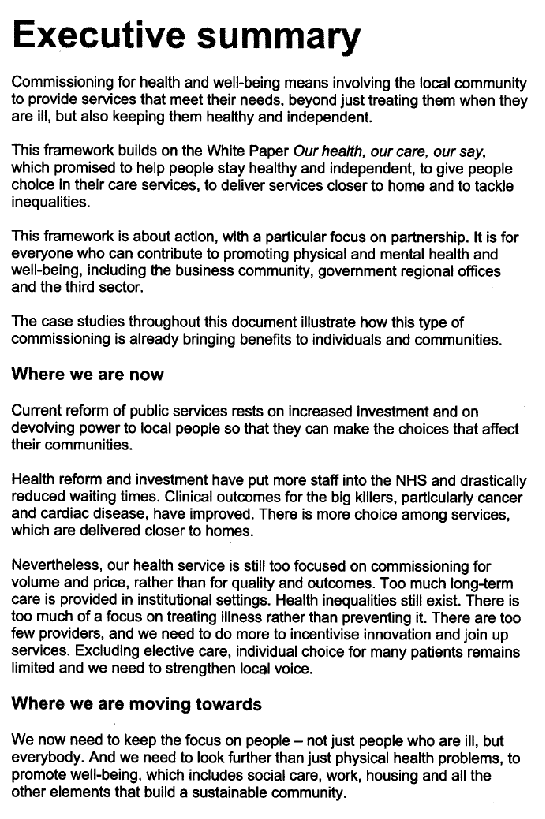
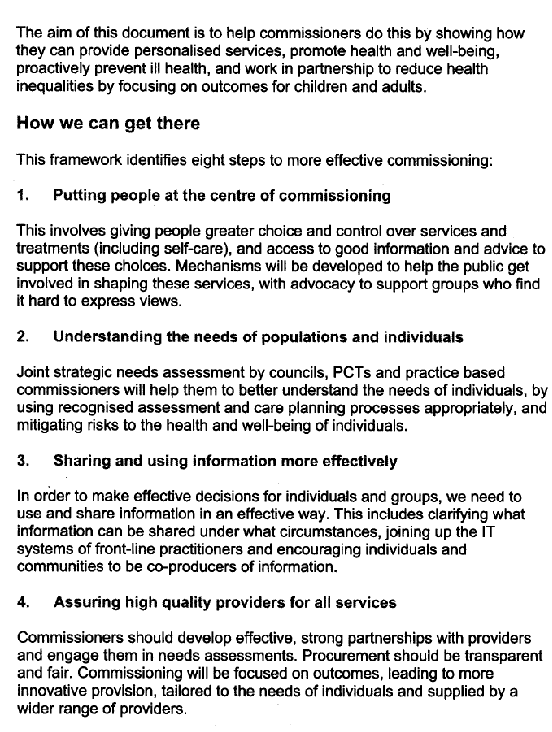
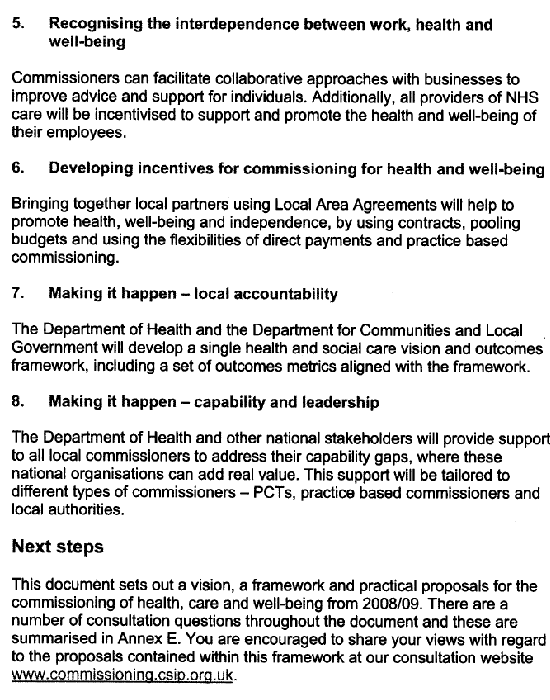
d) Commissioning Framework for Health and Well-being: the Commissioning Framework for Health and Well-being has been published for consultation, with a closing date of the 28 May. It is aimed at commissioners and providers of services in health, social care and local authorities, and is part of the 2006 White Paper `Our Health, Our Care, Our Say' implementation. The frame work is about practical action to enable everyone involved in commissioning local services to work together more closely, focusing on outcomes that people want for themselves and for their communities.
The Executive summary of the consultation document is attached as Appendix One
2 Recommendation
2.1 The committee may wish to consider whether they would want to take any actions in respect of the above four items, such as calling for additional information, asking for officer or other agency response, or contributing to the Commissioning Framework consultation.
3 Financial implications
3.1 None as a direct result of this report
4 Impact assessment
4.1 None as a result of this report
5 Crime prevention
5.1 None as a direct result of this report
6 Section 100 D - Local Government Act 1972 - background documents
The following documents discuss facts or matters on which this report, or an important part of it, is based and have been relied on to a material extent in the preparation of this report.
NB: the list includes:
1. Published works
2. Documents which disclose exempt or confidential information as defined ion the Act.
None
Appendix One
(Commissioning Framework for Health and Well-being. DoH. March 2007)