|
|
1 |
Summary |
|
|
|
This report provides an update on progress within the HFRS Retained Duty System (RDS) Review Project. The review was commissioned by the Senior Management Team in April 2006, part of IRMP 2006/09 (addressing MR2) and is scheduled to conclude in June 2007 with recommendations for consideration based on researched reasoning. |
|
|
2 |
Recommendation |
|
|
2.1 |
That the Committee note the content of the report and risk identified. |
|
|
3 |
Introduction Error! Bookmark not defined.and Background |
|
|
3.1 |
Responding nationally to increasing concerns relayed from Fire & Rescue Services throughout the country, the then Office of the Deputy Prime Minister (ODMP) established a national review team to examine Retained Duty System issues in England and Wales recognising the long term recruitment and retention challenges facing Fire and Rescue Services. Under ODPM direction the national Retained Review Team (RRT) was established, producing its final report in February 2005. |
|
|
3.2 |
The report, which encompassed two previous reviews, made 51 recommendations of which 35 were considered falling within the remit of Local Authority Fire & Rescues Services. HFRS undertook a review of the report to identify the levels of responsibility and compliance, prioritised against each of the 35 recommendations; this was completed in October 2005 |
|
|
3.3 |
The RDS review project was identified as an IRMP objective by SMT in April 2006 to review and make recommendations for securing the assurance, legislative compliance and capacity within the Retained Duty System, reporting to SMT and the Fire Authority in June 2007 |
|
|
4 |
Aims of the RDS Project Team |
|
|
4.1 |
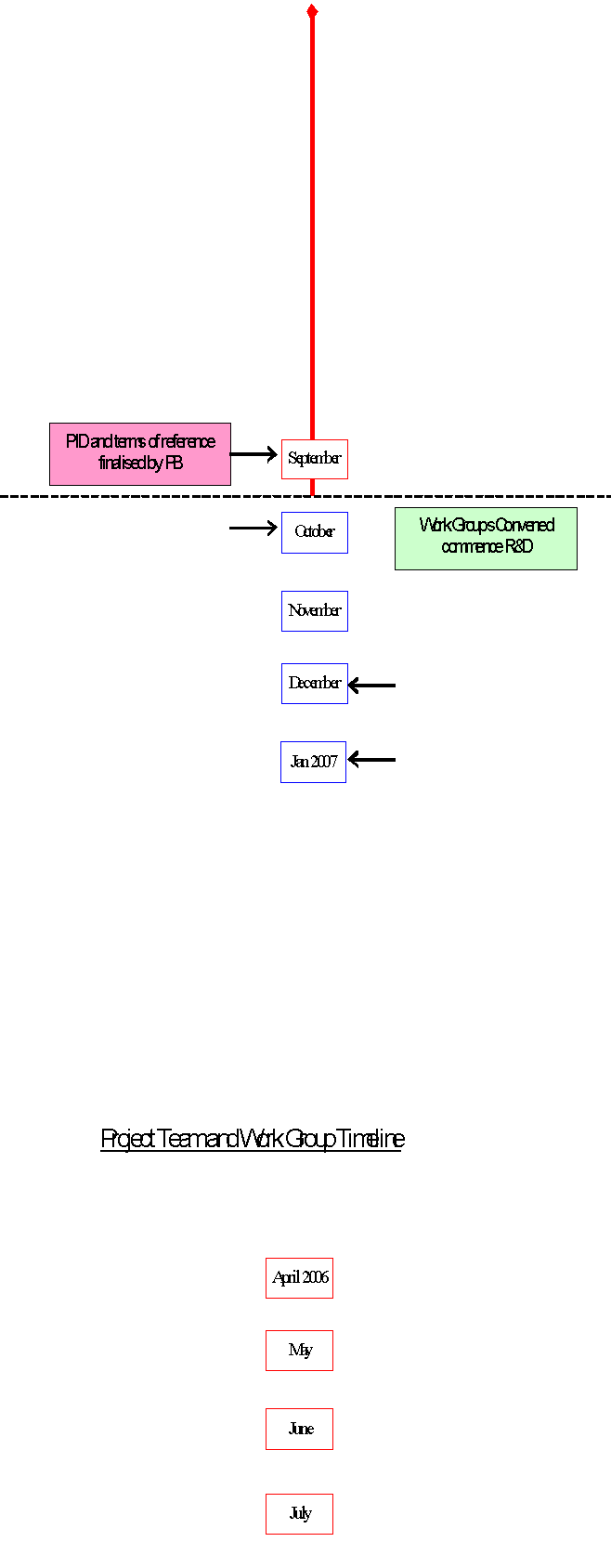
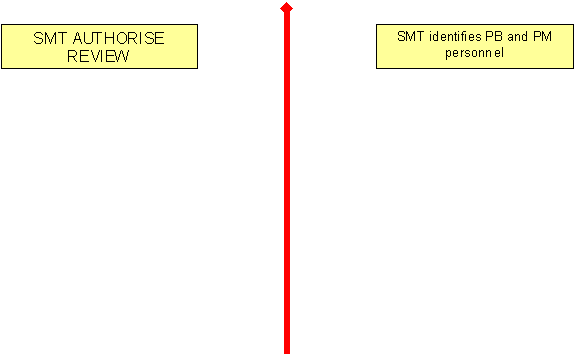
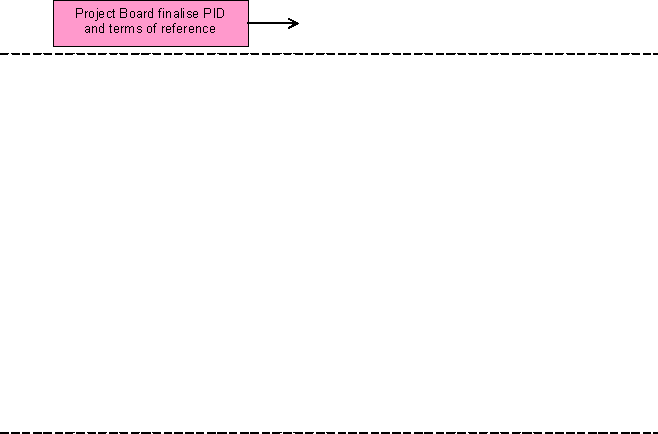
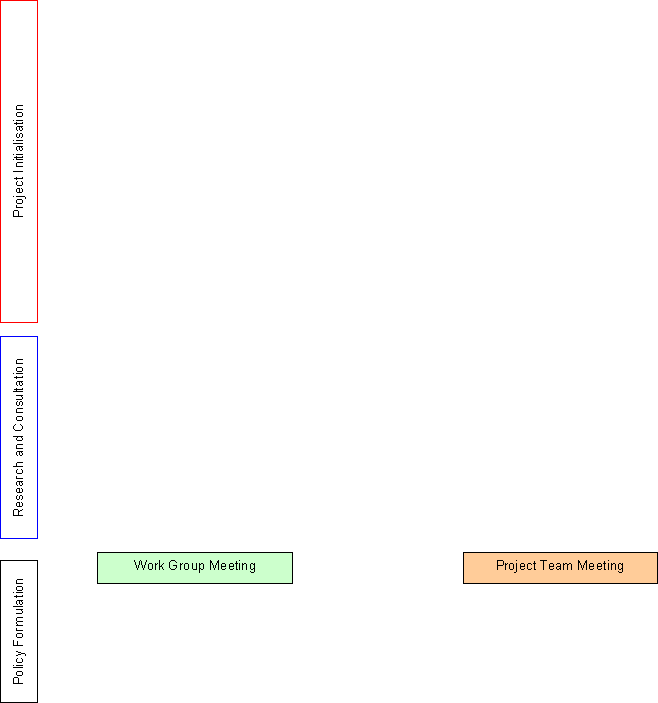
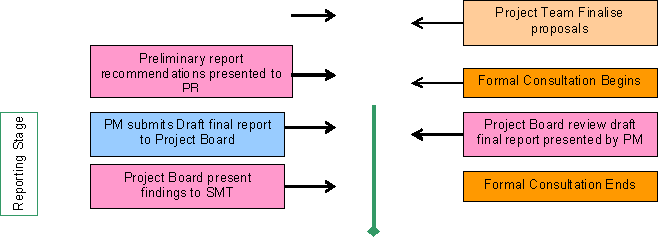
The project team are conducting the review in accordance with the Project Initiation Document and the timeline agreed by the Programme Board and Project Executive. A large project team has been undertaking the work via three work groups and is currently in the policy formulation stage (the third of four management stages). The project is on track and scheduled to enter the final reporting stage beginning May, concluding in June (see Appendix A: Project Timeline) |
|
|
5 |
Areas of Project Focus |
|
|
5.1 |
Work Group 1 1. To review and consider the benefits of adopting a contracted or annualised hours type of contract, and make recommendations for improvement or change to existing contract provision. 2. To consider the implications of the Working Time Directive for the RDS and ensure the new contract proposals are better equipped to support staff and the organisation in compliance. |
|
Work Group 2 3. To review the HR management systems connected with the application and appointments process, making improvement and efficiency recommendations to reduce delay. 4. To consider the impact implications for the RDS of the New National Fire Fighter Selection Test procedures, recommending areas for candidate support to achieve increased success likelihood. |
|
Work Group 3 5. To consider the role of the working routines in the RDS, ensuring revised contract proposals improve the capacity for learning and development within IPDS, and if risk profiling would be of benefit or an appropriate mechanism for improvement. 6. To review the RRT recommendations, gauging the level of HFRS progress and convergence in meeting Government (DCLG) expectations. |
|
|
6 |
Contribution to Corporate Aims and Objectives |
|
|
6.1 |
In December 2005 HFRS announced that a review of the Retained Duty System would form part of its IRMP 2006-2009 (MR2) This would strategically review the operation of the Retained Duty System and the staff activity within. |
|
|
6.2 |
Revised working practices and alternative contractual arrangements will be explored in order to provide opportunities for greater involvement in Protection and Prevention objectives, whilst ensuring the operational capacity and resilience of the RDS is maintained. |
|
|
7 |
Risk Analysis |
|
|
7.1 |
A new entry has been made to the Corporate Risk Register (Appendix B) to reflect the risks to maintaining adequate RDS establishment levels posed by the mandatory introduction of the national New Fire Fighter Selection Test process. Risk reduction measures are an active consideration of the project working and a project risk log is maintained. |
|
|
8 |
Resource Implications |
|
|
8.1 |
Human Resources |
|
|
|
The project is considering potential impacts on establishment levels by Service compliance with the Working Time Directive for RDS personnel. These are thought to be manageable within current RDS staffing levels. |
|
|
8.2 |
Physical Resources |
|
|
|
Project outcomes may recommend a review of existing RDS resources with a view to some redistribution in accordance to risk and staff competencies. These are thought not to impact on the overall capacity levels of these resources. |
|
|
8.3 |
Information and Communications Technology Resources |
|
|
|
It is very likely that any introduction of a front loaded annualised salary scheme will be dependant on the simultaneous purchase of an electronic Retained Management System (RMS) to ensure performance monitoring and compliance. Information technology solutions will need to be harmonised between existing and potential new systems necessarily associated with the regional control. |
|
|
8.4 |
Financial Implications |
|
|
|
Costs of purchasing an electronic RMS system following tendering evaluations are anticipated. The Project Manager is exploring a Capacity Funding Bid to offset some/all of these costs and is playing a lead roll within the region with a view to regional procurement benefits. Possible future costs will be considered within the final project report. |
|
|
9 |
Equality Impact Assessment |
|
|
9.1 |
The project team includes a member of the equalities and diversity team. Proposals for final consideration will be subject of an EIA and will better facilitate new membership population of the RDS by key target groups. |
|
|
9.2 |
The proposals within this report are considered compatible with the provisions of the European Convention on Human Rights, the Human Rights Act 1998, and the Race Relations (Amendment) Act 2000. |
|
|
10 |
Consultation |
|
|
10.1 |
Formal consultation has yet to be undertaken. The project is structured into three working groups for areas of independent research and proposal development. A Project Team Manager co-ordinates activity and is answerable to a Programme Board. It is proposed that consultation with the representative bodies will be conducted between the organisation and comprise four reports for consultation; three work group outcomes consulted independently with a project overview consultation. Many aspects of the three work group outcomes will be inter-related having a degree of interdependency. |
|
|
|
Negotiations required stemming from any adopted recommendations will form an essential part of any future policy implementation phase and are not part of this project. |
|
|
11 |
Conclusion |
|
|
11.1 |
The project utilises Prince 2 methodology and is progressing effectively, on course to deliver its recommendations in accordance with the publicised timeline. There is full RDS representation in all project working. Project outcomes potentially represent significant changes to the RDS, requiring re-negotiation of some grey book terms and conditions between the organisation and the representative bodies. This would enable more efficient and effective use of these valuable resources. A staff awareness and dialogue campaign has been implemented and RDS staff involvement with the process is being achieved. Proposals being considered will more accurately aid budget planning and will also provide benefits in future projection analysis for this staff grouping, RDS staffing costs represent approximately 50% of our operational staff. The proposals will provide for a more efficient learning and development training delivery, and compliance with the Working Time Directive for staff conditioned to this duty system will be achieved. The review is informing the strategic planning process for asset management and the future regional control which may necessitate local information technology solutions. |
|
Background Information (Section 100D of Local Government Act 1972) |
|
The following documents disclose the facts or matters on which this report, or an important part of it, is based and has been relied upon to a material extent in the preparation of the report: None Note: The list excludes: (1) published works; and (2) documents that disclose exempt or confidential information defined in the Act. |
Control measures: |
Target date: Control owner: |
Prevention measures - to reduce Likelihood (L): |
|
Controls in place |
|
The risk has been incorporated into the RDS strategic review project objectives. |
Head of HR |
HR database system has been developed, and is being trialled to track and record progress through each of the selection test stages to inform and focus the support mechanisms for applicants. |
Head of Workforce Planning |
A short term solution has been provided by the establishment of a role within the Workforce Planning team, to support and mentor applicants through the process. |
Head of Workforce Planning |
Proposed controls |
|
Nil |
|
Mitigation measures - to reduce Impact (I): |
|
Controls in place |
|
Greater ownership and involvement of the operational Group Managers in recruitment issues has been achieved by working in partnership with the HR dept. |
Head of Workforce Planning |
A research project piloting the scale of the impact and the effect of the prevention measures has now been completed (March 2007). The following measure was considered and now discounted: |
|
Proposed controls |
|
Consider the adoption of the RDS project strategic review recommendations and authorise implementation of those appropriate to mitigate this risk. |
Jun 07 |
Proposals for long tern solutions, which are being finalised by the project team, will be considered by the Programme Board. |
Q1 2007/08 |
|
|