Archived decisions
Hampshire County Council | |||
Cabinet |
Item 8 | ||
23 April 2007 |
|||
Clarification of decision processes and updating of associated financial limits | |||
Report of the Chief Executive and County Treasurer | |||
Contact: Share D'All, (01962) 84 6634, Bevis Ingram; [email protected]
1 Summary
1.1 In line with the Council's desire to improve democratic and business processes by reducing bureaucracy, this report seeks approval to changes to the processes for decision making and delegation and the financial limits which govern them.
1.2 The review of decision processes and financial limits was considered by the Governance Committee on 5 April and its recommendations are included in this report. Cabinet is asked to consider the proposals at this meeting and then forward the recommendations, with any amendments to County Council for approval on 24 May 2007. Changes will be implemented in the financial year 2007/08, starting in May 2007.
1.3 The intention of these proposals is to streamline processes and tighten up internal controls whilst at the same time clarifying the role of Executive members so that they are more consistently and comprehensively included in all decisions taken at a high level in the County Council. This report outlines the issues and proposed changes.
1.4 These decisions do not directly relate to the three Corporate Strategy priorities however they are important in relation to achieving the objectives of the democratic review and continuing to improve efficiency and to support effective prioritisation of time and resources by Executive members and chief officers.
1.5 The County Council has sound and good standards of Governance which have stood the test of time and ensured sound political and managerial control. The opportunity can now be taken to improve these processes with experience of moving to the Cabinet system and to review the financial limits around decision making
1.6 The following recommendations will be considered first by the Governance Committee, and subject to any amendments by the Cabinet;
a) that the proposed changes to the decision making process set out in Appendix 1 are approved
b) that the financial limits outlined in the table in Appendix 2 are approved
c) that consideration be given to pursuing the financial limit for a key decision from £500,000 to £1m.
1 Background
1.1 Since the move to Cabinet style governance there has been a continued increase in the numbers of decisions days required by Executive members. Consultation with Executive members and senior officers and an analysis of the decisions undertaken in a sample nine month period have shown that some of these decisions:
· were not really decisions but officers wanting the opportunity to keep Executive members informed or aware of issues
· were the same decision returning round the loop several times due to lack of clarity or misunderstanding of the decision making processes
· could, under the scheme of delegation, have been taken by officers but needed the awareness of the Executive member.
1.2 It has been apparent from both members and officers that adjustments to the new way of working and the new role of Executive members could be improved. Officers may still use the formal decision process as the only method of ensuring Executive members are included in or informed about decisions. Consequently they are not taking the opportunities available to them to work with members in new ways or realising the implications of individual Executive member accountability. This is resulting in two polarised outcomes: escalating numbers of formal decisions and, paradoxically, many Executive members feeling ill informed about issues for which they were now accountable as individuals under Executive delegation.
1.3 Despite continued high performance in the Comprehensive Performance Assessment scores for internal control and financial management could be improved. A balance needs to be struck between the costs and improvements of changing processes to ensure top scores in these areas but the process of producing flowcharts (Appendix 1) has identified areas for improvement which include:
· improving understanding of the practical implications of the standing orders and financial regulations in the Constitution. This is the reason for taking a `flowchart approach' which is clear and easy to understand
· better awareness and ownership across departments of the processes laid out in the Constitution which will help members and officers to navigate the decision making processes and the financial limits around the level of delegation.
1.4 There is a need regularly to review and update the processes and financial limits. Although financial regulations have been reviewed regularly to reflect changes in the Constitution, many of the limits within them have not changed for many years.
1.5 Changes in the past have tended to be incremental without any major fundamental review. Whilst this has been a practical and successful approach in the past, it has over time resulted in some rather unwieldy and unnecessarily long processes which do not always deliver all the outcomes members want to achieve. Although accepting that as a public sector body there are different reporting and public accountability requirements, there are elements which now have become standard practice in businesses outside the public sector which could usefully be applied such as:
· short business or recipient focused report formats
· a more flexible approach to decision processes which, for smaller processes are less bureaucratic whilst at the same time ensuring robust processes for larger projects. Examples of situations where the process needs to fit the level of the project include:
- early business cases for projects with financial implications;
- establishing success criteria early in a project to enable effective evaluation
· effective delegation
1.6 The age of financial limits has meant that some limits have become mis-aligned, creating loops in the system, whilst in other cases lengthy processes are used to make decisions on projects which are no longer financially significant in terms of the overall budget or the market as a whole. For example, some limits on project appraisals have not changed for more than 25 years.
2 Proposed improvements in processes
2.1 The proposed changes, and the process for developing them, have been designed to overcome the issues set out in paragraph 2 in the following ways.
2.2 The flowcharts:
· are designed to make the need to keep members (Executive and non-executive) informed and `in the loop' clear and consistent when the actual decision is not being made by them
· will make it possible to train managers and prompt them whenever they need to undertake any of the activities covered. It is the intention to develop a flowchart approach to Human Resources (HR) processes as well and any others which require managers to carry them out in a consistent way across the Council
· reflect an approach where `one size does not fit all' so, along with the proposed changes to financial limits, lower level decisions can be dealt with more speedily without reducing internal control or accountability.
2.3 The process by which the flowcharts have been developed has been inclusive and so all departments have been able to contribute to ensuring the processes will fit their diverse business needs and requirements. The flowcharts describe financial processes; they are informed by the financial limits contained in this report and are based on current financial regulations and financial procedures.
2.4 The proposed revision of financial limits will
· simplify the number of different financial limits
· remove mis-alignment in standing orders which was perceived as having impact on building projects and tenders, causing them to go around the decision making loop several times. It will reduce the need for duplicate decisions whilst providing different decision focus at different stages of the project
· focus attention appropriately on decisions where cost is significant in financial terms
· decisions of low financial significance can be delegated without risking members being left out of the loop.
3 Detail of proposed changes to financial limits
3.1 The proposals are to update financial limits to improve business efficiency for members and officers. Further work will need to be done on the applicability of these limits to schools. The table below identifies the proposed changes against the current practices for each decision and its financial limit under the scheme of delegation.
Area covered |
Current |
Proposed |
Maximum virement on any one budget in any one year before member approval required |
Executive Member and County Treasurer if more then £250,000 or 1.25% of the budget . Cabinet if more than £0.5m or 25% of the budget (*), whichever is lower. |
· Executive Member if more than £250,000 in total · Cabinet if more than £0.5m or 25% of the budget (*), whichever is lower. |
Debt write-off |
· Chief Officer up to £1,000 · Chief Officer in consultation with County Treasurer for over £1,000 · Executive Member approval above £5,000. |
· County Treasurer up to £1,000 · Chief Officer and County Treasurer up to £10,000 · Joint report from Chief Officer and County Treasurer for approval by Executive Member up to £50,000 · Leader above £50,000. |
Grants |
In line with current authorised purchasing limits. |
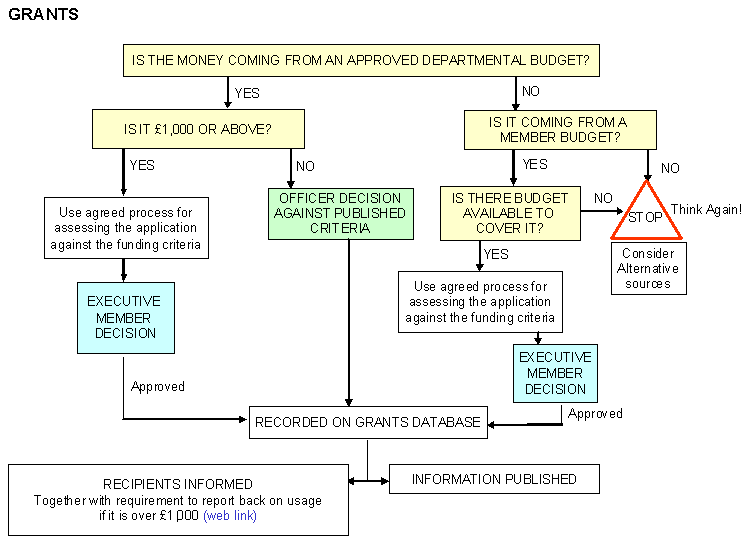
· Officer up to £1,000 · Executive member over £1,000 · Grants not part of service budgets must remain a member decision. |
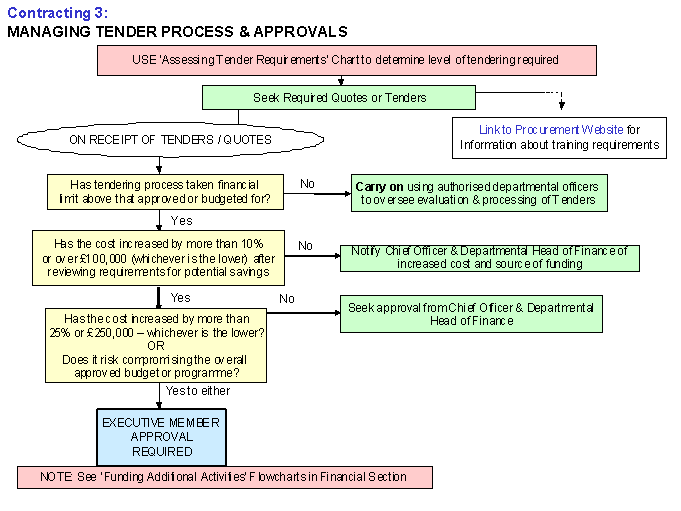
Tenders (in most cases existing call off or framework contracts should be used when these exist. If not tenders are required.) |
· At or below £15,000 - three quotes required · Over £15,000 but at or below £75,000 - at least three tenders must be invited · Over £75,000 - full formal tender procedure required · Above EU procurement limits - compliance with EU procurement directives. |
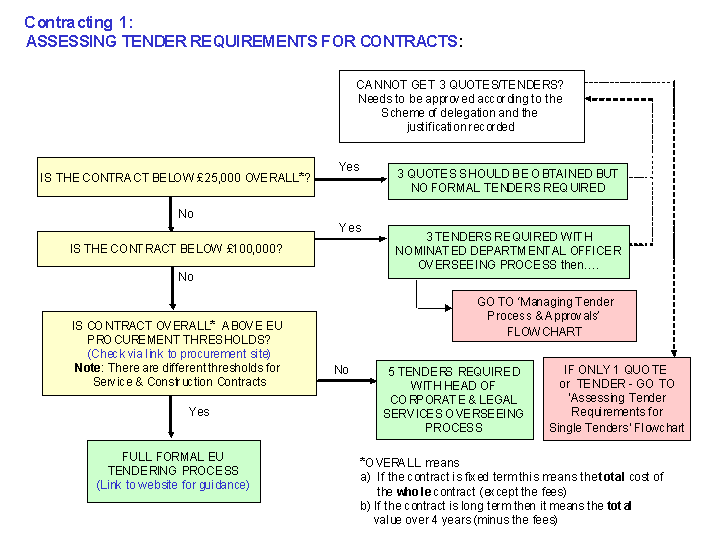
· Below £25,000 - three quotes required · At or above £25,000 but below EU procurement limits - at least three tenders required · Above EU procurement limits - full formal EU tendering process required. |
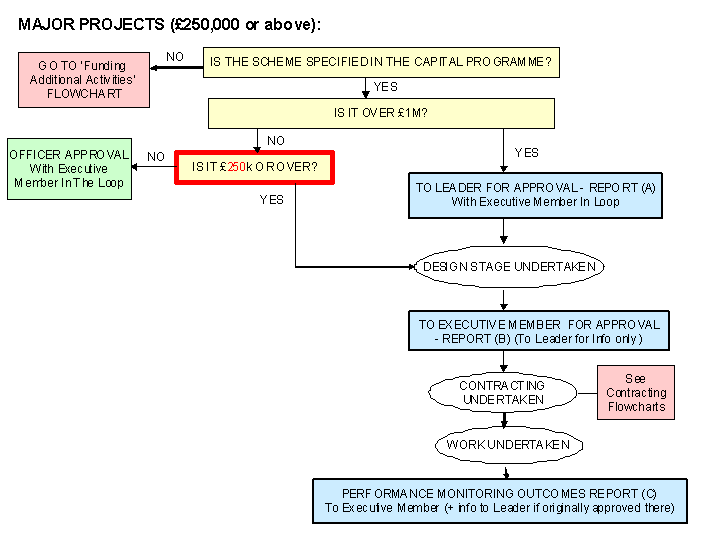
Major Projects specified in capital programme |
· Under £50,000 - officer · Over £50,000 but below £250,000 - Executive Member · Over £250,000 but below £500,000 - Executive Member in prescribed format · Over £500,000 Executive Member and Leader. |
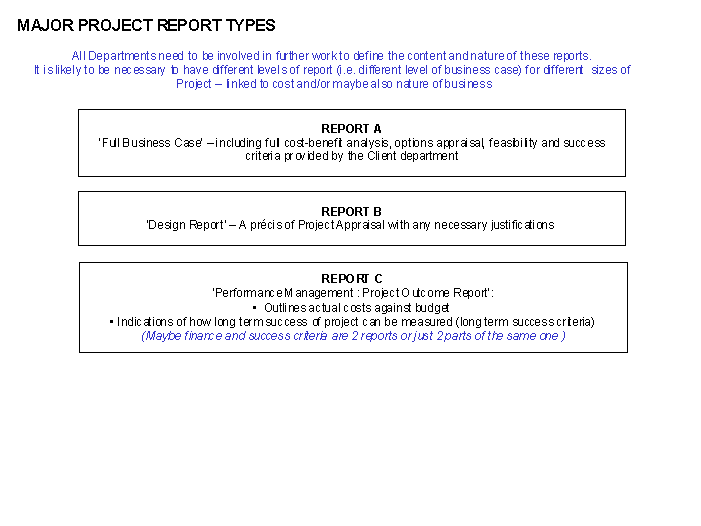
· Under £250,000 - Chief Officer approval with Executive Member in the loop · Over £250,000 to £1 million - Design Report (précis project appraisal) to Executive Member (with Leader in the loop); project outcome report to Executive Member · Over £1 million - full business case to Leader (with Executive Member in the loop), followed by Design Report to Executive Member at the appropriate stage (with the Leader in the loop); project outcome report to Executive Member (with Leader in the loop). |
3.1 It is also proposed that the financial limit for key decisions is raised to £1m which is in line with many other Councils. The fact that the decision programme will mean all decisions, not just key decisions as at present, will be published in advance will mean the public and non-executive members will in no way be disadvantaged due to this change.
4 Detail of proposed changes to decision processes
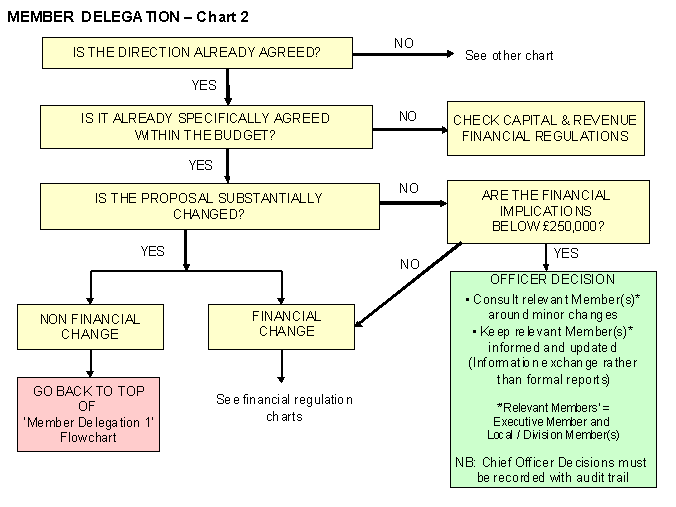
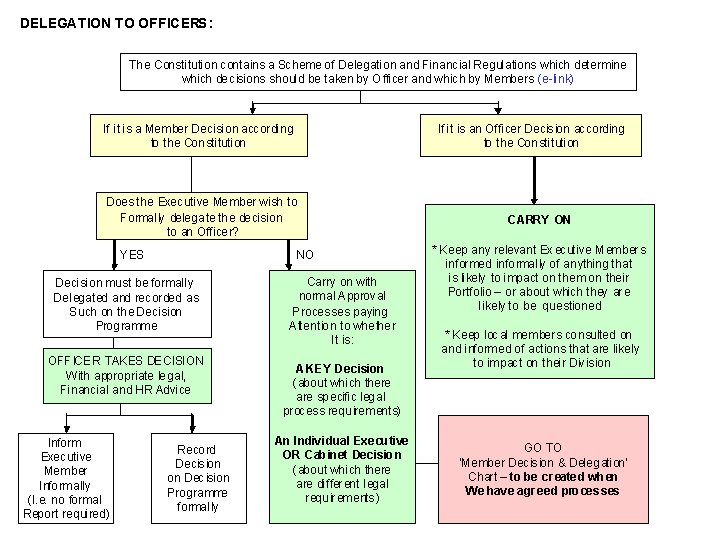
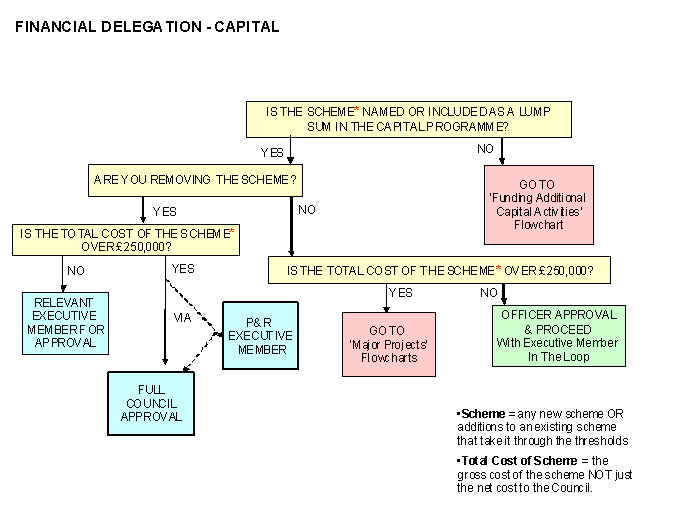
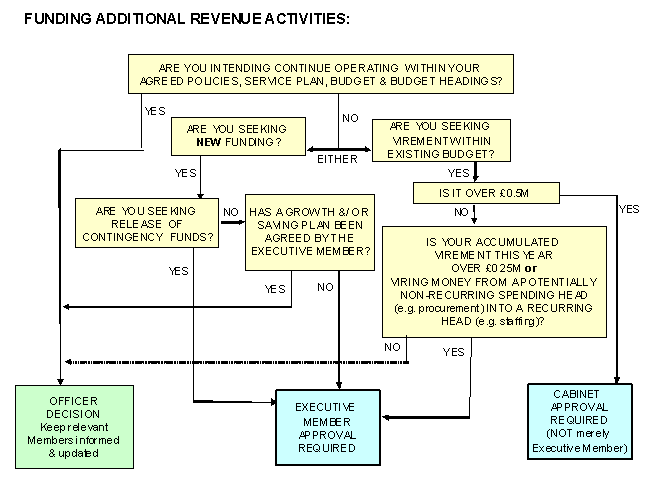
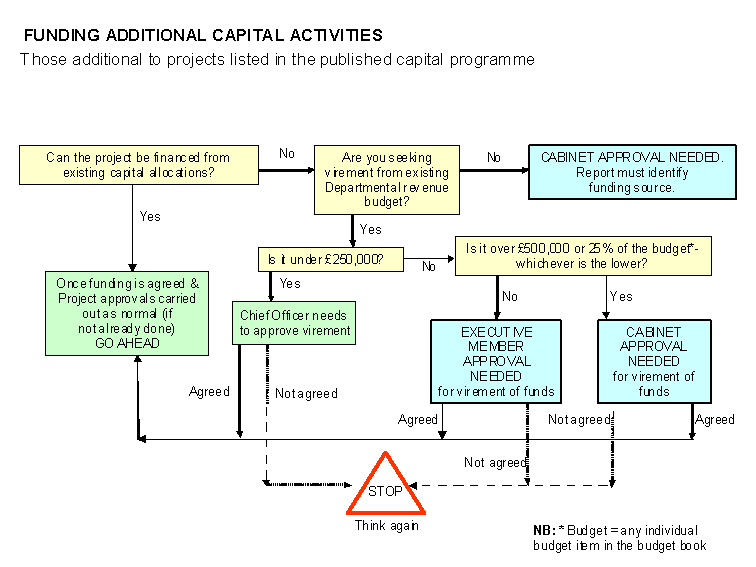
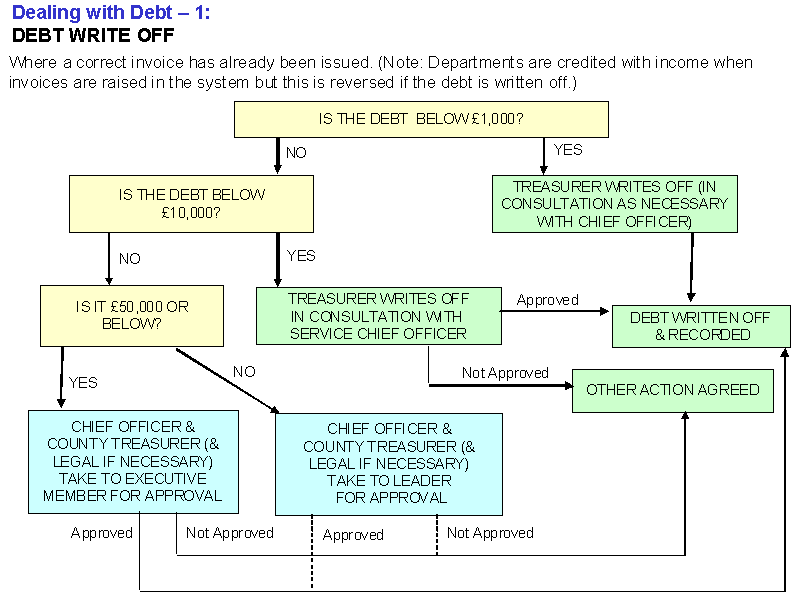
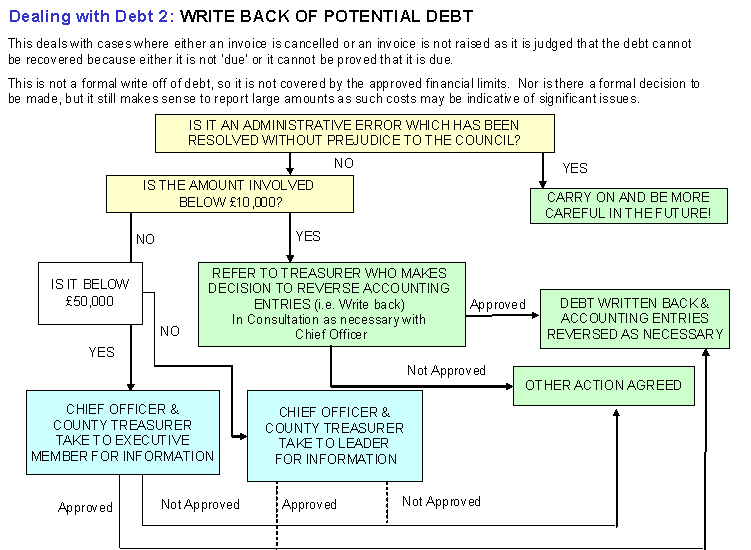
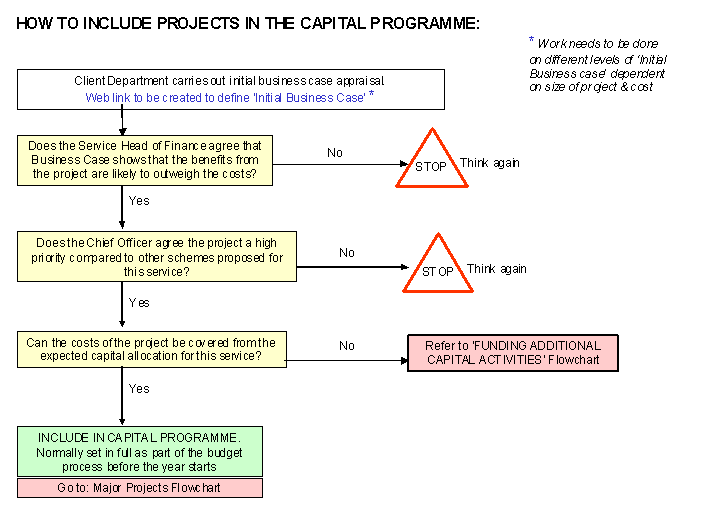
4.1 The flowcharts are attached in Appendix 1. They cover
· officer delegation
· financial limits
· procurement
4.2 The intention would be to make these available to officers on the intranet and launch them with briefings for officers. Work is also going on to extend the flowchart approach to other processes such as those linked to HR.
5 Impact and Implications
5.1 Legal implications
· these flowcharts and financial limits have been checked with the legal section and completely comply with legal and statutory requirements.
5.2 Financial implications
· there are no financial implications with the exception of minimal costs in briefing staff of the new arrangements. The cost of publishing them on the web should be able to be covered within existing resources.
5.3 Personnel implications
· none other than that staff will need to be trained as mentioned above.
5.4 Impact assessment
· no adverse implications are anticipated for any group or individual.
6 Future work
6.1 It is proposed that further work should include
· discussions with Cabinet about clarifying delegation with the Executive by use of the flowchart approach to assist officers to make accurate and consistent assessment of which route to take decisions (a suggested starting point for discussion is found in Appendix 3)
· revisiting the possibilities to streamline the decision process and increase public participation
· assessment of where and how the limits should translate to schools (but in the context of schools complying with financial regulations and standing orders).
7 Conclusion
7.1 Cabinet is asked to consider approving the new approach to simplify and clarify decision making, dependent upon the relevant financial limits required.
This proposal does not link to the Corporate Strategy but, nevertheless, requires a decision because: If implemented the proposed changes will further improve the County Council's ability to run as efficiently and effectively as possible in order to release time and resources for those areas which have been determined as corporate priorities. The proposed changes also strongly underpin the work that has been undertaken in the Democratic Review to make the decision processes more accessible and streamlined and will enable further work in this area. |
Section 100 D - :Local Government Act 1972 - background documents
The following documents discuss facts or matters on which this report, or an important part of it, is based and have been relied upon to a material extent in the preparation of this report.
NB: the list excludes:
1. Published works
2. Documents which disclose exempt or confidential information as defined in the Act.
None
Appendix 1
1) Delegation to Officers
2) Glossary of Terms
3) Financial Limits
4) Procurement

8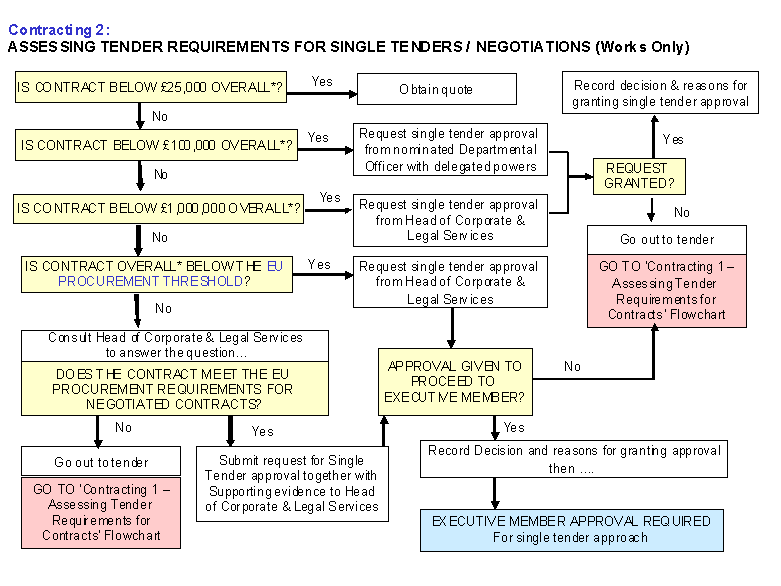
9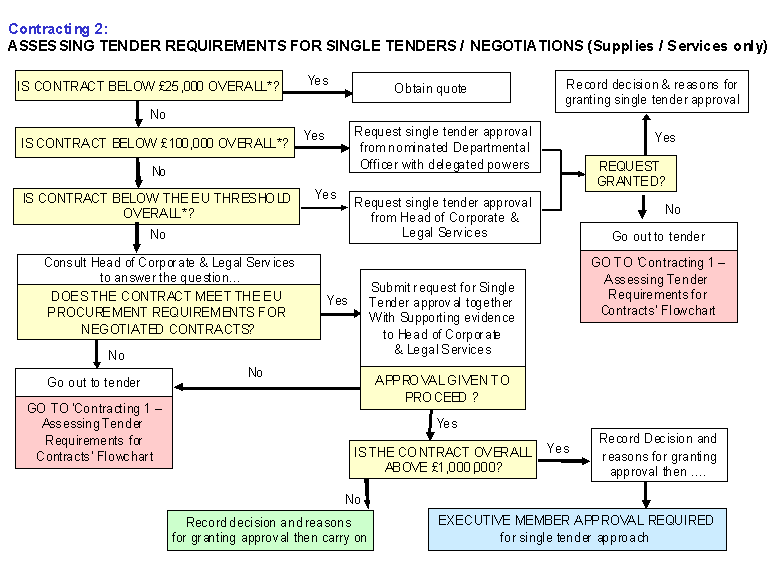
SUMMARY OF PROPOSED CHANGES TO FINANCIAL LIMITS:
Area covered |
Current |
Proposed |
Maximum virement on any one budget in any one year before member approval required |
Executive Member and County Treasurer if more then £250,000 or 1.25% of the budget (*). Cabinet if more than £0.5m or 25% of the budget (*), whichever is lower |
· Executive Member if more than £250,000 in total. · Cabinet if more than £0.5m or 25% of the budget (*), whichever is lower |
Debt write-off |
· Chief Officer up to £1,000 · Chief Officer in consultation with County Treasurer for over £1,000 · Executive Member approval for over £5,000 |
· County Treasurer up to £1,000 · Chief Officer and County Treasurer up to £10,000, · Joint report from Chief Officer and County Treasurer for approval by Executive Member up to £50,000 · Leader more than £50,000 |
Grants |
In line with current authorised purchasing limits |
· Officer up to £1,000 · Executive member over £1,000 · Grants not part of service budgets must remain a member decision. |
Tenders (in most cases existing call off or framework contracts should be used when these exist. If not tenders are required.) |
· At or below £15,000 - three quotes required · Over £15,000 but at or below £75,000 - at least three tenders must be invited · Over £75,000 - full formal tender procedure required · Above EU procurement limits - compliance with EU procurement directives |
· Below £25,000 - three quotes required · At or above £25,000 but below EU procurement limits - at least three tenders required · Above EU procurement limits - full formal EU tendering process required |
Area covered |
Current |
Proposed |
Major Projects specified in capital programme |
· Under £50,000 - officer · Over £50,000 but below £250,000 - Executive Member · Over £250,000 but below £500,000 - Executive Member in prescribed format · Over £500,000 Executive Member and Leader |
· Under £250,000 - officer approval with Executive Member in the loop · Over £250,000 to £1 million - Design Report (précis project appraisal) to Executive Member (with Leader in the loop); project outcome report to Executive Member · Over £1 million - full business case to Leader (with Executive Member in the loop), followed by Design Report to Executive Member at the appropriate stage (with the Leader in the loop); project outcome report to Executive Member (with Leader in the loop). |
(*) Budget in the above is defined as "any individual budget item in the budget book"
(#) Where an established call off contract or framework arrangement is in place, this should be used instead of undertaking a new tendering exercise.
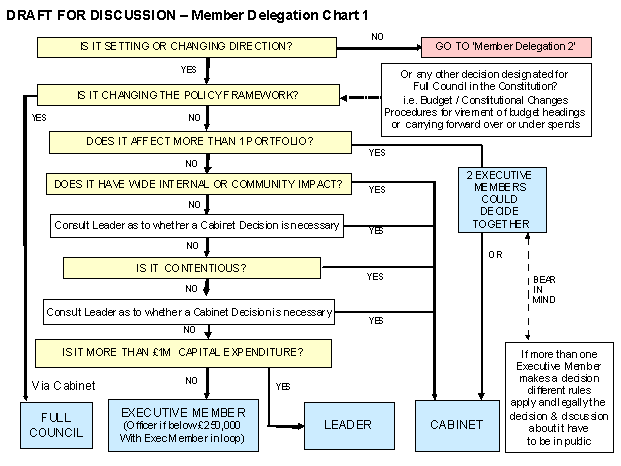 CABINET DELEGATION
10
11
12