
Archived decisions
Our overall summary 7
Action needed by the Authority 8
How is the Authority performing? 9
The improvement since last year - our Direction of Travel report 11
Service assessment 22
Financial management and value for money 26
Conclusion 32
Availability of this letter 32
Our overall summary
1 This letter provides an overall summary of the Audit Commission's work in assessing the Hampshire Fire and Rescue Authority. It includes our review of how well the Authority has progressed (our Direction of Travel report), a Service assessment and also the auditor's assessment of how well the Authority has managed its finances (the Use of Resources assessment).
2 The report is addressed to the Authority, in particular it has been written for members of the Authority, but is available as a public document for stakeholders, including members of the community served by the Authority.
3 The main messages for the Authority included in this letter are very positive and are as follows.
· The Authority was assessed as Good in the Comprehensive Performance Assessment (CPA) in 2005. Since this assessment we have assessed the Fire Authority as improving well in our Direction of Travel review.
· The Operational assessment was that the Hampshire Fire and Rescue Authority is performing strongly.
· The Use of Resources assessment was that the Authority was consistently above minimum requirements and is performing well.
· Our audit of the accounts and of your value for money arrangements concluded with both an unqualified audit opinion and VFM conclusion.
Action needed by the Authority
4 We have identified a number of areas for further improvement following our work in carrying out the above assessments. These have all been reported to officers and agreed in action plans. There are no additional recommendations to report in this letter where action is needed by Members at this stage.
How is the Authority performing?
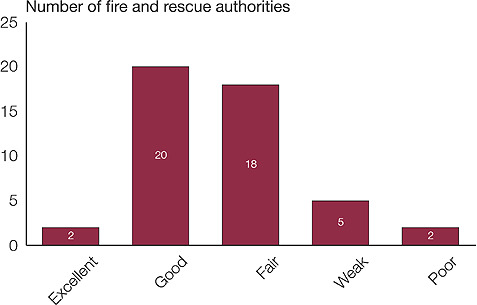
5 Hampshire Fire and Rescue Authority was assessed as Good in the Fire and Rescue Comprehensive Performance Assessment carried out in 2005. This assessed authorities on their corporate management, their achievements, community fire safety and how they planned to respond to incidents through their Integrated Risk Management Plan (IRMP). It did not consider tactical management of emergency response.
6 The following chart shows the latest position across all Authorities.
Figure 1 Overall performance of authorities in CPA
|
The improvement since last year - our Direction of Travel report
7 Since the Authority was assessed as Good in the Comprehensive Performance Assessment (CPA) in 2005 we have been working with the Authority as it seeks to improve further and have now assessed the Fire Authority as improving well.
Direction of Travel - a summary
8 Hampshire has a good track record of improvement in its priority areas and is delivering good results to the community. The Government's recent operational assessment indicated that Hampshire is performing strongly in most areas of service delivery from its work in prevention and protection, operational preparedness, and call management and incident support. The number of injuries from accidental fires has increased but the Service has responded well with a series of actions aimed to improve this. The Service has built on previous successes and continues to work well with partners to deliver community outcomes, especially for young people and hard to reach groups. The Authority has made further progress in improving its performance and risk management arrangements to ensure that resources are targeted to those most in need. It has a good track record in implementing the modernisation agenda and it makes a clear contribution to the Regional Management Board (RMB). Hampshire demonstrates good value for money; it has robust plans for improving its ability to improve services and it has the capacity to deliver them.
Detailed Direction of Travel commentary
9 The Authority has a clear vision which is: `to make Hampshire safer'. This is contained within the Integrated Risk Management Plan (IRMP) 2006 - 2009. Since CPA the Authority has reviewed its strategic goals and prioritised its objectives. The Authority's priorities were to:
· reduce fire deaths and injuries in the home by 20 per cent by 2010;
· reduce the number of fires that occur in buildings by 3 per cent by 2006;
· reduce fires started deliberately by 10 per cent by 2010;
· divert 2 per cent of our current resources to prevention activities by 2008; and
· be one of the top performing fire and rescue services in the country.
10 These priorities are well integrated within the IRMP and Medium term Financial Plan. The Authority has a good track record of improvement in its priority areas, including the modernisation agenda and is delivering good results for the community. The Operational Assessment of Service Delivery rated the Authority as Performing Strongly overall and also highlighted strong areas of Prevention and Protection, Operational Preparedness, and Call Management and Incident Support.
11 The Authority has made significant progress in improving its performance and risk management arrangements and staff are working confidently towards achieving key aims and objectives. There is clear empowerment of middle managers to make decisions in the way prevention and protection resources are used to maximise performance. Resources are targeted at clear objectives linked to IRMP and the Authority has robust plans for developing its ability to improve services and has the capacity to deliver them. Few weaknesses exist although there is more work to be done in the area of equality and diversity.
12 The Authority maintains a strong focus on delivering high quality service in line with its priorities. Examples of achievements against priorities include safety initiatives which have been successfully developed to promote prevention in the wider community. The Authority has been successful in involving partners in these initiatives to maximise their delivery. For example, 18,500 home fire safety visits(HFSVs) have been undertaken over the last year, many of which were achieved through a joint agency approach. In addition, Community Safety has linked up with Community Action Hampshire to improve access to the homes of vulnerable people and this has assisted in developing a partnership with a voluntary group to deliver HFSCs in Eastleigh.
13 In Portsmouth, under the LPSA with the City Council, joint work with community wardens is driving down instances of arson and anti-social behaviour. The reduction in deliberate secondary fires in vehicles per 1000 population places the Authority amongst the best performing nationally. The development of community-based schemes, such as the fire setter intervention programme, and proactive partnership initiatives with Hampshire Police and local councils, has resulted in an 8.5 per cent reduction in the number of deliberate fires in Hampshire in 2005/06 which compares very well nationally.
14 The Authority has improved its knowledge through risk profiling and has developed process mapping to assist in data quality checks. This is enabling the Authority to maintain its good progress in prevention and also target activity at the most vulnerable sectors of the community.
15 The Authority is responding effectively to emergency incidents and it is progressively reviewing its standards of response.
16 The Authority is achieving improved levels of service performance with twelve PIs in the top quartile and eight improving. Primary fires per 10,000 population is reducing by 2 per cent. Some performance indicators are not in the top quartile, such as accidental dwelling fires. One is in the lower quartile; this relates to injuries in house fires These are recognised as areas where the Authority needs to focus and improve performance to improve value for money overall.
17 The Authority's arrangements for achieving and managing value for money are progressing well. Overall costs compare well with others, with Hampshire being one of the lowest non-metropolitan fire authorities in the country at £53.64 per head of population, and the policy is to keep increases to a sustainable level. The intention is to move resources from intervention to prevention ensuring that costs are well managed and improvements are realised. Effective partnership working and the use of external funding has increased capacity in community fire safety and support services. This is placing the Authority in a better position to help sustain improvement. The link between costs and service performance is strengthened annually through a robust prioritisation budgeting process. This is well linked to the MTFP and IRMP and increasingly with the capital strategy. The Authority has clear objectives to deliver value for money and there is an effective framework for monitoring and reviewing financial and service performance. As a result, costs and performance are better understood and appropriately challenged by managers and members.
18 The Authority has not yet improved its Level 1 on the Local Government Equalities Standard. However, the Authority is improving its approach to addressing issues of diversity, including revising the race equality scheme and other plans in line with the regional Diversity Strategy. The Authority has established an Equality and Diversity Project Board to monitor and evaluate outcomes of policies and equality impact assessments are now carried out on current and new initiatives. The Authority is now beginning to show some improvement in the number of staff employed from black and ethnic minority communities and is now regularly engaging with diverse community groups both as part of IRMP consultation and as part of ongoing service development through the External Consultation and Advisory Group.
19 The Authority recognises that some aspects are still less well developed and has put action plans in place to address gaps in provision.
How much progress is being made to implement plans to sustain future improvement?
20 Service and business planning has been strengthened. The introduction of a formalised and structured annual `corporate' planning process is linked to the IRMP which sets out the Authority's medium to long term objectives. The IRMP Action Plan sets out the detailed projects and activities to be pursued in the current year towards the achievement of the Authority's objectives. The Plan is underpinned by detailed SMART plans for each of priority areas in the IRMP, linking to the revenue and capital budgeting processes. Progress against the plan is reported on a quarterly basis.
21 Good progress is being maintained in implementing the requirement of the National Framework for fire and rescue authorities. Clear progress has been made in integrating the IRMP into business planning processes, moving from rank to role, introducing more flexible duty systems and staff development using the Integrated Personal Development System.
22 There is an effective and supportive approach to the Regional Management Board and wider contact with other fire services. For example, the Authority leads on the Human Resources-related work stream. It is proactive in developing partnerships at a local, regional and national level. As an example, at a local level, group managers now use devolved budgets to fund local schemes that make an impact in priority areas, such as community fire safety and reduction of road traffic accidents. These are well monitored at a local and Authority level.
23 The Authority has good overall capacity to deliver its objectives and its future plans. It is very self aware of any capacity issues and has clearly matched resources to priority areas and the delivery of objectives. For example, the Authority has embedded the development and use of a range of shift systems and leads the way in the use of wholetime retained contracts with over 130 in place. Internal communications on key service initiatives and objectives have improved through regular forums, briefing sessions, staff surveys and the use of brigade newsletters. The Authority has continued to develop its communications and consultation with communities through a comprehensive internet site and regular community events, especially relating to the development of the IRMP. The Authority has shown willingness and provided much support to the Isle of Wight Fire and Rescue Service whilst future proposals for the Island were evaluated.
24 Financial management is strong and there is no evidence of significant weaknesses in governance or management arrangements that would prevent continued delivery of performance improvement. Members and managers are aware of their responsibilities. The Authority has been prepared to make difficult decisions around station closures and has delivered efficiencies with no deterioration to service delivery. HFRA is proactive around the development and use of a range of shift systems and has developed the use of whole time retained contracts with over 130 in place. The Authority has a well developed
co-responder scheme operating in three localities. This has recently been extended to a further three areas and now forms part of a LPSA with the Ambulance Trust.
25 More flexible staff arrangements have been introduced and all local station operational staff have been trained and equipped to deliver community fire safety initiatives. Capacity is enhanced further through effective absence management, and sickness levels are showing steady improvement.
26 Performance management continues to improve and there has been significant improvement since CPA. The Authority has rationalised its Performance and Planning department ensuring closer working with policy and planning, risk intelligence, communication and consultation functions. The performance management framework is being successfully implemented, including better reporting of financial and service performance information, and this has led to greater involvement of the workforce and an improvement in performance across a range of national PIs and Local performance indicators. Further work is needed to ensure that risk/performance management and the new partnership framework is fully embedded within the organisation.
27 The Commission has also undertaken a fire and rescue service assessment of the Authority. The assessment focused on service delivery and looked at the effectiveness of the service as experienced by recipients of the service. The assessment was constructed from two elements:
· the performance information element (an analysis of outcome focused best value performance indicators selected from those nationally available to assess the outcome of the services delivered by the Authority); and
· the operational assessment of service delivery element (provided to the Commission by the Department of Communities and Local Government (DCLG).
28 The assessments for the Hampshire Fire and Rescue Authority are provided in Table 1 below (note: 1 = lowest, 4 = highest).
Table 1 Hampshire - fire and rescue service assessment
Element |
Assessment |
Performance indicator based assessment of service delivery |
3 out of 4 |
Operational assessment of service delivery |
4 out of 4 |
Overall fire and rescue service assessment |
4 - Performing strongly - well above minimum requirements |
Service delivery - the operational assessment
29 DCLG's operational assessment of service delivery assessed the planning and delivery of emergency response. The following text is provided by DCLG as part of their assessment:
`Hampshire Fire and Rescue Service (HFRS) is performing strongly in the areas of Prevention and Protection, Operational Preparedness, Call Management and Incident Support, and Emergency Response. There is clear empowerment of middle managers to make decisions in the way prevention and protection resources are used to maximise performance. Resources are targeted at clear objectives linked to HFRS' Integrated Risk Management Plan (IRMP). In Operational Preparedness, there are clear policies for civil protection and a range of effective measures for monitoring and measuring performance. There are evident strengths in the provision of the technical infrastructure, systems and human resources required to sustain Call Management and Incident Support arrangements. Flexibility in response and resource deployment is a clear strength within Emergency Response. Constant monitoring of resources enables HFRS to meet its attendance time to emergency incidents with the most appropriate resources to address risk. HFRS are performing well in Risk Analysis, with tangible outcomes in the relocation of resources. Overall, HFRS is a strongly performing FRA, with a clear heath and safety culture and a strong commitment to equality and diversity.'
Financial management and value for money
30 As your appointed auditor I have reported separately to the Audit Committee representing those charged with governance on the issues arising from our 2005/06 audit and have provided:
· an unqualified opinion on your accounts;
· a conclusion on your VFM arrangements to say that these arrangements are adequate; and
· a report on the best value performance plan confirming that this has been audited.
31 There are no issues arising from my audit which I need to record in this letter and all matters were considered by Members at the time the audit was completed last year.
Use of resources judgements
32 We have also provided Use of Resources judgements which are an important component of the CPA framework derived from assessments made by the auditor in the following areas.
· Financial reporting (including the preparation of the accounts of the Authority and the way these are presented to the public).
· Financial management (including how the financial management is integrated with strategy to support Authority priorities).
· Financial standing (including the strength of the Authority's financial position).
· Internal control (including how effectively the Authority maintains proper stewardship and control of its finances).
· Value for money (including an assessment of how well the Authority balances the costs and quality of its services).
33 For the purposes of the CPA I have assessed the Authority's arrangements for use of resources in these five areas as shown in Table 2 (note: 1 = lowest,
4 = highest).
Table 2 Use of Resources scoring
Element |
Assessment |
Financial reporting |
3 out of 4 |
Financial management |
3 out of 4 |
Financial standing |
3 out of 4 |
Internal control |
2 out of 4 |
Value for money |
3 out of 4 |
Audit Commission's assessment - consistently above minimum requirements - performing well |
3 out of 4 |
34 The detailed findings have been reported separately and the headlines are summarised below. With the exception of the value for money theme, all work was completed in 2006 and I am aware that progress has since been made in advance of our next assessment to be reported in March 2008.
Financial reporting
35 The financial statements were produced to a good standard, well within deadlines and only contained minor errors with no material changes identified.
Financial management
36 The Authority has a soundly based medium term financial strategy supported by robust annual budgets and a capital programme designed to deliver strategic priorities. Financial and service planning/ IRMP timetables are being aligned.
37 Budget management is sound but further training can be usefully provided and the Authority should ensure users of financial systems are surveyed as planned.
38 The Authority is active in managing its assets and intends to develop a consolidated asset management plan on the basis of existing asset information and plans. This should include plans to tackle maintenance backlogs.
Financial standing
39 The Authority manages its spending within available resources and the overall financial position is good. Balances are at a level in line with the risk assessment and this is monitored and reported to members.
Internal control
40 Risk management processes and training are becoming embedded and a service continuity framework is being put in place.
41 Systems of internal control are generally sound but the Governance Committee does not fully meet best practice guidelines for independence and member involvement in the production of the Statement of Internal Control (SIC) could be further developed.
42 The Authority ensures probity and propriety in the conduct of its business but it could strengthen arrangements by promoting counter fraud measures.
Value for money
43 Overall costs and unit costs for the service demonstrate best value when compared to other authorities providing a similar level and standard of service. Hampshire is one of the lowest cost non-metropolitan fire authorities in the country at £53.64 per council tax band D household and the policy is to keep spending increases to a sustainable level. The Authority has been successful in achieving its target of shifting resources from intervention into prevention activities, such as Home Fire Safety Visits, arson reduction schemes and co-responder initiatives. The Authority is realising the benefits of investment in these key areas with performance relating to primary fires, arson reduction and malicious calls improving. The Authority has demonstrated that it has a good understanding of costs and performance and of where it needs to improve outcomes to achieve further improvements in value for money.
44 The Authority has developed a systematic approach to identifying and achieving value for money and has introduced some innovative practices such as extending co-responder arrangements with the Ambulance Trust, using whole/retained contracts, improving crewing systems and working with partners. Processes are in place for information on costs and performance to be collected and reviewed. Information is regularly reported to members and senior managers. The Authority has consciously set and achieved stretch efficiency targets with the intention to deliver these through planned changes within the IRMP and the financial strategy. There are examples of collaborative and partnership working in order to improve services for the community and achieve value for money overall. The Authority is self-aware of the areas which it needs to address and these are documented in its Improvement Register.
Conclusion
45 This letter has been discussed and agreed with the Chief Officer and other officers. A copy of the letter will be presented at to Finance and General Purposes Committee on 26 April and Governance Committee on 30 April 2007.
46 The Authority has taken a positive and constructive approach to our audit and inspection. I would like to take this opportunity to express my appreciation for the Authority's assistance and co-operation.
47 This letter will be published on the Audit Commission's website at
www.audit-commission.gov.uk and also on the Authority's website.
Stephen Taylor
District Auditor and Relationship Manager
March 2007