
Archived decisions
Tackling Drugs?
Tackling Training!
A Training and Development Strategy
For : 
Contents Page
1. Introduction 2
2. Young People's Service Tiers 4
3. Levels of training and training competencies (HAS) 6
4. Models of care 12
5. DANOS 15
6. Action plans 16
7. References 22
1. Introduction
1.1 Tackling drugs? Tackling training! began in August 2004. This purpose of the project being to create a training and development strategy for the Hampshire DAAT. The project aims to build a competent workforce, supported by a robust training and development strategy to deliver high quality substance misuse services in Hampshire.
1.2 In November 2004 a stakeholder event was held to enable stakeholders to come together as a cross-organisational group to contribute to the building of an influential substance misuse strategy to meet the needs of the people of Hampshire. The following outcomes were attained.
¬ An understanding of the need for and benefits of a joint training strategy
¬ An agreed way forward (action plan)
¬ An opportunity to build, influence and contribute to the strategy and a commitment to continued engagement with the strategy development and implementation across Hampshire
¬ A sense of enthusiasm for the difference we will make
1.3 In December 2004 a training audit was conducted. This comprehensive two-part survey was distributed across the DAAT area. The purpose of the survey was to identify the training/development activities provided for the workforce within each agency, and also identify the training/development activities being provided to other agencies or workforce groups. It was hoped that this information could be collated to publish a directory of learning opportunities for the Hampshire workforce.
1.4 In February 2005 a training needs analysis (TNA) was undertaken. This consisted of a one day worker census, conducted across all job types (Administration/client work/management). Each agency/organisation was also asked to identify training needs required by its workforce. Focus groups, telephone and Email consultation were also included in the methodology.
1.5 In March 2005 the second stakeholder event to provide feedback from the audit and training needs analysis took place. This allowed stakeholders to continue to contribute to Tackling drugs? Tackling training! and provide the direction for the strategy.
1.6 The Health Advisory Service (HAS) outlines 4 levels of training appropriate to those who work with young people. These levels are aimed at particular workers in particular tiers of service. They clearly identify the level of training workers in each tier should receive and what competencies they are expected to obtain. These competencies are not occupational standards and do not specify specific knowledge or skill levels required in order to become competence.
1.7 A national programme of workforce development is being implemented by the NTA. This competence based programme consists of a national set of competencies for roles in the substance misuse sector. The Drug and Alcohol National Occupational Standards, DANOS were published in May 2002. There are 3 areas in DANOS (A) Service Delivery, (B) Management of Services and (C) Commissioning Services. At the present the service delivery standards are adult and not young person focussed.
1.8 Unlike the HAS competencies DANOS specify the standards of performance that the people in the drugs and alcohol field should be working to. They also describe the knowledge and skills that workers need in order to perform to the required standard. This allows workers to be clear about what is expected of them in their work and help them to identify knowledge and skills that are required. DANOS relate to the job that a worker does as opposed to the tier of service in which they work.
1.9 The training and development strategy firstly outlines the work context of young peoples services and then outlines the Health Advisory levels of training and training competencies. It then outlines the treatment modalities in Models of Care (Adult service work context) as well as outlining the drug and alcohol national occupational standards (DANOS).
1.10 Training plans for the following areas are detailed :
1. Establish funding mechanisms to enable a DAAT based training co-ordinator post to be established
1. Develop an agreed approach to commissioning training and development activities across the DAAT area
2. Establish monitoring and evaluation of training activities
3. Enable services to identify learning opportunities within the organisation
4. Publish a directory of learning opportunities in Hampshire
5. Development of web based information and training resources
6. Support agencies to develop DANOS based job descriptions
7. Support training providers to map existing training against DANOS
8. Level 1 training for young peoples services
9. Basic drug awareness training
10. Develop and co-ordinate trainer pool for level 1 and drug awareness training
11. Training for trainers
12. Develop advanced drug knowledge
13. Provide training in Group work skills
14. Provide training in Counselling Skills
15. Provide training in Mental Health/Dual Diagnosis
16. Provide training in Relapse Prevention
17. Develop leadership and management skills
18. Develop blood borne virus, peer led education and awareness raising
19. Provide overdose prevention and resuscitation training to reduce drug related deaths
20. Provide Crack awareness training
21. Provide training in evidence based interventions to stimulant and crack cocaine users
22. GP Training
23. Develop relationships with training co-ordinators
24. Identify Core DANOS unit required for various tiers
25. Raise awareness with organisations
26. Identify training needs beyond workforce: Parents; Carers
27. Appraisal Skills Training
2. Young Peoples Service Tiers
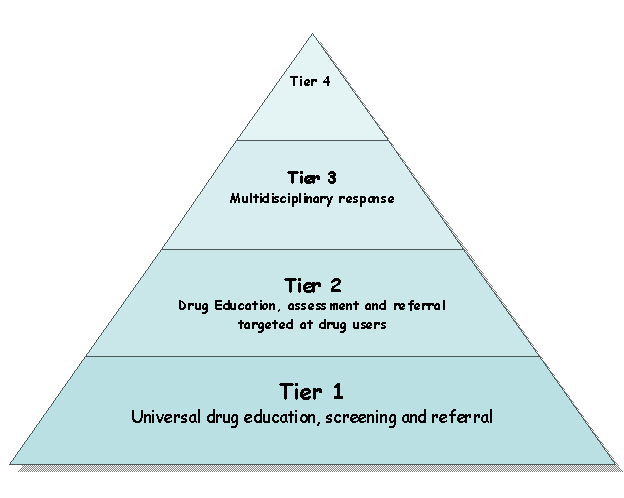
The Health Advisory Service (HAS) reports (1996, 2001) `The Substance of Young Needs', describes a four-tier model covering generic, youth orientated and specialist services describing their roles and responsibilities in meeting the needs of children and young people in relation to substance use and misuse.
Tier 1 services
These are services that are accessible directly by the general public and are provided by primary care workers. These workers can have an influence on the young people they come into contact with but do not necessarily have the sole purpose of informing or intervening with children and young people who are at risk of substance use or misuse. At Tier 1 staff play an important role in recognising and identifying problem substance use and they require the competence to advise accordingly and make appropriate referrals to more specialist agencies in other tiers. Some staff in this tier may also continue to play significant roles in the shared care of children and young people after their referral to more specialised services.
Tier 2 services
These are services in which the workers have a more specialised understanding of child and adolescent development, knowledge of substance use and misuse by young people; and the ability to practice in circumstances that are appropriate to the culture of young people. Chief components of these services are the capacity to provide accurate information and advice; conduct assessment of needs; identify problems related to substance use and misuse and other problematic behaviours; offer advice and information to carers and families; and involve other appropriate agencies. Tier 2 staff include primary care workers with a special interest in drug and alcohol misuse problems; child and adolescent psychiatrists, educational psychologists, social workers with specialist knowledge and staff in one-stop shops/comprehensive centres. Staff in more specialised non-statutory services, health promotion and youth justice. Frequently in tier 2, individual specialist staff may support tier 1 staff.
Tier 3 services
These are more specialised services that can respond to the complexity of the problems presented to them. Examples include youth-orientated specialist addictions services, components of child and adolescent mental health services; and other specialist youth services. Frequently, in tier 3, specialist staff may work in multidisciplinary teams with individuals to bring the necessary skills to bear on their complex problems.
Tier 4 services
These consist of very specialised services, such as those that offer inpatient assessment, care and treatment; care and treatment for children and young people in secure provision; and a range of services for children and young people who misuse substances.
3. Levels of training and training competencies (HAS)
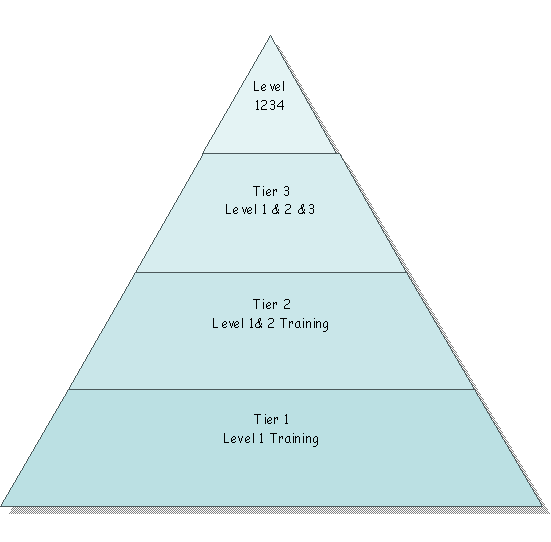
The Health Advisory Service outlines 4 levels of training, clearly identifying the level of training workers in each tier should receive and what competencies they are expected to obtain. These competencies are not occupational standards and do not specify knowledge or skill level required in order to gain competence.
Level 1
All Tier 1 service providers should have level 1 training which is basic drug awareness, skills in recognition, screening and a level of intervention. Training should include substance use/misuse and related issues alongside the development needs of children and young people, and recognition of risk factors, including disaffected and vulnerable young people. All tier 1 workers should be aware of the local child protection and procedures.
All professional groups working with children and young people are expected to have level 1 competencies. Each level 1 competency is identified with its key area, and examples of training content have been added.
Level 1 competencies
1. Ability to deliver services which are sensitive to the impacts of diversity, for example ethnicity and culture, gender or sexuality
Key area: Diversity
· Legal framework e.g. Equal Opportunities, Race Relations Act, Disability Act, The Children Act, The Mental Health Act, The Human Rights Act
· Cultural competence
· Promoting accessibility, equality, diversity and rights
· Ability to promote anti-discriminatory practice and value diversity
2. A basic knowledge of the physical, psychological and social effects of mood-altering drugs and alcohol, including the impacts of substance misuse by parents on children and young people
Key area: Drug knowledge
· Drug set and setting (Zinberg)
· Actions and effects of psychoactive drugs on children and young people
· Routes of use
· Biological indicators
· Social impact of drug use
· Impact on parenting skills
· Legal issues
3. Awareness of your own attitudes towards, and experiences of substance use and misuse and how these may impact on your work with young people who use and/or misuse substances
Key area: Attitudes to drugs
· Assumptions about legal, illegal substances and over the counter medicines, and herbal substances
· Attitudes to own substance use and misuse
· Attitudes to substance use and misuse of others
· Impact of attitudes in the workplace
4. Recognise drug and alcohol use by young people, and related problems
Key area: Identification
· Signs & symptoms
· Indicators - health, education, social or behavioural
· Dimensions of risk
5. Identification of young people's substance related needs with particular reference to the ability to distinguish between substance use, for example of an experimental nature and harmful use
Key area: Identification
· Ten Key Policy Principles
· Screening
· Confidentiality
· Universal education
· Targeted prevention, advice and information
· Harm Reduction
· Child protection
· Referral
6. Basic life support skills
Key area: Dealing with casualties
· Overdose recognition
· Recovery position
· Resuscitation techniques
7. Ability to deliver simple interventions, for example information or advice about withdrawal from substance use and harm-minimisation, when appropriate
Key area: Simple Interventions
· Information giving approaches
· Accessibility of information
· Availability of information on service availability and eligibility or referral criteria
· Harm minimisation approaches /Newcombe's framework
8. Awareness of local specialist substance misuse agencies and specialist staff and about when and how to refer
Key area: Referral
· Local and national service availability
· Referral protocols and criteria
· HAS tiers
Level 2
Tier 2 service workers should have level 1 & 2 training. In addition they should be able to support tier 1 workers. Level 2 training is more advanced training. All training at level 2 should include substance use/misuse and/or child development and/or mental health issues. All training should be integrated with child development and protection needs.
Each level 2 competency is identified with its key area, and examples of training content are as follows:
Level 2 competencies
1. Skills in communicating with and counselling young people and/or their parents/carers
Key area: Young people skills
¬ Communication/councelling skills working with children and young people
¬ Communication/councelling skills for working with parents/carers
¬ Aspects of confidentiality and boundaries.
2. Knowledge of, and skills in therapeutic interventions, including those that are brief and focused, and knowledge of the indications for longer-term and more specialised interventions
Key area: Therapeutic Interventions
¬ Solution focused work
¬ Brief interventions
¬ Group work skills
¬ Life skills work
¬ Indications for specialised in-depth work
¬ Motivation work
¬ Problem solving approaches
3. Identification referral skills: being able to recognise the need for more specialised and
long term interventions and the ability to assess competence for counselling
Key area: Identifying Substance Related Needs
¬ Principles and purpose of screening and assessment
¬ Confidentiality
¬ Consent
¬ Trend in young people's substance use
¬ Distinguishing between substance use and misuse
¬ Screening and assessment procedures
¬ Professional boundaries and responsibilities
¬ Referral
4. Deliver evidence based universal education and prevention programmes
Key area: Education and prevention
¬ Evidenced based practice
¬ Trends in children and young people's substance taking
¬ Education and prevention approaches
¬ Context in which to deliver programmes
¬ Equality, diversity, and developments issues for education and prevention
5. Skills in multi-disciplinary working in a range of different contexts
Key area: Multi-agency working
¬ Confidentiality
¬ Information sharing policy and procedures
¬ Recognition of roles and responsibilities of self and others
¬ Communication
¬ Record keeping
6. Skills of managing conflict in attitudes, opinions and beliefs
Key area: Conflict Management
¬ Equality and diversity issues
¬ Attitudes of self and others
¬ Policies and procedures for managing conflict, complaints, incidents etc.
¬ Communication skills
7. Knowledge of when to inform parents or the authorities and when to offer confidentiality
Key area: Professional boundaries
¬ Legal guardianship
¬ The Children Act
¬ Confidentiality
¬ Fraser Guidelines (Mental Health Act)
¬ Child Protection Policy and Procedures
8. Knowledge of the law relating to purchasing and consuming drugs, alcohol and other substances with particular reference to young people
Key area: Legal issues
¬ The Misuse of Drugs Act plus amendments
¬ The Pharmacy Act
¬ Managing premises and incidents
¬ Licensing laws
9. The ability to construe and manage the boundaries of staff members' expertise
Key area: Team work
¬ Professional boundaries and responsibilities
¬ Communication
¬ Sharing information
¬ Referral criteria and procedures
10. Skills in record keeping, awareness of the needs for and methods of keeping detailed
contemporaneous records
Key area: Record keeping
¬ Data Protection
¬ Legal responsibilities
¬ Information sharing
¬ Confidentiality
¬ Monitoring methods
¬ Report writing
11. Skills of contributing to the development of services for managing people who misuse substances
Key area: Service delivery and development
¬ Consultation with children, young people, parent and carers
¬ Confidentiality
¬ Information sharing
¬ Multi-disciplinary working
¬ Monitoring and evaluation
Level 3
In addition to level 1 and 2 training all tier 3 service workers should have level 3 training. This is specialist drugs knowledge training and advanced skills for interventions and treatment of young people. In addition they should have access to and disseminate evidence-based information concerning the nature of young people's substance misuse and related problems and interventions. A team should have the ability to contribute to the training, support and supervision of colleagues including those in tiers 1 and 2. The team should ensure that there is aggregate competence for all aspects of intervention. Development and delivery of accredited advanced training in substance misuse and child development is to be actively encouraged. In particular, skills in pharmacology and its interventions in young people need to be developed.
Level 3 competencies
The following competencies are detailed for level 3 training
· A working knowledge of child and adolescent development
· Understanding of the particular impact of major events on the lives of children and young people for example abuse, bereavement and major traumatic events
· Skills in communicating with and counselling young people and their parents/carers
· Ability to conduct therapeutic interventions including brief focused practical work with peoples who misuse substances, and the knowledge of the longer-term and specialised interventions
· Knowledge and skills to handle confidentiality and consent to treatment that involves the rights of young people, and the responsibilities of parents and professionals
· Assessment skills with particular reference to discern the severity of risks of substance misuse, the complexity of any planned intervention and the competence of a person to consent to treatment and interventions
· The ability to manage and work with the child protection issues including those that concern the relationship between substance misuse and the vulnerability of children and young people
Tier 4 workers should be able to deliver specific treatments. Developed skills in paediatrics, addiction, forensic and child/adolescent psychiatry and primary care to take forward development in competencies in pharmacological interventions in young people is to be encouraged. This should not simply address competencies and a need for training in detoxification but general prescribing of potential drug misuse, use of adjuncts and the use of various settings for treatments. Training also needs to be mindful of the location where the young person presents, treatments needs to be location specific with primary care having an important role in first contact and identification.
The following competencies are detailed for level 4 training
· A working knowledge of child and adolescent development.
· Understanding of the particular impact of major events on the lives of children and young people for example abuse, bereavement and major traumatic events
· Skills in communicating with and counselling young people and their parents/carers
· Ability to conduct therapeutic interventions including brief focused practical work with peoples who misuse substances, and the knowledge of the longer-term and specialised interventions
· Knowledge and skills to handle confidentiality and consent to treatment that involves the rights of young people, and the responsibilities of parents and professionals
· Assessment skills with particular reference to discern the severity of risks of substance misuse, the complexity of any planned intervention and the competence of a person to consent to treatment and interventions
· The ability to manage and work with the child protection issues including those that concern the relationship between substance misuse and the vulnerability of children and young people
4. Models of Care
Models of care (NTA 2002) outlines a four tier framework for the commissioning and provision of drug treatment in line with identified client need within each Drug Action Team area. This model was based on the four-tiered approach for a variety of mental health and drug misuse services for young people outlined by the Health Advisory service (1996). The tiers in this model represent the modality of intervention offered by an agency rather than simply categorising the service.
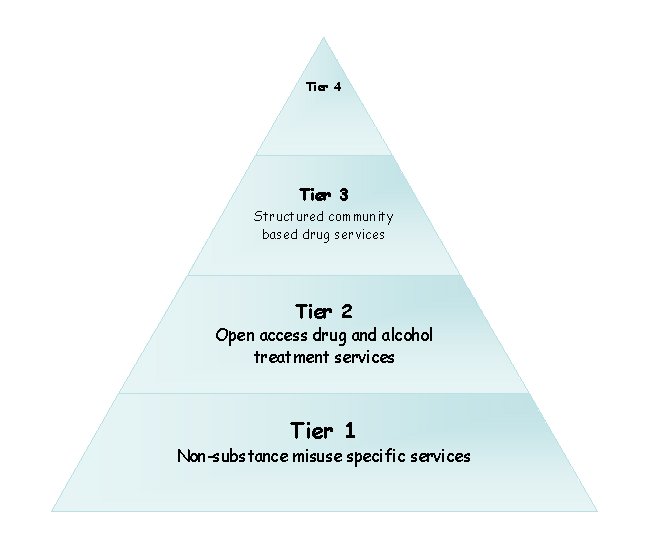
Tier 1: Non-substance misuse specific services requiring interface with drug and alcohol treatment
Tier 1 services work with a wide range of clients including drug and alcohol misusers, but their sole purpose is not drug or alcohol treatment. The role of Tier 1 services, in this context, includes the provision of their own services plus, as a minimum, screening drug misusers and referral to local drug and alcohol treatment services in tiers 2 and 3. Tier 1 provision for drug and alcohol misusers may also include assessment, services to reduce drug-related harm, and liaison or joint working with Tiers 2 and 3 specialist drug and alcohol treatment services. Tier 1 services are crucial to providing services in conjunction with more specialised drug and alcohol services (e.g. general medical care for drug misusers in community-based or residential substance misuse treatment or housing support and aftercare for drug misusers leaving residential care or prison).
Tier 1 consists of services offered by a wide range of professionals (e.g. primary care or general medical services, social workers, teachers, community pharmacists, probation officers, housing officers, homeless persons units). Such professionals need to be sufficiently trained and supported to work with drug (and alcohol) misusers who, as a group, are often marginalised from, and find difficulty in, accessing generic health and social care services.
Tier 2: Open access drug and alcohol treatment services
Tier 2 services provide accessible drug and alcohol specialist services for a wide range of drug and alcohol misusers referred from a variety of sources, including self-referrals. This tier is defined by its low threshold to access services, and limited requirements on drug and alcohol misusers to receive services. Often drug and alcohol misusers will access drug or alcohol services through tier 2 and progress to higher tiers.
The aim of the treatment in tier 2 is to engage drug and alcohol misusers in drug treatment and reduce drug-related harm. Tier 2 services do not necessarily require a high level of commitment to structured programmes or a complex or lengthy assessment process. Tier 2 services include needle exchange, drug (and alcohol) advice and information services, and ad hoc support, including harm reduction support, not delivered in the context of a care plan. Specialist substance misuse social workers can provide services within this tier, including the provision of access to social work advice, childcare/parenting assessment, and assessment of social care needs. Tier 2 can also include low-threshold prescribing programmes aimed at engaging opioid misusers with limited motivation, while offering an opportunity to undertake motivational work and reduce drug-related harm.
Tier 2 services require competent drug and alcohol specialist workers. This tier does not imply a lower skill level than in tiers 3 and 4 services. Indeed, many of the functions within this tier require a very high level of professional training and skills.
Tier 3: Structured community-based drug treatment services
Tier 3 services are provided solely for drug and alcohol misusers in structured programmes of care. Tier 3 structured services include psychotherapeutic interventions and structured counselling (e.g. cognitive behavioural therapy), motivational interventions, methadone maintenance programmes, community detoxification, or day care provided either as a drug- and alcohol-free programme or as an adjunct to methadone treatment. Community-based aftercare programmes for drug and alcohol misusers leaving residential rehabilitation or prison are also included in tier 3 services.
Tier 3 services require the drug and alcohol misuser to receive a comprehensive assessment and to have a care plan which is agreed between the service provider and client. The drug and alcohol misuser attending tier 3 services will normally have agreed to a structured programme of care which places certain requirements on attendance and behaviour (e.g. a certain number of days or hours attendance per week with a programme review triggered if attendance becomes irregular). The drug and alcohol misuser should also expect the care plan to be provided by the agency as agreed. For clients whose needs cross several domains, there should be a care co-ordinator, responsible for co-ordination of that individual's care on behalf of all the agencies and services involved. Changes to the care plan would take place in consultation with the drug and alcohol misuser.
Tier 3 services may be required to work closely with other specialist services to meet the needs of specific client groups. For example, Tier 3 services and mental health services should work closely together to meet the needs of drug misusers with dual diagnosis (psychiatric co-morbidity). In this instance, providers should have access to medical clinical leadership and/or advice from mental health specialists in line with good practice guidelines (Department of Health 2002).
Tier 4 Services: Residential services for drug and alcohol misusers
Tier 4a: Residential drug and alcohol misuse specific services
Tier 4 services are aimed at individuals with a high level of presenting need. Services in this tier include: inpatient drug and alcohol detoxification or stabilisation services; drug and alcohol residential rehabilitation units; and residential drug crisis intervention centres. Tier 4a services usually require a higher level of commitment from drug and alcohol misusers than is required for services in lower tiers. Tier 4a services are rarely accessed directly by clients. Referral is usually from tiers 2 or 3 services or via community care assessment.
Tier 4a services may be abstinence-oriented programmes, detoxification services or services which stabilise clients (e.g. on substitute drugs). Access to tier 4a requires careful assessment and preparation of the client in order to maximise readiness, compliance and programme effectiveness. Access to tier 4a may also require sequencing of other care pathways such as detoxification prior to placement in a drug- and alcohol-free residential programme. By definition, such programmes are highly structured. Drug and alcohol misusers receiving tier 4 services will require a designated care co-ordinator, allocated before entry to this tier.
Tier 4b: Highly specialist non-substance misuse specific services
Tier 4b services are highly specialised and will have close links with services in other tiers, but they are, like tier 1, non-substance misuse specific. Examples include specialist liver units that treat the complications of alcohol-related and infectious liver diseases and forensic services for mentally ill offenders. Some highly specialist tier 4b services also provide specialist liaison services to tiers 1-4a services (e.g. specialist hepatitis nurses, HIV liaison clinics, genito-urinary medicine).
5. DANOS
A national programme of workforce development is being implemented by the NTA. This competence based programme consists of a national set of competencies for roles in the substance misuse sector. The Drug and Alcohol National Occupational Standards, DANOS were published in May 2002. The programme has a qualification framework with clear pathways for entry, progression and transfer across the sector based on DANOS and other relevant national occupational standards. At the moment the service delivery standards are adult and not young person focussed.
Unlike the HAS competencies DANOS specify the standards of performance that the people in the drugs and alcohol field should be working to. They also describe the knowledge and skills that workers need in order to perform to the required standard. This allows workers to be clear about what is expected of them in their work and help them to identify knowledge and skills that are required. The DANOS standards describe all the functions and activities involved in improving the quality of life for individuals and communities by minimising harm associated with substance misuse.
There are three main areas in DANOS; service delivery, management of services and commissioning services. There approximately 90 units in the DANOS suite. Similar units are grouped together within each of these three main areas.
A. Service Delivery
AA. Help individuals access substance misuse services
AB. Support individuals in difficult situations
AC. Develop practice in the delivery of services
AD. Educate people about substance use, health and social well-being
AE. Test for substance misuse
AF. Assess substance misusers' needs for care
AG. Plan and review integrated programmes of care for substance misusers
AH. Deliver healthcare services
AI. Deliver services to help individuals address their substance use
AJ. Help substance users address their offending behaviour
AK. Support individuals' rehabilitation
B. Management of Services
BA. Develop, implement and review the organisation's policies, strategies and plans
BB. Promote the organisation and its services
BC. Deliver services to specifications
BD. Provide a healthy, safe, secure and suitable environment for the delivery of services
BE. Manage information
BF. Manage the organisation's human resources
BG. Manage the organisation's financial resources
BH. Provide administrative support for the delivery of services
BI. Manage relationships
C. Commissioning Services
CA. Identify needs for substance misuse services and develop strategies and plans to meet the needs
CB. Manage contracts for substance misuse services
6. Action plans
KEY TRAINING AREA |
RELATES TO |
TARGET GROUP |
ACTION PLAN |
BY WHOM |
1. Establish funding mechanisms to enable |
ATP 05/06 TNA (2005) |
August - identify funding Autumn - seek appointment |
DAAT Manager | |
2. Develop an agreed approach to |
TNA(2005) |
July - TOR for Steering Group in draft Autumn - Ratification |
Training Steering Group Training Coordinator | |
3. Establish monitoring and evaluation of |
ATP 05/06 TNA(2005) |
December - Steering Group to agree funding Establish training record file and training group database |
Training Coordinator | |
4. Enable services to identify learning
|
ATP 05/06 TNA(2005) |
Ongoing: Relevant individuals to join Steering Group |
Training Coordinator | |
5. Publish a directory of learning |
TNA(2005) |
Service Provider Practitioner Trainers |
To be completed when co-ordinator is in post and following Needs Audit |
Training Coordinator |
6. Development of web based information |
TNA(2005) |
Group 5 |
To be addressed - 5 |
Training Coordinator |
7. Support and encourage agencies to |
ATP 05/06 TNA(2005) |
Service Provider organisations |
Ongoing: Audit during 2006 |
Training Coordinator Training Steering Group |
8. Support training providers to map |
TNA(2005) |
All |
Ongoing |
Training Coordinator TSG |
9. Level 1 training for young people's services |
ATP 05/06 TNA(2005) |
Tier 1 (YPS) |
¬ Develop training package based on HAS level 1 competencies. ¬ Identify and train trainers to deliver ¬ Promote to under age again |
Training Steering Group |
10. Basic drug awareness training |
ATP 05/06 TNA(2005) |
Tier 1/2/3/4 workers organisations |
¬ Identify journals, reading materials and websites where relevant information can be obtained. ¬ Develop DANOS based training ¬ Identify and train trainers to deliver |
Training Steering Group |
11. Develop and co-ordinate trainer pool |
TNA(2005) |
All |
Alongside work for 5 & 6 during 2006 |
Training Coordinator |
12. Training for trainers |
TNA (2005) |
Tier 1/2/3/4 trainers and drug awareness trainers User group members |
Training Steering Group | |
13. Develop advanced drug knowledge |
TNA(2005) |
Tiers 1, 2,3 and 4 in adult and YPS |
¬ Identify journals/ websites where information can be obtained ¬ Develop training package ¬ Identify trainers for delivery |
Training Steering Group working with local partners |
14. Provide training in Group work skills |
TNA (2005) |
Tiers 1, 2, 3,4 workers |
¬ Commission DANOS based training to develop group work skills. ¬ Identify reading resources to support distance learning ¬ Identify learning placements for skill development |
Training Steering Group working with local partners |
15. Provide training in Counselling Skills |
TNA (2005) |
Tier 1 - 4 workers Service Providers including admin workers |
¬ Commission/develop basic counselling skills training ¬ Commission/ develop advanced counselling skills training |
Training Steering Group working with local partners |
16. Provide training Mental Health/Dual Diagnosis. CPD
|
TNA (2005) |
Service Providers |
¬ Develop information pack on drugs and mental health ¬ Identify journals/ websites where information can be obtained ¬ Develop[/commission training |
Training Steering Group working with local partners |
17. Provide training Relapse Prevention |
TNA (2005) |
Tier 2,3 client workers and aftercare workers |
Training Steering Group working with local partners | |
18. Develop leadership and management |
TNA (2005) ATP (05/06) |
Team leaders and service managers |
.... 4 - 7 |
Training Steering Group working with local partners |
19. Develop blood borne virus, peer led |
ATP (05/06) |
Users and carers |
Ongoing via SUG |
Training Steering Group working with local partners |
20. Provide overdose prevention and |
ATP (05/06) |
Service providers Emergency services staff Service users |
Identify trainers and level and provide to workforce |
Training Steering Group working with local partners |
21. Provide Crack awareness training |
ATP (05/06) |
Service providers |
Identify trainers and level and provide to workforce |
Training Steering Group working with local partners |
22. Provide training in evidence based interventions to stimulant and crack cocaine users. |
ATP (05/06) |
Treatment service staff |
Identify trainers and level and provide to workforce |
Training Steering Group working with local partners |
23. GP Training. PC and Pharmacists |
ATP (05/06) |
GP in shared care (tier 3) Other GPs on request |
Promote training and encourage engagement |
Training Steering Group |
24. Develop relationships with training |
TNA (2005) |
All |
Assess and monitor and link 7 |
Training Coordinator Training Steering Group |
25. Identify core DANOS unit required for |
ATP 05/06 TNA(2005) |
Training Coordinator Training Steering Group |
26. Raise awareness with organisations |
Ongoing |
Training Co-ordinator Training Steering Group | ||
27. Identify training needs beyond |
Audit - 2006 Best Practice |
Training Co-ordinator Training Steering Group | ||
28. Appraisal Skills Training |
Linked to 7 |
Training Co-ordinator Training Steering Group |
7. References
· DrugScope/Home Office (2003) `First steps in identifying young people's substance misuse needs'. Home Office
· Hampshire DAAT (2004) Adult treatment Plan 2005/2006 (unpublished)
· Hampshire DAAT (2005) Tackling drugs? Tackling Training! Report on training census and training needs analysis (unpublished)
· NTA (December 2002) Models of Care for the treatment of drug misusers. Part 2: Full reference report (NTA London)