
Archived decisions
Hampshire County Council Executive Member for Adult Social Care Item 2 Joint Older People's Mental Health Commissioning Strategy - Permission to Consult 30 November 2007 Report of the Director of Adult Services |
Contact: Catherine Pascoe
1. Summary:
The following decision is sought:
That the Executive Member:
i Approves the consultation on the draft Older People's Mental Health Commissioning Strategy in accordance with the Hampshire Compact.
ii Receives a further report on completion of the consultation to approve the strategy.
2. Reason
2.1 There is already a high level of demand for services for older people with mental health needs, both in specialist and generic services.
2.2 A large increase in demand for services is anticipated over the coming years due to growth in the local population of older people.
2.3 It will not be possible to meet the growing demand within the resources available unless we change the way we currently deliver services
2.4 Working together across health and social care services and wider communities should provide a much more effective and coordinated response to complex needs and promote independence and inclusion in society
3. Other Options considered and rejected:
3.1 Continuing with separate NHS and social care strategies for mental health services for older people would exacerbate the difficulty that people find with the health and social care interface and would limit options for achieving better outcomes within the resources available.
4. Conflicts of Interest declared by the decision maker or other Executive member consulted - none
5. Dispensation granted by the Standards Committee - none
6. Reason(s) for the matter being dealt with if urgent - not applicable
Approved by: ....................................... Date: .................................
Councillor Felicity Hindson
Executive Member for Adult Social Care
Hampshire County Council Executive Member for Adult Social Care Item 2 30 November 2007 Joint Older People's Mental Health Commissioning Strategy - Permission to consult Report of the Director of Adult Services |
Contact: Catherine Pascoe 01962 845649 [email protected]
1 Summary
1.1 Throughout 2007 a broad range of stakeholders have been involved in the development of a Joint Older People's Mental Health (OPMH) Commissioning Strategy for Hampshire led by Hampshire Adult Services and Hampshire Primary Care Trust
1.2 In order to comply with Hampshire County Council's obligations under the Compact Agreement, this strategy now needs to go out for a formal 12 week consultation period.
1.3 Further more detailed work is required to develop a map of the total resources currently invested and the implications of implementing the commissioning intentions outlined in the strategy. Since the strategy must be implemented within the envelope of resources available, any decisions around disinvestment and reinvestment will be examined as separate but linked business cases. This work will continue throughout the consultation period, when the strategy will be further refined.
2 Recommendations
2.1 The following decision is sought:
That the Executive Member:
i. Approves the consultation on the draft Older People's Mental Health Strategy in accordance with the Hampshire Compact
ii. Receives a further report on completion of the consultation to approve the strategy
3 Contextual Information
3.1 A number of factors make this an important piece of work:
3.1.1 Currently there is a high level of need related to services for older people with mental health needs, both in specialist and generic services
3.1.2 A large increase in demand for services is anticipated over the coming years due to significant demographic changes and growth in the local population of older people.
3.1.3 Services need to be aligned and coordinated across the health and social care system in order to support the needs of this client group.
3.2 Once agreed, the following organisations have confirmed their intention to implement the strategy:
3.2.1 Hampshire Primary Care Trust (HPCT)
3.2.2 Hampshire County Council Adult Services Department (HCCASD)
3.2.3 Hampshire Partnership Trust (HPT)
3.2.4 Surrey and Borders Partnership Trust (SaBPT).
3.3 A broad range of engagement has been integral to development of the strategy, including:
3.3.1 Establishment of a multi-agency Steering Group
3.3.2 A consultation exercise undertaken by the Alzheimer's Society on behalf of the Steering Group. 17 pre-existing groups of people who have an interest in older people's mental health were visited. These included 2 groups from black and minority ethnic communities and one gay group.
3.3.3 2 workshops attended by representatives from a full range of stakeholders
3.3.4 Multi-agency and multi-professional workgroups, with representation from carers and the voluntary sector , who considered
i Needs based care pathways for dementia and functional mental illness
ii The acute and community hospital experience
iii Needs analysis and performance measures
4 The strategy will provide:
4.1 A commissioning framework for Hampshire County Council and Hampshire Primary Care Trust for older people's mental health services that will deliver:
4.1.1 Clear statements of commissioning intentions
4.1.2 A modernisation programme for health, social care, and voluntary sector providers
4.1.3 Priorities that make a real difference in the short term to medium term
4.2 A robust analysis of the mental health needs of older people in Hampshire to inform commissioning.
4.3 A whole health and social care system focus for improvement that spans all aspects of the dementia and functional mental health needs based pathways for older people.
4.4 Cohesion with other related health and social care commissioning strategies, e.g. primary care mental health, day care activities, extra care sheltered housing.
5 The overarching commissioning aims of this strategy are:
5.1 To secure services and support that deliver holistic, person-centred health and care, which address mental, as well as physical health needs and which provide dignity and respect
5.2 To secure services which are flexible and able to change in line with people's unique circumstances, enabling independence and choice
5.3 To secure a comprehensive specialist older people's mental health service as part of a fully integrated pathway of care
5.4 To secure equitable access to services and support across Hampshire based on individual and population needs.
5.5 To ensure that treatment and care is based on the best available evidence of effectiveness.
6 Hampshire Primary Care Trust and Hampshire County Council Adult Services' commissioning intentions:
6.1 We will work towards commissioning:
6.1.1 Needs led care pathways for dementia and functional mental illness (developed as part of this strategy), which will:
i describe clear outcomes for older people with mental health needs
ii Inform Hampshire PCTs Local Delivery Plan for 2008/2009 (and subsequent years) and inform budget setting for Adult Services.
6.1.2 An integrated service between working age and older people's mental health services for older people with functional mental health needs that is responsive and enables choice for individuals.
6.1.3 A map of the total resources (Hampshire Primary Care Trust and Hampshire County Council Adult Services) currently spend on older people's mental health and social care services in Hampshire, including for example: specialist mental health services, continuing care, voluntary sector services, social care. This will identify the total envelope of funds to support a modernisation programme, showing where there is any duplication or deficits and enabling maximisation of available resources. This is not a straightforward process since, though some services are overtly specialist OPMH services, much support is subsumed in general services for older people.
6.1.4 A "Balance of Care" project across Hampshire to identify the costs of unnecessary bed usage in acute and community hospitals and to identify appropriate alternatives to hospital for people with dementia; this will provide a platform for planning services across the whole health and social care system.
6.1.5 Providers to undertake modernisation programmes to deliver services that implement the needs led care pathways that deliver the above commissioning aims within existing resources. This will involve review and redesign of:
i specialist and generic provision
ii working age and older people's functional mental health provision
iii the balance between inpatient capacity and access to community based and universal well-being services - in particular a focus on prevention and early diagnosis.
6.1.6 Improvements to services to be delivered over the short, medium and longer term period of the strategy.
7 How we will commission:
7.1 We will focus on prevention and community based services that promote independence in the early years of this strategy. All investment plans will be balanced with a disinvestment plan to demonstrate affordability within the available resources and the links between business cases will be demonstrated.
7.2 Where redesign of services is required, this will be subject to the usual scrutiny and public consultation processes.
7.3 Service level agreements will be jointly agreed with NHS trusts and any future Foundation Trusts and with health and social care providers that set out the modernisation programme and describe service specifications based on the new care pathways, with identified outcomes and standards.
7.4 Hampshire County Council and Hampshire Primary Care Trust will review the funding position, should evidence emerge that additional resource is required in the future.
7.5 We will proactively pursue opportunities for attracting further grants/resources to support older people's mental health services, such as any future Partnership's for Older People Projects funding and access to funding for the voluntary sector.
7.6 We will consider the implications of this strategy for market management and will proactively engage with the voluntary sector as a key player within the market.
8 Consultation
8.1 A draft strategy has now been produced and the next stage is to formally consult on the direction and plans set out in the document. This is in line with good practice set out in the Hampshire Compact
8.2 A formal consultation plan for the draft strategy has been developed which includes consideration of equalities issues
8.3 The formal consultation process will be crucial in refining and developing the strategy further
9 Financial Implications
9.1 The strategy needs to be implemented within the cash envelope available. Adult Services has no additional finances to invest. Any decisions around disinvestment and reinvestment elsewhere must be examined as separate, but linked, business cases. In particular the strategy challenges the distribution of resources between services for working age and older people with mental health issues.
9.2 Detailed financial information on OPMH is extremely difficult to obtain both in respect of PCT and Adult Services funding. Work is continuing within both organisations to overcome the difficulty of extrapolating OPMH spending from more generic older people's or mental health spend. Indicative figures only are available and these are shown in the summary table below in order to provide an indication of the scale of provision. In the case of Adult Services figures, these are an estimate based on extrapolating 50% of the overall OP figure.
Expenditure on Older People's Mental Health | ||
£000 |
Assumptions | |
Hampshire Primary Care Trust |
29,000 |
Includes only specialist mental health providers, continuing NHS healthcare and joint finance budgets for 2007/08. Excludes acute and community/primary care spend. |
Hampshire County Council Adult Services |
51,500 |
Based on 2006/07 budgets, net of income and excluding management and support overheads and assumption that 50% of the older people's budget is spent on clients with mental health needs. |
9.3 The framework for the strategy is provided in the form of needs based pathways which begin by considering the need to promote health and well-being and offer supportive responses which would not normally fall within the remit of Hampshire's Fair Access to Care Criteria currently set at Critical and Substantial levels. In conjunction with identified statutory sector expenditure it is also essential that opportunities for attracting further grants/resources to support older people's mental health services, such as any future Partnerships for Older People Projects funding and access to funding for the voluntary sector, are proactively pursued.
10 Equalities Impact Assessment
10.1 The initial Equalities Impact Assessment work undertaken as part of the strategy development will be expanded following the formal consultation process when further information regarding any unintended consequences or practical implementation issues can be gathered and considered in the development of the final version of the strategy
10.2 Within Hampshire there are pockets of deprivation, which can lead to health inequalities. These are outlined in the OPMH Strategic Needs Analysis produced for the Strategy. Health improvement programmes and services should aim to reduce these. This may mean providing services in different ways to ensure ease of access.
10.3 It is widely reported that people with mental health problems, black and minority ethnic communities and older people experience social exclusion. It follows, then, that black and minority ethnic older people with mental health problems are particularly vulnerable.
10.4 Generally access to services for black and minority ethnic older people and their carers remains problematic. Barriers include issues of language, knowledge of what services are available, and the attitudes and practices of service providers, as well as cultural factors in the perception and understanding of mental illness. Black and minority ethnic older people with mental health problems and their carers need to have access to appropriate and responsive services.
10.5 The development of this strategy has been informed by independent consultation (led by the Alzheimer's Society) which included stakeholders drawn from black and minority ethnic communities, mixed gender groups and people from the gay community. No concerns were expressed specifically in respect of these groups, however, issues have been identified in relation to age related barriers to accessing service and barriers in relation to diagnosis
10.6 The clear commissioning intention in this strategy is to work towards removing barriers to accessing services based on age or diagnosis for all older people with mental health needs.
11 Delivering ageless services
11.1 Providing services based on need and not age, where such services may provide the most appropriate response for an older person or where a person over 65 years of age may choose to access working age adult services to meet their need, will put additional pressures on some working age adult services. This additional demand may result in working age services needing to reconsider how their resources can be used most effectively if resources continue to be allocated on the basis of client groups. However, any increase in demand for working age adult services which results from the proposals in this strategy will in no way equate to the demographic pressures and anticipated increase in demand older people's services will experience.
12 Removing barriers to accessing mainstream services based on mental health need
12.1 If all current generic older people's community support services are to be accessible for individuals with mental health needs (including short-term crisis prevention, intermediate care, reablement and rehabilitation services) this raises significant workforce development issues, but also the need for clarity in relation to the roles of, and relationship between, specialist and mainstream services.
12.2 Further work outlined in the strategy to address these issues will be informed by the findings of the Balance of Care project.
13 Conclusion
13.1 There is already a high level of demand for services for older people with mental health needs, both in specialist and generic services.
13.2 A large increase in demand for services is anticipated over the coming years due to growth in the local population of older people
13.3 It will not be possible to meet the growing demand within the resources available unless we change the way we currently deliver services
13.4 Working together across health and social care services and wider communities should provide a much more effective and coordinated response to complex needs and promote independence and inclusion in society
14 Glossary
14.1 Balance of Care project
A "Balance of Care" project involves surveying bed utilisation in acute and community hospitals, specialist mental health inpatient services, residential and nursing homes. It creates a snapshot of the ages, conditions and status of patients in these beds on a single date and looks at whether their care needs might have been met in an alternative setting, either through avoiding admission or earlier discharge.
14.2 Older people's mental health is often divided into functional mental health and organic mental health.
14.2.1 Functional mental health
These are conditions such as depression, anxiety and psychotic disorders.
14.2.2 Organic mental health
This is dementia.
15 Appendices
A. Formal Consultation Plan for draft OPMH Strategy
B. Draft Joint Hampshire Commissioning Strategy for Older People with Mental Health Needs
C. Draft Executive Summary of OPMH Strategy
LINK(S) TO CORPORATE STRATEGY | ||
Yes |
No | |
Hampshire safer and more secure for all |
||
Maximising well-being |
||
Enhancing our quality of place |
||
Section 100 D - Local Government Act 1972 - background documents
The following documents discuss facts or matters on which this report, or an important part of it, is based and have been relied upon to a material extent in the preparation of this report.
NB: the list excludes:
1. Published works
2. Documents which disclose exempt or confidential information as defined in the Act.
NONE
APPENDIX A
JOINT HAMPSHIRE COMMISSIONING STRATEGY FOR OLDER PEOPLE'S MENTAL HEALTH
FORMAL CONSULTATION COMMUNICATIONS & ENGAGEMENT PLAN
Background
Hampshire County Council Adult Services Department (HCCASD), Hampshire Primary Care Trust (HPCT) , Hampshire Partnership NHS Trust(HPT) and Surrey and Borders Partnership NHS Trust jointly decided to look at improving the range and quality of services for older people with mental health needs in Hampshire and to develop a joint commissioning strategy for older people's mental health in line with the national policy guidance, "Everybody's Business - Integrated mental health services for older adults: a service development guide"(
A number of factors make this an important piece of work:
· Currently there is a high level of need related to services for older people with mental health problems, both in specialist and generic services
· A large increase in demand for services is anticipated over the coming years due to significant demographic changes and growth in the local population of older people.
· Services need to be aligned and coordinated across the health and social care system in order to support the needs of this client group.
A joint project group was established in July 2006 and has taken a partnership approach to developing the commissioning strategy.
Stakeholder Engagement to Date
The draft Joint Hampshire Commissioning Strategy for Older People's Mental Health has been developed via extensive engagement with a full range of stakeholders and service users:
· An Alzheimer's Society representative is on the Steering Group, plus HPCT, HCCASD, HPT
· The Care Services Improvement Partnership has acted as a critical friend
· A Service User and Carer Consultation Plan was developed in conjunction with CSIP and the Alzheimer's Society
· A consultation exercise was led by the Alzheimer's Society, who visited 17 pre-existing Older Person's groups with an interest in Older People's Mental Health (dementia and functional mental health, eg depression, anxiety, and so on) This included black and minority ethnic (BME) groups and one gay group
· 2 workshops were held and were attended by around 50 people from: * Corporate Hampshire County Council * Hampshire Adult Services Department * Hampshire Primary Care Trust (PCT)
* Provider Trusts (Acute Hosp and Specialist Mental Health)
* Voluntary Sector
* Private Sector * Carers * District Council
· A voluntary sector Older People's Mental Health Reference Group was established by the Alzheimer's Society to work alongside the Strategy Steering Group
· Community Action Hampshire Health and Social Care Network was used to inform others about strategy development and how to get involved
· Care pathways working groups were established, consisting of mixed professionals plus voluntary sector and carer representatives
Purpose of Consultation
Now that a draft strategy has been developed the next stage is to formally consult on the direction and plans set out in the document. This is in line with good practice set out in the Hampshire Compact. In essence the purpose of the consultation is to:
1. Confirm that the draft strategy reflects the views and ideas of service users and stakeholders
2. Outline how the views and ideas of service users and stakeholders will be taken forward.
3. Continue the dialogue with service users and stakeholders and further develop the relationships and mechanisms established so far, so that service users and stakeholders will continue to shape the implementation of the strategy
4. Identify any unintended consequences of the proposals
5. Identify possible practical implementation issues
6. To identify any further valued examples of good practice from around the county. Information on these to be disseminated with the final document.
Underpinning these specific aims, the Communications and Engagement Plan will:
· Create an optimum climate of opinion in support of the successful implementation of the Joint Strategy
· Support Hampshire County Council and Hampshire Primary Care Trust's strategic aims of developing robust partnerships, joint working and a culture of co-operation alongside the meaningful involvement of the public in the planning and provision of health and social care.
Good communications characteristics
In line with the existing Hampshire County Council and Hampshire Primary Care Trust communication and public relations policies, all communications will be clear, timely, accessible, understandable, accurate, considerate and relevant to the target audience. In addition:
· We will communicate in ways which recognise the specific needs of stakeholders
· Our communications will be based on fact, not fabrication
· Our approach will be open
· We will be mindful of the need to maintain confidentiality at times
Communications Protocol
· All general enquiries or staff enquiries will be referred to a helpline number or email address. The helpline will be an Adult Services voicemail service. Standard acknowledgements will be received following contact and nominated individuals from either Adult Services or the PCT will respond more fully in due course
· All media enquiries/approaches will be referred to:
For Hampshire County Council (HCC)
Nicky Capell, Corporate Press Office
For Hampshire Primary Care Trust (HPCT)
Michael Goodeve
The PCT and HCC press officers will ensure they liaise closely with one another before responding.
Communications Routes
A range of existing channels and tools, such as Board Meetings, in-house newsletters and Core- Briefs and organisation's websites will continue to be used. These will include:
· Documents posted on the Hampshire County Council consultation website with a link from the Hampshire PCT consultation webpage
· An email address and ansaphone number for all enquiries during the consultation period
· Targeted press releases/briefings
· Use of Community Action Hampshire Health and Social Care Network
· Piggy-back opportunities (articles/features in other media not controlled by the trust e.g. PCT newsletters, parish magazines, voluntary group communications)
· Visits to some stakeholder groups involved in the previous consultation particularly including the BME groups and gay group
Style
All printed/printable and web-based communications relating to the project will be produced in line with HCC and HPCT standards.
Due consideration will be given to alternative communication methods for stakeholders who do not have English as their first language or have other communication needs, such as other languages, large print, audio tape, Braille, etc.
Costs
Costs will be minimised through the use of existing communications routes and maximising electronic distribution.
Implementation
An implementation plan outlining key actions and responsibilities can be found in the appendix.
Evaluation
The consultation will be evaluated as part of the Post Project Evaluation.
Stakeholders
The draft strategy has been developed with the involvement of a wide range of stakeholders, including people who use services and their carers
Stakeholders who have already been involved
· Age Concern Hampshire
· The Alzheimer's Society
· Basingstoke and North Hampshire Hospitals NHS Foundation Trust
· Carers Together in Hampshire
· Community Action Hampshire
· Care Services Improvement Partnership South East
· Eastleigh Asian Elders Group
· Frimley Park Hospital NHS Foundation Trust
· Hampshire County Council - Adult Services Department
· Hampshire County Council - Chief Executive's Department Older People's Wellbeing team
· Hampshire Domiciliary Care Association
· Hampshire Primary Care Trust
· Hampshire Partnership NHS Trust
· Hampshire Voluntary Care Group
· Portsmouth University Hospital Trust
· Service users and carers via voluntary sector groups
· Solent Mind
· Southampton University Hospital Trust
· Southern Focus Trust
· Surrey and Borders NHS Trust
· Voluntary sector Older People's Mental Health Reference Group (established by The Alzheimer's Society to work alongside the steering group for this strategy)
· Winchester and Eastleigh Healthcare NHS Trust
· Winchester City Council
Who will be invited to participate in the formal consultation?
· All of the above are being contacted again
· Acute Hospital Trusts Patient and Public Involvement Fora
· Ambulance Services
· Basingstoke Mencap
· Community Action Hampshire Health and Social Care Network
· District Councils
· East Hampshire Advocacy Scheme
· HAD Asian Deaf Community Project
· Hampshire County Council Recreation and Heritage Department
· Hampshire Deaf Association
· Hampshire Health Overview and Scrutiny Committee
· Hampshire Partnership NHS Trust Patient and Public Involvement Forum
· Hampshire Primary Care Trust Patient and Public Involvement Forum
· MPs
· NHS South Central Health Authority
· North Hants Mental Health Forum
· Petersfield Citizens Advice Bureau
· Portsmouth City and Southampton City Health Overview and Scrutiny Committees
· Portsmouth Primary Care Trust
· Rethink UK
· Southampton City Primary Care Trust
· Surrey & Borders Partnership NHS Trust Patient and Public Involvement Forum
· Test Valley Community Services
Conclusion
This Communications & Engagement Plan is designed to create an optimum climate of opinion in support of the new draft strategy. It also is designed to support Hampshire County Council's and Hampshire Primary Care Trust's strategic aims of developing robust partnerships, joint working and a culture of co-operation alongside the meaningful involvement of the public in the planning and provision of health and social care.


Hampshire Primary Care Trust
and
Hampshire County Council
Joint Hampshire Commissioning Strategy for
Older People's Mental Health
2008 - 2013
Draft for Consultation
Working in partnership with:
Hampshire Partnership NHS Trust
Surrey and Borders Partnership NHS Trust
Alzheimer's Society
|


Joint Hampshire Commissioning Strategy for
Older People's Mental Health
2008 - 2013
Contents
Page
1. Background and the Case for Change 3
2. Vision and Principles 10
3. Model of Care and Needs Led Pathways 12
- Functional Mental Illness Pathway, i.e. Depression 12
- Dementia Pathway 18
- Acute and Community Hospital Experience 27
4. Analysis of Current Position 29
5. Commissioning Intentions: What We Are Trying To Achieve 33
6. Governance Arrangements 45
7. Summary Table of Proposed Early Priorities 46
Appendices:
1. Needs Analysis and Data Set
2. Report on consultation with older people and their carers by the Alzheimer's Society
3. Red / Amber / Green assessment of current provision
4. Performance indicators
5. Broad service specification
Chapter 1
Background and the Case for Change
Hampshire County Council Adult Services and Hampshire Primary Care Trust, working with Hampshire Partnership NHS Trust, Surrey and Borders Partnership NHS Trust and the Alzheimer's Society, are developing a joint a joint commissioning strategy that aims to improve the range and quality of services for older people with mental health problems in Hampshire, in line with the national policy guidance: "Everybody's Business - Integrated mental health services for older adults: a service development guide"1and the National Institute for Health and Clinical Excellence and the Social Care Institute for Excellence "Guideline on supporting people with dementia and their carers in health and social care" 2
This strategy also draws on the report produced by Sinead Brophy Consulting, on behalf of Hampshire County Council and Hampshire Partnership NHS Trust, "Towards an Integrated Hampshire Health and Social Care Strategy for Older People with Mental Health Needs' (2004).
1.1 Why do we need a strategy?
Currently there is a high level of need related to services for older people with mental health problems and a large increase in demand for services is anticipated over the coming years due to significant demographic changes and growth in the local population of older people. This must be addressed in planning and developing services.
We need to respond to developments in good practice published by the Department of Health, the National Institute for Health and Clinical Excellence and the Social Care Institute for Excellence.
We are also in a time of considerable change. NHS and social care services are being modernised and re-designed to meet the challenges of the coming years. Services need to be aligned and coordinated across health and social care organisations in order to support the needs of this client group.
In light of the current demand for services and the levels of mental health need in generic service settings, it is clear that a co-ordinated response is needed from all agencies and that older people's mental health is indeed "everybody's business" - not just the domain of specialist mental health services.
1.2 Current Issues
1.2.1 Demography and need
See Appendix 1 for an overview of older people's mental health needs in Hampshire.
In 2007 there are 220,753 people in Hampshire over 65 years of age. By 2013 it is estimated that this number will rise by 16% to 256,618, in excess of 35,865 additional people. For those aged 80 years and over, the predicted increase is 17%, around 11,118 additional people.
During the same period, the number of people aged between 18 - 65 years in Hampshire is predicted to rise by 2%.
Depression and dementia are the two most common conditions resulting in mental health problems for older people.
Within the general community:
· Depression is present in about 15% of older people.
· Overall, one in 20 people over 65 years has a form of dementia. The prevalence increases with age, doubling with every 5 year increase across the age range3
In Hampshire this translates to:
· 33,113 older people with depression, with an anticipated increase of 16% or 5,380 additional people by 2013.
· 19,318 older people with dementia, anticipated to increase by 15%, or 2,928 additional people by 2013.
The recent Dementia UK report from the Alzheimer's Society shows that Hampshire is the local authority with the highest number of older people with dementia in the South Central Strategic Health Authority area3.
Currently, conservative estimates tell us that older people with a mental health need account for:
· 40% of people attending their GP
· 50% of all general hospital inpatients
· 60% of care home residents1.
In cost of illness studies, the direct costs of Alzheimer's Disease alone exceed the total costs of stroke, cancer and heart disease1.
Older people with mental health needs often not only have a long-term condition in their mental illness, but also are also more likely to have other long-term conditions. People with long-term conditions are more likely to suffer mental illness, which worsens their prognosis. For people with more than one long term condition, costs are six times higher than for those with only one1.
In the general hospital setting, the presence of mental health needs is an independent predictor of poor outcome in terms of increased mortality and length of stay, loss of independent function and increased likelihood of transfer to long-term institutional care. It is also associated with increases in hospital acquired complications, increased likelihood of readmission and use of health and social care services4
The presence of mental health needs for people resident in their own homes in the community, particularly dementia, is associated with significantly higher risk of entry to long-term institutional care3.
Evidence from information gathered to date as part of the monitoring of the Community Innovations Service in Hampshire, has shown that experiencing anxiety, low mood and lack of motivation are important risk factors in accessing statutory services for help, particularly from General Practitioners.
1.2.2 Carers' needs
A carer is someone who regularly cares, unpaid, for a relative, partner or friend of any age, who due to illness, disability, or frailty cannot manage without help.
Carers play a vital role in Hampshire providing unpaid care to older people with mental health needs in the community. They provide a substantial range of care including emotional, physical, medical and practical support. Many carers need help and support to continue in their caring role.
Older people with mental health needs may have an increased requirement for care. This is often provided by family carers, the majority of whom are old themselves. Although there are rewards associated with caring, it can be very demanding on people physically and emotionally, and can have a negative impact on them financially. An Office of National Statistics study showed that one-third of carers have mental health problems, while two-thirds of carers who provide more than 50 hours of care a week report that their health has been affected by caring5
Estimates in Hampshire show that we have 113,835 carers, with 19,859 carers providing 50 or more hours of care a week. This could translate to an anticipated 37,945 carers with mental health problems, or 13,239 carers whose health has been affected by caring5.
Carers are both partners in providing support and care and are individuals with rights and needs themselves. Carers have a right to an assessment of their own needs. Health services, social care services and voluntary organisations should all play a key role in supporting carers. This might include mainstream health promotion activities, providing appropriate and timely information, carers' support groups and a range of respite care.
1.2.3 Population diversity and developing culturally appropriate services
In the 2001 census, 99.4% of the population in Hampshire who were 65 years or over were classified as white. But significant pockets of black and minority ethnic groups were identified, particularly in Rushmoor and Basingstoke, and also in East Hampshire, Eastleigh, Gosport and Hart. The number of older people from black and minority ethnic groups is predicted to rise over coming years.
It is widely reported that people with mental health problems, black and minority ethnic communities and older people experience social exclusion. It follows, then, that black and minority ethnic older people with mental health problems are particularly vulnerable.
Access to services for black and minority ethnic older people and their carers remains problematic. Barriers include issues of language, knowledge of what services are available, and the attitudes and practices of service providers, as well as cultural factors in the perception and understanding of mental illness. Black and minority ethnic older people with mental health problems and their carers need to have access to appropriate and responsive services.
Within Hampshire there are pockets of deprivation, which can lead to health inequalities. Health improvement programmes and services will aim to reduce these. This may mean providing services in different ways to ensure ease of access.
1.3 Other key drivers for change
1.3.1 Promoting independence and autonomy
Increasingly, service users expect to have their needs met in a person centred way, retaining autonomy and independence and choosing how services will be provided to meet their needs. Patterns of provision are already changing in Hampshire, driven by service users' aspirations. Different responses will be required in the future and services need to change to reflect this. There is a need:
· To give people more control over their own care and support arrangements
· To provide services that respect dignity and privacy
· To provide services which are convenient and closer to home, wherever possible, enabling people to remain in their own home
· For a wider range of providers and provision that is more innovative, offering services better tailored to people's need
· To focus, wherever possible, on enabling people to do things for themselves
· To focus on developing local communities
· To enable commissioning of services not only at local authority and Primary Care Trust level, but also at individual (direct payments, individual budgets) and general practice level (practice based commissioning).
1.3.2 Outcome focussed services and achieving value for money
The priority for both Hampshire Primary Care Trust and Hampshire County Council is to be in a position to respond to demographic pressures. Social care services in Hampshire are currently managing financial recovery programmes in response to ongoing demographic and performance pressures. Therefore it will be a major financial challenge to meet the significant increases in demand outlined above and both organisations recognise that there will be a significant financial burden in the future if they do nothing to address these issues now.
There is increasing evidence about the clinical and cost effectiveness of some interventions and care pathways, such as National Institute for Health and Clinical Excellence guidance on drugs in Alzheimer's disease and guidance on effective care for people with dementia2. It will be crucial to ensure that services are effective in achieving optimal outcomes for service users and that they represent value for money.
1.3.4 Promotion of health and well-being
Currently, statutory services focus heavily on illness services and crisis situations. If we are to improve the effectiveness of provision and tackle the predicted increase in demand due to demographic pressures, it is essential to focus on promotion of health, well-being and independence and the development of preventative and early intervention services and support for self care and for carers, alongside services to meet more critical needs.
Age Concern and The Mental Health Foundation Inquiry into Mental Health and Well-being in Later Life highlighted five themes of particular relevance for mental health and well-being in later life:
· Public attitudes
· Staying active
· Social networks
· Standards of living
· Physical health6
Certain transition points may challenge older people's resilience and coping mechanisms, for example, retirement, moving home and going into hospital, and life events involving change and loss, such as bereavement and illness. The cumulative effects of day-to-day problems can also challenge the mental health of older people. Low-level preventative services, such as help with housework, gardening, laundry, and home maintenance and repairs, can help improve people's quality of life and keep them independent.
Staying mentally and physically active gives a sense of purpose and personal worth to people, as well as enabling people to make an effective contribution to their communities. Participating in valued activities can also provide an opportunity for social contact. Older people may suffer from isolation from a variety of causes such as bereavement, dispersed family, lack of occupation, insufficient financial resources, poor transport services and the impact of poor health.
1.3.5 Mental Capacity Act 2005
This Act, fully implemented from Oct 2007, provides a statutory framework to empower and protect vulnerable people who may not be able to make their own decisions.
Guiding principles include:
· A presumption of capacity - every adult has the right to make his or her own decisions and must be assumed to have capacity to do so unless it is proved otherwise;
· Individuals being supported to make their own decisions - a person must be given all practicable help before anyone treats them as not being able to make their own decisions;
· Unwise decisions - just because an individual makes what might be seen as an unwise decision, they should not be treated as lacking capacity to make that decision;
· Best interests - an act done or decision made under the Act for or on behalf of a person who lacks capacity must be done in their best interests; and
· Least restrictive option - anything done for or on behalf of a person who lacks capacity should be the least restrictive of their basic rights and freedoms.
Implementation of the Act is well underway in Hampshire and is being monitored by individual organisations and the multi-agency Local Implementation Network.
The Act is to be amended further to take account of new procedural safeguards regarding deprivation of liberty and those who lack the capacity to consent. The amendments will be implemented from 2008 and planning has started locally to ensure compliance.
1.3.6 Meeting national targets and standards
Taking account of the mental health needs of older people should be an integral part of any strategy aimed at improving the overall performance of health and social care services.
Working together to improve the care and treatment of older people with mental health problems should:
· Improve the mental health and quality of life for service users and their carers
· Improve the effectiveness and efficiency of health and social care services, enabling resources to be freed up for reinvestment.
· Deliver on national priorities to:
o Reduce the number of avoidable hospital admissions
o Enable safe and timely discharge from hospital
o Increase the number of people supported in their own homes for longer
o Increase the number of people entering sheltered accommodation, as an alternative to residential and nursing home placements
o Increased range and availability of services closer to people's own homes
o Reduce death from suicide
o Provide integrated services.
1.3.7 Other national drivers
This strategy is being developed in the context of national legislation and guidance, including:
· The White Paper, "Our Health, Our Care, Our Say", which gives a clear direction for planners of NHS services to ensure health services are based in community settings, linked to primary care and with pathways into specialist hospital settings7Commissioning a Patient led NHS: which supports the commissioner led development of local services8
· National Service Frameworks, particularly those for Older People, Mental Health and Long Term Conditions, which support the development of more accessible, community based services and including A New Ambition for Old Age, The Next Steps in Implementing the National Service Framework for Older People9
· Everybody's Business - integrated mental health services for older adults: a service development guide, which describes the foundations and key elements of a comprehensive older adult mental health service1
· Supporting people with dementia and their carers in health and social care, clinical practice guidelines from the National Institute for Health and Clinical Excellence and the Social Care Institute for Excellence2
· National Institute for Health and Clinical Excellence guidelines on depression, anxiety and schizophrenia
· "Strong and Prosperous Communities" - the Local Government White Paper, which aims to give local people and local communities more influence and power to improve their lives10
· The planned first ever national strategy for dementia, announced by the Care Services Minister in August 2007, which will cover the themes of: improved awareness, early diagnosis and intervention and improving the quality of care.
· Extension of the national Dignity in Care campaign to cover mental health services.
Themes of recent policy include:
· Promoting social inclusion and well-being
· Embedding service user and carer involvement into the planning and delivery of services
· Empowering citizens to have greater influence over services through a stronger "voice" and greater choice and control
· Developing community resources
· Responding to people on the basis of need, not age
· Delivering holistic, person-centred health and care services, which address mental as well as physical health needs
· Developing sustainable preventative services
· Marshalling of resources across local authorities, NHS and other agencies, including the voluntary sector and independent providers of services
· Developing local leadership
· Enabling cooperation across statutory agencies, improving coordination and communication at all levels.
Chapter 2
Vision and Principles
This strategy is underpinned by the issues and themes outlined in chapter 1 and outlines a vision for services that will enable agencies and communities to move forward together to address the challenges of delivering effective, person-centred services for older people with mental health needs and their carers, within available resources.
This strategy will guide decision making by commissioners about resource allocation over the longer term and will clearly demonstrate how the fundamental principle that older people's mental health is everybody's business will be delivered.
This strategy will provide:
_ A commissioning framework for Hampshire County Council and Hampshire Primary Care Trust for older people's mental health services that will deliver:
o a modernisation programme for health, social care, and voluntary sector providers
o priorities that make a real difference in the short term to medium term
o clear statements of commissioning intentions.
_ A robust analysis of the mental health needs of older people in Hampshire to inform commissioning.
_ A whole health and social care system focus for improvement that spans all aspects of the dementia and functional mental health needs based pathways for older people.
_ Cohesion with other related health and social care commissioning strategies, e.g. primary care mental health, day opportunities, extra care sheltered housing.
The overarching commissioning aims of this strategy to be achieved within available resources are:
· To secure services and support that deliver holistic, person-centred health and care, which address mental, as well as physical health, needs and which provide dignity and respect.
· To secure services that are flexible and able to change in line with people's unique circumstances, enabling independence and choice.
· To secure a comprehensive specialist older people's mental health service as part of a fully integrated pathway of care.
· To promote equity of access to services and support based on individual and population needs.
· To ensure that treatment and care is based on the best available evidence of effectiveness.
The principles underpinning the strategy are:
· Service users and carers are involved in all stages of the care pathways.
· Person-centred assessment and care planning are at the heart of everything we do.
· Service users and carers feel they are in control of the services and support they receive.
· Services and support are provided as near to home as possible.
· Access to services is simple and timely.
Process for developing the strategy
A steering group of the main agencies involved has been overseeing development of the strategy: Hampshire Primary Care Trust, Hampshire County Council Adult Services, Hampshire Partnership NHS Trust, Surrey and Borders Partnership NHS Trust and the Alzheimer's Society. There is engagement with the wider voluntary sector through a voluntary sector reference group and Community Action Hampshire.
The work programme to support production of this strategy has included:
· An assessment of current levels of provision using the commissioning checklist in "Everybody's Business" and using a Red, Amber or Green scoring system. This was undertaken across all areas within Hampshire and validated through Older People's Local Implementation Teams and/or Older People's Mental Health Local Implementation Teams (or similar where they operate) - see Appendix 3.
· Two stakeholder workshops, supported by the Care Services Improvement Partnership, were held to secure wide engagement and to consider how this strategy linked with other programmes of work, such as the Hampshire Carers' Strategy and the Older Persons Well-being Strategy. Reports from these work shops are available.
· A consultation and communication exercise with service users and their families/carers was undertaken by the Alzheimer's Society - see Appendix 2. This involved visits to 17 different groups across Hampshire, for example lunch clubs and day services, for people with varied needs. It included meeting service users and their families/carers from gay, black, minority and ethnic groups. Case studies and questions were used to find out what mattered to people.
· Multi-agency and multi-professional work groups have been looking at:
o Development of the needs based care pathways for dementia and functional mental illness (i.e. depression)
o The acute and community hospital experience
o Needs analysis and performance measures.
Chapter 3
Model of Care and Needs Based Pathways
Older people's mental health is often divided into functional mental health (i.e. depression, anxiety and psychotic disorders) and organic mental health (i.e. dementia). The following sections outline separate needs based care pathways for people with dementia and for people with functional mental health needs. The development of these pathways has been informed by:
· National best practice guidance
· The service user and carer consultation and communication exercise undertaken by the Alzheimer's Society
· A series of multidisciplinary and multi-agency workshops and work groups that involved carers and service user representatives.
Both the dementia and functional mental illness needs led care pathways share the same initial focus on well-being and health promotion, which will be delivered through the development of the Hampshire Older Persons Well-being Strategy.
General principles of care
Assessment:
· Good person centred care depends on holistic assessment of psychological, social and physical characteristics, including the living conditions, economic and social situation and the quality of interpersonal relationships.
Consent and choice:
· The person with mental health problems should be supported to make decisions both in the present and for the future according to the principles of the Mental Capacity Act, and the use of advance directives encouraged.
· Fully informed decisions depend on good information on the nature, course and treatment of the mental health condition, including self-help and support groups.
Organisation of care:
· Care should be delivered across agencies in the most appropriate manner for the individual. This will require clear agreement between all professionals about the responsibility for monitoring and treatment, which is shared with the individual and family where appropriate. When referral to a specialist service is required, age should not be a restriction to access - see Appendix 5 for a broad description of specialist services.
3.1 Functional Mental Illness Care Pathway
This pathway for older people with functional mental health problems (including depression, anxiety, schizophrenia and other psychoses) is presented within a stepped care framework that is comparable to that developed locally for mental health services for adults of working age.
The model aims to match the needs of the individual to the most appropriate services, depending on the characteristics of their illness and their personal and social circumstances. Each step represents increased complexity of intervention, with higher steps assuming interventions in previous steps remain relevant.
People would enter the clinical pathway at different steps, depending on severity and previous history. Within steps, there are choices for people about the type of treatment. It is a needs led process; people may move directly to the appropriate level and move between levels, to suit their needs.
Summary of functional mental illness care pathway
Level 1: Prevention, promotion and well-being
Level 2: Recognition and management of mild mental health problems in primary care and mainstream services
Level 3: Treatment of moderate to severe mental health problems in primary care and mainstream services
Level 4: Treatment of severe mental health problems by mental health specialists
Level 5: Inpatient and crisis team interventions
Level 1 : Prevention, promotion and well-being
Prevention of ill health and the promotion of health and well-being is being addressed through the Older People's Well-being Strategy for Hampshire, led by Hampshire County Council. Older people with mental health problems should have access to the full range of health promotion and prevention services available for all adults.
Of particular relevance for prevention of developing mental health need are:
· Isolation and lack of social networks
· Difficulties accessing services
· Insufficient information about possible sources of help, available in the right format, in the right places
· Difficulties with language and communication
· Poor transport options
· Problems with mobility
· Loss of physical health
· Hospital admission
· Bereavement
· Change of accommodation
· Stress from caring
· Poor standard of living
· Fear of crime
· Anxiety regarding potential accidents in the home, illness or regarding ability to cope with everyday tasks
· Cumulative effects of day to day problems like housework, laundry, house maintenance, etc.
Level |
Care needs |
Service involvement |
Core functions | |
Level 1 |
Prevention, promotion and well-being |
Primary care team |
Healthy living style | |
| | ||||
Level 2 |
Recognition, assessment and interventions for people with mild mental health problems |
All statutory care workers: primary care team, primary care mental health worker, social care staff, general hospital staff |
Screening, assessment, watchful waiting, guided self-help, computerised cognitive behavioral therapy, exercise, brief psychological interventions, social support (especially meaningful activities, assistance with activities of daily living, housing), linking with long term conditions | |
| | ||||
Level 3 |
Joint working between primary and secondary care |
Moderate or severe mental health problem |
Primary care team, primary care mental health worker social care staff, general hospital staff |
Medication, psychological and social interventions, in-reach by specialist teams for training / supervision |
REFERRAL | ||||
Level 4 |
Treatment-resistant, recurrent, atypical and psychotic depression, unstable psychosis and those at significant risk |
Mental health specialists, including crisis teams, assertive outreach function |
Medication, complex psychological interventions, combined treatments, training and supervision of mainstream services | |
| | ||||
Level 5 |
Risk to life, severe self-neglect |
Inpatient care, crisis teams, forensic placements |
Medication, combined treatments, electroconvulsive therapy | |
Level 2 : Recognition, assessment and interventions for people with mild mental health problems
Staff in all settings need to recognise signs of mental health needs and encourage people to seek additional assessment or help as appropriate. Depression is common in all care settings and simple screening should be available. Protocols for the care and management for older people were developed to meet the requirements of the National Service Framework for Older People and the primary care Quality and Outcomes Framework also includes screening for depression in diabetes and coronary heart disease. Further work is required to bring these approaches together, and to organise training for the relevant health and social care workforces.
Interventions considered (dependent on the individual's choice) should include:
· Signposting to services and information
· Discussion with the individual patient about diagnosis and treatment options, with a view to gaining agreement about the treatment plan. This will involve:
o Consideration of the person's capacity to consent
o Feedback on the outcome of the assessment
o Provision of information leaflets and other sources of information, for example NHS Direct website, Patient Advice and Liaison Service, National Institute for Health and Clinical Excellence Patient Information Leaflet.
o Discussion of treatment options
o Giving the individual information about who to contact if they have questions or concerns
o Consideration and encouragement of advance directives/statements or other expression of individual choice
o Provision of information on recovery statistics.
· Watchful waiting for patients who either:
o do not wish to have an intervention
o or, for whom the health professional thinks will recover without an intervention.
· Sleep and anxiety management
· Supervised exercise as part of good general health
· Guided self help based on cognitive behavioral therapy principles, or computerized cognitive behavioral therapy may be beneficial.
· Psychological interventions (including bereavement counseling)
· Group psycho-education (including Expert Patient, Expert Carer Programmes)
· Social Interventions:
o assistance with daily living, domiciliary support, focussed on regaining motivation and promoting independence
o support to access meaningful things to do in the day, mainstream or specialist services
o advice on housing.
· Support for carers - respite, education, information and advice.
· Incorporation into long term conditions healthcare programmes where appropriate.
Level 3: Moderate or severe mental health problem
As a general principle, in order to deliver optimal care and respond appropriately to risk, if psychosis is found alongside depression or anxiety, the psychosis and then the depression should be treated as priorities. Many people with mental health problems are at an increased risk of suicide, and so should be directly asked about suicidal ideas and intent. Guidance should be given on how to access services if things deteriorate, and specialist services contacted if there is felt to be considerable immediate risk to self or others.
Interventions considered for all people with moderate or severe mental health problems (dependent on the individual's choice) should include:
· Antipsychotic and / or antidepressant medication
· Combination of antidepressants and individual cognitive behavioral therapy
· Depression focused brief psychological therapies
· Couple focused therapy
· Regular assistance with daily living, domiciliary support, focussed on regaining motivation and promoting independence
· Support to access meaningful things to do in the day, possibly universal services, possibly specialist services
· Ongoing assessment and review
· Care planning for the future
· Support for carers: respite and information.
The service should work towards information being available electronically, in line with the aspirations of the single assessment process.
Consideration should be given to referral and joint working with specialist mental health services if there is:
· High risk of suicide or self harm, or risk to others
· Significant degree of functional impairment or neglect
· Presence of significant multiple physical or psychiatric illnesses
· The person's medical history suggests referral to secondary specialist care as the most appropriate step
· Psychotic symptoms present, such as delusions, hallucinations
· Inadequate response to first two initial treatment recommendations
· Complex symptoms, for example multiple physical problems in addition to psychological.
Level 4 : Treatment-resistant, recurrent, atypical and psychotic depression, unstable psychosis and those at significant risk
Specialist mental health teams should generally be involved at this level of complexity and risk. Staff from partner organisations should discuss with specialist services if there is doubt.
For treatment resistant, atypical and psychotic depression, as well as severe anxiety states, medication and psychological therapies should be considered. For people with recurrent relapses of mental health problems, there should be a focus on relapse prevention.
Care coordination should be carried out according to the provisions of the Care Programme Approach and the single assessment process. Unless assessment dictates otherwise, the person should be considered for enhanced level care co-ordination. Social factors should be taken into consideration as well as the needs of any carers.
Specialist services should be able to provide for crises in and out of hours, to allow people to remain in their own home wherever possible if that is the wish of the person being supported. Those people who are difficult to support may benefit from a more assertive approach, and working age adult assertive outreach teams provide one model for how this could be organized. Drug and alcohol teams are currently available for all adults, irrespective of age.
Given the prevalence of functional mental health problems in all mainstream services, specialist teams have an important role in providing training, advice and supervision to staff in these settings.
Level 5 : Risk to life, severe self-neglect
If there is severe mental illness and / or at high risk of self-harm / suicide or harm to others, there should be access to appropriate community based intensive and crisis support services, alongside inpatient care, when available. Inpatient and forensic setting care should be used when the levels of complexity and risk mean that someone cannot be adequately managed in the community.
The care of people with high level of suicide risk despite no severe mental illness should be closely coordinated and include the person's GP.
Forensic services should be accessed as for working age adults, although care should be tailored to people's individual needs.
3.2 Dementia Needs Pathway
This framework provides a needs based model that aims to match the needs of people with dementia and their carers to appropriate services and support. Each phase represents different levels of support, with an assumption that people with higher phase needs may also require interventions described for preceding phases. Within phases there are choices for people about the type of care that suits them best, the setting of that care and who provides the care.
Even though each individual's experience of dementia will be different, it is a progressive disease and it is likely that, over varying amounts of time, the level of support a person needs will increase. This does not, however, mean that those who support people with dementia need increasingly high levels of specialist skill and knowledge as people become more and more disabled by the disease.
There are certain points within a person's journey through dementia when more highly skilled assistance may become necessary, but these points may happen at different stages in the journey for different people, and are not necessarily inevitable for all (for example, complex diagnosis, changes in behaviour that are not readily understood or managed).
All those who provide care and support for people with dementia need a sound level of skills and knowledge related to communication, understanding needs and providing care appropriately. Specialist older people's mental health services need to be well integrated with more generic services used by older people to support mainstream delivery of care. It is at times of critical need when the most highly skilled assistance may be required. A description of the role of specialist older people's mental health services can be found in Appendix 5.
The steps in the model are:
Phase 1 : Promoting health and well-being and minimising the risk of mental health problems.
Phase 2 : Memory difficulties begin to become apparent
Phase 3 : Living independently becomes more difficult
Phase 4 : 24 hour supervision and support are required
Phase 5 : Critical level of need
Phase 6 : Total inability to initiate movement; end of life care
There is potential for crisis situations to develop at any point along the pathway. Consideration of potential crises and levels of risk should form part of all assessment and care planning activities and contingency plans should always be developed to identify what interventions and/or support may be required under which foreseeable circumstances. There is always the potential for unforeseen crises. The response to these situations will be dependent on the nature of the crisis, but good contingency planning should provide clues for response.
The diagram on page 26 summarises the model above and the care pathway described here sets out the types of needs experienced at each phase, the responses to those needs and who could provide the required support.
Phase 1 : Promoting health and well-being
Need
This section is not only about promoting health and well-being but also about minimising the risks of developing dementia.
The factors important in promoting all round good health and well being, as identified in the pathway for functional mental illness, are also important here.
The Older People's Well-being Strategy for Hampshire, led by Hampshire County Council, is the major vehicle for securing change at this point in the pathway. Links have been made between the two strategies and specific issues related to well-being and older people's mental health have been fed into the development of the Well-being Strategy.
Response
Provision of the following is felt to be most important:
· A range of health promotion and leisure activities
· Low level support services such as housework, gardening, home maintenance and repair, transport
· Telecare and other assistive technology
· Opportunities to volunteer and make a useful contribution to the community.
· Safeguarding individuals from abuse within the context of the multi agency Hampshire-wide Protection of Vulnerable Adults Policy
· Access to services to maximise physical health and functioning that minimise the effects of cognitive decline, for example: optician, dentist, chiropodist, hearing therapist
· Information in different formats, languages and appropriate locations, about all the above.
Advice is available on pension planning, benefits and other financial issues.
Advice is available on alternative accommodation options, for example:
· Sheltered housing
· Extra Care Sheltered housing
or aids/adaptations that might assist in maintaining independence and well-being.
People are supported in accessing the above activities and services and in making healthy lifestyle choices. This includes older people with mental health needs, without discrimination or bars to access.
Potential service/support provider
Voluntary organisations
County Council
District/Borough Councils
Primary Care Trust
GPs
Private providers
Faith groups
Parish groups
Phase 2 : Difficulties with memory, reasoning or perception
Need
Regularly having difficulties with recalling events, mislaying and losing things, learning and retaining new information. Staff in all settings need to recognise signs of mental health problems and encourage and signpost people to seek additional help, as appropriate.
Early detection and diagnosis of dementia allows:
· Early intervention to maximise quality of life and independent functioning
· Assessment and management of risk to prevent future harm
· Sound assessment and diagnosis also ensures identification of treatable causes of cognitive impairment.
Symptoms of dementia are exacerbated by the presence of other mental health conditions, such as anxiety and depression. People with dementia will often experience these other conditions and it is important to minimise the risks of these developing. Again, the health and well-being promotion stage of the functional mental health pathway is also highly relevant here.
Response
This is the optimum phase in which to carry out assessment and differential diagnosis, however, there is often a significant delay in diagnosis and perhaps only a third to a half of people currently receive a formal diagnosis11
When diagnosis is confirmed, in addition to the above, the following other interventions are recommended.
· Education and information provision to:
o gain insight into the condition
o suggest simple coping mechanisms to lessen the adverse effects of the condition
o inform about when and where to seek further help and support (for carer and cared for)
· Empathetic assistance to aid in coming to terms with a diagnosis
· Ongoing support for cared for and carer
· Structured cognitive stimulation programmes
· Access to meaningful and appropriate things to do in the day; access to universal services should not be barred due to mental health needs
· Provision of appropriate drug therapy to ameliorate symptoms, plus ongoing monitoring of medication and assistance with medication management
· Advocacy to support people in making decisions and securing the assistance they choose
· Advice and assessment re driving
· Legal and financial advice
· Care planning for the future
· Memory aids and prompts.
Potential service/support provider
GP/primary care
Community health services
Memory/outpatient clinic
Community mental health services
Voluntary organisations
Private providers
Solicitors
Hampshire County Council older drivers' assessment service
Unpaid carers
Phase 3 : Independent living difficulties
Need
Significant difficulties with:
· Memory
· Word finding and comprehension
· Many stepped or complex operations.
Confused and frequently disorientated, possibly with behavioural issues such as:
· Passivity
· Suspiciousness
· Exaggerated social behaviour
· Lack of appropriateness
· Low level agitation
· Low level aggression.
The individual and/or carer's life is significantly disrupted by their symptoms. Carers need to feel supported and motivated to continue to care.
Response
In addition to the above, the following interventions are recommended:
· Environments adjusted to limit risk, aid orientation and memory and maximise independence and relieve carer stress. This includes provision of technological solutions (Telecare)
· Advice and support in accessing alternative accommodation, as appropriate
· Alternative accommodation choices available, such as sheltered housing
· Meaningful things to do in the day; accessing universal services, as appropriate, but requiring support to do this
· Structured cognitive stimulation programmes to maximise functioning and maintain skills for as long as possible, built from individual interests and preferences
· Services to maximise physical health and functioning, to minimise any disabling effects of cognitive difficulties
· Variety of opportunities for breaks for carers (respite) should be available, both within the home, away from home and sometimes together as a couple
· Assistance with understanding behaviour and developing coping strategies
· Some assistance with some personal care tasks and maintaining continence
· Advice about care planning for the future.
People with early onset dementia may need a slightly different approach, for example to enable the main carer to continue working.
Potential service/support provider
Providers as for phase 2 plus Hampshire County Council Adult Services - see note about eligibility criteria12
Phase 4: 24hr supervision and support required
Need
High level of risk and difficulties due to:
· Lack of awareness of symptoms
· Extreme difficulties with communication
· Inability to think ahead and foresee danger
· Inability to provide for own basic needs such as food, warmth, personal hygiene, etc
· Possible danger of exploitation or abuse
· Possible danger of carer breakdown due to mental, emotional, physical and financial strain
· Possible high levels of agitation
· Possible high levels of aggression.
Response
In addition to the above responses, the following interventions are recommended:
· Multidisciplinary assessment and care planning to maximise well-being of both the person with dementia and any carer; this will include assessment and management of risk to person with dementia and any carer in the context of the Mental Capacity Act 2005 and an understanding of rights and the individual's best interests; also care plans to include contingency plans for possible foreseeable crises/changes/difficulties
· Availability of Independent Mental Capacity Advocacy service
· Coordination of assessment and provision of services and support, to simplify and ease access for service users and carers.
· Assistance with personal care tasks such as:
o meals
o dressing
o washing
Focus on therapeutic interactions and maintaining well-being. Avoid deskilling, identify abilities and maintain these for as long as possible. Available 24/7.
· Assistance with managing continence
· Assistance with taking medication
· Assistance for carers (paid and unpaid) with communication, understanding behaviour and care needs, and developing coping strategies
· Meaningful and appropriate things to do in the day. May still be able to access universal services with support, but likely to need some kind of specialist provision, including structured cognitive stimulation programmes to maximise functioning and maintain remaining skills for as long as possible; also focus on well-being and interests/ life history. This could be provided in or outside own home and could be linked with personal care service above
· Advice and support in accessing alternative accommodation, as appropriate
· Alternative accommodation choices available, such as sheltered and extra care housing and care home provision. Where a move is being considered, decisions should be made within the clear framework provided by the Mental Capacity Act , accessing the Independent Mental Capacity Advocacy service, using Mental Health Act 1983 provisions, such as Guardianship, and taking account of interim guidance on the Bournewood case (and ultimately the Bournewood Safeguards, once enacted), as appropriate
· Flexible provision of breaks for carers, based on need and provided within or outside the home (links with activities and personal care points made above, covering both the person with dementia and their carer's needs).
Potential service/support provider
Providers, as for phase 3
Phase 5: Critical level of need
Need
· Crisis situation threatening life
· Extreme behaviours that are highly unpredictable and require intervention from highly skilled staff
· Incidence of abuse adding to need for place of safety or removal of abuser
· Medical emergency.
Response
For extreme behaviours, services as outlined above will generally need to be delivered by highly skilled staff (or highly skilled unpaid carers with the support of professionals).
For response in a situation of known or suspected abuse, see Hampshire Safeguarding Vulnerable Adults Policy (multi-agency).
For crisis situations and medical emergencies see below.
Potential service/support provider
Statutory providers
Highly skilled unpaid carers
Unpaid carers
Phase 6: End of Life Care
Need
· Very limited ability to engage with the environment or other people in any way
· May be a total inability to initiate any movement.
Response
All support for carers as outlined above will still apply and, in addition to above, the following interventions are recommended:
· Total care will be needed
· Palliative care focussed on symptom control and, as far as is possible, maintaining well-being
· Assessment, care-planning, coordination and continuity of care are as essential as in above stages, as is advanced planning for any likely crises to reduce inappropriate admissions to hospital from other settings
· Care homes, primary care and in-patient facilities should consider the Liverpool Care Pathway and Gold Standards Framework and how improvements in end of life care for people with dementia can be taken forward in line with the Care at End of Life Hampshire Health Overview and Scrutiny Committee Review Project.
Potential service/support provider
Statutory providers
Hospices
Private sector
Unpaid carers
Crisis situations
Crises can occur in any phase of dementia and appropriate support needs to be simple to access and timely. Some crises are due to a change in the person with dementia and some from issues affecting the carer's ability to carry on coping (such as illness in the carer).
Need
· Carer no longer able to care
· Acute illness of service user or carer
· Accident in the home, for example a fall (cared for or carer)
· Step change in service user's condition.
Response
The way in which emergency teams respond is paramout. Times of crisis are particularly stressful for people with dementia and their carers, as their usual routines and ways of coping are disrupted. Services need to be timely and sensitive to the particular needs of the individuals concerned.
The following interventions are recommended:
· Responsive emergency services (police and ambulance)
· Specialist community teams that promote independence
· Generalist services, including NHS Direct, community nursing and primary care and all out of hours services, that understand and are able to support the person with dementia and their carer
· Access to services such as crisis resolution and home treatment teams and Adult Services
· Access to emergency respite if required
· Access to skilled generalist and specialist mental health services in acute and community hospitals
· `Message in a Bottle' or similar communication techniques for use in emergency situations
Communications are particularly important in crises situations, for example:
· Informing the carer if they are not present at time of crisis
· Appropriate routing of telephone calls in general hospitals
· Informing general practice
· Informing specialist mental health and social care services.
Potential service/support provider
All providers
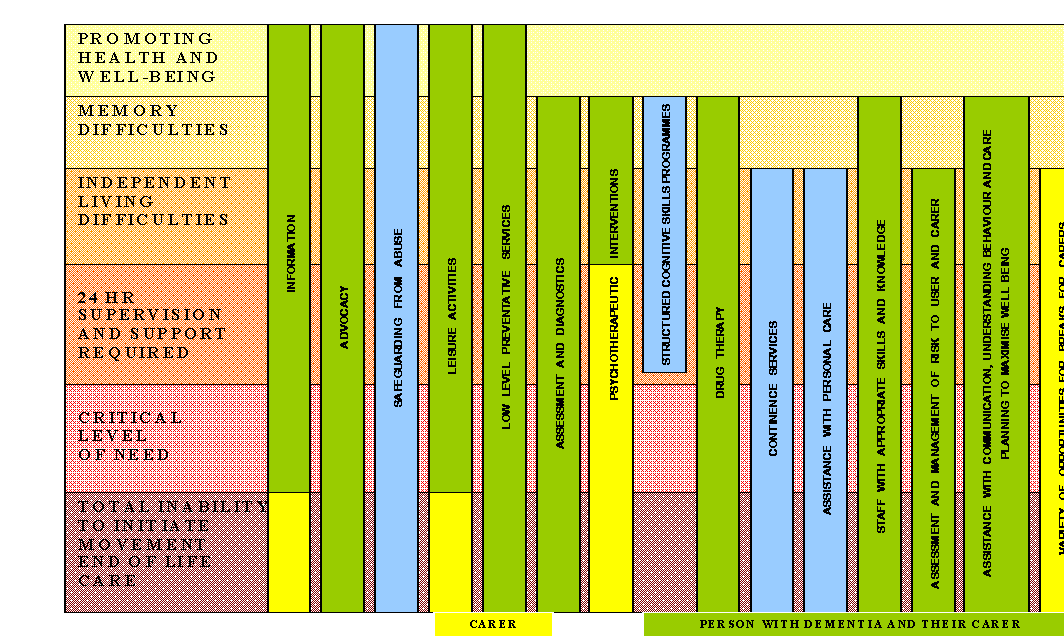
Chapter 3.3
Acute and Community Hospital Experience
The report "Who Cares Wins" states that two-thirds of NHS beds are occupied by people aged 65 years or older4. Up to 60% of general hospital admissions in this age group will have or will develop a mental disorder during their admission. A typical district general hospital with 500 beds will admit 5,000 older people each year and 3,000 will suffer a mental disorder. On average, older people will occupy 330 of these beds at any time and 220 of these will have a mental disorder.
This means that the acute hospital will have at least four times as many older people with mental disorder on its wards as the older people's mental health service has on theirs. Three disorders; depression, dementia and delirium, will account for 80% of this mental disorder co-morbidity, such that, 96 patients will have depression, 102 dementia and 66 delirium.
In Community Hospitals the proportion of service users who are over 65 years and who might potentially have mental health problems would potentially be higher.
The presence of mental health problems increases the risk of admission and is an independent predictor of: -
· Poor experience for both services users and their relatives
· Higher and earlier rates of death
· Increased length of stay
· Loss of independent function
· Increased likelihood of transfer to long-term institutional care4.
A recent audit within Portsmouth Hospitals NHS Trust demonstrated that older people with mental health issues stay in hospital between 2 - 7 days longer than was necessary.
The National Audit Office report "Improving Services and Support for People with Dementia"6 found in one study that effective identification of dementia in patients admitted with fractured neck of femur and more proactive, coordinated management of their care and discharge (provided a suitable discharge destination was available) could release between £64million and £102 million a year in England. If this calculation was applied to Hampshire, this would equate to between £1.7million - £2.8million (note: with caveats about broad comparisons between different health and social care systems).
The same report looked at the impact of dementia on people who fall and fracture their hip. Hip fracture can have devastating consequences, with subsequent increased mortality and loss of independence. For people with dementia the outcomes are generally worse, and the costs to health and social care system are greater. Better integration of psychiatric and general hospital services has the potential to improve outcomes and reduce costs.
Consultations that have taken place in Hampshire as part of the development of this strategy tell us that, although there are some notable examples of good practice around the county, there is significant room for improvement in managing an older person's journey through hospital systems when they have mental health problems alongside physical health problems.
Key issues identified for attention are:
· Limited understanding and commitment to the mental health agenda at Board, professional, ward and individual practitioner level in hospitals
· Hospitals' reactive approach to access and capacity issues can detract from person centred approaches to care and discharge
· Access to opportunities for community-based resources is variable across the county; thus diversion from unnecessary admission and speeding up appropriate discharge is often problematic
· Multiple moves within hospital are shown to extend length of stay, as well as causing undue distress
· Lack of attention and attribution of importance to personal and family knowledge, needs, opinions and perspectives
· Mental health problems are under recognised and under communicated:
o in discussion with patients and their relatives and carers
o within hospital
o to and from primary care.
· Lack of knowledge and confidence of hospital staff in caring for people with mental health problems
· Lack of knowledge by hospital staff of the available community options
· Difficulty in identifying if a person is already known to specialist mental health services
· Limited engagement of specialist mental health clinicians in admission avoidance interventions in Accident and Emergency departments, assessment processes in medical assessment units and wards and discharge planning processes
· Limited understanding of, and engagement with, the specialist mental health services available to hospital staff, patients and relatives
· Variable provision of liaison service from specialist older people's mental health services across the county and time taken for the specialist service to respond.
A work group has been established to support implementation of this strategy and to take some of these issues forward. It has cross county, cross agency and multidisciplinary representation, including voluntary sector and carer representatives. This work group has identified some early priorities around training for staff and development of admission pathway guidelines.
Chapter 4
Analysis of Current Position
This chapter provides a high level assessment of current levels of provision of older people's mental health services across Hampshire. It draws on several sources of work undertaken to date.
There are many providers of health and social care for older people with mental health needs in Hampshire:
· Specialist mental health trusts: Hampshire Partnership NHS Trust and Surrey and Borders Partnership NHS Trust, which covers the populations of north east Hampshire
· District and Borough Councils
· Third sector organisations: charities such as the Alzheimer's Society, Age Concern and MIND
· Private sector providers, such as care homes and domiciliary care agencies
· Hampshire County Council Adult Services
· Hampshire Primary Care Trust - providing primary care and community based care
· General hospitals: Portsmouth Hospitals NHS Trust, Southampton University Hospitals NHS Trust, Winchester and Eastleigh Healthcare NHS Trust, Basingstoke and North Hampshire NHS Foundation Trust, Frimley Park Hospital NHS Foundation Trust.
· Family, friends and other unpaid carers.
In 2006, a mapping exercise of current provision was undertaken with the involvement of Older People's Local Implementation Teams and/or Older People's Mental Health Local Implementation Teams (groups of service providers, users and carers, commissioners, voluntary organisations and other interested parties) - where they were in operation - using the requirements for an integrated mental health services for older people as set out in "Everybody's Business"1. This involved assessing services as Red (none or minimal services), Amber (some provision) and Green (sufficient services to meet current demand) across all geographical areas within Hampshire - see Appendix 3 for the full aggregated Hampshire position.
This analysis provides some broad headlines to indicate where services need strengthening and where we need to inquire further, at both a Hampshire and at a local level. However, the limitations of this exercise need to be noted, as it did not assess either the quality of provision or the outcomes for older people with mental health problems.
Some consistently sufficient levels of provision across Hampshire were identified, for example:
· Acute specialist mental health bed provision
· Day hospitals (except in Basingstoke)
· Locally based community teams
· Primary care disease registers.
This process also identified areas where services were limited, including:
· Crisis response services
· Training and education for providers of general health services and housing staff
· Access to intermediate care services
· A&E diversion schemes
· Provision of talking therapies
· Expert patient programmes
· Dedicated provision for black, minority and ethnic groups
· Services for young onset dementia
· General Hospitals had minimal training and development related to mental health and, where they existed, liaison services were stretched.
Also, users and carers have told us that they find it valuable to gain information in a timely way to help them self-manage their condition or to understand, cope and provide support. The mapping showed inconsistent provision.
The service user and carer engagement work undertaken by the Alzheimer's Society and the input of carers involved with the strategy has provided the following important feedback:
· Some carers reported a loss in service provision, such as day opportunities, or had seen a reduction in services over a number of years
· Individuals with a functional mental illness had noticed a difference in the services available when transferring from working age adult services to older people's services.
· Flexible day opportunities were crucial in providing meaningful activity for the service user and to support the carer, particularly through services provided away from the home
· Support to stay involved with everyday community activities and live as normal a life for as long as possible
· Access by telephone 24 hours a day to help in a crisis situation from people trained in older people's mental health problems
· The importance of adequate access to respite services
· Staff in acute hospitals and home care in particular were seen as lacking in understanding and skills to deal with mental health problems
· The experience of poor communication between all parts of the health and social care system, a lack of timely communication and consultation with the carer and service user and failing continuity of care and follow up
· A lack of information and training for carers, particularly in early intervention
· Concern that a policy to keep people at home and out of hospital needs to be better supported with adequate community based services.
The final report on consultation with older people and their carers is at Appendix 2.
An overall assessment of the strengths in provision of older people's mental health services across the health and social care system and a parallel identification of areas for attention has been drawn from:
· Service user and carer consultation feedback
· Feedback gained from the stakeholder workshops
· Input to the work groups from health and social care staff, voluntary organisations, service users and carers
· The service mapping exercise across Hampshire
· Discussions with health and social care staff as part of the development of this strategy.
Strengths and opportunities within the current system:
· Specialist services are generally well thought of locally, once they are accessed
· There is motivation and willingness across agencies and sectors to work together on tackling older people's mental health issues
· Joint planning is underway
· Users, carers and the voluntary sector are involved in strategic planning
· Other key pieces of work are already under development in Hampshire, for example:
o Older People's Well-being Strategy
o Carers' Strategy
o Extra Care Sheltered Housing strategy
o Primary Care Mental Health Strategy
o End of Life Strategy
o Day Opportunities Strategy
· Telecare services are being developed
· User and carer integrated care standards are being implemented
· Access to some services is available 24/7
· Locally based community teams are in place
· We have some excellent individual services demonstrating innovative practice, for example: Dementia Advice and Support Service in Winchester, Memory Matters courses, the Alzheimer's café in Farnborough, young onset service in Fareham and Gosport, support to care homes in Fareham and Gosport, Rowan Court extra care housing in Eastleigh.
Areas for our attention:
· There is considerable variation of service provision and access across the county in relation to many aspects of care for older people with mental health problems, for example:
o different guidelines and tools are used for initial assessment and referral in primary care and people are receiving variable support in the early stages of their mental health problems
o service user and carer information and ongoing support is patchy and not coordinated, for example: assistance with managing continence and support for carers, both paid and unpaid, about understanding and coping with behaviour that challenges are not always provided
o difficulties in accessing stimulating and meaningful things to do
o crisis services and support is variable; and access to some provision is on the basis of age, rather than need
o older people's psychiatric liaison capacity in general and community hospitals is variable
· Statutory services are tightly targeted and focus on illness and crisis
· Users and carers feel that access to services and choice is reducing
· Joint assessment and care planning is not always well coordinated and information is not always appropriately shared
· Carers highlight difficulties in accessing respite care and say the quality of respite care is not always good
· Psychological therapies are currently provided mainly in secondary specialist mental health inpatient care
· There is under utilisation of acute specialist mental health inpatient beds
· There is limited dedicated provision for young onset dementia
· There is clear evidence that training, development and support for staff caring for older people with mental health needs in all settings is vital and that there is currently no mechanism for strategic planning and co-ordination of training for staff in the needs of older people with mental health problems
· Hampshire Partnerships NHS Trust has found a wide variation in day hospital provision; it is currently not fully utilised, is very geographically based and has the potential to be more therapeutically focused
· There are issues about decisions about an individual's long-term care being taken early in the hospital discharge process and exclusion from some mainstream services which prevent unnecessary admission to hospital and / or facilitate discharge
· Provision for black, minority and ethnic groups is variable and services have been designed historically without significant consideration of BME provision
· There is significant scope to use new technology in increase the independence of people with dementia; current levels of provision are minimal
· There is a general lack of knowledge about what services are available across all settings
· Organisational boundaries can limit the ability to work together.
Chapter 5
Commissioning Intentions: What We Are Trying To Achieve
This is a five-year plan that enables health and social care commissioners to respond to local demographic challenges and the information gathered as part of this exercise and that will deliver improvements to services over the period 2008 to 2013.
5.1 Hampshire Primary Care Trust and Hampshire County Council Adult Services' commissioning intentions
We will work towards commissioning within available resources:
_ Needs led care pathways for dementia and functional mental illness (developed as part of this strategy), which will:
o describe clear outcomes for older people with mental health needs
o inform Hampshire Primary Care Trust's Local Delivery Plan for 2008/2009 (and subsequent years) and budget setting for Adult Services.
_ An integrated service between working age and older people's mental health services for older people with functional mental health needs that is responsive and enables choice for individuals - see Appendix 5 for broad service specification for specialist services.
_ A map of the total resources (Hampshire Primary Care Trust and Hampshire County Council Adult Services) currently spend on older people's mental health and social care services in Hampshire, including for example: specialist mental health services, continuing care, voluntary sector services, social care. This will identify the total envelope of funds to support a modernisation programme, showing where there is any duplication or gaps and enabling maximisation of available resources. As part of this work, Hampshire Primary Care Trust and Hampshire County Council Adult Services will undertake a review of grants to voluntary organisations.
_ A "Balance of Care" project across Hampshire to identify the costs of unnecessary bed usage in acute and community hospitals, specialist mental health inpatient services, residential and nursing homes and to identify appropriate alternatives to hospital for people with dementia; this will provide a platform for planning services across the whole health and social care system.
_ Providers to undertake modernisation programmes to deliver services that implement the needs led care pathways that deliver the commissioning aims set out on page 10 within existing resources. This will involve review and redesign of:
o specialist and generic provision
o working age and older people's functional mental illness health provision
o the balance between inpatient capacity and access to community based and universal well-being services - in particular a focus on prevention and early diagnosis.
_ Improvements to services to be delivered over the short, medium and longer term period of the strategy.
How we will commission:
_ We will focus on preventative and community based services that promote independence in the early years of this strategy. All investment plans will be balanced with a disinvestment plan to demonstrate affordability within the available resources and the links between business cases will be demonstrated.
_ Where significant redesign of services is required, this will be subject to the usual scrutiny and public consultation processes.
_ Service level agreements will be agreed with NHS trusts and any future Foundation Trusts and with health and social care providers that set out the modernisation programme and describe service specifications based on the needs led care pathways, with identified outcomes and standards - see Appendix 4 for proposed performance indicators.
_ Hampshire Primary Care Trust and Hampshire County Council will review the funding position, should it be indicated that additional resource is required in the future.
_ We would wish to work alongside practice based commissioning groups.
_ We will proactively pursue opportunities for attracting further grants/resources to support older people's mental health services, such as any future Partnerships for Older People's Projects or similar funding and access to funding for the voluntary sector.
_ We will consider the implications of this strategy for market management and will proactively engage with the voluntary sector as a key player within the market.
5.2 Resources:
The comprehensive spending review in October 2007 announced:
· For the NHS - growth of 3% above inflation per year for the next 3 years and 3% efficiency savings per year
· For Local Authorities - growth of 1% above inflation for the next 3 years and 3% efficiency savings per year.
We assess that this growth in funds would be consumed by the increase in demand for older people's mental health and social care in Hampshire if we do nothing. The challenge for Hampshire Primary Care Trust and Hampshire County Council Adult Services is to manage our current investment and resources to maximise opportunities for older people's mental health.
We have assessed the current level of resources spent on older people's mental health services by Hampshire Primary Care Trust and Hampshire County Council Adult Services - see table below. This is an under-estimate and does not reflect all the associated costs linked to the care needs of older people with mental health problems, particularly in hospital where an individual may be treated for another illness.
Table: Expenditure on older people's mental health services:
£000 |
Assumptions | |
Hampshire PCT |
28,851 |
Includes only specialist mental health providers, continuing NHS healthcare and joint finance budgets for 2007/08. Excludes acute and community/primary care spend. |
HCC Adult Services |
51, 747 |
Based on 2006/07 budgets, net of income and excluding management and support overheads and assumption that 50% of the older people's budget is spent on clients with mental health needs. |
Further information about resources is provided in Appendix 1 - Needs Analysis and Data Set.
5.3 Early commissioning priorities for Hampshire Primary Care Trust and Hampshire County Council
These are described in relation to the needs led care pathways for dementia and functional mental illness and they respond to the identified gaps in current provision. The aim is to provide a modern, evidenced based, integrated service that will meet current and future need within available resources. Delivery will be based on national policy and services will implement the agreed needs led care pathways for dementia and functional mental health needs, promoting person-centred care and choice and enabling independence.
Four key strategic priorities underpin these early commissioning intentions:
1. Supporting carers - so that they are enabled to provide care and support and are actively involved in planning care for the older person with mental health problems.
2. Prevention and access to universal well-being services - so that individuals can maintain their independence and live as "normal" a life as possible for as long as possible.
3. Balancing specialist and generic services - through skilling up mainstream staff, removing barriers to services and gaining clarity on the respective roles and functions of specialist mental health and mainstream services, so that the majority of mild and moderate severity mental health needs can be managed in mainstream settings
4. Pathways in and out of hospital - so unnecessary admissions are avoided and the older person with mental health problems receives timely and appropriate care in response to their individual needs while in hospital and the focus is on maintaining independence on discharge.
To help prevent escalating levels of need in the early parts of the care pathways, early developments will focus on:
· Working alongside partners to support older people with mental health needs and their carers in the community
· Promoting awareness amongst the general public, particularly about dementia and depression in old age and messages about maintaining good health, to assist in developing a more inclusive approach
· Making sure we enable people to live in their own homes and limiting the impact of crises that result in emergency admissions to hospital.
We will monitor our progress and reassess these early priorities as the strategy develops over the period 2008 - 2013.
The following overview of proposed early commissioning intentions are described in relation to the needs led care pathways for dementia and functional mental illness.
5.3.1 Phase/Level 1 - Promoting health and well-being
Well-being
The Hampshire County Council corporate Older People's Well-being Strategy will support delivery of the care pathways for dementia and functional mental illness around the strategy's seven domains of independence:
o housing and the home
o neighbourhood
o social activities/networks
o getting out and about
o income
o information
o health and healthy living,
all of which are aimed at reducing isolation.
The Hampshire County Council Adult Services and Trading Standards joint initiative - Protecting Older People - will continue, which is aimed at preventing doorstep crime for older people and the potential for subsequent mental health decline.
The Hampshire Well-being Strategy is being produced and local well-being plans developed in a number of areas around the county. Specific programmes such as the older person's area link worker project and the gardening strategy are underway.
The well-being programmes will continue to expand from 2008/09 to support older people's mental health.
Public awareness
We will seek to promote awareness amongst the general public and professionals in all settings about dementia and depression in old age. The intention of the national dementia strategy, due to be published in summer 2008, is to:
- develop better understanding
- ensure information is provided
- tackle stigma and misunderstanding.
We will build on the higher profile gained through consultation on this strategy to assess current activities, information campaigns, training and education available and develop a local plan.
Falls prevention
Older people with mental health needs will be targeted within falls prevention work.
We will be reviewing falls services across Hampshire and will include older people's mental health within the scope of this work.
5.3.2 Phase/Level 2 - difficulties with memory, reasoning or perception
Primary Care. Recognition, assessment and management of early memory difficulties and mild mental health problems
Primary care and community health services
GPs will be supported to:
- recognise and refer for a timely, early diagnosis of dementia using referral guidelines and access to specialist mental health advice
- diagnose and manage mild mental health problems.
The current guidelines and pathways for referral and initial assessment will be reviewed jointly between mainstream and specialist mental health clinicians, so that trigger symptoms can be consistently recognised and community-based support resources can be more easily accessed.
We will assess practice registers and protocols for dementia and depression against known prevalence and defined good practice guidelines.
We will work towards developing clinical reference groups across primary and community care, acute and specialist mental health services to facilitate learning and implementation.
Information and support
We will develop consistent support and information about dementia and functional mental health problems and services for service users, carers, primary care teams and community mental health teams. Currently there are different service models around the county and the aim is to learn from what works well and maintain locally appropriate services. This will link with the Hampshire Carers' Strategy, which will enable further work on information resources, and support for carers will be progressed.
With the support of the Care Services Improvement Partnership and the Carers' Stakeholder Group we will work closely with carers, users and the voluntary sector to develop specific information resources about available community based support.
The Carer's Strategy will continue to be taken forward to develop and provide a range of accessible information for carers, including the development of local directories, using the national service mapping information and other identified priorities.
The contact centre for all social care referrals will be established, which will provide a one-stop shop for advice and information.
Day opportunities
For this part of the pathway, people will be encouraged and enabled to continue accessing and pursuing universal services for their usual activities and hobbies, for example: the local choir, gardening clubs, the Women's Institute.
Primary care mental health strategy
Primary care plays an important part in the delivery of mental health care and is where the majority of mental health problems are managed. 90% of people with a mental health problem are cared for entirely by the primary care team and 40% of people who see their GP have a mental health problem13
A joint Hampshire Primary Care Trust and Hampshire County Council primary care mental health strategy is being developed with support from the Care Services Improvement Partnership. The strategy aims to enable the primary and community care team to provide improved support for those with mild to moderate mental illness, providing assessment and therapeutic interventions to individuals in a primary care setting through:
· Information and advice
· Assessment
· Care planning
· Evidence based psychological interventions
· Onward referral to specialist mental health services
· Liaison work with other providers.
Expert Patient Programme
We will explore extension of the Expert Patient Programme to cover older people with mental health problems and linked to Memory Matters courses.
Training
There will be a partnership approach to prioritising and developing training programmes that provide a basic understanding of mental illness, both functional and dementia. This will support individuals to remain in their chosen environment as long as possible, achieve an optimum quality of life and reduce the need for high levels of specialist secondary support. Opportunities to link training programmes with access to and provision of formal courses, such as relevant NVQs, will be explored.
We will work towards developing a broad training strategy for health, social care, voluntary and independent sectors to support all phases of dementia and functional mental illness pathways, linking with the Sector Skills Councils.
For those over the age of 65 years, the skill set of staff may be significantly different from those working with adults of working age. This is likely to include skills around working with people exhibiting a mixed pathology of depression and dementia, physical illness and physical frailty. Careful and creative thinking about the best match of staff skills, service user compatibility and physical environment is of the utmost importance14.
We will look to establish the necessary leadership and processes to develop a broad training strategy for health, social care, voluntary and independent sectors and initial priorities for action.
We will explore opportunities for partnership development in training, for example with Housing.
Telecare
Telecare can be defined as a range of detectors and monitors, which are usually connected to a community alarm response centre. The most well known is the pendant alarm but there are many others, including falls detectors and bed sensors.
Telecare can be used in a variety of ways to help improve confidence and minimise risk. It can also provide peace of mind to carers and family members.
Telecare can help older people with mental health difficulties to remain living independently in their own home. For instance, gas detectors and flood sensors can help if the older person is becoming forgetful. The "Just Checking" portable sensor system can help build up a picture of the patterns of daily life of an older person with dementia living alone. Door sensors can let a carer know when a person with dementia has left the house. Other sensors can reduce the sense of isolation that may contribute to an older person feeling depressed.
Hampshire County Council currently contracts with organisations on a district council area basis to provide Telecare equipment.
We will jointly look at ways that Telecare can help keep people in the community. In 2007/08 the service is working to achieve the target of 750 new users. In 2008/09 there is a target for 1500 new Telecare users.
Memory services
We will work towards developing a specification for memory services to provide: early diagnosis, specialist assessment, information and support, memory matters that will be available in all areas.
Equality impact assessments
Equality impact assessments will be undertaken on existing and any new services to ensure that there is an appropriate assessment of black, minority and ethnic groups' requirements. We will work with the focused implementation site project in Hampshire and the introduction of Community Development Workers across the county. Where indicated, facilities for dedicated provision will be put in place.
We will review the role of the Community Development Workers being appointed across Hampshire to include older people with mental health problems from black, minority and ethnic groups.
5.3.3. Phase/Level 3 - Supporting people with independent living difficulties; moderate or severe mental health problems
Reducing barriers to access to specialist mental health services and generic older people's services
We will seek to promote equity of access, based on individual and population needs and based on the best available evidence of effectiveness, to the whole range of mental health services across working age and older people's services for people with a functional mental illness. This is also an integral element of the strategies for working age mental health services and primary care mental health that are both being developed.
Our aim is that all current generic older people's community support services will be accessible for individuals with mental health problems (includes short-term crisis prevention, intermediate care, reablement and rehabilitation services), based on individual and population needs and based on the best available evidence of effectiveness. This work will be informed by the findings of the "Balance of Care" project.
Crisis services and emergency responses
We will seek to develop a service specification and plan with providers that works towards enabling access to current working age adult specialist mental health and social care crisis response services for older people with functional mental illness and access to primary care and social care crisis response services for older people with dementia.
We will work with our partners (out of hours services, NHS Direct and ambulance services) to develop an emergency care pathway for older people with mental health problems.
Medicines Management
We would wish to support older people with mental health problems and their carers in understanding and taking their medication through:
- Pharmacist input to discharge planning and in-depth medication review where indicated
- Community pharmacists' medicines use reviews.
We would wish to promote good prescribing practice for dementia and depression in old age in all settings, looking at care pathways and shared care agreements between primary care and specialist mental health services.
We will explore opportunities for community pharmacists' medicines use reviews to identify and support older people with mental health needs and their carers.
We will review implementation of National Institute for Health and Clinical Excellence guidance (both technology appraisals and clinical guidelines for depression, anxiety and dementia) across Hampshire and develop methods to monitor and audit their implementation.
Community Innovations Teams
The Community Innovations Teams model will be further developed providing:
- early identification of the vulnerable population in the community
- assessment and sign-posting to supporting community and voluntary interventions
- help to link with these interventions
- integrated working between health and social care
- community capacity building using an Invest-to-Save Grant received from the Treasury.
The Innovations Team work is to be thoroughly evaluated, looking at:
- improvements in well-being (using a measure developed by the New Economics Foundation)
- reductions in use of emergency and other services.
Existing teams will be expanded from 2008 to include Community Development Workers, who will be employed by local Councils for Voluntary Services using the Invest-to-Save grant. Any future roll-out of the approach will depend on the findings from the development phase.
Psychiatric liaison services in acute and community hospitals
There is evidence supporting the value of liaison services.
We will aim to develop a service specification for delivering psychiatric liaison in both acute and community hospitals (in Accident and Emergency, medical assessment units and on the wards), working on:
· appropriate admissions
· assessment
· discharge planning processes
· staff training.
We will further develop the existing acute and community hospital work group that informed the development of this commissioning strategy and establish a Hampshire wide network that supports shared learning, delivery of good practice and implementation of service improvements.
Discharge from hospital
Hampshire County Council and Hampshire Primary Care Trust are currently reviewing hospital discharge pathways in light of developments in the health service that facilitate shorter lengths of stay, as it is thought that this has resulted in decisions about an individual's long-term care being taken earlier in the patient pathway, which has led to an unnecessary rise in the number of patients being admitted to long-term care directly from hospital.
Hampshire Adult Services and Hampshire Primary Care Trust will work with their NHS partners to review the discharge pathway for older people with mental health problems, including options for longer periods of assessment, recovery and rehabilitation that allow the individual and their family and carers to make timely and informed decisions about future long-term care.
Care in nursing and residential homes
We will maximise opportunities in the current training programme for staff in private and voluntary sector domiciliary, residential and nursing homes to learn about the care of older people with mental health problems.
From the mapping work and pilot work that has been undertaken across Hampshire, we will need to review what additional support nursing and care homes may need.
5.3.4 Phase/level 4 - 24hr supervision and support for dementia; treatment-resistant, recurrent, atypical and psychotic depression, unstable psychosis and those at significant risk
Day opportunities
As part of the Hampshire strategy for day opportunities, we will develop a specification for day opportunities specifically targeted at specialist dementia care.
Day hospitals
Day hospital provision within Hampshire Partnership NHS Trust will be remodelled to maximise linkages with memory assessment and treatment services and improve the therapeutic basis with clear outcome based programmes. The aim is to provide services close to the individual's home, enable access to other social care services where needed and be responsive to an individual's changing needs. Work with the voluntary sector will provide part of the support systems that people will need and information and teaching will be core elements of future provision.
Respite services
We are committed to the provision of a range of quality, flexible and locally based respite services that offer real support to individuals in the community. We will continue to listen to user views and build an appropriate range of support to meet needs. This may include a range of support including residential respite, day opportunities and also respite in the individual's own home.
We will develop a flexible specification for new emergency respite services linked to the Hampshire Carers' Strategy work, which also includes the review of current respite availability and service models and will identify options for the future. Funds made available under the New Deal for Carers for emergency respite will be overseen by the Hampshire Carers' Strategy. The early thinking is to focus on out of hours respite services.
Health and social care working in primary care
Integration of specialist mental health care services with primary care and social care services will be key to early detection and treatment to prevent rapid deterioration and maintain independence.
We will develop a service specification to define the social care team deliverables for older people with mental health problems through:
1. a generic social care rapid response function via a single point of access; this will include access to specialist expertise as required at the earliest point of contact
2. community social care support teams working with generic primary care teams and health care specialists who support long term conditions, including older people's specialist mental health teams.
We will commission integrated working between specialist mental health and community social care teams for:
- functional mental illness
- dementia.
All areas will meet the agreed standards for integrated working between social care and specialist mental health services - see Appendix 4. We will further develop integrated specialist and social care working by developing joint assessment processes. The pilot sites for integrated social care and specialist mental health working will continue to be introduced through a staged approach, initially in two sites: New Forest and Andover.
A job specification for a Consultant Social Worker role has been developed and we will further consider the development of this role in older people's mental health services.
Extra Care Sheltered housing
We will commission a service specification for Extra Care Sheltered housing that will provide affordable social housing for older people, including those with mental health needs. The Extra Care Sheltered housing strategy aims to deliver 400 new apartments over the next 5 years.
Generic criteria for Extra Care Sheltered housing:
- the building is fully accessible
- 24 hour care is available.
In partnership with colleagues in district councils and the Housing Corporation, we will commission a new generation of housing care and support services for older people that will be appropriate for older people with mental health needs. The first four new build Extra care schemes will be in Gosport, Basingstoke, Calmore and Test Valley and the apartments will open from 2009/10 onwards.
Self directed support
Hampshire County Council has, along with nine other local authorities in the country, been chosen as an "In Control" site. In Control's vision is that Self Directed Support will change the organisation of social care in England, so that people who need support can take more control of their own lives and fulfill their role as full citizens: the complete transformation of social care into a system of Self-Directed Support.
We are currently developing a project plan which will detail how Self Directed Support will be implemented across Hampshire. We are consulting with a wide range of service user groups and service providers on how we take account of stakeholders' views when implementing Self Directed Support in Hampshire.
Self Directed Support will mean more varied and flexible responses to meet an individual's care and support needs. This will increasingly be the case for older people with mental health needs and their carers, as we look to implement Self Directed Support across Hampshire.
5.3.5 Phase 5/level 5 critical level of need; risk to life/severe self neglect
Care at end of life
We will make sure that older people with mental health problems are included in the work of the Care at End of Life Hampshire Health Overview and Scrutiny Committee Review Project. Care plans for older people with mental health problems at the end of life will be available to out of hours services to avoid unnecessary hospital admissions.
A national strategy on end of life care is due shortly and is expected to include specific reference to end of life care for people with dementia.
5.3.6 Further areas for development
There are several key areas that we will look to work on as the strategy develops, including:
· Generic advocacy services (i.e. not only the Independent Mental Capacity Advocacy service)
· Review of the Hampshire Care Homes Strategy for People with Dementia
· Workforce issues
Chapter 7
Governance Arrangements
Hampshire County Council Adult Services and Hampshire Primary Care Trust are committed to working together to commission older people's mental health services.
Further discussions will be necessary regarding the governance arrangements to support implementation of this strategy, to ensure that they are robust and aligned with other whole system planning and emerging joint governance processes. In the meantime, the multi-agency Steering Group will continue to oversee development of this strategy and will progress these commissioning intentions.
The Steering Group has representation from Hampshire County Council Adult Services, Hampshire Primary Care Trust, Hampshire Partnerships NHS Trust, Surrey and Borders NHS Partnership Trust and the Alzheimer's Society. The Steering group will meet regularly and report to the Management Board of Hampshire Primary Care Trust and Adult Services Departmental Management Team.
As partners to this strategy, both Hampshire Primary Care Trust and Hampshire Adult Services will be responsible for implementation and delivery of this strategy. We will jointly monitor outcomes and standards for services using agreed measures of performance. Performance indicators that reflect the phases and levels of the care pathways for dementia and functional mental illness are proposed - see Appendix 4 - and these will be reviewed in light of any changes in the national performance management framework.
Acute Trusts/Foundation Trusts and Primary Care Trust Care Services are invited to join the Acute and Community Hospital Experience Work Group, which will support implementation of this strategy and which reports to the Steering Group.
Chapter 8
Summary Table of Proposed Early Priorities
Strategic Priority |
Proposed Actions |
Responsible organisation |
Work to commence |
1. Supporting carers - so that so that they themselves are enabled to provide care and support and are actively involved in planning care for the older person with mental health problems. |
With the support of the Carers' Stakeholder Group and the Care Services Improvement Partnership, we will work closely with carers, users and the voluntary sector to develop specific information resources about available community based support. |
HCCAS and HPCT |
2008/09 |
The contact centre for all social care referrals will be established, which will provide a one-stop shop for advice and information. |
HCCAS |
2008/09 | |
We will develop a flexible specification for new emergency respite services linked to the Hampshire Carers' Strategy work, which also includes the review of current respite availability and service models and will identify options for the future. |
HCCAS |
2008/09 | |
We will aim to support older people with mental health problems and their carers to understand and take their medication. |
HPCT |
2008/09 |
Key: HCCAS - Hampshire County Council Adult Services, HPCT - Hampshire Primary Care Trust
2. Prevention and access to universal well-being services - so that individuals can maintain their independence and live as "normal" a life as possible for as long as possible. |
The Hampshire Older People's Well-being Strategy is being produced and local well-being plans developed in a number of areas around the county. Specific programmes such as the older person's area link worker project and the gardening strategy are underway. The well-being programmes will continue to expand to support older people's mental health. |
Hampshire County Council |
2007/08 |
People will be encouraged and enabled to continue accessing and pursuing universal services for their usual activities and hobbies, for example, the local choir, gardening clubs, the Women's Institute. |
HCCAS |
2008/09 | |
The Community Innovations Teams will be expanded to include Community Development Workers, who will be employed by local Councils for Voluntary Services using the Invest-to-Save grant. |
HCCAS |
2008/09 | |
In partnership with colleagues in district councils and the Housing Corporation, Hampshire County Council will commission a new generation of housing care and support services for older people that will be appropriate for older people with mental health needs. The first four schemes are already being planned. |
HCCAS |
2008/09 | |
We will seek to promote awareness amongst the general public and professionals in all settings about dementia and depression in old age and messages about maintaining good health. We will build on the higher profile gained through consultation on this strategy to assess current activities, information campaigns, training and education available and develop a local plan. |
HCCAS and HPCT |
2008/09 | |
Hampshire County Council has been chosen, along with nine other local authorities in the country, to take part in a project to determine how people who need support can take more control of their own lives and how their care and support needs can be responded to in more varied and flexible ways. This is called Self-Directed Support. We are currently working together with others, such as service users and service providers, to develop a project plan that will detail how Self-Directed Support will be implemented across Hampshire. |
HCCASD |
2007 onwards |
Key: HCCAS - Hampshire County Council Adult Services, HPCT - Hampshire Primary Care Trust
3. Balancing specialist and generic services - through skilling up mainstream staff, removing barriers to services and gaining clarity on the respective roles and functions of specialist mental health and mainstream services, so that the majority of mild and moderate severity mental health needs can be managed in mainstream settings.
|
A joint Hampshire Primary Care Trust and Hampshire County Council primary care mental health strategy is being developed, which aims to enable the primary and community care team to provide improved support for those with mild to moderate mental illness. |
HPCT and HCCAS |
2007/08 |
The current guidelines and pathways for referral and initial assessment will be reviewed jointly between GPs and specialist mental health clinicians, so that trigger symptoms can be consistently recognised and community-based support resources can be more easily accessed via primary care. |
HPCT |
2008/09 | |
We will work towards developing a specification for memory services to provide: early diagnosis, specialist assessment, information and support, memory matters that will be available in all areas. Day hospital provision within Hampshire Partnership NHS Trust will be remodelled to maximise linkages with memory assessment and treatment services and improve the therapeutic basis with clear outcome based programmes. |
HPCT |
2007/08 - Day Hospitals | |
As part of the Hampshire strategy for day opportunities, we will develop a specification for day opportunities specifically targeted at specialist dementia care. |
HCCAS |
2008/09 | |
We will work towards developing a broad training strategy for health, social care, voluntary and independent sectors to support all phases of dementia and functional mental illness pathways, linking with the Sector Skills Councils. |
HCCAS and HPCT |
2008/09 | |
We will develop a service specification to define the social care team deliverables for older people with mental health problems through: · a generic social care rapid response function via a single point of access · community social care support teams working with generic primary care teams and specialists who support long term conditions, including specialist older people's mental health teams. The pilot sites for integrated social care and specialist mental health working will continue to be introduced, initially through a staged approach in two sites: New Forest and Andover. |
HCC |
2008/09 | |
We will seek to promote equity of access based on individual and population needs and based on the best available evidence of effectiveness to: - the whole range of mental health services across working age and older people's services for people with a functional mental illness - all current generic older people's community support services. |
HPCT and HCCAS |
2008/09 | |
We will make sure that older people with mental health needs are included in the work of the Care at the End of Life Hampshire Health Overview and Scrutiny Committee Review Project. Care plans for older people with mental health problems at the end of life will be available to out of hours services to avoid unnecessary hospital admissions. |
HPCT and HCCASD |
2007/08 |
4. Pathways in and out of hospital - so unnecessary admissions are avoided and the older person with mental health problems receives timely and appropriate care in response to their individual needs while in hospital and the focus is on maintaining independence on discharge. |
Working with our NHS partners, we will review the discharge pathway for older people with mental health problems, including options for longer periods of assessment, recovery and rehabilitation that allow the individual and their family and carers to make timely and informed decisions about future long-term care. The aim will be to reduce the length of stay in hospital and strengthen links between primary care and acute and community hospitals. |
HCCAS and HPCT |
2007/08 |
We will aim to develop a service specification for psychiatric liaison working in acute and community hospitals, based on good practice, which will reflect the needs led care pathways and address the identified key areas for attention. |
HPCT |
2008/09 | |
We will undertake a "Balance of Care" project approach across Hampshire to identify the costs of unnecessary bed usage in acute and community hospitals, residential and nursing homes and to identify appropriate alternatives to hospital for people with dementia. |
HCCAS and HPCT |
2008/09 | |
Telecare can help older people with mental health difficulties to remain living independently in their own home and can be used in a variety of ways to help improve confidence and minimise risk. It can also provide peace of mind to carers and family members. We will jointly look at ways that Telecare can help keep people in the community. |
HCCAS and HPCT |
2007/08 | |
We will seek to develop a specification and plan for crisis response with providers that works towards enabling: - access to current working age adult health and social care crisis services for older people with functional mental illness - access to primary care and social care crisis response services for people with dementia. We will work with our partners (out of hours services, NHS Direct and ambulance services) to develop an emergency care pathway for older people with mental health problems |
HCCAS and HPCT |
2008/09 | |
We will be reviewing falls services across Hampshire and will include older people's mental health within the scope of this work. |
HPCT and HCCAS |
2008/09 |
Key: HCCAS - Hampshire County Council Adult Services, HPCT - Hampshire Primary Care Trust
5. Mechanisms to enable organisations and individuals to work together towards shared goals - so that shared governance arrangements support delivery of the joint strategy |
We will establish a joint implementation group to oversee and take forward our commissioning intentions. |
HCCAS and HPCT |
2007/08 |
We will map the total joint resources for older people's mental health to identify the envelope of funds and enable maximisation of available resources through identification of gaps and areas of duplication or inefficiency. |
HCCAS and HPCT |
2007/08 | |
Jointly monitor outcomes and standards for services using agreed measures of performance, which reflect the phases and levels of the care pathways and which will be kept under review. |
HCCAS and HPCT |
2008/09 |
Key: HCCAS - Hampshire County Council Adult Services, HPCT - Hampshire Primary Care Trust
Hampshire Primary Care Trust
and
Hampshire County Council
Joint Hampshire Commissioning Strategy for
Older People's Mental Health
2008 - 2013
NEEDS ANALYSIS
AND
DATA SET
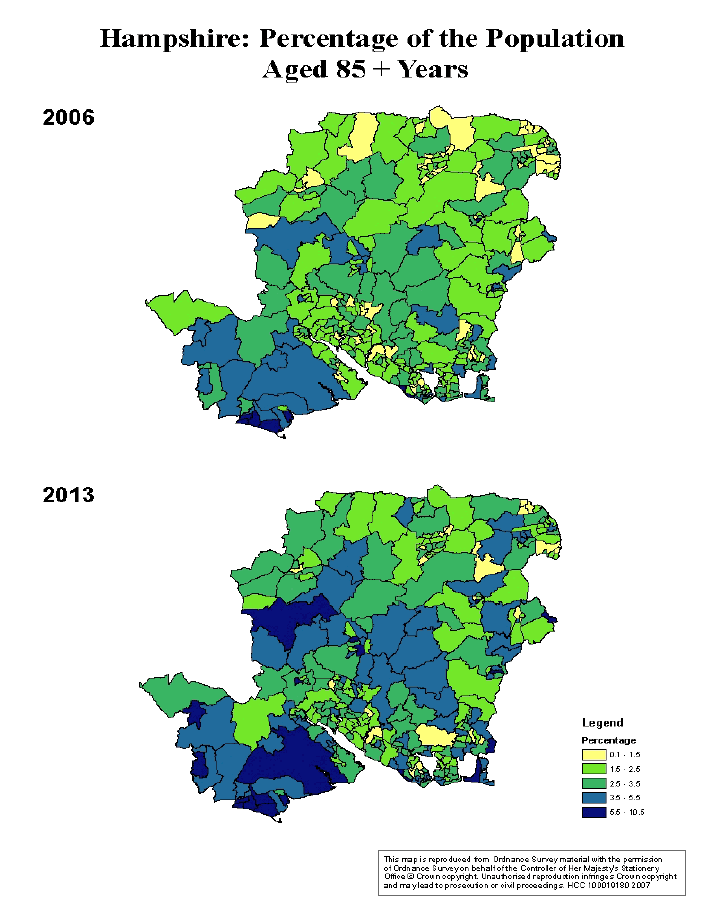
Index
Index and Introduction 3
Section One
Population Trends 4
Section Two
Prevalence Trends 17
Section Three
Carers 25
Health Services 26
Hampshire County Council Adult Services 29
Introduction
The purpose of this paper is to provide information on needs to inform the Older People's Mental Health Strategy by:
· Detailing previous, current and future over 65 years population numbers and identifying trends at a local level within the County
· Estimating the number of people aged over 65 years who will have a mental health problem
· Detailing some services currently provided by Hampshire Partnership NHS Trust, Surrey and Borders and Hampshire County Council Adult Services for older people with mental health problems
Section One
Population Trends - Older People
Table 1: Hampshire County Population 65+ 2001 - 2007 | ||||
|
2001 |
2007 |
Increase no. |
Increase % |
65 - 69 |
55663 |
58305 |
2642 |
5 |
70 - 79 |
91577 |
95583 |
4006 |
4 |
80 and over |
53892 |
66865 |
12973 |
24 |
Total |
201132 |
220753 |
19621 |
10 |
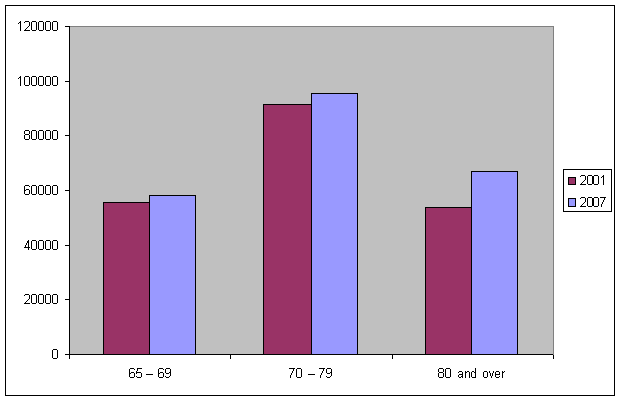
From 2001 to 2007 the fastest growing older age group was 80 years+ at 24%.
Table 2: Area Population 65+ 2001 - 2007 |
||||
|
2001 |
2007 |
Increase no. |
Increase % |
Basingstoke and Deane |
18986 |
22075 |
3089 |
16 |
East Hampshire |
17321 |
18667 |
1346 |
8 |
Eastleigh |
17185 |
18733 |
1548 |
9 |
Fareham |
18799 |
20722 |
1923 |
10 |
Gosport |
12370 |
13472 |
1102 |
9 |
Hart |
10636 |
12857 |
2221 |
21 |
Havant |
22112 |
23304 |
1192 |
5 |
New Forest |
38287 |
40812 |
2525 |
7 |
Rushmoor |
10546 |
11664 |
1118 |
11 |
Test Valley |
16489 |
18155 |
1666 |
10 |
Winchester |
18401 |
20292 |
1891 |
10 |
TOTAL |
201132 |
220753 |
19621 |
10 |
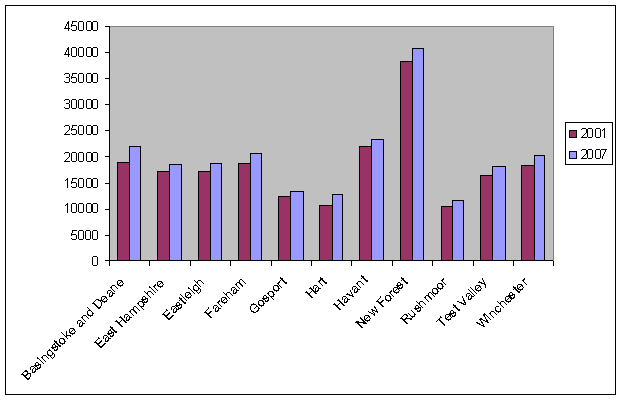
The area with the highest increase in 65 years+ population between 2001 - 2007 was Hart at 21%.
Table 3: Age 65-69 Area Population 2001 - 2007 |
||||
|
2001 |
2007 |
Increase no. |
Increase % |
Basingstoke and Deane |
5715 |
6343 |
628 |
11 |
East Hampshire |
4780 |
5107 |
327 |
7 |
Eastleigh |
4707 |
5161 |
454 |
10 |
Fareham |
5449 |
5513 |
64 |
1 |
Gosport |
3436 |
3413 |
-23 |
-1 |
Hart |
3263 |
3799 |
536 |
16 |
Havant |
6309 |
6133 |
-176 |
-3 |
New Forest |
9533 |
9555 |
22 |
0 |
Rushmoor |
2984 |
3176 |
192 |
6 |
Test Valley |
4643 |
4980 |
337 |
7 |
Winchester |
4844 |
5125 |
281 |
6 |
TOTAL |
55663 |
58305 |
2642 |
5 |
Table 4: Age 70-79 Area Population 2001 - 2007 | ||||
|
2001 |
2007 |
Increase no. |
Increase % |
Basingstoke and Deane |
8644 |
9598 |
954 |
11 |
East Hampshire |
7698 |
7848 |
150 |
2 |
Eastleigh |
8026 |
8166 |
140 |
2 |
Fareham |
8579 |
9116 |
537 |
6 |
Gosport |
5610 |
6068 |
458 |
8 |
Hart |
4681 |
5312 |
631 |
13 |
Havant |
10407 |
10608 |
201 |
2 |
New Forest |
17611 |
17525 |
-86 |
0 |
Rushmoor |
4797 |
4995 |
198 |
4 |
Test Valley |
7352 |
7791 |
439 |
6 |
Winchester |
8172 |
8556 |
384 |
5 |
TOTAL |
91577 |
95583 |
4006 |
4 |
Table 5: Age 80+ Area Population 2001 - 2007 | ||||
|
2001 |
2007 |
Increase no. |
Increase % |
Basingstoke and Deane |
4627 |
6134 |
1507 |
33 |
East Hampshire |
4843 |
5712 |
869 |
18 |
Eastleigh |
4452 |
5406 |
954 |
21 |
Fareham |
4771 |
6093 |
1322 |
28 |
Gosport |
3324 |
3991 |
667 |
20 |
Hart |
2692 |
3746 |
1054 |
39 |
Havant |
5396 |
6563 |
1167 |
22 |
New Forest |
11143 |
13732 |
2589 |
23 |
Rushmoor |
2765 |
3493 |
728 |
26 |
Test Valley |
4494 |
5384 |
890 |
20 |
Winchester |
5385 |
6611 |
1226 |
23 |
TOTAL |
53892 |
66865 |
12973 |
24 |
Population Projections - Older people
Table 6: Hampshire County Population 65+ 2007 - 2013 | ||||
|
2007 |
2013 |
Increase no. |
Increase % |
65 - 69 |
58305 |
76061 |
17756 |
30 |
70 - 79 |
95583 |
102574 |
6991 |
7 |
80 and over |
66865 |
77983 |
11118 |
17 |
Total |
220753 |
256618 |
35865 |
16 |
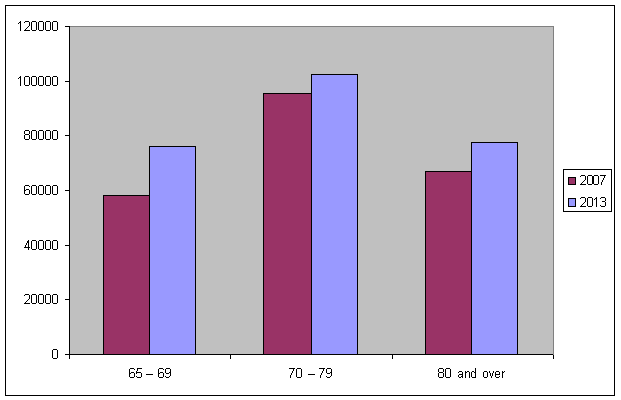
The fastest growing older age group between 2007 - 2013 will be the 65 - 69 year olds (the post-war baby boom).
Table 7: Area Population 65+ 2007 - 2013 | ||||
|
2007 |
2013 |
Increase no. |
Increase % |
Basingstoke and Deane |
22075 |
27962 |
5887 |
27 |
East Hampshire |
18667 |
21639 |
2972 |
16 |
Eastleigh |
18733 |
21542 |
2809 |
15 |
Fareham |
20722 |
24039 |
3317 |
16 |
Gosport |
13472 |
15099 |
1627 |
12 |
Hart |
12857 |
15464 |
2607 |
20 |
Havant |
23304 |
26166 |
2862 |
12 |
New Forest |
40812 |
45501 |
4689 |
11 |
Rushmoor |
11664 |
13746 |
2082 |
18 |
Test Valley |
18155 |
21424 |
3269 |
18 |
Winchester |
20292 |
24036 |
3744 |
18 |
TOTAL |
220753 |
256618 |
35865 |
16 |
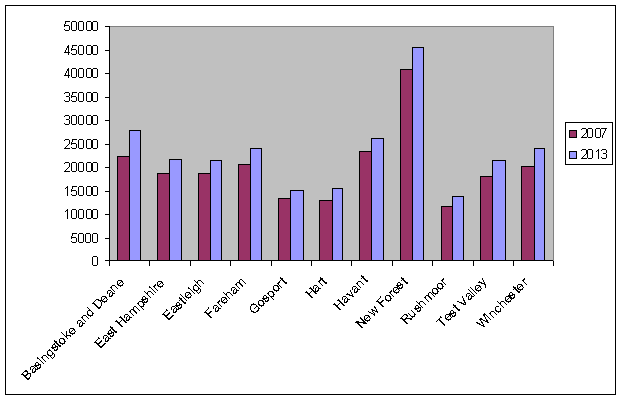
The area with the greatest rate of increase in 65 years+ population between 2007 and 2013 will be Basingstoke at 27%.
The New Forest will continue to have the greatest number of people over 65 years.
Table 8: Age 65-69 Area Population 2007 - 2013 | ||||
|
2007 |
2013 |
Increase no. |
Increase % |
Basingstoke and Deane |
6343 |
8967 |
2624 |
41 |
East Hampshire |
5107 |
6558 |
1451 |
28 |
Eastleigh |
5161 |
6759 |
1598 |
31 |
Fareham |
5513 |
7170 |
1657 |
30 |
Gosport |
3413 |
4284 |
871 |
26 |
Hart |
3799 |
4945 |
1146 |
30 |
Havant |
6133 |
7563 |
1430 |
23 |
New Forest |
9555 |
12343 |
2788 |
29 |
Rushmoor |
3176 |
3953 |
777 |
24 |
Test Valley |
4980 |
6683 |
1703 |
34 |
Winchester |
5125 |
6836 |
1711 |
33 |
TOTAL |
58305 |
76061 |
17756 |
30 |
Table 9: Age 70-79 Area Population 2007 - 2013 | ||||
|
2007 |
2013 |
Increase no. |
Increase % |
Basingstoke and Deane |
9598 |
11202 |
1604 |
17 |
East Hampshire |
7848 |
8546 |
698 |
9 |
Eastleigh |
8166 |
8698 |
532 |
7 |
Fareham |
9116 |
9688 |
572 |
6 |
Gosport |
6068 |
6165 |
97 |
2 |
Hart |
5312 |
6018 |
706 |
13 |
Havant |
10608 |
10832 |
224 |
2 |
New Forest |
17525 |
17868 |
343 |
2 |
Rushmoor |
4995 |
5653 |
658 |
13 |
Test Valley |
7791 |
8544 |
753 |
10 |
Winchester |
8556 |
9360 |
804 |
9 |
TOTAL |
95583 |
102574 |
6991 |
7 |
Table 10: Age 80+ Area Population 2007 - 2013 | ||||
|
2007 |
2013 |
Increase no. |
Increase % |
Basingstoke and Deane |
6134 |
7793 |
1659 |
27 |
East Hampshire |
5712 |
6535 |
823 |
14 |
Eastleigh |
5406 |
6085 |
679 |
13 |
Fareham |
6093 |
7181 |
1088 |
18 |
Gosport |
3991 |
4650 |
659 |
17 |
Hart |
3746 |
4501 |
755 |
20 |
Havant |
6563 |
7771 |
1208 |
18 |
New Forest |
13732 |
15290 |
1558 |
11 |
Rushmoor |
3493 |
4140 |
647 |
19 |
Test Valley |
5384 |
6197 |
813 |
15 |
Winchester |
6611 |
7840 |
1229 |
19 |
TOTAL |
66865 |
77983 |
11118 |
17 |
Source: Hampshire County Council Planning Department
Hampshire Population Profile compared to England 2005
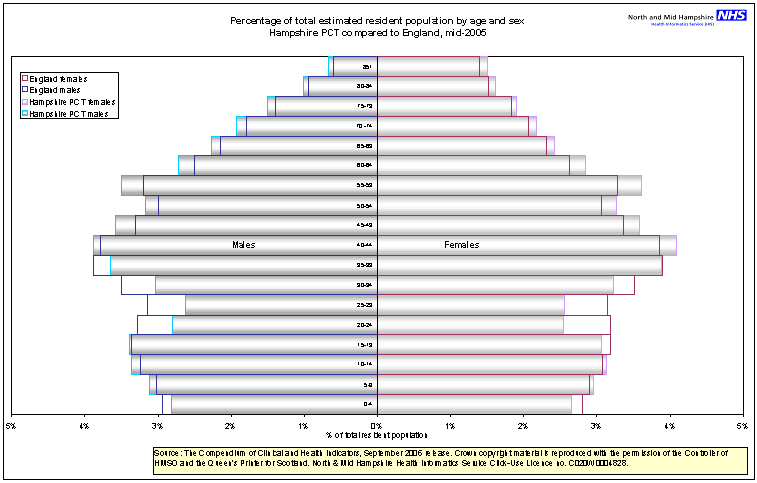
This shows that Hampshire has a higher than average proportion of older people in its population compared to the national average, reflecting longer life expectancy overall.
Table 11: Summary of Area Population Percentage Changes for 2001-7 and 2007-13 | ||||||
|
65-69 |
70-79 |
80+ | |||
2001-07 |
2007-13 |
2001-07 |
2007-13 |
2001-07 |
2007-13 | |
Basingstoke and Deane |
16 |
41 |
11 |
17 |
33 |
27 |
East Hampshire |
8 |
28 |
2 |
9 |
18 |
14 |
Eastleigh |
9 |
31 |
2 |
7 |
21 |
13 |
Fareham |
10 |
30 |
6 |
6 |
28 |
18 |
Gosport |
9 |
26 |
8 |
2 |
20 |
17 |
Hart |
21 |
30 |
13 |
13 |
39 |
20 |
Havant |
5 |
23 |
2 |
2 |
22 |
18 |
New Forest |
7 |
29 |
0 |
2 |
23 |
11 |
Rushmoor |
11 |
24 |
4 |
13 |
26 |
19 |
Test Valley |
10 |
34 |
6 |
10 |
20 |
15 |
Winchester |
10 |
33 |
5 |
9 |
23 |
19 |
Hampshire |
10 |
30 |
4 |
7 |
24 |
17 |
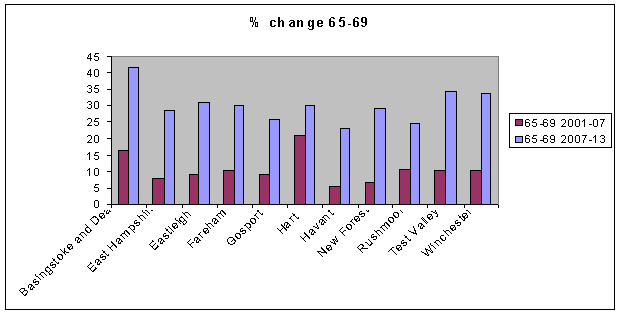
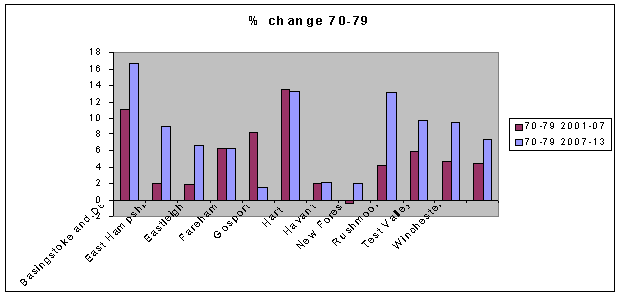
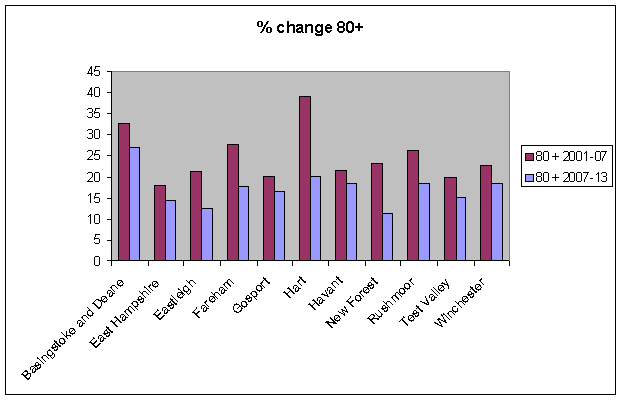
Table 12: Comparative change in 18-64 and 65+ Populations | ||||||
|
2007 |
2013 |
|
| ||
18-64 |
65+ |
18-64 |
65+ |
18-64 |
65+ | |
Basingstoke and Deane |
101677 |
22075 |
107999 |
27962 |
6 |
27 |
East Hampshire |
67546 |
18667 |
67590 |
21639 |
0 |
16 |
Eastleigh |
75390 |
18733 |
77270 |
21542 |
2 |
15 |
Fareham |
66818 |
20722 |
67096 |
24039 |
0 |
16 |
Gosport |
48765 |
13472 |
48160 |
15099 |
-1 |
12 |
Hart |
55020 |
12857 |
54390 |
15464 |
-1 |
20 |
Havant |
67937 |
23304 |
68047 |
26166 |
0 |
12 |
New Forest |
98009 |
40812 |
94612 |
45501 |
-3 |
11 |
Rushmoor |
60816 |
11664 |
63768 |
13746 |
5 |
18 |
Test Valley |
69214 |
18155 |
70886 |
21424 |
2 |
18 |
Winchester |
68944 |
20292 |
72263 |
24036 |
5 |
18 |
Total |
780136 |
220753 |
792081 |
256618 |
2 |
16 |
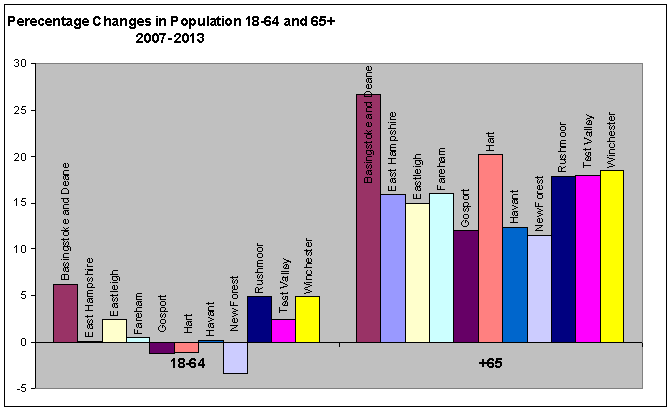
The rate of growth of the working age adult population will be much lower, and in some areas the 18 - 64 population will decrease.
Table 13: Ethnicity in Hampshire
Age 65+ |
White |
Mixed |
Asian |
Black |
Other |
Basingstoke |
98.9% |
0.3% |
0.4% |
0.3% |
0.1% |
East Hants |
99.5% |
0.2% |
0.2% |
0.0% |
0.1% |
Eastleigh |
99.3% |
0.1% |
0.4% |
0.1% |
0.2% |
Fareham |
99.5% |
0.1% |
0.2% |
0.1% |
0.1% |
Gosport |
99.2% |
0.3% |
0.3% |
0.0% |
0.2% |
Hart |
99.4% |
0.1% |
0.3% |
0.1% |
0.0% |
Havant |
99.6% |
0.1% |
0.1% |
0.1% |
0.1% |
New Forest |
99.7% |
0.1% |
0.1% |
0.0% |
0.0% |
Rushmoor |
98.0% |
0.4% |
0.8% |
0.2% |
0.6% |
Test Valley |
99.5% |
0.0% |
0.2% |
0.1% |
0.1% |
Winchester |
99.5% |
0.1% |
0.2% |
0.1% |
0.1% |
Total |
99.4% |
0.1% |
0.2% |
0.1% |
0.1% |
Source: 2001 Census
The above table highlights Basingstoke, Gosport and Rushmoor as having 3 or more ethnic categories higher than the County average.
As part of the "Count Me In" census, all in-patient units in Hampshire Partnership Trust reported on the number of people with a BME origin who occupied beds. At the time of the census this number was nil.
Deprivation Indices
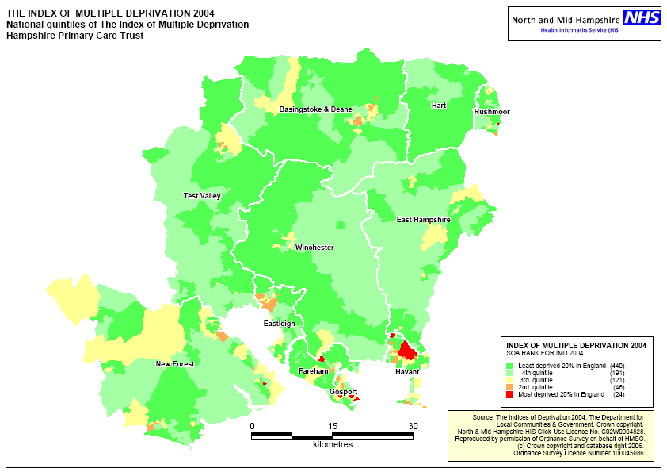
The Index of Multiple Deprivation highlights a number of population factors that can lead to poorer health and well-being, and demonstrates inequalities across Hampshire.
Table 14: Population needs by area - variance from county average | |||||
|
80yrs +/pop 65+ |
People over 60 on income support/ 65+ pop |
Disability Living Allowance Claimants over 60/pop 65+ August 2006 |
Lone Pensioners/ pop 65+ |
Average |
Havant |
-7% |
26% |
45% |
0% |
16% |
Gosport |
-2% |
13% |
30% |
7% |
12% |
Rushmoor |
-1% |
13% |
5% |
17% |
9% |
Eastleigh |
-5% |
9% |
14% |
2% |
5% |
Basingstoke |
-8% |
2% |
7% |
-3% |
0% |
Test Valley |
-2% |
2% |
-7% |
-1% |
-2% |
East Hants |
1% |
3% |
-16% |
-1% |
-3% |
New Forest |
11% |
-13% |
-16% |
-3% |
-5% |
Fareham |
-3% |
-12% |
-1% |
-9% |
-6% |
Winchester |
8% |
-13% |
-31% |
5% |
-8% |
Hart |
-4% |
-30% |
-31% |
-15% |
-20% |
Source 2001 Census,Hampshire planning stats and ONS website |
|||||
If the four criteria are given equal weighting, Havant has the highest needs.
The New Forest and Winchester have the highest proportion of people aged over 80 years in their older population.
Rushmoor has the highest percentage of lone pensioners.
Section Two
Prevalence Trends
The following section details prevalence trends of mental health conditions that will affect older people.
Prevalence Trends - Dementia
· Age 65-69 1 in 50
· Age 70-79 1 in 20
· Age 80+ 1 in 5
Population Source: Hampshire County Council Planning Department.
Dementia Prevalence Rates Source: Alzheimer's Society
Table 15: Dementia Trend for Hampshire 2007-13 | ||||
|
2007 |
2013 |
Increase no. |
Increase % |
65 - 69 |
1166 |
1521 |
355 |
30 |
70 - 79 |
4779 |
5129 |
350 |
7 |
80 and over |
13373 |
15597 |
2224 |
17 |
Total |
19318 |
22247 |
2928 |
15 |
Table 16: Dementia Trends by Area 2007-13 | ||||
Area |
2007 |
2013 |
Increase no. |
Increase % |
Basingstoke and Deane |
1834 |
2298 |
464 |
25 |
East Hampshire |
1637 |
1865 |
229 |
14 |
Eastleigh |
1593 |
1787 |
194 |
12 |
Fareham |
1785 |
2064 |
279 |
16 |
Gosport |
1170 |
1324 |
154 |
13 |
Hart |
1091 |
1300 |
209 |
19 |
Havant |
1966 |
2247 |
281 |
14 |
New Forest |
3814 |
4198 |
385 |
10 |
Rushmoor |
1012 |
1190 |
178 |
18 |
Test Valley |
1566 |
1800 |
234 |
15 |
Winchester |
1853 |
2173 |
320 |
17 |
Total |
19318 |
22247 |
2928 |
15 |
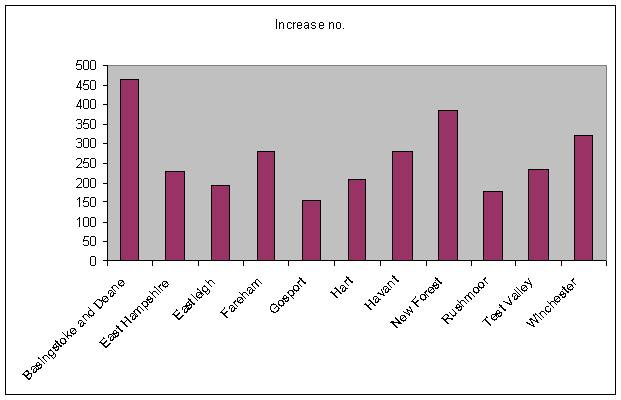
Table 17: Age 65-69 Dementia Trends by Area 2007-13 | ||||
Area |
2007 |
2013 |
Increase no. |
Increase % |
Basingstoke and Deane |
127 |
179 |
52 |
41 |
East Hampshire |
102 |
131 |
29 |
28 |
Eastleigh |
103 |
135 |
32 |
31 |
Fareham |
110 |
143 |
33 |
30 |
Gosport |
68 |
86 |
17 |
26 |
Hart |
76 |
99 |
23 |
30 |
Havant |
123 |
151 |
29 |
23 |
New Forest |
191 |
247 |
56 |
29 |
Rushmoor |
64 |
79 |
16 |
24 |
Test Valley |
100 |
134 |
34 |
34 |
Winchester |
103 |
137 |
34 |
33 |
Total |
1166 |
1521 |
355 |
30 |
Table 18: Age 70-79 Dementia Trends by Area 2007-13 | ||||
Area |
2007 |
2013 |
Increase no. |
Increase % |
Basingstoke and Deane |
480 |
560 |
80 |
17 |
East Hampshire |
392 |
427 |
35 |
9 |
Eastleigh |
408 |
435 |
27 |
7 |
Fareham |
456 |
484 |
29 |
6 |
Gosport |
303 |
308 |
5 |
2 |
Hart |
266 |
301 |
35 |
13 |
Havant |
530 |
542 |
11 |
2 |
New Forest |
876 |
893 |
17 |
2 |
Rushmoor |
250 |
283 |
33 |
13 |
Test Valley |
390 |
427 |
38 |
10 |
Winchester |
428 |
468 |
40 |
9 |
Total |
4779 |
5129 |
350 |
7 |
Table 19: Age 80+ Dementia Trends by Area 2007-13 | ||||
Area |
2007 |
2013 |
Increase no. |
Increase % |
Basingstoke and Deane |
1227 |
1559 |
332 |
27 |
East Hampshire |
1142 |
1307 |
165 |
14 |
Eastleigh |
1081 |
1217 |
136 |
13 |
Fareham |
1219 |
1436 |
218 |
18 |
Gosport |
798 |
930 |
132 |
17 |
Hart |
749 |
900 |
151 |
20 |
Havant |
1313 |
1554 |
242 |
18 |
New Forest |
2746 |
3058 |
312 |
11 |
Rushmoor |
699 |
828 |
129 |
19 |
Test Valley |
1077 |
1239 |
163 |
15 |
Winchester |
1322 |
1568 |
246 |
19 |
Total |
13373 |
15597 |
2224 |
17 |
Basingstoke will have the highest increase in the number of people with dementia overall
It is estimated that 62% of people with Dementia have Alzheimer's disease. The next most common subtypes are vascular dementia and mixed dementia, accounting for nearly one third (27%) of all cases.
The prevalence of dementia increases with age, roughly doubling with every five year increase across the age range.
Nationally, 6.1% of all people with dementia among BME groups have early onset dementia (under 65 years), compared with only 2.2% for the UK population as a whole, reflecting the younger age profile of BME communities.
Source: Dementia UK: A report to the Alzheimer's Society on the prevalence and economic cost of dementia in the UK produced by King's College London and London School of Economics
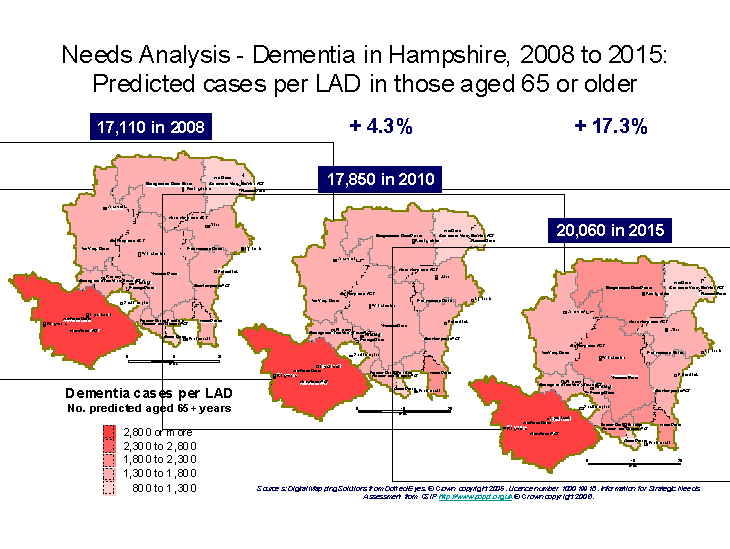
Source: Needs Analysis for Hampshire Primary Care Trust
NB: the figures in the above map do not match exactly to the tables, as they are based on national prevalence of dementia in the 65 year+ age group, national population projections and a different time period.
Prevalence Trends - Depression
· Depression is the most common mental health problem of later life, affecting approximately 15% - 25% of older people. Around 15% of people over 65 years have clinically recognised depression, but as many as one in four may have symptoms that would benefit from intervention.
· 3% of older people have "severe" or "psychotic" depression and may need to be treated by specialist teams.
Source: Beekman et al 1999, Improving Services and Support for Older People with Mental Health Problems - 2nd Report from the UK Inquiry into Mental Health and Well-being in Later Life 2007
Table 20 All depression: 15% prevalence rate | ||||
Area |
2007 |
2013 |
Increase no. |
Increase % |
Basingstoke and Deane |
3311 |
4194 |
883 |
27 |
East Hampshire |
2800 |
3246 |
446 |
16 |
Eastleigh |
2810 |
3231 |
421 |
15 |
Fareham |
3108 |
3606 |
498 |
16 |
Gosport |
2021 |
2265 |
244 |
12 |
Hart |
1929 |
2320 |
391 |
20 |
Havant |
3496 |
3925 |
429 |
12 |
New Forest |
6122 |
6825 |
703 |
11 |
Rushmoor |
1750 |
2062 |
312 |
18 |
Test Valley |
2723 |
3214 |
490 |
18 |
Winchester |
3044 |
3605 |
562 |
18 |
Total |
33113 |
38493 |
5380 |
16 |
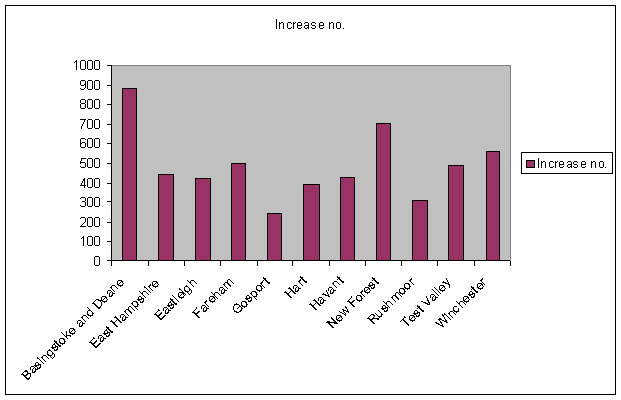
Table 21 Severe depression: 3% prevalence rate | ||||
Area |
2007 |
2013 |
Increase no. |
Increase % |
Basingstoke and Deane |
662 |
839 |
177 |
27 |
East Hampshire |
560 |
649 |
89 |
16 |
Eastleigh |
562 |
646 |
84 |
15 |
Fareham |
622 |
721 |
100 |
16 |
Gosport |
404 |
453 |
49 |
12 |
Hart |
386 |
464 |
78 |
20 |
Havant |
699 |
785 |
86 |
12 |
New Forest |
1224 |
1365 |
141 |
11 |
Rushmoor |
350 |
412 |
62 |
18 |
Test Valley |
545 |
643 |
98 |
18 |
Winchester |
609 |
721 |
112 |
18 |
Total |
6623 |
7699 |
1076 |
16 |
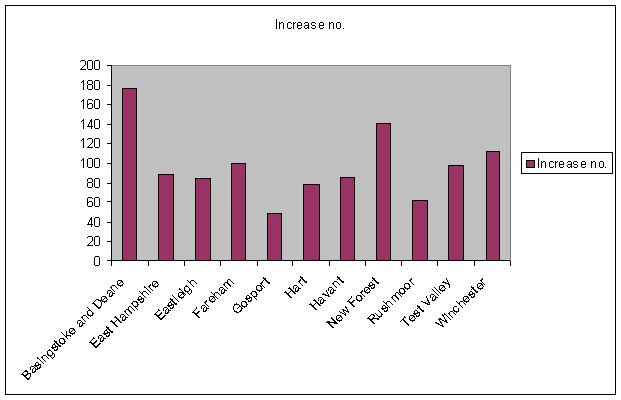
Prevalence trends - anxiety
· Amongst older people there is an approximately 3% prevalence rate of anxiety in the community. The numbers of people across the districts and the increase in numbers from 2007 to 2013 would be the same as that for severe depression as shown in table 21.
Prevalence Trends - Schizophrenia
· 1-2% of older people including those who develop schizophrenia when young.
Source: The Health of the Nation 1997
Table 22 Schizophrenia (1.5% prevalence rate) | ||||
Area |
2007 |
2013 |
Increase no. |
Increase % |
Basingstoke and Deane |
331 |
419 |
88 |
27 |
East Hampshire |
280 |
325 |
45 |
16 |
Eastleigh |
281 |
323 |
42 |
15 |
Fareham |
311 |
361 |
50 |
16 |
Gosport |
202 |
226 |
24 |
12 |
Hart |
193 |
232 |
39 |
20 |
Havant |
350 |
392 |
43 |
12 |
New Forest |
612 |
683 |
70 |
11 |
Rushmoor |
175 |
206 |
31 |
18 |
Test Valley |
272 |
321 |
49 |
18 |
Winchester |
304 |
361 |
56 |
18 |
Total |
3311 |
3849 |
538 |
16 |
Prevalence Trends - Delirium
· The prevalence rate for delirium in the community is also estimated at 1.5% so the projections will look the same as for schizophrenia (above table 22).
· There is potentially a 20% prevalence of delirium in patients over 65 admitted to hospital.
Prevalence Trends - Substance Misuse
· 1-3.5% of older people adversely affected by dependency on alcohol.
Source: The Health of the Nation 1997
Table 23 Substance Misuse | ||||
Area |
2007 |
2013 |
Increase no. |
Increase % |
Basingstoke and Deane |
497 |
629 |
132 |
27 |
East Hampshire |
420 |
487 |
67 |
16 |
Eastleigh |
421 |
485 |
63 |
15 |
Fareham |
466 |
541 |
75 |
16 |
Gosport |
303 |
340 |
37 |
12 |
Hart |
289 |
348 |
59 |
20 |
Havant |
524 |
589 |
64 |
12 |
New Forest |
918 |
1024 |
106 |
11 |
Rushmoor |
262 |
309 |
47 |
18 |
Test Valley |
408 |
482 |
74 |
18 |
Winchester |
457 |
541 |
84 |
18 |
Total |
4967 |
5774 |
807 |
16 |
Suicide Rates
· Age specific death rates per 100,000 (1999 and 2001 and 2002 and 2004 pooled)
Source: National Statistics
Table 24: Suicide Rates by Area
Area |
65-74 |
75+ |
99/01 02/04 Ave |
99/01 02/04 Ave | |
Basingstoke |
9.6 6.1 7.8 |
6.0 15.1 10.6 |
East Hants |
11.2 7.2 9.2 |
6.1 0.0 3.0 |
Eastleigh |
11.1 3.6 7.4 |
12.6 19.7 16.2 |
Fareham |
4.9 9.5 7.2 |
0.0 7.4 3.7 |
Gosport |
7.8 9.9 8.8 |
0.0 5.5 2.8 |
Hart |
17.4 5.3 11.4 |
10.6 0.0 5.3 |
Havant |
8.2 2.7 5.4 |
5.1 3.2 4.2 |
New Forest |
5.3 3.5 4.4 |
13.1 3.3 8.2 |
Rushmoor |
0.0 12.0 6.0 |
20.5 6.6 13.6 |
Test Valley |
11.7 14.7 13.2 |
32.6 12.4 22.5 |
Winchester |
21.5 3.6 12.6 |
5.6 0.0 2.8 |
Note: Highlighted areas show suicide rates greater than the highest of the national and regional indicators, all other rates are less than or equal to the lowest of the national and regional indicators. Of note are the high rates for Eastleigh 75 year+ and Test Valley 65-74 year and 75 year+ age groups. Caution is needed in interpreting these, as the numbers they are based on are small and so subject to wide variation.
Prevalence rates of mental health disorders amongst older people in general hospitals
Table 25: Prevalence of mental disorder in people 65 years+ in general hospitals | |
Diagnosis |
Mean Prevalence % |
Depression |
29 |
Delerium |
20 |
Dementia |
31 |
Cognitive impairment |
22 |
Anxiety |
8 |
Schizophrenia |
0.4 |
Alcoholism |
3 |
Source: Who Cares Wins, Royal College of Psychiatrists 2005
Table 26: Estimates of the number of older people with mental health problems in a typical general hospital | |
A typical district general hospital with 500 beds: |
In an average day: |
· Will admit 5000 older people each year |
· 330 beds will be occupied by older people |
· 3000 of these will have/develop a mental disorder |
· 220 will have a mental disorder · 96 will have depression |
· 66 will have delerium | |
· 102 will have dementia | |
· 23 will have other major mental health problems | |
Source: Who Cares Wins, Royal College of Psychiatrists 2005
Summary
· Due to the greater rate of increase in the older population, Basingstoke has the highest expected increases when looking at any prevalence rates, followed by Hart, then Rushmoor, Test Valley and Winchester.
· The increase in the number of people with dementia will pose significant challenges for health and social care services, and unpaid carers
· Service commissioners must take note of inequalities experienced by people in certain areas and groups.
· There is a high prevalence rate of mental disorders amongst older people in general hospitals which can lead to poorer outcomes and longer lengths of stay.
Section Three
Service provision
Carers
The table below details the estimated number of carers in Adult Services areas based on Census 2001 Information. Highlighted areas indicate areas below the County average.
Table 27 Carers
Social Services Area |
Number of people who provide unpaid care: 1-19 hours a week |
Number of people who provide unpaid care: 20-49 hours a week |
Number of people who provide unpaid care: 50+ hours a week |
Total number of people who provide unpaid care |
All people in the area |
Carers as a percentage of area population |
Alton & Aldershot |
14,977 |
1,650 |
3,098 |
19,725 |
238,346 |
8.3 |
Basingstoke |
9,445 |
1,120 |
2,105 |
12,670 |
152,573 |
8.3 |
Eastleigh & Romsey |
11,448 |
1,228 |
2,542 |
15,218 |
161,446 |
9.4 |
Fareham & Gosport |
11,931 |
1,603 |
3,233 |
16,767 |
186,303 |
9 |
Havant & Petersfield |
11,611 |
1,496 |
3,405 |
16,512 |
168,459 |
9.8 |
New Forest |
12,853 |
1,582 |
3,262 |
17,697 |
169,331 |
10.5 |
Winchester & Andover |
11,847 |
1,185 |
2,214 |
15,246 |
163,645 |
9.3 |
Total or Average |
84,112 |
9,864 |
19,859 |
113,835 |
1,240,103 |
9.2 |
Source: Hampshire Adult Services Department Draft Carers Strategy 2006 to 2009
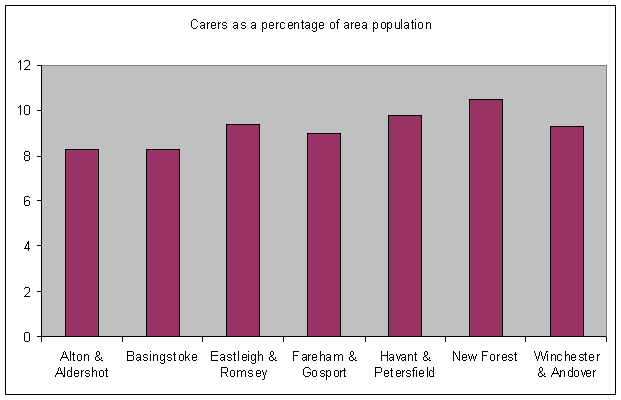
Unpaid carers provide the vast majority of care for older people with mental health problems.
Many carers are older people themselves, and for some the strain of caring can lead to health problems, including mental health problems.
The change in family structures, with more people living alone, and the much slower rate of increase in the working age population means that there will probably be a relatively smaller pool of people to provide both paid and unpaid care.
Health Service Provision
Current estimates suggest that amongst older people with mental health problems:
· 40% attend their GP
· 50% of all general hospital in-patients have a mental health problem
· 60% of care home residents have a mental health problem
Source: Everybody's Business
Specialist Mental Health services
The following section gives details of the services provided by Hampshire Partnership NHS Trust and some information about the services that Surrey and Borders NHS Trust provide to people in northeast Hampshire.
Tables 28-32 focus on three main areas of service provision and give capacity and budget details where available:
· In-patient services
· Day Hospitals
· Community Mental Health Teams
Table 28: Summary of services provided to Hampshire residents by Surrey and Borders Partnership NHS Trust
Name and location of service |
Services provided |
Hollies Community Mental Health Team - Older Adults Mental Health Service (Extended Community Mental Health Team) Willow House Aldershot |
· Assessment · Rehabilitation · Post discharge follow up and monitoring · Group Therapies (Willow House Day Hospital) · Memory Clinic (Fleet Hospital) |
Cedar House Ward Ridgewood Centre Camberley |
Short stay inpatient · assessment · treatment · rehabilitation for functional and organic mental illness |
Table 29: Summary of services provided by Hampshire Partnership NHS Trust - In-patient services
Hospital |
Ward |
Function |
Number of Beds |
Andover WMH |
Allen Gardiner Unit |
Functional & Organic |
16 |
Melbury Lodge |
Oliveri |
Functional & Organic |
15 |
Moorgreen |
Allington East |
Challenging Behaviour |
15 |
Parklands |
Beeches 5 |
Functional |
12 |
Parklands |
Beeches 3 |
Organic |
15 |
Moorgreen |
Willow |
Organic & min Respite |
19 |
Western |
Minstead |
Functional |
18 |
Moorgreen |
Linden |
Functional |
21 |
Western |
Beaulieu |
Organic |
15 |
Becton Centre |
Becton |
Functional & Organic |
20 |
Gosport WMH |
Ark Royal |
Functional |
17 |
Gosport WMH |
Collingwood |
Organic |
17 |
St James Hosp |
Beaton Assess |
Organic |
19 |
Petersfield Hosp |
The Willows |
Continuing Care |
10 |
Coldeast |
Summervale |
Challenging Behaviour |
18 |
Total Beds |
|
|
291 |
Table 30: Summary of services provided by Hampshire Partnership NHS Trust - Day Hospital Provision
Locality |
Day Hospital places available per annum at of end March 2006 |
East Hants - Beaton |
3,150 |
ETVS - Newtown House |
5,400 |
Fareham & Gosport - Phoenix |
5,000 |
Mid Hants - St Waleric |
2,200 |
New Forest - Becton Centre |
2,080 |
Southampton - Acorn Therapy Unit |
6,550 |
Total Places |
24,380 |
Table 31: Summary of services provided by Hampshire Partnership NHS Trust - Community Mental Health Teams: functions provided
Andover |
North Hants |
East Hants |
Eastleigh - Newtown House |
Eastleigh - Southern Parishes | |
Intervention - management |
√ |
√ |
√ |
√ |
√ |
Carers Support |
√ |
√ |
√ |
√ |
√ |
Rapid Response |
|
|
|
√ |
|
Liaison |
√ |
√ |
|
√ |
√ |
Training for Primary Care |
|
|
|
√ |
|
Training for Carers |
√ |
|
|
√ |
√ |
Prescribing, monitoring, review |
√ |
√ |
√ |
√ |
√ |
Early Detection |
√ |
√ |
√ |
√ |
√ |
Support - practical |
√ |
√ |
√ |
√ |
√ |
Monitoring |
√ |
√ |
√ |
√ |
√ |
Care planning |
√ |
√ |
√ |
√ |
√ |
Assessment |
√ |
√ |
√ |
√ |
√ |
Therapy Services |
√ |
√ |
√ |
√ |
√ |
MH promotion |
√ |
√ |
√ |
√ |
√ |
Support - independent living |
√ |
|
|
|
√ |
Intervention - management |
√ |
√ |
√ |
√ |
√ |
Carers Support |
√ |
√ |
√ |
√ |
√ |
Rapid Response |
|
|
|
|
√ |
Liaison |
√ |
|
|
√ |
|
Training for Primary Care |
|
|
|
|
|
Training for Carers |
√ |
√ |
√ |
|
√ |
Prescribing, monitoring, review |
√ |
√ |
√ |
√ |
√ |
Early Detection |
√ |
√ |
√ |
√ |
√ |
Support - practical |
√ |
√ |
√ |
√ |
√ |
Monitoring |
√ |
√ |
√ |
√ |
√ |
Care planning |
√ |
√ |
√ |
√ |
√ |
Assessment |
√ |
√ |
√ |
√ |
√ |
Therapy Services |
√ |
√ |
√ |
√ |
√ |
MH promotion |
√ |
√ |
√ |
√ |
√ |
Support - independent living |
√ |
|
|
√ |
√ |
Source: 2005 Durham Mapping
Table 32: Hampshire Partnership NHS Trust - Budget summary
This table summarises the percentage of budget spend in the three described areas of service provision for Hampshire Partnership NHS Trust.
Service |
Direct Budget 06/07 £ |
% total |
In-patients |
10,095,656 |
67.9 |
Day Hospitals |
943,486 |
6.3 |
Community Teams |
3,836,184 |
25.8 |
Total |
14,875,326 |
100.0 |
Note: In-patient Wards at Moorgreen and the Western and the Acorn Therapy Unit Day Hospital include budgets for Southampton City.
Over two thirds of the budget is spent on inpatient services (Hampshire Partnerships NHS Trust).
Hampshire County Council - Adult Services
This section provides key information relating to the care of older people with mental health problems provided by Adult Services. Sourcing this information is not straightforward because, while some services are identifiable as specialist services for older people with mental health needs, much support is incorporated within general services for older people. Therefore, information is based on an estimate that 50% of the older people's budget is spent on clients with mental health needs.
Summary points:
· The number of clients, whilst large and will grow, is a small proportion of the total number of people with mental health problems.
· On average adult services spent £10,000 per client last year - but there will be a lot of variation around this.
Table 33: Expenditure on Older People
Budget type |
Total Budget Older People: £'000 |
50% of budget |
Sector |
Nursing Care |
20,220 |
10,110 |
P |
Residential Care |
17,357 |
8,679 |
P |
Supported and Other Care |
454 |
227 |
P |
Direct Payments |
6,277 |
3,139 |
P |
Day Care |
4,541 |
2271 |
P |
Domiciliary Care |
13,856 |
6,928 |
P |
Other Care |
357 |
179 |
P |
Assessment & Care Management |
6,836 |
3,418 |
IH |
In-House Residential Unit |
12,215 |
6,108 |
IH |
In-House Day Care Unit |
919 |
460 |
IH |
In-House Nursing |
7,062 |
3,531 |
IH |
In-House Home Care |
13,394 |
6,697 |
IH |
|
|
|
|
P |
63,062 |
31,531 |
|
IH |
40,426 |
20,213 |
|
Total |
103,488 |
51,744 |
|
These are the 2006/07 budgets, net of income and excluding management and support overheads
Source: Hampshire County Council Devolved Finance Unit
Key: P- Purchased IH - In house
The table below gives total number of clients, and applies the 50% assumption to the 2007 population.
Table 34 Client Numbers
Client numbers | |||
Area |
Clients |
Estimated older people with mental health needs at 50% |
Estimated older people with mental health needs as % 2007 population |
Basingstoke and Deane |
1,058 |
529 |
2.4% |
East Hampshire |
738 |
369 |
2.0% |
Eastleigh |
1,062 |
531 |
2.8% |
Fareham |
886 |
443 |
2.1% |
Gosport |
685 |
343 |
2.5% |
Hart |
472 |
236 |
1.8% |
Havant |
1,005 |
503 |
2.2% |
New Forest |
1,985 |
993 |
2.4% |
Rushmoor |
526 |
263 |
2.3% |
Test Valley |
841 |
421 |
2.3% |
Winchester |
854 |
427 |
2.1% |
Total |
10,112 |
5,056 |
2.3% |
Source: Hampshire County Council Swift Information Analysis Team
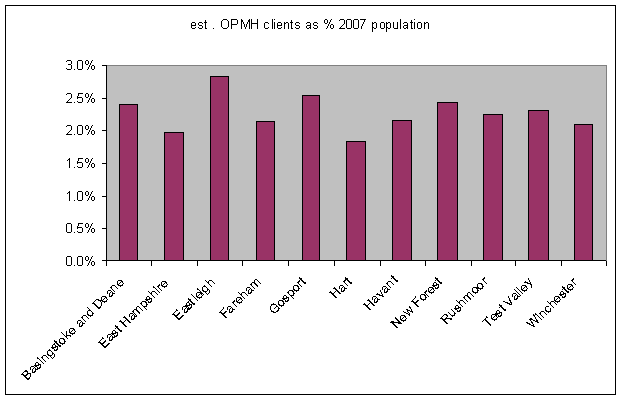
Table 35 Service Provision - Purchased Services (50% of all older people clients with purchased services)
District |
Day Care |
Domiciliary Care |
Residential Care |
Nursing Care |
Any Service |
Basingstoke |
18 |
253 |
68 |
70 |
394 |
East Hampshire |
21 |
169 |
62 |
58 |
299 |
Eastleigh |
75 |
308 |
73 |
63 |
475 |
Fareham |
91 |
197 |
97 |
54 |
404 |
Gosport |
51 |
136 |
86 |
60 |
310 |
Hart |
30 |
126 |
28 |
37 |
206 |
Havant |
49 |
234 |
91 |
72 |
422 |
New Forest |
109 |
478 |
152 |
130 |
825 |
Rushmoor |
19 |
101 |
36 |
44 |
191 |
Test Valley |
4 |
187 |
42 |
53 |
286 |
Winchester |
36 |
184 |
55 |
65 |
325 |
Total |
500 |
2,370 |
787 |
703 |
4,135 |
Table 36 Service Provision - In House Services (50% of all clients with in house services)
For in-house residential, nursing and day care services it is easier to identify the specialist element of provision. Capacity in these services is listed below in table 37 and we seek to maximise service use. For in-house Home Care, the bulk of the service is generic, thus the 50% assumption has been applied.
District |
Domiciliary Care |
Basingstoke |
58 |
East Hampshire |
16 |
Eastleigh |
15 |
Fareham |
11 |
Gosport |
13 |
Hart |
9 |
Havant |
13 |
New Forest |
55 |
Rushmoor |
38 |
Test Valley |
16 |
Winchester |
22 |
Total |
263 |
Table 37 Capacity identified in Older People's Mental Health Service Mapping
|
HCC ASD externally purchased day care |
HCC ASD in house day care |
HCC ASD purchased residential care |
HCC ASD in house residential care home(s) |
HCC ASD purchased nursing homes |
HCC ASD in house nursing care |
Locality |
Maximum caseload |
Maximum caseload |
Total Number of Bed Spaces |
Total Number of Bed Spaces |
Total Number of Bed Spaces |
Total Number of Bed Spaces |
Fareham/Gosport |
100 |
679 |
33 |
79 |
||
East Hants |
35 |
25 |
477 |
58 |
101 |
29 |
New Forest |
37 |
65 |
573 |
55 |
255 |
30 |
Eastleigh/Test Valley |
32 |
15 |
232 |
28 |
127 |
30 |
Winchester/Andover |
11 |
40 |
283 |
117 |
233 |
30 |
North Hampshire |
38 |
19 |
54 |
53 |
170 |
20 |
North East Hampshire |
31 |
139 |
53 |
292 |
37 |
Hampshire County Council Adult Services Department
Conclusion
In summary, Hampshire County Council and Hampshire Primary Care Trust need to commission services:
· for a growing number of people aged over 65 years in Hampshire with mental health problems
· which include prevention and early detection of dementia and depression, so that effective interventions can be offered sooner
· that support and enhance the care provided by unpaid carers
· that address inequalities in the risk factors which lead to mental health problems, and in access to services; both of which can lead to unacceptable variation in health outcomes
· to identify and treat mental health problems in older people admitted to hospital
· which offer more choice and flexibility, particularly for people with longstanding mental health problems as they grow older
· which are cost effective and affordable.
Joint Hampshire Commissioning Strategy for
Older People's Mental Health 2008 - 2013
Consultation with older people and their carers May - June 2007
Background
As part of the development of an older person's mental health strategy for Hampshire the steering group wanted to consult with and obtain views from older people with mental health problems and their families and from other older people on the future development of care services for older people with mental health needs in order to inform strategic planning. The consultation would involve visiting social groups, support groups, lunch clubs and other venues where older people meet. This approach meant more service users and carers would be consulted with and that we would obtain the views of those who would not normally attend a larger consultation event.
Consultation Leads
Catherine Pascoe Hampshire County Council and Amber Reed, Alzheimer's Society - reporting into the wider steering group.
Advice and support from Care Services Improvement Partnership, South East Development Centre, Older People Programme.
What did we want to achieve from the consultation?
· We wanted to speak to a comprehensive number of people through groups and individual interviews where appropriate.
· Clear statements from service users and their carers to inform the planning process
· Views on implications for implementation and ideas re types of help/models of service which more effectively meet need, (within current resources)
· Scope interest for attending workshops to explore re-design options and agreeing priorities
Who did we speak to?
· 17 Groups
- 2 BME
- 1 Gay Men's Group
- 3 Functional
- 7 Dementia
- 4 carers groups
We wanted to ensure that future services would be inclusive and spoke to people from minority groups. The issues around older people's mental health that these groups face are very similar, however it will be important to engage these groups when new services are being planned.
Format
· Informal approach
The meetings were kept very informal and we discussed in groups the various issues with someone taking notes.
· Talked through one page leaflet explaining the process
- Introduction
- What the Strategy will cover
- Creative and innovative planning with available resources
- How we will consult on the strategy
- What we will be asking
- Meetings.
· Case studies
We used case studies at some of the meetings to explain and illustrate some of the issues facing older people with mental health problems. The case studies were useful as they helped the groups stay focussed on one discussion at a time.
· Questions
We used questions on cards to ask wider questions, the answers to these questions were written down. The questions themselves started a fair amount of discussion and all relevant information relating to the strategy consultation was written down.
Questions asked included-
- What services you receive that you benefit from?
- What are the services you like/don't like?
- Is there a difference between services available to younger people?
- How do you feel about gender specific services, should there be more or less of these?
Benefits and Challenges of the consultation
· Consulting with a new group of people
It was really good to spend time talking to and hearing from people who aren't normally consulted with. This approach gave us a real and clear picture of their views.
· Time
This approach has been very time consuming and outside my normal job role. Would have been great to have had more time and a dedicated team of people involved.
· Managing the groups
At many of the meetings there were lots of people talking all at once. Some people wanting to talk about other subjects linked to older people's mental health, but not relevant to the consultation.
· Consultation approach
While it has been great using this approach - it is not a scientific one.
What people told us
· Emotional responses
I'm not sure what I was expecting, but I was moved by the emotional responses of some carers who had already faced a loss in service provision.
· Current situation is hard
Less services available - particularly for people who had used adult mental health services. There are noticeable differences in services available to older people.
There is less money available for `icing on the cake' services provided by the voluntary sector.
· Day time support
Many people (both users and carers) said they wanted daytime support whether it be in a traditional day care setting or something different. The majority wanted services away from the home. Carers wanted some respite and service users wanted some stimulating and meaningful daytime activity.
· Support with every day activities
People wanted support to continue to live a 'normal' life where possible. During the discussions many carers and service users told me of the benefit and support gained from local community services such as Church coffee mornings and WI meetings. People told me they wanted support to stay accessing these groups for longer.
· Respite
Carers want and badly need respite, there must be a balance between respite and quality care.
· Crisis management
Carers and service users would like a 24hour number to call if there is a problem or crisis.
· Staff training
Service users and carers feel that home care staff often do not understand issues around mental health and Dementia, they would like them to have better understanding.
Staff in the general hospital setting do not understand issues around mental health and Dementia, they would like them to have better understanding and more training in this area.
· BME and Gay Groups
People we spoke to from minority groups, who are not already accessing older people's mental health services told us that they wish to be considered during the design process of new services. Inclusive services are welcomed, but some people felt that services may need to be developed to meet individual and cultural needs.
Conclusion
There were no surprises in the findings of the consultation; users and carers have been telling us the same things for some time. It is essential that these views become the heart of the strategy.
Have we got exciting times ahead of us? I'm going to dare to say yes! We need to work together and work hard. But if we can focus more on the people we are trying to support we can develop high quality cost effective services.
If we take into account the views of the people we are supporting we could develop some excellent services that are needs led and person centred.
Amber Reed
Service Manager Hampshire and Isle of Wight
Alzheimer's Society, Portsmouth and District Branch,
Paulsgrove Community Centre, Marsden Road, Portsmouth, Hampshire. PO6 4JB
Tel 023 92376410 Mob 07738 802399
Joint Hampshire Commissioning Strategy for
Older People's Mental Health 2008 - 2013
Red / Amber / Green Service Mapping: 2006
SERVICE MAPPING |
Indicative Score |
Traffic Light |
Access to HCC A/S 24/7 |
0 |
|
Are there single sex environments for OPMH (inpatient)? |
0 |
|
Are there disease registers? |
0 |
|
Is there a LIT Structure in place? |
0 |
|
Are Waiting Times for Services within Target? |
0 |
|
Suicide prevention strategy |
0 |
|
Sufficient Acute Inpatient functional provision |
2 |
|
Sufficient Acute Inpatient organic provision |
2 |
|
Access to OPMH service 24/7 |
3 |
|
Community Teams (social) |
6 |
|
Continuing Care - organic (beds) |
6 |
|
Sufficient Day Hospital (health) |
7 |
|
Memory Clinics |
8 |
|
Sufficient Day Care (social) |
10 |
|
Psychiatric Liaison |
10 |
|
Sheltered housing |
10 |
|
Sufficient capacity in Discharge Liaison |
11 |
|
Do you promote systematic physical activity? |
12 |
|
Community Teams (health) (THERAPY) |
12 |
|
Sufficient Acute Community organic provision |
12 |
|
Continuing Care - functional (Beds) |
12 |
|
Is there sufficient continuing care provision functional (inpatient)? |
12 |
|
Is there sufficient continuing care provision organic (inpatient)? |
12 |
|
Appropriate ward settings for OPMH in acute care? |
12 |
|
Appropriate provision of community environments? |
12 |
|
Are agreed pathways for dementia and depression in place? |
12 |
|
Transition between adult and older people services |
12 |
|
Prison services for OPMH |
13 |
|
Challenging Behaviour Inpatient Facilities |
13 |
|
Do Intermediate Care services include OPMH? |
13 |
|
Do ward settings for OPMH meet DDA requirements? |
13 |
|
In reach support available from specialist staff into care homes and other services (not just training). |
13 |
|
Training for Domiciliary Workers |
14 |
|
Training for Nursing Home Staff |
14 |
|
Training for residential Home Staff |
14 |
|
Training for Carers |
14 |
|
Are there sufficiently trained new nurses and SWs |
14 |
|
Do you promote Social Networks? |
14 |
|
Sufficient Acute Community functional provision |
14 |
|
respite services (residential) |
14 |
|
respite services (community) |
14 |
|
Easy access to information (cont care / rest care etc) |
14 |
|
Advocacy |
14 |
|
Do community environments meet DDA requirements? |
14 |
|
Do you have a robust policy for reimbursing users and carers for their time and travel expenses? |
14 |
|
Implementation of Mental Capacity Act |
14 |
|
Advanced directives |
14 |
|
Extra Care Housing |
15 |
|
Specialist provision Alcohol & Drugs |
15 |
|
Specialist team to monitor and assess continuing heath care needs |
15 |
|
OPMH rehabilitation in the community? |
15 |
|
Is there Single Assessment Process in place? |
15 |
|
Community Team (integrated working) |
16 |
|
Psychological therapies |
16 |
|
Specialist Domiciliary Care Services |
16 |
|
GP's with special interest on OPMH |
17 |
|
Specialist or dedicated Non-English speaking provision |
17 |
|
Support for early discharge |
17 |
|
Training for Acute general Hospital staff |
18 |
|
Early intervention services for mild dementia |
18 |
|
Are you promoting social inclusion particular to OPMH? |
18 |
|
Family therapy for OPMH services |
18 |
|
Specialist or dedicated BME provision |
19 |
|
Availability of Telecare / Assisted Technology |
19 |
|
A&E Diversion Schemes? |
19 |
|
Are there carer's registers? |
19 |
|
Training for Housing staff |
20 |
|
Specialist Early on-set Dementia (Community) |
20 |
|
Crisis Services (social) services outside office hours |
20 |
|
Crisis Services (health) services outside office hours |
20 |
|
Does the Primary MH Service offer a service to older people? |
20 |
|
Expert Patient Programme available |
21 |
|
Is there sufficient and consistent joint assessment training in continuing care? |
21 |
|
Specialist Early on-set Dementia (Inpatient) |
21 |
|
Is there sufficient continuing care provision functional (budget)? |
21 |
|
Is there sufficient continuing care provision organic (budget)? |
21 |
KEY
None or minimal services/provision in this area | |
Some services/provision in this area | |
Sufficient services/provision in this area |
Potential Performance Measures for:
Dementia and Functional Mental Illness Needs Led Care Pathways
These measures include a range of indicators, some of which have data already available, some of which would take some additional work. Some may prove to be over-burdensome in requiring new data collection and may need to be considered for audit, and some are benchmark indicators that may shed light on ways of working rather than performance. They will also need to be adapted to take into consideration new emerging national targets.
Functional Mental Illness, i.e. depression, anxiety and psychotic disorders
Level and staff involved |
Task of level |
Interventions |
Potential performance Indicators |
Comments, data source | ||
Level 1 All statutory care workers: primary care team, primary care mental health worker, social care staff, general hospital staff. |
Prevention, promotion and wellbeing. |
Healthy living style. |
Wellbeing survey. Vascular risk score of over 65s. Treated blood pressure. Accidental injury - falls. Life expectancy at age 65, wellbeing. |
HCC - Community Innovations HPCT (to be confirmed) HPCT (to be confirmed) HPCT Office of National Statistics | ||
| | ||||||
Level 2 All statutory care workers: primary care team, primary care mental health worker, social care staff, general hospital staff. |
Recognition and management of mild mental health problems. |
Screening, assessment, watchful waiting, guided self-help, computerised cognitive behavioral therapy, exercise, brief psychological interventions, social support (especially meaningful activities, assistance with activities of daily living, housing), linking with long term conditions. |
Numbers of people on primary care diabetes and coronary heart disease registers screened for depression. Numbers of people over 65 years on the severe mental illness register. Difference in mortality rates for those over 65 years with severe mental illness compared to the rest of the population. Service users supported to live independently [at home] - receiving any community-based service. Acute general hospital diagnosis of mental disorder in people over 65 years with reference to expected. Social service primary and secondary client type mental health with reference to expected. |
HPCT HPCT HPCT HCC Hospital Episode Statistics, DH Referrals, Assessments and Packages of Care - DH | ||
| | ||||||
Level 3 Primary care team, primary care mental health worker social care staff, general hospital staff. |
Joint working between primary and secondary Care. |
Moderate or severe mental health problems. |
Medication, psychological and social interventions, in-reach by specialist teams for training / supervision. |
Level of antidepressant prescribing. Age specific mortality rate from suicide and undetermined injury. Users supported to live independently [at home] - receiving intensive home care. Carers of people on severe mental illness register having received carers' assessment. Training / supervision sessions by specialist mental health services to mainstream services. Timeliness of new assessment and care packages. Needs assessment and reviews. Patient reported measure: respect and dignity in their treatment. Patient reported measure: clean, friendly and comfortable place to be. |
HPCT HPCT (to be confirmed) HCC Data currently unavailable HPT/SABP HCC HCC HPCT HPCT | |
REFERRAL | ||||||
Level 4 Mental health specialists, including crisis teams, assertive outreach function. |
Treatment-resistant, recurrent, atypical and psychotic mental illness, and those at significant risk. |
Medication, complex psychological interventions, combined treatments, training and supervision of mainstream services. |
New contacts and follow ups. Evidence of ageism in patterns of service delivery. Service user experience - cross cut by age. Delayed transfers of care. NHS staff job satisfaction scores. Reference costs and benchmarking. Completion of mental health minimum data sets. |
All HPT and SABP | ||
| | ||||||
Level 5 Inpatient care, crisis teams, forensic placements. |
Risk to life, severe self-neglect. |
Medication, combined treatments, electroconvulsive therapy. |
Length of stay, finished consultant episodes, emergency readmission rates, occupancy. Incidence of inpatient Clostridium Difficile. Reports from Patient Environment Action Team and Mental Health Act visits.
|
All HPT and SABP | ||
Key:
HCC - Hampshire County Council
DH - Department of Health
HPCT - Hampshire Primary Care Trust
HPT - Hampshire Partnerships NHS Trust
SaBP - Surrey and Borders Partnership NHS Trust
Potential Performance Measures for Dementia Needs Led Care Pathway
Phase 1 : Promoting health and well-being and minimising the risk of mental health problems | |||
Well-being survey: HCC - Community Innovation Teams Vascular risk score of over 65 year olds: HPCT (to be confirmed) Treated blood pressure: HPCT (to be confirmed) Accidental injury - falls: HPCT Life expectancy at age 65 years, well-being: Office of National Statistics | |||
Phase 2 : Memory difficulties begin to become apparent | |||
Primary Care Trust |
Specialist Mental Health NHS Trust |
Acute General Hospital |
HCC Adult Services |
Reducing initial assessment mini mental state examination in specialist services Proportion of people with Alzheimer's disease receiving cholinesterase inhibitors medication. |
Reducing initial assessment mini mental state examination.
Evidence of information provision. Proportion of people offered brain scans. Training sessions organised for mainstream services. |
Diagnosis on discharge. |
Proportion of referrals to specialist services seen more than once. Proportion of people supported at home compared to in residential care
Number of people with primary or secondary client type dementia (could use capacity questions as proxy) Contact centre data - to be confirmed. |
All: Service directory completed and made available - updated annually as part of the national service mapping exercise. Refreshment of protocols for the care and management of older people with mental health problems. Sharing care plans. | |||
Phase 3 : Living independently becomes more difficult | |||
Primary Care Trust |
Specialist Mental Health NHS Trust |
Acute General Hospital |
HCC Adult Services |
Proportion of people with dementia (based on population estimate) on the primary care register and proportion having medical review. Proportion of people on primary care dementia register with known Mental Capacity Act attorney and advance directive. Cognitive behavioural therapy offered for carers. Audit of criteria for assessing standards for integrated working (see below) |
Proportion of people receiving anti-dementia medication having a review each year. Audit of appropriateness of prescribing. Audit of criteria for assessing standards for integrated working (see below) |
Proportion of people on dementia register with diagnosis recorded at discharge. Proportion of people on dementia register discharged from hospital with care plan shared with Adult Services and specialist mental health services |
Carer assessments. Telecare devices installed for people with dementia. Specialist day opportunities for people with dementia. Number of people with dementia using individualised budgets / direct payments. Provision of respite. |
Phase 4 : 24 hour supervision and support are required Phase 5 : Critical level of need Phase 6 : Total inability to initiate movement; end of life care | |||
Primary Care Trust |
Specialist Mental Health NHS Trust |
Acute General Hospital |
HCC Adult Services |
Anti-psychotic prescribing in care homes.
Proportion of people on the dementia register who are dying at home. Number of people on palliative care register with dementia. Deaths at home. |
Care plan shared with other agencies and family. |
Quality of services commissioned | |
All: Number of individuals awaiting discharge in specialist mental health services compared to acute general hospitals | |||
Criteria for Assessing Hampshire County Council and Hampshire Partnerships NHS Trust Standards for Integrated Working in Older People's Mental Health Services
The following success criteria have been developed to assist local managers.
The purpose of the success criteria is to ensure that measurable action is taken that will deliver improvements in services for people who use services and for carers, whilst providing consistency across all localities.
1. People who use services and carers are able to easily access services
· As a minimum requirement each team and service has a leaflet describing their service available on site for all referrers including people who use services and carers.
· Links with GP surgeries have been established and are maintained, either by named links or by a programme of visits.
· Professionals can refer directly between organisations and services with the knowledge of the GP.
· Referral pathways have been developed, documented and implemented.
· People who use services and carers experience a single access point to the specialist mental health team which is easily understood
· Common paperwork for the care programme approach is used across teams.
2. People who use services and carers are able to easily access information relevant to their needs
· Each area should have a published directory of key services which includes non statutory agencies that has been developed and maintained with processes in place to ensure it is kept updated.
· All staff are skilled and able to signpost people who use services and carers on how to access other services that will meet their needs.
3. People who use services and carers will receive services that are well co-ordinated and provided by the most appropriate professional to meet their need
· A common care planning process is in place and is used by Health and Adult Services.
· The assessment and care summary record is shared and used by both Health and Adult Services.
· Health and Adult Services staff are working closely with other community services.
· Health and Adult Services staff regularly attend each others meetings.
· Team and Locality Managers from Health and Adult Services meet on a regular basis.
4. People who use services and carers are fully involved in the planning of services to meet their needs
· People who use services and carers are systematically involved in meetings, planning and discussions about service development, delivery and quality.
· Feedback from people who use services and carers is discussed as a standing item at team meetings.
Joint Hampshire Commissioning Strategy for
Older People's Mental Health 2008 - 2013
Broad Service Specification:
Mainstream and Specialist Services
1. Mainstream services (primary care, general and community hospitals, generic social care):
The key priorities in mainstream services are to change attitudes and improve skills in detection and assessment of mental health needs, and equip staff with guidance on initial management and referral pathways to appropriate other services. This will include referral criteria for specialist older people's mental health and social services, though also for other support services whose intervention will help reduce the severity or impact of the mental health needs for older people and their carers.
Protocols for the care and management of older people with depression and dementia will be developed that set out Hampshire wide expectations for what mainstream services should do in terms of assessment and initial management and what the referral criteria for specialist services should be.
Older people with mental health needs still need access to all appropriate health and social care services. A diagnosis of dementia or depression should not be a barrier to care or a basis for discrimination.
2. Specialist older people's mental health services
Specialist services in both health and social care have a key role in supporting mainstream services to deliver high quality, person-centred care. They should build on work already underway and support colleagues in the development and implementation of guidance for the detection and initial management of mental health needs in later life in mainstream settings, and of referral pathways to specialist and generic support services.
Specialist services are required where for reasons of complexity of need and of risk to self or others, it is not appropriate to follow guidance for initial management without their involvement, or where initial intervention in mainstream settings has not helped.
In addition, specialist services are required for the early diagnosis of dementia, where the diagnosis of any mental illness is in doubt (particularly in the context of ageing-related multiple needs), where psychotic symptoms are present, for treatments that require their involvement due to national guidance (for example National Institute for Health and Clinical Excellence), or where the Mental Health Act is being considered.
All specialist mental health and social care services should be accessible on the basis of need not age. Hampshire Partnership NHS Trust is working on a definitional approach to clarify how this will work in practice. Integrated working between working age and older people's mental health services is needed to avoid duplication, for example in crisis services.
2.1 Community services: ("interface" service model - between primary care and hospital) including community mental health teams, day care/therapies, specialist interventions
Act as filter for inpatient care, specialist assessment and intervention, and integrate with other organisations and community workers to maintain people in their own homes and avoid inappropriate hospital stays. Information sharing with statutory partners and robust care planning is needed. There will be access to and joint working with working age adult services where appropriate.
Providing services for:
o Early intervention in dementia: assessment, diagnosis and treatment, information, training for future care needs, signposting to ongoing support services (Adult Services and others)
o Severe mental illness:
o Behavioural disturbance in dementia (including carer support)
o Severe functional mental illness (complex / high risk)
o Accessing working age mental health services as appropriate
o Legal - Mental Health Act, Mental Capacity Act (complex cases only)
o And also incorporating roles for teaching / training and supervision / advice to mainstream services to enable them to carry out their role. Particular focus on general hospitals, primary care, other community health and social care services and care homes.
2.2 Liaison service
Specialist mental health liaison services are provided to address the following needs:
o Raise awareness of the needs of older people with mental health problems in the hospital setting
o Assist in the acquisition of basic skills in mental health assessment, care and treatment for hospital staff through education and training
o Assist with the management of severe and/or complex cases, particularly focusing on admission avoidance, assessment and discharge planning
o Champion the cause of older people with mental health problems in the general hospital setting.
There is joint working with general psychiatric liaison services where they are available and in-reach from community mental health teams elsewhere.
2.3 Inpatient care
Assessment and management of complex and high risk cases.
Aim for efficiency through high quality user focussed care planning, and integrated working with social services.
2.4 Integrated working with working age adult services
While national guidance emphasises the need for a comprehensive specialist older people's mental health service to meet the particular needs of this population, it also emphasises the need for services based on need and not on age alone. Hampshire Partnership NHS Trust and Hampshire Primary Care Trust have agreed a protocol for the admission and transfer of patients between their services and this will be revisited.
The National Directors for older people and mental health have variously commented on this aspect of organisation of services:
"This review has followed the remit of the mental health National Service Framework - adults of working age. Comprehensive mental health care needs to go beyond this, to provide similar benefits for older people. "
The National Service Framework for Mental health - Five Years On. Department of Health, Professor Louis Appleby, 2004
"Age discrimination in mental health services needs further attention, so that services developed for working adults are available to older adults on the basis of need, not age and vice versa. ....Further investment in specialist old age mental health services is required to provide care for those with greatest needs as well as providing advice and support to mainstream services
Better Health in Old Age. Department of Health, Professor Ian Philp, 2004
"Mental health and social care service provision for adults should be based on need and appropriateness of intervention for that need, not on age alone."
"There should be no automatic transfer of people from younger adult to older adult services at the age of 65. If younger adults have multiple, age-related physical co-morbidities, or suspected dementia, their needs may be better met by older adult services. Conversely if older adults are physically fit, or are well known to younger adult services, their needs may be better met by younger adult services. It should be possible for people to access appropriate components of both younger and older adult services without transferring care coordination responsibilities."
Securing Better Mental Health for Older Adults. Department of Health, Professor Ian Philp, Professor Louis Appleby, 2005
Hampshire Primary Care Trust and Hampshire County Council
Joint Hampshire Commissioning Strategy for Older People's Mental Health
2008 - 2013
Executive Summary
Draft for Consultation
Working in partnership with:
|
Executive Summary
The scale of the challenges facing Hampshire Primary Care Trust and Hampshire County Council Adult Services, in terms of population changes, growing demand for older people's mental health services and pressure on resources, means that we have to do things differently now. This strategy sets a direction of travel for 2008 - 2013 for all organisations and individuals involved in older people's mental health services that reflects national good practice guidance and that we believe will improve outcomes for older people with mental health problems and their carers.
In this Executive Summary we have proposed some early key areas to focus upon. The full draft strategy contains an overview of everything to be considered.
Why this is important
Depression severe enough to warrant intervention affects one in four older people living in the community. But only one in three of these will discuss the condition with their GP and only one half of those are diagnosed and treated.
Only a third to a half of older people with dementia receive a diagnosis.
Older People with a mental health need account for a significant proportion of those who use health and social care services. A conservative estimate is that:
· 40% of people attending their GP
· 50% of all general hospital inpatients and
· 60% of home care residents have a mental health problem.
One third of people who care for an older person with dementia have depression.
Older people occupy two thirds of hospital beds and 60% of these will have or will develop a mental disorder during their admission. The presence of mental health needs is an independent predictor of poor outcomes for the individual affected.
The direct costs of dementia (Alzheimer's Disease) alone exceed the total costs of stroke, cancer and heart disease in cost of illness studies.
There is a growing demand
Nationally, the number of older people with mental health needs will increase by 30% over the next 15 years.
In Hampshire, significant demographic changes and growth in the population of older people are anticipated over the period of this strategy - 2008 - 2013:
· 16% increase in older people with depression - around 5,500 additional people
· 15% increase in older people with dementia - around 3,000 additional people.
If there is no change to the way we currently deliver services, we will not be able to cope with this growing demand. The increase in funding allocated by the government for 2008 - 2011 to both Hampshire Primary Care Trust and Hampshire County Council will be consumed in meeting this increase in demand, unless we plan jointly to manage our current investment and resources more efficiently and maximise opportunities for older people's mental health.
The benefits of changing how services are delivered
By developing this strategy, we believe there will be improvements to the quality of life for both the older person with mental health needs and their carer.
Effective interventions will promote independence and inclusion in society.
Early diagnosis and treatment and no artificial barriers to access services in a mainstream or specialist mental health setting will enable:
· a coordinated response to complex needs
· planning to avoid crises and unnecessary admissions to hospital that can lead to increased dependency
· access to effective specialist mental health services.
Resources
We have assessed the current level of resources spent on older people's mental health services by Hampshire Primary Care Trust and Hampshire County Council Adult Services - see table below. This is an under-estimate and does not reflect all the associated costs linked to the care needs of older people with mental health problems, particularly in hospital where an individual may be treated for another illness.
Table: Expenditure on Older People's Mental Health Services
£000 |
Assumptions | |
Hampshire Primary Care Trust |
29,000 |
Includes only specialist mental health providers, continuing NHS healthcare and joint finance budgets for 2007/08. Excludes acute and community/primary care spend. |
Hampshire County Council Adult Services |
51,500 |
Based on 2006/07 budgets, net of income and excluding management and support overheads and assumption that 50% of the older people's budget is spent on clients with mental health needs. |
Current services - strengths and gaps
We have identified the strengths in our local health and social care provision for older people with mental health needs, for example specialist mental health services are generally well thought of, there are some excellent and innovative services in operation across Hampshire and there is a willingness to work collaboratively across agencies and sectors.
From the work we have done in mapping health and social care provision and in listening to staff from many agencies and to people with mental health problems and their carers, we know that there is variation across the county and that:
· Information and support is patchy and uncoordinated
· Accessing meaningful and stimulating things to do is difficult
· Statutory services are tightly targeted
· Access to respite care and the quality of care provided is variable
· Knowledge and skills about the needs of older people with mental health problems amongst mainstream non-specialist mental health staff is poor
· There is a lack of support in understanding and coping with behaviours that challenge
· Accessing specialist assessment and treatment in some general and community hospital settings is difficult
· There are issues about decisions about long-term care placement being made too early in the discharge process from hospital
· Access to some services is based on age not need
· Mainstream community services cannot always meet the needs of a person with mental health problems
· There are issues around support provided in a crisis
· There are difficulties with flexibility and continuity of provision
· Organisational boundaries can limit the ability to work together.
What we are trying to achieve
We are aiming to secure services that deliver:
· holistic, person-centred health and social care, which address mental, as well as physical health, needs and which provide dignity and respect
· flexibility and are able to change in line with people's unique circumstances, enabling independence and choice
· a comprehensive specialist older people's mental health service as part of a fully integrated pathway of care
· promotion of equity of access to services and support based on individual and population needs
· treatment and care based on the best available evidence of effectiveness.
Our early commissioning priorities
We have produced our early commissioning priorities based on:
· the needs led care pathways for dementia and functional mental illness (i.e. depression, anxiety and psychotic disorders) that have been developed as part of this strategy, which take a holistic approach to an individual's needs
· the identified gaps in services
· what people who use services, their carers and professionals have told us.
Hampshire Primary Care Trust and Hampshire County Council Adult Services have identified five key strategic priorities, which target the areas that most need our attention:
1. Supporting carers
2. Promoting independence and access to universal well-being services
3. Balancing specialist and generic services
4. Pathways in and out of hospital
5. Mechanisms to enable organisations and individuals to work together towards shared goals.
Strategic Priority 1. Supporting carers - so that that they themselves are enabled to provide care and support and are actively involved in planning care for the older person with mental health needs. | ||
What we have been told about why this is important: "Groups like this [a carers support group] are great because we can support one another and share our thoughts and worries. Couldn't we have more things like this?" "I get so tired and really do need my respite, but she gets so distressed and seems to go down hill before I can get her home again. It takes me another two weeks to get her back to her old self and by then I'm exhausted again". "At 3 o'clock in the morning when I can't get him settled, who do I call? Why is there no support at the weekend?" | ||
Proposed Actions |
Responsible organisation |
Work to commence |
With the support of the Carers' Stakeholder Group and the Care Services Improvement Partnership, we will work closely with carers, users and the voluntary sector to develop specific information resources about available community based support. |
HCCAS and HPCT |
2008/09 |
The contact centre for all social care referrals will be established, which will provide a one-stop shop for advice and information. |
HCCAS |
2008/09 |
We will develop a flexible specification for new emergency respite services linked to the Hampshire Carers' Strategy work, which also includes the review of current respite availability and service models and will identify options for the future. |
HCCAS |
2008/09 |
We will aim to support older people with mental health problems and their carers to understand and take their medication. |
HPCT |
2008/09 |
Key: HCCAS - Hampshire County Council Adult Services HPCT - Hampshire Primary Care Trust
Strategic Priority 2. Prevention and access to universal well-being services - so that individuals can maintain their independence and live as "normal" a life as possible for as long as possible. | ||
What we have been told about why this is important: "I get confused and can't remember the way to places - I sometimes think it'd be good to have a befriender like. Someone to help me do the things I enjoy. I've never been any good in groups and could do with the company". "I really couldn't cope without day care. It's my life line" | ||
Proposed Actions |
Responsible organisation |
Work to commence |
The Hampshire Older People's Well-being Strategy is being produced and local well-being plans developed in a number of areas around the county. Specific programmes such as the older person's area link worker project and the gardening strategy are underway. The well-being programmes will continue to expand to support older people's mental health. |
Hampshire County Council |
2007/08 |
People will be encouraged and enabled to continue accessing and pursuing universal services for their usual activities and hobbies, for example, the local choir, gardening clubs, the Women's Institute. |
HCCAS |
2008/09 |
The Community Innovations Teams will be expanded to include Community Development Workers, who will be employed by local Councils for Voluntary Services using the Invest-to-Save grant. |
HCCAS |
2008/09 |
In partnership with colleagues in district councils and the Housing Corporation, Hampshire County Council will commission a new generation of housing care and support services for older people that will be appropriate for older people with mental health needs. The first four schemes are already being planned. |
HCCAS |
2008/09 |
We will seek to promote awareness amongst the general public and professionals in all settings about dementia and depression in old age and messages about maintaining good health. We will build on the higher profile gained through consultation on this strategy to assess current activities, information campaigns, training and education available and develop a local plan. |
HCCAS and HPCT |
2008/09 |
Hampshire county Council has been chosen, along with nine other local authorities in the country, to take part in a project to determine how people who need support can take more control of their own lives and how their care and support needs can be responded to in more varied and flexible ways. This is called Self-Directed Support. We are currently working together with others, such as service users and service providers, to develop a project plan that will detail how Self-Directed Support will be implemented across Hampshire. |
HCCASD |
2007 onwards |
Key: HCCAS - Hampshire County Council Adult Services HPCT - Hampshire Primary Care Trust
Strategic Priority 3. Balancing specialist and generic services - through skilling up mainstream staff, removing barriers to services and gaining clarity on the respective roles and functions of specialist mental health and mainstream services, so that the majority of mild and moderate severity mental health needs can be managed in mainstream settings. | ||
What we have been told about why this is important: "I've been using adult mental health services for 14 years, my Community Psychiatric Nurse wants to refer me to the older people's mental health team, but if that happens I'll have to start using a completely different set of services. I'm not ready to sit around making cards!" "`These young girls come in, a different one every day. They don't understand Dementia at all. I feel sorry for them really - they don't get paid a lot and only have 15 minutes to put Dad to bed. It's no good telling someone to take their trousers off when they can't remember what the word means." | ||
Proposed Actions |
Responsible organisation |
Work to commence |
A joint Hampshire Primary Care Trust and Hampshire County Council primary care mental health strategy is being developed, which aims to enable the primary and community care team to provide improved support for those with mild to moderate mental illness. |
HPCT and HCCAS |
2007/08 |
The current guidelines and pathways for referral and initial assessment will be reviewed jointly between mainstream and specialist mental health clinicians, so that trigger symptoms can be consistently recognised and community-based support resources can be more easily accessed. |
HPCT |
2008/09 |
We will work towards developing a specification for memory services to provide: early diagnosis, specialist assessment, information and support, memory matters that will be available in all areas. Day hospital provision within Hampshire Partnership NHS Trust will be remodelled to maximise linkages with memory assessment and treatment services and improve the therapeutic basis with clear outcome based programmes. |
HPCT |
2007/08 - Day Hospitals |
As part of the Hampshire strategy for day opportunities, we will develop a specification for day opportunities specifically targeted at specialist dementia care. |
HCCAS |
2008/09 |
We will work towards developing a broad training strategy for health, social care, voluntary and independent sectors to support all phases of dementia and functional mental illness pathways, linking with the Sector Skills Councils |
HCCAS and HPCT |
2008/09 |
We will develop a service specification to define the social care team deliverables for older people with mental health needs through: · a generic social care rapid response function via a single point of access · community social care support teams working with generic primary care teams and specialists who support long term conditions, including specialist older people's mental health teams. The pilot sites for integrated social care and specialist mental health working will continue to be introduced, initially through a staged approach in two sites: New Forest and Andover. |
HCC |
2008/09 |
We will seek to promote equity of access based on individual and population needs and based on the best available evidence of effectiveness to: - the whole range of mental health services across working age and older people's services for people with a functional mental illness (i.e. depression, anxiety and psychotic disorders) - all current generic older people's community support services. |
HPCT and HCCAS |
2008/09 |
We will make sure that older people with mental health needs are included in the work of the Care at the End of Life Hampshire Health Overview and Scrutiny Committee Review Project. Care plans for older people with mental health needs at the end of life will be available to out of hours services to avoid unnecessary hospital admissions. |
HPCT and HCCASD |
2007/08 |
Key: HCCAS - Hampshire County Council Adult Services HPCT - Hampshire Primary Care Trust
Strategic Priority 4. Pathways in and out of hospital - so unnecessary admissions are avoided and the older person with mental health needs receives timely and appropriate care in response to their individual needs while in hospital and the focus is on maintaining independence on discharge. | ||
What we have been told about why this is important: "He went into hospital with a chest infection and now he can't walk. They didn't feed him and left him to wet the bed on more than one occasion. I'm frightened he'll have to go into a home when he comes out." | ||
Proposed Actions |
Responsible organisation |
Work to commence |
Working with our NHS partners, we will review the discharge pathway for older people with mental health needs, including options for longer periods of assessment, recovery and rehabilitation that allow the individual and their family and carers to make timely and informed decisions about future long-term care. The aim will be to reduce the length of stay in hospital and strengthen links between primary care and acute and community hospitals. |
HCCAS and HPCT |
2007/08 |
We will aim to develop a service specification for delivering psychiatric liaison in acute and community hospitals, based on good practice, which will reflect the needs led care pathways and address the identified key areas for attention. |
HPCT |
2008/09 |
We will undertake a "Balance of Care" project* approach across Hampshire to identify the costs of unnecessary bed usage in acute and community hospitals, specialist mental health inpatient services, residential and nursing homes and to identify appropriate alternatives to hospital for people with dementia. |
HCCAS and HPCT |
2008/09 |
Telecare can help older people with mental health difficulties to remain living independently in their own home and can be used in a variety of ways to help improve confidence and minimise risk. It can also provide peace of mind to carers and family members. We will jointly look at ways that Telecare can help keep people in the community. |
HCCAS and HPCT |
2007/08 |
We will seek to develop a specification and plan for crisis response with providers that works towards enabling: - access to current working age adult specialist mental health and social care crisis services for older people with functional mental illness, i.e. depression, anxiety, and psychotic disorders - access to primary care and social care crisis response services for older people with dementia. We will work with our partners (out of hours services, NHS Direct and ambulance services) on the development of an emergency care pathway for older people with mental health problems |
HCCAS and HPCT |
2008/09 |
We will be reviewing falls services across Hampshire and will include older people's mental health within the scope of this work. |
HPCT and HCCAS |
2008/09 |
Key: HCCAS - Hampshire County Council Adult Services HPCT - Hampshire Primary Care Trust
nb* A "Balance of Care" project involves surveying bed utilisation in acute and community hospitals, specialist mental health inpatient services, residential and nursing homes. It creates a snapshot of the ages, conditions and status of patients in these beds on a single date and looks at whether their care needs might have been met in an alternative setting, either through avoiding admission or earlier discharge.
Strategic Priority 5. Mechanisms to enable organisations and individuals to work together towards shared goals - so that shared governance arrangements support delivery of the joint strategy | ||
Proposed Actions |
Responsible organisation |
Work to commence |
We will establish a joint implementation group to oversee and take forward our commissioning intentions. |
HCCAS and HPCT |
2007/08 |
We will map the total joint resources for older people's mental health to identify the envelope of funds and enable maximisation of available resources through identification of gaps and areas of duplication or inefficiency. |
HCCAS and HPCT |
2007/08 |
We will jointly monitor outcomes and standards for services using agreed measures of performance, which reflect the phases and levels of the care pathways and which will be kept under review. |
HCCAS and HPCT |
2008/09 |
Key: HCCAS - Hampshire County Council Adult Services HPCT - Hampshire Primary Care Trust
How we have developed our strategy
There has been wide engagement from statutory and voluntary agencies and carers, plus support from the Care Services Improvement Partnership. A Steering Group with membership from Hampshire County Council Adult Services, Hampshire Primary Care Trust, Hampshire Partnership NHS Trust, Surrey and Borders Partnership NHS Trust and the Alzheimer's Society has been overseeing development of the strategy.
The Alzheimer's Society has undertaken a communication exercise to find out what matters to people who use older people's mental health services across Hampshire, including meeting service users and their families/carers from gay, black, minority and ethnic groups. We have included some of the things that they have said to us in the tables above.
In 2006 we assessed the level of service provision in Hampshire with the involvement of Older People's Local Implementation Teams (where they were operating).
Needs led care pathways for dementia and functional mental illness, i.e. depression, anxiety and psychotic disorders, which are based on national best practice, have been developed with the involvement of professionals and carers.
We have worked to achieve cohesion with other Hampshire strategies, e.g. Older People's Well-being, Carers, Sheltered Care Extra Housing, Day Opportunities, Mental Health for Working Age Adults and Primary Care Mental Health Strategies.
What happens now?
This draft strategy is being consulted upon between early December 2007 and early March 2008. As part of this process we are asking:
· Does the strategy reflect your views on current services?
· Do you think the strategy will help to make services better?
· Do you see any problems in putting this strategy into practice?
· Can you see any problems in putting this strategy into practice relating to equality and diversity?
· Please tell us about any examples of services or support that that you feel represent good practice.
Work will continue whilst this draft strategy is out for public consultation.