Archived decisions
Policy and Resources Select Committee
Furniture Purchase and Replacement Scrutiny Review
Document Review
30 May 2007
1. Introduction
1.1 Local Government procurement is estimated to be worth approximately £40 billion per annum and plays a major role in delivering public services and priorities. Recent policy developments at a national level have placed a heavy focus on the requirement for government procurement (both at national and local level) to ensure low carbon, low waste, water efficient and sustainable practices. The UK government's ambition is for the UK to be among the European Leaders in sustainable procurement by 2009, therefore increasing the urgency for public sector organisations to address any current practices not currently contributing to this goal.
1.2 Furniture is cited as a key focus area in the UK Sustainable Procurement Task Force's Procurement Policy Framework.1
1.3 Public Sector Challenges: Public sector procurement faces some considerable challenges in delivering high quality public services at good value for money and with regard to sustainability. The Office of Government Commerce considers the following to be vital in ensuring that this is achieved:
· Improved standards, focusing on driving better value for money from procurement on a whole-life costing basis.
· Providing the most experienced and talented procurement personnel for the most complex and critical procurement projects.
· Collaboration between departments in the purchase of goods and services common across more than one department
· Effective scrutiny of major projects at key stages
Good procurement is often considered in terms of getting good value for money. This means buying a product that is fit for purpose, taking account of the whole-life cost. Effective procurement should deliver benefits to the public, the taxpayer and to the businesses supplying government.
1.4 Good Practice Procurement: According to the Treasury (`Transforming Government Procurement'), the following general principles should be applied in every procurement exercise:
· Be clear on the objectives of the procurement from the outset
· Be aware of external factors that will impact on the procurement such as the policy environment of planning issues
· Communicate those objectives to potential suppliers at an early stage, to gauge the market's ability to deliver and explore a range of possible solutions
· Consider using an output or outcome based specification to give suppliers [...] more scope to provide innovative solutions to solve the underlying problem [...] rather than deciding what the precise solution should be at the outset.
· Follow a competitive, efficient, fair and transparent procurement process, and communicate to potential suppliers at the outset what that process will be.
· Be clear about affordability [...] The procurer has to select on the basis of whole-life value for money.
· Establish effective contract management processes and resources in good time to drive excellent supplier performance throughout the contract.
1.5 Barriers to good procurement: The Gershon review of civil procurement in central government found that the following key issues were a barrier to effective procurement:
· Previous governments had delegated procurement responsibilities to departments, without any common framework within which they should operate
· This led to a lack of consistency, and wide variation between the best and worst practice. Departments were paying significantly different prices for the same items
· Procurement activities at the centre of government were fragmented and uncoordinated
· There was no common process for managing large, complex procurements
· There were no common systems across government for recording what was being purchased, at what prices and from whom; rating the performance of suppliers; or targeting and measuring year on year value for money improvements
· The overall skill levels of the Government Procurement Service needed to be raised significantly
1.6 National focus: To address the findings of the Gershon review of civil procurement, the Office of Government Commerce was set-up to centralise good practice in procurement in central government. The OGC's remit has now been extended to the wider public sector. Part of this remit is to ensure that the government and the wider public sector ensures that it spends in a way that supports the achievement of the sustainable development goals, as set-out in the UK Government Sustainable development Strategy (March 2005) and the subsequent UK Government Sustainable Procurement Action Plan (2007).
1.6.1 The Sustainable Procurement Action Plan presents a suite of sustainable procurement and operations targets for central government departments. The strategy states that the achievement these targets will require effort from relevant staff in embedding these standards into relevant contracts and decisions in key areas, including (amongst others):
· Construction projects for new build and refurbishments
· Facilities management, buildings and grounds maintenance
· IT hardware and services and office solutions
1.6.2 Major refurbishment projects undertaken by the County Council (including consideration of office furniture and fitments) are therefore of some significance in this respect. Indeed, the Sustainable Procurement Action Plan states that sustainable operations targets in government are most likely to be met through construction and refurbishment contracts, closely followed by contracts in energy, fuels, IT hardware and services, telecoms, couriers, facilities management and office solutions.
2. Key issues arising from the document review
According to the DEFRA and OGC Joint Note of Environmental Issues in Purchasing, environmental procurement is a vital component in ensuring sustainable development, which is described as follows:
· Effective protection of the environment
· Prudent use of natural resources
· Social progress which recognises the needs of everyone
· Maintenance of high and stable levels of economic growth and employment
The key issues to consider for the purposes of this review will therefore be presented broadly within these areas, with additional consideration of procurement expertise and training.
It is important to note that the disposal and recycling of items is considered an integral part of responsible procurement - at the end of the full procurement cycle - and therefore dealt with `in the round' in this paper.
2.1 Environmental factors:
· The Government aims to take the lead on sustainable procurement and aims to make the government estate carbon neutral by 2012.
· From 1 April 2009, only timber and timber products originating either from independently verified legal and sustainable sources or from a licensed Forest Law Enforcement, Governance and Trade (FLEGT) partner will be demanded for use on the Government estate (Sustainable Procurement Action Plan)
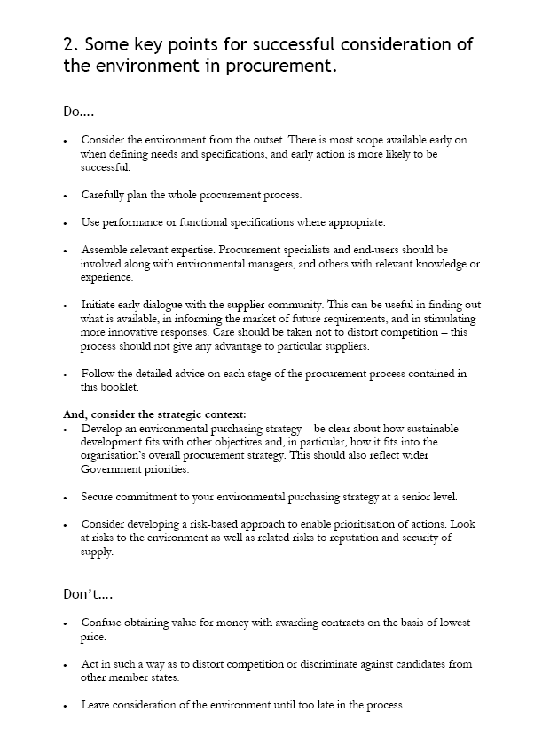
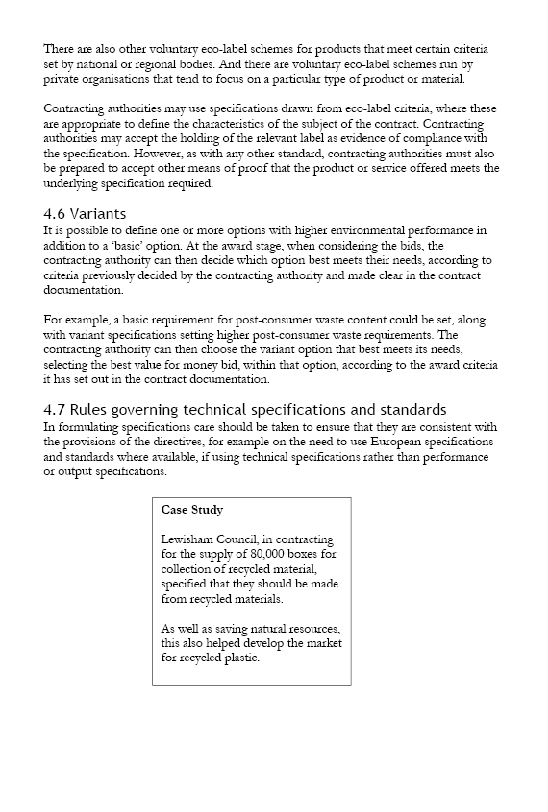
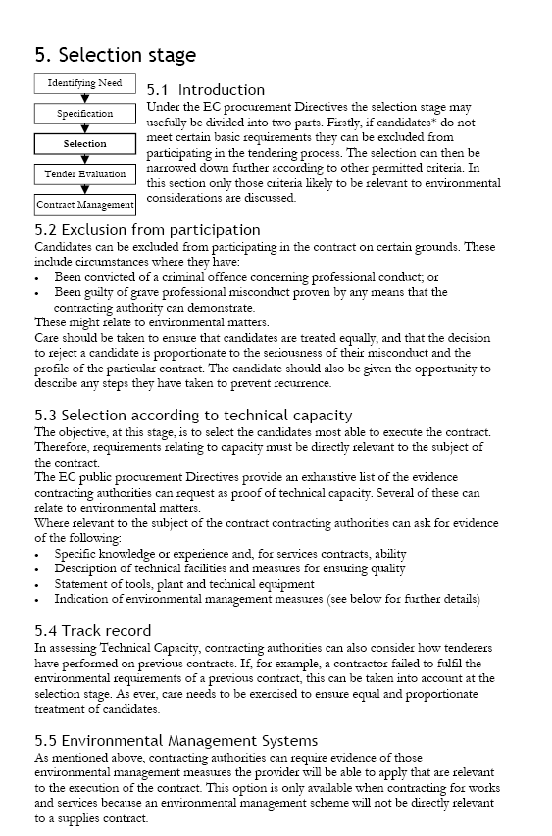
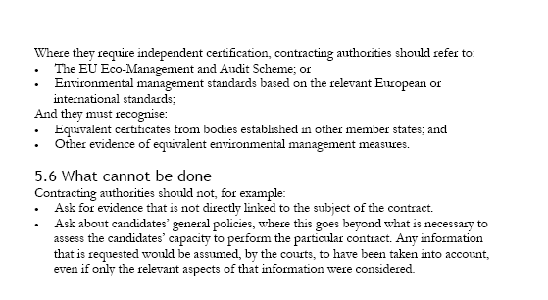
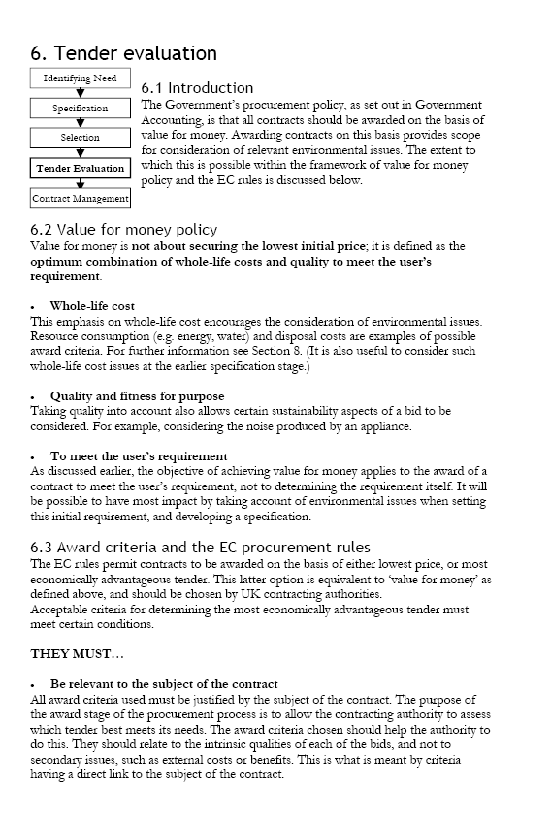
· A checklist from DEFRA/OGC for successful consideration of the environment in procurement is attached at Annexe A. Key messages include the importance of considering environmental factors from the outset of any procurement project
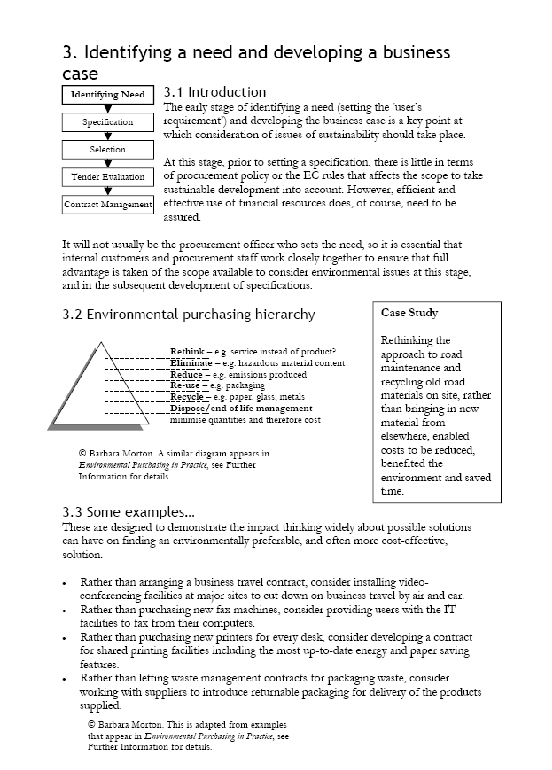
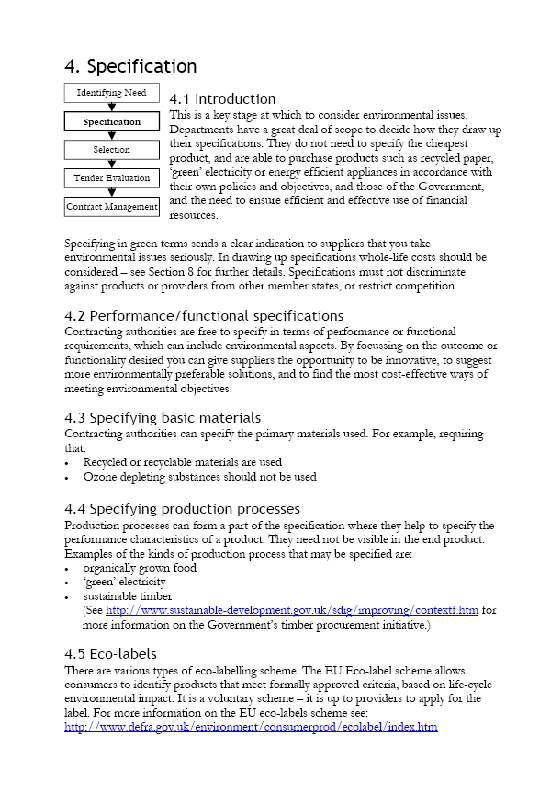
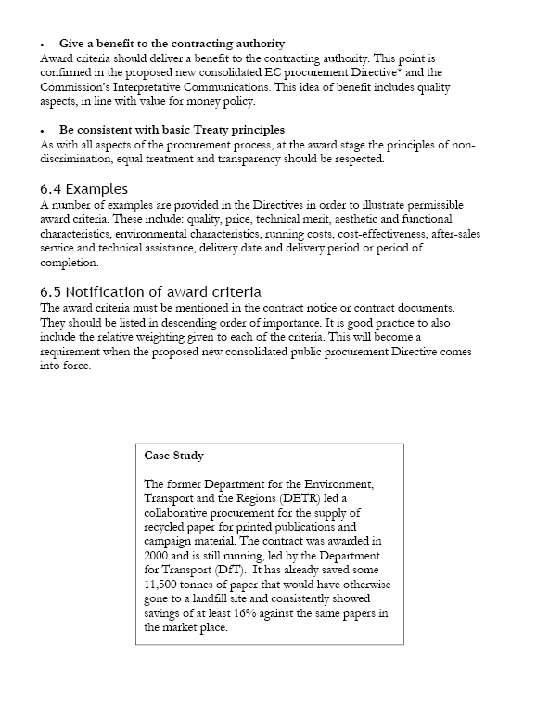
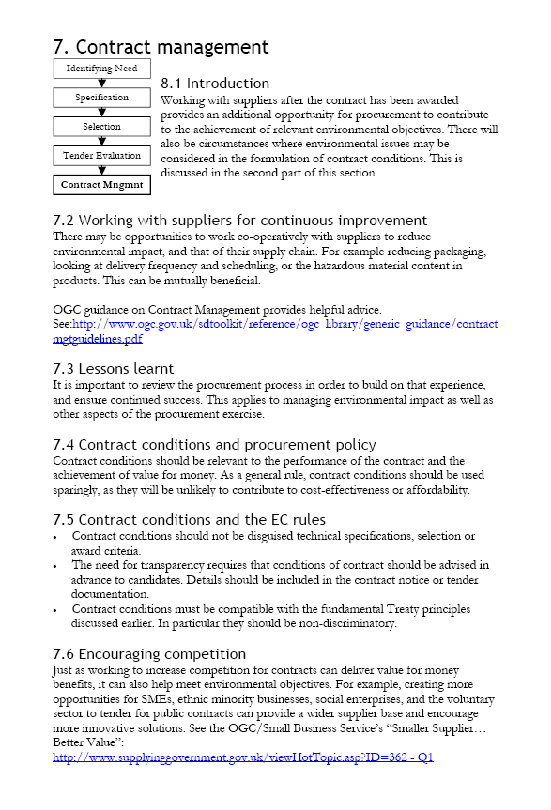
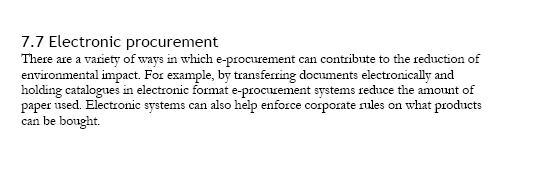
· DEFRA/OGC guidance on the full sustainable procurement cycle (from identifying a need, to managing contractors) can be found at Annexe B.
2.2 Social factors:
· More intelligent government procurement has the capacity to shape the market in offering more innovative and effective products and services. (`Transforming Government Procurement')
· Whole-life approaches towards procurement encourage the submission of more innovative solutions to procurement problems and are more likely to be inclusive for small and medium sized businesses and social enterprise.
· All public sector organisations are increasingly seeking to minimise the risk to their reputation and achievement of sustainable development goals (through the application of government-endorsed best practice guidance) - they will need to demonstrate how their activities and those in their supply-chain are `low risk'. (Action Plan)
· The Sustainable Procurement Action Plan encourages commissioning with Third Sector providers and recognises the innovation and responsive services that this Sector can offer. Promoting the use of social clauses where suppliers such as social enterprises can, as service providers, use their innovation and enterprise alongside a focus on delivering social benefits. This allows commissioners to achieve broader outcomes than just the main deliverable of a contract.
· Guidance on when consideration of social factors in procurement should take place is broadly similar to the guidance provided by DEFRA/OGC on sustainable procurement (see Annexe B).
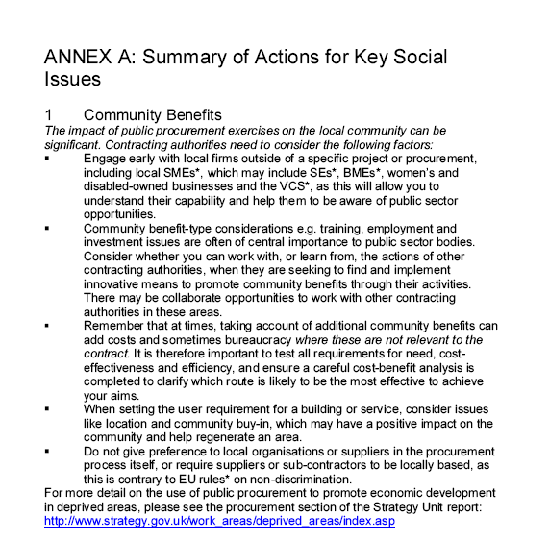
· An OGC checklist for the consideration of social factors in procurement is at Annexe C. Key messages include the importance of early engagement with local firms, including Small and Medium Sized Enterprises (including Social Enterprise) and the voluntary and community sector.
2.3 Economic factors:
· Outcome-based and whole-life value approaches to procurement should be the norm to encourage more innovative solutions to problems and to increase value for money and sustainable procurement practices. An example of this would be a building that incorporates energy saving features that cost more up-front than more standard buildings, but these costs will be more than offset during the life of the building due to lower energy bills. This model represents good value for money and is good for the environment. Whole-life costing should consider:
o Acquisition costs
o Operating costs
o Disposal costs
· Acting collectively, rather than through separate departmental action, can be an important driver of value for money. This is particularly relevant in areas of common spend like commodity goods and services. (Transforming: 2.13)
· At central government level, barriers to choosing sustainable solutions can be found in budgeting arrangements and performance frameworks.
2.4 Procurement expertise and training:
· Encouraging innovation is key: not over-stipulating when putting together requirements for products and services and instead allowing organisations to come forward with innovative solutions to underlying problems. A recent example of this model has been in the prison service:
The prison service buys around 60,000 flame retardant foam mattresses and pillows, disposing of around 40,000 each year to landfill with the remainder classed as clinical or hazardous waste, incurring high disposal costs. Using the Forward Commitment Procurement model2, the prison service received over 35 detailed responses to a call for innovative solutions, submitted by multinationals, small and medium enterprises and social enterprises. These ranged from entirely new designs using smart materials that eliminate waste completely to alternative commercial and logistical arrangements, and community reuse and recycling schemes.
Transforming Government Procurement: Box 1.5: Innovation to improve services and value for money.
· Procurement should be at the heart of delivering public service outcomes so that a strong link between policy (what is required), procurement (what is bought, how, on what terms, and how it is managed), and affordability. For policy and service delivery to be effective, procurement issues need to be integrated at an early stage into defining public service outcomes. (Transforming Government Procurement: Box 2.2: The government procurement vision)
· Setting a procurement policy and best practice framework, standards and performance measures against which all departments are judged is considered good practice. UK Government sustainable procurement policy and guidance has developed on an ad hoc basis and is driven by particular departmental priorities. The Sustainable Procurement Action Plan states that this has not provided sufficient clarity for practitioners or suppliers on government's overall priorities and so now requires departments to work more collaboratively and use centralised procurement policy and practice where possible.
· These standards should be monitored to ensure that departments meet the required standards, helping to build and increase professional procurement capacity where necessary.
· Staff involved in procurement should be given the right level of training and should have their skills matched to the procurement activity they are tasked with undertaking. Procurement staff should understand that good procurement is not just about driving down contract costs: they should be expert in applying the principles of value for money on a whole-life costing basis.
· Embedding common standards and skill sets across government procurers through a programme of training and development is encouraged. (Transforming Government Procurement: 2.5)
· Public organisations should ensure that procurement professionals are brought in at the earliest stages of projects, where their skills and knowledge are likely to have most impact (Transforming Government Procurement)
· The OGC Gateway Process is considered to be good practice, particularly for larger projects. It examines programmes and projects at key decision points in their lifecycle it looks ahead to provide assurance that they can progress successfully to the next stage; the process is best practice in central civil government, the health sector, local government and Defence.
OGC Gateway Reviews are applicable to a wide range of programmes and projects including:
o Policy development and implementation
o Organisational change and other change initiatives
o Acquisition programmes and projects
o Property/construction developments
o IT enabled business change
o Procurements using or establishing framework arrangements
· Gateway reviews typically take place at the following stages of a procurement project:
o When the business case is being developed and there is maximum scope to influence the outcome of a project and approach to procurement before too many issues become set in stone. This can examine if the project meets the business need, is achievable, with a wide enough range of options explored and likely to achieve value for money.
o Before the project goes out to tender, to test if the specification of the requirement is clear and unambiguous, all the procurement options have been explored, and there is a realistic prospect of success
o Following the assessment of bids, but before the award of the contract, to check that the contract decision is likely to deliver what is needed on time, within budget, and value for money.
(Transforming Government Procurement, 2.5))
3. The current situation in Hampshire - Procurement
3.1 Within HCC's portfolio of procurement activity, furniture and fittings account for approximately £4mio of the total £553mio portfolio and are classified as `routine, low risk, low value' items. However, it has been recognised that it may be helpful to test current arrangements for the purchasing of furniture to see if they are sufficiently robust and whether greater value for money could be achieved through more central prescription in purchasing arrangements.
3.2 Hampshire County Council's Corporate Procurement Strategy 2006-8 outlines the Council's key aims and objectives in procurement and the key sections of this Strategy are summarised in sections 3.3 - 3.5 below.
3.3 Selected Key Performance Indicators for Procurement relevant to scrutiny review (from the Consolidated Action Plan of the Corporate Procurement Strategy 2006-8):
Performance Indicator |
Current performance at April 06 |
Target |
Number of staff attending procurement training |
630 |
850 by Dec 08 |
Operating effective Corporate and Departmental Gateway Review processes for appropriate projects |
March 07 | |
Operating a consistent corporate social responsibility strategy for equality and diversity, fair trade, ethical purchasing and sustainability in procurement as part of the Gateway Review process for major projects |
March 07 | |
Inviting potential suppliers to propose additional community benefits for major contracts |
July 07 |
3.4 Factors relating to Providing Leadership and Building Capacity (excerpt from Corporate Procurement Strategy)
3.4.1 Members and staff actively promote the strategic importance of good procurement practice. HCC has a clear structure and accountability for procurement strategy, development and practice. However, in order to improve further, it has been recognised that capacity and performance in procurement would be improved by:
· Operating effective Corporate and Departmental Gateway Review processes for appropriate projects
· Measuring performance through the development of Key Performance Indicators (KPIs) for procurement
· Using a standard corporate contracts register in all departments
3.4.2 This will help to ensure that we are meeting requirements, assessing performance, consolidating learning and maximising impact in key areas such as:
· sustainability
· whole life costs
· equality and diversity
· business continuity
· value for money
· risk management
· smaller businesses
· other community benefits
3.4 Stimulating markets and achieving community benefits (excerpt from Corporate Procurement Strategy)
3.5.1 Aims in this area are:
· To encourage a competitive and varied supply market (including with voluntary and community groups and social enterprises)
· To identify efficiency savings
· To promote sustainable procurement and whole life costing to protect the environment and assist local suppliers, to include the following:
o active promotion of sustainable production and consumption, in particular of eco-labelled, organic, ethical and fair trade products
o a commitment to the UK government timber procurement policy which requires central government actively to seek to buy timber from legal and sustainable sources
· To support the aims of HCC's Corporate and Community Strategies
· All the above will be taken into account at each stage of the procurement process, that being:
o assessing needs
o service design
o supplier short listing
o supplier selection
o assessing supplier performance / contract management.
3.5.2 Current status of HCC procurement in achieving community benefits:
· £200m a year is spent with local suppliers
· £134m a year is spent with small and medium sized enterprises
· 87% of our 25,000 suppliers are small and medium sized enterprises
· £13m a year is spent with new businesses
· at least £50m a year is spent with third sector suppliers
· working with external trade bodies through seminars, training and roadshows
· holding meet the buyer events and supplier briefings
· early contractor involvement in large projects
· the County Council is a signatory to the Aalborg Commitments
· procuring over 2,000 environmentally friendly products
· timber and timber based products procured from legal sources which meet the standards of the Forest Stewardship Council or equivalent certification schemes
· promoting use of the Forum for the Future's Sustainable Procurement Tool.
· guidance issued on workforce matters in contracts
· standard notes of guidance for suppliers and contract terms and conditions for sustainability, equality and diversity and health and safety
· regular supplier surveys
· use and promotion of:
- Hampshire Compact
- Hampshire Economic Partnership
- Hampshire Strategic Partnership
- Local Strategic Partnerships
- Community Action Hampshire
- Small Business Friendly Concordat
· over £2.8m procurement savings achieved since 2004/05.
3.5.3 To improve performance in providing community benefits through procurement, HCC needs to:
· Operate a consistent corporate social responsibility strategy for equality and diversity, fair trade, ethical purchasing and sustainability in procurement as part of the Gateway Review process for major projects
· Invite potential suppliers to propose additional community benefits for major contracts
· Develop greater consistency (and simplification where appropriate) in procurement documentation for suppliers, particularly at pre-qualification stage. This will assist all organisations, and in particular, small and medium sized enterprises and the third sector in working with us
· Improve contract management procedures in proportion to the level of risk and value.
4. The current situation in Hampshire - Management of procurement: HCC's structures and accountabilities
4.1 Service and Budget Managers are responsible for managing the delivery of the County Council's objectives through their own service plans. They have devolved responsibility for service planning, budget management and procurement activities. Service and budget managers are therefore key to ensuring the effective adoption and delivery of the Corporate Procurement Strategy.
4.2 Within Property Business and Regulatory Services, the Corporate Procurement and County Supplies Unit undertakes the role of a corporate procurement team and are responsible for:
· putting in place corporate arrangements for the purchase of common use goods and services (indirect supplies) on behalf of all departments and schools
· providing a procurement support and review service to departments and individual contracts
· developing procurement strategy, policies and procedures
· co-ordination and consistency within the procurement process
4.3 The Corporate Procurement Network (CPN) represents all departments and is responsible for corporate leadership of procurement activity and performance. In particular to:
· develop procurement practice across all departments
· report and improve on performance
· build more corporate procurement arrangements
· support knowledge and information sharing
4.4 Specialist Departmental Procurement Teams are responsible for assisting with specialist procurement arrangements for direct expenditure incurred in the provision of services and for ensuring that these arrangements meet the Corporate Procurement Strategy. The Departmental Procurement Teams are:
· Social Care (Adult Services and Children's Services Departments)
· Property Construction and Maintenance (Property, Business and Regulatory Services)
· Highways Construction and Maintenance (Environment Department)
· Waste Management (Environment Department)
· Passenger Transport (Environment Department)
5. The current situation in Hampshire - Recycling & Project Integra
5.1 Hampshire as a County tops national tables for diverting domestic waste from landfill, and Project Integra - the integrated waste management strategy for Hampshire - achieves a 29% (2005-6) collective recycling rate across Hampshire.
Furniture is one of the categories of waste addressed by the Project Integra solution, with waste collection centres such as the one at Bar End taking furniture for recycling.
5.2 However, commercial, industrial or trade waste is not permitted at Household Waste Recycling Centres and local authorities have no statutory obligation to collect it. Therefore, private contracts are put in place for the disposal of this waste (including HCC's own waste) and, due to the nature of these contracts it is often not possible to recycle the same material types due to the cost of services and infrastructure limitations.
5.3 Hampshire County Council promotes the Waste Exchange scheme which operates through firms and organisations in Hampshire and the surrounding area, collecting and recycling materials that are no longer needed by firms and businesses. The Project Integra website cites the following organisations which can assist with the recycling of furniture:
5.3 Project Integra also promotes the concept of buying recycled goods to help save raw materials, save energy, reduce air pollution and reduce waste for disposal.
6. The current situation in Hampshire - sustainability.
Hampshire County Council is a signatory to the Aalborg Commitments. This means that Hampshire is committed to adopting and facilitating the prudent and efficient use of resources and to encouraging sustainable production and consumption. HCC is therefore committed to work throughout its community to:
1. Avoid and reduce waste and increase re-use and recycling
2. manage and treat waste in accordance with best practice standards
3. avoid unnecessary energy consumption, and improve end-use energy efficiency
4. undertake sustainable procurement
5. actively promote sustainable production and consumption, in particular of eco-labelled, organic, ethical and fair-trade products.
7. Examples of innovation in furniture reuse and recycling
7.1 The Defra Local Authority Support webpages claim that furniture and appliance re-use organisations around the UK have reduced the amount of local authority bulky household waste over the past 25 years. With almost 300 Furniture Recycling Network members currently in the UK, receiving nearly 2 million items of furniture each year, FRN members check and refurbish furniture as necessary and pass it on to people who need it - primarily low income families, or people setting up home for the first time.
A member of the FRN called OFFERS (Office Furniture, Fittings and Recycling Scheme), collects and supplies reused and recycled office furniture and fittings and equipment donated by companies and organisations from both the private and public sectors. The items donated are passed on to community and voluntary sector groups and small start-up businesses in London.
7.2 In its 2005-6 Sustainable Development Action Plan 2005-6, the Department for Trade and Industry states that:
`...our policy on the disposal of redundant office furniture and carpets is widely-regarded as a model. For some time we have disposed of surplus items through an organisation that redistributes them after any necessary reworking.'
7.3 Croydon Council has used the Government Disposal Services Authority (DSA) - part of the Ministry of Defence - to deal with their office furniture and fitting recycling. Croydon claims to achieve the recycling or responsible disposal of 100% of their furniture and fittings and virtually no item is exempt from the scheme - even fluorescent lights. Croydon also believes that the DSA contract represents good value for money. The DSA itself claims to manage a 90% diversion from landfill in its operations.
Croydon has also carried out an exercise in understanding the value for money of various recycling schemes.
7.4 Green-Works is a charity and social enterprise which claims to protect the environment, create jobs and training whilst providing a green office solution. Their work involves passing on quality but redundant office furniture from the commercial world to charities, schools, community groups and start-up businesses across the UK, therefore diverting furniture from landfill.
Green-Works deals with all types of office furniture, including desks, filing cabinets, conference tables and chairs, pedestals, coat-stands, notice boards and stationery.
Green-Works accepts office furniture in any condition and re-uses or recycles it in an environmentally friendly and socially responsible manner.
Green-Works' claims to success include:
· For every desk that they pass on to non-profit organisations, they divert around 110kg of waste from landfill
· To date over 20,000 tonnes of furniture has been recycled
· Over 5,000 organisations have saved around £2.5m on obtaining their furniture
· 80 jobs across the UK created in furniture recycling and restoration
8. Key issues arising for scrutiny
· Understanding real value for money in procurement
· Application of whole-life costing
· Involving experienced personnel at the right stages of procurement to ensure links are made between policy and procurement
· Collaboration between departments, common frameworks, policies, consistency
· Effective scrutiny of major procurement projects at key stages i.e. through Gateway Reviews
· Early consideration of environmental and social factors, including early engagement with potential suppliers to encourage innovative and sustainable procurement solutions which provide value for money
· Financial barriers to socially and environmentally responsible procurement i.e. accounting practices
9. Bibliography/documents reviewed
Transforming Government Procurement, HM Treasury, January 2007
UK Government Sustainable Procurement Action Plan, Defra, 2007
Joint Note on Environmental Issues in Purchasing, OGC/Defra, October 2003
Social Issues in Purchasing, OGC, February 2006
Defra Local Authority Support pages (website)
Hampshire County Council Corporate Procurement Strategy
Project Integra (HCC Waste Management Strategy), website
Hampshire County Council Sustainability Strategy
ANNEXE A
DEFRA/OGC checklist
Annexe B
Annexe C