
Archived decisions
Hampshire County Council Cabinet Item 6 21 January 2008 Implementation and completion of the Extra Nursing Home and Nursing Care Extension (ENHANCE) Nursing Strategy Report of the Director of Adult Services |
Contact: Gill Duncan, Assistant Director of OP/PD on telephone number 01962 847260 or [email protected]
1. Summary
1.1 The purpose of this paper is to report to the Cabinet on the operational implementation of the ENHANCE Nursing project. The project is now complete with the last nursing home - Westholme in Winchester - opening beds in April 2007.
1.2 This paper seeks to:
· set out the background to the project
· consider the finance for the project and the impact ENHANCE has had on the budget
· highlight the impact ENHANCE has made on the performance of the County Council
· look at issues of staff recruitment and training
· briefly consider the future direction of the ENHANCE scheme
2. Recommendation
2.1 The following decision is sought:
That cabinet members are recommended to consider the contents of this document and note the successful outcome of the ENHANCE Nursing Strategy in the delivery of 10 state of the art Nursing Homes and the contribution the strategy has made to `whole system' service delivery and performance improvement.
3. Background
3.1 The ENHANCE project saw the commissioning of 10 new nursing homes in Hampshire between 2004-2007. The prime focus of this project was to develop additional long term nursing care capacity for older people by creating 500 new places.
3.2 The development of the project in 2002 was in response to closure of nursing homes in the private sector at a rate of 2-3% of the total number of beds per annum and demographic pressures resulting in high levels of elderly people being delayed in hospital (delayed transfers of care).
3.3 The project was led by HCC in partnership with the local NHS organisations in Hampshire. In developing the project, the aim was to improve the experience for service users through the design of modern facilities and provision of environments that promote dignity, privacy and security.
3.4 The ENHANCE homes are spread across the County as follows;
Name |
Location |
No of Beds |
Type of Site |
Hawthorne Court |
Sarisbury Green |
80 |
Stand alone |
Emsworth House |
Emsworth |
48 |
Joint |
Marlfield |
Alton |
40 |
Joint |
Bickerley Green |
Ringwood |
30 |
Joint |
Forest Court |
Calmore |
80 |
Stand alone |
Fleming House |
Eastleigh |
30 |
Joint |
Oakridge |
Basingstoke |
48 |
Joint |
Ticehurst |
Aldershot |
48 |
Joint |
Willow Court |
Andover |
66 |
Stand alone |
Westholme |
Winchester |
30 |
Joint |
Type of Site: Joint - nursing care extension on an existing residential site, Stand-alone - new build nursing home
3.5 The strategy was been delivered through a Section 31 agreement, made under the Health Act 1999 and the NHS bodies and Local Authorities Partnership Arrangements Regulations 2000, which allow local authorities to exercise various NHS functions. This agreement, made between seven Primary Care Trusts in Hampshire (now combined into a single Hampshire PCT) and HCC, also defines the types of nursing service that can be provided through ENHANCE to older people, aged 65 years and above - including frail elderly and dementia care - registered nursing care, respite care and continuing care.
3.6 The admission policy to the beds makes clear that residents must be assessed through the care management process, be resident in Hampshire (as defined through ordinary residence rules set out in Circular LAC 93/7) and/or have registration with a general practitioner based within the Hampshire PCT boundaries, as defined by the Section 31 agreement.
3.7 At the time of this report, 454 beds are open across Hampshire and 46 beds are being phased in as staff are recruited.
4. Finance
4.1 The original 2002 business case (prepared jointly with local health authorities and approved by the Department of Health) set out three options for capital and revenue funding for the future of nursing care, each of which aimed to cope with an
anticipated increase of client numbers from 1,300 in 2002 to 1,800 by 2007;
Option 1 Private finance initiative build (£13.7 million additional cost above 2002 funding),
Option 2 An increase in the funding per placement (Hampshire rate) to the private sector in order to stabilise the market (£23 million above 2002 funding),
Option 3 Build and manage 500 places in partnership with the NHS (£11.9 million above 2002 funding).
4.2 Option 2 of the 2002 report was based on an uplift to the Hampshire rate for the purchase of nursing care from external providers from £425 to £600 per person per week. It was anticipated that this increase would stem a decline in the numbers of external beds and stimulate the market to provide extra capacity. The business case compared these costs to the additional £11.9 million funding required for HCC to build and manage 500 new beds (Option 3).
4.3 In preparing this paper, the same assumptions have been used to compare original costings against actual costs as at 2007 and also to estimate what costs might have been if Option 2 had been chosen.
4.4 In order to do this, it is necessary to update the 2002 estimates for the cost of inflation. Since 2002 the cost of purchased external nursing care has increased by 15.5%. Therefore, the value of the 2002 costs used to evaluate the options can be repriced for Option 2 from £600 to £693 in 2007.
4.5 Client numbers in the original report were anticipated to increase from 1,300 to1,800 in 2007. Actual client numbers in October 2007 were 1,792, therefore estimates of increased demand for nursing care in the 2002 report appear to have been accurate.
4.6 The cost of purchasing care from external providers (on the basis of Option 2) would have been £65million if repriced - using the estimates above - at 2007 costs. This can be compared to current costs of care at £47 million, based upon the actual costs of the nursing homes plus the cost of purchasing external care at the current Hampshire rate for the remaining 1,300 clients.
4.7 It can therefore be established that £18 million of cost has been avoided following the 2002 decision to build the ENHANCE homes.
4.8 These savings are the result of containing the increase in demand for nursing home beds which was forecast accurately in 2002 by the creation of extra supply due to the provision of the new beds. This has had the effect of eliminating the possible increases in the Hampshire rate which would have resulted from the excess of demand over supply. By focussing our investment on the new capacity, rather than paying more for all nursing care, we have achieved better value for money. Therefore, while the actual cost of running the 500 new beds was underestimated in the 2002 business case (it is £17.2M as opposed to £11.9M), these increased costs are less than the funding which would have been required if option 2 had been approved. Net cost avoidance under this assessment methodology of 18- (17.2 - 11.9) = £12.7m.
4.9 Comparison for running costs for the Homes
4.9.1 Gross running costs for the fully opened Nursing Homes were estimated at £11.9 million in the original business case. This compares to the current projection of £17.2 million, £5.2 million higher than the business case. These increases reflect the changes that have taken place in the last 5 years in terms of dependency levels on admission to nursing care and changes in requirements set by the Commission for Social Care Inspection. This arises in two key areas staffing and running costs, the initial staffing levels were funded at 95% based on the assumption that vacancy management could be managed within these cost , this has proved unsustainable and has required additional investment of £700,000. Inflation accounts for £2.75 million over this period (pay inflation being higher over the last five years than that for the Hampshire rate), additional funding of £1million was approved in 2007/08 to increase the ratio of care staff to clients and running costs are estimated to be £800,000 higher than originally forecast. The running costs are made up of additional equipment and non staff costs such as pressure relieving mattresses, moving and handling equipment and continence products to support the higher than originally planned for levels of dependency.
4.10 Capital Funding
4.10.1 The capital budget for the ENHANCE project was £60 million. The full capital contribution was received from the NHS and the programme was delivered within budget and agreed timescales.
4.11 Funded Nursing Care
4.11.1 Funded (previously known as `free') nursing care is an amount paid by the NHS towards the contribution to the residents' care made by a registered nurse.
4.11.2 The revenue budget for the nursing homes in 2002 included provision for funded nursing care at £1.6 million. This was based upon an assumption that 30% of the clients in the homes would attract high levels of support following their classification by PCT assessors as high dependency. The number of clients actually granted high level support from the NHS only equated to 6% of clients. However, the subsequent consolidation of all care payments into a single banding (from 1 October 2007) has redressed this position and an estimate £2.3 million of funded nursing care is now forecast.
4.12 Continuing Health Care (CHC)
4.12.1 CHC is care that is fully paid by the NHS on the basis of a client being assessed as meeting the eligibility criteria for this.
4.12.2 It was anticipated, at the beginning of the ENHANCE scheme that a number of the residents within the homes would be entitled to CHC funding. These residents often require a great deal of additional staff input - over and above that which is funded in the base budgets - and the cost of this is borne by the home until CHC funding is approved. However, results from the health panels were not as anticipated and during 2006/07 only 2 residents were re-designated as CHC.
4.12.3 In response to this, during 2007/08, a nurse was seconded from within HCC to work in the ENHANCE homes to identify appropriate clients, undertake assessments and follow the CHC applications through the complex system to the NHS panel. This has proved successful and, as a result, in October 2007 there are now 9 CHC residents within the homes with a further 9 applications waiting to go to the panel. Each successful application ensures that the care these individuals require is properly secured and also releases pressure on social care budgets.
4.12.4 The funding transferred from health during 2007/08, to cover the CHC clients in the ENHANCE homes is estimated to be £450,000.
5. Performance and Quality
5.1 Delayed Transfers of Care
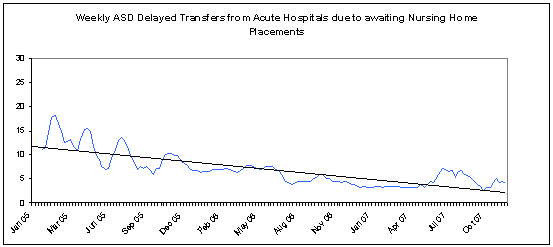
5.1.1 One of the major objectives of the ENHANCE project was to halt and reverse the steady increase in delayed transfers of care as in 2002, Hampshire had one of the worst national positions for people waiting in hospital for nursing home placement.
5.1.2 The first ENHANCE beds opened, in line with planning, in 2005 with the majority opened in 2005/06.
Source: STEIS (Strategic Executive Information System - Department of Health)
5.1.3 The number of delays awaiting nursing home placement has shown a steady decrease since January 2005 and overall, the delayed transfer of care Performance Assessment Framework (PAF) indicator has steadily improved. It is now below the comparator group average (for other local authorities) of 33.8 weekly delays per 100,000 65+ population, with the average HCC delays - for the full year up to October 2007 - standing at 17.3 per week.
5.1.4 From the information above, it is clear that the provision of 500 additional nursing home beds has had a major influence on the success HCC have seen in reducing delayed transfers and the project has therefore successfully delivered this objective.
5.2 Bed Occupancy
5.2.1 The occupancy target for all in-house residential and nursing provision is set at 95%. This allows for the maximum use to be made of the beds whilst also allowing for turnover of residents.
5.2.2 As each of the homes have opened, the beds have been filled incrementally in line with our ability to recruit staff. Hence, as at October 2007, the average occupancy of all the beds for the year to date is 92%. However, for the actual month of October, six of the nursing units are exceeding 95% and four - including two with specific recruitment difficulties - are running between 88-94%. This will improve as staff are recruited.
5.3 Quality Rating of ENHANCE Homes
5.3.1 All of HCC nursing and residential units are currently inspected by the Commission for Social Care Inspection (CSCI). These inspections are based on the National Minimum Standards as laid out in the Care Standards Act 2000. The performance ratings are based on a number of elements and can be `excellent', `good', `adequate' or `poor'.
5.3.2 All of our homes have recently been inspected and all, apart from one, have received `good' ratings from CSCI Inspectors. One home, Emsworth House, received an `adequate' rating based on the quality of the care plans and risk assessments and not the quality of the care delivered to the residents. Training has now been put in place in this Home to ensure record keeping is improved and it is anticipated that at the follow-up inspection, due within the next few months, this home will also be rated as `good'. Within the next round of inspections it is anticipated that homes will achieve excellent status providing they have retained good status and no requirements are placed upon them.
5.3.3 As a result of the Health and Social Care Bill (2007), in 2008 CSCI will become part of a larger new single regulator for health and social care called the Care Quality Commission. At the present time, it is unclear how this change will affect the style and content of the inspections and further guidance is awaited.
5.4 Care Governance
5.4.1 Within the ENHANCE homes, a system of care governance is in place which ensures that there is a robust approach to HCC accountabilities in relation to the care provided to residents. Broadly, care governance covers all aspects of the service that have a direct or indirect impact on delivery of care to our service users, eg, audit of care practice, incident reporting and risk management, monitoring of the experience of service users and their relatives and processes for staff training and management.
5.4.2 By way of illustration, incident reporting within the ENHANCE homes during 2006/07 highlighted that there were a number of issues of challenging behaviour from residents who were suffering from dementia. These incidents were reviewed through the care governance framework and a decision made to commission `Challenging Behaviour' training for staff within the homes.
5.5 Equipment
It became clear, after the first three homes had opened, that the dependency of the residents requiring the service was higher than originally planned for. In consequence, the blueprint for the remaining homes was changed to incorporate a much greater percentage of residents rooms with integrated ceiling track hoists to reduce pressure on staff. In addition, the existing homes had additional hoists retrofitted in order to meet the needs of residents.
5.6 Dependency of Residents
5.6.1 Once the majority of ENHANCE beds were open, two things became apparent. Firstly, as stated above, it was clear that the dependency of the residents referred to the beds was much higher than originally anticipated or planned for. In addition, many of these residents had a significant degree of dementia which often gives the added dimension of individuals being highly mobile and requiring a high proportion of direct staff supervision.
5.6.2 Secondly, in 2007/08, with the experience of two years running in some of the larger units, it became clear that whilst the original staffing estimates for nurses were correct, there was an underestimate on the numbers of care staff. This resulted in a large overspend on agency staff to ensure a safe number of carers were available on each shift.
5.6.3 It should be noted that whilst CSCI do not prescribe a staff: resident ratio within the nursing home sector, they do expect that homes can demonstrate that staff numbers are sufficient to meet the needs of the residents. During the project implementation phase, work was undertaken to estimate numbers of staff required but this was a difficult piece of work due to there being no blueprint to follow or experience from elsewhere to draw upon.
5.6.4 As a result, two major actions have been taken. Firstly, work was done to identify the manageable minimum staff: resident ratio as follows:
Ratio of care staff (nurse/carer) per resident | |
Morning shift |
1 care to 4 residents |
Afternoon shift |
1 care to 6 residents |
Night shift |
1 care to 8 residents |
5.6.5 In order to provide this level care within the homes, it was demonstrated that the staffing budgets required a further £1million in order to fund 51 full time equivalent carers. This additional funding has been identified in 2007/08 and is reflected in the running costs of £17.2 million. The homes are currently in the process of recruiting to these additional posts.
5.6.6 Secondly, a dependency tool was developed in order to measure the dependency of residents against funded staffing levels. This tool is now being used to enable Registered Managers to match dependency of residents to staff available and therefore to manage admissions appropriately.
6. Staffing
6.1 Recruitment
6.1.1 At the beginning of the project a decision was made, due to local nurse shortages, to work with the Department of Health and recruit from India. Staff from human resources and the nursing/residential home sector travelled over and recruited a total of 29 registered nurses, of which 26 still remain within HCC.
6.1.2 In addition, nurse recruitment was carried out in the UK. Efforts were made to attract local nurses and the pay scales were designed to mirror NHS scales, however, very few NHS nursing staff applied. The reasons for this are not entirely clear although anecdotally, it appears to relate to two things. Firstly, the pay scales offered within HCC have not kept pace with the changes in the NHS and are now lagging behind. Secondly, elderly care has never been seen as an attractive speciality in nursing in the UK and in consequence, nursing home roles do not draw applicants.
6.1.3 The recruitment of care assistants has been good in all areas bar two. At both Westholme in Winchester and Forest Court in Totton, it has proved very difficult to recruit in the main because the local labour pool have lots of choice of jobs at similar pay grades. In order to try and overcome this, a large advertising campaign has recently been run which included radio and adverts in free papers as these have been demonstrated as being the most effective ways to attract the staff we need. The response to this has been very good in most areas but predictably, has been low at our two difficult sites.
6.1.4 As a result, we currently still have 46 beds to open and are hopeful that the new pay and benefits deal for care staff will enable us to address some of the issues of recruitment on both these sites.
6.2 Training and development
6.2.1 There has been a great deal of investment into the ENHANCE homes in relation to training and development of staff. In the first years, the focus was very much on medication, moving and handling, equality and diversity, record keeping and other mandatory training in addition to a full induction programme.
6.2.2 In 2006/07 and 07/08, in response to service need, we have commissioned specific training as follows;
- End of Life care. This training is run alongside our colleagues in the NHS and supports the approaches outlined in the Overview and Scrutiny Committee report into this subject. All of the homes have introduced the use of the Liverpool care pathway and the Gold Standard Framework in order to ensure that residents receive the best possible care at the end of their lives.
- Dementia Care. We have commissioned a set of courses from a specialist training company which all our staff have access to. These courses are very highly rated by the staff and have made a significant difference in that staff now have a full understanding of dementia and a can employ a series of strategies in order to make the lives of the residents with this illness much more meaningful.
- Challenging Behaviour. Again, we have commissioned a course from a specialist external provider and it has been well evaluated by the staff.
7. Future Need
7.1 In terms of the future, in response to the strategic needs assessment we need to determine whether the ENHANCE homes - which currently provide high quality nursing home care - should be developed further to specialise in end of life and high end dementia care. In the latter case, these individuals are often those who are most difficult to place in the independent sector and are high cost.
7.2 Issues to be considered as part of this will be staffing levels, in order to reflect the more specialist nature of the homes and the unit cost of the beds. It will be important to move the ENHANCE homes on to a more commercial footing in recognition of the national driver for self-directed support and the potential changes which will arise from the impending Green Paper, looking at the future funding of adult social care.
8. Impact Assessments
8.1 Assessment of the Race Relations (Amendment) Act has been considered in the writing of this report. No adverse impact has been identified in terms of race, creed or gender.
9. Conclusion
9.1 In conclusion, it has been demonstrated above that the ENHANCE homes have opened successfully, are providing quality care to the residents, have significantly contributed to 'whole system' performance improvement in the reduction in delayed transfers of care and contained the cost of nursing home placements. All of the above have contributed to the achievement of the three star award made by CSCI to HCC Adult Services Department.
LINK(S) TO CORPORATE STRATEGY | ||
Yes |
No | |
Hampshire safer and more secure for all |
X | |
Maximising well-being |
X |
|
Enhancing our quality of place |
X |
|
Section 100 D - Local Government Act 1972 - background documents
The following documents discuss facts or matters on which this report, or an important part of it, is based and have been relied upon to a material extent in the preparation of this report.
NB: the list excludes:
1. Published works
2. Documents which disclose exempt or confidential information as defined in the Act.
Title Location
Nursing Care Strategy; Business Case Office of Assistant Director of OP/PD
for the development of 500 nursing
home places within Hampshire Social
Services area. Hampshire and Isle of
Wight Strategic Health Authority in
Partnership with Hampshire County
Council. November 2002