
Archived decisions
Hampshire County CouncilHealth Overview and Scrutiny Committee Item 4 5 February 2008 Inquiries Received and Action Taken Report of the Chief Executive |
Contact: Denise Holden ext. 7338
e-mail: [email protected]
1. Summary and Purpose
1.1. This report provides Members with information about the issues brought to the attention of the Committee and the response to these referrals. It sets out the inquiries received, the source of this inquiry and any action taken. Where appropriate comments have been included and copies of briefings or other information attached.
1.2. The approach adopted provides the route through which Patient and Public Involvement Forums (P&PIFs) and other partner organisations (Hampshire district councils, NHS organisations, voluntary and independent sector providers and organisations that are representative of social care service users and carers) can raise issues with the Committee.
1.3. Where inquiries raised with the Committee are already subject to monitoring or other performance management activities the action taken will be focused on the local resolution of inquiries through appropriate sign-posting to the agency best placed to respond.
1.4. Where an issue cannot be satisfactorily resolved between the parties concerned then the Committee can consider options for further action.
1.5. New issues raised with the Committee, and those that are subject to on-going reporting are set out in Table One of this report.
1.6. The recommendations included in this report support the Corporate Strategy aim of maximising wellbeing through the overview and scrutiny of health services in the Hampshire County Council area.
Table One: Inquiries Received and Action Taken
Topic/inquiry |
Source |
Action Taken |
Comment |
Fordingbridge Hospital |
Committee members |
The most recent up-date from the PCT is attached at Appendix One. Key issues for members to consider include: _ The additional resource provided in the community setting _ The impact on patients ready for discharge from hospital- how is this being evaluated _ Progress with the work of Verita (last meeting suggested a report would be available at the end of January) _ Evidence of it being unsafe to reopen the beds _ Communications with local people _ Transport for patients arrangements for patients and how this is accessed |
Members will wish to be satisfied with the grounds for continued closure to in-patient admissions. If the HOSC is not satisfied then the option exists to refer the matter to the SoS |
Recommendation: Members confirm if they are satisfied with the case for continued closure on the grounds of patient safety. | |||
Oak Park Hospital |
Chairman/committee members |
An analysis of the current proposals, and the commitments made by the PCT in 2003 are attached for consideration by members, together with the issues previously raised by the HOSC in the context of the south east capacity plan (Appendix Two). This issue will be debated in detail at the July HOSC. |
|
Recommendation: Members refer key questions to the scrutiny office by 31 May 2008. | |||
Milford on Sea War Memorial Hospital |
Chairman/Committee members |
The PCT has confirmed that the agreed changes are now in the process of implementation. |
|
Recommendation: The PCT provides an up-date on progress with the implementation programme to the HOSC in September 2008 | |||
Continence Services |
Committee Member |
· The response of the PCT to the issues raised by members is attached at Appendix Three. Further enquiries about the impact of the policy have been raised by adult services, particularly in the context of the needs of residential and nursing home clients. |
The policy sent by the PCT confirmed that people were limited to 4 pads per 24 hours. Subsequent information suggested that for new patients the limit is three pads in any 24 hours. The individual complaint is being pursued through the appropriate complaints procedure. |
Recommendation: The PCT will provide the HOSC with a response to the issues raised. | |||
Andover War Memorial Hospital |
Scheduled up-date |
WEHT will provide an up-date on progress with the implementation of the outcome of the consultation on Andover War Memorial Hospital agreed in 2006. |
|
Recommendation: Members highlight any additional information required from WEHT | |||
Ambulance services and road closures |
Committee member |
Further to the last meeting the response of the Ambulance Trust is attached at Appendix Four. A summary of further investigations undertaken by scrutiny offices is attached at Appendix 5. |
|
Recommendation: South Central Ambulance, the Street and Traffic Authorities be invited to provided the Committee with an up-dates on the implementation of the new arrangements at the HOSC meeting in December. | |||
Frimley Park Cancer Services |
County Cllr |
The correspondence to the cancer network, and the response received is attached at Appendices Six and Seven respectively |
|
Recommendation: Any additional information required by members is highlighted to the Cancer Network lead | |||
LINKs |
Scheduled up-date |
The letter confirming the funding levels for LINKs is attached at Appendix Eight |
|
Recommendation: Members are kept apprised of the interim arrangements for LINks and ensure that arrangements are in place to allow a timely response to any referrals for this new body. | |||
Aldershot MIU |
County Cllr |
The PCT has confirmed that funding for A&E services at Frimely Park is currently is through the host Surrey PCT. This includes Hampshire residents using this service. |
|
Access to health services for people who are homeless |
Committee members |
Issues relating to access to health care for people who are homeless will be the focus shared with members at the March HOSC meeting. Input will be provided by both the PCT and Trinity . |
|
Recommendation: Any specific questions to be addressed at this session are referred to the scrutiny office by 13 March. | |||
Changes to GP premises location |
Hampshire PCT P&PIF (Andover and Winchester) |
The comments provided on behalf of the HOSC (see Appendix Nine) have been shared with the P&PIF. |
Members have previously agreed this approach to inquires relating to moves of GP premises. |
Local Government & Patient Involvement in the NHS |
New Legislation |
A summary of the key implications for the HOSC arising from this Act is attached at Appendix 10. There are additionally wider implications for the County Council Scrutiny function that may need to be further consider by members as regulations and guidance is published. |
|
Recommendation: Regular up-dates are provided to members on the impact of the Act and emerging regulations/guidance | |||
Response to 2007/08 annual health checks |
HOSC Chairman |
The HOSC is asked to respond to the annual health check of NHS organisations providing services to Hampshire residents. This response needs to be evidence based and structured around the standards set out by the Healthcare Commission in the following domains: _ Safety _ Clinical & cost effectiveness _ Governance _ Patient Focus _ Accessible & responsive care _ Care environment & amenities _ Public Health A matrix of relevant issues considered by the HOSC over the last year will be shared with members for approval at the March HOSC. This will form the basis of letters to each NHS organisation to be provided by 21 April 2008. |
|
Recommendation: Members agree the process outlined for responding to NHS organisations annual health check assessment.
| |||
Hampshire PCT Performance |
Committee Members |
A summary of PCT performance against key target areas is attached at Appendix 11. |
|
Child and Adolescent Mental Health Services- North Hampshire |
Chairman |
The Committee has been alerted to changes in the management arrangements for these services Appendix 12. There will be no consequential changes in service delivery. |
|
Section 100 D - Local Government Act 1972 - background papers
The following documents disclose facts or matters on which this report, or an important part of it, is based and has been relied upon to a material extent in the preparation of this report.
NB the list excludes:
1. Published works
2. Documents that disclose exempt or confidential information as defined in the Act.
Fordingbridge Hospital Update
from Ann Smith, chief operating officer
As promised, the PCT will be issuing regular information about the situation at Fordingbridge Hospital as events unfold.
The external investigation into the quality of care provided to inpatients at Fordingbridge Hospital is continuing. We will be meeting with Vertia, the external company carrying out the investigation, at the end of the month to assess where we are with the investigation.
All staff are currently redeployed to other teams such as our rapid response service and community nursing teams or to other hospitals. The rest of the Hospital remains fully operational with outpatient and other clinics running as normal, and Ford Ward's rehabilitation gym is being used for a new falls
intervention programme which started last month.
I would like to reassure our stakeholders and local people that it is our intention to reopen the beds.
However, we must wait for the outcome of the external review before we will be in a position to give a definitive guarantee about reopening the beds, and if we were unable to safely staff the Ward it would have to remain closed. If the investigatory team establishes any evidence to suggest that it would be
safe and practicable to re-open the inpatient beds at Fordingbridge before the investigation concludes, I can assure you that we will do so.
January 4, 2008
Oak Park Community Hospital
Original service provision Minor injuries and GP OOH centre, including a pharmacy Out patients Clinics Diagnostic imaging to include ultrasound and digital fluoroscopy Endoscopy 40 GP beds 40 rehabilitation beds for older people A day hospital for older people with 25 places Rehabilitation facilities to include in patient, outpatient and community rehabilitation services Potential for inpatient beds for elderly mentally ill and post acute care. |
Current Service Provision Minor injuries Out patients clinics Diagnostic Imaging (ISTC) Endoscopy 25 inpatient beds: GP step up step down 15 place assessment/treatment/rehabilitation centre for elderly medical day care 20 place assessment/treatment/rehabilitation centre for older people with mental health problems |
Members have expressed a number of concerns about the changes to the levels of service originally planned at Oak Park Hospital particularly given the assumptions that underpin the capacity planning for south eat Hampshire which has been commented on previously (attached at Annexe One). Additionally, the HOSC meeting on 27 November, there was continuing uncertainty about the actual services that would be provided at the Oak Park site.
Specific issues for consideration include:
_ The health needs assessment that has underpinned the assumptions about services to be made available on the Oak Park site
_ changes to the population in terms of both demographics and new housing developments
_ The transport and related issues that will affect access to services
_ Previous commitments given to local people about the shape of services to be provided
_ The engagement and involvement that has taken place subsequently to inform the changes to the configuration of services
_ The potential impact of changes to other services, such as those provided in West Sussex
_ Working with partners to provide the maximum range of facilities in settings as close as possible to people homes.
Annexe One
RE/ |
|
31 June 2006 |
|
Health Overview and Scrutiny Committee | |
Elizabeth 11 Court, The Castle | |
Eileen Spiller Acting Chief Executive Hampshire & Isle of Wight SHA Oakley Road Southampton SO16 4GX |
Winchester, SO23 8UJ |
Telephone 01962 847338 | |
Fax 01962 867273 | |
E-mail [email protected] | |
www.hants.gov.uk | |
Dear Eileen
A Strategy for Sustainable Services in Portsmouth and South East Hampshire: a new direction for hospital and community services in Portsmouth and South east Hampshire
I am writing by way of follow-up to the above paper, which was shared with us in late April, and supported by the Health Authority at its meeting on 9 May. Given the concerns that we raised previously with regard to the capacity map it is regrettable that our Committee, and our counterparts in Portsmouth, were not given more of an opportunity to comment on the contents of this document, prior to it being agreed by Boards.
I am aware that Tony Horne has discussed this issue in more detail with Denise and has confirmed the view of the SHA that this is a plan primarily to ensure that the developments envisaged are firmly established in the capital planning process. I agree this is important given the anticipated PCT and SHA reconfiguration. Nevertheless there are a number of issues that we need to ensure are taken into account as this process rolls forward, not least the delays that some developments, such as Fareham Community Hospital will have on local service delivery. These are set out below and I would be grateful for your confirmation that the points that we raise will be dealt with as the planning process proceeds and business cases are developed.
· Clarity about the affordability of the plans for service delivery. The Committee has received repeated assurances from both the PCTs and the SHA that the PFI, and associated plans for community hospitals and services are affordable. This document makes it clear that this is not the case, in particular we are concerned that the costs of implementing the proposals will need to be made from efficiency savings and the health economy in the south east working in concert. Our experiences suggest that there are a number of risks associated with this approach to funding, which are likely to be exacerbated as PHT moves to Foundation Status and a single PCT for Hampshire is established.
· The needs assessment and demand projections included in the paper are not sufficiently detailed to give confidence in the suggested approach to the network of community hospitals and resources. This needs to be addressed as a priority as plans and programmes are developed. We note for example that the discussion about the form of Fareham Community Hospital does not take account of the anticipated increase of 10,000 new homes in the area as set out in the South East Development Plan or indeed the needs of the population of Whitely, parts of which looks more naturally towards Fareham and Portsmouth rather than Winchester. We remain unconvinced that the case has been made for reducing bed numbers in Fareham and Gosport community hospitals given these developments and the changing demographics of the current population. Is it expected for example that increased investment in public health and preventative programmes will impact on the needs of this population at an early juncture? If so this needs to be detailed.
Account also need to be taken of capacity. The ISTC at St Mary's is already running well below funded capacity resulting in costs for operations being well above those of the NHS. This does not build confidence that the assumptions made are robust.
· Joint partnership working. There is reference to this in the paper but this is not developed to give any indication of where or when partnership arrangements to achieve this (e.g. around shared services or facilities ) would be explored. Given the direction of travel set by the recent White Paper this is a major concern that needs to be addressed as a matter of urgency.
· Interdependencies between QA and community hospitals. There is tantalising reference to this in section 4 of the document but this is not developed anywhere else in the paper. This needs to be addressed to give a clear picture of the pattern of service delivery that is being promulgated. The expectations of the local population about community services have been raised on a number of occasions, only to have commitments either changed or deferred.
If the NHS in the south east genuinely wishes to engage with their population then this point needs to be addressed. The references to the needs for community hospital beds in the document illustrates this point well. Assumptions about beds to be provided in the community are constantly revised downwards without any discussion with local people about the consequences of this on care provision. The FBC for QA, which is quoted in this document is clear about the number of beds that are needed in the community. This plan seems to suggest that this has changed but gives no real substance to either the evidence supporting this assumption or the way in which this will affect the different community developments.
· Impact on service provision. Our greatest concern relates to the potential impact of these proposals on service provision in south east Hampshire, particularly with regard to access across an area where there are significant difficulties in transport networks. We have previously commented on services for older people, including elderly mental health and remain unclear that there is yet a coherent strategy for this vulnerable group. Similarly we noted the references to LBHUs in the document with no information on the way in which these patients will be affected and we are very concerned about the lack of consultation with service users on these changes. Early work needs to be done to address this issue. Given the way in which locality commissioning is intended to develop it would also be helpful to have confirmation that the suggested direction of travel outlined in the document has the support of GPs.
In addition to your comments on the above I think it would also be helpful to have your assurance that, as the planning process develops, the NHS in south east Hampshire will ensure that its duties under section 11 and section 7 of the Health and Social Care Act are fully discharged to ensure that services changes are meeting the needs of local people.
I look forward to hearing from you.
Yours sincerely
Cllr Dr Raymond J Ellis C.Chem FRSC
Chairman, Health Overview and Scrutiny Committee
cc |
Cllr Ken Thornber Cllr P Banks Cllr F Hindson Health Overview and Scrutiny Committee Cllr David Stephen Butler, Chairman, Portsmouth City HOSC Cllr Jennifer Gray, East Hants District Council Cllr Brian Bayford, Fareham Borough Council Cllr Roger Allan, Gosport Borough Council Leader, Havant Borough Council Mark Hoban MP Rt Hon Michael Mates MP Peter Viggers MP David Willetts MP John Wilderspin, Chief Executive, East Hants/Fareham & Gosport PCT Sheila Clark, Chief Executive, Portsmouth City PCT Ursula Ward, Chief Executive, Portsmouth Hospitals NHS Trust Tony Horne, Director of Strategic Planning, SHA |
Appendix Three: Hampshire PCT- commissioning services for people with requiring continence support.
CONTINENCE SERVICE UPDATE
1. BACKGROUND
1.1. This paper summarises the range and scope of continence services both commissioned and provided by Hampshire Primary Care Trust [PCT], and sets out a way forward for improving access and experience of users of this key service.
2. CURRENT SERVICES
2.1. Hampshire PCT only provides a small proportion of continence services for our registered population: specifically, the population of the former mid-Hampshire PCT and North Hampshire PCT. The PCT commissions services from the following providers for the rest of the Hampshire population:
· New Forest and Eastleigh & Test Valley South - service commissioned from Southampton City PCT
· Ringwood & Fordingbridge - service commissioned from Salisbury Health Care Trust;
· South East Hampshire - service is commissioned from Portsmouth City PCT;
· Former Blackwater Valley and Hart PCT - service commissioned from
· As with a number of services, the PCT has not yet been able to undertake a comprehensive review of these contracts and the specifications underpinning them.
3. SERVICE QUALITY
Assessment
3.1. In all areas, the primary assessment for continence is by community nursing staff, whom will have been trained in continence management. The ethos of any assessment is to promote continence. Patients identified as having more complex needs are referred to the continence service for a specialist assessment. This assessment will typically come from GP, community nurse or, in the west of the county, self-referral.
Products
3.2. There is currently some variation across Hampshire in the policy relating to the number of pads provided to patients. In the west there is a policy that no more than 4 pads per day can be provided without specialist assessment. In the north, the policy allows for no more than 5 pads per day to be supplied without specialist assessment.
3.3. The evidence base to support current continence policies is set out in the following documents:
· DoH (2000) Good Practice in Continence Services
· DoH (2001) The Essence of Care: Patient Focussed Benchmarking for Healthcare Practitioners
3.4. Whilst it is the view of the PCT that currently the majority of patients are provided with sufficient pads according to their assessed needs, the variation in policy is confusing to service users and may potentially inhibit or delay clinicians from ensuring service users receive the right service as swiftly as possible. Whilst the PCT seeks to guard against this by ensuring in-house services undertake clinical audit and customer satisfaction surveys, there have been a number of complaints relating to this service, which the PCT recognises is important.
Delivery Models
3.5. There is also variation of product delivery models. In the North, patients need to collect pads from GP surgeries. In the east, community nurses either have to deliver the products or patients can collect products from surgeries. In the west, service providers operate a home delivery service, with pads delivered directly to patient's homes.
4. WAY FORWARD
4.1. The PCT has reflected on the concerns expressed by service users and the current variation in service provision and recognises the need to ensure a consistent continent service and policy is in place across Hampshire for 2008/2009. The PCT will achieve this by developing a service specification, in line with best practice guidelines, based on assessed need. The cost implications of moving to a HPCT wide single service will be determined and incorporated into the operating plan for 2008/09.
4.2. As part of this service development the PCT will seek to ensure a consistent approach to delivery is in operation for all service users and that best use of resources is achieved through improved procurement arrangements.
4.3. On a short term basis, the PCT has issued an instruction to all service providers that they should ensure that all clients receive the number of pads that are sufficient to meet their assessed needs. This will remove the variation in policy across Hampshire and ensure that individuals receive an adequate daily supply of pads. Referrals to specialist continence services will need to continue, but community nurses will be able to supply an adequate number of pads pending such a referral.
Appendix Four: South Central Response to HOSC inquiry about road closures
Thank you for your e-mail dated 22 November concerning a question raised at your November meeting.
This related to how the ambulance service is kept informed of road closures or similar disruptions to the road system and how this information is communicated to crews.
As a service we are generally updated and often involved in the initial planning stages when it concerns major road closures or disruptions which are due to continue for a sustained period of time. An example of this is the work planned in Basingstoke next year. This work, a housing development, will no doubt have a major impact on our operational performance if we did nothing at all as our station is positioned opposite the proposed development area, and will restrict access on the main road. We have therefore negotiated with the contractors for the provision of alternative accommodation for the duration of the project which they will provide.
Information of this type is communicated with crews well in advance of the disruption and our standby and deployment points are amended to ensure response times are not adversely affected.
Emergency and temporary road closure / work notices received are passed onto stations and crews for information, but is then reliant on crews to use this information as we do not have the ability to upload information of this kind to our navigation systems. We have however identified that not all emergency or temporary road closures / works are passed onto the service. This is an area I have requested further work and investigation and we would be pleased to work with your members to ensure a robust process of information sharing is in place.
Appendix Five: HOSC Briefing Note: Road works and closures: communication process in principle
1. Introduction
1.1 At a recent meeting of the Health Overview and Scrutiny Committee a Member cited an instance of where an ambulance crew had encountered a closed road whilst on route to an emergency call. Subsequently, the Committee agreed that more information should be sought about the process involved from the point at which road works or a road closure is deemed necessary to the point at which an emergency service may be despatched to a call that would normally include the road affected by the closure. It must, however, be acknowledged that it is believed that overall, the system or systems in place, by and large, work.
1.2 This paper presents the results of a preliminary investigation into the current communication process or processes involved - in principle. On the basis of this early research an indicative SWOT analysis of the situation suggests areas of strength, weakness, opportunity and threat. It is recognised that further evidence would be required in order to be sure that robust processes exist end to end, and that the risk of communication failure is as low as it can be made.
1.3 The diagram below summarises the basic process to the point where emergency services gain the information about road closures. In practice each emergency service has its own processes and a number of local interfaces for getting the information, and then for distributing appropriately to vehicle crews. The logical flow in the diagram starts at the top and moves downwards, but it does not indicate the necessary iteration, updates and dialogue between the Street Authority as co-ordinator, and undertakers and the Highway Authority in order to co-ordinate works effectively. It should be noted that the Highway Authority and Street Authority are both ultimately functions of the County Council.
1.4 Note that Hampshire County Council has several functions with respect to roads. In simple terms, for the purposes of this paper, Hampshire is the:
· Highway Authority which is responsible for planning and maintenance of roads;
· Traffic Authority which is responsible for managing the road network to secure expeditious movement of traffic;
· Street Authority which, amongst other things, is responsible for registering and managing the co-ordination of road works.
(trunk and private roads are excluded)
Recommendation
That South Central Ambulance Service present to the Health Overview and Scrutiny Committee the results of their review of processes and procedures for the alerting of ambulance crews to road closures or road works and their avoidance, particularly focusing on communication and taking into account the implementation of new regulations and processes that come into force in April 2008. For presentation at the September 2008 meeting (papers required by 5 September).
That the Street and Traffic Authorities confirm their procedures for ascertaining and communicating information about road closures with respect to emergency services, for presentation at the September 2008 meeting (papers required by 5 September)
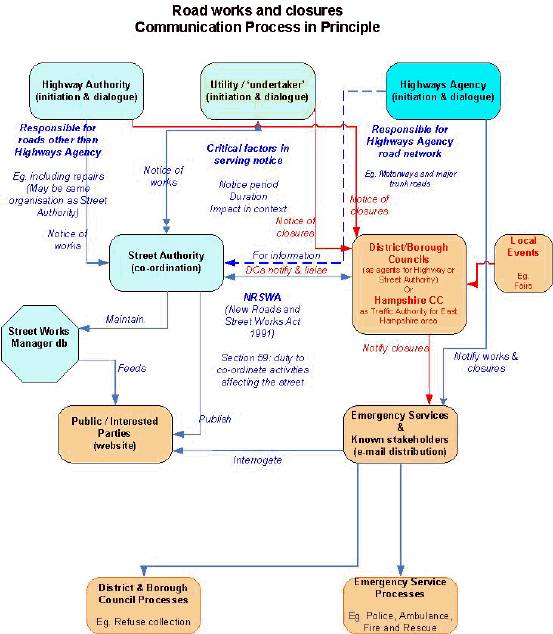
Note: road closures are of several types, each of which is associated with different requirements and processes for notification. For the purposes of this report, the most common and relevant type of closure is a `temporary' closure. The issue and notification of temporary notices is the responsibility of the Traffic Authority. In the 1992 Road Traffic Procedure Regulations, the authority is required to ".. notify the police, the fire authority...and any other traffic authority", whilst in the Code of Practice for the Co-ordination of Street Works, the authority is told they "...must give notice, on or before the day the notice is issued, to the emergency services,..." The standard practice in Hampshire is for the Street Authority to notify the police, fire and ambulance services of temporary road closures.
2. Annotations for Communication Process Diagram
2.1 Highway Authority(HA)
· In Hampshire, the County Council is the Highway Authority.
· The county is divided into four administrative/operational areas: north; south; east and west.
· The Highway Authority does not have to `serve notice' to the Street Authority, but the New Roads & Street Works Act 1991 and Traffic Management Act 2004, Statutory Code of Practice for co-ordination of street works, advises that street authorities should "seek to operate under the same principles" (Section 2.2.1) as utility undertakers proposing street works. Currently the Highway Authority has to 'register' it's works, which is, more or less, the same thing, however it might require extra resources for the Highway Authority.
2.2 Utilities / Undertakers
· Undertakers, i.e. someone or body that is licensed to undertake road work, such as a public utility company or their licensed agent.
· Should follow the Highways Authority and Utilities Committee (HAUC) Code of Practice in complying with minimum notice periods for road works.
· Appropriate recommended notice periods are primarily based on criteria related to the potential disruption that may be caused by the work. The guidelines also include notice periods or exclusions for emergency work, depending upon circumstances.
2.3 Highways Agency
· Highways arm of the Department of Transport
· Responsible for motorways and primary/trunk routes
· Hampshire comes within Area 3 of the Agency's network.
· Notifies Street Authority for information only.
· Notifies emergency services and other stakeholders via an e-mail `diary'.
2.4 Local Events
· Primarily a district function under the Town Police Clauses Act 1847
· Can be ad hoc, there is currently no legal requirement to notify road closures due to events, but the Street Authority plans to look at this issue. It might be possible for local events, such as road closures due to the Farnborough Air Show to be loaded onto the Street Works Manager database.
2.5 Street Authority
· Distinct function from Highway Authority and Traffic Authority.
· Has a general duty to co-ordinate works.
· In Hampshire the street authority has co-ordinators in each Highway Authority area to liaise with local authorities as agents for the HA.
· The Street Authority receives Notice from undertakers about road works. They also receive information from the Highway Authority about HCC works; all of this goes onto Street Works Manager. The Authority is also consulted about closures and diversion routes for works and events from district councils. (note: a Notice is a legal document; only undertakers actually serve Notices)
· Actively manages and liaises with councils and undertakers to ensure effective and efficient co-ordination, also minimal disruption to traffic and the public.
· Maintains, as a duty, a register of all activities within Hampshire and publishes this information on the Elgin website.
· Receives information from the Highways Agency of works and closures that have potential to impact traffic on other roads in the county
· The Street Authority also receives information about any licences issued by its local offices to undertake works on the highway (e.g., skips, scaffold etc). This information is automatically loaded onto Street Works Manager. They have plans to load other licensed activities onto Street Works Manager as well. (everything loaded onto Street Works Manager goes onto Elgin)
2.6 Traffic Authority
· Distinct function from Street Authority and Highway Authority.
· Has a general duty to facilitate the expeditious movement of traffic on road networks.
· In Hampshire the Council is the Traffic Authority, however the district or borough councils act as agents, except for Each Hampshire, in which case the role falls to a central unit at the County.
· Must be informed by works undertakers as soon as practicable in the case of temporary works that may require a road closure or traffic restriction.
· Has a duty to notify the police, other emergency services and any other affected traffic authorities.
2.7 District/Borough Councils
· Act as agents for the Traffic Authority with respect to road closures, with the exception of East Hampshire. In this latter case road closures are handled by the County Council in the Democratic Services section!
· Receive notice of road closures from the Traffic Authority and undertakers; negotiation around the works/closures may occur between the Street Authority and undertakers in order to maximise co-ordination.
· Receive information concerning events from event organisers, and provide notice to the Street Authority of road closures due to local `events'.
· Notify emergency services and other stakeholders of pending closures.
2.8 Street Works Manager database
· A robust and effective database or register of works and closures, maintained by the Street Authority to facilitate management and co-ordination of works.
· Used to feed the Elgin website which is available to emergency services, other stakeholders and the public.
· If the Elgin website is to be used or interrogated by emergency services to obtain road works and road closures information, then the system should be tested by stakeholder users, with a view to potentially modify/augment if necessary. This would have to be done after 1 April using a standard testing regime. Current legislation makes provision of closure information via the works Notice as `optional'. The TMA 2004 amendments to the Co-ordination Code make this information `mandatory'. So, as of 1 April 2008 Elgin should list all road works, skips, undertaker works and closures associated with works. (The only closures missing should be the closures for events or incidents).
2.9 Emergency Services
· Emergency services would require processes such as for:
o Obtaining information about road closures.
o Obtaining information about re-routing around road closures. This should be on the information passed to them from the district councils. For major works (e.g. Romsey Rd closure) the Street Authority meets with all emergency services to discuss the problems and the routes. Diversionary routes are not available on Elgin, only the closure itself. To put diversion routes on Elgin would be a significant IT project.
o Disseminating the information to all relevant crews.
o Ensuring that all crews are aware of road closures and of re-routing options.
o Ensuring that conflict is avoided between GPS routing technology cannot and information received about closed roads.
o Ensuring that road opening information is obtained from the Highways Agency and District Councils.
o Ensuring that road opening information is communicated to all crews.
o Ensuring that operational management provides training programmes for the use of Elgin, and potentially provide input into its usability, such as being able to identify latest updates for a given area.
· Currently the processes used by each emergency service are `black boxes', i.e. they are not understood in this preliminary research. Information provided, indicates that the Ambulance Service is currently reviewing its processes.
3. SWOT (Strengths, Weaknesses, Opportunities and Threats) Analysis
3.1 Preliminary work suggests that the current ways of working, whilst normally effective, may benefit from a structured evaluation based on a SWOT analysis. It is probably more valuable to focus more on the strengths and weaknesses of the system than on organisations, per se.-engths
3.2 The following documents provide a framework and guidance, including the definition of responsibilities of parties and stakeholders. They also include detailed codes of practice which provide additional incentives to improve systems :
· Highways Act 1980
· New Roads and Street Works Act 1991 and Traffic Management Act 2004: Code of Practice for the Co-ordination of Street Works and Works for Road Purposes and Related Matters - Volume 1 Notice Procedures and Guidance, April 2001. A revised version, dated July 2007, incorporating the changes from the TMA 2004, will come into force in April 1st 2008.
· Best practice in street works and highway works, DETR/HAUC 2001
· Road Traffic Regulations Act 1984 (as amended) and accompanying statutory instruments
· 1992 Regulations on temporary closures and procedures
· 1996 Regulations on permanent closures and procedures
· Town Police Clauses Act 1847
3.3 There are supporting operational computer systems on which information about road works and road closures are registered. These systems are a strength because important information is consolidated on them thus reducing interfaces and risks in the communication chain. The also provide a potentially very powerful roll in the communication and sharing of timely, critical information on the current and planned state of Hampshire's roads:
· Elgin is a web-based system that can be accessed by the public and stakeholders, including emergency services. The Elgin website provides an up-to-date map of current and planned road works for a large area of the UK. Elgin is operated by Jacobs on behalf of participating local authorities. The website can be accessed at http://hants.elgin.gov.uk/ Elgin shows notified, planned road works.
· Street Works Manager (Exor), a system used in the management, registering and tracking of all road works and closures that have been submitted to the County as Street Authority. Notice of road works comes from utility undertakers, the Highway Authority and road closures from district/borough councils. The Highways agency also informs the street authority of any known works or closures on their network (Areas 3) that may affect Hampshire. Street Works provides the information made available on Elgin. Input on traffic/road issues from residents and stakeholders in Hampshire can be provided via feedback forms on Hantsnet at www3.hants.gov.uk/roads/online-facilities/all-forms.htm
Weaknesses
3.4 It has been commented by an operational officer in one emergency organisation that whilst the processes work overall, it is something of a `belt and braces' situation. Communication across individual points of contact have an element of risk attached, however the risk of failure increases with each additional communication.
3.5 The key processes depend upon many and various interfaces for the transmission of information, sometimes the same organisations have a number of points of contact between them, clearly it could be simpler and safer to reduce interfaces across which information passes to the minimum. This increases complexity, and almost certainly introduces redundancy. The redundancy may at times be useful if some contacts fail, however it also introduces uncertainty and inefficiency.
3.6 Much of the communication depends upon local contacts and can lead to information being trapped in pockets.
3.7 Communication tends to rely on e-mail distribution lists, sometimes faxes, or telex. These can be vulnerable to communications failure since at the least, non delivery of information for whatever reason may not be noticed.
3.8 There may be an assumption that some information has to be `pulled' by organisations, such as from the Elgin website. But there should be no assumptions made as to who is responsible for actively providing or actively seeking information, else communication may fail.
3.9 Some organisations are large and complex, and one part of an organisation may not know or understand roles and responsibilities undertaken by other parts of the organisation, thus introducing potential for redundancy. There could therefore be a lack of coherence that increases complexity and the chances of poor or inconsistent communication.
Opportunities
3.10 Consolidation of information about road works and closures in the Street Works Manager system should provide opportunity to simplify processes, reduce the number of interfaces and create a single, timely source of information for stakeholders and in particular, emergency services. It should be noted, however, that this could have resource implications if the scope of present roles and responsibilities at the Street Authority are increased. The Street Authority is considering the inclusion of closures due to events on the database at some point in the future.
3.11 There may be opportunities within emergency services to review their approaches to obtaining, managing and distributing information about road closures and detours as a result of changes in the use and development of systems by the Street Authority.
3.12 The third edition of the code of practice comes into force on 1 April 2008. This code is intended to help street authorities carry out their duty to coordinate works in the highway, under section 59 of the New Roads and Street Works Act 1991. The code strengthens the requirement for effective co-ordination and central consolidation of information about road works, including the timely dissemination of that information to stakeholders. This represents an opportunity to review processes and build upon the framework and technical foundations required by the Act. It is understood that such a review is already planned, however the timing of it is likely to follow the bedding in of changes required by the Act for April 2008.
Threats
3.13 Re-organisation within organisations may interfere with the effectiveness of interfaces and loss of contact points.
3.14 The range of contact points between organisations may result in inconsistent information being live in the system if updates do not get communicated via some contact points (or routes through the system).
3.15 Reliance on habitual or traditional lines of communication rather than learning to take advantage of developing centralised resources in developing consistent, robust systems.
3.16 Over-reliance on GPS routing systems that cannot currently be updated to accommodate road closure information.
3.17 Failure to recognise and address possible anomalies in organisations that may work against the development of simpler, more logical systems (e.g.. Democratic Services staff currently act in lieu of East Hampshire DC which is the only district council that does not act as an agent of the Traffic Authority with respect to handling road closures. This appears to be an exceptional use of the Chief Executive's department, however it may be because it has various legal functions, but it also raises the question as to why East Hampshire is an exception among Hampshire's district councils, or why the County as Traffic Authority needs locality agents?.
3.18 Over-reliance on IT. IT systems can fail and are reliant on accuracy of data from third parties and user error. It is important to note that the TMA 2004 changes to the Co-ordination Code require significant changes to the Street Authority's IT architecture. There is a high risk of systems not being fully in place for the TMA 2004 changes on 1st April 2008 owing to the Government's short timescales and the need for it to produce a robust technical specification.
4. Conclusion
4.1 The legislative framework provided by the Department of Transport in its New Roads and Street Works Act 1991 and Traffic Management Act 2004 in the latest revision of July 2007 underlies the drive to improve and strengthen the tools and processes around managing the co-ordination of road works by 1 April 2008. The changes in how and what is co-ordinated, managed and reported by the Street Authority will require adjustments to ways of working following the changes implemented for April 2008.
4.2 The increasing consolidation of information on the Street Works Manager system, and therefore also on the Elgin website, should be of value to emergency services, although notification of road closures will still be reported through district councils (except East Hampshire) acting as agents of the Traffic Authority. Because the emergency services processes for obtaining and using information about road closures or road works are based in traditional ways of working, it would suggest that a review of such processes following the impending changes would be an appropriate response to the new situation.
4.3 Whilst over-reliance on computer-based systems is a possible danger, nevertheless the full use of robust, consistent, supporting systems must be key to eliminating reliance on some of the acknowledged risk prone processes that rely on communicating via multiple instances of contact.
4.4 It will also be necessary for emergency services to ensure that procedures are in place to reduce the possibility of information provided by standard GIS-based routing systems conflicting with information about road works and road closures. Later in 2008 may be an opportune time for a comprehensive end-to-end review of the avoidance of road closures or major road works by emergency services.
Appendix Six: Letter to Surrey and West Sussex Network
Transfer of the Upper GI Cancer Unit from Frimley Park to RSCH Guildford
I am concerned that yet again it appears that new information about the proposed transfer of the Upper GI Cancer Unit from Frimley Park to the Royal Surrey has come to our Committee from the press. The Farnborough News reports that this cancer unit is "set to close without a public consultation". In May last year you wrote to me giving a commitment to undertake a consultation process once the Board had considered John Bolton's recommendations. We were later informed that the Board had agreed that the report provided a useful framework for taking the project forward. In that correspondence we were also told that consultation around this, and other planned changes in services, would be included within a major Strategic Health Authority consultation due to be undertaken later in 2006. The Committee has heard nothing of the outcomes from this consultation, and in particular, nothing about responses from the public or patients concerning these particular plans.
In my letter of 1 June 2006, I wrote to you, emphasising that the Committee wished to see a full engagement plan that meets section 11 requirements. In addition we expected that the `concerns' expressed by the Peer Review with respect to Upper GI at Royal Surrey County Hospital would be fully addressed, and asked for evidence that improvements at Royal Surrey would meet John Bolton's requirement that the service provided at Royal Surrey "will be as good as, or better than" that provided at Frimley Park. We have not been provided with any information or evidence to date about a public engagement plan, about how the Peer Review concerns have been addressed, or whether John Bolton's criteria have been met.
The Committee would therefore like to see:
· Evidence that the `concerns' expressed in the Peer Review about Royal Surrey County Hospital with respect to Upper GI have been fully addressed
· The results of any assessment that may have been undertaken of the parallel service that is being run at Frimley Park and at Royal Surrey County, including evidence to show that the service provided at the Royal Surrey is as good as or better than that provided at Frimley Park
· Detailed information about patient and public engagement that has already taken place, as well as any that is planned.
Residents from Hampshire make up the majority of the patient population of Frimley Park. It is essential that the Hampshire HOSC, and Hampshire PCT, is kept appraised of all planned service changes that may affect Hampshire patients, and that it is given opportunity to respond and contribute as a stakeholder, as appropriate. It is not acceptable to hear about changes after they have happened or via media reports. I intend writing separately to the Chief Executive of Frimley Park Hospital NHS Foundation Trust, Andrew Morris, making these points and asking how this apparent problem in communications can most effectively be addressed.
Appendix 7: Response from Surrey, West Sussex Cancer Network lead.
Transfer of Upper GI Cancer Unit from Frimley Park Hospital to the Royal Surrey County Hospital
Thank you for your letter of 27th November 2007. I apologize that you received information from the press rather than from me or other representatives of the NHS. However, as I am sure you will appreciate it is not always easy to anticipate what or when something is likely to appear in the press.
The original plan was to include the proposed changes for cancer services within the larger "Fit for the Future" consultation process conducted by Surrey PCT. However, it was subsequently decided not to do this, and agreed that each case should be looked at separately.
Since we last corresponded there has been a second independent review, as there were some concerns with the Bolton Report. This was conducted in May this year by Richard Hardwick, Consultant OG Surgeon, Cambridge University Hospitals NHS Foundation Trust. A copy of this report was sent to Martin Combs but I have enclosed another for your information.
Both trusts prepared data submissions and these are attached for your information.
Richard Hardwick concluded that OG surgery should transfer the RSCH subject to the following:
· The appointment of a substantive post to replace the locum consultant surgeon at the RSCH
· Expansion of ICU capacity at RSCH
· Expansion of cross sectional imaging capacity at RSCH
· Establishment of a weekly videoconferencing MDT between all cancer units so that all cases could be discussed, however, briefly with the specialist team and cancer centre.
· Details to be agreed on how Frimley consultants would be able to bring their cases to the RSCH
· Establishment of data capture systems
This report was circulated to all members of the Upper GI Tumour Group and was discussed at the Network Policy Board meetings in June and September 2007.
In September the Policy Board agreed that everything was in place to facilitate the transfer and centralization of the surgical part of the patient pathway to the Royal Surrey County Hospital, from the beginning of the 2008/9 year. Chris Butler, Chair of the Policy Board wrote out to trusts and others on 1st October confirming this. A copy of this letter is also attached.
During October and November further discussions were held between and with the clinical teams. As a result, Mr Iain Paterson, Consultant Surgeon, FPH is linking up with the Specialist Pancreatic Team at the RSCH, and Mr Sukhpal Singh, Consultant Surgeon, FPH is linking with the Specialist OG team. The arrangements are being finalized and they will be taking up sessions early in the 2008/9 year.
Andrew Morris, Chief Executive, Frimley Park Hospital FPH has discussed the situation with the Upper GI Support Group at Frimley Park. The Group has confirmed that if the surgical teams are happy and confident that everything is now in place they will support the move.
We will, however, be organizing a formal public engagement event and this will certainty involve all stakeholders and interested parties from Hampshire. We are looking to hold the event in Guildford towards the end of January 2008.
Although I have stated this before it is important to reiterate that it is the surgical element of the patient pathway which is being centralized at the RSCH. All patients will continue to be referred to their local acute unit, where they will be seen and diagnosed. Only those patients requiring surgical intervention will be treated at the RSCH. This is about 30 patients a year from Frimley. Existing patients will also continue to be followed up at FPH, unless they wish to be seen at the RSCH.
Patients from around the network already attend the St Luke's Cancer Centre, on the RSCH site, for radiotherapy and some chemotherapy. We are, however, in line with the recently published Cancer Reform Strategy, looking to deliver chemotherapy closer to where patients live where this is clinically appropriate. I will be touch with you again concerning this issue when the plans are more developed.
The last three years have been difficult for all concerned and I have learnt a number of lessons from the process. I am, however, clear that now we have an agreement to move forward all patients around the network will benefit from bringing together the specialist clinical and support teams. This will enable us to have a service which is fully compliant with Improving Outcomes Guidance and Cancer Standards, and will provide the opportunity of developing and growing the services in the years ahead.
I hope I have been able to answer the points you raised. However, if you have any further questions please do not hesitate to contact me.
Appendix 8: Getting Ready for Local Involvement Networks (LINks) - Allocation of Financial Resources; Except from Confirmation Letter
Ministers from Communities and Local Government (CLG) announced the provisional Local Government Finance settlement in the House of Commons on 6th December. CLG will post comprehensive information about the Government's funding decisions on their website shortly. The DH will be releasing two LASSLs to explain the adults' social care aspects of the settlement in more detail.
As set out in the Local Government Settlement, from April 2008, the majority of revenue funding will be delivered to councils through either Revenue Support Grant or the new Area Based Grant, rather than through specific grants. This Area Based Grant replaces the current Local Area Agreement grant as outlined in the 2006 Local Government White Paper. Area Based Grant is a non-ringfenced general grant to all local authorities. As such, local authorities are able to determine locally how best to spend the Grant in order to deliver local and national priorities in their areas. The Area Based Grant will be administered by CLG and paid to local authorities on a monthly basis.
I am pleased to be able to write to you personally to tell you the amount of funding DH will be contributing to the new Area Based Grant - a non-ringfenced general grant - in recognition of the funding pressures related to local involvement networks (LINKs). Our contribution has been allocated using criteria which are based on overall, average RNS ratings.
2008/09 2009/101 2010/11
£378000 £379000 £381000
As Area Based Grant is a non-ringfenced general grant, it will be up to individual authorities to decide how best to allocate their resources according to locally agreed priorities.
I am copying this letter to your local authority's LINk Lead, Paddy Hillary who we understand is responsible for the work to deliver the LINk in your area.
I have also copied in your Director of Adult Social Services.
Appendix 9: HOSC Response to changes to the location of GP premises
Excerpt from an E-mail to Hampshire PCT: 2 February 2007
`As a general rule the HOSC focuses on actual service change rather than location when looking at whether a proposal is substantial. Whilst there is an expectation that local people are involved in planning the change (and a lack of this would be an issue for us) we do try and ensure that our expectations are proportionate in terms of what is being proposed.
If the change in location is pursued, unless there was an impact on service delivery we would not consider that the proposal represents a substantial change in services. It will however be important that you continue working with other local stakeholders, including the P&PIF to ensure you are addressing the 'section 11' expectations. If anything is likely to come up it will be access issues and in this respect it will be important that patients are made aware of any changes at the earliest opportunity.
It would be helpful to ensure that local councillors, who may have a particular interest in your proposals are aware(dependent of course of how you decide to proceed). If you could let me have the outcome of the Boards' deliberations I will draw these to the attention of the lead officer working with members in the area affected. I am sure she will be in touch if there is any query from members.'
Appendix 10: Local Government and Patient Involvement in Health Bill 2007: modified from DHN Briefing Note
The Local Government and Public Involvement in Health Act 2007 was published on 12 November and the Explanatory Notes were published a week later. The purpose of this briefing is to summarise the main provisions which relating to patient and public involvement in health and social care, and to other health matters. The provisions of the Act which relate to health are: Local Area Agreements; extension of overview and scrutiny powers; Community Calls for Action; the "duty to involve"; joint strategic needs assessments; and new arrangements for patient and public involvement in social care.
The majority of provisions of the Act are little changed from the original Bill. The major change relates to the new arrangements for patient and public involvement in health and social care. Where it has not been possible for local authorities to arrange host support for Local Involvement Networks (LINks) by 31 March 2008, they be subject to a temporary duty to put in place "transitional arrangements" lasting up to 30 September 2008 to ensure that there are means to support LINks activities.
This Act is of crucial importance to Local Authorities in relation to health and well-being. The strengthening of partnership working on LAAs, the extension of the power of overview and scrutiny, the introduction of the Community Call for Action all contribute to reconnecting partnership and strategic work of councils and elected members to their communities.
Introduction
Local Government and Public Involvement in Health Act (LGPIH Act 2007) is a wide-ranging piece of legislation, affecting many aspects of local authorities governance, powers and partnership arrangements, as well as the new arrangements for patient and public involvement in health and social care. This briefing summarises and comments upon only those provisions of the Act which have the most direct impact on patient and public involvement in health and other health matters. They are
· local area agreements
· extension of overview and scrutiny powers
· community calls for action
· the duty to involve
· joint strategic needs assessments
· patient and public involvement in health and social care.
As it is the major issue affecting health and social care, this briefing deals with the provision relating to patient and public involvement in health and social care first.
Comments on the specific provisions are made at the foot of the section to which they relate.
Provisions of the Act relating to health and well-being
Part 14: Patient and Public Involvement in Health and Social Care
Procurement of "hosts" - Section 221 requires each social services authority to procure an organisation or "host" to establish and support a Local Involvement Network (LINks) in each local authority area. The "host" will support LINks to:
· promote and support the involvement of people in commissioning, provision and scrutiny of local care services ( "care services" refers to both health and social care)
· enable local people to monitor and review the standard of local care services and report on how they could be improved
· obtain the views of local people about their experience of local care services and their care needs.
The responsibilities of LINks can be amended by regulation by the Secretary of State but that they can only be added to: in other words, the Secretary of State cannot take away responsibilities, as was possible in the Bill.
The Act outlines the bodies that are not permitted to provide such support or become a LINk: they are local authorities; NHS trusts; NHS foundation trusts; primary care trusts or strategic health authorities.
Local Involvement Networks (LINks) - LINks will be required to have a clear governance structure including: the process for decision-making; how LINks members are authorised to act on behalf of the LINks; financial arrangements; and how breaches of authority are dealt with.
Health and social care providers will be required to: respond to LINks requests for information; consider and respond to reports and recommendations made by LINks; allow authorised representatives of LINks to enter and view premises on which care is delivered (but representatives will not be permitted to enter and view private rooms of individuals).
LINks must produce an annual report giving details of their activities, their membership and their financial arrangements.
Relationship between LINks and overview and scrutiny committees - LINks are able to refer "social care matters" to the appropriate overview. There is no obligation for the committee to act on every referral but they must acknowledge the receipt of the referral and "keep the referrer informed of the committee's actions in relation to the matter".
Transitional arrangements - Local authorities will be expected to procure host arrangements by 31 March 2008 but in those areas where this has not been possible, local authorities will be subject to "temporary duty" lasting until 31 September 2008 to ensure that there are means to support LINks activities. Temporary arrangements could include the local authority providing support to LINks or agreeing an interim contract with another organisation to provide support to LINks. The Act does not specify the consequences for local authorities if they have not procured host support by 30 September 2007.
Abolition of the Commission for Patient and Public Involvement in Health and Patients' Forums - The Act abolishes the CPPIH and all Patients' Forums with effect from 1 April 2008. All property, rights and liabilities of Patients' Forum will transfer to the Secretary of State for Health. Furthermore, any legal proceedings may be continued by the Secretary of State. Before they are abolished, they will be required to prepare a report of "anything being done by the Patients' Forum".
Duty to involve service users (Section 233) - All NHS bodies, including strategic health authorities, must make arrangements to involve service users and/or their representatives in the planning, delivery, development and decision-making in relation to health services. Furthermore, all health bodies must publish a report (believed to be annual although this is not specified in the Act) giving details of the consultation it has carried out or proposes to carry out before making commissioning decisions. It must also report on "the influence the results of any relevant consultation had had on such matters".
Comments
This section of the legislation is little changed from the provisions in the original Bill. The key change is the provision for temporary arrangements to be put in place for up to six months if local authorities have not been able to procure host support by 31 March 2008. It is unclear what will happen if local authorities fail to procure host support by 30 September 2008. It is also unclear as to what would be considered an acceptable alternative arrangement. In general, the replacement of Patients' Forums with Local Involvement Networks has been supported for a number of reasons. Having a LINk for each social care authority to cover both health and social care will enable LINks to make a more strategic contribution to the commissioning, development, provision and review of health and social care. Having said this it is important that the LINk does not duplicate the role of elected members or overview and scrutiny. The inclusive nature of LINks is also welcome, though it raises many issues in relation to membership of LINks, how decisions are made and their credibility with local health and social care partners. These and other structural, accountability and governance arrangements for LINks are largely left to local discretion.
It needs to be noted that there are 2 immediate areas of concern: first, the timetable for procuring host support is very tight, and may result in many local authorities having to make temporary arrangements; second, local authorities have now been allocated funding (circa £380 k in Hampshire) to support the LINk but this is not ring fenced and there is concern that it will not be adequate to provide a strong local voice on health and social care services.
Part 5, Chapter 1 - Local Area Agreements (LAAs)
The Act requires councils to negotiate new LAAs with their respective government offices. A key feature of these new LAAs will be the reduction of the number of targets they are required to meet and the selection of those that they are from a national indicator set. For councils this will be a pressing concern given that these new LAAs are due to be signed off in June 2008 and consequently the process is already underway.
Building on the priorities identified by Local Strategic Partnerships, counties and all authorities with unitary responsibilities will lead partners in identifying Local Improvement Targets (LIT). These are targets for improving the economic, social, and environmental well-being of the area which relate to the responsibilities of:
· the local authority (including districts in two-tier areas)
· one or more partner authorities
· one or more other organisations that have responsibilities that are exercisable in the area.
Partners include district councils, public sector service providers, NHS providers, and a number of key public agencies and providers of certain government roles. Partners will be under a statutory requirement to cooperate in determining targets, which when agreed are submitted by the local authority to the Government Office in the form of a draft negotiated agreement. The draft is negotiated through Government Office, and individual targets may be `designated', that is given statutory emphasis by the Secretary of State.
Once agreed, partners and local authorities must have regard to the targets. The local authority will publish a Memorandum of the LAA, which will be a public document. The LAA will be monitored and assessed through performance measures. The memorandum will:
· set out the Local Improvement Targets
· make clear which targets have been designated by the government
· make clear who is responsible for the targets.
Part 5, Chapter 1 - Joint Strategic Needs Assessment
Each local authority and primary care trust (PCT) will have a duty to prepare and publish a Joint Strategic Needs Assessment (JSNA) to identify and assess the short, medium and long-term health needs of each social care authority. In preparing the JSNA local authorities and PCTs have a duty to cooperate and have regard to any guidance issued by the Secretary of State for Health. Upper tier councils are also required to consult each relevant district council.
Part 5, Chapter 2 - Overview and Scrutiny
The Act extends council scrutiny powers in a number of ways. Overview and scrutiny committees (OSCs) are expected to have a new locality focus with the increased potential for area based scrutiny reviews. The practical implications for local authorities have only just begun to be debated.
In the context of Local Area Agreements, county and unitary OSCs will be able to require information from LAA partners and to require a partner organisation to have regard to an OSC report when undertakings its responsibilities.
Joint OSCs made up of county and district representatives will also be able to exercise the same powers. These will be discretionary committees set up by agreement of the local authorities concerned.
The government is planning to consult on new scrutiny powers that would allow districts to carry out scrutiny investigations and require information from LAA partners with whom they have a direct relationship.
Comment
The extension of OSC powers in relation to external powers has been attributed to the success of health scrutiny in provided a measure of democratic accountability of health services. While the extension of powers will not affect existing health scrutiny powers, it may assist health overview and scrutiny committees in reviewing the contribution of other LAA partners to health related LAA targets and action.
Part 5, Chapter 2 - Community Call for Action
The LGPIH Act enables all councillors (in England) to refer matters for overview and scrutiny (section 119). Implementation of what has become known as the Councillor Call for Action (CCfA) is expected by April 2008, following the publication of statutory guidance.
After pressure from local authorities the Government has agreed to align the previously separate versions of Call for Action processes. The procedure under Section 19 of the Police and Justice Act 2006 which set up the "Community Call for Action", will be brought into line with the simpler "Councillor Call for Action" (CCfA) in the Local Government and Public Involvement in Health Act.
The power to originate a CCfA rests with individual ward councillors, who will determine which issues to take forward. The CCfA may cover any local government matter relating to any function of the authority and affecting the councillor's ward or constituents (excludes quasi-judicial issues such as planning and licensing) and in two-tier areas County Councillors can raise CCfAs in relation to crime and disorder matters.
Note too, in connection with the CCfA, that the Act provides for arrangements to be made for an individual councillor to exercise functions of the authority in relation to their electoral division or ward.
Part 7 - Best value: the duty to involve
Best value authorities will be required to involve representatives of local people in the exercise of their functions, where they consider it is appropriate to do so. Authorities will be able to determine if and how representatives should be involved, taking account of guidance issued by the Secretary of State. The duty to involve goes further than consultation, and is intended to represent a step change in the way in which councils, as best value authorities, engage with local people in the design and delivery of services, and the guidance can be expected to reflect this.
Appendix Eleven: SUMMARY OF KEY PERFORMANCE ISSUES - JANUARY 2008
Week Smoking Quitters
Results for quarter 2 were disappointing, with an underperformance of 45% against the expected numbers. The PCT is continuing with the delivery of a comprehensive recovery plan, including a multi-media Quit4life brand implementation campaign, a `Smoking During Pregnancy' plan initiated with maternity service providers, building capacity through Local Enhanced Services contracts and new PCT investment in partnership with the Strategic Health Authority and private sector which will support additional numbers of quitters in quarters 3 and 4. This recovery plan has been comprehensively reviewed by the SHA. Nevertheless, the year end target is highly
challenging and the Board should note that its achievement is unlikely.
Access to Genito-Urinary Medicine
Overall performance in October 2007 has deteriorated, with a widening gap (4%) between actual and planned percentage of appointments offered within 48 hours - this dip can be expected to continue into December 2007 and January 2008 due to increased demand and the holiday period. A drop in performance at Basingstoke and North Hampshire Foundation Trust has been investigated and assurances provided that 100% compliance will be resumed shortly following the appointment of an additional doctor. There was also a significant deterioration at Southampton City PCT as a result of the temporary re-location of the service. The service has now returned to its permanent base, and a number of further measures are in place to increase
capacity and efficiency, including an extra clinic, additional recruitment and the implementation of electronic records. Performance with all major providers is rigorously managed, with quarterly review meetings, action plans and risk reduction planning in place.
Delayed Transfers of Care
At its meeting in December 2007, the Turnaround and Performance group received an action plan to improve performance on delayed transfers of care (currently rated `red'), focusing on the following domains:
· Improving the discharge management and discharge planning at hospitals
· Community services `pull' strategy
· Use of community hospital beds
· Community rehabilitation
· Developing incentives.
A pilot service is being commissioned from community teams to expedite appropriate patient discharge from hospital, to commence in quarter 4 2007/08. This involves community staff working closely with hospital staff on a day-to-day basis, to identify those patients who are at particular risk of a complex discharge, and ensuring they are discharged in a timely way with necessary support services. The PCT's priority in addressing this area of performance is to work in partnership with stakeholders and achieve sustainable improvement.
Diagnostic Waiting Times
Overall, the total number of patients waiting in excess of 6 weeks (the March 2008 national milestone) continues to decrease at a steady rate, with a reduction of 579 patients reported between October and November 2007 (from 3501 to 2922). Although the number remains significantly above trajectory, the variance is reducing. The principal concern is Audiology services commissioned from Portsmouth Hospitals NHS Trust, however the number of Hampshire patients waiting more than 6 weeks has been decreasing progressively since August 2007, and a reduction of 16% was reported between October and November 2007 (from 1606 to 1347). Portsmouth Hospitals Trust has a full action plan in place, and the PCT continues to monitor performance on a weekly basis.
18 Week Referral to Treatment Times
The national target is that by December 2008, 90% of admitted patients and 95% of nonadmitted patients will be treated within 18 weeks. As milestones towards this target, by March 2008, 85% of admitted patients and 90% of non-admitted patients are expected to be treated within 18 weeks. Additional investment has been made available to the PCT's providers to underwrite achievement of the national milestones and support the PCT's aspiration to move 'Further Faster', with a view to achieving 88% and 93% respectively by March 2008.
In October 2007, 57% of admitted patients and 82% of non-admitted patients were seen within 18 weeks. There is therefore some considerable distance to travel to meet this challenging target.
The PCT's strategy is to focus on persistent problem areas to improve activity and patient pathways and support sustainability - with the recognition that in the short term this may make the situation worse. A wide-ranging action plan is in place to optimise performance, including weekly monitoring with each provider, a request for providers to identify any additional support required and the development of a communications plan.
The Board will receive a short presentation at its January 2008 meeting to explain in more detail the PCT's current performance and actions underway to support delivery of this priority target.
Community Matrons and Very High Intensity Users
Following a review of Annual Health Check performance by the PCT's Management Board, the Care Services Directorate is now aiming to achieve the full Local Delivery Plan target for community matrons, having previously been working to a lower internal target agreed with the Strategic Health Authority. Action plans to achieve the higher target are being revised accordingly, and progress is tracked on a monthly basis through the Turnaround and Performance Group. Quarter 3 figures show a marked improvement on the previous quarter, with an increase of 15.9 whole time equivalent community matrons and 495 very high intensity users (VHIUs). Nevertheless, performance remains adrift of trajectory and the year-end targets are challenging, with a number of risks to delivery, including the outcome of recruitment processes and the pace at which VHIU caseloads can be developed.
Appendix Twelve: Update to the Hampshire Overview and Scrutiny Committee:
On the Disaggregation of Children & Adolescent Mental Health Services (CAMHS)
in the North Area of Hampshire
1. Introduction
On the 28 August this year Surrey PCT officially served notice to Hampshire PCT (HPCT) that it would be no longer commissioning CAMHS service from HPCT. Historically the service had been hosted by Hampshire and provided to Surrey residents. Surrey PCT has tendered their CAMHS services and Surrey and Borders Partnership (SABP) will be the new hosts for Surrey CAMHS from the 1 April 2008.
2. Process of Disaggregation
A project structure has been set up looking at the financial and HR implications of this service disaggregation with the following outcomes driving the project forward:
· The HR process is clear and completed by April 2008
· That HPCT have a viable CAMHS service remaining for its population with no change or reduction in the service
· That there will be minimal disruption to business continuity
· Those staff transferring do so with the appropriate equipment
· That there are clear clinical governance and professional development mechanisms for all staff including those remaining in Hampshire
3. Progress to Date
The staff who will be transferring to Surrey have been identified and there has been a lot of communication with effected staff to ensure this transfer does not compromise services either in Surrey or Hampshire
The service remaining in Hampshire are beginning to work with the other services provided in Hampshire to explore opportunities to work more effectively together to increase the services available to Hampshire residents. This disaggregation brings about opportunities to take this work further.
The purpose of this report is to assure the Hampshire Overview and Scrutiny Committee that the disaggregation of CAMHS is not a change in service provision but a management transfer of staff following a commissioning decision by Surrey PCT.
If any more information is required please do not hesitate to contact Ann Smith, Director of Operations at:
Hampshire Primary Care Trust
West Area
Care Services Directorate
8 Sterne Road
Tatchbury Mount
Calmore
Southampton SO40 2RZ
Office Telephone Number: 023 80 874270
Mobile: 07887 847547