
Archived decisions
Hampshire County Council Executive Member for Adult Social Care Item 1 22 February 2008 `Ordinary People living Ordinary Lives' A Learning Disability Strategy for Hampshire - Permission to Consult Report of the Director of Adult Services |
Contact: Martha Fowler-Dixon 01962 847257 [email protected]
1. Summary:
The following decision is sought:
a) That The Executive Member approves a formal consultation on the draft Learning Disability Strategy for Hampshire in accordance with The Hampshire Compact
b) That The Executive Member receives a further report on the completion of the consultation to approve the strategy - July 2007
2. Reason
2.1 `Ordinary People leading Ordinary Lives.'
This draft Strategy results from a partnership approach and effective joint-working through The Learning Disability Partnership Board. It seeks to underpin future allocation of resources and provide shared strategic direction for improving choice, independence and control of their lives for people with a Learning Disability and their carers in Hampshire.
2.2 Hampshire safer and more secure for all
The draft Strategy develops and supports safer and more secure communities through improvements in support, information and services for people with a Learning Disability and their carers.
2.3 Maximising Wellbeing
The outcomes and actions proposed in this draft Strategy prioritise improving the quality of life for people with a Learning Disability and their carers by ensuring they have opportunities to access information, to support themselves, be active in their community and have access to the services they need.
3. Other Options considered and rejected:
3.1 A formal consultation process supported by The Learning Disability Board and Hampshire County Council resources allows people with a Learning Disability and their carers and the full range of community stakeholders involved with them the best possible opportunity to be involved in and contribute to the Strategy which will shape future services. A different, less comprehensive consultation could disenfranchise many and be in conflict with the Hampshire Compact
4. Conflicts of Interest declared by the decision maker or other Executive Member consulted - none
5. Dispensation granted by the Standards Committee - none
6. Reason(s) for the matter being dealt with if urgent - not applicable
Approved by: ....................... Date: .......................
Councillor Felicity Hindson
Executive Member for Adult Social Care
Hampshire County Council Executive Member for Adult Social Care Item 1 22 February 2008 `Ordinary People Leading Ordinary Lives' A Learning Disability Draft Strategy for Hampshire - Permission to Consult Report of the Director of Adult Services |
Contact: Martha Fowler-Dixon 01962 847257 [email protected]
1. Summary
1.1 This draft strategy has been developed by The Hampshire Learning Disability Partnership Board. It has been informed by consultation that has taken place with service users, their carers, their representatives and advocates, the independent and voluntary sectors and other public sector organisations.
1.2 It responds to central government guidance and legislation - The Health & Social Care Act and The White Paper, Valuing People, as well as the Hampshire County Council Corporate Strategy and the Adult Services Department Vision.
1.3 The White Paper - Valuing People has recently been relaunched (Valuing People Now - February 2008). This revised document has served as the parameters for this draft strategy.
1.4 In order to comply with Hampshire County Council's obligations under the Hampshire Compact Agreement, this draft strategy now needs to go out for a formal 12 week consultation period.
2. Recommendations
a) That The Executive Member approves a formal consultation on the draft Learning Disability Strategy for Hampshire in accordance with The Hampshire Compact
b) That The Executive Member receives a further report on the completion of the consultation to approve the strategy - July 2007.
3. Background
3.1 Local Population
3.1.1 In Hampshire there are 2153 people with a learning disability receiving a service funded by Hampshire County Council Adult Services Department. The age pattern of people is roughly evenly spread, with there being a slight predominance of people aged 41 - 50. Of the 2153 people, 1176 are female and 975 are male. 39 people state that their ethnicity is not white and 48 people do not state their ethnicity. 6 people state that they are Asian, which represents 0.28% of the learning disability population. Across Hampshire, 0.84% of the general population are Asian, so there is a possibility that we are not meeting the social care needs of the Asian community.
3.2 County Activity Data
3.2.1 Overall, half of all service users (1087 people) use day services. This pattern is not being reflected in younger service users, with only 23% of 18-20 year olds using day care compared to 58% of 41-50 year olds. 41% of people use residential care and 34% of people use domiciliary care. These patterns are roughly maintained across all age groups, although people over the age of 50 tend to use less day care and more residential, nursing and domiciliary care. There has been notable increase in young people opting to use direct payments, with 26% of 18-20 year olds choosing this system compared to 4% of 41-50 year olds and 2% of 51-64 year olds.
3.3 Area Activity Information
3.3.1 There are some differences in local patterns of provision. In North East Hants 51% of people are placed in residential care, compared to 25% for Winchester and Andover. Further differences in the local markets are reflected in average costs. The average cost of a residential placement is over £1,000 per week in North East Hants and Basingstoke, which may reflect differences in the cost of labour. In Havant and the New Forest, the average cost is below £900 per week.
3.4 Challenges
3.4.1 There has been a rapid rise in demand for adult learning disability services, with high-cost, long-term commitments to very disabled young people being identified through the transition process.
3.4.2 In 2006/7, Hampshire County Council Adult Services Department Spent £74 million (gross) on learning disability services. Approximately 76% of the budget was spent on residential, nursing and day care, compared to the national figure of 70%.
3.4.3 Both Hampshire County Council Adult Services Department and Hampshire Primary Care Trust continue to monitor the governance of services carefully. Hampshire County Council Adult Services have recently invested in additional Adult Protection posts to promote and secure improved protection of vulnerable adults.
3.4.4 Feedback from service users and carers is presently ongoing. Initial responses indicate that younger people especially want help to access mainstream services.
4. Valuing People Now
4.1 Valuing People Now presents five main priorities:
· Personalisation - so that people have real choice and control over their lives and the services they purchase.
· What people do during the day (and evenings and weekends) - helping people to be properly included in their communities, with a particular focus on paid work.
· Better health - ensuring that the NHS provides full and equal access to good quality healthcare.
· Access to housing - housing that people want and need with a particular emphasis on home ownership and tenancies.
· Making sure that change happens and the policy is delivered - including making Partnership Boards more effective.
4.2 This strategy presents Hampshire's response to these issues.
5. Development and Ownership of the Strategy
5.1 The Role of Hampshire Learning Disabilities Partnership Board.
The strategy is owned, and has been developed by Hampshire Learning Disabilities Partnership Board. The Partnership Board includes representatives from Hampshire County Council (Adult and Children's Services Departments), Hampshire Primary Care Trust, service users, family carers and providers of care and of advocacy. The Partnership Board works to the remit set out in Valuing People and reinforced in Valuing People Now. Valuing People Now states that the Partnership Board has a responsibility to develop joint planning, stating that they should "set themselves clear targets and publicly report on what Partnership Boards have achieved". This strategy sets a clear link between the expectations that are placed on partner agencies within Hampshire through Valuing People Now and the way forward for delivering against these aims.
5.2 Development of the Strategy
5.2.1 A need for a strategy has been identified since 2005. A "Commissioning Group" was established, reporting to the Partnership Board, with representatives from Hampshire County Council Social Services Department, the Primary Care Trusts and the Voluntary and Community Sector with the remit of developing a Strategy Development Plan. This was produced in February 2007 and it set out the parameters for the proposed strategy.
5.2.2 Preliminary discussions within the Partnership Board have welcomed this consultation in terms of both its process and timeliness. Service users, carers and staff delivering services have all stated the importance of this development to generate a clear articulation of service developments for the future.
5.3 Consultation and Involvement
5.3.1 The strategy has been initially drafted by Hampshire County Council Adult Services Department and Hampshire Primary Care Trust, with progress being monitored by the Partnership Board. It responds to preliminary consultation with service users, carers, members of staff (Hampshire County Council) and the Voluntary and Community Sector. It is our intention to engage in a thorough consultation with all partner agencies over the next three months. Valuing People Now cannot be delivered effectively by Hampshire County Council Adult Services Department and Hampshire Primary Care Trust alone. It is our intention to ensure that other agencies have the opportunity to have meaningful input into the development of the strategy through the consultation process to ensure that they are fully engaged and supportive of the outcomes. There is presently significant momentum at local and county level for a strategy that delivers the changes outlined.
6. The Core Values of the Strategy
6.1 Organisations within Hampshire, through The Learning Disability Partnership Board, will work together to ensure that people with a learning disability will be able to enjoy the same basic rights as anyone else. They will be housed. They will be supported to find work that is suited to them. They will be able to enjoy time with friends and family and to take part in the count's social activities. Hampshire belongs to all it's residents, including those with a learning disability.
7. The Outcomes of the Strategy
7.1 Personalisation
7.1.1 People will be able to choose from a greater range of high quality integrated services. People will have greater control over the kind of care and support that they receive.
7.2 What People Do During the Day.
7.2.1 More people will have paid jobs or will be doing voluntary work as a pathway into paid employment. Less people will be going to traditional day services although this will still be an option for people who want and need this form of care. People will be enabled to gain a broader education and to lead fulfilling social and personal lives.
7.3 Better Health
7.3.1 People with learning disabilities will be able to access mainstream primary and secondary healthcare. Everyone with a learning disability will be registered with a GP and people will find it easier to go to hospital to get the specialist care that they need.
7.4 Improving People's Housing Situation
7.4.1 People will have more choice over where they live and over their tenure. More people will live in mainstream housing, some people will live in supported living arrangements and less people will live in residential care.
7.5 Making Change Happen
7.5.1 Improvements will be made in the way that issues are discussed and decisions are made. The Partnership Board needs to be strengthened and more people will be involved. Progress against set targets will be monitored by the board.
8. Consultation
8.1 A formal consultation process has been developed - copy attached - to both present and explain the draft strategy, which uses Valuing People Now as its parameters, to all stakeholders as well as provide the opportunity for comment.
8.2 All members of the Hampshire Learning Disability Partnership Board (see paragraph 15.2 of the strategy) have been consulted on the strategy and have agreed that the formal consultation process should begin once it has been approved by the Executive Member for Adult Social Care . An easy read version will be prepared in February to support consultation.

Responses to the consultation will be considered at the Learning Disability Partnership Board on 26 March. Members of the Board welcomed this early engagement.
8.3 The consultation process will focus on the needs of service users and their carers and developing services and support in the future.
8.4 Strategic and operational managers have already been consulted on the strategy through the Learning Disability Awayday. Staff consultation will be developed through the Trade Union Liaison meeting and the Joint Consultative Committee.
8.5 The process will also proactively take into account the communication and understanding issues that are inherent for many people with a learning disability.
8.6 The Department of Health is consulting on Valuing People Now at present with that consultation ending on the 28th March 2008. The Partnership Board will respond to that consultation and has developed its Strategy Consultation document to reflect the priorities and objectives of Valuing People Now.
9. Financial Implications
9.1 The strategy needs to be implemented within available resources. Any decisions around disinvestments and reinvestment will be examined as separate, but linked, business cases.
9.2 Detailed work is being undertaken to provide more financial information on services and their impact to assist in the improvement and modernisation of services. This work will be ongoing.
10. Equalities Impact Assessment
10.1 The overall proportion of people with a moderate or severe learning disability is increasing, especially within Black and Minority Ethnic (BME) groups. It is notable at present that the increasing BME population within Hampshire does not make use of Adult Services. Work on this issue indicates that this is due to lack of appropriate information about the services available rather than a conscious decision not to access them.
10.2 Equalities Impact Assessment work will develop alongside and seek to improve the formal consultation process. Further information regarding any unintended consequences or practical implementation issues can be gathered and considered in the development of the final version.
10.3 The clear commissioning intention in this Strategy is to work towards removing discriminatory barriers to accessing information and the promotion of individual rights.
11. Conclusion
11.1 This Strategy is the result of partnership working with all stakeholders through the medium of The Learning Disability Partnership Board
11.2 It presents the strategic framework for Adult Services future work with people with a learning disability and their carers and signals the direction of commissioning.
11.3 An increase in the level of demand for services is anticipated over the coming years due to demographic changes. It will not be possible to meet the growing demand within the resources available unless modernisation is implemented.
11.4 Working together across statutory, voluntary and community sectors has provided an effective, coordinated response to current issues and a shared vision for future working.
LINK(S) TO CORPORATE STRATEGY | ||
Yes |
No | |
Hampshire safer and more secure for all |
þ |
|
Maximising well-being |
þ |
|
Enhancing our quality of place |
þ | |
Section 100 D - Local Government Act 1972 - background documents
The following documents discuss facts or matters on which this report, or an important part of it, is based and have been relied upon to a material extent in the preparation of this report.
NB: the list excludes:
1. Published works
2. Documents which disclose exempt or confidential information as defined in the Act.
NONE
Appendices
1. Draft Learning Disability Strategy for Hampshire
2. Consultation Plan
3. Draft Consultation Questions
Appendices
1. Draft Learning Disability Strategy for Hampshire
2. Consultation Plan
3. Draft Consultation Questions
Learning Disability Strategy for Hampshire
2008 - 2011
Ordinary People
Leading
Ordinary Lives
Hampshire Learning Disability Partnership Board
Contents
SECTION 1: The Context
1. Overview p. 5
2. National Picture p. 7
3. Local Picture p. 9
SECTION 2: Improved Service Delivery
4. The Way Forward p. 12
5. Personalisation p. 13
6. What People Do During the Day (and Evenings and Weekends) p. 15
7. Better Health p. 23
8. Improving People's Housing Situation p. 25
SECTION 3: Making Sure Change Happens
9. Advocacy and Rights p. 30
10. Partnership with Families p. 31
11. Including Everyone p. 32
12. People as Local Citizens p. 35
13. Making the Transition from Adulthood a Positive Experience. p. 37
14. The Workforce p. 39
SECTION 4: Making It Happen
15. Providing the Right Leadership and Support p. 41
16. Better Commissioning p. 43
17. Getting Better at Checking How We Are Doing p. 45
Values:
This document is about putting the building blocks in place to enable people with a learning disability to live ordinary, good quality lives.
Organisations within Hampshire will work together to ensure that people with a learning disability will be able to enjoy the same basic rights as anyone else. They will be housed. They will be supported to find work that is suited to them. They will be able to enjoy time with friends and family and to take part in the county's culture. Hampshire belongs to all it's residents, including those with a learning disability.
Changes:
1. Personalisation will be developed to offer people more choice and control.
2. Employment services will be developed in Partnership with Jobcentre Plus. More people will have paid jobs.
3. Post-16 education and Training will be improved in partnership with the Learning and Skills Council and colleges.
4. Resource Centres will be established to provide expertise for service users and carers.
5. Day services will respond to Self-Directed Support and be remodelled to provide individualised responses from smaller, socially integrated bases.
6. Everyone will have a G.P. and annual health checks.
7. All NHS Campus provision will be closed by 2010.
8. Access to housing will be improved.
9. Advocacy and Person-centred planning will be developed with the voluntary sector.
10. People living at home with older carers will have a greater range of choices open to them.
11. Hate Crime will be tackled.
12. The process of transition from Children's Services to Adult Services will be strengthened through Transition Social Workers and a clear Transition protocol.
13. The LD Partnership Board will be strengthened. It will set clear targets for improvement and monitor them.
14. A Service-user Parliament and a Youth Parliament will be established.
15. NHS Resources for Learning Disability services will transfer to Adult Services.
16. Services will be spot-purchased using Costing tools
17. Care brokerage will be extended for both Residential and Day Services.
1.
SECTION 1: THE CONTEXT
1. Overview
1.1 The Vision
For years, people with a learning disability have been telling people who commission and provide services for them that they want the same quality of life as anyone else. That they have the same dreams and wishes as other people and that they want the same chance as anyone else of being able to realise these dreams.
This strategy looks at the most basis aspects of our lives, such as where we live and work, how we spend our free time and with whom we spend it.
This strategy is about getting these basic building blocks of people's lives right for those who have a learning disability.
1.2 The Values
This document is built upon the principles of Rights, Independence, Choice and Inclusion. These four key elements of Valuing People underpin both Valuing People Now and this strategy. The values stated within Valuing People have been integrated into the culture of learning disability services and remain fundamental to our approach.
1.3 Background
This strategy has been developed by Hampshire Learning Disability Partnership Board. It is intended to provide over-arching strategic direction. It is not a detailed, costed commissioning plan.
It has been informed by consultation that has taken place with service users, carers, the voluntary sector and other public sector organisations. It responds to the following central government guidance and legislation:
· The Health and Social Care Bill
· Valuing People
· Hampshire County Council Corporate Strategy
· Hampshire Adult Services Department Vision
To quote Valuing People, it will "improve the lives of people with a learning disability and their families and carers, based on their rights as citizens, social inclusion in local communities, choice in their daily lives and real opportunities to be independent".
To take these drivers in turn:
· The Green and White Papers and the Health and Social Care Bill - The Green Paper (Independence, Well-being and Choice) and White Paper (Our Health Our Care Our Say) introduced individualised budgets, care brokers, a greater move towards independent housing including the right to request not to live in residential care and telecare.
· The recent Health and Social Care Bill introduces the Care Quality Commission which brings together existing health and social care regulators into one regulatory body. It also extends Direct Payments to those that lack mental capacity and creates a power to the Secretary of State to give financial assistance to social enterprises.
· Valuing People Now - this relaunch of Valuing People maintains the principles of the earlier document, which set an overall direction for learning disability services, including the establishment of Partnership Boards, more choice and control for people with learning disabilities, improved support for carers, and a way towards improved health, housing and employment and more fulfilling lives for people with a learning disability.
· Hampshire County Council's Corporate Strategy aims to
o Make Hampshire safer and more secure for all
o Maximise well-being
o Enhance our quality of place
· Hampshire Adult Services Vision and Departmental Plan
This includes the following vision:
Adult Services will support the most vulnerable adults in our community to ensure that they can say :
"I am able to live safely, independently and with dignity"
"I am able to have choice and control over my life"
"I am supported to stay healthy"
"I am included in my community"
"I am as economically independent as possible"
This strategy will respond to the national and local drivers referred to above. Valuing People and the 2007 refresh, Valuing People Now, remain the guiding documents for the development of services for people with a learning disability.
1.4 Valuing People/ Valuing People Now
Valuing People Now presents five main priorities:
· Personalisation - so that people have real choice and control over their lives and the services they purchase.
· What people do during the day (and evenings and weekends) - helping people to be properly included in their communities, with a particular focus on paid work.
· Better health - ensuring that the NHS provides full and equal access to good quality healthcare.
· Access to housing - housing that people want and need with a particular emphasis on home ownership and tenancies.
· Making sure that change happens and the policy is delivered - including making Partnership Boards more effective.
This document presents Hampshire Learning Disability Partnership Board's response to these issues.
2. National Picture
2.1 National Overview
It is widely accepted that the implementation of some aspects of Valuing People have been slow. One of the key challenges faced nationally has been the change in demography for people with a learning disability. Demographic changes were mentioned in Valuing People, but weren't looked at in detail.
Since 2001, more people with a learning disability, especially more people with severe disabilities have survived to adulthood. This has led to increased demand for services. The increase in demand has not been met by an adequate increase in provision (especially for people with high support needs) so prices have risen as different local authorities compete for the same placements, putting pressure on budgets across the country. In 2005 the Association of Directors of Social Services argued that learning disability services were facing increased pressures without this being reflected in resource allocation.
Councils have also struggled to move away from traditional models of service. Nationally, around 70% of the total expenditure on learning disabilities is spent on buildings-based provision (residential, nursing or day care). These services not very cost-effective, flexible or enabling. By their nature, they segregate people.
Poor governance, highlighted by the recent Cornwall and Sutton and Merton reports, is also responsible for some poor quality service provision. It is therefore clear that much service provision nationally is neither acceptable nor sustainable.
2.2 National Expenditure
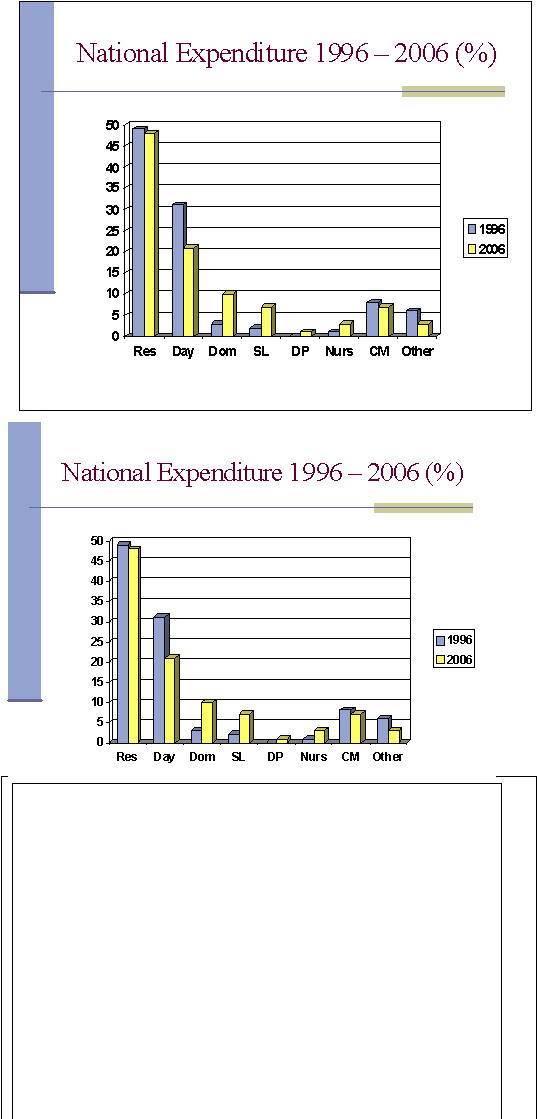

5. Local Drivers
Between 1995/6 and 2005/6 national spending on social care for adults with a learning disability rose from £1.4 billion to £2.9 billion, meaning that it roughly doubled. Councils now spend over a fifth of their adult social care budget on learning disability services. Spending on LD is now rising at 8% above inflation, compared to 5% for other client groups.
The proportion spent on residential and nursing care has altered very little, using about 50% of the budget.
2.3 National Unit Costs
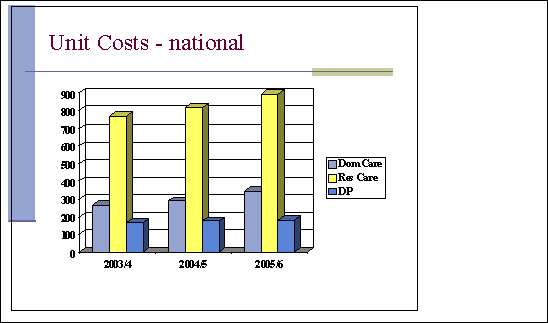
Unit costs nationally for 2005/6 are:
· Domiciliary Care £345 and rising
· Residential Care £892 and rising
· Direct Payments £179 and falling
The fall in unit costs for Direct Payments requires further investigation. It cannot be assumed that this is a more cost-effective service option before examining whether they are being used as part of an overall package, or for people with lower support needs.
3. Local Picture
3.1 Local Population
In Hampshire there are 2153 people with a learning disability receiving a service funded by Hampshire County Council Adult Services Department. The age pattern of people is roughly evenly spread, with there being a slight predominance of people aged 41 - 50. Of the 2153 people, 1176 are female and 975 are male. 39 people state that their ethnicity is not white and 48 people do not state their ethnicity. 6 people state that they are Asian, which represents 0.28% of the learning disability population. Across Hampshire, 0.84% of the general population are Asian, so there is a possibility that we are not meeting the social care needs of the Asian community.
3.2 County Activity Data
Overall, half of all service users (1087 people) user day services. This pattern is not being reflected in younger service users, with only 23% of 18-20 year olds using day care compared to 58% of 41-50 year olds.
41% of people use residential care and 34% of people use domiciliary care. These patterns are roughly maintained across all age groups, although people over the age of 50 tend to use less day care and more residential, nursing and domiciliary care. There has been notable increase in young people opting to use direct payments, with 26% of 18-20 year olds choosing this system compared to 4% of 41-50 year olds and 2% of 51-64 year olds.
3.3 Local Area Activity Information
There are some differences in local patterns of provision. In North East Hants 51% of people are placed in residential care, compared to 25% for Winchester and Andover. Further differences in the local markets are reflected in average costs. The average cost of a residential placement is over £1,000 per week in North East Hants and Basingstoke, which may reflect differences in the cost of labour. In Havant and the New Forest, the average cost is below £900 per week.
3.4 Local Challenges
In the section on National Challenges, we saw a pattern of demographic changes and a shortage of provision leading to rising prices, with the predominant model of service being traditional buildings-based provision. The national picture is reflected, possibly slightly exaggerated, in Hampshire.
Locally, there has been a rapid rise in demand for adult learning disability services, with high-cost, long-term commitments to very disabled young people being identified through the transition process. Some demand management techniques have already been considered and have either been rejected (tightened eligibility criteria) or implemented (the revised charging policy).
In 2006/7, Hampshire County Council Adult Services Department Spent £74 million (gross) on learning disability services. The overspend was 4.6% of the gross budget, compared to the national figure of 2.7%. Approximately 76% of this was spent on residential, nursing and day care, compared to the national figure of 70%.
Both Hampshire County Council Adult Services Department and Hampshire Primary Care Trust continue to monitor the governance of services carefully. Hampshire County Council Adult Services have recently invested in additional Adult Protection posts to ensure that vulnerable adults are protected.
The overall proportion of people with a moderate or severe learning disability is increasing, especially within BME groups. It is notable at present that the increasing BME population within Hampshire does not make use of Adult Services. Work on this issue indicates that this is due to lack of information about the services available rather than a conscious decision not to access them.
Feedback from service users and carers is presently ongoing. Initial responses indicate that especially younger people want help to access mainstream services.
3.5 Comparison of Local and National Expenditure
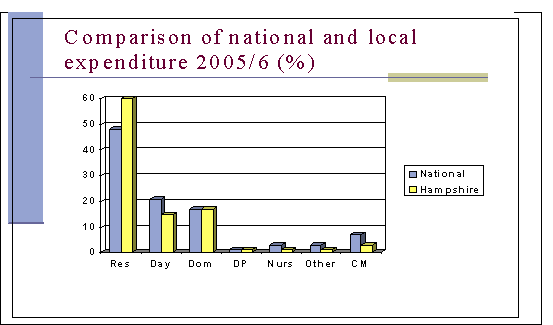
Some of the issues emerging for Hampshire are that there is comparatively a high level of total expenditure on residential care. This does not indicate that individual placements are comparatively expensive, but it does indicate a need to examine the market balance between residential and other forms of care.
Expenditure on day services is not increasing as it has done in other areas. Expenditure on care to people in their own homes is following the national average.
SECTION 2: IMPROVING SERVICE DELIVERY
4. The Way Forward
In order to modernise services in Hampshire, we will do three things:
1. Remodel care and support away from buildings-based provision, decreasing reliance on residential and day care, increasing choice for service users and bringing services closer to people's homes.
2. Promote care and support that genuinely empower people, enabling them to learn, work, express their opinions and become gradually less reliant on care services.
3. Ensure that the care and support commissioned are safe and of high quality.
To do this, this strategy needs to respond to Valuing People Now by delivering improvements in the following areas:
2. Personalisation
People will be able to choose from a greater range of high quality integrated services. People will have greater control over the kind of care and support that they receive.
3. What People Do During the Day.
More people will have paid jobs or will be doing voluntary work as a pathway into paid employment. Less people will be going to traditional day services although this will still be an option for people who want and need this form of care. People will be enabled to gain a broader education and to lead fulfilling social and personal lives.
4. Better Health
People with learning disabilities will be able to access mainstream primary and secondary healthcare. Everyone with a learning disability will be registered with a GP and people will find it easier to go to hospital to get the specialist care that they need.
5. Improving People's Housing Situation
People will have more choice over where they live and over their tenure. More people will live in mainstream housing, some people will live in supported living arrangements and less people will live in residential care.
6. Making Change Happen
Improvements will be made in the way that issues are discussed and decisions are made. The Partnership Board needs to be strengthened and more people will be involved.
5. Personalisation
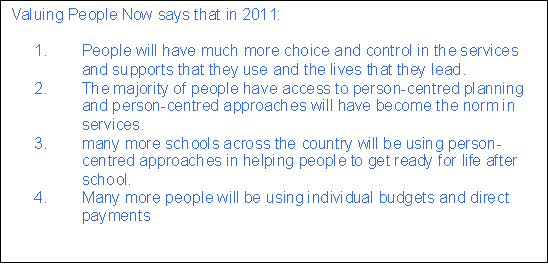
Personalisation is about two main issues: choice and control. People want to have a choice over the services that they receive. They also want control over their lives, including control over their care funding. Self-directed Support and Person-centred Planning are key to achieving these outcomes.
5.1 Choice
At the moment people have limited choice over the care that they receive. Services vary across the county meaning that some people in some places can access services that other people cannot. The care market needs to be developed to offer people high quality services that they want and need in the right place at the right time.
5.2 Control
Hampshire County Council has a strong history in developing direct payments. In Hampshire 62 people aged 21 to 30 now choose to have a direct payment as opposed to only 10 people aged 51 to 64. At the same time, there is a reduction in the percentage of younger people opting to attend traditional day services.
We will develop Self-directed Support and Person-centred Approaches for all service users to enable people to determine which services they wish to purchase.
5.3 Self-directed Support
Self-directed support is the process by which people take control over their own care funding. This includes Direct Payments and Individualised Budgets. By the end of 2009 all new clients will have been assessed using the self-directed support methodology and offered the right to take a full or partial direct payment .
Improving the Life Chances of Disabled People set out a new vision for services that support disabled people - it proposed that by 2012 all disabled people requiring support would control their own `individual budget'. People will be allocated a sum of money, appropriate to their level of need which they can use to purchase care from the public and private sectors or recruit their own staff to meet their needs (through a direct payment). Being in control enables individuals, with support when necessary, to choose what support they want, who provides it and when they receive it.
5.4 Learning from Experience
Hampshire County Council has, along with nine other Local Authorities, agreed to become a "Total Transformation" site. That means that we intend to offer all our service users the opportunity to benefit from Self Directed Support (SDS) once we have fully implemented the project. Self Directed Support is where individuals are provided with a budget to arrange their support and care in a more flexible way.
We will initially be implementing SDS in just one area of Hampshire as Phase One of the project. We will evaluate the effectiveness of Phase One by talking to service users, their friends, families and carers, as well as our own staff, and other stakeholder organisations. This knowledge will then be used when we move on to full implementation.
We will also learn from the experiences of service users and their carers who took part in the Dynamite Project. This was a pilot project where young people in Hampshire were allocated their own Individualised Budget. We will also talk to colleagues and service users around the Country to share our experiences of SDS, and learn from each other's successes.
5.5 Person-centred Planning
Personalisation and Self-directed Support can only work effectively for many people with a learning disability if they are founded on Person-centred planning (PCP). PCP also needs to inform commissioning to ensure that the market is responsive to individuals
PCP is a key feature of Valuing People. Hampshire Partnership Board has invested in teams that have provided training and support for service users and providers in all parts of Hampshire. Over 2,750 people have been trained in over 180 organisations. It is now time for a change in the way that person centred planning is delivered to make best use of this training. More people in Hampshire will have person-centred plans.
To make PCP work effectively, two things will happen:
a. A holistic picture of someone's preferred lifestyle, goals and dreams will be the basis on which choices about support and paid for services will be made.
b. Services that are currently supporting people will be required to base the support they provide on a person's plan and support the development of that plan.
In order to do this, support to develop and facilitate person-centred plans will be delivered by the voluntary sector, monitored by the Partnership Board. Work will be undertaken to develop a way of ensuring that these organisations can do this at an early stage, before services are purchased. This will ensure that PCP becomes an effective tool in empowering people to have choice over service delivery.
Information from PCP will then inform the commissioning process.
5.6 Workforce Development
Personalisation will have an impact on the care management practice in terms of both culture and process, as we develop better ways of working with individuals, put them in control and transfer resources to their management. There will be significant Learning and Development issues for all parts of the workforce, including care managers, brokers and the independent sector. We are at the early stages of developing this response.
We will:
1. Develop Person-centred Approaches as part of the overall approach to personalisation.
2. Develop the overall care pathway to respond to PCP and SDS.
3. Ensure that people are offered Self-directed Support by 2009.
4. Develop the care market to respond to individual needs.
5. Increase the number of people on Direct Payments and Individualised Budgets.
.

6. What People Do During the Day (and Evenings and Weekends)
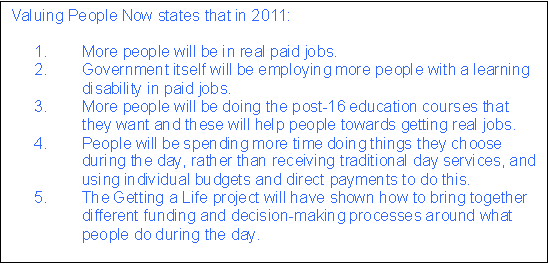
6.1 Hampshire Partnership Board Vision
In Hampshire people will be offered a person-centred approach throughout their transition from children's to adult services. Hampshire County Council will work with other agencies such as Job-centre Plus to offer people a move into adult life that makes the most of someone's skills, energy and aspirations.
6.2 Post 16 Education and Work-related Training
All adults with a learning disability will have access to the education that they need to maximise their potential. Three sorts of education will be available:
1. Post-16 academic and leisure learning. Presently people with a leaning disability do not have much opportunity to pursue their academic or leisure interests. People may want to learn a variety of skills or subjects for their own enjoyment. A range of subjects will be available and taught in a way that is appropriate and accessible. Hampshire Adult Services Department will work with Children's Services and Recreation and Heritage to develop and implement a vision for Adult Learning in Hampshire.
2. Daily Living Skills. People want to have the opportunity to learn to shop, cook, clean, budget and manage ordinary daily lives. These courses exist but in many cases are being taught on day service premises. People will have equal access to these courses across the county. They will be taught in mainstream educational establishments.
3. Work-related training. If people want to have paid jobs then they need skills that they can sell on the labour market. People will be offered training that helps them to get jobs that suit their skills and interests. Training may be delivered in the workplace or in educational establishments.
Hampshire Partnership Board supports the aims of the "Getting a Life project " and will learn from its findings. This will help us to bring together funding and planning around the transition process, post-16 education, disability employment advice and support and local authority social care assessment and support.
6.3 Employment
Hampshire Partnership Board's aim is to enable more people with learning disabilities to participate in all forms of employment (whenever possible in paid work) and to make a valued contribution to the world of work. The underlying principle is that paid employment is key to real independence, fulfilment and empowerment.
From April 2008 Job-centre Plus will be implementing the "Pathways to Work" initiative. In the first instance, this will be targeted at new claimants of Incapacity Benefit. The Pathways to Work provider (under contract to Jobcentre Plus) will assess the barriers that a person may encounter in finding paid employment and will find ways to overcome them. Hampshire Adult Services and Job-centre Plus will work in partnership to deliver the key aims of both organisations in relation to employment for people with a learning disability, including meeting the national indicator, "Increasing the number of adults with learning disabilities in employment".
For young people coming through transition, the aim is that people will be supported through the education process to make informed and realistic choices about future training and career options. The skills and aspirations that young people develop at school will be identified and developed. People will be able to access further education and work-related training that provides them with marketable skills that are aligned with their interests.
For this to happen, a number of key changes will take place:
· The transition process needs to change to ensure that the young person is supported through the period of change from childhood to adulthood in such a way as to maximise their life opportunities (see section on Transition)
· Post-16 education needs to be available across the county. This will consist of courses aimed at increasing independence as well as other more generic subjects.
· Career advice needs to be available, tailored to the needs of people with a learning disability.
· Work-related training needs to be available for people with a learning disability for a wide range of subjects, commissioned according to need.
· Employment opportunities will be developed. These will range from designated employment schemes for people with a learning disability to mainstream employment. The aim of designated employment schemes will always be to train people for mainstream employment.
· Locally, Hampshire Adult Services and The Partnership Board presently spend over £300,000 per annum on Supported Employment contracts. Best use needs to be made of this funding through adopting an inter-agency approach that meets local and national objectives. Work undertaken will support Hampshire's inter-agency employment strategy, "Prosperity through Diversity".
· Employment needs to be valued. People who are offered jobs are to be supported to maintain them. People with learning disabilities can make a very valuable contribution that will not be under-estimated by employers.
6.4 Designated Employment
Employment that is aimed at people with learning disabilities provides a valuable step on the road to a person gaining paid mainstream employment.
It can consist of:
a) Volunteering
b) Supported Employment
c) Social Enterprise
There is a place for designated employment within the range of employment options. However, it needs to be viewed as part of a pathway towards mainstream employment rather than a job for life.
Central Government have established a "Social Enterprise Investment Fund" of £73 million over four years to provide advice and financial assistance to promote the establishment of new social enterprise businesses in the health and social care sector. Hampshire Partnership Board supports this initiative.
6.5 Mainstream Employment
People who have had the right training will develop marketable skills. These skills may be for jobs normally classified as "unskilled or semi-skilled" but people with a learning disability may still require training to do them.
To increase the number of people gaining mainstream employment, three things have to happen:
a) People will be supported to apply for appropriate jobs
b) Employers have to be receptive to employing people with a learning disability.
c) People will receive on-going support to do the work if required.
A new national target has been set for increasing the number of people with a learning disability in paid employment.
Initially, employment opportunities will be increased through:
a) increased employment for people with assessed social care needs within Hampshire County Council
b) Increased employment for the same client group within LAA partner agencies
c) Increased employment for the same client group with local employers, through joint working with the Economic Development Unit and Jobcentre Plus.
Expenditure on Supported Employment will be re-aligned to support these aims.
6.6 Day Services
Valuing People Now states that we need to move away from the concept of day services and consider how people spend their time in a way that meets their own wishes and needs.
6.6.1 National and Local Direction
Any development of day services needs to be viewed in the overall context of what people do with their lives during the day or evening.
Central government guidance is that more people will be enabled to access education, training and employment. Also, more people will be able to access mainstream services for sport, leisure and recreation.
Valuing People Now states that no day centre should be segregated.
Hampshire County Council Adult Services has commissioned work from the Treasurers Consultancy to consider the future of in-house day services. This work has been developed by the Commissioning and Partnerships team.
It has been identified that in-house day services require modernisation. At the same time, voluntary organisations have a critical role to play in local service delivery. Services for people with a learning disability cannot be tackled in isolation, as delivering the best possible service depends on making the best possible use of all local services and facilities. However, day services owned and managed by the Hampshire County Council are the main resource and they will be developed to offer people person-centred outcomes in socially-integrated settings.
6.6.3 Present Use of Day Services
Presently approximately half of all Learning Disability Service Users (1087 people) use learning disability day services. This costs £13 million gross per annum. Day services are mainly used by people in their forties There is a corresponding rise in direct payments for the younger age groups. This statistical evidence is backed up by the results of the consultation process (July to October 2007), which suggests that younger people are less attracted to present day service provision and would rather choose their own care.
Of the 1087 people that use day services in Hampshire, 772 of them attend the eleven day services provided by Hampshire County Council (in-house services), while 317 people use services purchased from independent organisations.
In summary, Hampshire has a large number of in-house Day Services. These services offer good quality care within their remit but both the model of service and the facilities within which some of them are provided do not effectively meet national and local objectives for people to be assisted to access integrated mainstream services. The large proportion of in-house provision would indicate that Hampshire has a comparatively low level of independent provision. To offer the greatest range of services and to meet the preventive agenda, this is an area that needs to be developed.
6.6.5 Day Opportunities Brokers
Day Opportunities Brokers already exist in some parts of Hampshire. They have begun an innovative approach to developing alternative opportunities to Day Services. At present their work is divided into three parts:
a. Work within Day Services with existing service users
b. Work with people to find prevent them from entering the day services by finding more suitable alternatives
c. Developmental work with local mainstream and designated LD services, to ensure that services are able to respond to the needs of service users.
The brokerage service needs to be extended to provided county-wide coverage. Brokers are an integral part of the move towards person-centred approaches.
6.6.6 Resource Centres
Consultation with both voluntary organisations and staff has indicated a strong demand for resource centres. More work needs to be done, both to define the model of service and to identify resources to fund any possible development. However, it is recognised that people have identified a need for a meeting point that is easily accessible and provides information and expertise, supported by an up-to-date website. Parallel needs have also been identified by other client groups so a generic centre will be considered.
6.6.7 Services for people with severe and multiple disabilities
Some form of day service will continue to exist for people with severe and multiple disabilities. This will not be in the form of much of the present provision, but will be small, integrated and focused on meeting needs in a person-centred way. It will become the core business of the remodelled in-house day services to meet the needs of people with severe and multiple disabilities.
6.7 Leisure and recreation
Although leisure and recreation is a key aspect of most of our lives, it has not been regarded as a priority for people with learning disabilities. Through PCP and self directed support people will be encouraged to consider more fully how they would wish to spend their leisure time, given support to access community facilities and encouraged to take up healthy lifestyles. We will encourage the improvement of access to community facilities through supporting the development of accessible information, signage and access.
6.8 Community Capacity Building
We will improve access to mainstream services. Hampshire Partnership Board will develop an approach to building capacity within the community that is linked to the Local Area Agreement. This work will support local organisations to implement the Disability Discrimination Act so that they can be fully inclusive of learning disabled people.
6.9 Way Forward
The way forward is for all day opportunities to become person-centred in their approach and to be commissioned as a result of person-centred planning. This will be through the care management process and Person-Centred Planning in the short term. Later, service users will have the additional benefits of Self-Directed Support.
Day Services will respond to need and people will be offered real choice over the service that they use.
This will bring the following benefits:
a. service users will be able to choose from all local service provision, including routes into education, training and employment. Alternatively, they can carry on receiving care from the in-house Day Service.
b. In-house Day Services will have the opportunity to develop their business to respond to the needs of the service users with severe and multiple disabilities.
c. Resource centres (possibly cross-client group) will support service users to access mainstream services.
d. The voluntary sector will be able to develop their services as funding becomes available through Self-directed support.
e. The optimum use will be made of all existing services as people receive services according to need, preference and cost. This will lead to a move away from traditional, buildings-based provision.
f. The department will be more able to meet the well-being agenda by enabling people who fund themselves to purchase services that they want even if they do not meet Adult Services Eligibility Criteria and through work with partner organisations in the LAA to build capacity.
The move to offering people real choice through self-directed care will have a radical impact on the market. Hampshire Partnership Board needs to respond to this change pro-actively and move provision towards a model that is responsive and needed.
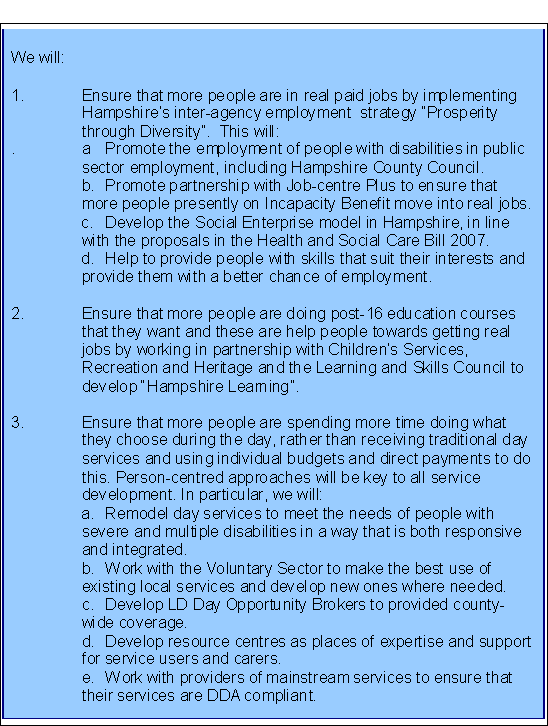
7. Better Health
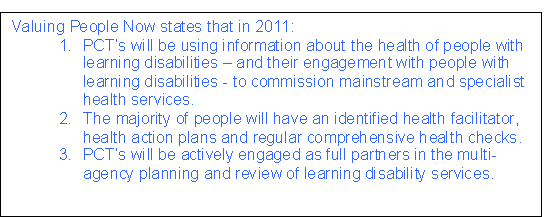
7.1 Reprovision of all NHS Campus provision
By the end of 2011 all NHS Campus services in Hampshire will close and be replaced with new modernised services based on person centred planning.
The following objectives form part of the Hampshire Health Strategy for People with a learning disability `Good Health for All `.
7.2 Improving Primary Care (including Dentistry)
The following will be undertaken to improve the primary care services:
7.2.1 A GP register
The PCT will work with GPs and other organisations to create a register for people with a learning disability in Hampshire.
The register will provide information which will:
· Assist in planning future services based on local need
· Enable services to monitor how many people are receiving Annual Health Checks
· Enable services to monitor how many people are participating in appropriate screening programmes
7.2.2 Annual Health Checks
As part of the Learning Disability Register there will be a system in place to monitor how many people are currently receiving annual health checks.
A plan will be developed to work with GPs and other staff to ensure more people is offered annual health checks.
7.2.3 Implementation of Primary Care Commissioning Framework
Based on best practice guidance, the PCT will develop a clear service specification in relation to primary care and general health care (which includes General Practice, Dental Health, Podiatry etc)
The PCT will develop a plan for implementing and monitoring the service specifications.
7.2.4 Health screening programmes
A project will be established to ensure people with a learning disability have equal access to mainstream screening services
And also have equal access to health promotion initiatives and health
Education material
7.2.5 Health Action Plans
A shared strategy for Health Action planning will be developed between primary care, Hampshire County Council, Hampshire PCT and service providers. An implementation plan will be produced and agreed. Young people moving to Adult services will be the first area to look at.
7.2.6 Healthy Lifestyles Project
This is a joint project between Health and the County Council to establish a joint commissioning framework which includes the commissioning of healthy lifestyles packages for people with a learning Disability
The project will provide training for social carers and support workers in improving lifestyles and health opportunities in order to support people with a learning disability to improve or maintain a health lifestyle.
7.2.7 Practitioners with interest in Health Inequalities
The PCT is assessing the feasibility developing a new post to help provide support to people in Primary Care. This post will first work on behalf of people with a learning disability, providing specialist training and support to GPs and other staff in primary care.
7.3 Improving the Secondary Care experience
The experience of people going to hospital will be improved and people will be discharged in a safe, timely way. The PCT will undertake a project to review the experience people from Hampshire have when going to hospital and when being discharged. The PCT will also develop a clear service specification based on best practice for hospitals. From this a plan will be developed to improve people's experience. This may include identifying staff training needs, or producing accessible information.
7.4 Implementation
Implementation of the health objectives within the strategy will be led by the PCT, reporting through the Partnership Board.
We will:
Ensure that everyone with a learning disability has a GP.
Ensure that more people have an Annual Health Check.
Ensure more people have Health Action Plans.
Develop a Register to ensure that we have better information and
we can monitor services better.
Improve access to mainstream Health Screening programmes.
Improve the experience for people going into a hospital or needing
other secondary health care.
Improve the experience for people being discharged from hospital.

8. Improving People's Housing Situation
Valuing People Now states that in 2011
1. More people will be owning their own home or living in rented accommodation with tenancies.
2. Housing departments will know about the housing needs of people with a learning disability and will be including this in their plans.
3. People's rights as tenants will be respected by landlords.
4. No-one will be living with the NHS as their landlord.

8.1 Local Overview
Hampshire County Council has an LPSA2/LAA target to move more people with assessed care needs into mainstream housing working with the district councils, showing that this area of development has been agreed as an inter-agency priority.
Despite this, Hampshire still has a higher level of people with a learning disability in residential care and is presently reducing this number at a slower rate than comparator authorities.
Many people still live at home with their families into middle age. Many other people live in housing that they have not chosen. Some people have tenancies but their rights are not always fully respected by their landlords and their care and support agencies. Some people in Hampshire still have the NHS providing their accommodation but there are plans to end this. There are also examples of high quality, enabling supported living schemes which provide real choice and independence.
8.2 Modernisation of Supported Living Services
Valuing People Now states that "local authorities should concentrate on promoting access to and increasing the numbers of people who live in their own homes or have assured tenancies in rented accommodation". A new performance indicator will measure how well councils are doing this. Central government is going to work on a number of initiatives that will improve housing opportunities for people with a learning disability but there is still work to be done locally.
Overall, Hampshire Adult Services and Supporting People commission 93 Supported Living schemes for 457 people. Some existing supported living schemes offer people high quality services that promote real independent living in accordance with the REACH standards. Other schemes offer a service that is based more on the residential care model.
Recent care management assessments of some service users highlights that there are some issues that will be addressed. These include:
1. Buildings that are not suitable for Supported Living.
2. Models of care and support that do not promote independence, well-being and choice.
3. People being inappropriately placed with other people with whom they are not compatible.
In Hampshire, all supported living schemes will meet REACH standards by 2011 and promote independence, choice and social inclusion. This will be monitored through the Supporting People review process.
Work will be undertaken with the Housing Corporation to develop more schemes where people have their own flat rather than shared housing, including Extra-care housing.
8.3 Supporting service users into mainstream housing
The Local Area Agreement/LPSA2 includes a target for more people with assessed housing needs to be housed in mainstream housing through district council processes.
Overall, this target has been very successful. However, the take-up for people with learning disabilities has not been strong. Of the 144 people housed last year, only 29 had a learning disability. Of these, 12 were into mainstream housing. This will be addressed by targeting people in transition, new service users and those presently in residential care to assess if people could benefit from living in their own home.
8.4 Care and Support
People can only move into their own accommodation if the care and support is available that they need. Providers will be supported to respond to this change through being able to access training for their staff. The move towards independent living will have to be made gradually to give care and support providers time to develop their workforce.
8.5 Residential Care
Overall, Hampshire Adult Services plans to reduce the amount of residential care that it purchases from the independent sector. Decisions about placements will be based on the principles of personalisation, which does not exclude residential care.
8.5.1 Independent Sector provision
Presently in Hampshire there are 839 people placed in independent residential care (SWIFT data). Adult Services spends a total of £786,719 per week on independent sector provision (£41 million pa).
According to our contracts records, 473 people are placed within Hampshire in 142 homes and 281 people are placed outside Hampshire in 180 homes. (N.b. these figures do not represent total activity/expenditure but give a picture of market known to commissioners).
Of this total of 754, 420 people cost over £1000 per week.
Of these, 24 cost over £2000 per week and 2 placements cost more than £3000 per week.
8.5.2 In-house provision
Hampshire Adult Services has nine in-house residential units, eight of which offer respite care. These services offer a total of 3007 bed nights per month (99 places). They currently run at 86% capacity, using 2588 bed nights per month (85 places). The total budget for the nine units is £2,995,979 net although more money may be being spent on care, through care management supplements.
In-house residential units will work to a service specification agreed with the Residential Services Manager and the Commissioning Team. This will state that in-house units are able to provide the following services:
a. Respite
b. Emergency short-stay
c. Assessment
d. `Compatibility' trials, especially for young people in transition
e. Developmental `pre-tenancy' work.
8.5.3 Residential activity/cost overall
As seen in Section 2, Para 6.2, Hampshire Adult Services spends £44 million per year, or over 60% of its learning disability budget, on residential and nursing care.
Nationally, average expenditure is below 50%. Hampshire Adult Services developed and is actively using the South East Cost Model to ensure a fair and equitable pricing system is applied to all contract negotiations with service providers. Hampshire Adult Services will continue this work through the development of residential care brokers.
8.6 Summary
National guidance and initial consultation with service users locally show that residential care is becoming increasingly unpopular with younger people as a service solution.
Alternatives to residential care are:
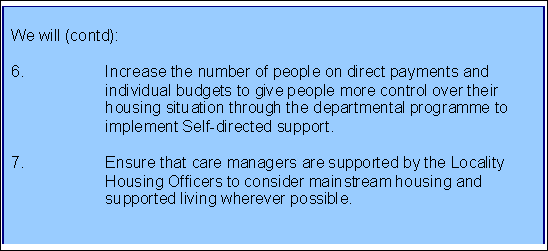
1. Supporting people to live in mainstream housing.
2. Supporting people to live in designated housing, including Adult Placement.
3. Supporting people to live at home with their families, where this is their choice.
SECTION 3: The Wider Agenda
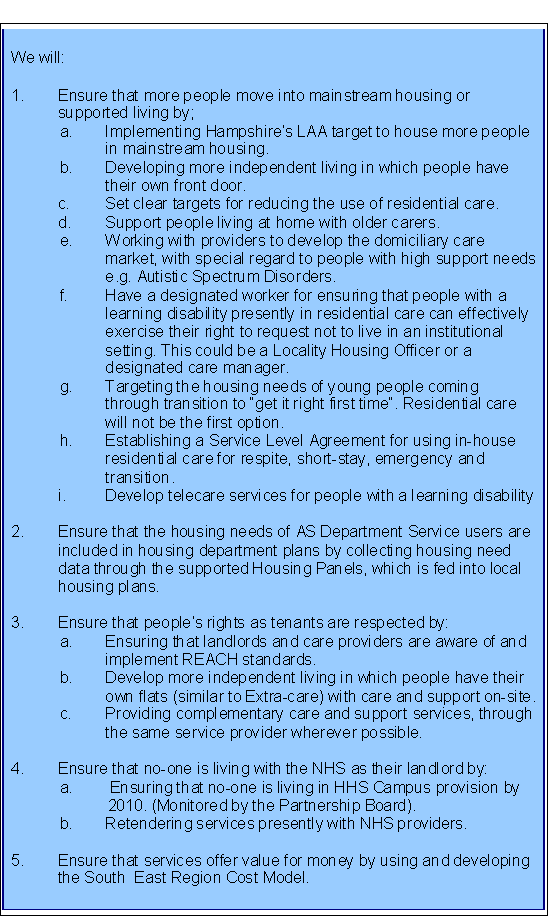
Valuing People Now states that by 2011:
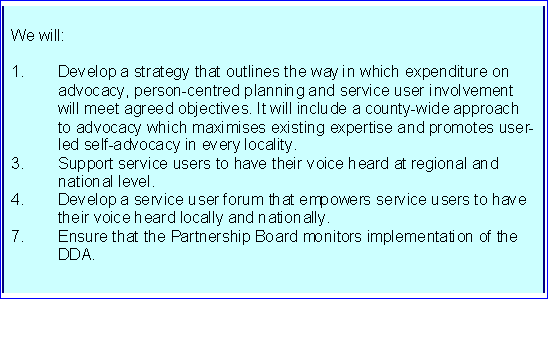
1. More money will be spent on advocacy and there will be more advocacy organisations.
2. Every local authority area will have a user-led organisation that involves people with learning disabilities.
3. There will be more active self-advocates at regional and national levels.
9. Advocacy and Service User involvement
9.1 Local Advocacy
Person-centred approaches, advocacy and service user involvement are key to the successful implementation of the strategy. We presently spend over £200,000 LDDF funding and approximately £100,000 HCC funding on learning disability advocacy services. The LDDF also funds the development of the personalisation agenda through Person-centred Approaches. We will ensure that this money is used to meet agreed aims.
Advocacy services will achieve three objectives:
a. Self-advocacy will be available across the county.
b. Individual advocacy will be available to people at times of change, or crisis.
c. Advocacy services will work in partnership with commissioners to ensure that people have access to their services at times of planned service change.
9.2 Service user involvement
Service users will be involved in a way that is both genuine and democratic. Service user involvement needs to be effective;
a. At local level through the LIG's.
b. At county level through the development of a service users forum.
The process developed will respond to both service users who have used services for some time and young people coming through transition.
We will review our current pattern of provision to ensure that services are meeting all of these aims.
10. Partnership with Families
10.1 All Carers
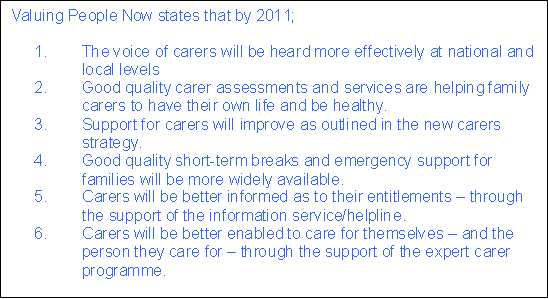
Hampshire Adult Services are developing departmental plans for involving Carers in finding out how we are doing and in planning for the future. It is planned to have a carers' reference group which will be able to ensure any developments in one area or one client group can be learnt from and shared across Hampshire.
10.2 Older Carers
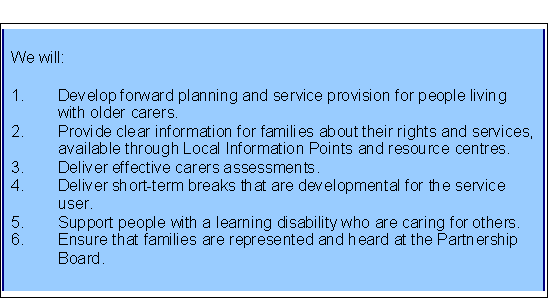
We are aware that there are a number of people in middle-age in Hampshire who are living with older carers. Clear data regarding the numbers of people in this situation will be produced.
People are continuing to act as carers for their sons and daughters as they become increasingly frail themselves. The following new services will be developed for people living at home with older carers:
a. Support for people to stay living in the family home.
b. Extra-care housing for people with a learning disability
Both of these services will be commissioned by Hampshire Supporting People Team in partnership with the Adult Services Learning Disability Service.
11. Including Everyone
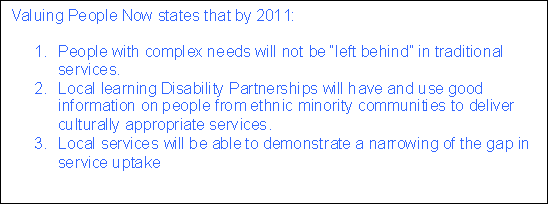
11.1 Services for people with complex support needs
More people with complex support needs are surviving into adulthood. Service provision for these people has not always moved forward in the same way that it has for people with less complex needs.
Services will be person-centred and developmental. Support for people with complex needs will be developed. In-house services will focus their expertise on this area of provision. Closer working is needed between health and social care especially for people who are dependent on assisted breathing or feeding.
In-house services will respond to this group of people to provide a person-centred response that promotes social integration.
11.2 People from Minority Ethnic Communities
The Ethnic Minority Learning Disability Project has developed the Learning Disability and Ethnicity Action Plan for Hampshire which was launched in April 2007. It responds to the demographic trends identified in para. 3.1. The project provides interpreters and translators to assist support services with communication. It also alerts services to possible cultural needs and can take part in consultations to implement changes to make services suit individual needs. The project actively participates in multi agency approaches to ensure adults and children with learning disabilities can have their cultural and language needs catered for so that their families can receive appropriate information and explanation.
We will continue to engage with established community groups and newly arrived individuals in Hampshire. Innovative approaches will be used to build up interest in the project and ultimately trust; links and contacts will be fostered with diversity officers at county and district levels and other organizations engaged in work with ethnic minority communities. At every stage, specific cultural information, views and experience gathered will inform future actions and will be compiled to be presented to the Partnership Board or used in training sessions.
11.3 People on the autistic spectrum
Valuing People and Valuing People Now responds to people on the autistic spectrum who also have a learning disability. More information needs to be collected to plan effectively for this group. We will target people coming through transition to develop a service response that it suitable for Hampshire.
11.4 Mental Capacity and Deprivation of Liberty
The Mental Capacity Act came fully into force in October 2007. It supports people who find it difficult to make decisions some or all of the time or to plan ahead in case they are unable to make important decisions in the future.
We will ensure that:
· a person is legally able to make a decision for themselves unless it is shown that they are unable to make it
· a person will be supported as much as possible to make their own decisions before anyone concludes that they cannot make their own decisions
· a person will be allowed to make a decision that may seem to others to be an unwise of strange decision
· if a person lacks capacity to make a decision, any decision or actions taken on their behalf will be taken in their best interests
· if the person making the decision has a variety of options, our staff will consider how they can decide or act in a way that will best support the freedoms and rights of the person
The Deprivation of Liberty safeguards have been introduced into the Mental Capacity Act and set out the process to follow to identify whether a person is at risk of being deprived of their liberty. They also set out the safeguards to be put in place to ensure that whenever a person is deprived of their liberty, it is done on a lawful basis. We are working to implement this legislation and ensure that no one deprives another person of their liberty unless it is essential to do so, in the person's best interests and for their own safety.
We will:
1. Develop person-centred approaches for people with complex needs including autism and Aspergers syndrome.
2. Respond to the Race Relations Amendment Act and develop data about people from ethnic minority communities.
3. Respond to the Mental Capacity Act.
4. Action the autism "clarification code"
5. PCT's will use the good practice guidance on commissioning forensic services for people with a learning disability.
6. PCT's will ensure that prison health initiatives are inclusive of prisoners with learning disabilities.
12. People as Local Citizens
12.1 Hate Crime
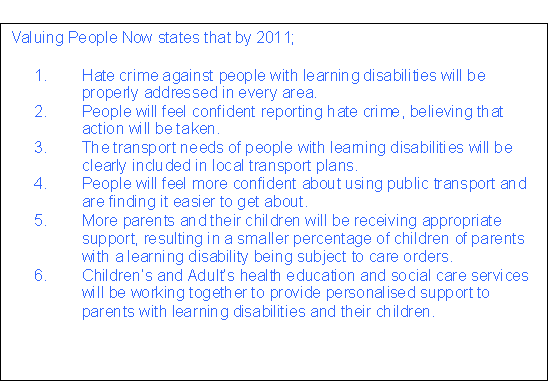
Hate crime against people with learning disabilities is often not recognised or reported. More information and training will be made available to people with learning disabilities, their carers and advocates to enable them to be aware of hate crime and to recognise when instances of hate crime are occurring. Support will be made available, particularly through advocacy services, to support people with learning disabilities to report hate crime and pursue prosecutions with the police. More information will be publicised about hate crime in the wider community to enable it to be more widely recognised and responded to.
12.2 Transport
Accessible transport is fundamental to people being able to access work, leisure services and social networks. We will work with transport planners to ensure that the needs of people with a learning disability are included in future plans.
12.3. Relationships
National evidence is that people with a learning disability have limited social relationships and therefore have limited access to the wider network of family and friends for relationships, support, information and advice. Yet relationships are a crucial factor in people's quality of life, identity and self esteem. It is therefore important that individuals have the opportunities to develop and sustain personal relationships and friendships and are able to request accessible information on topics including relationships and sex education.
People's relationships and circle of support are a key feature of PCP. Their relationships will therefore be reflected in their service. For example; a person's friendships and personal preferences will be considered in the decision-making process regarding where and with whom they live. These aspects of people's personal lives must be recognised and promoted in planning and delivery of support and services.
12.4 Parents with a Learning Disability
Nationally, there are more people with a learning disability who are becoming parents. To meet their specific needs better, we will ensure that advocacy services are available to them. We will also ensure that parenting courses are available to and appropriate for people with a learning disability.
We will:
1. Ensure that the Partnership Board works through the LAA to link to Crime and Disorder initiatives to stop hate crime against people with a learning disability.
2. Work with transport planners to ensure that transport plans respond to people with a learning disability.
3. Ensure that services respond to and develop people's social and personal lives.
4. Work across agencies to implement the guidance disseminated by CSIP.
5. Ensure that parenting initiatives are inclusive of people with a learning disability.
13. Making the transition to adulthood a positive experience
13.1 Transition
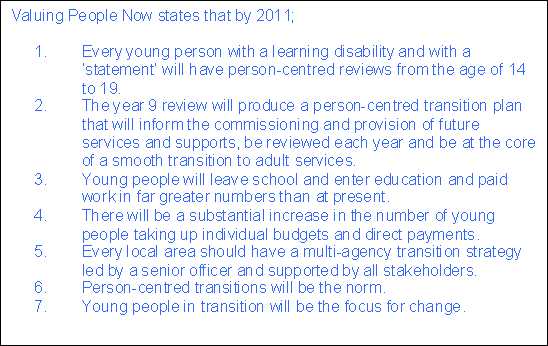
Transition is a key moment in people's lives. This is when young people decide who they want to be, how they want to live and what they what to do. Like all young people, people with a learning disability need support to make these decisions.
New processes for transition are being put into place which will give people more support at this crucial time and ensure that the skills and aspirations that they have developed are built upon.
By the time people come into transition at 16, they will have spent 12 years at school, working to develop their skills and competencies. These skills will be developed to give people the opportunity to gain paid employment.
13.2 Transition process
As people go through the transition process from Children's Services to Adult Services, they will be offered the following support:
· At the age of 16 they will meet personally with the Locality Housing Officer to discuss the possibility of wanting their own accommodation when they are older. If this is the case, and they are able to maintain a tenancy with care and support, they will be helped to register on the district council's housing waiting list.
· Career guidance while they are still at school that will inform their choice of further education, work-related training or employment. A copy of this guidance will be passed on to the PCP co-ordinator.
· Advocacy
· Person Centred Planning
· Self Directed Support / Direct Payments as part of the assessment process.
· A "Transition Plan" which shows a pathway from school to the goal identified as part of their PCP
· The PCP will consider
o A person's housing aspirations
o A person's career aspirations
It will show the path through education and work-related training that is most likely to enable them to achieve their aspirations.
13.3 Communication
A multi-agency guide for professionals on the Transition process is already published. A Transition Handbook for families and carers of young people in transition will be available in 2008. A guide for young people will be developed.
13.4 Transition to Older Person's Services
Decisions about transition to Older Person's services for people with a learning disability will be made on the basis of individual need, not on the basis of age. A protocol will be developed for care managers to enable them to work with service users to enable them to receive the services that are best suited to their needs.
We will:
1. Establish Transition Social Workers who will ensure that the correct links are in place between Children's and Adult Services and delivers the outcomes outlined above.
2. Ensure that people in transition are offered Person-centred Planning that gives people the opportunity to move into mainstream services.
3. Communicate effectively between organisations, departments and with service users and their carers.
4. Develop a protocol for Care Managers on the transition arrangements between learning disability and older person's services.
14. The Workforce
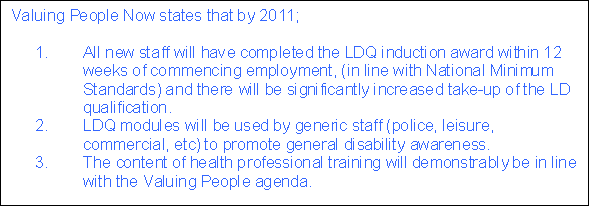
14.1 Completion of the LDQ award
A rolling programme is on place to ensure that all new staff have completed LDQ induction award training within 12 weeks of starting employment. This is run externally in partnership with the University of Winchester which is an accredited LDQ centre. All staff from services who are required to obtain the LDQ are accessing the course. All new staff from day services are also undertaking the award to promote best practice.
Discussion is underway to have service user involvement in the delivery of the LDQ programme. LDQ workbooks are to be developed for each module within the induction award. These workbooks will be used to develop staff who are not currently employed in a direct care/ support role, such as drivers and escorts.
14.2 Use of LDQ by generic staff
A training strategy group has been establishes which has identified the training of generic staff in LDQ as a priority area for 08/09. The group will identify key partners within HCC to promote awareness and shared knowledge.
14.3 Health professional training
All courses that are commissioned through the HCC Learning and Development Training unit, either specific LD or generic topics, promote the principles of Valuing People. Training is evaluated to ensure that these principles are embedded.
14.4 Integration of the Workforce (Health and Social Care)
Hampshire Adult Services and Hampshire Partnership Trust are working to establish joint community teams. Service users will be able to have a single place where they will access health and social care services. The integration project has to achieve an integrated management structure for the teams, appropriately located with effective support systems. The main outcome needs to be an integrated approach to care for service users.
14.5 Staff development to respond to Personalisation
Staff will be supported to develop creative individualised responses to need based on the principles of personalisation.
We will:
1. Involve service users in the delivery of the LDQ programme.
2. People with a learning disability working as trainers will be
3. Training will cover the "whole life" approach of Valuing People Now.
4. Establish integrated health and social care teams.
5. Develop staff to respond to Personalisation.
THE BIGGEST PRIORITY: MAKING IT HAPPEN
15 Providing the Right Leadership and Support
Valuing People Now states that by 2011:
1. Learning Disability Partnerships in all parts of the country will be effectively influencing decisions about the planning and delivery of public services.
2. LDDF will be fully used across the country in line with the national indicator set.
3. Significant progress will have been made on all priority areas in Valuing People Now.

15.1 Where are we now
The Partnership Board presently meets four times a year and makes decisions over the expenditure of LDDF finance. It also maintains an overview of service provision and calls both public and voluntary sector agencies to account regarding the quality of the service provided. It is capable of doing more than this. The Partnership Board will own this strategy and oversee its implementation. To do this, the structure needs to be strengthened.
The remit of the Partnership Board will be to implement the Joint Learning Disability Strategy. All organisations included in implementing the strategy, either as commissioners or providers of services, are jointly responsible for its delivery and can be held to account by the board for their contribution to the overall performance. New Terms of Reference will be drafted for the board. Responsibilities of the Board will include measuring performance through annual targets & evaluation by service users / self-advocacy groups. It will set targets for the LIG's. It will also remain informed of overall Health and Adult Services expenditure and performance on Learning Disability services and of any changes to these.
The Partnership Board will form part of the overall corporate and inter-agency governance system, linking to the Health and Well-being Partnership Board and the Local Area Agreement.
The Partnership Board and the system that support it will be managed through democratic processes. It will be co-chaired by a representative of Hampshire County Council and an elected service user.
15.2 Partnership Board membership
The Partnership Board presently includes representation from:
1. Hampshire County Council
2. Independent Sector Care / Support providers.
3. Hampshire Partnership Trust
4. Hampshire PCT
5. Surrey and Borders PCT
6. Ethnic Minorities "champion".
7. Health "champion"
8. Connexions/Children's services
9. Learning and Skills Council.
10. Voluntary Groups
11. PCP Family Carers Group
12. PCP Self-advocate group
13. HARG
14. The LIG's
The Partnership Board will be strengthened. It will include all of the representatives listed above. In addition, it will include representation from:
15. Housing (representative from the Hampshire Strategic Housing Officers Group).
16. Local Authority leisure / sport services
17. Adult Education
18. Jobcentre Plus
19. Representative for people with profound & multiple disabilities.
Representation for young people in transition and the Youth Service will be reconsidered alongside any changes to Connexions.
15.3 Partnership Board Sub-groups
The Partnership Board will have three sub-groups, reflecting the themes in this strategy. They will be as follows:
a. Health
b. Housing
c. Employment and Fulfilling Lives
These groups will be set targets by the Partnership Board and will report back on progress.
15.4 Local Implementation Groups (LIG's)
LIG's presently operate differently in different parts of the county. LIG's will have local responsibility for performance against targets set by the Partnership Board.
They will be co-chaired by a service user who will be supported by a member of the Adult Services Commissioning Team and the Area Service Manager.
We will:
1. Review the Partnership Board membership and reporting mechanisms.
2. Establish clear reporting mechanisms on progress against performance targets through the LIG's.
3. Ensure that the LIG's and Partnership Board are effectively linked in to other inter-agency groups such as the LSP's and the LAA.
4. Implement the Learning Disability Strategy through the Partnership Board, reporting annually on progress to the Health and Well Being Board.
5. Spend LDDF money on local and national priorities.
16. Better Commissioning
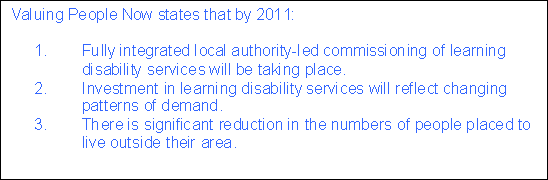
16.1 Commissioning
Commissioning in the future will be based on the principles of Personalisation. People will be supported to have more control over the services that are purchased either by or for them. The focus in future will be on individualised solutions rather than traditional services.
Commissioning responsibility is presently divided between the PCT and the local authority. Resources will move so that they are with the organisation with lead responsibility. The PCT will continue to purchase all mainstream and forensic/offender healthcare. Specialist learning disability services will be commissioned in partnership between the PCT and the local authority. Other resources will be transferred from the PCT to Hampshire County Council. The detail of this transfer needs to be agreed by both agencies. It is the expectation of Valuing People Now that investment levels are not decreased.
16.2 Data collection
Commissioning needs to be based on accurate data about both present and predicted level of demand for services. Commissioning will be based on the information gathered through PCP, but overall levels of demand need to be assessed through the Strategic Needs analysis and through Learning Disability Specific systems. A multi-agency register will be developed that covers all people with a learning disability and meets the needs of partner agencies.
16.3 Cost-effective Commissioning
Hampshire County Council has been instrumental in the development of a cost model, which following further development with East Sussex, has been adopted across the South East and is referred to as the South East Region Cost Model. Application of the cost model has become integral to the commissioning and procurement of residential care for adults with a learning disability and ensures that a person's support needs are clearly identified and that the costs of residential care represent value for money. The South East Region Cost Model has two key components:
1) a care needs matrix that enables a person's needs to by understood
2) a proforma that is completed by care providers to demonstrate the core costs of a residential service and the hours of support that are included
The outcomes identified as a result of application of the cost model are as follows:
· Person-centred care packages with clarity in respect to the level of service provision and type of support to be provided
· Relative allocation of funding informed by the needs of the person.
· Clearer expectations about service delivery for the person receives the support
· Increased collaborative working relationships between Adult Services Departments and independent sector providers
· A consistent approach across local authorities (and potentially PCTs) in the South East.
· The collation of management information to inform smarter future commissioning - increased awareness of market pressures.
· Provides a tangible means of developing a more business like focus within front line teams.
· Provides a baseline for review when a person has a change in their needs.
As the principle underpinning the cost model is that it is based on an individual's needs, it has the potential to be applied to any model of service provision. The Cost Model is currently developed to be able to evaluate and measure the quality of the support being provided and the outcomes for the person.
16.4 Local services
Hampshire presently has 284 in out-of-county residential placements, with a total of 82 people being placed in Taunton, Bournemouth and Surrey. National policy is for people to be placed near to their home if that is their choice.
We will:
1. Reach an agreement on NHS resources to be transferred to local government.
2. Stop commissioning NHS or independent sector in-patient beds other than for active assessment and treatment.
3. Develop an effective multi-agency register for forward planning.
4. Ensure that value-for-money is delivered through use of the Cost Matrix.
5. Ensure that young people in transition are offered care and support close to their home if that is their choice.
6. Ensure that people presently in out-of-county placements are offered the opportunity to move closer to their home.
17. Getting better at checking how we are doing
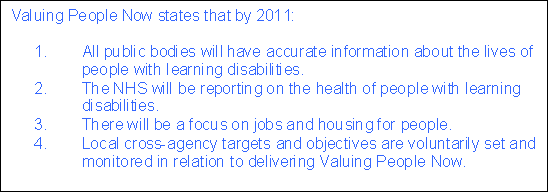
17.1 Data collection
The Strategic Needs Assessment will collect and analyse data regarding people with a learning disability. To ensure that this information is robust, it needs to be informed by the inter-agency database (para 16.2).
17.2 National and Local Targets
PSA 16 includes two new national targets:
a. The proportion of people with learning disabilities in real jobs
b. The accommodation status of people with a learning disability and whether they have control over their housing situation.
Positive action will be taken to improve performance against these targets (see sections 6 and 8 on employment and housing). Performance will be monitored by the Partnership Board and the LIG's.
The Partnership Board will also agree other local targets as part of this strategy and will monitor performance against them.
We will:
1. Develop a multi-agency register to inform forward planning and ensure that the Strategic Needs Assessment includes robust information on people with a learning disability.
2. Set clear local targets for change that will be Implemented and monitored by the Partnership Board and the LIG's.
3. Actively improve performance against the new national targets for housing and employment.

`Ordinary People Leading Ordinary Lives'
Draft Learning Disability Strategy for Hampshire
Draft Consultation Questions
Purpose of questions
· To provide structured opportunity for comment on draft strategy by all stakeholders to a common format
· To invite comment that focuses on service user and carer needs
· To look forward to the future
· To promote choice, independence and control for service users and carers.
· To test if the strategy responds to the demands of Valuing People Now
Question 1
`Do you think this plan gives a whole picture of how services can be made to individually support service users and carers in the future?' Yes/No
If not, what else does it need to say that will support service users and carers in the future to individually lead the life that they chose?
Question 2
`Do you think this plan will help service users to be included and take part in their local community as they each may wish? Yes/No
What are the most important things in the plan that will help with this?
What else does the plan need to say on this?
Question 3
Do you think this plan will help people to learn and work, providing them with the skills they want and need? Yes/No
What are the most important things in the plan that will help with this?
What else does the plan need to say on this?
Question 4
Everyone needs good health, will this plan help people to keep their health and support them when they need extra help ? Yes/No
What else does the plan need to say on this?
Question 5
It is important for everyone to live in the right place for them, will this plan help people get in the right place and provide enough choice? Yes/No
What else does the plan need to say on this?
Question 6
This plan must encourage support service users and carers to have greater choice and control, do you think it does this? Yes/No
Can The Partnership Board and service user `Parliaments' help people to say what they need and want and make sure that happens?
GW
January 2008