Archived decisions
Hampshire Fire and Rescue Authority Human Resources Committee Item 7 11th 15/03/2005April 2008
Error! Bookmark not defined.RDS Strategic Review Project; Progress Report Report by the Chief Officer |
Contact: Shaun Rowlatt / Service Headquarters, extension 5434 / [email protected] |
1 |
Summary | ||||||
1.1 1.2 1.3 |
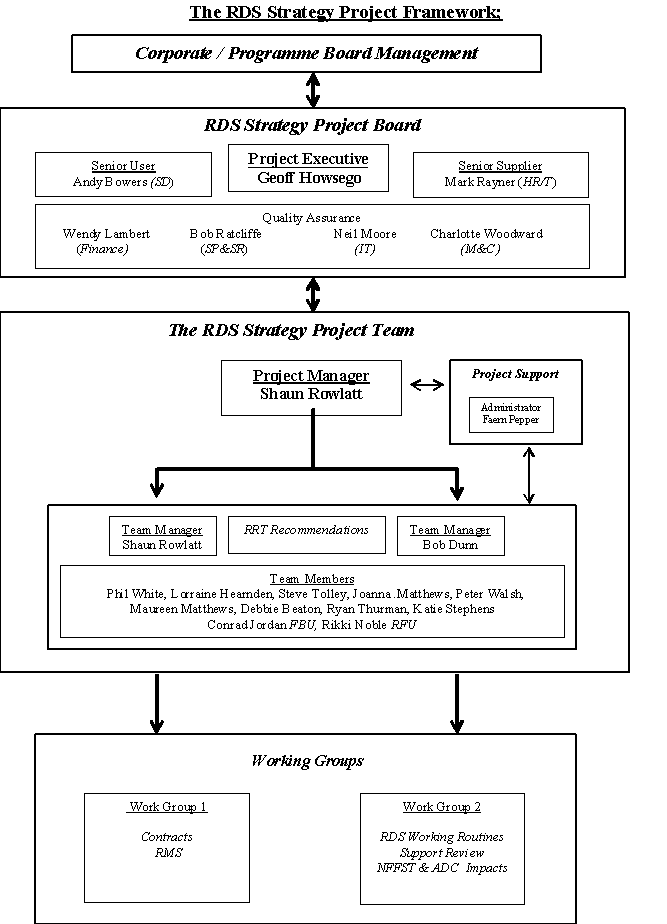
This report provides a periodic review update following the conclusion of the Hampshire Fire and Rescue Service (HFRS) Retained Duty System (RDS) Review Project and subsequent Human Resources (HR) Committee report of November 2007; recommendation 2.1. The RDS Review Project was commissioned by the Senior Management Team (SMT) in April 2006 (part of the Integrated Risk Management Plan (IRMP) 2006/9, addressing MR2) and concluded with a SMT written report on 4th June 2007. The project proved to be large and widely encompassing across the organisation. The final SMT report contained six high level recommendations (appendix a) which were agreed and a second project called the RDS Strategy Project was convened. The RDS Strategy Project Board is overseeing a project team framework containing two project work groups (appendix b) which are systematically reviewing and progressing the previous Review Project's detailed recommendations in accordance with the adopted high level recommendations. The RDS Strategy Project Board approved a three phase timeline approach to project conclusion scheduled in April 2010, leading to a publicised period of RDS evaluation and changes. Currently the project is in the first phase which concludes on 1 September 2008. | ||||||
2 |
Recommendation | ||||||
2.1 |
HR Committee note the content of this report and continue to periodically monitor progress of the RDS Strategy Project in accordance with the HR Workforce Strategy and the project's phased timeline. | ||||||
3 |
Introduction Error! Bookmark not defined.and Background | ||||||
3.1 |
Responding nationally to increasing concerns relayed from Fire & Rescue Service's throughout the country, the then Office of the Deputy Prime Minister (ODMP) established a national review team to examine Retained Duty System issues in England and Wales, recognising the long term recruitment and retention challenges facing Fire and Rescue Services. Under ODPM direction the national Retained Review Team (RRT) was established, producing its final report in February 2005. | ||||||
3.2 |
The report encompassed two previous reviews making 51 recommendations, of which 35 were considered falling within the remit of Local Authority Fire & Rescues Service's. HFRS undertook a review of the report to identify the levels of responsibility and compliance, prioritised against the 35 recommendations; this was completed in Oct' 2005. | ||||||
3.3 |
The RDS review project was identified as an IRMP objective by SMT in April 2006; to review and make recommendations for securing the assurance, legislative compliance and capacity within the Retained Duty System, reporting to SMT in June 2007. | ||||||
3.4 |
In September 2007, the RDS Strategy Project formed. | ||||||
4 |
AIMS OF THE RDS STRATEGY PROJECT | ||||||
4.1 4.2 4.3 4.4 |
A project team is considering the previous review's detailed recommendations and is proposing a timeframe ending in April 2010 for the project's conclusion. The project team includes RDS staff, interested parties and the representative bodies, carrying out the work through two working groups. The review project's detailed work group outcomes are being presented to the new Strategy Board with updated rationale from the Project Team, seeking the Board's approval for the introduction, adoption, amendment or dismissal of the Project Team's findings. Supervision of the interim measures adopted by the Review Project for reducing the potentially negative impacts from the introduction of the National Fire Fighter Selection Test and, Assessment and Development Centres procedures for the RDS. The relevant corporate risk entry will be monitored until long term solutions are agreed and adopted by the Strategy Board The Project Board will review the National Retained Review Teams recommendations and record the level of HFRS progress in meeting Government expectations through the Project's outcomes. This will culminate in an audited record for HFRS. | ||||||
5 |
AREAS OF PROJECT FOCUS | ||||||
5.1 |
Work Group 1 The primary areas of work for Work Group 1 are: a) To consider the benefits of an annualised hour's contract, making recommendations for improvements or change to existing contract provisions which consider the Working Time Regulations for the RDS, ensuring new proposals are better equipped to support staff and the organisation in their compliance. b) The introduction of a computerised Retained Management System (RMS) allowing cover availability to be managed more flexibly by telephone, mobile text SMS (Short Message Service) or computer, providing improvement and new benefits to operational cover and improved work/life balance. | ||||||
5.2 |
Work Group 2 The primary areas of work for Work Group 2 are: a) To consider the review project's recommendations for the work routines in the RDS, ensuring new proposals improve RDS learning and development within the Individual Personnel Development System (IPDS). b) Consider if risk profiling would be of benefit or an appropriate means for improvement in learning and development. c) Conduct a survey of the existing many varied support provisions to the RDS, ensuring new developments identified achieve accessibility and efficient delivery at the point of most benefit. d) Consider the implications of the new National Fire Fighters Selection Test and the Assessment and Development Centre procedures for the RDS, recommending longer term solutions for achieving candidate support whilst monitoring the interim measures previously introduced. | ||||||
6 |
Contribution to Corporate Aims and Objectives | ||||||
6.1 |
In December 2005, HFRS announced that a review of the Retained Duty System would form part of its IRMP 2006-2009 (MR2) This would strategically review the operation of the Retained Duty System and the staff activity within. | ||||||
6.2 |
Revised working practices and alternative contractual arrangements were explored in order to consider opportunities for greater involvement in Protection and Prevention objectives and if the Service Delivery capacity and resilience of the RDS could be maintained or improved. | ||||||
6.3 |
The review outcomes offer potential for the adoption of new annualised contracts, terms and conditions allowing for compliance with the Working Time Regulations and increased inclusion or recruitment from under represented groups. They offer opportunities for greater consultation and negotiations to further embed the essential participation and contributions this section of the Service provides. | ||||||
7 |
Risk Analysis | ||||||
7.1 |
An entry was made to the Corporate Risk Register reflecting the risks in maintaining adequate RDS establishment levels posed by the mandatory introduction of the national New Fire Fighter Selection Test (NFFST) procedures and Assessment and Development Centres (ADC). Risk reduction measures were an active consideration of the Review Project working and recommendations for both interim and the longer term were made. Interim measures have been implemented by the HR Workforce Planning Team and this Strategy Project phase will progress the final longer term recommendations for mitigating this risk. | ||||||
7.2 |
The new RDS Strategy Project Board monitor and periodically amend the strategic risk register entry until such time as the RDS Review Project's long term proposals have been introduced and subsequently evaluated, whereupon the risk entry and outcomes will be archived. | ||||||
8 |
Resource Implications | ||||||
8.1 |
Human Resources | ||||||
The project considered potential impacts on establishment levels by the NFFST procedures and Service compliance with the Working Time Regulations for RDS personnel. Review Project members linked into a concurrent Working Time Regulations Project, lead by the then Deputy Head of HR. The recommended reduction in maximum hours cover provision are thought to be manageable within current RDS staffing levels but management of cover provision at local levels will be increasingly significant in achieving this. A software RMS solution was identified as an essential aid to local individuals and managers. | |||||||
8.2 |
Physical Resources | ||||||
The Review Project provided guidance to a new county wide risk profiling concept (appendix c). Existing appliance resources should be reviewed in accordance with our developing risk profile mechanisms, and new concept appliances for RDS staff locations such as large crew cabs and dual appliances considered. This work is being developed by Service Delivery and the Risk Intelligence Team. Future appliance possibilities are thought not to impact on the overall capacity levels of these resources but should influence future procurement choices accurately matched to risk. | |||||||
8.3 |
Information and Communications Technology Resources | ||||||
An initial electronic Retained Management System (RMS) is being procured for trials and evaluations to prove concept and inform specification criteria. This should prove beneficial in self and local management of cover availability provisions leading to greater flexibility for staff and improved appliance availability. Longer term Information Technology (IT) solutions will need to be harmonised between existing and potential new systems necessarily associated with the regional control and also the outcomes of the Workforce Strategy Management Information Solution (WSMIS) review project. There are significant financial efficiency savings emanating from the RMS proposals which contribute approx 75% of the savings presented in the WSMIS project conclusions. The RDS Strategy Project Board are implementing an RMS trial and will oversee its subsequent evaluation. A longer term RMS solution as part of a new Service wide integrated package or an independent but compatible stand alone RMS system may prove more beneficial to the RDS members and the organisation's performance management expectations. The long term solution from the WSMIS project will be implemented in conjunction with the RDS Strategy Project outcomes. | |||||||
8.4 |
Financial Implications | ||||||
8.4.1 8.4.2 8.4.3 8.4.4 8.4.5 8.4.6 |
The costs of purchasing an electronic RMS system for our RMS concept trial and evaluations (rolled out Service wide) should inform specification criteria for the future and prove beneficial in reducing costs for the adoption of a long term RMS solution. Market sampling estimates demonstrated that solutions could be obtained from approximately £19,000 per annum for a two year contract (plus one year option). These costs include the scoping, training our trainers and annual support. There will be costs associated with HCC IT Services' provisions, these are; implementation estimate in year one approx £13,500 and annual hosting at £9,000. Efficiency savings will be achieved from an estimated 40% reduction in Station Administrators time and workload through removal of existing paper based RMS. These efficiencies are based on actual salary, times 1, although these efficiencies could be realised at a factor of 1.8 if replacement workloads are unavailable. The following table details cost and efficiency benefits. Retained Management System Cost/Benefits Costs Year 1 Year 2 Optional Year 3 Years 1-3 Totals RMS 19,700 17,620 17,620 54,940 HCC Implementation Estimate 13,500 - - 13,500 Hosting by HCC 9,000 9,000 9,000 27,000 (42,200) (26,620) (26,620) (95,440) Benefits 40% Reduction in Station Support team 57,600 57,600 57,600 172,800 Sub Total Efficiency Savings 15,400 30,980 30,980 77,360 SAP-Payroll Interface Cost (10,000) - - (10,000) Payroll Efficiency Savings 16,000 16,000 16,000 48,000 Total Efficiency Savings x1 21,400 46,980 46,980 115,360 Total Efficiency Savings x1.8 67,480 93,060 93,060 253,600 NB: All costs exclude VAT + index linking The initial RMS solution will be an independent system and the chosen provider's solution will stand alone or could be interfaced with the existing SAP payroll or part of the future integrated IT solution, demonstrated in the table above. | ||||||
9 |
Equality Impact Assessment |
||||||
9.1 |
The project team included a member of the equalities and diversity team who conducted an initial Equalities Impact Assessment (EIA). Proposals for final consideration will be subject of an EIA and environmental audit as part of the quality assurance for the Strategy project. It is hoped future proposals will better facilitate new membership population of the RDS by key target groups through greater flexibility in cover provisions. |
||||||
9.2 | |||||||
10 |
Consultation |
||||||
10.1 |
Formal consultation with the Representative Bodies was undertaken on the three Review Project work group outcomes. Following submission of the SMT paper incorporating the work group outcomes, further consultation was initiated commencing with a meeting between the Project Manager, Fire Brigades Union (FBU) and Retained Firefighters Union (RFU) representatives to discuss the SMT report. |
||||||
10.2 |
As the Review Project outcomes are refined by the Strategy Project Team and presented to the Project Board, further consultation will be sought and where appropriate, the Project Executive (HR Director) will conduct negotiations between the Service and the Representative Bodies. |
||||||
11 | |||||||
11.1 11.2 11.3 11.4 |
Some project outcomes have potential for significant changes to the RDS requiring re-negotiation of some national Grey Book terms and conditions. RDS representation in project team and workgroups is being maintained. There is provision in the current Grey Book for future negotiations. It is anticipated these negotiations will provide for better work/life balance opportunities enabling more enjoyable, flexible, and efficient working for these valuable employees and actively take into consideration their existing time commitments. Temporary measures to reduce impacts from the introduction of the NFFST and ADC procedures have been effectively implemented and the HR recruitment applications process has been greatly enhanced by the introduction of a new interim tracking data base. A staff awareness campaign was implemented and RDS staff involvement within the process is achieved. It is recognised communications are an essential element of the Project and in change management, and therefore these will be maintained during the next project phase where the communications strategy will be further developed by the marketing and communications team to help the Service fully engage with staff. The potential outcomes of the Strategy Project provide for more efficient, supportive, learning and development training delivery, and compliance with the Working Time Regulations for staff conditioned to this duty system. The project outcomes will inform the future strategic planning processes with regard to operational resource management and are likely to require station ground risk profiling and intelligence in the future. | ||||||
Appendix A: RDS Review Project, Agreed SMT six high level recommendations | |||||||
Appendix B: RDS Strategy Project framework | |||||||
Appendix C: RDS Strategy Project, Draft Risk Profiling Concept | |||||||
Background Information (Section 100D of Local Government Act 1972) |
|||||||
The following documents disclose the facts or matters on which this report, or an important part of it, is based and has been relied upon to a material extent in the preparation of the report: "None" Note: The list excludes: (1) published works; and (2) documents that disclose exempt or confidential information defined in the Act. |
|||||||
APPENDIX A
Error! Bookmark not defined.RDS Strategic Review Project, SMT Agreed Six High Level Recommendations
1. Further annualised salary scheme developments should be progressed and overseen by an implementation project team to include a specified trial, with review and evaluation prior to any final implementation decision. SMT should give agreement in principle to the development of an annualised salary scheme. An implementation project board should comment on preferred model variables utilising the one hour pay comparison model developed, the method and frequency of future payment methods, in order to inform any future implementation project team.
2. A new IRMP objective should be considered that establishes a risk profiling project team. This area of work should both quantify and qualify risk within station grounds across the county.
3. A new IRMP objective to strategically review operational resources and their distribution should be considered. This should align to meet identified risk with strategic resilience and capacity integral to its conclusions. It should consider the adoption of new or modified resources such as combined appliances, enlarged crew appliances, new rural concept appliances and dedicated specialist RDS appliances as examples.
4. Prior to any introduction of an annualised salary scheme, an electronic Retained Management System should be trialled, evaluated and successfully introduced across the RDS locations for fair, equitable and consistent performance management. Following the Project Manager's lead role on behalf of the South East HRDG sub group (RDS) researching into availability systems, HFRS have entered into collaborative discussions with Sophtlogic to facilitate national development trials of an eagerly awaited new product. It is recommended that this collaboration is now progressed in conjunction with the Workforce Strategy Management Information Group project and the RDS availability and WTD related aspects are scoped by a consultant analyst.
5. The holistic provision of support to the RDS should be evaluated by an implementation group to ensure adaptation or developments where necessary achieve efficient delivery at the point of most effectiveness.
6. A Project Manager and project team should be appointed for the implementation of agreed proposals. SMT should comment on the timeframe desired for the implementation strategy. Consideration should be given to the adoption of short, medium and long term objectives and where this implementation project should sit within the revised Service Delivery structure.
Note:- recommendation 2 and 3 have been adopted by Service Delivery for progression and are now considered core activity.
APPENDIX C
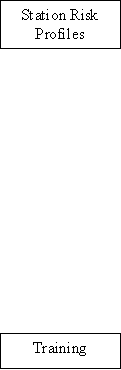
Risk Profiling Concept Flowchart;
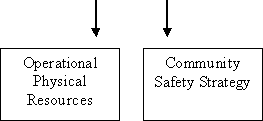
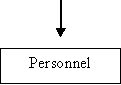
Risk
Qualify & Quantify




Review Mechanism

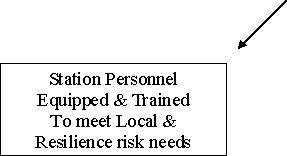

 Station Profile
Priorities