Archived decisions
Hampshire County Council Executive Member - Environment 27 May 2008 Project Integra Action Plan 2008-2013 Report of the Director of Environment |
Item 7 |
Contact: Martyn Cole, tel 023 8038 3323 email: [email protected]
1. Summary
1.1 This report summarises the key items in relation to Project Integra (PI) Action Plan 2008-2013 Resource Management: Staying Ahead Without Costing the Earth.
1.2 Approval is subject to additional work on the Action Plan to remove inconsistencies in targets identified that appear throughout the document, specifically references to the combined recycling and composting target for 2010 which is referred to as both 40% and 50% in different places.
1.3 The Project Integra Action Plan is a five year plan. The County Council supports the Action Plan and will commit to direct resources to identified priority work areas. It is concerned, however, that the partnership as a whole is realistic about resource levels required to deliver this plan and should ensure resources are clearly identified and targeted towards priority work areas. Where it is not possible to deliver against the Action Plan due to insufficient resources, this should be communicated to avoid raising expectations unrealistically.
1.4 Project Integra's headline objective is to focus on effective delivery of waste and resource management services, working towards a series of targets related to the waste hierarchy, for waste minimisation, recycling, energy recovery and diversion from landfill.
1.5 The purpose of the Action Plan is to:
(i) set out the strategic context in which PI is working at local, regional, national and international level and the links to the partnership's own strategic objectives;
(ii) formally review progress made by the partnership over the past 12 months;
(iii) provide a framework to assist in the delivery of Project Integra's key strategic objectives over the next five years to March 2013;
(iv) set out the key work streams to be delivered by the partnership over the 12 months to March 2009; and
(v) outline the resources and performance management arrangements available to ensure delivery of those key work streams.
1.6 The above programme is intended to ensure the continued improvement and efficiency to waste management practices in Hampshire.
2. Recommendation
2.1 That the attached Project Integra Action Plan 2008-2013 Resource Management: Staying Ahead Without Costing the Earth be approved subject to the concerns raised in paragraphs 1.2 and 1.3 of the report.
3. Project Integra Action Plan 2008-2013
3.1 This is the seventh annual Action Plan for PI and is prepared in accordance with the constitution. This requires a draft annual Action Plan to be prepared and approved by the Annual General Meeting of the PI Strategic Board, normally held in January. The draft plan is then considered by each of the partners' authorities. On approval by the partners the plan then becomes the approved annual Action Plan and forms the framework for Board Members to make decisions on behalf of partner authorities. Partner authorities may approve the draft Action Plan, subject to a reservation in respect of any particular matter on which they have a concern.
3.2 This year's Action Plan reflects significant Hampshire County Council influence in shaping the plan, culminating in a very successful Members' event in January.
3.3 The Action Plan sets out the strategic outcomes which the partnership aims to deliver over the next five years in order to meet its long term objectives within the wider context. Each strategic outcome contains a number of specific work streams which the partnership will deliver over the next 12 months. Listed are the work streams followed by projects the County Council has identified in the Partner Implementation Plan as contributing to the delivery of the Action Plan. The issue of resources has been referred to in 1.3 of this report.
Sustainable Recycling - Hampshire County Council Projects
3.4 The County Council will continue to use data from the Materials Analysis Facility to help reduce contamination levels of Dry Mixed Recyclables (DMR) to an average of 5%:
(i) it will undertake a green waste collection review;
(ii) it will work with Eastleigh Borough Council on a food waste feasibility project; and
(iii) it will also implement changes to infrastructure resulting from outcomes of Material Flow Planning (MFP) or as a result of operational developments.
Eliminating Landfill - Hampshire County Council Project
3.5 Reducing residue to landfill by slowing the pace of waste growth, processing ERF residue, eg Incinerator Bottom Ash, shredding non-recyclable waste from HWRCs and processing over-size material at composting sites.
Commercial Materials Management - Hampshire County Council Project
3.6 The County Council will disseminate the findings from long term projects helping Small to Medium Size Enterprises to recycle their commercial waste.
Efficiencies/Value for Money - Hampshire County Council Projects
3.7 The County Council will continue its strategic involvement in the Joint Working Steering Group and will share best practice in improving business processes, eg County-wide Abandoned Vehicle Contract, including implementation of joint working recommendations and any changes that come from MFP.
Leadership and Influence - Hampshire County Council Projects
3.8 The County Council will encourage greater participation in recycling through the education programme funded until March 2009 and undertake a review of the communications strategy during 2008.
3.9 The County Council will continue to work towards delivery of the objectives set out in the Materials Resource Strategy (MRS) through MFP work, the Waste Sites Plan, and facilitating the sites and infrastructure required to deliver the MRS objectives.
3.10 Each PI partner authority prepares its own Partner Implementation Plan which sets out how it intends to improve performance and help meet the collective targets.
3.11 The plan will be available in the Members' Rooms and for public inspection at the Information Centre in Winchester. It can also be viewed on the PI website, www.integra.org.uk.
4. Impact Assessments
4.1 The PI Action Plan 2008-2013 will not compromise the County Council's policy on race and equalities or on the prevention of crime.
5. Conclusion
5.1 The PI Action Plan 2008-2013 sets out the strategic outcomes which the partnership aims to deliver over the next five years in order to meet its long term objectives within the wider context.
5.2 The Action Plan reaffirms the need to all partner authorities to deliver services more effectively and efficiently, including joint working where appropriate. The plan has benefited from a more open and inclusive process involving many examples of the partnership at its best. This has contributed to an Action Plan with much clearer priorities than in previous years and it is proposed that the plan be approved, subject to concerns raised in paragraphs 1.2 and 1.3 of this report.
LINK(S) TO CORPORATE STRATEGY | ||
Yes |
No | |
Hampshire safer and more secure for all |
||
Maximising well-being |
||
Enhancing our quality of place |
√ |
|
Section 100 D - Local Government Act 1972 - background papers | |
The following documents disclose facts or matters on which this report, or an important part of it, is based and has been relied upon to a material extent in the preparation of this report. | |
NB the list excludes: | |
1. |
Published works. |
2. |
Documents which disclose exempt or confidential information as defined in the Act. |
TITLE |
LOCATION |
None |
1630Rpt/MC
Project Integra
Action Plan
2008-2013



Contents
Section |
Page Number | |
Executive Summary |
3 | |
1 |
Introduction |
5 |
2 |
Strategic Overview |
6 |
3 |
Role of PI |
16 |
4 |
Review of 2007/08 Key Programmes |
18 |
5 |
Strategic Outcomes |
22 |
6 |
Key Work Streams |
27 |
7 |
Resources |
35 |
8 |
Targets and Performance |
38 |
9 |
Risk Management |
40 |
10 |
Conclusion |
41 |
Appendices |
42 |
Executive Summary
Integra has delivered a world-class waste management infrastructure with the highest landfill diversion rate in the UK. However, the partnership is now working in an increasingly complex strategic environment involving waste and materials management linked to economic growth and energy security. The partnership has to continue to adapt and move forward in order to deliver resource management more sustainably as well as improving performance, efficiency and effectiveness under increasing financial pressures.
The key strategic drivers are:
· The Waste Strategy for England 2007 which introduces more ambitious national targets to exceed the Landfill Directive obligations and aims for 50% recycling and composting, 75% municipal waste recovery and to cut per capita levels of residual waste in half, all by 2020. Integra has exceeded the recovery target already, but will need to develop its infrastructure further to meet the recycling and waste reduction targets. The strategy also makes more explicit the Government's intention that local authorities should include commercial waste recycling in their activities, presenting a further challenge for Integra.
· The 2007 Comprehensive Spending Review which requires annual net efficiency savings of 3% until at least 2011 and the Local Government White Paper, which proposes a greater role for local authorities as place shapers and a duty to co-operate between councils and with other partners. Delivering additional infrastructure to improve recycling performance within this tight fiscal context will be a considerable challenge which will require greater partnership working to achieve. In addition, the confirmed increase in Landfill Tax from £24 to £48/tonne over the next 3 years, provides a major incentive to further reduce landfilling of Hampshire's waste.
· The recycling and sustainable development objectives of the Hampshire Local Area Agreement and Partnership for Urban South Hampshire.
· The Materials Resources Strategy (MRS) for Hampshire which, amongst other things, aims to an overall recycling rate for all wastes of 60% by 2020 and Integra's Joint Municipal Waste Management Strategy which aims to deliver the relevant municipal elements of the MRS. These strategies are helping to inform the Hampshire Minerals and Waste Development Framework which will set the planning context for the delivery of new infrastructure in the county to meet these ambitious objectives.
The need for urgent action to mitigate the effects of climate change remains an important additional driver.
Accordingly, the Integra Action Plan sets out the strategic outcomes which the partnership aims to deliver over the next 5 years in order to meet its long term objectives within this wider context. Each strategic outcome contains a number of specific work streams which the partnership will deliver over the next 12 months:
Strategic Outcome |
Work stream |
Sustainable Recycling: Integra aims to deliver high level performance at an acceptable level of cost and environmental impact whilst maintaining public support and participation. Waste avoidance is also included in this strategic outcome |
· Review of collection methods · Home composting · Food Waste · Garden waste · Targeting Contamination and Process Efficiency · Review of Market Opportunities |
Eliminating Landfill Integra is committed to the eventual elimination of landfill in the context of the sustainable resource management agenda, scarce local capacity and steeply rising costs |
· Options for further waste treatment · Minerals and Waste Plan - Infrastructure planning · Review of HWRC trade waste controls |
Commercial Materials Management Integra is seeking to provide or facilitate capacity to capture commercial recyclables in line with the national waste strategy and resource management agenda and to attract investment and achieve economies of scale. Action is dependent on Material Flow Planning to provide baseline data and infrastructure recommendations |
· Deliver outcomes from the Material Flow Planning Process |
Efficiencies/Value for Money There is scope for joint working particularly in waste collection to achieve economies of scale such as optimising rounds and pooling resources |
· Joint working projects · Sharing best practice and improving business processes |
Leadership and Influence Integra has been successful in influencing the national agenda, securing external funding and delivering behavioural change locally. However, the partnership must continue to invest time and resources in this key strategic outcome in support of the other elements of the action plan |
· Education Programme/Community Engagement · Lobbying |
Section 1
Introduction
Over the last 15 years Project Integra has delivered an internationally recognised collection and processing infrastructure to ensure a more sustainable approach to the management of waste in Hampshire. Already, a 40% municipal waste recycling rate and an 85% landfill diversion rate are on target to be achieved by the end of the 2007/08 financial year.1 However, much work remains to be done if the partnership is to provide a sustainable materials resources system and to minimise current and future cost pressures. In addition, the partnership needs to take account of the ever changing strategic context in which it is working and ensure that it rises to the challenge of the climate change and efficiency agendas which are at the heart of Government policy.
This Action Plan sits alongside the Project Integra Constitution and the Hampshire Joint Municipal Waste Management Strategy (JMWMS), which are the three core documents that underpin the Project Integra partnership.
The purpose of this Action Plan is to
· Set out the strategic context in which Project Integra is working, at local, regional, national and international level and the links to the partnership's own strategic objectives
· Formally review progress made by the partnership over the past 12 months
· Provide a framework to assist in the delivery of Project Integra's key strategic objectives over the next 5 years, to March 2013
· Set out the key work streams to be delivered by the partnership over the 12 months to March 2009
· Outline the resources and performance management arrangements available to ensure delivery of those key work streams
Section 2
Strategic Overview
The Project Integra partnership is required to operate within a complex political, economic, social and environmental context. The objectives of the partnership are governed both by a multitude of external factors, including European and UK Government policy, and by local initiatives such as Hampshire's Material Resources Strategy.
The Project Integra partnership can make a telling contribution to these agendas. The purpose of this section is to provide an overview of this strategic context in order to provide an outline of these main strategic drivers to inform Integra's key strategic objectives.
The key drivers are:
· Waste Strategy for England 2007
· Climate Change
· Lyons Inquiry
· Local Government White Paper
· Comprehensive Area Assessment (CAA)
· 2007 Comprehensive Spending Review (CSR07)
· Hampshire Local Area Agreement and Environmental Priorities
· Partnership for Urban South Hampshire (PUSH)
· Hampshire Materials Resources Strategy (MRS)
· Hampshire Joint Municipal Waste Management Strategy (JMWMS)
· Minerals and Waste Development Framework
· Local public, social and market pressures
These are outlined in more detail below.
1. Waste Strategy for England 2007
1. National Waste Start1
The Government's strategic approach to waste management continues to be driven by European policy and directives. However, Integra has been able to significantly influence the debate in the UK and the first national waste strategy in 2000 was largely based on the principles and approach adopted by the partnership. The new Waste Strategy for England 2007 builds on the previous strategy by introducing the following key objectives:
· To decouple waste growth (in all sectors) from economic growth and put more emphasis on waste prevention and reuse (this objective is in line with the primary objective of the EU's Sixth Environment Action Programme)
· To meet and exceed the EU Landfill Directive diversion targets for biodegradable municipal waste
· To increase diversion from landfill of non-municipal waste and secure better integration of treatment for municipal and non-municipal waste
· To secure the investment in infrastructure needed to divert waste from landfill and for the management of hazardous waste
· To get the most environmental benefit from that investment, through increased recycling of resources and recovery of energy from residual waste using a mix of technologies
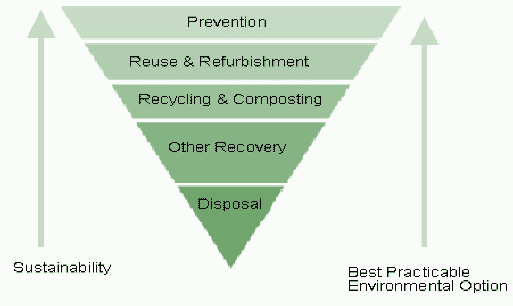
The waste strategy embraces the principles contained in the waste hierarchy which gives priority to waste avoidance, reuse and recycling or composting, followed by energy recovery from any remaining residual waste and landfilling only as a last resort. This is summarised in the following diagram:
Key Waste Strategy Targets
· To reduce the amount of household waste not reused, recycled or composted from over 22 million tonnes in 2000 to 16 million tonnes in 2010, with an aspiration to reduce it to 12 million tonnes in 2020 - a reduction of 45%. This is equivalent to a fall of 50% per person (from 450 kg per person in 2000 to 225 kg in 2020).
· New household waste recycling and composting national targets of at least
o 40% by 2010
o 45% by 2015
o 50% by 2020
· New national targets for recovery of municipal waste
o 53% by 2010
o 67% by 2015
o 75% by 2020.
In most cases, Integra's ambitions already exceed the new national targets that have been set, with one important exception: the target to reduce residual household waste arisings to 225 kg per person in 2020 represents a significant challenge.
There are 3 other elements to the Strategy that are influencing Integra's direction:
· Landfill Tax will rise from £24/tonne in 2007 to £48/tonne in 2010. This is a powerful driver to further reduce landfilled waste in Hampshire
· the requirement for local authorities to take a wider role, including helping local businesses to secure effective and appropriate waste and recycling arrangements
· possible future powers to incentivise householders to reduce and recycle their waste (see section 2 below)
2. Climate Change
One of the key drivers for change is a requirement to deliver significant reductions in carbon emissions. This is at the heart of the Government's Waste Strategy for England 2007.
In its 4th Assessment Report, released in 2007, the Intergovernmental Panel on Climate Change issued a stark warning that urgent action is needed to both adapt to the effects of climate change that are already inevitable and to mitigate greenhouse gas emissions. The Panel notes that sustainable development can enhance both our adaptive and mitigative capacity, reducing both our emissions and our vulnerability to climate change.
In addition, the Panel notes that, while post consumer waste is a small contributor to global greenhouse gas emissions, the waste sector can positively contribute to greenhouse gas mitigation at low cost and promote sustainable development. The Panel identifies a number of key mitigation practices and technologies currently commercially available, including
· landfill methane recovery
· incineration with energy recovery
· composting of organic waste
· recycling and waste minimisation.
The Stern Report, commissioned by the UK Government and published in 2007, examines the economics of climate change and concludes that mitigation - taking strong action to reduce greenhouse gas emissions - must be viewed as an investment. In response the Government has expressed a commitment to address both the causes and consequences of climate change. The Climate Change Bill, which was introduced to Parliament on 14 November 2007, will create a new approach to managing and responding to climate change in the UK.
This Bill puts into statute the UK's targets to reduce carbon dioxide emissions through domestic and international action by at least 60% by 2050 and 26-32% by 2020, against a 1990 baseline. The Bill will have a greater direct impact on the UK's emissions by, amongst other things, providing a power to pilot local authority incentives for household waste minimisation and recycling in 5 local authority areas.
3. The Local Government Agenda
There is a strong focus in local government on reducing costs through efficiencies, economies of scale and joint working in the local government sector. In addition, the role of local authorities as place shapers and key contributors to the well-being of citizens, the development of sustainable communities and partnership working are recurring themes.
The Lyons Inquiry into local government identifies 4 areas where local government has a significant role to play
· providing safe and secure places to live
· helping to foster greater prosperity
· reducing our environmental impact by encouraging more sustainable lifestyles through engagement with citizens and performance of statutory functions
· addressing levels of public trust and satisfaction
The Local Government White Paper includes proposals for a new performance framework that will cut the number of national performance indicators to 200, and targets to around 50 and replace CPA with new assessment arrangements (see below). In addition, the White Paper proposes an enhanced role for councils as strategic leaders and place-shapers through stronger Local Strategic Partnerships and next-generation Local Area Agreements (LAAs) with wider scope and importance, and a duty to cooperate between councils and local partners.
In 2009 Comprehensive Area Assessment (CAA), which supersedes the Comprehensive Performance Assessment for local government, continues to seek assurances from local authorities about how well-run local public services are and how effectively they use taxpayers' money. But CAA also aims to be more relevant to local people by focusing on issues that are important to their community. It will develop a shared view about the challenges facing an area, such as crime, community cohesion and a sustainable environment. CAA aims to provide the first independent assessment of the prospects for local areas and the quality of life for people living there.
This focus on outcomes for local people requires CAA to look across councils and others responsible for local public services, which are increasingly expected to work in partnership to tackle the challenges facing their communities.
The need for a greater partnership approach is also echoed in the Government's 2007 Comprehensive Spending Review (CSR07) which takes place in a tight fiscal context. The Government forecasts that Councils will comfortably exceed the efficiency requirements of the Gershon Efficiency Review. The recent three year Government funding settlement shows annual rises in funding at around 1%. This leaves a significant shortfall for local government to address which results in a need for significant savings in service costs and a reduction in the growth of service costs. All public services will be required to achieve at least 3% net cash-releasing value for money gains per year between 2008-2011. The Government acknowledges that this will be challenging, but asserts that it can be done if local and Central Government fulfill their roles to maximise the potential of local services. Enhanced efficiency will be essential to maintain and enhance service quality in the years ahead, while staying within the resources to be allocated for the CSR07 period.
4. Hampshire Local Area Agreement and Environmental Priorities
The current Hampshire Local Area Agreement (LAA) has 8 priorities, one of which is to use material resources more efficiently (priority G). This priority has 3 targets:
· To reduce construction waste by substitution of recovered materials in new build development and major refurbishment. This involves the development of a common planning framework, progress towards which is being delivered in part by the PUSH Sustainability Group (see below)
· To increase recycling in the non municipal sector
· To increase recycling and reduce landfill of municipal waste. It is expected that the 35% recycling target for 2008/09 will be exceeded, with projected performance of 37%. In 2008/09 the target of restricting the amount of municipal waste landfilled to less than 15% is expected to be met
The current LAA ends in 2009 and prior to this there will be a new Hampshire Sustainable Community Strategy produced in the context of the Local Government White Paper. Under the proposal in the White Paper, this strategy, along with the Local Area Agreement, will form the central performance monitoring basis for Hampshire County Council and its partners through the new Comprehensive Area Assessment.
Hampshire County Council and its partners have already agreed to adopt a new sustainable development goal and work has begun on detailing what this means and the priorities for improvement in achieving the following goal: `Within a decade Hampshire will prosper without risking our environment'.
The revised LAA, which runs until April 2010, is to include a number of the new Government national indicators. It is likely that the priority targets for the new LAA will focus on climate change mitigation and adaptation as well as including an agreed target for waste. Project Integra's role will be to contribute where appropriate to the new LAA, with a particular emphasis on the agreed waste target.
5. Partnership for Urban South Hampshire (PUSH)
PUSH is a formal partnership of 11 local authorities in South Hampshire. The main aim of PUSH is the delivery of a strategy for economic-led growth in the sub region between now and 2026, to make South Hampshire more prosperous, attractive and sustainable and offering a better quality of life.
PUSH aims to deliver a strategy for economic growth that is environmentally sustainable and the partnership has established a Sustainability Group to ensure that the principles of sustainability will inform and determine the nature of key development proposals during the lifetime of the strategy. These principles include, amongst others:
· stabilisation and reduction in the use of resources
· net self-sufficiency in resource recycling and waste handling
· joint decision making on targets for resource usage and planning for resource management infrastructure
· planning that takes into account necessary mitigation and adaptation measures with regard to climate change
Dealing with construction waste more effectively and ensuring much higher levels of recycling and minimisation of waste is a key priority for PUSH. Working with partners such as WRAP, PUSH has been developing best practice and putting in place appropriate policies in the Minerals and Waste Development Framework, to assist in achieving a more sustainable approach to resource use related to development activity.
The work of the Project Integra partnership supports the key PUSH objective of sustainable economic growth in the sub-region by ensuring the effective management of municipal and commercial materials.
6. Materials Resources Strategy (MRS)
At the beginning of 2005 Hampshire County Council, Portsmouth City Council, Southampton City Council and Project Integra jointly facilitated the development of the Hampshire Materials Resources Strategy (MRS). The development process resulted in the publication of `More from Less', a synopsis of 17 months of stakeholder dialogue which articulates stakeholders' aspirations on issues related to natural resources, minerals and wastes. `More From Less' is intended as a primary reference point to guide and integrate 3 key work areas:
· production of the statutory joint minerals and waste development framework
· development of plans for managing municipal waste under Project Integra
· implementation of societal change objectives via the Hampshire Natural Resources Initiative
In effect the MRS represents an extension to the Community Strategies in Hampshire with a focus on natural resources. Key themes from these Community Strategies include: protecting and enhancing Hampshire's environment, supporting Hampshire's economy, preparing for global warming, reducing the causes of environmental damage, minimising waste production, maximising recycling, reuse and composting through new practices and education and publicity campaigns, disposing of residual waste locally by sustainable means, improving urban design and combating fly-tipping.
`More from Less' identifies a number of outcomes which stakeholders wished to see delivered:
· Achieving behavioural change that maximises reuse, recycling and recovery
· Reducing overall year on year waste growth to 1% by 2010 and 0.5% by 2020
· Achieving an overall recycling rate of 60% by 2020 for all Hampshire's waste (not just household)
· Optimising the cost of recycling to public and private sectors
· Achieving net self-sufficiency in dealing with all waste arisings by 2016
· Maximising materials and energy recovery from unavoidable waste
· Reducing use of landfill for all waste materials to a minimum practicable level by 2020
· Reducing demand for new minerals to minimum practicable levels, with extraction of sand and gravel from land reduced as far as practicable
· New sites and facilities provided meeting needs in a sustainable efficient way
· Providing a supportive policy framework and involving all sectors of the community in delivering solutions and change
More From Less identifies that a key issue for Integra is to maximise affordability and value for money for the council tax payers, including optimising recycling performance across the PI partnership, and maximising cost efficiencies through economies of scale and joint working.
7. Hampshire Joint Municipal Waste Management Strategy (JMWMS)
The JMWMS has been produced by Integra with the vision that by 2020 Hampshire will have a world class and sustainable material resources system that maximises efficient reuse and recycling and minimises the need for disposal. It has been developed in the context of Hampshire's Material Resources Strategy. It is also closely linked to the Minerals and Waste Core Strategy (see below), as both have been developed in parallel, using `More from Less' as a reference point and using similar sustainability objectives and appraisal techniques.
Aims of JMWMS:
· To deliver the relevant municipal elements of the Material Resources Strategy
· Win the support and understanding of the wider public
· Make access to recycling and related facilities a positive experience for residents and businesses
· Improve the understanding of, and contain the year on year growth in material resources generated by household consumption
· Maximise value for money by considering the system as a whole
· To provide suitable and sufficient processing facilities for existing and new material streams
· Secure stable, sustainable and ethical markets for recovered materials and products
· Ensure each partner clearly understands its roles and responsibility for delivery
· Meet statutory obligations and maintain Hampshire at the forefront of the waste to resources agenda
JMWMS will deliver these aims using the following approach:
Collection - Kerbside collection of dry mixed recyclables, glass and textiles; promote home composting and the use of food digesters; introduce chargeable kerbside green waste collections and facilitate the provision of enhanced waste electrical and electronic equipment (WEEE) `bring' facilities at household waste recycling centres (HWRCs).
Commercial Recycling - Provide/facilitate collection and processing capacity to optimise the capture of recyclables from the commercial sector (recyclables that are similar in nature to those arising from the municipal waste stream).
Waste Growth - MRS and Regional Waste Strategy targets - reduce growth to 1% per annum by 2010 and 0.5% per annum by 2020.
Treatment of Residual - Thermal treatment (EfW) of at least 420 000 tonnes per annum with excess residual waste being sent to landfill in the short term and further treatment in the long term.
Landfill - Pre-process all household waste with residues only to landfill (and minimum organics to landfill).
JMWMS states that the Project Integra partners will seek to positively contribute to the achievement of the following MRS recycling and composting targets for all waste:
· 50% by 2010
· 55% by 2015
· 60% by 2020
8. Minerals and Waste Development Framework
The Core Strategy of the Minerals and Waste Development Framework sets out a long-term spatial vision for minerals and waste planning in Hampshire and will contain the primary policies and proposals to deliver that vision:
"By 2020 Hampshire will have a world class and sustainable material resources system that maximises both the efficient use of primary materials and the reuse and recycling of wastes, and minimises the need for disposal."
The overall approach is based on principles of improving resource efficiency by improving the sustainable design of new building, progressively slowing the pace of waste growth and maximising the recovery of value from wastes prior to landfill.
As far as possible, waste will be managed near to where it is produced and in accordance with the waste hierarchy. Value will be recovered through technically advanced reuse, recycling and composting processes or, failing that, through the recovery of energy and/or materials from the waste. The amount of waste going to landfill will be very limited in quantity and biodegradable content.
9. Local public, social and market pressures
There remains continued pressure from the public in Hampshire to continue to increase the range of materials that can be recovered for recycling. Tetrapak recycling is a good example of the difficulties that this presents in terms of ensuring that the financial and sustainability issues are well understood by both the public and the media.
The partnership benefits from the sale of recyclables, the value of which is dependent on changing market conditions. The rapid economic growth of countries like China and India is having a global effect on resource use and commodity prices. This is stimulating the market for secondary raw materials but also pushing up fuel prices which is affecting the cost of transport and processing. The partnership will continue to monitor market activity and is committed to supplying high quality secondary materials in order to ensure sustainable markets and income.
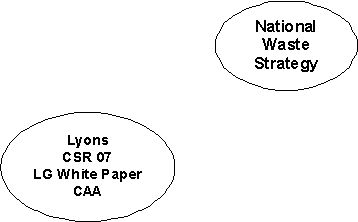
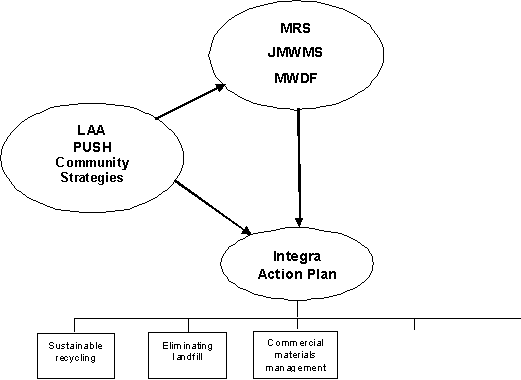
The strategic context of the Integra Action plan is summarised in the diagram below:
Integra Action Plan: Summary of Strategic Context
International |
Landfill Directive EU 6th Environmental Action Programme Stern Report/ Climate Change Bill
|
Limiting Landfill Waste Reduction Increased recycling Decouple waste growth from economic growth Climate Change |
National |
|
Waste reduction Increased recycling Decouple waste growth from economic growth Climate Change Commercial wastes Reducing costs through efficiencies & joint working Place shaping and influence Public well-being |
Local |
|
Waste Reduction Increased recycling Sustainable resource management Self sufficiency in waste Sustainable development Env protection Sustainable resource use |



Section 3
The Role of Project Integra
The role of Project Integra is to provide a formal partnership approach and framework to deliver sustainable waste management in the context of Hampshire's Material Resources Strategy.
The key to Project Integra and its successes to date is the mutual support and co-operation that exists between all the partners, and the delivery of sustainable management of municipal waste in Hampshire is dependent on the continuation of this close working.
In 2001 the partner authorities set up a Joint Committee (the Project Integra Management Board) in order to increase clarity, accountability and respond in a more effective and coordinated way to new challenges.
The effectiveness of the Board was reviewed during 2005/06 in parallel with the development of the Joint Municipal Waste Management Strategy (JMWMS). A number of important evolutions were agreed by the partner authorities and the constitution of the Board was amended. To underline its strategic, rather than operational, role the Board became the Project Integra Strategic Board. The Objectives of the Board mirror those in the JMWMS: to provide a long-term solution for dealing with Hampshire's household waste in an environmentally sound, cost effective and reliable way. Success in achieving this depends on joint working between all the parties in the best interests of the community at large.
To enable the partnership to address its strategic objectives in a coherent way, Integra needs to adopt a more corporate approach than it has done in the past and fully explore the benefits and added value that closer partnership working will bring in terms of streamlining decision making, reducing duplication and contributing to improved performance and efficiency.
Integra Core Values
_ We are a partnership founded on the principle of collaboration. This approach has served Hampshire residents well for over 10 years and continues to be essential in a complex and fast-changing environment.
_ We are a partnership that encourages two-way communication and where everyone has a say in what we do and how we do it.
_ We explain to people why we do things, particularly when difficult or counter-intuitive decisions are made.
_ We strive to be consistent in the messages we give to each other and to the wider community.
_ We want to be seen as a leading example and therefore actively seek out and promote best practice.
_ We aim to make objective decisions based on high quality, up to date data and we support our own research programme to assist with this.
_ We see, and encourage everyone else to see, the matter we deal with as material and energy resources, not rubbish, refuse or waste.
_ We encourage the view that dealing with these resources effectively is an issue for the whole community not just for particular organisations or individuals.
_ We recognise the waste hierarchy and the proximity principle. Above all, however, we seek to achieve the optimal use of material and energy resources through a balance of the appropriate environmental, social and economic factors.
_ To this end we strive to produce and supply high quality materials for ethical and sustainable markets, where possible, in the UK.
_ As a partnership we accept that these core values can be challenged and changed, but only after significant and inclusive debate. They should be seen as a framework for moving forward in a consensual manner, not a barrier to progress.
Section 4
Review of 2007/08
Performance and BVPIs
Integra continues to make good progress towards achieving 40% recycling across the partnership and landfill has fallen to around 15% of waste collected by the partnership authorities. A more detailed breakdown of performance is provided in Appendix 1.
Project Delivery in 2007/08
1. Tackling Contamination of Dry Recyclables
The Materials Analysis Facility (MAF) continues to analyse both recycling and residual streams, particularly in support of the continuing work to reduce contamination through the Behavioural Change Strategy and partners' own implementation plans (see below). An instant notification system was set up in the spring of 2007 to alert WCAs when a sample from one of their loads was identified to have over 10% contamination. This system has allowed authorities to attempt to identify the reasons behind the high contamination and put in measures to address them.
Data from the 268 samples of dry mixed recyclables analysed between May and July 2007 show that the overall contamination level has reduced from 9.66% to 7.28% and all Integra partners achieved the 10% contamination level target set for 2007/08.
2. Reducing Landfill
The County Council continued to work towards reducing landfilled waste by improving infrastructure and contractual arrangements. Key achievements include:
· Construction of a new transfer station to enable delivery of New Forest District Council residual waste to EfW incineration and away from landfill
· The introduction of a new contract for the management of HWRCs which will improve customer service, reduce trade waste abuse of the sites and provide clarity regarding waste acceptance
· New arrangements to process incinerator bottom ash with an estimated throughput of around 9,000 tonnes per month
3. Joint Working Opportunities
A project has been established under the auspices of the Hampshire and Isle of Wight Improvement Board with the aims of:
· identifying and quantifying in detail opportunities for efficiencies and cost-savings through joint working across all aspects of municipal waste management in Hampshire and the Isle of Wight
· reporting the findings to policy makers and providing advice to support strategic leadership and decision making in this area
Key areas being investigated:
· The current interrelationship of costs/benefits between WCA and WDA activities to provide transparency about the current position
· Potential to share client and/or contractor management and staff skills
· Sharing of strategic officer resources - joint strategic planning reporting to two or more local authorities
· Potential to share plant, equipment and premises
· Joint Procurement opportunities, including contracts
· Innovative partnerships or other arrangements with third parties such as producers, retailers or re-processors
· Removing barriers to actually making things happen
· Governance, risk sharing and funding arrangements
At the time of writing, the consultant's report outlining the business case has just been released. The next step beyond this project, which is included in the 2008/09 work programme, is to assist partner local authorities to develop and implement plans to deliver efficiencies and cost-savings identified. This will be driven by the partners, with support from the project team and other Project Integra resources as appropriate.
4. Behavioural Change Strategy
The Behavioural Change Strategy aims to improve both capture and quality of recyclable materials through activities such as a schools education programme and doorstepping and community engagement.
Three outreach officers were recruited to deliver the education outreach programme in around 90 schools from January 2007 onwards and build a sustained relationship with the participating schools.
Community Engagement is specifically targeted in those areas or rounds with high levels of contamination as identified by the Materials Analysis Facility, and the programme has piloted techniques to address specific issues such as flats and high density dwellings, houses with multiple occupation and transient populations. The longer term aim is to capture 70% of available recyclate with an average of less than 5% contamination across the county.
5. WRAP Home Composting Campaign
WRAP (the Waste and Resources Action Programme) launched a campaign in 2004 to establish home composting as a sustainable and low cost method to divert organic municipal waste from landfill. Integra worked with WRAP on a county-wide scheme in 2007 to promote and distribute cost price home compost bins to householders. A total of 24,543 compost bins were distributed in 2007. WRAP estimates that households composting for the first time will divert 220kg of material out of the waste stream per year, and existing users who add another bin can be expected to divert a further 60kg per year. Accordingly, this level of take-up represents a diversion of around 2,800 tonnes of material, using WRAP's methods of calculation.
6. Material Flow Planning
Material Flow Planning (MFP) is a practical research and analysis project being carried out by County Council Minerals and Waste Planning, County Council Waste and Resources and Project Integra, in order to plan the delivery of sustainable resource management infrastructure. MFP is designed to identify different materials in the waste stream, where they come from and where they go at present and what combination of recycling, composting and recovery options would provide the best option taking into account environmental, social and economic factors, and the wider resource market.
This process will result in clear recommendations on the waste and resource management systems and infrastructure that will be needed to collect, transport and treat all of Hampshire's waste in the most environmentally, socially and economically efficient way possible. In addition, it will provide details of facilities where new and extended capacity will be necessary and the broad locations of required sites.
This will form part of the evidence base for the Hampshire Waste Management Plan (part of the Hampshire Minerals and Waste Development Framework). This plan will identify sites and locations for managing Hampshire's resources in the future. The MFP process will also inform the next phase of development of Project Integra's waste collection and treatment systems and infrastructure.
Project consultants have completed work on validating the quality and robustness of the data regarding the quantities, types and locations of commercial and industrial waste in Hampshire.
The project is now developing a number of scenarios based on the potential options for managing each material stream with a view to the future development of infrastructure and facilities.
This includes evaluating the scenarios against the following key factors:
· Cost
· Carbon benefit
· Deliverability
· Sustainable Communities
Evaluation of the scenarios will also take into account their contribution towards achieving recycling targets and diverting waste away from landfill.
An internal consultation and review, along with a technical review process, are planned for the spring of 2008 and the preparation of a report and recommendations by the summer of 2008.
Section 5
Strategic Outcomes
Integra has identified 5 strategic outcomes which will guide and focus the partnership's activities over the next 5 years. These are:
· Sustainable Recycling
· Eliminating Landfill
· Commercial Materials Management
· Efficiencies/Value for Money
· Leadership and Influence
These strategic outcomes have been developed to take into account the strategic context in which Integra is working, and specifically to:
· Ensure progress towards meeting and exceeding the 40% recycling target in a sustainable way
· Eliminate the landfilling of waste. This reflects the scarcity of municipal landfill sites in Hampshire and the need to control steeply rising costs with the introduction of the Landfill Tax Escalator
· Focus more on dealing with commercial material alongside existing municipal waste in line with the Material Resources Strategy and the broader scope of the 2007 Waste Strategy for England
· Deliver better value for money through greater efficiencies and partnership working in the context of the challenging 2007 Comprehensive Spending Review requirements
· Focus effort on influencing behaviour in Hampshire through communication and education, and at a national level through engagement with Government and industry
Achievement of these outcomes will also contribute to the broader strategic goals of waste minimisation and the mitigation of greenhouse gas emissions from waste management activities in Hampshire.
Sustainable Recycling
In order to reach and exceed its target recycling level of 40% by 2010, it is essential that Integra continues to develop sustainable collection and processing methods, maintain public support and seek new market opportunities. This strategic outcome is not about target chasing or recycling for its own sake at any price. Rather, sustainable recycling is an approach that seeks to balance high level performance on the one hand with cost, public acceptance and environmental impact on the other. Close attention needs to be paid to markets for secondary materials which affect both cost/affordability and environmental impact, the latter particularly related to road transport if markets are remote from Hampshire.
Commercial Materials Management
The key focus during the plan period will be on:
1. Improving performance by
· Maximising materials and market opportunities
· Tackling contamination and ensuring efficient processing
· Improving communication
2. Improving systems by
· Reviewing collection methodologies
· Reviewing input specifications for dry mixed recyclables and green/bio waste
· Assessing the impact on infrastructure
· Assessing the impact on carbon emissions
· Assessing the impact on costs
· Seeking new markets for materials
· Assessing the role of procurement
This strategic outcome also encompasses waste avoidance through home composting and food waste digestion.
Elimination of Landfill
Integra is committed to the eventual elimination of landfill as far as this can be practicably achieved.
Landfill capacity in Hampshire is scarce with only one operational site currently available. In addition, the cost of landfill is set to increase substantially over the next 3 years with the introduction of the Landfill Tax Escalator on 1 April 2008. This will increase the level of Landfill Tax from £24/tonne in 2007/08 to £48/tonne by 1 April 2010. These two factors, combined with the far reaching environmental consequences of landfill disposal, are driving the partnership to develop further infrastructure options over the next year which can be pursued over the short to medium term.
Integra has the highest landfill diversion rate in the country and is on target to achieve 85% diversion by the end of March 2008, aided by two key developments:
· the completion of a new transfer station at the Blue Haze landfill site which will enable the diversion of around 8,000 tonnes per year of New Forest District Council's residual waste to be sent to the Marchwood EfW incinerator
· the shredding of non-recyclable waste from Household Waste Recycling Centres to make it suitable for EfW incineration. In 2008 10-20,000 tonnes of material will be shredded and diverted from landfill to EfW plants
In addition, a facility to process up to 80,000 tonnes a year of Incinerator Bottom Ash for use as a secondary aggregate is currently under construction.
New trade waste controls at Household Waste Recycling Centres being introduced in 2008 will also contribute to a reduction in waste to landfill.
Further measures will be considered in the context of the Material Flow Planning process which will provide detailed information regarding the different streams of material resources in Hampshire and put forward recommendations for the best way to manage those resources, integrating domestic, commercial and industrial waste. The MFP process will inform the delivery of targets and key requirements set out in the Hampshire Minerals and Waste Development Framework (MWDF) 'core' Planning Strategy and the Joint Municipal Waste Management Strategy for Hampshire (JMWMS).
Local authorities have a duty to collect, process and dispose of domestic waste. This waste however represents only 19% of the total waste produced in the UK. Of the remaining waste streams by far the biggest proportion comes from the commercial and industrial sector.
Although councils are not directly accountable for commercial and industrial waste, they do have a responsibility to provide local leadership to effectively influence markets for the benefits of their communities. This includes facilitating collection and processing to optimise the capture of recyclables from the commercial sector. Although not a duty there is an expectation through the Waste Strategy 2007 that local authorities will promote improved sustainable waste management services to small and medium enterprises across Hampshire.
The improved management of commercial and industrial waste will ensure a more environmentally sustainable economy. The certainties of supply from the municipal sector will also be attractive for private sector investors. Commercial material streams could also present opportunities for the delivery of the next generation of infrastructure through the release of private sector investment.
Accordingly, Integra is now seeking to provide or facilitate collection and processing capacity to optimise the capture of commercial/industrial recyclables. In addition, Project Integra is now seeking to facilitate and promote an improved sustainable waste management service to small and medium enterprises across Hampshire.
In order to deliver these objectives, a focus will be required on the following key areas during the lifetime of this action plan:
· Determining the waste volumes for the commercial and industrial sectors (Material Flow Planning)
· Assessing the feasibility of new services and infrastructure
· Developing common policies for the collection and handling of materials
· Producing marketing and information materials
· Infrastructure capacity planning
Initially, during 2008/09, the focus will be on delivering outcomes from the Material Flow Plan Process.
Efficiencies/Value for Money
As part of the 2007 Comprehensive Spending Review, councils are collectively required to achieve 3% cash releasing efficiency gains each year between now and the end of 2010/11. Greater partnership working has been identified as a critical lever in the efficiency agenda and Integra has a long history of successful collaboration at county-wide level. However, there is further scope for joint working particularly in waste collection arrangements through economies of scale, such as optimising rounds and vehicle fleets and pooling management resources and expertise.
The purpose of this strategic objective is to ensure that Integra remains focused on the efficiency agenda in order to deliver more for customers in a challenging financial context.
The rationalisation of Integra's approach through the adoption of common policies and collection methods has a key part to play in delivering greater efficiencies and needs to be further investigated.
Leadership and Influence
Integra has been successful in the past in influencing both public behaviour locally and at a national policy level. Having been acknowledged as a best practice example of partnership working in waste management, Integra has, to date, secured over £12 million in direct Government funding to develop collection and processing infrastructure. However, it is vital that the partnership continues to invest time and resources in this key strategic outcome in support of all the other elements of the action plan.
There are 2 key elements to this strategic outcome:
· effective communication with the public, business community and other stakeholders locally, using a strategy founded on clear objectives and delivering consistent messages with one voice
· maintaining Integra's profile nationally, influencing the national policy debate, securing external funding and promoting the sustainable production and consumption agenda
Whilst public support for and participation in recycling has never been higher, there are still sections of the population which still lack basic knowledge, awareness and motivation. The focus of attention on education in schools must be broadened to encompass all generations and to include local community leaders and organisations in order to influence behaviour and move beyond recycling to deliver the resource management message.
There needs to be more effective engagement with Government and industry particularly to ensure that the waste minimisation agenda moves beyond the current rhetoric into delivery of real improvements. The role of the Integra Executive Officer and chair of the Strategic Board in delivering this engagement needs to be evaluated, strengthened and supported.
Section 6
Key Work Streams
1. Sustainable Recycling
Detail |
Action by/timescale |
1.1 Review of collection methods |
|
This review is to be carried out in context of proposals to carry out MRF reconfiguration and maximise MRF efficiency (see also work stream 1.5 below) This work will link into the Material Flow Planning Process, data from which will allow analysis of collection systems |
Strategy Officers Core Group to set parameters A Strategy Officers sub group is to be established to conduct the review April to September 2008 |
1.2 Home composting |
|
Home composting has a significant role to play in minimising waste and Integra partners have been involved in the large-scale distribution of subsidised and cost price home compost bins to householders for the past 15 years. This work is currently being carried out in conjunction with WRAP. The WRAP Home Composting Campaign has been extended from December 2007 to March 2008 and confirmation is awaited from WRAP on possible further extension into 2008/09. In the event that WRAP funding does not continue into 2008/09, options for an Integra managed and funded scheme will be brought to the Strategic Board |
WRAP Liaison is carried out by County Council Communications Team In the event of WRAP funding not continuing beyond March 2008, the Integra Executive Officer will bring a paper on the options for procurement, subsidy and funding for a home composting programme to the Board in mid 2008. |
1.3 Food waste |
|
Tackling food waste represents an opportunity to deal with a significant proportion of the household waste stream and options are being evaluated on two fronts: the use of food waste digestion bins as a waste minimisation measure and the feasibility of collection and processing. A Food Waste Digestion Sub Group has been established to _ oversee and co-ordinate the sharing of information from the various current and historical food waste digester trials in Hampshire _ evaluate the results of the trials _ feed data to groups looking at Material Flow Planning and future strategic options _ develop recommendations for the Strategy Officers Group on future policy and investment in home digestion _ draft practical guidance for householders In addition, Eastleigh Borough Council and the County Council are currently conducting a food waste collection trial and feasibility study |
Food Waste Digestion Sub Group Interim report due Spring 2008 and will be considered alongside outcomes from Material Flow Planning Process Eastleigh Borough Council/County Council Report by July 2008 |
1.4 Garden waste |
|
A working group is to be established to review the input specification for composting sites and collection containers in light of renewed interest from WCAs in using wheeled bins for collection Key issues to be addressed will include: · implications for composting capacity and infrastructure · the potential impact on the quality of collected material and finished product as a result of using wheeled bins · the protection of established markets for Progrow soil conditioner |
A paper is due to be presented to the Strategy Officers Group in early 2008. Strategy Officers will set the terms of reference for the new working group. A timetable has not yet been determined, but work will start in 2008. |
2. Eliminating Landfill
Detail |
Action by/timescale |
2.1 Options for further waste treatment |
|
Specific tasks and objectives to be drafted and agreed for · Municipal wastes · Commercial and industrial wastes · Most appropriate treatment methods · HWRC and other residual waste streams · The treatment of other wastes such as street cleansing and bulky household items This work is dependent on the outcomes of the Material Flow Planning project and will need to be considered in conjunction with partners outside Integra due to the implications for infrastructure, development planning and the need to link municipal and commercial waste streams. The options review will take into account affordable technology solutions including Combined Heat and Power, as well as the output from the feasibility study on food waste collection being produced by Eastleigh Borough Council. |
This work stream will be delivered in partnership with PUSH, the Materials Resources Strategy Steering Group, the LAA and the Minerals and Waste Development Framework. The timescale will be in accordance with the timetable for the Development Framework and the Material Flow Planning project. |
2.2 Minerals and Waste Plan - Infrastructure planning |
|
The Minerals and Waste Core Strategy was adopted in the summer of 2007. The next stages of the project include consultation on the Site Allocation Process and preparation of the Hampshire Waste Management Plan. The Material Flow Planning work currently being undertaken will form part of the evidence base for the Hampshire Waste Management Plan which will identify sites and locations for managing Hampshire's resources in the future. |
County Council - to agreed timescale |
2.3 Review of HWRC trade waste controls |
|
There is concern that the new controls on trade waste at HWRCs coming into effect in February 2008 may lead to an increase in fly tipping. The current stats may not be reliable and need to be re-examined to establish a baseline for comparison. |
Cleansing Officers Group to examine fly tipping statistics prior to introduction of new controls and establish baseline figures by spring 2008. Report to Strategy Officers Group |
3. Commercial Materials Management
Detail |
Action by/timescale |
3.1 Deliver MFP outcomes |
|
The Material Flow Plan process being produced by Hampshire County Council aims to produce clear recommendations on the waste and resource management systems and infrastructure that will be necessary to collect transport and treat all of Hampshire's waste in the most environmentally and economically efficient way as possible. The evidence base includes both municipal and Commercial and Industrial waste arisings in Hampshire. Once the MFP process has been completed, there will be a clear picture of the nature and extent of commercial materials in the waste stream in Hampshire along with recommendations for managing them. |
Hampshire County Council. An implementation plan will be determined once the outcomes from the Material Flow Planning process are known. Timescale: July 2008 |
4. Efficiencies/Value for Money
Detail |
Action by/timescale |
4.1 Joint working |
|
In 2006 the HIoWLGA approved a report from the Hampshire Chief Executives' Working Group on Project Integra. This supported the objective of seeking opportunities for groups of authorities to work more closely together. Joint working is being considered by three groups of authorities: · Joint working on core refuse and recycling services within Basingstoke and Deane, Hart, Havant, East Hampshire, Winchester and Portsmouth ("option 5") · Joint working on peripheral services within New Forest, Test Valley, Southampton, Gosport and Eastleigh ("option 3") · Rushmoor Borough Council is in detailed discussions with Surrey Heath regarding closer working and joint refuse and street cleansing contract procurement Integra is not directly supporting the project financially or overseeing its delivery, but is playing a supporting role in the process mainly through the use of Strategy Officer time and expertise |
Officers from the "option 5" and "option 3" groups will be responsible for delivering recommendations made from the initial business case Agreement in principle on joint working should be reached by September 2008. Final agreement to proceed is not required until early/mid 2009, ahead of the start of contract procurement in July 2009 Timetable: To July 2008: Business case refinement and consultation September to October 2008: Local analysis and decision making October 2008 to July 2009: preparation of contract specification and tender documents July 2009 to June 2010: Contract procurement July 2010 to March 2011: Final implementation and handover |
4.2 Sharing best practice and improving business processes |
|
A review and re-assessment of all Integra sub groups and working groups and their terms of reference will be carried out to ensure clear accountability, communication and reporting, avoidance of duplication and best use of resources |
Integra Executive Officer By summer 2008 |
5. Leadership and Influence
Detail |
Action by/timescale |
5.1 Education Programme/Community Engagement Funding from Project Integra and County Council has been approved to maintain the core communications programme until March 2009 to deliver the following activities: · Education outreach programme to 70 primary schools · At least one leaflet per household · Advertising in selected local authority publications, 3 times a year · County-wide roadshow (to coincide with Recycle Now Week) · Development and distribution of Geography GCSE case study · Maintenance of Recycle for Hampshire website · Media management · Merchandise · Education resource library |
County Council Communications Team/Integra Partners Timescale: April 2008-March 2009 |
A full scale review of communications activities will be carried out during 2008. taking into account · Integra's commitment to the Recycle for Hampshire Campaign · the value of the R4H campaign in terms of efficiencies and risks of not continuing · how the future programme should be delivered and managed · relevant outcomes of the Efficiencies Project · the need to ensure clear objectives and delivery of clear and consistent messages |
County Council Communications Team Timescale: July to September 2008 |
This work will also include a review of how Integra can make the most of the national "Love Food Hate Waste" campaign being co-ordinated by WRAP. Since it is estimated that around one-third of food is thrown away by British households, adding up to 6.7 million tonnes a year, a successful campaign has the potential to make a significant contribution to waste minimisation. |
5.2 Lobbying |
|
In the past, Integra has been highly successful in influencing and shaping the national debate and in securing external sources of funding This lobbying role needs to be re-invigorated and to encompass · MPs, MEPs, national organisations and Government bodies · Regional groups · Industry sectors, particularly the packaging industry · Local community leaders This element of Integra's work is to be considered as part of a broadened strategy for communications The role of the Integra Executive Officer and other senior strategy officers within Integra in this work stream will also be taken into account |
County Council Communications Team Timescale: by end 2008 as part of full scale review of all communications activities referred to above |
Section 7
Resources
Project Integra Accounts and Reserves
Project Integra holds £16,000 in reserves to support any future staff recruitment and appointment.
Subscriptions for 2008/09
Subscriptions will be held at the same level as the previous year plus an RPI figure. The details of subscriptions are shown in table 1 below.
Project Fund
A total of £150K project funding will be allocated to the Behavioural Change Strategy in 2008/09
Income from the Sale of Recyclables
Income from the sale of materials is split 50:50 between HWS and the WCAs according to the tonnage of material delivered for processing. Table 2 shows the actual income from sale of recyclate in 2006/07. The level of income has been rising considerably each year:
2004/05 £ 553,000
2005/06 £ 921,000
2006/07 £1,758,000
This is partly a reflection of the increase in recycling tonnages collected by partners but also the state of the market for recyclable materials has boosted prices per tonne.
External resources
The Efficiency Through Joint Working Project is funded by the Hampshire and Isle of Wight Improvement Board. £200K is allocated in the draft 2008/11 Improvement Plan for project management, logistic and technical support. A further £105K has been sought from the Emerging Themes Fund.
RESOURCES - TABLE 1
Project Integra - Funding the Executive - 2008/09 |
|||||||||
Contributions from LAs - based on rate per 1,000 population |
|||||||||
Collection |
Disposal |
Project |
Total | ||||||
08/09 |
08/09 |
08/09 |
Funding |
Funding | |||||
£ 86.57 |
£ 19.88 |
Total |
Population |
£97.37 |
|||||
Basingstoke |
13,211.00 |
0.00 |
13,211.00 |
152,600 |
14,858.00 |
28,069.00 | |||
East Hampshire |
9,471.00 |
0.00 |
9,471.00 |
109,400 |
10,652.00 |
20,123.00 | |||
Eastleigh |
10,068.00 |
0.00 |
10,068.00 |
116,300 |
11,324.00 |
21,392.00 | |||
Fareham |
9,358.00 |
0.00 |
9,358.00 |
108,100 |
10,525.00 |
19,883.00 | |||
Gosport |
6,614.00 |
0.00 |
6,614.00 |
76,400 |
7,439.00 |
14,053.00 | |||
Hart |
7,237.00 |
0.00 |
7,237.00 |
83,600 |
8,140.00 |
15,377.00 | |||
Havant |
10,120.00 |
0.00 |
10,120.00 |
116,900 |
11,382.00 |
21,502.00 | |||
New Forest |
14,674.00 |
0.00 |
14,674.00 |
169,500 |
16,504.00 |
31,178.00 | |||
Portsmouth (WCA/WDA) |
16,180.00 |
3,716.00 |
19,896.00 |
186,900 |
18,198.00 |
38,094.00 | |||
Rushmoor |
7,869.00 |
0.00 |
7,869.00 |
90,900 |
8,851.00 |
16,720.00 | |||
Southampton (WCA/WDA) |
18,838.00 |
4,326.00 |
23,164.00 |
217,600 |
21,187.00 |
44,351.00 | |||
Test Valley |
9,514.00 |
0.00 |
9,514.00 |
109,900 |
10,701.00 |
20,215.00 | |||
Winchester |
9,289.00 |
0.00 |
9,289.00 |
107,300 |
10,447.00 |
19,736.00 | |||
Hampshire County Council |
0.00 |
24,667.00 |
24,667.00 |
1,240,800 |
- |
24,667.00 | |||
HWS |
|
|
|
4,069.00 |
- |
4,069.00 | |||
|
|
142,443.00 |
32,709.00 |
179,221.00 |
160,207.50 |
339,429.00 | |||
RESOURCES - TABLE 2
MRF Income Outturn For 2006/07 |
||||
Total |
Actual |
MRF | ||
Tonnes |
Recycled |
Income | ||
2006/07 |
2006/07 | |||
Apr-Mar |
||||
Basingstoke |
10,463 |
9,449 |
157,627 | |
East Hampshire |
9,552 |
8,836 |
147,406 | |
Eastleigh |
9,805 |
8,724 |
145,541 | |
Fareham |
9,295 |
8,066 |
134,567 | |
Gosport |
5,630 |
4,756 |
79,348 | |
Hart |
6,374 |
5,562 |
92,782 | |
Havant |
9,845 |
8,632 |
143,998 | |
New Forest |
12,923 |
11,083 |
184,902 | |
Rushmoor |
5,319 |
4,993 |
83,297 | |
Test Valley |
7,677 |
6,845 |
114,197 | |
Winchester |
7,651 |
7,037 |
117,398 | |
Portsmouth |
10,954 |
9,862 |
164,533 | |
Southampton |
13,544 |
11,520 |
192,192 | |
Total MRF Income 2006/07 |
119,031 |
105,366 |
1,757,789 | |
Unit Rate |
16.68 |
Section 8
Targets and Performance
The new performance framework for local government is outlined in the White Paper Strong and Prosperous Communities and focuses on improving quality of life and better public services. It brings together national standards and priorities set by Government with local priorities informed by the vision developed by the local authority and its partners. A clear set of national outcomes and a single set of national indicators by which to measure progress against them are a key building block for the new framework.
Accordingly, the Government has announced a new single set of 198 national indicators for English local authorities and local authority partnerships, 3 of which are particularly relevant to Integra:
· NI 191 Residual household waste per head
· NI 192 Household waste recycled and composted
· NI 193 Municipal waste landfilled
As a result of the consultation process, the Government has announced that it proposes that metals as well as other incinerator residues that are sent for recycling would count towards the numerator for the new household waste recycled/ composted indicator (NI 192). If this change goes ahead, it will have a significant and positive impact on Integra's published performance figure and it would be appropriate for Integra to review its recycling targets accordingly. The new indicators will be finalised in February 2008 and will come into effect from 1 April 2008.
As far as national waste targets are concerned, the Government announced a new set of more ambitious national targets for recovery and recycling in the Waste Strategy for England 2007:
· To reduce the amount of household waste not reused, recycled or composted from over 22.2 million tones in 2000 to 15.8 million tonnes in 2010 with an aspiration to reduce it to 12.2 million tonnes in 2020 - a reduction of 45%. This is equivalent to a fall of 50% per person (from 450 kg per person in 2000 to 225 kg in 2020)
· New household waste recycling and composting national targets of at least
o 40% by 2010
o 45% by 2015
o 50% by 2020
· New national targets for recovery of municipal waste
o 53% by 2010
o 67% by 2015
o 75% by 2020
Integra has already achieved the national recycling target for 2010 and the 2020 national recovery target but currently has no target for reducing levels of residual waste below 250kg by 2010. This needs to be reviewed.
Integra Headline Targets | |||
Description |
Target level |
Achieve by: | |
1. |
Kg residual waste/head/year |
250 kg/head/year |
2010 |
2. |
Kg head arisings (BVPI 84) |
500 kg/head/year |
2010 |
3. |
Landfill diversion |
85%/90 % |
2010/2012 |
4. |
Average contamination input MRF |
5% |
2010 |
5. |
Capture of available recyclates |
70% |
2010 |
6. |
Overall recycling/composting rate |
40% (35% in urban areas) |
2010 |
Integra's performance, measured by the 2006/07 national Best Value Performance Indicators, is summarised in the table in Appendix 1.
A report on the partnership's progress and performance in delivering the work streams outlined in this Action Plan will be presented to each meeting of the Integra Strategic Board and Policy Review & Scrutiny Committee as the basis of a performance management framework to be implemented over the next 12 months.
Each Integra partner will be invited to produce its own implementation plan for the 2008/09 financial year which will be added as appendices to the Action Plan once they have been completed and approved.
Section 9
Risk Management
The table below sets out an initial assessment of the main risks to the delivery of the work streams in this action plan and the actions or processes in place to mitigate those risks.
Risk Description |
Likeli-hood |
Impact |
Actions Proposed/Taken to Reduce Risk |
1. There are inadequate resources to meet all priorities that have been identified |
Medium |
High |
The Integra Executive Officer is to carry out a review of all Integra sub groups and working groups and their terms of reference to ensure clear accountability and delivery of objectives |
2. Appointment of a permanent Integra Executive Officer. There is a risk that the recruitment process will not identify the best candidate for this key position |
Low |
Medium |
There is a robust recruitment process in place which involves senior Integra officers and elected members |
3. Loss of influence and leadership in the national context |
Medium |
High |
The success of Integra in this context is dependent on clear communications and education. The development of a clear and robust communications strategy will improve the prospects of delivering Integra's objectives in this arena |
4. Poor internal communication, leading to reduced efficiency and effectiveness |
Medium |
High |
The sharing best practice/ improving business processes work stream is designed to improve internal communications and ensure a consistent approach is delivered |
Section 10
Conclusion
Integra has been recognised as a model for partnership working to deliver more sustainable waste management. However, the partnership is working in an increasingly complex strategic context and must continue to adapt and move forward in order to deliver sustainable resource management and improve its performance, efficiency and effectiveness at a time when financial pressures are increasing.
The key drivers include the Waste Strategy for England 2007, Hampshire Materials Resources Strategy and Local Area Agreement, all of which set out ambitions for enhanced waste reduction, recycling and landfill avoidance and a broadening of action beyond Integra's initial focus on household waste. In addition, the 2007 Comprehensive Spending Review requires authorities to deliver annual 3% efficiency savings until at least 2011, moving the efficiency and partnership working agenda to centre stage and influencing the debate on funding for future infrastructure.
By setting out the complex strategic context in which Project Integra is working and outlining five resultant key strategic outcomes, this Action Plan will help focus and direct the work of the partnership over the next five years.
Within each of the 5 key strategic outcomes, there are a series of work streams on which the partnership will focus its efforts during 2008-2009.
Delivery of these work streams will enable the partnership to further improve performance and efficiency; plan and develop infrastructure to meet the long term objective of eliminating landfill and delivering sustainable resource management; and providing an effective approach to communications to deliver further behavioural change in Hampshire and influence wider policy making.
Further information is available from
Peter Hedley-Smith
Interim Executive Officer, Project Integra
c/o The Old College
College Street
Petersfield
GU31 4AG
Tel 01730 235806, fax 01730 263622
E-mail: [email protected]
Appendix 1
Performance
Source: Audit Commission
LOCAL AUTHORITY |
2004-05 BV82a+b (Recycling + composting rate %) |
2005-06 BV82 a+b (Recycling+ composting rate %) |
2006-07 BV82 a(i) (Recycling rate %) |
2006-07 BV82b(i) (composting rate %) |
2006/07 BV82 a+b (Recycling+ composting rate %) |
Statutory recycling target % |
Percentage point increase on year (0506 to 0607) on recycling rate |
2006/07 BV 86 Cost of waste collection per household |
2005-06 BV84a: kg of household waste collected per head of population |
BV 84b: percentage change from previous year in kg collected per head of population | |
Basingstoke |
16.52 |
17.3 |
19.31 |
0.60 |
19.91 |
30 |
+2.61 |
£53.43 |
404.1 |
-0.07 | |
East Hampshire |
32.4 |
33.6 |
29.31 |
5.52 |
34.83 |
24 |
+1.23 |
£49.38 |
339 |
0.53 | |
Eastleigh |
32.6 |
34.7 |
31.26 |
6.20 |
37.46 |
30 |
+2.76 |
£50.01 |
351 |
-0.11 | |
Fareham |
21.31 |
28.4 |
27.18 |
11.19 |
38.37 |
30 |
+9.97 |
£40.82 |
379 |
-6.23 | |
Gosport |
22.8 |
23.6 |
22.78 |
1.32 |
24.10 |
27 |
+0.5 |
£38.62 |
341.3 |
0.86 | |
Hampshire |
30.23 |
31.8 |
25.19 |
11.55 |
36.74 |
30 |
+4.94 |
N/A |
502 |
2.48 | |
Hart |
23.53 |
25.4 |
25.91 |
4.94 |
30.85 |
30 |
+5.45 |
£50.07 |
386 |
0.46 | |
Havant |
21.33 |
24.0 |
29.92 |
0.39 |
30.31 |
30 |
+6.31 |
£46.67 |
359 |
-6.92 | |
New Forest |
24.61 |
26.4 |
26.27 |
2.44 |
28.71 |
30 |
+2.31 |
£46.29 |
369 |
4.80 | |
Portsmouth |
17.54 |
20.5 |
19.36 |
3.67 |
23.03 |
30 |
+2.53 |
£51.26 |
443.8 |
-4.10 | |
Rushmoor |
19.03 |
21.6 |
19.70 |
2.77 |
22.47 |
24 |
+0.87 |
£55.77 |
341 |
6.38 | |
Southampton |
17.67 |
25.7 |
17.77 |
7.74 |
25.51 |
24 |
-0.19 |
£56.61 |
426 |
8.86 | |
Test Valley |
19.24 |
27.2 |
21.61 |
5.40 |
27.01 |
30 |
-0.19 |
£68.97 |
400 |
-3.71 | |
Winchester |
18.04 |
20.2 |
22.33 |
1.93 |
24.26 |
30 |
+4.06 |
£60.61 |
386.9 |
-2.21 | |
All England Average |
30.50 |
£50.89 |
0.33 | ||||||||
All England Top Quartile |
38.40 |
£42.04 |
-1.78 | ||||||||
English District Average |
32.20 |
£49.54 |
0.33 | ||||||||
English District Top Quartile |
42.15 |
£42.14 |
-1.87 |
APPENDIX 2
Summary of Integra Waste Collection Arrangements
BVPI data 2006/07 |
Weekly residual |
AWC |
Mixed dry recyclables |
Glass |
Garden Waste |
Kitchen Waste |
Trade |
Contractual arrangements |
Cost of waste collection per household (BVPI 86) |
Household waste recycled (BVPI 82) |
Demographics |
Basingstoke |
F |
F |
T |
D |
Veolia 2011 |
£53.43 |
19.91 |
||||
East Hampshire |
F |
R |
Veolia 2011 |
£49.38 |
34.83 |
||||||
Eastleigh |
F |
F |
A |
In-house |
£50.01 |
37.46 |
|||||
Fareham |
F |
F |
A |
In-house |
£40.82 |
38.37 |
|||||
Gosport |
F |
F |
Verdant 2009 |
£38.62 |
24.10 |
||||||
Hart |
F |
F |
F |
In-house |
£50.07 |
30.85 |
|||||
Havant |
F |
A |
In-house |
£46.67 |
30.31 |
||||||
New Forest |
F |
D |
Joint in-house |
£46.29 |
28.71 |
||||||
Portsmouth |
F |
Veolia 2011 |
£51.26 |
23.03 |
|||||||
Rushmoor |
F |
T |
Veolia 2009 |
£55.77 |
22.47 |
||||||
Southampton |
F |
F |
A |
In-house |
£56.61 |
25.51 |
|||||
Test Valley |
F |
Joint in-house |
£68.97 |
27.01 |
|||||||
Winchester |
F |
Serco 2011 |
£60.61 |
24.26 |
Chargeable service - sacks |
T - on trial |
Majority urban |
|||
Chargeable service - sacks |
R - on roll out |
Majority rural |
|||
Included in council tax - bins or boxes |
F - fortnightly |
Mixed |
|||
Included in council tax - sacks |
A - as required |
||||
Bring banks only |
D - with domestic |
Appendix 3
Map of Integra's Waste Management Infrastructure