
Archived decisions
Hampshire County Council |
|||
Report to Cabinet |
Item 6a | ||
23 June 2008 |
|||
Corporate Performance Report - 2007/08 Year End | |||
Report of the Chief Executive | |||
Contact: Gary Smith, ext 7402/ Chris Tee ext 7677
1 Summary
1.1 This report summarises the key performance achievements and issues from the 2007/08 reporting year and presents the end of year corporate performance results for 2007/08 in relation to the Best Value Performance Indicators (BVPI), Corporate Business Plan and the Local Area Agreement (LAA).
1.2 The County Council's Corporate Business Plan (CBP) will be updated and the performance management arrangements which surround it strengthened over the summer. The CBP will be the key improvement plan for the Council, subject to Cabinet approval.
1.3 The County Council is a four star authority `improving well'. Considerable resources are going into developing new capacity to improve strongly on our LAA outcomes, Audit Commission and other inspection assessments and on local political priorities. This work was born out of the discussion earlier this year with the Audit Commission on the County Council's ability to improve. It is proposed to bring to Cabinet in September 2008 a refreshed Corporate Business Plan performance framework recognising our response to earlier inspections, the evolving CAA (Comprehensive Area Assessment) framework and the ambition to equip the County Council with additional capacity to improve. This would be complementary to the additional work proposed on efficiency and value for money under the planned corporate reviews, with a focus on improvement for citizens and innovation.
1.4 It is also proposes that extracts from this report are published as part of the statutory Performance Plan website by 30 June 2008 - the final year that a formal Performance Plan is required.
1.5 This report should be considered in the context of changing local priorities and the shift to a new national performance framework for local government. From the 1 April 2008 BVPIs were discontinued and replaced instead with the new National Indicator Set (NIS) of 198 performance indicators. Attention will increasingly need to shift away from BVPIs to the new NIS. In addition to this, the CPA (Comprehensive Performance Assessment) which judges councils' Star Ratings is being replaced with the new CAA which is intended to take a more area outcome, forward looking and risk based approach to assessment.
1.6 This report comes with the health warning that 2008/09 is very much a transition year and the results in this report should be considered in that context. It will be important to balance the need to take action in areas of poorer performance in the old regime against ensuring the Council and Hampshire are well placed to perform well against renewed local priorities and new performance regimes.
2 Recommendations
2.1 That Cabinet agree that the 2007/08 year end corporate performance results are published as part of the performance plan website and results are used to inform the continuing development of the Corporate Business Plan.
2.2 That strong progress made during the year and the work by staff to achieve improved results is recognised and that any areas of risk are noted and action taken, as appropriate.
2.3 That a further report be brought to Cabinet in September 2008 on the proposed revised improvement infrastructure.
3 Purpose of the Report
3.1 While progress with specific initiatives is reported and considered separately throughout the year, the aim of this performance report is to assess progress with the headline issues; highlight progress against targets; draw out the areas for further work and development; and summarise the key performance issues that arise from them.
3.2 The BVPI results have been delivered by departments. These and the Corporate Business Plan activity data have both been directly input by departmental staff onto the performance management software system CorVu. However, because some data still has to be fully validated by external agencies, a number of mainly educational and children's social care indicator results are shown as provisional.
3.3 Departments have also been required to produce a departmental performance statement, a value for money statement, a list of the major achievements and details of accreditations held and awards received during the year. Further detail of these are available on request. These will be used to form part of the annual performance plan website as well as providing supporting evidence for the annual refresh of CPA to highlight our successes. A joint finance and performance report to highlight our successes is also planned to be published in the autumn edition of Hampshire Now, based at least in part on the information contained in this report.
4 Corporate Performance Summary
4.1 On 13 July 2006 three Corporate Strategy priorities1 for the authority were approved. Following this, in conjunction with Department Management Teams (DMTs), the Corporate Business Plan2 was developed to translate
these political visions into specific areas for action. Together these constitute the Council's Corporate Strategy and form the focus of the Council's corporate performance reporting and management.
4.2 This report should be viewed in the context of a number of major achievements during the 2007/08 year. The top ten achievements could include:
4.2.1 Successful and highly rated external inspections, including: CPA (Four Star with a four out of four Corporate Assessment), JAR (three out of four - `Good' with some areas `Outstanding') and Adult Services (improvement to Three Stars - `Good' outcomes with `Excellent' capacity for improvement).
4.2.2 Continuing improvement in GCSE results with 52.08% of 16 year olds achieving five or more A* - C grades, including the core subjects of Mathematics and English, more than one percentage point above Hampshire's 2006 result of 51.01%.
4.2.3 Successful delivery of major capital projects such as Ashburton Court Phase 1 and the Winchester Discovery Centre (the latter officially opened by HRH the Duchess of Cornwall on 21st Feb 2008).
4.2.4 Increased household recycling rates (up to 27%) and less household waste landfilled now down to 14.2%.
4.2.5 Successful opening of HantsDirect contact centre on 4th July 2007.
4.2.6 Successful financial recovery by Adult Services.
4.2.7 Over 300 more older people helped to live at home. The Council's new Reablement Service became fully operational in the year and contributed to this achievement.
4.2.8 Improved household waste recycling centre contracts were awarded in January 2008 that aim to increase recycling, reduce landfill and reduce costs. This included the implementation of controls to reduce abuse by trade waste customers and bring savings of around £663,000.
4.2.9 Provision of IT hosted services for Hart and New Forest District Councils (main website and payroll for Hart and revenue and benefits systems, housing and leisure systems for New Forest).
4.2.10 Success of SECE strategic advisor role, e.g. Buckinghamshire County Council has recently approached SECE for assistance with its civic redevelopment.
4.3 Contributions towards and progress against each CBP key activity have been provided by departments who have also assessed whether the activity is on target to be achieved or at risk (see table below). These have then been presented as graphs within this report to show the `RAG' status for each
priority by outcome, this provides an easy to use indication of which outcomes are progressing well and others which are not. There are currently no CBP key activities classed as Red, whilst 42% are classed as Amber and 58% Green.
RAG Colour Code |
Risk level |
On track - low risk of non achievement | |
To watch - medium risk of non achievement | |
Action needed - high risk of non achievement |
4.4 It is proposed that any areas of risk or improvement identified should inform the further development of the Corporate Business Plan over the 2008 summer/autumn.
5 Corporate Business Plan Performance Summary
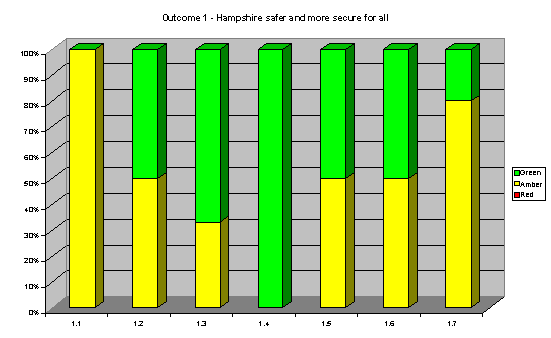
5.1 The following summaries provide overall progress against and contributions towards the corporate priorities, see appendix A for a complete list of the CBP outcomes. At the strategic level the picture is very positive but there are a few specific areas for further action.
6 Hampshire safer & more secure for all
6.1 Summary of overall progress against this priority
Results show that there is generally good progress being made in many areas. The graph below depicts the risk status for the activities contributing towards this priority.
6.2 Performance Highlights
6.2.1 Successful expansion of the Community Safety Service from the four pilot areas to the whole of Hampshire, including rural areas with a total of 47 ACSOs now appointed. There are now five operational teams working closely with Police and District Council partners. The ACSOs dealt with approximately 5,000 individual incidents in this reporting year.
6.2.2 Intervention in over 1,350 incidents involving the under-age consumption of alcohol. Plus co-ordinated approach with colleagues in Trading Standards Service to deal with retailers who sell alcohol to those under 18. Coordinated delivery of advice on under age sales pack to over 900 off licences across the county.
6.2.3 The Crime and Disorder Data Information Exchange (CADDIE) was launched in May 2007 enabling residents and partner agencies to access crime data in their locality. Over 1 million website hits since the launch.
6.2.4 Successful trial of the Junior Community Team (JCT) to engage with younger residents in their responsibilities to combat anti-social behaviour. To be expanded into other Hampshire districts.
6.2.5 In Adult Services, three Safeguarding coordinators were appointed to support social workers working with vulnerable people who have been subjected to physical, emotional or financial abuse. Joint training work with independent sector care providers has been positive and seen a 60% increase (80 more people) in the number of suspected incidents of abuse being reported to the council by care workers.
6.2.6 Protecting Older People Project:
o Five No Cold Calling Zones established with joint funding from Hampshire Constabulary
o 125 talks to Older people's groups and clubs all rated good or excellent
o First Buy With Confidence directory produced using advertising fees from members and 35,000 copies distributed
6.2.7 Emergency Planning and Trading Standards staff helped contain the outbreak of Foot and Mouth Disease. Work continues to enforce the Bluetongue control zones
6.2.8 The innovative Climate Change Commission hearings for Hampshire were initiated with input from a wide range of stakeholders. Full Council adopted a policy placing climate change at the heart of every aspect of decision making, policy development and operational activity, supported by an action plan for the County Council
6.2.9 An intensive Children's Services support team in South Hampshire commenced in mid 2007 and a second intensive service will be in place in the North during 2008/9 made possible through the closure of two residential services. Overall, an additional £1m per annum is now available for support to children and young people within the community to prevent the need for them to be taken into public care and to better support their carers and schools. Early indications are that this early intervention is working and that, in particular, there has been a significant increase in the rates of school attendance of those children and young people whom the programme is supporting.
6.2.10 The contribution of our services to improving outcomes for children and young people at risk, or requiring safeguarding, is good and preventative services are having a very positive impact. The Local Safeguarding Board (LSCB) structure, governance and business plan are complete. The LSCB is overseeing an audit by all agencies of how they are managing their accountabilities under Section 11 of the Children Act 2004
6.2.11 Primary, secondary and special school sectors all obtained higher scores than statistical neighbours and the national average in Ofsted inspections for ensuring that learners stay safe. The percentage of childcare inspections achieving good or outstanding staying safe judgements (64.6%) is well above the national average of 58.35% and exceeded statistical neighbours (60.5%)
6.2.12 The `Village 30' and `20 is plenty' vehicle speed reduction campaigns were launched and are being implemented
6.3 Areas for further work and development
6.3.1 The future of the 101 non-emergency telephone number service depends on continued funding by Hampshire agencies. We have provided £27,000 to help fund the development work that is being undertaken to allow the continuation of the system until March 2009 by which time it is hoped that a longer term partnership solution will have been established
6.3.2 Offending rates of looked after children fluctuate and have deteriorated overall. A strategy has been developed to respond to this and includes operational scrutiny of individual young people. A joint training event is planned between Children's Services, the Youth Offending Team (YOT) and the police in early summer 2008. This is in the context of an increase in Hampshire Constabulary's detection rates and in the number of offences by young people that are brought to justice.
6.3.3 We continued to exceed our stretching road casualty reduction target although an upturn in casualties reported in 2007 means we will need to review and renew our efforts. This will be addressed as an LAA priority
7 Maximising wellbeing
7.1 Summary of overall progress against this priority
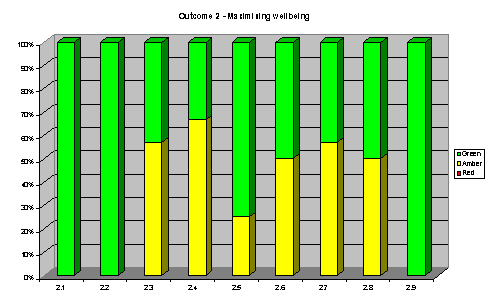
Steady progress has been made in the activities associated with this priority, particularly in Children's and Adult Services. The graph below shows the risk status for the activities contributing towards this priority.
7.2 Performance Highlights
7.2.1 The Activehearts programme in the County Council's care homes has continued to provide a wide range of activities and entertainments.
7.2.2 Agreement was reached for an Adult Services and District Councils partnership to modernise 200 units of existing sheltered to Extra Care housing standard by March 2009. Adult Services also intend to work with District Councils and Registered Social Landlords in order to develop approximately 200 new units of Extra Care in four locations across the County.
7.2.3 GCSE results continue to improve with 52.08% of 16 year olds achieving five or more A*-C grades, including the core subjects of Mathematics and English, more than one percentage point above Hampshire's 2006 result of 51.01%. The percentage of pupils achieving more than five A*-G grades is the highest ever at 93.3%. There were strong results in many of our high attaining schools (even when the schools' more favourable contexts are taken into account), with 94% of pupils in one school achieving five or more A*-C grades - also believed to be the highest percentage ever seen in Hampshire.
7.2.4 The Connexions workforce has successfully transferred to the County Council and is being deployed into teams which align with 14-19 consortia. Significant success was achieved in the 14-19 partnerships in the Gateway 2 diploma lines bidding round. Eight out of nine Hampshire consortia are working together to offer nine out of a possible ten diploma lines from 2009.
7.2.5 The Primary Care Trust (PCT) element of the local national health service is completing work on a children's needs analysis and priorities have been agreed for joint commissioning, which includes services to disabled children.
7.2.6 467 vulnerable adults used Telecare assistive technology funded by the Council and its partners. The expectation is that this number will significantly rise. Work is also underway to use Telecare in order support hospital discharges.
7.2.7 Since September 2007 the seven primary schools with a Notice to Improve (NTI) were re-inspected and reported as satisfactory or good; the three schools in Special Measures have been re-evaluated by OfSTED as satisfactory or good. Whilst one secondary school was removed in February 2008 by OfSTED from its NTI status, in the same month another school was identified. So one remains.
7.2.8 Year 11 leavers who fell into the classification of being `Not in Employment, Education or Training' (NEET) reduced from 5.98% in 2006 to 4.49% in 2007 and at the same time the percentage of young people in full time education increased from 80.43% in 2006 to 81.55% in 2007
7.2.9 There has been a marked improvement in the 40 schools in which district managers have directed the work of the School Improvement Partnership (SIP) and consultants alongside the headteacher and chair of governors.
7.2.10 The number of schools providing healthy living environments increased with 328 (60.9%) schools achieving Healthy Schools status.
7.3 Areas of further work and development
7.3.1 The percentage of children in care experiencing three or more placement moves has not achieved its target. This is being addressed through additional (spend to save) investment in fostering services of £2.6m over the next three years and an action plan. The impact of the investment is dependent on the supply of suitable foster carers to meet enhanced skill levels, but early indications of the impact of the additional funding (in April and May 2008) are very positive.
7.3.2 The wellbeing and outcomes for Children Looked After (CLA) overall are continuing to cause concern and improvement is a top priority and reflected in the LAA. Their `outcomes', while within the norms for like authorities, fall well below those of their `mainstream' peer group. Placement stability, absence from school and performance at GCSE of CLA will all be subject to intense improvement work during 2008/09. Actions include dedicated Education Welfare Officers to improve attendance, project work with GOSE to address placement stability and intensive and targeted support in schools to help drive up attainment. The Director of Children's Services is chairing the improvement group.
7.3.3 There is some concern about the number of primary schools who moved into Ofsted Notice to Improve categories in the previous two academic years. Although the proportion is low, at about 2.1%, and our record of getting schools out of categories is strong, this is in the top quartile of the national picture of new notifications. The causes are complex and vary from school to school, but difficulties recruiting primary headteachers and primary phase inspectors, alongside teacher recruitment issues all contribute, as does the capacity of some schools to receive and manage advice from the authority.
7.3.4 In secondary education, focus remains on schools whose attainment does not represent good progress for pupils from Key Stage 2 (20 secondary schools in 2007 were below average as measured by contextual value added data). The action taken has been school and context specific, led by the area school improvement teams. Specific high performing secondary schools have been increasingly involved in partnership working with the LA on agreed programmes to enhance core support.
7.3.5 Pupil Attitude Survey 2007 averages suggest that year 6 & 7 bullying figures continue an upward trend. This survey presents a mixed picture with reported levels in year 2 falling compared to the 2006 survey. The number of pupils who perceive themselves to have been subjected to racial abuse has stayed the same. Most pupils agreed that there was an adult in school to whom they could turn who would take action if they were to be bullied.
7.3.6 The percentage of obese children in years R and 6 in primary schools has now been established and is a significant cause for concern although they are below national levels. It is now an LAA target and will be addressed through multi-agency responses including the PCT, Children's Services' Health Schools Programme and Play and Sports activities. Hampshire PCT and HCC coordinated programmes to improve physical activity levels and healthy eating have been targeted on 25 schools where obesity levels are expected to be highest.
7.3.7 2006 figures for conception rates for young women aged 15-17 (latest available) have showed an increase since 2005. This is of significant concern with some rapid increases in Rushmoor and Gosport. It is an LAA priority and a detailed action plan is in place. Funding has shifted to focus on areas where the rate of conception is highest (Gosport, Rushmoor and Havant). Reducing teenage conceptions is a priority in the new Local Area Agreement for 2008/09.
7.3.8 Regarding targeting pockets of rural and urban deprivation, resources are being deployed in the target areas, but there still continues to be a need for better targeting and co-ordination, so that all services are working to a common aim. Plans are underway to set up a new Corporate Task Force to focus activity on a small number of target areas along the lines of 'Vision for Andover'. Consultation has taken
place with the Executive Member for Community Development and a proposal will be brought forward by September 2008, with Economic Development and Recreation & Heritage collaboration.
8 Enhancing our quality of place
8.1 Summary of overall progress against this priority
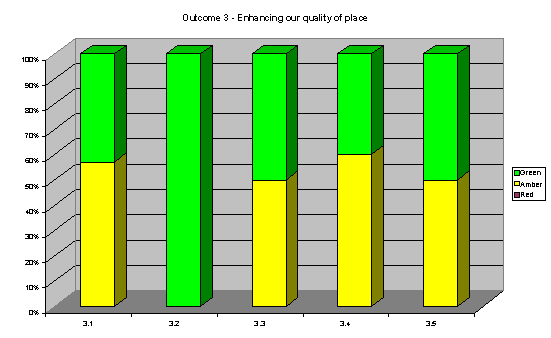
Overall progress under this priority is good. Domestic recycling rates have improved, contamination has reduced and there has been a focus on diversion from landfill with the shredding of amenity waste. The graph below depicts the risk status for the activities contributing towards this priority.
8.2 Performance Highlights
8.2.1 Over 1700 school BusIT packs have been issued and over a thousand journeys a week are regularly made with BusIT.
8.2.2 Audit of over 200 Sites of Importance for Nature Conservation owned by the County Council has resulted in a programme to review and assist the management of these sites.
8.2.3 Investment and improved working practices led to all four highway and footway maintenance indicators beating targets.
8.2.4 The A3 Bus Priority (or ZIP) corridor was completed in early 2008 at a total cost of £33.5m. The works have provided significant improvements for bus passengers, cyclists and pedestrians.
8.2.5 The amount of waste going to landfill in Hampshire continued to fall and is now below 15%. Hampshire is the strongest performing County Council in terms of diverting waste from landfill, with the next highest performing authority in 2006/07 Staffordshire with 43.6% waste landfilled. Hampshire landfilled 7.9% less household waste tonnage in 2007/08 compared with 2006/07.
8.2.6 Waste composting and recycling continued to increase to 40% of household waste collected, up from 38% achieved in the previous year.
8.2.7 Cost and efficiency savings have been achieved through the introduction of compaction at Household Waste Recycling Centres.
8.2.8 Robust attention to protecting and enhancing biodiversity throughout the county has been given within planning, property management, transportation and land management functions.
8.3 Areas of further work and development
8.3.1 The pilot project to encourage commercial waste recycling in three areas failed to meet its target and efforts to improve this will continue as it is a priority within the LAA.
8.3.2 Recruitment difficulties continued in some specialist roles within Environment, particularly in qualified engineers and transport planners and this represents a key risk to service delivery.
9 Management Plan
9.1 Summary of overall progress against this priority
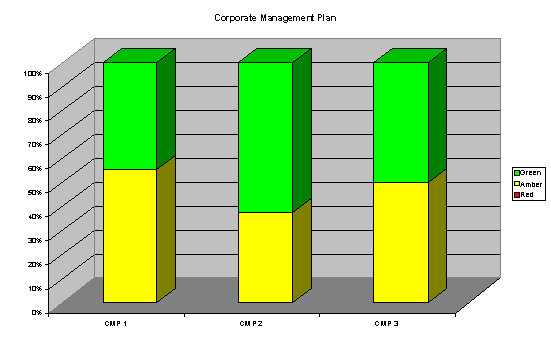
Although not strictly part of the political vision and priorities, the Management Plan element of the Corporate Business Plan was created in order to encompass all the `back office' activities and strategic projects which are needed to contribute to and support achievement of the three corporate priorities. Overall progress has also been generally good in this area. The graph below depicts the risk status for the activities contributing towards the management plan.
9.2 Performance Highlights
9.2.1 Results from first six months improving attendance project's Managers Tool kit are encouraging; results show a continuing improvement in many areas since implementation (BVPI 12: overall sickness absence is down to an average of 6.85 days per employee from 7.65 days this time last year).
9.2.2 SECE Major Projects framework has been fully operational since July 2007 with 68 projects, worth over £820m, now placed with the ten contractors. A further £300m of work has been identified making the whole framework worth over £1Bn. 37 South East and London authorities are using the framework, including four Police Forces, Higher Education Colleges and a NHS Trust, confirming the County Council's leadership in Design, Construction and Asset Management.
9.2.3 Ashburton Court and the work for the Tier One Framework at Reading Borough Council civic offices is being promoted to other authorities, e.g. Buckinghamshire County Council has recently approached SECE for assistance with its civic redevelopment.
9.2.4 A county level Community Safety Partnership was established and county Community Safety Agreement drafted.
9.3 Sustainability promotion has involved the launch of a sustainability film of which there were 27 screenings between September 2007 and March 2008, reaching 1,071 members of staff across all departments; a Monthly 'Green column' has been started in The Hog staff newsletter and the launch of new staff sustainability pages on Hantsnet.
9.4 Areas of further work and development
9.4.1 The development and implementation of the Hampshire Observatory data repository has fallen behind schedule and will not now be available and accessible to partners by October 2008. An urgent review has taken place which will report to the Chief Executive. The review will revisit the business case, seek to put the project on a more formal footing and identify options to get the Observatory operational as soon as possible.
9.4.2 Issues over funding with partners and district CDRPs need to be resolved. Discussions through the County Strategy Group for Community Safety have reached an agreement on the allocation of funds from the area based grant to CDRPs at the district level for 2008/9 with further agreement to review funding in line with a strategic commissioning approach to support the County Community Safety Agreement.
9.4.3 The HantsDirect programme continues with the roll out of this universal service for Adults and Children's Services, work continues to define some of the Adult services processes (Adults enhanced) and on what will constitute the out of hours service.
9.4.4 Although implementation of the new pay framework was achieved in February 2008, the number of pay grievances stands at approximately 900 and these would, if successful, have a significant cost impact. However, arrangements are in place to manage these cases with specialist legal advice.
10 Refresh of the Corporate Business Plan
10.1 The issues highlighted in the preceding paragraphs against each of the priorities of the County Council's Corporate Business Plan (CBP) will feed into the review and refresh of that document. The review of the CBP is central to an updated and strengthened corporate Performance Management Framework. The continued move away from performance monitoring to performance management demands that the limitations of the current CBP are addressed. The CBP will be revised over the summer and will, subject to approval by Cabinet, become the key improvement plan for the Council.
10.2 With the establishment of a new LAA; a shift to the new CAA performance regime; a tight financial outlook; and the challenges ahead around demographics, costs and public expectations, there has never been a greater need for the organisation's corporate planning to be effective and robust. The CBP will be simplified, streamlined and focussed. It will drive strategic improvement looking forward and value for money and efficiencies will be central workstreams. Progress against the new CBP will be monitored and reported to Cabinet in future years.
10.3 The CBP revision will be part of a wider agenda to strengthen the corporate Performance Management Framework. There will be greater use of comparative data and information on value for money - combining performance and financial data. The County Council has joined the PricewaterhouseCoopers County Council Benchmarking Club which will enable a much better understanding of the Council's relative position at an earlier stage - this will better illuminate areas where although the Council's performance is improving others are improving at a faster rate. It will also help with target setting by comparing the County Council's targets with other councils' targets enabling the Council to see where it would be ranked if it achieved the target it set itself at the beginning of the year - this will highlight how ambitious or not the Council is being. As this work develops further reports on these will be brought to Cabinet.
10.4 As part of the strengthened Performance Management Framework a new relationship will be fostered with the Audit Commission to enable a better joint understanding of performance. So that, on the one hand, the Audit Commission challenges the Council and highlights their concerns in-year so that action can be taken and there are no surprises. Whilst, on the other hand, the Audit Commission becomes more familiar with areas of strong performance and the day to day performance improvements across the Council.
10.5 This strengthening of the Council's Performance Management Framework will be set in the wider context of a changing national performance framework. Comprehensive Performance Assessment (CPA) will be replaced with Comprehensive Area Assessment (CAA) from 2009. CAA is intended to take a more forward looking area risk based approach to assessment and will replace the current CPA service blocks. As part of this the Best Value Performance Indicators (BVPIs) are being replaced with the new 198 National Indicator Set (NIS). The new NIS began from April 2008
and attention has been focussed in this transition year to ascertain Hampshire's performance and ensuring arrangements are in place to collect the information. Performance against the new NIS and CAA will be reported in future years.
11 Performance of Best Value Performance Indicators (BVPIs) 2007/08
11.1 In addition to the CBP, it is also important to consider the BVPI year end results for 2007/08. For this reporting year, 40% of all measurable BVPIs showed better performance, while 20% stayed the same and 26% produced a worse performance than 2006/07 results where comparison is possible (14% of the BVPIs were either not applicable, i.e. bi-annual satisfactory survey results or results are not yet available). This compares with 43% of 2006/07 BVPIs showing better performance, 9% staying the same and 29% showing worse performance than the 2005/06 results (with 19% not applicable/not available), see Appendix B for the full schedule of results.
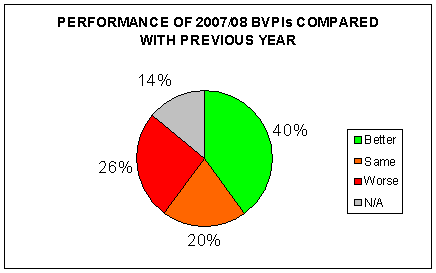
11.2 If the unavailable results are excluded, of those BVPI for which results are available, 47% achieved a better result than last year, 23% remain the same and 30% show a worse performance than 2006/07.
11.3 The following areas in which notable BVPI performance was achieved for 2007/08 include the following:
11.3.1 Adult Services achieved further improvement against five of the national indicators for adult social care on the previous year
11.3.2 All four crime BVPIs have shown positive improvements with robberies, vehicle crime, burglaries and violent offences all reported as down compared to last year
11.3.3 Educational attainment by young people in National Curriculum Key Stage tests and GCSE examinations show continued improvement
11.3.4 Investment and improved working practices led to all four highway and footway maintenance indicators beating targets.
11.4 Areas of weaker BVPI performance in 2007/08 include the following:
11.4.1 The percentage of children leaving our care with one or more GCSEs fell from 61.6% in the academic year 2005/06 to 55.6% in 2006/07. The 6% drop in performance represents a reduction of approximately five young people obtaining a qualification compared with last year. With the percentage of all pupils achieving five A*-G grades at the highest ever level (93.3%) there is much work to be done to narrow the gap between the educational attainment levels of children looked after and their peers. This will be a focus of the recently established Children in Care implementation group and of the new Local Area Agreement 2007/08.
11.4.2 Compliance against the public library services standard has fallen to level one down from level two. This indicator is based on points scored for achieving each of the ten Public Library Service Standards (PLSS). It is the view of the Recreation and Heritage department that the PLSS have fulfilled a function in driving improvement but their relevance is diminished and this is the final year of reporting the PLSS. The department has set its own priorities for improving performance and taken the decision not to chase Standards that no longer reflect the service improvements and the changing nature of the use of a modern public library service. Improvements in 2007/8 have included increasing total library opening hours by 66 per week, increasing the free public internet access and improved request supply times. What is also emerging is a significant increase in the use of web-based services (not reflected in the PLSS) e.g. access to reference sites and renewals with some marginal fall in physical visits in particular locations. Satisfaction rates have been maintained with both adult and children's satisfaction only 1% below the PLSS, which accounts for the overall points drop and score of 1 for this indicator.
11.4.3 Adult Services performance against BVPI 53, Intensive home care, has fallen slightly, in line with the Council's policy direction to promote independence through reablement.
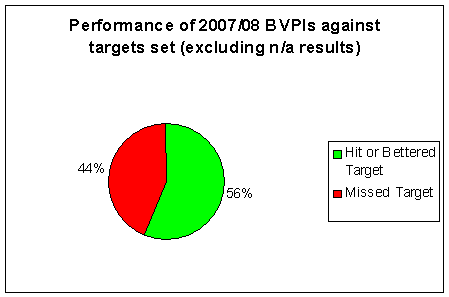
11.5 Regarding performance against target, 56% of the indicators which presently have data reported equal or better than target, a significant increase on results for 2006/07 when 44% of indicators were equal or better than target. This will be subject to revision when all the year end data has been received.
12 Comparative BVPI Performance of the County Council 2006/07
12.1 The Council aims to have a high percentage of its national performance indicator (BVPI) results in the top quartile compared with other county councils. For 2006/07, 37% of indicators were in the top quartile, a decrease on the 44% in the top quartile in 2005/06 and 40% in the 2004/05 performance results. Conversely the percentage in the bottom quartile has decreased slightly from 21% in 2005/06 to 18% in 2006/07.
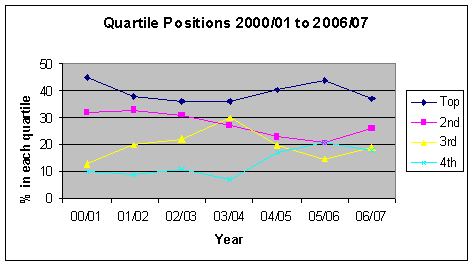
12.2 The Executive Member for Performance, Efficiency and Communications continued during 2007/08 his programme of reviewing business areas that fell into or remained in the bottom BVPI quartile.
13 Performance of LAA Targets
13.1 This reports on performance as at the end of the second and final year of this Local Area Agreement which was originally intended to be a three year agreement running from 2006/07 to 2008/09. A new statutory three year LAA is being negotiated for 2008/09 to 2010/11 which will be in place from June 2008. The emphasis in this final report on this LAA is on areas of risk. A detailed performance report will be taken to the LAA Executive in June which will focus on 'lessons learnt' and how targets within the agreement will be taken forward into the new agreement.
13.2 Performance in relation to the LPSA2 targets (embedded within the LAA and monitored via the LAA performance monitoring process) will be of particular interest as they are subject to reward grant if targets are met. The LPSA2 agreement is a separate agreement with the government to that of the LAA with most targets being set across the four years from 2005/06 to 2008/09. Therefore, performance reported here will show progress at the end
of the third out of four years for the majority of the targets within the agreement. The LPSA2 targets will be monitored and reported alongside the new LAA during 2008/09. In relation to the 34 LPSA2 targets, the majority of the targets are on course for achievement at the end of 2008/09 - although 10 targets are at high risk of non-achievement. The `high risk' LPSA2 targets in the LAA are as follows:-
13.2.1 Percentage of school absences from a group of 11 secondary schools - `priority persistent absence schools'.(Better Parenting - target A2.1) Following a continued reduction over three years, the data return for 2006/07 showed an increase in the aggregated overall absence level for these schools from 9.03% in 2005/06 to 9.61%, reflecting an increase in County and national absence levels. Of the 11 schools, levels of overall absence fell in six schools and increased in five. A range of actions are being taken to reduce the number of absences. The completed County Attendance Strategy will reinforce the contribution which Children's Services and schools can make to improve pupil attendance. Links between departmental branches and services are being developed to improve the effectiveness of the support being provided.
13.2.2 Children looked after for whom Hampshire is a corporate parent attaining five passes at grades A*C at GCSE (Year 11 cohort)(Better Parenting - target A2.3). While still short of the Year three target, there has been a one percentage point improvement in the percentage of Children Looked After attaining five GCSE passes at grades A*-C compared with last year, with fewer Children Looked After sitting exams this year. However, the actual number gaining five A*-Cs has remained the same. A number of actions are being taken, detailed in the Joint Area Review 2007 action plan, ensuring school placements and improving attendance. These are beginning to have a positive impact.
13.2.3 Care Leavers contacted around their 19th birthday in education, training or employment (Better parenting - target A2.4). Estimated figures for 2007/08 show a reduction from 62.3% in 2006/07 to 58.6% The cohort of children in 2007/8 was 99, each child represents a change of 1.3 points in performance. A slight change in the cohort of children, linked to their disabilities or background, can have a significant impact on this performance indicator. Many young people leave care at 16, so contact needs to be maintained with them for two to three years before counting their activity for this indicator, and some young adults opt to cease contact. The specialist teams are active in offering incentives to stay in contact; such as providing improved advice on housing, benefits, work/training etc and to provide other help through our corporate parenting role.
13.2.4 Number of schools achieving National Healthy Schools status (Healthy Eating - target A5.3). By April 2008, 328 schools (61%) had achieved enhanced status and a further 20 schools should achieve this status by the end of May. However, it is possible, that the LAA stretch target of 90% of all schools achieving enhanced status by the end of the year, may not be met. To try and assist more schools through the process, extra support is being put in place and all schools who have not yet achieved the enhanced status are being contacted.
13.2.5 'Average of Hampshire's share of South East VAT registrations to exceed 15% for four out of the five years from 2005 to 20010'(A more enterprising economy - target B1.1): the way the indicator has been calculated (a 'rolling average' methodology), together with results from the first two years of the agreement being below 15% has meant that this target will not be achieved.
13.2.6 'Recorded Violent Crime in public places to reduce by 25.3% over 4 years'.(Reduce Crime - target E1.1) Currently violent crime in public places has fallen by 12% against baseline. Although the fall has been considerable, it is not sufficient to meet the four year target in full.
13.2.7 Deliberate fires (three targets - E5.1, E5.2, E5.3). Whilst there has been a dramatic reduction in the number of deliberate fires, the reduction will not be enough to meet the figures required to meet the LPSA2 targets in full.
13.2.8 'Tonnage per annum of commercial waste recycled in East Hants, Rushmoor and Eastleigh to increase to 2000 tonnes per annum by March 2008' (Increase re-cycling in the non-municipal sector - target G2.1): despite significant work on engaging small to medium enterprises, it proved extremely difficult to convert interest in recycling into sign up to contracts and therefore, the target was not achieved.
13.3 In relation to other (non- LPSA2 targets) within the LAA, the majority of indicators show good progress with several examples of targets being achieved ahead of time. Targets not on course for achievement at the end of the agreement (if it had continued for another year) include:
13.3.1 The `Better Chances - Better Lives' project (12 schools project - targets A1.1 and A1.2), centred on primary schools that struggle to keep above floor targets. While overall attainment for the academic year 2006/07in Key Stage two English in the 12 schools was slightly below the 2005/06 level, results in Mathematics improved in eight schools, narrowing the overall gap between the schools performance and that of Hampshire as a whole. In addition, the project has made a difference in many ways, for example, by raising the aspirations and involvement levels of the 275 sets of parents directly reached by the project and to the attainments of their children.
13.3.2 Conceptions per 1000 young women in Hampshire aged 15-17. (Improved sexual health - target A3.1). Provisional figures for 2006 show an increase in teenage conception rates (per 1000 15-17 year olds) in Hampshire from 30.8 in 2005 to 32.3. Consequently, there are concerns that the 2010 target of 19.8 may not be achieved. The Hampshire Teenage Pregnancy Partnership has developed a new action plan for 2008-09 and is focusing attention on areas with the highest conception rates (Gosport, Rushmoor and Havant).
13.3.3 `20% of whole 15-24 year old population to be screened for Chlamydia by 31.03.09'.(Improved sexual health - target A3.3). Estimated figures for 2007/08 indicate that 7.8% of the 15-24 year old population were screened for Chlamydia. The national target for chlamydia screening for 2008/09 is 17% - which should be achievable this year. However, it is unlikely that the stretch target of 20% will be achieved within this timescale.
13.3.4 Percentage of 16-18 year olds not in Employment, Education and Training (NEET) across Hampshire and in targeted districts / areas (Rushmoor, Havant and Gosport). November 2007 figures indicate that there has been an increase in the percentage of 16-18 year olds not in education, employment or training across Hampshire and in each of the three targeted districts. (Better prospects to earn - targets A7.1 and A7.2) NEET levels in Rushmoor and Havant were significantly higher than the Hampshire average of 5.5% which increased slightly from 2006 figures. The integration of services for young people will enable partners to provide a holistic service to all young people, intervening early to enable them stay in education, employment and training.
13.3.5 Some of the indicators relating to the flagship initiative on economic inactivity (targets B4.1 and B4.4) have been impacted on by a recent downward trend in the Hampshire employment rate.
13.3.6 British crime survey comparator (Reduce Crime target E1.1), although there has been a 10% reduction in crime against baseline, the ambitious target of a 17.1% reduction is unlikely to be achieved. Re-offending rates (as measured by the Oasys / Asset score) also showed an increase (target E1.6).
13.3.7 Level of under-age sales of cigarettes - (Smoking cessation - target 3.2). The target for underage sales has not been met due to the rise in the age of sale to 18 in October 2007. Hampshire Trading Standards are investigating the reason for the increase in sales, including further work to raise awareness with retailers and young people. The sales figures for test purchases in 2007/8 were 7 sales from 29 attempts (24%). In the previous year there were 11% sales. To date in 2008/9 there have been 6 attempts and 4 sales (66%). A total of 30 attempts will be made during the year. Research has shown that the deterioration in sales, which was anticipated when the law changed, is the same in every local authority area across the South East. To address the issue, we have produced an advisory newsletter which is being distributed to all retailers of tobacco products in the county. We are also participating in a regional bid for DoH funding to enable us to expand our work in this area, which will fund a mix of preventative, educational and enforcement actions.
13.4 Almost all priority leads have identified 'lessons learnt' from this first Local Area Agreement - full details will be reported to the LAA Executive in June. This learning has been very useful in relation to the negotiation of the new agreement. Key priority areas within this 'old' Local Area Agreement have been taken forward for action into the `new' Local Area Agreement.
14 Finance Section
14.1 The overall improvements in performance during 2007/08 identified in the report need to be set in the context of the County Council's overall financial position. The County Council continued to be a floor authority and as such received the lowest increase in government grant of 2.7% paid to upper tier authorities and therefore to be more constrained financially than most comparator authorities. Services were required to achieve savings of £18.9m from increased efficiency and from reviewing priorities and these targets have been met.
14.2 2007/08 represented the second year of Adult Services financial recovery plan based on the modernisation of services in response to outturns above budget of £11.1m and £7.5m in 2005/06 and 2006/07 respectively. The plan has been successfully implemented. As a result of minimum winter pressures between November 2007 and March 2008, a planned carry forward of £3.5m to 2008/09 has also been achieved. In conjunction with improvements in five of the national indicators for adult social care, this demonstrates increased effectiveness in the use made of resources. Spending has continued to increase by 5.1% on the waste management contract in 2007/08, but this has been accompanied by a further increase in recycling levels and landfill diversion of household waste. The importance of recruiting and retaining more in-house foster carers in order to improve the stability of placements for looked after children has been recognized in the allocation of invest to save funding of £1.4m in 2008/09 to increase the allowances paid to in-house foster carers.
15 Workforce Section
15.1 HR Business partners have been working with departmental management teams to ensure that workforce issues arising from departmental service plans and financial budgets are identified and form the basis for the Departmental workforce plans which have now been produced. From these individual workforce plans, HR has identified common themes and together with current and proposed employment legislation is incorporating them into a corporate workforce plan. Completing the loop, the HR Service plan has been developed to provide the mechanisms and resources for HR to meet the identified corporate and local workforce demands.
16 Annual Audit and Inspection Results
16.1 During 2007/08 there have been a number of external inspections and assessments. Corporately the most significant of these were the May 2007 Corporate Assessment, the May 2007 Joint Area Review (JAR) of Children's Services, the CSCI review of Adult Services, Supporting People external review and the 2007 Annual Audit and Inspection Letter. In their own right, each of these assessments were very positive, see below for the rating achieved for these and some other recent inspections:
· Supporting People: `Excellent Three Star' - first county council to do so
· Corporate Assessment: Four out of four - second county council to do so
· JAR (Joint Area Review): Three out of four - `Good' with some areas `Outstanding'
· Enhanced Inspection of the Youth Service: Three out four - `Good'
· Children's Services APA (Annual Performance Assessment): Three out of four - `Good'
· Children's Services fostering services inspection 2008: graded services as good, with management rated as outstanding.
· Adult Services CSCI Performance Assessment: Improvement to Three Stars - `Good' outcomes with `Excellent' capacity for improvement
16.2 In terms of the Corporate Assessment, Joint Area Review, the Adult Services CSCI Performance Assessment and the Council's overall Annual Audit and Inspection Letter, a number of recommendations resulted from these assessments and improvement plans were compiled to take action in the areas highlighted. The recommendations focussed around community safety, Human Resources, the voluntary and community sector, equalities, outcome measures for vulnerable people and a range of services for children. See appendix C for a full list of the recommendations with a brief progress commentary and current risk status (where applicable). Overall progress is strong with no significant areas of concern; this will continue to be monitored. The Adult Services CSCI list of areas for improvement shown in appendix C was only agreed in May 2008 and so has no progress yet to report.
16.3 In addition, in 2006/07, for the first time ever, the County Council received no data quality `reservations' by the District Auditor on any of its 107 Best Value Performance Indicators reported.
17 Public reporting of performance
17.1 The performance messages from this report will be published on the Council's website on the Performance Plan webpages by 30 June alongside summaries of progress and activities on the Corporate Business Plan priorities, the LAA performance report and the Council's CPA results.
17.2 The corporate summary plus the departmental reports will also form the basis of the publication of the joint performance and finance report in the Autumn edition of Hampshire Now.
LINK(S) TO CORPORATE STRATEGY | ||
Yes |
No | |
Hampshire safer and more secure for all |
_ |
|
Maximising well-being |
_ |
|
Enhancing our quality of place |
_ |
|
Section 100D - Local Government Act 1972 - background papers
The following documents disclose facts or matters on which this report, or an important part of it, is based and has been relied upon to a material extent in the preparation of this report.
N.B. The list excludes:
1. Published works
2. Documents which disclose exempt or confidential information as defined in
the Act.
Departmental returns of performance results - held by the Corporate Performance Team and by departmental performance contacts
APPENDIX A: LIST OF CORPORATE BUSINESS PLAN OUTCOMES
Hampshire Safer and More Secure for All
Outcome 1.1: There is a reassuring, visible uniformed presence
Outcome 1.2: The users of Hampshire's roads are safer
Outcome 1.3: Children stay safe and feel secure
Outcome 1.4: Vulnerable adults and older people are protected
Outcome 1.5: Independent living is promoted through community safety initiatives
Outcome 1.6: Hampshire County Council is prepared in the event of a major emergency / disaster and has adequate contingency arrangements to ensure the continued delivery of vital services
Outcome 1.7: Hampshire contributes to the mitigation of and adaptation to climate change
Maximising Wellbeing
Outcome 2.1: Vulnerable adult and older people are treated in a way which maximises wellbeing, independence and inclusion
Outcome 2.2: Right care in the right place at the right time for adults and older people
Outcome 2.3: All children and young people enjoy learning and achieve to their full potential
Outcome 2.4: Children In Our Care (for whom the County Council is the corporate parent) have the best possible chances in life and are supported to achieve to their full potential
Outcome 2.5: People have fair and equal access to services and information
Outcome 2.6: All local people, including children and young people and their families, can influence decision making and the ways in which services are designed and delivered
Outcome 2.7: Hampshire is a strong, active and diverse community
Outcome 2.8: People in Hampshire are healthy and enjoy wellbeing
Outcome 2.9: Disparities in income across Hampshire are reduced and there is general economic prosperity
Enhancing our quality of place
Outcome 3.1: The majority of waste is diverted from landfill
Outcome 3.2: The roads and pavements of Hampshire are in a good condition
Outcome 3.3: Traffic impacts are kept to a minimum
Outcome 3.4: Hampshire is a sustainable community
Outcome 3.5: The County Council owned and managed estate and heritage assets benefit Hampshire's quality of place
Management Plan
Outcome MP 1: Council services offer value for money
Outcome MP 2: Resources follow priorities
Outcome MP 3: Hampshire County Council develops capacity to support its priorities and behaviours to support its organisational values