
Archived decisions
Hampshire County Council Buildings, Land and Procurement Panel Item 14 July 2008 Procurement Initiatives, Performance Assessment, Building Cost Trends and Approvals to Capital Repairs Joint report of the Chief Executive and Acting Director of Property, Business and Regulatory Services |
Contact: Rebecca Thompson Ext: 6328 email: [email protected]
4.0 |
Hampshire Procurement Initiatives |
4.1 |
Consultant Frameworks |
4.1.1 |
The Executive Member for Policy and Resources has previously approved the procurement of a number of consultant frameworks to supplement the department's in-house resource to support the delivery of projects and programmes of work on behalf of the County Council. In addition to the framework arrangements previously approved, it is now proposed to establish a framework arrangement with a single organisation to provide CDM Co-ordinator services and construction health and safety advice and training. The role of CDM Co-ordinator is a requirement of the Construction (Design and Management) Regulations 2007. A number of Property Services staff are trained to provide this role on County Council projects, however the department does not have sufficient trained staff to resource all projects internally. The appointment of a consultant will also ensure that the department's health and safety procedures remain in line with industry best practice. The estimated value of this framework is £300,000 over 4 years. | |||||||||||||||||||||
4.1.2 |
Following further consideration of the department's anticipated workload over the next 4 years, it is also proposed to revise the anticipated value of the following proposed frameworks: Framework Previously approved value Revised Value Transport Planning £200,000 over 4 years £400,000 over 4 years Town Planning and Urban Design £800,000 over 4 years £1.2 million over 4 years |
|||||||||||||||||||||
4.2 |
Castle Complex Headquarters Maintenance Contract |
|||||||||||||||||||||
4.2.1 |
Further to the update given in the report to the Panel in April 2008, a tender list of six contractors has been agreed for the above contract, drawn from pre-qualification submissions received from thirty two organisations. The tender documents were issued on 28 May 2008 and the contract award date is planned for 1 October 2008. |
|||||||||||||||||||||
5.0 |
Performance Assessment | |||||||||||||||||||||
5.1 |
Property Services operates a comprehensive system of performance management for all construction activities. This includes measurement of contractor, consultant and project team performance, client feedback and project performance, including cost and time predictability. Performance results from projects completed during 2007/8 are provided below. | |||||||||||||||||||||
5.2 |
Major Projects | |||||||||||||||||||||
5.2.1 |
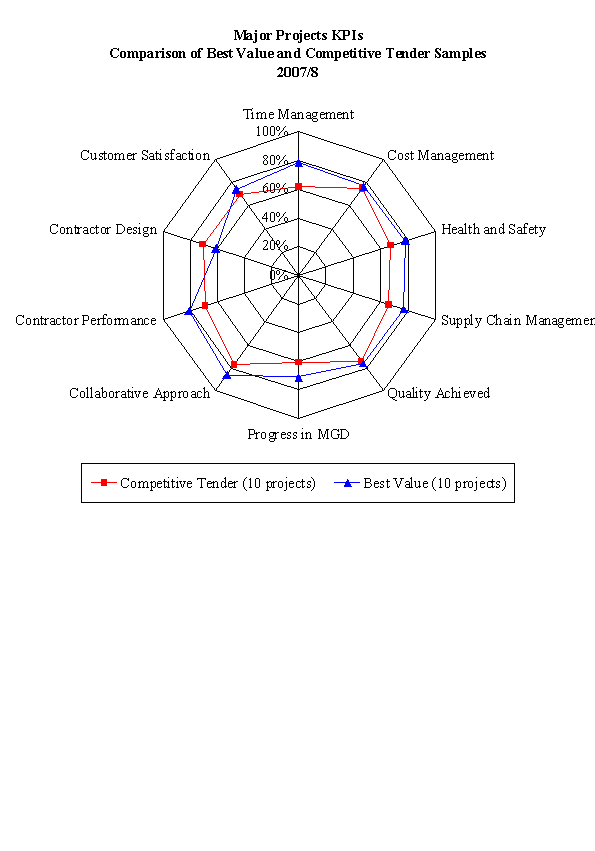
A total of twenty major projects with a construction value greater than £500,000 were completed by the department on behalf of the County Council during the financial year 2007/8. Ten of these were procured through competitive tender, seven thorough the Hampshire Framework for Major Schemes and three were negotiated with preferred contractors. The average KPI scores for the projects completed during 2007/8 compared with those for projects completed during 2006/7 are shown below: 2006/07 2007/08 No. of Projects Average KPI score No. of Projects Average KPI score Competitive tender 18 66% 10 69% Best Value 15 79% 10 77% Average - all projects 33 72% 20 73%
| |||||||||||||||||||||
5.2.2 |
This shows that, despite a slight fall in performance on best value projects, the overall KPI score for major projects is consistent with the results for 2006/07. | |||||||||||||||||||||
5.2.3 |
The radar chart in Appendix 2 shows the average results for each group of projects against the ten KPIs. This shows that the scores for the best value projects are better than those for the competitively tendered projects for all indicators, except for Contractor Design, which is only relevant to one competitively tendered project. | |||||||||||||||||||||
5.3 |
Framework for Major Schemes |
|||||||||||||||||||||
5.3.1 |
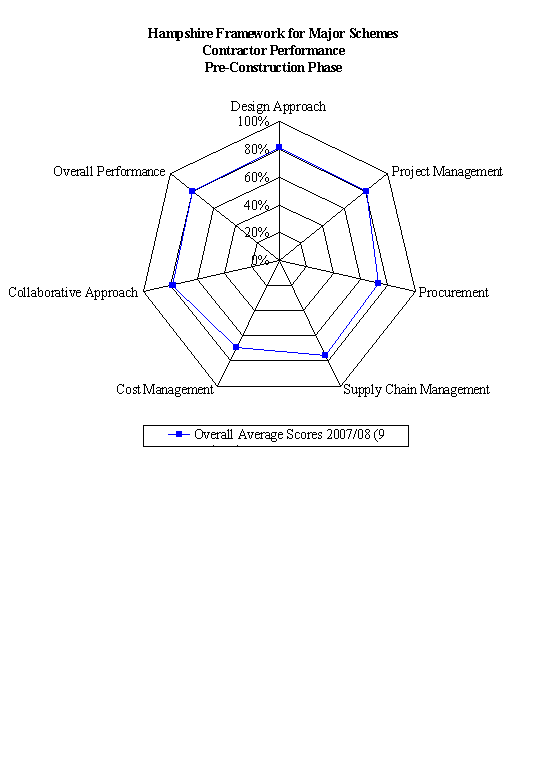
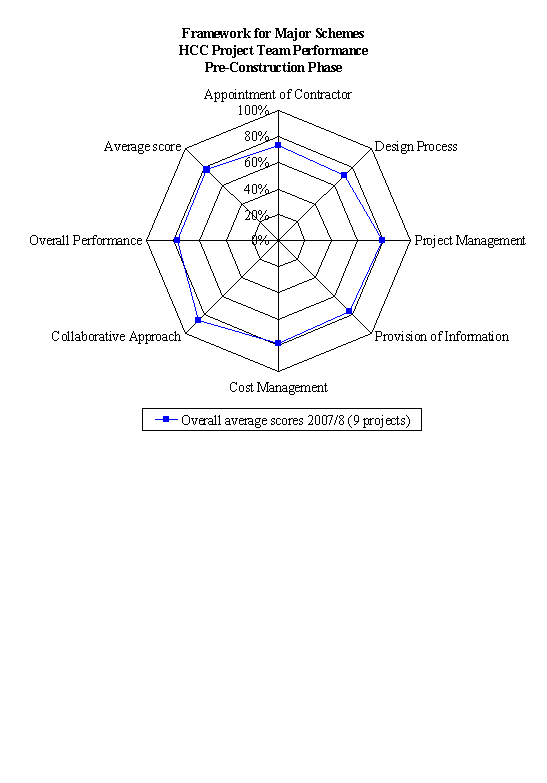
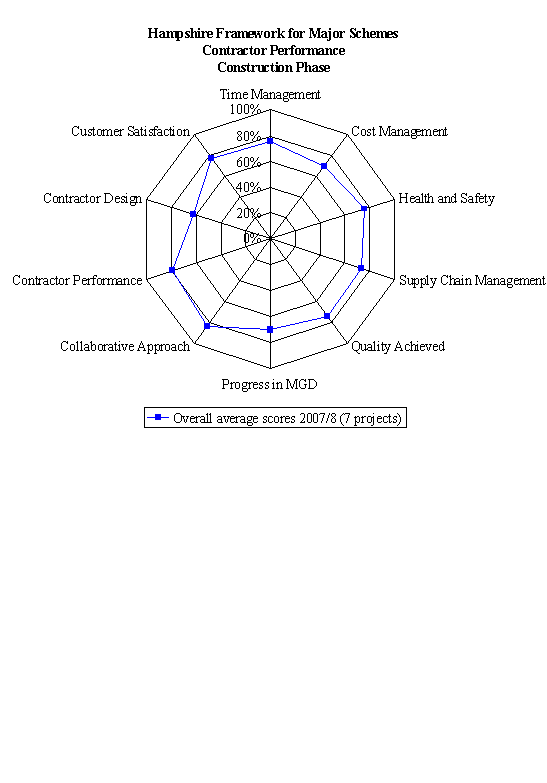
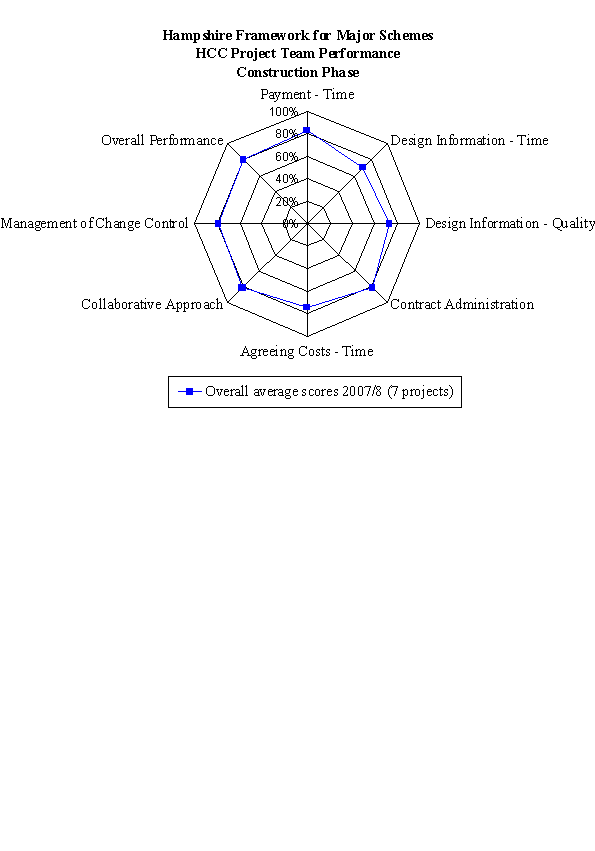
Two way performance reviews are undertaken for all projects procured through the Hampshire Framework for Major Schemes. These reviews are held at the end of the pre-construction phase and following practical completion and allow the framework contractors to score the department's project team, in addition to the project team scoring the framework contractor's performance. The performance reviews facilitate an open and honest assessment of the project and identify areas where project processes can be improved in order to drive continuous improvement in both design and construction performance. |
|||||||||||||||||||||
5.3.2 |
Pre-construction reviews were held on nine projects and construction phase reviews were held on seven projects during 2007/08. All projects were procured through the Hampshire Framework for Major Schemes on behalf of the County Council. The overall average KPI scores for the framework contractors and the project teams is given below. The average scores against individual KPIs are shown in the radar charts in Appendix 3. No. projects Contractor performance HCC performance Pre-construction phase 9 projects 79% 77% Construction phase 7 projects 74% 78% |
|||||||||||||||||||||
5.3.3 |
These scores are lower than the initial results recorded during 2006/07 when the two way performance reviews were first introduced. There is a significant variation in the scores awarded on different projects for both the contractor and the project team. However, the overall average scores for the project teams are similar for the pre-construction and construction phase, whereas the scores for the contractors are lower for the construction phase. The feedback from the performance reviews suggests that this is due to a lack of continuity between the contractor's staff involved in the pre-construction phase and those involved in the construction phase and this is an area that the department will focus on with the contractors over the coming year. |
|||||||||||||||||||||
5.4 |
Medium and small value projects |
|||||||||||||||||||||
5.4.1 |
KPI scores for contractor performance are captured on all projects with a construction value less than £500,000. 352 KPI records were captured for projects completed during 2007/8, including 160 projects procured through competitive tender and 192 projects procured through best value routes. This sample includes projects funded directly by schools or through grants obtained from central government departments or external organisations (e.g. lottery funding). The average KPI scores were: 2006/07 2007/08 Procurement route No. of projects Average KPI score No. of projects Average KPI score Competitive tender 174 79% 160 80% Best value 163 84% 192 83% All projects 337 81% 352 82% | |||||||||||||||||||||
5.4.2 |
These scores indicate a very good level of performance from the department's contractors which is generally consistent with performance during 2006/07. Contractor performance is managed through the department's monthly Health and Safety Group meetings when any performance or health and safety issues are addressed and appropriate actions taken with the contractor concerned. In the case of a serious health and safety incident or very poor performance this may include suspension from the Register of Contractors. | |||||||||||||||||||||
5.5 |
Second Tier Framework Pilot | |||||||||||||||||||||
5.5.1 |
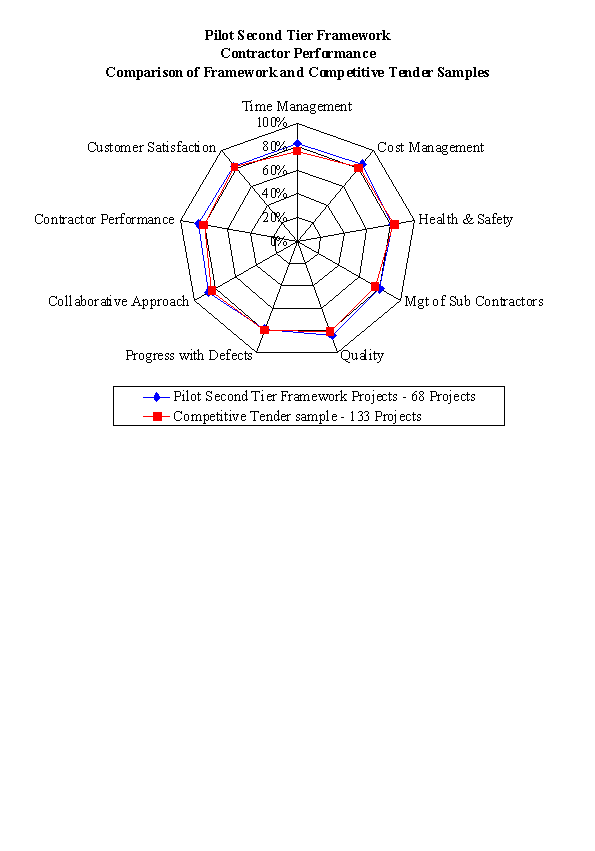
A total of 63 projects were completed through the second tier framework pilot during 2006/07 and 2007/08. The overall average KPI score for contractor performance was 83%. This compares with an average KPI score of 80% for a sample of 133 competitively tendered projects completed within the same period. | |||||||||||||||||||||
5.5.2 |
The radar chart in Appendix 4 shows that the scores for the framework projects exceed or are comparable with those for the competitively tendered projects for all KPIs. The greatest difference is achieved for time management, cost management, supply chain management and quality. This reflects the early involvement of the contractors which gives them a better understanding of the projects and enables them to plan the works in detail and secure the necessary supply chains, avoiding delays and difficulties during the construction period. | |||||||||||||||||||||
5.6 |
Client Satisfaction |
|||||||||||||||||||||
5.6.1 5.6.2 |
Client feedback is requested on all completed projects from the building occupier, end user or client department representative. The feedback includes an assessment of the satisfaction with the service received from the department and the satisfaction with the completed project. The results for feedback received during 2007/08 are consistent with those for 2006/07 and show a high level of satisfaction with the service received and the completed project. 2006/07 2007/08 No. of returns Average KPI score No. of returns Average KPI score Satisfaction with service 387 81% 325 81% Satisfaction with completed project 387 82% 325 83% |
|||||||||||||||||||||
5.7 |
Cost and Time Predictability |
|||||||||||||||||||||
5.7.1 5.7.2 |
Cost and time predictability is assessed for all major projects. Of the 20 projects completed during 2007/8, 12 were completed on time (60%) and 15 completed on cost (75%), allowing for extensions of time and cost variations. The `on time' result is slightly lower than 2006/7 when 63% of the sample of major projects were completed on time. The `on cost' result is comparable with 2006/7 when 74% of the sample of major projects were completed on cost. The percentage of competitively tendered projects completed on time is the same as for projects procured through best value routes. However the percentage of best value projects completed on cost is higher than for competitive tender, indicating that involvement of the contractor during the pre-construction phase contributes to increased predictability of project costs. |
|||||||||||||||||||||
5.8 |
IESE Framework Arrangements | |||||||||||||||||||||
5.8.1 |
As reported to the Panel in April, a number of projects are now being procured through the three Framework arrangements. These are still at an early stage, however performance management arrangements are in place for all of the Frameworks and performance data will be captured for each project in due course. Reviews are held on completion of the pre-construction and construction phases of all projects with a construction value over £500,000. For projects under £500,000, a single performance review will take place once the project is complete. Performance results for the first framework projects will be reported to the Panel in 2009. | |||||||||||||||||||||
6.0 |
Building Cost Trends | |||||||||||||||||||||
6.1 6.2 |
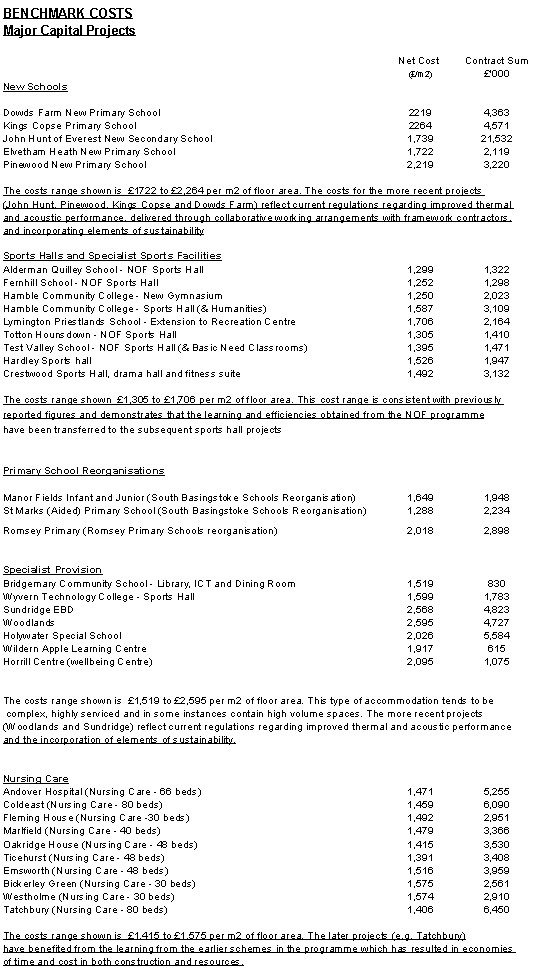
The general trend of costs for the County Council's building projects are regularly monitored and benchmarked to demonstrate that they are delivering good value. A study of County Council building costs over the last six years has been undertaken and the results of this study have been compared with general construction inflation as identified by both the BERR (Formerly DTI) and the Royal Institution of Chartered Surveyors Building Cost Information Service (BCIS). The study of County Council projects is based on analysis of actual tendered costs per square metre of floor area. In recent years (particularly since 2005/06) there have been increasing pressures on building costs in having to meet the ever more stringent requirements of new legislation particularly in terms of improved thermal, acoustic and environmental performance of new buildings. This trend will continue with the introduction of new legislation to reduce carbon emissions and the increasing priority being given to the incorporation of sustainable features into the design and construction of the County Council's buildings to help mitigate the effects of climate change. This is inevitably pushing building costs up but the analysis has shown that, over the period, inflation for the County Council's schemes have generally remained in line with reported inflation from BERR and BCIS, taking into account the additional requirements mentioned above. A schedule of typical benchmark costs for County Council projects across a range of facilities is included in Appendix 5. |
|||||||||||||||||||||
6.2 |
Schools Building Programme |
|||||||||||||||||||||
6.2.1 6.2.2 6.2.3 |
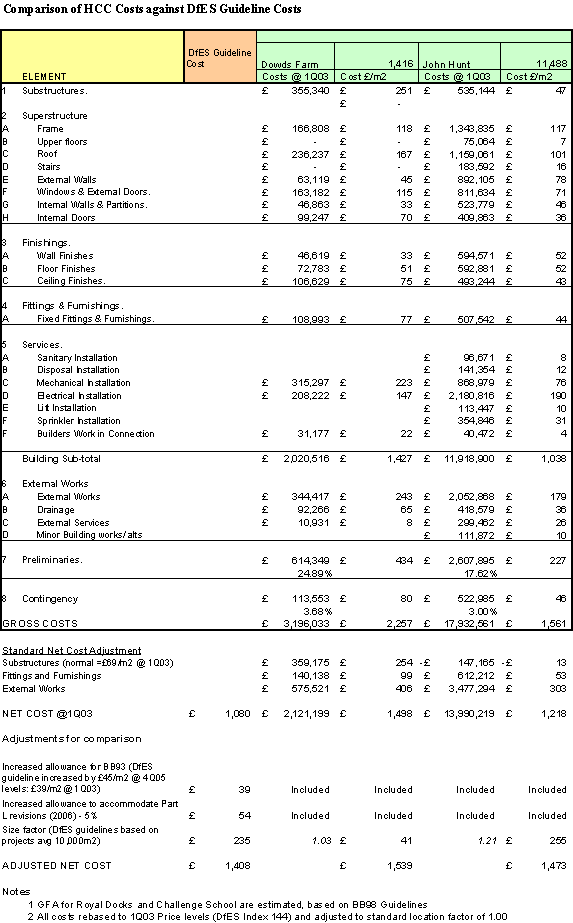
The Procurement Initiatives reports previously presented to this Panel identified the relationship between the cost benchmarks for school buildings identified by the DCSF (their publication entitled `Education Building Projects: Information on Costs and Performance Data' of April 2003) and County Council school building projects. It should be noted that the benchmark/guideline figures from the DCSF have not been revised since publication in 2003 and therefore do not fully reflect the changes in legislation which have impacted on building costs. There are also a number of exclusions in their costs and this makes it increasingly difficult for a like-for-like comparison to be made until such time as the DCSF updates the guideline figures. To overcome this difficulty a detailed analysis has been undertaken to enable a meaningful comparison to be made between the DCFS guideline costs and the costs of the most recently constructed new primary school (Dowds Farm) and new secondary school (Everest Community College). This analysis is included in Appendix 6 and shows the following outcome: - DCFS guideline net cost (updated for new regs. @ 4Q06 base) = £1,711/m² - Dowd's Farm New Primary School net cost @ 4Q06 = £1,870/m² - Everest Community College net cost @4Q06 = £1,790/m² |
|||||||||||||||||||||
6.2.4 |
This limited exercise indicates that these two very recently completed projects, complying with (and exceeding) the requirements of latest legislation, are on average within 5% of the guideline costs. However, the full analysis of County Council schemes shows that a variation of no more than 1.5% above the DCSF guideline is being maintained. |
|||||||||||||||||||||
6.3 |
It should also be noted that the DCSF Benchmark draws on real data from recent and past completed Schools. There is usually a `time lag' before the index catches up with the latest legislative requirements for school building design. In addition Hampshire's core brief for schools exceeds the minimum requirement of the DCSF benchmark, therefore additional specialist facilities such as IT Suites and Music/ Drama spaces are included as standard. Both of these factors would go some way to explaining the small premium that the County Council experience over the DCSF benchmark . |
|||||||||||||||||||||
6.4 |
Future Cost Trends BCIS and BERR predict annual Tender Price Inflation of between 5% and 6.5% for the period 2008 to 2012. On top of this, further additions to the Building Regulations, particularly in terms of carbon reductions and meeting BREEAM sustainability expectations, will have put additional pressure on costs, over and above general inflation, from April 2008. The additional load on the construction industry in preparation for the Olympic games in 2012 is also expected to increase construction costs by 1-2% over and above normal inflation, in this region.
|
7.0 |
Scheme approvals |
7.1 |
Appendix 7 lists a number of schemes to be added to the 2008/09 programme of NDS condition projects and the Landlord's Corporate Risk Assessment (CRA) programme of capital repairs. |
8.0 |
Consultant Appointments |
8.1 |
Ratification of the following consultant appointments is sought: |
8.1.1 |
T-three previously worked with the County Council in 2003 to help deliver the Leading Success programme to senior managers. They built up a significant knowledge base of the County Council and its management and leadership style. In light of their past experience and to maintain continuity, the Chief Executive recently invited t-three to follow up the work previously completed and to work with both the Corporate Management Team (CMT) and Assistant Directors to strengthen team working and leadership skills around improving the performance of the County Council and the delivery of services. The lead consultant has a national reputation and knowledge of the County Council that is valuable. The estimated cost of this work is £20,000 which is in line with established rates for management consultants and recognised to be good value. |
8.1.2 |
A series of discussions have been held with a consultancy called `Create Tomorrow Today'. The consultants have a strong grounding in local government and in wider management and international affairs. Initially their appointment is for the development of sub sessions with council leaders identifying obstacles to effective cooperation, issues for consideration to improve two tier operations and in general conflict resolution and team building. Their initial focus is to provide an opportunity to investigate levels of cooperation, collaboration and sharing which would be at the heart of developing member relationships under the new governance model known as the Senate. The nature of the first two sessions will largely define the content for the remainder of the programme and their overall relevance to the Senate development. The estimated cost is up to £15,000 which will only be determined after the initial sessions to shape the scope and volume of their work. This funding will come from the Regional Improvement and Efficiency Partnership for the South East. |
8.1.3 |
In order to inform the South East County Leaders' (SECL) response and on going discussions with national and regional government on the Sub National Review it was necessary to commission an urgent piece of research by Oxford Economics to review the current economic situation in the region and the future impact of ongoing resource transfers from the south. This was necessary to meet the Government deadlines. Oxford Economics completed work for the SECL in 2007 and this latest piece of work provides a second stage to examine: · the impact on the region's and the national economy of a continual transfer of resources away from the region · reasons for the region's competitiveness falling behind other global and EU successful regions. The cost of the research is around £35,000 and was bench marked to be good value, recognising that this would make use of previous research commissioned by SECL. |
LINK(S) TO CORPORATE STRATEGY | ||
Yes |
No | |
Hampshire safer and more secure for all |
_ | |
Maximising well-being |
_ | |
Enhancing our quality of place |
_ |
|
This proposal does not link to the Corporate Strategy but, nevertheless, requires a decision because: |
Section 100 D - Local Government Act 1972 - background papers
The following documents disclose facts or matters on which this report, or an important part of it, is based and has been relied upon to a material extent in the preparation of this report.
NB the list excludes:
1 Published works
2 Documents which disclose exempt or confidential information as defined in the Act
........................
........................
BLPP0307
Major Project Performance - Radar Chart Appendix 2
Hampshire Framework for Major Schemes - Radar Charts Appendix 3
Pilot Second Tier Framework - Radar Chart
Project Approvals
The following addition schemes have been identified for inclusion in the 2008/9 capital repairs programme:
Landlord's NDS Capital Repairs Schemes - 2008/9
Property |
Scheme |
Estimated Value |
Cranbourne School |
External Decorations |
£125,000 |
Castle Hill Infant School |
External Decorations |
£26,000 |
Castle Hill Junior School |
External Decorations |
£33.000 |
Harrow Way Community Sports Hall Recladding £114,164
School, Andover (*)
(*) This scheme also has funding from:
Children's Services Capital Programme 2008/09 (NDS Modernisation) - £85,836
School devolved capital - £130,000
Landlord's Corporate Risk Assessment Capital Repairs Programme - 2008/9
Property |
Scheme |
Estimated Value |
Kimpton CE Primary |
External Decorations |
£22,000 |
Willis Museum, Basingstoke(**) |
Structural repairs to roof timbers, asbestos removal and replacement of the slate and lead roof |
£300,000 |
(**) This scheme also has funding from:
Access budget for installation of accessible WC - £10,000
Various grants for the refurbishment and alterations to the ground floor galleries - £210,000
Hamble Community Sports College - New Sixth Form block
The Learning and Skills Council (LSC) recently confirmed funding for the construction of a new sixth form block at Hamble Community Sports College. The project has an estimated construction cost of approximately £5.8m and will be procured through the IESE Tier 1 Framework for Major Schemes on a contractor design basis. A project appraisal will be completed in the autumn, however it is now proposed to undertake a mini-competition to select and appoint a suitable contractor to undertake the design work with a view to awarding the construction contract in 2009. It is estimated that the design fee will be in the region of £500,000.
Aldworth Science College
A package of refurbishment and alterations work has been identified for Aldworth Science College to ensure that the school can accommodate the operational needs of physically disabled children who currently are unable to safely access the upper floors of one of the building blocks. The estimated cost of these works is £300,000.
To allow this work to be undertaken in time for the beginning of the school term in September, it is proposed to add the works to a contract with Lakehouse Contracts Limited who will be undertaking a package of fire precautions works, procured through the IESE Tier 3 framework, at the school during the summer holidays. The price for the additional works will be based on the rates submitted by Lakehouse as part of the original Tier 3 Framework tender. This arrangement will minimise the costs by avoiding duplication of preliminaries costs and will also avoid the health and safety risks and co-ordination issues associated with having more than one contractor on site at the same time.
Bishops Waltham House and Copper Beeches - Older Persons Homes
Cabinet on 23 June 2008 identified in the final accounts for 2007/08 a further £0.4m to improve the quality of life in the County's residential homes for older people by installing double glazing and other building maintenance improvements. The estimated cost of these works are £150,000 at Copper Beeches and £250,000 at Bishops Waltham House. In respect of Bishops Waltham House, contractors are currently on site upgrading the building and it would be cost effective to enhance the value of the existing contract to incorporate the window replacement. This approach would avoid further disruption to the residents and would make savings when making good as the current works include internal decoration.