
Archived decisions
SECE Construction Procurement and Asset Management Partnership
CSRO7 Funding Application
SECE Construction Procurement and Asset Management Partnership
Introduction
The SECE Construction Procurement and Asset Management Partnership is available to all 74 County, Unitary and District Councils in the South East together with the five police and 8 fire authorities and other local public services providers.
The Framework arrangements which have been developed through the workstream are the largest and most ambitious of their kind in the public sector. The major construction framework which is the most advanced of the suite of procurement arrangements being developed through the workstream is also open to neighbouring authorities including the London Boroughs, many of whom are actively using the arrangements. The framework has a project value of over £1bn and is now attracting national interest both from other Centres of Excellence and the Learning and Skills Council. SECE is likely to be asked to develop a strategy for a national roll out of similar frameworks, and will publish a case study for National consideration through the RCE in March 2008. Preliminary discussion have been held with two neighbouring regions.
The partnership is also in the process of introducing a suite of complementary procurement arrangements suitable for smaller contracting authorities and lower value projects. The learning from these arrangements will be transferred into the highways and transportation area to achieve similar benefits. Consultancy frameworks have also received strong support and are planned to be launched later in the year. Property and Asset management and the development of key supply chains have also received strong support.
Principle aims of the partnership
The partnership aims to assist authorities deliver CSR targets by offering a range of procurement, efficiency generating and project delivery arrangements to release cashable efficiencies through:
· Ensuring best value in procurement methods and approaches are available to any authority in the south east
· Introducing arrangements to deliver cashable savings and benefits of £190m
· Delivering further identifiable efficiencies capable of wide application across public authorities
· Ensuring the most efficient and economic use of scarce professional resources for the benefit of all authorities
· Seeking out opportunities for aggregation and the deployment of best practice supply chain management and development
· Encouraging collaborative working, risk reduction, and improved outcomes for the construction sector to derive direct benefit for SECE authorities
· Instigating appropriate shared service provision so that authorities may pool scare professional resources and expertise and avoid duplication of effort
· To deliver best practice property and asset management solutions with wide application to generate efficiencies in line with CSR targets
· Ensure sustainable benefits are achieved and energy efficient building assets are created in line with published targets for carbon emissions and other emerging legislative targets
The SECE Construction Procurement and Asset Management Partnership has now consulted widely and is proposing to move forward with the following key programmes for the CSR period:
· SECE Major Framework (including Civic Offices, BSF and PCP programmes)
· Cluster development (including Districts, Fire and Police )
· Consultancy
· Shared Services
· Property and Asset management/FM
· Supply chain development (incl. lifts)
· Highways and Transportation work procurement and framework arrangements
Workstream Summary
SECE Major Framework (Tier 1)
The Major Framework was launched August 2006 to undertake any major construction work over £1m in the southeast and bordering areas. The framework comprises 10 large construction companies including national contractors with a combined capacity to deliver over £1b of construction work pa for local authorities in the south east. The framework is capable of delivering projects ranging from small primary school extensions up to major £60m Civic Office developments. 24 local authorities, a number of fire and police authorities, health sector organisations and further education colleges are actively using the arrangements. The framework runs for an initial period of 4 years following a development period which concluded in July of this year.
Cashable savings are derived from procurement savings over traditional tendering and buying gains through aggregating supply chains over a whole programme of work. Efficiencies are also realised through shared learning and continuous improvement.
The following efficiency model has been developed by the workstream to show how realistic and time related performance indicators are being used to show that the efficiency strategies are being achieved, supporting the goals and long term objectives of the framework.
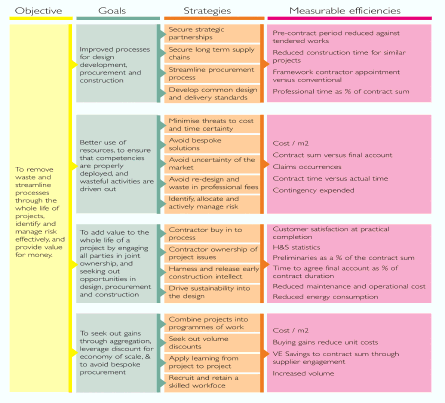
The Framework objectives from the Publication `making work
SECE Cluster Development - Tier 2 and 3 Construction frameworks
Sub regional frameworks are being developed in two Clusters for smaller groups of authorities. The first Clusters are in Hampshire and East/West Sussex and comprise all of the constituent authorities including Unitary Councils, Districts, Fire and Police authorities. The next stage of the Cluster programme will involve Berkshire, Buckinghamshire and Oxfordshire (as a combined Cluster), Kent and Surrey.
The frameworks which are being set up are typically for projects up to £500K (Tier 3) and projects up to £2.5m (Tier 2). Each Cluster framework is worth £100m to £200m over its entire 4 year life and will deliver a similar level of efficiency saving to the Major Framework. Tier 2 Frameworks have just been let in Hampshire and Sussex will follow in about 2/3 Months time. Tier 3 framework will be in place early in 2008.
Consultancy
This workstream will focus on establishing professional consultancy services and will be complementary to the Major Framework. An OJEU Notice will be placed towards the end of 2007 for multi disciplinary Design Services, Cost Management and Project Management Services. The workstream will also focus on the development of templates and guidance for the procurement of local consultants. It will also develop performance management arrangements to capture outcomes and efficiencies.
Cashable savings will be delivered through simplified procurement processes, collaborative working and continuous improvements over a series of projects.
Shared Services
As an alternative to consultancy or creating in-house provision this workstream will look at opportunities to pool existing resources. It will offer the opportunity for authorities to combine some or all of their property functions. Hampshire County Council is currently about to enter such an arrangement with Reading Borough Council to deliver their capital programme. If successful these or similar arrangements could be replicated elsewhere in SECE.
Property and Asset Management
This workstream will be fairly wide ranging looking at management and best practice, specialist frameworks, frameworks for the delivery of maintenance services, corporate risk management and sustainability in particular energy efficiency. Efficiency savings will be generated through improved processes, better management and aggregated buying.
Supply Chain Development
Frameworks will be created for commonly occurring commodities and material purchases outside of the major framework strategies identified above. Significant discounts on scale will be achieved as the supply chains will be available to all SECE authorities.
Highways and Transportation
This workstream will be fairly wide ranging looking at asset management, shared contracts/Frameworks, specialist frameworks, procurement processes, supply chain development, performance management and best practice, innovation and training and development. Efficiency savings and quality improvements will be generated through improved processes, better management and aggregated buying though a better skilled and equipped professional services organisations.
Costs and Benefits
Workstream |
CSRO7 Budget (£m) |
Projected savings (£m) |
Major Framework (tier 1) |
1.100 |
65 |
Cluster Arrangements |
1.025 |
18 |
Consultancy |
.480 |
18 |
Shared Services |
0 |
Incl below |
Property and Asset Management |
.630 |
10 |
Supply Chain development (Procurement theme) |
.225 |
8 |
Fire and Police (incl in tiers 1 and 2) |
0 |
1 |
Highways and Transportation |
.380 |
5 |
Total |
3.840 |
125 |
Key Challenges
o Delivering cashable savings whilst overheating and capacity shortages may accrue in the run up to 2012
o Effective management of a very large programme of work to derive tangible benefits
o Ensuring all projects and processes are quality assured
o Promoting the use and benefits of the frameworks to such large and diverse stakeholder environment
o Encouraging wider supply chain development against the backdrop of a singular project mentality
o The skills and capacity gaps in participating organisations
o Ensuring new users are property inducted into the SECE processes
o Creating enough capacity within SECE to successfully manage the arrangements
o Encouraging a culture of shared learning and buy-in to collaborate
o The very diverse range of legal views over the operation of a framework and procurement under EU regulations
o Challenging a common culture of risk avoidance or transfer.
Governance Arrangements
The Building Construction Workstream through Hampshire County Council the lead authority has constituted a SECE Board which will oversee all workstream activities. The lead officer for the Workstream is Andrew Smith, Director of Property, Business and Regulatory Services.
Councillor Colin Davidovitz of Hampshire County Council will act as Member Champion for the workstream.
A twice yearly County/Unitary workstream meeting will be held in order to draw together areas of common interest and to give direction and support to the development of the workstreams. The meetings will include key District authorities so that their views can be understood and requirements reflected in the programme going forward. The Workstream has also hosted an annual conference focusing on the successes of the workstream and the forward plan.
The Major Framework has a Steering Group comprising the lead authority (HCC) and 11 other authorities who are actively using the arrangements. The purpose of the group is to provide scrutiny over the development of the arrangements and validate its performance. The framework is open to other local public services providers in the south east and the group also considers new members accessing the arrangements. The group has recently approved a number of NHS and FE sector organisations accessing the arrangements.
The major framework also has a Strategic Forum comprising all ten framework contractors chaired by the lead authority. The group considers the performance of the arrangement, capacity and development.
Each member authority which accessed the Major Framework is required to enter into a Partnering Agreement with the lead authority setting out the requirements to adhere to the framework protocol and to report to SECE on project performance.
At a sub regional level Cluster Groups have been established in Hampshire and East and West Sussex. Both groups have established forums which provide local focus in the development of sub regional procurement improvement. In Sussex, East Sussex acts as the lead authority and Hampshire County Council is providing leadership for the Hampshire Cluster. The cluster frameworks themselves will have similar governance to the major framework.
The Governance of the Consultancy Framework will also be similar to the Major Framework, but will also include particular focus groups for each professional discipline.
Further Governance arrangements will be developed as the other workstreams become more defined.
Successes To Date
o The Major Framework is worth over £1bn within a year of launch
o Arrangements in use by 24 local authorities, fire, police, health, further and higher education
o Recognition by central government as a major project delivery method for schools
o £4.5m procurement savings achieved to date
o £250m BSF OSP programme created with a potential to yield £20m cashable savings
o Significant take up by London Authorities, the LSC and Metropolitan Police
o New £50m Civic Office project realised by Reading Borough Council following SECE support
o Active Procurement Cluster groups established in Sussex and Hants for 30 authorities
o Widening interest in a national roll-out supported by National Workstream lead and LGTF
o 4 Year Collaborative Maintenance arrangements introduced with RBFR saving £50K
o Shared Service arrangement in place with Reading Borough Council yielding £1.5m savings
From small beginnings involving pilot arrangements for individual projects, it was important to demonstrate to authorities that there would be enormous benefits to linking similar projects into larger programmes of work across the South East. In this way, the Major Framework has been able to identify and amalgamate blocks of work that would be more attractive to construction companies, and create efficiencies and savings. The workstream has already yielded procurement savings of £4.5m by avoiding single project OJEU procurement.
It had been anticipated that up to 10 authorities would be actively using the Framework by the end of 2007/8, with a steady growth from then onwards. This target has been significantly exceeded with 24 authorities already involved, and many London Boroughs and the Metropolitan Police also active participants.
The first major SECE project (below) for Reading Borough Council was complete on time and budget in June of this year with many more schemes now in development or on site leading to an anticipated project turnover of about £.5bn per annum based upon the current rate of enquiries.


Alfred Sutton School (Reading Borough Council)
Programmes of Work
A major programme of work has now been formed around the One School Pathfinder (OSP) programme. The group have agreed to develop a number of common workstreams within the time constraints imposed by Partnership for Schools Programme. The whole programme will be procured through the major framework and the majority of the contractor selection has been undertaken yielding an immediate procurement saving of £2.5m. It is anticipated that the proposed common supply chain strategy will yield further cashable efficiencies of up to £20 m by buying across the programme.
Another significant programme of work is also emerging in connection with the further education sector. The Framework being recognised by DCSF (formerly DfES) as an alternative delivery mechanism for their one school pathfinder (BSF) programme.
The overall major framework workload comprises:
· Civic Offices £115m (4 projects)
· Education - General £ 59m (13 projects)
· Education Major / Secondary £ 347m (14 projects)
· Education Primary £ 75m (11 projects)
· Further Education (LSC) £117m (4 projects)
· Police Fire and NHS £79m (6 projects)
· General £85m (10 projects)
The next stage of the development will be to explore supply chain opportunities through an unparalleled opportunity to aggregate procurement in the Local Government sector. If only a simple 5% saving is achieved then significant a cashable savings will have be achieved across these programmes.
SECE has supported Reading Borough Council with the development of the major civic office redevelopment. A template for future schemes is now available for the whole of the SECE community. SECE has also produced detailed case studies to avoid duplication of effort. For every Civic Office developed using the template a saving of at least £50,000 of professional time would be achieved.
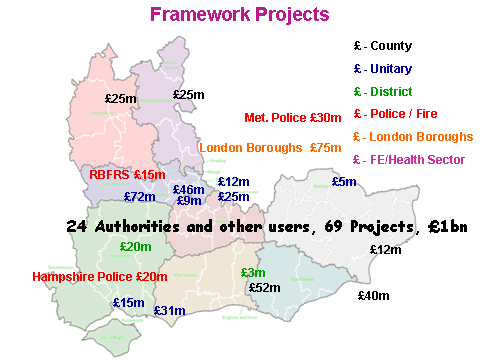
The following diagram illustrates the scale of activity across SECE.
Conclusion
As the SECE collaborative approach to procurement continues to expand and develop, it is clear that the requirements and expectations of the original Regional Centres of Excellence (to support local authorities in their delivery of the National Procurement Strategy and to respond to the implications of the Gershon Report and efficiency targets) have been exceeded. It is also clear that the ambition to deliver effective change and continuous improvement in the area of procurement is being fully realised.
SECE's key aim of achieving a collaborative community within the pubic sector is rapidly being achieved. This vision succeeds through strong leadership provided by the Buildings Workstream Partnership and cooperation between authorities - sharing learning, working in partnership with contractors and the supply chain, and demonstrating tangible efficiencies.