
Archived decisions
HAMPSHIRE COUNTY COUNCIL
Decision Report :
Decision Maker: |
Executive Member (Policy and Resources) | ||||
Date of Decision: |
11 September 2008 | ||||
Decision Title: |
Food Service and Agriculture Plan | ||||
Decision Reference: |
268 | ||||
Report From: |
Acting Director of Property, Business and Regulatory Services | ||||
Contact name: |
Nigel Snape Head of Regulatory Services | ||||
Tel: |
01962 833690 |
Email: |
|||
EXECUTIVE SUMMARY
1) Summary of Decision Area:
1.1. This report seeks approval to the updated 2008-2009 Food and Agriculture Service Plan as set out in appendix 1.
2) Issues Covered in Report:
2.1. In September 2007, the Executive Member for Policy and Resources considered and approved the statutory Food Service Plan for 2007-2008. The Plan has now been subjected to its annual review.
2.2. The report draws out key features of the proposed 2008-2009 Food and Agriculture Service Plan which is set out in accordance with statutory requirements.
3) Recommendations:
3.1. That the updated 2008-2009 Food and Agriculture Service Plan at set out in appendix 1 be approved.
MAIN REPORT
1) Purpose of the Report:
1.1. The aim of this report is to seek approval to the 2008-2009 Food and Agriculture Service Plan. The updated plan is attached at appendix 1.
2) Contextual Information:
2.1. Since 1 April 2001, all Food Authorities have been required to produce a Food Service Plan specifying its food law enforcement activities. The format of the plan is specified in a Food Standards Agency Framework Agreement on Local Authority Food Law Enforcement. The framework specifies that these plans should have Member approval to ensure local transparency and accountability. Powers to enable the Agency to audit local authorities are contained in the Food Standards Act 1999.
2.2. The plan is extended to include the Animal Health and Welfare and feed enforcement function to reflect the integrated approach from plough to plate.
3) Key Issues:
3.1. The primary aim of the food standards team is to promote and enforce animal health and welfare and food and agriculture safety laws. Key features of the 2008-2009 plan include:
3.2. Integrated Service - The County Council delivers a fully integrated food enforcement system via a specialist team of Trading Standards Officers, Public Analysts, Food Scientists and Animal Health Inspectors.
3.3. Targeted Interventions (Food Safety and Food Hygiene) - In order to enforce and promote food safety laws the service will carry out targeted interventions to food manufactures, producers, retailers and primary producers using a risk based approach. The interventions will be designed to highlight quality control problems and to offer technical and legal advice to Hampshire businesses. The Service will concentrate on our high-risk food premises. Enforcement action will only be taken as a last resort to deal with wilfully non-compliant businesses.
3.4. FoodSmart - This is an innovative product designed to help students learn about healthy eating in a fun and interesting way. The aim of the FoodSmart pack is to provide information on general food legislation and healthy eating and nutrition to students aged 11-16 years (key stages 3 and 4). It is designed to assist students to better understand the composition and labelling of foodstuffs which will enable them to make healthier choices. The project also provides advice to students on nutritional issues, and suggests simple ways that fat, salt and sugar consumption can be reduced. FoodSmart is a complete educational pack for teachers, in terms of the comprehensive notes, and information and activity cards that can be used by the students which contain additional internet activities, and most importantly, through the inclusion of lesson plans. A review is taking place in 2008 to establish the effectiveness of the product. Further work is also being planned with teachers to ascertain if an even better product can be targeted towards key Stage 2 pupils.
3.5. Healthy Eating - "Food - the choice is yours" will continue into its fourth year and will be updated to reflect recent changes. The campaign includes a dedicated website www.hants.gov.uk/food, distribution of healthy eating leaflets and nutrition cards.
3.6. Focused Sampling - In 2007/8 we tested over 1200 food samples of which 44% were unsatisfactory. Although most of these related to non-compliant labelling, the high failure rate shows the value of our targeted sampling programme. The 2008/9 target is 1200 samples. A number of other food samples will be subject to more in-depth analysis and used for research and development.
3.7. Animal Health - A considerable amount of time was spent during 2007/08 dealing with the issues relating to the outbreak of Foot and Mouth disease in Surrey and the surrounding control areas that included parts of Hampshire. Fortunately the outbreak was contained in a relatively small geographic area, unlike the outbreak in 2001. This demonstrated that the movement controls put in place after the 2001 outbreak helped contain it. Officers from Hampshire were deployed in Surrey to assist during the peak of the outbreak. The continuing controls throughout Hampshire and much of the country relating to the outbreak of Bluetongue Disease are monitored on a daily basis. This outbreak happened during the Foot and Mouth outbreak with Bluetongue disease starting in the east of England and spreading across the country including an outbreak in Hampshire. It did not have the same impact as Foot and Mouth but the controls imposed needed to be acted on by the County Council and there are still ongoing concerns. In addition to such diseases was the constant threat posed by Avian Influenza and the need for the County Council to be prepared for any outbreak. Last year 800 animal health visits were made which included visits to farms. The 2008/9 target for farm visits is 715. Furthermore constant updates and developments are being made to the Animal Disease Contingency Plans to deal with the threats from Foot and Mouth Disease, Avian Flu, Bluetongue Disease and Rabies, in conjunction with the Emergency Planning unit.
3.8. Agriculture - Additional Animal Feed Hygiene legislation has been introduced and visits have been carried out to farm premises to check on compliance. This has required specific interest in the Hazard Analysis Critical Control Points (HACCP) based principles for the production of animal feeds. To support the County Council's "farm to fork" approach to food control, 12 major animal feed producers will be inspected to ensure that feeds are free from contaminants and are nutritionally sound.
3.9. Packaging - a project was carried out during the year investigating concerns regarding excess packaging on food products. Approximately 1000 products which were sampled for food standards purposes, were also examined and 3 failed due to various factors. Also when visits were made to producers or packers in Hampshire the issue of excessive packaging was raised and some success was had with some companies in getting them to reduce their packaging.
Examples include:
· A Hampshire snack bar manufacturer has taken advice and now uses slimmer boxes for their multi packs and with some of their supermarket customers have eliminated a layer of transit packaging. Issues have also been discussed, should the Company move to new premises, on looking at new packaging lines and further scope for reducing packaging.
· A small producer was packing fudge in cardboard boxes about three times larger than they needed to be. When opened the actual fudge just filled one corner of the box. This was not a deliberate attempt to deceive but was down to bulk purchase of packaging (one size fits all). After advising the Company and working with them they did change the way they packed that particular line so that it was in a container that was more appropriate.
· A large manufacturer now has a constant review programme of packaging waste reduction and moving to more environmentally friendly packaging. Much of their success so far has been in the supply and transit packaging, ie having supplies delivered in plastic wrapping but in returnable plastic boxes rather than cardboard boxes. Also, since the Department's testing of Easter Eggs, the Company withdrew one particular egg marketing concept from the market and they now always apply the "analysts volume ratio test" as an indicator of potential excessive packaging for all packages. Discussions with the Company confirmed they now have liquids delivered in bulk containers rather than lots of plastic tubs which then went to waste. They have also had some success in minimising retail packaging and moving to recyclable materials.
· A national company from outside Hampshire confirmed that following our testing of Easter Eggs they would reduce the packaging by 30%. This is being monitored in conjunction with their Home Authority.
4) Outline of Options:
4.1. There is a statutory requirement for the County Council to have in place a Food and Agriculture Service Plan which is in accordance with the Food Agency's Framework Agreement on Local Authority Food Law Enforcement.
5) Option Analysis / Comparison:
5.1. Not applicable.
6) Conclusions:
6.1. The updated Food Service Plan complies fully with the Food Standards Agency's Framework Agreement on Local Authority Food Law Enforcement. It also incorporates a number of improvements to enhance local outcomes, particularly relating to healthy eating. This plan supports the policies of promoting good public and animal health.
7) Summary Recommendations:
7.1. That the updated 2008-2009 Food and Agriculture Service Plan at appendix 1 be approved.
CORPORATE OR LEGAL INFORMATION:
LINKS TO THE CORPORATE STRATEGY | ||||
Yes |
No | |||
Hampshire safer and more secure for all |
_ |
|||
Corporate Business plan link no (if appropriate) |
||||
Maximising well-being |
_ |
|||
Corporate Business plan link no (if appropriate) |
||||
Enhancing our quality of place |
_ |
|||
Corporate Business plan link no (if appropriate) |
||||
OR |
||||
This proposal does not link to the Corporate Strategy but, nevertheless, requires a decision because: | ||||
OTHER SIGNIFICANT LINKS: | ||
Links to Previous member decisions: | ||
Title |
Ref |
Date |
Food Service Plan |
13/09/2007 | |
Food Service Plan |
14/09/2006 | |
Food Service Plan |
6/12/2005 | |
Direct Links to Specific Legislation or Government Directives | ||
Title |
Date | |
Food Standards Act 1999 |
||
Food Standards Agency Framework Agreement on Local Authority Enforcement (amended 2004) |
||
Section 100 D - Local Government Act 1972 - background documents | |
The following documents discuss facts or matters on which this report, or an important part of it, is based and have been relied upon to a material extent in the preparation of this report. (NB: the list excludes published works and any documents which disclose exempt or confidential information as defined in the Act.) | |
Document |
Location |
None |
|
COMPREHENSIVE RISK & IMPACT ASSESSMENT:
Race and Equality Impact assessment
Race and equality impact assessment has been considered in the development of this report and no adverse impact has been identified.
Crime prevention issues
The County Council has a legal obligation under Section 17 of the Crime and Disorder Act 1998 to consider the impact of all the decisions it makes on the prevention of crime. The proposals in this report have no impact on the prevention of crime.

Regulatory Services
Food and Agriculture Service Plan
2008 - 2009

This Service Plan is issued under the authority of:
Nigel Snape - Head of Regulatory Services
..................................................
Regulatory Services, Montgomery House, Monarch Way, Winchester
SO22 5PW
Tel: 01962 833620. www.hants.gov.uk/regulatory
Copy Number: 1. Issued to: Karen Murray - Acting Director of Property, Business and Regulatory Services
This Food Service Plan forms part of the Official Quality System of Hampshire County Council's Regulatory Services. It is available electronically for all staff and is on the Regulatory Services website for access by businesses and the general public. Hard copies are held by the Director (Copy 1) and Head of Service (Copy 2).
HAMPSHIRE COUNTY COUNCIL. REGULATORY SERVICES.
FOOD SERVICE PLAN 2008-9
Executive Summary
This Service Plan describes the key objectives relating to Hampshire County Council's Food Enforcement Function. It is a statutory responsibility to update the plan, which is audited from time to time by the Food Standards Agency. The primary aim of the food standards team is to promote and enforce animal health and welfare and food and agriculture safety laws. Key features of the plan include:
· Integrated Service - The County Council delivers a fully integrated food enforcement system via a specialist team of Trading Standards Officers, Public Analysts, Food Scientists and Animal Health Inspectors.
· Targeted Interventions - (Food Safety and Food Hygiene) In order to enforce and promote food safety laws we will carry out targeted interventions to food manufactures, producers, retailers and primary producers using a risk based approach. The interventions will be designed to highlight quality control problems and to offer technical and legal advice to Hampshire businesses. We will concentrate on our high-risk food premises. Enforcement action will only be taken as a last resort to deal with wilfully non-compliant businesses.
· FoodSmart -This is an innovative product designed to help students learn about healthy eating in a fun and interesting way. The aim of the FoodSmart pack is to provide information on general food legislation and healthy eating and nutrition to students aged 11-16 years (key stages 3 and 4). It is designed to assist students to better understand the composition and labelling of foodstuffs which will enable them to make healthier choices. The project also provides advice to students on nutritional issues, and suggests simple ways that fat, salt and sugar consumption can be reduced. FoodSmart is a complete educational pack for teachers, in terms of the comprehensive notes, and information and activity cards that can be used by the students which contain additional internet activities, and, most importantly, through the inclusion of lesson plans. A review is taking place this year to establish the effectiveness of the product. Also further work is being planned with teachers to see if an even better product can be targeted towards key Stage 2 pupils.
· Healthy Eating "Food - the choice is yours" will continue into its fourth year and will be updated to reflect recent changes. The campaign includes a dedicated website www.hants.gov.uk/food, distribution of healthy eating leaflets and nutrition cards.
· Focused Sampling - In 2007/8 we tested over 1200 samples of which 44% were unsatisfactory. Although most of these related to non-compliant labelling, the high failure rate shows the value of our targeted sampling programme. The 2008/9 target is 1200 samples. A number of other samples will be subject to more in-depth analysis and used for research and development.
· Animal Health -A considerable amount of time was spent during that year dealing with the issues relating to the outbreak of Foot and Mouth Disease in Surrey and the surrounding control areas that included parts of Hampshire. Fortunately the outbreak was contained in a relatively small geographic area, unlike the outbreak in 2001. This demonstrated that the movement controls put in place after the 2001 outbreak helped contain it. (Officers from Hampshire were deployed in Surrey to assist during the peak of the outbreak). The continuing controls throughout Hampshire and much of the country relating to the outbreak of Blue Tongue Disease are monitored on a daily basis. This outbreak happened during the Foot and Mouth outbreak with Bluetongue disease starting in the east of England and spreading across the country including an outbreak in Hampshire. It did not have the same impact as Foot and Mouth but the controls imposed needed to be acted on by Hampshire County Council and there are still ongoing concerns. In addition to those was the constant threat posed by Avian Influenza and the need for Hampshire County Council to be prepared for any outbreak. Last year 800 animal health visits were made which included visits to farms. The 2008/9 target for farm visits is 711. Furthermore constant updates and developments are being made to the Animal Disease Contingency Plans to deal with the threats from Foot & Mouth Disease, Avian Flu, Bluetongue Disease and Rabies, in conjunction with Emergency Planning.
· Agriculture - Additional Animal Feed Hygiene legislation has been introduced and visits have been carried out to farm premises to check on compliance. This has required specific interest in the HACCP (Hazard Analysis Critical Control Points) based principles for the production of animal feeds. To support the County Council's "farm to fork" approach to food control, 12 major animal feed producers will be inspected to ensure that feeds are free from contaminants and are nutritionally sound.
· Packaging - a project was carried out during the year investigating concerns regarding excess packaging on food products. Approximately 1000 products, which were sampled for food standards purposes, were also examined and 3 failed due to various factors. Also when visits were made to producers or packers in Hampshire the issue of excessive packaging was raised and some success was had with some companies in getting them to reduce their packaging.
Some examples of these successes are detailed below:
A Hampshire snack bar manufacturer has taken advice and now uses slimmer boxes
for their multi packs and with some of their supermarket customers have eliminated a
layer of transit packaging. Issues have also been discussed , should the Company
move to new premises, on looking at new packaging lines and further scope for
reducing packaging .
A small producer was packing fudge in cardboard boxes about three times larger than
they needed to be. When opened the actual fudge just filled one corner of the box.
This was not a deliberate attempt to deceive but was down to bulk purchase of
packaging (one size fits all). After advising the Company and working with them they
did change the way they packed that particular line so that it was in a container that
was more appropriate.
A large manufacturer now has a constant review programme of packaging waste
reduction and moving to more environmentally friendly packaging. Much of their
success so far has been in the supply and transit packaging i.e. having supplies delivered
in plastic wrapping but in returnable plastic boxes rather than cardboard boxes. Also
since the Department's testing of Easter Eggs the Company withdrew one particular
egg marketing concept from the market and they now always apply the "analysts
volume ratio test" as an indicator of potential excessive packaging for all packages.
Discussions with the Company confirmed they now have liquids delivered in bulk
containers rather than lots of plastic tubs which then went to waste. They have also
had some success in minimising retail packaging and moving to recyclable materials.
A national company from outside Hampshire confirmed that following our testing of
Easter Eggs they would reduce the packaging by 30%. This is being monitored in
conjunction with their Home Authority.
1. Service Aims and Objectives.
1.1. Aims and Objectives.
The Regulatory Services vision is:
To create a regulatory framework that is safe, relevant and responsive to the public and wider business community
Regulatory Services aims to protect the public and business by ensuring a fair and safe trading environment in Hampshire. This is achieved by giving advice and carrying out interventions relating to consumer law. Priorities are established by using a risk assessment approach. Specifically in relation to animal health, food safety and animal feeding stuffs, activities include: sampling programmes, response to complaints, awareness and education campaigns and provision of specialist advice to traders.
The Food Team objectives are:
Aims:
To promote and enforce animal health & welfare and food & agriculture safety laws.
Objectives:
· To respond to requests by all traders for advice on compliance with food, feeds and animal health legislation including operation of the Home Authority principle.
· To carry out an effective risk based programme of sampling, analysis and checking of food and animal feeding stuffs (feeds) with respect to composition and labelling.
· To respond to consumer complaints relating to animal health, food & feeds safety and quality, working in partnership with central government, other local government agencies and industry to provide a seamless service to customers.
· To carry out specific food & feeds safety campaigns to highlight potential areas of good or bad practice in food trade to the public.
· To carry out an effective risk based programme of animal health & welfare inspections and to react to outbreaks in accordance with DEFRA guidance.
· To carry out Food Standards Interventions in accordance with Food Standards Agency and LACORS risk assessment and to ISO 9001 Quality Standards.
1.2. Links to Corporate Priorities
Hampshire County Council has three Corporate Priorities., namely
· Hampshire safer and more secure for all
· Maximising wellbeing
· Enhancing our quality of place
This corporate vision forms the philosophy that drives the County Council and provides a framework for service planning and delivery. The food plan links to the corporate prioritises as follows:
Corporate Priority |
Link to Food Service Plan demonstrated by: |
Hampshire safer and more secure for all |
· Ensuring food is safe to eat · Reducing crime relating to Food Standards · Monitoring the quality of school meals - hygiene, nutrition and GM tests · Mitigating the risks against any outbreak of Notifiable animal disease such as avian influenza, Foot and Mouth and Bluetongue Disease |
Maximising wellbeing |
· Promoting good public health through education and healthy eating · Supporting Hampshire's food and farming businesses · Promoting good quality food production |
Enhancing our quality of place |
· Promoting good quality agricultural and animal health practices. |
Hampshire County Council is a major supplier of food. Hampshire Caterers (HC3S) prepare approximately ten million meals per annum for schools, adult services establishments, staff restaurants and public outlets. Each year the Scientific Service carry out £82,400 worth of tests and inspections to ensure the quality of the food it serves. Tests include microbiological quality, nutritional quality and genetic modification. Food suppliers are inspected by trained auditors and need to comply with product specifications. This scheme is featured as best practice on the Food Vision website.
2. Background.
2.1. Profile of Hampshire County Council.
Hampshire is mainly rural with Basingstoke, Winchester, Aldershot, Farnborough, Fareham and Eastleigh being the main urban areas.
Hampshire County Council provides essential Services for the 1.27 million people living in Hampshire. Over 30,000 staff deliver a wide range of services including children's services, adult services, libraries, museums, country parks and regulatory services.
Hampshire County Council is responsible for regulating some 26,427 trade premises including 6785 food establishments, 3800 livestock holdings and 526 animal feed premises.
Regulatory Services of Hampshire County Council combines the expertise of Trading Standards Officers and Public Analysts under a single management team. The Service benefits from an integrated, project managed approach to food sampling, analysis, inspection, advice, education and enforcement.
Over the last five years, Hampshire County Council has carried out food inspections and food sampling at the levels shown below:
Year |
2003/04 |
2004/05 |
2005/6 |
2006/7 |
2007/8 |
Total inspections/interventions |
1637 |
1281 |
972 |
977 |
882 |
Total samples for analysis |
1979 |
1971 |
2020 |
2120 |
1249 |
Samples unsatisfactory (%) |
37 |
47 |
45 |
45 |
44 |
In addition to the full food standards inspections above, 320 other Food Compliance visits were carried out. A similar high level of adverse samples required follow-up required action. Importantly, 100% of the 159 high-risk premises were inspected, which forms part of the Corporate Performance Assessment (CPA).
The target for 2008/9 is approximately 800 interventions of which 157 are in the high-risk category. The intervention strategy is in line with the requirements of the Food Standards Agency's new Food Law Code of Practice this year and also built into this are requirements of the Regulators Compliance Code. Resources will also be devoted to promoting healthy eating and offering legal and technical advice to businesses. A project will continue to examine new services to businesses aimed at alternative approaches to inspections.
Sample numbers were reduced in the last year, however, this allowed some room for research and development projects to be taken on. The number of adverse samples remains at a high level of 44%. A great deal of time is taken up in following up these adverse samples with manufacturers and importers. The 2008/09 target is 1200 samples. A number of these samples will be directed at more in-depth analysis and research to ensure the composition of the foods sampled do not contain undeclared ingredients, contaminants or additives which could cause harm to the consumer.
The County Council runs its own Public Analyst laboratory, employing 26 full time equivalent staff and conducting over 100,000 tests per annum on a wide range of samples. The laboratory is appointed Public Analyst to 39 other food authorities outside Hampshire.
2.2. Organisational Structure.
Regulatory Services is part of the Property, Business and Regulatory Department of Hampshire County Council. Regulatory Services report through the Director to the Executive Member for Policy and Resources who is also the Leader of the County Council.
Since 2001, the County Council has operated an Executive Panel structure.
The relationship between County Council Members and the food function is shown below:
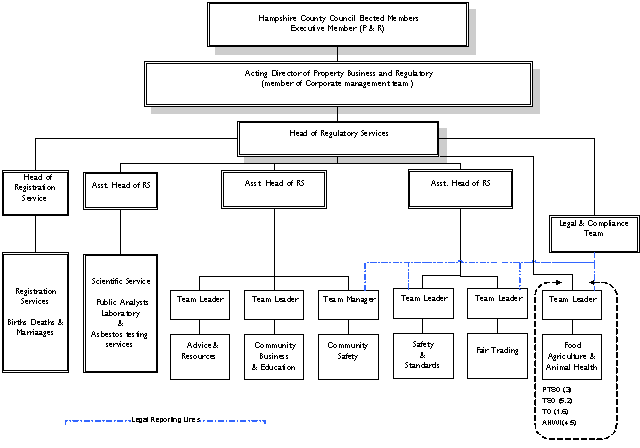
The Acting Director Property, Business and Regulatory Services, Head of Regulatory Services, together with the four Assistant Heads of Regulatory Services form the Regulatory Services Management Group. This Team sets the Enforcement Policy and formulates the overall Service Plan.
The Head of Regulatory Services, in conjunction with other Senior Managers and food experts, identifies a yearly food service plan which includes inspection, actions to redress complaints, sampling and food education and promotion activities.
The Head of Regulatory Services is responsible for the specification, delivery, monitoring and review of all food and agriculture projects. The Food Service Plan is delivered by a 16 strong Food & Agriculture Standards Team that works closely with food scientists, analysts and technologists from the Public Analyst laboratory.
A policy group meets quarterly to discuss and review strategic issues. The terms of reference of this Food & Agriculture Safety Team (FAST) are given at Appendix 1.
2.3. Scope of the Food Enforcement Function.
Employees of Hampshire County Council deliver the Food Enforcement Function. The County Council has no responsibility for food hygiene enforcement, this is the responsibility of the District Council Environmental Health Services. However in 2006 a new duty was placed upon the service to enforce food hygiene at primary production level for example livestock and arable farms. The laboratory carries out examination of food complaints for Environmental Health Services on a contractual basis.
This plan also includes all agricultural enforcement and all animal health and welfare activities, so represents a "farm to fork" approach to food law enforcement.
Where appropriate, other relevant inspections (e.g. safety, pricing and weights & measures) are carried out at the time of the food standards inspection. This will depend upon the premise type and the risk assessment attached to that premise. This provides a single inspection by the service of food premises.
The relevant areas of the food service are delivered as follows:
2.3.1. Food Standards Interventions:
The Food Standards Team delivers these via staff trained in food law, food science and ISO 9001 auditing techniques.
2.3.2. Food Analysis:
The Laboratory's Food Science Group carries out most food analysis. Most feed analysis is carried out at Kent Scientific Services.
2.3.3. Dealing with Food & Agriculture Complaints:
Food & agriculture complaints are initially processed by Consumer Direct, the County or District Councils, but are then passed on to the responsible authority for action. Specific cases are then dealt with by the Food Standards function.
2.3.4. Animal Health & Welfare.
The Animal Health and Welfare Officers provide advice and support to stockholders and the farming community in respect of animal welfare and disease control. They also enforce the provisions of the Animal Health Act 1981, particularly where it relates to animal disease prevention measures, e.g. foot-and-mouth disease, avian flu and bluetongue disease outbreak measures. The Animal Welfare Act 2006 provides the framework to deal with welfare issues. These officers visit livestock holders in Hampshire to ensure the correct keeping of animal records and identification of individual animals where necessary. The Act also covers the welfare of animals in transport. While carrying out this role any welfare concerns of livestock animals are dealt with, in partnership with Veterinary Officers of DEFRA. Animal Health
2.4. Demands on the Food Service
There are 6795 identified food establishments in Hampshire. The greatest proportion are in the categories of retailer and restaurant/caterers. The other key premises are 2 slaughterhouse, 109 manufacturers, 32 Packers, 19 Importers/Exporters, 189 distributors, 1813 retailers, 3252 caterers/restaurants, 401 retailers that manufacture foods, 2 packaging manufacturers and 460 feed premises including feed mills, importers, head offices and certain farms. There are also 3400 livestock holdings and other premises associated with livestock operations.
For Home Authority Companies producing the following foods, we have identified the need for in-house specialist knowledge as a result of complex legislation or processes:
· Mineral and Spring Waters. (e.g. Hildon).
· Chocolate. (e.g. Bendicks)
· Tea. (e.g. Twinings)
· Speciality imported foods (e.g. Petty Wood)
· Watercress and salads (e.g. Vitacress)
· Ice Cream Manufacturers (e.g. New Forest Ice Cream Co.)
· Meat Products (e.g. Chitty Foods)
Specialist knowledge is required to deal with various agriculture and animal health issues:
· Animal feeds (e.g. Feed Mills)
· Horse Markets (New Forest Pony Sales)
· Livestock on common land (New Forest)
· Animal by-products
· Contingency Planning
Inspections are carried out in the field.
Part of Food Service |
Address |
Telephone |
Opening Hours |
Food Standards |
Montgomery House, Monarch Way, Winchester. SO22 5PW |
01962 833620 |
9.00am to 5.00pm Monday to Friday |
Animal Health |
Montgomery House, Monarch Way, Winchester. SO22 5PW |
01329 316200 01329 316207 (emergency) |
9am-5pm Monday to Friday. Also 24 hour emergency call out. |
Public Analyst & Laboratory Service |
Hampshire Scientific Service, Hyde Park Road, Southsea, PO5 4LL |
023 9282 9501 |
9am-5pm Monday to Friday. |
2.5. Enforcement Policy.
Guidance on Hampshire's enforcement policy is given on the Service's website. Internal quality procedures are documented. (Ref: QPLP 1). The Enforcement Policy encompasses the requirements of the Regulators Compliance Code. The Internal Quality Procedures also incorporate a policy regarding potential conflicts of interest in respect of County Council premises.
2. Service Delivery.
3.1. Food and Feedingstuffs Premises Inspections.
An inspection may be a programmed inspection of premises based on risk assessment, or may form part of a project. Such projects arise from our own observations of areas that require a more in-depth examination, or from regionally driven sampling plans. In accordance with the `Hampton' principles, inspection of business premises is only carried out with a reason, such as risk or intelligence received.
3.1.1. Food Premises Interventions.
Food Standards interventions at trade premises are carried out in accordance with published Food Standards Agency and the Local Authority Coordinators of Regulatory Services (LACORS) risk assessment guidelines. Samples may be taken from premises outside the inspection programme.
By applying the risk assessment criteria to Hampshire's 6800 food premises, the following profile was obtained:
Food establishments
Risk category |
No of establishments |
Interventions required per annum (LACORS) |
Interventions Target for 08/09 |
Officer days |
High |
145 |
145 |
145 |
145 |
Medium |
3857 |
1928 |
640 |
128 |
Low |
2769 |
556 |
0 |
0 |
Unrated |
0 |
0 |
0 |
0 |
Total |
6783 |
2628 |
785 |
273 |
High-risk visits will only be conducted by those officers meeting the criteria set out in the Food Enforcement Code of Practice. In particular, Lead Assessor qualified persons, (or equivalent), will carry out all high-risk inspections. A full ISO 9001 accredited quality audit is carried out at selected highest risk premises according to in-house procedures.
The table shows that the team will concentrate on high risk premises, and medium risk premises will only be inspected in line with the Regulators Compliance Code. It will only inspect low risk premises to follow up a complaint or as part of a special project.
The policy to reduce medium risk inspections targets are in line with recommendations outlined in the Regulators Compliance Code. The report emphasises that Authorities should be reducing inspections as they are an unnecessary burden on UK businesses. Inspections only being carried out when there is a reason. It also reflects the Food Standards Agency's priorities for delivering food education and promotion.
3.1.2. Animal Feed Premises Interventions.
Animal Feed Standards Inspections of trade premises are carried out in accordance with LACORS risk assessment guidelines. Samples may be taken from premises outside the inspection programme
This gives the following profile for Hampshire's Animal Feed producers:
Animal Feed Establishments
Risk category |
No of establishments |
Interventions per annum |
Officer days |
High |
12 |
12 |
12 |
Medium |
6 packers |
6 |
6 |
Low |
385 |
||
Total |
403 |
18 |
18 |
Inspections at High Risk premises will involve an assessment of the Hazard Analysis Critical Control Points (HACCP) systems in place. The risk assessment for medium risk premises does vary according to whether the business have some form or recognised third party authorisation. 6 key packers have been identified but there are also 159 pet shops which will only be contacted as a result of further intelligence. As such it is intended that all the packers will be visited. There are 3417 livestock and a proportion of these will be subject to work carried out by Animal Health and Welfare officers and this will now include Primary Production relating to feeds . A minimum of 60 Animal Feed samples will be taken.
Additional animal Feed Hygiene legislation rules are based on HACCP control principles for the production of animal feeds, and will include arable farms producing feed materials.
3.1.3. Other Food and Feedingstuffs Standards Work.
Estimates for other food and feed standards work in addition to interventions are shown below:
Project |
Officer days |
Reactive work (Including consumer complaint, investigations, prosecutions & following up adverse samples) |
470 |
Consumer Education project |
30 |
Special projects |
157 |
Regional Projects |
52 |
Implementing Better Regulation Initiatives |
20 |
Total |
729 |
Additional interventions may be conducted in response to:
· Complaints and Home Authority referrals
· Projects - internal and regional
· Business inquiries
· New legislation
· Food Alerts
The themed local, regional and national sampling projects for this year are:-
Energy in Alcoholic drinks
Nutrition claims
Saturated fat and Transfat in children's foods
Lunch on the run
Salt in dehydrated products
Meat and water content of ham
Fumonisins in prepacked cereals
Water soluble colours, aflatoxins and Ochratoxin A in spices
Mycotoxins, Fumonisin B1 and B2 in cereal based products particularly maize
Added water in lamb mince
Fat, sat fat, salt sugar, energy and colours in takeaway meals particularly Tikka Masala
3.1.4. Animal Health Work.
Estimates for all animal health & welfare work in 2005/06 are shown below:
Project |
Officer days |
Reactive work (Including prosecutions & investigations) |
300 |
Targeted Inspections |
237 |
Other work (Pony Sales, Horse Fair, Transport checks with Police) |
115 |
Total |
652 |
3.2. Food and Feedingstuffs Complaints.
Food complaints are investigated in line with documented procedures. In accordance the Enforcement Code of Practice, procedures have been agreed, through the Hampshire & Isle of Wight Food Liaison Group and implemented for the transfer of complaints between the Service and the relevant Environmental Health Department.
Estimate of consumer complaints for 2008/09 - 700
Resources - 230 person days per annum
3.3. Home Authority Principle.
Hampshire County Council is committed to LACORS Home Authority Principle and responds accordingly.
No. of Home Authority food/feed businesses - 158
Resources - 158 person days per annum
3.4. Advice to Business.
In addition to Home Authority commitment, the service provides advice and information to businesses on a reactive and proactive basis. This is achieved through:
_ A dedicated telephone advice line.
_ Advice during inspections and visits.
_ Production and distribution of guidance notes for particular legislation or goods.
_ Dialogue with businesses and contact via our Buy with Confidence Scheme.
_ Presentations & seminars. (e.g. Farmers Markets, Forest Friendly Farming)
_ A new project to examine new approaches for services to businesses as an alternative to inspections - for example for new medium and low risk premises contact is made at an early stage inviting contact so that advice and support can be given..
Estimate of time spent per annum- 200 days.
3.5. Food and Feedingstuffs Inspection and Sampling.
3.5.1. Sampling Policy:
Hampshire County Council places much emphasis on food sampling and analysis as a food enforcement tool. This has been demonstrated by consistently high levels of sampling for many years.
Imported Food - incorporated in the sampling plan and projects is a commitment to sample a proportion of imported foods. This involves sampling from Home Authority companies based in Hampshire who import food products.
Our Scientific Service play a major role in coordinating a number of other authorities in the region involved in the Food Standards Agency Imported Food Project
Sampling will be conducted where appropriate
_ as a feature of food and feed premises inspections including Home Authority businesses. Priority is given to sampling at Hampshire-based food manufacturers. Statistical sampling is performed at food manufacturers and importers.
_ during the approval process of feeding stuffs establishments and intermediaries
_ in response to complaints
_ for identified internal, regional and national projects
_ priority is given to foods and feeds produced, manufactured or imported into Hampshire
Formal sampling will be conducted in accordance with the Food Enforcement Code of Practice. A programme of informal sampling projects is undertaken. This enables technical officers and laboratory staff to take a more active role in sampling projects. This releases Trading Standards Officers to concentrate on inspection targets. Sampling is conducted to determine compliance with food standards, feedingstuffs standards and to monitor the effectiveness of manufacturing processes and linked quality systems.
Statistical sampling is carried out on manufactured foods and feeds when multiple sampling will give a better indication of process control.
The analysis and examination of Hampshire's food and agricultural samples is carried out by Hampshire's in-house laboratory and by its partner laboratory Kent Scientific Services based in West Malling, Kent. Most animal feeds and samples for pesticide residue tests are analysed at the latter.
It is estimated that 20 samples will be submitted in 2008/09 in relation to complaints. This will require the following resources: 10 person days per annum for sampling food complaints and 10 person days for analysis of food complaints.
3.5.2. Analysis for Authorities other than Hampshire.
In addition to the food analysis carried out for Hampshire County Council and the 11 District & Borough Councils within Hampshire, the laboratory carries out tests for 39 other Food Authorities on a fee-paying basis.
Hampshire's Scientific Service works in partnership with Kent Scientific Services to provide Public Analyst services to the following food authorities:
Bedfordshire |
Dorset |
Lewes |
Bexley |
East Sussex |
London |
Bromley |
Essex |
Medway |
Bournemouth |
Nottinghamshire |
Windsor & Maidenhead |
Bracknell Forest |
Poole |
Wiltshire |
Buckinghamshire |
Oxfordshire |
Swindon |
Brighton & Hove |
Greenwich |
Dover |
Cambridgeshire |
Hampshire |
Portsmouth |
Cornwall |
Havering |
Reading |
Crawley |
Hertfordshire |
Southampton |
Derbyshire |
Isle of Wight |
Southend on Sea |
Devon |
Kent |
Surrey |
Tower Hamlets |
West Berkshire |
West Sussex |
3.6. Control and Investigation of Outbreaks and Food Related Infectious Disease.
Whilst recognising the service has no direct responsibility in relation to Outbreaks and Food Related Infectious Diseases it will liaise and assist where appropriate those authorities to which such responsibility lies. All members of the Food Team are authorised by the Minister under the Food & Environment Protection Act to deal with any food-related environmental problems.
3.7. Food Safety Incidents.
The Service will act in accordance with the Food Enforcement Code of Practice and internal procedures to:
_ identify and report food and animal feed hazards
_ respond to Food Alerts issued by the FSA
A list of responsible managers and officers has been identified to provide an out of hours service to such incidents. See section 2.4 for emergency call out number.
3.8. Liaison with Other Organisations.
The Service adheres to the principles of the Enforcement Concordat. The prosecution policy has been established following discussion with other Trading Standards Services in the region.
Trading Standards South East (TSSE) is a Regional Group that includes all 19 authorities within the GOSE region. TSSE is also responsible for operating Consumer Direct South East, the consumer advice line launched in 2005. The Trading Standards Service take an active part within TSSE and the group is used as a vehicle to coordinate food sampling and to promote best practice. The opportunities for more efficient sampling programmes, food training and food promotion activities are therefore presented. The group also aims to ensure consistent enforcement across the different authorities.
The service is represented at the Hampshire and Isle of Wight Food Liaison Group. The Group comprises representatives of the Environmental Health Departments in the County, three neighbouring Unitary Authorities, PHLS and the Health Authority.
The service provides representatives on two LACORS expert panels: Food Labelling and Animal Feeding Stuffs. Animal Health and Welfare Officers liaise with DEFRA, RSPCA, Meat Hygiene Service and relevant LACORS panels.
Richard Scales, Principal Officer for Agriculture, is appointed to the prestigious national body ACAF (FSA Advisory Committee on Animal Feeding Stuffs), as the National Enforcement Representative. This provides Hampshire a voice influencing UK policy on animal feeds.
Regulatory Services is a Member of Campden & Chorleywood Food Research Association, which provides specialist information, advice and training relating to food control.
3.9. Food and Feedingstuffs Safety and Standards Promotion.
3.9.1. Healthy Eating.
The project Food - the Choice is Yours was continued. It helps to educate consumers to enable them to make informed choices by knowing how to use the information on food labels, particularly to look at the health issues surrounding levels of fat, sugar and salt.
The project includes a dedicated website along with a booklet and credit-card sized information charts on fat, sugar and salt levels and recommended daily amounts to assist consumers in their decision making. The campaign is featured on the Food Vision website as an example of best practice, showing how Trading Standards can help educate consumers to make healthy food choices. Food Vision is sponsored by the Local Authorities Co-ordinators of Regulatory Services (LACORS), the Local Government Association and the Food Standards Agency. `Food -the Choice is Yours' booklets and information cards were distributed at a number of events including the Farmers Market. Hampshire Information Centres and libraries also distribute these.
The project will be continued in 2008/9, as this reflects one of the Food Standards Agency's priorities to promote a healthy eating lifestyle.
3.9.2. Education in Schools
Food Safety and other Trading Standards issues are also promoted to the children of Hampshire through Lifesmart - a special education campaign targeted at schools. In addition a new dedicated food education package has been compiled and distributed to all Hampshire Secondary Schools. Entitled Foodsmart, takes the form of a teacher's pack together with activity and illustrated information cards for students. It is aimed at cross-cutting the curriculum in schools for key stage 3 and 4 students (11 to 16 year old) and covers nutrition and healthy eating promotion. Preliminary work is planned to look at the feasibility of extending this project to encompass key stage 2 pupils.
Another key education campaign was taking part in the Think Safe events when some 5000 key stage 2 students attended and took part in the interactive activities which include issues relating to food.
3.9.3. Advice to Food Businesses.
The Service issues a number of Factsheets on food law and consumer advice and has associated website pages. E.g. food labelling. Regulatory Services subscribes to `TS Interlink', which provides updated information sheets on behalf of subscribers. This approach saves resources and improves consistency between authorities.
Regulatory Services staff helps to promote Hampshire Farmers Markets and also give talks and lectures to trade groups. e.g. Farmer Market members and Forest Friendly Farming. Hampshire County Council's Economic Development Unit also promotes locally produced quality food via its Hampshire Fare scheme.
3.9.4. Sampling Campaigns.
Some food sampling campaigns result in ad-hoc awareness campaigns, when press releases are issued.
The effectiveness of the above promotional activities will be evaluated via feedback from the public and businesses, the uptake of sampling campaigns by food authorities and the level of resultant media interest.
3.9.5 Media
Media requests are dealt with through the Corporate Communications Department. This year included a series of radio interviews of a member of the team regarding several food related issues.
The Scientific Service have worked closely with Meridian TV on projects that have engendered public interest
4. RESOURCES.
4.1. Financial Allocation.
Regulatory Services Management Group is responsible for the allocation and delegation of budgets allocated for Food Enforcement functions.
The current salary and transport budget allocated to the Food Standards team is approximately: £540,000 per annum. Section 4.2 gives a full staffing breakdown as at April 2009.
The current budget for Scientific Services, including sampling, analysis, reporting and consultancy is £162,000 of which £122,000 relates to Food Enforcement.
A capital budget of £41,000 per annum is currently allocated to Regulatory Services.
4.2. Staffing Allocation.
The following table summarises the staffing levels dedicated to food and agriculture enforcement at April 2007:
.
Function |
Post |
FTE |
Management |
Head of Regulatory Services (responsible for Food & Agriculture Function) |
0.1 |
Team Leader |
0.8 | |
Specialist |
Food PTSO |
0.6 |
Agriculture PTSO |
0.5 | |
Operational (F&A) |
Team Leader |
0.1 |
Food PTSO |
0.3 | |
Agriculture PTSO |
0.5 | |
TSO |
5.5 | |
TO |
1.0 | |
Operational (Animal Health) |
TSO |
3.9 |
Technical Officer |
0.75 | |
Admin Officer |
0.75 | |
TOTAL |
14.8 |
Each Trading Standards Officer working on food enforcement is appropriately qualified in accordance with The Food Enforcement Code of Practice. (In practice this means either DTS or equivalent, or DCA qualified). Also, the Food Science Team Leader has specialist food factory auditing skills and is part of the Food Audit inspection team.
Each team member has undertaken Basic Food Hygiene Training. There are seven officers with ISO 9001 Lead Assessor training.
The following table summarises the current staffing levels dedicated to food science (including microbiology) and food analysis:
Function |
Post |
FTE |
Management |
Head of Science |
0.3 |
Laboratory Manager |
1.0 | |
Technical Manager (and Public Analyst) |
1.0 | |
Client Liaison Officer |
1.0 | |
Team Leader |
2.0 | |
Operational (F&A) |
Consultants |
4.5 |
Science Officers |
5.0 | |
Technical officers |
4.0 | |
TOTAL |
18.8 |
4.3. Staff Development Plan.
The Property, Business & Regulatory Department has had Investors in People status since November 2001.
Training needs are identified by examining:
· Operational requirements arising from the Service Plan
· Individual needs are highlighted at Individual Performance Plan (IPP) Reviews.
Each individual member of staff has an IPP review with their Line Manager and the setting of performance targets for the following year. Training and Development needs are assessed at this time and throughout the year as updates are carried out. In addition, the Service will establish team training needs arising out of the team plan. In accordance with The Food Enforcement Code of Practice, each authorised officer undertakes at least 10 hours training per annum.
How these needs are met may vary, but the usual sources of training include:
· Awareness days. (An annual in-house programme of five sessions).
· Day release courses
· On the job training
· In-house HCC short training courses
· External short courses (e.g. Those run by Campden & Chorleywood Food RA, Leatherhead Food RA, the FSA, LACORS, TSI, APA, professional bodies and Universities).
Training must be approved before it is undertaken and it is evaluated after the event.
5. QUALITY ASSESSMENT.
5.1. Quality Assessment.
Internal monitoring will be conducted to assess the Service's performance of the plan and the FSA Framework Standard on a quarterly basis.
All Food Standards functions are registered to the ISO 9001 Quality Standard. Registration which covers the Trading Standards service. The Accreditation has just gone through its full 3 year cycle with the registration intact.
Peer review may be conducted in March 2008 which involved officers from two other Local Authorities and a representatives from IDEA and no issues were raised in respect of the food function.
In addition the Scientific Service is UKAS accredited to the EN ISO/ IEC 17025 standard and participates in external proficiency schemes, e.g. FAPAS. It is recognised as an Official Food Enforcement Laboratory for both analysis and microbiological examinations.
6. REVIEW.
6.1. Review against the Service Plan.
The County Council operates a Leader and Cabinet Model (The Executive), alongside which operates 5 Select Committees. The role of each Select Committee is to act as a critical friend to the Executive, to review the impact of decisions and policy, support the Executive in policy development and undertake internal and external reviews incorporating Best Value principles.
There are also performance measures set in the Service Development Plan against which progress is measured. All food enforcement work will be delivered on a project basis. Each project will have associated performance indicators and desired outcomes.
Each month the plan will be monitored to establish:
· Interventions for High risk premises against target.
· Interventions for Medium risk premises against target.
· Numbers of samples against targets.
· Outcomes of campaigns and promotional activities.
In addition, on a quarterly basis, we will evaluate
· Actual resource allocation versus projected allocation.
· Responses to food complaints.
· Reactive work, prosecutions and investigations.
The Food Service Plan is subject to annual review where an assessment is made as to progress. Outcomes will be evaluated. The review includes an assessment against the previous years plan as a means by which to measure improvement. Resource requirements are also reviewed quarterly by managers and are adjusted as necessary, taking into account overall Regulatory Services priorities.
6.2. Identification of any variation from the Service Plan.
At the quarterly review meetings any variance in the plan will be examined and the reason considered. These variances will be documented and where additional "non - planned" work has met the desired objective this will be recorded. For example Foot and Mouth disease has had a major impact on last years plan.
6.3. Areas of Improvement.
Where the review process identifies areas for improvement or development these will be adopted in accordance with ISO 9001 practices. A key aim of the Department is to continuously improve the quality, efficiency and effectiveness of its services.
APPENDIX 1
Food & Agriculture Specialists Team. Terms of Reference.
Team Structure and Purpose:
A new Food & Agriculture Specialists Team (FAST) was formed in October 2001, to take a strategic view of Food Enforcement, set policies and lead the formulation of the Food Service Plan.
The team includes experts in Food & Agriculture Law, Labelling, Food Science, audit and inspection systems, Animal Health and Trading Standards. The members are:
Head of Regulatory Services |
Assistant Head of Regulatory Services (Science, Asbestos and Coroners) |
Principal Trading Standards Officer (Food) |
Principal Trading Standards Officer (Agriculture) |
A Public Analyst A TSO representative |
Laboratory Manager |
Team Manager (Food) |
Overall Aims
· To formulate the Food Service Plan.
· Set policies relating to food, Agriculture and Animal Health Enforcement
· To monitor implementation of the Service Plan
· To act as a focus of expertise on food, agriculture and animal health within Regulatory Services
Key Activities
1. To discuss and agree areas of activity in food & agriculture.
2. To co-ordinate food & agriculture projects.
3. To identify and manage resources required to deliver food & agriculture plans.
4. To keep up to date with legislation, enforcement procedures, science, technology and any other developments relating to food & agriculture.
5. To collect, filter and disseminate relevant food & agriculture information.
6. To offer a food & agriculture advisory service to the advice service, public and businesses of Hampshire.
7. To represent Hampshire County Council on external groups and bodies relating to food & agriculture. e.g. LACORS, SETSA Food Specialists, FALCON, APA, MAFF, Food Liaison Groups and Health Authorities.
8. To act as a forum for identifying, sourcing, giving and receiving training in food & agriculture for Regulatory Services.
9. To devise policies, quality systems and procedures required to deliver food & agriculture action plans.
10. To consider promotional and media relations activities relating to food & agriculture.
Frequency of Meetings
FAST will meet a minimum of 4 times per annum. The quorum will be 4 members.