
Archived decisions
Hampshire County Council Health Overview and Scrutiny Committee Item 5 25 November 2008 Inquiries Received and Action Taken Report of the Chief Executive |
Contact: Denise Holden ext. 7338
e-mail: [email protected]
1. Summary and Purpose
1.1. This report provides Members with information about the issues brought to the attention of the Committee and the response to these referrals. It sets out the inquiries received, the source of this inquiry and any action taken. Where appropriate comments have been included and copies of briefings or other information attached.
1.2. The approach adopted provides the route through which Local Involvement Networks (LINks) and other partner organisations (Hampshire district councils, NHS organisations, voluntary and independent sector providers and organisations that are representative of social care service users and carers) can raise issues with the Committee.
1.3. Where inquiries raised with the Committee are already subject to monitoring or other performance management activities the action taken will be focused on the local resolution of inquiries through appropriate sign-posting to the agency best placed to respond.
1.4. Where an issue cannot be satisfactorily resolved between the parties concerned then the Committee can consider options for further action.
1.5. New issues raised with the Committee, and those that are subject to on-going reporting are set out in Table One of this report.
1.6. The recommendations included in this report support the Corporate Strategy aim of maximising wellbeing through the overview and scrutiny of health services in the Hampshire County Council area.
Table One: Inquiries Received and Action Taken
Topic/inquiry |
Source |
Action Taken |
Comment |
South East Capacity Plan |
HOSC Members |
The PCT will provide a detailed briefing on progress with the refresh of the south east capacity plan. Key issues raised by members are attached at Appendix One. The briefing provided by the PCT is attached as Appendix Two. Key issues to be discussed include the changes in location of service delivery that will take place once the redevelopment at the Queen Alexandra Hospital is complete and progress with ensuring that suitable public transport arrangements are in place by summer 2009. |
Cllr Edgar, as Fareham and Gosport HAT chairmen is taking forward local action with regard to transport issues. |
Recommendation: Any additional issues that need to be addressed by the PCT are highlighted by members. | |||
Mental health services at Andover War Memorial Hospital |
HCC members |
A verbal update on this issue will be provided by lead members. |
|
Recommendation: Lead members continue to act a the link with Hampshire Partnership in taking this work forward. | |||
Access to Services for People who are Homeless |
HOSC member |
The PCT briefing on services for people who are homeless is attached at Appendix Three |
|
Recommendation: any additional information required from the PCT is provided for the January meeting | |||
Pharmacy services |
County Councillor |
The response of the PCT to the queries raised by the member is attached at Appendix Four |
|
Recommendation: The PCT provides an update on the outcome of the national consultation when this is available and the implications for the provision of pharmacy services in Hampshire as a result of any changes in dispensing practice. | |||
Financial position of the PCT |
HOSC Chairman |
Further to reports of pressures on PCT budgets as a result of increased referrals to acute care the PCT will provide members with an up-date on the position in Hampshire and any action being undertaken to address in year pressures (appendix Five) |
|
Recommendation: The PCT provides an outturn report for 2008/09 in at the May meeting. | |||
Changes to acute stroke and major trauma services in London |
Healthcare for London |
The PCT will provide a verbal update on the impact of the changes proposed for Hampshire residents. It is not anticipated that there will be any changes to access to these services should they be required |
|
Recommendation: there is no impact on services provided to Hampshire residents in terms of access to services or patient pathways. | |||
Section 100 D - Local Government Act 1972 - background papers
The following documents disclose facts or matters on which this report, or an important part of it, is based and has been relied upon to a material extent in the preparation of this report.
NB the list excludes:
1. Published works
2. Documents that disclose exempt or confidential information as defined in the Act.
Health Overview and Scrutiny Committee 23 September 2008. South East Hampshire Capacity Plan Refresh: Key issues
Specific anxieties remain about the pattern of services on the Gosport peninsula. Members report that staff based at Haslar are not aware of where the services will be moving in the future and the increasing difficulty of accessing some sites, such as Gosport War Memorial Hospital. Local people are also raising concerns about the provision of some services, such as oncology and dermatology, currently provided at Haslar Hospital. Given the imminence of relocation for a number of services it is important that there is clarity about where different services will be based and confidence that these changes do not compromise ease of access.
It would be helpful therefore if these issues could be discussed in some detail at our November meeting and the following points specifically covered:
_ The current and predicted patient flows to different care settings from the centres of population in the area
_ The current and future location of services currently provided on the Gosport peninsula (including pain clinics, oncology and other cancer services, dermatology services and phlebotomy clinics)
_ The plans in place to ensure that services remain easily accessible
_ Public transport to QAH when it fully opens
District-wide Post-Acute Bed Capacity Requirements:
A Report to the Coalition Board
Ms Clare Moriarty
Whole Systems Director
Portsmouth & SE Hants Health & Social Care Community
&
Dr Paul Schmidt
Associate Specialist
Medical Assessment Unit
Health Overview and Scrutiny Committee - 25 November 2008
Item 5 Appendix 2
Appendix A
Contents
6 Key Objectives of the report 55
8 Analysis of Teamwork Data 77
11 Proposals for follow-on actions Error! Bookmark not defined.Error! Bookmark not defined.
Executive summary
This report was commissioned by the Coalition Board of the Portsmouth & South East Hampshire health and social care community. It is intended to provide a bottom-up assessment of the needs of patients in acute and community hospitals, and the capacity required to meet those needs, to inform the strategic direction for district-wide service development over the next few years.
The reasons for undertaking this analysis stem from the need to understand the inter-relationships between capital developments planned across the locality at a time of significant financial pressure. The PFI business case assumed that 210 beds would be transferred from acute to community hospitals as a result of separating the acute and post-acute phases of care during a patient's stay in hospital. The medical reconfiguration of 2002 has already gone a long way to achieve this separation, though both acute and post-acute beds are currently part of the main hospital stock. Meanwhile, PCTs planning future community hospital provision have included post-acute beds but to date in the absence of a consistent overall model of the number of acute and intermediate beds required in the district.
Nationally, comparisons of the care model of the NHS with that of Kaiser Permanente, and the change in social care funding to provide an incentive to find alternatives to hospital care for patient with long term care needs, have highlighted the need for a more integrated view of care provision.
Analysis of future bed requirements
The analysis is based on the Teamwork census of November 2003. The census used both the AEP tool audit method and Teamwork audit approach, and as such takes detailed account of clinical processes. This approach has been validated through the medical reconfiguration as a reliable method of predicting bed numbers required. The Teamwork database offers the only integrated dataset of clinical activity in the acute and community hospitals.
The analysis shows that a group of patients currently in acute beds could be cared for in community hospitals and that a further group, principally in community hospital beds, could be supported at home, in nursing homes or in residential care homes. Based on prudent assumptions, for the patients covered by the census (which excluded some specialties) it suggests that the following shift could be achieved:
As audited |
Future potential | |
Acute hospital bed |
878 |
608 |
Community hospital bed |
288 |
383 |
Home/Nursing home/RCH |
* |
175 |
Total |
1166 |
1166 |
*There are of course many patients already supported in the community but these were not covered by the bed census: the figure of 175 represents the expected increase in such patients.
Comparison with existing capacity plans
In order to give a more complete picture of bed requirements the report builds on this analysis to present a high-level comparison of the forecast demand for beds across the locality with current plans (based on the capacity map). The total figures are very similar, though with a higher demand for community hospital beds than planned and vice versa for acute beds:
Projected demand |
Current plans | |
Acute hospital bed |
1057 |
1184 |
Community hospital bed |
728 |
603 |
Total |
1785 |
1787 |
Excludes day spaces, day hospital spaces and adult mental health. Community hospital figures include beds commissioned by PCTs in nursing homes for elderly continuing care and EMH continuing care. No provision made for central post-acute facility
These figures appear to validate the current planning assumptions. They suggest that plans for post-acute provision in community hospitals (around 90-100 beds in total) will be sufficient without a central post-acute facility at St Mary's Hospital. As such they represent a reduction in planned beds of around 140-150 compared with projections made at the time of the PFI business case. In practical terms, some post-acute provision would need to remain physically on the QAH site in order to ensure efficient use of bed capacity across the locality. However, this would in turn offer some flexibility to deal with rising demand for acute beds and further changes in the patient pathway which should, ideally, increase the number of patients supported at home in the post-acute phase.
Other messages from the analysis
The report identifies a direction of travel for the health economy that would result in a health care system that may be no cheaper to run, but should garner greater confidence of the community in the continuity and quality of health and social services, lead to less revolving-door type admissions to the acute hospital, and a longer shelf life for the new PFI hospital. Delivering this, however, depends on achieving very significant shifts in practice. Bed capacity will be sufficient only if the organisations can work together to support 15-17% of the current inpatient population in alternative care settings in the community. This in turn depends on funding, developing and staffing a robust framework of community care integrated tightly with community and acute hospital services.
The challenges of this scenario range from imaginative funding agreements that look further than just payment by results to the needs of the individual organisations to invest in those services that will support these new developments, through to streamlining of ring-fenced bed schemes and district-wide bed management, to innovation in clinical processes and the communications systems that will give clinicians the confidence to change practice safely. The report identifies in particular the need to
· rationalise and streamline the various types of beds and schemes in existence through the health economy
· rethink the model of care that moves patients around to access medical, nursing and therapist skills.
Next steps
Further work is needed to
· scope and develop the community services that would support patients transferred from inpatient settings to home, nursing homes or residential care homes
· identify and implement process improvements required
· explore funding implications.
Introduction
The most significant re-organisation of care in the local health economy will be the PFI hospital build due to be completed in 2007. Planning for the PFI build has of necessity made heavy use of forward projection of assumed growth in emergency admissions, certain assumptions about achievable reductions in length of stay and changes in the way care is provided in some specialties.
The PFI model assumed that the St. Mary's Hospital site would continue to function in the medium term as a post-acute and rehabilitation facility for all three local PCTs until clarity emerged about the development and scope of care provision at community hospitals.
Since the original PFI business plan was written the following developments have raised the need for an urgent review of the provisions;
· The emergency medical reconfiguration has already achieved in part the acute and post-acute split in care for adult and elderly patients presenting with acute medical problems.
· All three PCTs are currently planning future community hospital provision including post-acute beds
· The Financial Recovery Plan to address the budget deficit in the local health economy requires an in depth understanding of the available options.
Scope
As we understand the remit for this report, there is a need for a whole systems understanding of the bed requirements in the district.
Specifically, the future provision of post-acute care and rehabilitation should be reviewed in the light of changing care pathways and developing PCT plans. An option appraisal should include an assessment of the number of post-acute and rehabilitation beds that would be required and any limitations on where these could be located.
Key Objectives of the report
1. Analyse the Teamwork audit data to identify current delays in clinical processes. This is essential to understand the scope for improving patient care and reduce bed days in the acute care setting. If acute bed requirements is reduced, then any surplus beds provided on the acute care site may initially serve as post-acute beds while capacity is developed off-site.
2. Did the medical reconfiguration make bed use within Medicine or Elderly Care more or less efficient? Did it expose or worsen delays in care, investigations or referrals?
3. Testing of the PFI projections for acute bed provision at Queen Alexandra Hospital by comparison to the clinical needs of patients captured by the Teamwork audit.
4. Using the Teamwork data, develop a bottom-up model of care for patients requiring post-acute care or rehabilitation, identifying in the process the most appropriate care setting and clinical responsibility.
5. Identify any manpower or estates constraints that may prevent the realisation of the model.
Constraints
Limitations of the Teamwork data
· Analysis of the data to aid prediction of the number of beds in the future is constrained by the implicit assumption that practice will not change. Therefore innovations in clinical processes and medical technologies, more widespread adoption of information technology, investments in investigation capacity, and different approaches to who takes clinical responsibility for specific patient groups will all have some affect on the accuracy of the prediction.
· We found with the first few AEP audits that the number of beds theoretically predicted underestimates somewhat the real number that will be required due to reluctance amongst clinicians to change practice, real-world constraints in actively managing the process, and inefficiencies in communication.
· The audit did not on this occasion establish how long the patient had been in hospital by the time of the audit, therefore the information cannot be put into context of length of stay. However experience with AEP audit of November 2002 made it clear that the overwhelming number of patients, especially short stay patients, followed a predictable path from AEP positive status to AEP negative status which co-incided with the boundary between acute and post-acute care. Only a small number of long-stay AEP negative patients would sometimes be reclassified as AEP positive again due to inter-current illnesses, and very few long stay patients would remain AEP positive through-out(Haematology patients being the main exception. (Appendix 1 summarises the main findings from the November 2002 audit prior to the medical reconfiguration) .
· The audit did not record the recommended acute subspecialty required for this day of care. Therefore it is not possible to comment on whether for example more or less cardiology or respiratory designated beds are required.
· The data did not identify the specialty taking responsibility for an individual patients. Instead it is recorded to which specialty the ward belonged that the patient was in. Therefore caution should be taken not to extrapolate the data to assume the exact number or percentage of beds each specialty should have. For example It is entirely possible that medical outlying patients were audited lying in an orthopaedic bed. However, the AEP methodology ignores that distinction, and still allows us to put a picture together of how many patients should be in acute care or elsewhere.
· The audit did not include the following specialty beds: Child Health, Maternity, Paediatric Assessment Unit, Neonatal ICU, Renal dialysis and Mental Health. These beds will need to be brought back into count when the PFI bed allocation is validated. Day beds were not included.
· When analysing delays, it is not possible using the current methodology to measure the impact of delays in terms of occupied bed days (OBDs). For example we may know that there are many more laboratory tests causing delay than angiograms, but it is entirely possible that the total number of OBDs due to patients waiting for angiograms is greater.
· The Teamwork database does not contain information of which area a patient originated from. Therefore it cannot be used on its own to make assumptions about the number beds required in a community hospital serving a specific locality. That information will have to be collated from other sources, presumably the three PCTs.
Limitations of the PFI projections
· The PFI projections for 2006/7 are based on baseline inpatient activity data from 1999, assuming steady annual growth in activity.
· Currently it is not clear how much actual activity may have diverged from predicted activity in 2003/4 across all specialties, and what the implications are for predicting growth in activity between 2004 and 2007.
· The PFI projections are based on activity data prior to the medical reconfiguration of 2002. Therefore there is no historical data to inform the modelling of acute and intermediate bed capacity planning.
· Analysts have had to employ methods such as a uniform cut-off for acute stays irrespective of diagnosis, in order to do the analysis. This is not based on robust clinical data drawn from an actual hospital inpatient population.
Analysis of Teamwork Data
Allocation to appropriate care setting
Steps A & B outlined below were used in conjunction to determine the numbers of OBDs falling in the following broad groups of care settings:
Features |
Contains | |
Acute hospital |
· AEP+ or with positive clinical, process or resource override. · Sub-specialty consultant skills required |
Acute General Medicine & Elderly Care Oncology Surgery Orthopaedics Renal Gynaecology Trauma Urology |
"Intermediate" |
· Longer stays · Complex medical needs · Significant rehabilitation · Consultant -led service very likely |
Rehabilitation Palliative Care Continuing Care (7 beds) |
"Community" |
· Shorter stays · Less complex medical needs · None or lesser rehabilitation needs · Consultant, trainee doctors, or GP could all possibly give clinical input to individual patients |
Post-acute beds Community hospital beds Respite care beds GP beds CAPS beds |
Primary care |
· Assumed long stay · Stable medical needs · None or minor rehabilitation needs · Normal GP service |
Home Residential home Nursing home |
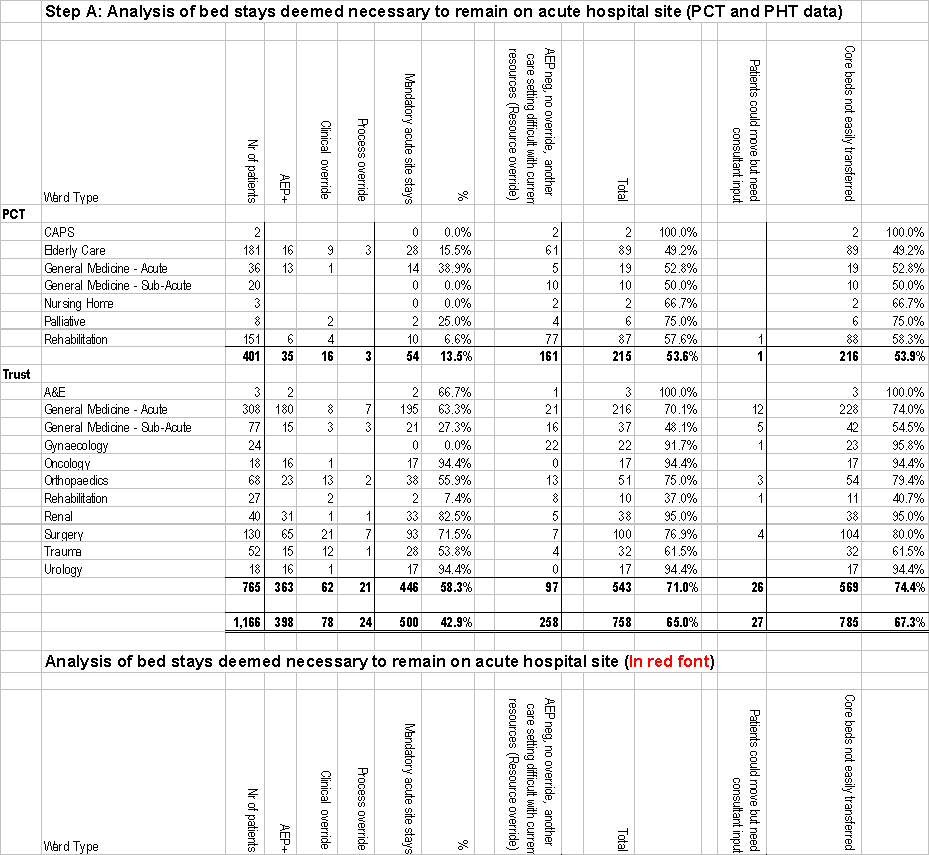
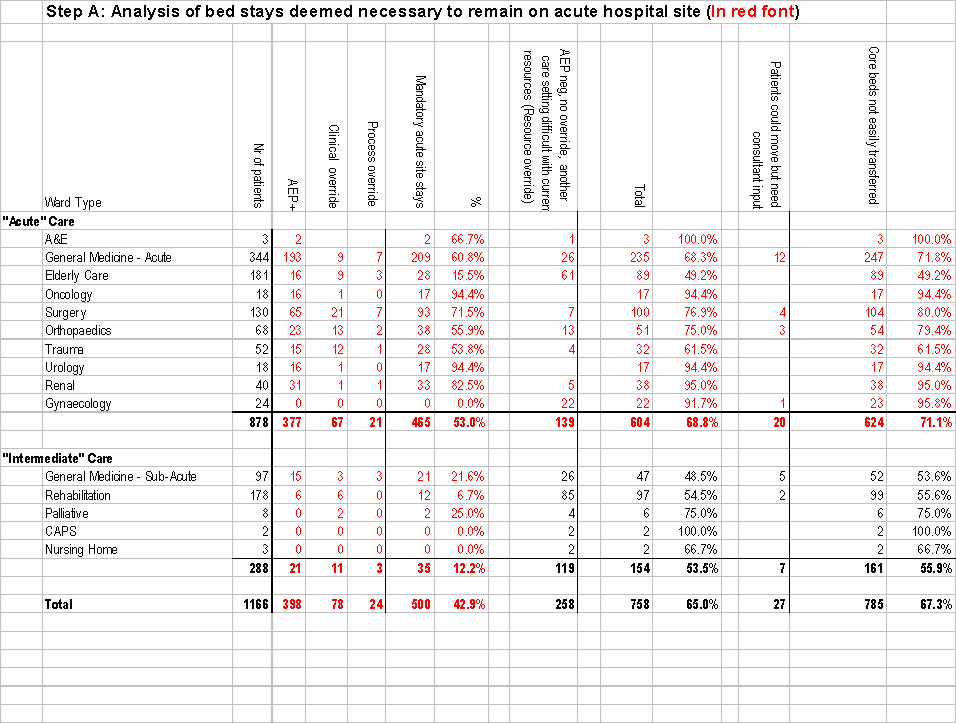
Step A: Who should remain in the acute hospital setting? (See pages 11-12 for results)
· The numbers of all AEP positive patients were identified for each specialty (total 398 patients)
· To these patients were added all those patients who were AEP negative on the day, but to whom the clinical team or auditor applied a clinical or process override to prevent a transfer off the acute site. (102 patients)
· Then a query was performed to identify all patients who failed the above tests (and therefore should theoretically be able to transfer off-site), but whom the auditors nevertheless indicated that "care could not have been provided anywhere else". (Resource override). These patients were added to the group already allocated to acute hospital stay (139 patients)
· Those patients in the currently "intermediate care" type beds and who could not transfer elsewhere (resource override) were identified (119 patients)
· The next step identified all patients who failed all above tests, but whom the auditors believed should be under the care of a consultant (20 patients on acute specialist wards and 7 on "intermediate care" wards and add these patients to the total. It may be argued that a requirement for consultant care should not be a factor in acute hospital stay or perhaps even intermediate care, but in the current configuration of health services it is a reality and would in the short and medium term act as a brake on transfers of bed days from the acute hospital.
· The remainder of the patients should be able to transfer to a community setting, whether to a community hospital, residential or nursing home, or their own home.
· No assumption is made about the medical responsibility for these patients in these alternative settings.
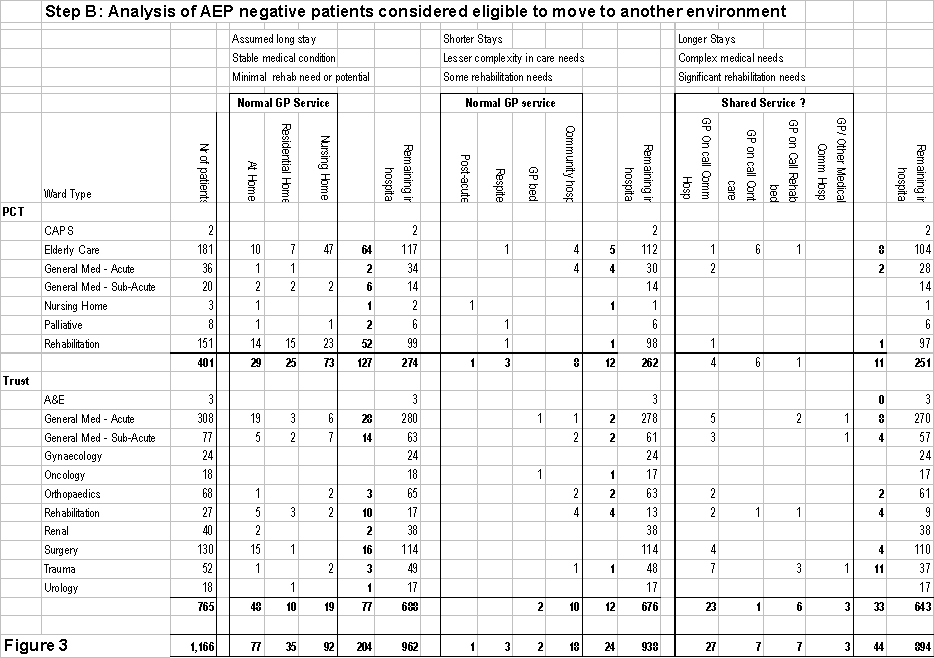
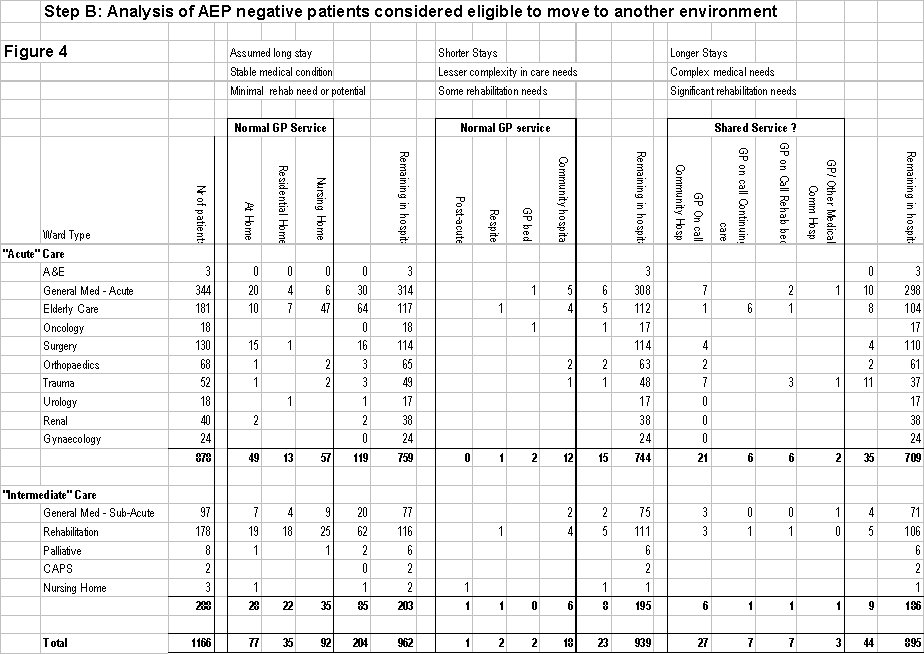
Step B: Where should patients be if they are AEP negative and eligible to move? (See pages 13-14 for results)
· All AEP negative patients who could either be at home, or a residential home or nursing home under normal GP service were selected out. (204 patients) (the added requirement for the "Normal GP service" tested the logical consistency of the auditor's decision)
· The remainder of the audited patients were queried to identify and select out those patients who would fall within the "community" group of beds (such as GP beds, respite, community hospital) and whom the auditor clearly indicated that clinical responsibility should be "normal GP service". (18 patients) This group of patients were subtracted from the total.
· From the remaining patients were selected out (44 patients) who were designated eligible for "community" beds, but whom the auditor had indicated required either "GP on call", "other medical resource" or both, implying that the normal GP in-reach service after hours had to be supplemented by some active medical support in working hours.
· The remaining group of patients (895 patients) represented those patients that would either definitely need acute hospital care, or those whose complex medical needs or rehabilitation requirements would make transfer to a community setting more or less difficult. As identified by Method A up to 659 patients still required an acute bed, leaving a group of about 236 patients that may either best be cared for in a dedicated central rehabilitation facility or distributed facilities such as community hospitals.
Step C: Consolidation of the ideal district bed model and corresponding medical cover.
· Steps A & B provide the information that can be used to draw up a matrix aligning the main groups of ideal care settings and who should ideally provided medical input or cover for those specific occupied bed days (OBD). (page 15)
· In a further step it was calculated how many patients could at present be identified that could immediately be moved from acute or post-acute care at St. Mary's Hospital to community hospital beds if those community hospital beds were in existence right now. (page 16)
· A comparison of the staff resource needs of patients at St. Mary's Hospital post-acute care facility and the community hospital patient population was performed to establish if there was a difference in the needs of these patients (page 17)
Step D: Potential for unblocking beds: how many delays could realistically be resolved to transfer beds from the acute hospital to the community? (Pages 18-20)
· Questions 2 to 6 of the Teamwork audit uncover all the concurrent processes for each patient.
· Question 7 identifies which one of these steps is the crucial rate-limiting step delaying the process.
· Where patients are still AEP positive it is assumed that any delays in investigations, procedures or referrals would not have an effect on the acute/post-acute reconfiguration of beds. Therefore certain sub-groups of AEP negative patients were examined in more detail with regards to delays in the care processes.
· The AEP negative patient sub-groups were:
· AEP negative patients on the acute site (24 patients) who had a process override applied, suggesting that discharge was intended within 72 hours. This "short stay" group could have reasons for delayed discharge quite distinct form the longer stay AEP negative patients.
· AEP negative patients on the acute site who had no clinical or process override applied, but whom the auditor still indicated could not be transferred from the current clinical setting (83 patients)
· AEP negative patients at St Mary's hospital or the community hospital who the auditors considered unable to transfer to another clinical setting due to resource constraints (165 patients)
· AEP negative patients without override who should be in a residential or nursing home (127 patients)
· AEP negative patients without override who should be at home (77 patients)
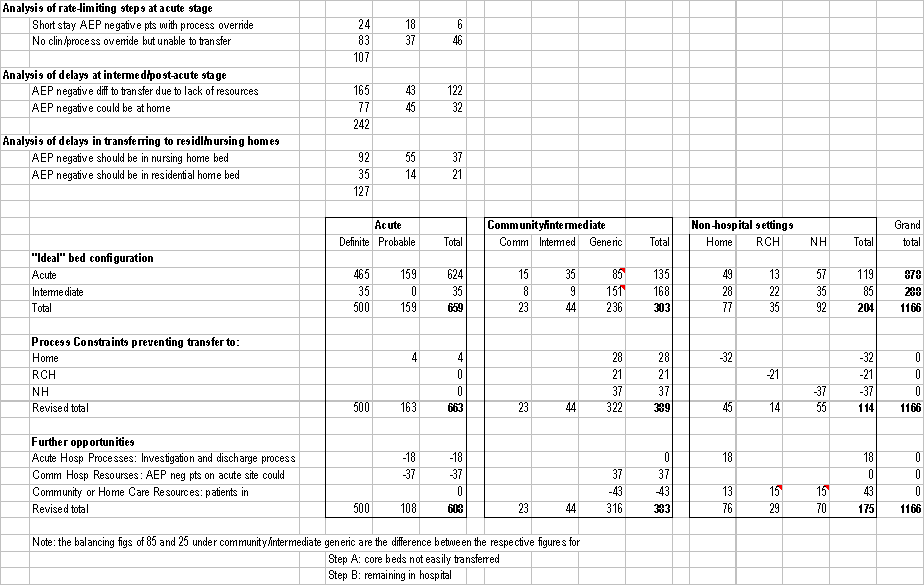
Step E: How could the beds be configured taking into account constraints and opportunities identified in Step D? (page 22)
· The "ideal" consolidated bed configuration in Step C is subjected to alterations in the bed numbers based at the acute hospital and community hospital, based on realistic assumptions of achievable changes to processes of care provision.
Step F: Testing the PFI model (see page 23 summarizing the data)
· The data from the audit cannot be used as it stands to validate the projections for the number of beds required at the PFI hospital in 2007. The following steps were followed to adjust the data to model the bed numbers .
1. The activity projections for each specialty for 2003/4 and 2006/7 were obtained.
2. The number of acute site OBDs for each specialty was adjusted by the percentage difference between 2003 and 2007 activity. This of course assumes that illness severity, clinical management and population demographics remain unchanged.
3. The number obtained was then adjusted upwards by 17.65% (100/85) to simulate 85% bed occupancy.
4. Ward or specialty types that were not audited were added back in to arrive at the final number.
5. A table was created showing comparisons exploring the outcome in bed numbers assuming different inpatient activity increases from 2003/4 levels.
Establishing clinical responsibility
· The assumption was made that 100% of AEP positive patients would require inpatient acute care under a consultant-led team.
· Patients who were deemed AEP negative and for whom the auditors did not find that either a process or clinical override applied, were subjected to further analysis to determine the medical staff resource require to care for the patient.
· These patients were placed in 2 main categories: "Normal GP service" or "Shared Service"
· The term "Shared Service" is used to identify a group of patients for whom the auditors used the U2 (Other medical resource - non-consultant) or U3 (GP on-call service) codes in the audit. It was striking that the auditors often indicated U2/U3 as if they were uncertain which code to apply. We suspect that this is due to the difficulty to envision a different configuration than the present. These cases were grouped together as it seems that auditors were of the opinion that more than the normal GP service should apply. The "Shared Service" term does not at this stage assume any specific agreement to implement joint responsibility for patients by consultants and GPs, but rather to indicate a group of patients who could have input from a either consultant, GP or resident doctor in training during normal working hours.
· Medical staff (see discussion 7.1.3 before); the audit structure does not allow us to directly calculate the workload as for the other staff working on a sessional basis with patients. However a previous AEP audit showed that a medical decision leading to an investigation, or change in management 1 in every 3 days in the post-acute setting (vs 3 decisions per day on average in the acute setting). A similar analysis could be performed on the current dataset to support the previous analysis, but was not regarded as essential to the scope of the report
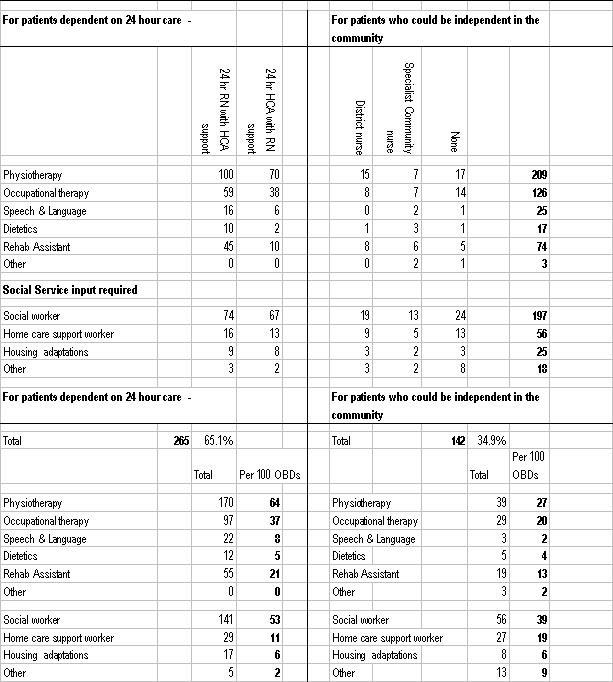
· Nursing; Auditors, who include senior hospital and district nurses amongst them were required to make a judgment, after talking to the nurses looking after each patient, whether the patient required 24 hours care, and if so, were they best cared for by a Registered Nurse (RN ) with Healthcare Assistant (HCA) support, or a HCA with RN support. If the patient did not require 24-hour care, the question was whether the patient would require district nurse or community specialist nursing input on a daily basis or none.
· Therapists; Physiotherapy, occupational therapy, rehabilitation assistant, speech & language therapy and dietetics sessions required for each day of care audited were recorded. Intensity of therapy required was also taken into account, offering the auditor the choice of twice daily, daily, 2 or more times a week, or once a week. This data allowed for the calculation of overall workload as the total number of sessions per 100 OBDs.
· Social service input; Social worker and home care support worker sessional input and the need of individual patients for housing adaptations were all accounted for to estimate the workload generated by referrals of intermediate care patients, and this workload was expressed per 100 OBDs.
· Distribution of staff resources for intermediate and community care; The data on nursing care required (24-hour care or not) were used to allocate patients to "intermediate care" or community care, except where it was clear that the patient should be in a nursing or residential home. The data on workload for therapist staff linked to each day of care is used to calculate the staff requirements per 100 OBDs to create a realistic yard stick for future staffing of community hospital beds and
Summary of results
District wide bed use and proposed configuration
Step A: Figures 1 & 2 sets out the results of applying AEP status testing for all patients currently under the care of PHT and the elderly care physicians in EH PCT at Queen Alexandra, St Mary's and the community hospitals. The end result on the right side of the table are the number of beds audited where no reason whatsoever could be found to prevent those days of care to occur at community hospital level or care in the community. The data is presented in two views: Figure 1: Portsmouth Hospitals Trust beds and PCT beds; Figure 2: "Acute" and "Intermediate" care beds.
Step B: Identifies those patients who should definitely be under the care of the GP or at most in a "shared service" setting in the community or in a community facility providing the appropriate level of care. The end result reflects the number of patients who should be in an acute of intermediate care setting.
Step C: Synthesizes a potential model of the bed configuration for the district based on the information in Steps A & B, and provides a qualified attempt to find the total number of beds that should be provided in community hospitals.
Step D: Summarises delays in different settings and stages of care identified in the audit. An attempt is made to identify the number of audited bed days that could be transferred from the current setting if realistic improvements to the processes could be made.
This exercise is fraught by supposition, but useful to illustrate the potential for changing the status quo. It also allows caution to be applied to the ideal configuration of beds in Step C: not all beds can be unblocked, some processes do take time and it is difficult to judge efficiency gains through streamlining processes of care.
A good example of this is the situation existing in the provision of nursing home beds and the access patients have to those beds. It is a common view that the nursing home provision is inadequate to cope with demand. Whilst this may be true, if taken at face value, the data from the audit would suggest that only 26 of the 92 patients who should be in nursing homes, are actually at a stage where they are simply waiting on a bed. The others are at various stages of assessment or administrative process for accepting them into a nursing home.
This would suggest that even were those 92 nursing home places available tomorrow, the patients would not necessarily transfer from NHS care. However it may also be true that as there are already a waiting list of 26 patients that is no urgency to progress with the assessment or administrative processing of the other applications. Indeed many of those patients designated "No documented plan for diagnostic procedures, treatment, or discharge planning." have been in community beds so long (years) that staff cannot even contemplate moving them to a nursing home bed even if it were available.
So a judgment has to be made how many beds can realistically be transferred to another care setting given the various obstacles.
Step E: Adjustment of the "ideal" bed configuration in Step C by transferring identified bed numbers to different care settings given certain assumptions. The main adjustments made were to take account of process constraints in realising the "ideal" care environment and to illustrate the opportunities to alter bed numbers in the main care environments by modernising care practices and processes
Step F: Adjustment of the audit figures for comparison to 2006/7 bed number projections for PFI. The audit data from November 2003 is adjusted upward for assumed uplift in activity in 2006/7. Thereafter it is adjusted to reflect the need to have 85% bed occupancy. Finally, predicted bed numbers for specialties that were not included in the audit are added in to give the final bed number.
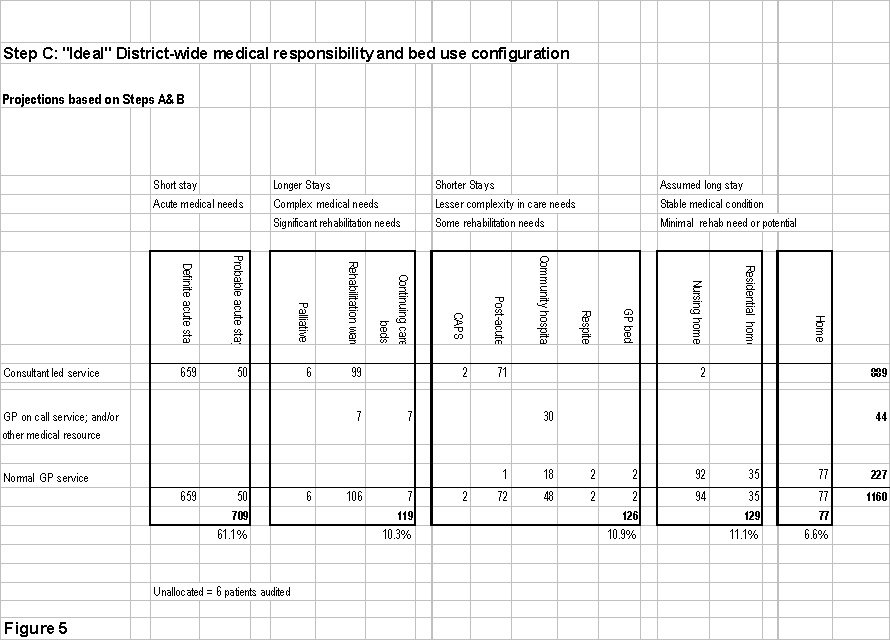
Step C: To calculate the number of required community hospital beds required the table below sets out the logical steps:
Group |
Nr of beds |
Unallocated |
Transfer potential | |
Total number of audited patients Nov 2003 |
1166 |
1166 |
||
LESS |
||||
1. |
Patient is AEP positive, or clinical or process overrides apply to keep the patient on the acute site |
500 |
666 |
Only short stay patients who have a process override applied (n=24) may benefit from improved investigation discharge arrangements. |
2. |
AEP negative patients unlikely to transfer off the acute site either due to access requirements to certain sub-specialty skills or resources |
159 |
507 |
Very difficult in the short or medium term without significant change in clinical practice or organisation of care. |
3. |
AEP negative patients considered difficult to transfer from "intermediate care" settings due to their condition, access to consultant input or other resource constraints |
126 |
381 |
Potential exits to transfer to a community hospital depending on the existence of the correct skills-mix resources and the willingness of GPs and consultants to create a "shared service" |
4. |
Patients should be in nursing or residential homes |
127 |
254 |
Difficult, depends on creation of capacity and streamlining of procedures to arrange funding. See table X for reasons these patients are still in hospital. |
5. |
Patients should be at home |
77 |
177 |
See table X for reasons these patients are still in hospital. |
6. |
Patients who could currently be cared for in community hospital setting - no constraints identified |
177 |
0 |
1. Therefore, depending on progress to provide efficient transfer of care either to nursing or residential homes, and support patients at home more efficiently, the scope for community hospitals to decant beds from the acute hospital ranges between a minimum of 177 beds up to 381 beds.
2. Should more radical re-organisation be planned, where some form of "shared service" between PHT and the PCTs is considered for patients with more complex medical or rehabilitation needs, the scope to transfer beds from the acute hospital increases to 507 beds.
3. Should residential and nursing home provision in the community increase to meet local demand and decant 127 patients currently in either Queen Alexandra Hospital, St. Mary's or community hospital beds, then the scope for community hospital bed demand would still be between 177 and 303 beds on current activity.
As these scenarios demonstrate, there is significant potential to reduce the need to admit, treat and keep patients on the acute hospital site, provided sizeable and adequately resourced facilities is made available elsewhere and the transfer of care, either between clinical teams or organisations is streamlined. It is not possible to put a definitive figure on the number of beds required at community hospitals. At most a range can be suggested, but the final number will depend on the cost of relocating those beds from existing facilities, such as St Mary's Hospital.
To illustrate this point , a table on page 16 compares the resource requirements of patient populations deemed appropriate for care at either St Mary's Hospital or community hospitals . The data would suggest that there is no difference in the needs of these patients .
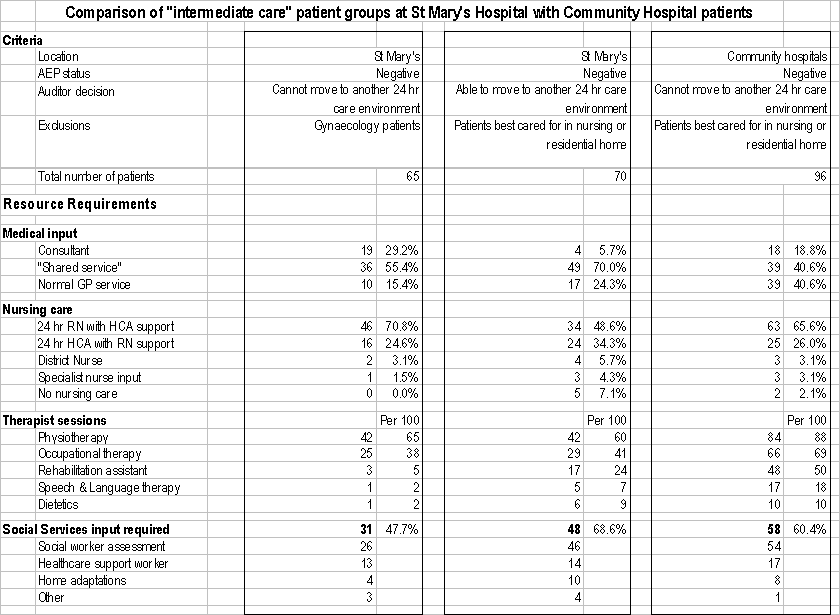
Step D:
Unblocking beds: analysis of rate-limiting steps at Acute Hospital stage
Short stay AEP negative patients with process override at acute site |
24 |
Awaiting outcome of an Inpatient Procedure or Treatment |
5 |
Awaiting scheduling of diagnostic or therapeutic procedure |
2 |
"Down" days at the hospital: procedure is not done on weekends or holidays. |
3 |
Awaiting outcome of an Inpatient Investigation |
5 |
Ultrasound investigation |
2 |
Barium study |
1 |
Nuclear study |
1 |
Echocardiography |
1 |
Awaiting outcome of an Inpatient Specialist Opinion |
4 |
Consultant opinion |
1 |
Therapist assessment/input |
2 |
Social Worker assessment |
1 |
Delay in discharge |
10 |
Patient/family delay |
1 |
Awaiting bed in another specialty or care facility |
2 |
Investigation Results awaited |
1 |
No documented plan for diagnostic procedures, treatment, or discharge planning. |
1 |
Appropriate physician review awaited (may be SHO, SpR, or consultant) |
3 |
Waiting for TTO drugs |
2 |
Potentially transferable to home or community care with provision of capacity/resources |
18 |
Likely to remain "in the system" at acute hospital site |
6 |
AEP negative patients; |
83 |
Awaiting outcome of an Inpatient Procedure or Treatment |
44 |
Premature admission |
1 |
Awaiting scheduling of diagnostic or therapeutic procedure |
5 |
"Down" days at the hospital: procedure is not done on weekends or holidays. |
1 |
Waiting for procedure or treatment outcome to become apparent |
13 |
Convalescing from an illness |
24 |
Awaiting outcome of an Inpatient Investigation |
6 |
Laboratory investigation |
1 |
Plain X-Ray investigations |
2 |
Ultrasound |
1 |
CT/MRI scan |
2 |
Awaiting outcome of an Inpatient Specialist Opinion |
13 |
Consultant Opinion |
8 |
Specialist Nurse Input |
2 |
Therapist assessment/input |
1 |
Social Worker assessment |
2 |
Delay in discharge |
20 |
Patient/family delay |
2 |
Awaiting bed in another specialty or care facility |
4 |
Investigation Results awaited |
6 |
No documented plan for diagnostic procedures, treatment, or discharge planning. |
4 |
Physiotherapist agreement awaited that patient may be discharged |
1 |
Awaiting completion of discharge documentation. |
2 |
Transport |
1 |
Potentially transferable to either commnity hospital or care in community with provision of capacity/resources |
37 |
Likely to remain "in the system" at acute hospital site |
46 |
Step D: Unblocking beds:
Analysis of delays at intermediate care/post-acute stage
AEP negative patients in elderly care, sub-acute, rehabilitation beds considered conidered difficult to transfer due to lack of resources |
165 |
Awaiting outcome of an Inpatient Procedure or Treatment |
48 |
Awaiting scheduling of diagnostic or therapeutic procedure |
6 |
Waiting for procedure or treatment outcome to become apparent |
33 |
Convalescing from an illness |
9 |
Awaiting outcome of an Inpatient Investigation |
9 |
Ultrasound |
2 |
CT/MRI scan |
5 |
Echocardiography |
1 |
Ambulant 24hr ECG |
1 |
Awaiting outcome of an Inpatient Specialist Opinion |
38 |
Consultant Opinion |
11 |
Therapist assessment/input |
15 |
Social Worker assessment |
8 |
Assessment has occurred but adequate communication to guide further diagnostic or therapeutic decisions, have not yet been received |
4 |
Delay in discharge |
70 |
Patient/family delay |
3 |
Social care package being finalised |
6 |
Housing adaptations/equipment installation |
2 |
Awaiting bed in another non-acute care environment |
7 |
Investigation Results awaited |
5 |
No documented plan for diagnostic procedures, treatment, or discharge planning. |
30 |
Occupational therapist agreement awaited that patient may be discharged |
1 |
Physiotherapist agreement awaited that patient may be discharged |
12 |
Appropriate physician review awaited (may be SHO, SpR, or consultant) |
1 |
Awaiting completion of discharge documentation |
1 |
Waiting for TTO drugs |
1 |
Transport |
1 |
Transferable to another community care facility or home with adequate resources |
43 |
Would probably remain "in the system" in intermediate care or community hospital setting |
122 |
AEP negative patients who could be at home |
77 |
Awaiting outcome of an Inpatient Procedure or Treatment |
8 |
Premature admission |
1 |
Awaiting scheduling of diagnostic or therapeutic procedure |
2 |
"Down" days at the hospital: procedure is not done on weekends or holidays. |
3 |
Waiting for procedure or treatment outcome to become apparent |
2 |
Awaiting outcome of an Inpatient Investigation |
6 |
Clinical laboratory test |
1 |
Plain X Ray investigation |
1 |
CT/MRI scan |
1 |
Nuclear study |
2 |
Echocardiography |
1 |
Awaiting outcome of an Inpatient Opinion |
7 |
Consultant Opinion |
3 |
Therapist assessment/input |
4 |
Delay in discharge |
56 |
Patient/family delay |
1 |
Social care package being finalised |
11 |
Homeless |
1 |
Housing adaptations/equipment installation |
3 |
Investigation Results awaited |
2 |
No documented plan for diagnostic procedures, treatment, or discharge planning. |
14 |
Occupational therapist agreement awaited that patient may be discharged |
6 |
Physiotherapist agreement awaited that patient may be discharged |
3 |
Appropriate physician review awaited (may be SHO, SpR, or consultant) |
7 |
Awaiting completion of discharge documentation. |
1 |
Transport |
1 |
Supported home care teams not utilised (eg Rapid response team or COPD at home) |
6 |
Transferable to home care with provision of adequate capacity or resources |
45 |
Would probably remain "in the system" at acute (4) or more likely community hospital (28) |
32 |
Step D: Unblocking beds: Analysis of delays for patients eligible to transfer to residential and nursing homes
AEP negative patients who should be in nursing home bed |
92 |
Awaiting outcome of an Inpatient Procedure or Treatment |
6 |
Patient scheduled for a diagnostic procedure or treatment (including surgery) is "bumped" from schedule, for any reason |
1 |
Waiting for procedure or treatment outcome to become apparent |
5 |
Awaiting outcome of an Inpatient Investigation |
0 |
Awaiting outcome of an Inpatient Specialist Opinion |
5 |
Consultant Opinion |
4 |
Therapist assessment/input |
1 |
Delay in discharge |
81 |
Family in dispute with Trust/HA |
3 |
Patient/family delay |
16 |
Social care package being finalised |
6 |
Adaptations/equipment installation |
2 |
Awaiting bed in nursing home |
26 |
No documented plan for diagnostic procedures, treatment, or discharge planning. |
21 |
Physiotherapist agreement awaited that patient may be discharged |
2 |
Social worker agreement awaited that patient may be discharged |
4 |
Appropriate physician review awaited (may be SHO, SpR, or consultant) |
1 |
Potentially Transferable to nursing home with adequate capacity provision |
55 |
Would probably remain "in the system" at intermediate care or community hospital level |
37 |
AEP negative patients who should be in a residential home |
35 |
Awaiting outcome of an Inpatient Procedure or Treatment |
6 |
Awaiting scheduling of diagnostic or therapeutic procedure |
2 |
Waiting for procedure or treatment outcome to become apparent |
4 |
Awaiting outcome of an Inpatient Investigation |
1 |
Plain X-Ray investigations |
1 |
Awaiting outcome of an Inpatient Specialist Opinion |
3 |
Consultant Opinion |
1 |
Therapist assessment/input |
1 |
Social Worker assessment |
1 |
Delay in discharge |
25 |
Patient/family delay |
5 |
Social care package being finalised |
3 |
Equipment installation or adaptation |
2 |
Awaiting a bed |
6 |
No documented plan for diagnostic procedures, treatment, or discharge planning. |
3 |
Occupational therapist agreement awaited that patient may be discharged |
2 |
Physiotherapist agreement awaited that patient may be discharged |
2 |
Social worker agreement awaited that patient may be discharged |
2 |
Potentially transferable to residential home with provision of adequate capacity or resources |
14 |
Would probably remain "in the system"at intermediate care or community hospital level |
21 |
Step E: Adjusting bed numbers for constraints to change and for opportunites through process changes
Step F: Projected District Bed numbers for 2006/7: Adjustment process from audit figures |
|||||||
Adjusted required bed numbers from 2003/4 AEP audit figures |
|||||||
Adult Acute beds at QAH |
608 |
||||||
Community/Intermediate care beds |
383 |
||||||
Non-hospital settings (equivalent nr of inpatient beds provided by community care) |
175 |
||||||
Adjustment for uplift in combined emergency and elective inpatient activity using weighted ratio |
5% |
10% |
15% |
||||
Adult Acute beds at QAH |
638 |
669 |
699 |
||||
Community/Intermediate care beds |
402 |
421 |
440 |
||||
Non-hospital settings (equivalent nr of inpatient beds provided by community care) |
184 |
193 |
201 |
||||
|
|||||||
Adjustment of bed numbers for 85% bed occupancy requirement |
1.1764706 |
1.17647 |
1.17647 |
||||
Adult Acute beds at QAH |
751 |
787 |
823 |
||||
Community/Intermediate care beds |
473 |
496 |
518 |
||||
Non-hospital settings (equivalent nr of inpatient beds provided by community care) |
184 |
193 |
201 |
||||
Using 10% activity uplift: |
Adult acute |
Comm/ |
Total |
Non- |
|||
intermed |
hosp |
hosp |
|||||
787 |
496 |
1282 |
193 |
||||
Add in unaudited beds/specialties |
|||||||
Maternity (QAH) |
98 |
98 |
|||||
Maternity (peripheral units) |
32 |
32 |
|||||
NICU |
34 |
34 |
|||||
Child Health |
75 |
75 |
|||||
Head & Neck Unit |
36 |
36 |
|||||
A&E observation beds (adjustment takes into account 2 AEP+ patients already audited = 9 beds) |
7 |
7 |
|||||
Private patient ward |
20 |
20 |
|||||
Elderly mental health |
200 |
200 |
|||||
Total District beds required |
1057 |
728 |
1784 |
193 |
|||
Total beds planned (PFI projections and comm hospital plans including nursing homes) |
1184 |
603 |
1787 |
? |
|||
Medical & Nursing Requirements
414 AEP negative patients were found in acute, post-acute and community hospital beds. Each of these patients needs for ongoing medical and nursing care were considered.
The findings are represented in the table below:
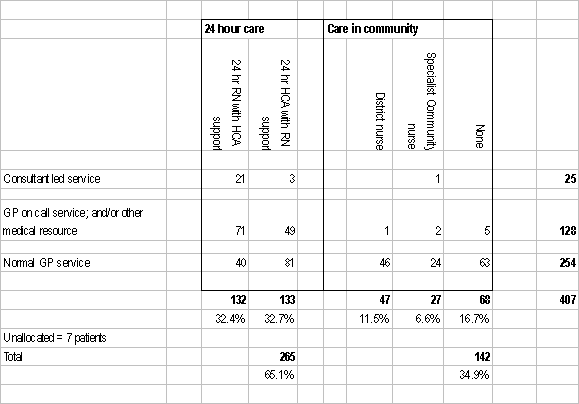
The main conclusions from this analysis are:
i) Only 65% of AEP negative patients in hospital beds at present, really need ongoing 24 hour nursing care.
ii) Very few (four) of the 142 AEP negative patients who satisfied the auditor that they could receive care in the community by a district nurse or specialist community nurse, needed other than normal GP service as medical input
iii) Only 24 (9.4%) of 265 AEP negative patients who required 24-hour nursing care, required a consultant-led service on the day of the audit. The vast majority of the 265 patients would be adequately served by either a shared service or normal GP service.
iv) Where patients required ongoing 24 hour care about half of the patients (120/256 patients) who did not require consultant input, did require more intensive input than the normal GP service. This would normally take the form of a routine ward round to address the medical needs 2-3 times per week by a trainee or trust doctor.
v) Patients requiring 24-hour nursing care were equally likely to require that the nursing care is primarily provided by a registered nurse (RN ) or health care assistant (HCA) supported by a RN. This has important lessons for staffing post-acute and community hospital beds
Therapy and Social Services support
The main determinant of the configuration of post-acute, rehabilitation and long-term care is whether or not a patient requires ongoing 24 hour nursing care. It was found that about 65% of those who remained in hospital beds after their acute illness due to dependency or frailty, required 24- hour care on the day of the audit. As seen previously, the majority of these patients could receive care at the community hospital level. The remaining 35% could function independently in the community provided they are properly supported by health and social workers.
The table below sets out the requirements in sessional commitments per audited OBD and summarised as the number of sessions required per 100 OBDs.
Conclusions
i. The analysis indicates a total bed requirement for the locality (excluding adult mental health) of 1057 acute beds and 728 intermediate or community hospital beds, with a further 193 patients supported at home or in nursing/residential care homes
ii. Current plans for beyond 2007, detailed in the Portsmouth and SE Hampshire capacity map, are for 1184 acute beds and 603 community hospital beds, of which 193 would be provided in nursing homes or nursing home type environments.
iii. Acute site bed provision for the PFI
a. The audit data suggests that the current provisions should comfortably contain all acute activity in 2007 and for at least 5 years beyond.
b. The most likely scenario suggests that there would be around 120 beds in excess of requirements for acute patients at QAH in 2007, which would allow some provision on-site for intermediate care patients until capacity is developed elsewhere.
c. These statements are qualified and rely upon:
i. Incremental improvements to inpatient processes especially investigation capacity and discharge arrangements.
ii. Adequate capacity of alternative care environments especially enhanced home care nursing and therapy support, enhanced community hospital facilities and staffing, and nursing home provision.
iii. Access to post-acute beds off the acute site should be no slower or difficult to access than transfers to St Mary's Hospital are at present.
iv. A district-wide real time bed management system is in place
iv. Intermediate/community hospital provision
a. Forecast demand for intermediate and community beds exceeds current plans. However, there is scope as described above for providing such care on the QAH site in the medium term. It also seems reasonable to anticipate further shirts in care from hospital settings to providing care at home.
b. On this basis there does not seem to be an established need to increase provision from current plans or to develop St Mary's as a centralized post-acute facility.
c. These statements are qualified and rely upon the ability to support around 190 patients at home through:
i. Some expansion of the residential and nursing home capacity in the district equivalent to about 110-120 beds.
ii. Expansion of the district nurse and community therapy capacity to support the equivalent of 80-90 additional patients in the community.
v. Community care capacity
a. This audit did not estimate how much district nurse, community specialist nurse, and therapist provision would have be needed to support 80-90 more patients with an unknown LOS in this "virtual ward".
vi. The wildcard scenario is that much more robust community care systems, more tightly integrated with acute and intermediate care could halt the annual rise in acute admissions. Some health regions have shown that up to 10% reduction in acute admissions is possible. Certainly an audit of admissions to PHT in Dec 2003 showed that at least 10%, but up to 20% of acute admissions are potentially avoidable.
There is a need to rationalise and streamline the various types of beds and schemes in existence through the health economy
i. The audit data reveal the small numbers of patients that the auditors, who were all experienced clinical staff from different disciplines, allocated to certain categories such as "Respite care", "GP beds", " Non-consultant led wards", "Continuing care" etc. This could suggest that
a. the purpose of these beds are not well understood, or
b. there is a perceived barrier to using them or
c. that there is not a great need to distinguish between these separate categories.
It could be argued that ring-fencing beds for this type of use create artificial barriers related to funding mechanisms. This has nothing to do with the clinical needs of patients, but deter flexible use of these beds, as clinicians are influenced by these considerations.
ii. In contrast "community hospital bed" as a concept seems well understood and used for arguably the same type of patient.
iii. A comparison of AEP negative patients cohorts deemed appropriately cared for at St Mary's Hospital and the community hospitals,
d. Does not show evidence of different resource requirements in terms of nursing care, medical input or social services input.
e. If any difference existed, it seemed as if the community hospital cohort was more dependent, requiring greater therapist input.
f. There is no evidence to suggest that physicians consistently use St. Mary's Hospital for a patient population with more complex needs than patients sent to community hospitals.
g. This would suggest that so-called "intermediate care" could and is already in part delivered at community hospitals.
h. Having an additional tier of intermediate care at a central facility like St Mary's is likely to engender additional transfers for patients, with little clinical gain.
iv. During the audit the impression was gained that the level of nursing care required created transfers between non-acute facilities and led to acute hospital admissions. There were anecdotal examples where patients normally requiring 24 hour health care assistant (HCA) care with registered nurse (RN) support had to be transferred because their dependency had changed to 24 hour RN care with HCA support.
v. The proposal is that the types of beds are simplified so that only these criteria are taken into account to devise a flexible and streamlined bed management system.
a. The need for significant rehabilitation with complex medical needs that needs specific consultant skills and require specialised facilities.
b. The need for 24 hour nursing care, whether by RN or HCA (See point v. below)
c. The need for active day time medical input in patients with evolving medical needs.
There is a need to rethink the model of care that moves patients around to access medical, nursing and therapist skills
i. Traditionally boundaries and artificial steps causing patient transfers were created when criteria such as medical responsibility and bed ownership (GP vs consultant "beds") and nursing care level ( 24 hour RN vs 24 hour HCA with RN support) were used. In both cases the model should be reversed and the specific staff resource should be brought to the patient.
ii. Medical opinion and responsibility in intermediate care could be in the form of the "shared service" concept which envisages flexible input from either consultant or GP as the main responsible clinician , with a junior doctor in training providing the continuity, without the patient actually having to be physically transferred to another bed when care is handed over from GP to consultant or vice versa.
iii. It is crucial to rethink the role of the junior doctor in the intermediate care setting.
a. Experience so far at the post-acute facility at St. Mary's Hospital suggests that they are neither fully occupied nor find the posts educationally rewarding as it is currently structured.
b. There is nationally a move to introduce the Foundation training programme for junior doctors to achieve broader training, with some time, up to a year spent doing GP practice attachments.
c. There is potentially a role for caring for patients in the community hospitals whilst doing an attachment to a GP practice. They could also be involved in providing home visits for patients discharged earlier from hospital, liaising with the GP, hospital team, district nurses and therapists as required.
d. In such a role they would act as the "glue" between busy GP's and visiting consultants, an attractive proposition to these groups who would be faced with the challenge to assume care for more patients in the intermediate care and community care setting.
iv. Nurse staffing of facilities should be arranged in such a way that a patient may be flexibly cared for by nurses with the appropriate skills level.
a. It is noteworthy that the 265 AEP negative patients who could move to a less acute setting and who required 24 hour nursing care were evenly allocated to either 24hr RN or 24 hr HCA care.
b. This suggests that community hospitals should be staffed with equal numbers of RNs and HCAs and care of patients allocated appropriately within that staff complement.
c. Consideration should be given to expanding the links between community hospitals nursing teams and community care teams to provide continuity of care especially for very dependent patients of the type that often come under the Continuing care umbrella.
v. Therapists of all variety of skills, but especially physiotherapist are required in the community care setting, if larger numbers of patients were to be successfully moved to the home care environment. There are significant numbers of patients who to not need 24 hour nursing care, but who would maintain their mobility and quality of life at home if they had more access to these services at home.
Thanks
Authors: Dr Paul Schmidt
Clinical Project Lead
Medical Assessment Unit
Clare Moriarty
Whole Systems Director
Portsmouth & SE Hants Health & Social Care Community
Contact: [email protected] Tel 023 9228 6000 ext 1902
[email protected] Tel 023 9228 6376
Date of report: September 15, 2004
Distribution: Coalition Board members
Appendix B
HAMPSHIRE PRIMARY CARE TRUST
FUTURE HEALTH SERVICES FOR FAREHAM & GOSPORT: PHASE TWO
Evidence of Informing & Engagement Involvement
Black: Patient, Public & external Stakeholder Activity Blue: Activity with Staff & internal stakeholders
Date |
Time |
Venue |
Type of Meeting e.g. community group/ staff groups |
Attendees e.g. representatives from PPIF, League of Friends, Patient Groups, Resident Assoc, Community Groups (no. of people present) |
Presented by |
Comments/ views (What key issues were raised, what went well, not so well, any outcomes or follow up activity) |
30-1-06 |
8.30 - 10.00 am |
F&G PCT HQ, Fareham Reach, Fareham |
Planning: Project Communications Group: First meeting - update on Future Health Services Project and structure, discussed Terms of Reference for this group, began work on Communications and PPI Plan |
Inger Hebden - Director of Primary Care & Capital Planning, Fran Buxey - Project Manager, Sue Galley - Head of External Communications, Nick Birtley - PPI Manager |
Agreed Terms of Reference. Communications Plan to be drafted. Next meeting 27-2-06 | |
27-2-06 |
9.30 - 11.00 am |
EH PCT HQ, Raebarn House, Waterlooville |
Planning: Project Communications Group: Outline of project developments, updated project structure diagram, identified key stakeholders for Communications and PPI Plan. How to proactively engage Hampshire Overview & Scrutiny Committee (OSC) discussed |
Inger Hebden - Director of Primary Care & Capital Planning, Fran Buxey - Project Manager, Sue Galley - Head of External Communications, Nick Birtley - PPI Manager |
Communications Strategy to be drafted by Sue Galley. Agreed to develop range of mechanisms to inform staff and local people, in addition to PCT website Local Councillors, PPI Forum, Fareham Community Action and Gosport Voluntary Action already members of the Overall Project Steering Group. | |
2-3-06 |
Informing & Planning: Gosport Partnership Co-ordination Group pre-meeting: Agreed Phase 2 to be discussed at Gosport LSP on 15-3-06 |
Ian Lycett |
Inger Hebden - Director of Primary Care & Capital Planning |
Agreed | ||
15-3-06 |
Gosport Townhall |
Informing: Gosport Local Strategic Partnership: Update on progress since Phase 1, outline of project elements and next steps |
Inger Hebden - Director of Primary Care & Capital Planning |
Stated that Gosport Borough Council will be as supportive as possible | ||
3-4-06 |
9.30 - 10.45 am |
EH PCT HQ, Raebarn House, Waterlooville |
Planning: Communications Group: Update on project progress, further work on draft Communications & PPI Plan for project |
Inger Hebden, Fran Buxey - Project Manager, Sue Galley - Head of External Communications, Nick Birtley - PPI Manager |
Communications & PPI Plan to be circulated for further comment Next meeting 24-3-06 | |
19.4.06 |
6.30 - 8.00pm |
GWMH |
Informing: League of Friends Committee members - update on proposals for reorganisation of SHA and PCT. Update on plans for redevelopment of GWMH. |
Brenda Sharp, Margaret Tyrrell, Philip Gray: |
Inger Hebden, Fran Buxey |
No one person perceived to be in charge of the Hospital. Please produce a leaflet giving numbers to ring for local PCT services. Consider patients as individuals when planning future care. |
20.4.06 |
9.30am-12.30pm |
Dame Judith Professional Centre, Cosham |
Informing: Joint PCT Board briefing (non-public). Update on Future Health Services Phase 2 |
Inger Hebden |
||
21.4.06 |
- |
Informing: Global e-mail issued for the attention of East Hampshire, Fareham & Gosport and Portsmouth City PCTs Update on Planning Future Health Services for Fareham and Gosport |
All staff |
No feedback | ||
3.5.06 |
Press release |
Informing: The public |
The public |
No feedback | ||
6.5.06 |
- |
Informing: G&F Joint Health Panel Agenda item: Future Health Services for Fareham and Gosport |
Inger Hebden |
|||
9.5.06 |
11.15am-12.45pm |
EHPCT HQ, Raebarn House, Waterlooville |
Planning: Communications Group. Update on projects development. |
Inger Hebden, Fran Buxey, Sue Galley, Nick Birtley |
Draft of letter to database of interested public and flyer for general information. Draft of general health information leaflet. | |
10.5.06 |
11.30am-12.30pm |
Titchfield Community Centre |
Informing: Fareham& Gosport Patient & Public Involvement Forum About plans for the remodelling of GWMH/GHC |
Inger Hebden |
||
10.5.06 |
- |
Telephone call |
Informing: Denise Holden, Business Manager, HCC Health Review Committee Update on plans for the remodelling of GWMH/GHC and GWMH as likely preferred site for new GP surgery. |
Inger Hebden |
Key points from DH were Keep OSC informed of changes. There should be no `permanent' loss in service delivery terms. Anticipate areas which are likely to cause concern-car parking and traffic | |
11.5.06 |
- |
Telephone call |
Informing: Ian Lycett, Chief Executive, Gosport Borough Council of plans for the remodelling of GWMH/GHC |
Inger Hebden |
IL will arrange for the three party leaders to get together to receive a presentation. | |
11.5.06 |
- |
Telephone call |
Informing: Lesley Humphrey, Manager for Older Peoples Services of plans for decant of wards from GWMH to RHH |
Inger Hebden |
||
30.5.06 |
1.00pm - 3.00pm |
F/G PCT Boardroom, Fareham Reach |
Informing: Gosport Partnership of plans for remodelling GWMH |
Inger Hebden |
||
31.5.06 |
12.45-14.00 pm |
Seminar Room, GWMH |
Informing: Presentation to staff of plans for remodelling of GWMH/GHC |
Staff of GWMH and GHC |
Inger Hebden Phil Street Fran Buxey |
Further presentation to be arranged. Plans to be posted up round the hospital |
14.6.06 |
2.30 - 4.00pm |
F/G PCT Boardroom, Fareham Reach |
Planning: Monthly meeting of GWMH/GHC Decant Group |
Decant Group plus clinical heads of service from GWMH/GHC |
- |
See minutes |
21.6.06 |
3.00 - 4.30pm |
Gosport Disability Information Centre |
Informing: Fareham and Gosport Hard of Hearing Action Group (FAGHOHAG) Redevelopment of GWMH |
As aside |
Fran Buxey |
Electronic signs cannot be seen by partially sighted. Call systems cannot be heard by the deaf (loop system?) Do reception staff know how to work the loop systems? Access issues during construction for sensory clients |
w/c 26.6.06 |
2nd class post |
Informing: Update on Future Health Services plans issued to people on a database compiled during FHS consultation |
600+ members of the public |
FHS Comms Group |
||
26.6.06 |
7pm |
Seminar Room, GWMH |
Informing: Community group on Presentation of plans for remodelling GWMH/GHC |
Members of the GWMH LOF Committee x 10 |
Inger Hebden Phil Street Fran Buxey |
Plans do not include replacement of service in Redclyffe |
29.6.06 |
Informing: Local authority run group on Update on Future Health Services |
Joint Health Liaison Panel |
Inger Hebden |
|||
July 06 |
- |
July Briefing |
Informing: Gosport War Memorial Hospital Outline Business Case including details of the proposals |
E-mailed cluster wide |
||
17.8.06 |
9am |
Vision Meeting Room, SJH |
Informing: Staff group on Redevelopment of GWMH |
Portsmouth City Management Team (Judy Hillier) |
Phil Street |
|
12.9.06 |
10am |
SJH |
Informing: Staff group on Redevelopment of GWMH |
Estates Maintenance Team |
Phil Street |
|
13.9.06 |
11.30am |
Crofton Community Centre, Stubbington |
Informing: Community group on Redevelopment of GWMH |
Fareham and Gosport PPIF and members of public |
Inger Hebden Fran Buxey John Kirtley |
|
25.10.06 |
- |
By e-mail via GHC GP Practice Manager |
Informing: Dr E Beale as Chair of the Gosport Medical Committee Update on planning for the redevelopment of GWMH |
- |
Fran Buxey |
|
27.10.06 |
16:03 |
Global e-mail |
Informing: Global e-mail to PCPCT and HantsPCT(SE) Update on planning for the redevelopment of GWMH |
Staff of PCPCT and HantsPCT (SE) |
Fran Buxey |
|
2.11.06 |
2pm |
Boardroom, Raebarn House |
Informing: PPIF Steering Group Update on planning the redevelopment of GWMH |
Fran Buxey |
||
22.11.06 |
- |
Informing: Fareham and Gosport Hard of Hearing Action Group Update on planning the redevelopment of GWMH |
Briefing paper e-mailed to Chair for Group members |
Fran Buxey |
||
22.11.06 |
2.30pm |
Civic Offices, Fareham |
Informing: TPE Task Group (NetworkFareham) Update on planning the redevelopment of GWMH and plans for Fareham Community Hospital |
Briefing paper distributed to Group members |
Fran Buxey |
|
November 2006 |
- |
Update letter to all patients |
Informing: Redevelopment of GWMH: Decant of services |
Made available throughout GWMH and GHC. |
Fran Buxey |
|
30.03.07 |
7.15pm |
Radio Haslar |
Informing: Radio Haslar live interview on Redevelopment of GWMH |
Audience circulation on wards GWMH and RHH Haslar |
Inger Hebden |
Will there be enough beds. |
March 2007 |
- |
Update letter to all patients |
Informing: Redevelopment of GWMH: Decant of services |
Made available throughout GWMH and GHC. |
Fran Buxey |
|
March 2007 |
- |
Update letter to GWMH LOF |
Informing: Redevelopment of GWMH: Decant of services |
Secretary of the GWMH LOF |
Fran Buxey |
|
March 2007 |
- |
E-mail bulletin and Staff Briefing |
Informing: Redevelopment of GWMH: Decant of services |
PCPCT, Hampshire PCT, PHT, Hampshire Partnership Trust |
Fran Buxey |
|
10.04.07 |
5pm |
Havant Borough Council |
Informing: Provision of facilities in Havant Borough - Oak Park Community Hospital |
Members of the Environment and Community Board |
Inger Hebden John Gummerson |
Advance questions: _ Progress of scheme _ No of beds _ Size of hospital - premature decision _ Transport infrastructure |
26.4.07 |
Article in The News |
Informing: Redevelopment of GWMH: |
||||
29.4.07 |
Announcement in news bulletin, Radio Solent 9am Sunday 29.4.07 |
Informing: Redevelopment of GWMH: |
||||
May 2007 |
The Town Crier |
Informing: Redevelopment of GWMH and decant of services |
||||
4.5.07 |
Midday |
GWMH |
Informing: Staff on redevelopment of GWMH - FBC stage |
Inger Hebden, Phil Street, Fran Buxey |
||
30.5.07 |
Midday |
GWMH |
Informing: Staff on redevelopment of GWMH - FBC stage |
Inger Hebden, Phil Street, Fran Buxey |
||
June 2007 |
- |
Coastline |
Informing: Redevelopment of GWMH: Decant of services |
Delivered to 35,500 homes in Gosport |
Fran Buxey |
|
5.6.07 |
6pm |
GWMH |
Informing: About ward moves |
Meeting for carers and relatives |
Keith Dean Vivien Alexander Yvonee Astridge Fran Buxey |
|
29.6.07 |
12pm |
Committee Room, Thorngate Halls |
Informing: Meeting with Chairman, Treasurer and CEO about Redevelopment of GWMH |
As aside |
Inger Hebden and Fran Buxey |
Liaison contact numbers for GCA were given. GCA asked GWMH not to put up signs telling people there is parking at Thorngate when GWMH car park spaces decrease. |
6.7.07 |
7.30pm |
Radio Haslar |
Informing: Interview by Radio Haslar ON Redevelopment of GWMH |
Fran Buxey |
||
27.9.07 |
4pm |
Fareham Borough Council offices |
Informing: Seminar for elected members of Fareham Borough Council on Fareham Community Hospital |
Elected members of Fareham Borough Council Scrutiny Board |
Inger Hebden |
|
16.10.07 |
11am |
Transport for South Hampshire Joint Committee, Winchester Guildhall |
Informing: Strategic direction and major developments |
Stakeholders - public, statutory and voluntary organisations |
Inger Hebden |
|
16.11.07 17.11.07 |
2pm-8pm 10am-5pm |
Brookfield School |
Informing: Public exhibition re issues consultation on the future development of the wider Coldeast site organised by FBC with formal input from PCT. |
Members of the public |
Staged by FBC |
30 attended Friday 80-100 attended Saturday |
12.11.07 |
- |
FBC area |
Informing: Leaflet providing a summary of the planned development of the Coldeast site and the issues |
80 organisations and interested parties. 17,000 households |
Distributed by FBC |
|
14.11.07 |
- |
E-mail circulation |
Informing: FCH LIFT Stage 1 Executive Summary |
PHT, HPT, PCT Board (Nov) |
Inger Hebden |
|
27.11.07 |
Attendance |
Health OSC on Fareham Community Hospital |
Members |
Inger Hebden |
FCH beds | |
18.12.07 |
Circulation |
Redevelopment of GWMH - update letter to patients |
GWMH, Gosport Medical Centre, CHS, Wards F2/F3. GBC, PPIF, LOF (GWMH&Haslar), FHS Steering Group |
Fran Buxey |
||
18.12.07 |
PCT website Staff Briefing |
Redevelopment of GWMH - update |
Public and staff |
Fran Buxey |
||
11.01.08 |
8am |
SJH |
Informing: Meeting to update on FCH and need to reprovide for Child Health team base off Coldeast site |
Judy Hillier and Aileen MacNaughton |
John Kirtley Fran Buxey |
Need for transformation not reprovision. Ideal to reprovide base big enough for Cons Paeds, paed therapists and School Nurses and ability to see patients also. |
16.01.08 |
7.30pm |
Warsash Residents Association |
Informing: Fareham Community Hospital |
Public |
John Gummerson |
Awaiting minutes |
18.1.08 |
Gosport PBC |
Informing: Update on redevelopment of GWMH |
Fliss and Brenda Woon |
Inger Hebden |
Advising if any space that could be utilised for use under PBC | |
January 08 |
7pm |
Fareham Community Action Team (led by Fareham Borough Council) |
Informing: Fareham Community Hospital |
Members of Fareham Borough Council and the public |
Inger Hebden |
|
29.1.08 |
7pm-9pm |
Sarisbury Green Residents Association |
Informing: Fareham Community Hospital |
Public |
John Gummerson |
Awaiting minutes |
20.3.08 |
Boardroom, Raebarn House |
Informing: Capacity Meeting update to Stakeholders |
Inger Hebden |
|||
16.5.08 |
1pm |
HPCT Staff Update |
Informing: Fareham Community Hospital |
Web-based newsletter on HPCT Intranet |
||
16.5.08 |
1pm |
Public and staff |
Informing: Fareham Community Hospital |
Article on website |
||
19.5.08 |
Informing: Delivery of letters to residents about public exhibitions for Fareham Community Hospital. Posters displayed around the area Posters and fliers delivered to surgeries, community centres, health centres, pharmacies, dentists, opticians, Fareham Society, Portchester Society. Fliers sent to FHS stakeholders and Steering Group members. |
|||||
22.5.08 |
2pm |
Civic Offices |
Informing: Pre-application presentation to FBC on proposals for FCH |
FBC and Members |
Design team and PCT |
|
27.5.08 |
9.30am - 1.30pm |
Portchester Community Centre |
Informing: Public exhibition of planning proposals for FCH |
|||
29.5.08 |
1pm - 5pm |
Sarisbury Community Centre |
Informing: Public exhibition of planning proposals for FCH |
|||
31.5.08 |
10am - 2pm |
Ferneham Hall, Fareham |
Informing: Public exhibition of planning proposals for FCH |
|||
5.6.08 |
7.30pm |
Burridge and Swanwick Residents Association |
Informing: Fareham Community Hospital |
Public |
Inger Hebden |
|
1.8.08 |
Raebarn House |
Informing: Fareham Community Hospital |
Pre-recorded interview with Quay Radio |
Inger Hebden |
Birthing Centre for Fareham | |
8.8.08 |
1.30pm |
Fareham Reach |
Informing: District General Hospital for Gosport and Capacity Plan |
Peel Common Residents Association, Mr Hart, Peggy Radford |
Inger Hebden and FB |
Loss of Haslar and increase in housing allocation |
24.9.08 |
2pm |
Crofton Community Centre |
Informing: Phlebotomy services. Physiotherapy treatments. Fareham Community Hospital. |
Fareham and Gosport Interim Patients Network |
Inger Hebden |
|
27.10.08 |
8.00pm |
RC Church Hall, Bells Lane, Hillhead |
Informing: Hospital situation around Hillhead and Haslar |
Hillhead Residents Association |
Inger Hebden |
Councillors were there and read out Peter Viggars letter stating that PCT is actively looking to re-use RHH. I was asked to respond after my talk on changes in local hospitals and said that we were fully engaged in the Enquiry by Design process and that we were looking at services that could be provided for local people such as cardiac rehab programmes but all of the current health services are being reprovided and that work has been taking place for some time. Inevitably the public wanted to know what would happen to Haslar and one lady was annoyed that I had not given them a clear answer on that - at that point both the Chair and Councillor bailed me out and said that it was not my job to plan for the future use of RHH.. progress in deed! Phlebotomy came up and I dealt with it and the inevitable car parking but I tackled beds and theatres in my presentation so that was not really a big issue during questions but was touched upon. |
Appendix C
OAK PARK COMMUNITY HOSPITAL
Evidence of Informing & Engagement Involvement
Date |
Time |
Venue |
Type & nature of communication e.g. name of group/meeting/community group/ staff groups management information/briefing/email/staff update/radio interview/TV interview/press |
Attendees e.g. representatives from PPIF, League of Friends, Patient Groups, Resident Assoc, Community Groups (no. of people present) |
Presented by |
Comments/ views (What key issues were raised, what went well, not so well, any outcomes or follow up activity) |
16/10/07 |
11 am |
Winchester Guildhall |
Transport for South Hampshire Joint Committee |
Public, statutory and voluntary organisations |
Inger Hebden |
|
29/10/07 |
09.00 |
Committee Room 1, HBC |
Havant PCT Consultation |
HBC, SCS, PCT, DTZ, Urban Practitioners (approx 10 people) |
Inger Hebden |
General overview of LIFT projects. Financial implications. |
15/11/2007 |
09.30 |
Civic Offices, HCC |
HCP Board Meeting |
Councillors, HCC, Police, Community Board Reps, HBC, PCT (approx. 14 people) |
Cllr Tony Briggs, Chairman |
Explanation of delays in scheme. Benefits and role of LIFT. Timetable of scheme. |
27/11/07 |
10.00 |
HCC offices, The Castle, Winchester |
Hampshire Overview And Scrutiny Committee Meeting |
PCT, Councillors, HCC |
Inger Hebden |
OP Business Case presentation. Concerned about variation from original specification. |
18/01/08 |
Telephone Call to PCT |
Telephone enquiry from Ann Buckley, Councillor, HCC |
Marie Preston |
Concerned OPMH beds no longer included in OPCH development as reported at Hampshire Overview and Scrutiny Committee Nov 07. Informed that this was incorrect and OPCH would have 24 OPMH beds, replacing OPMH beds on BAW at SJH which will close. | ||
5/2/08 |
Hampshire Overview And Scrutiny Committee Meeting |
PCT, Councillors, HCC |
Richard Samuel |
|||
4/2/08 |
6.00 pm |
Cowplain Activity Centre |
Waterlooville North Community Board |
Community Groups, Police, HBC, Cllr's, PCT |
Inger Hebden |
See minutes |
22/02/08 |
TBC |
TBC |
Havant and Bedhampton Community Board |
Councillors, HCC, Public |
TBC |
Letter received requesting attendance to a Board meeting to discuss the PCT Strategic Planning in the area |
15/4/08 |
2pm |
EVCH |
EVCH/HWMH Steering Group |
Councillors Resident association reps |
Inger/Marie |
Update on OPCH. Bi-monthly meetings which MP will attend |
13/5/08 |
6.30pm |
Clanfield Junior School |
Clanfield, Horndean & Rowlands Castle Community Forum |
PCT, District and Parish Councillors, local residents |
Inger Hebden/Marie Preston |
|
15/5/08 |
Quay Radio |
Inger - interview |
||||
29/5/08 |
6 pm |
Havant BC Offices |
Havant BC Development Control Forum - briefing on the PCT's Public Engagement Plan |
Council members - presentation of scheme prior to planning permission being sought |
Inger Hebden/Marie Preston/RPS/Nightingales/LIFT |
|
02/06/08 |
10.00 - 2.00 |
Havant Leisure Centre |
Public Exhibition for OPCH Public Engagement Exercise |
Members of the Public, Councillors, Local organisations |
Marie/Inger/John G/RPS |
Please refer to Feedback reports |
05/06/08 |
10.00 - 2.00 |
Emsworth Community Hall |
Public Exhibition for OPCH Public Engagement Exercise |
Members of the Public, Councillors, Local organisations |
Marie/Inger/John G/RPS |
Please refer to Feedback reports |
07/06/08 |
10.00 - 2.00 |
Waterlooville Community Centre |
Public Exhibition for OPCH Public Engagement Exercise |
Members of the Public, Councillors, Local organisations |
Marie/Inger/John G/RPS |
Please refer to Feedback reports |
10/06/08 |
2.00 - 6.00 |
Hayling Island Community Centre |
Public Exhibition for OPCH Public Engagement Exercise |
Members of the Public, Councillors, Local organisations |
Marie/Inger/John G/RPS |
Please refer to Feedback reports |
16/6/08 |
6.30 pm |
Leigh Park Community Centre |
Leigh Park Community Board |
Inger/Marie GA LIFT/Greg Jones RPS/Nightingales |
Cancelled by LPCB Chair | |
18/6/06 |
2.30pm |
Havant Borough Council |
Havant and Bedhampton Community Board |
Public |
PCT/RPS/LIFT/Nightingales |
Other community boards will be invited so no need to plan other presentations |
19/6/08 |
12 noon |
Raebarn |
Capacity Mapping Stakeholder Event |
Cllrs Emsworth Residents Association Friends of Emsworth Hospital Gosport Voluntary Action Fareham Community Action Havant Age Concern |
Inger Hebden |
|
19/6/08 |
7 pm |
Methodist Church, Petersfield Road, Havant |
Oak Park Residents Association |
Public |
Inger/Marie |
|
16/7/08 |
2.30 |
HBC |
Havant & Bedhampton Community Board |
Inger/Marie |
Probably not required - d/w Inger | |
25/07/08 |
Mr Hart - [email protected] 2 Honeysuckle Close, Gosport, PO13 0DY |
Marie Preston |
Sent a copy of the Hospital Capacity Plan | |||
14/7/08 |
8 pm |
8 Barn Close Emsworth |
Friends of Emsworth Hospital |
Marie/Inger/Elizabeth |
Update OPCH EE to collate list of equipment donated by Friends | |
21/08/2008 |
15.25 |
Contact from Will Parsons from East Hampshire CC and discuss areas hospitals serve. |
Council Communications Officer |
Marie Preston |
MP contacted and provided update on OPCH | |
02/09/2008 |
18.30 |
EHDC offices, Penns Place, Petersfield |
Presentation to Community Forum (Petersfield, Liss and surrounding villages) |
Councillors |
Inger Hebden |
Awaiting feedback report |
23/9/08 |
HCC Winchester |
Hampshire Overview & Scrutiny Committee |
Public, councillors, stakeholders |
Richard Samuels |
Briefing OPCH development | |
29/9/08 |
3 pm |
Emsworth Hospital |
Emsworth & Havant Steering Group |
EE/JH/IH/MP |
Models of Care | |
13/10/08 - 22/10/08 |
Hvant Civic Offices |
Pre Planning Application Public Exhibition (unmanned) |
All |
Nightingales/RPS |
||
21/10/08 |
2 pm |
Emsworth Hospital |
Emsworth & Havant Steering Group |
MP/IH |
||
27/10/08 |
Emsworth Residents Association |
Resident Reps Councillors PCT reps |
Models of Care/OPCH - EE/IH/MP/JW |
|||
13/11/08 |
7.00 |
Havant Methodist Church |
Oak Park Residents Association |
Residents Councillor PCT Rep |
MP |
Briefing OPCH development - Issues - car parking adjacent roads - construction traffic - safety children's playground |
STRATEGY FOR PRIMARY CARE PROVISION FOR THE HOMELESS
UPDATE: NOVEMBER 2008
1. INTRODUCTION
1.1. The Primary Care Trust's [PCT] Primary Care Commissioning Team has nominated one of its projects facilitators to assess the healthcare needs of the homeless and lead a review of current service provision across the country.
1.2. Hampshire PCT is aware of the requirements set in the NHS Plan and is working towards reducing health inequalities as well as meeting the targets set by the mental health National Service Framework. Due to the unique geography and demographics of Hampshire and the complexity and multi-faceted nature of homelessness, the PCT has chosen to adopt a local approach, which involves working closely with local authority areas and government agencies such as the Drug and Alcohol Action Team (DAAT). The county is unlike any other in that it is mostly rural with the majority of people living in centralised pockets1. Models of care delivery that are successful in large urban areas are therefore not necessarily transferable to Hampshire PCT's population.
2. BACKGROUND
2.1. The 2008 Joint Strategic Needs Assessment prepared in collaboration with Hampshire County Council contains a small section on homelessness. This document identifies that there are nearly 1,380 homeless households in temporary accommodation across the county and that the number of those registering as homeless and those placed in bed and breakfast accommodation have significantly decreased over the last few years (from 74 in 2004/05 to 33 in 2006/07). While most local authority areas have homelessness levels below the national average, in Gosport the number of homeless people is almost twice the national average (please see table below).
Table 1: Homeless profile by local authority, 2006/07
Local authority |
Numbers accepted as being homeless and in priority need |
Numbers in temporary accommodation |
No./1000 households |
Basingstoke and Deane |
77 |
134 |
1.2 |
East Hants |
82 |
154 |
1.8 |
Eastleigh |
57 |
32 |
1.2 |
Fareham |
44 |
52 |
1.0 |
Gosport |
173 |
317 |
5.4 |
Hart |
10 |
8 |
0.3 |
Havant |
99 |
278 |
2.0 |
New Forest |
91 |
264 |
1.2 |
Rushmoor |
25 |
19 |
0.7 |
Test Valley |
21 |
83 |
0.5 |
Winchester |
35 |
39 |
0.8 |
England |
73,360 |
87,120 |
3.5 |
Source - http://www.communities.gov.uk/documents/housing/xls/141476.xls
2.2. The above table shows that additional service provision will need to focus on Gosport and Havant in priority while ensuring that services provided are also accessible to the populations of East Hants, Basingstoke and Deane, Eastleigh, New Forest and Fareham.
2.3. The PCT is also aware that there is a significant number of hidden homeless people that may not be identified in the above figures and that healthcare provision will need to take account of these hard-to-reach groups of homeless. In 2003, Crisis2 identified that as many as 50% of all homeless people across the different categories may qualify as hidden homeless, i.e. meet the legal definition of homelessness, but have not been provided with accommodation by their local authority, either because they have not applied to be classified as homeless or have been judged to be `not in priority' need.
3. HOMELESSNESS - DEFINITION AND CATEGORIES
3.1. `Homeless' is a generic label that encompasses individuals who currently live at an address that is considered temporary or transient and is commonly used to describe a wide range of circumstances where people have no secure home. Homelessness is defined in legislation for the purpose of determining entitlement to help from local authorities. Certain groups are defined by law as being in priority need of housing. These include pregnant women, families with children, all 16- and 17-year-olds, those who have physical and mental health problems, people who have experienced domestic or racial violence and people who are vulnerable following a stay in institutions.
3.2. In July 2004, Crisis published Hidden Homelessness: Britain's Invisible City, which describes the hidden homeless as living in "hostels, squats and bed and breakfast accommodation or staying with friends and family".
3.3. Although the most obvious form of homelessness is rough sleeping, there are other less obvious groups who are equally in need of support. They can be subdivided and defined as follows:
· those in temporary licensed accommodation;
· sofa surfers;
· rough sleepers.
3.4. Whilst `homeless' covers an individual's housing state in the broadest sense, the needs of the homeless cannot be determined by transience of living arrangements, but by quality of living arrangements. The quality of basic living needs, such as protection from the elements, safety, adequate nutrition and appropriate hygiene varies enormously between the sub-groups within the homeless category.
3.5. Evidence also points towards definite groups of people who could be said to be more at risk of becoming homeless.3 In many cases, once a person becomes homeless, they acquire further problems, making them more likely to remain in or return to homelessness. The most significant groups are:
· those with drug and/or alcohol problems;
· people with mental health problems, ranging from relatively slight socialisation problems to severe mental illness (especially those who go untreated);
· young people leaving care;
· physically disabled people;
· ex-offenders;
· ex-service personnel,
· young people who have run away from home,
· those fleeing domestic violence,
· refugees, those granted asylum and immigrants from the EU accession nations,
· people in the black and minority ethnic (BME) population,
· those whose circumstances change for the worse - prime examples being elderly widow/ers and adults with learning difficulties who lose their parents.
4. HEALTH NEEDS AND SERVICE REVIEW
4.1. The literature shows that homeless people find it difficult to access primary health care. They are 40 times more likely not to be registered with a GP. They are four times more likely than the general public to turn to A&E, when they cannot access a GP. They are more likely to suffer from mental as well as physical health problems: e.g. rough sleepers are 35 times more likely to kill themselves than the general population.4
4.2. It is also estimated that rough sleepers have a life expectancy of 42 years and are four times more likely to die of unnatural causes (e.g. accidents, assaults, murders, drugs or alcohol poisoning). About 50% of them are alcohol-reliant, around 70% misuse drugs, 30 to 50% suffer from mental health problems. Rough sleepers have been identified as a population group for whom there is currently very little service provision available in Hampshire PCT. It will therefore be a priority to organise some type of service provision for them. Other categories of homeless people have access to mainstream healthcare, although it may not always adequately address their needs (e.g. difficulties to maintain registration with a GP or attend appointments due to frequent change of accommodation or lack of available transport).
4.3. The following services have been identified as providing healthcare for the homeless and are being reviewed:
· Victoria Practice in Aldershot has been providing a Local Enhanced Service (LES) targeting the homeless since 2003. One of their partners has a special interest in care of the homeless and visits a shelter once a week;
· the Trinity Centre in Winchester is a NGO charitable organisation offering varying levels of support to the homeless. There is provision for one GP who attends 2 sessions a week. Nexus needle exchange attends. Previous sexual health, CPN and practice nurse provision has ceased. The service remains vulnerable and the future of the service will be determined as part of this review.
· Trinity, as above, has recently opened a facility in Basingstoke, but there is no specialised primary care service available.
· there used to be a Nightstop scheme in the New Forest funded by the predecessor New Forest PCT. This scheme was operated by volunteer host families who would accept 16- to 25-year-olds for a maximum of two nights stay in a private home. Further work is needed to investigate what happened to the Scheme.
4.4. There does not seem to be any specialised primary care service in other locations of Hampshire PCT. Further work will be needed to liaise with local authorities, in particular in those areas where there does not seem to be any dedicated shelters for the homeless.
5. WORK PLAN AND RECOMMENDATIONS
5.1. This work plan provides a provisional timeline for action, including work undertaken to date. A preliminary report setting the situation may be presented at an earlier stage to the Primary Care Commissioning Group with final service level agreement presented in March 2009 for sign-off. While it is hoped that some additional service provision will be available from the next financial year (2009/10), this will be dependent on a number of factors, including availability of training, and cannot be guaranteed.
Date |
Actions |
October - November 2008 (work already done) |
- Identification of population concerned. - Identification of existing services. - Needs assessment (population needs and gap in service provision) - Preliminary engagement work with some stakeholders: a) Meeting with manager and clients of H2O homeless project in Southampton, also with drug outreach workers at this venue, b) Meeting with manager of Trinity, Basingstoke, c) Meeting with Fareham Borough Council homeless officer, d) Meeting with Director, social worker and clients of 2Saints homeless shelters, Fareham and Gosport, e) Telephone call to Southampton Homeless Healthcare, f) Discussions with Clinical Business Manager at Victoria Practice, Aldershot. - Provisional recommendations on future services. |
November - December 2008 (work in progress) |
- Further work on existing services (service reviews highlighting good practice and areas for improvement). - Refining recommendations for future service. |
January 2009 |
- Training needs analysis: (a) Meeting with Dr Macleod (Victoria Practice) to identify training needs for GPs. (b) Identification of training resources available for GPs. - Finalisation of approximate cost of service. |
February 2009 |
- Delivery of final report, including recommendations for service provisions and need-led prioritisation of geographical areas to be presented to next Primary Care Commissioning Group. - Draft SLA to be presented to Commissioning Group for sign off. |
March 2009 |
- Invitation to submit expressions of interest to provide service with a (phased?) start date from 1st April 2009. TBC |
5.2. Based on work done to date, the preferred type of service would be to commission a LES from a number of specific surgeries strategically placed in areas of needs. The requirements of the LES will be identical, regardless of location, but the value of the LES may need to be adjusted depending on the numbers of homeless people in the local area.
5.3. It seems that the best model would be for practices to provide outreach primary care by visiting shelters and day centres. Attending specific training would be one of the eligibility criteria to ensure that clinicians are empowered to tackle the health needs of homeless people holistically. The PCT will also need to work closely with relevant services (e.g. DAAT, housing & social services) to work towards joined-up delivery and integrated services for homeless people into local communities so that they are able actively to engage with needle exchange, substance misuse programmes and mental health services.
Appendix Four: Pharmacy in England Building on Strengths - Delivering the Future
Richard Samuel has asked me to respond to the points raised by Councillor Porter in her email dated 16 September.
I am told that the GP practices often dispense without a pharmacist being present.
There is no requirement for a dispensing practice to employ a pharmacist. Responsibility for the dispensing process rests with the GPs. There is a voluntary scheme in place (the Dispensing Services Quality Scheme) for practices that includes requirements regarding the training of their dispensing staff. The White Paper signals further discussions on extending the quality aspects of dispensing doctor services.
There is no requirement for delivery to home by GP practices.
This is not a requirement for community pharmacies either. Many pharmacies offer this service but it is not commissioned or funded by the NHS.
The amount paid to the practice for dispensing is several times more than to a pharmacist resulting in higher practice revenue and so incentive is for GP to prescribe rather than suggest an OTC remedy (and higher NHS costs).
Comparing the costs of dispensing from a community pharmacy or a dispensing practice is difficult as the mechanisms and associated fees are different. The White paper consultation states:
Costs - the financial analysis in the partial Impact Assessment suggests that the total pharmaceutical costs associated with drugs, medicines etc. dispensed via general practice and, therefore, borne by the NHS, is greater than the usual arrangements whereby a GP prescribes and a pharmacy dispenses. Such additional costs may be justified where a conventional pharmacy would be unviable and the surgery provides a dispensing service
Dispensing practices are currently unable to sell OTC medicines to their patients. The consultation seeks to allow this so as not to disadvantage patients living in rural areas.
The GPs often prescribe for a shorter time period (e.g. 1 month for regular medication) rather than 3 months from a pharmacy, resulting in higher annual prescription costs for users of the service. This may not be so relevant when a patient uses a `season ticket' or is eligible for free prescriptions but it is still relevant for others and must be considered in the overall cost to patients and to the NHS.
The PCT advice to prescribers is that the duration of the prescription should be decided, in consultation with the patient, taking into account the patient's condition, the medicines being prescribed and the need for monitoring.
I am told that the cost to dispense is 90p at a pharmacy and over £2 at a GP surgery. Thus 12 x £2 cf with 4 x £0.90 is a considerable additional cost to the NHS too.
The 90 pence dispensing fee for community pharmacists is only one element of their fee structure (they also receive a monthly professional allowance dependent on the number of prescriptions they dispense).
Pharmacies are often open at times to suit potential shoppers and patients. GP surgeries open only work hours (often with an afternoon or two missing). This will reduce the services available to potential users, not extend them.
Access to pharmaceutical services is a key element of the White paper and includes proposed reforms to the control of entry regulations for dispensing practices and 100 hour per week pharmacies. The proposals to allow dispensing practices to sell OTC medicines to their patients is intended to ensure that patients in rural areas are not disadvantaged compared to patients who can easily access a community pharmacy.
The PCT is currently formulating its response to the consultation. I would of course be very happy to discuss these issues further with Councillor Porter.
Yours sincerely
Neil Hardy
Head of Medicines Management

Finance Report Overview to September 2008 (Month 6 2008/9)
Achieving Targets |
This month |
Year End |
Comment |
Remain within resource limits |
|||
- in year income - Care Services - Service Change Plan |
Yes Yes No |
No Yes No |
Point 1 |
- run rate |
Yes |
No |
Point 2 |
- capital |
Yes |
Yes |
Point 3 |
- cash |
Yes |
Yes |
Point 4 |
Payments to suppliers (PSPP) |
Yes |
Yes |
Point 5 |
1. In Year Financial Position
1.1. The PCT is reporting an accumulated £6.7 million overspend for month six. This is equivalent to 0.9% of expenditure year to date. The overspend has reduced since month five as a result of a £2.5m under spend in month six, after adjusting for the latest acute position for year to date changes agreed in month six.
1.2. The activity returns from trusts show a year to date overspend of £16m or 3.2% of budget (a 5% reduction on last month). Other budgets shows an overspend for continuing care offset by underspends for primary care; prescribing, HQ and Care Services. Playing in the contingency available reduces this overspend to £6.7m
1.3. Extrapolating the in year position and adding known changes in the remaining months of the year would result in an overspend of £24.6 million, but this can be reduced by the action that the PCT can expect to deliver - the risk assessed turnaround programme is valued at c£19.6m, which would lead to an overspend of £5m, equivalent to 0.4% of turnover. Broadly, this requires the PCT to break even for the third quarter of the year and deliver a surplus in the final quarter of the year. This will require all elements of the Turnaround Plan to deliver.
1.4. A significant issue is the area of coding changes and contractual challenges across the health economy, which requires speedy resolution, via agreement of trusts, conciliation or arbitration. In the last month, good progress has been made, with a shared understanding with Southampton, conciliation advice received regarding Winchester, and a process for agreement with Portsmouth.
1.5. Fortnightly Turnaround Board meetings are in place, chaired by the Chief Executive to ensure the delivery of the programme. Additional opportunities are being evaluated to reduce the overspend further.
1. Run Rate
1.1. The current run rate is £1.11m per month overspent, 0.9% of turnover. The in-month run rate was better than break even and this has reduced the overall rate from 1.4% last month
1.2. The PCT targets run rate break even in the third quarter of the financial year and a surplus in the final quarter. The Turnaround Programme shows that this is deliverable, providing the arbitration results are as we would expect.
2. Capital Programme
2.1. The capital programme has been revised down to £23.1m. Due to the state of the property market one of the disposals (£1.5m book value) is delayed. As part of the agreed NHS Campus project, £2.8m of assets will be transferred from Hampshire Partnership Trust. The Department of Health will provide additional £2.8m resource. The level of capital grants has been confirmed as £1.9m. Spend to date was £8.1m, an under spend of £0.9m against plan; the full report is shown in Appendix 2.
3. Cash Flow Forecast and Balance Sheet
3.1. The cash position was managed in month, with a 51.3% utilisation of the cash resource available to the PCT, after 50% of time.
3.2. A balance sheet is attached at Appendix 3.
4. Payments to suppliers (PSPP)
4.1. The 95% standard was achieved for NHS suppliers but narrowly missed for non NHS. The performance for September being 94% (94.3% year to date) for non NHS and 98.2% (98.6% year to date) for NHS suppliers. We expect to meet the 95% standard of performance overall in 2008/09.
5. Recommendations
The Board is asked to note:
· The month 6 financial position
· The progress being made on the Turnaround Programme.
· The changes to the Capital Programme and the level of over-commitment to ensure that the entire programme is spent.
Hilary Tyler
20 October 2008
Detailed Finance Report to September 2008 (Month 6 2008/9)
1. In Year Financial Position
The PCT is reporting an accumulated £6,679,000 overspend for month six and a £5m forecast deficit outturn position for 2008/09.
|
Annual Budget |
Month 6 Variances | |
|
Movement in month |
Actual to date | |
£'000 |
£'000 |
£'000 | |
No brackets denote a favourable variance, () denote an adverse variance | |||
NHS services (inc. Care Services) |
999,442 |
1,598 |
(16,015) |
Other services |
115,185 |
(1,427) |
(2,433) |
Primary care (inc GP prescribing) |
401,721 |
(456) |
3,870 |
Headquarter Costs |
39,468 |
(1,369) |
522 |
Other Budgets |
11,589 |
88 |
162 |
Contingency |
16,739 |
4,063 |
7,215 |
Total for Hampshire PCT |
1,584,144 |
2,497 |
(6,679) |
More detailed reports can be found in appendix 1.
1.1 Review of Acute Commissioning
The trend in reported activity over performance at the end of August has reduced. At the end of July the extrapolated position was a £46m overspend, or £3.9m per month and at the end of August, this has decreased to £38m, or £3.2m per month. At this level of activity the system still cannot live within its allocated resources. The Turnaround Plan identifies areas of service change and use of contractual levers to reduce this expenditure.
Annual Overspend rate £million |
Month 4 |
Month 5 |
impact of |
|
Activity |
Activity |
month |
|
extrapolated |
extrapolated |
movement |
|
|||
Portsmouth Hospitals NHS Trust |
-14.8 |
-12.5 |
2.3 |
Southampton University NHS Trust |
-10.5 |
-5.1 |
5.4 |
Winchester & Eastleigh Healthcare Trust |
-4.2 |
-3.9 |
0.3 |
Basingstoke & N Hamp Hospitals Trust |
-4.5 |
-5.7 |
-1.2 |
Frimley Park NHS Foundation Trust |
-2.7 |
-2.7 |
- |
Royal Bournemouth Hospitals NHS Trust |
-0.1 |
-0.8 |
-0.7 |
Salisbury Healthcare NHS Trust |
-0.7 |
-0.7 |
- |
Royal Surrey County NHS Trust |
-1.8 |
-0.7 |
1.1 |
Royal West Sussex NHS Trust |
-0.2 |
-0.3 |
-0.1 |
Other Commissioning |
-5.5 |
-4.9 |
0.6 |
Specialist Commissioning |
-1.4 |
-0.8 |
0.6 |
Total Acute Care |
-46.4 |
-38.1 |
8.3 |
This position can be further analysed as below:
Summary (£ million variance to contract Extrapolated to full year impact) |
Elective |
Excess |
Non |
Drugs |
Other |
Total |
Activity |
Bed Days |
Elective |
|
|
| |
Portsmouth Hospitals NHS Trust |
-8.9 |
n/r |
-4.3 |
|
0.7 |
-12.5 |
Southampton University NHS Trust |
-5.2 |
-0.4 |
-0.8 |
-1.9 |
3.2 |
-5.1 |
Winchester & Eastleigh Healthcare Trust |
-1.9 |
n/r |
0.4 |
-0.8 |
-1.6 |
-3.9 |
Basingstoke & N Hants Foundation Trust |
-2.6 |
-0.5 |
-0.6 |
-2.0 |
-5.7 | |
Frimley Park NHS Foundation Trust |
0.1 |
-0.4 |
-1.9 |
|
-0.5 |
-2.7 |
Royal Bournemouth Hospitals NHS Trust |
0.4 |
-0.5 |
|
-0.7 |
-0.8 | |
Salisbury Healthcare NHS Trust |
0.5 |
-0.2 |
-0.1 |
|
-0.9 |
-0.7 |
Royal Surrey County NHS Trust |
|
-0.7 |
-0.7 | |||
Royal West Sussex NHS Trust |
|
|
-0.3 |
-0.3 | ||
Other Commissioning |
-0.9 |
-4.0 |
-4.9 | |||
Specialist Commissioning |
|
-0.1 |
|
-0.7 |
-0.8 | |
Total |
-18.5 |
-1.5 |
-7.3 |
-3.3 |
-7.5 |
-38.1 |
The drivers of the over spend in trusts are as follows
Elective Activity
· More activity than planned being undertaken to hit the 18 week treatment time - to the end of month 5 trusts have undertaken 4.5% more activity than contracted. The total cost of the procedures is £8.8m.
· More referrals than were planned - overall 11% more than last year, with a total cost estimated at £5.9m across the Trusts. Initial indications from trusts are showing that the majority of these do not require further acute episodes of care in an acute trust.
· More follow up outpatient appointments than ideal - patient pathways at a cost of £3.8m more than plan.
Non Elective Activity
· Most trusts are in line with our planned activity, which included the impact of caring for people closer to home with community services. Activity is now 4.5% higher than the planned figure.
· Overall our non elective admission avoidance schemes do not appear to be have an impact in Portsmouth, Frimley or Southampton; however there are some coding issues at PHT and reporting issues at Frimley which need to be resolved before a judgement can be made on the cause(s).
High Cost Drugs
· Costs are higher than planned due to guidance from NICE that was announced after the Operational Plan was approved. We need to hold a specific reserve for this in future years as our horizon scanning process was not complete.
Excess Bed Days
· The excess bed days project is not delivering savings as planned. This results in patients staying in hospital longer than necessary.
· Neither Portsmouth nor Winchester reports this figure separately, which is where the first phase of the programme is planned to deliver.
Other
· Individual placements for people with complex mental health needs are reflected in here and these are higher than planned.
· Very complex acute care is also higher than planned and reported thorough Specialist Commissioning, although this overspend has reduced this month.
1.2 Turnaround Programme
Following the appointment of the Turnaround Director, working with the PCT's Compliance Unit, we have combined all of the actions that we had previously identified into a Turnaround Programme. The progress against this plan is reported weekly and presented every two weeks at the Turnaround Board. A formal Turnaround Plan which explains the rationale, milestone plans and key performance indicators (KPIs) for each project is in the final stages of production and will be shared with the PCT Board as soon as possible. In the last month we have also evaluated the likely outturn from each project and this is listed below.
Turnaround Programme 2008/9 | ||||
|
Rating |
Plan |
Forecast Outturn |
Accountable |
£'000 |
£'000 |
|||
Projects identified at the start of the year which are included in the year to date position
| ||||
1 Care Services - efficiency |
green |
2,121 |
2,121 |
K Percy |
2 Property Disposals |
green |
1,750 |
1,250 |
I Hebden |
3 Treating people with the most cost effective drug |
green |
3,719 |
3,719 |
J Bradlow |
4 HQ - final impact of organisational change to 1 PCT |
green |
850 |
850 |
R Samuel |
5 Coding Challenges (phase 1) |
amber |
7,500 |
K Douglas | |
Already accounted for in year to date and year to go position |
8,440 |
15,440 |
Already delivered and included year to date | |
Further projects to deliver in year to go | ||||
6 Coding Challenges (phase 2) |
amber |
8,556 |
K Douglas | |
7 Specialist Commissioning |
amber |
754 |
S Jupp | |
Elective Activity - contract management |
||||
8 Referral rates - back to planned levels for year to go |
amber |
800 |
H Clanchy/S Ward | |
9 Low Priority Treatment rates |
amber |
250 |
K Douglas/ M Ashton Key | |
10 Reduce capacity when 18 week targets are achieved sustainably |
amber |
4,004 |
K Douglas | |
11 Diabetes in community setting |
amber |
321 |
40 |
H Clanchy |
12 Additional services from Lymington hospital/ISTC Tfr |
amber |
2,004 |
1,940 |
K Douglas |
Likely Projects |
2,325 |
16,344 |
||
Other Projects to deliver |
|
|
|
|
13 Continuing Care |
red |
750 |
A Berry | |
14 Threshold management - all conditions |
red |
3,144 |
500 |
S Ward/J Pike |
15 Keeping patients in their homes |
red |
4,000 |
750 |
J Hughes/A Berry |
16 Moving patients to the right care setting (excess bed day reduction) |
red |
2,290 |
750 |
A Berry |
17 Mental health and learning disabilities spot placements |
red |
500 |
A Berry | |
other in forecast (now replaced) |
2,039 |
|||
Total Other |
|
11,473 |
3,250 |
|
Additional Programme |
|
13,798 |
19,594 |
Risk assessed |
Comment by project
The first group of projects are as included in the plan and have been accounted for by the delivery to budget, therefore the year to date run rate included these projects.
1. Care Services Cost Improvement Programme - this is the annual efficiency saving required to be delivered by the Care Services directorate and has been removed from budgets. As a result, Care Services staying within budget indicates that this is being achieved. Risk rating Green
2. Property Disposals - the planned disposals have now been completed, except for one which will not be delivered due to the downturn in the property market. Therefore this element of the programme is delivered. Risk rating Green
3. Treating people with the most cost effective drug - this programme is delivering as monitored by the prescribing budget being below plan. Risk rating Green
4. Full year impact of organisational change - this project is delivering as monitored by the HQ budget being below plan. Risk rating Green
5. Coding challenges (phase 1) - many of the figures submitted to the PCT from Trusts at month five show some evidence of changed coding or counting. This is being challenged with the Trusts. There is a list of approximately 60 issues which are being challenged in priority order. By applying the Payment By Results code of conduct that there should be no changes to coding in year and a significant proportion are expected to be resolved in favour of the PCT. Recruitment to the contract team is continuing and external support has now been procured to assist in this process. 50% of the total is included in the year to date position as this is certainly a change in coding. A further 50% is included in the next group (phase 2). Risk rating Amber
The next group of projects have actions in place, which are underway and the Board can be relatively certain they will deliver an in year benefit - in the past month we have evaluated, with project managers, the most likely delivery from each scheme.
6. Coding challenges (phase 2) - see number 5 above. Risk rating Amber
7. Specialist Commissioning - the spend on this area is higher than planned and the team has been asked to take action to return this to break even. An improvement has been seen in month 6, year to date. Risk rating Amber
8. Referral rates into secondary care need to reduce to the Operational Plan levels. Data has been circulated to PBC leads and APAC chairs are working with localities to develop robust action plans, and quick feedback loops. August data shows a reduction to planned levels. Risk rating Amber
9. Pre-approval for Low Priority Treatments is being implemented with two trusts where our policy does not appear to be being followed. The aim is to achieve upper quartile rates of intervention. Implemented from 1st October, which will impact intervention rates for one quarter of the year. Risk rating Amber
10. Some elective over performance is due to the acceleration of activity to deliver the 18 week target earlier than an evenly phased plan allows. This will be addressed by contracting managers working closely with the trusts to ensure that systems capacity is reduced after the sustained achievement of 18 weeks. Contractual levers are being used to require trusts to complete revised trajectories. Risk rating Amber
11. Diabetes Service in a community setting - a programme has been put in place with GPs, but this is only likely to impact a small number of admissions this year. Risk rating Amber
12. Lymington Hospital - additional services have been procured from Lymington Hospital, with an expectation of reducing the other acute contracts in this area. The services in Lymington are expanding and reaching the planned levels in September, but this is not yet having the expected impact on the Southampton acute contract. Risk rating Amber
The following group of projects is currently assessed as being the most difficult to deliver. It has complex patient pathways or interactions with many organisations and each project has been assessed as red rated.
13. Continuing Care - the spend on continuing care has continued to rise. We have standardised our reporting systems and now need to change contracting procedures to avoiding the most expensive care packages. We are being supported to deliver this by Solent Supplies, our procurement agency, but nothing has yet been delivered. Risk rating Red
14. Threshold Management - elective over-performance may be being driven by thresholds being reduced as capacity is available. Further threshold management processes have been identified and have been shared with GPs and Trusts for implementation from 1st October. This area may double-count savings from project 8 and therefore is risk rated red. Risk rating Red
15. Keeping patients in their homes - requires a change in the emergency response for patients needing urgent but not hospital care. We have commissioned additional services from Care Services and whilst these are reporting that they are keeping people in their own home this is not yet being reflected in reduced acute trust emergency admissions. Risk rating Red
16. Moving patients into the appropriate care setting - projects have been put in place in both Winchester and Portsmouth to ensure that patients are in the most appropriate care setting. This is starting to have an impact but not yet reducing the amounts we pay to the acute trust. Risk rating Red
17. Mental Health/Learning Disabilities Spot Placements - Some very expensive individual placements have been seen in the last quarter. Action plans are being put in place to reduce this but there have been no changes yet in the trend rate of spend. Risk rating Red.
1.3 Year end outturn
Following a review of the Month 6 financial position an outturn deficit position of £24.6m has been extrapolated if no management action is taken. The forecast outturn position then depends on assumptions made regarding the success of coding challenges and the use of contract levers and the management of demand the risk assessed set of assumptions are shown below
Overspend £m | ||
Extrapolate the current performance |
||
Month 6 year to date position extrapolated including contingency £6m and investment slippage £8m |
-18.4 |
|
Prescribing changed to allow for community pharmacy contract change in year to date (National announcement) |
-4.1 |
|
Other changes to support delivery of programme |
-2.1 |
|
current performance |
-24.6 | |
Actions which the PCT can take which will deliver |
||
Risk Assessed - Amber projects |
16.3 | |
Risk Assessed - Red projects |
3.3 | |
Best Possible outcome |
-5.0 | |
The more that we are able to deliver from the list of projects above, the closer we will be able to get to break even. The further opportunities are evaluated at a maximum of £6.5m, but this will require all projects to deliver their maximum savings.
2. Run Rate
Using the national basis for calculating run rate and predicting a £5m overspend for outturn, the run rate for 2008/09 will be -£2.5m due to treatment of transactions between the PCT and SHA.
The National run rate calculation for the year to date position is £4,415k deficit or 0.6% of turnover.
The current local run rate is £1.11m per month overspent, 0.9% of turnover.
The PCT targets run rate break even in quarter 3 of the financial year and the Turnaround Programme shows that this is deliverable.
3. Capital Programme
The PCT originally had £21,777,000 available to spend on capital projects (general allocation of £16,716,000, £2,703,000 from central budgets, and £2,358,000 from the disposal of assets). Given the current downturn in the market it has been assumed that one of the disposals will be delayed. As part of the agreed NHS Campus project, £2.8m of assets will be transferred from Hampshire Partnership Trust. The Department of Health will provide additional £2.8m resource. The available resources, therefore, are now expected to be £23,118,000. The PCT is still expecting a breakeven outturn position although there has been some minor delay in the programme. The PCT has spent £8.1m to date, which is an underspend of £0.9m against plan. The full detail can be found in Appendix 2.
4. Cash Flow and Balance Sheet
The PCT has a statutory duty to contain cash expenditure within its annual cash limit. The cash position was managed in month, with a 51.3% utilisation of the cash resource (after adjusting for the cash book balance) available to the PCT, after 50% of time. The higher utilisation of cash was due to a planned payment of £12m to a NHS Trust as agreed with the SHA, and the payment of large value invoices to Hampshire County Council in April, and clearing a backlog of invoices from the accounts payable system in order to meet the PSPP target.
A balance sheet is attached at Appendix 3. The large movement on debtors is due to the prepayment of Hampshire County Council invoices in April. Nearly half of the movement in creditors is due to the planned payment of £12m, and the remainder due to clearing a large number of small value invoices mentioned above.
5. Public Sector Payment Policy (PSPP)
There is a target that NHS organisations will pay at least 95% of undisputed invoices within 30 days (or the agreed payment terms if different). Actions were put in place during 2007/08 to improve the position. For September, the PCT achieved the target, in value terms, for the NHS (98.2%) but just missed it for non NHS payments (94%). The year-to-date results are:
Volume Value
% %
Non NHS 92.6 94.3
NHS 80.9 98.6
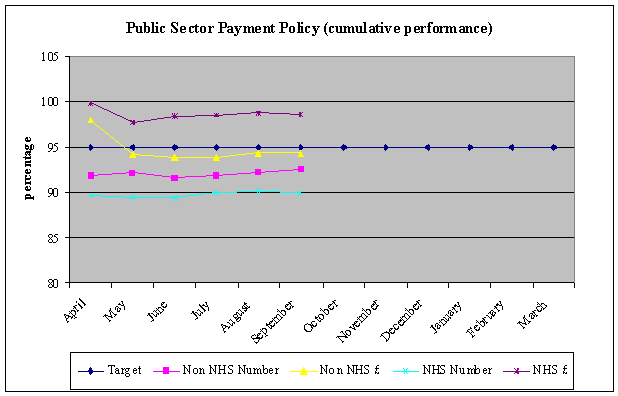
Further action will be taken to review the processes for the large number of small value items which mean we are not hitting the volume target, both NHS and non-NHS.
6. Recommendations
The Board is asked to note:
· The Month 6 financial position.
· The progress being made on the Turnaround Programme.
· The changes to the Capital Programme and the level of over-commitment to ensure that the entire programme is spent.
Hilary Tyler
20 October 2008
|
Hampshire PCT |
|
|
|
Appendix 1 | ||
|
Financial Performance |
| |||||
|
For the Period 1 April 2007 through 30 September 2008 |
| |||||
|
|
ANNUAL |
BUDGET |
ACTUAL |
YEAR |
Year End Forecast | |
|
BUDGET |
TO |
TO |
TO DATE |
Worst |
Best | |
|
|
DATE |
DATE |
VARIANCE |
|
| |
|
brackets to denote adverse variance |
|
|
| |||
|
|
£'000 |
£'000 |
£'000 |
£'000 |
£'000 |
£'000 |
TOTAL ALLOCATIONS |
(1,584,144) |
(785,302) |
(785,302) |
- |
- |
- | |
EXPENDITURE |
|
|
|
|
|
| |
Commissioning |
|
|
|
|
|
| |
Specialist Commissioning |
76,361 |
38,093 |
38,588 |
(495) |
(754) |
} | |
NHS Service Agreements |
|
|
|
|
|
} | |
Portsmouth Hospitals NHS Trust |
156,509 |
79,071 |
84,523 |
(5,452) |
} |
} | |
Southampton University NHS Trust |
136,580 |
68,297 |
69,725 |
(1,428) |
} |
} | |
Winchester & Eastleigh Healthcare Trust |
97,744 |
48,938 |
50,830 |
(1,892) |
} |
} | |
Basingstoke & N Hamp Hospitals Trust |
89,146 |
45,179 |
47,372 |
(2,193) |
} |
} | |
Frimley Park NHS Foundation Trust |
65,157 |
32,963 |
33,906 |
(943) |
} (32,468) |
} (15,683) | |
Royal Bournemouth Hospitals NHS Trust |
20,370 |
10,196 |
10,608 |
(412) |
} |
} | |
Salisbury Healthcare NHS Trust |
14,015 |
7,019 |
7,357 |
(338) |
} |
} | |
Royal Surrey County NHS Trust |
14,593 |
7,299 |
7,622 |
(323) |
] |
} | |
Royal West Sussex NHS Trust |
5,700 |
2,850 |
3,024 |
(174) |
} |
} | |
NHS Mental Health Service Agreements |
|
|
|
|
|
| |
Hampshire Partnership NHS Trust |
107,687 |
53,844 |
53,844 |
- |
- |
- | |
Surrey Borders NHS Trust |
10,643 |
5,321 |
5,321 |
- |
- |
- | |
NHS Other Commissioning |
|
|
|
|
|
| |
South Central Ambulance Service NHS Trust |
29,035 |
13,185 |
13,184 |
1 |
- |
- | |
Hampshire PCT (Care Services) |
98,003 |
48,504 |
48,425 |
79 |
- |
- | |
Portsmouth City PCT |
13,164 |
6,582 |
6,582 |
- |
- |
- | |
Southampton City PCT |
11,560 |
5,780 |
5,767 |
13 |
26 |
26 | |
Non-contracted activity |
8,949 |
3,637 |
3,616 |
21 |
52 |
52 | |
Other NHS Commissioning |
44,226 |
22,106 |
24,585 |
(2,479) |
(4,966) |
(3,701) | |
Total NHS Commissioning |
999,442 |
498,864 |
514,879 |
(16,015) |
(38,110) |
(19,306) | |
Total Non NHS Commissioning |
115,185 |
57,173 |
59,606 |
(2,433) |
(4,400) |
(3,650) | |
Total Commissioning |
1,114,627 |
556,037 |
574,485 |
(18,448) |
(42,510) |
(22,956) | |
Primary Care (inc GP Prescribing) |
401,721 |
200,176 |
196,306 |
3,870 |
4,172 |
2,872 | |
Headquarters Cost |
39,468 |
18,191 |
17,669 |
522 |
2,000 |
1,200 | |
Other |
11,589 |
3,683 |
3,521 |
162 |
(345) |
(345) | |
Contingency |
16,739 |
7,215 |
- |
7,215 |
14,229 |
14,229 | |
TOTAL OPERATING COSTS |
1,584,144 |
785,302 |
791,981 |
(6,679) |
(22,454) |
(5,000) | |
Net (Overspend)/Underspend |
- |
- |
(6,679) |
(6,679) |
(22,454) |
(5,000) | |
Appendix 2
Capital Programme Report - Quarter Ending September 2008
Summary
The PCT's capital programme budget for 2008/09 has been revised to £21.2m (net of grants) from £19.2m. The PCT has reviewed its disposal programme for the year and concluded, given the current state of the market, that the disposal of St Christopher's Hospital will not take place this year. As part of the agreed NHS Campus project, £2.8m of assets will be transferred from Hampshire Partnership Trust. The Department of Health will additional £2.8m resource. The amount of capital grant has been revised to £1.9m, based on approvals given. Spend in the second quarter was £8.1m which is £0.9m behind the planned position.
Quarter 2 Financial Position
Overall the capital programme is showing an underspend of £0.9m against the planned position at the end of September. The largest project within the programme, the major reconfiguration of Gosport War Memorial Hospital, is proceeding to plan and forecast to complete early in 2009 within budget. The contract has also now been let for the refurbishment of Fareham Health Centre. The first phase of the significant investment in surgical equipment at the Lymington New Forest Hospital has also been completed. As part of the NHS Campus project, four properties (£2.8m) are being transferred from Hampshire Partnership Trust. The Department of Health will provide additional matching resources.
To ensure that the PCT spends all of its capital allocation, it was decided to safeguard against some delays and slippage that would normally expect to happen during the year. As reported in quarter one, some additional Estates Building and Engineering programme schemes have now been approved. The current level of over-programming is £1.5m or 7.5% of the gross capital programme.
The expectation is that, allowing for delays and savings on budgeted costs, the overall Building and Engineering programme will be delivered within the planned sum.
Land and Property Disposals
The initial capital plan included £1.5m as a source of funds in 2008/09 for the disposal of St Christopher's Hospital in Fareham. Given the current state of the property market the sale will not now take place this year. The other small planned disposals within the 2008/09 programme are all expected to complete this financial year.
The PCT is also finalising the timetable for Financial Close on the Fareham Community Hospital LIFT scheme and a planning application has been submitted for the development on the Coldeast site. The current programme anticipates Financial Close in late 2008 or early 2009. The part of the Coldeast site for the new hospital will be leased to the LIFTCo on a 125 year lease at a peppercorn rent.
Estates Strategy Key Performance Indicators
The PCT's Estates Strategy set out proposed targets for a number of Key Performance Indicators as part of a five year plan to improve the standard of the estate. The surveys on which these KPIs were based and the targets set out in the strategy were used to inform the 2008/09 programme. The baseline and targets for 2008/09 were reported in quarter one. The recent changes to some of the approved schemes will impact on the targets. A revised table will be provided for quarter three.
Recommendation
The Board is asked to note the changes to the capital programme.
Hampshire PCT |
|
|
|
|
||
Capital Programme 2008/09 |
| |||||
For the Period 1 April 2007 to 30 September 2008 |
| |||||
|
| |||||
|
Annual Plan |
Revised Plan |
Plan to date |
Actual to date |
Year to date variance |
Forecast Outturn |
|
£'000 |
£'000 |
£'000 |
£'000 |
£'000 | |
Capital Allocation |
| |||||
Net Department of Health capital allocations |
19,419 |
22,260 |
9,082 |
9,082 |
0 |
22,260 |
Net Book Value of assets to be disposed |
2,358 |
858 |
725 |
200 |
525 |
858 |
Donations |
0 |
0 |
0 |
0 |
0 |
0 |
Gross Capital Resource |
21,777 |
23,118 |
9,807 |
9,282 |
525 |
23,118 |
|
| |||||
less Capital Grants transferred to revenue |
-2,551 |
-1,914 |
-872 |
-300 |
-572 |
-1,914 |
|
|
|
|
|
| |
Total Capital Resource |
19,226 |
21,204 |
8,935 |
8,982 |
-47 |
21,204 |
|
| |||||
Capital Programme |
| |||||
Community Hospitals Programme |
3,906 |
3,960 |
2,230 |
2,099 |
131 |
3,960 |
Local Implementation of Connecting for Health |
1,171 |
1,171 |
240 |
293 |
-53 |
1,171 |
Operational Capital - Building & Equipment Programme |
5,445 |
5,555 |
2,216 |
2,854 |
-638 |
5,555 |
Operational Capital - IT |
4,502 |
4,502 |
1,837 |
1,119 |
718 |
4,502 |
Operational Capital - other |
2,942 |
6,016 |
2,412 |
1,728 |
684 |
6,016 |
Operational Capital - remaining programme |
1,260 |
0 |
0 |
0 |
0 |
0 |
Capital Grants |
2,551 |
1,914 |
872 |
300 |
572 |
1,914 |
|
|
|
|
|
| |
Gross Capital Expenditure |
21,777 |
23,118 |
9,807 |
8,392 |
1,415 |
23,118 |
|
| |||||
less Capital Grants transferred to revenue |
-2,551 |
-1,914 |
-872 |
-300 |
-572 |
-1,914 |
|
|
|
|
|
| |
Charge Against Capital |
19,226 |
21,204 |
8,935 |
8,093 |
842 |
21,204 |
|
| |||||
Capital (Over)/Underspend against Resource |
0 |
0 |
0 |
890 |
-890 |
0 |
Appendix 3
HAMPSHIRE PCT |
|||
BALANCE SHEET |
|||
|
|
|
|
|
Closing |
Closing |
|
|
2007/08 |
month 6 |
Movement |
|
TOTALS |
TOTALS |
|
|
£'000 |
£'000 |
£'000 |
FIXED ASSETS |
| ||
|
| ||
Intangible assets |
731 |
651 |
-80 |
Tangible assets |
171,636 |
183,359 |
11,723 |
Investments |
290 |
290 |
0 |
|
172,657 |
184,300 |
11,643 |
|
| ||
CURRENT ASSETS |
| ||
|
| ||
Stock and WIP |
0 |
0 |
0 |
Debtors |
18,247 |
28,291 |
10,044 |
Cash at bank and in hand |
1,685 |
20,055 |
18,370 |
|
19,932 |
48,346 |
28,414 |
|
| ||
CREDITORS < 1YR |
-145,167 |
-113,795 |
31,372 |
|
| ||
NET CURR ASSET/(LIAB) |
-125,235 |
-65,449 |
59,786 |
|
| ||
TOTAL ASSETS-CURR LIABS |
47,422 |
118,851 |
70,429 |
|
| ||
Creditors > 1yr |
0 |
0 |
0 |
Provisions for liabs & charges |
-1,254 |
-1,776 |
-522 |
|
| ||
TOTAL ASSETS EMPLOYED |
46,168 |
116,075 |
69,907 |
|
| ||
|
| ||
FINANCED BY: |
| ||
TAXPAYERS EQUITY |
| ||
|
| ||
General fund |
-26,611 |
36,389 |
63,000 |
Revaluation reserve |
70,793 |
77,719 |
6,926 |
Donated asset reserve |
1,986 |
1,967 |
-19 |
|
| ||
TOTAL TAXPAYERS EQUITY |
46,168 |
116,075 |
69,907 |