
Archived decisions
HAMPSHIRE COUNTY COUNCIL
Report for Information
Title: |
Corporate Procurement Update | |||
Presented to: |
Buildings, Land and Procurement Panel | |||
Presented by: |
Acting Director of Property Business and Regulatory Services | |||
Date: |
13 January 2009 | |||
Distributed to: Method: |
Buildings, Land and Procurement Panel Information section on agenda | |||
Contact : |
Neil Jones HPSN (8 200) 6180 [email protected] Shaun Le Picq (8 345) 6967 [email protected] | |||
1) Purpose of Report:
1.1. Progress reports on corporate procurement initiatives have been made regularly to the Panel, most recently in July 2008. This report provides an overview of the work undertaken over the last six months and includes an update on the cashable efficiencies realised in 2008/09 and an introduction to some of the themes emerging from the Corporate Services Review of procurement.
2) Contextual Issues:
2.1. Members will be aware that most procurement activity is devolved to departments and service managers. County Supplies has developed its activities to include a small Corporate Procurement team which sponsors the Corporate Procurement Strategy, leads on electronic procurement, advises on best practice, identifies opportunities for further aggregation of spend into corporate contracts and supports departments with procurement reviews and ad-hoc procurement projects.
3) National Agenda:
3.1. The County Council continues to be involved in national discussions on increasing collaboration between the local authority consortia, the Office of Government Commerce (OGC) Buying Solutions, Health and other public bodies. These discussions are being led by the OGC and are aiming to deliver greater co-ordination of procurement activity across the various organisations to reduce duplication of effort and increase spending power.
3.2. The County Council continues to work with the Central Buying Consortium, where this adds value for the County Council and is increasing the number of arrangements with other consortia such as the Eastern Shires Purchasing Organisation. A recent example of which is the framework contract for IT and printing equipment from which the County Council purchases IT hardware at prices up to 13% lower than previously.
4) Corporate Procurement Strategy and Improvement Plan:
4.1. The County Council's current Corporate Procurement Strategy is coming to the end of its life after its launch in September 2006. The Corporate Procurement Network will need to reflect the outcomes and recommendations of the Corporate Services Review of procurement in the new strategy. Results from the Corporate Services Reviews are expected to be reported to Cabinet in the next few months and the new version of the Corporate Procurement Strategy will therefore be prepared during the first half of 2009/10 and will cover the period to the end of 2011/12.
4.2. Some good progress has been made against the improvement plan contained within the current Procurement Strategy and this is reviewed in more detail in Appendix One. The main areas of improvement activity in the last six months have focused on the development and delivery of further procurement training, obtaining Corporate Management Team approval to implement a Corporate Gateway Review process for contracts over £1million, reviewing and analysing spend data recently provided for the Hampshire and Isle of Wight Procurement Partnership (this work funded by Improvement and Efficiency South-East and the Hampshire Improvement Board) and assisting Adult Services with the successful procurement of a contract management system for use across that department (with the first stage of the implementation focused on the wellbeing and partnership teams).
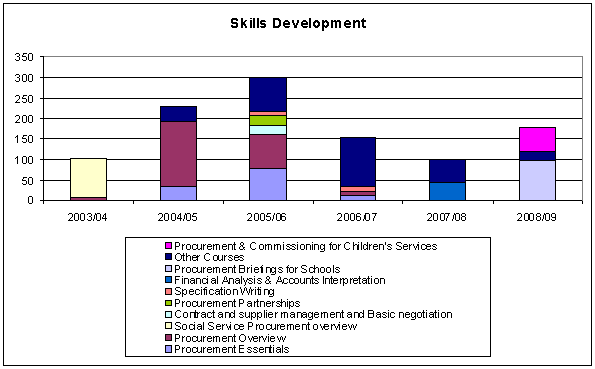
4.3. The team recently designed and delivered three one-day training courses on procurement and commissioning for Children's Services. This course was designed and delivered in collaboration with the both the Human Resources Learning and Development Team and the newly formed Commissioning Co-ordination Unit in Children's Services and this proved to be a very productive and successful way of working for all parties. The course focused on best procurement practice within a commissioning framework and was delivered to 61 senior and middle managers in Children's Services and staff from voluntary sector organisations. The course received very good feedback.
4.4. The Team have also presented a briefing on good procurement practice and Contract Standing Orders to 97 school staff at their recent finance and systems support meeting hosted by Education Financial Services.
4.5. Initial analysis of spend data has shown that the County Council's use of small and medium sized enterprises (SMEs) has remained relatively unchanged over the last three years. It is very difficult to find comparator data for a similar authority and this is being pursued. The County Council continues to work towards the principles of the Small Business Friendly Concordat and ensure that barriers to SMEs are minimised in the procurement process. The table below indicates that the County Council works with a large number of SMEs. 88% of the 32,000 suppliers used by the County Council in a year are considered to be SMEs with a total spend of over £300million, (55% of the sample for which data was available per year). The level of spend with businesses based in Hampshire has increased slightly over the three years from 51% to 54%.
Table 1 - Doing Business with SMEs and Local Businesses
2005/06 |
2006/07 |
2007/08 | |
Percentage spend with Hampshire businesses |
51% (c.£280m) |
54% (c.£310m) |
54% (c.£324m) |
Percentage spend with businesses in the South-East region |
69% (c.£380m) |
71% (c.£408m) |
69% (c.£414m) |
Percentage spend with SMEs |
56% (c.£308m) |
54% (c.£310m) |
55% (c.£330m) |
Percentage of suppliers used that are SMEs ( < 250 employees) |
87% (c.28,600) |
88% (c.27,600) |
88% (c.27,900) |
N.B. All percentages are from the analysis conducted by Exor Ltd and then extrapolated to total spend
4.6. The improvement priorities for the next six months will be to re-appraise the outcomes in the current Strategy which have not yet been fully addressed or the planned actions implemented. These priorities will therefore include identification of the most appropriate solution for delivering a consolidated contracts register across the whole County Council, implementation of a corporate Gateway Review process and increase in the volume of e-procurement transactions.
5) Key Performance Indicators (KPI's) for Corporate Procurement:
5.1. Further work has been undertaken to refine the suite of key performance indicators (KPI's) which assist in measuring performance against the key objectives within the Corporate Procurement Strategy. The team is now regularly measuring performance on skills development, use of e-tendering and e-procurement. KPI's were reported to the Panel in detail in July 2008 and updated information is set out in Appendix Two.
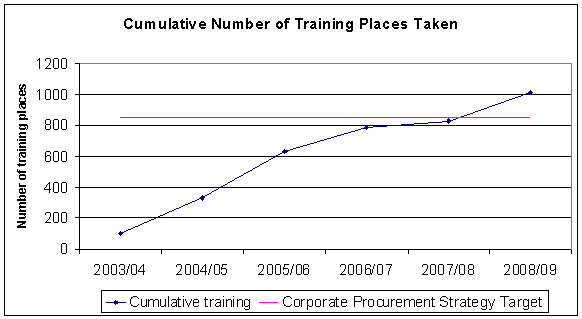
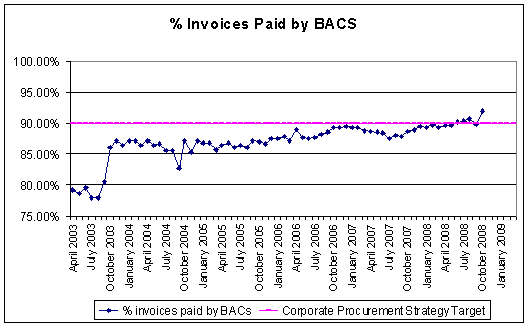
5.2. Actual performance has exceeded target for both skills development and the percentage of invoices paid by BACS. In December 2008, 1,062 places have been taken on procurement training since the programme began in 2003/04 against a target in the Corporate Procurement Strategy of 850 by December 2008. The training provided ranges from short briefings on Contract Standing Orders, through to more comprehensive whole day courses on topics such as procurement best practice, specification writing and negotiation skills. The percentage of payments made electronically by BACS (which is much more cost-effective than by cheque) has risen to it's highest level ever in October 2008 at 92%, compared to a target of 90% by December 2008. This is an increase of 12.8% since monitoring began in 2003.
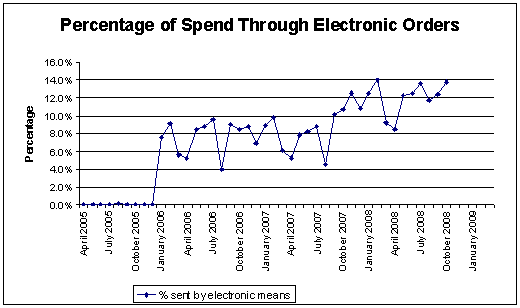
5.3. The percentage of spend made on purchase orders sent electronically to the suppliers has increased by 12% since 2005/06, but still remains relatively low at 13.9%. This is below the target of 20% by end of December 2008. This low level may be as a result of the reluctance of staff who raise orders to take advantage of electronic transmission of orders because of a perceived loss of control over the process.
5.4. The County Council has recently joined the CIPFA corporate services benchmarking club, which uses a set of KPIs recently developed by all of the UK Audit Bodies. An initial review of the KPIs for procurement indicates that collection of data and measurement of these KPIs will be challenging for the County Council, but work will continue on this initiative in the coming months because benchmarking information that is helpful in assessing our relative performance is not readily available.
6) Efficiency Savings for Corporate Common-Use Contracts:
6.1. The efficiency savings generated by new or re-tendered corporate common-use contracts have been updated for the current financial year (National Indicator 179 - Value for Money). The estimate for 2008/09 is that recurring savings of just under £1.2million (£760,000 for corporate departments and £408,000 for schools will be achieved). This is an increase of over £400,000 since the initial estimates were reported to the Panel in July 2008, primarily due to an increase in the savings calculated from the IT hardware contract and award of a new desk-top maintenance contract. The cashable savings for corporate departments of £0.76million compares favourably with the target of £0.5million. At this late stage in the year, no further significant additional savings are expected to be achieved from corporate common-use contracts for 2008/09. Further detail is shown in Appendix Three.
6.2. It is pleasing to note that the cumulative total of the savings reported under the heading of "Corporate Common Use Contracts" over the last four years is now more than £2 million per annum (with a total of more than £5 million of cashable benefits delivered over that period). These cashable benefits are recorded in the Annual Efficiency Statements and, although the sums are relatively small within the context of the overall budget, they have provided the Council with a measure of assistance in delivering its financial plans. Reductions with a total of some £100,000 were made to departmental budgets in 2006/7 on a pro-rata basis to the savings that had been identified in order to establish funding for work on the corporate procurement agenda (including the programme of procurement reviews).
6.3. These figures exclude the £1.8million full year effect saving on gas resulting from the two year fixed price contract that started in November 2007. This is because this saving is not expected to meet the requirements of NI179 because, in the current market, it is unlikely that this saving will be recurring when the current contract comes to an end in October 2009.
7) Procurement Reviews and Support to Departments:
Home to school transport pilot:
7.1. The pilot framework contract in north-east Hampshire has been awarded and has been in operation for three months. The pilot is considered to have been successful with full coverage of all required routes, 47 suppliers available within the framework, compliant contracts in place and a more efficient process using electronic mini-tenders for new or amended routes. The pilot achieved an initial recurring cashable saving of over £210,000 for a full year, which is a saving of 12%. However, the impact of cancelled, amended and rejected routes reduced the savings on routes currently being operated to just over £100,000 (5%) in the first year. This is clearly a very successful result against a background of increasing fuel prices and when compared with the Department for Children, Schools and Families' calculation of inflation for home to school transport which currently stands at 7%.
7.2. A set of tender guidance notes, which will incorporate the lessons learnt from the pilot is being prepared and will assist the Passenger Transport Group within the Environment Department in maximising the benefits of implementing framework contracts for the remaining (approximately 80%) routes across the County. It is estimated that further framework contracts for home to school transport should be able to achieve savings of up to 12%.
7.3. The outcome of this tender exercise has been included in a high-level estimate of the benefits of the procurement reviews that have been undertaken to date. This is included at Appendix 4 and indicates that cumulative efficiency gains of approximately £1.8 million will have been delivered by the end of the current financial year. The support of departments is crucial to the success of the procurement review programme and it is anticipated that this team-based approach will continue to be a significant element of the County Council's ongoing efficiency agenda.
Other Reviews Planned
7.4 Project initiation documents have been drafted for procurement
reviews of day care services for older people and vehicle leasing. The detail of these reviews is currently being finalised with the relevant departments.
7.5 Initial discussions have been held with Children's Services on the
procurement requirements within Children's Centres and an assessment of the potential for improvements in this area is taking place in the next few months.
Procurement Support
7.6 The team continues to provide ad-hoc advice to departments on
procurement issues and is also providing a large amount of
assistance with tenders across a range of departments who do not
have the capacity or experience to undertake these tenders
themselves. Procurement support is currently being provided for the
following projects:
· Parent Partnership Service (Children's Services)
· Appropriate Adults Services (Wessex Youth Offending Team)
· Children's Centres Phase 3 (Children's Services)
· Young People Substance Misuse Service (Drug and Alcohol Action Team, Adult Services)
· Vehicle Parts (Hampshire Transport Management in partnership with Hampshire Fire and Rescue Service)
· Contract Management System (Adult Services)
· Media Services for South East Counties (Chief Executive's)
· Early Years Support Service (Children's Services).
7.7 Further assistance for Children's Services has been secured from
the Contracts Team within County Supplies for the tendering of
domiciliary care, short breaks, out of hours activities and information
services to support the Aiming High programme for children with a
disability.
8) E-Procurement Initiatives:
8.1. Electronic Catalogue of Goods and Services - preparation for the upgrade of the Enterprise Buyer electronic catalogue to the SRM (Supplier Relationship Management) catalogue system has taken up much of the team's time for the last six months. The upgrade took place successfully on 1 December 2008. There are currently just over 5,500 users of the electronic catalogue and 33 briefings were provided to just over 1,200 staff to explain the impact of the upgrade and demonstrate the SRM system. The system provides a more intuitive user interface and further exploitation of the functionality within SRM will be explored in the coming months.
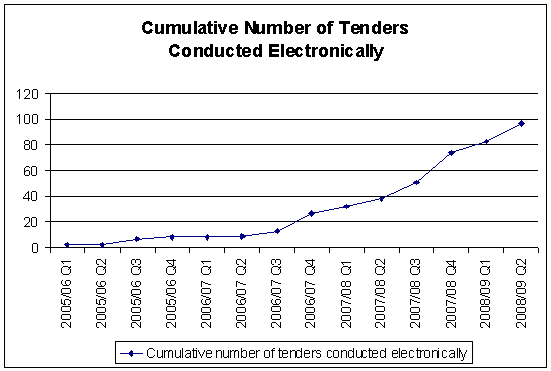
8.2. Electronic Tendering - use of the corporate e-tendering system continues to increase within Property, Business and Regulatory Services. IT Services are also using the system for the HPSN tender and for mini-competitions within the IT Consultancy framework contracts. Planning is currently underway for the system to support the mini-competitions for home-to-school routes within the north-east Hampshire framework contract. The team has recently updated all the user documentation to take account of the changes required following an upgrade of the e-tendering system.
8.3. Government Procurement Cards in Schools - the pilot purchasing card scheme for schools went live on 26 September as planned. The schools are finding this to be a convenient and efficient alternative to petty cash and use of personal cards. The scheme is facilitated by a bespoke transaction in the corporate SAP system which enables coding of VAT and posting of actual spend, which means that schools are readily able to maximise their VAT reclaim for this ad-hoc spend. The level of spend is approximately £10,000 a month across 38 cardholders in 16 schools.
9) Corporate Services Review of Procurement:
9.1. The Corporate Services Review of Procurement is in its early stages. The review has the following terms of reference:
· Look at the opportunities to further reduce the cost of procuring County Council goods and services
· Consider how best to organise the procurement function within the County Council to ensure compliance with European and County Council regulations
· Review and consider management and leadership of this function and how best to organise the relevant staff with a view to reducing the cost of the function and investigate its potential to generate income.
· Identify any behavioural or cultural issues that arise in relation to staff compliance of the above process.
9.2. Initial work carried out by the review team indicates that some of the current strengths of procurement are:
· Clear Corporate Procurement Strategy with associated improvement plans
· A comprehensive portfolio of corporate common-use contracts which has grown over time
· Good collaboration both locally, regionally and nationally
· Some experienced staff with good skills
· Effective use of IT (electronic catalogue / e-tendering)
· Good levels of savings generated
· Large amount of procurement training delivered in recent years.
9.3. The weaknesses in the way that procurement is currently organised that have been identified so far include:
· All staff can potentially be involved in procurement without formal procurement training or previous experience
· Greater controls and compliance could be built into processes
· Corporate procurement resource is relatively small and relies on funding from trading activity of County Supplies
· Roles, responsibilities and identity for the procurement function across the County Council could be better developed.
9.4. The review team is analysing these issues and examining the case for change. The lead member for the review is the Executive Member for Efficiency, Performance and Rural Policy and the Director of Environment is the Corporate Management Team sponsor.
10) Conclusions:
10.1. Many of the objectives within the current Corporate Procurement Strategy have been achieved. However, the Strategy needs to be reviewed and updated to ensure the County Council continues to focus on improvement in performance over the next few years. The production of the new Strategy will be delayed slightly to take account of the Corporate Services Review of procurement.
10.2. The team continues to provide a large amount of support to departments on procurement issues, whilst running a substantial training and awareness programme and leading on the development and effective exploitation of the County Council's e-procurement systems.
10.3. Recurring savings achieved on corporate common-use contracts for 2008/09 amount to £0.76million for corporate departments. These results are complemented by work on the programme of reviews on major areas of expenditure that are conducted jointly with departments.
Section 100 D - Local Government Act 1972 - background documents | |
The following documents discuss facts or matters on which this report, or an important part of it, is based and have been relied upon to a material extent in the preparation of this report. (NB: the list excludes published works and any documents which disclose exempt or confidential information as defined in the Act.) | |
Document |
Location |
None |
|
Progress on the Corporate Procurement Strategy Improvement Plan
Outcome Our capacity and performance in procurement is improved |
Key Performance Indicators |
Performance (April 2006) |
Target |
Progress to Date |
Percentage of high risk projects subject to Gateway Reviews |
No reviews undertaken |
100% by March 2007 |
The specific target has not been met, but a Gateway Review process has been agreed by CMT on 22 October 2008 for implementation from May 2009. Some reviews have been taking place in Environment & Property Services for higher value projects. |
Number of staff attending procurement training |
630 |
850 by December 2008 |
1,062 attendees to date. Target has been exceeded. |
Action |
Target Date |
Responsibility |
Progress to Date |
Operating effective Corporate and Departmental Gateway Review processes for appropriate projects. |
March 2007 |
All CPN members |
Approved by CMT for implementation from May 2009. Some reviews have taken place in Environment and Property Services. |
Measuring performance through the development of Key Performance Indicators (KPIs) for procurement. |
December 2006 |
Shaun Le Picq |
KPI suite developed and reported on to CPN and BLAPP. Further work is being undertaken to refine them in line with recent recommendations nationally from the Audit Commission. |
Using a standard corporate contracts register in all departments |
December 2007 |
All CPN members |
SECE Business Portal now live, but not maintained adequately. Some departments have their own contracts register, but there is no consistent corporate mechanism and still this needs to be addressed. |
Outcome The number of procurement partnering arrangements is increased to maximise benefits |
Key Performance Indicator |
Performance as at April 2006 |
Target |
Progress to Date |
Number of procurement partnerships |
To be confirmed |
No formal target adopted |
The Corporate Partnership Working web portal has been launched on Hantsnet and some guidance on partnerships has been included in the Procurement Best Practice Guide. The PFI Street Lighting project is still underway. Limited work has been undertaken to assess the benefits or otherwise of increasing the number of procurement partnership arrangements. |
Action |
Target Date |
Responsibility |
Progress to Date |
Publication of revised partnering guidance. |
March 2007 |
Shaun Le Picq |
The Corporate Partnership Working web portal has been launched on Hantsnet and some guidance on partnerships has been included in the Procurement Best Practice Guide launched in October 2008. More detailed guidance has not yet been prepared. |
Identification of further partnering opportunities in construction related procurement and service delivery. |
December 2008 |
David Corcoran Dave Jessop Shaun Le Picq |
Street Lighting PFI project currently underway. Further opportunities have not been explored formally. |
Provision of appropriate training for staff involved with developing partnerships and managing term arrangements. |
April 2007 |
David Corcoran Dave Jessop Shaun Le Picq |
A corporate course has been delivered for 25 key staff. |
Outcome Better value for money is achieved through appropriate collaboration |
Key Performance Indicator |
Performance as at April 2006 |
Target |
Progress to Date |
Increase collaborative spend |
c£116m p.a. |
£150m by December 2008 |
£121m p.a. of HCC corporate common-use contracts as at November 2008 of which c. £26m p.a. is with CBC and ESPO contracts and c. £10m is jointly with other organisations. |
Action |
Target Date |
Responsibility |
Progress to Date |
Successful implementation of Hampshire Marketplace and realisation of benefits for District Council partners. |
February 2007 |
Shaun Le Picq |
Hampshire Marketplace has been reconfigured to focus on a smaller number of authorities for whom the Marketplace supports their own Procurement Strategy in order to realise benefits. Over £100,000 of benefits already generated across the partnership. |
Increase the corporate common use contract portfolio to over £100m by end of 2007/08. |
March 2008 |
Neil Jones |
£121m p.a. of corporate common-use contracts as at November 2008. |
Outcome All procurement projects meet identified needs and provide community benefits |
Key Performance Indicator |
Performance as at April 2006 |
Target |
Progress to Date |
Percentage of milestone activities completed in the National Procurement Strategy for Local Government |
75% |
100% by December 2007 |
90% achieved and implemented as at November 2008. Further work on improving this performance will add little value. Performance of 90% compares well with the Communities and Local Government's recently published report on national progress against the NPSLG milestones which showed that 33% of milestones have been generally implemented, 56% are being actively implemented and 3% are not being implemented. |
Action |
Target Date |
Responsibility |
Progress to Date |
Operating a consistent corporate social responsibility strategy for equality and diversity, fair trade, ethical purchasing and sustainability in procurement as part of the Gateway Review process for major projects |
March 2007 |
Shaun Le Picq All CPN members |
These considerations will be assessed as part of the Gateway Review process has been agreed by CMT on 22 October 2008 for implementation from May 2009. |
Inviting potential suppliers to propose additional community benefits for major contracts |
July 2007 |
All CPN members |
A recent example of good practice is this area includes the Highways Maintenance contract. |
Developing greater consistency (and simplification where appropriate) in procurement documentation for suppliers, particularly at pre-qualification stage |
December 2007 |
Shaun Le Picq |
Pre-qualification questionnaires have already reduced to minimum requirements in light of current EU Regulations. |
Improving contract management procedures in proportion to the level of risk and value |
December 2008 |
All Corporate Procurement Network members |
Some initial work has been undertaken on best practice principles which requires further development by the Corporate Procurement Network. |
Outcome The efficiency of the procurement process is maximised through appropriate use of electronic procurement |
Key Performance Indicators |
Performance as at April 2006 |
Target |
Progress to Date |
Percentage of orders sent electronically to suppliers |
1% |
20% by December 2008 |
13.7% in October 2008 |
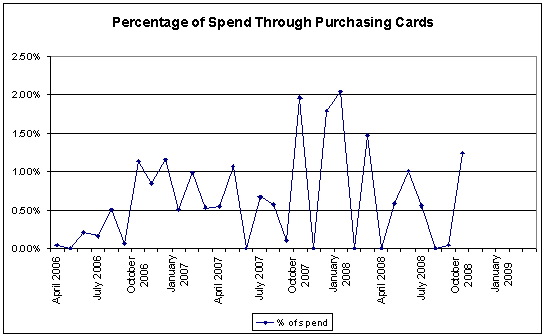
Percentage of spend through procurement cards |
5% |
15% by December 2008 |
1.24% in October 2008 |
Percentage of invoices paid electronically |
86% |
90% by December 2008 |
92% in October 2008 |
Action |
Target Date |
Responsibility |
|
Increasing the proportion of spend via virtual procurement cards |
December 2008 |
Shaun Le Picq |
Business case for domiciliary care showed risk of additional costs. Discussions being held with food suppliers. |
Implementing XML ordering with key suppliers |
December 2008 |
Shaun Le Picq |
Dell and Supplies Team live. |
Rolling out our e-tendering system |
April 2007 |
Shaun Le Picq All CPN members |
Rollout progressing well in Property, Business and Regulatory Services |
Developing our strategy and business case for e-invoicing |
June 2007 |
Bevis Ingram Shaun Le Picq |
Not yet addressed |
Appendix 2
Corporate Procurement Key Performance Indicators
Skills Development - cumulative number of training places filled
Skills Development - number of training places filled by course title
Supplier satisfaction with the County Council's procurement processes
|
Number of suppliers surveyed |
Number of responses |
Percentage of respondees either very or fairly satisfied with the authority |
Percentage of respondees giving other reply |
2006 |
2,818 |
822 |
45.0% |
55.0% |
2008 |
Results awaited | |||
Percentage of spend through electronic orders to suppliers
Percentage of invoices paid by BACS
Percentage of spend through purchasing cards
Cumulative number of tenders conducted electronically (e-tendered)
Appendix 3
Cashable Savings on Corporate Common-Use Contracts for 2008/09
Description |
Annual Contracted Value (£) |
Total Annual Cashable Saving (£) |
Corporate Share (excl. schools) (%) |
Cashable Corporate Savings (£) |
Cashable Schools Savings (£) |
2008/09 |
2008/09 | ||||
Catalogue Advertising: reduction in commission of 1% |
64,000 |
4,120 |
100% |
4,100 |
0 |
Document Solutions Contract: reduction in prices through Central Buying Consortium/ESPO collaboration |
1,475,000 |
264,000 |
20% |
52,800 |
211,200 |
IT Hardware: reduction in prices through CBC/ESPO collaborative contract @13% additional saving |
2,700,000 |
351,000 |
60% |
210,600 |
140,400 |
Library Books: reduced prices on CBC contract |
1,320,000 |
48,800 |
100% |
48,800 |
0 |
Audio Visual Solutions: reduced prices on CBC contract |
391,000 |
12,800 |
20% |
2,600 |
10,200 |
Temporary Agency Staff: reduced margins in new contract reflected in bill rates (part year effect) |
6,000,000 |
110,000 |
100% |
55,000 |
0 |
Non-Educational Cleaning: reduced contract prices |
1,096,000 |
84,000 |
100% |
84,000 |
0 |
Vehicle Hire: 2.5% price reduction on previous year, plus 2.5% budgeted inflation saving (total 5% reduction in prices). |
3,600,000 |
180,000 |
85% |
153,000 |
27,000 |
OGC Framework Contracts: claim method approved by NAO |
239,488 |
35,856 |
90% |
32,300 |
3,600 |
Desk-top Maintenance: reduction in anticipated budget that IT Services had predicted. |
466,000 |
201,770 |
100% |
100,900 |
0 |
Office Papers: reduction in contracted prices |
|
27,400 |
60% |
16,400 |
2,750 |
Supply Teachers & Ancillary School Staff: savings from new contract commencing September 07, savings to be realised approximately six months from contract start date based on 2.5% of contract value (£2 million pa) based on last 4 months of this financial year. Quality cross-check: improved service delivery to end users and rationalisation of current vendors. |
2,000,000 |
50,000 |
0% |
0 |
12,500 |
Total Savings Already Achieved for 2008/09 |
|
|
|
760,500 |
407,650 |
APPENDIX 4 |
||||||||
Corporate Procurement Review Programme |
||||||||
Service |
Department |
Annual Budget or Spend |
Annual Estimated Savings (cumulative) |
Status |
Comments | |||
|
|
|
2006/07 |
2007/08 |
2008/09 |
2009/10 |
|
|
|
|
£000s |
£000s |
£000s |
£000s |
£000s |
|
|
Completed and Implemented Reviews |
|
|
|
|
|
|
| |
Supporting People - Homelessness Cluster |
Adult Services |
4,000 |
25 |
200 |
200 |
200 |
Project Completed - Assisted with Review and Contracts in place |
|
Domiciliary Care (older people) - price negotiation and annual price round |
Adult Services |
as above |
354 |
644 |
1,177 |
1,177 |
Revised "uplift in rates" procedure including any request in excess of advised max increase being passed to Procurement for resolution |
currently evaluating cost avoidances secured by this approach |
Postal Services - Phase I - pricing in proportion |
ALL |
|
60 |
11 |
11 |
11 |
Completed. 43% overspend widely predicted will not materialise due to combined efforts of Admin/Finance and Procurement. |
Non-recurring element £60k (49% of budget) largely comprised of franking upgrades. |
Supported Living for Young People with a Learning Disability |
Adult Services |
370 |
0 |
40 |
61 |
61 |
Contract award being finalised |
Savings based on tendered prices v. budget approval. Savings on 07/08 based on 8 mths & 7 mths for the two respective contracts |
Domiciliary Care (older people) |
Adult Services |
29,000 |
0 |
0 |
150 |
300 |
Review complete, implementation underway. |
Savings from patch based purchasing |
Taxi Services (NE Pilot) |
Children's Services |
1,986 |
0 |
0 |
60 |
120 |
Review Completed April 2006. Framework contract implemented in NE Hampshire from August08. |
Savings currently being confirmed |
Domiciliary Care (Children) |
Children's Services |
1,100 |
0 |
0 |
tbc |
tbc |
Review completed July 2007. Framework contract currently being implemented jointly with CSD. |
Includes development of contractual framework to ensure compliance |
Independent Sector Residential Non-Pay Costs |
Adult Services |
n/a |
0 |
0 |
0 |
|
Benchmarking with HCA is ongoing, but this is not expected to yield any substantial savings |
|
Payment Processes for Domiciliary Care (GPC) |
Adult Services/ County Treasurer's |
185 |
0 |
0 |
0 |
0 |
Cost-benefit study undertaken which recommends that the GPC payment system is not implemented as high risk that net costs would increase |
|
Residential & Nursing Care (older people) Analysis of Fair Price |
Adult Services |
64,000 |
0 |
0 |
0 |
0 |
Review completed August 2008, no scope for savings in fee levels. review recommends an increase in fee levels to guarantee quality and market investment |
Recommends that fee levels are increased, but implementation approach is to be decided by Adult Svcs |
Learning Disability Residential Services (High Cost Placements) |
Adult Services |
40,000 |
0 |
0 |
150 |
300 |
On-going ad-hoc support provided to high cost placement negotiations |
More detailed review of LD residential services could be undertaken as well as extending review of high cost placements |
Total |
|
140,641 |
439 |
895 |
1,809 |
2,169 |
|
|