Archived decisions
10 February 2009
Hard to Reach People Review Panel
Portal Room , The Castle, Winchester
Agenda
Session |
Witness |
Topic |
9:30 - 10:00 |
Lucy Butler Strategic Commissioning Dir |
Personalisation agenda Background papers: Appendix One: Presentation text on personalisation and individual budgets p.2 Appendix Two: Presentation text on individual budgets p.6 |
10:00 - 10:30 |
Cllr Dr Parvin Damani MBE Public health specialist and race equality adviser |
Equality and access to services |
10:30 - 11:00 |
Dr Liz Statham Hampshire Ethnic Minority Achievement Service |
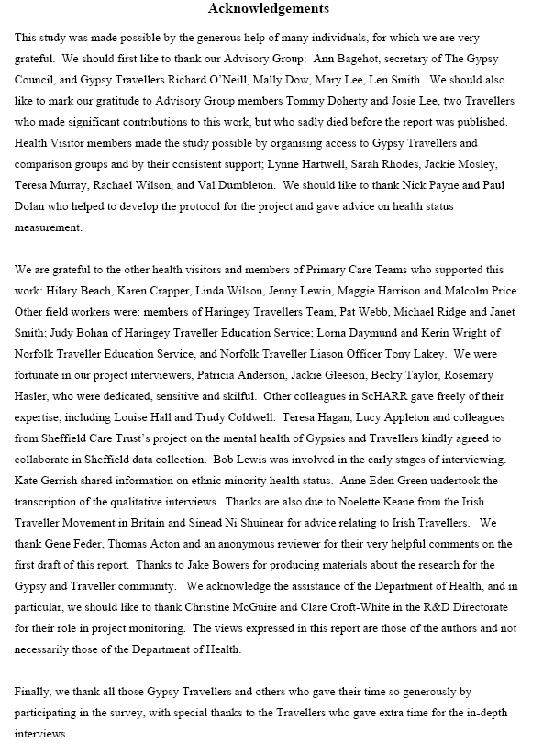
Barriers to access of services - Traveller/Gypsy community Background paper: Appendix Three: 2004 example of issues of access to health services for Gypsy Travellers p.13 |
11:00 - 11:15 |
Coffee/comfort break |
|
11:15 - 11:45 |
Keith Kerslake/Karen Mann Corporate Communications |
Research and approaches - minority groups |
11:45 - 12:15 |
Liz Donegan Community Action Hampshire |
Perspectives on access to services by minority groups |
12:15 - 12:45 |
John Clarke Deputy Dir Children's Services (Education) |
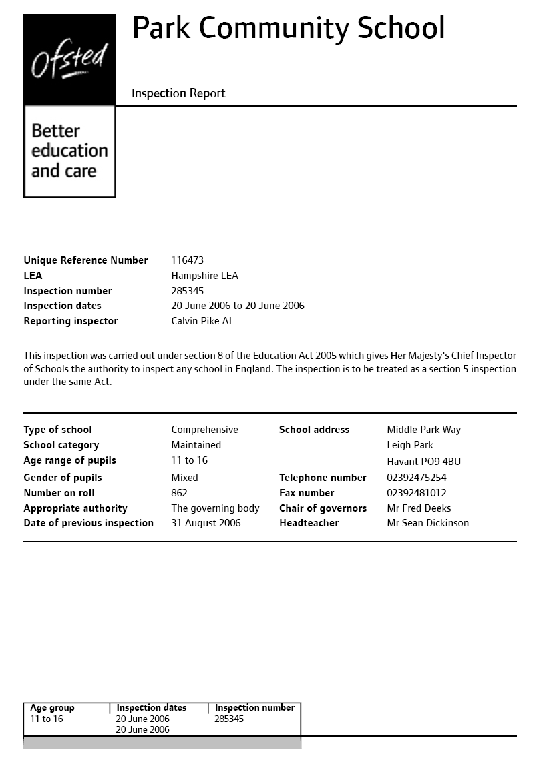
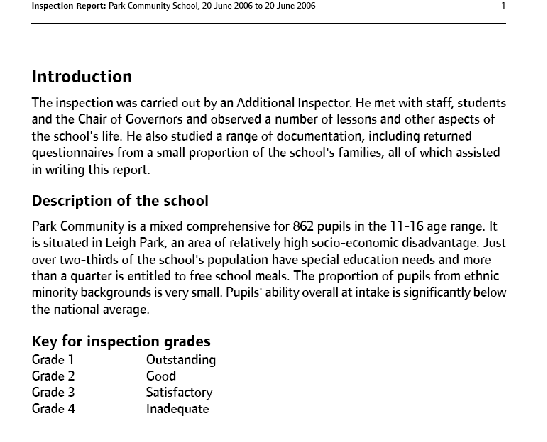
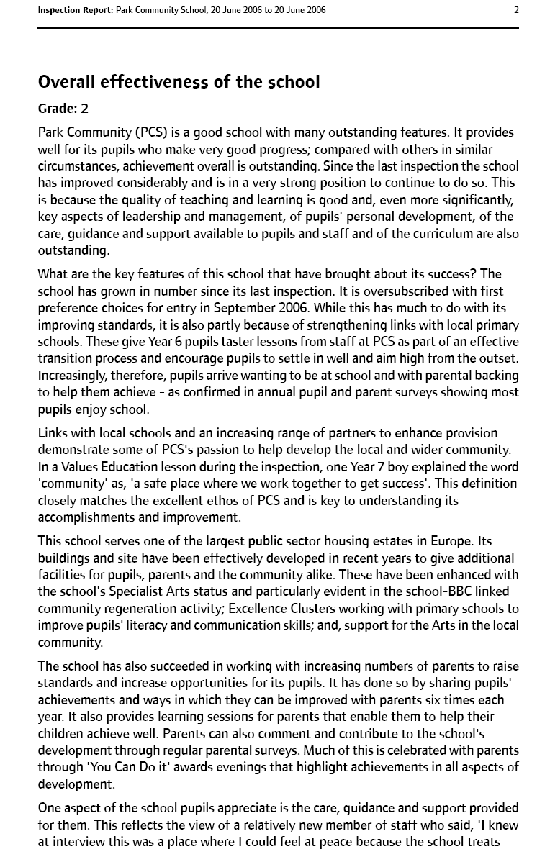
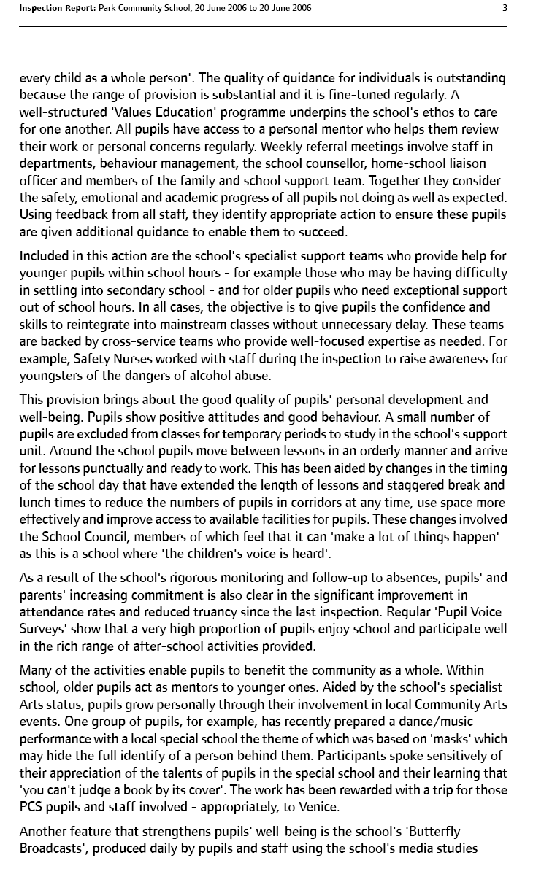
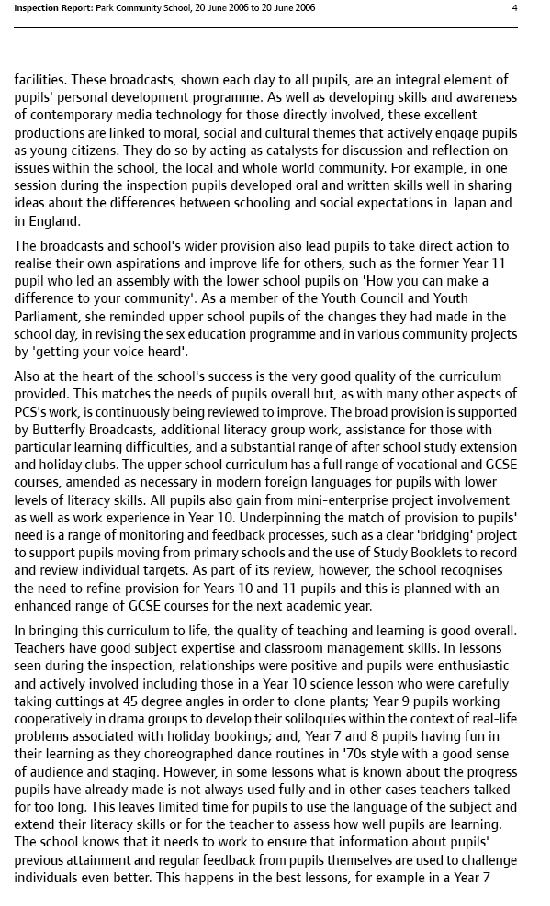
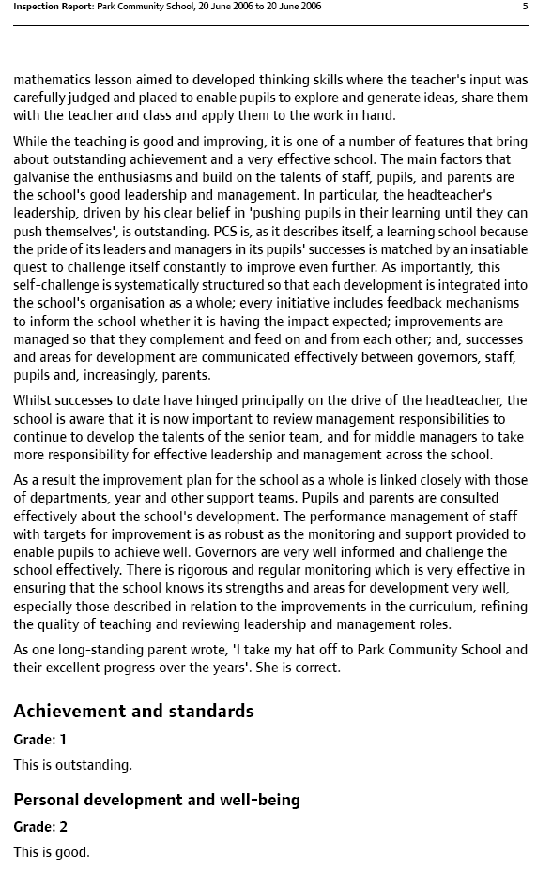
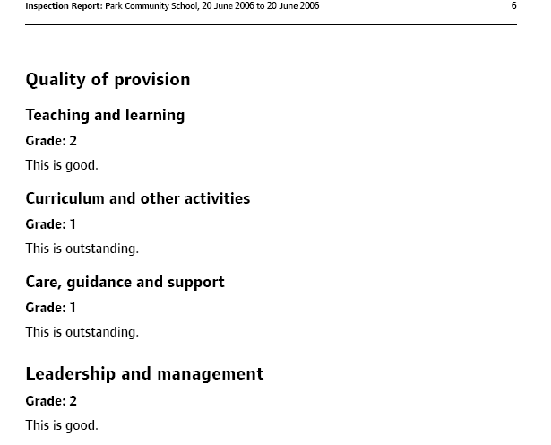
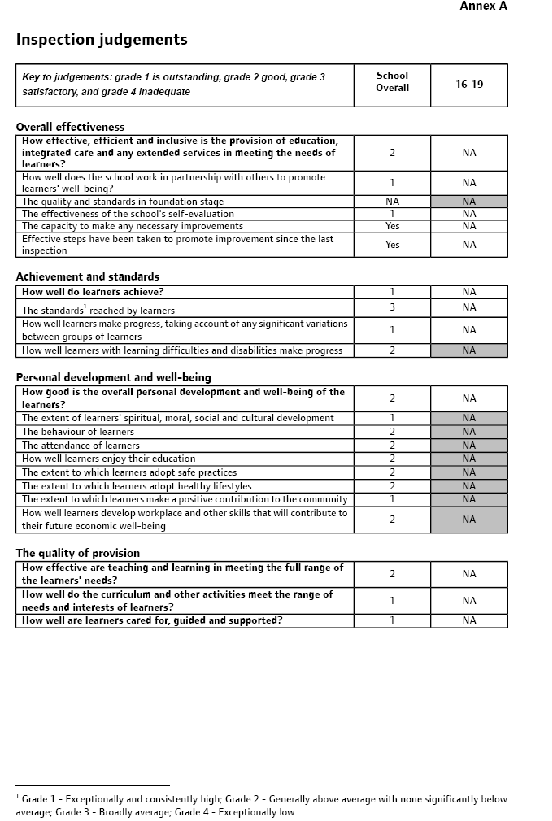
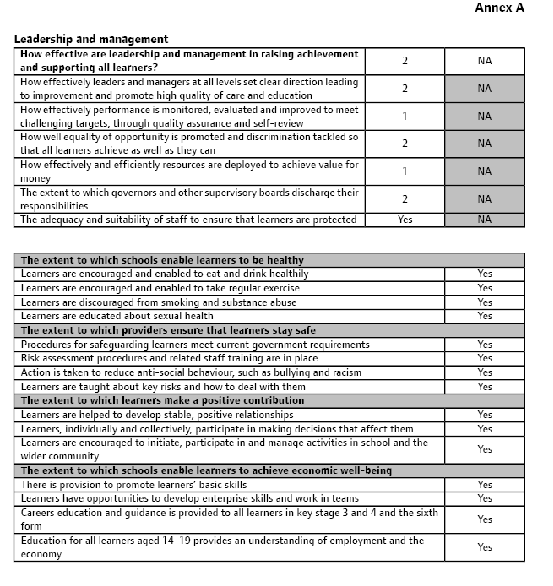
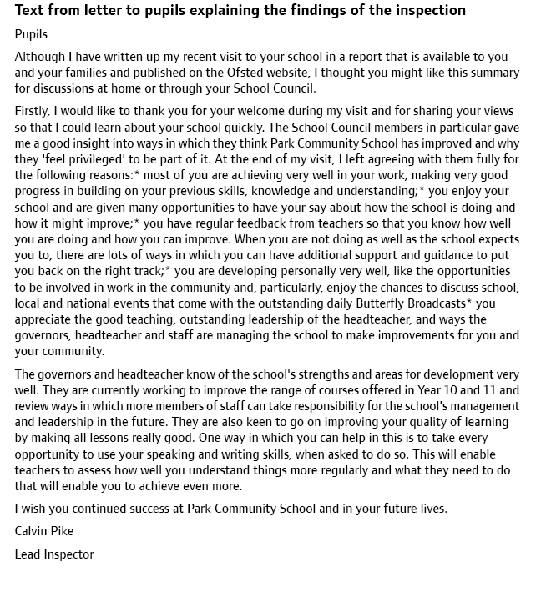
Schools as agents of local transformation Background papers: Appendix Four: Ofsted report for Park Community School p.27 Appendix Five: Excepts from School paper p.37 |
Appendix One: Presentation on Personalisation and Individual Budgets
Individual budgets and personalisation: learning from the pilots
15 January 2009
Resource Allocation Systems
A number of voluntary organisations have together issued Freedom of information requests to all local authorities for information on RAS', motivated by concerns about;
RAS' not working for people with very high or specialised needs;
RAS discriminating against some client groups, particularly older people;
Undermining of statutory entitlements;
Individual Budgets and Personalisation: Learning From The Pilots
Tasman Oxlade
Programme Director - Putting People First
Adults Health & Community Wellbeing
Topics Covered Today
· Learning from the IB pilot projects
· Integrating reablement with self-directed support
· Developing and testing the Resource Allocation System (RAS)
· Implications for business processes and systems
· Changing the staffing models
· Structuring and supporting the transformation programme
Essex Context
· Population of 1.3 million
· Gross Budget of £500 m
· Approximately 30,000 service users
· Over 2,000 people on Direct Payments
· 6th October 2008: SDS Implementation - Phase One Live - New Service Users
The Individual Budgets National Pilot
· Essex County Council was 1 of 13 authorities around the country participating in the national pilot
· Built on Essex's established excellence in Direct Payments
· Piloted existing Service Users with Physical Impairment and Learning Disability and Carers
· Objective to test the feasibility of giving individuals their own budgets from which to meet their care and/or respite needs
Individual Budgets and Direct Payments
· Are not the same - Direct Payments have to be spent on items connected with the users care needs or domestic support
· Individual Budgets can be spent much more flexibly, for example on one-off purchases like lightweight ramps.
· Expenditure must still be related to the assessed need
· Resource Allocation System and Supported Self Assessment Questionnaire - new approach to working out the money
· Support Plans not Care Plans - outcome based approach
· Duty of Care remains, not about handing over money to the Service User and walking away
Key Messages From The Pilot
_ Service users who participated in the pilot report overwhelmingly positive outcomes
_ Real choice and control has been achieved and major change brought about in people's lives.
_ The pilot has demonstrated that Individual Budgets are an effective mechanism for delivering Social Care
The Learning
· The challenges that are presented can be successfully overcome
· Internal systems are likely to require change
· There is no single approach that works - your own circumstances will inform your approach
· Integrating other funding streams isn't easy but is very powerful for the Service User
The Learning
· Essential to understand your own business model
· Essential to invest in culture change within the Authority
· Essential to consider your policy approach to governance, safeguarding and uses of money to ensure that choice and control can be delivered
· Essential to work with your providers and Service User led organisations
Reablement
· The reablement service works with people in their own homes, supporting them to re-learn new ways to carry out daily living tasks, so they can remain as safe and as independent as possible. The service principles are:
- The service is available to all adults over 18
- An individual Reablement Assessment is completed at the beginning and at the end of each programme
- Individual programmes are agreed and targeted to the service user's needs identified by the reablement assessment
- Reablement programmes last for up to 6 weeks
- Programmes are not chargeable
- All programmes are reviewed weekly with a reablement OT
- Clear outcome measures are provided including changes in care packages and changes in reablement assessment scores
Reablement Results
· 42% of service users were discharged requiring no further care, 35% require ongoing care, 23% do not complete care packages (they return to hospital, residential care or die)
· Of the service users that did require ongoing care, 42% of cases resulted in a decreased package. Overall, this equates to a 19% reduction in packages for all reablement service users who were discharged to agency
· On average, the reablement service is reducing people's care requirements by 42%
Reablement Results
Developing and testing the Resource Allocation System (RAS)
· Our starting point was RAS 5.1 as developed by In-Control and Oldham and being used in Oldham from July 2007
· A major developmental aim was to create one RAS for all user groups
· User-led development
Developing and testing the Resource Allocation System (RAS)
· Trialled and developed with a statistically valid number of real service users
- The purpose was to get sufficient real data to ensure that our points allocation system reflects levels of need appropriately, and that we set the amount of money per point at the right level
· The RAS amount is a place to start but it still needs to be validated
The Changes We Made to RAS
· Reduced the size of the RAS by
- Taking out anything that wouldn't generate a pounds value
- Combining some questions where possible
· Improving the language used
- More positive
- clearer and more concise
· Training
- Ensuring the questions are interpreted correctly
- For both staff and user-led organisations
Implications for Business Processes and Systems
· Business Systems
- Financial systems - split packages
- Systems flexibility to adjust to changing process
· Policies
- implementing SDS in an environment designed for delivering traditional care
- Policy development underpinned our approach
- Essex now has a full set of legally assured policies
· Safeguarding
- Risk based approach to reviews
Implications for Business Processes and Systems
· User-led Organisations
- Critical, but need to ensure sustainability and LAs need to be clear on what is required
· Tick-Tock approach to process change
- Could test and improve the process for months, but it may still be the wrong process!
- Efficiency needs to come from teams on the ground
Changing the staffing models
· The key for us is: Flexibility
- Workforce of 750 staff in Access, Assessment and Care Management
- ability to react to changes that will be required
· Health Partners
- Next steps is to potentially pilot Personal Health Budgets with our health partners
- More efficiencies to be made by streamlining health/social care reablement teams
Structuring and Supporting the Transformation Programme
· A change of this scale must be resourced correctly
- Dedicate resource to the programme and tasks
· Gain buy-in from the ASC Directorate, Corporate and Members
- Build robust business cases, and model what will happen if you `do nothing'
· Leave the `blame culture' at the door. This will need assistance and input from everyone
Structuring and Supporting the Transformation Programme
· Don't build bureaucracy back into the system!
- Service users can help ensure this doesn't happen
- Scaling up from a pilot will always be a challenge and will require compromise
· Evaluation is critical and part of implementation
- Evaluation team should be established for short/medium term
- Unique opportunity to start longitudinal studies
Structuring and Supporting the Transformation Programme
· Essex undertook a full public consultation
- Included members of the public, Voluntary Organisations, Providers, Partners, Staff and Service Users
- Powerful method to gauge opinion and better inform communications strategies
· Active engagement with providers and Service User Led organisations
Future Model of support
Implementing `Putting People First'
The first personal budget user in Essex...
· Miss W - aged 91 years
· Miss W will be paid a Personal Budget direct into her bank account to allow her to continue to live independently in her own home and retain her social life within the local community
The first personal budget user in Essex...
· As an independent person Mrs W is using some of her budget to:
- purchase support from an agency to accompany her shopping at the local supermarket allowing her to choose exactly what she wants.
- occasionally support Mrs W to go to a garden centre, or support to visit a friend.
- purchasing support from a cleaning agency to clean the house and do her laundry.
· The remainder of her personal budget is going to be used to replace her current four visits a day carer support to a more flexible arrangement which will make best use of her Telecare already present in her home and allow her to receive carer support at the most appropriate times to meet her needs
Thank You
Appendix Two: Presentation #2 Individual Budgets - learning from pilots
Individual Budgets: learning from the pilots
Never Too Late for Living: key messages from the APPG inquiry
15 January 2009
Local Government APPG Inquiry
· cross-party MPs and Peers
· annual inquiry
· objective - consider place of older people over next decade
· very enthusiastic response
· considered wider wellbeing issues and the future of adult social care
· today focus on policy and political issues and challenges of implementing individual budgets everywhere
Policy context
· public service reform agenda
· demographics
· changing expectations
· financial pressures
· NI 130
Moving to a more personalised approach
consensus on the principle but divergence on potential costs, timescales, motivation, particularly re individual budgets
if the rhetoric around choice, independence, control is to be translated into reality, policy reform needs to address a wider agenda than health and social care
individual budgets are a tool of personalisation - they do not define it
Personalisation and individual budgets: challenges
· requires cultural change eg becoming less risk averse, embracing change, devolving `power'
· redefining criteria re performance, outcomes, impact
· ensuring a range of quality services exist and are accessible cf rural areas
· ensuring we continue to develop a trained, skilled workforce whilst embracing choice
· ensuring equity - will the articulate gain most?
· ensuring capacity isn't lost eg emergency support
Issues
· the costs debate, especially in a recession
· the risks debate - political, financial, quality
· the regulation debate - how to balance greater freedom with duty of care - to users and staff, building in safeguarding arrangements
· how personalisation and IBs will fit with a reformed social care system
· complexities around eligibility, assessment, charging, health/social care interface - very difficult questions not solved by IBs
· could IBs mean less choice for some - eg losing collective and community based services?
Advice, information and advocacy
need a new infrastructure of advice, information and ongoing support to underpin the personalisation agenda - key to unlocking genuine choices
should be universal entitlement to advice and information
Support and networks
· IBs don't work as a simple consumer transaction - hence new infrastructure
· can be about meeting longer term as well as immediate needs - about relationships and partnerships
· can draw in range of resources and assets
· people need mutual support networks - can't `buy' everything - how this fits with other key messages from inquiry
"Self-directed support is a good path to travel, but there is a need for more challenge, more critique"
Jon Rouse, CE LB Croydon
What can we learn from the Individual Budgets Evaluation
Individual budgets and personalisation: learning from the pilots: LGiU 15/01/2009
Evaluation Team
Introduction
Government goals
Individual Budgets (IBs)
_ At heart of `personalisation' agenda
_ Promoting choice
_ 2005 Cabinet Office Strategy Unit report
_ 2005 Social Care Green Paper
_ Built on experiences of:
_ Direct payments
_ In Control
Principles underlying IBs
_ Greater role for users in assessing needs
_ Users should know resources available before planning how needs met. Resource Allocation System (RAS) recommended
_ Encourage users to identify desired outcomes and how to achieve these
_ Support individuals in using IBs
_ Test opportunities to integrate funding streams and simplify/integrate/align multiple assessment processes and eligibility criteria (NB No NHS)
_ Experiment with different ways of deploying IBs
Potential deployment options
Considerable local and individual flexibility:
_ Cash direct payment
_ Care manager-held `virtual budget'
_ Provider-held `individual service account'
_ Indirect payment to third party (often carers)
_ ... or combinations of these
The IB pilots 2006-7
_ 13 local authorities
_ representative mix but higher than average take-up of direct payments
_ Mix of user groups (OP, LD, MH, P/SI)
_ Mix of funding streams
_ Target numbers onto IBs by June 2007 (for evaluation)
_ Implementation support from CSIP
Evaluation
_ Do IBs offer better way of supporting disabled adults and older people than conventional methods of resource allocation and service delivery?
_ Which models work best and for whom?
_ Evaluation covered:
_ User experiences
_ Implementation experiences
_ Funding stream integration
_ Impact on care managers
_ Impact on providers
_ Risk and protection
_ Outcomes
_ Costs
_ Cost-effectiveness
How were IBs evaluated?
_ Randomised trial - IB and comparison groups (but lots of flexibility within those groups re deployment)
_ Baseline data from local authority records
_ Follow-up interviews after 6 months · some challenges (logistical, instrumentation, interviewee exhaustion, proxies)
_ In-depth user interviews - support planning process
_ Interviews with IB leads, providers, funding stream lead officers, other managers
_ Interviews and diaries, front-line staff and first-tier managers
_ Add-on study of impact of IBs on carers
Evaluation findings
Assessments
_ Fair Access to Care Services remained in place
_ Growing use of self-assessment and outcomes focus
_ More integration of information from other agencies
Allocating resources
_ Most sites (not all) developed RAS:
_ itemised domains where help needed
_ Amount of help scored
_ Translated into sum of money for budget
_ RAS and other assessment information often subject to Panel approval
_ Staff concerns:
_ sensitivity and validity
_ inappropriate incentives (`points mean pounds')
Support planning
_ Compared with conventional care planning:
_ Care managers spent more time helping plan IBs
_ Care managers expressed more satisfaction with user relationship
_ More role for users and carers in planning support
_ Limited use of external specialist support planning/brokerage agencies
_ Care managers' anxieties:
_ Boundaries and legitimate use of social care resources
_ Quality of services - inappropriate/unproductive use
_ Burden of managing IBs - hiring and firing (un)suitable workers
_ Risks of physical/financial abuse
_ Loss of collective `voice'
How much money from where?
Excluding NHS resource from IBs
_ Extensive partnerships with PCTs and providers
_ `Missed opportunity'
_ NHS Continuing Care - threats to personalised support
_ IBs and mental health
_ Integrated services and budgets
_ Indivisibility of `health' and `social' care outcomes
_ Cost-shunting
Deployment options
_ 67% IB managed as a Direct Payment
_ MH (89%) more likely
_ OP (56%) least likely
_ 20% managed by local authority
_ 13% managed by an agent (e.g. carer)
_ 1 IB administered through a Trust
_ 4 IBs held by a provider
How were IBS used?
Outcomes of IBs
More outcomes of IBs
Cost effectiveness?
User responses to choice and control
_ `I don't want anything different'
_ Anxiety or unwillingness to manage money
_ `Carers are all laid on for me at the moment and I haven't got the time and I haven't got the brain really to work out financial details or anything like that, and I'm quite happy with the arrangement I've got.' (Older person)
_ Able and willing to handle finances without stress
_ `so I thought, right, well I can do this cheaper myself so ... I went to a smaller, cheaper and far superior agency.' (Older person)
Greater flexibility
Implications
Perceived areas of risk
_ Poorer quality services
_ Service users being overwhelmed by the need to manage the IB
_ IB used inappropriately and unproductively
_ Hiring suitable and firing unsuitable workers
_ More open to physical and financial abuse
_ Loss of collective `voice'
Impact on providers
_ Evidence of clients leaving through PA route
_ But some reported new opportunities
_ Generally confident of market position: `it's a false worry'
_ Not just personal care anymore
_ `Banking' hours for special activities
_ Short-notice care and choice of carers
The challenges for providers
_ Rostering
_ Recruitment and retention of staff
_ Losing staff to PA opportunities
_ But more rewarding job?
_ Training
_ Risk management
_ Harder to plan ahead
_ Invoicing and non-payment
New commissioning roles for local authorities
_ Informing the market - both supply and demand
_ Supporting providers through change
_ Promoting standards
_ Managing tensions efficiency vs personalisation
IB pilots -unfinished business?
_ Extended transition/transformation
_ Resources tied up in services, double funding
_ Limited follow-up - different `steady state' outcomes?
_ Impact of uncertain `pilot' status:
_ Risk aversion?
_ Reliance on conventional deployment mechanisms
_ Inhibited changes in staff culture
_ Developing RAS - got it right?
_ Shaping the market
_ Impact on carers?
Can IBs remain cost-neutral?
_ Allocating resources - underlying principles
_ Integrating funding streams
_ ILF review
_ Increased demand for IBs
_ Mental health services
_ Managing the `winners and losers'
_ From bulk purchase to individual buyers
Practice issues
_ Managing change
_ Managing risk
_ Shaping the market
_ New ways of deploying IBs
Issues for policy
_ Resource allocation - underlying principles
_ Funding streams - personal budgets (social care only)
_ FACS and charging policies
_ Individualism over collectivism
_ The legitimate `boundaries' of adult social care
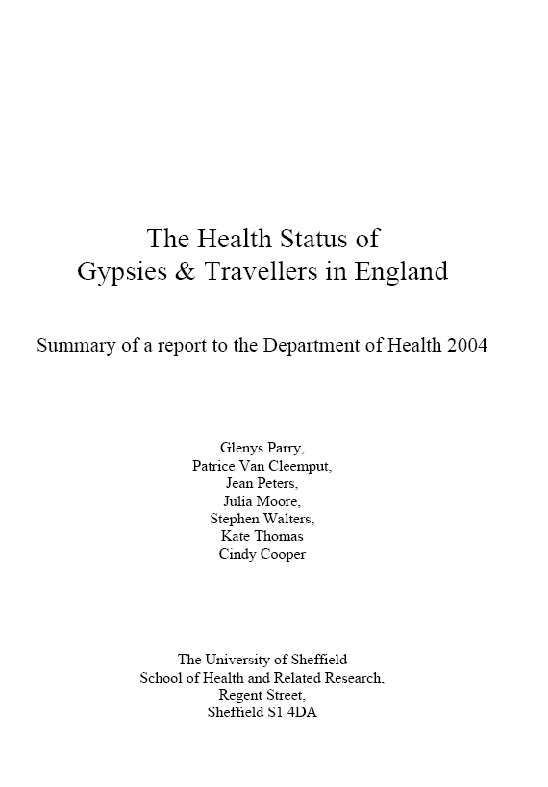
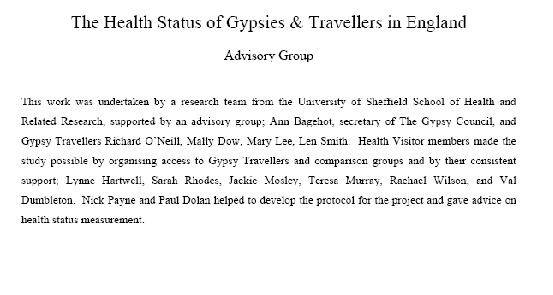
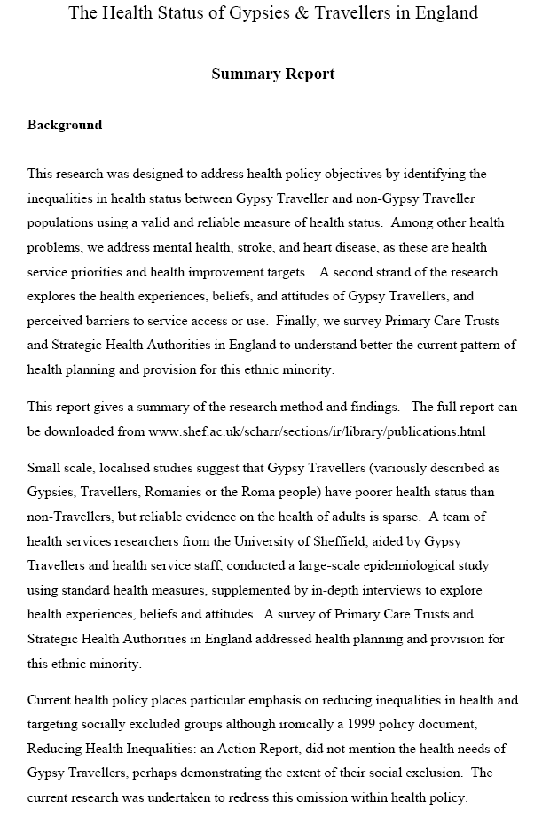
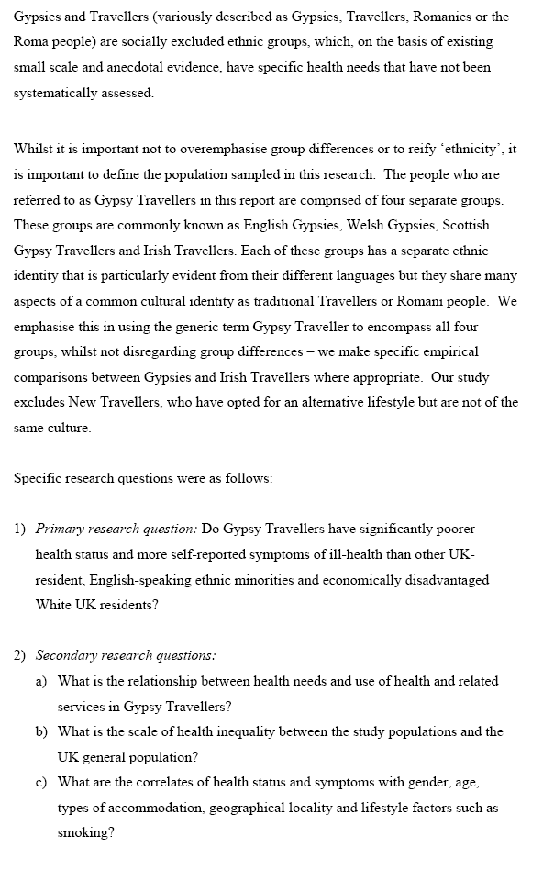
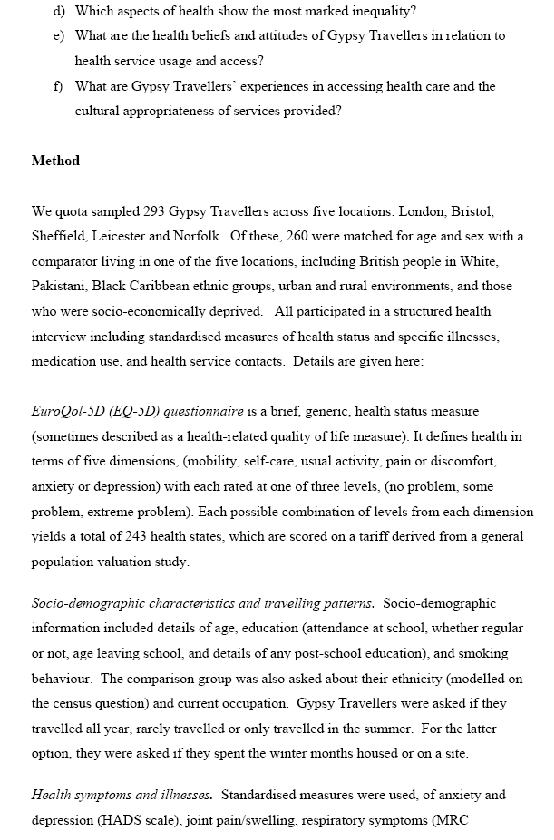
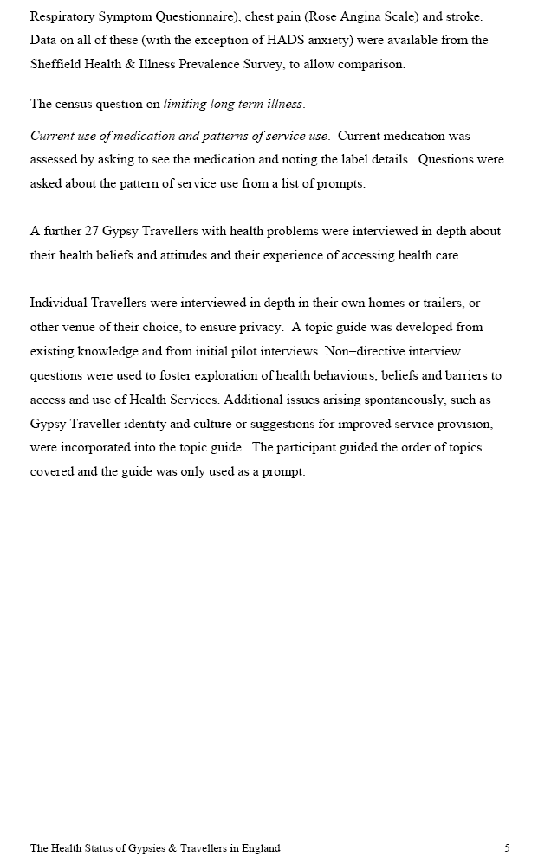
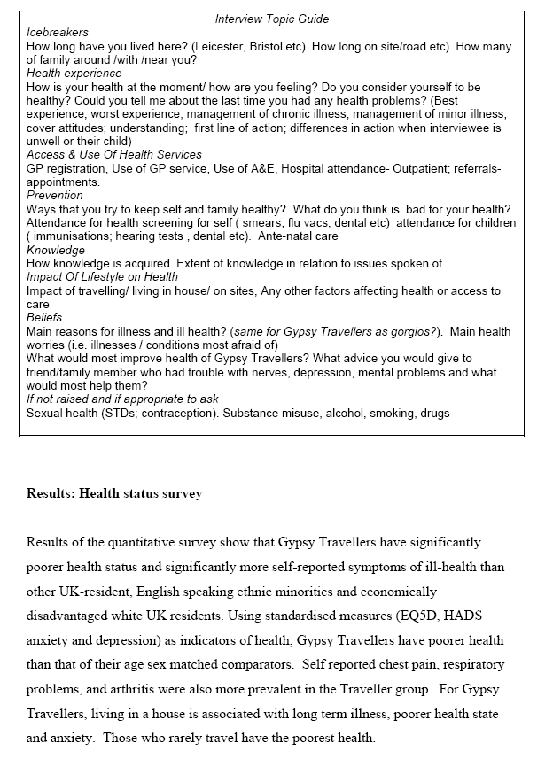
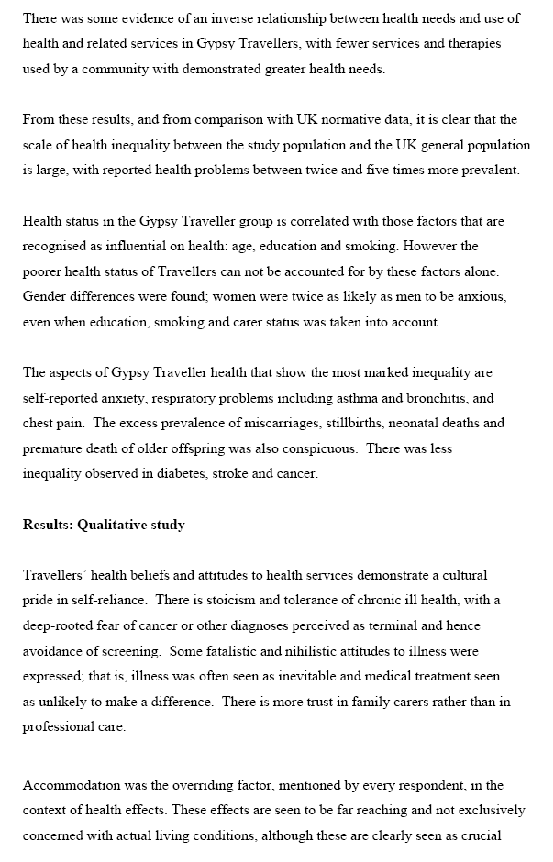
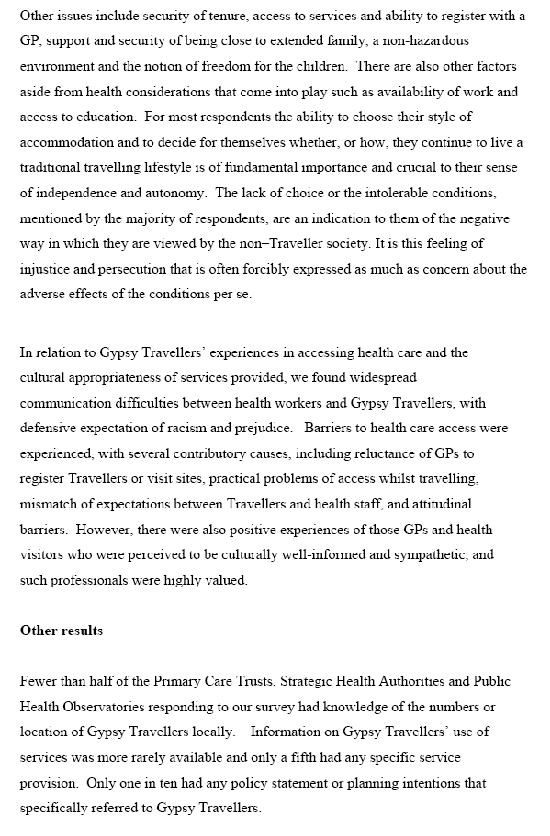
Appendix Three: 2004 example of issues of access to health services for Gypsy Travellers

Appendix Four: Ofsted report for Park Community School
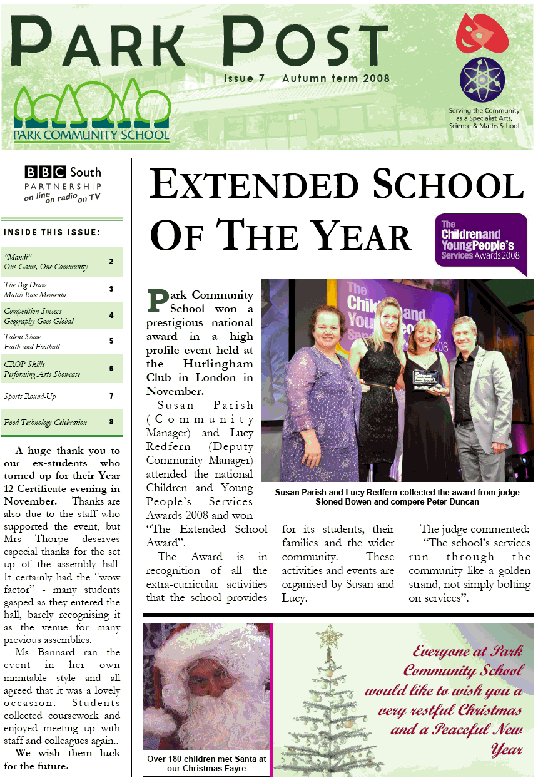
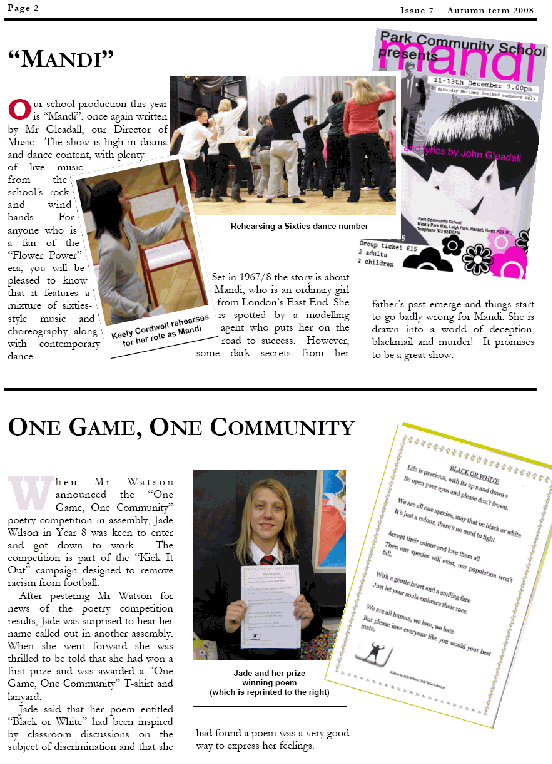
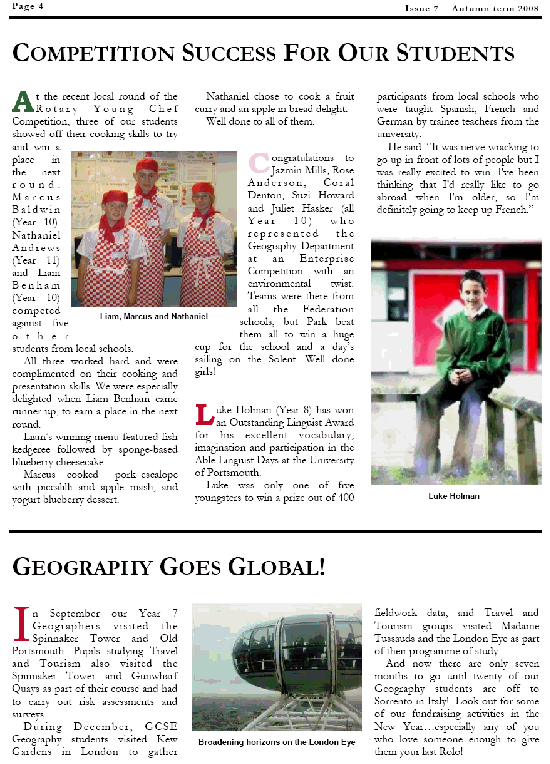
Appendix Five: Excerpt from School Paper