
Archived decisions
Hampshire Children and Young People's Plan 2009-12
Hampshire Children and Young People's Plan 2009-12
Contents
Foreword 3
Executive summary 4
Introduction 6
Section 1 - Vision and priorities 8
Section 2 - Making it happen 24
Appendices
1. Improvement Plan 33
2. Key facts 68
3. Resources, commissioning and workforce 72
4. Performance management 79
5. Links to other plans and strategies 80
6. National Indicators 84
7. Glossary 89
Foreword
Welcome to Hampshire's second Children and Young People's Plan
The Children and Young People's Plan is the single, overarching plan for Hampshire's Children's Trust and sets the direction and priorities for services for children, young people and families in Hampshire over the next three years.
The Plan reflects the Trust's determination to use its collective power to improve outcomes for children and young people. Successful delivery of the actions in this Plan and the actions in all associated plans, will mean that children and young people in Hampshire are happier, healthier, safer, more valued citizens, able to fulfil their potential with good economic prospects.
Because children living in poverty, or facing some sort of disadvantage or disability, are less likely to achieve these aims, we have taken every opportunity, through the Plan, to find ways to improve their life chances. The guiding principle behind the first Children and Young People's Plan was that every child really does matter and this still holds true. We want to do the best for all children and young people in Hampshire and for their parents and carers, through our universal services and through providing extra help and support where it is most needed.
Thank you to everyone who has contributed to this plan. It is now the task of the Children's Trust to work together to turn it into a reality.

Cllr David Kirk John Coughlan CBE
Executive Lead Member for Director of Children's Services
Children's Services (Education) Hampshire County Council
Hampshire County Council
Executive summary
This Children and Young People's Plan (CYPP) is the key strategic plan for Hampshire's Children's Trust, establishing priorities for the delivery of services to children, young people and families. The focus of the Plan is on improving the lives of the county's children and young people across the five Every Child Matters outcomes (www.everychildmatters.gov.uk) by tackling barriers to learning, improving health and breaking cycles of disadvantage.
Section 1 - Vision and priorities
Vision for Hampshire's Children's Trust:
Making Hampshire a better place for children and young people, where all of them, including those who are vulnerable or disadvantaged, have the best possible start in life and are supported by the whole community to reach their potential. Hampshire's Children's Trust is committed to the United Nations Convention on the Rights of the Child (www.everychildmatters.gov.uk/strategy/uncrc) and to the Declaration on Child Well-being in the UK, which aims to improve the well-being of all children and young people (www.childwellbeing.org.uk). |
This CYPP identifies six priorities for all those working with children and young people in Hampshire. These have been developed through an analysis of need and consultation with children, young people, their parents/carers and all Children's Trust partners. Furthermore, all priorities align to the Every Child Matters outcomes and national Children's Plan 2020 goals (www.dcsf.gov.uk/childrensplan).
Hampshire priorities:
1. Reducing the incidence and impact of poverty on the achievement and life chances of children and young people.
2. Securing children and young people's physical, spiritual, social, emotional and mental health, promoting healthy lifestyles and reducing inequalities.
3. Providing opportunities to learn that raise children and young people's aspirations, encourage excellence and enable them to enjoy and achieve beyond their expectations.
4. Ensuring that children and young people are safe and feel safe, enabling them to build resilience and personal confidence.
5. Providing vocational, leisure and recreational activities that provide opportunities for children and young people to experience success and make a positive contribution.
6. Removing barriers to access, participation and achievement, and not tolerating discrimination and abuse.
Section 2 - Making it happen
To deliver this CYPP, Hampshire's Children's Trust will strive to realise further improvements in the way services for children and young people are planned and delivered. These improvements will emerge from a range of processes, including:
· engaging children, young people and their families in the planning, delivery and evaluation of services;
· building strong and inclusive Children's Trust arrangements;
· strengthening of early intervention and prevention strategies, including closer working between all partners;
· rigorous and robust local safeguarding arrangements;
· professional development opportunities to build the skills, expertise and capacity of the children's workforce in Hampshire.
Improvement Plan
The Improvement Plan establishes a series of key actions for delivery of the six CYPP priorities. This section of the Plan is divided into clear sub-sections for each priority, identifying the partners responsible for meeting targets under each action area.
Resources, commissioning and workforce
Improved outcomes depend on effective co-ordination and use of resources. As Hampshire's Children's Trust develops over the next year, it will move to the alignment of budgets and commissioning processes. Following this, the Children's Trust will be able to identify partners' contribution to the delivery of the CYPP.
Hampshire's Children's Trust will develop a workforce strategy, establishing the long term vision for integrated working across a range of practitioners.
Performance management
Progress against the CYPP will be monitored twice yearly by Hampshire's Children's Trust, including the responsibility for management of any risks to delivery. As part of the monitoring cycle, there will be an annual refresh of the needs assessment and evaluation of associated outcomes and actions. This will ensure that the Plan remains relevant and appropriate and informs internal and external scrutiny and inspection processes.
Introduction
This Children and Young People's Plan (CYPP) has been agreed by all the partners representing Hampshire's Children's Trust - working for, and with, children and young people and their families. It represents a shared commitment to unlocking the potential of every child and young person, to providing support that enables success in their adult lives and making Hampshire a better place in which to enjoy childhood.
The Plan sets out the key strategies and priorities for improving outcomes for children, young people and families against all five of the Every Child Matters outcomes (www.everychildmatters.gov.uk/aims). The focus of the Plan is to address inequalities for those facing the greatest risks and barriers and to strengthen support for individual children and young people, their families and communities, where needed.
It does not prescribe in detail what people have to do or how they have to do it, neither does it attempt to list every service, every initiative or every provision. The Plan provides an overarching framework, promoting a shared vision and a number of priorities, aimed at children, young people, parents, carers and communities. The degree to which these priorities are met will be the measure of the Plan's success.
Children's Trust partners and other stakeholders all have a part to play in improving the lives of children and young people, by working together and accepting responsibility for specific actions within this Plan. Key partners include:
· community and voluntary sector organisations;
· diocesan authorities, church and faith groups;
· Hampshire's armed forces support services;
· Hampshire Constabulary;
· Hampshire Fire and Rescue Service;
· healthcare providers including Hampshire Primary Care Trust (PCT) and South Central Strategic Health Authority;
· Job Centre Plus;
· Learning and Skills Council;
· local authority services and partnerships from county to parish level;
· private sector service providers;
· schools and colleges;
· Sure Start Children's Centres and early years settings;
· Wessex Youth Offending Team and the Hampshire Probation Service.
Central Government is strengthening Children's Trust arrangements, including an extended duty to co-operate for some partners, and by 2010 we need to ensure that the service improvement plans of every partner in Hampshire's Children's Trust inform, and are informed by, this CYPP. Further information on Children's Trusts can be found online at www.everychildmatters.gov.uk/aims/childrenstrusts.
This plan is about `doing with' rather than `doing to'. Its priorities have been shaped by the views, needs and aspirations of children and young people. We will continue to engage children and young people in the planning, delivery and evaluation of services and will work in partnership with parents and carers to ensure that services effectively meet needs.
What is in the Plan? |
There are two sections to this plan, with appendices linking to national and local priorities and joining up the bigger picture. 1. Vision and priorities - our vision and priorities for all children and young people and how these will support improved outcomes 2. Making it happen - outlining the improvement processes required to deliver the vision. |
Section 1 - Vision and priorities
The vision for children and young people in Hampshire
The vision of Hampshire's Children's Trust is to make Hampshire a better place for children and young people, where all of them, including those who are vulnerable or disadvantaged, have the best possible start in life and are supported by the whole community to reach their potential. In order to ensure that every child matters, the Children's Trust will work in partnership to engage, support and challenge all children and young people in Hampshire, providing them with the opportunity to exceed expectations and enjoy life.
Hampshire's Children's Trust is also committed to upholding and promoting the rights of children and young people, as set out in the United Nations Convention on the Rights of the Child (www.everychildmatters.gov.uk/strategy/uncrc). The Convention asserts that every child in the world has rights - to survival and development, to protection, to health and well being and to be active participants in all the things that happen to them including all decisions that affect them. Unless their needs are met, they will be denied a childhood and the opportunity to develop their full potential. Those needs will not be met unless adults take responsibility for providing the necessary conditions for their fulfilment. |
The well-being of children and young people is fundamentally important - not only to their individual achievement and life chances, but also to the quality of life and future prosperity of everyone living in Hampshire. The Declaration on Child Well-being in the UK (addressing the outcomes of the 2007 UNICEF report An Overview of Child Well-being in Rich Countries), sets out the Children's Trust's ambitions for children and young people in Hampshire.
The table below lists the key statements within the Declaration and shows links to the Every Child Matters outcomes.
Declaration on Child Well-being in the UK (www.childwellbeing.org.uk) |
Every Child Matters outcome |
· Children and young people, their families and carers have the support, skills and resources to help them explore their dreams. |
Enjoy and achieve; Achieve economic well-being |
· Places of learning help children and young people to be confident and happy. |
Enjoy and achieve |
· Children and young people feel safe and are free to explore their world and take risks. |
Stay safe |
· We work together to make space for children and young people to enjoy childhood. |
Enjoy and achieve |
· All children and young people have someone to talk to and somewhere to go when they need it. |
Be healthy |
· All children are valued and have our help, support and love, including when they are in trouble. |
All |
· All children and young people feel included and cherished, whatever their background or beliefs and wherever they come from. |
Stay safe |
· Mental health services are there for children and young people when they need them. |
Be healthy |
· Children and young people play an active role in shaping the services and activities for them. |
Make a positive contribution |
· The good things that children and young people do are shown fairly in newspapers, on television and in other media. |
All |
· We live up to the UN Convention on the Rights of the Child. |
All |
Responsibilities
The above declaration is a statement on the rights of children and young people. However, rights come with responsibilities, both for children and their parents/carers Hampshire's Children's Trust will work in partnership to ensure that, where necessary, individuals will be offered the right level of support and skills to fulfil their responsibilities for themselves, their families and their local communities.
Hampshire's Rights, Respect and Responsibilities programme has been successful delivered in schools since 2003. The programme seeks to help children to become responsible citizens, achieve their potential and increase understanding their rights and also their responsibility to respect the rights of others. Case studies of how the programme has positively impacted on the lives of children and young people can be found online at www.hants.gov.uk/education/childrensrights.
Priorities for Hampshire's Children's Trust
The priorities for Hampshire's Children's Trust have been identified through a comprehensive needs assessment of outcomes for children and young people across Hampshire. The priorities are central to the delivery of the vision for Hampshire to be a better place for children and young people.
The table below details the priorities, showing links to all five of the Every Child Matters outcomes and the 2020 goals in the national Children's Plan (www.dcsf.gov.uk/childrensplan).
Hampshire priorities |
Every Child Matters outcome |
Children's Plan 2020 goal(s) |
1. Reducing the incidence and impact of poverty on the achievement and life chances of children and young people. |
Achieve economic well-being |
· Child poverty halved by 2010 and eradicated by 2020. |
2. Securing children and young people's physical, spiritual, social, emotional and mental health, promoting healthy lifestyles and reducing inequalities. |
Be healthy |
· Enhance children and young people's well-being. · Child health improved, with the proportion of obese and overweight children reduced. |
3. Providing opportunities to learn that raise children and young people's aspirations, encourage excellence and enable them to enjoy and achieve beyond their expectations. |
Enjoy and achieve |
· At least 90% developing well across all areas of the Early Years Foundation Stage Profile by age 5. · At least 90% achieving at or above the expected level in both English and Maths by age 11. · At least 90% achieving the equivalent of 5 higher level GCSEs by age 19; and at least 70% achieving the equivalent of 2 A levels by age 19. |
4. Ensuring that children and young people are safe and feel safe, enabling them to build resilience and personal confidence. |
Stay safe |
· Parents satisfied with the information and support they receive. |
Hampshire priorities |
Every Child Matters outcome |
Children's Plan 2020 goal(s) |
5. Providing vocational, leisure and recreational activities that provide opportunities for children and young people to experience success and make a positive contribution. |
Make a positive contribution |
· All young people participating in positive activities to develop personal and social skills, promote well-being and reduce behaviour that puts them at risk. · Significantly reduce, by 2020, the number of young offenders receiving a conviction, reprimand or final warning for a recordable offence for the first time. · Employers satisfied with young people's readiness for work. |
6. Removing barriers to access, participation and achievement, and not tolerating discrimination and abuse. |
Applies to all five outcomes. | |
The Improvement Plan (Appendix 1) outlines the actions required to deliver the above priorities, with success measures and targets.
Making the priorities a reality
The success of the plan will be demonstrated by how well the priorities are met and the extent to which these are shared and understood by children and young people and partners. To enable this, the priorities have been translated into the following set of actions for different groups of children and young people, their parents/carers and communities.
What the priorities mean for all children and young people |
Working with you to ensure that you receive an excellent education and enjoy opportunities for learning and play in school and the wider community. Involving you in decision making so that services are relevant for you and easy to access. Learning from and working with you and your parents and carers, so that together, we can do the best for you. Protecting you from harm and promoting your safety and well-being. Celebrating your achievements and responding quickly when you need support so that you have every opportunity to be a successful learner, confident individual and responsible citizen. |
What the priorities mean for all parents and carers |
Working with you as a key partner, based on the recognition that parents and carers bring up children and young people and that the home environment you create is the crucial influence on your children's well-being. Making information, advice and support available to you, including parenting courses and family learning opportunities, if and when needed. Engaging you fully in the planning, commissioning and monitoring of services, particularly through schools, children's centres, parent groups, parenting services and practitioners. Providing access to sufficient and affordable childcare that meets your needs. For service families: Addressing issues of school admission and improving access to local services and amenities. Supporting continuity of services during and after changes in postings, by working with the Civil Military Partnership and garrisons/stations, as outlined in The Nation's Commitment: Cross Government Support to our Armed Services, their Families and Veterans (www.mod.uk/NR/rdonlyres/415BB952-6850-45D0-B82D-C221CD0F6252/0/Cm7424.pdf). |
What the priorities mean for local communities |
Supporting stronger, safer and healthier communities through closer working with community and voluntary organisations, recognising their role and vital contribution to community engagement and well-being. Protecting vulnerable people and tackling crime and anti-social behaviour to ensure that areas are safe and welcoming to people of all ages and backgrounds. Promoting healthy lifestyles and reducing health inequalities. Maximising well-being, maintaining and improving quality of life and working to ensure that everyone has the opportunity to be active in their community. Providing access to community based learning and services and offering support when needed. Working with rural communities to deliver the vision outlined in Hampshire County Council's Rural Delivery Strategy (www.hants.gov.uk/rh/rural/rural-consultation.pdf) by: · securing more effective engagement with rural communities and partner organisations; · providing improved accessibility to services in rural areas; · strengthening the role for Hampshire County Council at a regional and national level by building on the lessons of the Rural Pathfinder. Enhancing our quality of place, making Hampshire a good place to live by protecting local distinctiveness and diversity, providing excellent facilities, respecting Hampshire's heritage and proactively planning for the future. Developing children and young people's sense of belonging by encouraging them to contribute to, and take responsibility for, their local community. |
Vulnerable groups
The priorities are aimed at improving outcomes for all children and young people, reducing inequalities and narrowing the gap between vulnerable groups and their peers. These vulnerable groups of children and young people and the particular issues that they may face are shown in the table below. This plan aims to prevent and reduce the impact of these issues through delivery of the priorities.
Children and young people living in relative poverty | ||||
Facts |
Possible issues | |||
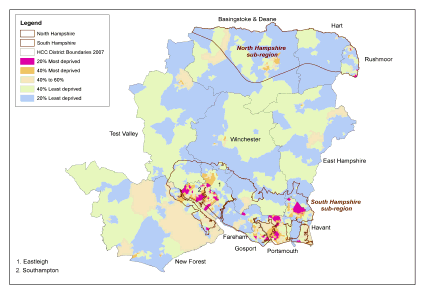
In Hampshire, there are areas of affluence, but also areas of significant deprivation. The Index of Multiple Deprivation (IMD) 2007 is a measure used to define deprivation at small area level, based on: · educational skills and training · crime and disorder · health deprivation and disability · employment; · income; · living environment · barriers to housing and services The levels of deprivation in Hampshire are shown in diagram 1 below (the pink spots identify those areas which are in the 10% most deprived nationally). Diagram 1: Deprivation levels in Hampshire
Further information on the 2007 IMD can be found online at www.hants.gov.uk/planning/factsandfigures/figures-economics/economic-labour_market_reports.htm. Approximately 12,800 children in Hampshire schools live in areas which are among the 30% most deprived in the country (Index of Multiple Deprivation, 2007). There are also children who live in relative poverty in the more affluent areas of Hampshire. In the 30% most affluent lower super output areas, 9.2% of children receiving child benefit are dependent on workless benefits (April 2006, Department for Work and Pensions and IMD 2007). 8.3% of primary school children and 6.4% of secondary school children in the county are eligible for free school meals (7,945 primary school pupils and 4,562 secondary school pupils in November 2008). |
· physical health problems and lower life expectancy; · poor nutrition and childhood obesity; · poor and overcrowded housing; · unemployment and low family income; · family mental health issues; · lack of access to basic amenities; · more anti-social behaviour in their local community; · low aspiration and low self-esteem; · speech, language and communication difficulties on admission to school; · lower attainment; · poor school attendance and exclusion; · lack of access to leisure, cultural and recreational facilities; · lack of access to safe places to play and socialise; · higher rates of teenage pregnancy; · not continuing in education post-16. |
|||
What the priorities mean for children and young people living in poverty |
||||
Using our resources to help you reach your potential, so that you enjoy success at school and can look forward to further and higher education, training and employment, reducing the risk of experiencing poverty in your adult lives. Providing you with access to out-of-school care and activities, so that your parents and carers have increased opportunities and choices for balancing work and family life, secure in the knowledge that there are places where you are safe, well looked after and enjoying yourself when away from home. | ||||
Children in care | |
Facts |
Possible issues |
The number of children and young people in Hampshire who experienced being in care during 2008 was 1,451 (the number of children who have been in care, rather than the number of times they have been in care). Over 70% of children in care live in foster homes. Only 4.9% of children in care achieve 5 A*-C grade GCSEs including English and Maths (2007/08). |
· traumatic life events and family trauma; · lack of supportive family networks; · emotional and mental health difficulties; · instability of placements; · poor school attendance and exclusion; · low educational attainment; · lack of access to leisure, cultural and recreational facilities; · lack of access to safe places to play and socialise without adult supervision; · higher rates of teenage pregnancy; · poor accommodation after leaving care; · unemployment and not continuing in education or training post-16. |
What the priorities mean for children or young people in care | |
Supporting you to be successful in school and ensuring that you have every opportunity to fulfil your ambitions through further education, training and employment. Increasing stability for you by securing more local, family based care placements. Giving you more choice, by providing more placement options and opportunities for adoption, when appropriate. Striving to provide the best possible standard of care for you. Ensuring that the six areas identified in the Pledge to Children in Care are delivered (www.hants.gov.uk). | |
Children and young people at risk because of mental health problems | |
Facts |
Possible issues |
It is estimated that approximately 6% of children and young people in Hampshire aged 0-18, will have a mental health difficulty within the current year (MIND, 2008). |
· isolation and social exclusion; · anxiety, depression and phobias; · hyperactivity, withdrawal or dissociative disorders; · self harm; · attempted suicide; · eating disorders; · substance and alcohol abuse; · child abuse; · domestic violence; · family breakdown; · bullying and lack of friendship; · truanting and exclusion; · under achievement. |
What the priorities mean for children or young people at risk because of mental health problems | |
Providing you with accessible and dedicated mental health services to help you develop the skills and resilience you need to get through difficult times. Supporting you when members of your family have mental health difficulties, so you do not have to cope on your own. Ensuring that your school curriculum enables you to take part in a range of activities that support your social and emotional well-being. These might include music, art, or other areas of interest. | |
Children and young people with learning difficulties and/or disabilities | |
Facts |
Possible issues |
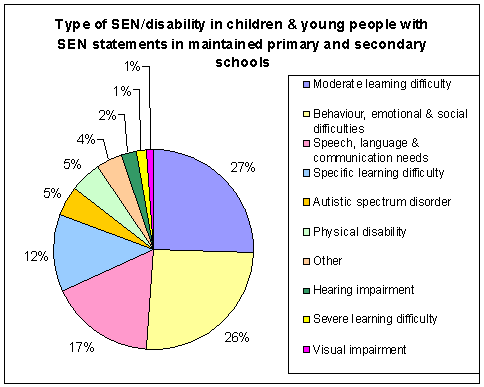
2,364 children and young people attend Hampshire's maintained special schools (Annual School Census & SEN2 Survey, 2007). 2.5% of school pupils have a statement of Special Educational Needs (Annual School Census & SEN2 Survey, 2007). A breakdown of the type of SEN/disability is provided in diagram 2 below. Diagram 2: Statements of Special Educational Needs (SEN)
Source: Hampshire Annual Schools Census & SEN2 Survey, January 2007 |
· multiple assessments by multiple agencies; · family stress; · poverty; · social and emotional needs; · mental health issues; · social exclusion and lack of understanding within the community; · inequity because of post code and eligibility criteria restrictions to services; · bullying and prejudicial attitudes; · lack of access to childcare, short breaks, positive activities, informal play and leisure facilities; · long travel times to and from school; · difficult transition into adulthood; · lack of information; · under achievement. |
What the priorities mean for children or young people with learning difficulties and/or disabilities | |
Identifying any special educational needs you have as early as possible and helping you succeed in school so that you make good progress and fulfil your potential. Making sure that our schools, services and community facilities are accessible to you and your parents. Delivering the Aiming High for Disabled Children offer (www.everychildmatters.gov.uk/socialcare/ahdc) and implementing the Every Disabled Child Matters Charter (www.edcm.org.uk), in partnership with you, your parents and carers. | |
Young carers | |
Facts |
Possible issues |
There are approximately 3,300 young carers (1% of 0-19 year olds) in Hampshire (2001 Census). |
· loss of childhood; · mental health issues; · lack of access to basic necessities; · poverty; · social exclusion and misunderstanding; · family trauma; · lack of supportive family networks; · lack of access to holidays, positive activities, informal play and leisure facilities; · absence from school and under-achievement; · low self-esteem. |
What the priorities mean for young carers | |
Ensuring that you have the same opportunities and choices as other children and young people to succeed at school, participate in activities out-of-school and have fun. Providing support and counselling when you need it and creating opportunities for you to meet with other young carers, including specialist projects and community based activities. Raising awareness and understanding of the challenges you face with all those who work with and support you and your family. | |
Children and young people who are victims of neglect and abuse | |
Facts |
Possible issues |
There are 582 children with a Child Protection Plan in Hampshire. This is 0.19% of all children and young people in the county (January 2009). |
· post traumatic stress; · emotional and mental health problems including anxiety, depression, phobia and self harm; · guilt and anger; · eating disorders; · domestic violence and abuse; · trafficking; · family breakdown; · bullying; · truanting; · social isolation; · under achievement; · lack of friendship; · substance and alcohol abuse. |
What the priorities mean for children or young people who are victims of neglect and abuse | |
Doing everything possible to keep you safe from harm and taking action to prevent and stop abuse, including not tolerating bullying. Helping you to understand and deal with your feelings. Providing someone who will listen to, and support you, when you need it. Making sure you have opportunities to enjoy and achieve, both in and out of school. | |
Black, minority ethnic and Traveller children and young people facing barriers to participation or experiencing prejudice and discrimination because of their ethnic background (including refugees and asylum seekers) | |
Facts |
Possible issues |
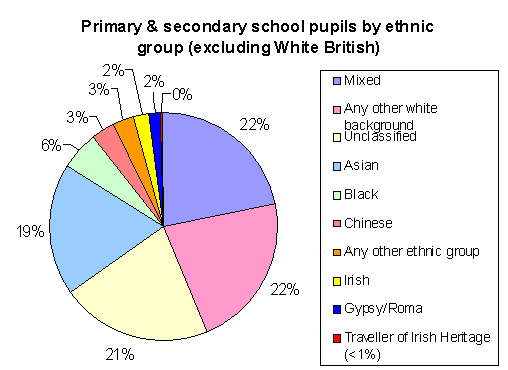
3.2% of children and young people in Hampshire belong to a black or ethnic minority group (2001 census). 0.14% (240) school pupils identified themselves as Gypsy or Traveller in the 2007 School Census. 5.2% of Hampshire school pupils say they have been picked on in school because of their race or colour (Pupil Attitude Survey, 2008). 6.4% of school pupils in the county say their ethnicity is other than white (Hampshire School Census, 2007). A breakdown is provided in diagram 3. Diagram 3: Ethnicity of school pupils
|
· bullying; · misunderstanding and lack of respect for their cultural heritage; · inadvertent and overt prejudice; · racist abuse; · assault; · feeling unsafe in their local community; · family stress; · lack of access to leisure, cultural and recreational facilities; · lack of access to safe places to play and socialise; · under achievement; · low self esteem. |
Black, minority ethnic or Traveller children or young people facing barriers to participation, or experiencing prejudice and discrimination | |
Not tolerating racism or discrimination and providing support if you do suffer from bullying or abuse. Valuing diversity and promoting shared values; building communities based on trust, respect and a sense of belonging. Celebrating your culture, achievements and contribution; providing information, advice, guidance and support to you and your families so that any barriers to participation and achievement are removed. Supporting schools and families to raise your achievement, through bilingual assistance, projects, training and advice. | |
Young parents | |
Facts |
Possible issues |
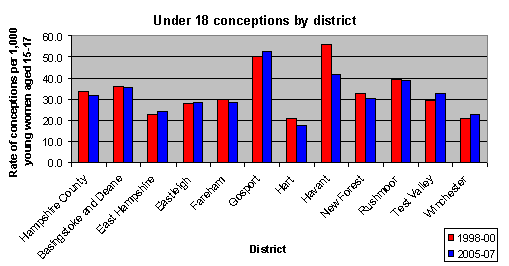
31.7 in every 1,000 young women aged 15-17 in Hampshire became pregnant in 2007. Conception rates for districts are shown in diagram 4, below. Diagram 4: Under 18 conceptions by district
|
· poverty; · poor and overcrowded housing; · unemployment; · lack of access to basic necessities; · low aspiration and low self esteem; · low attainment and lack of qualifications; · lack of access to leisure, cultural and recreational facilities; · no education or training beyond teenage years; · lack of access to childcare; · difficulty with parenting skills; · social isolation from peers. |
What the priorities mean for young parents | |
Providing you with the information, skills and knowledge that will enable you to make informed choices about relationships, parenthood and sexual health. Offering affordable and accessible childcare so that you can continue in education, training or employment. Securing easy access to local support, dedicated midwifery and health visitors. | |
Lesbian, gay, bisexual and transgender young people |
||||
Facts |
Possible issues | |||
Between 30% and 50% of young people in secondary schools who are attracted to people of the same sex, will have directly experienced homophobic bullying, compared with 10-20% of young people who have experienced general bullying (Briefing 3: Young lesbian, gay & bisexual people, Department of Health, 2007). |
· emotional and mental health problems, including anxiety, depression, phobias and self harm; · eating disorders; · prejudice, homophobic abuse, bullying and assault; · feeling unsafe in their local community; · family stress; · lack of access to leisure, cultural and recreational facilities; · lack of access to safe places to socialise; · under achievement; · low self-esteem; · lack of friendships; · substance and alcohol abuse. | |||
What the priorities mean for young people who are lesbian, gay, bisexual or transgender | ||||
Not tolerating homophobic abuse, bullying or discrimination and providing support if you do suffer from bullying or abuse. Providing free confidential advice through help lines, web based information and drop-ins - and trained staff available to support you when needed. Identifying opportunities for you to meet with other lesbian, gay, bisexual and transgender young people in safety www.getiton.nhs.uk/lesbian-gay-bisexual-community-services. | ||||
Young offenders | ||||
Facts |
Possible issues | |||
3,273 young people were brought into the Youth Justice System in 2007/08 (Wessex Youth Offending Team). 38% of the young people who received a reprimand or final warning/a first tier or community penalty, or were released from custody in 2005 went on to re-offend (Wessex Youth Offending Team). 6% of the young people who were convicted in court during 2006/07 were sentenced to custody (Wessex Youth Offending Team). |
· violence and abuse; · exclusion; · emotional and mental health problems including anxiety, depression, phobia, self-harm and attempted suicide; · domestic violence; · substance and alcohol abuse; · family breakdown; · lack of friendships; · post traumatic stress; · under achievement and lack of qualifications; · fewer opportunities for education, training or employment post-16; · lack of access to leisure, cultural and recreational facilities. | |||
What the priorities mean for children or young people at risk of entering the Youth Justice System or re-offending | ||||
Intervening early to provide support for you and your family. Providing opportunities to engage in positive activities and involving you in the design and planning of those activities. Improving the education, training and support available to you before, during and after custody. | ||||
Section 2 - Making it happen
Realising the vision set out in this Plan will require further improvements in the way services for children and young people are planned and delivered. The guiding principle to improvement is putting the needs of children, young people and families first and ensuring provision is both seamless and of the highest quality. This will involve a range of processes, including:
a) rigorous and robust local safeguarding arrangements;
b) the engagement of children and young people in the planning, delivery and evaluation of services and provision;
c) working in partnership with parents and carers, and providing information, advice and support when needed;
d) building strong and inclusive Children's Trust arrangements and pooling budgets for joint commissioning;
e) the strengthening of early intervention and prevention strategies through integrated working;
f) closer working between early years settings, children's centres, schools, colleges and partner organisations;
g) the provision of professional development opportunities to build the skills, expertise and capacity of all those working with children and young people in Hampshire;
h) the provision of effective support resources (including IT systems and business processes);
i) effective, co-ordinated use of finite resources (see Appendix 3).
Improvement processes
a) rigorous and robust local safeguarding arrangements |
All organisations that work with children share a commitment to safeguard and promote their welfare. The Hampshire Local Safeguarding Children Board (www.4lscb.org.uk) co-ordinates the work of all partners with responsibility for safeguarding and promoting the welfare of children and young people. Inter-agency training is provided so that there is a shared understanding of the tasks, processes, principles and roles and responsibilities. These local arrangements are planned and delivered in line with the national guidance Working Together to Safeguard Children (DCSF, 2006) www.dcsf.gov.uk. In practice this means that: · there are more effective and integrated services at both strategic and individual case level; · there is improved communication between professionals, including a common understanding of key terms, definitions and thresholds for action; |
· there are effective working relationships, including an ability to work in multi-disciplinary groups or teams; · there is sound decision making, based on information sharing, thorough assessment, critical analysis and professional judgement. · all public, private, community and voluntary sector organisations have clear policies, processes and procedures for child protection; · there are rigorous systems in place to ensure compliance with the Independent Safeguarding Authority vetting and barring scheme (www.isa-gov.org.uk). |
b) the engagement of children and young people in the planning, delivery and evaluation of services and provision |
Services and provision must be developed with children and young people for them to be relevant, effective and sustainable. The United Nations Convention on the Rights of the Child underpins Hampshire's participation strategy for listening and responding to the voices and ideas of children and young people and engaging them fully in the development of service provision, providing opportunities for personal growth and achievement. Hampshire's participation strategy outlines ambitious aims and objectives, reflecting commitment to the engagement of children and young people and implementation of the national Hear by Right framework (http://hbr.nya.org.uk). Examples of successful participation activities include: Placing an emphasis on pupil voice in schools and an ethos of rights, respect and responsibility, providing systematic opportunities for children and young people to participate in decisions so that they learn to make an active contribution to their school, community and wider society. · Representatives from 11 district councils on the Hampshire County Youth Council (www.hcycweb.net/), influencing key decisions and ensuring that the voices of young people are heard in service development. · The engagement of children and young people, in each of the 11 district council areas, in the work of the Youth Inclusion and Support Panels empowers them to make positive choices about their own lives. · The influence of children and young people in driving forward the development of district play strategies and youth strategies. · Services for Young People - providing a local youth offer, high quality opportunities designed with and for young people, listening to and promoting their voice and involvement. · Hampshire's commitment to the implementation of Aiming High for Disabled Children and the Every Disabled Child Matters Charter, ensuring that disabled |
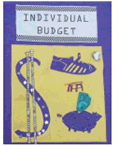
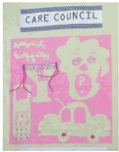
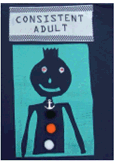
children and young people are involved in the planning, commissioning and monitoring of services, including both specialist and universal services. · The Care Council for children in care, which provides the opportunity for children and young people to be involved in the planning, commissioning and monitoring of services. In 2008, the Care Council designed a `pledge' outlining the six areas they wanted the County Council to work on. Subsequently, the children and young people designed a poster to depict the six areas covered by the Pledge - shown in diagram 5, below (the full poster can be found on the Children's Services Department equality and diversity web-pages www.hants.gov.uk/childrensservices). Diagram 5: The Children in Care Pledge The Children in Care Pledge
|

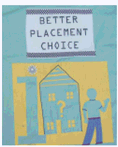
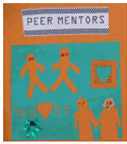
c) working in partnership with parents and carers and providing information, advice and support when needed |
Supporting and engaging with parents and carers will ensure that services are accessible, inclusive and responsive to local needs and aspirations. This will require further development of key strategies, including: · The Positive Parenting Programme `Triple P', which helps parents to nurture relationships, build their skills and confidence and supports well-being (www.hants.gov.uk/childrens-services/parentdevelopment/triplep.htm). · Hampshire's Family Information Service, Hantsfish (www.hantsfish.org.uk), which provides parents and carers with access to web based information and services. · Elected parent representatives sitting on the governing body of every school (www.hants.gov.uk/education/governors.htm). · Parents and carers as key partners in the development, delivery and governance of children's centres. · District parent support officers working closely with schools, parents, existing parenting services and practitioners to ensure that a comprehensive range of parent support services are available to meet needs in each area. · Ensuring that through the Parent Partnership Service, parents and carers play an informed part in planning provision to meet their child's SEN; building partnerships between parents and carers, the local authority and school and encouraging parents and carers to be involved in the development of local SEN policy and practice (www.hants.gov.uk/childrens-services/specialneeds/parentpartnership). |
d) building strong and inclusive Children's Trust arrangements and pooling budgets for joint commissioning |
By 2010, a model for Children's Trust arrangements will be developed, building on the strategic work of Hampshire's Children and Young People's Partnership. These Trust arrangements will need to be understood, valued and implemented at a local level. Nationally, the duty to co-operate is being extended to schools, colleges and JobCentre Plus. The engagement of such key partners in Hampshire's Children's Trust arrangements will be critically important to improving outcomes for all children and young people. The newly imposed duty will provide a legal basis for Trust arrangements but will not, in itself, create the sense of shared purpose and mutual respect necessary for more integrated working. The success of the Trust is dependent on a whole system approach to children's services - recognising that no one individual, service or organisation can work alone to improve outcomes for all children and young people. This will require: · drawing a clear distinction between strategic, executive and operational issues so that all partners are clear about their remit and accountabilities; · strengthening local partnership arrangements including schools and colleges, which will support the county Children's Trust arrangements; · having access to detailed and robust data for needs analysis and planning; · developing commissioning strategies (see Appendix 3), building on the experience gained through the CAMHS Commissioning Group and our services for disabled children; · developing robust financial, budget and performance management systems and strategies for aligning budgets (see Appendix 3); |
· ensuring that representatives on Children's Trust boards have a mandate for committing their organisations resources and effective systems for reporting back; · building on our work in involving children, young people and their parents and carers in the planning, delivery and evaluation of services and provision; · ensuring that governance arrangements focus on delivering better local outcomes for children, young people and families rather than on structures and processes. |
e) the strengthening of early intervention and prevention strategies through integrated working |
In working to reduce inequalities and to narrow the gap between children and young people who do well and those who do not, consistent, high quality arrangements need to be in place to identify all those who need additional help and to intervene early to support them. Essentially, this means putting the needs of children and young people and their families first and making sure that services meet their requirements. The Children's Trust will work to enable children and young people with additional needs, to have easier access to support, by improved integration of services. This will include services delivered through Building Schools for the Future, Extended Schools, children's centres and strategies for CAMHS, behaviour and attendance and SEN. Providers of services for children and young people have a duty to ensure that services are accessible and to encourage engagement with the Common Assessment Framework (a standardised approach for assessing a child's additional needs and deciding how they should be met). Services will work together in local groups to deliver a partnership approach based on identified need. This will be supported and facilitated by integrated service planning through: · a comprehensive approach to prevention and early intervention by the establishment of local cluster partnerships of services; · local access to advice and support services, based on the identified needs of individual children and families; · the engagement of vulnerable children and families in the planning and delivery of services; · preparing and training all agencies to use the Common Assessment Framework; and promotion of the lead professional role in co-ordinating services for individual children and families; · ensuring all professional services work together in providing support, preventing any unnecessary referral of families; |
· development of local service directories to signpost provision against identified needs; · ongoing evaluation of service provision against need to inform the commissioning cycle. |
f) closer working between early years settings, children's centres, schools, colleges and partner organisations |
Securing the well-being, and unlocking the potential of every child and young person, cannot be achieved by schools alone, or by schools working in isolation. The need to raise standards remains critically important, but there is a renewed emphasis on collaborative and partnership working to deliver improved outcomes, removing the blocks that undermine learning potential and building the enablers that allow children and young people to enjoy and achieve. In Hampshire, this is being supported through: · Development and improvement plans for children's centres and early years settings. · Rigorous school self-evaluation and support and challenge through school improvement partners. · Collaborative working between early years settings, children's centres, schools, colleges and partner organisations to deliver: - behaviour improvement partnerships; - extended services in and around schools; - access to sport and leisure activities through school sports partnerships; - curriculum enrichment through the community plans of specialist schools; - improved transition between phases; - new and innovative pathways to learning through 14-19 consortia (schools, colleges, training providers and other agencies who work in partnership to provide courses for 14-19 year olds); and - outreach services from special schools. · Early years settings, children's centres, schools and colleges working with a range of partners, statutory agencies and community and voluntary organisations, to identify and address the risk factors that prevent some children and young people from realising their potential. · More inclusive approaches to school improvement planning and engaging partners in the process of identifying priorities for action. · Taking every opportunity to develop new and existing places to learn that are exciting, inclusive and sustainable. |
g) the provision of professional development opportunities to build the skills, expertise and capacity of all those working with children and young people in Hampshire | |
Unlocking the potential and securing the well-being of every child and young person can only be delivered by skilled and motivated staff who achieve excellence in their specialism and work with each other, and with parents/carers to improve outcomes. The children's workforce is diverse, bringing to bear distinctive skills and knowledge in: | |
· schools; · social care; · services for young people; · play work; · health services; |
· early years; · youth justice; · family support; · sport and recreation; · creative and cultural. |
The workforce includes both paid employees and volunteers, managed through public, private, community and voluntary organisations and agencies. Building the capacity of this workforce involves extending those distinctive specialist skills whilst creating the relationships and trust, skills and understanding necessary for effective integrated working (see Appendix 3). Diagram 6: The children's workforce
Building Brighter Futures: next steps for the children's workforce, DCSF, 2008 (www.dcsf.gov.uk/childrensplan/downloads/7482-DCSF-WorkforceMatters.pdf) | |
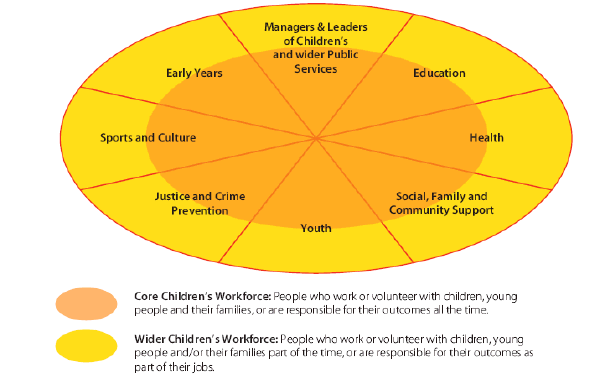
Continued work with national agencies will build the capacity of our children's workforce and develop leaders at all levels and in all sectors, including: · the Training and Development Agency (www.tda.gov.uk); · the Children's Workforce Development Council (www.cwdcouncil.org.uk); · Skills for Health (www.skillsforhealth.org.uk); · Skills Active (www.skillsactive.com); · the National College for School Leadership (www.ncsl.org.uk); · the National Academy of Parenting Practitioners (www.parentingacademy.org); · and other sector specific training bodies. At a local level, the community and voluntary sector continues to develop community leaders to meet identified needs and find local solutions. Opportunities will be created for joint training and continuous professional development, sharing knowledge and learning from each other to develop the generic skills and understanding necessary in an integrated workforce. Those working directly with children and young people are often able to see at first hand the positive impact of services, manifested through: · the acquisition of new skills and knowledge; · improved health and fitness; · growing confidence and resilience; · creativity and receptiveness to new ideas; · improved behaviour and a willingness to take responsibility for themselves and others; · empathy and concern for others. However, those who do not work directly with children and young people also have a major contribution to make to the success of this Plan. For example: · managing the allocation of resources so that they are targeted and equitably distributed; · ensuring key personnel in the children's workforce are in place and have the necessary support to do their job; · co-ordinating services and engaging new partners; · improving access; creating new provision; · improving communications; · providing leadership and management; · building safer, healthier more cohesive communities; · the role of other professionals outside of the children's workforce e.g. police, adult social workers and health professionals. |
h) the provision of effective support resources (including IT systems and business processes) |
In order to support all professionals in their delivery of services, the provision of an underlying infrastructure of IT systems and efficient business processes is essential. As such, we are committed to work towards providing high quality and appropriate IT systems for both front line and support staff. In addition, the continual improvement of business processes to streamline work activities ensuring the most efficient use of time for all staff is part of the continuing culture of challenge and change to improve service delivery. Largely, the staff providing IT systems and support to business processes are not front line, but provide an essential component to the effective delivery of first class services to every child. We recognise that without their work and focus on this underpinning infrastructure, all front line services would be disadvantaged. |
Hampshire CYPP Priority 1 |
Reducing the incidence and impact of poverty on the achievement and life chances of children and young people | |||||||||
Children's Plan 2020 Goal |
Child poverty halved by 2010 and eradicated by 2020 | |||||||||
Every Child Matters Outcome |
Achieve economic well-being | |||||||||
National Indicators |
81 |
82 |
92 |
102 |
106 |
109 |
118 |
147 |
151 |
155 |
What? |
Who? |
How? |
Success Measures |
Baseline |
Target(s) | |||
09/10 |
10/11 |
11/12 | ||||||
1.1 |
Reduce the proportion of children living in poverty by supporting parents to return to work and securing sufficient, affordable, childcare |
Sure Start Children's Centres Early Education and Childcare Unit JobCentre Plus Extended schools Schools and colleges Early years settings Voluntary and community sector Hampshire PCT District and borough councils |
Support parents to find employment through multi-agency working in Sure Start Children's Centres and extended schools |
Reduction in the percentage of children living in households dependent on workless benefits |
10.7% (April 2006) |
Targets to be established following release of Government child poverty guidance in 2009 | ||
Develop a further 25 children's centres, in addition to the 60 already in place, so that all children under five and their families are served by a children's centre by 2010 |
Increase in the number of children's centres designated as a percentage of the total required to reach all children under five in Hampshire (NI 109) |
70.6% (2007/08) |
100% |
|||||
Build on the capacity of all childcare settings to meet a wider range of children's needs |
Increase in the take up of formal childcare by low income working families (NI 118) |
16% (2006/07) |
18% |
19% |
20% | |||
Review sustainability funding and explore mechanisms to subsidise childcare |
Childcare sufficiency assessment indicates that availability of childcare places meets parental need |
30% of parents needing childcare but unable to access it (2008) |
20% of parents needing childcare but unable to access it |
10% of parents needing childcare but unable to access it |
100% of required childcare places available | |||
Review the nursery grant formula and extend the flexible nursery education entitlement (EFE) |
Single funding formula in place Increased number of childcare settings offer EFE |
Principles agreed 16% settings offer EFE (2008) |
Formula devised 60% settings |
100% settings |
||||
1.2 |
Narrow the achievement gap between those children and young people living in poverty and their peers |
Early years settings, schools and colleges Voluntary and community sector Sure Start Children's Centres |
Targeted work with the lowest achieving 20% in the Early Years Foundation Stage (EYFS) Profile, using qualified teacher input |
EYFS gap is narrowed (NI 92) LAA target |
EYFS gap: 33.10% (2007/08) |
28.13% |
Targets set annually in conjunction with DCSF | |
Targeted work with pupils aged 4-16 entitled to free school meals (FSM) to narrow the achievement gap at key stages |
FSM gap is narrowed at Key Stage 2 (KS2) and Key Stage 4 (KS4) (NI 102) LAA target |
FSM gap KS2: 30% FSM gap KS4: 33.5% (2006/07) |
KS2: 25% KS4: 28% |
KS2: 23% or Eng average KS4: 26% or Eng average |
||||
1.3 |
Raise aspirations and increase the number of young people from low income homes remaining in education and training |
Schools & colleges Services for young people Learning & Skills Council 14-19 consortia Connexions personal advisers Voluntary and community sector |
Locate Connexions personal advisors in schools and colleges in areas of deprivation |
Reduction in the inequality gap in the achievement of a level 3 qualification by age 19 (NI 81) |
35.29 (2005/06) |
33% |
31% |
29% |
Reduction in the inequality gap in the achievement of a level 2 qualification by age 19 (NI 82) |
34.48% (2005/06) |
32% |
30% |
28% | ||||
14-19 diplomas available in areas of highest NEET (Basingstoke, Gosport & Havant) |
Increased diploma availability in those consortia in areas of highest NEET |
Basingstoke: 1 Fareham & Gosport: 0 Havant: 0 |
Basingstoke: 4 Fareham & Gosport: 4 Havant: 5 |
Basingstoke: 5 Fareham & Gosport: 6 Havant: 6 |
Basingstoke: 6 Fareham & Gosport: 10 Havant: 10 | |||
Develop the Aimhigher programme to increase the percentage of learners progressing to higher education |
Increased percentage of young people from low income backgrounds progressing to higher education (NI 106) |
23.92% (2005/06) |
25% |
25.5% |
26% | |||
Further activities to identify and address gaps in the curriculum offer for 14-19, raise attainment and narrow the gap are outlined in priority 5. | ||||||||
1.4 |
Sufficiency of affordable housing |
Hampshire County Council District and borough councils Voluntary and Community Sector Housing Associations |
Identify requirements within each district area through joint planning and development policies (LAA Theme D `housing and accommodation') |
Increase in the number of affordable housing units (NI 155) LAA target |
1577 (2007/08) |
1740 |
1830 |
|
Increased percentage of care leavers in suitable accommodation (NI 147) |
84.8% (2007/08) |
87.3% |
89% |
91% | ||||
Increased overall employment rate - working age (NI 151) |
81.5% (2007/08) |
82.1% |
82.5% |
|||||
Hampshire CYPP Priority 2 |
Securing physical, emotional and mental health, promoting healthy lifestyles and reducing inequalities | |||||||||||
Children's Plan 2020 Goal |
Enhance children and young people's well-being, particularly at key transition points in their lives |
Child health improved, with the proportion of obese and overweight children reduced to levels reported in 2000 | ||||||||||
Every Child Matters Outcome |
Be healthy | |||||||||||
National Indicators |
50 |
51 |
52 |
53 |
55 |
56 |
58 |
103 |
112 |
113 |
115 |
126 |
What? |
Who? |
How? |
Success Measures |
Baseline |
Target(s) | |||
09/10 |
10/11 |
11/12 | ||||||
2.1 |
Reduce teenage conceptions and sexually transmitted infections |
Hampshire Teenage Pregnancy Partnership Hampshire PCT & South Central Strategic Health Authority Services for young people Schools and colleges GP surgeries Wessex Youth Offending Team Health, Personal Development and Well-being Team Sure Start Children's Centres |
Target support to vulnerable groups within areas of highest teenage conception Work with pharmacies to increase availability of emergency contraception Community condom distribution through trained practitioners Establish pregnancy and advice services in a variety of accessible community venues |
Reduction in conception rates in identified areas of highest conception and in those areas with the highest rate of increase (NI 112) LAA target |
31.7 per 1,000 young women aged 15-17 (2007) 11.8% reduction from the 1998 baseline |
22.9 per 1,000 36% reduction from the 1998 baseline |
19.8 per 1,000 45% reduction from the 1998 baseline |
|
Deliver high quality sex and relationship education in schools and target areas with highest rates of teenage conception |
Increase in the percentage of young people who think the information and advice they receive on sex and relationships is good enough |
55% (2008) |
57% |
59% |
61% | |||
Offer opportunistic screening of 15-24 year olds for Chlamydia in a variety of clinical and non-clinical settings |
Increase in the percentage of the 15-24 population screened for Chlamydia (NI 113 part 1) Reduction in the percentage of positive diagnoses of Chlamydia in the 15-24 population (NI 113 part 2) |
Part 1: 8.25% screened (March 08) Part 2: Data on diagnosis not currently available - national estimate is 10% |
Part 1: 15% screened |
Targets to be established by Hampshire Primary Care Trust | ||||
2.2 |
Reduce substance misuse by children and young people |
Children's Services Department Hampshire PCT & South Central Strategic Health Authority Hampshire Drug and Alcohol Action Team Wessex Youth Offending Team Comprehensive CAMHS Commissioning Group Connexions personal advisers Schools and colleges Voluntary and community sector Hampshire Constabulary PRISM District & borough councils Community safety teams |
Provide training for front line staff, including Connexions, care homes, youth offending teams and voluntary sector providers |
Increase in the percentage of referrals to specialist substance misuse treatment from children and families services |
16% (quarter 2 2008/09) |
20% |
22% |
24% |
Provide multi-agency support to schools and colleges to deliver high quality personal, social and health education Strengthen the support for young people at risk of developing substance misuse problems through PRISM |
Reduction in the percentage of children and young people frequently misusing substances (NI 115) |
9.5% (TellUs3 2008) |
8.05% - 8.5% |
6.6% - 7.5% |
5.15% - 6.5% | |||
Percentage of young people who think the information and advice they receive on drugs is good enough |
70% (2008) |
72% |
74% |
76% | ||||
Increase availability of specialist young person drug treatment |
Increase in the percentage of young people assessed as requiring specialist treatment who commence treatment within 15 working days of referral |
91% (quarter 2 2008/09) |
98% |
99% |
100% | |||
Increase in the percentage of young people leaving treatment in an agreed and planned way |
70.2% (quarter 2 2008/09) |
73% |
76% |
80% | ||||
2.3 |
Increase take up of parenting support |
Hampshire PCT Sure Start Children's Centres Community and voluntary sector GP Surgeries District parenting support service Early years settings and schools Adult Services |
Target support to parents in most need Promote the availability of parenting support |
County mapping of existing parenting support |
Mapping process being undertaken |
Mapping completed - baseline for take up established |
To be established once baseline is available | |
Provide high quality, impartial information through the Family Services Directory |
New web-based service directory available from September 2009 |
Directory under development |
Directory available from Sept 09 |
|||||
Promote the provision of advice, information and guidance available for parents/carers of children with SEN |
Increase the percentage of parents who express satisfaction with the service provided |
80% (2007/08) |
82% |
83% |
85% | |||
Increase the timeliness of SEN statements |
SEN statements finalised and issued within 26 weeks (NI 103) |
New indicator - baseline unavailable |
99% |
99.5% |
100% | |||
2.4 |
Improve access to family health services |
Hampshire PCT & South Central Strategic Health Authority Sure Start Children's Centres Children's Services Department Voluntary and community sector |
Increase access through delivery of health services from children's centres and community venues |
Percentage of women accessing maternity services within 12 weeks (NI 126) |
80% (June 08) |
85% | ||
Target breastfeeding support to areas of lowest take up and continuation |
Increase in prevalence of breastfeeding at 6-8 weeks (NI 53) |
18.61% |
% breastfed: 51% |
|||||
Percentage with feeding status recorded at 6-8 weeks: 35.43% (June 2008) |
% with feeding status recorded: 90% |
% with feeding status recorded: 95% | ||||||
2.5 |
Improve the emotional wellbeing of all children and young people 0-18 |
Comprehensive CAMHS Commissioning Group Hampshire PCT & Strategic Health Authority Schools and colleges Voluntary and community sector Health, Personal Development and Well-being Team Locality Teams Sure Start Children's Centres and early years settings |
Provide a comprehensive Child and Adolescent Mental Health Service (CAMHS) |
Increased self-assessment scores for CAMHS effectiveness (NI 51) LAA target |
12 out of 16 (2008/09) |
13 out of 16 |
15 out of 16 |
|
Develop a whole county transition protocol with adult mental health services for young people aged 16+ |
Protocol developed and implemented by 2011 |
Protocol under development |
Implement by 2011 |
|||||
Promote the use of emotional health and well-being materials through early years settings, children's centres, schools and colleges |
Improved emotional health of all children (NI 50) |
60.8% (2008/09) |
62.8% |
64.8% |
66.8% | |||
Participate in the national Targeted Mental Health in Schools (TaMHS) pathfinder - develop mental health support in schools for children aged 5-13 and their families (www.everychildmatters.gov.uk) |
Hampshire selected for pathfinder |
Completion of project plan & start of pathfinder (April 2009) |
Service mainstream from April 2011 | |||||
For anti bullying activities see priority 6 | ||||||||
2.6 |
Improve the general health of all children and young people |
Early years settings, schools and colleges School Sports Partnerships Sports and leisure services Extended schools Hampshire County Council Recreation and Heritage Department Hampshire School Meals Service Sure Start Children's Centres Hampshire PCT Comprehensive CAMHS Commissioning Group Voluntary and community sector Health, Personal Development and Well-being Team District Health & Well-being Boards Leisure centres |
Target family healthy eating/cooking activities to areas with highest obesity rates |
Number of schools participating in the Hampshire PCT Cook and Eat programme |
40 schools (2007/08) |
Total of 110 schools | ||
Support all schools in using social, emotional, behavioural aspects of learning to encourage healthy lifestyles |
Increase in the percentage of children and young people who report that their school always or usually helps them think about how to stay healthy by eating properly and taking exercise (Pupil Attitude Survey) |
Year 2: 72.8% Year 6: 78.8% Year 7: 59.5% Year 9: 40% (2008) |
Year 2: 75% Year 6: 82% Year 7: 62% Year 9: 45% |
Year 2: 76.5% Year 6: 83% Year 7: 65% Year 9: 48% |
Year 2: 78% Year 6: 84% Year 7: 68% Year 9: 51% | |||
Increased percentage of schools achieving enhanced National Healthy Schools Status |
67% - 356 out of 530 schools (October 2008) |
75% |
100% |
|||||
Develop and implement obesity strategy in partnership with Hampshire PCT |
Reduced levels of obesity among reception year and year 6 children (NI 55 and NI 56) Note: targets for reception year children are PCT Vital Signs targets |
Year R 8.88% Year 6 15.91% (2007/08) |
Year R: 9.63% Year 6: 16.55% |
Year R: 9.62% Year 6 16.21% |
Year R: 9.38% Year 6: TBC | |||
Increase in percentage of children weighed and measured as part of the national measurement programme |
78% of children in Year R 81% of children in Year 6 (2007/08) |
Year R: 85% Year 6: 85% |
Year R: 87% Year 6: 88% |
Year R: 88% | ||||
2.7 |
Improve the health and well-being of children in care |
Children's Services Department Hampshire PCT Sure Start Children's Centres Community and voluntary sector GP surgeries Early years settings and schools |
Undertake holistic health assessment for each child and young person in care by Designated Nurse within children in care area teams Implement health and well-being strategy for children in care Support the Care Council to undertake specific projects to promote healthy lifestyles for children and young people in care Implementation of Care Matters Improvement Plan |
Improved emotional health of children in care (NI 58) |
Baseline unavailable - data collection starts April 09 |
To be established once baseline is available | ||
Increase immunisation rates for children in care |
73% (2007/08) |
75% |
77% |
79% | ||||
Increase percentage of children in care receiving annual health and dental checks |
83% |
87% |
90% |
93% | ||||
Hampshire CYPP Priority 3 |
Providing opportunities to learn that raise children and young people's aspirations, encourage excellence and enable them to achieve beyond their expectations | |||||||||
Children's Plan 2020 Goal |
Every child ready for success in school with at least 90% developing well across all areas of the Early Years Foundation Stage Profile by age 5 |
Every child ready for secondary school, with at least 90% achieving at or above the expected level in both English and Maths by age 11 |
Every young person with the skills for adult life and further study, with at least 90% achieving the equivalent of 5 higher level GCSEs by age 19; and at least 70% achieving the equivalent of 2 A levels by age 19 | |||||||
Every Child Matters Outcome |
Enjoy and achieve | |||||||||
National Indicators |
72 |
73 |
75 |
78 |
84 |
86 |
87 |
88 | ||
93 |
94 |
99 |
100 |
101 |
104 |
105 |
114 | |||
What? |
Who? |
How? |
Success Measures |
Baseline |
Target(s) | |||
09/10 |
10/11 |
11/12 | ||||||
3.1 |
Improve early years education |
Early Education and Childcare Unit Sure Start Children's Centres Private, community and voluntary sector early years providers Schools Pre-school Learning Alliance District and borough councils |
Provide support to early years settings to improve the quality of early years education Utilise dedicated capital funding streams to support the improvement of early years settings |
Increased percentage of childcare settings judged by Ofsted as providing good or outstanding funded nursery education |
74.5% (2007-2008) |
76% |
78% |
80% |
Increased percentage of children gaining 78 points in Communication, Language and Literacy and Personal, Social and Emotional Development (NI 72) LAA target |
50% (2007/08) |
56% |
Targets set annually in conjunction with DCSF | |||||
Increased percentage of staff qualified in early years education |
National Vocational Qualification (NVQ) Level 4 50% NVQ Level 3 50% Foundation degree (or working towards) 30% (2007/08) |
All managers have NVQ Level 3 25% of child minders have NVQ Level 3 50% of setting staff have NVQ Level 2 An early years professional in all settings | ||||||
3.2 |
Improve primary education |
Primary schools Voluntary and community sector Children's Services Department District and borough councils |
Provide ongoing challenge and support through county school improvement strategies Target resources to districts where progress, or results, are least strong and the gap in attainment most wide Target resources available through the Primary Capital Programme to improve primary school buildings in areas of highest need first |
Increased percentage of primary schools inspected receiving outstanding or good judgements |
67% (1 Sept 2005 - 31 March 2008) |
71% |
75% |
78% |
Reduction in the number of primary schools judged as requiring special measures or with notice to improve |
4 primary schools in special measures 6 primary schools with notice to improve (December 2008) |
3 primary schools in special measures 4 primary schools with notice to improve |
2 primary schools in special measures 2 primary schools with notice to improve |
0 primary schools in special measures 1 primary school with notice to improve | ||||
Increase in percentage of pupils achieving level 4 or above in English and Maths at Key Stage 2 (NI 73) |
73% (2007/08) |
81% LAA target |
Targets set annually in conjunction with DCSF | |||||
Increase in percentage of pupils progressing 2 levels in English between Key Stage 1 & 2 (NI 93) |
88.9% (2007/08) |
91% LAA target |
Targets set annually in conjunction with DCSF | |||||
Increase in percentage of pupils progressing by 2 levels in Maths between Key Stage 1 & 2 (NI 94) |
75.1% (2007/08) |
86% LAA target |
Targets set annually in conjunction with DCSF | |||||
Children in care achieving level 4 in English at Key Stage 2 (NI 99) |
39.6% [18 pupils] (2007/08) |
22% |
Targets set annually in conjunction with DCSF | |||||
Children in care achieving level 4 in Maths at Key Stage 2 (NI 100) |
35.45 [17 pupils] (2007/08) |
21% |
Targets set annually in conjunction with DCSF | |||||
3.3 |
Improve secondary education |
Secondary schools Children's Services Department Voluntary and community sector District and borough councils |
Provide ongoing challenge and support through county school improvement strategies Target resources to districts where progress or results are least strong and the gap in attainment is most wide Develop strategies to facilitate improved learning in schools and the wider community through the Building Schools for the Future programme |
Increased percentage of secondary schools inspected receiving outstanding or good Ofsted judgements |
58% (of those reported on during 2007/08) |
60% |
62% |
64% |
Reduction in the number of secondary schools in special measures or with notice to improve |
0 secondary schools in special measures 1 secondary school with notice to improve (1.4%) (December 2008) |
0 in special measures 0 with notice to improve |
0 in special measures 0 with notice to improve |
0 in special measures 0 with notice to improve | ||||
Increase in percentage of pupils achieving 5 or more A*-C grades at GCSE including English and Maths (NI 75) |
53.8% (2007/08) |
61% LAA target |
Targets set annually in conjunction with DCSF | |||||
Reduction in the number of schools where 30% of pupils do not achieve 5 A*-C GCSEs including English and Maths (NI 78) |
4.2% [3 schools] (2008) |
2.8% [2 schools] |
1.4% [1 school] |
0 [0 schools] | ||||
Increase in percentage pupils achieving 2 or more A-C grades at GCSE or equivalent in Science (NI 84) |
53.5% (2007/08) |
59% |
60.5% |
62% | ||||
Increase in percentage of children in care achieving 5 or more A*-C grades at GCSE including English and Maths (NI 101) |
4.9% (2007/08) |
11% |
12.3% |
|||||
3.4 |
Improve special education |
Schools and colleges Children's Services Department Voluntary and community sector District and borough councils |
Provide ongoing challenge and support through county school improvement strategies Monitor and address need for additional provision Utilise Primary Capital Programme and Building Schools for the Future funding to create high quality facilities for children with SEN |
The SEN/non-SEN gap at KS2 and 4 (NI 104 & 105) |
KS2: 56% (2006/07 - England average 52%) KS4: 50.1% (2007/08 - England average 45.3%) |
KS2 and KS4: in line with or better than England average |
KS2 and KS4: in line with or better than England average |
KS2 and KS4: in line with or better than England average |
Increase in the proportion of special schools judged as good or outstanding by Ofsted |
15% (4 schools) -outstanding 77% (20 schools) - good (Jan 2009) |
93% |
93.5% |
94% | ||||
Implement strategy for special schools working in partnership with mainstream schools and the community |
Networks established by September 2011 |
Networks established (Sept 2011) | ||||||
Increased proportion of special schools providing access to the full core offer of extended services |
4% 1 out of 26 - Riverside Community Special School (March 2009) |
100% |
||||||
Increase early years provision for children with SEN to 15 hours per week for every child over three years old |
Implemented by September 2010 |
Baseline unavailable |
All children over 3 with SEN able to access 15 hours early years provision per week |
|||||
3.6 |
Enable children and young people to enjoy and achieve in school and attend regularly |
Schools and colleges Children's Services Voluntary and community sector Health, Personal Development and Well-being Team Anti-Social Behaviour Co-ordinators Safer Neighbourhood Teams |
Improve work in localities to promote good attendance, behaviour and pupil engagement Target work of education welfare officers to schools with poorest attendance records Support all schools in using social, emotional, behavioural aspects of learning Reduce the number of pupils permanently excluded from school and strengthen alternative education provision |
Increase in percentage of secondary schools judged as having outstanding or good standards of behaviour (NI 86) |
89% (2006/07) |
91% |
92% |
93% |
Reduction in secondary school persistent absence level (NI 87) |
7.0% (2006/07) |
5.5% LAA target |
5.0% LAA target |
|||||
Reduce the percentage of children in care who miss at least 25 days of school |
18.4% (2007/08) |
14% |
10% |
8% | ||||
Reduction in percentage of permanent exclusions from school (NI 114) |
0.1% (2006/07) |
0.08% |
0.06% |
0.05% | ||||
Increase in percentage of children and young people reporting that they enjoy school |
52% Always/ most of the time (TellUs3 2008) |
54% |
56% |
58% | ||||
3.7 |
Increase the availability and quality of extended services in and around schools |
Schools and colleges - individually and in clusters Services for young people Private, community and voluntary sector Children's Services Department |
Support the development of extended services in all schools Use dedicated capital funding streams available through Building Schools for the Future and Primary Capital Programme to enhance facilities for extended use |
Increase in percentage of schools providing access to the full core offer of extended services (NI 88) |
56% (Sept 2008) |
80% |
100% |
|
Strengthen school engagement with partners, in particular the voluntary and community sector, in the delivery of extended services |
Funding formula allocation mechanism established to support voluntary and community engagement with schools by December 2009 |
Funding formula to be established |
Funding formula developed by Dec 09 |
50% increase in joint projects reported |
||||
Hampshire CYPP Priority 4 |
Ensuring that children and young people are safe and feel safe, enabling them to build resilience and personal confidence | ||||||||
Children's Plan 2020 Goal |
Parents satisfied with the information and support they receive | ||||||||
Every Child Matters Outcome |
Stay safe | ||||||||
National Indicators |
48 |
59 |
60 |
62 |
64 |
65 |
68 |
70 |
71 |
What? |
Who? |
How? |
Success Measures |
Baseline |
Target(s) | |||
09/10 |
10/11 |
11/12 | ||||||
4.1 |
Safeguard vulnerable children and young people |
Hampshire Local Safeguarding Children Board (LSCB) Care Matters Board Early years settings, schools and colleges Children's Services Department Voluntary and community sector Independent Reviewing Service Hampshire Constabulary Hampshire PCT District and borough councils Wessex Youth Offending Team Adult Services Department |
Ensure all organisations working with children and young people in Hampshire adhere to the LSCB Safeguarding Children Procedures Review of LSCB's quality assurance processes in order to continually improve outcomes Ensure all staff working directly with children and young people receive safeguarding training, including registration in line with the Independent Safeguarding Authority vetting and barring scheme Re-organise referral and assessment teams and effectively screen and route referrals through HantsDirect Ensure all Serious Case Reviews are held in line with national requirements Monitor and address/reduce any inequalities in ethnicity of children who are the subject of a Child Protection Plan Implement information sharing procedures and address IT barriers Implement the Care Matters improvement plan to ensure placement stability for children in care |
Increase in percentage of inspected childcare provision receiving outstanding or good judgements for staying safe |
64% (2006/07) |
67% |
70% |
72% |
Percentage of referrals going on to initial assessments (NI 68) - NB this helps to monitor the common understanding of thresholds between agencies |
81% (2007/08) |
55% |
50% |
45% | ||||
Increase in percentage of initial assessments completed within 7 working days of referral (NI 59) |
73% (2007/08) |
74% |
76% |
79% | ||||
Increase in stability of placements (NI 62) |
17.1% (2007/08) |
13% LAA target |
11% LAA target |
|||||
Reduction in percentage of children and young people subject to a Child Protection Plan for a second or subsequent time (NI 65) |
18% (2007/08) |
13% (2009/10) LAA target |
12% (2010/11) LAA target |
|||||
Reduction in percentage of Child Protection Plans lasting 2 years or more (NI 64) |
3% (2007/08) |
3.5% (in line with expected rise) |
3% |
2.8% | ||||
Develop and implement joint protocol for missing children with Hampshire Constabulary and the voluntary sector Develop systems for the collection and sharing of data on children and young people who have run away |
Increase in self-assessed score for the provision of services for children and young people who have run away from care/home overnight (NI 71) |
5 out of 15 (2008/08) |
7 out of 15 |
Definition of indicator to change in 2010 |
Definition of indicator to change in 2010 | |||
4.2 |
Prevent and address bullying, violence and abuse of children and young people |
Anti-bullying Strategy Group Early years settings, schools and colleges Hampshire Constabulary Children's Services Voluntary and community sector Health, Personal Development & Well-being Team Adult Services |
Implement revised anti-bullying strategy and encourage an anti-bullying culture in schools through school policies and organisation |
Reduction in percentage of children experiencing bullying (NI 69) |
NI 69: 52.3% (2008/09) Pupil Attitude Survey 23.7% (2008 provisional) |
NI 69: 49.3% |
NI 69: 47% |
NI 69: 45% |
Reduction in percentage of children who report being bullied most days |
4% (2008) |
3.6% |
3.3% |
3% | ||||
Percentage of children and young people who think their school deals with bullying very or quite well |
32% (2008) |
38% |
44% |
50% | ||||
Develop and implement the early intervention and prevention strategy |
Strategy in place by September 2009 Increase in percentage of core assessments completed within 35 working days of their commencement (NI 60) |
82% (2007/08) |
84% |
85% |
86% | |||
Deliver domestic violence education in schools, through the Hampton Trust |
Social and emotional aspects of learning includes awareness of domestic violence and means of accessing support |
|||||||
Implement new Hampshire strategy for supporting young carers, including systems for identifying and monitoring the number of young carers in the county |
Inclusion of young carer issues in Personal, Social and Health Education (PSHE) lessons in primary and secondary schools Designated teachers in place in schools to identify and support young carers Develop and distribute young carers information packs to identified families. |
New strategy circulated for consultation |
Young carer issues included in PSHE lessons |
All schools have a designated teacher to support young carers Young carers information packs available in a variety of formats |
||||
4.3 |
Make Hampshire communities safer and more secure for all children and young people |
Community Safety Partnerships Hampshire Constabulary Wessex Youth Offending Team Hampshire LSCB Hampshire County Council Environment Department Voluntary and community sector Early years settings, schools and colleges Hampshire Fire & Rescue Service |
Implement road safety education, training and publicity campaigns aimed at children and young people Continue to strengthen the Fire and Rescue Service School Education Programme, including risk education Implement Hampshire Fire & Rescue Service's new youth engagement strategy and the roll out of safety awareness for new drivers aged 17-19 Strengthen Personal, Social and Health Education in schools to include safety education |
Increase the percentage of children stating they feel very safe around their local communities |
24% (2008) |
28% |
29% or national average |
30% or national average |
Reduction in number of children aged 0-15 killed or seriously injured in road traffic accidents (NI 48) |
57 (2007) |
Target for 2010 met |
Targets to be established | |||||
Reduction in hospital admissions caused by unintentional and deliberate injuries to children and young people (NI 70) |
109 per 10,000 (2005-07) |
Targets to be established by Hampshire PCT | ||||||
Hampshire CYPP Priority 5 |
Providing vocational, leisure and recreational activities that provide positive opportunities for children and young people to experience success and build resilience | |||||||||||||
Children's Plan 2020 Goal |
All young people participating in positive activities to develop personal and social skills, promote well-being and reduce behaviour that puts them at risk |
Significantly reduce, by 2020, the number of young offenders receiving a conviction, reprimand or final warning for a recordable offence for the first time, with a goal to be set in the Youth Crime Action Plan |
Employers satisfied with young people's readiness for work | |||||||||||
Every Child Matters Outcome |
Make a positive contribution |
Achieve economic well-being | ||||||||||||
National Indicators |
19 |
43 |
45 |
46 |
79 |
90 |
91 |
110 |
111 |
117 |
148 |
199 | ||
What? |
Who? |
How? |
Success Measures |
Baseline |
Target(s) | |||
09/10 |
10/11 |
11/12 | ||||||
5.1 |
Raise the attainment of children and young people aged 14-19 |
Schools and colleges 14-19 consortia Connexions personal advisers (services for young people) Participation team Learning and Skills Council Voluntary and community sector District and borough councils Hampshire County Council Adult Services Health, Personal Development and Well-being Team Education business link organisations |
Identify and address any gaps in the curriculum offer Increase promotion of 14-19 online prospectus Develop 14-19 consortia commissioning plans, based on travel to learn areas Implement the County Council employer engagement plan to broaden activities available to young people Provide good quality, impartial information, advice and guidance by trained, qualified staff |
Increased percentage of young people with a guaranteed place for post-16 education in Year 11 and Year 12 (September Guarantee) |
Year 11 91.3% Year 12 84.1% |
Year 11: 94% Year 12: 86% |
Year 11: 96% Year 12: 88% |
Year 11: 98% Year 12: 90% |
Increased availability of 14-19 diplomas in the county |
3 (Sept 2008) |
9 |
10 |
12 | ||||
Increase in number of young people taking diploma courses (NI 90) |
156 young people (Sept 2008) |
171 |
188 |
206 | ||||
Increase in percentage of young people achieving a level 2 qualification by 19 (NI 79) |
75.8% (2006/07) |
81.4% LAA target |
82.9% LAA target |
|||||
Increase in percentage of 17 year olds participating in education or training (NI 91) |
77% (2006/07) |
80% |
83% |
86% | ||||
Increase in the number of young people completing an Apprenticeship |
2,867 starts (2007/08) |
3,000 starts (4% increase) |
3,138 starts (4% increase) |
3,282 starts (4% increase) | ||||
Expand the Key Stage 4 engagement programme, aimed at reducing the number of young people who are not in education, employment or training across the county - including the teenage parenting learning programme (delivered by 14-19 consortia) |
Reduction in the percentage of 16-18 year olds who are NEET (NI 117) |
5.2% (2007/08) |
3.5% LAA target |
3.3% LAA target |
||||
Promote Education Maintenance Allowances (EMA) |
Increased take up of EMA |
9,385 (2006/07) |
9,854 (5% increase) |
10,346 (5% increase) |
10,863 (5% increase) | |||
Develop streamlined admissions system across the county to improve access for BME groups |
Reduction in percentage of BME young people NEET |
White and Black Caribbean: 11.8% Other: 5.7% (2006/07) |
White & Black Caribbean: 10% Other: 5% |
White & Black Caribbean: 8.5% Other: 4.5% |
White & Black Caribbean: 7% Other: 4.2% | |||
Improve information, advice and guidance for young people with learning difficulties and/or disabilities and their parents Assess needs and develop any additional provision required to meet the raising of the participation age to 17 in 2013 and 18 in 2015 |
Increase in percentage of young people with learning difficulties and/or disabilities who have a transition plan |
90% of children with learning difficulties and/or disabilities aged 14+ (2007) |
100% |
100% |
100% | |||
Reduced percentage of young people with learning difficulties and/or disabilities not in education, employment or training |
8.8% (2006/07) |
8% |
Not above 8% |
Not above 8% | ||||
Implement `buddying' scheme for young people in care to encourage them to enter further/higher education and training |
Increase in percentage of care leavers in education, employment or training (NI 148) |
58.6% (2007/08) |
65% |
70% |
||||
5.2 |
Increase opportunities for children and young people to make a positive contribution |
Early years settings, schools, colleges and clusters Extended services Services for young people Voluntary and community sector Recreation and Heritage Department Borough, district and parish councils Music Service Recreation & Heritage Department Sure Start Children's Centres Bus companies Environment Department |
Promote the importance of positive activities through schools, colleges and voluntary/community organisations |
Increased participation in positive activities (NI 110) |
74.5% (2008/09) |
78% |
80% |
82% |
Implement new strategy for the participation of children and young people |
Evidence of how children and young people's feedback has informed planning and decision making Progress against targets within participation action plan |
|||||||
Improve the availability and accessibility of public transport to enable children and young people to play a full part in educational and leisure opportunities |
Gaps in provision for children and young people identified and addressed (in line with Hampshire's Local Transport Plan 2006-11) |
|||||||
Complete `Playbuilder' projects to increase the inclusion of girls, ethnic minorities and children with disabilities in outdoor play areas |
25 new play areas developed across Hampshire by 2012 |
Work underway at 7 sites |
7 play areas complete |
16 play areas complete |
25 play areas complete | |||
Improve access to play and recreation provision for children and young people, in line with the national Play Strategy (www.dcsf.gov.uk) |
Children and young people's satisfaction with parks and play areas (NI 199) |
45.1% (2008/09) |
47% |
48.8% |
50.5% | |||
Reduction in the percentage of children and young people who say that better activities for them would make their area a better place to live |
46% (2008) |
42.4% |
38.7% |
35% | ||||
Increase opportunities for children and young people to take part in musical and cultural activities |
Increased number of schools participating in whole class Key Stage 2 Listen2Me |
120 schools (2008) |
167 schools |
To be established | ||||
Increase in number of school pupils visiting museums in organised groups |
36,776 (2007/08) |
37,342 |
To be set by Recreation & Heritage Department | |||||
Increase in number of school pupil visits to countryside in organised groups |
25,585 (2007/08) |
28,000 |
To be set by Recreation & Heritage Department | |||||
5.3 |
Improve services for disabled children, young people and their families |
Children's Services Adult Services Voluntary and community sector Extended schools Special schools Recreation and Heritage Department Sure Start Children's Centres |
Implement the Aiming High for Disabled Children strategy Develop a single point of contact for providing information to young people, parents, carers and partner agencies |
Aiming High information hub available by 2010 |
Information hub under develop-ment |
Information hub available by 2010 |
||
Provide a network of after school, weekend and holiday services to provide a choice of access to a regular short break for parents and carers Revise eligibility provision for short breaks to ensure equality of access Apply capital funding to provide respite facilities and improve associated provision |
Increase in the number of children and young people accessing short breaks through universal provision and extended services in special schools. Eligibility criteria for short breaks revised and implemented. |
Eligibility criteria under revision |
Revised eligibility criteria implement-ed |
Additional 1,300 accessing universal provision Additional 2,400 accessing provision through extended services |
||||
Improve arrangements for: · direct payments; · care support in family homes; · aids and equipment; · supportive therapies. |
Progress measured against the Aiming High for Disabled Children action plan |
|||||||
5.4 |
Prevent offending and reduce re-offending |
Wessex Youth Offending Service Hampshire Constabulary Local Criminal Justice Board Children's Services Comprehensive CAMHS Commissioning Group Hampshire PCT Crime & Disorder Reduction Partnerships Anti-Social Behaviour Co-ordinators |
Increase training to schools/colleges to enable them to support young offenders to engage in education or training Develop young offender inclusion panels to improve access to education and training Improve data collection and monitoring systems around offenders in education, employment or training |
Reduction in re-offending (NI 19) |
38.6% (2005 cohort after 12 months) |
5% reduction |
Targets to be set by Youth Offending Team and Youth Justice Board | |
Increase in percentage of young offenders engaged in education, employment or training (NI 45) |
80.4% (2007/08) |
75% |
Targets to be set by Youth Offending Team and Youth Justice Board | |||||
Extend use of custody panels to reduce the use of custodial sentences for young people |
Reduction in percentage of young people within the Youth Justice System sentenced to custody (NI 43) |
6.1% (2007/08) |
5% |
Targets to be set by Youth Offending Team and Youth Justice Board | ||||
Develop restorative justice in schools and childrens homes to prevent offending Community volunteers working with victims as part of the restorative justice process |
Reduction in first time entrants to the Youth Justice System (NI 111) LAA target |
1520 per 100,000 young people age 10-17 (2007/08) |
1445 per 100,000 young people age 10-17 |
1410 per 100,000 young people age 10-17 |
||||
Reduction in offending rates of children in care (APA 4015SC) |
1.9% (2006/07) |
1.8% |
1.7% |
1.5% | ||||
Hampshire CYPP Priority 6 |
Removing barriers to access, participation and achievement and not tolerating discrimination and abuse | |||||
Children's Plan 2020 Goals |
Supporting the achievement of all goals | |||||
Every Child Matters Outcome |
Applies to all five outcomes | |||||
National Indicators |
69 |
107 |
108 |
177 |
178 |
198 |
What? |
Who? |
How? |
Success Measures |
Baseline |
Target(s) | |||
09/10 |
10/11 |
11/12 | ||||||
6.1 |
Improve community cohesion and promote equality and diversity |
Children's Services Department Hampshire Inspection and Advisory Service Schools and colleges District and borough councils Voluntary and community sector Hampshire Constabulary |
Develop a framework to support schools in implementing a Single Equality Scheme (SES) Develop and implement a strategy utilising Building Schools for the Future investment to support community transformation |
All schools to have implemented the Single Equalities Framework and produced a three year SES and Action Plan |
SES introduced in 2008 |
SES implemented in all schools |
||
Reduction in racist incidents reported in schools |
413 (Jan-Dec 2008) |
5% reduction |
||||||
Provide high quality citizenship education in schools, including rights and respect |
Increase the number of secondary and special schools taking part in the Rights, Respect and Responsibilities initiative |
40 secondary schools 4 special schools |
50 secondary schools 8 special schools | |||||
Increase the number of schools with the UNICEF Rights, Respecting Schools Award |
60 |
120 | ||||||
Implement Community Cohesion Project in schools |
Guidance to schools and case studies completed by September 2009 Number of schools judged by Ofsted to be making a good or outstanding contribution to community cohesion |
Pilot completed |
Guidance and case studies issued to schools |
Targets to be established | ||||
Develop the youth diversity forum to promote equality and diversity for children and young people |
Evidence of forum influencing decision and policy making Information and support made available on a range of issues affecting groups of children and young people |
|||||||
6.2 |
Improve the progress and attainment of black, ethnic minority and Traveller children and young people in schools |
Early years settings, schools and colleges Sure Start Children's Centres Ethnic Minority and Traveller Achievement Service Voluntary and community sector District and borough councils |
Increase bilingual assistance to children and young people Increase training for schools and other organisations to target increased achievement at Key Stages Increase work with locality teams and extended schools Provide specific or targeted information, advice and guidance |
Reduction in the gap between the percentage of BME/Traveller children achieving at least 78 points at Early Years Foundation Stage (with at least 6 points in PSE and CLL) and their peers |
Hampshire average: 50.7% Asian/Asian British: 38.7% (gap - 12 percentage points) Black/Black British: 42.4% (gap - 8.3 percentage points) Chinese: 36.8% (gap - 13.9 percentage points) Traveller: 25% (gap - 25.7 percentage points) (2007/08) |
Reduce gap by 4% |
||
Increase in percentage of BME children achieving level 4 at Key Stage 2 (NI 107) |
White: 74% Black: 56% Asian: 62% Mixed: 74% Chinese: 81% (2006/07) |
White: 81% Gypsy/Roma and Traveller: 42% White/Black Caribbean: 76% Black African and Black African/White combined: 74% Bangladeshi: 70% Any other Asian background: 74% |
Targets set annually in conjunction with DCSF | |||||
Increase in percentage of BME young people achieving 5 or more A*-C grades at GCSE including English and Maths (NI 108) |
White: 51.1% Black: 43.1% Asian: 52.2% Mixed: 59.9% Chinese: 83% (2006/07) |
White: 61% Gypsy/Roma and Traveller: 19% White/Black Caribbean: 60% Black African and Black African/White combined: 47% Asian: 44% |
Targets set annually in conjunction with DCSF | |||||
6.3 |
Ensure continuity of services for service children and families |
Children's Services Armed Forces Support Services District and borough councils Schools Early Years settings Extended schools Children's centres Voluntary and community sector |
Act upon the recommendations of the Department for Children, Schools & Families consultation on improving school admissions for service families (due in 2009) |
To be established following publication of DCSF recommendations |
||||
6.5 |
Improve access to services for children and young people living rural communities |
Children's Services Voluntary and community sector Recreation and Heritage Department District and borough councils Extended schools Sure Start Children's Centres |
Support the implementation of the Hampshire Rural Delivery Strategy Maximise the use of community facilities and volunteers |
Increase in percentage of schools providing access to the full core offer of extended services (NI 88) |
See activity 3.7 | |||
Maintain the role of Sure Start Children's Centres and extended schools to best serve their local communities Improve multi-agency service delivery based in the local community |
Increase in the number of children's centres designated as a percentage of the total required to reach all children under five in Hampshire (NI 109) |
See activity 1.1 | ||||||
Key facts
Local index of child well-being
The 2009 England Index of Child Well-being ranked local authorities, based on outcomes for children and young people, in a number of areas of their lives. These were:
· material well-being (based on levels of deprivation);
· health (the proportion of children and young people who had emergency admissions to hospital, visited hospital as an outpatient, or receive disabled living allowance);
· education (including Key Stage 2 and GCSE results);
· crime (burglary, theft, criminal damage and violent crime);
· housing (based on homelessness, overcrowding and lack of central heating);
· environment (including air quality, amount of green space and opportunities for sport and leisure);
· children in need (based on children who receive social care services).
Overall, the index demonstrates that Hampshire is a good place for children and young people to live, with nine districts in the top half of places to live in England and Hart ranked at number one. Further information on the Local Index of Child Well-being can be found at www.communities.gov.uk/publications/communities.
The full list of rankings for Hampshire is provided in table 1 below. District rankings are based on a comparison against all 354 of England's local district authorities. The overall Hampshire ranking is based on a comparison against the 149 first-tier local authorities.
Table 1 Ranking of Local Index of Child Well-being
District/Borough |
Rank |
Hart |
1 |
Fareham |
17 |
Winchester |
21 |
East Hampshire |
35 |
Eastleigh |
64 |
Test Valley |
72 |
New Forest |
93 |
Basingstoke & Deane |
122 |
Rushmoor |
153 |
Gosport |
229 |
Havant |
271 |
Overall Hampshire rank |
15 |
Map of Hampshire
To provide some additional context, a map of Hampshire is shown in diagram 7, below.
Diagram 7: Map of Hampshire
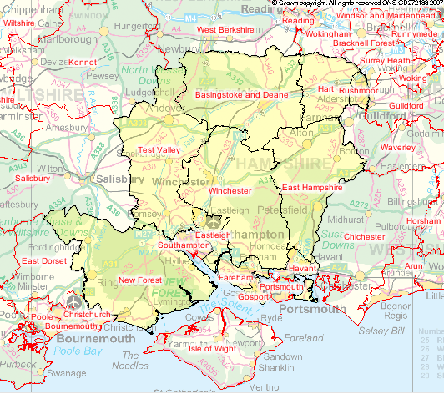
Key facts
· Hampshire is the third largest county in England in terms of population - 1.2 million people in 500,000 households (Quality of Life in Hampshire, 2008) · There are 309,000 children and young people aged under 19 in the county - approximately 25% of the population (2001 Census) · Life expectancy is generally above the national average and increasing, although the picture varies at district level - Gosport fell below the national average in 2004/06 (Joint Strategic Needs Assessment, 2008) · There are 27,207 lone parent households in the county (2001 Census) |
· There are 30,000 service personnel in Hampshire, with an estimated 5,000 children in service families (2001 Census and Hampshire School Census 2007) · There are an estimated 187 Gypsy and Traveller families in the county (Hampshire & Isle of Wight Gypsy and Traveller Study, 2006) · People in Hart earn the highest average weekly wage in the county - people in Gosport earn the lowest (2001 Census) · 87% of people in Hampshire live in urban areas, although only 15% of the county is classified as urban (Hampshire Rural Profile, 2008) · 85% of Hampshire is rural (shown by the orange colour in diagram 8 below) Diagram 8: Hampshire Rural Profile |
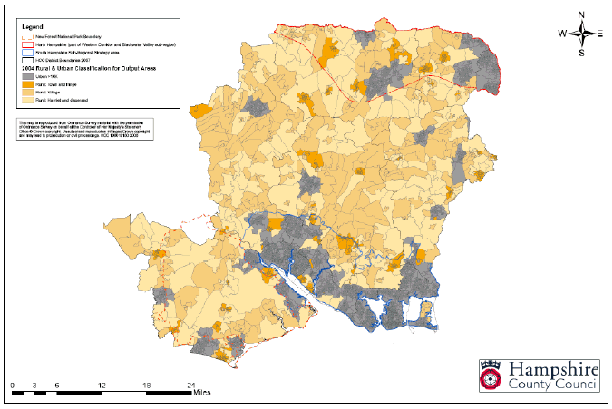
Inspection findings
In March 2008, the Audit Commission found that Hampshire is in the highest quartile of all authorities in nearly half (44%) of the performance indicators relating to services for children and young people (www.audit-commission.gov.uk).
In the 2007 Joint Area Review (which inspected the services provided for vulnerable children and young people by the County Council and partner organisations), the arrangements for safeguarding children and young people and the services for children and young people in care were found to be good. Services for children and young people with learning difficulties and disabilities were all found to be good with some outstanding features (www.ofsted.gov.uk). The contribution of the Youth Service to the Every Child Matters outcomes was judged as outstanding.
Furthermore, in the 2008 Annual Performance Assessment the Office for Standards in Education, Children's Services and Skills (Ofsted) rated Hampshire's Children's Services as good, with good capacity for further improvement (www.ofsted.gov.uk).
Barriers faced by some children and young people
Despite Hampshire being a good place for children and young people to live, not every child and young person has the best possible start in life and has the support needed to develop to their full potential.
As a result, significant variations in outcomes can occur for a proportion of Hampshire's children and young people. Examples of these are shown below:
· 46% of 16 year olds do not achieve five A*-C grade GCSEs including English and Maths (2007/08). · Only 24% of 16 year olds eligible for free school meals achieve five A*-C grade GCSEs, including Maths and English (2007/08). · 95% of children in care do not achieve five A*-C grade GCSEs including English and Maths (2007/08). · More 10-14 year olds are pedestrian casualties on Hampshire roads than any other age group, with 67 young casualties in 2007 (Hampshire County Council Environment Department, 2008). · Hampshire Constabulary recorded 12,496 criminal offences committed by children and young people under the age of 18, and 724 cases of violence by children under the age of 14 (2007). · 22% of Year 6 pupils, 24% of Year 7 pupils and 19% of Year 9 pupils reported that they had experienced bullying in school (Pupil Attitude Survey, 2008). |
Resources, commissioning and workforce
Effective, co-ordinated use of resources is vital for improving outcomes. Hampshire's Children's Trust is evaluating progress towards aligned budgets as part of Trust development. This includes an analysis of all partners' budgets for services for children and young people (as outlined in the `resources' section of Appendix 1, Improvement Plan). Within the next year, the Children's Trust will be able to evidence the use of all partner budgets (including the voluntary and community sector) in delivery of the CYPP priorities. At present, only Hampshire County Council's budget for 2009/10 is confirmed. For indicative purposes, Hampshire PCT's children's services budget for 2008/09 was approximately £16.5 million.
The Children's Services Department's cash limited budget of £969 million for 2009/10 outlines the committed resources necessary to fulfil the activities outlined in the Plan. The greatest proportion of this budget is allocated to schools, with the remainder shared between local education services and children's social care, as demonstrated in diagram 9.
Diagram 9: Hampshire County Council Children's Services Department cash limited budget 2009/10
£803,587,000
£86,254,000
£78,987,000
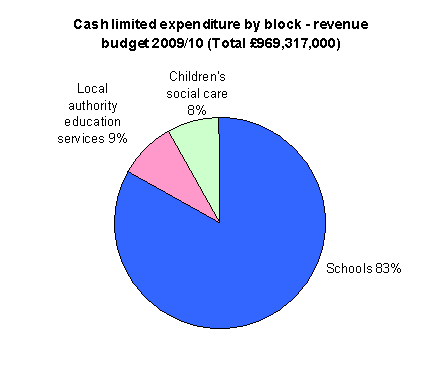
The allocation of school budgets is detailed in diagrams 10 and 11, below.
Diagram 10: Individual schools cash limited budgets 2009/10
 <1%%
<1%%
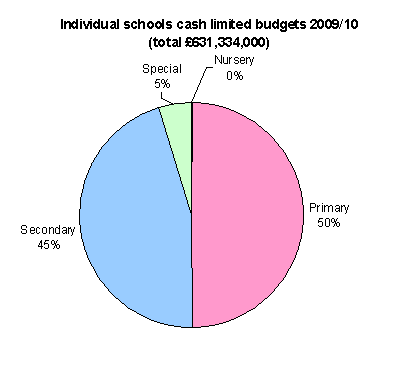
Diagram 11: Schools cash limited budgets (excluding individual school budgets), 2009/10
£19,554,000


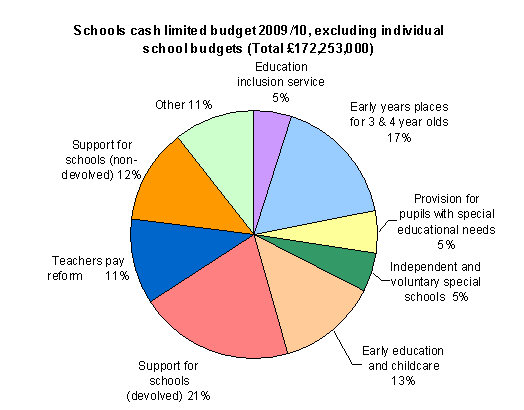
£34,752,000
The allocation of budgets for local education services is detailed in diagram 12.
Diagram 12: Local education services cash limited budget 2009/10
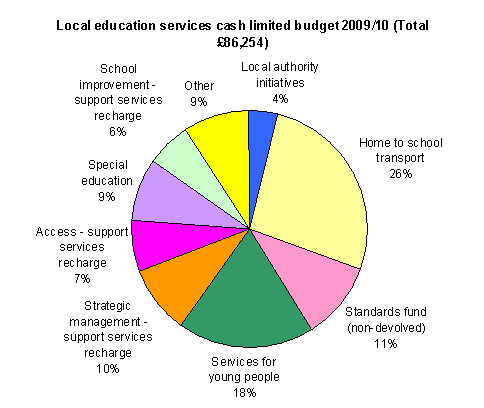
The allocation of budgets to children's social care is shown in diagram 13 below.
Diagram 13: Children's social care cash limited budget 2009/10
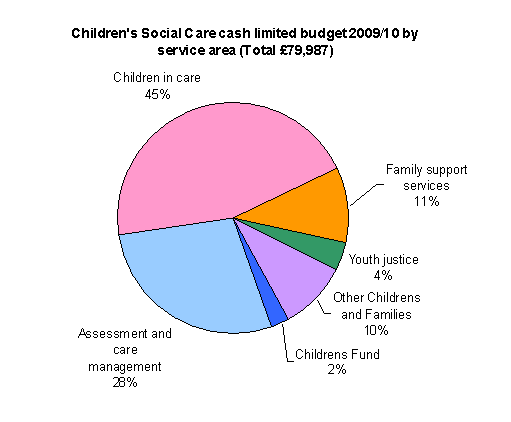
Other key budgets
Hampshire has made strong progress towards the strategic alignment of budgets and commissioning processes, as evidenced by the CAMHS Commissioning Group and the Wessex Youth Offending Team.
The CAMHS Commissioning Group is a partnership between Hampshire County Council, Hampshire PCT and other organisations providing support for children and young people with emotional, social and mental health needs. There are a number of groups who work in partnership to implement the strategy and assess priority areas for spend and services based on local and county needs analysis: CAMHS Commissioning Group; CAMHS Strategy Group; Local Implementation Groups; and the CAMHS Practitioners' Network. The pooled budget for 2009/10 is approximately £10 million. Since the pooled budgets were established, there have been a number of developments, including:
· investment in an IT solution for recording and analysis;
· new good practice protocols;
· launch of the CAMHS pilot rapid and intensive support system;
· increased joint training and development opportunities;
· a capital programme to support developments to premises.
The Wessex Youth Offending Team is a multi-disciplinary organisation working with Children's Services and the Criminal Justice System aiming to prevent offending behaviour by children and young people. The budget for 2009/10 is approximately £10 million.
Commissioning
Central to improving outcomes for children and young people is effective joint planning and commissioning of services between all partners. Hampshire Children's Trust is committed to:
· further developing arrangements for the joint commissioning of services;
· identifying additional opportunities to develop stronger partnership arrangements;
· co-ordinating and aligning budgets and resources to achieve local and county-wide priorities;
· the continued development of robust planning, budgeting and performance monitoring systems;
· using resources efficiently and effectively, e.g. joint commissioning of services and investment in prevention and early intervention measures;
· targeting resources to areas of greatest need;
· the provision and maintenance of an effective infrastructure of efficient IT systems and excellent business processes.
Strategic commissioning involves all Children's Trust partners. Providers of children's services in Hampshire are working to align their different commissioning programmes as part of Trust developments. Hampshire County Council has made significant progress towards more integrated services with the creation of the Commissioning Co-ordination Team in 2008. This team is taking a key lead in the following areas:
· commissioning preventive services across children's services;
· letting, reviewing and regulating contracts;
· co-ordinating a major programme of grant-aid for voluntary sector stakeholders in partnership with the children's voluntary sector - building preventive capacity at district level in support of local targets.
Processes will be strengthened and streamlined during 2009, to deliver a real difference for children, young people and families. Activities include: · Bringing together previously separate funding and grant aiding streams to create a single integrated grant system, widely known and accessible, with a single application route and open processes linked to priority targets for improvement. · Strengthening links with voluntary sector and local district partners, including involvement in planning and funding decisions about county-wide preventive services; and playing an active role in developing local capacity and supporting innovation. · Planning for more local consideration of funding decisions. · Building on excellent multi-agency relationships and seeking to pool preventive funding wherever appropriate for greater impact. · Ensuring that the process for commissioning services is well known and applied methodically and providing a consultancy service to advise and steer emerging preventive services e.g. through locality teams and children's centres to make best use of resources. · Ensuring that the views and aspirations of local children, young people and families are listened to, and make a difference to outcomes and insisting that those who benefit from funding can demonstrate how they ensure that participation and consultation takes place. |
Children's workforce
The challenging agenda set by Hampshire's CYPP can only be met by integrated working. All partners are committed to supporting and developing the children's workforce across the public, private, voluntary and community sectors, in order to meet the needs of children and young people and work more effectively together.
As part of Children's Trust developments, an integrated county level workforce strategy will be developed, taking into account the national Children's Plan 2020 Workforce Strategy. This will provide additional clarity around responsibilities for delivering the CYPP priorities and establish a long term vision for integrated working in Hampshire. The strategy will outline:
· how partners will take account of recruitment and workforce development issues when designing, commissioning and delivering services for children and young people;
· how partners will work together to improve skills and knowledge across the whole children's workforce;
· approaches to recruitment and continuous workforce development (including the development of leaders and the sharing of good practice and training opportunities).
Joint working is already underway, particularly between Hampshire County Council and key Children's Trust partners, examples include:
· the establishment of a joint recruitment portal, covering vacancies at County Council and District Council level (Hampshirejobs.org.uk);
· the availability of County Council Children's Services Department induction to the voluntary and community sector;
· co-ordination of safeguarding training for voluntary and community providers by The Alliance.
Facts and figures
Hampshire County Council employs the equivalent of 16,798 full time staff in the county's schools (September 2008). The number has risen by 10% since September 2005 and now makes up 60% of the County Council's full time equivalent staff.
3,248 staff are employed by the Children's Services Department (September 2008), equivalent to 2,569 full time staff members. The allocation of these staff by branch/team is shown in diagram 14 below.
Diagram 14: Children's Services Department staff
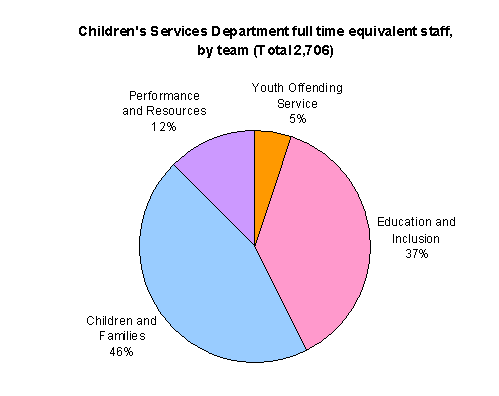
The equivalent of 432 full time staff are employed in children's services at Hampshire PCT (September 2008, Care Services Board Paper CSB08/086), however this does not take into account the thousands of staff who work in primary care e.g. GPs.
Approximately 467 voluntary and community organisations deliver services to Hampshire's children and young people every year (The Alliance Business Plan 2009-12), making up a large section of the children's workforce. It is estimated that 34% of children and young people take part in activities co-ordinated by the voluntary and community sector outside of school.
Performance management of the CYPP
Needs analysis - the Hampshire CYPP is based on a thorough needs assessment carried out by the County Council, PCT and other key partners. This activity is referred to as the 2008 Joint Strategic Needs Assessment, a copy of which can be downloaded from http://www.hampshirepct.nhs.uk/jsna_-_lowres_171108.pdf. Outcomes of the assessment underpin the main priorities within the CYPP.
As an overarching strategic plan, this CYPP is based on a county-wide analysis and therefore, given the size and complexity of Hampshire, some of the identified issues will be more important in some localities than others. These differences will be reflected in local plans.
The Improvement Plan (Appendix 1) identifies a number of success indicators for measuring progress against agreed priorities. These include the Local Area Agreement (LAA) performance indicators and a range of National Indicators (which central government and local authorities use to monitor their performance and progress against targets) - www.communities.gov.uk/localgovernment/performanceframeworkpartnerships/nationalindicators. The LAA sets out the priorities for a local area agreed between them and central government by setting three year targets for a number of local and national indicators. Hampshire County Council's LAA web-pages provide a comprehensive guide to the priorities and targets for the county for the period 2008-11 (www.hants.gov.uk/localareaagreement). |
Performance reporting - the Hampshire Children's Trust will receive reports on progress against the CYPP twice yearly, with quarterly performance updates against key National Indicators and the LAA targets. Therefore, LAA reporting will support the performance management of the CYPP. Reports will include summary feedback against key actions using a red/amber/green system and providing disaggregated data sets both at county and district level. The Children's Trust Board will be responsible for identifying and managing any risks to delivery.
As part of the performance management cycle, there will be an annual refresh of the needs assessment and associated outcomes and actions to ensure that the plan remains relevant and appropriate.
Local Children's Services Partnership plans will reflect the county-wide priorities and identify specific challenges and needs within their local communities. These will be informed by local information to help target available resources. The reporting and monitoring of these plans will be formalised through a review of the county-wide and local Children's Trust arrangements during 2009/10. Underpinning the performance management described above is an expectation that all parts of Hampshire's Children's Trust will have effective operational performance management mechanisms in place. |
Links to other plans and strategies
Hampshire County Council | |
14-19 Strategy |
|
Adult Services Department: Proposed Future Model of Adult Social Care in Hampshire |
|
Aiming High for Disabled Children Strategy |
www.hantsfish.org.uk/hantsfish/practitioners/aiming_high_for_disabled_children.htm |
School Admissions Policies |
www.hants.gov.uk/education/admissions/education-admissions-2009-policies/education-admissions-hcc.ad.pol |
Accessibility Strategy and SEN Policy |
www.hants.gov.uk/childrens-services/specialneeds/sen-home/sen-accessibility-strategy-consultation.htm |
Draft Anti-bullying Strategy |
www.hants.gov.uk/childrens-services/childrenandyoungpeople/bullying/draft-anti-bullying-policy.htm |
Comprehensive CAMHS Commissioning Group |
www.hants.gov.uk/childrens-services/childrenandyoungpeople/mentalhealth/childtrusthome/hct-camhs.htm |
Corporate Improvement Plan (Driving Success) |
www.hants.gov.uk/corporate_pmf_-_final_-_3_dec_08-4.doc |
Wessex Youth Offending Team Youth Justice Plan |
www.hants.gov.uk/childrens-services/wessex-yot/youth-justice-plan.htm |
Hampshire Drug and Alcohol Action Team |
|
Ethnic Minority and Traveller Achievement Service Policy |
|
Crime and Disorder Strategy |
|
Draft Rural Strategy |
|
Hampshire Local Transport Plan 2006-11 |
www.hants.gov.uk/hampshire-transport/local-transport-plan.htm |
Young Carers Strategy |
|
Participation Strategy |
|
Children Missing from Care |
www.hants.gov.uk/proc0408.doc |
Hampshire County Youth Council |
|
Hampshire Family Information Service |
|
Parent Partnership Service |
|
Sure Start Children's Centres |
|
Childcare Sufficiency Assessment |
www.hants.gov.uk/childrens-services/childcare/childcare-sufficiencyassessment |
Supporting People |
|
Extended Schools |
|
Recreation & Heritage Department Cultural Strategy |
|
Partnerships | |
Hampshire Joint Strategic Needs Assessment |
|
Hampshire Local Area Agreement Guide |
|
Hampshire Sustainable Community Strategy |
|
Teenage Pregnancy Partnership |
www.hants.gov.uk/childrens-services/families/teenage-pregnancy.htm |
Countywide Services | |
Hampshire Constabulary Anti-social Behaviour Strategy |
www.hampshire.police.uk/NR/rdonlyres/E8F0419C-6E6A-42CB-96E3-14F69AB10AD3/0/abs_strategy.pdf |
Hampshire Fire & Rescue Annual Service Plan |
|
Hampton Trust Annual Review 2007/08 |
|
The Alliance Draft Business Plan 2009-12 |
www.hants-alliance.myzen.co.uk/web/files/Draft%20Business%20Plan%202009-12.doc |
Hampshire Local Safeguarding Children Board: Safeguarding Children Procedures |
www.4lscb.org.uk/document-store/4lscb%20procedures%20%20updated%2022.07.08.doc/view |
Local LSC Commissioning Plans |
www.lsc.gov.uk/regions/SouthEast/Aboutus/regionalcommissioningplans/ |
Hampshire Primary Care Trust: Healthy Horizons |
www.hampshirepct.nhs.uk/index/documents/corpdocs/healthy_horizons_update_2008.htm |
Local Strategic Partnerships |
www.hants.gov.uk/localareaagreement/hampshirescs.htm |
Community Action Hampshire |
|
Hampshire Council for Voluntary Services |
|
Hampshire Police |
|
Local Crime and Disorder Reduction Partnership Plans |
www.crimereduction.homeoffice.gov.uk/regions/regions06.htm |
`eVolve' online directory of voluntary and community groups |
|
National | |
Nation's Commitment: Cross Government Support to our Armed Forces, their Families and Veterans |
www.mod.uk/NR/rdonlyres/415BB952-6850-45D0-B82D-C221CD0F6252/0/Cm7424.pdf |
LSC Strategy |
|
The Children's Society: The Future of Runaways Services |
|
Youth Crime Action Plan |
|
Every Child Matters |
|
Children's Plan |
|
Play Strategy |
|
Ofsted |
|
Care Matters: Time for Change |
|
Ministry of Defence Children's Education Advisory Service |
www.mod.uk/defenceinternet/defencefor/servicecommunity/education/childrenseducationadvisoryservice |
UNICEF |
|
Training and Development Agency |
|
Children's Workforce Development Council |
|
Skills for Health |
|
Skills Active |
|
Criminal Records Bureau |
|
National College for School Leadership |
|
National Academy of Parenting Practitioners |
|
Learning and Skills Council |
|
Working Tax Credit |
www.taxcredits.inlandrevenue.gov.uk |
National Indicators
There are 79 National Indicators to measure improvement in outcomes for children and young people. Brief descriptions are provided below, with further information available on the Communities and Local Government website: www.communities.gov.uk/localgovernment/performanceframeworkpartnerships/nationalindicators
National Indicator Number |
Description |
NI 19 |
Rate of proven re-offending by young offenders - the number of offences committed per person by members of a cohort of young people (aged 10-17) during a 12 month tracking period |
NI 43 |
Young people within the Youth Justice System receiving a conviction in court who are sentenced to custody - the percentage who receive a custodial sentence |
NI 44 |
Ethnic composition of offenders on Youth Justice System disposals - the percentage point difference in the proportions of young people (aged 10-17) on youth justice interventions in each minority ethnic group against the proportion of that group in the local population |
NI 45 |
Young offenders engagement in suitable education, training and employment - the percentage of young offenders (aged 10-17) who are engaged for 25 hours or more in suitable education, employment or training in the last working week of their intervention |
NI 46 |
Young offenders access to suitable accommodation - the percentage of young offenders (aged 10-17) who are in suitable accommodation at the end of their intervention |
NI 50 |
Emotional health of children - the percentage of children (in years 6, 8 & 10) who enjoy good relationships with their family and friends, as defined by their answers to questions in the annual Tellus survey |
NI 51 (LAA) |
Effectiveness of child and adolescent mental health (CAMHS) services - score of service effectiveness based on self-assessment against four indicators. Each indicator can be rated between 1 (lowest) and 4 (highest) leading to an overall score of between 4 and 16 |
NI 52 (a) |
Take up of school lunches - primary school |
NI 52 (b) |
Take up of school lunches - secondary school |
NI 53 |
Prevalence of breastfeeding at 6 - 8 weeks from birth |
NI 54 Delayed to 2009/10 |
Services for disabled children - an assessment of parents of disabled children's general experience of services, to be measured by an annual survey |
NI 55 |
Obesity in primary school age children in Reception |
NI 56 (LAA) |
Obesity in primary school age children in Year 6 |
NI 57 Delayed to 2009/10 |
Children and young people's participation in high-quality PE and sport - participation by young people aged 5-16 in at least 2 hours of high quality physical education each week. 16-19 year olds should be offered the opportunity to participate in 3 hours or more of sport |
NI 58 |
Emotional and behavioural health of looked after children - average value of the 'strengths and difficulties questionnaire' total difficulty scores for all children looked after for 12 months or more |
NI 59 |
% of Initial assessments for children's social care carried out within 7 working days of referral |
NI 60 |
% of core assessments for children's social care that were carried out within 35 working days of their commencement |
NI 61 |
Timeliness of placements of looked after children for adoption following an agency decision that the child should be placed for adoption |
NI 62 (LAA) |
Stability of placements of looked after children: number of placements - the percentage of children in care with three or more placements during the year |
NI 63 |
Stability of placements of looked after children: length of placement - percentage of children looked after for more than 2.5 years living continuously in the same placement for at least 2 years |
NI 64 |
Child Protection Plans lasting 2 years or more |
NI 65 (LAA) |
% of Children becoming the subject of a Child Protection Plan for a second or subsequent time |
NI 66 |
Looked after children cases which were reviewed within required timescales |
NI 67 |
% of child protection cases which were reviewed within required timescales |
NI 68 |
% of referrals to children's social care going on to initial assessment |
NI 69 |
Children who have experienced bullying - the percentage of children who have experienced bullying at least once in the past 4 weeks, based on responses to the annual Tellus survey carried out on year 6, 8 & 10 pupils |
NI 70 |
Hospital admissions caused by unintentional and deliberate injuries to children and young people (per 10,000 population aged 0-17) |
NI 71 Delayed to 2009/10 |
Children who have run away from home/care overnight |
NI 72 (DCSF LAA) |
Achievement of at least 78 points across the Early Years Foundation Stage with at least 6 in each of the scales in Personal Social and Emotional Development and Communication, Language and Literacy |
NI 73 (DCSF LAA) |
Achievement at level 4 or above in both English and Maths at Key Stage 2 (Threshold) |
NI 74 (DCSF LAA) |
Achievement at level 5 or above in both English and Maths at Key Stage 3 (Threshold) |
NI 75 (DCSF LAA) |
Achievement of 5 or more A*-C grades at GCSE or equivalent including English and Maths |
NI 76 |
Reduction in number of schools where fewer than 65% of pupils achieve at level 4 or above in both English and Maths at KS2 |
NI 77 |
Reduction in the number of schools where fewer than 50% of pupils achieve level 5 or above in both English and Maths at KS3 |
NI 78 |
Reduction in number of schools where fewer than 30% of pupils achieve 5 or more A*-C grades at GCSE and equivalent including GCSEs in English and Maths |
NI 79 (LAA) |
Achievement of a Level 2 qualification by the age of 19 |
NI 80 |
Achievement of a Level 3 qualification by the age of 19 |
NI 81 |
Inequality gap in the achievement of a Level 3 qualification by the age of 19 |
NI 82 |
Inequality gap in the achievement of a Level 2 qualification by the age of 19 |
NI 83 |
Achievement at level 5 or above in Science at Key Stage 3 |
NI 84 |
Achievement of 2 or more A*-C grades in Science GCSEs or equivalent |
NI 85 |
Post-16 participation in physical sciences (A Level Physics, Chemistry and Maths) |
NI 86 |
Secondary schools judged as having good or outstanding standards of behaviour |
NI 87 (DCSF LAA) |
Secondary school persistent absence rate - the percentage of secondary pupils missing 20% or more of the school year |
NI 88 |
Percentage of schools providing access to extended services |
NI 89 |
Reduction in number of schools judged as requiring special measures and improvement in time taken to come out of the category - the number of schools in special measures at the end of the summer term, and the average number of months spent by schools in special measures |
NI 90 |
Take up of 14-19 learning diplomas - the number of active 'learner accounts' indicating participation on a diploma programme |
NI 91 |
Participation of 17 year-olds in education or training |
NI 92 (DCSF LAA) |
Narrowing the gap between the lowest achieving 20% in the Early Years Foundation Stage Profile and the rest |
NI 93 (DCSF LAA) |
Progression by 2 levels in English between Key Stage 1 and Key Stage 2 |
NI 94 (DCSF LAA) |
Progression by 2 levels in Maths between Key Stage 1 and Key Stage 2 |
NI 95 (DCSF LAA) |
Progression by 2 levels in English between Key Stage 2 and Key Stage 3 |
NI 96 (DCSF LAA) |
Progression by 2 levels in Maths between Key Stage 2 and Key Stage 3 |
NI 97 (DCSF LAA) |
Progression by 2 levels in English between Key Stage 3 and Key Stage 4 |
NI 98 (DCSF LAA) |
Progression by 2 levels in Maths between Key Stage 3 and Key Stage 4 |
NI 99 (DCSF LAA) |
Looked after children reaching level 4 in English at Key Stage 2 |
NI 100 (DCSF LAA) |
Looked after children reaching level 4 in Maths at Key Stage 2 |
NI 101 (DCSF LAA) |
Looked after children achieving 5 A*-C GCSEs (or equivalent) at Key Stage 4 (including English and Maths) |
NI 102 (LAA) |
Achievement gap between pupils eligible for free school meals and their peers achieving the expected level at Key Stages 2 and 4 |
NI 103 |
Special Educational Needs - statements issued within 26 weeks (including exception cases and excluding exception cases) |
NI 104 |
The Special Educational Needs (SEN)/non-SEN gap - achieving Key Stage 2 English and Maths threshold |
NI 105 |
The Special Educational Needs (SEN)/non-SEN gap - achieving 5 A*-C GCSE inc. English and Maths |
NI 106 |
Young people from low income backgrounds progressing to higher education - the gap between the percentage of pupils who are eligible for free school meals at age 15 and those who are not eligible progressing to higher education at age 18-19 |
NI 107 |
Key Stage 2 attainment for Black and minority ethnic groups - percentage of pupils from each minority ethnic group containing 30 or more pupils who achieve level 4 or above in English & Maths at KS2 |
NI 108 |
Key Stage 4 attainment for Black and minority ethnic groups - percentage of pupils from each minority ethnic group containing 30 or more pupils who achieve 5 GCSEs at A*-C including English & Maths |
NI 109 |
Number of Sure Start Children's Centres as a percentage of the number required to each all under children under five |
NI 110 |
Young people's participation in positive activities - the percentage of pupils in year 10 responding 'yes' to the question 'what do you think of the parks and play areas in your area?' in the annual Tellus survey of pupils in years 6, 8 & 10 |
NI 111 (LAA) |
First time entrants to the Youth Justice System aged 10 - 17 |
NI 112 (LAA) |
Under 18 conception rate - the change in the rate of under 18 conceptions per 1,000 girls aged 15-17 as compared with the 1998 baseline rate |
NI 113 |
Prevalence of Chlamydia in under 25 year olds - measured in 2 parts: the percentage of population aged 15-24 accepting a Chlamydia test and the number of positive diagnoses for Chlamydia in the resident population aged 15-24 |
NI 114 |
Rate of permanent exclusions from school |
NI 115 |
Substance misuse by young people - the percentage of young people reporting frequent misuse of drugs/volatile substances, alcohol or both in response to the questions in the annual Tellus survey of pupils in years 6, 8 & 10 |
NI 116 |
Proportion of children in poverty - the percentage of children under 16 living in households in receipt of our of work benefits. From 2009, this indicator will measure the number of children living in households whose income is below 60% of the national median |
NI 117 (LAA) |
16 to 18 year olds who are not in education, training or employment (NEET) |
NI 118 |
Take up of formal childcare by low-income working families |
NI 126 |
Early Access for Women to Maternity Services - the percentage of women receiving services provided in the area who have seen a midwife or maternity healthcare professional, for health and social care assessment of needs, risks and choices by 12 completed weeks of pregnancy |
NI 147 |
Care leavers in suitable accommodation - the percentage of people aged 19 who were formerly in care when aged 16 who are living in suitable accommodation |
NI 148 (LAA) |
Care leavers in employment, education or training - the percentage of people aged 19 who were formerly in care when aged 16 who are in full or part time employment, education or training |
NI 161 |
Number of Level 1 qualifications in literacy (including ESOL) achieved |
NI 162 |
Number of Entry Level qualifications in numeracy |
NI 199 Delayed to 2009/10 |
Children and young people's satisfaction with parks and play areas |
Glossary
14-19 Consortia |
Partnership of schools, colleges, training providers, voluntary sector and higher education, working together within travel to learn areas, to provide 14-19 education. |
Aiming High for Disabled Children |
Government programme to improve services for disabled children and young people. |
APA |
Annual Performance Assessment Ofsted mechanism for the annual inspection of local authorities Children's Services Department. |
ASD |
Autistic Spectrum Disorder |
Audit Commission |
Independent watchdog, monitoring the effectiveness of public services. |
BESD |
Behaviour, Emotional and Social Difficulties |
BME |
Black and Minority Ethnic |
BSF |
Building Schools for the Future A DCSF programme to refurbish or rebuild every secondary school in the country. BSF is not just a building programme - it is a transformation in how education and learning takes place, impacting on entire communities. |
CAF |
Common Assessment Framework A way of assessing a child or young person's needs and deciding how they should be met. |
CAFCASS |
Children and Family Court Advisory and Support Service CAFCASS looks after the interests of children involved in family court proceedings. |
CAMHS |
Child and Adolescent Mental Health Services |
Care Council |
Meetings of children and young people in care, providing the opportunity for them to be involved in the planning, commissioning and monitoring of services. |
CAT |
Care Action Team A support group run by young people, for young people in and leaving care. Young people are trained as assessors and apply a set of criteria to organisations who apply to receive the CAT Mark award. |
Child Protection Plan |
Children who have a child protection plan are considered to be in need of protection. This includes protection from physical abuse, sexual abuse, emotional abuse and neglect. The plan will detail the main areas of concern, what action will be taken to reduce those concerns, how the child will be kept safe, and how progress will be measured. |
Children in care |
Children in public care, who are placed with foster carers, in residential homes or with parents or other relatives. |
Children's Plan |
DCSF plan to improve outcomes for children and young people. |
Children's Trust |
The local partnership which brings together the organisations responsible for services for children, young people and families in a shared commitment to improving children's lives. |
Childcare Sufficiency Assessment |
An assessment of the demand and supply of childcare places in an area. |
CLL |
Communication, Language and Literacy |
CME |
Children Missing from Education |
CPA |
Comprehensive Performance Assessment The Audit Commission assessment of local authority performance. |
CRB |
Criminal Records Bureau |
CYPP |
Children and Young People's Plan |
CYPPMB |
Children and Young People's Partnership Management Board Hampshire's children's services partnership, consisting of representatives from Hampshire County Council, the voluntary sector, district and borough councils, Hampshire Primary Care Trust and South Central Strategic Health Authority, Hampshire Constabulary, schools, colleges, Learning and Skills Council and Wessex Youth Offending Team. The CYPPMB forms the basis of Hampshire's Children's Trust. |
DAAT |
Drug and Alcohol Action Team Multi-agency partnership, working to implement the national drug strategy. |
DCSF |
Department for Children, Schools and Families |
Declaration on Child Well-being in the UK |
A series of commitments to improve the well-being of children and young people. The Declaration was developed as a result of the 2007 UNICEF report An Overview of Child Well-being in Rich Countries, which placed the UK last in a list of 21 countries for child well-being. |
ECM |
Every Child Matters The approach for improving the well-being of children and young people from birth to age 19. The Government's aim is for every child, whatever their background or their circumstances, to have the support they need to: · Be healthy · Stay safe · Enjoy and achieve · Make a positive contribution · Achieve economic well-being |
Every Disabled Child Matters |
A national campaign to improve outcomes for disabled children and young people, with the following objectives: · Families with disabled children to have ordinary lives. · Disabled children to matter as much as all other children. · Disabled children and their families to be fully included in society. · All disabled children and their families to get the right services and support - no matter where they live. · Poverty amongst disabled children and their families to be cut by 50% by 2010 and eliminated by 2020. · An education system that meets the needs of each child and enables them to reach their full potential. · Disabled children and their families to shape the way that services are planned, commissioned and delivered. |
EMTAS |
Ethnic Minority and Traveller Achievement Service Supports schools and families across Hampshire in raising ethnic minority achievement, through bilingual assistance, projects, training, family learning and advisory support. |
Extended school |
A school that provides a range of services and activities, often beyond the school day, to help meet the needs of its pupils, their families and the wider community. |
EYFS |
Early Years Foundation Stage The framework for learning, development and care for children aged 0 to five. |
FE |
Further Education Post-16 education |
FTE |
Full-time Equivalent |
GCSE |
General Certificate of Secondary Education |
GNVQ |
General National Vocational Qualifications |
GOSE |
Government Office South East The body representing central government in the South East, promoting better and more effective integration of Government policies and programmes at a regional and local level. |
HCYC |
Hampshire County Youth Council A group of 22 elected children and young people, representing the 11 district councils in Hampshire, acting as the voice of 11-25 year olds in the county and influencing decision making. |
Hantsfish |
Hampshire's online directory of services for children, young people and families. |
HE |
Higher Education Higher education refers to studying for qualifications such as Diplomas of Higher Education, bachelor's degrees (at undergraduate level) and Master's degrees, MBAs and PhDs (at postgraduate level). |
Hear by Right |
A standards framework for organisations to assess and improve practice and policy on the participation of children and young people. |
HEPS |
Hampshire Educational Psychology Service Provides assessment, consultation, advice and training to early years settings, schools, families and the local authority. The service assesses the educational needs of children and advises on how those needs should be met. |
HIAS |
Hampshire Inspection and Advisory Service Works to promote and sustain continuous improvement in the standards achieved by Hampshire pupils and students and in the quality of their education. |
HMS |
Hampshire Music Service Provides a music education service to Hampshire schools and colleges and a wide range of additional music-making opportunities beyond the school day. |
HSP |
Hampshire Strategic Partnership Brings together the different parts of the public, private, voluntary and community sectors, allowing different initiatives and services to support each other to work together more effectively. |
HTLC |
Hampshire Teaching and Leadership College Supports the training and development of those who work with children in Hampshire. |
IAG |
Information, Advice and Guidance |
Index of Multiple Deprivation 2007 |
A measure used to define deprivation at small area level, based on: · educational skills and training; · employment; · crime and disorder; · income; · health deprivation and disability; · living environment; · barriers to housing and services. |
IRO |
Independent Reviewing Officer Independent reviewing officers are registered social workers who are independent of the management of the cases of children in care that they review. |
JAR |
Joint Area Review Ofsted assessment of how services are contributing to the well-being of children and young people. |
JSNA |
Joint Strategic Needs Assessment |
LAA |
Local Area Agreement Sets out the priorities for an area, agreed between central Government and a local area. It establishes a series of targets for National Indicators over a three year period. |
Local Index of Child Well-being |
A rank of local authorities, based on outcomes for children and young people, in a number of areas of their lives. The index aims to provide a small area version of the Index of Multiple Deprivation, based exclusively on the lives of children and young people. |
LSC |
Learning and Skills Council The Government body responsible for planning and funding high quality education and training in England (other than that provided by universities). |
LSCB |
Local Safeguarding Children Board Responsible for co-ordinating and ensuring the effectiveness of local agencies in safeguarding and promoting the welfare of children. Members include the local authority, health bodies and police. |
National Indicators |
A set of indicators used by local authorities and central Government to measure progress against targets. |
NEET |
Not in Education, Employment or Training Term to describe young people who are not studying or working. |
NHSS |
National Healthy Schools Standard National programme, based on a whole school approach to physical and emotional well-being. |
NVQ |
National Vocational Qualification |
OFSTED |
Office for Standards in Education Inspects and regulates providers of services for children and young people, including local authorities and schools. Ofsted aims to achieve excellence in the care of children and young people, and in education and skills for learners of all ages. |
Participation |
The active involvement of children, young people and their families in the planning, monitoring and evaluation of services. |
Parent Partnership Service |
Provides impartial advice, information and support to parents and carers of children and young people with special educational needs throughout Hampshire. |
PAS |
Pupil Attitude Survey |
PCT |
Primary Care Trust |
Prevention and early intervention |
Focusing services so that children and young people get the support they need at an earlier stage. |
PRISM |
Processing Referrals Involving Substance Misuse |
PSED |
Personal, Social and Emotional Development |
PSHE |
Personal, Social and Health Education |
PVI |
Private, Voluntary and Independent |
Rights, Respect and Responsibilities |
A programme in Hampshire schools, based on the UN Convention on the Rights of the Child. Aims to help children achieve their potential and become responsible citizens. |
Safeguarding |
Protecting all children and young people from abuse or neglect. The Government guidance, Working Together to Safeguard Children (2006), defines this as: _ protecting children from maltreatment; _ preventing impairment of children's health or development; _ ensuring that children grow up in circumstances consistent with the provision of safe and effective care; _ enabling those children to have optimum life chances and enter adulthood successfully. |
SCSHA |
South Central Strategic Health Authority Provides strategic leadership to the local NHS, ensuring national policy is implemented at a local level; leading on organisational and workforce development; and performance managing local trusts. |
SEN |
Special Educational Needs Children and young people who have learning difficulties or disabilities that make it harder for them to learn or access education than most children of the same age. |
Services for young people |
A term to describe the wide range of services for young people in Hampshire. These provide information including: careers advice (through Connexions); activities; and support for those with problems and worries. |
SIP |
School Improvement Partner Provides professional challenge and support to schools, helping them to evaluate performance, identify priorities for improvement, and plan effective change. |
STI |
Sexually Transmitted Infection |
Sure Start Children's Centre |
Children's centres aim to deliver better outcomes for young children and families, by bringing together local services within the community. They are aimed at children under five and their families. |
TECiC |
Team for the Education of Children in Care Work to promote the education of children and young people in care, enabling them to develop their full potential. |
Teenage Pregnancy Partnership |
A group of services working together with the aim that all young people in Hampshire are supported through education and high quality services, so they can make informed decisions about relationships and sex, whilst supporting those who become teenage parents to reach their potential. |
The Alliance |
Represents voluntary and community organisations working with children and young people in Hampshire. |
UKYP |
UK Youth Parliament A democratically elected youth organisation, consisting of elected members aged between 11 and 18. These representatives provide a voice for young people in their area, which is listened to by local, regional, national and international decision-makers. |
UN Convention on the Rights of the Child |
An international human rights treaty that grants all children and young people (aged 17 and under) a comprehensive set of rights, including the right to: · special protection measures and assistance; · access to services such as education and health care; · develop their personalities, abilities and talents to the fullest potential; · grow up in an environment of happiness, love and understanding; · be informed about and participate in achieving their rights in an accessible and active manner. All of the rights in the convention apply to all children and young people without discrimination. |
UNICEF |
The United Nations Children's Fund United Nations body, working to ensure that children all over the world have access to education and health care and are protected from exploitation, neglect and abuse. UNICEF also works during emergencies including war and natural disasters. |
VCS |
Voluntary and Community Sector |
YOT |
Youth Offending Team Multi-agency team co-ordinating the work of youth justice services. |