
Archived decisions

Strategic Review
of
Substance Misuse Services
Development Plan
`Ambitious for people who use drugs and alcohol'
Version: 1.6
Author: Sue Wilks
Position and Title: DAAT Manager
Contact details: 01962 826028 : [email protected]
Date of report: 2 June 2009
Contents
2. Inclusions and Exclusions 55
3. What is the Strategic Review? 55
4. Why are we doing it now? 66
5. What was the consultation process? 88
6. What were the Key Messages /Themes? 88
7. What outcomes do we want the treatment system to deliver? 99
8. What do we need to change ? 99
9. Proposed New Treatment System Model for Hampshire 1111
10. Proposed New Treatment System Model 1212
Hampshire Operational Model for Effective Recovery (HOMER) 1212
11. Future Requirements for Joint Commissioning 1313
12. Future requirements for Contracting 1414
13. Future Arrangements for Governance 1414
Appendix One - Strategic Context 1515
Appendix Two - Substance Misuse Innovation Day 1818
Appendix Three - Financial Context 1919
Appendix Four - Overview of Hampshire 2020
Appendix Five - Accountability Structure 2222
Appendix Six - Required Elements of Service Delivery 2323
People with substance misuse problems, in common with society, have aspirations to have healthy and happy families and to experience fulfilling lives. Disadvantage, poverty and social exclusion are closely aligned with problem substance misuse. Services to improve health and well-being must reflect this.
Scottish Advisory Committee on Drug Misuse (2008)
This document provides information on the `direction of travel' in terms of the strategic commissioning intentions to drive the planning and delivery of services within the treatment system.
This review has been conducted in order to rationalise current commissioning arrangements, to address a significant reduction in drugs funding over the next 3 years and to ensure the coordinated development of a robust commissioning strategy for both drugs and alcohol.
A formal consultation was launched in October 2008 and generated a wide range of responses from service users, carers, strategic partners and provider organisations.
Whilst there was a significant degree of consensus there were inevitably, differences of opinion and perspectives. This has provided a level of rigor and challenge to the process and has strengthened the outcome.
The consultation has been informed by the routine annual planning cycle and the statistical information gathered as part of that process. We are also required to take account of the national and local imperatives that are placed on us, for example the national drug strategy and personalisation.
Consultation responses were mapped against four key outcomes identified in the 2009/10 Adult Treatment Plan which were distilled from the full range of strategic guidance and endorsed by the National Treatment Agency (NTA). These are contained in the Drug Treatment Plan and are valid and relevant to the future provision of alcohol services.
The Development Plan | |
Required Outcomes What we want to achieve |
Characteristic of the new Treatment System - Findings of the review |
A reduction in the harm caused by substance misuse (drugs and alcohol) to individuals, families and communities |
Improvement in the current approaches in place to address issues of substance misusing parents and hence to reduce the harm caused to individuals, families and communities |
Improved access to treatment and care |
A treatment system which has clear referral pathways A treatment system that supports recovery Improvement in the level of investment in alcohol services |
Improved quality of care |
Robust commissioning and continuous improvement |
Improved social functioning and reintegration for service users, including: improved employment outcomes for individuals in treatment and improved housing status |
Improvement in strategic links with a range of agencies including in particular, housing and employment in order to deliver reintegration and improved social functioning |
We want to be ambitious for people who misuse drugs and alcohol, to enable people to make life choices which do not involve the misuse of drugs and alcohol, where this is safe and appropriate to do so.
The process of recovery is characterised by voluntarily sustained control over substance use which maximises health and well-being and participation in the rights, roles and responsibilities of society."
Recovery Statement
UK Drug Policy Commission
It is not realistic to expect people to become drug or alcohol free, whilst the issues / problems from their past are unaddressed or whilst problems in their present lives persist. Effective treatment for substance misuse needs to include tailored and integrated support to address the range of complex and interrelated issues faced by each individual. These may include mental and physical ill health, compounded by poor housing and homelessness, family and relationship problems, social isolation and exclusion, low skills, unemployment and criminal or anti-social behaviour.
The current care co-ordination model is not sufficiently developed to ensure a seamless service and the tiered model of care fragments service provision and can make it difficult for clients to understand the pathways through treatment.
`Drug treatment is not an event , but a process usually involving engagement with different drug treatment services, perhaps over many years'.'
National Treatment Agency
`Models of Care' (update 2006)
Capacity within the treatment system is compromised by a lack of throughput. Our response to this is to promote abstinence and recovery: The substance misuse treatment system in Hampshire needs to move away from delivering individual episodes of treatment and care and to refocus on the delivery of an holistic `client treatment journey'.
The strategic aim is to have a comprehensive and integrated drug treatment system that delivers appropriate services to individuals meeting the range of need across the whole county. Whilst we recognise that there may be differences in some of the services provided for those who are using drugs or alcohol, the concept of integrated multidisciplinary care and effective practice are essential to both drugs and alcohol. Our aim can be achieved by re-designing the treatment system to reflect a recovery approach and providing clear care pathways out of addiction.
We propose a single countywide substance misuse model which will include services for criminal justice clients, drug clients and alcohol clients with a clear responsibility to respond to needs and address inequalities as a contractual requirement.
Service user, carer and family needs will be documented and agreed in a care plan with a specialist practitioner. All treatment and care needs will be delivered by an appropriate practitioner/professional and as necessary linked in to mainstream services in order to deliver and achieve the outcomes identified in the care plan.
The terms of reference for the review extend beyond the requirement to consider just drugs and the implications of a reduction in the Adult Pooled Treatment Budget (PTB).
The review includes both the drug and alcohol elements of the treatment system, including the criminal justice Drug Intervention Programme (DIP) and the recently announced Integrated Drug Treatment System (IDTS) to be delivered in HM Prison Winchester and also references elements of the criminal justice system as they relate to alcohol.
The review includes all of the funding currently supporting the Hampshire treatment system and considers the future commissioning arrangements required between funding agencies and partners in order to achieve the desired outcomes.
Hampshire has recently been announced as a pilot site for the National Drug System Change initiative. This pilot will run until 31 March 2011 and will explore the opportunities for greater personalisation within the treatment system. The new treatment system will need to be flexible and adaptable to reflect the outcomes of the pilot.
This work is being carried out in parallel with the County Crime and Disorder Reduction Strategic Review and there may be some elements of service delivery which may be subject to the outcome of the CDRP review.
Both the National Drug Strategy and the National Service Framework for mental health recognise the significance of dual diagnosis but also place this within the mental health treatment framework. However, whilst the review considers the impact of dual diagnosis the DAAT will not be taking the lead on commissioning this area of work.
The review does not consider the commissioning or service delivery arrangements for children and young people under 18 (or up to 19 for those already engaged in the young people's treatment system). It does however take account of the transitional needs of children and young people and the needs of children and families or households affected by an adults substance misuse.
3. What is the Strategic Review?
The `Strategic Review' (SR) is the process that will shape the commissioning arrangements and future provision of substance misuse services in Hampshire, beyond 2010/11. This document relates to the culmination of Stage 2 in the agreed SR process; namely the formal consultation phase leading to the production of a Development Plan (DP). It is recommended that this document is read in conjunction with the final Strategic Review Information Pack (SRIP).
For further information about the process adopted or to access the final SRIP, please refer to the Drug and Alcohol Action Team (DAAT) website:
The aims of the strategic review are to ensure that :
· the statutory agencies commission the best possible configuration of services within the available budget
· provision within the overall treatment system meets the needs of the local population
· service delivery provides a positive and effective contribution to the treatment agenda and meets relevant targets
· all services will be effectively contracted and performance monitored.
Our aim is to respond by, being ambitious, being strategic, not reactive, working in partnership to maximise knowledge and resources and by managing change
Deputy Director, Adult Services
Hampshire County Council
The review began with a launch event in July 2008 and the revised timetable for the review is as follows:
Stage 1 |
Output - Final Strategic Review Information Pack |
July 2008 - September 2008 |
Stage 2 |
Output - Formal Consultation and Development Plan |
October 2008 - June 2009 |
Stage 3 |
Output - Implementation Plan |
June 2009 - August 2009 |
Stage 4 |
Output - Re-commissioned Treatment System / Award of Tenders |
August 2009 - April 2010 |
An additional step was added to Stage 2 of the original review process as set out in the Strategic Review Information Pack. In response to requests made during the formal consultation phase, stakeholders requested an early indication of the emerging themes that were coming out of the review process. A second event, the Substance Misuse Innovation Day, took place during March 2009 during which stakeholders confirmed the proposed key themes were a fair reflection of current need.
Appendix TWO- Substance Misuse Innovation Day
We are doing this now, prompted by a reduction in funding, but also because it is timely and appropriate.
The current configuration of services is no longer affordable and this review has been carried out in order to rationalise current commissioning arrangements, to address the significant reduction in drugs funding over the next 3 years and to ensure the coordinated development of a robust commissioning strategy for both drugs and alcohol and an opportunity to use resources more effectively.
On 10 January 2008, following the Governments Comprehensive Spending Review 2007, the National Treatment Agency (NTA) released the PTB allocations for 2008/09 and indicative allocations for 2009/10 and 2010/11. The information provided represented a significant reduction to the PTB funding for Hampshire which would need to be built into service delivery plans by 01 April 2010.
Although the review was prompted by the reduction in funding, it was considered to be very timely to undertake a review of this nature. The substance misuse treatment system in Hampshire needs to move away from delivering individual episodes of treatment and care and to refocus on the delivery of an holistic `client treatment journey' within the context of an effective treatment system and to promote recovery and abstinence for those who wish to achieve it.
Hampshire's substance misuse treatment system (both drugs and alcohol) has developed over the past 10 years in response to both local need and national requirements. Investment and growth since 2001/02 has been predominantly to the drugs element of the sector using the Pooled Treatment Budget ( PTB) to implement Models of Care for the treatment of Adult Drug Misusers 2002 (updated 2006) and building a treatment system around the historical provision within the statutory health sector.
`There has been a steady increase in service provision in Hampshire over the past six years, as drug and alcohol issues have gained a greater prominence on national and local agendas. However, the program will have to be cut to reflect significant reduction in funding over the next 3 years. This presents a significant challenge to all partners - but also an opportunity to undertake a root and branch review of how and why we do things the way we do and to ensure that the services we commission are fit for the future and fit for purpose to tackle drug and alcohol related harm in Hampshire.'
Acting DAAT Chair
During this period, because there were seven commissioning agencies across the county, there was no cohesive strategic development of alcohol services. In 2008 The National Audit Office (NAO) report recommended that PCT areas review current alcohol service provision against local need. The formation of a single Hampshire PCT has enabled this review to consider the distribution of funding and services in line with local need and the recommendations of the NAO in order to ensure that services form part of a wider substance misuse treatment system for the County.
In 2005 the DAAT became responsible for commissioning Drug Intervention Programme services ( DIP ). Additional funding was provided form the Home Office for Criminal Justice Interventions and funding from national probation was added to the PTB for provision of DRR crimes. In 2008, the Home Office DIP element was reduced by over 11 % but expectations from the centre are still growing.
See Appendix Three- Financial Context
See CDRP report on Drug Intervention Programme :http://www3.hants.gov.uk/community_safety_strategic_review_-_dip.pdf
5. What was the consultation process?
The formal consultation was launched in October 2008, together with two sets of consultation questions, one aimed at service users and carers and the other at partnerships/agencies/organisations. Questionnaires were provided as a prompt to assist and promote discussion but it was made clear that responses need not be limited to only answering these questions.
The consultation questions, a set of frequently asked questions (arising from the enhancement and verification of the SRIP during stage 1) and a stakeholder letter were posted on the DAAT website and cascaded widely to all partners and stakeholders to the review by email asking for responses by January 2009.
During the 14 week period we promoted the DAAT strategic review to all partners and stakeholders using a variety of means. The consultation period closed in January 2009 having generated a wide range of responses from strategic partners provider organisations service users and carers.
The consultation was also informed by the routine annual planning cycle and the statistical information gathered as part of that process. We are also required to take account of national imperatives that are placed on us, for example personalisation.
6. What were the Key Messages /Themes?
Whilst there was a significant degree of consensus in the responses there were inevitably differences of opinion and perspectives which has provided a level of rigour and challenge.
Overall the findings of the review confirmed an need for :
· a treatment system which has clear referral pathways which support recovery
· improvement the current approaches in place to address issues of sub misusing parents and hence to reduce the harm caused to individuals, families and communities
· improvement in strategic links with a range of agencies including in particular, housing and employment in order to deliver reintegration and improved social functioning
· improvement in the level of investment in alcohol services
6.1 What Service Users and Carers told us:
A significant number told us they were happy with the services they receive but they wanted better promotion of services and better support for families and carers. They wanted to see more satellite provision in rural areas more practical activities and alternative therapies and a strong emphasis on the need for more alcohol services.
6.2 What partner agencies told us
There was a level of agreement between partner agencies and service users. Partner agencies placed an emphasis on the processes and types of service required to achieve recovery, stressing the need for clear referral pathways , community reintegration, holistic assessment and interventions, integrated outcome focused commissioning, family and carer services, carer / service user involvement, flexible, low threshold, rapid prescribing, BBV testing and harm reduction, quality, equity, choice and a need for more alcohol services
7. What outcomes do we want the treatment system to deliver?
The required outcomes have been derived from the Adult Treatment Plan 2009/10 and provide a useful framework for the review and are equally relevant to drug and alcohol clients.
The Development Plan | |
Required Outcomes `What we want to achieve' |
Characteristic of the new Treatment System `Findings of the review' |
A reduction in the harm caused by substance misuse (drugs and alcohol) to individuals, families and communities |
Improvement in the current approaches in place to address issues of substance misusing parents and hence to reduce the harm caused to individuals, families and communities |
Improved access to treatment and care |
A treatment system which has clear referral pathways A treatment system that supports recovery Improvement in the level of investment in alcohol services |
Improved quality of care |
Robust commissioning and continuous improvement |
Improved social functioning and reintegration for service users including: improved employment outcomes for individuals in treatment and improved housing status |
Improvement in strategic links with a range of agencies including in particular, housing and employment in order to deliver reintegration and improved social functioning |
8. What do we need to change ?
The existing care coordination model is based on 4 tiers; non substance misuse specific services, open access substance misuse services, structured treatment services and residential / high threshold provision in accordance with "Models of Care".
The tiered model has not always leant itself to effective communication between providers and this has led to frustration. Care co-ordination is not sufficiently developed to ensure seamless care and the tiered model fragments service provision, making it difficult for clients to understand and to see the pathways.
There is currently a focus on managing clients in treatment rather than focussing on recovery and reintegration. Historically, drug treatment has been medically led, emphasising substitute prescribing and long-term maintenance as the primary intervention. Equally there has been an external expectation that service users would be managed within specialist services preventing their accessing mainstream health, social care and wider support services. As a result there is a lack of throughput within the current treatment system.
The Drug Intervention Programme (DIP) is separate from community treatment provision. It provides drug specific interventions and treatment services only to those referred via the criminal justice system and has reached its capacity. We need to make this service more sustainable and able to meet the needs of all criminal justice clients including alcohol clients.
Access to alcohol provision of any kind is either currently not available or is a "postcode lottery"' rather than one based on need - there is a need to ensure equality of access to a range of services which address both health and wellbeing and criminal justice aspects of alcohol misuse both county wide.
Service user feedback has confirmed that there is a need to provide additional information and choice in order that they have a clear understanding of all options and support available. There has also been a limited focus on Carers needs; this review offers the opportunity to address the needs of carers as individuals irrespective of the needs of the presenting service user. Education or better information and more personalised support plans will help to ensure that interventions meet an individuals needs.
Treatment guidelines recently have included workforce development as an issue. Feedback from the review has confirmed this to be an area of concern for front line staff themselves. There is a need to ensure that all staff are appropriately valued and trained.
In summary, the current system delivers a linear care pathway which has its origins in a previous national agenda. There is now a need to offer a more holistic model based on recovery and reintegration, offering increased choice and which recognises service users as individuals with a range of health, social and personal needs.
We want to be ambitious for people who misuse drugs and alcohol to enable people to make life choices, which do not involve the misuse of drugs and alcohol, where this is safe and appropriate to do so. It is not realistic to expect people to become drug or alcohol free, whilst the issues / problems from their past are unaddressed or problems in their present lives persist.
Effective treatment for substance misuse needs to include tailored and integrated support to address the range of complex and interrelated issues faced by each individual. These may include mental and physical ill health, compounded by poor housing and homelessness, family and relationship problems, social isolation and exclusion, low skills, unemployment and criminal or anti-social behaviour.
We believe that this can be achieved by re-designing the treatment system to reflect a recovery approach and providing clear care pathways out of addiction.
9. Proposed New Treatment System Model for Hampshire
We are proposing a single countywide substance misuse model which will include services for criminal justice clients, drug clients and alcohol clients with a clear responsibility to respond to needs and address inequalities as a contractual requirement.
Irrespective of the point of presentation, an initial holistic assessment of service user, carer and family needs will be documented and agreed in a care plan with a specialist practitioner. All their treatment and care needs will be delivered by the most appropriate practitioner/ professional and as necessary linked in to mainstream services in order to deliver and achieve the outcomes identified in the care plan.
Care plans will take account of the whole range of the presenting needs and encompass directly delivered treatments and mainstreamed care services. This will bring in more holistic needs of housing, education and training, etc. and not just refer the client on as if dealing with an external service. The nominated care co-ordinator / key worker will ensure that these packages are effectively delivered and not just a matter of record. This changes the level of responsibility for delivering on individual need.
The new model will acknowledge and fully utilise the skills of different staff groups. Where appropriate these will be harnessed to provide support, supervision and an additional resource to other colleagues working within the treatment service in order to improve treatment outcomes.
The work of service users group should be further developed through peer led initiatives and volunteer schemes. This work has a good track record in equipping individuals with the skills needed to gain employment as well as being effective supporting work within projects.
`One development I hope to see more fully implemented is `Peer delivery' of services. Peer delivery minimises barriers to engagement, maximising effectiveness.''
Chair, Hampshire Working Group
It will be necessary for providers to work together because individuals and families will require the support of more than one service and many of these will be non-substance misuse specific. This will require a wide range a health, social care, voluntary /independent sector providers and wider community support agencies to work more effectively together, whether they are under contract with the DAAT or not.
10. Proposed New Treatment System Model
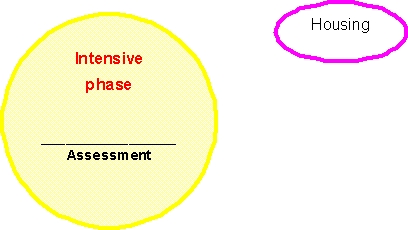
Recovery






Substance Misuse intervention services
Structured
and / or
Non structured treatment
Out of Area
Social Care

Job centre plus
Community Mental Health Team


 Supporting People
Maintenance



Safeguarding and parenting

Young People Specialist worker for transition clients




CJIT

Self Referral
11. Future Requirements for Joint Commissioning
There was a collective view from respondents to the consultation process that the current arrangements for the commissioning of substance misuse services need refining to remove gaps and overlaps and provide a more transparent evidence based approach.
There was a desire to see funding streams brought together to enable co-ordinated joint commissioning across the sector and a view that this could itself generate savings. Future commissioning should be based on the premise that whilst we are commissioning for the population of Hampshire we are delivering for the individual.
The DAAT, NHS Hampshire & Hampshire County Council Adult Services are committed to exploring the opportunities afforded by Health Act flexibilities in order to consolidate the current commissioning arrangements.
`We fully support the objective of working towards an integrated joint commissioning approach to Drug and Alcohol services which could include a pooled budget. We recognise the considerable benefits of working together towards this objective.'
Area Director of Commissioning (Strategy and Implementation)
NHS Hampshire
We propose that by April 2010 we create a commissioning, contracting, payments and performance monitoring process, hosted by the DAAT. We believe that the benefits of joint working can be best achieved through aligning the commissioning processes of the PCT, Adult Services and the DAAT.
By aligning these processes and funding commitments joint working can be achieved without the pooling of budgets. Each agency will be committed to joint funding of services for the period of the joint contract. An annual settlement would then be made between funding agencies consistent with the agreed joint commissioning approach.
In order to deliver a cost effective joined up treatment system, we propose the DAAT undertake the responsibilities listed below on behalf of all partners:
· provide the evidence base to inform strategic commissioning decisions
· lead the procurement of all services in partnership
· deliver an annual investment plan to be signed off by PCT Board and Adult Services DMT, to include new investment, disinvestment and on going contracts including an agreement for the transfer of the budget.
· use the SPOCC IT system to generate and manage contracts, payments and performance reporting and budget reporting
These proposals will deliver the greatest efficiencies whilst still enabling partners to retain control and influence over their expenditure whilst removing the administrative burden and improving joint performance monitoring.
12. Future requirements for Contracting
Continuous improvement will characterise our approach to contracting and procurement and longer contracts should support providers and commissioners to work together to examine, improve and develop services, to become more flexible and adaptable to meet local need and statutory imperatives
A number of respondents felt that longer contracts would provide greater stability within the sector and allow for a more flexible developmental approach to service delivery. All contracts will be subject to competitive tendering process and a robust performance management process. However, this process needs to be sensitive to the potential loss of small, well-proven local providers.
We recognise that the culture and competitiveness of open tendering can mitigate against effective joint working and we need to be mindful of this as we move into the implementation phase. This may mean fewer larger contracts.
Outcome based specifications will ensure performance in relation to individual services commissioned and contracted to deliver can be measured and reported, in order to demonstrate the achievement of both the identified service delivery outcomes and the desired outcomes of the programme as a whole.
13. Future Arrangements for Governance
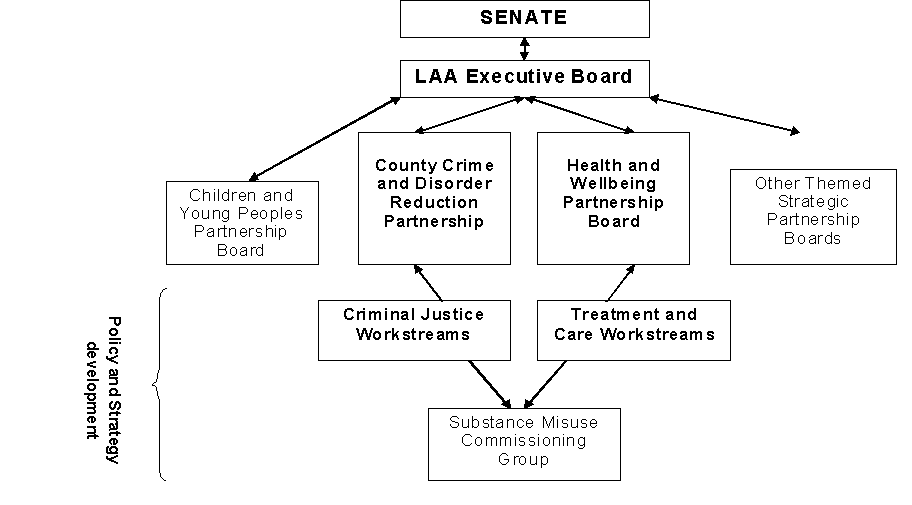
In order to achieve transparency and link the substance misuse agenda to the emerging processes associated with the Local Area Agreement, a new structure is proposed clarifying the accountabilities for the development of strategy and policy. Central to this process we need to increase our accountability to the wider public, service users, families and carers.
See Appendix Seven - Accountability Structure
In order to deliver the proposals in Section 10 ( Joint Commissioning) it is proposed that all partner agencies should come together as a `Commissioning Board' to jointly commission as one, using all of the Substance Misuse funding streams.
Although the role of the thematic partnerships is beyond the scope of the development plan, the ambition is that the DAAT specific partnership groups such as the Strategic DAAT, Joint Commissioning Group and the Alcohol Board are merged into policy formulation groups supporting the work of the DAAT team. Political and partnership agreement to strategies and plans will come from the thematic boards.
There are many reasons for this proposal, not the least being that it is often difficult to bring together in one partnership, the people necessary for policy development, that is people with the detailed knowledge of the relevant issues; and those with the authority to agree the proposal. This model separates the two functions without creating additional meetings.
Appendix One - Strategic Context
The overarching strategic context within which this development plan is written is to deliver at the Hampshire level, the requirements of the National Drug Strategy, Drugs: Protecting Families and Communities (2008-2018) and the National Alcohol Harm Reduction Strategy for England (2004) and Safe Sensible Social: The next steps in the National Alcohol Strategy (2007).
These strategies underpin PSA Delivery Agreement 25 - To reduce the harm caused by alcohol and drugs:
· to the community as a result of associated crime, disorder and anti-social behaviour;
· the health and well-being of those who use drugs or drink harmfully; and
· the development and well-being of young people and families
Specific to the delivery of a substance misuse treatment system, the Hampshire treatment model proposed in this document will take account of the following national guidance:
· Models of Care for the treatment of Adult Drug Misusers 2002 (updated 2006)
· Models of Care for Alcohol Misusers (2006)
· Drug Misuse and Dependence: Guidelines on Clinical Management (2007)
Further information on these and other relevant strategic documents is available in the SRIP which may be downloaded from the DAAT website.
The high level indicators that will measure progress are set out below.
Indicator 1:
NI 40 (VSB 14) - the number of drug users recorded as being in effective treatment
Drug treatment is the intervention with the most developed evidence of effectiveness and it is the key intervention to reduce drug-related crime. This indicator will also drive the reduction of the harms caused to health and well-being by frequent use of illegal drugs.
Data provider: National Drug Treatment Monitoring System (NDTMS)
Data set: National Drug Treatment Monitoring System (NDTMS) core data set
Baseline: 2007/2008
Frequency of reporting: Annual
Monthly data available for performance monitoring
Indicator 2:
NI 39 (VSC 26) - the number of alcohol-related hospital admissions
This indicator will drive the reduction of the harms caused to health and well-being by frequent consumption of harmful levels of alcohol. But it will also measure the impact of preventative interventions with the expectation that when they are improved, hospital admission for specific chronic and acute conditions will be expected to slow in the short, medium and long term.
Data provider: DH Information Centre
Data set: Hospital Episode Statistics (HES)
Baseline: 2006 Hospital Episode Statistics (HES) data for alcohol related hospital admissions
Frequency of reporting: Monthly
Indicator 3:
NI 38 The rate of drug-related offending
Drug use, particularly Class A drugs, heroin and cocaine/crack is a key driver for crime and offending. This indicator will drive the reduction of the harm caused to the community by drug related crime and offending, and thereby contribute to an overall reduction in crime/offending.
Data provider: Police forces, DATs, NOMS, CARATs
Data set used: Police National Computer (PNC) data and Drug Interventions Management Information System (DIMIS) and Offender Assessment System (OASys)
Baseline Available: This is the earliest point at whichcomplete convictions data will be available for the baseline cohort. Quarter 1 2008 (January - March 2008) is the first available baseline cohort for this PSA indicator
Frequency of reporting: Annual
Indicators 4 & 5:
The percentage of the public who perceive drug use or dealing / drunk and rowdy behaviour to be a problem in their area
Problem drug use and harmful alcohol use have a significant impact on society as a whole but disproportionately affect the most deprived communities. These indicators will drive the reduction of the harm caused to the community by alcohol and drug related disorder, by measuring the perception of the public who perceive the use or associated crime/ASB to be a problem in their area.
Data provider: HO, Programme Director, Crime Surveys
Data set: British Crime Survey
Baseline: July 2008
Frequency of reporting; Quarterly
In line with the additional reporting arrangements required by the NTA, Home Office and other local performance delivery arrangements a range of targets will be set to ensure the effective performance management of contracted services. This list is not exhaustive but will include:
· improved access to treatment for priority groups, including waiting times
· effective engagement of clients, including retention
· treatment exits
· primary care activity
· preventative activity
· care planning and general healthcare assessments
· harm reduction activity
· completion of the Treatment Outcome Profile (TOP)
Appendix Two - Substance Misuse Innovation Day
The Innovation day was an opportunity for wider partners and stakeholders to be updated on the responses to the consultation phase of the review and to comment on the barriers and opportunities that had arisen. It was also an opportunity for both service users and front line staff from a wide variety of partner agencies to develop a range of innovative projects that will help to explore new and different way of working to address a range of issues associated with drug and alcohol use /misuse.
This was the first time that the DAAT has used the `Innovation Approach', which was seen as helpful by service users and wider partners. Innovation looks at the introduction of new or different ways of working that will outperform on current practice.
The timetable was tight, in order that projects could be completed in time to inform the implementation phase of the review, but also to maintain momentum from the event.
In all, 13 proposals from partnerships and service users were received, covering a wide range of issues. These have been evaluated by a selection panel. The criteria used were the extent to which the proposal:
· Tests a new or different approach
· Offers realistic results
· Has realistic key steps
· Has the support to make it likely that this project will be a success
· Has the resources needed to ensure good value
Appendix Three - Financial Context
On 10 January 2008, following the Governments Comprehensive Spending Review 2007, the National Treatment Agency (NTA) released the PTB allocations for 2008/09 and indicative allocations for 2009/10 and 2010/11. The information provided represented a significant reduction to the PTB funding for Hampshire which would need to be built into service delivery plans by 01 April 2010.
Appendix Four - Overview of Hampshire
Hampshire is the third largest shire county in England. Typically represented as affluent, there is, however, significant variation in economic wealth and levels of deprivation at ward and Super Output Area level - Hart being the least deprived local authority in England whilst both Gosport and Havant are amongst the most deprived. Although 90% of Hampshire is classified as rural, the majority of the population (87%) live in urban areas - the most urbanised district being Gosport in South East Hampshire.
· Hampshire has a total population of 1,276,800 of which 78% are over 18 (1,000,740 individuals) living in 11 district council areas.
Drugs:
· 1,867 adult residents were in treatment, of which 51% were new triages in 2007/8 (949 individuals)
· 1,596 adult clients were Problematic Drug Users (PDU's), 85% of the adult treatment population
· Hampshire had 186.6 adults in treatment per 100,000 population, lower than the South East rate of 289.7 per 100,000
· 72% of adult clients in treatment were male and 28% were female
· 45% of adult clients resident in Hampshire were aged 18-29, 46% were aged 30-44 and 9% were aged 45 and over
· 94% of adult clients resident in Hampshire were White British, 1% of clients' ethnicity was not collected. 93% of Hampshire adult residents are White British
· 11% of clients stated alcohol as either a primary, secondary or third drug
· 24% (451 individuals) of adult clients are currently injecting drug users, 16% (304 individuals) have never injected; injecting status was not given for 43% of clients
· 35% of discharges were successful: 9% treatment completed drug free; 18% treatment completed; 8% referred on
Alcohol:
The North West Public Health Observatory profile rankings indicate that Hampshire is not performing well compared to other areas around; Alcohol related violent crime, Alcohol related crimes, Alcohol attributable female hospital admissions, Alcohol specific female hospital admissions, Alcohol related under 18's hospital admissions :
· Rushmoor, Havant and Gosport score poorly on all 5 domains relative to other districts
· Under 18's hospital admissions are highlighted in Test Valley and New Forest
· Alcohol related crime and violence crime are highlighted in Basingstoke and Deane over other alcohol issues.
· Approx 2,500 Alcohol clients seen by services per year
· Estimate 5,000 - 8,000 people would seek help for each year
· Female drinkers present a significant issue for alcohol-related hospital admissions over males, relative to regional and national averages
The Public Health Observatories produce community health profiles for local authorities across England (see www.communityhealthprofiles.info) provide health information about local populations. The impact of alcohol will vary in different areas. There is a clear link between the impact of alcohol harms and more general indicators of deprivation. The impact of alcohol misuse is particularly harmful for people whose general health is already poor.
There is also evidence that more affluent populations tend to drink more, suggesting inequality with a greater impact of alcohol upon neighbourhoods with material deprivation.
The North West Public Health Observatory 2007 Local Alcohol Profiles include prevalence estimates for hazardous and harmful drinking. The profiles estimate that there are about 204,816 hazardous drinkers and 40,022 harmful drinkers in Hampshire.
For further details, please refer to the needs assessment element (Part 1) of the DAAT Partnership Adult Drug Treatment Plan 2009/10 and the Hampshire Alcohol Harm Reduction Strategy 2008-2011. Both of these can be accessed via the DAAT website.
Appendix Five - Accountability Structure
Appendix Six - Required Elements of Service Delivery
The following services are required to deliver an effective treatment system in Hampshire:
· Comprehensive Assessment for Drug and Alcohol Mis-users
· General Health Assessment for Drug and Alcohol Mis-users at presentation and when in treatment
· A range of prescribing interventions, in the context of a package of care and in line with Drug Misuse and Dependence - UK Guidelines on Clinical Management (Department of Health 2007). This includes provision for voluntary clients, DIP clients, and those subject to a Court Order
· A range of prescribing and clinical interventions that take account of NICE technology appraisals and guidelines (www.nice.org.uk)
· Interventions should include: community based detoxification for drug and alcohol dependency; prescribing for stabilisation and oral opioid maintenance prescribing; and a range of prescribing interventions to prevent relapse and ameliorate drug and alcohol related conditions
· Prescribing interventions for adults subject to a Court Order, for example Drug Rehabilitation Requirements (DRRs)
· Prescribing for the management of patients dependent on benzodiazepines
· Appropriate on site drug testing methods, with accredited laboratory follow up testing being where appropriate
· Shared care arrangements for drug and alcohol mis-users in primary care
· Interventions which include screening and vaccinations for drug and alcohol mis-users at risk of blood borne viruses
· A range of structured evidence based psycho-social interventions and other structured interventions to assist individuals to make changes in drug and alcohol using behaviour, including stimulant users
· Specialist advice and support for acute medical and psychiatric health services (eg; pregnancy, mental health, and hepatitis services)
· Partnership working, including the provision of specialist advice and support to Adult Safeguarding and Child Protection Services
· Liaison services with Employment and Housing Services
· Liaison and support for generic providers of Tier 1 interventions
· Co-ordinated solutions for those who commit crimes to fund their drug misuse; engaging with problematic drug users (DIP/CJIT) at every stage of the criminal justice system, and moving them into appropriate drug treatment and support
· Comprehensive Assessment for Drug and Alcohol mis-users
· Structured day programmes and care-planned day care for drug and alcohol mis-users
· Structured day care for those adults subject to a Court Order, for example Drug Rehabilitation Requirements
· Provision for after-care for drug and alcohol mis-users
· Liaison services for acute medical and psychiatric health services (eg; pregnancy, mental health, and hepatitis services)
· Partnership working, including the provision of specialist advice and support to Adult Safeguarding and Child Protection Services
· Liaison services with Employment and Housing Services
· Provision of drug and alcohol related information and advice
· Triage assessment
· Brief interventions
· Onward referral to structured treatment
· Brief psychosocial interventions for drug and alcohol mis-users
· Harm reduction interventions, including the provision of needle exchange
· Liaison and support for generic providers of Tier 1 interventions
In addition, Models of Care for Alcohol Misuse (MoCAM, NTA 2006) is seen as `Best Practice Guidance' for health service organisations. The expectation is that MoCAM will be used by PCTs working in partnership with local commissioning groups and local service providers to develop and build integrated systems that meet the needs of local people whose alcohol misuse is harmful and requires intervention or treatment.
MoCAM sets out the key quality requirements for commissioners and providers of alcohol treatment:
Quality Criteria for Commissioning Alcohol treatment
Commissioning alcohol treatment systems
Monitoring the performance of alcohol treatment systems
Commissioning and providing an alcohol treatment system to meet a diverse range of local population needs
Quality criteria for providing an evidence-based alcohol treatment system
Screening the target population and taking action with individuals who are hazardous and harmful drinkers
Assessing the needs of individuals with identified alcohol problems and others who may be affected
Care planning to meet the assessed needs of those with alcohol problems
Providing a range of structured treatment interventions to meet the needs of alcohol misusers
Helping individuals maintain the gains they have made from alcohol treatment
Managing alcohol treatment services
NOTE : Add in requirements relating to Service User and Carer involvement - Richard
Appendix Seven - Treatment Plan Priorities
Treatment Plan 2009/10
· Improving access to care
· Improving the quality of care
· Improving outcomes for service users
· Developing a robust and effective Harm Reduction strategy
· Tackling the harm caused by substance misuse
Treatment Plan 2008/09
· Deliver Financially Sustainable Treatment System
· Deliver accessible, inclusive treatment services
· Deliver safe and effective treatment programmes
· Meet the holistic needs of service users arising form or contributing to their drug misuse
Treatment Plan 2007/08
· Reviewing and developing services for underserved groups
· To coordinate and develop the harm reduction activities of the DAAT
· To develop primary care services particularly Shared Care and Community Pharmacy services
· To provide a client need led structured counselling service
· To support generic services with e-learning basic drugs awareness training
· Number in Treatment and waiting times
Treatment Plan 2006/07
· Developing links and care pathways with mainstream aftercare and harm reduction services.
· Reviewing and developing services for underserved groups.
· Developing stronger links and services with GP's and Pharmacists.
· Coordinating and delivering training to ensure drug treatment and generic services staff are able to provide effective support, information and services to clients.
· To provide support and mechanisms for the full involvement of service users and carers in the commissioning and monitoring of service providers.
Treatment Plan 2005/06
· DIP
· Service User and Carer Interaction
· Reviewing and developing services for underserved groups
· Shared Care
· Provision of Tier 4 services
Treatment Plan 2004/05
· Fully implement Models of Care
· Maintain, stabilise and improve waiting times to meet targets.
· Build capacity in user and carer groups across Hampshire. Support (including advocacy support) and empower user and carers to participate in and influence all DAT activities.
· Increase throughput, successful completions and managed discharges.
· To support and develop the workforce.
Treatment Plan 2003/04
· dual diagnosis
· criminal justice
· young peoples treatment
· models of care
· user/carer involvement support
Treatment Plan 2002/03
· Capacity issues relating to the DAT Support Team
· Waiting Times
· Models of Care Implementation
· NDTMS - Implementation of the Minimum Data Set / IT Systems & Audit8
· Quality in Drug and Alcohol Services (QuADS)
· Workforce Development
1. A reduction in the harm caused by substance misuse to individuals, families and communities
Emphasis on recovery
Carer / Service User involvement
Family and Carer services
More/better support for families and carers
Community reintegration
Flexible, low threshold, rapid prescribing
BBV testing and harm reduction
2. Improved access to treatment and care underpinned by
Better promotion of services
More satellite provision in rural areas
More alcohol services
Better access
Clear referral pathways
Equity - in terms of what ?
3. Improved quality of care
Integrated outcome focused commissioning
More 1:1 time, especially counselling
Choice
4 Improved social functioning and reintegration for service users
Improved employment outcomes for individuals in treatment and improved housing status
Holistic assessment and interventions
Community reintegration