
Archived decisions
Executive Summary
1 Introduction
Changes in treatment of Heart Attacks within South Central will deliver faster more affective treatments recognised to deliver better outcomes with lower mortality and longer term outcome compared to current practice within the current financial allocation. Primary Percutaneous Coronary Intervention (PPCI) will be the main or first treatment for patients suffering a heart attack (STEMI).
2 Project Aims
Investment in training, together with proposed changes to treatments and patient pathways will achieve the following objectives;
Key Objectives |
Deliver PPCI 24 hours per day 7 days per week within South Central by late autumn 2011 |
Achieve an overall call to balloon time of less than 120 minutes |
Ensure that all PPCI centres meet recommended standards and guidelines |
Ensure equitable access to PPCI and cardiac rehabilitation services |
3 Key Activity Assumptions
The Network has based its activity assumptions on actual numbers of patients during 2008/09 (MINAP), current and proposed patient pathways. Modelling has taken in to account the numbers of inter-hospital admissions for the same spell of treatment and does not include patients who were initially admitted for STEMI but diagnosed differently after investigation.
Cluster |
Provider |
Unit |
STEMI |
nSTEMI |
Total MI |
Northern |
ORH |
JRH |
203 |
328 |
531 |
Horton |
51 |
109 |
160 | ||
BHT |
WGH |
115 |
161 |
276 | |
SMH |
79 |
104 |
183 | ||
MKGH |
111 |
124 |
235 | ||
Central |
HWHFT |
Heatherwood |
20 |
21 |
41 |
Wexham |
75 |
76 |
151 | ||
RBFT |
174 |
214 |
388 | ||
Southern |
BNHFT |
59 |
12 |
71 | |
PHT |
Queen Alexandra |
339 |
480 |
819 | |
IoW |
St Marys Hospital |
106 |
147 |
253 | |
SUHT |
401 |
331 |
732 | ||
RHCH |
111 |
238 |
349 |
4 Future Service Model
Clinicians and commissioners at a meeting in October 2008 identified the following four options:
· 24/7 PPCI in 2 centres
· 24/7 PPCI in 2 centres & Monday to Friday 8am - 6pm (excluding weekends and bank holidays) in 5 centres
· 27/7 PPCI in 4 centres & Monday to Friday 8am - 6pm (excluding weekends and bank holidays) in 3 centres
· 24/7 in 4 centres
In South Central seven providers wish to provide PPCI: one wishes to continue providing daytime service Monday to Friday excluding weekends and bank holidays; a second currently provides daytime services but is willing to move to 24/7 should the commissioners wish them to and the remaining five wish to provide 24/7 PPCI services.
5 Access to services
Equality Impact Assessment identifies local factors affecting equality of access to services are as follows:
· Portsmouth, Milton Keynes and the Isle of Wight will have the largest growth in population between 2006 and 2031.
· Milton Keynes, Southampton City and the Isle of Wight will have the largest growth in males aged 40-74.
· Milton Keynes, Portsmouth and Southampton will leave the largest growth in females aged 40-74.
· Berkshire East will have the third lowest overall population growth during the same period but will have a significantly higher percentage and population growth of Asian or British Asian residents.
· All areas within South Central have lower than national mortality rates with the exception of Berkshire West PCT who has a mortality rate higher than the national average.
Please note that at the time of publication of this report the network and commissioners are in the process of revising the EIA to ensure the changes in PPCI services are reflective of each option.
6 Experienced Interventional Cardiologists
British Cardiovascular Intervention Society (BCIS) recommends a minimum of 4 and ideally 6 interventionists per PPCI centre. Five of the seven interested providers will have confirmed within this financial year have a minimum of 4 interventionists.
Provider |
Current Service |
Operator numbers |
BNHFT |
24/7 |
2 (soon to appoint a 3rd ) |
BHT |
Daytime |
3 |
HWPFT |
Daytime |
3 (soon to appoint a 4th) |
ORH |
24/7 |
7 |
PHT |
Daytime |
3 (soon to appoint a 4th) |
RBFT |
24/7 |
4 |
SUHT |
24/7 |
5 |
Totals |
27 + 3 |
7 Process to Date
Date |
Designation |
Outcome |
Oct 2008 |
Joint provider, commissioner conference at Newbury |
Four options identified |
Oct-Nov 2008 |
Options detailed and Criteria developed by Network |
Appendix A:PPCI Criteria |
Nov 2008 |
Option A recommended to Board of Commissioners (BoC) preferred option |
Network asked to develop option C with the Directors of commissioning (DoC). |
Dec 2008 |
Paper to DoC requesting implementation of formal procurement route for PPCI |
Network asked to develop proposals within the parameters of world class commissioning. |
Feb 2009 |
Next steps meeting |
Panel meeting arranged for the 1st April to allow providers to respond to network criteria in line with the 4 options (Appendix B: Panel Meeting). |
April 2009 |
Panel meeting Newbury |
The panel reviewed the provider presentations and submissions against the previously agreed criteria and agreed a further 3 criteria should be included (Appendix C: Additional PPCI Criteria) Panel recommends: · Option D is presented to BoC based on available information. · To work with patient groups to develop options · Meet with Health Overview and Scrutiny Committees representatives and panels to develop options |
April 2009 |
The following providers did not meet the additional criteria Basingstoke and North Hampshire NHS Foundation Trust (BNHFT), Heatherwood and Wexham Park NHS Foundation Trust (HWPFT) and Buckinghamshire Hospital NHS Trust (BHT) Meetings were offered to discuss additional criteria added by the panel. |
HWPFT - response to additional criteria · Currently undertake more than 50 PPCI per annum. · Shortly will have both a cath lab and a pacing lab at cath lab standards · Will provide 24/7 following public engagement and consultation if the commissioners would like them to. |
BNHFT - response to additional options · Currently undertake more than 50 PPCI per annum · They have 2 cath lab · Currently providing 24/7 PPCI services with 2 consultants are in the process of appointing a third and will have a visiting interventionist shortly. | ||
BHT did not respond | ||
June 2009 |
Board of Commissioners |
The Board supported the next stage of the project - Engagement. |
8 Value for Money
The financial analysis and value for money calculations have been based on current patient pathways, MINAP data for the period of 2008/09 and Health Resource Groups (HRG) 3.5, 2007/08.
The model is inclusive of readmission for same HRG procedures (nationally 12%). Direct discharge from the heart attack centres is assumed within all of the options. No costs have been included for transfer to local hospitals post procedure.
Financial Summary | ||||
Option |
PCT |
Additional SCAS |
Prescribing |
Total |
D |
£8,382,600 |
£ 14,236 |
£ 11,964 |
£8,408,800 |
C |
£8,382,600 |
£ 13,430 |
£ 11,964 |
£8,407,994 |
A |
£8,385,695 |
£ 20,564 |
£ 11,964 |
£8,418,223 |
Current |
£8,820,857 |
£8,820,857 | ||
9 Outline Timetable to Commissioning
Date |
Key Milestone |
June 09 |
BoC approval _ Commence Engagement phase on options A, C and D _ Engagement Strategy and Plan (Appendix E with amendments) _ Return to BoC with engagement report and recommendations for consultation phase |
July to Oct 09 |
Engagement phase of engagement and consultation |
Nov 09 |
Engagement review and report to BoC |
Dec 09 to Feb 10 |
Formal Consultation |
Preparation for PPCI implementation · To develop service specifications to guide the SHA, commissioners and other stakeholders, based on clinical consensus and high quality data. · To develop and implement evidence based, uniform clinical standards, guidelines and protocols across the network where these do not exist. · Maintain strong clinical engagement to enable improvements in practice and co-operation along patient pathways. · To act as a consultancy and educational resource for clinical and service quality improvement work in PCI · Working with the SHA, to understand and support commissioning clusters for quality by contributing to network wide comparative benchmarking, audit and clinical quality indicators and outcomes. · Provide clinically based advice to inform workforce planning, inputting to the education and training strategy for relevant professional groups. · Provide a detailed implementation plan | |
March 2010 |
Final report to BoC for decision |
April 2010 |
Commence Implementation process |
Nov 11 |
PPCI implementation complete |
10 Support and Approval
The Network have appointed a consultancy firm: Communications Management: Building Reputations to undertake a period of engagement and consultation with all stakeholders including commissioners, providers, patients and the public and have gained approval from the Board of Commissioners to commence the engagement program for a period completing late autumn 2009.
Primary Percutaneous Coronary Intervention | ||
South Central Cardiovascular Network | ||
June 2009 | ||
Figures & Tables |
Page | |
Figure |
||
1 |
Patient Map - Buckinghamshire Hospitals NHS Trust |
6 |
2 |
Patient Map - Milton Keynes General Hospital |
6 |
3 |
Patient Map - Oxford Radcliffe Hospitals NHS Trust |
6 |
4 |
Patient Map - Royal Berkshire NHS Foundation Trust |
7 |
5 |
Patient Map - Heatherwood and Wexham park Hospitals NHS Foundation Trust |
7 |
6 |
Patient Map - Basingstoke and North Hampshire Hospitals NHS Foundation Trust |
7 |
7 |
Patient Map - Southampton University Hospital NHS Trust |
7 |
8 |
Patient Map - Queen Alexandra Hospital |
8 |
9 |
Patient Map - Royal Hampshire County Hospital |
8 |
10 |
Patient Map - St Marys Hospital |
8 |
11 |
PPCI patient pathway |
9 |
12 |
One year mortality |
15 |
13 |
Call to door mortality |
16 |
14 |
PPCI timescale |
16 |
15 |
Call-to-door times |
16 |
16 |
SCAS Map: 40 minute isochrones of ORH and SUHT |
17 |
17 |
Isle of Wight - call to balloon |
24 |
Table |
||
1 |
Process to Date |
2 |
2 |
South Central Population |
4 |
3 |
Current Service Provision |
5 |
4 |
Option A |
10 |
5 |
Option B |
10 |
6 |
Option C |
11 |
7 |
Option D |
12 |
8 |
Benefits and Risk |
13 |
9 |
Locations |
14 |
10 |
BCIS Mortality Audit |
18 |
11 |
BCIS Guidelines |
18 |
12 |
Provider Total PCI |
19 |
13 |
Provider Operator Numbers |
19 |
14 |
Hospital Mortality |
20 |
15 |
Mortality |
23 |
16 |
Population - Milton Keynes |
23 |
17 |
Population - Isle of Wight |
24 |
18 |
MINAP 2007/08 |
26 |
19 |
HRG 2007/08 |
26 |
20 |
Financial Summary |
27 |
21 |
HRG 2008/09 |
28 |
22 |
Timetable |
30 |
1.0 Introduction
Coronary angioplasty is a technique used to reopen an artery supplying heart muscle which has occluded causing a heart attack. A small balloon at the tip of a catheter tube is inserted via an artery in the groin or arm and guided to the blocked heart artery. It is briefly inflated and then removed, leaving in place a 'stent' - a rigid support which holds the artery widely open, allows blood to flow more easily. Primary angioplasty (or PPCI) is the use of this technique as the initial treatment of patients suffering more severe forms of heart attack (STEMI).
The key to improving outcomes after heart attack is to re-establish coronary artery flow as quickly as possible and limit damage to the heart muscle.
There have been numerous studies addressing the relative benefits of primary angioplasty as against thrombolysis in the treatment of heart attack. Evidence for the longer-term benefits of primary angioplasty has been steadily growing and the main conclusions are:
· Primary angioplasty reduces mortality, and improves longer-term outcome compared to thrombolysis when both treatments can be undertaken within a similar time frame1.
· The advantage of primary angioplasty over thrombolysis decreases with increasing delay in undertaking the procedure. Whilst much debate still surrounds this issue it is thought that the benefit of primary angioplasty may be lost, or considerably reduced, if it takes more than 90 minutes longer to undertake the procedure than it would to administer thrombolysis
· More patients are potentially suitable for primary angioplasty than thrombolysis, and primary angioplasty is associated with fewer strokes and recurrent heart attacks during the hospital admission2.
The National Infarct Angioplasty project (NIAP3) report suggests PPCI improves patient outcomes provided the balloon is inflated within 120 minutes of call for help and at a cost which is considerably lower than the benefits delivered. (Cost per QALY £4,500)
The South Central Darzi Acute Care clinical pathway group review referred to the NIAP work as an example of the benefits which could be achieved for patients by organising services on the basis of more specialised centres of excellence.
Professor Boyle (December 2006) produced Mending Hearts and Brains, a report which made the clinical case for reconfiguration in terms of delivering better urgent case for myocardial infarction. This stressed the need for myocardial infarction services to be delivered by personnel with an appropriate level of experience and training in settings with sophisticated diagnostic and monitoring facilities on a 24 hours a day, seven days a week, immediate-access basis.
The following Table 1: Process to Date lists the process undertaken by the South Central Cardiovascular Network since the publication of the NIAP report in October 2008.
Table 1: Process to Date
Date |
Designation |
Outcome |
Oct 2008 |
Joint provider, commissioner conference at Newbury |
Four options identified |
Oct-Nov 2008 |
Options detailed and Criteria developed by Network |
Appendix A:PPCI Criteria |
Nov 2008 |
Option A recommended to Board of Commissioners (BoC) preferred option |
Network asked to develop option C with the Directors of commissioning (DoC). |
Dec 2008 |
Paper to DoC requesting implementation of formal procurement route for PPCI |
Network asked to develop proposals within the parameters of world class commissioning. |
Feb 2009 |
Next steps meeting |
Panel meeting arranged for the 1st April to allow providers to respond to network criteria in line with the 4 options (Appendix B: Panel Meeting). |
April 2009 |
Panel meeting Newbury |
The panel reviewed the provider presentations and submissions against the previously agreed criteria and agreed a further 3 criteria should be included (Appendix C: Additional PPCI Criteria) Panel recommends: · Option D is presented to BoC based on available information. · To work with patient groups to develop options · Meet with Health Overview and Scrutiny Committees representatives and panels to develop options |
April 2009 |
The following providers did not meet the additional criteria Basingstoke and North Hampshire NHS Foundation Trust (BNHFT), Heatherwood and Wexham Park NHS Foundation Trust (HWPFT) and Buckinghamshire Hospital NHS Trust (BHT) Meetings were offered to discuss additional criteria added by the panel. |
HWPFT - response to additional criteria · Currently undertake more than 50 PPCI per annum. · Shortly will have both a cath lab and a pacing lab at cath lab standards · Will provide 24/7 following public engagement and consultation if the commissioners would like them to. |
BNHFT - response to additional options · Currently undertake more than 50 PPCI per annum · They have 2 cath lab · Currently providing 24/7 PPCI services with 2 consultants are in the process of appointing a third and will have a visiting interventionist shortly. | ||
BHT did not respond | ||
June 2009 |
Board of Commissioners |
The Board supported the next stage of the project - Engagement. |
May 2009 to March 2010
During this time a period of engagement will consider the following three options4;
A: 24/7 PPCI would be provided in 2 centre's; Oxford Radcliffe Hospitals NHS Trust (ORH) and Southampton University Hospitals NHS Trust (SUHT).
C: 24/7 PPCI would be provided in four centres: ORH, SUHT, Royal Berkshire NHS Foundation Trust (RBFT) and Portsmouth Hospital Trust (PHT).
In addition to these centres there will be a further three centres: Basingstoke and North Hampshire Hospitals NHS Foundation Trust (BNHFT), Buckinghamshire Hospitals NHS Trust (BHT) and Heatherwood and Wexham Park Hospitals NHS Foundation Trust (HWPFT) on a Monday to Friday 8am - 6pm basis (excluding weekends and bank holidays).
D: 24/7 PPCI would be provided in four centres: ORH, SUHT, RBFT and PHT.
The next section will describe the current PPCI services within the south central area.
2.0 Treatment of Heart Attack in South Central
2.1 Current Service Provision
There are four providers currently undertaking PPCI 24/7 for treatment of STEMI. There are three hospitals that receive patients with thrombolysis but transfer their patients to other providers for PCI and three who provide 8am - 6pm angiography/thrombolysis or PPCI with thrombolysis out of hours. Table 1: PCT population shows that there is a marked variation between the PCTs, the Isle of Wight being the smallest with a population of 138,500 and Hampshire the largest with 1,250,0005.
The total volume of PCI activity (unplanned and elective) in the UK was 1,269 per million populations (PMP) from Jan to Dec 2008. In 2003 the British Coronary Intervention Society (BCIS) target was 1,400 PMP with expectations that the level might in the future need to be 2-3,000 PMP6, these predictions are now under review. Table 2: South Central Population provides an estimated level of PCI within each PCT population for current UK populations and an estimated PMP up to 3,000.
Table 2: South Central Population
Population |
Estimated total PCI based on Per Million Population | ||||||
1,269 PMP |
1,400 PMP |
1,600 PMP |
1,800 PMP |
2,000 PMP |
3,000 PMP | ||
500,000 |
635 |
700 |
800 |
900 |
1000 |
1,500 | |
230,300 |
292 |
322 |
368 |
415 |
461 |
691 | |
635,000 |
806 |
889 |
1,016 |
1,143 |
1,270 |
1,905 | |
Total Northern Cluster population |
1,365,300 |
1,733 |
1,911 |
2,184 |
2,458 |
2,731 |
4,096 |
376,000 |
477 |
526 |
602 |
677 |
752 |
1,128 | |
450,000 |
571 |
630 |
720 |
810 |
900 |
1,350 | |
Total Central Cluster population |
826,000 |
1,048 |
1,156 |
1,322 |
1,487 |
1,652 |
2,478 |
1,250,000 |
1,586 |
1,750 |
2,000 |
2,250 |
2,500 |
3,750 | |
138,500 |
176 |
194 |
222 |
249 |
277 |
416 | |
230,710 |
293 |
323 |
369 |
415 |
461 |
692 | |
Southampton City PCT |
257,000 |
326 |
360 |
411 |
463 |
514 |
771 |
Total Southern Cluster population |
1,876,210 |
2,381 |
2,627 |
3,002 |
3,377 |
3,752 |
5,629 |
Total SHA Population |
3,929,010 |
4,986 |
5,501 |
6,286 |
7,072 |
7,858 |
11,787 |
Actual PMP data is not available by PCT, not all patients admitted with suspected STEMI have a final diagnosis of STEMI.
Treatment of Heart attacks within South Central is dependant on the geographical location of the patient as demonstrated in section 2.2: patient flows.
The seven centres in South Central provide a mix of 8am - 6pm and 24/7 PPCI and thrombolysis services.
In addition Harefield Hospitals provide out of hours (OOH) thrombolysis services for Berkshire East PCT and Buckinghamshire PCT, Table 3: Current Service Provision;
Table 3: Current Service Provision (by provider)
Provider |
Current Service |
Current activity |
Operator numbers |
No of labs | |||
Total PCI |
Suspected STEMI | ||||||
2008/09 |
2007/08 | ||||||
First Presentation |
Final Destination | ||||||
Buckinghamshire Hospitals NHS Trust (High Wycombe) (BHT) |
Daytime service |
473 |
194 |
194 |
3 |
2 | |
OOH eligible PPCI patients transferred out of hours to Oxford or Harefield (all London activity is currently funded through specialist commissioning) | |||||||
Milton Keynes (MKGH) |
111 patients of which eligible PPCI patients transferred from Milton Keynes General Hospital (MKGH)to ORH (101 pts) |
No PPCI service |
111 |
10 |
|||
Oxford Radcliffe Hospital NHS Trust (ORH) |
24/7 |
1,670 |
149 |
250 |
7 |
3 | |
Northern Cluster provider totals |
2,082 |
454 |
454 |
10 |
5 | ||
Heatherwood and Wexham Park Hospitals NHS Foundation Trust (HWPFT) |
Daytime service |
447 |
95 |
95 |
3 appointing a 4th |
1 + 1 | |
OOH eligible PPCI patients transferred to Harefield or RBFT | |||||||
Royal Berkshire NHS Foundation Trust (RBFT) |
24/7 |
582 |
174 |
174 |
4 |
2 | |
Central Cluster provider totals |
1,029 |
269 |
269 |
7 + 1 |
4 | ||
Basingstoke and North Hampshire Hospitals NHS Foundation Trust (BNHFT) |
24/7 |
412 |
59 |
59 |
2 appointing a 3rd |
1 | |
When 24/7 not available all eligible PPCI patients transferred to RBFT- service not yet implemented | |||||||
Isle of Wight (StMH) |
106 patients of which eligible PPCI patients transferred from St. Marys Hospital (StMH) to PHT (101 pts) |
No PPCI service |
106 |
6 |
|||
Portsmouth Hospitals NHS Trust (PHT) |
Daytime service |
706 |
239 |
322 |
3 appointing a 4th |
2 | |
5% PHT thrombolysed patients transfer to SUHT for rescue PPCI (-17) | |||||||
Southampton University Hospitals NHS Trust (SUHT) |
24/7 |
1,144 |
284 |
401 |
5 |
4 | |
Winchester (RHCH) |
111 patients of which eligible PPCI patients transferred from The Royal Hampshire County Hospital (RHCH) to SUHT (100 pts) |
No PPCI service |
111 |
11 |
|||
Southern Cluster provider totals |
2,262 |
799 |
799 |
10 + 3 |
8 | ||
Totals |
5,434 |
1,535 |
1,535 |
27 (+4) |
14 + 1 | ||
The total numbers within table 2 have been adjusted to allow for inter-hospital transfers; · Of the 111 patients presenting at RHCH, 100 are transferred to SUHT for PPCI/other treatments and are already included within SUHT figures (+11). · Of the 106 patients presenting at StMH 101 are transferred to PHT for PPCI/other treatments and are already included within PHT figures (+5) · 5% of total PPCI patients presenting at PHT transfer to SUHT for rescue PPCI, these are already included within SUHTs numbers (-17) · The 111 patients presenting at MKGH 101 are transferred to ORH for PPCI/other treatments and are already included within ORH figures (+10). · An additional 50 East Berkshire patients who present at Harefield hospital have been included within HWPFT numbers. · Patients transferring to Harefield Hospital OOH are already included within BHT. | |||||||
2.2 Existing Patient Flows
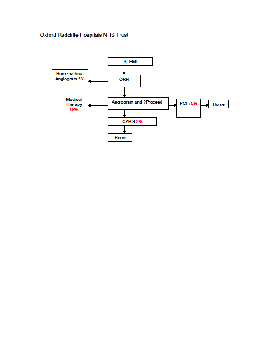
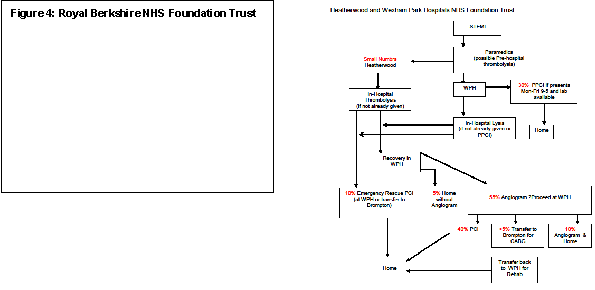
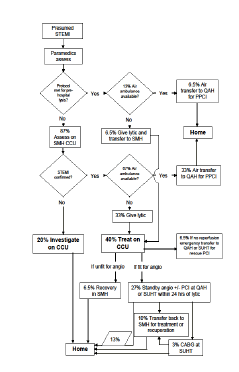
The following figures (1-10) demonstrate current patient flows within South Central by provider figure 10 shows the current service with additional air ambulance support.
Figure 1: Buckinghamshire Hospitals NHS Trust
2.2.1 Northern Cluster
Buckinghamshire Hospitals NHS Trust (BHT)
Oxford Radcliffe Hospital NHS Trust (ORH)
Milton Keynes General Hospital (MKGH)
NSTEMI - 2,143
STEMI - 365
Clinicians - 10
Catheter Laboratories - 5
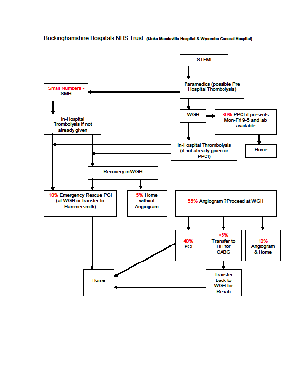
Figure 2: Milton Keynes Hospital NHS Foundation Trust
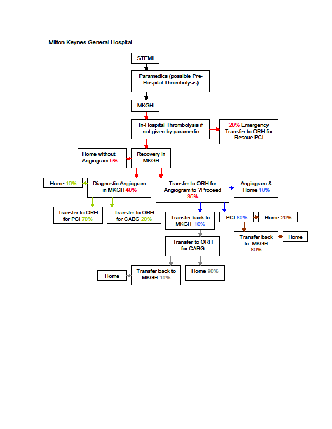
Figure 3: Oxford Radcliffe Hospitals NHS Trust
2.2.2 Central Cluster
Royal Berkshire NHS Foundation Trust (RBFT)
Heatherwood and Wexham Park Hospitals NHS Foundation Trust (HWPFT)
NSTEMI - 1,029
STEMI - 216
Clinicians - 7 + 1
Catheter Laboratories - 4
Figure 5: Heatherwood and Wexham Park Hospitals NHS Foundation Trust
2.2.3 Southern Cluster
Basingstoke and North Hampshire Hospitals NHS Foundation Trust (BNHFT)
Portsmouth Hospitals NHS Trust (PHT)
Southampton University Hospital NHS Trust (SUHT)
The Royal Hampshire County Hospital - Winchester
St Marys Hospital - Isle of Wight
NSTEMI - 1,262
STEMI - 710
Clinicians - 10 + 3
Catheter Laboratories - 8

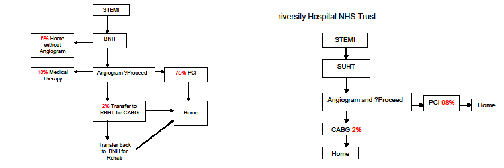
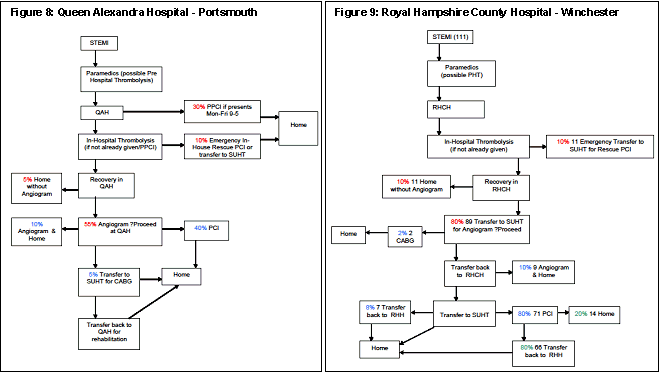 The following section, section 3 will describe the recommended patient pathway and associated risks and benefits for options a, b, c and d (see page 10):
a. 24/7 PPCI in 2 centres, John Radcliffe Hospital (JRH), Oxford and Southampton University Hospital Trust (SUHT).
b. 24/7 PPCI in 2 centres, JRH and SUHT. Plus Monday to Friday 8am to 6pm services (excluding weekends and bank holidays) 5 centres, Buckinghamshire NHS Hospital Trust (BHT), Basingstoke and North Hampshire NHS Foundation Trust (BNHFT), Royal Berkshire NHS Foundation Trust (RBFT), Portsmouth Hospital Trust (PHT) & Heatherwood and Wexham Park Hospital NHS Foundation Trust (HWPFT).
c. 24/7 PPCI in 4 centres, JRH, SUHT, PHT and RBFT & Monday to Friday 8am - 6pm services (excluding weekends and bank holidays) 3 centres, BHT, BNHFT & HWPFT
d. 24/7 in 4 centres, JRH, SUHT, PHT and RBFT.
Figure 10: St Marys Hospital - Isle of Wight
3 Recommended patient pathway
The treatment of heart attack national guidance Final Report of the National Infarct Angioplasty Project (NIAP) was published on the 20th October 2008. South Central Cardiovascular Network hosted a meeting in Newbury on the 22nd October 2008, providers and commissioners were in attendance as was national leads for PPCI. At this meeting the new PPCI patient pathway was endorsed by all clinicians present (Figure 11: PPCI Patient Pathway). Attendees at the meeting formulated four options as described within section 3.2: options.
3.1 New Patient Pathway
All patients experiencing STEMI within South Central should have access to 24/7 to PPCI centres7,8,9. Currently 95% of these patient treatments involve a stent insertion3, the remaining 5% decline treatment, go on to have different treatments such as CABG or do not survive. Figure 11: PPCI Patient pathway10 represents patient pathway for STEMI patients with the exception of the Isle of Wight for all options.
Figure 11: PPCI Patient pathway
3.2 Options
World class commissioning is about delivering better health and wellbeing for the population, improving health outcomes and reducing health inequalities. To allow effective implementation of PPCI within South Central the commissioners will decide the optimum number of and locations of PPCI centre's and how patients will flow across the system.
3.2.1 Option A
24/7 PPCI would be provided in two centres: Oxford Radcliffe Hospitals NHS Trust (ORH) and Southampton University Hospitals NHS Trust (Table 4: Option A).
Table 4: Option A
Northern Cluster: |
· ORH will receive all patients from the northern cluster. |
Central Cluster: |
· PPCI services will be commissioned through Oxford and Southampton |
Southern Cluster: |
· SUHT will receive all patients from the southern cluster and excluding 50% BNHFT which will attend RBFT as above. |
3.2.2 Option B
24/7 PPCI would be provided in two centres: ORH, SUHT.
In addition to these centres there will be a further five centres: BNHFT, BHT, HWPFT, RBFT and PHT on a Monday to Friday 8am - 6pm basis (excluding weekends and bank holidays) (Table 5: Option B).
Table 5: Option B
Northern Cluster: |
· ORH will receive patients from its current catchment and Milton Keynes (MKFT) 24/7. OOH they will also receive 75% patients from BHT, 75% from HWPFT and 100% from RBFT. · BHT will receive patients from its current catchment during 8am - 6pm hours excluding weekends and bank holidays. OOH 25% of patients will go to Harefield Hospital and the remaining 75% will go to ORH as above. · In this model Milton Keynes Foundation Trust will not provide PPCI, all MK patients will go to ORH, however options for MK and neighbouring areas will be reviewed later this year (2009). |
Central Cluster: |
· RBFT will receive patients from its current catchment during 8am - 6pm hours excluding weekends and bank holidays. OOH patients will go to Oxford · HWPFT will receive patients from its current catchment during 8am - 6pm hours excluding weekends and bank holidays. OOH 25% patients will go to Harefield Hospitals and 75% to Oxford. |
Southern Cluster: |
· SUHT will receive all patients from its current catchment and The Royal Hampshire County Hospital (RHCH) - Winchester 24/7. Thrombolysed patients from the IoW (unless air lifted the PPCI) . OOH all patients from BNHFT and PHT. · PHT will receive patients from its current catchment during 8am - 6pm hours excluding weekends and bank holidays. OOH patients will go to SUHT · BNHFT will receive patients from its current catchment during 8am - 6pm hours excluding weekends and bank holidays. OOH patients will go to SUHT. · RHCH will not provide PPCI, all Winchester patients will go to SUHT. · IoW will not provide PPCI all patients will have thrombolysis and be transferred to SUHT within 48hours unless airlifted than they will have PPCI at SUHT. |
Harefield |
· OOH 25% each from BHT and HWPFT |
3.2.3 Option C
24/7 PPCI would be provided in four centres: ORH, SUHT, Royal Berkshire NHS Foundation Trust (RBFT) and Portsmouth Hospital Trust (PHT).
In addition to these centres there will be a further three centres: Basingstoke and North Hampshire Hospitals NHS Foundation Trust (BNHFT), Buckinghamshire Hospitals NHS Trust (BHT) and Heatherwood and Wexham Park Hospitals NHS Foundation Trust (HWPFT) on a Monday to Friday 8am - 6pm basis (excluding weekends and bank holidays) (Table 6: Option C).
Table 6: Option C
Northern Cluster: |
· ORH will receive patients from its current catchment and Milton Keynes (MKGH) 24/7. OOH they will also receive 75% patients from BHT. · BHT will receive patients from its current catchment during 8am - 6pm hours excluding weekends and bank holidays. OOH 25% of patients will go to Harefield Hospital and the remaining 75% will go to ORH as above. · In this model Milton Keynes General Hospital will not provide PPCI, all MK patients will go to ORH, however options for MK and neighbouring areas will be reviewed later this year (2009). |
Central Cluster: |
· RBFT will receive patients from its current catchment 24/7. OOH they will receive patients from BNHFT and 75% from HWPFT. · HWPFT will receive patients from its current catchment during 8am - 6pm hours excluding weekends and bank holidays. OOH 25% patients will go to Harefield Hospital and 75% to RBFT. |
Southern Cluster: |
· SUHT will receive all patients from its current catchment and The Royal Hampshire County Hospital (RHCH) - Winchester24/7. · PHT will receive patients from its current catchment, the Isle of Wight and an anticipated 72 patients from the Chichester area 24/7. · BNHFT will receive patients from its current catchment during 8am - 6pm hours excluding weekends and bank holidays. OOH patients will go to RBFT. · RHCH will not provide PPCI, all Winchester patients will go to SUHT. · IoW will not provide PPCI during daylight hours patients where possible will be air lifted to PHT. At all other times patients will have thrombolysis therapy and be transferred to PHT within 24 hours. |
Harefield |
· OOH 25% of BHT and 25% HWPFT will go to Harefield |
3.2.4 Option D
24/7 PPCI would be provided in four centres: ORH, SUHT, RBFT and PHT (Table 7: Option D).
Table 7: Option D
Northern Cluster: |
· ORH will receive patients from its current catchment, MKGH 24/7 75% patients from BHT 24/7. · BHT 25% patients will go to Harefield Hospital and 75% to ORH. · In this model Milton Keynes General Hospital will not provide PPCI, all MK patients will go to ORH. However options for MK and neighbouring areas will be reviewed later this year (2009). |
Central Cluster: |
· RBFT will receive patients from its current catchment, all patients from BNHFT and 75% from HWPFT · HWPFT 25% patients will go to Harefield Hospital and 75% to RBFT. |
Southern Cluster: |
· SUHT will receive all patients from its current catchment and The Royal Hampshire County Hospital (RHCH) - Winchester and 25% from BNHFT 24/7. · PHT will receive patients from its current catchment, the Isle of Wight and an estimated 72 patients from the Chichester area 24/7. · BNHFT all patients will go to RBFT. · RHCH will not provide PPCI, all Winchester patients will go to SUHT. · IoW will not provide PPCI during daylight hours. Patients where possible will be air lifted to PHT. At all other times patients will have thrombolysis therapy and be transferred to PHT within 24 hours. |
Harefield |
· 25% BHT and 25% HWPH will go to Harefield |
The geographical proximity of both the Isle of Wight to the nearest 24/7 PPCI centre for all options, PPCI is not achievable within the designated timescale of 120 call-to-balloon time within any of the options. Parts of Milton Keynes and East Buckinghamshire also fall within the 120 minute timescale the network, commissioners and ambulance services are meeting in July to revisit possible options for Milton Keynes residents. Both the Isle of Wight and Milton Keynes will be dealt with separately in section 4.
3.2.5 Benefits and Risks
Benefits and Risks associated with the three options listed above can be found in Table 8: Benefits and Risks
Table 8: Benefits and Risks | |||||
Option |
Benefits |
Risks |
Probability |
Impact |
Mitigation |
A |
Clearer pathways with fewer high volume centres, developing clinical expertise and potentially faster door to balloon times. |
Potential impact on the services in the remaining four 8am - 6pm PCI centres with possible knock on effects to elective services for their local residents Patients who present at a local DGH who do not provide PPCI would have to be transferred to a PPCI centre introducing delay and potential for not achieving treatment within 120 minutes of call for help. |
Medium |
High |
Further investment in SCAS, additional vehicles training and service improvement |
Decreased risk of ambulance crew aborted journeys and associated risk to patients |
Longer travel journeys out of the traditional ambulance station locations could leave some geographical locations uncovered by paramedic crews. |
High |
High | ||
C |
Care close to home Maintenance of existing service capacity |
8am - 6pm PCI centres that sign up to this model may not adhere to the service specification identified by the network and as such the model may be unsustainable in the medium to long term. Specifically the need for all centres to meet with EU working time directives and the increasing national drive towards all centres having two cardiac catheter labs. Patients who present at a local DGH who do not provide PPCI would have to be transferred to a PPCI centre introducing delay and potential for not achieving treatment within 120 minutes of call for help. |
Medium |
Medium |
6 monthly review by commissioners and network |
Risk of ambulance crew aborted journeys and associated risk to patients |
High |
High | |||
D |
24/7 access for majority of residents with the exception of the Isle of Wight parts of Milton Keynes and East Buckinghamshire. Clear pathway that achieves the 120 minute call to balloon time Pairing of centres North and South provides potential for back up centres close by. Decreased risk of ambulance crew aborted journeys and associated risk to patients. |
IMpact on the cardiac services in remaining 3 8am - 6pm PCI centres with potential knock on effects to elective services for their local residents. |
Medium |
High |
Communications campaign to encourage a 999 call for heart attack symptoms. Opportunity for cardiologists from other centres to join the rotas in the 24/7 centres to maintain their skills. |
Patients who present at a local DGH who do not provide PPCI would have to be transferred to a PPCI centre introducing delay and potential for not achieving treatment within 120 minutes of call for help. Patients will normally be discharged home within three days of their admission. There is a risk that capacity issues within larger units will cause patients to be discharged to district hospitals resulting in a poorer quality in service and increase financial costs. |
High |
High | |||
3.2.6 South Central Ambulance Service response to PPCI services.
South Central Ambulance Services (SCAS) were asked to respond to changes in treatment of STEMI patients with PPCI centres (see Appendix F: SCAS Response).
"SCAS are committed to support the provision of a 24/7 PPCI services working with the acute providers to achieve the standards set where the times allow a call to door time of 80 minutes. The Trust would aim to improve on the Call to depart scene time working with providers and the south central vascular network.....
SCAS would prefer that all PPCI centres where 24/7 as apposed to 8am - 6pm hours to alleviate the potential for patients to arrive at a day centre and not treated." SCAS recognise the criteria governing restricted opening hours should reduce the likelihood of this occurring "but it would create a governance issue should it arise"
3.3 Criteria affecting option
To determine the best option is it important to understand the interdependencies to deliver PPCI. The network developed a list of criteria in accordance with national guidance, research evidence, BCIS recommendations and local requirements (Appendix A: PPCI Criteria), covering three areas; Quality; Location; Capacity.
3.3.1 Quality
Initial engagement with heart attack patients within the cardiac rehabilitation setting (Table 9: Locations) took place during April and May 2009 as follows;
Table 9: Locations)
Date |
Location |
20th April 2009 |
Horton Hospital, Banbury |
1st May 2009 |
Basingstoke and Alton Cardiac Rehab Charity Group Alton |
11th May 2009 |
Milton Keynes General Hospital |
Cardiac Rehabilitation groups were targeted because they comprised of patients who had recently had a heart attack.
In Banbury and Milton Keynes the Network representative was invited to talk to patients at the rehabilitation groups in a formal seating arrangement. Treatment of Heart Attacks by PPCI was discussed at both of these meetings. The group felt that the patient experiences could be improved by speediness of treatment and being treated at the hospital at which they first presented. A number of patients had been admitted to one hospital, transferred to another for either rescue PCI or PCI and then transferred back to the original hospital.
The patients felt increase anxiety during this period not only for themselves but also for their relatives and said their anxiety would have been greatly reduced if the proposed PPCI model had been in place for them.
One patient reported about being admitted to one unit having thrombolysis and then being transferred to a second provider where he sat for a week before having a angiogram and insertion of 2 stents.
The Network recommends;
a) Patients without complications will be discharged direct from CCU or cardiac high care facility home.
b) Arrangements for the provision of phase 1 cardiac rehabilitation prior to discharge and activation of phases 2 & 3 rehabilitation covered by cardiac rehabilitation specialists in nurse led clinics
c) Final discharge information to primary care within 24 hours of discharge for 100% of all cases (yr 1).
A second patient asked who made the decision about which provider the patients are taken to.
The network recommends:
· Centres will agree that the ambulance service paramedic determines the diagnosis and destination of the patient, without recourse to telemetry as per network agreed critical care transfer policy
· Prior notice will be given by the SCAS as soon as a decision to transfer is made and preferably Clopidogrel should be administered to the patient in preparation for the PPCI procedure
The network meeting at Alton was with individual patients while they undertook their Gym activities. A description of PPCI was offered to all those spoken to and all agreed it would be a good thing to have, echoing the sentiments of the other groups.
All groups had differing views as to the location of the PPCI centres; most felt they would like to attend a large centre even if it meant passing their local hospital, where as other patients felt they should have a PPCI centre at their local hospital.
3.3.2 Location
In the treatment of STEMI speed is of the essence because delays increase the risk of patients not surviving the heart attack7.
Figure 12: One Year Mortality
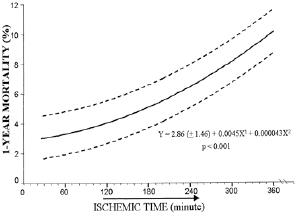 One of the key driving forces for successful PCI is initiating PPCI within 120 minutes of call to emergency services.
deLuca et al Circ 2004: 109;1223-25 graph (Figure 12: One year mortality) demonstrates increased one year mortality with treatment delay.
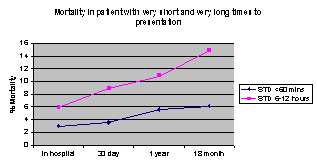 The October 2008 NIAP report call to Figure 13: Call to door mortality
door time (CTD) graph (Figure 13: Call to door time mortality) supports this showing the patients with a short CTD of less than 60 minutes experience better outcomes. The 60 minute CTD within NIAP allows a 90 minute door to balloon time total 150 minutes in accordance with NHS Improvements a guide to implementing primary angioplasty11.
The European Society of Cardiology continues to recommend a total call to balloon time of 120 minute.
BoC wish to commission for excellence rather than average performance and asked the network to consider options which did not stray outside a 40 minute travel time (Figure 14: PPCI call to balloon time in South Central).
Figure 14: PPCI call to balloon time in South Central.


Timing of each stage must be flexible enough to adapt to the individual patient needs and meet the 120 minutes call to balloon time. The network acknowledges that, prior warning to centre by the ambulance service may facilitate savings in door to balloon time, because catheter laboratory staff will have longer to prepare.
Figure 15: Call to Door Times 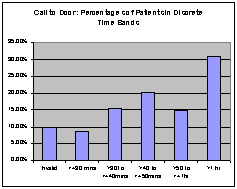 Rathore et al 200912 found Door to balloon time is associated with mortality in patients undergoing PPCI. A review of call to door times for the south central ambulance service for the calendar year 2008 revealed the following performance (Figure 15: Call to Door Times):
Following public engagement, identification of and approval of a preferred option the Network will work with each centre and SCAS to ensure by autumn 2011 a robust PPCI service within South Central.
The Network is aiming for 75% (yr 1) and 90% (yr 3) of all cases to achieve a call to balloon time of 120 minutes or less.
Centres should aim for the following door to balloon time targets:
· Less than 60 minutes, 75% of the time (yr 1)
· Median of less than 40 minutes (yr 3) and
· Report quarterly performance to the commissioning cluster.
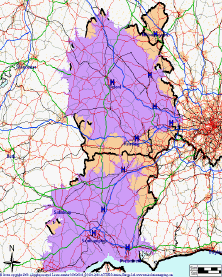 Analysis of the isochrones provided by South Central Ambulance Services suggests to commission options within a travel time of 40 minutes (as requested by BoC) for Option A, this leaves large area exposed namely Milton Keynes, East Buckinghamshire, the Isle of Wight and the area known as the M4 corridor.
Solutions for Milton Keynes and the Isle of Wight will be discussed in section 4.
Figure 16: SCAS Map: 40 Minute Isochrones of ORH and SUHT
3.3.3 Capacity
This section reviews each provider in relation to numbers of; patients, clinical teams and facilities.
Activity
Providers have found cardiac catheterisation laboratories are expensive to set up, incur substantial running costs and must be staffed 24 hour a day and seven days a week for a robust PPCI service to be viable. Approximately 20-30 patients experiencing STEMI present out of hours each week (MINAP, 2007). Magid 2002 suggest patient numbers within smaller units, will be insufficient to justify such an investment, especially as it is necessary for PCI centres to operate at high volume simply to provide the staff with the necessary experience to develop and maintain their expertise.13,14
The Network recommends each centre models their finances accordingly; section 5 finance demonstrates current costs and costs based on the same activity for each model by centre. The complication rate and the volume of procedures performed in an institution per annum are clearly related: morbidity and mortality in high volume centres are lower than in low volume centres15 it is also recognised that there are increased delays associated with PPCI performed at night compared with during the day16.
Primary PCI for STEMI is completely different from other forms of PCI. The patients are much sicker and demand high level clinical involvement. The British Cardiovascular Intervention Society (BCIS) national PCI audit from 2007 has just been published. (Table 10: BCIS Mortality Audit)
Table 10: BCIS Mortality Audit
Mortality from primary PCI |
4.8% |
Mortality for unstable angina PCI |
0.61% |
Mortality for elective PCI |
0.14% |
PPCI mortality is eight times that of unstable angina PCI mortality and more that thirty times that of elective PCI mortality.
BCIS published guidelines in 2000 in accord with the American College of Cardiology and American Heart Association guidelines 2001 for institutions suggest 200 PCI procedures per annum while encouraging PPCI centre to increase to a minimum of 400 procedures per annum17 (Table 11: BCIS Guidelines).
Table 11: BCIS guidelines
British Cardiovascular Intervention Society | |
Service |
Minimum total PCI per centre |
PCI centers |
200 - 400 |
Tertiary centers |
500 - 800 |
NIAP and the Department of Health recommend procedures should be carried out in a centre with a sufficiently high volume of cases to maintain and develop skills.
The network recommend centres must undertake a minimum of 32518 ideally aiming for 400 total angioplasty procedures per annum and each operator must perform in excess of 75 angioplasties per year19
The Network invited all providers within South Central to respond to the south central criteria with the option to support their response by presenting to a panel at meeting on the 1st April 2009. The panel discussed data which show better outcomes in acute / emergency patients (but not in elective patients) that undergo PCI in larger centres. One recent publication deals specifically with the volume of PCI activity as a function of outcome following PPCI for STEMI20. The odds ratio for death was 42% reduction in high volume vs low volume PCI centres, recommending a minimum of 50 procedures per annum.
Table 12: Provider total PCI shows the numbers of PCIs undertaken in each centre during the year 2008/9 except SUHT whose data is from calendar year 2008. The network has calculated that each provider meets BCIS recommendation a total of 400 PCI per annum based on BCIS recommendations and that, should the commissioners decide to remove PPCI services from any centre the individual provider elective PCI activity would not be compromised.
The network's sensitivity analysis suggests a possible increase in incidence of 1% per year due to population growth in the 40 -74 age category, or a possible decrease in incidence of 6% per year, if vascular checks are fully implemented and effective. It is likely therefore that commissioners would need to revisit the issue of contracting for elective PCI at a later date.
Table 12: Provider total PCI
Provider |
Current Service |
Total PCI |
2008/09 | ||
Basingstoke and North Hampshire Hospitals NHS Foundation Trust |
24/7 |
412 |
Buckinghamshire Hospitals NHS Trust |
8am - 6pm service |
473 |
Heatherwood and Wexham Park Hospitals NHS Foundation Trust |
8am - 6pm service |
447 |
Oxford Radcliffe Hospital NHS Trust |
24/7 |
1,670 |
Portsmouth Hospitals NHS Trust |
8am - 6pm service |
706 |
Royal Berkshire NHS Foundation Trust |
24/7 |
582 |
Southampton University Hospitals NHS Trust |
24/7 |
1,144 |
Total |
5,434 |
Clinical Teams
The network has not been prescriptive about the composition of the clinical teams providing PPCI services. However; BCIS recommends a minimum number of experienced interventional cardiologists per centre of 4 and ideally 621 to maintain continuous cardiology cover. Table 13: Provider Operator Numbers demonstrates the number of actual and immediate operator numbers by provider.
Table 13: Provider Operator Numbers
Provider |
Current Service |
Operator numbers |
Basingstoke and North Hampshire NHS Foundation Trust |
24/7 |
2 (soon to appoint a 3rd) |
Buckinghamshire Hospital NHS Trust |
8am - 6pm |
3 |
Heatherwood & Wexham Park NHS Foundation Trust |
8am - 6pm |
3 (soon to appoint a 4th) |
Oxford Radcliffe Hospital NHS Trust |
24/7 |
7 |
Portsmouth Hospital NHS Trust |
8am - 6pm |
3 (soon to appoint a 4th) |
Royal Berkshire NHS Foundation Trust |
24/7 |
4 |
Southampton University Hospital NHS Trust |
24/7 |
5 |
Totals |
27 + 3 |
All providers except BHT and BNHFT will meet BCIS recommendation within the next 6 months.
NIAP emphasises the need to learn for other peoples experiences, the benefits of PCI for STEMI have been demonstrated in London, Leeds and Middlesbrough, where the package of care includes consultant cardiology involvement in ward rounds (at least once per day, preferably twice), access to Intensive Care and a consultant cardiology rota. Although not identified within the current criteria the panel supports the national direction of travel and would expect a cardiology rota to be maintained. BHT do not currently have nor plan to provide 24/7 cardiology rota. HWPFT do not currently provide 24/7 cardiology rota but have agreed that following engagement and consultation should the commissioners require this they would be happy to do so.
Facilities
Patients having a PPCI who were admitted directly to a catheter laboratory, bypassing accident and emergency departments/wards, had the lower time to treat and lowest mortality rates of all the routes of admission (NIAP 2008). (Table 14: Hospital Mortality). Avoiding admission through A&E would also benefit the A&E 4 hour wait target.
Table 14: Hospital Mortality
In hospital mortality |
18 month mortality | |
Direct Access to Catheter Lab |
3.5% |
7.0% |
Admission Via Emergency Departments |
6.0% |
11.8% |
A centre performing PCI requires at least one cardiac catheterisation laboratory along with full resuscitation facilities (BCIS 2005). The BCIS conference June 2009 debated the need for a second laboratory and concluded two labs would allow downtime for maintenance and would improve patient access; BCIS felt this was a matter for local agreement. The Panel meeting on the 1st April 2009 discussed the need to mandate a minimum of 2 laboratories as per West and East Midlands cardiac network proposals. All units meet with current BCIS requirements of one laboratory and HWPFT will shortly have an additional pacing laboratory which would be able to be used for cardiac catheterisation, BNHFT and BHT do not have currently have a second laboratory. (Table 3: Current Service Provision (by provider)).
3.3.4 Access to services should be equal for everyone with a need.
The NHS Plan placed a general obligation on the Department to consider equality issues when shaping policy, but there are also legal obligations on the Department, for example to promote race equality. In addition, the Disability Discrimination Act 1995 makes it unlawful to discriminate against disabled people in connection with (among other things) the provision of services. It places a duty on local and other public authorities to change a policy in order to remove anything that would make it impossible for a disabled person to use a service.
The Act also puts a duty on those authorities to promote disability equality. It requires new policies to be assessed to ensure that they do not disadvantage disabled people and for the methods of assessing a policy's impact to be set out. In addition, the Sex Discrimination Act 1975 (Public Authorities) (Statutory Duties) Order 2006 imposes specific duties on certain public authorities to ensure better performance in their duty to have due regard to the need to eliminate unlawful discrimination and to promote equality of opportunity between men and women22.
The DoH undertook an Equality Impact Assessment (EIA) for the final report of the NIAP study. South Central has considered this EIA in relation to the possible impact of the new service on their population according to age, disability, race, religion and beliefs, gender and sexual orientation. Appendix G: Equality Impact Assessment identifies local factors affecting equality of access to services are as follows:
· Portsmouth, Milton Keynes and the Isle of Wight will have the largest growth in population between 2006 and 2031.
· Milton Keynes, Southampton City and the Isle of Wight will have the largest growth in males aged 40-74.
· Milton Keynes, Portsmouth and Southampton will leave the largest growth in females aged 40-74.
· Berkshire East will have the third lowest overall population growth during the same period but will have a significantly higher percentage and population growth of Asian or British Asian residents.
· All areas within South Central have lower than national mortality rates with the exception of Berkshire West PCT who has a mortality rate higher than the national average.
Please note at publication of this report the network and commissioners are in the process of rewriting the EIA to ensure the changes in PPCI services are reflective of each option.
3.3.5 Preferred Options
In South Central seven providers wish to provide PPCI: one wishes to continue providing 8am - 6pm service Monday to Friday excluding weekends and bank holidays; a second currently provides 8am - 6pm services but is willing to move to 24/7 should the commissioners wish them to and the remaining five wish to provide 24/7 PPCI services.
Board of Commissioners November 2008
In November 2008 the Network provided the Board of Commissioners (BoC) with a ranking of options, highest ranking was option A the 2 centers the JRH, Oxford and SUHT, Southampton.
At the Board after some considerable discussion with members present, option A was rejected by as it did not provide an acceptable level of service across the whole region. It was agreed that on balance option C offered the basis of a way forward but some reworking to reflect the views expressed in the meeting would be needed prior to final approval.
Board of Commissioners June 2009
The Network presented the revised PPCI business case to BoC at their June meeting in Newbury. The following recommendations where supported:
· Commencement of the Engagement period
· Approval of the engagement plan
· Return to BoC following the engagement period late autumn.
Directors of Commissioning
Part of this information gathering exercise included an interview panel on the 1st April 2009, comprising representation for the Directors of Commissioning (Appendix A: Panel Meeting), the panel developed three further criteria (Appendix C: Additional Criteria). Following the commissioner panel on the 1st April and in advance of further consultation with providers, patients and the public, the network with the directors of commissioning, recommend option D the four 24/7 centre option.
Patient view
The Network are recommending to BoC a period of engagement and consultation. However discussions with patients (section 3.3.1) suggest:
· Patient experiences could be improved by speediness of treatment and being treated at the hospital at which they first presented.
· The patients felt direct admission to a PPCI centre would reduce greatly reduced their anxiety.
· Patients were confident about paramedics deciding where they should be admitted.
· Most patients felt they would like to attend a large centre even if it meant passing their local hospital
· The remaining patients felt they should have a PPCI centre at their local hospital.
4 Areas which do not fall within the 40 minutes isochrones.
4.1 M4 corridor
PPCI services will not be available locally for residents within the area known as the M4 corridor within option A.
4.2 Milton Keynes
The Milton Keynes PCT is responsible for commissioning all the health services for a population of 230,300 (2006). It is responsible for spending more than £300 million each year, including £45 million on the services it directly provides. There were 111 people in Milton Keynes (MINAP 2007) who had a heart attacks benefitting from reperfusion therapy. Nationally, in-hospital mortality for patients treated by PPCI was 5.2% and 7.1% for patients treated with thrombolysis therapy (NIAP 2008). Although not directly comparable the office for national statistics suggests mortality at 18 months for PPCI patients is significantly less than patients treated with thrombolysis (Table 15: Mortality %)23.
Table15: Mortality%
Method of treatment |
30 days |
1 year |
18 months |
PPCI |
5.6 |
8.7 |
9.9 |
Thrombolysis |
7.9 |
12.4 |
14.8 |
Source: NIAP 2008
Unfortunately the geographical location of Milton Keynes and its relationship to proposed PPCI centres described within the option appraisal document presented at the Board of Commissioners in November 2008, means that treatment of heart attack patients with PPCI is not achievable for some Milton Keynes residents within the 120 minute timeframe. The network therefore recommends that every effort should be made to make PPCI available to Milton Keynes residents.
Population Projections
Population projects for Milton Keynes for the years 2006 to 2031 suggest an increase of 32.1%. 84.3% of these are within the age group of 40-74 being the age range most likely to have reperfusion treatment. Table 16: Milton Keynes Population shows the population projections for Milton Keynes for the years 2011 to 2031 including projections for males and females aged 40-74 between 2011 and 2031. This age group has been selected as being of particular interest as the age range most likely to have reperfusion treatment. This data are taken from the 2006-based sub-national population projections produced by the Office for National Statistics.
Table 16: Population projections for Milton Keynes 2011-2031
Milton Keynes |
2011 |
2016 |
2021 |
2026 |
2031 |
Change % |
Total Population |
246,800 |
263,200 |
278,600 |
292,300 |
304,300 |
32.1 |
Males aged 40-74 |
51,200 |
55,500 |
58,100 |
60,600 |
63,700 |
40.9 |
Females aged 40-74 |
50,200 |
54,800 |
58,200 |
60,600 |
63,400 |
43.4 |
Source: ONS 2006-based sub-national population projections
Conclusion
From population projections and an analysis of nearby populations, Milton Keynes may warrant a local centre in the future. However it is recognised that in the short term the John Radcliffe Hospital, Oxford will provide cover for Milton Keynes as long as the overall call to balloon time remains within a maximum of 120 minutes. In the longer term the network is working with three relevant PCTs, ambulance services and clinical networks from Bedfordshire, Northamptonshire and Milton Keynes to develop a medium to long term solution. A meeting has been arranged for the 21st July 2009.
4.3 Isle of Wight
The Isle of Wight NHS Primary Care Trust (PCT) is a unique NHS organisation, being the only one in the country which both commissions and provides such a broad and diverse range of health services for its local population. The Island has some particular health challenges. These include a high proportion of older people, unacceptable variation in life expectancy in different parts of the Island, thousands of residents on low incomes, 26,000 Islanders with life-limiting problems including a very significant prison population. New drugs and technologies, caring for an ageing population and rising patient and public expectations lead to additional challenges.
Figure 17: Isle of Wight - call to balloon
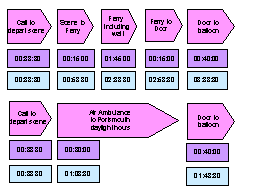
The Isle of Wight currently provides thrombolysis only, both in and out of hours Improvements to the care pathway for patients experiencing a heart attack may be limited by the island location (see Figure 17: Isle of Wight - call to balloon)... During severe weather or early hours the ferry is not always available resulting in a further delay transfer to the mainland of up to three hours or more.
NIAP states `If an acceptable service cannot be established.....pre-hospital thrombolysis as the alternative reperfusion strategy is preferable to in-hospital thrombolysis'.
Thrombolysis therapy supported by angiography within 24 hours at Portsmouth hospital has been put forward as the model for the residents of the IoW.
Discussions between the IoW air ambulance Trust, SCAS, the IOW and Portsmouth NHS Trusts, the Air Ambulance Trust have agreed in principle to the helicopter transfer of STEMI patients from the IOW to Queen Alexandra Hospital Portsmouth during daylight hours, weather permitting. The planned new helicopter will have 24/7 capability from 2010 and will be less weather dependent.
4.4 Buckinghamshire
Buckinghamshire PCT serves a population of approximately 515,000 and supports 60 GP practices, 84 pharmacies, 85 optometrists and 82 dental practices. The PCT covers the whole of Buckinghamshire (with the exception of Milton Keynes and wards of Great Brickhill and Newton Longville) as well as the Oxfordshire wards of Aston Rowant, Chinnor, Thame North and Thame South. Patients referred to hospital are being seen faster than ever before. No patient has to wait longer than 18 weeks for routine treatment and waiting times for most people are set to fall to just 12 weeks by 2010.
Seventy-nine people attended Stoke Mandeville and a hundred-fifteen High Wycombe Hospital (MINAP 2007) who had a heart attack benefit from reperfusion therapy Stoke Mandeville Hospital does not provide angiogram (PCI) services. All eligible patients are transferred to High Wycombe for treatments. In addition to this a small number of patients attended Hammersmith Hospitals during weekends, bank holidays and out of hours (OOH).
Proposals for these areas are as follows:
Option A: All patients will attend John Radcliffe Hospitals in Oxford.
Option C: BHT will receive patients from its current catchment during 8am - 6pm hours excluding weekends and bank holidays. OOH approximately 25% of patients will go to Harefield Hospitals and the remaining 75% will go to the John Radcliffe Hospital.
Option D: Approximately 25% patients will go to Harefield Hospitals and 75% to John Radcliffe Hospital.
Within each of these options a call to balloon time of 120 minutes is achievable. Patient flows within each option depend on the geographical location of the patient. The paramedic will diagnose and transfer patients to the nearest centre which may result in patients from the East of Buckinghamshire attending Hammersmith Hospital.
5 Finance
The finance model consists of two distinct parts: first, the step change from the hybrid model of care of thrombolysis/PPCI to full PPCI implementation and secondly financial impact on the ambulance services. The current model has been costed using the patient flow maps for each provider within the previous section, and the new model has been costed assuming that all eligible patients will have a PPCI regardless of geographical location. The data source for patients who are symptomatic of STEMI is MINAP 2007/08 (Table 18: MINAP 2007/08); figures for 2008/09 will not be available until the beginning of June 2009.
Table 18: MINAP 2007/08
Cluster |
Provider |
Unit |
STEMI |
nSTEMI |
Total MI |
Northern |
ORH |
JRH |
203 |
328 |
531 |
Horton |
51 |
109 |
160 | ||
BHT |
WGH |
115 |
161 |
276 | |
SMH |
79 |
104 |
183 | ||
MKGH |
111 |
124 |
235 | ||
Central |
HWHFT |
Heatherwood |
20 |
21 |
41 |
Wexham |
75 |
76 |
151 | ||
RBFT |
174 |
214 |
388 | ||
Southern |
BNHFT |
59 |
12 |
71 | |
PHT |
Queen Alexandra |
339 |
480 |
819 | |
IoW |
St Marys Hospital |
106 |
147 |
253 | |
SUHT |
401 |
331 |
732 | ||
RHCH |
111 |
238 |
349 |
Treatments for patients experiencing a STEMI are within Non-elective HRG 3.5 2007/08 Tariff costs (Table 19: HRG 2007/08). The following costs have not been considered within this financial model:
· Costs for patients admitted with a suspected STEMI but a different diagnosis/ treatment determined on admission (eg Coronary Artery Bypass Graph).
· Repatriation following procedure.
· Readmission within 6 months of initial procedure.
Table 19: HRG 2007/08
HRG code |
HRG name |
Non-elective spell tariff (£) |
E11 |
Acute Myocardial Infarction with complications (wcc)* |
4,787 |
E12 |
Acute Myocardial Infarction with out complications (w/o cc)* |
3,017 |
E13 |
Cardiac Catheter & Angiography w cc* |
4,716 |
E14 |
Cardiac Catheter & Angiography w/o cc* |
3,744 |
E15 |
Percutaneous Coronary Intervention |
5,010 |
In addition to this, to indicate shifts in overall costs, taking into account repeat admissions, the network and directors of commissioning group engaged the Public Health Resource Unit (PHRU) to provide a report. This is a case study of the transition in Oxfordshire from a total thrombolysis service, through a hybrid thrombolysis/PPCI service to a full PPCI service. (Appendix B: Finance).
5.1 PPCI costs based on actual numbers of patients during 2008/09 (MINAP)
Table 20: Financial Summary | ||||
|
Current |
Option A |
Option C |
Option D |
Northern Cluster |
|
|
|
|
BHT |
£ 894,290 |
£ 883,860 |
£ 883,860 |
£ 883,860 |
MKFT |
£564,441 |
£ 509,538 |
£ 509,538 |
£ 509,538 |
OHT |
£1,015,200 |
£1,015,200 |
£1,015,200 |
£1,015,200 |
Subtotal |
£2,473,931 |
£2,408,598 |
£2,408,598 |
£2,408,598 |
Central Cluster |
|
|
|
|
HWPFT |
£ 440,319 |
£ 433,176 |
£ 433,176 |
£ 433,176 |
RBFT |
£ 794,736 |
£ 794,736 |
£ 794,736 |
£ 794,736 |
Subtotal |
£1,235,055 |
£1,227,912 |
£1,227,912 |
£1,227,912 |
Southern Cluster |
|
|
|
|
BNHFT |
£ 235,814 |
£ 224,076 |
£ 224,076 |
£ 224,076 |
RHCH |
£ 783,612 |
£ 525,780 |
£ 525,780 |
£ 525,780 |
PHT |
£1,478,484 |
£1,385,368 |
£1,385,368 |
£1,385,368 |
SUHT |
£1,968,830 |
£1,968,830 |
£1,968,830 |
£1,968,830 |
IoW |
£ 645,131 |
£ 645,131 |
£ 642,036 |
£ 642,036 |
Subtotal |
£5,111,871 |
£4,749,185 |
£4,746,090 |
4,746,090 |
|
|
|
|
|
Sub-Total |
£8,820,857 |
£8,385,695 |
£8,382,600 |
£8,382,600 |
Prescribing Clopidogrel |
|
£ 11,964 |
£ 11,964 |
£ 11,964 |
SCAS additional Costs |
|
£ 20,564 |
£ 13,430 |
£ 14,236 |
Total |
£8,820,857 |
£8,418,223 |
£8,407,994 |
£8,408,800 |
5.2 HRG Version 4
The potential impact of HRG version 4 (Table 21: HRG 2008/09) codes on costs used within this paper are;
· V4.0 non elective tariffs differentiate between the approximately 90% of straightforward cases requiring up to 2 stents and those which are more complex
· In nearly all cases in South Central the tariff to apply includes insertion of the stent and catheterisation, which the Payment by Results team advises covers angiogram with possible proceed to PCI. Other codes cover supplementary work (Elieen Robertson, DH PBR, personal communication, 28.4.09)
· It is safe to assume that the median tariff for a non elective spell including PPCI would be £5441.00 (mean average £5542.00)
· This would inflate current assumptions by £431.00 per patient for PPCI if HRGs are applied consistently. Commissioners should investigate if the tariff uplift has taken account of this
· This may be balanced against the removal of the specialist top up for cardiac services. At 18% this would raise the price for HRG version 3.5 E15 to £5912.00
· The trim points are generous given an average length of stay for PPCI in NIAP of 3 days
Table 21: HRG 2008/09
HRG code |
V4.0 HRG name |
Non-elective spell tariff (£) |
Long stay trimpoint (days) |
EA31Z |
PCI (0-2 stents) |
4706 |
10 |
EA32Z |
PCI (0-2 stents) & catheterisation |
5441 |
16 |
EA33Z |
PCI (3 or more stents) |
5281 |
11 |
EA34Z |
PCI (3 or more stents) & catheterisation |
6453 |
17 |
EA35Z |
Other Transluminal Interventions |
3643 |
17 |
EA36Z |
Catheter 19 yrs & over |
3303 |
21 |
EB10Z |
Actual or suspected MI |
3662 |
18 |
5.3 Conclusion
The financial model assumed tariff costs HRG 3.5, modelled activity supplied by MINAP 2007/8 and used current service models and those proposed within each option as follows;
Option |
PCT |
Additional SCAS |
Prescribing |
Total |
D |
£8,382,600 |
£ 14,236 |
£ 11,964 |
£8,408,800 |
C |
£8,382,600 |
£ 13,430 |
£ 11,964 |
£8,407,994 |
A |
£8,385,695 |
£ 20,564 |
£ 11,964 |
£8,418,223 |
Current |
£8,820,857 |
£8,820,857 |
Currently only a small number of patients from Berkshire East and Buckinghamshire attend London hospitals as most OOH patients are treated either at HWWP or BHT with thrombolysis therapy and PCI/angiogram within normal working hours. Patients will in the new options go directly to the nearest 24/7 heart attack centre for PPCI. For Buckinghamshire and Berkshire East this means all OOH patients will attend Harefield Hospital. The change in provider will mean a transfer of costs from PCTs to SCSCG.
The model is inclusive of readmission for same HRG procedures (nationally 12%24). Direct discharge from the heart attack centres is assumed within all of the options. No costs have been included for transfer to local hospitals post procedure.
6 PPCI Implementation
It is anticipated that the proposal subject to formal consultation to implement PPCI across South Central will be made at the June 2009 BoC meeting. To allow effective implementation of services a number of key tasks will be required;
· Notification of decision to Providers
· Engagement and Public Consultation
· Implementation timescales
· Formation of task and finish groups
· Post implementation review
6.1 Engagement and Consultation
In October 2008 the network hosted a meeting at Newbury racecourse with providers (clinicians and managers), commissioners and associated networks to discuss the provision of PPCI within South Central. The results of which were circulated to all parties. This prompted further dialogue with providers on the 1st April 2009 from which this paper was formulated.
The network undertook three informal engagement meetings with cardiac rehabilitation patients as reported previously in section 3; they support the concept of PPCI. Patients gave a mixed response to the locations of the PPCI centres. Some patients preferred services at their local DGH and others within tertiary centres.
In total approximately 40 patients were interviewed. In view of this response and the requirement under section 242 (1B) of the NHS act 2006 - Public involvement and consultation which states
"Each relevant English body must make arrangements, as respects health services for which it is responsible, which secure that users of those services, whether directly or through representatives, are involved in-
a) the planning of the provision of those services,
b) the development and consideration of proposals for changes in the way those services are provided, and
c) decisions to be made by that body affecting the operation of those services"
The Network has appointed a consultancy firm: "Communications Management: Building Reputations" to undertake a period of engagement and consultation with all stakeholders including commissioners, providers, patients and the public. The network is seeking approval from the Board of Commissioners to commence an Engagement and Consultation program for a period completing March 2010
6.2 Timescales
Table 22: Timescales
Date |
Key Milestone |
June 09 |
· BoC approval _ Commence engagement phase for options A, C and D _ Engagement Strategy and Plan (Appendix E [currently being rewritten in accordance with BoC criteria]) _ Return to BoC with a engagement Report and recommendations for the consultation phase |
July to Oct 09 |
· Engagement phase of engagement and consultation |
Nov 09 |
· Engagement review and report to BoC |
Dec 09 to Feb 10 |
· Consultation |
Preparation for PPCI implementation · To develop service specifications to guide the SHA, commissioners and other stakeholders, based on clinical consensus and high quality data. · To develop and implement evidence based, uniform clinical standards, guidelines and protocols across the network where these do not exist. · Maintain strong clinical engagement to enable improvements in practice and co-operation along patient pathways. · To act as a consultancy and educational resource for clinical and service quality improvement work in PCI · Working with the SHA, to understand and support commissioning clusters for quality by contributing to network wide comparative benchmarking, audit and clinical quality indicators and outcomes. · Provide clinically based advice to inform workforce planning, inputting to the education and training strategy for relevant professional groups. · Provide a detailed implementation plan | |
March 2010 |
· Final report to BoC for decision |
April 2010 |
· Commence implementation process |
Nov 11 |
· PPCI implementation complete |
7 Conclusion
The options for the implementation of PPCI are;
· 24/7 PPCI in 2 centres, the John Radcliffe Hospital (JRH), Oxford and Southampton University Hospital NHS Trust (SUHT).
· 24/7 PPCI in 4 centres, the JRH, SUHT, PHT and RBFT. Plus Monday to Friday 8am - 6pm services (excluding weekends and bank holidays) in 3 centres, BHT, BNHFT & HWPFT
· 24/7 in 4 centres, the JRH, SUHT, PHT and RBFT.
Option D has been identified as a potential solution for the following reasons;
· It is recognised that these four centres meet or are willing to meet the National and Local criteria for the provision of a safe, sustainable and accessible service.
· SCAS preference supports this model as it delivers clear patient flows and retains the ambulance crews and vehicles near to their base thus reducing the amount of downtime caused by excessive journeys within option A.
· Financial modelling based on data provided by MINAP 2007/08, current and planned service models, HRG 2008 version 3.5, excluding readmission and inter-hospital transfers, suggests option C will offer best value for money.
The Network recommends a period of engagement for options A, C and D to bring to light any valuable information which the commissioners can make informed decisions to improve the delivery of PPCI within South Central.