
Potholes over the winter period
Why there are more potholes
Increased traffic and wetter winters over the past few years have led to a rapid deterioration in the quality of road networks and a higher-than-normal incidence of potholes and other defects.
Changes in temperature can make water within the road surfaces expand, contract and expand again, causing cracks and new potholes to form. More HGVs on the road network are also taking a toll.
How potholes are formed
Potholes can develop in a variety of ways, including natural wear-and-tear, surface ageing, heavy vehicle loads and the effects of repeated seasonal weather cycles.
Over periods of successive rain and colder temperatures, more road defects may appear as water seeps into cracks in the road surface and weakens the underlying layers.
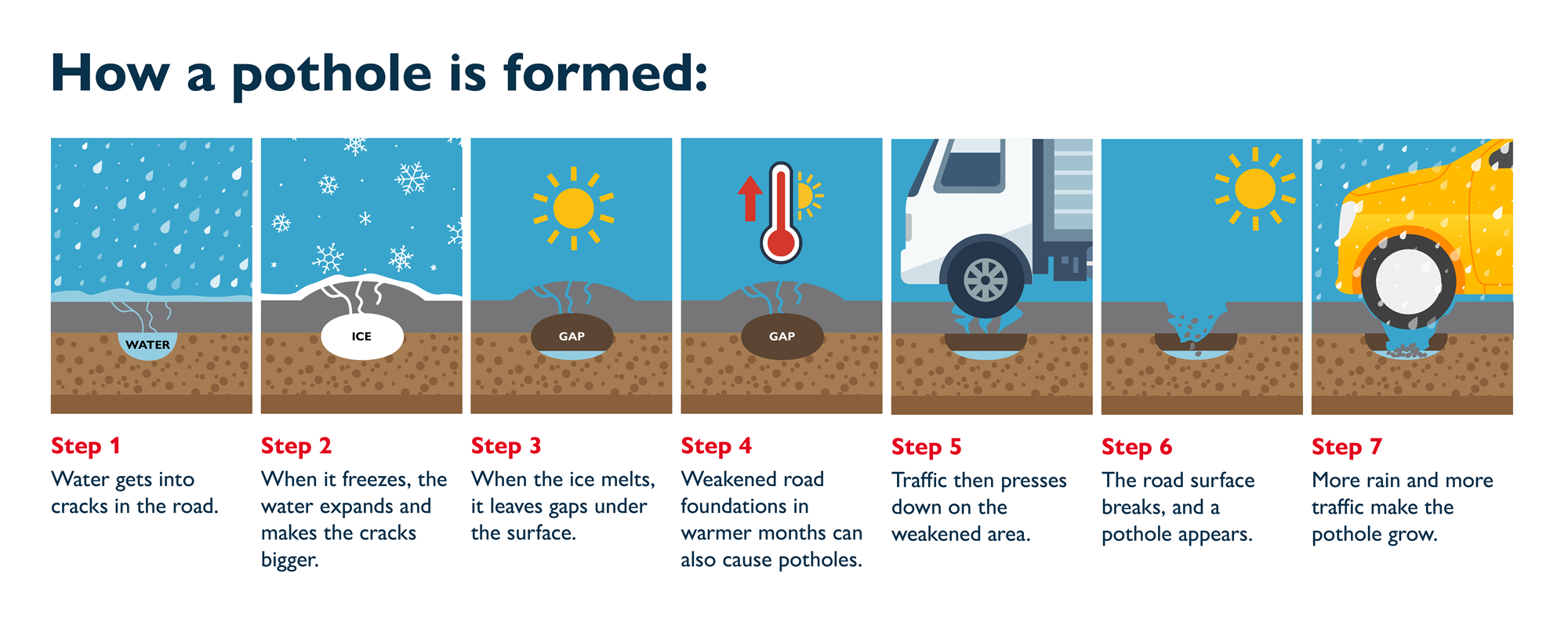
As temperatures change, the water expands and contracts - including during freeze-thaw cycles - causing the surface to break apart. Repeated pressure from traffic then forces the loosened material out, leaving a hole.
- Water gets into cracks in the road.
- When the water freezes, it expands and makes the cracks bigger.
- When the ice melts, it leaves the gaps under the surface.
- Weakened road foundations in warmer months can also cause potholes.
- Traffic presses down on the weakened area.
- The road surface breaks, and a pothole appears.
- More rain and more traffic makes the pothole grow.
What happens when a pothole is reported to Hampshire County Council
When potholes are reported to the County Council's highways team, we will make an assessment on what action is needed depending on size, location, and severity. An inspector may also visit the site.
How long it takes for a pothole to be repaired
We are currently filling as many potholes as possible to keep roads safe.
The timescales for a repair can vary depending on the risk assessment. Repairs can sometimes take place on the same day or may take longer if it is not an urgent priority.
All safety defects are repaired through our highways maintenance contract with M-Group Highways.
How potholes are repaired
Wherever possible, we try to make a permanent repair.
- The damaged part of the road surface is cut out to create solid edges around the pothole.
- The entire cut area is broken out to a solid base.
- Loose material is removed.
- Bitumen (a black, sticky substance derived from crude oil) is used to seal the area.
- The area is backfilled and compacted with the appropriate surfacing material.
This process isn't always practical due to the size of the pothole, weather conditions, or the existing poor condition of the road.
In these circumstances, we will use other techniques; including dragon patching, infra-red patching and, when necessary, an infill repair.
For more information, see Pothole treatment and repair.
Can you help us improve our roads?
Reporting potholes and other highway issues to the County Council plays a vital role in helping us to maintain Hampshire's roads.
You can report road defects including potholes and other road issues via the OurHants app, or online, where you can also track the progress of your enquiry.