

Nature recovery is not just about restoring large areas of countryside. Our schools, neighbourhoods and everyday public spaces also have an important role to play in creating a more connected and resilient natural environment.
An initiative in neighbouring East Sussex demonstrates how nature-based solutions can address practical challenges while creating new opportunities for wildlife and people.
Turning a challenge into an opportunity
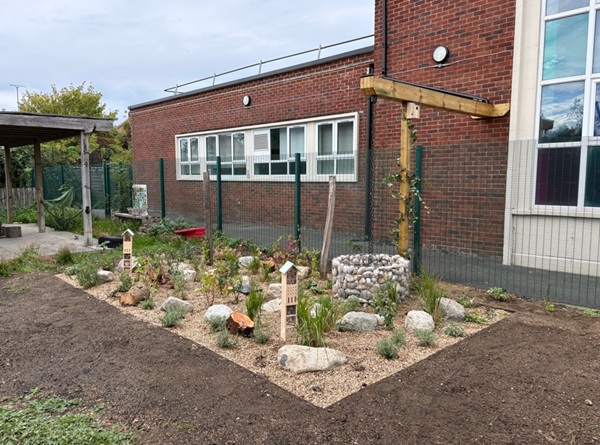
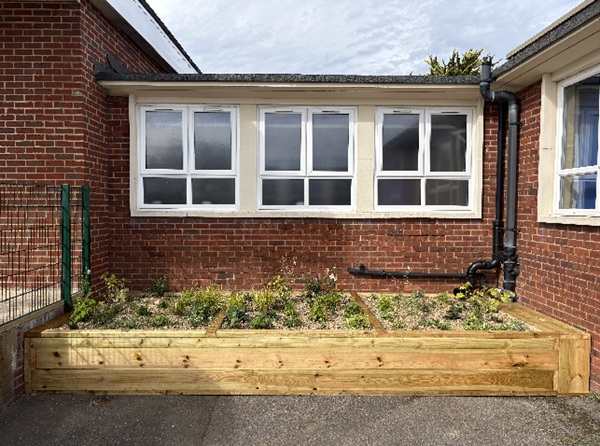
Following repeated flooding affecting school buildings and playgrounds, East Sussex County Council and Southern Water worked with Meristem Design to introduce Sustainable Drainage Systems (SuDS) into primary and secondary school grounds.
The project uses planted drainage features, rain gardens and water butts with controlled outlets to capture rainfall before it overwhelms conventional drainage infrastructure.
By working with natural processes, these features help manage surface water while introducing more vegetation into the built environment.
Creating space for wildlife
With biodiversity incorporated into their design, sustainable drainage systems can provide much more than flood management.
Carefully selected plants can provide food and shelter for pollinators and other invertebrates. The East Sussex project also incorporated insect hotels and nesting features for solitary bees.
Although individually these areas may be small, collectively they have the potential to create valuable stepping stones for wildlife, helping species move between gardens, parks and other green spaces.
This is particularly important in urban environments, where wildlife habitats are often fragmented by buildings, roads and hard surfaces.
Connecting children with nature
An important element of the project was involving pupils in designing and planting their new outdoor spaces.
The features provide opportunities for children to observe wildlife, explore how plants grow and understand how rainwater moves through the environment.
By bringing nature into places children use every day, schools can encourage a lifelong interest in the natural world and inspire environmental action beyond the school gates.
Supporting Hampshire’s Local Nature Recovery Strategy
This approach demonstrates how sustainable drainage and the management of school grounds could contribute to several measures within Hampshire’s Local Nature Recovery Strategy (LNRS):
- U1 – Improve nature in public spaces and create wildlife corridors: Creating new planted habitats and wildlife stepping stones within the built environment.
- R7 – Reducing the impact of urban runoff on watercourses: Using vegetation and natural processes to slow and filter surface water, where this can help protect downstream rivers and streams.
- U6 – Enhancing biodiversity in residential and community gardens: Inspiring wider adoption of wildlife-friendly gardening and rainwater management within local communities.
The approach also illustrates the wider benefits of nature recovery, including climate resilience, environmental education, access to nature and health and wellbeing.
Could your school make more room for nature?
Schools across Hampshire have an opportunity to contribute to nature recovery through the way they design and manage their grounds.
Whether introducing a small rain garden, replacing unnecessary hardstanding with planting, creating wildlife-friendly areas or incorporating sustainable drainage into planned improvements, there are opportunities to make a difference.
Selecting locally appropriate native plants, considering connections with nearby habitats and planning for long-term maintenance can help maximise the benefits for wildlife.
Nature recovery can happen anywhere. By integrating nature into the places where we live, work, learn and play, we can collectively help create a greener, healthier and more resilient Hampshire.
Find out more
Explore Hampshire’s Local Nature Recovery Strategy and interactive Local Habitat Map to discover opportunities for nature recovery in your area.
Read the original East Sussex case study on the Meristem Design website.