

There is encouraging news from across the Blackwater Valley, where recent surveys by the Environment Agency have revealed a further decline in floating pennywort, an invasive non-native plant that threatens the health of our rivers, ponds and wetlands.
Why floating pennywort is a problem
Originally introduced to the UK through the ornamental aquatic plant trade, floating pennywort (Hydrocotyle ranunculoides) spreads rapidly, forming dense mats across the surface of water.
These mats block sunlight, crowd out native plants and can reduce oxygen levels in the water, affecting the wildlife that depends on healthy freshwater habitats. They can also restrict water flow, potentially increasing the risk of localised flooding.
Even small fragments of the plant can grow into new infestations, making it particularly challenging to control.
Working together to restore nature
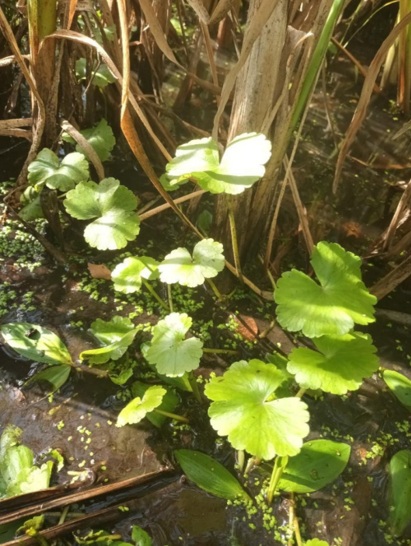
For many years, waterways across the Blackwater Valley, including the River Blackwater, have been affected by floating pennywort.
Tackling the problem has required a coordinated
effort involving local community groups, the Blackwater Valley Countryside Partnership, Loddon Fisheries & Conservation Consultative, the Environment Agency, Hampshire County Council’s Countryside Service and volunteers.
Their commitment and persistence are delivering some remarkable results. In Yateley, no floating pennywort has been recorded at Mill Lane Pond or Darby Green Pond since 2021. Recent surveys have also found no floating pennywort at Wyndham’s Pool on Yateley Common for the first time following years of steady decline.
Reducing the presence of this invasive plant gives native aquatic vegetation an opportunity to recover, helping to create healthier habitats for wildlife such as dragonflies, damselflies, amphibians, fish and waterbirds.
Regular monitoring will continue to ensure any new outbreaks are identified quickly and action can be taken to prevent the plant from becoming established again.
Putting Hampshire’s Local Nature Recovery Strategy into action
The work taking place across the Blackwater Valley is a great example of how local action is helping to deliver the ambitions of Hampshire’s Local Nature Recovery Strategy (LNRS).
The strategy identifies the control of invasive non-native species and the restoration of freshwater habitats as important actions for nature recovery.
This project contributes to two of the strategy’s habitat themes:
- Chalk streams and other watercourses – controlling invasive non-native species in and alongside our waterways (Measure NN1).
- Wetlands, ponds and ditches – restoring and improving the wildlife value of existing ponds through careful management (Measure P2).
The project also highlights the importance of working together across a wider landscape. Rivers and waterways connect many different habitats, so coordinated action between land managers, organisations and communities is particularly important in preventing invasive species from spreading.
How you can help
We can all play a part in protecting Hampshire’s freshwater habitats. Simple actions, such as choosing native plants for garden ponds, disposing of unwanted aquatic plants responsibly and following the ‘Check, Clean, Dry’ guidance when using equipment in and around waterways, can help prevent the spread of invasive species.
Nature recovery is not always about creating new habitats. Improving the condition of the habitats we already have is just as important.
The progress made across the Blackwater Valley demonstrates what can be achieved through collaboration, long-term commitment and practical action, helping to safeguard some of Hampshire’s valuable freshwater habitats for future generations.
Find out more
Explore the priorities and measures within Hampshire’s Local Nature Recovery Strategy and use our interactive Local Habitat Map to discover opportunities to help nature recover in your area.