

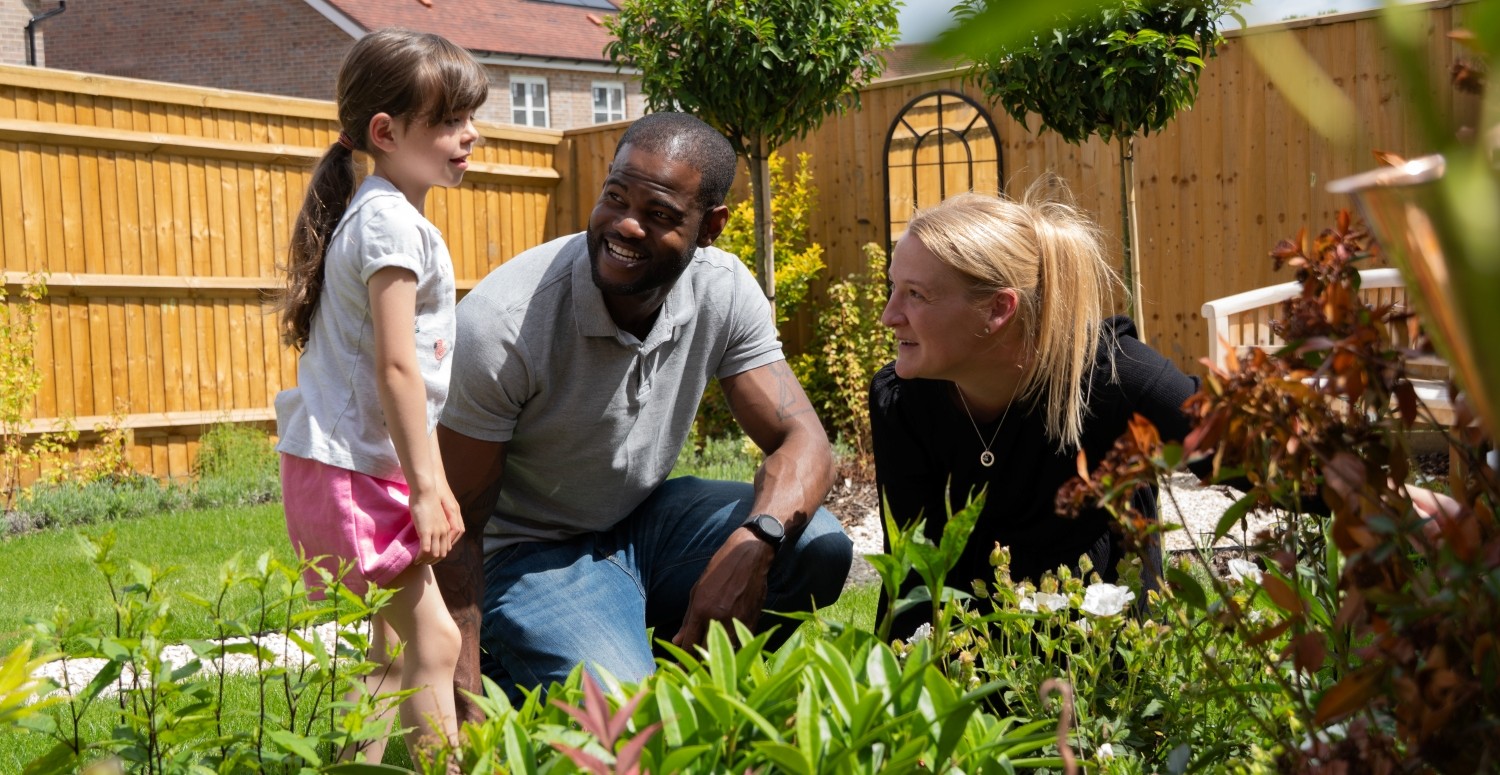
Hampshire County Council sat down with dedicated foster carer Kemar to talk about inspiration to start fostering, what the most rewarding thing is about the role and how compatible fostering is while serving as a member of the Armed Forces.
Hi Kemar, how did you start fostering?
Kemar: So back in 2023, we started the whole process. Chloe and I - Chloe is my wife - she's been in early years education, managing nurseries for the best part of 14-15 years now. So she's always been around children. She loves children. We've got two of our own children already. She had an idea one day after hearing certain situations that actually there is so much more we could be doing to help vulnerable children in our community, and she brought the idea up of fostering with Hampshire.
I said OK, I'm in. I love children. I love the fact that we can help, and I love helping in general. So we decided to start the process, and the process itself took just about a year. We got approved on our birthday in 2024, then in May we got our first placement and we started from there.
What's your favourite thing about fostering?
Kemar: It’s the milestones for sure! It's just being able to provide that immediate care to someone who needs it most. Whether that's a child or just young adults in general; just being able to say, "OK, here's the safe space, this is what safe looks like” and achieving something with that child in your care.
Whether it's teaching a child to ride their bike for the first time, which we've actually done, or taking them away on a camping trip for the first time or just doing an activity where they felt welcome and a part of it for the first time.
It's all those little things that we may take for granted - and in many cases, its things our own children take for granted, because it's a norm to them. But just being able to see that others have not had that sort of exposure or experience and the appreciation that you get from a child or young adult, it's absolutely phenomenal.
If you were speaking to someone for the first time about fostering, what do you think is the biggest kind of misconception or that someone has the wrong impression when it comes to fostering typically?
Kemar: I think the biggest misconception it would be the stigma around fostering. I think there is a worry that every child in foster carer is profoundly traumatised. This isn’t true for the most part. But we have also been supported by Hampshire to deal with the worst-case scenarios as part of the training that we did. All the training we have done has been really helpful as it prepares you for all case scenarios with children in your care but it has also helped just to get away from the mindset I mention and try to change people's ideas about what experiences children in care have had.
For example you can get a situation whereby you've got a teenager and they might come with their own issues, for example previous issues with law-breaking. But you've got the confidence from Hampshire training to say - even in my family dynamic - I believe this age group to this age group would work best for us – it’s where I can provide the best support. Also, what I like about fostering is that they provide you with as much information as they've got for you to then make an informed decision, really to say actually, ‘yes, this works for me’ or ‘no, this doesn't work for me’ you've got that freedom to say yes or no. And that is a good thing – saying actually I don’t think this placement will work for me, my family and especially the foster child is a good thing too.
So if I was to speak to someone for the first time, I would say absolutely go for it. Have open conversations family, whether with your children or your wife or your husband or your partner - just have that open conversation. Make sure it's the right fit for your family dynamic. Then absolutely go for it, because the changes that you're providing for a child or young adult, it's unmatchable, really.
Is there anything particularly from Hampshire training or support wise that has been really valuable for you in your fostering journey?
Absolutely. We're quite new as foster carers, so all of it really but more so the preparation Hampshire has provided for what could happen in. Naturally it can feel overwhelming, however, being in fostering now, you reflect and think that, having been trained the way you were and the skills you've learned from the training, you now feel more equipped to deal with certain kinds of situations. You then see it when you apply it to the children in your care and you have that reassurance that we’ve been trained for this. We know what could come out of it.
But we also know how to react, we know how to get in touch with all the right people in our Hampshire network which are there to protect us and help us through any situation. So yes, absolutely. The training was very helpful because it gives us that reassurance that should anything ever come up, we know if we can deal with it directly, we'll know exactly who to call to get the help we require.
What is it like fostering in the armed forces?
Kemar: It fits naturally. The Armed Forces have given me strong values; discipline, structure, and resilience, which transfer directly into fostering. You’re used to supporting people, adapting to new situations, and working as a team, so it complements family life more than people might expect.
I am the Brigade Ordnance Warrant Officer on Operation INTERFLEX, responsible for ensuring equipment is available, managed in accordance with policy, and safely used to support training for Ukrainian Armed Forces personnel.
Working in the armed forces I’ve been instilled with a lot of core skills. Discipline, integrity and respect. Having respect for example has been so helpful in fostering. The respect for that child or young adults’ privacy or their situations, not wanting to poke, not wanting to pry – just wanting to provide the utmost care. That really transfers into fostering.
It is also surprisingly flexible too! My service has been really helpful and allowed me to be assigned in certain areas of Hampshire to adapt to my fostering. Yes, the priorities of the service come first but your priorities are a really close second too. You do have that flexibility to say, ‘actually based on my fostering I would like to be assigned here’ and I’ve managed to get that assignment. I’ve also had amazing support from my chain of command. That’s unmatchable. Whatever support you require, it is there. The assurance of having that has been great.
Housing is also compatible. So if anyone was to be wishing to start fostering in the armed forces and are worried if their house is the right fit or not, or whether it's enough for the child that they're going to get then our policy allows you to request service family accommodation based on the fact that you are fostering.
Again, that's another big plus, so if you were ever considering fostering and you think, ‘oh, I'm living in the block’ or ‘I'm a single soldier’ or ‘my partner and I we don't have a house with a spare room yet’, it is ok. You can apply for a service family accommodation (SFA) for short.
What would one piece of advice you would give to someone considering fostering?
My one piece of advice would be to make the difference.
Make the difference, be the difference and just spread the joy. Because without even knowing it, we've got so much to offer. Alot of times it's things that we tend to overlook: the simple act of doing a school run, providing a safe space for an individual and just being there for reassurance is not a lot to give. Not for me at least. And there's so many people who would be able to do this.