
Summer insect spotting guide
Grab your sunhat and suncream, get outside, and start spotting.
read ( words)
Aug 1 2025

Summer is a great time of year to get outside and spot some of Hampshire’s amazing insects. From moths and bumblebees to demoiselles and butterflies, there’s so much to see in every habitat. So, grab your sunhat and suncream, get outside, and start spotting.
In your garden or allotment
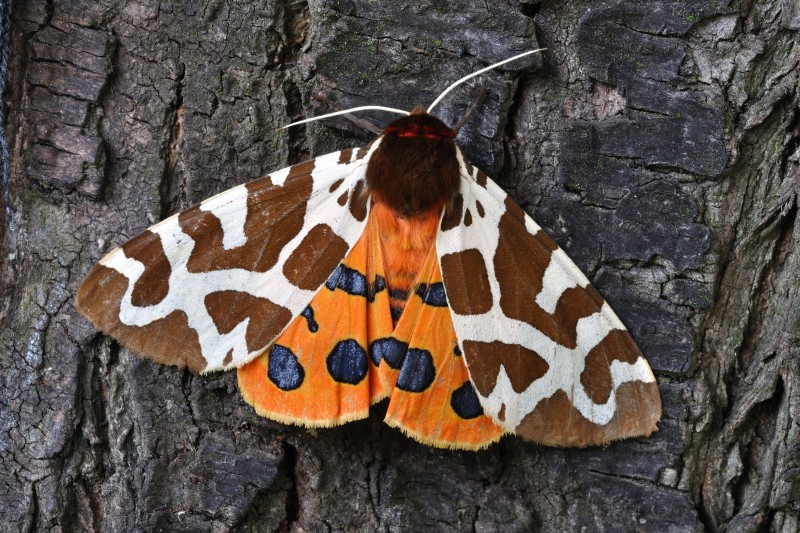
Garden tiger moth
Most easily spotted in July and August, garden tiger moths are large and brightly coloured with brown and white forewings, and red hindwings. These red wings have four or five black spots. These moths are usually nocturnal, so early morning or dusk will give you a better chance of spotting them. Try looking for them resting on leaves or shorter plants like nettles and docks.
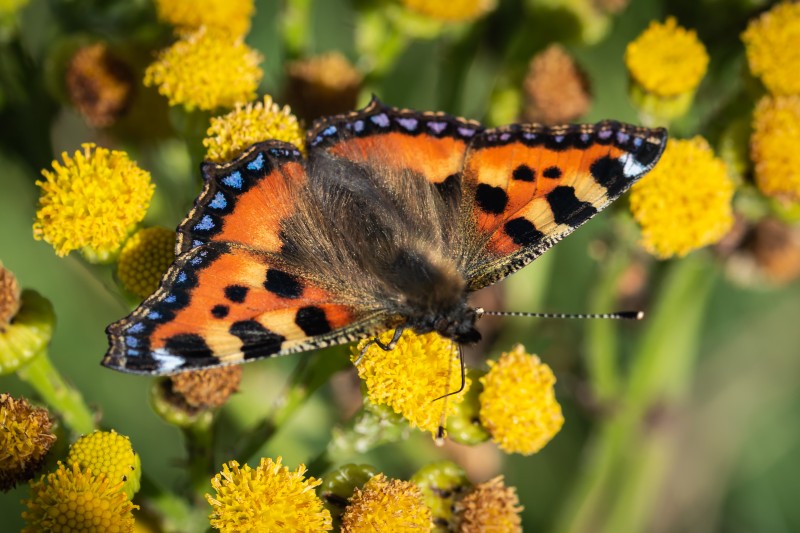
Small tortoiseshell butterfly
One of the most common butterflies in the UK is the small tortoiseshell butterfly. Reddish-orange with black and yellow markings on their wings, they can be distinguished from other similar looking species by looking for the blue spots around the edges of their wings.
Encourage this butterfly to visit your garden by planting buddleias. They will also be attracted by nettles as they’re a fantastic food source for their caterpillars. For more ways to help encourage pollinators, find out more about our pollinator pledge and how you can make one too.

Tree bumblebee
First recorded in 2001 in Wiltshire, tree bumblebees can now be widely spotted in the UK. They’re one of the easiest bumblebees to recognise, with ginger-brown thoraxes, black abdomens and white tails. Look for worker bees visiting flowers in gardens throughout spring and summer. You might even find them nesting in tree hollows or bird boxes.
Find out more about bees in Hampshire by reading our beginner’s guide to bumblebee spotting.
Fields and grassland
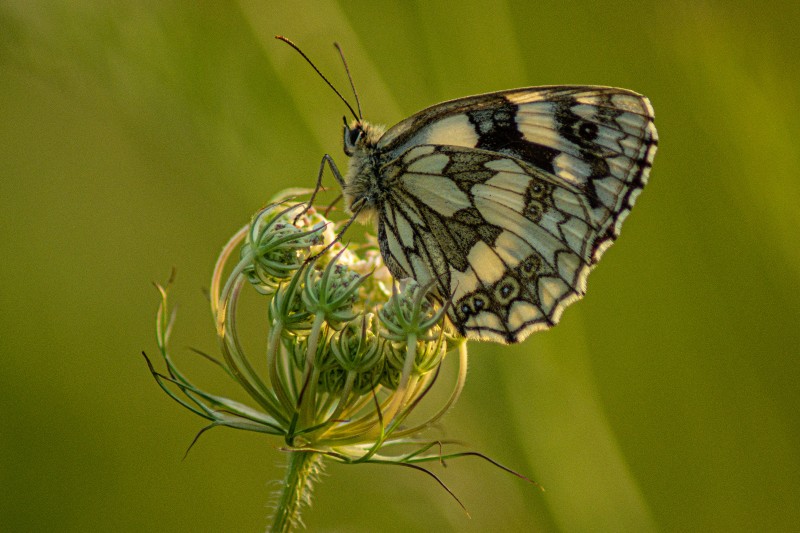
Marbled white butterfly
Marbled white butterflies can be found in Hampshire from June to August. They’re easy to identify because of their distinctive black and white pattern. They love purple flowers and grasslands, particularly chalk and limestone.
To encourage marbled white butterflies and other wildlife, some sites, like Royal Victoria Country Park, intentionally cultivate areas with longer grass. This provides the ideal habitat for butterflies, as it encourages a greater variety of plants to grow and attracts a wide variety of insects. This, in turn, provides a range of food sources and shelter for butterflies. If you don’t have any fields near you, you can recreate this environment in your garden and watch the butterflies flock to you.
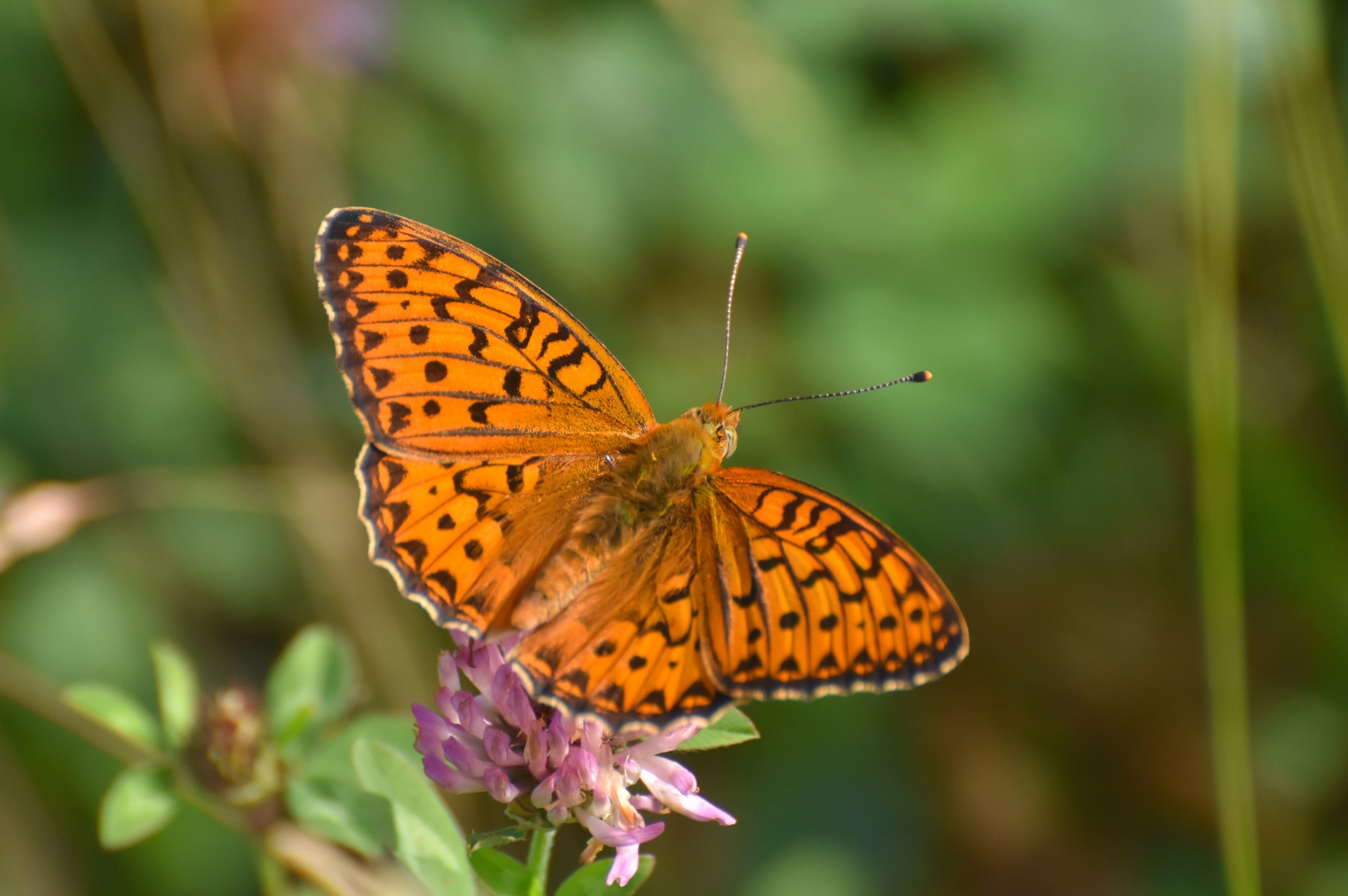
Dark green fritillary
While dark green fritillaries are primarily pale orange with black spots, the underside of their wings has a green tinge, giving them their name. Spot them between June and September feeding on knapweed, thistles, clover and brambles.
Martin Down National Nature Reserve is a great place to spot these insects, as well as other wildlife.
Riverside
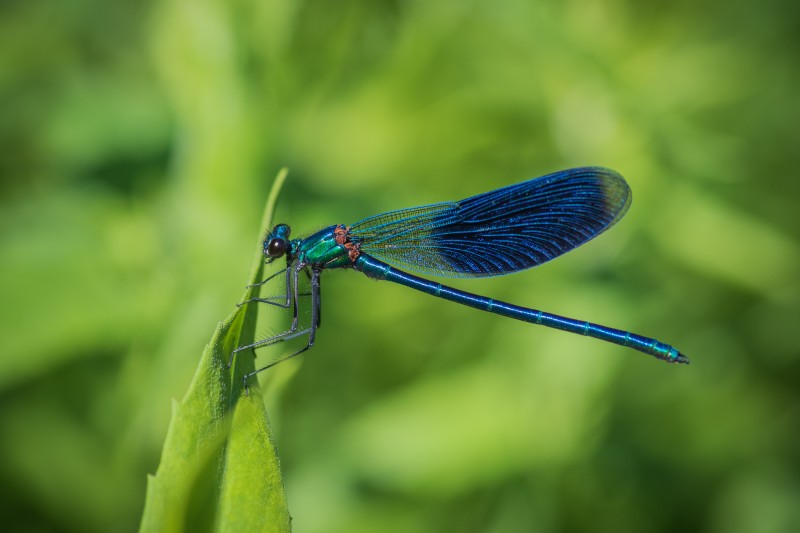
Banded demoiselle
Banded demoiselles are large damselflies that are attracted to freshwater. They are found most often by slow-moving streams, like at Titchfield Haven National Nature Reserve, or by canals. The males are blue with a distinctive blue-black mark on their wings which gives the species their name, while the females are metallic green with pale green wings. They can be spotted from May to August.

