

Getting your community involved in your mini forest
Planting a mini forest is a great way to bring people of all ages and abilities together.
The number of people needed for planting depends on the size of your mini forest. It’s usually best to have more volunteers than you think you’ll need. Experienced tree planters will work faster than children or beginners, so keep that in mind when planning.
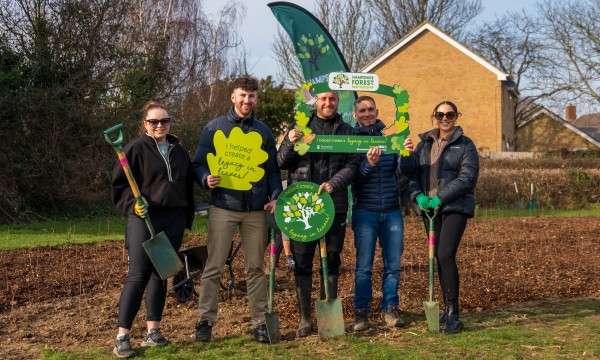
You could run planting days with:
- Mixed groups of local residents, families, community groups and staff
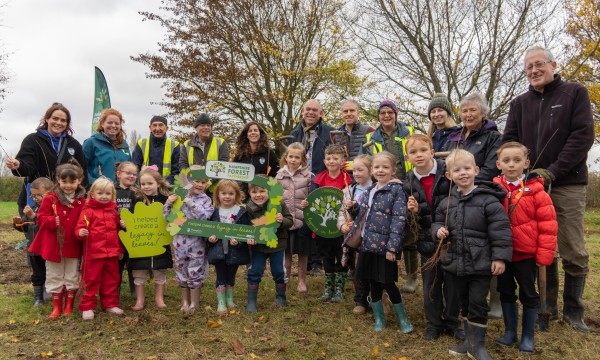
- Local schoolchildren and teachers
- A small group of volunteers, such as a corporate team of 10 to 20 people
If lots of people are interested in helping, it’s a good idea to limit the number of bookings. The planting space is usually quite small for mini forests, so up to 25 volunteers at a time works well. This gives everyone enough space to work safely. You’ll need at least 2 to 3 people to lead and supervise each session.
School groups usually come in classes of about 30 children, so you may need extra adults to help out.
Spreading the word
Let people know about your planting day by using local community networks, social media, local press or Eventbrite or similar platforms.
Make sure volunteers get all the key information before the day, including:
- where to meet, what time, and how long the planting day will last
- what to wear (warm, waterproof clothes and sturdy shoes. Waterproof footwear is ideal for muddy winter ground)
- accessibility information
- whether there are toilets on site, and access to refreshments
- who to contact if they have questions
Case study: School planting days at the New Forest Showground
Two mini forests were planted at the New Forest Showground in October 2024 and February 2025. The two sites were used to compare two different types of soil treatment, 'full dig' and 'no dig'. The mini forests were part of a larger project that included a wildlife pond, hedgerow, bug hotels and an outdoor classroom.
Children from six local schools helped design and plant the forests. Over four days, 418 children planted 2,400 trees. Each child planted around 3 to 8 trees in a 30-minute session, depending on their age and ability.
Other projects where KS1 and KS2 children have planted trees followed a similar pattern.
Getting ready on planting day
- Staff and adult volunteers were given a short overview of the project before the first planting session. The overview included the project background, health and safety advice and a planting demonstration
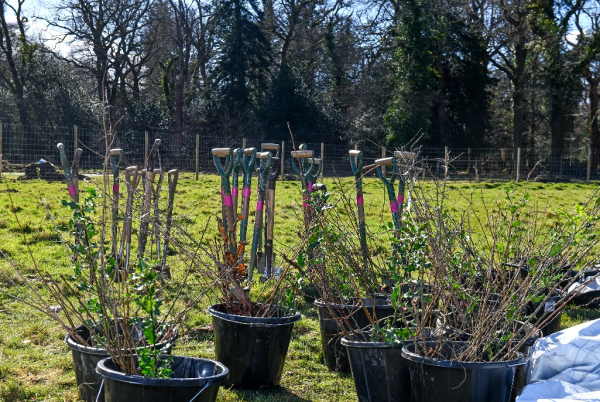
- Volunteers helped prepare buckets with 10 to 15 different trees in a each one
- School classes of around 30 students arrived at an agreed time, with 3 to 4 teachers to support them
- Each class was split into two groups. One class planted trees while the other did woodland crafts. After 30 minutes, they swapped. This gave the children enough space to plant safely and correctly
Example timetable of a school planting day
Early morning sessions
Total pupils: 34
No. of pupils in each group: 17
Staff or volunteers required: 9
| Time | Tree planting group | Craft activity group |
|---|---|---|
| 9:30am to 10am | Class 1 Group 1 |
Class 1 Group 2 |
| 10am to 10:30am | Class 2 Group 1 |
Class 2 Group 2 |
There was a 15 minute change over period after these sessions.
Late morning sessions
Total pupils: 34
No. of pupils in each group: 17
Staff or volunteers required: 9
| Time | Tree planting group | Craft activity group |
|---|---|---|
| 10:45am to 11:15am | Class 3 Group 1 |
Class 3 Group 2 |
| 11:15am to 11:45am | Class 4 Group 1 |
Class 4 Group 2 |
There was a 45 minute lunch break and change over time after these sessions.
Early afternoon sessions
Total pupils: 24
No. of pupils in each group: 12
Staff or volunteers required: 6
| Time | Tree planting group | Craft activity group |
|---|---|---|
| 12:30pm to 1pm | Class 5 Group 1 |
Class 5 Group 2 |
| 1pm to 1:30pm | Class 6 Group 1 |
Class 6 Group 2 |
There was a 15 minute change over period after these sessions.
Mid afternoon sessions
Total pupils: 31
No. of pupils in each group: 16
Staff or volunteers required: 8
| Time | Tree planting group | Craft activity group |
|---|---|---|
| 1:45pm to 2:15pm | Class 7 Group 1 |
Class 7 Group 2 |
| 2:15pm to 2:45pm | Class 8 Group 1 |
Class 8 Group 2 |
How the planting sessions worked
- A short welcome talk was given to each group. Then the children in each group were put into pairs or threes. Each of these smaller groups were given a staff member or adult volunteer to help them with planting
- Each small group took a bucket of young trees to plant during their session. They were asked to plant them about 40cm apart within their area
- If a group finished planting early, they could take more trees to plant, but only if there were plenty of trees left for planting in the remaining sessions
- Some planting plots had not been mulched before the planting day. On these plots, the children helped mulch the trees after planting. They used wheelbarrows or buckets to spread woodchip mulch in a 10cm (4 inch) layer around each tree. The children filled in the gaps between trees if there was time to do so
- Groups worked across the plot in lines until all trees were planted and the plot was filled
As well as planting, the adults encouraged the children to talk about trees, why they matter, and how they help the environment.
Supervision of children in planting sessions
Ideally, there should be no more than three children per adult. This is for health and safety reasons, and to make sure the trees are planted properly. Younger children will need more helpers, to dig holes for them and to help them plant the trees.